Interview with Tina Pocha

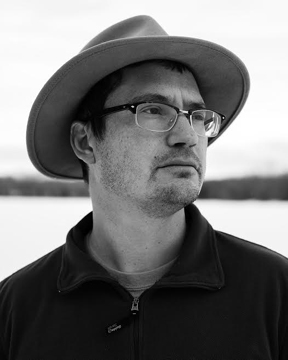
Tina Pocha

Tania Pryputniewicz: In your poem, “You Belong,” you begin with the following lines: “She gave me a gift / her disclosure / her addiction.” Can you tell us about how addiction has been a gift?

Tina Pocha: Well, I was referring more so to disclosure being a gift, but I think it applies equally to addiction. You, see in India, where I was born and raised, we have a tradition where we mark a little black dot (with an eyebrow pencil or kohl stick) on the cheek of little children to “ward off evil.” Children, cute and innocent as they are, are thought to be “perfect” and thus the target of evil spirits and negative energy. So we put this little mark on them as if to say to the spirits, “Look, not perfect, go away, find another target!” Addiction, any kind of suffering really, can be like that–a little spot to remind us that we are not perfect, that we have work to do in this life. What work, you might ask. Well, for some it might be to find focus, for others it might be to learn self-containment. For me, it has been to learn compassion and to dissolve the ego. You see, I came up in a time and place (pre-feminist India) where I felt like I had a lot to prove. I had to be smarter than, better than, faster than everyone else. And this served me well in many ways–especially in the achievement-driven culture we live in today. But it also disconnected me from others, even those closest to me, my husband, my children, my friends. I found myself constantly in a hurry, impatient–why can’t you do twelve things at once? I do! I separated myself, held myself aloft. Suffering was incredibly grounding. It brought everything into perspective — what was important, what was painful, what was undoing. It returned me to love. This is why I use the word “belong” in the title.


Tania P: When you say, “suffering was incredibly grounding,” do you mean the process of recovery? Or reaching rock bottom?

Tina P: I think what I mean is that suffering can bring you back to reality (the earth—grounding) in a very direct and maybe even embodied way (we fall to the ground—cold tile floor). You can wander through life thinking you have it together, and then wham! That moment when you go, oh shit, this is a problem—it makes you realize that we all have something to work on. I’m thinking of Oprah, for example. Here is this woman, she is arguably one of the most successful and respected and beloved women in the world, yet she suffers with her weight, her addiction to food (okay, maybe I shouldn’t assume that she is a food addict—although she has spoken at length about her struggle to use food “normally”). It’s like this thing that we all have weighing on us—addiction, rape, all manner of suffering—it situates us in our lives in a way that is real and eye-opening and we can’t escape it. No matter all the material and intellectual busy-ness of our environments, no matter how great our lives are, there is always a shadow walking with us, this one thing that makes us (I think helps us) to do the work we are here to do. Robert Holden says, “There is a gift in everything.” When I first heard this I used to think what he meant was, “Even though this terrible thing is happening to me . . .” or “in spite of blah blah blah, something good will come of it.” Now I think the “terrible thing” is the gift. I don’t think I could have evolved into a compassionate human being (or one who is on her way to being a compassionate human being) without the suffering. I would not be able to understand (really understand in a visceral way) somebody else’s pain—I haven’t been able to understand someone else’s pain until I acknowledged my own. So in that sense, yes, it is suffering that has grounded me, not recovery


Tania P: Are there parallels between the process of arriving at a final draft of a poem and realizations that come up in the process of recovery?

Tina P: Yes, there are definitely parallels between arriving at a final draft of a poem and recovery. It is that dipping back and back and back, the recursiveness of writing and creating that makes the poem rich and full, just as circling back to a memory or a pain propels you forward, each time you pick up a little more momentum, a little more energy. And sometimes the poem, the recovery, continues to grow and develop long after it is “finished.” The words on the page may be fixed, but the meaning, the message continues to live and generate and resonate with each pass. So it is with recovery. Each day, each surrender, brings with it a deepening, an understanding that is new. Even with this interview, it has provoked me to think about the poem anew—what did I mean, what do I mean? And I imagine with each reading the answer will change, evolve.
You Belong

Tania P: I’m thinking of the way the poem lets us see the gift between two people as the “disclosure” –the honesty, the bridge or way it connects and allows the speaker to not feel so alone at poem’s end. How is poetry similar to or different from “disclosure?”

Tina P: All my poems are, in essence, “disclosure.” I know, I know, the confessional poets went out with shag carpets and avocado green appliances, but for me, at least, writing has always been about expression and testimony. It’s about saying this is what I think/feel/ believe. It’s about exposure, about vulnerability. In fact, that’s how I see relationships as well. They are, as you say, built on “disclosure” and the trust that results from it. I think that is what moved me to write this poem. I was so touched by this person’s disclosure because I knew it was offered purely as a gift, as a way to include and surround and uplift. I know that seems counter-intuitive—how can someone’s disclosure about addiction be uplifting? But because the intent was or seemed to be to say, “Hey, you are not alone, welcome!” and because the “confession” was so matter of fact (here warm your feet on this), I felt uplifted—even on that “cold tile floor.” Poetry, too, has that way of including and building relationships—between not only the poet and the reader but between/amongst all the readers as well. Think of how we gather around words—whether in the physical presence of each other or not—and how those words pull us together into community.


Tania P: In a broader sense, what drew you to writing poems? How has poetry served you?

Tina P: The first poem I ever wrote was in response to a moment of crisis—someone else’s crisis. My professor’s wife was losing her battle with cancer, and he was dying with her, just melting away. And I felt helpless. And I wanted to do something. We had set up a rotation where we each took turns bringing them food, and shopping for them, and driving them places, but we couldn’t stop the grief. He was disappearing before our very eyes. So one day I just picked up a pen and wrote a poem. I needed some release. Ever since, poetry—writing in general—has been a way for me to release and get some relief. Poetry has also been a way for me to immerse myself in language and make something. I tend to be a left-brain-dominant person—rational, practical, linear—and have always envied the creatives in my life (my husband, my daughter) and their ability to make something beautiful. Poetry has been a way for me to harness some of my left-brain function (language) to cultivate and integrate my right-brain-function—intuition, emotion, and creativity. In fact, my goal, my intention for this stage of my life is integration—bringing together the polarities of left and right, masculine and feminine, logic and intuition. In Indian tradition, the marriage of Shiva and Parvati is thought to be symbolic of the ultimate integration of the soul, the achieving of enlightenment where we bring together all the (seemingly) disparate parts of our selves into one whole. I’m tired of living divided—head from heart, strength from tenderness—and poetry helps me to bring it all together.


Tania P: What role do you think labels, such as addict, or poet, play in one’s life?

Tina P: We use labels to make sense of the world—so and so is such and such. It’s a way for us to orient ourselves—North/South/East/West or Good/Bad or Happy/Sad—so I get why we are attached to our labels. Labels are also important in some developmental stages, adolescence for example, where we are trying to situate ourselves in the world and in relation to one another. In my own life, some labels (scholar, for example) have helped me to achieve great success; others (mother) have helped me to stay and persevere, even when I have felt incompetent and out of my element. But labels can also bring us great pain because they derive from ego—the same source of joy (getting an article published, for example) can also be a source of pain (failing to make tenure). The labels are not real. The real you doesn’t change from moment to moment. It’s just the ego. So another personal challenge for me the last three years has been to dissolve the ego, to rid myself of labels—even the ones that bring me joy. I can now nurture without being a “Mother;” I can write without being a “Scholar.” And yes, the highs are not as high, but neither are the lows as low. I recently wrote a blog post, “On Why I Am Not a Poet,” which received mixed responses. I think I may have offended some working poets who live the poet’s life with great passion and integrity. I think my rejection of the label “Poet” came off as a rejection of them, of all poets, and that was not my intention. I was trying to say that I want to reject all labels. I could equally have written a blog post titled, “On Why I Am Not a Mother” or “On Why I Am Not a Scholar” – both would have been true. I think what I am trying to say is that labels have been useful in my life, but ultimately they have been a way to separate myself.


Tania P: Finally, what does “recovery” mean to you?

Tina P: Recovery means starting anew. The tower has come tumbling down. You are sitting, cross-legged, rubble all around, with nothing and no one on the horizon. It reminds me of one of my favorite lines from the poet Masahide, “My barn having burned to the ground, I can now see the moon.” It is that hopeful place from which all things are possible. For me, it began with a period of isolation, of being okay alone, of taking stock, being still, and then slowly putting the pieces back together, one at a time. I had to separate in order to regroup. It was a slow, gradual process. Recovery means you can circle back–to your original self, to the people you left behind–but also move forward, kind of like the gravitational slingshot maneuver used to propel Voyager into space. Recovery means healing–from the inside out. The old triggers, the old provocations find no ingress. The wound has scabbed over.


Tina Pocha was born and raised in Bombay, India. She is a scientist by training and a writer by avocation. She currently works as an academic in the field of language and literacy, and is a new and emerging poet with publications in Cadence Collective and Eunoia Review and more publications forthcoming in Hyacinth Press and East Jasmine Review. You can find more of her writing at www.tinapocha.com

A graduate of the Iowa Writers’ Workshop, Tania Pryputniewicz is a co-founding blogger for Tarot for Two and Mother Writer Mentor. Saddle Road Press published her debut poetry collection, November Butterfly, in 2014. Recent poems appeared or are forthcoming at Extract(s), NonBinary Review, One, Patria Letteratura, and TAB: The Journal of Poetry and Poetics. She lives in San Diego, California with her husband, three children, blue-eyed Husky, and two portly housecats. She can be found online at www.taniapryputniewicz.com.
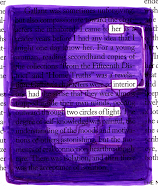
“Decaying” by Nicole Stanek

DECAYING_interior
“Interior” by Laura Didyk, Sharpie on paper, 2015.

this morning, I woke to

your heart
thrashing in the chambers

that have grown large and
echoing behind

my breasts. my lungs

bruised from
the hammering of thick

blood like congealed oil,
against them.

I pulled myself
from underneath
layers

of cold metal and stone
and
drove your heart

to my therapist, where
I hauled it from my

chest and

placed it in her hands.
“codependency is an
illness”, she said.

so, I took your
bloody heart back

from her dry, calloused hands
and brought it, again

to bed, where I cradled

it to sleep; the

hollow of my
chest, decaying without

a heart
of its own.


Nicole Stanek is a poet based out of Long Island. She is a graduate of Dowling College, where she studied Psychology and Media. She currently leads the Westhampton Poets Society, a writers group on the East End of Long Island.

Read an interview with Nicole here.


“Revenge Served Hot” by Mary McCluskey

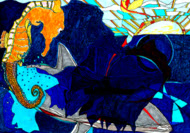
Revenge.seahorse_shark_sun
“Seahorse, Shark, Sun” by Laura Didyk, Sharpie on paper, 2015

Matt, as next of kin, receives the news from the prison warden. Then he calls me.

“Dad’s dead,” my brother says. “How’ll we divvy up the estate? You get the coffee mug and I get his sharp leather belt?”

We had been expecting this, but still my limbs soften. I sit down abruptly.

“I’ll handle the funeral,” he says. “Same church as Mom?”

I agree, surprised. Matt seems calm, suddenly capable.

~

When I arrive at the church, the bare coffin is already in place. Matt, in jeans and shirt sleeves, is waiting. The ceremony is short: no hymns, no eulogies. The vicar says a few words and then the coffin is carried to a waiting limousine.

I pause, bewildered, as the funeral car moves out of the churchyard gates.

“Where are they going?”

“The Crem.”

I turn. My brother smiles.

“Crematorium. All booked, all paid for.”

“But  – he reserved a grave next to Mom.”

“She’ll enjoy the extra space,” Matt says.

Startled, I remember my father’s rage when I suggested cremation for Mom. Matt had been there in the room, had heard that explosion, too.

Matt pushes up his shirt sleeves, turns his wrists to display the tender skin of the upper arms. The uneven circles, once a blistering, agonizing red are fading now, just gray dents in the flesh.  I have two circular scars also, on my shoulder blades. Our father’s drunken defense against the demands of two small children was a cigar with a burning end.

“You remember, don’t you,” my brother says. “How he loved fire.”


Mary McCluskey has had prizewinning short stories published in The Atlantic, The London Magazine, StoryQuarterly, London’s Litro Magazine, on Salon.com, and in literary journals in the United States, the United Kingdom, Australia and Hong Kong.  Her novel, INTRUSION, is scheduled for publication by Little A in March 2016. She divides her time between Stratford-upon-Avon, in England, and Los Angeles.

Read and interview with Mary here.


“Wile E.” by Christopher Allen

Wile. E.BODY AS BIRD
“Body as Bird” by Laura Didyk, Sharpie on paper, 2015

A life of want–40 years of toxic relationships, cul-de-sac jobs, and just plain dogus ignoramus decisions—has made me pretty good at cartoon impressions. I can do Daffy and Bugs, Porky the P-P-P-Pig too. “Beep-beep!” I honk, because I know my father’s a fan.

“You like Road Runner?” he asks. “Smart bird. Agile bird. That bird’s top fit.” My father reveres Road Runner. “Beep-beep,” he says, which sounds nothing like the bird. “I’d be Road Runner—if I was, you know, a cartoon.”

~

Road Runner rips up the road, zig-zags into the cartoon desert. A feather lazes and lands on Coyote’s crestfallen soot-covered nose: a message to the dog that the naturally gifted always outrun the naturally thick.

Blown to smithereens, electrocuted, flattened by a boulder meant for his nemesis, Coyote crawls out of a Wile-E.-shaped X in the canyon floor. He unrolls himself and plumps, his cuts and contusions healed by the time he plans his next attack. He’s a miracle with limitless lives. His chagrin always curls to a grin.

And he’s never short on ingeniously ineffective plans. His reserves of can-do are inexhaustible, his understanding of aerodynamics and leverage commendably ill-informed. He’s Machiavelli with a tail or maybe just really hungry—Twain’s “living, breathing allegory of Want.”

~

“Not me,” I say. “I’d be Wile E.”

“Why?” My father’s face contorts in practiced disappointment though he’s been dead since May. “Coyote never wins. He’s his own worst enemy. All his stupid plans backfire. He’s a ridiculous clown. A farce!” He’s shouting now. “A waste of space. A laughingstock. He’s a fucking loser!”

“I know, Dad,” I say as I climb resolutely into yet another cannon and light the fuse. “But the artists always draw Wile E. another chance.”


Christopher Allen’s work appears in Indiana Review, Eclectica Magazine, Night Train, Literary Orphans and over a hundred other journals and anthologies. Read his book reviews in [PANK), The Lit Pub, Necessary Fiction and more. Originally from Tennessee, he now splits his time between Munich and Dublin. Allen is the managing editor of SmokeLong Quarterly and blogs HERE.

Read an interview with Christopher here.

“Anxiety” by Kristin Laurel

FLOWER (Anxiety)
“Flower Queen” by Laura Didyk, Sharpie on paper, 2015

I’m soaking in the tub trying to relax goddammit when I see a bee flying around and I start to get sad about the declining population of honeybees but then I notice it’s a wasp and it’s flying extremely close to the light bulb and I start to think of that story by Virginia Wolfe except that was about a moth and I don’t remember it very well because my brain isn’t as sharp as it used to be and I’ll probably end up with early onset Alzheimer’s like my grandfather but anyway how in the hell did a wasp get into the house maybe it slipped through the hole in the screen or came in through the front door and then flew upstairs into my bathroom I don’t know but I need some new screens and an honest handyman or else more wasps might get into the house and sting me and I can’t deal with any more pain; what if I develop itching and hives or an anaphylactic reaction and I’m still trying to relax go away wasp I don’t want to die but it’s getting harder to breathe and I can’t feel my lips or the tips of my toes or fingers and what if I’m having a panic attack and I pass out and drown how will anyone know it was that wasp that killed me?


Kristin Laurel is employed as an ED nurse and flight nurse. She writes to stay sane and sometimes nice. She lives in Waconia, MN and Asheville, NC and completed a two-year program in poetry at The Loft Literary Center (MPLS). Her work can be seen in CALYX, The Mainstreet Rag, Grey Sparrow, The Raleigh Review, The Mom Egg, The Doctor TJ Eckleburg Review and many others. Her first book, Giving Them All Away, won the 2011 Sinclair Poetry Prize from Evening Street Press (Dublin, Ohio). To read a free copy, go to http://eveningstreetpress.com/kristin-laurel-2011.html. Most recently, her CNF piece, Terminal Burrowing, won first place in the 2015 issue of The Talking Stick.

Read an interview with Kristin here.

Interview with B.J. Best

BJ Best

Sarah Sadie Busse: To start off, I’m curious when you began to write the poems about Erin’s cancer like at goodwill (radiation, day 32). Was it an immediate response or did it take some time? Did you feel at all resistant to writing about this, or was it a relief?

B. J. Best: We first had suspicions something was wrong in the middle of December 2013. Erin was officially diagnosed the day after Christmas that year. Then quickly came a slew of meetings with doctors to figure out the best course of action and treatment. I felt angry and overwhelmed. I had to start venting, and while generally I don’t value poetry that serves predominantly as therapy, at that point I didn’t care. The first poem I wrote was on December 31, 2013, and it was a genuine relief. I knew writing was something that would help me through the surgeries and treatments, which, more importantly, would allow me to try to help Erin move through them as well.


SSB: In tackling the tough subject of your wife’s cancer, you chose to write formal sonnets. Can you say a little bit about how and why you chose such a strict and traditional form for this material?

BJB: One evening, I had the impulse to write a poem, but as I wrote some tentative lines in my head, it was all inchoate vitriol. I knew I’d never be able to shape it. At that point, I realized I needed a form that would fence me in, that would allow me to be angry under relatively tight constraints. Even though it was an incredibly low priority, I still hoped the poems would have a modicum of literary merit. I’d written a previous book of sonnets—State Sonnets—and I knew I could go back to that familiar form and find my footing. The form helped sharpen that original anger and also direct it as I worked through the machinations of rhyme and counting syllables. I still allowed myself to be angry, but the anger often crystallized into dark humor barbed with audacious rhymes—toadstool / old school is an early one, for example.


SSB: I’m curious about timing of all of this. Wordsworth famously said poems are “emotion recollected in tranquility.” But sometimes people find it helpful to write within the crucible itself, as a way of venting, relieving pressure. Were you writing the poems during the time she was undergoing treatment, or did the poems come after? Or both?

BJB: These poems were written as we went through treatment. I wrote from January through May, when her treatment was completed. I wrote a total of fifty poems, so about three a week. I often wrote them in my head in my car during my forty-five-minute commute—just enough time, I found, to assemble a serviceable first draft, which I often spoke into a voice recorder while driving and then quickly typed up when I got to work. This allowed me to capture details I knew I might forget later, deliberately or not: the hymn etched into the stained glass in the hospital’s nondenominational chapel, or how while grocery shopping in March, our three-year-old son said we should buy my wife daffodils and it was all I could do to not break down right there. It was therapeutic, and they certainly aren’t all good poems. But I had faith that even if no one would ever see them, they were doing important work for me, for us, and that’s all that mattered.

radiation day

SSB: Do you feel you have more cancer sonnets to write at this point, or is the sequence finished?

BJB: Erin was successfully treated and has been cancer-free since May 2014. So, the sonnets served their initial purpose of helping me hold on. Now comes the less pleasant prospect of becoming the no-nonsense editor. Many poems will simply have to be cut. At that point, I’ll need to decide if the sequence is a chapbook or if it should be a book; if the latter, I’ll have to write some new ones. But part of me, frankly, doesn’t want to write any more about this—I’d rather keep the experience as over and done. So perhaps a chapbook will be its final form. Right now, I’m just letting the poems rest. I haven’t really touched them since mid-2014, and I don’t see me deeply revisiting them for a few more years, until I can feel less likely to become emotionally derailed by them—although I imagine there will always be that possibility.


SSB: You are also a musician in the band Mead Lake’s Most Wanted. Has your wife’s cancer and the experience of treatment made it into any songs? Do you find subject matter moves between your poetry and your songwriting, or do they remain quite separate for you?

BJB: I call my bandmates brothers, and they were a wonderful support group that winter. Our band even got its own sonnet, “the band that i’m in.” Playing music for two hours every Thursday was a good escape. It’s such an escape, in fact, that I deliberately don’t write serious songs. I want the songs I write to be fun to play and hear (“the band that i’m in” quotes real lyrics to a real song I wrote about William Henry Harrison). If I want to approach seriousness, I’ll write poetry. So, in that way, songs and poems really are separate modes of writing for me. Nonetheless, I’ve written one quiet song called “Edna”—it begins with a line from Edna St. Vincent Millay, “The rain is full of ghosts tonight.” In the song, the speaker’s wife dies of breast cancer. I kept the song locked away for a while, but it might now be time to make a demo of it.


SSB: I’m curious how this experience has informed your work, beyond writing the sonnets. Do you feel it has changed you as a writer? In what forms or subjects you might be drawn to in future, or how you approach your writing, or … any other way(s) you might like to consider?

BJB: Perhaps the experience has changed my writing by reminding me it’s a privilege and joy to write—and to live—at all. We were very fortunate that Erin had a successful outcome without too much turmoil. I know that so many people aren’t as lucky. To be able to suffer, fight, and heal means you’re alive.   Writing, then, is an extension of that. Overall, this experience has filled me with a deep sense of gratitude. I’m grateful to be writing because I’m grateful to be living.


Sarah Sadie’s chapbook, Do-It-Yourself Paper Airplanes was published by Five Oaks Press in 2015 and a second full-length collection, We Are Traveling Through Dark at Tremendous Speeds, will be published in the coming year. She teaches at the Loft and the University of Iowa Summer Writing Festival, and works with poets one-on-one as well. She participated in Tupelo Press’s 30/30 poetry marathon in December 2015. Find her multimedia blog at sarahsadiesadiesarah.tumblr.com. @sarahsadie1313

Interview with Robert Fieseler

Robert Fieseler

Sara Michas-Martin: Reading your essay “New Miserable Experience” I was struck by its raw, emotional truth. The honesty was punctuated by your choice to evade a tidy conclusion. The reader is left tangled in a moment of internal conflict, a feeling of unrest we understand that is ongoing for Bobby (and Billy, too). Can you talk about the process of writing the essay and how you were able to manage what I imagine to be difficult feelings around the subject matter?

Robert Fieseler: Sure, Sara. You know I love your writing, so thank you for the kind words. When you write about family, it’s brutal. You’re writing about people you know in their innermost sanctums: their homes, their heads, where we accidentally drag back the bullshit of the world and use it to wreck each other. It’s you and your loved ones at their most vulnerable, unguarded, screaming at each other, refusing to wash the dishes.

So I sketched the first draft of this essay in my head in the minutes after my brother finished his Step 9 “amends” and left the house. This was December 2012. The scenario was fresh and I saw the way to write it like a path through a very old forest. I was sitting alone at the kitchen table–where we’d gathered as children–and I felt something very hard to express.

The cloud of feeling was something halfway between being demolished and being pushed against a wall. I think a very old part of me, one that resists logic and loves to tear me down, believed I did this to my brother – that I’d never fully wanted a Billy in my life and that I’d tinkered too much through our competitions and created the void he filled with addictions. I’d messed with his wiring. Writing this piece could mess with mine.

The mercenary in me knew this could be interesting material to plumb. I tend towards the confessional as a writer, and the confessional – as a formula – finds its legs in inner conflict. In the merciless description of what is. You go for the fucked up. You write about fucked up things and untangle the knot for the reader. Voila! I think confessional writers get good at exploiting this murkiness and writing their way towards an answer. Not THE answer but AN answer.

So I had the choice to write and face the consequences or not. The consequences could be embarrassing my family, harming my brother as he attempted to get healthy, putting myself in a psych ward or even ruining my young writing career through a revelation I couldn’t live down. OR…I could try to figure out a piece of what was true in a confusing moment for the both of us. I could try to parse what was real in between all the family myths and egos and my delusions of grandeur.

I clearly chose to write, though I didn’t know when I started what would happen as a result. I risked the honor of my family. I think I got lucky. My brother and I actually became closer through the long process of writing the essay. But I’ve spoken to other writers estranged from family members as a consequence of putting pen to page. I can’t figure out what makes it break towards celebration or disaster, what makes people react the way they do when they read about themselves through the eyes of a writer.

Several people have asked me how Billy is doing. He’s almost four years sober now, married, with a tech career and a townhouse. Solid guy. Mows his lawn, walks the dogs. He’s one of the best people I know. The truth is I barely knew him as a man before I attempted to write this. In a sense, I ended up writing out of my own head and into his.


SMM: Can you talk about your choice to structure the essay in five sections, and moreover, your choice to present your brother’s perspective as well as your own? I am curious about your process in arriving at a final draft. Was the occasion of meeting your brother always the entry point for the essay?

RF: I was attending the Columbia Journalism School in New York City when Billy did his Step 9 with me, so I approached the essay much the way a journalist writes a feature story. I also approached the writing with the ethics of a journalist, which means the story had to find fairness and balance among its subjectivity. It was the only way I knew how to write. A journalist gets a whiff of an opening paragraph, the world in micro – me mistaking my brother’s list as good – and then expands from that micro to a macro statement through what’s called a “nut graf” – my simple mistake revealing a larger, pathological need. It’s a narrative trick, one journalists use all the time. This one bee reveals all bees. This hurricane, a hurricane season. This student’s experience, a trend.

From the initial nut or point of expansion, I created a mental outline to guide me from sentence to sentence, beat to beat. I wanted some of our quick dialogue. I wanted to set the scene with the Christmas decorations. I wanted flashes of memories informing the present. The rest I let happen more intuitively. When I write, I tend to have a plan but only enough of a plan to let the story unfold. To let it get weird.

I wrote my section in the first person. Journalists tend to use what’s called an “objective narrator,” which closes off the internal world, but that would have been dishonest in this case because, as they say on the playground, my epidermis was showing. I knew that I wanted the two brothers from two equal vantages – to explore a larger theme of rivalry – but I didn’t expect to write Billy from the first person after I wrote myself that way. I didn’t know if I that was allowable. In journalism, changing first-person is pretty much verboten. An editor wouldn’t stand for it.

But I’d given Bobby the first person treatment – by this point, I was thinking of myself as just another character – and I noticed how the first person slanted the reader towards Bobby’s picture of events. This slant revealed bias, and a bias is a blind spot, a convenient instance of fudging or overlooking the facts. It seemed clear to me then that I needed to re-weight the story based on what I’d revealed through Bobby. I didn’t know if I had the literary muscles to write through the eyes of another human being – pure journalists, generally, don’t put that ability to practice – but I thought that if I could do this for anyone, I could do it for a person who shared a bedroom with me growing up.

I found myself fascinated by Billy’s emotional state just before he entered the room to confront his brother. In a Step 9, the amends can often come off as rehearsed, because the amend-maker actually has rehearsed the apology. But the time just before the Step 9 would be raw, improvised, anxious. I thought the tension between those two states could be revealing and evoke sympathy for Billy as a character.

I didn’t set out to mess with time–to have Billy always catching up to the action in the conversation–but the timing thing just happened. And I needed a Billy reaction that summed up trying to catch up with Bobby, who’s running ahead as a way of eluding the confrontation. So I let Billy nail it in a second section that reveals Bobby as an unreliable narrator about to discover something by stumbling into it. The last line I wrote was the combined fragment that took about two years of paring and examining to reach: “He did it with booze, I did it with winning.” I hope the story and structure reveal that Billy had less of an agenda in our interactions that day.


SMM: How does your relationship to journalism differ from your relationship to creative writing?

RF: They inform each other. Great nonfiction writing is founded on great reporting, on the application of interview skills and sleuthing, archival research and document requesting, deductive reasoning and questioning what really happened in a confusing event from multiple angles. From this data set, one then assembles the Venn diagram of a likely truth, out of all possible likelihoods. It’s a picture of reality as it moves. This isn’t the Truth with a capital T – only God knows that – but it’s the best possible narrative assembled from evidence. It’s the best tool we have as human beings to figure out what’s going on.

This piece was originally a reported memoir hybrid. I’d have more things happening in a fictionalized account. I’d have us moving through multiple rooms, perhaps upstairs into our old bedroom. I’d have poignant photos from other eras of our lives, which we don’t see because they weren’t there, but now up on the walls for the main confrontation. I might have his fiancée out in the car. I might have him punch me and break my nose to look like his. Isn’t that poetic? But I’m not a fiction writer. I believe Bryon when he said, “Tis strange – but true; for truth is always strange; Stranger than fiction.” Byron lived a weird life. Life is so weird.

So I had to interview Billy. We were still estranged, and I conducted this interview via phone almost immediately after I came up with the outline at the kitchen table. I had to get him when he was fresh and ask his permission to research and write about his Step 9. I think he was surprised to get my call, then flattered, or at least hopeful that I seemed more interested that I’d been during the actual Step 9. He agreed to help. I had to ask him about what he was doing before and after the experience. I had to ask him how he prepared to talk to me and why he was nervous. I had to ask to review his Step 4 journal, where he conducted his fearless moral inventory. It’s a very private document.

I had to ask to review his Step 4 page for me. I still have it. It’s awful. Not that he wrote those things about me. Billy had to be fearless in this regard to get well. It was just awful to read about myself from that vantage – I was sick, but in a way that society rewarded: I won, and they cheered. I received accolades that spiked my brain chemistry. I chased the dopamine hits, like Billy. Reporting this stuff meant a commitment to discovery on my part, and such a commitment has a price, a psychological toll. We all pay the piper this way as writers. I’m not going to lie. I cried a lot. I don’t know why the reporting facilitated tears I did not have in front of him, but it did. And I chased the story to get it right. I chased it through myself, through him, through other family members, for about two years of reporting and writes and rewrites.

A story, fully formed, I find, is often smarter than you are. But you have to blunder and chase it down like Wile E. Coyote with the Road Runner. And, this will be metaphorical so excuse the flight of fancy, the story will eventually turn back and notice you chasing it and ask for a toll. And you pay it or you don’t, and the end result is likely the difference between a meh or a noteworthy piece. You have to risk yourself. A journalist will give something small, like a piece of mind. A thought. Sometimes that’s enough. Some risk nothing and still come off pithy, clever; these are the Chandler Bings of reporting. A creative nonfiction writer will offer a vein or, sometimes, the heart. And to be torn up from the heart hurts, but then the writing makes you somewhat whole again because you got to be, temporarily, the vessel for the thing you were chasing. You got to speak its name. But you have to decide whether it’s worth it. You will not be the same afterwards. There will be consequences to what you realize. And you will need to change your life as a result of realization or be a liar.

Europa Hides an Ocean cropped

SMM: I first met you years ago when you were an undergraduate. Can you talk about how your relationship to literature and writing have evolved in last 10-13 years? Have there been specific books or authors that remain influential? What’s the most exciting thing you’ve read in the past year?

RF: I read The New York Times every day. I have for years. My grandfather could make a day of the Times. Great journalists, great feature writers – like A.A. Gill of The Sunday Times or Buzz Bissinger for Vanity Fair or Gene Weingarten for The Washington Post or Erika Hayasaki wherever she writes – fashion grammar-perfect sentences that curve into each other like great woodwork and gleam with a kind of simplicity. Most of these journalists also write books. These authors can arrange words in a way that gets two points across – the person, place or thing itself, and then the larger significance.

I always wanted to be able to do that. I guess when you met me all those years ago, I didn’t know how to yet. I wrote poetry that struggled sincerely, poems filled with lyric moments, poems that didn’t really want to be poems and therefore didn’t work. It took me a long time to figure that one out. I worked really hard on those poems, on being a “serious poet,” but I just didn’t love those words as much as I loved others.

I couldn’t write prose yet, but I could weave narrative moments that showed promise. During this whole process of realization throughout my twenties, I was reading Nabokov, Amy Hempel, Vonnegut. I read Emily Dickinson. I read Yeats. I read the Beats, all of them, then Truman Capote. Toni Morrison. Salman Rushdie. Saul Bellow. Not whole catalogues, usually just one or two works.

Then one day, I was listening to NPR and heard a story about a class at the Columbia Journalism School called the Book Writing Seminar, to which journalism students had to apply separately after being admitted to Columbia. I mean, the double gate, right? I’d never gone to an Ivy League school. To think there was another barrier of entry! Through Sam Freedman’s guidance, these students had entered with fledgling projects and published more than 40 books. The story’s still available online. I heard Sam’s voice for the first time here, and he sounded like someone who could kick my ass, and I knew that his class – if I could swing it – would be my proving ground, the place to become a real writer.

I applied. I got accepted. And it’s taken a long while for me to find my legs as a writer and nonfiction author. You’ve caught me in the midst of writing my first book length piece of nonfiction for the Liveright imprint of W.W. Norton, which is daunting, and I’m learning how to sustain a long narrative for the first time. Just get better every day, I tell myself. But the slow progress can be maddening. As Sam Freedman says, “Do the work.” Pay the price. Most people can’t take the hit – the idea that they have to be better than their ceiling – or they simply can’t lose the lifestyle they were enjoying.

I read classics these days. Thomas Hardy. Bronte. I’m rereading Walden, by Thoreau, cover-to-cover, and am entranced by his mentions of the railroad and industry. Before bed, I read a paragraph from Leaves of Grass, because I find that I have fewer nightmares. Whitman has a way of seeing the good in others and in the American experiment. I get too many literary magazines, from all those free subscriptions with submission to their social lottery competitions – who knows how you judge something so subjective – but once in a while I do read a story that consumes my thinking, the most recent being Nina Boutsikaris’s essay in the Winter 2016 issue of Redivider called, “I’m Trying to Tell You I’m Sorry.”

My favorite book continues to be A Farewell to Arms. It sets you up and then buries the knife, and I bawl my eyes out. On an emotional level, something like that happened to me when Billy left the house, and I tried to portray that in the essay’s final montage. Maybe it worked…I’m still figuring that out. I like the fact that there’s always more to read and learn. I haven’t even cracked Proust or Tolstoy (scandalous, right?). But writing this essay helped me become less a stooge of ambition. It taught me that winning, that ambition, can harm the people around you – it played a part in harming my brother, and I’m consequently less of an outright striver, now only striving to be less of a know-it-all in my life and in my words.


Sara Michas-Martin writes, teaches and designs. Her book Gray Matter (Fordham University Press) was chosen for the Poets Out Loud Prize. Her poems and essays have appeared in the American Poetry Review, The Believer, Denver Quarterly and elsewhere. She taught a very young Bobby in 2002 at the University of Michigan’s New England Literature Program before becoming a Wallace Stegner Fellow at Stanford University.


“Three Moons Over Maple Grove” by Susan Gower

Cover Image
“Body with Fire” by Laura Didyk, Sharpie on paper, 2015.
(See also “No One Scars the Same Landscape” by Meg Tuite.)

Wide awake and nervous about my approaching medical appointment, I wandered into the bathroom at four in the morning. Through the window, I saw three moons. The one in the center was a storybook moon. It was so large and bright that I could clearly see the topographical features. There was another moon on each side of it, perfectly spaced, but each of them smaller and less vivid. Quickly I found my glasses and looked again. Yep. Three moons.

The sky was a deep pre-dawn blue. The river birch, decorated with new leaves, looked silver in the moonlight. A slight breeze stirred the curtain. The young leaves on the birch shivered and so did I.

Oh God, I thought, breaking into a sweat. I’m having a stroke, or some kind of neurological event. I woke Mike and pulled him by the hand into the bathroom.

“Look out the window,” I said urgently. “Tell me what you see.”

“I see,” he said slowly, “three moons.”

“Thank you. Go back to sleep.”

By taking a step to the right, I discovered that three moons shone through the left pane of glass, but only one, the big, bright moon, shone through the right. I concluded that it was some sort of optical illusion, produced by the bathroom mirror and who knows what scientific process. But I stood for a long time, looking at the three moons.

Over the next few days, things happened quickly.

After ten years of living with cardiomyopathy, my heart function had dropped again and was dangerously low. I was in atrial fibrillation and my heart was dancing a strange little dance all its own. On the heart monitor, the line ran in irregular peaks and valleys like a piece of modern art.

Eventually they moved me to the cardiac ward and attempted to shock my heart back into rhythm.   “It didn’t work,” they told me when I woke up.

Finally, late in the afternoon, they geared up to try it again. This time I was truly and deeply frightened. I tried to distract myself by singing “I Got Rhythm” in my head.

This time, my cardiologist adjusted the patches himself. “Deep breaths,” he said.

When I came to, the nurse’s face swam in and out of focus, but she was smiling. “It worked,” she said. I burst into tears.

“What’s the matter, honey, I said IT WORKED,” she said distinctly.

Back in my bed, I watched the heart monitor. It beat in a steady rhythm.

Before I left the hospital, my favorite nurse, Bernie, instructed me in administering shots of blood thinner to myself. I have had a phobia about hypodermic needles as long as I can remember. She waved the needle in front of my face. “See how little and thin it is?” she coaxed.

I loathed the needle.

“See how easy it is?” She said as she stuck the needle firmly into my abdominal area. She disposed of the needle and took me by the shoulders. “You can do this,” she said. “Do this to honor your sister.”

Six months after my initial diagnosis, my sister Sharon had also been diagnosed with cardiomyopathy. But we were hopeful. Her heart was less damaged than mine and the odds were in her favor. One evening in April, Sharon and I met at the bookstore. We had coffee and joked about our bad hearts. We decided to write a book together called “I love you from the Bottom of My Ticky Tocky Heart.” We laughed and laughed.

It was the last time I ever saw her. A week later she was dead of a sudden heart attack. I still miss her. I always will.

As soon as I got home from the hospital, both the washer and dryer broke down.   Mike and I went to the Laundromat. Up until then there had been no time to process the events of the week. There, in the Laundromat, it all caught up with both of us. Every worry, every fear, large and small, crouched in that grimy room.

The cardiologist, while encouraging, had been straightforward. He talked to us about the future, about a transplant, or a mechanical heart. “We’re not there yet,” he emphasized, “but it’s down the road.” He was telling me to get ready. I still had options, but this had been a serious setback.

Although it was late when we returned from the Laundromat, I wandered restlessly around the house. Finally, I went outside in my pajamas. A thick fog was rolling in from the wetlands. I scanned the sky, but the moon was hidden from view. The next day my son would turn eighteen. On Sunday he would graduate. I was grateful to be here to bake his birthday cake, to celebrate his graduation.   Mike said we just have to take each thing, good and bad, as it came and keep going. I knew he was right and I made a silent promise to do this. But at night I watched the sky and listened to the wind moving through the trees, waiting for what would come next.

I saw the three moons again, at three a.m. on a beautiful June night. The moons were not full this time. They were three-quarters full. They looked like three cookies with a bite nibbled out of each.   I knew I should go back to bed, because the next night I was scheduled for a sleep study and, thereofore, expected to get little or no sleep.   But even so I stood in the bathroom for a long time, watching.

The next night I checked in to the sleep center. David, my technician, attached electrodes all over my body – “twenty -seven in all,” he replied, “mostly on your head and face.”

When he was finished, I went to the bathroom and looked at myself in the mirror. My hair stuck out wildly in all directions, pasted into clumps with the glue-like gel. From all over my scalp, batches of colorful wires sprouted and more wires dragged on my already baggy eyes. Under the harsh, florescent lights, my face was white. I looked demented.

Finally I was settled in bed, David was monitoring me from the next room. I lay in the dark, windowless room. It was the darkest dark I had ever seen. And disturbingly quiet. I longed to hear the sounds of teenagers in the kitchen, giggling and making brownies. Sweetie’s dog tags jingling as she trotted around. The murmur of a television turned low, or the rhythmic throb of a bass guitar. It was one thing, I thought, to share a room, or even a bed, with another person, listening to whatever nocturnal noises they might be prone to. But here I was, in bed, in this mock hotel room, wired up like a puppet and somewhere beyond that wall a stranger was watching and listening.

In my logical mind, my sane mind, I knew he was watching a series of monitors, keeping track of my heart rate, my breathing, my REM sleep. But the less than rational part of my brain had other ideas. Could he read my thoughts? What if he could see everything that was in there? Are the dark thoughts all sharp edges, etched on my brain like the jagged peaks and valleys of an EKG – here a pain, there a loss, and buried far down, shame and fear?

I pushed those thoughts away and summoned happier times. Somewhere in my head, or my heart, or maybe my soul, are the good memories, a whole lifetime of them, like a field of wildflowers.   Memories of making cookies in my grandmother’s kitchen on a fresh summer morning. Bells on my ice skates.   My baby’s first laugh. The piney scent of a Christmas tree. Violets hidden in the grass and morning glories on the trellis. The way Mike looks at me. The awkward hugs of adolescent children. The sound of my family, back home in Michigan, eating pie and drinking coffee and laughing. My mother, playing the piano, a sound which, I think, is etched into my very bones. Floating in the lake, with my father.   A warm bath and clean sheets. Giggling toddlers. Starry nights and gentle rain on the roof and the first snowfall of winter.   Rowboats and people singing and evenings on the front porch on Fourth Street. Everyone home for dinner.

I fight to regain my shaky health, but this time it feels more difficult. The hill seems steeper, the struggle harder. Perhaps this is because I am older, or because the drugs that are keeping my heart going are also triggering the depression and anxiety that lurk behind every door. I don’t tell anyone how I feel, because I don’t want people to think I am giving up. I go to work, I cook dinner, I keep whacking away at the piano, and at writing. At bedtime, I lie next to Mike and feel safe and comforted, but sometime, in the deepest part of the night, I wake up and think, I have to try harder. I have to get everything under control and buttoned down, because what if this time it doesn’t work? Once again I am trying, by sheer force of will, to get well. But I am haunted by the fear that I might fail. I still have options, I still have hope, but I am tired. I am grateful for what I have been given, but I am greedy. I want more time.

I woke at 4:30 this morning. The bathroom was bright with moonlight and there, once again, were the three moons. The bathroom seems like a peculiar place to contemplate one’s mortality. Then again, maybe not. Maybe it is in the bathroom, at 4:30 in the morning, that we see who we really are.   Are the moons a bad omen, as I thought in the spring? Or are they lighting the way in the darkness?   I know I only have this moment. And then, like the moonlight, the moment moves on.


Susan Gower is a freelance writer. Her work has appeared in magazines, newspapers and literary journals, including Woman’s Day, Good Housekeeping, and Talking Stick. She lives in Luck, Wisconsin, with her husband Mike.

“Flame” by Chloe Ackerman

Flame
“Black Fish” by Laura Didyk, Sharpie on paper, 2015

Mouse leans against the wall, close to the door. “This doesn’t look like a doctor’s office,” she says. The room is warm, dark, and messy. There are puzzles and trucks scattered on the floor, books thrown haphazardly on shelves, and stuffed animals littering the couch.

An old woman with gray hair in a bun sits on a rolling chair. “That’s because it isn’t.”

Mouse can’t see what’s on the chart in the woman’s lap, but she’s pretty sure it’s about her. “I thought you were a doctor.”

“I’m Dr. Hernandez. A psychologist. Sit down where you like.”

“I don’t want to sit down. And I don’t need a psychologist.” Mouse crosses her arms and stares at the woman, who doesn’t look up.

“Your case worker says you do.”

“What are you going to do to me?” She digs her nails into her palms.

Dr. Hernandez looks up. “I’m not going to do anything to you.” She crosses her legs under her skirt and considers Mouse. “You don’t look like a mouse.”

“Yeah, well, that’s my name.”

“It says here you’re Mary Palmer.”

“My name is Mouse.”

“Does it mean anything? Like you’re small and quick, or good at hiding?”

“I don’t hide.”

“Who calls you Mouse?”

Mouse is tired of questions but she knows that anger is what got her here in the first place. She says, “Are you a pedophile or something?”

“No, why do you ask?” Dr. Hernandez doesn’t seem offended.

“You bring little girls into your office? Ask questions about their life and shit? It’s weird.”

“You can leave if you’d like. But you’ll have to come back next week.”

Mouse glares.

“If you sit down, I won’t ask you any more questions about your life today. I promise.”

A minute passes. A minute and a half. Mouse throws herself on the couch, hood shadowing her face.

“Sometimes when I first meet people,” Dr. Hernandez says, “I don’t like to talk. I’m shy, or I don’t trust them. I’m afraid they’ll use things I say against me.” Mouse jerks her head up, more like a hawk than a rodent. “Sometimes, when I first meet people, listening feels safer.” She stops, considering, then says, “I know a story you might like—”

“You don’t know anything about me.”

Dr. Hernandez nods. “You’re right, but I think you would like this story. I could tell it over the next few weeks and when the story is over, you can think about talking.”

Mouse narrows her eyes. “I’m twelve. Too old for kids’ books.”

“This isn’t a story for children.”

Mouse glares, crosses her arms. “Are you going to tell the story or not?”

Dr. Hernandez smiles, settles in, and begins. “Once upon a time, in a land far away, there was a place where people were happy. This place had showers and sunshine, brooks with bridges and gardens with lovely flowers. In this place lived a little girl named Fiametta. Fiametta had a mother and father, the kind who tucked her into bed at night after making sure she brushed her teeth. They played hide-and-seek with her, took her to fairs and the park, gave her birthday parties and bear hugs.

“Fiametta loved her parents, and they loved her, but most of all they loved each other, and that made Fiametta feel happier and safer than anything in the world. Even if she had a bad dream or got lost at the zoo, she knew her parents would save her, and she would always have a happy ending.

“But then one day something horrible happened. It was after Christmas, and everything was snow and crackling fires and eggnog. There was an accident, and Fiametta’s mother went somewhere Fiametta could not go, and her father told her she wouldn’t see her mother again.”

“She died?” Mouse’s hood has fallen down, and her face is visible – light skin, dark hair, green eyes and freckles. Deep circles sink under her eyes; a scar traces her chin. She looks hollow and small.

When Dr. Hernandez nods, she looks sad, too. “Yes, her mother died.”

“But…what happened to Fiametta?”

“I’m afraid our time is up,” Dr. Hernandez says, as though she’s apologizing. “I’ll tell you more in a week.”

On the way back to the foster home, the case worker chatters on and Mouse thinks she sees Fiametta on the street in a blue dress, holding her parents’ hands. The case worker wants to know what Mouse and the psychologist talked about but knows she shouldn’t ask, and Mouse isn’t just going to tell her. She counts on her fingers how many days until she goes back. Six.

~

Dr. Hernandez wears a dark red and navy skirt this week, and Mouse briefly longs to own a skirt like that. She would twirl and dance all day.

“How are you today, Mouse?”

Mouse shrugs. “What did you do?”

“Nothing.”

“Do you want to hear more about Fiametta?”

Mouse shifts her gaze to her shoes. She knows how it works when someone has something you really want, so she doesn’t respond.

“Mouse? Do you?” She settles on a minuscule shrug and Dr. Hernandez clears her throat.

“Fiametta had just lost her mother, remember? And Fiametta’s world became cold and damp and nothing grew because there was no sun. One by one, Fiametta’s treasures disappeared, until all that remained was the dark. She forgot her dolls and how to play imaginary games and how to read storybooks, and instead drifted through the house humming old songs. Her father, instead of taking her to the beach or museum, wandered by himself at night, so when Fiametta had nightmares she woke crying for her mother, but found the house empty, her father roaming in the dark.

“Fiametta’s clothes were gray, her father’s hair was gray, and the sky was always gray. But she was not. She was clear, like she could walk through walls or stand very still in a room and disappear. Her father felt the same way, she thought, because sometimes he would just stop in the middle of a room and stare at the walls. Then Fiametta would take him by the hand and help him take off his cardigan and slippers and tuck him in to bed, where he could fall asleep and forget. Fiametta would sit in the dark and watch him frown in sleep because there was no one to put her to bed.

“She was scared of the dark. Darkness carried her mother away to a place she could not follow, a place her father searched for as he wandered shadowed streets, calling his dead wife’s name.

“And so Fiametta began to steal candles, slipping them into her pockets when no one was looking. She gathered one hundred of them, arranged them in her room, and lit them one-by-one in the same order every night before she tucked herself into bed. Those nights her room flickered with yellows and oranges, with color, warm like summer, with a smell like winter fireplaces. This way Fiametta could dream and not wake.”

Mouse is silent, even though Dr. Hernandez has been watching her. Mouse knows she will cry if she moves.

“I’m not going to tell you anymore today.” Dr. Hernandez speaks gently, like breaking bad news. Mouse nods. “What do you think of the story so far?”

“It’s sad.”

“Yes. Do you want to hear the rest?”

Mouse hesitates, measuring, then says, “Yes.”

“Even though it’s sad?”

Mouse thinks hard. The story doesn’t make her feel good. “I need to know what happens to Fiametta.” She bites the inside of her cheek.

“I want you to do something for me this week,” Dr. Hernandez says. “I want you to make me a picture every day, anything you like. It can be big or small, made with paint or crayons or glue and dirt, whatever you want. Can you do that for me, and bring them with you next week?”

Mouse nods. She can do that.

~

Each night, Mouse sits at the kitchen table with a piece of paper. Her foster brothers and sisters pass through, her foster mother makes dinner and everyone eats, then they come back into the kitchen to clean up. They don’t ask what Mouse is doing because they know therapists ask people to do weird things and if someone told Mouse to stare at a blank paper every night for three hours, they’re not going to comment. Mouse has already fought three of them since she moved in. No one wants to be the fourth.

And then, with the TV blaring in the living room and loud music coming from upstairs and the streetlights turning everything orange and forlorn, Mouse lights a candle and begins tracing the shadows that fall across her paper: bits of furniture, dishes, even her own hand, and then she colors them in. At the end of each night, Mouse has a piece of white paper covered in shadows.

~

Dr. Hernandez’s skirt is black this week; the color folds sorrow into Mouse’s belly. She clutches her seven sheets of paper but her hood is down and her eyes are on Dr. Hernandez.

“How was your week?”

Mouse shrugs.

“Did you do what I asked?”

She nods and clutches her pages, soft from her sweaty palms. “You aren’t going to take them?”

“Only if you want me to.”

Mouse looks at the one on top, and all she sees are stupid lines. They aren’t drawings at all. She’s done it wrong. “No.”

Dr. Hernandez nods. “Okay.” And that’s it. No argument, no pushing. “Are you ready to hear about Fiametta?” Mouse nods hard.

“Fiametta lit candles every night, remember? So she could sleep alone in the dark. And Fiametta lived like this for many years, slipping candles into her pockets as she wandered through stores when she was supposed to be in school. Every night, she lit them when the sun dipped beneath the horizon, until her room was ablaze and she could sleep.

“And then one night, as she lit her hundred candles, one tipped over, knocking over two more, and soon the room was hot and dark and Fiametta fled through the window as her room went up in flames.”

“Oh no…” Mouse whispers.

Dr. Hernandez’s eyes are sad, her voice low. “Fiametta ran and ran until she came to a river. She took off her clothes that smelled like ash and threw them in the black water, then jumped in herself, scratching the soot off her skin and out of her hair.

“In the morning, people found her shivering, naked and blue on the rocky bank, and they told her that her father had been in the house, that he had been burned up, and that they would take care of her. Then they washed her and gave her cast-off clothes that didn’t fit, then told her she would be sent away.”

Several seconds pass before Mouse realizes Dr. Hernandez has stopped. “Where is she sent?” she asks, too urgently, but she doesn’t care anymore.

Dr. Hernandez shakes her head. “That’s all for this week.”

“But…I have to know what happens next.”

“You will. I promise. Will you show me your pictures now?”

Mouse stretches out her hand. The pages are wrinkled, the pencil smudged. Dr. Hernandez examines each one. Mouse tries not to squirm.

“Will you tell me why you drew these?”

“That’s what grownups say when the drawing’s too bad to figure out.”

Dr. Hernandez raises an eyebrow. “You’re very perceptive. But I know what these are. It’s a clever idea. I never would have thought of it.”

“Really?”

“Yes, really. I’m interested in why you chose to draw shadows.”

Mouse shrugs. “That’s what was on the page.”

“What were you thinking about when you drew them?”

Mouse chews on the inside of her cheek. “I was thinking…about shadows.” Her words fall lamely between them. It was a stupid idea.

“What do shadows mean to you?”

“Darkness. And…and hiding.”

“Safety?”

Mouse squeezes her eyes shut. “No. Because there’s still light. I can still be found.”

“…and you’re still afraid.”

Mouse’s eyes snap open. “I’m not afraid of anything.”

“It’s not wrong to be afraid.” Dr. Hernandez’s voice is gentle. “Fear makes us protect ourselves or run away.”

“I don’t run away.”

“I know. But it’s okay if you do.”

“I didn’t run away.” Mouse’s fury is ebbing, her chin quivers. She will not cry.

“But it’s okay,” Dr. Hernandez says again, “if you do.”

That night, Mouse sits at the kitchen table with a pencil, a piece of paper, and a candle. A path of shadows falls across the paper. She draws it, then gets another piece of paper and draws more path, darker path, and on the next a smaller and more etched path of shadows, until the candle drowns in its own wax and she has to go to bed. She dreams her house is burning and everything is light, and she is safe.

~

“You brought me something.” Dr. Hernandez accepts the papers from Mouse’s clenched hands. She flips through them. “Let’s lay them on the floor.”

Mouse kneels and together they organize the papers into a long trail. The old woman surveys them, chin resting in her hand. Her red skirt fans around her, and Mouse only just resists the urge to rub the crinkled cloth between her fingers.

“Shadows,” she finally pronounces. “But I don’t know what they make.”

“It’s a path. To here.”

“To this room?”

Mouse nods.

“Because it’s safe here?”

Mouse pauses, then nods again.

“Will you tell me where it starts sometime?”

Mouse rests in that sometime. She nods.

“Okay. Fiametta’s house burned down, remember? Her father died, and she was being sent away.”

Mouse moves to the couch, Dr. Hernandez to her chair. Shadows stretch between them.

“’Sent away’ meant boarding school. Old musty smells and scratchy blankets and loneliness. In boarding school, Fiametta learned modest fashion and penmanship and manners. She learned to cook and type and balance a checkbook. She also learned to sneak out and smoke and sweet-talk strangers on corners at night and be back under scratchy sheets by the six o’ clock wake-up call.

“Fiametta didn’t burn candles anymore. The dormitory didn’t allow it, and the other girls made fun of her for being afraid of the dark. Instead, Fiametta took her solace from the simmering glow of cigarettes in the dark, from the flare and sizzle when she sucked in, and she held that image close as she tried to fall asleep, plagued by memories of happiness she no longer believed in.

“In the cold nights Fiametta leaned on door frames in bars and smiled at men who reminded her of her father, men with sad eyes and limp wrists and sloping shoulders, who stared at the mirror behind the bar waiting for someone they missed to walk up behind them. And so Fiametta would. She would call the man Joe and touch him like she’d known him a long time, and she would leave him sleeping with a smile on his face, the hollow shadows on his cheeks diminished.

“But each morning Fiametta felt as though the hollowness she’d taken from him had nestled behind her ribs, and she felt a hook there, pulling her out again each night to find another lonely man and offer him her name to call as he wandered empty streets.

“It didn’t help. The cigarette’s flame was not bright enough, the man never warm enough, and Fiametta shivered until her teachers thought she was ill, and she hoped she was dying. They gave her pills to stop the blue in her lips from spreading, and the pills were warm. Dissolved in gin, they were warmer, and injected warmer still.

“Slowly Fiametta forgot about the wakeup call. She forgot about the boarding school, and met in alleyways with other shivering junkies to hover around flaming barrels until they could score enough cash for a fix.

“Fiametta called herself Flame now and belonged to a man named Joe. She was sixteen years old, half-starved, half-dead, lonely and lost.”

~

“Mouse?” Dr. Hernandez whispers. She kneels by the couch and peers at the girl.

Mouse shakes her head from beneath her hood. She’s folded in, hiding in her baggy clothes. “Mouse. Will you tell me what you’re feeling?”

Mouse stifles a sob. “It’s not right.”

“What isn’t?”

“Fiametta didn’t do anything wrong. But everything went wrong anyway and she couldn’t stop it and no one helped her. No one even cared.” Mouse is now sobbing uncontrollably, barely managing words, barely managing breath.

“I know. I know. It wasn’t her fault.”

“Her parents left her!” Mouse roars. “They were supposed to keep her safe and they left her!” She pounds on the arm of the couch with tiny clenched fists.

“Is it? Could her mother have kept from dying? Could her father have stopped being sad?”

“They should have! If they loved me, they would have done anything!”

“Oh, Mouse,” Dr. Hernandez whispers. “Oh, my dear Mouse.” She places a hand on the girl’s shoulder.

They sit there for a long time, the woman with her hand on Mouse’s shoulder, Mouse curled up and crying until her head hurts and she can’t breathe through her nose. She sits up and wipes her face on her sleeve. “You have to finish the story.”

“Are you sure?”

Her nod is resolute, her face firm. Dr. Hernandez sits beside her. “What do you think happens to Fiametta?”

“She runs. She runs as fast as she can. Until she sees a policeman.”

“Are policemen safe?”

“No one is as bad as Joe.” Mouse shakes her head, clenches her fists. “But the policeman won’t help. She’s got crack on her, so she turns herself in. He takes her to jail. She’s safe there.”

“And then?”

Mouse falters.

Dr. Hernandez waits a moment. “Mouse, where does the path lead?”

“To the end of the story.” She fidgets. “Here.”

“What is the end of the story?”

“I don’t know.” Such a small voice.

“You know, Mouse. What happens?”

Silence. That inward folding.

“Mouse? Are you ready to tell me what happened?”

“…yes.”


Chloe Ackerman hails from the Land of Enchantment but currently resides with her dog in the much rainier (but no less enchanted) Pacific Northwest, where she recently completed a doctorate in clinical psychology. She has edited or contributed to a small number of literary magazines and anthologies and has been published in Mirror Dance. She hopes to one day be both a famous author and a renowned psychologist because she believes in having it all, but she would also be happy with a supply of tea and a tiny house in a forest.

“Hot Bones” by Ashley Hutson

Hot Bones
Image by Laura Didyk, Sharpie on paper, 2015.

The morning my grandfather died
I dreamed we gathered at the kitchen
table and ate him. It was a joyful
feast. My sister and I carried him in
on a silver platter the size of a stretcher
and he looked exactly like a trussed-up
chicken, headless and at rest.
We plucked through the hot bones
that burnt our fingertips, searching out
the brightest cuts of meat. It was easy
to devour him. Each of us took
a portion and kept him in our belly,
the organ right under the organ
that hurt upon waking.

After the funeral we ate another feast,
this time to his memory. It was not
as satisfying, though. The green
beans and macaroni sat limp and
dull in my mouth. The chicken tasted
of nothing.

I should have known. A memory
is an off-brand imitation
never as savory
as the real thing.


Ashley Hutson lives in rural Western Maryland.  Her work has appeared or is forthcoming in McSweeney’s, SmokeLong Quarterly, The Journal of Compressed Creative Arts, The Conium Review, Threadcount, and elsewhere.  Find her at www.aahutson.com.