“Meditations on My Brother’s Winter Coat” by Fran Wolf

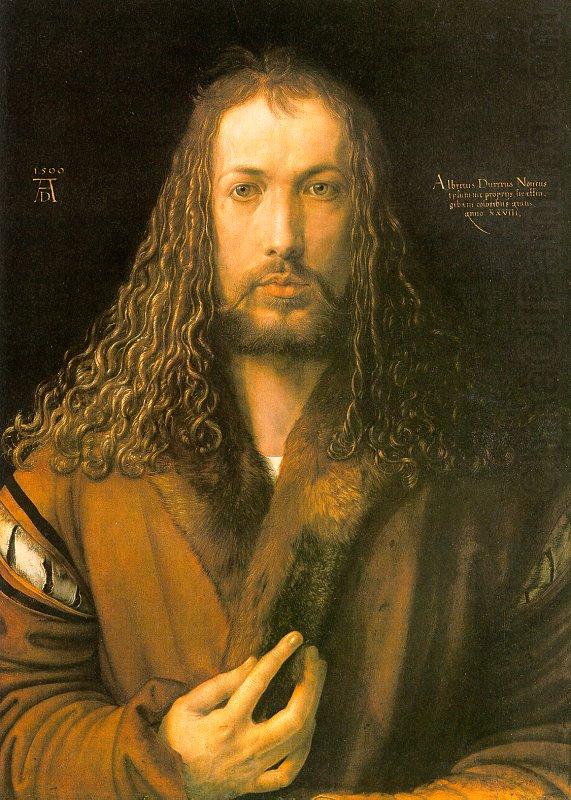
Albrecht Durer (My Brother's Winter Coar)
Self-Portrait at Twenty-Eight Years Old Wearing a Coat with Fur Collar by Albrecht Durer circa 1500

I bought my brother Davey a winter coat when he was sober, finishing his long interrupted college degree, and staying on his anti-psychotic medications.  David, I mean. He’s forty-five, not a kid any longer.  He stayed sober and sane for the past six years.  Something changed. A hormone shifted. One of his pills worked too little. Or it worked too much. Some hand of fate loosened its grip, or, grabbed tight, and he was drinking again, calling at 3 a.m., telling me what the feral cats were telling him, fighting with his psychiatrist, fighting with our mother, filling his credit cards with purchases and returns and re-purchases and re-returns of iPads, laptops, and the Oxford English Dictionary, twenty volumes, delivered who knows where. He gave away or threw away or somehow lost his winter coat.

After a stay at detox and then a psychiatric hospital, Davey is living with our mother and reading the copy of Marcus Aurelius’ Meditations that he asked me to get him for Christmas. Written nearly two thousand years ago, Meditations is the thoughts of a Roman Emperor on accepting duty, service and other things, like fate, that I don’t worry about given that I’m busy in the world of law, intellectual property, and money.  Davey’s resigned to circumstances; I make my own life.

“Bad job on the translation,” he says over cheese omelets our mother cooked. He wears a white wool sweater and jeans that are Christmas presents from our mother—from me, since I gave mom the money. Davey’s voice sounds as if he borrowed it from a stranger. He looks unfamiliar; but it’s been three years since I’ve seen him, and I’m tired from the cross-country flight. Davey and I still have the red hair and freckles of my mother’s side of the family. We’re both thin, but at 5’7” I’m taller. He still has that scar from when he was beaten up and too drunk to fight back, but his meds are user-friendly these days, no dead-eyed staring and jerky motions as from the Stelazine and Thorazine. We have my father’s blue eyes, but David’s are sad, as if he’d fallen down a rabbit hole and emerged when he was thirty-nine, not knowing what his life was or where it had been. We had such hopes during these past six years when he finished his B. A. in classical literature and applied for graduate school in education. Hope rose like ghosts from our childhood’s grave.

Optimism comes from my father’s side of the family. So does schizophrenia. Although mom thinks Davey’s bipolar, too.

“All right, I appreciate the gift, it’s just very modern…” Davey says, tapping his index finger on the table.

“That’s bad?” I ask. “Making an obscure book accessible? Maybe you would have preferred it in Latin?”

“Can you go shopping with David for a coat?” Mom intervenes, frowning. Her once crimson hair has faded to cinnamon and grey. Her brown eyes are tired. She butters the orange-currant scones she baked for breakfast. Some patent work on a web-based media, and I had the cash to buy her this two-bedroom condo with its kitchen overlooking the marina. My money can’t resurrect her dream of starting her own restaurant; that died with decades of Davey’s arrests, hospitalizations, medication changes, disappearances, and returns to her doorstep.

Now it’s the morning after Christmas. January promises snow. Davey needs a winter coat to replace the one he lost.

“Sure, I can drive him to the Mall.”

“Can you go shopping with him?” Mom taps her finger on the table as if she and Davey are sharing a bongo drum.

I know what she won’t say while he’s here: you’re his sister; sooner or later, he’ll be your responsibility.

~

Davey holds the North Valley Mall doors open for a white-haired grandmother hauled by yowling kids.

“After you,” he says and heads for the Mountain Sports’ Menswear section.

He scans the racks of North Face parkas, Columbia rain gear, Coleman all-weather coats, assorted down jackets. He rubs hood ruffs. He tugs at zippers. His hands drop. His nose wrinkles. Wrong color. Seams aren’t tight. Down isn’t waterproof. Too short. Too long.  A raincoat, not a winter coat. A parka, not a snorkel coat.

“Just what kind of coat are we looking for?”

“I’ll know it when I see it.”

We cross the mall to Burton’s Fine Clothes.

“Not here,” he says after a jet-fast scan of the coat racks.

We walk past screaming children and arguing spouses to reach Macy’s.

“No,” says Davey. Half-off signs hang over Women, Petites, Children, and Shoes. Menswear is a full-price wasteland.

“Trust me. Cost is not a worry. Get a coat and if you don’t like it, we can get you another coat.”

I don’t tell Davey of the client who called me at 9:30 a.m. on December 23rd desperate for a three-hour job for some minor software package that couldn’t wait until the 27th. It was four hours before my flight. “That will be $5,000,“ I had said, folding silk shirts and black jeans into my suitcase. He screamed; he cursed; he paid. I went online in the departure terminal, finished the job as the plane cruised over the Rockies, and emailed it to my client during the layover.

Davey scans the racks but stops to pull out a neon orange coat.

“Wrong color,” he mutters. He shoves his hand into the pockets. He checks the lining. He rolls his eyes at the price tag.

A sales clerk rushes over and says, “Happy holidays, how can I be of service?”

“Hello. How are you?” asks David. His words are a second late as if he’s translating from a private language; he waits for a reply. The clerk blinks and looks to me.

“I need this in a different color…” I start to say.

“Alright Joan, thank you, but…” Davey cuts in.

“Our post-holiday stock is on display,” the clerk explains, “We could order it for you.”

Davey puts the coat on the rack. I pull it off.

“Joan, alright, wait a minute!” My brother protests.

“I’m handling this Davey…”

“Call me David…”

The clerk blinks. Out of the corner of my eye I see Davey tapping his finger on the coat rack.

“Can you do a rush order? And do you have tailoring?” I continue.

Davey grabs the coat, shoves it onto the rack, pushes other coats around it, and turns to the clerk, saying,  “Thank you for your help, have a nice day.”

The clerk blinks and walks off.

“Davey, we could have finished this…”

“It’s David…”

“Whatever…”

“No, it’s David.  That’s my name… not that kid’s name, like I wasn’t…just say David, all right?”

“The coat is what’s important! What were you thinking?”

“C’mon, that guy would’ve wanted shipping, tailoring fees, extra charges for special orders…”

I almost say: that’s how normal people buy coats. Instead, I count to ten. I never believed Mom’s stories of giving Davey $10 for yard sales and having him come home with a Bill Blass robe and The Collected Poems of Emily Dickinson. Mom said he once found a leather-bound edition of all of Shakespeare’s plays and talked the owner down to $4.50 and The Hunt for Red October thrown in for good measure. (“He knows I love the thrillers,” Mom said.) Mom said that after Davey’s last binge —after he had been missing from the halfway house; after his photograph had been sent to emergency rooms, morgues and police stations; after he was found by the river — he was vomiting blood and booze onto an Armani jacket, a Goodwill tag stapled to the sleeve, a copy of Gilgamesh in his pocket.

“I’ll cover that.”

“But where’s the deal?”

“David, how many stores do we have to go to? There are other things I could be doing. There are even other things you could be doing. And there’s no better deal than a free coat. So let’s just get a coat, okay?”

Davey stares, as if he’s going to say something, but walks off. Maybe he counts to ten, too. We return to our car. We drive to the Woodland Mall. We are silent. We park, pass a labyrinth of cars to reach the elevator, and go to Mervyn’s on the 4th floor, Target on the 3rd floor, T.J. Maxx on the main floor, and the Men’s Warehouse in the annex. We find trench coats, Jefferson coats, snorkel coats, and leather coats. We find parkas and intricate poly-pro layering systems that fit under all-weather shells. We find coats that are tan or black, not navy blue, or that have fake fur ruffs not real rabbit fur, or that don’t reach past the hips, or that reach the knees, or that have no drawstring to cinch the waist.

We drive to the Central Valley Mall, Davey staring out the window, his nicotine-stained fingers on Meditations. We have a fight at REI.

“Did you take your meds this morning?”

“All right, what are you, my caseworker?”

“It’s been eight stores, Davey, maybe that’s who you should have gone shopping with…”

“All right, I appreciate the help, your driving and all, but call me David!”

“Well, thank God for my help,” I yell. Shoppers stare. I lower my voice. “We’ve only been driving all day…”

“All right, we need boundaries, this is my coat not yours, ” my brother declares.

“Do you always sound like you’re in therapy?”

He winces. I wince. Of course he always sounds like he’s in therapy. That’s where he is when he’s sober. Therapy. AA. College classes. That’s his life.

~

“Do you need me at Bargain Coats & More?”

“No. Why don’t you get some coffee?”

When all is lost, you can always find a Starbucks, and we do.

“It’s on me,” he says.

“I can get it.”

“Yeah, you told me, but I have money too. Cuppa joe,” he calls to the barrista.

He rummages through his jeans, pulls out a wad of dollars in a money clip, closes his eyes and says: “He does only what is his to do, and considers constantly what the world has in store for him—doing his best, and trusting that all is for the best. For we carry our fate with us—and it carries us.

“Davey —David,” I say, holding up my hand. “Your meds, you did take them, right?“

“Relax, it’s from the Meditations. Duty and opportunity. Marcus Aurelius is famous for that.”

“Sounds like a fun guy.”

“He’s expressing the Stoic philosophy. Life is rational, nature acts for the best, and the worst can be endured for the better. You should read it,” my brother says, handing over my coffee. “Just my way of saying, all right, I’m not teaching like I wanted, but I get man-around-the-house, fix-it jobs from mom’s friends.”

After David leaves, I get a double tall Americano. There was no need to embarrass him by correcting his order. Sitting at a tiny table, scanning my Kindle, I can’t remember many times when I was nice to David. It’s hard to think of that now when I remember his courtesy to store clerks and grandmothers. I don’t like remembering how we had read the Wrinkle In Time series together, and the Lord of the Rings, and how David had written to J.R.R. Tolkien for a dictionary to learn the Elf language. I don’t like remembering the summer Saturday nights we’d haul our beaten up kid’s telescope onto the back porch, David telling me the myths of Lyra and Orion and Cassiopeia, me searching for new meteors, new comets, new stars, mom chasing us back indoors right at midnight. I don’t like remembering just before I was sixteen, and David was seventeen.  The year it began.  When David would laugh and shriek through the night. When, for him, a chair became an oracle, and a can of beef barley soup became filled with worms.

I found my calico cat with her blood soaking into the back yard’s dirt, her skull smashed in, bits of her brain stuck to a red brick. I screamed for my mother.

“An accident,” she said. She was crying. “What else could it be?”

I knew then how it was going to be. I gave away my gerbils. I didn’t ask for permission before finding a new home for Mr. Charles Ames, our schnauzer. Meanwhile, Mom kept a steady stream of psychiatrists, therapists, faith healers, naturopaths, and acupuncturists flowing through our home.

I remember when I first saw David in the hospital.

“He didn’t mean it,” my mother kept saying.

David was sweat-soaked and turned away from the other patients: those without belts in their pants or laces in their shoes. My parents accompanied me, but I was alone—alone with the memories of the police arriving, of the ball-peen hammer David had used to pound demons out of my sleeping mother—didn’t that prove David loved us, and we loved him, he was trying to save my mother from demons—of my father throwing David to the ground, of my mother shaking and crying, of bruises on her arms and blood on her face, of screams. The neighbors said the screams were mine.

At the hospital, I remember David sat staring at a wall.

“Speak, friend, and enter,” I had said saying the words used to open the dwarves’ lair in The Fellowship of the Ring.

“Go away,” David told the wall.

I did. I asked David’s psychiatrists if I’d become like him. Back then, the psychiatrists were Freudians , so they blamed the mother, or Laingians, so they blamed the mother, the father, the sisters, and brothers. Then they said it was genetic, so they blamed the parents’ families.  Now they say it’s genetic with an environmental trigger, like drug use or trauma, nothing I could do anything about. So I did what I could. I worked as a library aide after school and a babysitter on weekends. I had dinner at friends’ houses where no one screamed, no one talked about medications, and it was safe to have knives at the table. I studied, earned scholarships, went across the country to college, found summer jobs away from home, and only came back at Christmas. I accompanied my mother as she brought coffee, sandwiches, and books to David when he lived at the halfway house, the treatment center, the hospital. I went to law school and became rich. David came of age and lived on the street.

Now our father is dead. Our mother is old. What will happen when I’m the only one to look after David?

~

David taps me on the shoulder. “No luck at the so-called bargain store.”

I tap my watch. Time’s gone; all I’ve done is remember things I can’t change.

We walk to the car. David hunches in the back seat sending plumes of smoke into the twilight air. David loved holding my gerbils in his now gnarled hands. He loved petting Mr. Charles Ames until the dog licked his nose in a frenzy of gratitude. He loved being my big brother, the one who kept my secrets, the one I trusted.

“Still reading Aurelius?”

“Yeah,” he is quick to respond, “listen to this: Does what’s happened keep you from acting with justice, generosity, self-control, sanity…”

“That’s quite a list,” I laugh.

“… prudence, honesty, humility, straightforwardness, and all the other qualities that allow a person’s nature to fulfill itself?”

“You believe that?”

“On my better days, yeah,” he replies. “At least, I hope so.”

I cannot love David. Perhaps something else is possible. I don’t know what.

“That’s not the way to Mom’s,” David calls out.

“I’m taking an alternate route,” I say. “Humor me.”

~

We see a strip mall where we stop, walk into Martin’s Menswear, and David sees his coat.

“All right. There it is. And in my size.”

I grab the coat off the hanger.

David grabs it back. He stuffs it between two other coats, saying  “I saw a 20% off coupon in the Bay Guardian.”

I count to twenty. I imagine ripping the coat to threads. I count to ten. This is all David has. The delusions, the hallucinations, maybe even the drinking are held in a delicate biochemical balance he can’t control. Finding the deal is still his.

“All right,” I sigh. “We’ll do it your way.”

We traverse the mall in search of a Starbucks with a Bay Guardian. We drive to the next strip mall, find a shoppers’ kiosk with a Bay Guardian, drive back to Martins Menswear, get our feet in the door and the coat off the rack and past the cashier with ten minutes to closing. David wears the coat as we walk out of the store.

Stars beam in the blue-purple night. I’ve seen that color in crocus bursting above ground in an offbeat blast of January sunlight. They can’t last. But there they are. Like the hope I had during the past six years of David’s sane, sober life. I want the hope. I want the hope because I want my brother back.

David beams. He stretches his arms. The navy blue coat seems to merge with the darkness. Cuffed sleeves notch over his wrists. A fur hood surrounds his face. The pockets are deep enough for books, a sandwich, a thermos of coffee, a bottle of rum. The coat is a den of warmth for a college student waiting for buses. The coat is a home a homeless man could carry on his back should David return to the streets. Perhaps not for months. Or years. Perhaps never. Perhaps tomorrow.

 

Fran Wolf writes stories she’s learned from living life as a paralegal, waitress, library aide, community organizer, phone solicitor for charities, and all too many other jobs. “Meditations on My Brother’s Winter Coat” is her first published story. You can reach her at: franwolf1117@gmail.com

“Cells of Solitude” by Alexa Mergen

blue-and-green-music-(Cells of Solitude)
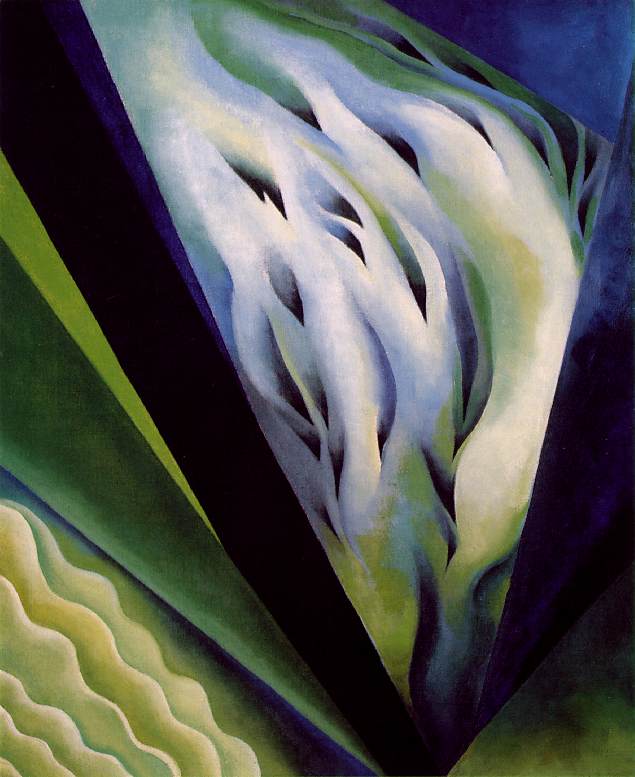
Blue and Green Music by Georgia O’Keeffe, circa 1919

Rain. Each drop a finger tap on the roof, gutters gurgling. When the sun reemerges, northern California will green up like a piece of bread in a damp bag. To replicate an island’s edge, I’ll sleep in my car beside the cold ocean north of San Francisco behind a curtain of wind.

1. A woman with an English degree, I taught school, roping young people like calves into the corral of literature to discuss the human condition. Coaxing them to think, write. But a good teacher labors all the time, without the space of hours an artist needs to walk the open fen of creative thought. My stories’ characters stayed stuck mutely in scenes, the next line of dialogue impatient to be transcribed.

2. A photo of Georgia O’Keeffe’s classroom shows assignments hung on the wall, easels in rows. O’Keeffe taught school and painted until she could not sustain both, then chose painting. She tossed out, she said, everything she had learned to depict what she saw in a way that others might see anew. About flowers, shells, rocks and bones, she wrote, “I have used these things to say what is to me the wideness and wonder of the world as I live in it.”

3. On colorful walls and in plexiglass cases at Baltimore’s American Visionary Art Museum (AVAM), collages, paintings, and sculptures of self-taught artists reveal the depth of the well of creative enthusiasm: a ship glued from popsicle sticks; tiny scenes of prison life stitched from embroidery thread. AVAM proclaims: “Visionary art begins by listening to the inner voices of the soul, and often may not even be thought of as ‘art’ by its creator.”

4. At the men’s maximum-security prison near my home, the incantatory power of sound erases snow fences of race and gender. The inmates and I share each others’ poems and those of favorites, like Mary Oliver: “maybe just looking and listening/is the real work./Maybe the world, without us,/is the real poem.”

5. Artists’ work holds a heart before we know their biographies. When I fell into Jean Toomer’s “I Sit in My Room” I assumed the poet, like me, was a white woman. I hope he, whose father was born into slavery, forgives my laughable error. The poem whispers to any soul seeking to understand through a pen.

I sit in my room.
The thick adobe walls
Are transparent to mountains,
The mountains move in;
I sit among mountains.

I, who am no more,
Having lost myself to let the world in,
This world of black and bronze mesas
Canyoned by rivers from the higher hills.
I am the hills,
I am the mountains and the dark trees thereon;
I am the storm,
I am the day and all revealed,
Blue without boundary,
Bright without limit
Selfless at this entrance to the universe.

6. Through Yale University’s Room 26 Cabinet of Curiosities, you can view online two pages from Toomer’s journals. The simple notebook with lined pages resembles the kind the inmates and I use, purchased for a dollar or less. People are logging thoughts, each phrase a beam in a cathedral never to be completed.

7. With journals as portable studios, we make things and make up things. We strive to make up to the world for our limits, each new creation–poem or painting–another hat tossed into the ring of the attempt to understand the depth and breadth of the human condition.

8. By studying what happens when the sound of a jet disrupts their chorus, biologists learned that the songs of spade foot frogs form a musical camouflage that protects them from predators.

9. Each person’s poem or picture enters a biophony of interrelated soundscape across time and space, like Yeats’ song of Innisfree: “And I shall have some peace there, for peace comes dropping slow,/Dropping from the veils of the morning to where the cricket sings;/There midnight’s all a glimmer, and noon a purple glow,/And evening full of the linnet’s wings.”

10. Art is our ant farm, our honeycomb, labyrinth, the anthology of infinite pages; each poem is a rain drop on its way to an ocean.


Alexa Mergen edits the blogs Day Poems and Yoga Stanza. Her poem “Distance,” published in Solo Novo, was a clmp Taste Test selection. Alexa’s most recent chapbook is Three Weeks Before Summer; and a full-length poetry collection is forthcoming from Salmon in 2015. For a full list of published essays, poems and short stories, please visit alexamergen.com.

Read an interview with Alexa here.

“The World’s Last Morning” by Roy Bentley

St._George_Slaying_Dragon (Worlds Last Morning)
St. George Slaying the Dragon by Hans von Aachen, 16th century

Every day someone goes to work unwillingly
or loses a job that he or she hated but needed to live—
the strip-mall organic eatery, Paradise Tire & Service—
and every night someone lies down with disappointment
curled around itself at the foot of a futon, stretching
in the folds of the comforter like a portly mouser.

But this morning the moon jousted between clouds,
upper rooms of the atmosphere a knight on horseback.
Then the horse and his knight had to concede something,
first to the blue-black dark and then to the dawnlight.
Then moonset whitened night sky above the Midwest,
and whole cities of plate glass shattered. You could say

a compassionate God must love the dumb shits
because he made so many of them, their glossolalia
having less to do with speaking with tongues of fire
than with the violence of those taught to subjugate.
You could say when all that plate glass shattered,

it was a consequence of the blunders of six billion
whispering the same deathbed prayer of conversion.
Prattling away in Spanish-accented English, an iPhone
sends a single penultimate voicemail into the air. Maybe
you hear: This is Miguel at Paradise Tire & Service—
jour Solara is finished and ready to be picked up…


Roy Bentley’s poems have appeared in the Southern Review, North American Review, Shenandoah, Mid-American Review, Prairie Schooner, American Literary Review, The Journal, New Virginia Review, Laurel Review, Sou’wester and elsewhere.

“Junie the Tree” by Rasmenia Massoud

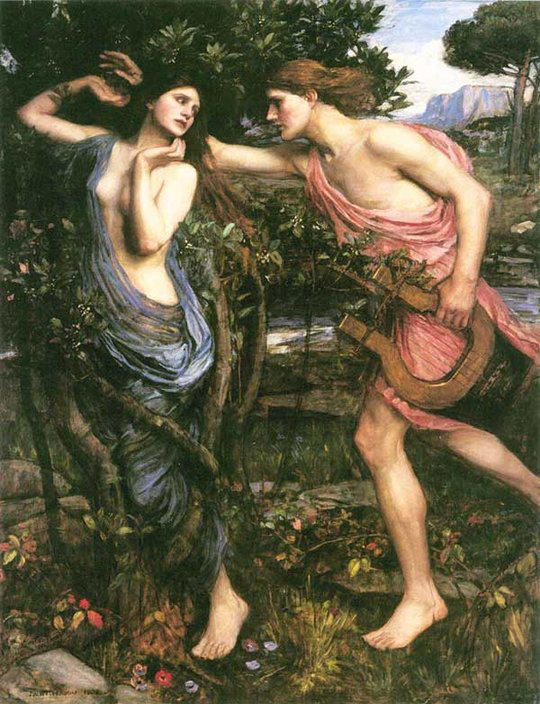
apollo_and_daphne (Junie the Tree)
Apollo and Daphne by John William Waterhouse, circa 1908

Junie the Tree started the game because the rest of us are cowards. That’s what she said, anyway, and no one was going to fight with her about it.

If Junie says you’re a chickenshit, all you can do is accept it. Then change it.

I stick my hand into the can and swirl the little scraps of paper around. This is one of those big novelty cans you find at the grocery store, filled with three different kinds of popcorn, the outsides decorated with holiday themes or whatever cartoon characters are popular right now.

Tiny echoes of rustling paper bits bounce off the sides of the can. Ghost scents of chemical caramel and cheddar powder drift up to my face.

“Just pick one, Ellie,” says Amelia. She’s got a cigarette in one hand. She nibbles on the thumbnail of the other.

“No shit,” says Brady. “You’re taking for fucking ever.”

All five of us are getting antsy. The anticipation, the nerves, this happens every time.

“Okay,” I say, “Get up off me, already.” I extract a folded piece of paper. I open it and read it to everyone. “Sucked off a stranger in the men’s room at Hardee’s.”

We all look at each other and shrug. “Not bad.”

“Well, it’s sorta gross.”

“Meh. Not super gross. There’s grosser.”

Codie takes her turn, pulls out a scrap of cheesy-smelling paper. “Ate two dozen tacos. Stuck my finger down my throat.”

Junie the Tree rolls her eyes, but we only see the normal eye. The lazy eye is concealed beneath her eye patch. “Is this amateur hour? Try harder.”

Frizzy blond hair sticks out in all directions on her head. Hair so blond it’s almost white; so fine you can see Junie’s angry pink scalp. Her shoes look like they belong to two different people. On her left, a blue, adult-sized knock-off of a Converse All-Star. On the right, a small, child’s size in the same style. Junie never had toes on her right foot. Instead of toes, it’s smooth, thick flesh.

She reaches into the can and pulls out an anonymous confession. She unfolds the paper, then starts laughing. After a moment of giggling, she reads it to the group.

“Shit myself at a party. Took off my crappy pants and hid them in my ex-girlfriend’s purse.” Junie folds the paper, still laughing and says, “Hilarious, but not enough.”

Brady reaches in, he eyes each one of us as he takes his time, feeling the bits of paper, looking serious and concentrated, as though reading them with his fingertips. He clears his throat, like he’s about to make a grand speech to a room full of people wearing suits and ties. “Fucked my brother.”

Junie the Tree leans forward on the couch. The way she smiles, it’s the same smile you see on the faces of mothers looking down on their ailing child. Soothing. Empathetic. A healing smile that says how much she wants to take the pain from you; that makes you feel like everything is going to be okay. “That’s better,” she says.

~

The last time I saw Junie cry was the same day she decided to be a tree.

Every morning, when I went across the street to Junie’s house to walk to school, there was an event. Screaming. Hurled objects. Rage-red, tear-streaked cheeks. I’d enter the house, following the sounds of her mother’s shrieks, yelling at Junie to eat her goddamn oatmeal, to comb that awful hair, to stop wearing that stupid eye patch to school.

“That thing is for your eye exercises. It’s not a fashion accessory. You’re in the sixth grade, not a fucking pirate ship.” She grabbed the eye patch and snapped it. Junie screamed and knocked her bowl of goddamn oatmeal on to the floor.

Me, I’d just stand there like an idiot with my hands in my coat pockets, wishing I wasn’t a dumb kid. Wishing I was someone brave, or at least a little older and taller.

I’d been there when Junie’s parents forced her to endure her eye exercises. They’d cover her good eye with the eye patch, then empty a pill bottle of tiny plastic beads out on to the coffee table.

Scattered all over the table, hundreds of colored specks. Those same plastic beads that some girls put on safety pins. Friendship pins. Those little girls, they loved those beads. For Junie, they were symbols of aggravation and forced normalcy.

Junie’s father would hand her a pair of tweezers and sit her down on the floor. One by one, Junie tried to pinch one of those tiny symbol specks to put them back in the bottle. Her lazy eye off in another direction, unable to focus. Her head tilted at an odd angle, trying to point her eye toward those tiny dots of color. Her lip started quivering, fighting to keep all the angry tears trapped in her head.

The tears and screaming came long before the bottle was halfway full.

The day Junie decided to be a tree, I opened the front door of her house and found her sitting on the brown shag carpet of their tiny living room. She had one foot in the air, trying to duct tape a sandal to her toeless baby foot.

“Help me with this,” she said. “Quick. Before my mom gets out of the shower.”

I squatted down and held the sandal to her foot while she wrapped tape around it.

“How come you don’t just wear your tennies?”

“I’m sick of tennies. I want to wear sandals.” She cut the tape and stood up. “How’s it look?”

I took a step back. Her right foot was mostly duct tape. All around the back of her heel and over the arch was silvery gray. Only the toe of the sandal was visible, looking like an empty shoe. “It looks good. Where’d you get sandals, anyway?”

She had her hands on her hips, holding her two feet together, admiring her handiwork. “Got ’em at a garage sale for a quarter.”

That’s how Junie’s mom found us when she came out of the bathroom.

“What the hell are you two doing? Why aren’t you on your way to school yet?”

“I had to finish getting ready.”

“Well, you can’t wear that. And what is that shit on your foot?”

“Sandal.”

Me. Idiot. Hands in my pockets. Silent and wishing. A useless coward.

Junie’s mom shook her head. “Go change. You can’t go to school in a green t-shirt and ratty brown corduroys.”

“I’m a tree.” Junie dropped her arms down at her sides and stood up straight. “See? Tree.”

“Stop being ridiculous.” Her mom’s hair was still wrapped up in her post-shower turban. “Get changed and get to school. You’re making Ellie late by pulling this shit.”

“It’s okay,” I said. “I don’t care if I’m late.”

Junie’s mom rolled her eyes and shook her head. “You’re just as bad as she is.”

That’s when Junie made a break for it and dashed out the front door. I ran out after her, finding her already in tears.

“She’s so stupid,” she said, in between little sobs. “I don’t get why she wants me to wear a bunch of stupid outfits that don’t look like anything. At least now I look like something. I look like a tree instead of a boring person in a boring outfit.”

“I like it,” I said. Junie didn’t seem to hear me.

“And she always wants me hide my foot. I don’t care about my foot. If someone else feels weird because of my stump, it’s their problem.”

“Yeah it is.”

“She’s ashamed of me, but she should be ashamed of herself. She’s the reason I’m not like everyone else.”

Before I could respond to her, Harlan Strunk caught up to us, riding his skateboard.

“What’s up, Goony Junie?”

“Shut up, Harlan,” I said.

He ignored me. “What’s wrong with little Goony Junie? Why you bein’ a crybaby, Goony?”

“I’m not a crybaby. I’m a tree,” she said.

“What? You’re a freak is what you are, Goony.”

“I’m… a… TREE!” Junie lunged at Harlan, throwing her whole body at him, knocking him off his skateboard. He landed hard and Junie landed on top of him. He cried out and the skateboard rolled underneath an ugly brown station wagon that was parked in the street. I heard the grinding stone scrape of Harlan’s body against the gravel on the road.

Junie jumped up off of him, unhurt. “I am a fucking tree.”

Harlan sat up, the right side of his face scraped up, with a few tiny bits of gravel stuck to his cheek. He cradled his right elbow, rubbed his face and narrowed his eyes at us, but remained silent.

Junie straightened her eye patch. Brushed off her brown corduroy pants. By the end of the school day, everyone at Daleview Middle School knew that Junie was whatever she wanted to be. And no one was going to fight with her about it.

~

Junie says that the worst thing about shame is the way it chains you down. The way it holds your mind hostage and won’t let you go, gnawing from the inside out, feeding on you like a parasite.

Getting rid of it, she says, is really just a matter of purging. Puking out the parasite.

After she got kicked out of college, Junie abandoned her plans to be a psychiatrist.

“I can help just as many people without that bullshit psych degree,” she’d said. “And now I can start earlier.”

A few weeks later, Junie told me about the game.

“The thing about shame,” she said, “is that it’s easier if someone else pulls it out of you. You write it down, no one knows who writes what. When someone else reads it, when you hear your shame talking back to you, it’s out there. It’s in front of you.”

People are too afraid to speak their own shame, she says, so they need to hear it spoken from someone else. They need someone there when they hear it. The more, the better.

We started out small. First, with tiny, petty shame. Then, we worked our way up. The more people who came to play, the deeper the confessions became. Some people only came once. Others, like me and Codie, we came almost every night.

After the game caught on, my boyfriend Derek, he started freaking out. The first time I brought him to a game was the last time. He ran out of there before we’d even finished drawing confessions.

“Everyone in there needs help, Ellie,” he said. “Especially your friend Junie. This kind of shit is how cults get started.”

Derek, he was just one of those people who feel better when shame isn’t spoken out loud.

Junie says that boyfriends and shame bind with the same chains.

~

Junie slides off the couch and joins the rest of us on the floor. She puts her arms around Amelia, who starts sobbing. Not gentle tears; the anguished, hyperventilating flow of tears that come from suffering.

I look at Brady, his eyes wide and befuddled. Codie is all slack-jawed surprise. I can’t see my face, but I know the expression is the same. We’re all mirrors of one another.

Somehow, Junie is reading all of us.

“I didn’t want to,” Amelia says through her sniffs and choking sobs. “I didn’t want to, but he… he… he was hurting me, and… I DIDN’T WANT TO!”

“I know, I know.” Junie the Tree, she smoothes Amelia’s hair. Her good eye and bad eye both rimmed with tears. “Now we can start making it better,” she says.

The rest of us, we help Junie. We sit there on the floor of Junie’s little trailer, holding one another in a big knot of arms and tears. Junie the Tree in our center, holding us up.


Rasmenia Massoud is from Colorado, but after several weird turns, she ended up somewhere in France. She is the author of the short story collections HUMAN DETRITUS and BROKEN ABROAD. Some of her other work has appeared in various anthologies and online at places like The Foundling Review, The Lowestoft Chronicle, Literary Orphans, Metazen, Full of Crow, Flash Fiction Offensive and Underground Voices. You can visit her at: http://www.rasmenia.com/

“Paris in October” by Katie Rice

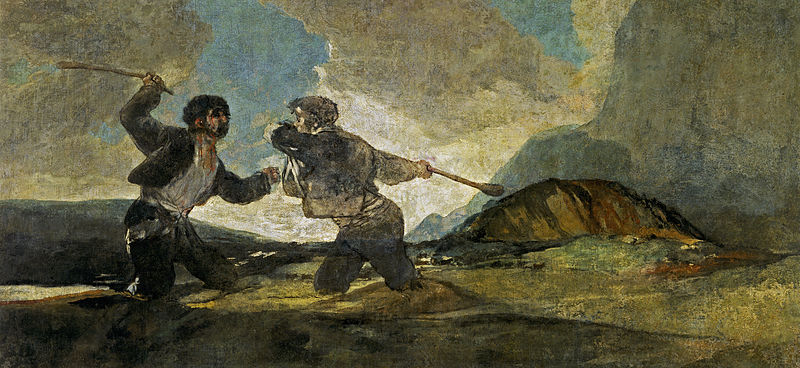
800px-Francisco_de_Goya_y_Lucientes_-_Duelo_a_garrotazos(Paris in October)
“Duelo a garrotazos” by Francisco de Goya, circa 1819

The endless summer,
the interminable summer,
under whose glare the Goyas burned,
Dos viejos comiendo now orange
with the handprint of the sun.

We go see them in their sterile room.
I let you take me behind
Las Pinturas Negras and undress me.
Two men dueling, knee deep in sand—
I sink dangerous into you.

Outside the Prado the dry heat breaks.
Next weekend I will be leaving
Madrid for Paris. You will stay
with your Spanish family—
it is time, anyway, to say goodbye.

You threw my house key through the gate
at El Palacio Real before I left.
“It is secret and royal,” you said.
“It is irreversible,” I said.
Now in the city of light and gold,
I watch amantes throw keys into the Seine,

I drink warm coffee,
brown like the back of your neck,
the darkest creases of your body.
Graffiti on the table reminds me
of Goya painting black and yellow frescos
on his walls before his death.

You alone in your house now,
(and hasn’t there been a death?)
remembering us before the Spanish heat
made me elastic, and you, callous.
I step into the lush French rain.

It is not only bloom and beauty here;
couples walk streets that smell like piss.
They make me think of you,
and you make me think of Saturn
with his white eyes and wild hair,
clutching his bloody, headless son.

A father eating his children to fight fate.
Those wild white eyes…
He once was a god,
once was somebody’s lover.


Katie Rice earned her BA in English: Creative Writing from Colgate University. She now works at Penguin Random House and lives in Brooklyn, NY.  Her poems have appeared in Black Bottom Review.

Read an interview with Katie here.

“Ghosts” by Lonette Stayton

George-Catlin-(Ghosts)
American Indian by George Catlin, circa 1840

Westwood was built, according to folklore, on top of Indian burial grounds. I never found an arrowhead when excavating the driveway of our home, the broken bits and pieces strewn here and there as I pretended to be on a grand adventure for National Geographic, but I trusted the elders of the neighborhood who talked of ghosts and objects disappearing. I wanted to see a ghost–just once, a barely-there specter that whispered secrets to me and me alone. And though I never got to hear anything go bump in the night, I’m no less the believer.

I lived with ghosts of a different sort.

Westwood was a suburb in South Memphis where hardworking, middle-class whites lived before the white flight of the early seventies. When I was born in ’74, there were no whites in my neighborhood, just hardworking, barely middle-class blacks earning a living and proudly proclaiming a plot of earth as their own.

Despite my grandmother’s disapproval, my parents bought their three bedrooms, one bath home on Lillian Drive in Westwood shortly after my birth. My grandmother, Big Momma, was sure that her daughter-in-law was going to mire her son in debt. Daddy’s job as a warehouse worker with the VA Hospital and Momma’s job as a manicurist was enough to keep their little family afloat.

Momma planted pink azalea bushes and golden burning bushes in the flower bed in front of the living room windows. The new sofa, purchased on credit, was preserved in plastic. The faint smell of bleach clung to the air, testifying to the cleanliness of the home. Years later, this house appears often in my dreams.

Momma’s mission to create the perfect home didn’t erase the trauma of her loss. How do you survive ghosts? How do you continue on despite the constant reminders of what was lost? Once, when Momma suffered from one of her dark spells, she told me what happened in Germany. This was one of the few times she ever discussed my older sister, Angela. She told me Daddy came home to the Army base where they were stationed to a trail of blood that led from the front door to the bedroom. “The coffin was so tiny,” she said, her eyes gazing at something I couldn’t see. I asked where the miscarried infant was buried, but she mumbled something low and waved her left hand, dismissing the question. I didn’t ask again.

The twin boys were born six months too early, their tiny lungs undeveloped and unready for this world. I found a photograph of Momma round with pregnancy, a black and white checkered maternity blouse floating about her as she appeared to be opening gifts.

“Momma, were you pregnant with me?” I asked when I found the photo. Framed baby pictures and photo albums that chronicled my progression into childhood graced end tables, but this photograph I had not seen.

“No, baby. I was pregnant with the twins.” This was the first time I heard of yet another birth, more siblings who did not live to be a part of my family. As a five or six year old, my concept of death was still murky, but I was sure that they were still there in the home with us. I knew Momma was haunted when she had her sadness and didn’t feel well enough to drive me to school. When she said no to swimming lessons and no to playing at friends’ houses, it was because the specters of my older siblings lurked about, reminding her of how lucky she was to have a living daughter, and that life could be taken away from her in a second.

For Momma, the dead lingered.

The Chickasaw, who occupied the land that became Memphis long before the whites and the blacks, had their own way of dealing with their dead. The Indians discharged guns and whooped to drive the ghosts of dead men away. After the souls were induced to leave the neighborhood of their living relatives, they traveled westward, passed under the sky, and proceeded upward to the land of The One Above or the Breath Holder, their ancient idea of heaven. The name “spirits road” was given to the Milky Way that was regarded as the trail upon which souls ascended.

I imagine my adult self returning to the three-bedroom home on Lillian Drive with my own rifle, discharging it over and over again, startling the occupants of my childhood home. One, two, three, the spirits of what would have become my older sister Angela, and my older twin brothers, Sean and Shane, would flee from this place, would stop haunting my mother with images of what they would have looked like at age seven, celebrating a birthday party, or at age sixteen, asking for the keys to the car. There would be no more crying spells and days where Momma couldn’t rise from bed and bathe herself, her usually immaculate hair mussed. I can see Angela, Sean, and Shane slipping and sliding upward on the Milky Way, gurgling their baby gurgles, fists flying, hospital blankets floating around them, as they are taken into the arms of The One Above.

I, too, would be free, free to roam beyond the only yard with a fence in the neighborhood. I would have childhood stories of biking through the meandering streets, stopping by the candy lady’s house around the corner, and purchasing dill pickles with peppermint sticks stuck in the middle of them. I could tell my future children about climbing Keisha’s huge oak tree and double dutching with Cookie and Kim three houses down. I would have memories of scraped knees, banged elbows, and numerous crushes.

Instead, Angela, Sean, and Shane refused to travel westward. These spirits, because of the ferocity and viciousness of my mother’s love, vexed me. They occupied my mother’s space, prevented her from playing dolls with me. They caused her to say no when I asked if she could take me to the movies, to parties, to the Girl Scouts meetings.

I have few memories of her without glazed eyes, hunched shoulders.

The front yard had a deep rut that circled the front yard, made by my bike because I wasn’t allowed to leave the lawn.

“B, why get her a bike if she can’t use it?” my Dad asked.

“She can ride it in the yard!” was Momma’s terse reply.

I never got to see the interior of the candy lady’s home, the little old lady who supplemented her social security checks with candy sales to neighborhood children. I had to ask Keisha next door to bring back a dill pickle, bribing her by not asking for my change when she returned. Waiting for Keisha at the gate, my fingers entwined within the chain-link fence, the image of five or six children running away from my yard, became a recurring theme. Left behind. Forgotten.

A few times I was allowed to play at Keisha’s since she was right next door, but not often. And I remember Cookie and Kim coming to the house with chocolate chip goodies, presumably to share. I don’t know what Momma told them, but I watched them walk down the street with their cookies from my barred bedroom window.

The only time I went beyond the Westwood border was when I attended a school in my grandmother’s neighborhood. To prevent me from becoming a latch key kid, I attended school across town where I could walk to Granny’s after school. There no one knew I couldn’t leave the yard. Alton Elementary was out of reach of the spirits.

Years later, I see the frightened woman who attempted to keep her household together with plastic and bleach. There was nothing to keep the uncertainty of the world away except for a chain-link fence and vigilance. My younger self deeply resented Momma and wished I could have experienced a childhood of freedom. There is still anger, yes, but anger dulled with understanding. Now that I’m thirty-eight and attempting to start a family, I wonder how my mother survived the haunting of her miscarriage and her premature twin boys. I long to forgive the borders and boundaries of my childhood, the intense loneliness and isolation of my youth. I long to forgive, because I may soon be protecting a child of my own.

Sometimes I drive past the house on Lillian. The driveway is now paved, the carport is now a garage, and the azaleas are long gone. Even though I longed to escape its front yard, I’m still drawn to the house every so often, slowing down so I can gaze at my childhood home.


Lonette Stayton is currently an MFA student at the University of Memphis. She is working on her thesis, Fractured Self–A Life in Snapshots, and plans to graduate in the spring. Her middle school students’ passion for writing inspires her every day.

“Attachments” by Jodi Paloni

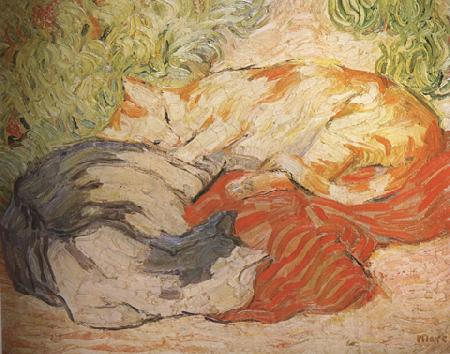
Franz Marc- (Attachments)
“Cats” by Franz Marc, circa 1909

After her third dog passed, Lorelei adopted an overweight calico. The couple that had brought him in wrote on the form 12 yrs old, heart problems. The cat dealt with enough heft to make it impossible for him to clean his own back, so had dreadlocks down the spine and dandruff, too.

“Are you sure you want grumpy old Murray?” asked the boy at the desk.

“I want to help,” she said. “I can’t get attached to a cat.”

~

The cat was renown for hissing at the volunteers in the shelter, but when Lorelei let him out of the carrier in her living room, he sidled up against her legs and rubbed, weaving around her calves in fat figure eights as if he missed her. When he rolled on his back on the carpet, he looked like a seal. He slept on the end of her bed. Trapped her feet under the covers. Wheezed. Strangely, the sound helped her fall asleep.

After a few nights, she loved the cat as if he were a dog. She told him, “You’re going on a diet.” She put Special Recipe for indoor adult cats into his dish by the refrigerator. “Let’s slim you down. You’ll live longer.”

She cut out his dreads. She brushed him until his fur shined. He purred.

Lorelei’s next-door neighbor, Joe, came to eat dinner and watch East Enders on the BBC every Tuesday night. They had gone to school together as kids. In high school, Joe tried to date her, but she preferred the closeness they shared as friends. Both inherited their parents’ houses. Both moved home after their busted marriages. Neither had kids.

With Joe there, Murray hissed and hid beneath the couch, but he couldn’t fit all the way, so they laughed to see the cat’s doughy haunches and his thick tail whipping and slapping the rug.

“How do you like the new old cat?” Joe asked as he ate beef stew at her kitchen table.

“It’s working out pretty well,” she said. “Better than I thought.”

Joe nodded and chewed.

“He’s good company. He sleeps on the bed.”

“Really.” Joe wiped his mouth. He leaned back in his chair and called out in the direction of the living room, “Hey, Murray, what’s your secret, buddy?”

Lorelei laughed, covering her mouth with her fingers.

“Lori, you know I’d be happy to join you in bed anytime you’d let me.”

“I’m happy as we are.” She looked down at her stew. “You know that.” She looked up.

“I’m going to keep reminding you that we could be happier,” he said and winked.

“Let’s not mess with it.”

But she liked that he had called her by her childhood name.

~

Joe sat next to Lorelei on the couch to watch TV. She felt Murray’s tail thwack against her foot. She worried about Joe’s weight on the cat. Joe wasn’t fat, but he was a large man. In that way, he took after his father, but only in size. Joe could handle his alcohol. As long as she could feel the switch of Murray’s tail, she felt the cat was probably fine.

When the show ended, he helped her with the dishes. She walked him outside to the path through the hedge between their houses.

“Can I kiss you?” he asked.

“Next time,” she answered.

It was always the same, from when they were teenagers, their little joke.

In the living room, Lorelei propped a corner of the couch up with the dictionary and spoke sweetly to Murray. She used a treat to finally get him to spin around and crawl out. At bedtime, Murray did his seal-flop in the middle of the rug. He didn’t follow her to the stairs.

“You’re punishing me cause you think I have a new boyfriend, aren’t you?”

Murray switched his tail.

“But you’re my new boyfriend, Murray. You’re the guy for me.”

~

In the bathroom, Lorelei looked out the window to Joe’s house while she brushed her teeth. His kitchen was all lit up. She slipped into the guestroom, her old childhood room, where she could spy more easily in the dark. She saw him sitting at his kitchen table, one leg crossed over the other. He wore only denim-blue boxers and white socks as he talked on the phone. It was past eleven. He laughed, looked happy.

She remembered his body differently, young, hairless, playing Marco Polo at the public pool, always jerking around. She recalled thin tight muscles bulging from his soccer uniform. Now he looked soft and comfortable. Relaxed.

Who would he be talking to at this hour? Joe had friends and maybe someone special, more than just a friend, but she didn’t know.

Murray howled from the hallway. Lorelei fixed the curtains and headed for bed.

She passed Murray in the hall. “So, big guy, I guess I’m forgiven.”

He waited for her while she brushed her teeth.

~

The following Monday, Lorelei had an e-mail from Joe telling her he couldn’t make it on Tuesday. Something had come up at his crew club. There was a special meeting for the board.

She ate leftovers and watched East Enders with Murray curled on the cushion where Joe usually sat. She felt a tightening around her heart. She realized she missed Joe. In the kitchen, she made herself a cup of lemon ginger tea and sat down at the table.

After fourteen years of marriage drama, she longed for peace, some solitude. Joe didn’t push or cloy. They shared the one night a week. She imagined that sometime in the future they’d have sex, but she didn’t want to rush.

She startled when he rapped on a glass pane of the kitchen door.

“Oh.” She pressed one hand on her chest and beckoned with the other for him to come in.

He carried a paper bag. “Am I too late for dessert? I brought ice cream.”

“Murray and I thought we weren’t going to see you tonight.” Her voice was pitched and sounded giddy.

“I saw your light.”

Murray hunkered down on the threshold in the archway between the living room and the kitchen, ears back, scowling, his tail going.

“You’re all threats, Mister.” Joe teased the cat as he scooped ice cream into coffee mugs. “I dare you to do something about it.”

“Let’s eat at the table.” Lorelei worried about Murray hiding under the couch. “At least he’s not hissing.”

Joe told her all about the crew club meeting. Someone had spray-painted the boathouse.

“Apparently it’s not graffiti. Now it’s called Street Art.” He laughed. “Some of it is quite beautiful.”

“Remember in tenth grade when we painted the Civil Rights mural on the new gym wall?”

“Remember the senior trip to Mexico?” Joe wagged his eyebrows up and down.

“Let’s not go there.” It was the one time they’d made out and groped each other a little after they played Quarters for shots of tequila. She got up to rinse their mugs. “Let’s walk. I’d like to see it.”

“See what?”

“The Street Art.”

On the riverfront, Joe shined a flashlight, illuminating a painting of three women, larger-than-life, with over-exaggerated fleshy parts squishing out of red, white, and blue vintage swimsuits. The women lounged by a pool. They held up fancy martini glasses that were as wide as their heads. Cocktail stirrers in the shape of thin pink penises protruded out of the glasses. Gold fireworks exploded on the black sky background.

“Whoa, weird.” Lorelei stepped back to try to understand it better.

“It’s wild, isn’t it? It has this three-dimensional look,” said Joe, standing up close, gesturing at the picture with the weakening beam. “Inviting. Couldn’t you could step right into the party.”

She shook her head. The light on the painting made the women look clownish. The river chilled and dampened the air. She wanted to go home.

“I’m kind of freezing all of a sudden.”

Joe turned to her and shined the flashlight on her midriff, forming a circle of dull luminescence that enveloped them both. “Lori,” he said. “Can’t I kiss you?”

“Next time,” she said playing along.

“No, now.” He stepped closer and paused.

The kiss was warm, just long enough to show them both that now could be the right time.

She caught his free hand. “Come on, let’s go back.”

They’d left the lights on in the kitchen. Murray stretched horizontally on the linoleum floor just inside the door. He had not assumed his usual seal-flop position. Lorelei said his name, but his tail remained still.

“Jesus Christ, Joe, I think he’s dead.” Her fingers on one hand covered her mouth. She pressed the other to her chest.

Joe squatted and placed a flat hand on the cat’s torso. “He’s warm still. But I think you’re right. I don’t feel any up and down.”

“Okay, that’s it.” Lorelei sank into a kitchen chair. “This is my last pet.”

Joe petted the cat’s smooth back as if the cat were alive. She thought of the dandruff Murray had when she had first brought him home. The kitchen clock ticked.

The phone rang over in Joe’s house. She glanced at the clock. It was after eleven.

He stood. “I have to run over and grab that call.” He pumped his hands up and down as if to calm her, but she had not shown any agitation. She felt discouraged and cold. “But I’ll be right back,” Joe said. “Really, Lori, I wouldn’t leave you now if it wasn’t important.”

She shut the kitchen door behind him and locked it.

“Odd. Another eleven o’clock call,” she said aloud, but of course, Murray couldn’t hear; he was dead.

She grabbed a bath towel from the dryer in the laundry room, smoothed it flat on the floor, and rolled Murray onto the makeshift shroud. She swaddled him, leaving his head uncovered, and carried all twenty-three pounds of dead weight up the stairs to the guestroom. She set him in the middle of the bed and stood next to him in the dark.

Joe had surprised her, leaving when she had a dead cat on her hands. Now she couldn’t stop herself from peering at his house through the curtains. He stood in the kitchen wearing all of his clothes and seemed to be looking at her house, but he was still on the phone and he appeared to be laughing.

~

Standing there in the dark, she thought about a night when she was sixteen. First, she heard Joe’s drunken father singing outside. Then, through this same window, she watched him crash into the redwood bird feeder and fall on his back. He stayed in that position, unmoving, for what seemed like forever. Lori’s parents were out, and no one from next-door came to investigate, so she’d gone over to see if he was dead. He wasn’t. He was staring up at the moon, eyes wide, smiling. When she leaned over him, asked if he was okay, he grabbed her wrist and pulled her to the ground. He rolled on top of her. He called her baby girl. She yelled for him to stop. He shushed her. She couldn’t move. Lorelei felt knuckles press into her hipbone. When she heard the clinking sound of his buckle, fear clogged her throat. She could hardly breathe from the man’s weight.

Then Joe appeared. He kicked the side of his dad’s gut and yelled, “Get up you fucking bastard! Jesus! Lorelei!” As soon as she was free, Lorelei ran home and locked all of the doors. She showered and put on fresh pajamas. She sat on the toilet seat in the bathroom until she heard her parents’ car in the driveway then she went to bed. The next morning, when Joe came to walk her to work, he tried to smooth it over. “He doesn’t remember anything, Lori. Not a thing. I’m sure of it. He never remembers.”

She had held up her hand. “Stop! I don’t want to talk about it.”

“What were you doing out there?”

“I said stop it, Joe. You dealt with it. We’re all just fine.”

Though Lorelei did not think of that event very often, she had thought about it last spring, when Joe pulled up the parched cedar ground creeper that had pricked her through her lightweight pajamas that night. He replaced it with waxy-smooth periwinkle that bloomed a deep purple in the summer. The bird feeder out front at Joe’s was new, too.

Now she adjusted the curtain at the guestroom window. She leaned over the bed. “Our time was short and sweet, old guy.” She patted the mass of Murray’s body through the towel. “Great while it lasted.”

She shut the door behind her, closing the dead cat inside. She brushed her teeth, and went to bed. She missed Murray’s weight against her feet.

Twenty-minutes later, the telephone rang. Seven rings. She had expected as much. She turned to face the wall and drew her knees to her chest under the quilts.

Seven more rings. Then, silence. Then, seven rings. Then, silence.

Tomorrow before work, Lorelei would bury Murray next to her three shelter dogs in the back yard. She imagined Joe would see her digging a hole and come to help.

They’d start all over.

Again.

They’d start all over.


Jodi Paloni lives and writes in the foothills of southern Vermont. Her stories appear in Green Mountains Review, Carve Magazine, The Atticus Review, Whitefish Review, upstreet, Spartan, and others. She is the 2013 winner of The Short Story America Prize for Short Fiction and placed second in the 2012 Raymond Carver Short Story Contest. Jodi reviews fiction for Contrary Magazine and New Pages. She has an MFA in Writing from Vermont College of Fine Arts.

Read an interview with Jodi here.

January 2014

KiikAK.
Kiik A.K. (lullaby) previously studied poetics at Santa Clara University and UC Davis and is a current graduate student of creative writing at UC San Diego. His work has appeared or is forthcoming in the journals iO, Scythe, Washington Square, Barge Press, The Brooklyner, Alligator Juniper, CutBank and Alice Blue Review.

Christine AlettiJPG
Christine Aletti (Two Variations on the Theme of Goodbye) has an M.F.A. from Sarah Lawrence College. Her poems have been published in Two Hawks Quarterly and Tattoo Highway. Christine lives in New Jersey, where she teaches writing to unruly youths and yoga to disciplined yuppies.

Richard Bader
Richard Bader‘s (The Tuesday Evening Meditation Group Breaks to Pee) fiction has been (or is about to be) published by the Burningword Literary Journal, SN Review, and National Public Radio. This is his second story for r.kv.ry. He lives and writes in Towson, Maryland.

Roy Bentley
Roy Bentley‘s (The World’s Last Morning) poems have appeared in the Southern Review, North American Review, Shenandoah, Mid-American Review, Prairie Schooner, American Literary Review, The Journal, New Virginia Review, Laurel Review, Sou’wester and elsewhere.

Janet Frishberg
Janet Frishberg (Benefits of Anticipatory Grief) lives and writes in a light blue room in San Francisco. She’s currently editing her first book, a memoir. You can find her work in Literary Orphans, Cease, Cows, sparkle & blink, the SF Chronicle, and soon in The Rufous City Review and Black Heart Magazine. You can find her @jfrishberg

Ann Hillesland
Ann Hillesland‘s (Wunnerful, Wunnerful, Fabulous) work has been published or is forthcoming in literary journals including Fourth Genre, The Los Angeles Review, Monkeybicycle, Open City, Prick of the Spindle, and SmokeLong Quarterly, and has been selected for the Wigleaf Top 50 Very Short Fictions 2012. She is a graduate of the MFA program at Queen’s University of Charlotte.

Rasmenia Massoud
Rasmenia Massoud (Junie the Tree) is from Colorado, but after several weird turns, she ended up somewhere in France. She is the author of the short story collections HUMAN DETRITUS and BROKEN ABROAD. Some of her other work has appeared in various anthologies and online at places like The Foundling Review, The Lowestoft Chronicle, Literary Orphans, Metazen, Full of Crow, Flash Fiction Offensive and Underground Voices. You can visit her at: http://www.rasmenia.com/

Alexa Mergen
Alexa Mergen (Cells of Solitude) edits the blogs Day Poems and Yoga Stanza. Her poem “Distance,” published in Solo Novo, was a clmp Taste Test selection. Alexa’s most recent chapbook is Three Weeks Before Summer; and a full-length poetry collection is forthcoming from Salmon in 2015. For a full list of published essays, poems and short stories, please visit alexamergen.com

Michelle Olney
Michelle Olney (Short Prayer) studied Creative Writing at Brandeis University, where she received the American Poets Honorary Prize (2009). She was recently hired as Poetry Editor for the speculative genre magazine Isotropic Fiction. She lives and works in Portland, ME.

Jodi Paloni
Jodi Paloni (Attachments) lives and writes in the foothills of southern Vermont. Her stories appear in Green Mountains Review, Carve Magazine, The Atticus Review, Whitefish Review, upstreet, Spartan, and others. She is the 2013 winner of The Short Story America Prize for Short Fiction and placed second in the 2012 Raymond Carver Short Story Contest. Jodi reviews fiction for Contrary Magazine and New Pages. She has an MFA in Writing from Vermont College of Fine Arts.

Katie Rice
Katie Rice (Paris in October) earned her BA in English: Creative Writing from Colgate University. She now works at Penguin Random House and lives in Brooklyn, NY.  Her poems have appeared in Black Bottom Review.

Lonette Stayton
Lonette Stayton (Ghosts) is currently a MFA student at the University of Memphis. She is working on her thesis, Fractured Self–A Life in Snapshots, and plans to graduate in the spring. Her middle school students’ passion for writing inspires her every day.

Jack Troy
Jack Troy
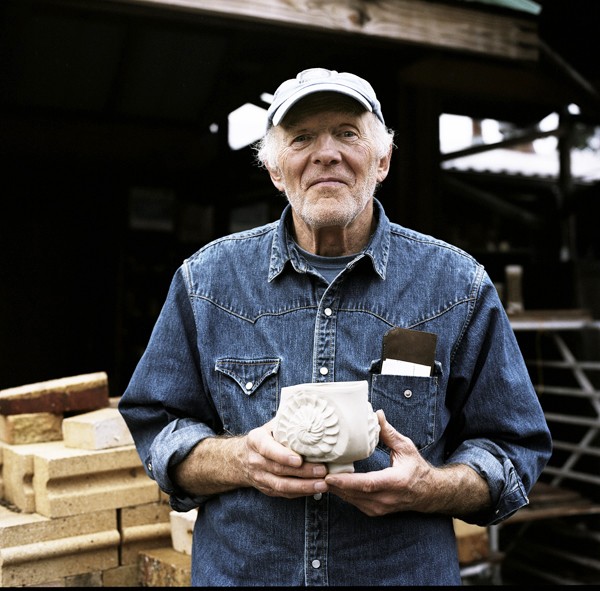
(The Wind in the Jug) is a potter, teacher and writer who lives and works in Huntingdon, PA. He has taught over 200 workshops for potters and his work in clay has taken him to 24 countries. His poems have appeared in West Branch, Pivot, Friends Journal, Kestrel, The Studio Potter, and Common Ground. His collection of poems, Calling the Planet Home, was self-published in 2003. His website is jacktroy.net

unnamed
Monica Wendel (The Lightning Continued) is the author of No Apocalypse (Georgetown Review Press, 2013) and the chapbooks Call it a Window (Midwest Writing Center, 2012) and Pioneer (forthcoming, Thrush Press). These poems were composed at the Jack Kerouac Project of Orlando, Florida, where she was the Spring 2013 writer-in-residence. Currently, Monica lives in Brooklyn and is assistant professor of composition and creative writing at St. Thomas Aquinas College.

Kevin Winchester
Kevin Winchester (Like Juliet and Romeo) is a North Carolina native and author of the short story collection, Everybody’s Gotta Eat. His work has appeared in Gulf Coast, Tin House, Barrel House, Storysouth, and the anthology Everything But the Baby. In 2005, the Bread Loaf Writers’ Conference awarded Kevin their Work Study Scholarship. He is currently the Director of the Writing Center at Wingate University where he also teaches Creative Writing. Winchester recently won the 2013 Thomas Wolfe Fiction Award.

typewriter
Fran Wolf (Meditations on my Brother’s Winter Coat) writes stories she’s learned from living life as a paralegal, waitress, library aide, community organizer, phone solicitor for charities, and all too many other jobs. “Meditations on My Brother’s Winter Coat” is her first published story. You can reach her at: franwolf1117@gmail.com

“The Wind in the Jug” by Jack Troy

Bullock-cart-by-M-K-Kelkar(Wind in teh Jug)
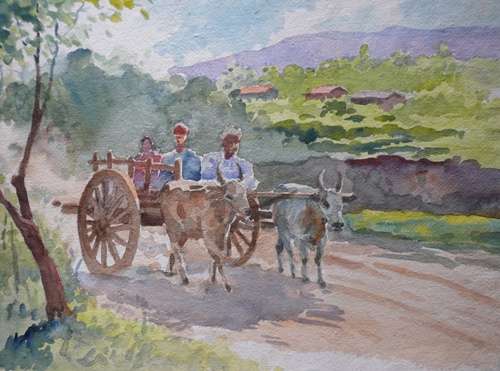
“Bullock Cart” watercolor painting by M.K. Kelkar
(For the Abolitionist Potters of Chester County, Pennsylvania)

Bluebird potters, they called you,
your kiln-smoke grafting winter on to spring.
You had the power to call birds north
with a gallon crock, rung by your knuckle,
toning the fire-birthed heat to the breeze,
that clear note drifting south
below the Mason-Dixon line.

Your county’s hills enclose me here
the way that sleepers’ knees push up green quilts.
In this fieldstone cellar-hole, open to March’s sky,
I find your stoneware jug, tamped in a niche
one hundred fifty years ago.
Blue-gray clay hide restrains the bulbous dark inside.
I sniff the vinegared past, tip to my ear this conch,
this echo-holder, stamped by a whorl at the handle’s base.
I read you by your thumbprint, potter.
Mahlon Brosius, John Vickers, I hear you in there.
My breath across the jug-mouth rumbles.
Sound spills from this clay chrysalis
like that of distant tumbrels, or your wagons
mounded high with straw-packed mugs and porringers.
Slaves — runaways — were the heart of your cargo.
Scheming their freedom, you trundled them north,
Quaker to Quaker, binding the law’s weak wrists
with your compassion.

Within these cellar walls I’m centered,
like a man who wakes up in a bowl.
This stony jug’s the gift of time, and flesh, and fire.
Its hand-fixed form now shapes the wind
these bluebirds ride and liven with their song.
Hold back here, jug, the earth from closing down.


Jack Troy is a potter, teacher and writer who lives and works in Huntingdon, PA. He has taught over 200 workshops for potters and his work in clay has taken him to 24 countries. His poems have appeared in West Branch, Pivot, Friends Journal, Kestrel, The Studio Potter, and Common Ground. His collection of poems, Calling the Planet Home, was self-published in 2003. His website is jacktroy.net

Read an interview with Jack here.

Interview with Margot Taylor

Margot Taylor

Joan Hanna: We were so excited to have your Short “The Knock Down” in our October Issue. Can you share with our readers a little about your writing process?

Margot Taylor: I try to write most days – just like with physical exercise it gets harder the longer I go without doing it. Even so, facing the blank page, I often have to tell myself it’s okay to write badly, much better than not writing at all, and I can always bin the result. Then I usually write quickly and without thinking too much about it. If I find I have something I like I’ll do an edit, put the piece aside, revise it again, sometimes many times, far too many times, so that the revision stage also becomes a sticking point for me! Despite all this I love writing, especially when it’s going well.


JH: Can you talk a little about how this story came about?

MT: I wrote it for one of Zoetrope’s weekly Flash Factory gigs. The challenge was to write a story in less than 500 words to include the words ‘blood orange, wend, frosted, guppies and raw’. ‘Wend’ made me think of rivers. We’d just come back from a sailing holiday in which we’d spent a lot of time up rivers or tied up in port as the wind had been so strong. One day a small sailing boat came in with a young couple on board who were very shaken, having had a knock-down out at sea. Despite being cautious sailors my husband and I talk about setting off one day across the Atlantic. So the story is based on our sailing experiences and dreams, but the prompt words forced me to take that imaginative leap away from telling it exactly as it happened. All the prompt words ended up in the fantasy blogging section, although I later edited out one or two.


JH: I was so fascinated that this story is as much about disintegration as it is about acceptance. Can you go into a little more detail about this couple?

MT: Sarah had a wrong idea about the sort of person her husband was. He too had a wrong idea about who he was. It’s tough when you realize that your personality may limit what you can achieve, so John’s the one I feel for more. However, I was writing from Sarah’s point of view, and she copes with her disappointment in him by creating a fictional version of their life together. It’s not the most honest coping strategy, but we all reassure ourselves with partial truths, mini-fictions about our lives, about who we are or were or might still be. I get the feeling she’s really quite happy living on a boat up a river as long as she can keep up the pretense to everyone at home that she’s crossing oceans.

JH: Please include any links to your website, other publications or other links you would like to share with our readers.

MT: I have another sailing story at www.pulp.net. I find the online writing forum Zoetrope Virtual Studios very helpful as a place to post stories and get feedback, also just as a place where people chat about writing.


JH: Thank you so much for taking the time to discuss your writing process and your story. Can you answer one final question? Can you discuss what recovery means to you?

MT: For me at the moment recovery will mean starting to write again. Recently we had our old dog put down. When I started looking for a replacement the search for the right puppy obsessed me, and our new puppy, now she’s arrived, obsesses me. There’s a story about Philip Roth, how he was given a kitten to look after and he played with it all the time and didn’t do any writing, and so he gave the kitten back after a day or two. I’m not planning to give the puppy back! All I’m doing each day is tugging on tuggy toys and cleaning up little accidents and reading dog training manuals and trying to make sure she gets lots of experience of life while she’s still young – she’s been on buses and trains and, of course, our boat. Maybe having to concentrate for long enough to answer these questions will be the start of getting my life back. Recovery after a true crisis, personal or international, is a similar process. At first all normal activities are suspended, then, as you adapt to the changed circumstances or the crisis starts to resolve, one by one they get added back in.