“The Catfish and the Top” by Sheila Meltzer

Catfish
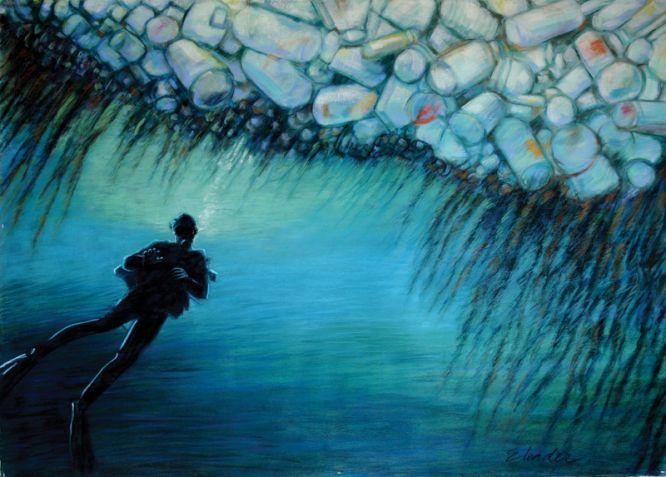
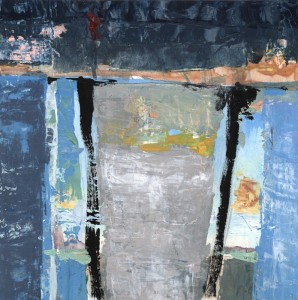
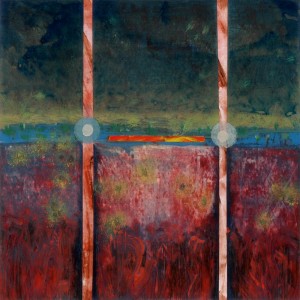
“Plastic Reef” by Elizabeth Leader, Mixed media on Fabriano paper

The catfish lay on her side, long slender whiskers drooping, head spinning like a polystyrene float snagged by a whirlpool. “I really caught something bad this time,” she moaned.

Her partner, hovering beside her, was beside herself. “I’ve had just about my fill of this bottom feeding,” she near-about growled. “You’ve been kept down here long enough, Dorita. Look up there at those manicured koi flaunting their glowing pink scales in the sunlight. That’s where we belong, that’s where I want to see my chickadee.”

“Might be the cast-off worms I had for my third breakfast.” Dora coughed delicately. “There’s something scratchy caught in my throat, feels like nylon fishing line. If you’d be so kind as to fix me a cup of hot sludge, I’ll be back to my old self in the flick of a minnow’s tail, you’ll see.” Forgetting that she didn’t have eyelids, the catfish bravely tried batting her lashes at the big brawny red-tail.

She remembered how her parents’ eyes widened when she told them of the engagement, how they clamped their fins close against their bodies and backed away, scandalized. “Sí, sí, red-tails are catfish too, but only distant relations. We cory cats are peaceful homebodies, scavenging close to our roots. Who knows where this kind wander, getting into who knows what business, eating who knows who to get so monstrously big.” Just the same, the fair femme found the dark, speckled upper body, the dramatic red fins and the cocky attitude irresistible.

Sucking on a bloated cigar butt she’d plucked from under a piece of driftwood, Bruna continued the opulent dream tucked behind her crystal eyes. “You’d be a fool to waste your life in obscurity, snout up to eyes in mud. I have connections in high places.  We’ll blow this pop stand, get you on a cleansing algae diet, and present you, my delectable confection, to the upper crust.”

Dora, hacking up the last of the nylon refuse, reflected on the good old days when you could feast on whatever dropped by, and grow contentedly fat to a healthy old age of five, surrounded by doting small fry. Pollution’s been so bad lately, even the breeders are doing nothing but brooding. The bottom, she regretted, was not what it used to be. Bruna spoke the truth; she was too beautiful a specimen to spend her life down in the dumps when a bright future twinkled above. So it was, that with a farewell sweep of her tear-soaked barbel to the estuary floor, she followed her lover where none of her clan had ever ventured before: up to the top.

Blinded by the sun, Dora’s first impression as they surfaced was of the foreign-tongued greetings that reached her ears. “Mm hmmm, I’ve never seen white look quite so good.” That crack earned one peacock bass a swipe from the blackfish at his side. “Marina baby,” cooed one trout to another, “let’s ask Dr. Gilles about some kinky whisker implants!” Even a pair of male ibises, sharing a banana on the shore, paused to urnk salaciously in her direction. The catfish blushed deeply, a spectacular vision on a pure albino. Would these be her high connections?

Soon the riffraff returned to their customary primping and pimping, leaving the new arrivals to make their accommodations. Bruna led her jewel to a vast viridian field, some kind of invasive plant that was skimming huge areas of river surface. “Just like I promised, there’s plenty more where this came from” and with a shower of puckers, a must-dart-off-to-see-about-something-important, and a no-need-to-trouble-yourself, she was off.

Off to the oyster shack, accepting accolades and favors, from piranhas and other predatory types, in return for promised introductions to their own pale, submissive and desperate bottom-dwellers.

“Is it true they’ll eat anything?”

“Do they keep that virginal blush even in the hot season?”

“Will they willingly go wherever you lead them?”

Yes. Yes. Yes.

Meanwhile Dora applied herself to the petrol-flavored plankton. She bumped against some of those glowing goldfish scales, in reality Brahma beer bottle caps.  She helped extract a handsome young milk frog from the grasp of a plastic six-pack yoke. Why hadn’t she thought before about the source of the debris that was invading her home mud? On the other fin, no root structures, no sunken trawlers to take shelter under.

Exhausted under the unrelenting glare of the sun, her skin began to blacken, her vision to dim, the truth to become clear.

It’s easy to be fooled by what’s on top—not all that glitters is gold, fish.


Sheila Meltzer holds a PhD in linguistics from the CUNY Graduate Center. She lives in Berkeley, hunts software bugs for a living, and dances, for joy. In weekly writing workshops she’s begun coaxing out a life’s worth of buried treasure. Her loot has appeared or is forthcoming in Vine Leaves Literary Journal, Lowestoft Chronicle, and The Citron Review.


Interview with Behlor Santi

behlorlonghair

Mary Akers: Behlor, I loved your piece, “After Philip Marries Mildred.” And I’d like to talk today a little bit about the writing process, if we could. When I was a potter, there were lots of discussions in the pottery community that centered around the simple and related questions What is art? and What is craft? Should the focus be form over function? Or function over form? Hours and hours were spent debating this and those questions still intrigue me to this day. I think there must be a similar sort of question-pairing available for discussions of writing. Perhaps What is literary? and What is mainstream? But the biggest thing about those questions that always bothered me is, Do they have to be two different things? Can art and craft exist together? Can form follow function and still be beautiful? And if they can exist together (I believe they can), why do we (as an art-consuming public) insist on separating them?

Behlor Santi: Well, Mary, I look at this as a freelance writer, creator of (mostly) craft, and lover of haute couture. In my career I write about the link between childhood abuse and autism, but I’ll also write about dessert wines if you pay me enough. That’s vulgar, in the way the Romans meant it — meant for the common people. On the other hand, high-end fashion designers, as well as so-called literary writers, want to build a mystique about their products. They charge $1000 for their small leather pocketbooks, or use Nathanael West as an influence, knowing that most people never heard of Day of the Locust. Am I cynical enough to believe that literary writers try to market to their demographic like everybody else? No. Most literary writers, unlike Louis Vuitton or Coach, are not making gads of money. But the instincts are there.


MA: Another concept I’ve been thinking about lately is the idea of allowing “the process” of creating art to show through to the finished product. That’s kind of an opaque sentence, so let me give you an idea of what I mean by that. Back to the pottery for a moment. There are two ways to make a pot.  In one, you take a tool called a rib and you flatten out all the finger marks to make the surface of the pot smooth and perfect–like a machine would make it. Another school of thought is to leave the ridges made by the fingers of the potter because that is what separates the handmade from the machine made and it also celebrates and reminds the user that HANDS created this. Based on my description, you can probably guess under which camp I fall. I like the finger marks. I like to see the struggle and the process.

There is a beauty in the making that goes away when everything is smoothed and the process is denied. So…is there any way to carry that same sentiment into writing? A lifting of the veil, if you will, that still keeps the reader from being pulled out of the story? Would that be stream-of-consciousness writing? How would you imagine “process” showing through in writing in an artful way?

BS: I like that question! Showing the process … it reminds me of a story by the Seattle writer, Michael Byers … it’s called “The Beautiful Days.” The story starts with your typical college kid, blah blah blah … then Byers “breaks” the story in half and has the blah college kid force a girl to give him oral sex … that part is bleakly written, scary, it’s a million sexual assaults that scars people for life … I read that story back in high school, but many years later, it influenced me to write one of my stories in-process … the girl is rich, but fat … the girl slims now, but is still is unhappy … the girl loses her virginity, but the sex sucks … then the story breaks from a “Girls” episode, and the girl discovers Louboutins at Bergdorf Goodman … will you judge her, or be glad that she’s happy — albeit in a materialistic way?

missed connection After Philip Marries)

MA: Fascinating. Yes, material gain for art. Is it a blessing? Or a curse? We all have to eat, so payment for art is essential if we want art to continue to be produced. But when publishing success begins to reap the sort of payouts that a pro-footballer would get, it gets trickier. I’m thrilled to see a writer reap monetary success, but I often wonder, when the public has “bought” you, do they then “own” you? Is there pressure to keep “producing”? I think famous artists have struggled with this notion. Would you care to comment?

BS: Of course! I’m not the biggest fan of the Australian musician Nick Cave, but I happened to have read some Amazon.com reader reviews of his novel. The Death of Bunny Munro. It’s has lots of sex, decay, and thoughts on God — yum. But Cave falls victim to a universal disease that “successful” artists fall for. Being famous frees you from having to appeal to editors and publishers who want stuff that sells in Middle America … but eventually, your need to produce and your need to get out there in subject matter collide. I bet that the late Whitney Houston wanted to experiment, wanted to get beyond the stereotypes that black women like me and her endure. But as they say, they own you. The crowd owns you. The moguls own you. It’s a centuries-old problem. Will we solve it in this century? I doubt it.
MA: Could you tell us who some of your biggest influences in the writing world are?

BS: When I was in elementary school, I lived in Jamaica, Queens, a mostly-black section of New York City. So naturally, I learned about literature through great black writers like Langston Hughes, Phillis Wheatley, and Toni Cade Bambara. I particularly loved Bambara. She wrote about the trials and tribulations of black girls in the inner city — almost like Jane Austen, but with swag. When I got older, my English professor introduced me to Zora Neale Hurston, who I love for her feminism and libertarian politics. Hurston taught me that some government support is needed to lift people up; but she also said that Americans — black women especially — should never consider SSI, SNAP, Medicaid, etc. a permanent lifeline. These days I prefer to read non-fiction, especially the books of Malcolm Gladwell. Many people in academia hate him for writing his books in a journalistic manner, without tons of stats. However, he’s a great storyteller. He inspires me in every article or story I write.
MA: Jane Austin, but with swag. I love that. And I like to read Malcolm Gladwell, too. It’s popular science, but thoughtful popular science.

So much goes into producing a written work–idea, style, execution, editing, feedback, finding publication, etc. What is your favorite part of the writing process? And why?

BS: To be blunt, I hate all of it! Just kidding … the socially isolated ninth-grader in me loves the feedback, especially from an older, hardened veteran. When I was in college, taking creative-writing workshops, I hate it. I thought that the other kids gave me negative feedback because I was ugly, fat, dumb, blah blah blah … It took me many years to accept that “negative” feedback, along with rejection, makes my work stronger. I’m not famous now. But to me, that’s better than being successful and publishing shitty books.
MA: I agree. Rejection is rotten, isn’t it? But it isn’t personal and it does have its benefits to the individual who can process it appropriately. So, here’s another (somewhat related) question. Knowing what you know now about the writing / publishing world, what would you have done differently when you were just starting out?

BS: I would have gone to more writers’ conferences and festivals. At my meager wages, they are expensive. But think of the advantages I would have had. Networking with agents and publishers, networking with my favorite authors. And meeting the occasional cute guy.
MA: That’s good advice for up-and-coming authors–essentially “invest” in your career.

And finally, because we are a recovery-themed journal, and because the answers are always so different and fascinating, what does “recovery” mean to you?

BS: 12-step programs say that all addicts hit rock-bottom before climbing back up. The well walls are scratching against my legs, making my knees skinned and bloody … but I am enjoying the climb and the blue sky I see.


MA: Thank you, Behlor! It’s been a pleasure.

Interview with Natalie Sypolt

Natalie Sypolt

Renée Nicholson: I really enjoyed your short story “If Only the Rain Would Come.” Your stories most often take place and feature characters from your home state of West Virginia. Do you consider yourself a West Virginia writer and what do you feel that means in terms of your work, the region, and the larger world of literature?

Natalie Sypolt: I know that many people bristle when they’re referred to as a “regional writer”—and probably for good reason as that term has often been used in condescension—but I’m proud to be a West Virginia writer. I believe that the varied interests and aesthetics of the state’s writers represent the incredibly diverse population. That’s important in a state—a region, in fact—that is so often stereotyped, the people lumped together as one sad, poor, mass of humanity. Hopefully this image is starting to change (though there is plenty evidence that it’s not changing fast enough). When it does, the state’s writers, artists, and musicians are going to be at the forefront. I’m happy that I might be even a small part of that awesome group.


RN: Besides writing your own creative work, you do significant amounts of book reviewing, both through our podcast, SummerBooks, and as a reviewer for publications like Los Angeles Review. How does book reviewing influence your creative work? Do you see these as beneficial or detrimental trends? What strikes your interests in terms of reading?

NS: I think that book reviewing is one of the most beneficial endeavors I’ve ever taken on, and I would encourage all writers to try their hand at book reviewing (and not just because you can get free books— though that’s definitely cool). Looking at a book critically, and trying to figure out what the writer was really trying to do with a piece has made me think more about my own writing and what I’m trying to say. Often, I think , we write a story and we know what that story is about, but I’m not sure I always knew what I wanted it to say to the reader, if that makes any sense. This is even more true of my collection, because there are all these stories doing their own thing, but it’s really important to figure out what I want them to do and say together. Renee, you always use this great phrase when you talk about reviewing, and that’s “the project of the book”. Through reviewing, I’ve learned to look for the “project of the book”, even when that comes to my own work.

Of course, reviewing and podcasting has also opened the door for some great experiences, which include corresponding with writers we admire (even if that’s just a Facebook message from Pam Houston—that was something PAM HOUSTON wrote to ME). Through the podcast, we’ve become friendly with some writers whose aesthetic is totally different than either of ours, and whose paths we may never have crossed, if we hadn’t happened upon their books (for example, Matt Bell and Scott McClanahan). We also hosted a “live event” recently at the Press 53 Gathering of Writers that was exhausting, but fun, and really interesting because we were able to talk to several writers about their process and their projects.

Most importantly, though, I think the thing that reviewing has really shown me is how important it is to engage as part of a literary community. Being a writer can often be lonely, as can being an adjunct lecturer at a university. It’s easy to start to feel like you’re in a hole, isolated and cut off. In fact, there are lots of incredible people out there, doing really cool things, and they want to talk about them. They want to talk to us about them. And we want to talk about them too, and share their books, projects, and ideas with even more people. It’s kind of a chain of love—of book love, and of word love—and don’t we all need that sometimes? Doing something nice, or saying something kind about another writer’s work without expecting anything in return can be really rewarding.

no escape (If Only the Rains)

RN: Some advice I received early on was that if I was going to be a writer, I should get a dog. You are a dog-lover and puppy parent to Felina, a basset hound. Does having a dog (or other pets) influence your work, and if so, how? Would you give the advice to writers to have a dog? Why or Why not?

NS: This is a funny question. I know you are in dog mode right now, searching for the next perfect four-legged member of our family. What day is this of puppy watch?

I do love Felina and her little mini-dachshund brother Dash. Dogs, often inspired by my own, do sometimes make it into my stories. I’m not sure that my pets really influence my work in any direct way, but having something warm and furry, that won’t critique you or reject you, can be really important and necessary. Being a writer is hard. It’s frustrating. Why did we choose to be part of a profession that is built on almost constant rejection? We’re crazy, and probably getting crazier all the time. Having a little dog time, just to throw a ball or take a walk or scratch an ear, might be the only way to stay even a little bit sane. Adopt that puppy immediately, Renee! Your mental health depends upon it!


RN: You teach, podcast, book review, etc. in addition to your own writing. Can you talk a bit about the challenges of balance for contemporary writers?

NS: Since we’re just going back to work after a too fast summer—and I’m continuing to feel quite depressed about the return—this is probably a bad time to ask.

Let’s face it. Unless you are one of the very few writers who have become wildly successful and/or churn out a book every few months, you’re also doing other work. This is clearly not ideal, because writers need a lot of focused time to just sit and think, and then write. And then re-write, and re-write, and rewrite. How do we squeeze this sitting and thinking and writing in when we’re also teaching a miserable and exhausting amount of classes, getting paid very little, and maybe even trying to have some sort of social life? The answer is that a lot of us don’t. I usually don’t, and I’m ashamed to admit it. This is all a puzzle that I haven’t worked out yet, but I know I’m not alone in this. Talking to other people who have experience or who are experiencing the same struggles is really helpful, and I’m always thankful for my friends who are willing to listen and commiserate.


RN: Since you’re an avid reviewer, what books are you reading, and what books to you recommend to others?

NS: It’s funny that you’re asking me this, because usually in our podcasting/interviewing life, it’s me who is always asking this of other people.

Right now I’m finishing up a book that I agreed to review for Los Angeles Review called This Time While We’re Awake by Heather Fowler. It’s a strange, futuristic collection that’s very different from my style of writing, and from the kind of book I usually read (which is another reason why reviewing is good for a writer—it pushes you out of your comfort zone sometimes).

I currently have a “to read” pile that I’m really excited about. This pile includes review copies of Quiet Dell by Jayne Anne Phillips (a West Virginia Writer), The Virgins by Pamela Erens (which everyone has been talking about), and Hill William by our friend Scott McClanahan.

As for books I recommend to others, there are just too many to name, so I’ll stick to what I’ve loved this summer. I really enjoyed the strange Alligators of Abraham by Robert Kloss, put out by the now shuttered Mud Luscious Press. It’s a re-imagining of the Civil War, with enough fact to make you question the fiction and vise versa. I love that. I also really enjoyed Wiley Cash’s A Land More Kind Than Home and will be teaching it this semester. You and I have both recently read Poe Ballantine’s Love and Terror on the Howling Plains of Nowhere, and I thought that was a really interesting way to approach true crime in a literary way. I also very much enjoyed Mary Akers’ Bones of an Inland Sea, Elliott Holt’s You are One of Them, and Daniel Woodrell’s The Outlaw Album.

Thanks for interviewing me, Renee!


Renée K. Nicholson lives in Morgantown, WV. A former professional dancer whose career was cut short by the onset of rheumatoid arthritis, Renee earned teaching certification from American Ballet Theatre and an MFA in Creative Writing at West Virginia University. Her writing has appeared or is forthcoming in Chelsea, Mid-American Review, Perigee: A Journal of the Arts, Paste, Moon City Review, Cleaver Magazine, Poets & Writers, Dossier, Linden Avenue, Blue Lyra Review, Switchback, The Superstition Review, The Gettysburg Review and elsewhere. She serves as Assistant to the Director of the West Virginia Writers’ Workshop, and was the 2011 Emerging Writer-in-Residence at Penn State-Altoona. She is a member of the book review staff at Los Angeles Review, is co-host of the literary podcast SummerBooks and co-founder of Souvenir: A Journal. Her website is www.reneenicholson.com.

Interview with Andy Edwards

Andy Edwards

Gabe Herron: In your short story “Real Work” we’re introduced to an Afghan war veteran who’s worked in the mortuary complex at Bagram air base. You’ve juxtaposed his grim duties at Bagram with his life in Portland, Oregon post active duty. These two worlds seem in direct contrast, but you’ve linked them though his sense of smell. I was wondering if you could tell me a little more about that connection.

Andy Edwards: A question of sense perception. It sort of goes to ‘if a tree falls in the forest does anyone hear it?’ If bodies turn to slop as a result of actions in modern war and someone has to deal with that do we give a shit? Thanks to the propaganda mechanisms and the century-old system of indoctrination we call schooling–as well as the reality of bills to pay–thanks to this combination, all you hear is what you’re supposed to hear, usually in the sterile pablum that serves as news. Unless you go seeking. I like to think that the character in that story would eventually work through the lingering smell phenomena and wake up to the larger decay around him. Of his own mind, of the city itself. Not in the abstract but at the obvious levels of sense perception and morality. We’re conditioned not to investigate and to turn off our curiosity. To make the donuts, as it were, instead of asking Why are we making the donuts? The connection between the two worlds of the disgusting morgue situation in Afghanistan and the gears of an American city, even one as interesting and enjoyable as Portland, is in fact not at all abstract. The link between empire expansion abroad and the luxury to ignore it at home is as material as that tree falling.


GH: So, by confronting the reader with some of the sensory details of that specific work environment, your aim was to remove some of that luxury? Is that why you used the title as a sort of chorus throughout the piece?

AE: Honestly, I didn’t have any aim with it at all. At least not consciously. Although I suppose that is maybe part of the effect. The luxury thing is inherent to trying to describe this scenario accurately. You go back and forth between shit/work and that thing/luxury that doing the shit affords you. Then back to the same shit to get more luxury. As far as the reader’s experience, I’m honestly not sure how it functions. You’d have to tell me.


GH: I don’t know what the hell I’m talking about. I just had this flash when I was reading your answer to the first question that the reason you were using the title as a chorus was to draw attention to the fact that all our supposed “work” our “collective economic reality,” is supported by this other work, or “real work” that is done by a warrior class that mostly remains silent, or is kept silent. This dirty, filthy, stinking, rotten work that keeps oil prices low, and our borders open for commerce; all good things, on the one hand, if you are American, but also not so good if you are brown and born atop a natural resource governed only by corruption. The trouble being, we don’t see the real cost of this “real work,” or ever get the stink of it up our noses. (Unless we read a story like this one.) So, we can never ascertain for ourselves, is the price we pay for something worth the cost? All of this to say…your fiction is working overtime, and working very well, at least in my head.

AE: Now that I hear your expansion on that idea and think about it some I think you must be right. At the same time, I really never did think of much of anything when I wrote the piece and the truth is the only things I really edit or think about as I write are the flow, just the way it reads and looks on the page and then I think a lot about the symbolism usually (which I honestly don’t think anyone considers anymore as even remotely interesting or useful). Also, I think about the total from beginning to end, more from a 30K foot view. So going back, I probably avoid the question to avoid thinking about my approach too much.

alone together alone (Real Work)

GH: Your character isn’t directly involved with combat but rather dealing with the results. I’ve read that mortuary affairs personnel have some of the highest rates of post-traumatic stress disorder. Do you think your character is dealing with PTSD?

AE: It could go either way. You’re right about the mortuary folks. How could you not develop some baggage dealing with liquified bodies on any regular basis? I don’t know, maybe it’s possible to just do the job and compartmentalize the horror. Though with this particular character, I like to think that there’s something perhaps even more inhuman going on and it’s that he experiences the total detail of the hellish thing and yet just drives on. I say inhuman not as a pejorative, but rather simply to describe his capacity to keep going in the present context. We are conditioned to make a bigger deal of things than they are. And in this way we are participants in our own perpetuated infantilism. The fact of the matter is that our forerunners dealt with brain matter, pus, blood and all manner of imaginable nastiness on a routine basis and did so with little more than a grunt.


GH: That’s interesting. You say there’s something almost inhuman going on. In other survival writing I’ve read, survivors often describe an experience of becoming robot-like, capable of enduring almost any level of pain, horror, and hardship in order to perform the next necessary survival task–no matter how grim. It’s almost universally described by them as an inhuman driving force. It sounds like this character is having some trouble turning his “humanity” back on.

AE: When I start thinking it about it, yes, he’s having humanity issues. But also he’s special in my mind because he already had humanity issues (like everyone else) and had prior to the war found a way to be of service to the other bedraggled and gut-kicked people around him. That’s just what I know about him: that he can go on and on and on and the cost of that is that he winds up like everyone else. In some other universe or dimension he would have been afforded the latitude to use his powers of perseverance to seek something higher. That’s why I ultimately like my character in this story. He’s human under twofold, weird circumstances and I admire him because he doesn’t snap, but I also feel sorry for him because his true potential is wasted on pedestrian bullshit and political emptiness.


Gabe Herron lives outside a small town near Portland, Oregon with his wife and son. His poetry has appeared in The Green Hills Literary Lantern, and he has stories forthcoming in The MacGuffin, Hobart, and Menacing Hedge. He has worked at the same bookstore for thirteen years.

Andy Edwards is a writer and tracking instructor. He lives at the end of the Applegate Trail in southern Oregon. His work has been published or is forthcoming in r.kv.ry. quarterly, deComp Magazine and Shadowbox Magazine.

Interview with Christopher James

christopher james

Andrew Stancek: I love your story “Sex Studies” and even knowing your earlier writing was surprised by it. I am always fascinated by how stories come about, the original prompt or idea that began it all. Can you tell us about the origins of the story and then about the process which shaped it into its present form?

Christopher James: Andrew, thanks for the kind words. “Sex Studies” started as a wish exercise. I read Don DeLillo’s White Noise, and loved it, and wished that I could ever write so well. I saw Jonathan Franzen in an interview once saying he started off trying to write sentences as well as Don DeLillo does, and I thought that if it was good enough for the Time Novelist of Forever then it was good enough for me. I had a couple of half-baked characters, based on a shop I used to go to when I still lived in London, and I started rewriting White Noise, almost scene for scene, with my characters instead of Don’s. I didn’t think it would ever go anywhere – it was just an exercise; to figure out how great writers wrote.

Of course, it’s impossible to live with the characters you’ve created for any length of time and not see them taking their own directions. White Noise was abandoned, and the narrator and Nina came to life.

I wrote a whole bunch of scenes with these two – from after their divorce, from before their divorce, from during their divorce and had lots of fun doing it. I was able to write things with the two of them that I’d never tried before. I knew them pretty well. They absorbed everything going on in my life for a couple of months – everything I did, everything I read or saw, everything that I heard about. It was all reimagined starring these two. I ended up with a whole bunch of scenes and stories, but none was ever more than an exercise in learning how to write – they were never really supposed to see the light of day.

And then I took a bunch of my favorite parts and put them together in what barely hangs as a story and the resultant mess was “Sex Studies”. Months of work, condensed into one wild, sprawling, nonsensical mishmash. I thought it would be untouchable for publication, but I sent it off to r.kv.r.y one day on a wish and a prayer – the first and only place I submitted it – and was delighted when you accepted it.


Andrew Stancek: I love your description of “Months of work, condensed into one wild, sprawling, nonsensical mishmash…” How do you know when a story is “finished”? Do you “know”? Do you wish to continue tinkering even after acceptance and publication?

Christopher James: I never know when a story is finished!

Some stories stick in my head for much longer than others, and they’re the ones that I keep returning to, but generally I have a very short attention span. I’m lucky’ to ‘finish’ writing anything – more often I get halfway through a story and then fall in love with another idea. The first story is abandoned, never again to see the light of day.

Other stories are finished, and I like them enough that I spend a while rewriting them, until I think they’re ready. Then I submishmash them, and the second I press ‘send’ I realize how flawed and wrong and useless everything about them was. The magical oft-unmentioned side effect of the send submission button.

Occasionally, I find a story that refuses to let go of me. I might work on that for months, as was the case with “Sex Studies”, before I give up. Then I’ll try to salvage my favorite parts. All writing for me is, I guess, a battle. Sometimes I win. More often I don’t.

Every time I try to write anything longer it gets harder and harder. I have no idea how anyone manages to write an entire novel. They must be cheating somehow.


Andrew Stancek: I really wish we could be sitting somewhere across a table from each other, with a great libation and could just keep talking into the night, or many nights. I am reading a book which is a compilation of talks with the Slovak writer Dominik Tatarka and the talks took place over years. Tatarka is incredibly digressive and I think many libations are being consumed during some of the talks, and he’ll be talking about his mother and suddenly veers off and talks of his many sexual escapades and that reminds him of the time when a gun was being pointed at his head and he was sure he was about to die and then…. I suspect Tatarka might not have said many of the things he says is he knew they’d be published, or perhaps he really didn’t give a damn. The book was published years after his death.

Can we perhaps meet in Jakarta or Toronto or Bratislava for a glass or two? (Laughs)

I think we are at fairly similar stages in our writing careers and are probably of similar ages. I am still discovering what kind of a writer I am and am sometimes surprised where my writing takes me.

Where do you hope to be in your writing in five, ten, twenty, pick a number years? Do you see yourself as a short story writer with stories in the New Yorker and Ploughshares and Tin House? A literary novelist? A popular bestselling novelist? A genre writer? What do you hope for?

Christopher James: The Tatarka book sounds interesting. I think I tend to ramble and veer off too, but maybe not as interestingly as he. Makes me wish I’d had more guns pointed at my head.

Ever since I was five years old I wanted to write. I used to have a Disney book from that time and on the front page Mickey asked me to fill out a form with my name, my age and what I wanted to be when I grew older. I wanted to be an author. That word sounds so quaint nowadays. Nothing has changed since then – even my handwriting is as bad as it used to be.

Back then, author to me meant Roald Dahl, or maybe Enid Blyton, or whoever it was that wrote the Hardy Boy mysteries. The dream, one day, is to write the novel that sets me up for life, that means I can do nothing but write (and lay around on the beach reading books in-between). But I didn’t start seriously writing until four or five years ago.

I began with flash fiction, hoping it would teach me how to write. I thought smaller pieces would be a good opportunity to practice smaller ideas, and that the things I learned could later be jigsawed into a longer book. Somewhere along the way I realised that flash is rarely anything like novel writing – and takes a different set of skills. I still love it, but the things I want to do now are longer.

The ideas I have for short stories are often smaller than the ideas I had for flash, but I’m more and more interested in the smaller details – the things that don’t make a complete story but that do make a character or a scene or that describe an idea in a new way. To bring them to life the way I want to I need to write more. For now I’m happy to try and explore that. In the year dot dot dot I’d still like to be writing novels. Right now the idea intimidates me – and I do find genre attractive in that I think it’s easier to make two or three hundred pages with some of genre’s rules to guide you.

I’m rambling. The answer to the question, I guess, is that I want to write a novel in the future, but I still don’t know how I’ll get there. Maybe it’ll be a novel of flash, or a novel of intertwined short stories, or maybe I’ll piggyback on a detective novel. Whatever I do, as long as I’m still writing I’ll be happy. If I’m making money off it I’ll be even happier.


Andrew Stancek: I have had the good fortune to study writing with a number of wonderful teachers and hope to study with a great many more. Have you taken workshops or courses with teachers you’d recommend? In an ideal world, if you could study with anyone in the world, who would it be? Are there writers who have influenced you?

Christopher James: I haven’t taken any courses, but I do fall in love with writers and try to study how they write. At the moment I’m reading a lot of Alice Munro, and I heard she just retired from writing. Maybe she has the time to give me a helping hand!

The list of writers who have influenced me grows larger all the time. When I was writing “Sex Studies” I was heavily influenced by Don DeLillo’s White Noise, as already mentioned, but at least one other story had a strong impact, though I didn’t realize this until much later. The part of the story set on the train station is, I think, my attempt to channel the story “Bullet”, by Tobias Wolff. The rude protagonist, the dangerous situation, the death, the flashback in time…

I always find myself writing something that somebody else has written. It’s frustrating to feel a story come so easily and naturally and then realize it’s because I’m rewriting something I read ten years ago. Other times it becomes pretty obvious that some of the top writers out there are stealing ideas straight from my brain. I don’t know how they do it, but it ticks me off. Especially when they write their story so much better than I’d written mine!


Andrew Stancek: Alice Munro is of course a life-transforming author and everywhere I turn someone is talking about her influence on them. I remember teaching her collection Lives of Girls and Women over thirty years ago, and spending a class with a group of rural Ontario teenagers on the story “Princess Ida”, especially the passage

It took half an hour, forty minutes maybe, and we never quit watching. Then we saw the butterfly come out. It was like the cocoon just finally weakened, fell off like an old rag. It was a yellow butterfly, little spotty thing. Its wings all waxed down. It had to work some to get them loosed up. Works away on one, works away, flutters it up. Works away on the other. Gets that up, takes a little fly. Momma says, ‘Look at that. Never forget. That’s what you saw on Easter.’ Never forget. I never did, either.

What a stunning passage. I never did forget it, either. As someone attempting to write now, I examine it in awe. How I wish I could write like that. But of course we could relate the passage to the creative process as well.

Can you talk more about your relationship with Munro’s work, about stories or sentences that particularly struck you, about how you feel her impacting your writing.

Christopher James: The passage you quote is lush. Butterflies are such a wonderful vehicle for metaphor. They’re so beautiful. Slightly creepy too. I read a description someplace of baby caterpillars the size and shape of apostrophes eating each other in a desperate attempt to survive till adulthood. A memorable image, especially for anyone like me who has always been a little bit freaked out by apostrophes.

I’m still a newcomer to Alice Munro, so it’s exciting to know how many stories she’s written and how many more I still have to enjoy. I came to her through a collection called Runaway, which I can’t recommend enough. There are three stories in that collection that followed a single character, Juliet, through various stages of her life. As a young woman, on a train, Juliet is approached by a lonely man who wants to pal up with her. She’s a shy type, like me, and she’s more interested in reading her book. For the first time in her life she takes a stand against this rude kind of friendly, and rejects the man; says she wants to read, thank you very much, and heads to the dining car. I practically cheered reading the description! A little later the train stops, and some of the passengers disembark briefly. One of them throws himself on to the tracks and when the train takes off again he dies. Of course, it is the man whom Juliet had rejected.

In a later story, Juliet is hearing from her father the relentlessly sad story of the woman who looks after her sick mother. Juliet doesn’t like this woman. The woman came from a poor family, barely went to school, had a father who abandoned her, lost an older sister to a burst appendix, lost her chicken-thieving husband to an angry chicken farmer, had two kids she was afraid of losing – and one of the kids had a cleft palate. When the cleft palate appeared in the story, all Juliet really wanted to do was complain Too much.

In the third story she’s older again, with a daughter of college age who has joined a religious group. Juliet loves her daughter solidly, and is going to see her at this group. She’s very excited, but her daughter isn’t there. Instead she meets a lady who tells her how wonderful her daughter is, how happy her daughter is to have finally found spirituality. The lady is terribly polite, and says very nice things to Juliet, who by now is an interviewer on a local TV program. And Munro writes this paragraph:

Sometimes Juliet has felt, in the middle of an interview, that the person she faces has reserves of hostility that were not apparent before the cameras started rolling. A person whom Juliet has underestimated, whom she has thought rather stupid, may have strength of that sort. Playful but deadly hostility. The thing then is never to show that you are taken aback, never to display any hint of hostility in return.

I love that paragraph. I should say now that I’m not trying to apply this extract about an interview to our interview! I’ve completely enjoyed this exchange! But the feeling that Munro describes is something I’ve felt before – and never seen described anywhere else so well. Munro writes like this so often, so many insights packed into every story. She describes small emotions precisely and accurately and wonderfully and with overwhelming reality – absolutely overwhelming reality.

I realized so much about crafting a story as I read her – about including drama, which I don’t always do enough of – but also about creating true and intelligent and engaging and multidimensional characters. I can only hope to ever be so good.

I couldn't.wait (Sex Studies)jpg

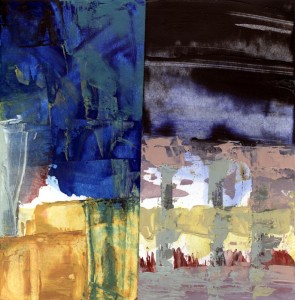
Andrew Stancek: Can you tell us about the illustration which accompanies your story, how it affects you, what it does for you?

Christopher James: The Peter Groesbeck painting (I Can’t Wait) is gorgeous, but at first I didn’t think any more of it than that. The whole summer issue was illustrated by Groesbeck paintings, and I didn’t know if any special thought had gone into which painting was paired with which story.

Later, the painting seemed more and more appropriate. You know what it’s like when you’re a writer. You put two things together and after a while you begin creating connections. Some are spurious, some ring true, and some, if you’re lucky, reveal something you never knew before.

There’s the famous Jung personality quiz. Choose a colour and three words to describe it – the words you choose represent your image of yourself. Choose an animal and three corresponding words – they represent your image of other people. Imagine yourself in a completely white room with neither door nor window, and (again) three words – representing your thoughts on death. Imagine a body of water. What are the three words that describe the body of water you’ve imagined. The Peter Groesbeck painting looks like a river to me, but it also looks like a road. My words are Dangerous. Still. Changing. According to Jung, the three words that describe your body of water are the way you feel about sex.

It kind of fits the story, and I like that very much.


Andrew Stancek: What does “recovery” mean to you? Are you recovered, recovering….?

Christopher James: Life is recovery, and I’ll be dead before I’m over it. P.S. I hope that doesn’t sound too much like a bumper sticker!


Andrew Stancek: Thanks, Chris, for a most illuminating and enjoyable interview.

Interview with Robert Boswell

Robert Boswell

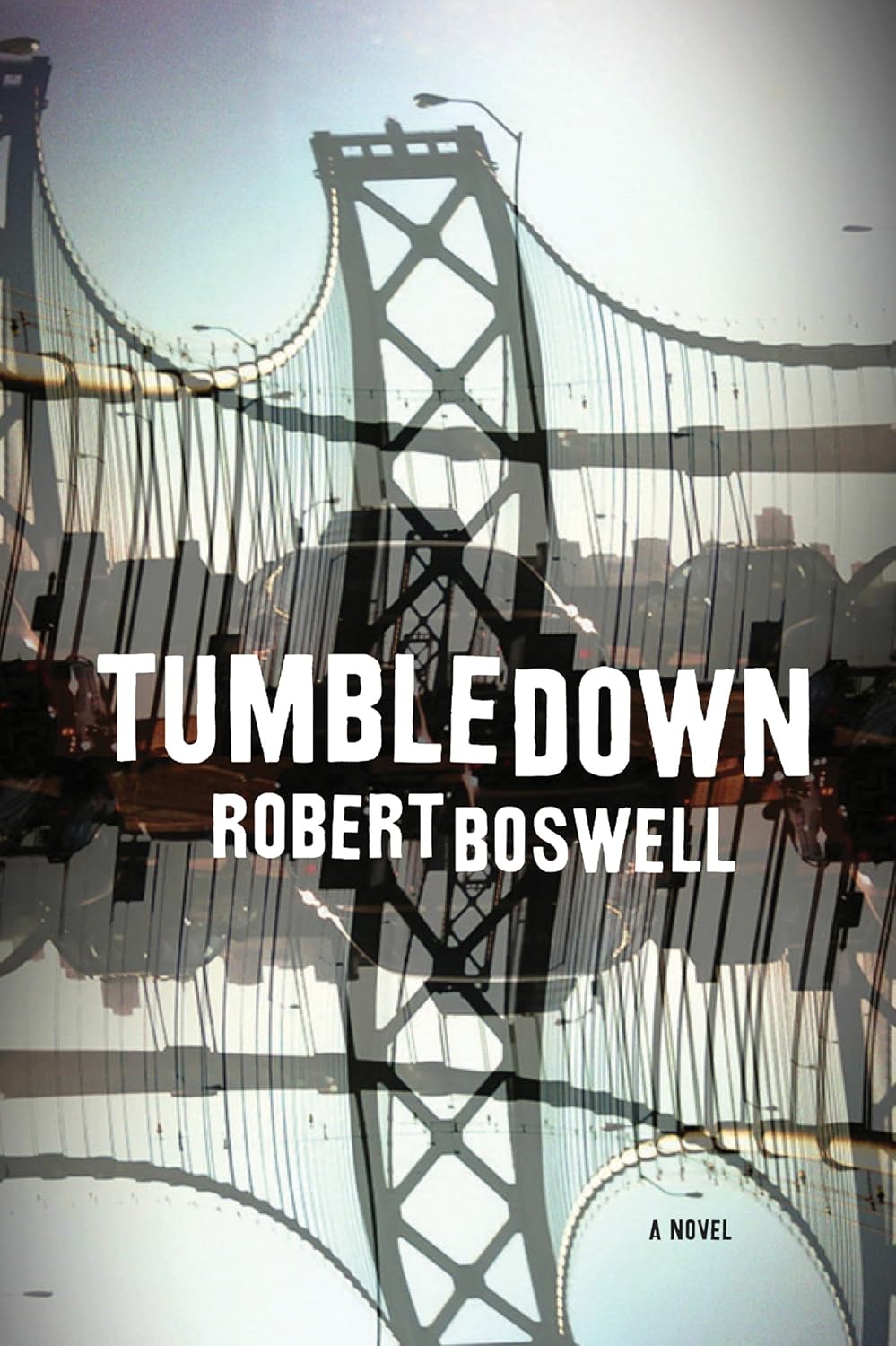
Mary Akers: Hi, Robert. Thanks for letting us publish your wonderful (serialized) story American Epiphany and for agreeing to talk with me about your new novel TUMBLEDOWN, which I loved. This book is satisfying on so many levels: art, craft, story, character, movement, and most interesting of all, its narrative point of view. Could you tell us a little bit about the particular brand of omniscience that you have opted for here and what prompted you to employ it?

Robert Boswell: When I was in my middle twenties, I worked at a rehabilitation center as an evaluator. Counselors sent me clients (some with physical disabilities, some with psychological issues, some with mental limitations) and I put them through rigorous two- or three-week evaluations, measuring intelligence, aptitude, interests, and so on. In addition to the tests, the center had simulated workstations, and I could measure more abstract matters, such as the psychological endurance necessary to work a forty-hour week, the ability to get along with coworkers, and so on. My reports were exhaustive and exceedingly useful to counselors putting together training programs for their clients. However, I discovered that the test results were sometimes treated as if they were omniscient measurements, and that made me uncomfortable and led to trouble.

I left that job to study writing, but I didn’t try to write about that period in my life for a very long time—twenty years. As soon as I began the novel that would eventually evolve into Tumbledown, I understood that those reports were important. Eventually, I came to believe that the reports represented a kind of unreliable omniscience. And once I began thinking about it, I discovered that there was a great deal of unreliable omniscience in my life, ranging from the GPS system in my car to the nightly news. At some point, about eight years into the writing of the novel, I decided that I needed for the novel to employ the point of view of unreliable omniscience. Unfortunately, it didn’t seem to exist. At least, I could find no useful models.

So I made it up.
MA: That’s a far more fascinating answer than I was expecting. Wow, unreliable omniscience. That’s really brilliant. Once you point it out, it makes perfect sense within the world of your book. It also makes me want to read the novel all over again and study it. Oh, and that’s a great new oxymoron: military intelligence, jumbo shrimp, and unreliable omniscience. You have single-handedly enriched the creative writing lexicon.

This narrative sleight-of-hand makes for a really refreshing and surprising read. I imagine some readers could find it disturbing, some exhilarating. And within the narrative, you opt to address this concern directly (p. 395), pausing at a critical juncture to offer this:

“Readers encounter the impossible in vastly dissimilar ways. Some throw the goddamn book across the room and curse the author by name. Others imagine the snide comments they’ll post on a book review website. Still others keep the faith, shaken yet willing to continue. But every reader wants the impossible addressed: a big brother’s sudden and permanent and utterly inexplicable disappearance—how is that possible? A son’s baffling descent into madness? A husband who one day cannot lift his coffee cup? A woman who discovers she has put a price tag on some part of her soul?”

Can you describe your decision to “break the frame” and acknowledge the reader and his or her potential response? Is this your way of addressing the impossible?

RB: The passage you refer to is, indeed, the product of that unreliable omniscient point of view.

Novels with unreliable narrators are traditionally in the first-person, of course. In such novels, the reader has to understand that something has been omitted or obscured, intentionally or unintentionally. Ultimately, the reader comes to see that the narrator’s story simultaneously masks and reveals another story—the shadow story. To fully comprehend the author’s narrative, the reader has to apprehend the story the narrator is telling as well as the shadow story that is evident only if one reads between the lines.

If you make the narrator omniscient, as well as unreliable, this dynamic becomes complicated in any number of ways. For example, does omniscience require the shadow story to become explicit? I have a lot of opinions about this, but I don’t want to overly influence how the book is read or defend my point-of-view decision. I tried a number of other strategies, and choosing to invent unreliable omniscience was far and away the boldest. If for no other reason, that makes me feel it was the right decision.

And yes, it is my way of addressing and defining and defying the impossible.


MA: Within any field, there are practitioners who inspire those still toiling in the trenches. Writer’s writers, in this case, and I feel like you are one. I’m interested to know who you would consider to be a Writer’s Writer?

RB: The difficulty of answering this question is that I fear I’ll omit writers that I admire, so I’ll name just one: Alice Munro. Everyone knows that she is an astonishing writer, but few give her credit for being an experimental writer. She conducts radical experiments with form, and yet her stories still seem like traditional narratives. She is the kind of magician who does not reveal herself to be a magician, and so the magic seems like something else entirely, and the stories gain the power of lived experience.
she drove (American Epiphany)

MA: Yes. I never thought of it in quite that way. Alice Munro, closet magician.

And speaking of magic, in TUMBLEDOWN there is something completely magical about Pook’s paintings. I love how they grow out of his comic book superhero Same Man. They speak to me about grand ideas. What makes Art? What is True Art? Does the impetus behind art matter? (And if so, to whom? The artist? The patron?) Does it expose us (as artists) in ways that are intolerable? Is this still somehow necessary? And perhaps most important, what is the relationship between art and artist? I won’t ask you to tackle those questions here—you spent a whole novel tackling them, after all. But how about a related question: What is the relationship between book and author?

RB: It’s something of a marriage, one that you initially work to get going and later work to conclude. The relationship changes over time, and keeps changing, threatening to become something utterly strange, and you may ultimately decide to let that happen. At some point, after many grueling nights of labor, you understand that you’re through with each other, but you hope to remain friends. It is an irony that the honeymoon (book tour) comes after the breakup, but there is almost always another novel involved, one that you’ve been seeing on the sly, and whose siren song is irresistible for all the ways that it is different from your ex.


MA: Hmm, and then resentment builds against the needy ex for taking time away from the fresh, new relationship, and everywhere you turn people keep talking to you about your wonderful ex and asking you to relive your past relationship. (Ahem.)

Let’s move on to the relationship between book and reader (and by extension, between author and reader). Margaret Atwood has said that a book is a Brain Transfer. The author puts symbols on a page, symbols assigned meaning over many centuries, and then the reader takes those symbols, processes and interprets them, and creates a new, slightly altered (or vastly altered) meaning/story in his or her own brain. Transfer Complete. Do you agree with that interpretation?

RB: Books exist on shelves much the way that humans in sci-fi movies exist in a cryogenic state, and they don’t come alive until they’re read. (And some age better than others.) Novels exist in the reader’s mind. It is a shared act of creation, and each novel is at least a little different according to the reader. How much of the novel belongs to the writer and how much to the reader? This varies depending on the individuals involved. Some of us are high custody authors who insist on specific interpretations of our narratives, and some are low custody authors who prefer to leave much of the creative work up to the reader. Chekhov was a very low custody writer and Tolstoy (especially in the late stories) was a high custody writer. James Salter is a low custody novelist who demands that readers engage and interpret the actions of his characters. Richard Yates in Revolutionary Road displays the virtues of a high custody writer, revealing characters’ desires and motivations down to the smallest detail. Salter and Yates are both great writers, but Salter wishes for the reader to fully share in the creative act, while Yates is working to keep the reader from slipping away from his vision, to force the reader into the self-indictment he feels is necessary. The danger the low custody author faces is reader bewilderment (recall the first time you ever read Chekhov), while the high custody author risks over-controlling a narrative to the point that the reader feels excluded or even redundant.


MA: I love this. I’m going to use this in the classroom. (Concept Credit: Robert Boswell.) I might use it for readings, too. Say, when an audience member asks me what I meant by writing such an evil/lascivious scene, or castigates me for leaving the ending unresolved. I’ll just explain that I’m a low-custody author. Thank you for that.

RB: Actually, I’m writing an essay about authorial custody. I’ve given a lecture about it as it relates to meaning in fiction, and now I’m working to turn the lecture into an essay.


MA: Oh, even better–official text on the subject! I look forward to reading it.

The character of Same Man is very intriguing. (Is he a character? What term describes a fictional character created by a fictional character? A character-once-removed?) I love that he keeps appearing in the story. Same Man has impeccable timing. I feel that his existence in the story speaks to the idea (the curse?) of seeing ourselves in others. Plus that whole sinister shadow…the trading places…the father taking the dead son’s idea and creating a pale forgery. It’s all so rich, so good, so damned interesting. That self-depicted version of Pook, duplicated over and over, proves too much for him, and I get that. It makes sense to me. Have you ever shared in Pook’s sense of vertigo?

RB: One of any artist’s most important talents is the ability to forget a previous work while in pursuit of a new one. Now and again I find myself with someone who just finished one of my novels, and she wants to talk about a character or incident, and she thinks I’m being coy when I can’t quite remember what goes on in the book. But it’s a gift not to remember—not to be discouraged or intimidated or otherwise hindered by past creations. Writing requires a combination of remembering and forgetting much the way that seeing requires both acuity and the ability to ignore the inessential. To be focused requires forgetting. To be a writer requires forgetting. What was your question?


MA: Perfect. I agree. Especially about not being hindered by past creations—whether they were wildly successful, universally panned, or largely invisible. I think a lot about this. The ability to move on in any artistic pursuit is crucial for growth and exploration. Letting go is a type of fearlessness. But I digress…

…and in writing workshops, digression is often frowned upon. But I’ve long felt that a little digression can be a beautiful thing or certainly can lead to beautiful things. In TUMBLEDOWN, you are a master digresser. Do you plan your digressions? (Can a digression be planned?) Or do you follow wherever your mind leads you as you write? How the friction does that work?

RB: One way of thinking about the writing of literary fiction is that one pursues a character through a narrative to a point at which the character acts in a manner that is free of the past. In workshops and the like, we typically say that the story pursues a character until there’s some kind of change in the arc of her life that the reader can recognize, but it is useful to have other ways of thinking about that familiar paradigm. I write rather obsessively about the influence of the past on the present, but I am usually pursuing the moment when that influence is sloughed off in an act of desperate freedom. To be free of one’s past is the greatest freedom possible, and, of course, if it lasts more than a moment or two, it becomes a form of annihilation.

I don’t plan digressions, but I work through many drafts, cutting and moving the digressive bits about, and by the time I’m finished they exist within an overall narrative plan—or I cut them from the book.

MA: Interesting. I feel like (your character) Karly Hopper is the embodiment of what you describe—both free of her past and annihilated by it. Speaking of Karly—and really your whole large, variously impaired cast—there are plenty of opportunities for your omniscient narrator to have a wink-wink, nudge-nudge with the reader over the heads of your characters, but you don’t go that route. You deal with them fairly and I admire that. In one of your craft essays (“On Omniscience” from The Half-Known World), you offer this passage:

“[David Foster] Wallace fans know that he has written about his opposition to irony. Here then is one of his earnest strategies: his omniscient voice works to display the satire while simultaneously refusing to see it. In this way, Wallace’s narrator does not get irony, even as the story is shaped by it.” 

Is this similar to what you’re doing in TUMBLEDOWN?

RB: What I argue in that essay is that all omniscience in literature is limited, and the limitations always exist on the horizontal plane (one can investigate the hearts and minds of only a certain number of characters) but may also exist on the vertical plane (the narrator doesn’t comprehend specific mental states or human constructions that make up the typical person’s world view). Wallace’s narrator in “The Suffering Channel” (Oblivion: Stories) does not understand irony, and that inability is crucial to the ultimate meaning of the novella. I also refer to John O’Hara’s Butterfield 8; the omniscient narrator in that novel is blind to social class.

I don’t think I should analyze Tumbledown beyond repeating that in my conception of the novel the narrator is at once omniscient and unreliable. The novel itself is my articulation of this premise.

As for Karly and the other characters, I feel my job is not to describe them but to inhabit them. In a novel like Tumbledown, which has many points of view (I don’t even know how many) and in which the characters all know one another, the difficult task is to convey not only how each sees the other but also how each misapprehends the other. For example, most of the men in the book cannot see beyond Karly’s beauty, but a few can at least recognize her kindness, and one or two can see something more still. I felt I had to include Karly’s point of view to suggest dimensions to her life that those observing her cannot imagine. I like to think that the characters become rich because of the many, slightly erroneous, visions of each that the novel presents.
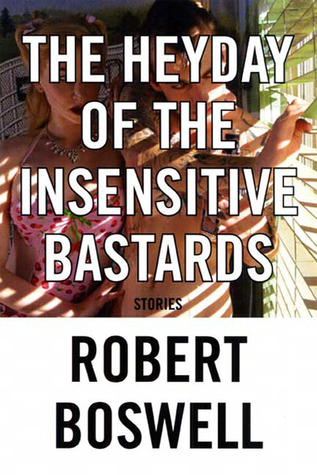
The Heyday of the Insensitive Bastards: Stories

MA: Now I’m curious. Do you consider yourself a low-custody author or a high-custody author? And has that changed in any way over your writing career?

RB: I think I rack up points on both sides of the divide according to the novel or story in question. There are definitely stories in my last collection—The Heyday of the Insensitive Bastards—that are low custody (“A Sketch of Highway on the Nap of a Mountain,” for example, which some readers find perplexing) and others that are high custody (“Supreme Beings,” among others, which seems to me now as a test drive of unreliable omniscience).

A big part of my effort as a writer is to keep from repeating myself, to continue trying new forms, occupying new characters, and so on. When I was just starting out, I had no way of repeating myself. I just spat things out and worked with them. Now I consciously try to avoid doing again what I’ve done before. It’s one of the ways that I keep myself interested in the overall project of my writing life.


MA: And finally, a question that I often ask, given the theme of our journal, but that also seems quite appropriate given the themes (as I perceive them) in TUMBLEDOWN. What does “recovery” mean to you?

RB: There are certain events from which one never recovers, in the conventional sense of the word; rather, the events become inextricable from one’s manner of inhabiting the world. It may mean that your vision becomes multi-dimensional when it had been flat, or it may mean that your bafflement is more deeply pronounced than ever. Usually, it means both of these things, and many more such things.

As I see it, one does not recover, exactly. One re-becomes.


MA: Nice. Thank you so much for talking with me today, Robert. I enjoyed it immensely.

Interview with A.M. Rose

A. Rose

Question: So, Ecdysis seems to be a painful story to tell. Did that make it more difficult to work on?

Answer: It did. I waited about a year before I started the first draft. I find that with every piece I work I work on, I learn something about writing in general and how I write–this was the piece in which I learned that it is okay to let an experience sit for a bit before writing about it. I wasn’t emotionally ready to deal with the story for a about a year and I had to give myself permission to wait.

Right now, I’m working on a few pieces that also deal with very intense feelings and I’m finding that self-care is incredibly important when working on pieces like that, as is taking breaks and working on other writing projects


Q: Do you find that writing about an experience helps resolve your feelings about it?

A: I do. A colleague in a workshop recently asked us all why we write. For me, it is how I process the world and my experiences. Though sometimes, part of that process is not finding an objective answer, but finding a new question about the experience. For “Ecdysis,” I realized that part of the struggle was not about stripping at all, it was about me permitting myself to be a writer and owning that, rather than waiting for someone else to tell me it was okay.

However, my thoughts about the whole experience have kept evolving, that’s the weird thing I’m discovering about about publication.. It’s like a photograph that freezes a set of thoughts and actions at a particular time. Which is wonderful, because it preserves them, but also strange if you’re the one who wrote the words and you’ve continued growing because the story it may not reflect  what you think anymore.

I think that is why a lot of people have such a love/hate relationship with past work.

Right now I’m just hoping to produce enough writing that I can actually have past work and can be angsty about it!

at last (Ecdysis)

Q: The story seems to deal a lot with issues that come up in social science, things like the male gaze and the silenced voices of women in society. Do you feel that your work is influenced by your own background in social science?

A: Definitely! I can’t get away from it! Basically, I’m obsessed with people. Social science and writing always felt like two sides of the same coin for me–I studied anthropology and sociology because I wanted to understand people (and consequently, myself) better, and I write for the same reason.

And there are so many rich concepts in the social sciences–it’s like an endless toolkit for writing.


Q: Do you find it difficult to get away from the language of social science when writing more personal pieces?

A: Yes, I was recently critiqued in a workshop for sounding “too social scientist-y” and when I was a student, I was critiqued for sounding “too much like a creative writer” in papers and field notes. What is difficult is that social science provides great shorthand for complex topics, like “hybridity” or “fictive kin” or “reciprocity” and  I want to be able to use the terminology so that I can move on and explore the subject. But if you want to write for a broader audience, you have to be careful not be inaccessible and set up wall with your jargon. On the other hand, when writing social science and trying to describe an experience, sometimes you need to be evocative in order to capture it–but evocative writing is often looked at with suspicion in the academy because it is seen as manipulative or too subjective. So it is a hard line to toe both ways.

My favorite writers are ones who manage to do this–Bill Bryson and Rebecca Skloot write about science and ethics poetically, Kurt Vonnegut, Luis Alberto Urrea, Clifford Geertz, Ruth Behar, and Piya Chatterjee all write about culture in an evocative, informative way, though from very different vantage points.


Q: How did you choose the title for the piece? Was it something you knew of before the experience or something you came across while writing?

A: Sort of both. I knew that Gypsy Rose Lee’s publicist had created the term ecdysiast for her and when I was looking for a title I researched the word and found the idea behind it, i.e. molting, becoming something else etc. fit the theme of the piece well. I also like the history of the term, the way it was used to “dress up” an occupation to make it acceptable to a general audience.  I thought it was similar to the way I tried to “dress up” and retell my own experiences to make it fit a narrative I found acceptable.


Q: Last question—best writing advice you’ve received?

A: The worst story on the page is better than the best story in your head.  You cannot edit non-existent crap.

Spells and Counterspells: Janet Harrison interviews Kristin Camitta Zimet about “Grimoire”

Kristin Zimet

Janet Harrison: There is so much that I like about your poem Grimoire, but I want to start with the title. I always pay attention to titles, and this one seems particularly apt. I am curious what “grimoire” means to you.

Kristin Camitta Zimet: A textbook of spells, usually black magic. A grimoire holds a dangerously strong set of incantations. This poem of course contains both black magic and white.

I love that you can hear the word grim inside the title, with twin connotations of horrible and unyielding. Actually, though, grimoire derives from the same source as grammar—the framework for language, the rigid rules of engagement with reality. This child learns a language that deforms her. Words—ordinary words—have enormous power to shape us. Especially the words we apply to ourselves.


JH: How did this situation spring to mind?

KCZ: The girl in the poem is not me, nor is she a particular woman I know. Nevertheless I never had the sense of making her up; I recognized her as real.

As I write a poem, a whole range of experience, conscious and not, personal and not, becomes available to me. At least one element lurking in my mind this time was a scene in C. S. Lewis’ book Voyage of the Dawn Treader. Lucy, a little girl, has to go upstairs all by herself in a Magician’s house and open his spellbook. She is supposed to find a counterspell to disenchant invisible people. But she sneaks in a spell to overhear what her friends say about her (a different sort of making visible). The consequences are sad.


JH: Interesting. One of the things I admire is the way you maintain tension in this poem. For example, you start out with a set of words, but we don’t know what they will mean. Gradually in the course of the first stanza, we discover the enspellment. Then the second stanza starts out with “the counterspells,” but we don’t know what they are until the last possible moment.

The poem winds up being a beautiful mirror. How conscious were you of this form as you created it?

KCZ: It was absolutely deliberate. When I write a poem, I seek out the unique structure that fits the developing meaning. Every poem deserves its own inherent form.

This poem stretches between two word sets, each of them separated by slashes because words, one by one, can be slashes or blows. The form of the poem is a mirror—a highly magical object. A baby is absorbed by a mirror, one of the first ways to define self; an adolescent gives a mirror devastating power.

In the first stanza the child becomes the mirror of the way she is treated. In the second half she becomes the mirror of an alternate language. So each half of the poem is a small mirror, within the larger mirror-structure of the whole.

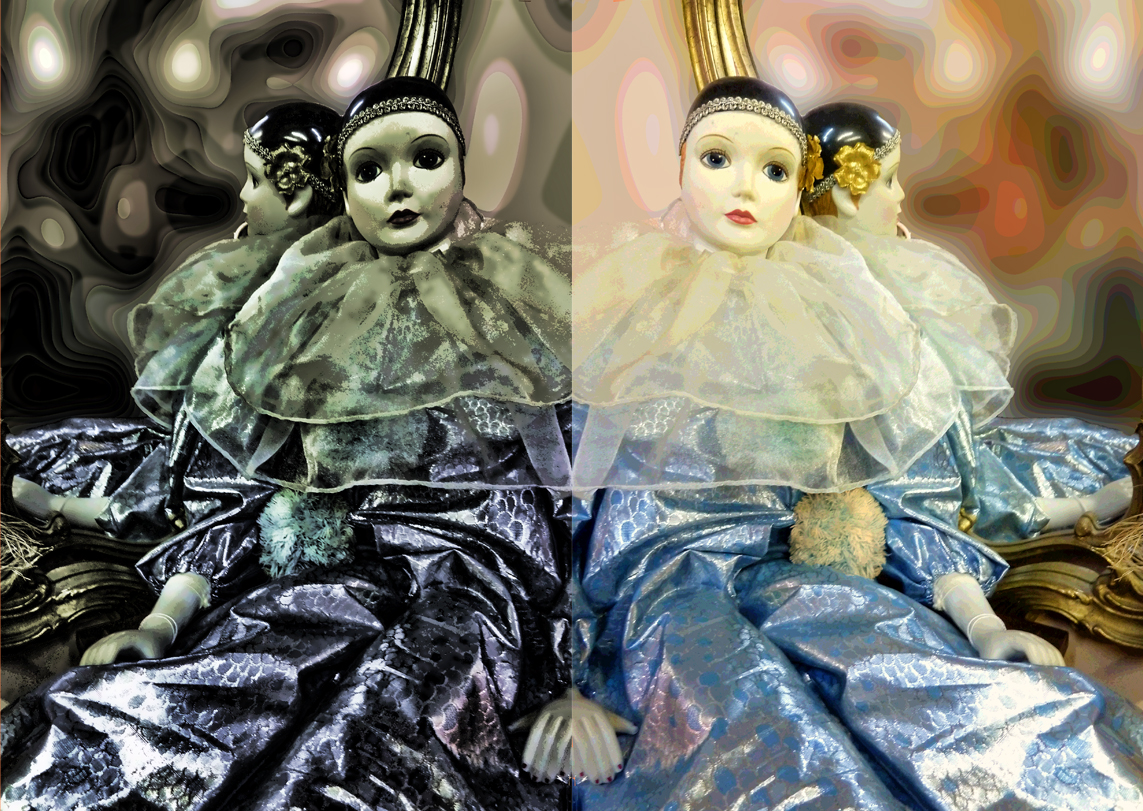
I am exploring this theme visually in photography too. For example, I made a photograph called “Night and Day.” Here the same female doll is inverted, back to back with herself. Each doll also looks into a mirror, so two outer mirrors enclose the image. The bright shapes in the mirror on the right are sinister wolf shapes in the mirror on the left.

night and day (shadow self)
Copyright 2013 by Kristin Camitta Zimet. All rights reserved

JH: These are important themes. I could pin this poem up and read it every day. It shows how deeply shame exerts control, whether one is aware of it or not.

KCZ: I mean this though as a poem of hope. There is a way back out of the deepest shame.


JH: It seems to be important to you that it is a sister or a mother—a female voice—that does the shaming.

KCZ: Yes, I believe that a girl uses her sister and mother as her mirrors. A man may also belittle and hurt us, but the language women use among themselves may do deeper damage. Women are vulnerable to other women because they open to them on an emotional level.


JH: A broken mirror and a crazy quilt appear in the second stanza. Can you talk about them?

KCZ: To let go of a bad self-image, a cruel construct, is not enough. Break a mirror, and you get shards—pointed, narrow, sharp. Each piece reflects too little, and will cut you. Making a new construct is vital.

I love crazy quilts. They break the rules of quilting, the bounds of structure. The first stanza is all about binding, tying down, restricting. The second is about fitting the scraps together to form a single free-form, open design.


JH: Is this why her voice is “in chorus”?

KCZ: Yes. When an old pattern is smashed, there is more than one self, more than one inner voice, that emerges. Each of these must be heard. Each must find a place in the renewed personality.

You might also interpret the chorus another way. The story of this one woman is the story of many women, recovering alike.


JH: This poem appears in an issue on sexuality, but it includes so much more.

KCZ: The deepest and most specific effects of the spell are upon the girl’s sexuality. It stifles her ability to move responsively, swivel her hips, bare her breasts, connect with her lower body. The spells are a form of undressing, and they sound loudest in bed.

Successful sexuality depends a great deal on self-love. To trust your own desirability, to choose a partner who affirms you, and to allow yourself to feel and reciprocate, all depend on that. Are there wider implications than sex? Of course.


JH: Is there anything else you want to say?

KCZ: Of the many poems I’ve written, this is one of my favorites. Partly because it is peculiar. Partly because as a poet, language feels so potent to me. I am increasingly unwilling to be party to conversation—personal or communal—in which people are reduced to a catalog of wrongs and incapacities. I am not referring to therapy. I mean conversation in which people nurse the negative.

As a mother, a poet, a friend, a citizen, I want always to be careful what spells or counterspells I speak.


JANET HARRISON presents poetry Monday mornings on the “Winners and Losers” radio show on WSHC, broadcasting from Shepherdstown, West Virginia. She is a candidate for a Masters in Fine Arts with a concentration in poetry in the Brief Residency Program of Spalding University.

Interview with Jacqueline Jules

JJulesJuly2013

Laura Shovan: The title of your poem “The Stick in the Big Boy’s Hand,” acts as a refrain, appearing twice more within the body of the poem. I thought this use of repetition suited the poem’s theme — the places in our memories or personal histories where we become stuck. Why was it important to you to emphasize this particular line?

Jacqueline Jules: Wow! I love the way you phrase that, Laura—“the places in our memories or personal histories where we become stuck.” You articulated my intended theme much better than I would have if you had asked me what the poem was about. For me, “the stick in the big boy’s hand” is a symbol. The majority of my poems have what I call “a controlling image,” an object or concept that represents the emotion I am trying to capture. However, I don’t often use repetition. But in this poem, it felt so right I almost did it unconsciously. As the controlling image, “the stick,” was meant to convey how both sisters were battered by the experience, just in different ways.


LS: Any discussion of childhood sexual abuse is going to be difficult. Explain why you chose, for your speaker, the victim’s older sister. Giving the speaker that little bit of distance deepens the poem, adding a complicated —and lifelong — layer of familial relationships to the narrative.

JJ: I am glad the choice of speaker resonated with you. The decision was highly personal, since this poem was sparked by a comment from a childhood friend who reminded me of an incident involving my younger sister. I observed the abuse from a distance and never fully comprehended how it affected my sister, who suffered psychologically all her life. My goal was to describe my helplessness, my inability as both a child and as an adult, to rescue her.


LS: There’s an almost gentle moment when we see the younger sister, “prone in the dew/ her cheek pressed into the long grass,” before the speaker realizes what’s happening. What does that image symbolize for you?

JJ: This is pure description—what I remember of the incident. I was a child. I didn’t expect to see a violent act and for a moment misunderstood what I saw. Like all poets, I write from my own experiences and emotions. However, I don’t mind changing details if it strengthens my point or theme. And I generally take many liberties in autobiographical poems with a first person narrative. This poem did not require that. Until the last stanza, I described the event exactly as I remembered it.


LS: The poem begins with the nine-year-old older sister who “didn’t know what to do, who to tell, or how to stop/ the stick,” then jumps forward forty years. Talk about how you help the reader make that leap in time.

JJ: That was the biggest challenge of the poem, the part I revised the most. I had to make the reader see the younger sister in bed, years later with “her cheek against the pillow,” recalling the abusive incident. I chose to use dialogue. The younger sister says, “Too dangerous to go outside. The grass is slick.” In this way, I strove not only to refer back to the younger sister’s troubling experience but the older one’s initial misunderstanding of what she saw. And when the older sister says, “I watched from the doorway,” the word, doorway is meant to put the reader clearly inside a house, many years away from the trauma on the grassy hill. It was important in this stanza to show how the sisters were haunted as adults by this childhood experience.

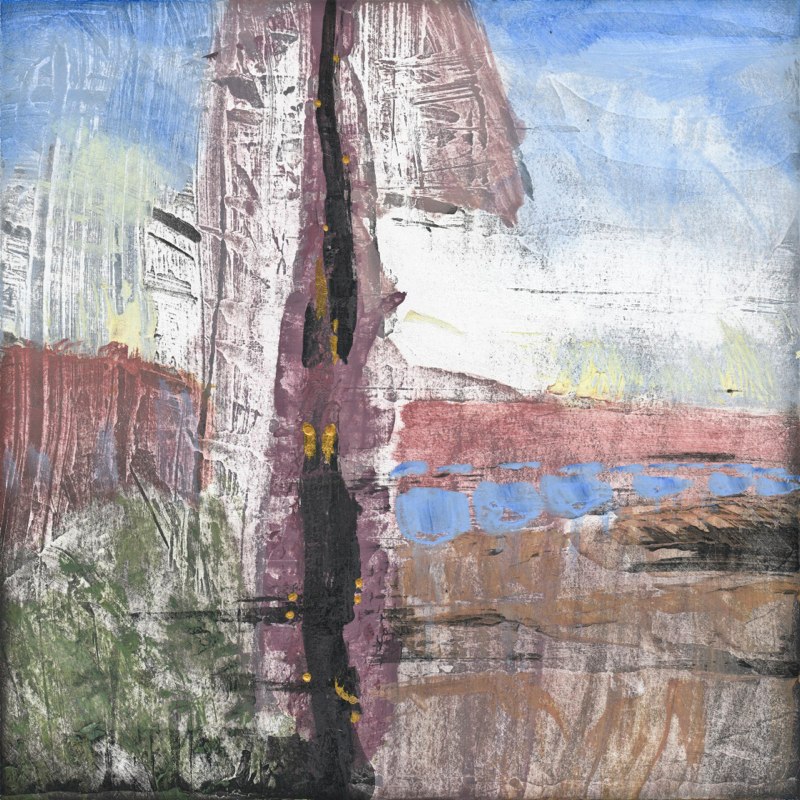
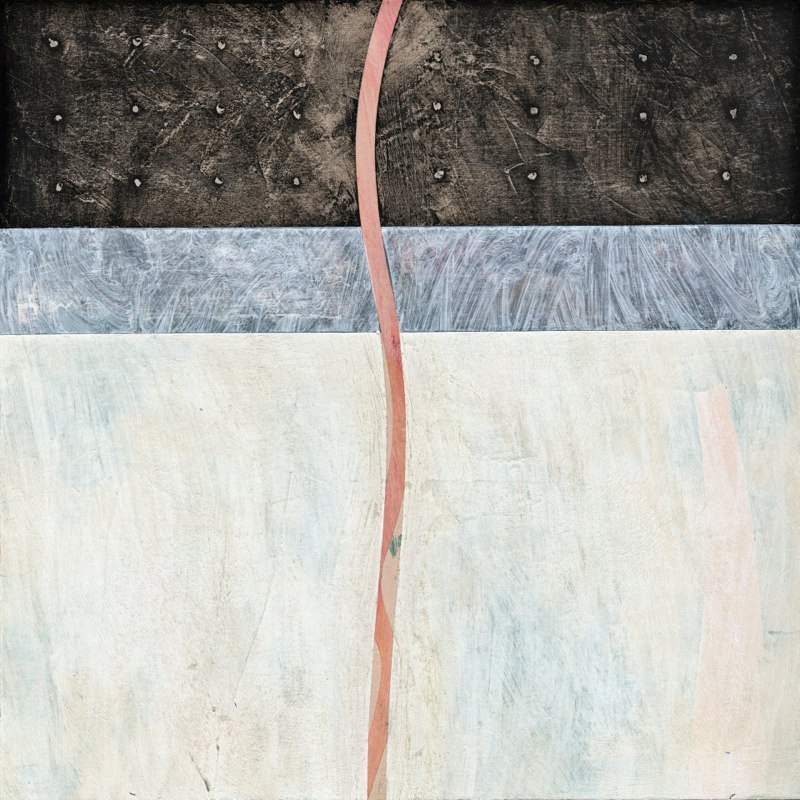
the path of pain (Stick in Big Boys hand)

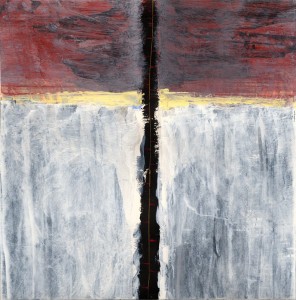
LS: Although it is an abstract piece, Peter Groesbeck’s artwork, “The Path to Pain,” emphasizes the dualities in your poem. How does the painting speak to you, in relation to “The Stick in the Big Boy’s Hand“?

JJ: For me, the black line in the middle of the art is “the stick in the big boy’s hands.” It is also the watershed event in the life of the youngest sister. At the same time, the division of the art represents the different perspectives and impact the incident has for the two sisters. If you start from the white strokes on the bottom and travel to the red at the top, you see a journey from innocence to affliction.


Laura Shovan is editor of the art and literary journal Little Patuxent Review and of two poetry anthologies. Her chapbook, Mountain, Log, Salt and Stone, won the inaugural Harriss Poetry Prize. In 2012, Laura was a finalist for the Rita Dove Poetry Award. She was a 2013 Gettysburg Review Conference for Writers scholarship recipient and has poems forthcoming in Barely South Review, The Fourth River and Switched-on Gutenberg. Laura works with young poets as a Maryland State Arts Council Artist-in-Residence. Visit her online at http://www.laurashovan.com/

Interview with Catherine Dowling

Catherine.Dowling

Patricia Kinley: Hi, Catherine. I loved your essay, Chasing Normal. For me, it had just the right combination of the personal and the universal experience. Your own experience as a girl, then young woman, growing up and into full womanhood really resonated for me, having been very shy and coming late to my own appreciation of myself. I’m wondering if you can tell me what Chasing Normal is about and how you came up with such a poignant title?

Catherine Dowling: I’m glad the essay resonated with you. It started off as a story about internet dating experiences, not anything historical. But as I wrote, my past kept intruding on the present and a theme emerged. I remembered how awful it feels when you’re a teenager and you’re a bit different from others, a bit odd. How you desperately want to be like everyone else and find it so hard to appreciate your own uniqueness. What makes you who you are is often a source of embarrassment when you’re a teenager simply because it’s different from everyone else. So that’s what the essay is about. It’s about appreciating who you are, as you are. I really didn’t come to the title until I finished the essay and realized that many of us spend a good part of our young lives trying to be what we see as normal. I’ve spent nearly 20 years as a breathwork psychotherapist and I know this is a dilemma that haunts people well into adulthood. Growing up is often a process of growing into who we are, of appreciating our own uniqueness.


PK: “Normal” is so subjective. What does “normal” mean to you and was it more important to feel “normal” or to be perceived as “normal” during your varied age in which essay is placed?

CD: I guess “normal” is culturally determined to a large extent. Normal means being thin when thin is in fashion (when is it not?), it means being socially adept, attractive, sexy, flirty. Girls, at least in my generation, tended to define themselves by their ability to have relationships. And that meant getting engaged and married and having children. That was normal. Fortunately I also had some friends and classmates for whom intellectual achievements were very important. I think many of us have an idea of what we should be and it’s usually different from what we actually are. We can spend a lot of energy and angst trying to achieve that. Now I would say there’s no such thing as normal.

she was always late (Chasing Normal)

PK: I’m thinking that had I read your essay at a young age, it would have helped me process my feelings and find solace in that I would eventually grow into a confident self. Yet, as a grown woman, the essay gives language to my own trajectory to that very same place. And it’s not a stretch, I think, to believe boys and men could be enlightened by Chasing Normal, too. So my question is, when you wrote this piece, were you hoping to appeal to a particular gender/age group?

CD: I didn’t have a particular age group in mind, but I was aware of the universality of the theme. I did think in terms of women but now that you mention it, wanting to fit in can be a huge pressure for boys too. It shows in a different way with boys, but it’s definitely there. I’d be extremely pleased if it spoke to teenagers and saved at least one person the years it took me, and many others, to arrive at an appreciation of their own individuality.


PK: I took quite a lot away from the essay – the appreciation of honest writing, the relativity to my own experiences, the visceral joy of your “ah ha!” moment . What do you hope a reader will take away from it?

CD: I hope they enjoy the experience of reading. I love the craft of writing, of sculpting words and sentences into something that’s as flowing and rounded and pleasurable as I can make it. I hope readers also find it a little bit funny. And if they are in a place in their lives where they’re not fully appreciating themselves, I hope they get a little closer to the joy of being exactly who they are. When people talk about recovery, they’re usually referring to recovery from illness, or addiction. For me, life is a process of small recoveries, from limits, from the way we sometimes see ourselves, from self-criticism. Recovery is growth, growing into fullness, becoming who we are. And it never ends. It’s what life is about.


PK: I understand that you have already published a book and have another one in the hopper. Can you tell me about both and tell me what you have planned for your next writing project?

CD: I have a strong background in adult education. Adults learn experientially. I write mainly about self-development but I like to do it through telling stories. Stories make concepts accessible so the reader has the experience and the understanding before they ever get to the concepts being covered in a chapter. My books contain lots of stories about people’s lives, which I hope also makes them entertaining. My first book was published in the UK. It’s called Rebirthing and Breathwork and it’s about breathwork as a really effective tool for emotional and spiritual growth. My next one is called Getting to One: Five Keys to a Fully Lived Life and it will come out in 2014. That’s about spiritual experiences and how to put the wisdom of spirituality into practice in life. I’ve been so busy getting it finished and developing a marketing plan that I haven’t given the next writing project much thought.


PK: So many of us have been married, raised families, pursued careers, and yet find ourselves living alone at an age we felt we never would. For those of us who still hold out for romantic love, do you have any dating advice?

CD: Oh lord no, none. You’d need a different kind of writer for that, a romance writer maybe.


PK: Haha! I’ll head to my nearest library. Well, thanks, Catherine, so much for your time. It’s been a pleasure talking to you and I do so look forward to more of your written work!


Patricia Kinley is a writer, writing coach and copy editor. Her website is under development, but she can, in the meantime, be reached via email at pkinley07@yahoo.com.