Homepage Winter 2013

Cover Image

Dear Readers,

Welcome to 2013, and welcome to our Winter “FRIENDS & FAMILY” issue. We’re proud to present an interesting and diverse array of voices and perspectives — about the families we are born into and the families we create, about the families we love (or love to hate).

Our illustrator is the talented and generous watermedia artist Marilyn Sears Bourbon who graciously allowed us to select from her body of creative work to illustrate this issue. If you like what you see, please visit her website here. And thanks again readers, for giving r.kv.r.y. a portion of your day; thank you writers, for continuing to trust us with your fine work; and thank you Al Gore for the Internet that made it all possible. Our upcoming themes will be Faith & Doubt (April), Sexuality (July), and Shipwrecked (October).

Yours in Recovery,

Mary Akers
Editor-in-Chief

Interview with Steve Mitchell

Carol Roan: What inspired your short story “Yield?” I’ve heard you say that an image will come to mind, and that you then write to incorporate that image. Was there an image for this story?

Steve Mitchell: “Yield” began from a story someone told me of having to jump from a high place and finding they could not will themselves to do it. The best they could do was lean into the open space until they fell. I liked that image and the idea of “leaning in” in various ways. The story formed around that, but went in other directions, too.


CR: I’ve had a strange reaction to your work, one that I’ve only experienced with Richard Powers’ The Time of Our Singing, which I threw against a wall after reading a few pages. When I was a child the only book in our house was a Bible – I think my mother distrusted books – so since then I’ve always handled them with the care due precious commodities. Although I love secondhand books in which earlier readers have underlined meaningful passages, added notes, turned down corners, I’ve never been able to take pen or pencil to a book myself. So why my anger at that book? And at yours? I didn’t throw The Naming of Ghosts, but we do joke about the level of anger I experience at your readings – a ten? or a piddling nine? It’s not merely envy of your skillful writing. Maybe it’s partly because I can usually figure out the theme that runs through an author’s work, and I don’t have a clue what your theme is. The life puzzle you’re trying to solve.

SM: Intimacy – the search for, or lack of. The ways people connect with each other and what it means.

CR: What I had found fascinating was how you work with time and memory. “Yield,” for example, contains three discrete events, but you gradually dispel the time between their occurrences until the three become folded into one.

SM: I’m trying to replicate my actual experience of time in the present. I think most ideas of “stories” are incredibly artificial. My experience of the world doesn’t match the “A leads to B, which leads to C” formula. I work with what I call faith. Not in a religious sense, but the ways people order their experience and the kind of overarching belief systems they develop in that ordering. Everyone develops an idiosyncratic belief system that doesn’t necessarily fit within the regular systems.


CR: I’ve seen a video you made about your writing method. The image I remember has Post-Its everywhere.

SM: I make lots of notes before I ever begin a piece. Often my notes end up being longer than the piece itself. I have large whiteboards in my office where I draw diagrams or write notes. Once I begin to write, I write in public places. Bookstores, coffee shops. I need activity and things going on around me. I have to print the draft out, and edit and rewrite on the physical paper. Often eight, ten, twelve different times. One of the final stages is to read the piece aloud, and to continue to read it aloud until I’m happy with it. Then I put it away for a week or two and come back later to decide if I’m still happy with it.


CR: The style of your video – or the grammar, as you put it – is very much akin to your writing style. Not necessarily the bouncing around in time, but the almost abstract visualness, if there is such a word. Is there anything else that you want readers to know about you?

SM: I’m not all that interesting, and my work doesn’t arise directly from deep personal experiences. I don’t think my own history is very relevant to my work. My personal experience is in there, of course, but it’s in with everything else. I think work is best approached when the reader knows nothing about the person who wrote it.

CR: You’ve written in many different forms – fiction, nonfiction, poetry, plays. In which are you most comfortable?

SM: For a while I was writing a bit of everything all at once, but now I’m concentrating on fiction. Plays, however, are good training because they force you into dialogue and movement. And working in theatre is one of the most satisfying things in the world.


CR: How so?

SM: Writing is so solitary. Working with actors is dynamic and communal. Things are up for grabs, and you make discoveries about your own text. I had a scene in one of my plays that wasn’t working. I didn’t know why and couldn’t seem to fix it. I was considering cutting it entirely, but at the next rehearsal something happened. The actors had found their way into the scene. They hadn’t changed a word, but they’d made it real. It’s one of those magical things that can happen when you’re working with others.


CR: You’ve also been a performer in multi-voice poetry programs. That’s not a format I’m familiar with. Were they like the choral reading we used to do in school?

SM: No. I had stumbled on Einstein on the Beach, in which Glass had two or more voices talking or singing different words, different music at the same time. I was intrigued with what could be done in that form, and started to write poetry for different voices, sometimes speaking simultaneously. The longest was with six people speaking for twenty minutes. But mostly I wrote for two to three voices. Then I had a residency in Vermont where I met a sculptor who asked me to do multi-voice poetry with his installations. I’d like to pursue making a film of one of those performances, where words are used as sound, rather than being dramatic or emotive. Robert Altman does this in films like Nashville. He used 8-track recording so you’re hearing more than one conversation at a time as he moves from scene to scene. He forces the audience to make choices. Theater can do that, too, when the action is not framed.


CR: Would you say that you’re always experimenting with form?

SM: Why do anything, if it’s the same old thing? I want to find something that’s interesting, or something that’s beautiful. Or something I can’t quite imagine.


CR: Have you also been experimenting with your day jobs? From cowboy to chef is not a common career path.

SM: I bore easily. Some people can work the same job for twenty-five years. Those people impress me. I can’t do that. I’m always looking for something – music, books – I’ve never read or heard, and that carries over to the jobs. I’m interested in what’s going to catch my eye tomorrow, and in what other people will do and how they articulate what they do. Fiction was important when I was growing up. It was how I met people, and my first connection to the outside.


CR: Where are you going next?

SM: One project at a time. I have no sense of a goal, only a direction. I always want to write better. I’m always aware that I never quite accomplish what I want to. It’s always about exploration, always taking on things I don’t think I can do. The next project is always one I don’t think I can pull off. There’s always a sense of uncertainty, which becomes one of the most wonderful things about writing.


CR: Who are your literary heroes and what are you currently reading?

SM: My heroes are Joan Didion, Marguerite Duras, and Nabokov. Raymond Chandler, Michael Herr. Herman Melville. Melville is God. I’m gradually working through classic literature. Anna Karenina is next on the list. I also look at contemporary novels and short stories, and I’m interested in work from other countries. Currently, I’m on Roberto Bolano’s Antwerp, Philip Gourevitch’s We Wish to Inform You that Tomorrow We Will Be Killed with Our Families, and Errol Morris, whose written a great book about photography, Believing is Seeing. I’m about to start W.G. Sebald’s Austerlitz.


CR: What are you currently watching and what do you listen to?

SM: I don’t watch much television. I tend to watch movies. Those of my favorite directors, like Kubrick, Lynch, von Trier. Foreign films like those of Godard, Reygdas, Haneke, Noe. And I like really bad horror films. I listen to Meredith Monk, Beethoven, Johnny Cash, heavy metal. I like international pop – the Sufi Qawwali singer, Nusrat Fateh Ali Khan. Currently, I’m all caught up in David Lang and Bruce Peninsula.


CR: How have these influences affected your writing?

SM: It’s all this sea of impressions we swim in, that we’re all trying to make some sense of. Everything is an influence. I know that any writing in the twentieth century is heavily influenced by the different language of film. Without the grammar of film, would I have bounced around in time as I do in my fiction? The first thing I wanted to do was to be a filmmaker. Kids of my generation wanted to do this because certain kinds of films were being made in the 60s when the studio system had broken down. It seemed like anything could happen. But the making of a film is so complex, involving so many people and so many variables. Of course, as a writer, you get to control everything.


CR: The theme of this journal is recovery. What does recovery mean to you?

SM: It’s funny, I hadn’t really thought of that. I don’t know that I have a good answer. I think I’m always in a state of change. For better or worse.


Carol Roan fell in love with the sound of words as a child and began singing them professionally at seventeen. Thirty years later she had begun to write her own words and was elected to Poets & Writers of New Jersey. Her two nonfiction books are Clues to American Dance and Speak Up: The Public Speaking Primer, and she has recently won a few awards and publication for her short stories. She now teaches voice and stage presence in Winston-Salem, North Carolina, where she is president of Winston- Salem Writers. She also edits writing and leads writing workshops.

Introducing Marilyn Sears Bourbon

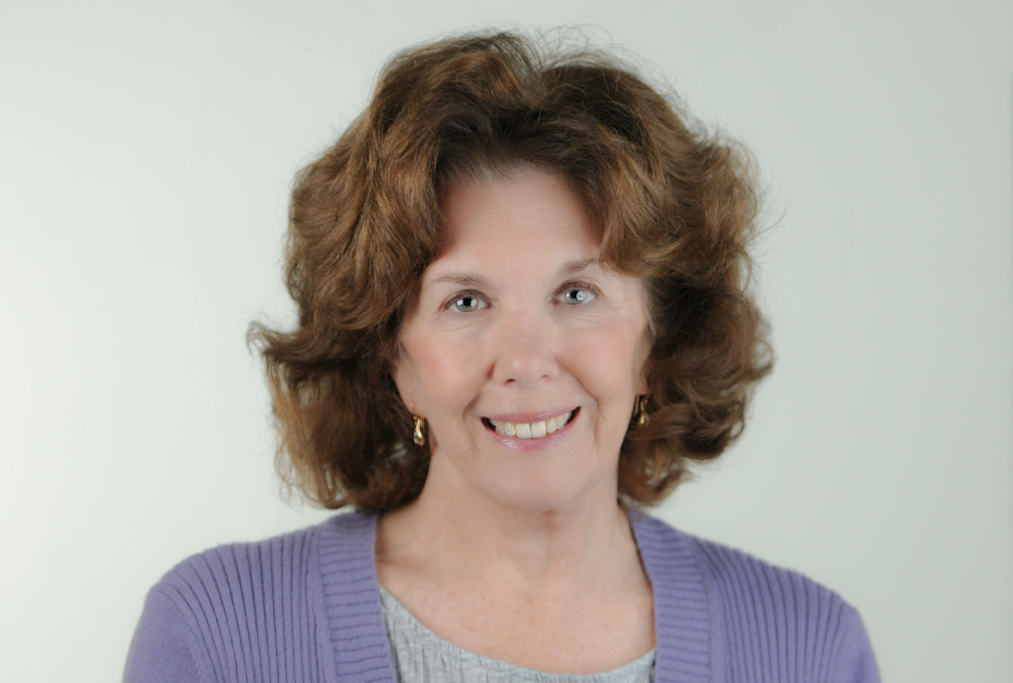
Marilyn Bourbon

We’re thrilled to announce that our upcoming “Friends & Family” issue will be illustrated by the talented (and generous!) watermedia artist Marilyn Sears Bourbon.

Marilyn describes her style as both geometric expressionism (an exploration of self through shape, color and design) and subjective historicism (an exploration of self through the past). She expresses emotions through her work by weaving pattern and design into a descriptive mood, which explore the ways human beings construct their world.

Many years of experience as a professional interior designer have developed her innate ability to see the negative space surrounding shapes and forms. She sees her painting as an exploration of women’s voices through color and design.

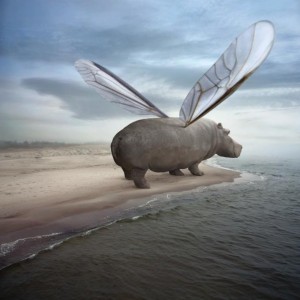
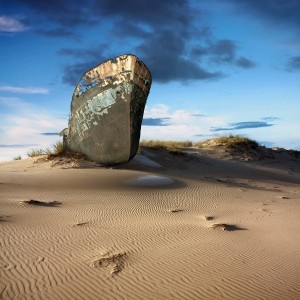
Surf & Sand

She has won many awards for watercolor and watermedia in juried shows, and has had her work exhibited numerous times in national, gallery and museum shows. She has also served as a juror in artistic competitions.  Risk-taking through experimentation is an inherent part of her artistic approach, so continued evolution of her style should be expected. She believes understanding ourselves and the world in which we live comes through experimentation, change, and expression of honest emotion.

Interview with SJ Sindu

Jennifer: Okay. So. Your short piece “Mirrors Like Silence” is a beautiful lyric-narrative of what is basically a pretty horrific and sad – but all too common – scenario. The “how” it is accomplished isn’t something I think either of us should explore, what I’m more interested in is why you think it’s so essential to tell it and in this particular way. This flash essay, to me has at its heart a ‘there but for sheer, dumb luck go I’ feel to it. The way you write this essay it reads as being without judgment and includes a great deal of love for the character of Carlos. I guess what I’m asking here is what have you gained from telling this story in this way?

Sindu: This story—I never meant to write it. For a long time, I held it in because I felt as if I would be betraying my friend by writing it. This wasn’t my story to tell. If I didn’t think about it, I could push it to the back of my mind. But it was always there, this realization that my friend was hurting, suffering, and that I was doing nothing about it. Indeed that there was nothing I could do about it. I finally wrote the story in this way as an apology, for everything that I couldn’t do for him, for all the ways in which I’d failed him, failed to save him, to catch him when he fell.


Jennifer: That’s interesting. Was there ever a moment when you thought, even as you were writing, there’s a moment when I could have done something. Or is that helpless feeling part of why you kept it to yourself for so long?

Sindu: That helplessness was part of why I kept it to myself. But I did feel as I was writing it that yes, there were things I could’ve done. Many things. In the end, I don’t know if anything would’ve made a difference. But I was young, confused, and wrapped up in my own world. Writing this story was also a way of laying my failings out in front of me, reminding myself that I have to learn from this, and be a better friend in the future.


Jennifer: Do you think that that’s why, as writers, we are so drawn to our own pasts? Also, do you feel as though you were successful?

Sindu: Speaking for myself, I’m drawn to my past because I want to make sense of it. I want to know the why behind all the chaos, all the wild and crazy decisions I’ve made, the ways in which I had no control. Most of my nonfiction is written for or about others. I think writing about my past is also a way to think through my relationships. With “Mirrors Like Silence,” I think on some level, I was successful in making some sense of this time in my life, my friendship with Carlos, and to try and make up for some of my failings.

Jennifer: You sound like you’re speaking for an audience. Real talk, though. Do you think we actually get anything out of that practice, for ourselves, I mean? I think what really happens when we try to “learn from our past” is that we see each new situation as some sort of re-do of an old scenario where we screwed the pooch. Puts a lot of pressure on us as people, don’t you think? What do readers get out of something like that? What do you get from reading about an experience you’ve never witnessed first-hand? Does it prepare you in any way – other than making you kinder, perhaps.

Sindu: I think we’re under a lot of pressure anyway, us writers. We expect ourselves to shit out gold in terms of our work. And yes, I think some of us expect way too much of ourselves as people, too. I know I do. Whenever I mess up, I think, next time, I’ll do it better. Two things wrong with that. One, it makes me eager to move onto the next time, instead of fixing this time. Two, I have very high expectations of myself going forward, and of course I usually fail.


Jennifer: God. This is good shit. Please, continue.

Sindu: As readers, I think it gives us a sort of perverse pleasure to know that we’re not the only ones who ever screwed up. I do think it makes us kinder, able to forgive people easier for their failings because we’re eager to have them forgive us, too. But it messes with our internal moral compasses, and I find that writers are often not as rigid in their moral structures. That can be good or bad, depending on whether you need to hide the body or investigate the murder.


Jennifer: While I had a huge, out-loud chuckle at that last part (hide the body or investigate the murder! Hilarious!) I want to quibble with it, too. I suppose that’s because I want forgiveness for myself, too. I also kinda want to burn down the world because I have to ask for forgiveness for “letting the soft animal of my body love what it loves.” It seems criminal, in some ways, to tell someone ‘no, you didn’t follow the rules, so you can’t have what you love or want.’ It seems to me sometimes ,in my darkest moments, that morals aren’t about anything but possessiveness. Then again, if I had stuff to lose, I’d have a different stance on the issue. Maybe. Probably.

Sindu: I think you’re onto something with the possessiveness. I think it’s more than that. I think it’s about control. This idea of morality is about control. We are in control of our actions, but not in control of our desires. As writers, I think control is something we have to learn to give up. We have to be willing to give up control and imagine someone else’s consciousness, their desires and actions, and that kind of mental intimacy (let’s call it that) leaves a mark on our own personalities. We get darker, moodier, angrier as we realize that everyone’s reality is valid, that self-discipline is a myth sold with a side of hope.


Jennifer: Control. I’m circling back to that. Mostly, what I’m curious about is how you think that applies in fiction or / and non-fiction. Isn’t the appeal (or part of it, anyway) of fiction-writing the fictive imagining of a real(ish) scenario, the idea that we can make the events go the way we want them to?

Sindu: As someone who primarily writes fiction, I feel more in control when I’m writing nonfiction. I can take an angle, slant the right details, and tell it all with the lens that I want. I can turn a real scenario into whatever I want using my pithy word-smithing. But when I’m writing fiction, I feel as if I’m just barely keeping up, as if things have to happen in a certain way, and even my authorial decisions aren’t in my control–that’s just how they have to be to write the good story. It does sound all New Age mambo-jumbo but when writing fiction I often feel like a journalist stumbling along in the dark, trying to get it all down.


Jennifer: Interesting. So in non-fiction you’re examining a stationary object, and in
fiction you feel like you’re chasing a rabbit?

Sindu: Yes! I love that. That’s exactly what it’s like. Because nonfiction has already happened, it’s like playing with Play-Doh. It’s a certain color, and there’s only so much of it. I can shape it how I want. But fiction’s like pinning down water.

Jennifer: That’s a good one, too. You’re just shaping the elements that already exist to show yourself and the reader something about that situation or person or moment, right? It sounds to me like that’s kind of how it goes. Most of the time. Poetry feels more like the stationary object thing.

So, here’s an interesting thought. Maybe a chicken and egg question, but here goes: Do you think we seek out diverse experiences to give us more “Play-Doh” to work with (in non-fiction, poetry, fiction) or do we turn to writing because that’s the tool we best know how to use to make sense of those experiences? Or maybe I should ask which was the case for you?

Sindu: I think it depends heavily on the person. There are the writers that backpack through Africa and stay in European hostels, traverse red light districts in Thailand. Then there are writers that camp in their own backyards. For me, I seek out diverse experiences because that’s part of my personality. I rarely mean to write about them, and often never do. But at the same time, those experiences get added to the big pot of my life, and are there for me to draw on when I need that one brick-wall-smashing detail. There’s something to be said of the depth to which you know your own life though, and I find that depth is what is really beautiful about writing. So I tend to stick to the experiences that I’ve marinated in for a while, because I’m able to dig deeper, get at harder truths.


Jennifer: You sound a little bit like Ted Kooser. He tells the poets that we need to read and experience as many kinds of poetry as we can, and after a while we become such a rich stew of our experiences and readings that no one element is distinguishable from the others.

Sindu: I agree, but when extrapolating that idea to the experiences we have in life, I think we must also be careful to distinguish between our experiences first-hand, and the experiences of those close to us. That’s an easy line to blur and cross.


Jennifer: Yeah, I agree. I always break out in a rash when I read persona poetry about actual people written by someone who never knew them. I’m not sure why, except that it feels like a kind of wanton appropriation of another person’s experiences.

Sindu: It is. One the one hand, I do think as writers we can step into other people’s shoes, but it’s a fine line. It has to be done with care, and a whole lot of love. And, when the writer has power and privilege that the subject doesn’t, the writer is also responsible for having a working knowledge of the historical context of that power.


Jennifer: I agree. But even when those things aren’t an issue, often the practice of
putting yourself in someone else’s shoes (in non-fiction or poetry especially) feels as though you’re using someone, reducing them to a vehicle for your own desires and expressions.

Sindu: You are. That’s what we do as writers, use everything and everyone around us to
tell our truths. I think it’s just something we have to make peace with.


Jennifer: I have to think about that. It might be why I am so much more attracted to
poetry and (distantly) non-fiction.

Sindu: As opposed to fiction?


Jennifer: Yes, as opposed to fiction. I have had some experience with being used and didn’t like it much. Don’t want to do it to anyone else. Although it is very, very easy to do.

Sindu: It is easy.


Jennifer: It is also a thing we have to handle responsibly. Alrighty, I think you should get the last word in here. We’ve been talking a lot about control and use and all those things. Now, do you have any thoughts for your reader? Was there something you wanted to ask me about the story?

Sindu: I’m curious about one thing. Does the story function as an apology?


Jennifer: Yes, it functions as an apology in the sense of a “defense” and it also reads as something of a mea culpa. You are saying “this was me, being stupid and young and having no idea how to listen, how – if at all – I could help you” and it is clear that you love your friend very much.

Sindu: Carlos hasn’t yet read the story. I’m scared to give it to him. I’m scared that he won’t understand it as a mea culpa. I hope I’m not scared soon.


Jennifer M. Dean currently writes, lives, and works in Lincoln, Nebraska where she received her MA in Creative Writing from the University of Nebraska-Lincoln. She is the Associate Editor of Split Rock Review, and has work published or forthcoming in The Battered Suitcase, Torrid Literature, and Red River Review.

Interview with Richard Bader

Mary Akers: Thank you for sharing your wonderful short story On the Verge of Frog-Hood with us. Can you tell our readers a little bit about what inspired this fascinating story?

Richard Bader: One day a couple of years ago a woman came to my door trying to sell a novel that she self-published. I was very busy and I blew her off. Not rudely, but still. And I’ve always felt really bad about that. Though maybe it was a good thing, because it gave me the opportunity to try to figure out who she was. And yes, there once was a woman who collected tadpoles from the cover of a neighbor’s pool. No one ever talked to her, and she didn’t look like she wanted to be talked to. She seemed very sad. So I got to invent her, too.


MA: How do you generally write? (On a computer? Pen to paper? Mornings? Anytime?)

RB: The lion’s share of my writing happens on an aging Mac laptop in my basement office. The space is sort of sensory-deprivation chic, though it may be a little lacking in the chic department. The absence of stimuli helps keep me from getting too distracted. Plus it’s warm in the winter and cool in the summer. I have an office assistant named Zoe who’s a 3-year-old German Shepherd mix and an awesome listener. Outside the office I try to keep a pen and small notebook handy in case an idea strikes, or I’ll use a note-taking app on my iPhone. I have mixed success keeping to a fixed writing schedule. I envy write-first-thing-in-the-morning writers, but I’m generally more productive in the afternoon.


MA: What inspires you?

RB: A jacket blurb I saw recently on a book by a writer I like said she puts ordinary people in extraordinary circumstances to see what they’re made of. I needed somebody else to put it that way, but I think most of the time when I write that’s what I’m trying to do. That said, I also feel an itch to write a good story about a superhero. Of course, like all good superheroes, he (or she) would have to be a flawed superhero, with those humanizing ordinary-person traits.

MA: Who are your favorite writers?

RB: Most of what I read is contemporary fiction, and I tend to hop around a lot. The last book that made me feel like I was in the presence of greatness was Colum McCann’s Let the Great World Spin. The last book I didn’t want to see end was The Art of Fielding, by Chad Harbach. I’m a big Jennifer Egan fan,and I like the way she’s always experimenting — a recent story she wrote with Twitter feeds was a lot of fun.  A volume of Amy Hempel short stories is a fixture on my bedside table. I pick it up and read every now and then and shake my head and wonder at how in the world she does it. An Alice Munro collection is there, too. Not long ago I stumbled on Doug Dorst’s excellent story collection The Surf Guru, and wish he’d produce another. I tend to value story over incredibly gorgeous language to tell story, and this drives who I like to read.

MA: Good choices! Those are some of my favorites, too.
And finally, because we are a recovery-themed journal, what does “recovery” mean to you?

RB: I grew up in a household where alcoholism was a dominant theme. Probably the dominant theme. But recovery never really happened. So maybe recovery is something I’m still looking for. What does it take to do it? What are the obstacles? Why do some people succeed and others fail? What keeps others on a perpetual succeed/fail cycle? My guess is that if I really looked at it, I’d find a recovery theme in just about everything I write. This brings us back to what I said before about putting ordinary people in extraordinary circumstances and seeing what they’re made of. Some make it. Others don’t.

MA: Thanks so much for talking with me, Richard. I really enjoyed it.

Interview with Brian Kamsoke

Mary Akers: We were thrilled to have your short story Bigwig in this issue, Brian. I’m sure there’s an interesting story behind the story. Could you share with our readers how Bigwig came about?

Brian: The first draft of “Bigwig” is almost twenty years old. Conception of the story came while I was keeping a dream journal. I can’t remember the dream entirely now, but it had to do with boats on the St. Lawrence River, where the story is set.

The beginning of the story was vastly different from the way it appears today; essentially, it was a narrative within a narrative where one character is telling a story to another character with the consequences of that story weighing on the relationship between the two. I can’t tell you how many times I submitted that story to journals only to have it rejected; two editors wrote back saying they couldn’t understand the significance of the opening and closing scenes to the middle part of the story.

Nevertheless, I refused to change it and eventually gave up, stuffing the story into a desk draw. Then a year ago I worked with the wonderful writer Katherine Vaz, who was writer-in-residence at Wichita State University. I worked on a different story with her and found her editing made the story better. I learned a lot from her – like how to be brutal when editing your own stories. As writers, I think we can sometimes obsess over the details and lose focus on the “big” picture. Afterwards I returned to “Bigwig” and finally cut that opening scene and altered the ending, sent it out again, and bang, it was accepted at r.kv.r.y. I am very happy that “Bigwig” finally found a home here.


MA: Wow. Twenty years from conception to publication. Now that’s commitment to your story. Would you consider yourself a stubborn writer?

Brian: Or persistent? But perhaps I am stubborn, or just slow on the uptake. Of course, I’m familiar with Faulkner’s advice: writers must be willing to kill their darlings. I was just trying to make “Bigwig” more complicated than it needed to be. What remains now is a rather basic story in terms of plot that works.


MA: I think it’s very helpful to be stubborn as a writer. In fact, unless you’re one of the lucky few who manage to hit every literary green light, you’ll never get widely published without being stubborn. Do you have other stories stuffed in desk drawers ready to hit the submission road?

Brian: I have much work stuffed in desk drawers, but I’m better now at consistently sending work out. I’m always working on something. I’m working on my first novel as well as a collection of nature essays, and I have enough material for at least two collections of short stories.


MA: Nice. So what’s the novel about?

Brian: Well, it’s a road novel set between 2007 and 2012, during the financial fiasco and ensuing housing bust. It’s a story about people on the road – some living on the road by choice and others by necessity – but at its heart, it’s a story about family and community and connections.

MA: Have you done any travel in the course of researching this novel?

Brian: You could say that. I’ve chosen a rather nomadic life, at least temporarily. A few years after my divorce, I decided to sell my house and travel the country. I have a small professional writing business that provides some income and allows me mobility. I can say I’ve seen a lot of this country from the big cities to the small towns to remote backcountry locations, and I’ve met many interesting people along the way.


MA: Do you have any plans to settle down and write from one place in particular?

Brian: Eventually I’ll settle in one location again. I miss the sense of community, and I’d like to find a teaching job. I really enjoy teaching.


MA: Thank you for your time, Brian, and for sharing your fine work with us. I guess I’ll close by saying happy travels.

Brian: Same to you.

Interview with Jim Brega

Alice Lowe: Jim, as I recall, The Twisting Path was one of your earlier efforts when we started reading and reviewing each other’s work last year, and you took it through a number of incarnations before the final version now published in r.kv.r.y. Given the nature of the story, I imagine it was difficult to write, and I wonder how you approached it, what obstacles you encountered in telling your story, and how you overcame them. Because I know that you’ve turned some of your life stories into fiction, did you ever consider writing this as fiction in order to give yourself more latitude with the facts?

Jim Brega: Well, going back to the real origins of this story, I’d have to start with the daily blog I was writing in 2009 and 2010 to document the experience of being diagnosed with and treated for prostate cancer. Friends kept encouraging me to use some of the material from the blog in my creative writing. That idea was very challenging for me because the blog material was extremely emotional and raw, full of anger and complaining, not “literary” at all. (For example, part of the testimony I uploaded was a post-op photo of my abdomen, with PowerPoint arrows indicating surgical incision points.) The experience of receiving my diagnosis was actually the least traumatic one in the whole process, so I decided to start with that. The second half of “The Twisting Path” was my first attempt to deal with the material. If you remember, it originally stood alone and was titled “Spring Fever;” I thought it might be a flash piece. But I wasn’t able to put the part that came before the diagnosis out of my mind, so I ended up writing about the biopsy as a “prequel.”


AL: Interesting—I would have imagined that the diagnosis would be enormously traumatic, even shattering. Hopes dashed. But as I read your piece, I understand that you’re saying that by the time you got the diagnosis, you’d already gone through the stages of grief, as it were. That by agreeing to the biopsy, you would “start down the twisting path … that could lead from this room to others like it.… in an accelerating rush to the final tumble.”

JB: “Hopes dashed—“ I can see how most people might think of the diagnosis that way; that would be logical. But I, like the narrator in the story, have watched the wasting away of “a lover, then one parent, then the other,” which changes my expectations of disease. I tend to face potentially bad outcomes by imagining from the beginning the worst that could happen and devising a contingency plan for that possibility. I guess that could be considered a mental rehearsal of the stages of grief. Once the plan’s in place I allow myself a little hope that things will go a different way. So, in the story, deciding to go ahead with the biopsy was the first step on “the twisting path.” If the biopsy had been negative, I would have been all done: no harm, no foul. But I had already imagined that it would be positive, to steel myself against the diagnosis; when the call came it was just a confirmation that I had to take the next step. It took nine months, but eventually I reached the end of that section of my “path” when I made the decision to have surgery. So far the evidence is that I was cured. Earlier you asked whether I considered writing this piece as fiction. While I was writing it I didn’t feel the need to stick to the strict “facts” of the experience (as I remember them), because what was most important to me was to try to capture the feelings that are inherent in situations like this one: fear, loss of control and individuality, distrust of what I think of as the “medical- industrial complex,” etc. I also wanted to write about those moments in our lives when we know we are making a life-altering decision from which there can be no turning back, and are confused about what to do. I struggled with that part of the story—if you remember, it once had a whole (made up) section about a dream in which I visualized the options metaphorically. The dream sequence really didn’t seem authentic; fortunately, through working on the story in our circle, that part was cut. Interestingly, it wasn’t until I had reached a point where I felt the piece was “finished” that I realized I’d inadvertently incorporated into the story an experience from another minor medical procedure I’d gone through during the same period. So, without getting into the fiction vs. creative non-fiction controversy that’s raging in the literary world right now, I’d have to say that I approached and wrote the story not as a reporter but as someone who had gone through a confusing and emotional experience and wanted to convey to readers what it felt like. At the same time, I didn’t feel the need to expand or embellish the experience to make my point. And in spite of my lack of attention to the issue, I think the essay would pass a fact check.

AL: I was glad when you decided to take out the dream sequence, because your experience, as you wrote it, is so intense that the dream seemed both unnecessary and distracting. But I also recall it being a vivid piece of writing—maybe you’ll find another use for it! That fiction-nonfiction controversy has been like a bag of potato chips—once I dip in I can’t stay out of it. I agree that we’re wise to stay out of it, but I think you’ve very succinctly stated the ideal intent of a personal essay—that of capturing and conveying the emotional experience yet still passing the fact check.

JB: Speaking of conveying an emotional experience, I wanted to ask you about a passage from your essay, My Moving Cage, which was published in the July 2011 issue of r.kv.r.y. In describing your first experience with a panic attack that occurred while driving across the Coronado bridge, you wrote, “It was as if there were hands on the steering wheel covering my own, an evil entity who wanted to take the car over the side. I clenched the wheel in a vise-like grip to keep from making a sharp turn to the right, through the restraining wall and into the dark swishing water below. I was sweaty and clammy. Dizzy, hyperventilating.” Your description is very vivid; it almost feels like a description of being possessed. Although you write about trying to avoid the road structures that trigger this panic, you actually have had to confront them many times. Even though the feeling returns full strength near the end of your essay, did repeating the experience affect your ability to recall what the original incident felt like? Do you think your discovery of similar episodes described in the work of Joan Didion, Susan Cheever, and other writers influences the way you remember or even experience your own?


AL: “Possessed” describes it well—the crux of my phobia was the feeling that I wasn’t in control of not just the car but of myself, my own actions. Feeling possessed, out of control, is of course transpiring in my head, but at the same time I was fully conscious of the physical, tangible things that were happening to my body and in my responses, and that’s what I felt I needed to convey in my essay for readers to absorb, to make them squirm a little. The same way I felt when you described the biopsy in such detail! Unfortunately for me, avoiding the Coronado Bridge doesn’t get me completely off the hook—I’ve had a few relapses, which I’ve learned to accept, and so even now I can attest to the accuracy of my description of the original incident. I think that discovering that my malady had an identity, and reading the descriptions set forth so powerfully by the likes of Joan Didion and Ruth Reichl—I know and fear the Bay Bridge, I’m right there with them in their panic—was validating and reassuring. I hadn’t lost my mind. Not only was I not alone, I was in highly esteemed company.

JB: As you mentioned, you also researched your symptoms and discovered that they characterized a recognized phobia: hodophobia, “fear of travel by road.” When I recently re- read your essay I realized that it hadn’t occurred to me to wonder whether what I went through had ever been classified as a phobia. As I started researching the question, right away I was able to come up with iatrophobia, “fear of doctors,” but that didn’t seem to cover it. Nosophobia is “fear of a specific disease;” but, again, my anxiety was more general. There are two terms for a fear of needles; also too specific. Then I came across tomophobia—“fear of an invasive medical procedure.” Jackpot! A description of a patient with this phobia describes his “…intensely irrational and unavoidable fear of putting himself in the hands of others…. Moreover, the fear of losing control of his body through loss of consciousness or compromise of physical integrity during an operation or surgical intervention was reported….” The importance given the fear of losing control, in all the various meanings of that phrase, really resonates, and may be an element that connects our two experiences.


AL: And we’ve both written personal essays to transmit emotional states to readers!, One of the things I find striking about The Twisting Path is its form and pace. You start off in a narrative, descriptive mode; it’s first person, your observations and internal deliberations. Then, once you’re in the exam room, your story gradually transitions and becomes more dialogue driven, which to me accentuates the immediacy and the awfulness in excruciating detail of what you were going through. And then, bam, you’re on the phone getting the diagnosis. And then you draw back into the slower narrative of your thinking and your acceptance of what you’d anticipated: “It’s to be the twisting path, then.” Marvelous! As one writer to another, was that according to plan or did it evolve that way?

JB: I’d have to say half planned, half evolved. Having written the second half of the story first, I knew that the narrator was going to end up essentially alone in a wide-open natural environment. As a contrast, I wanted the atmosphere in the first half of the to be intimate, claustrophobic even: three characters in a tiny room. There are three sense /images that make the connection between the two parts: the smell of blood (which indicates danger or fear), an image of a twisting path (the uncertain course of medical decision-making), and a line of dominoes falling (fate set in motion by a human hand). But the only element of the three that was originally written into both halves was the reference to the smell of blood. The image of the twisting path was invented while I was struggling with the now-deleted dreams, and the row of dominoes was added to both parts much later. Since you noted the “excruciating detail” of the autopsy, I wanted to mention that I intended the dialogue in the biopsy room to be a bit humorous, though I’m not sure whether I achieved that. I’m a great fan of the ability of writers like Augusten Burroughs to tell horrifying stories in a way that makes the reader laugh. My sense of humor is very dry—some have compared its texture to that of dust—but from a certain point of view I think that what happens to people who are suddenly thrust into medical environments is kind of horrible/funny (or horribly funny). People become stupid, confused, uncertain, unable to carry on a simple conversation or follow a clear instruction. They suffer the worst humiliations without complaint. But the humor in the situation exposes their humanity, their vulnerability. They find “truth;” it’s beautiful, really. The phone conversation in the essay’s second half is hardly a conversation at all; if you notice, the narrator utters only three words aloud: “No, no questions.” Yet he’s obviously still engaged in a vigorous inner monologue. I purposely set this conversation in a spot where he could observe and appreciate the early signs of spring in the landscape around him. He confronts the irony in the lushness of the Earth, an Earth that’s coming alive just as he is forced to confront mortality. The atmosphere becomes more sinister as he imagines the ground opening up beneath his feet as if to swallow him. There’s an implication that he may have spent many hours admiring his view, but is suddenly seeing it in a new way because of the news he’s receiving. At this point the /images of a twisting path and a row of dominoes from the first part of the story are repeated as a coda.


AL: You mentioned admiring Augusten Burrough’s ability to tell horrific stories with humor. What other writers do you admire?

JB: I enjoy reading almost anything, and cultivate the serendipity of having something wonderful come into my hands un-looked-for. Often I allow the two-dollar bookshelf at my local used bookstore to suggest something to me. That’s where I recently scored a copy of Joan Didion’s collection of essays Slouching Toward Bethlehem, which was delightful. I also found a copy of Alice McDermott’s Charming Billy, and of Martin Duberman’s memoir, Waiting to Land. I’m in the middle of an anthology in which I discovered Saul Bellow’s short story, “A Silver Dish,” which blew me away with its perfection. But on any given day you’d be as likely to find me reading Karen Armstrong’s A History of God, though perhaps a bit more slowly than the other things I’ve mentioned. I think the last thing I bought on my Kindle was To The Lighthouse. So, my reading list, to the extent I have one, is very diverse.


AL: What are you working on now?

JB: Right now I’m spending some time re-working a few completed stories that have not been able to find homes in a journal. I’m also twenty thousand words into a story that might or might not become a novel at some point. And I’m reading as research some “boys’ book” fiction series that were published early in the twentieth century, looking for inspiration for a potential Young Adult book. Those who are interested can follow me on my blog at jimbrega.com.


AL: Well, thanks for inviting me to participate in this conversation!

JB: Thank you! I really appreciate it.


Alice Lowe is a freelance writer in San Diego, California. Her creative nonfiction has appeared this year or is forthcoming in Prime Number, Phoebe, Jenny, Tiny Lights, City Works, Writer’s Ink, Skive, Raven Chronicles, and Killing the Angel. Her essay, My Moving Cage, was published in the Summer 2011 issue of r.kv.r.y. In addition, she was the winner of a 2011 essay contest at Writing It Real. She has published essays and reviews on the life and work of Virginia Woolf, including a monograph, “Beyond the Icon: Virginia Woolf in Contemporary Fiction.” Alice blogs at www.aliceloweblogs.wordpress.com.

Interview with Lowell Jaeger


Lowell Jaeger’s fine poems Ants and Excavation appear in our October 2012 issue.

Hannah Bissell: You’re always working on something. What are you working on now?

Lowell Jaeger: I’d like to see Many Voices Press do a book of brief memoirs from past and present AmeriCorps volunteers. Short vignettes of the best and worst experiences. I’ve worked with AmeriCorps volunteers in Montana Conservation Corps for the past several summers, and I’ve totally fallen in love with these young people, their community service spirit, their giving natures, their willingness to brave weeks of exposure and hard labor in the wilderness. I wonder why they are so willing to give, so willing to sacrifice, so energetic, so engaged, so hard-working. What can I do to help the AmeriCorps cause? I could do this book of AmeriCorps memoirs, a book aimed at prospective AmeriCorps enlistees, a book to give these prospective volunteers a realistic glimpse into the challenges – victories and disappointments – of volunteer service. You’re right; I’m always working on something. I don’t quite know where to begin on this one, but it’s percolating in my head. That’s how these things grow.

Hannah: Sounds like a worthy project, but it’s not poetry. Will you be publishing more poets?

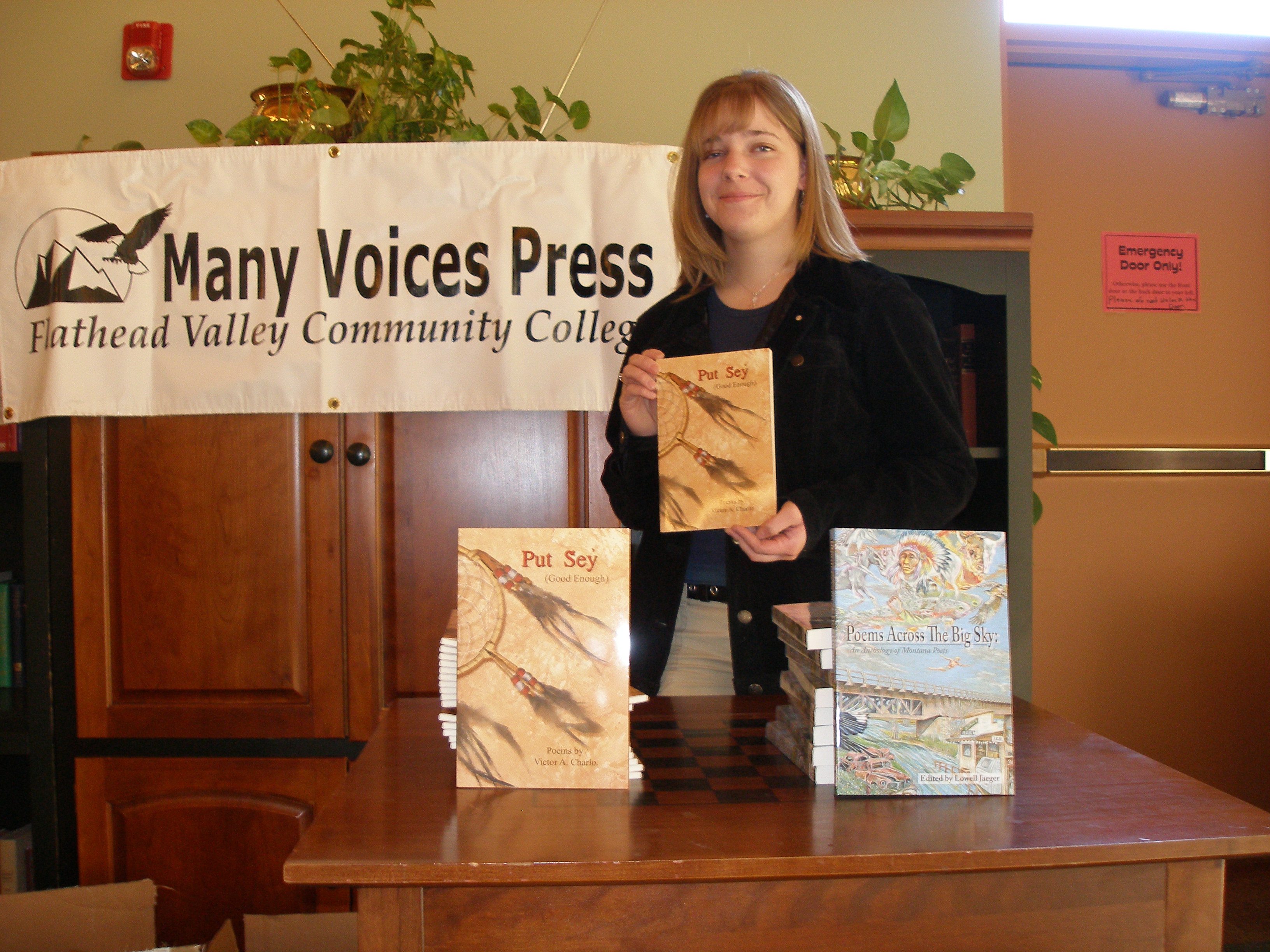
Lowell: Our big anthology, New Poets of the American West, took three years to put together. A real labor of love. A real adventure, too. Seems amazing to me that a small non-profit micro-press like MVP could have ever pulled it off – 250 poets from 11 Western states, including a Pulitzer Prize winner like Philip Levine, a National Poet Laureate like Kay Ryan, prominent Native American poets like Simon Ortiz and Joy Harjo and Leslie Silko, and poems in Spanish and 6 Native American languages – wow, I hold the book in my hands like an Olympic gold medal. I’m proud of that.

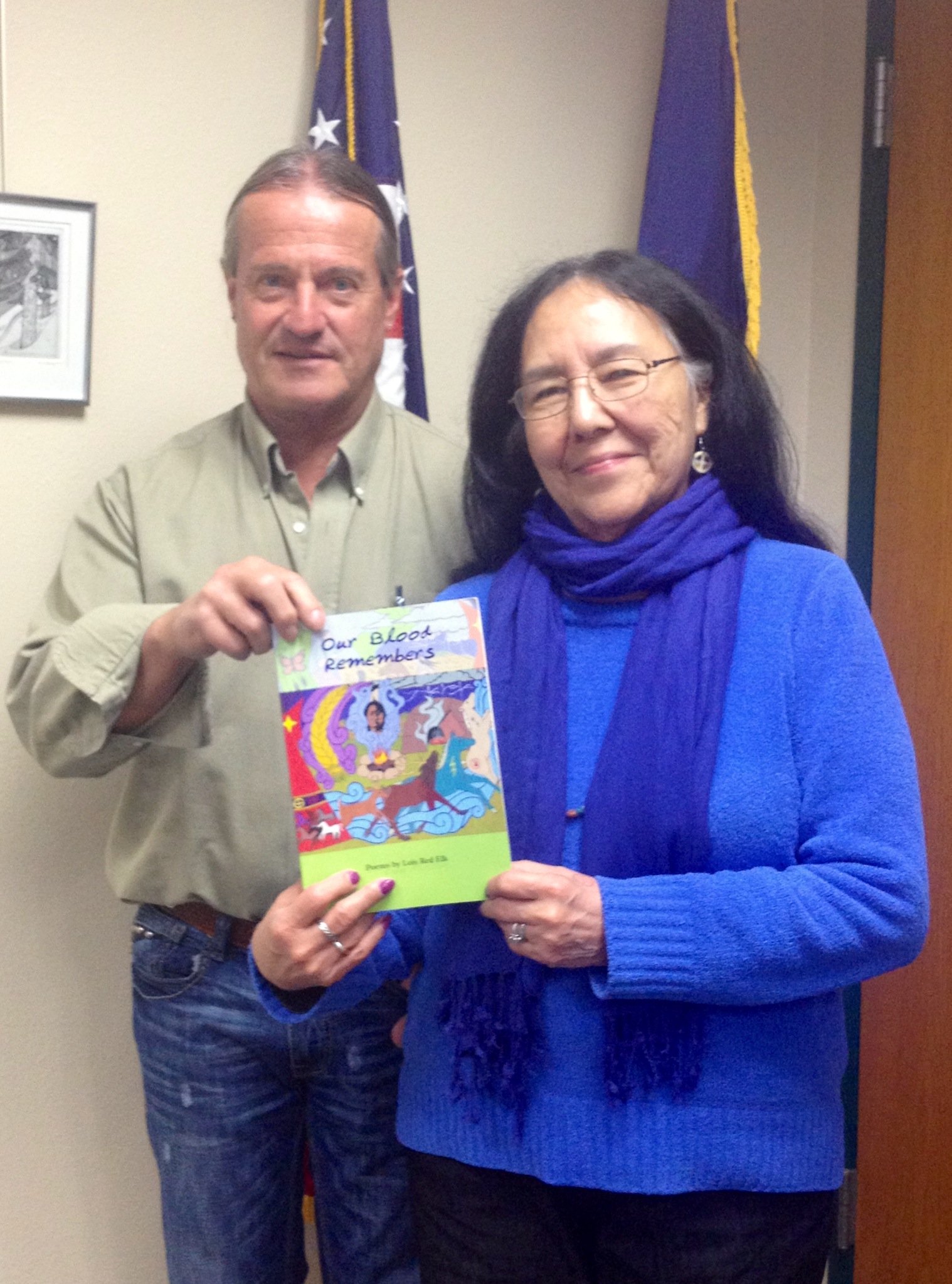
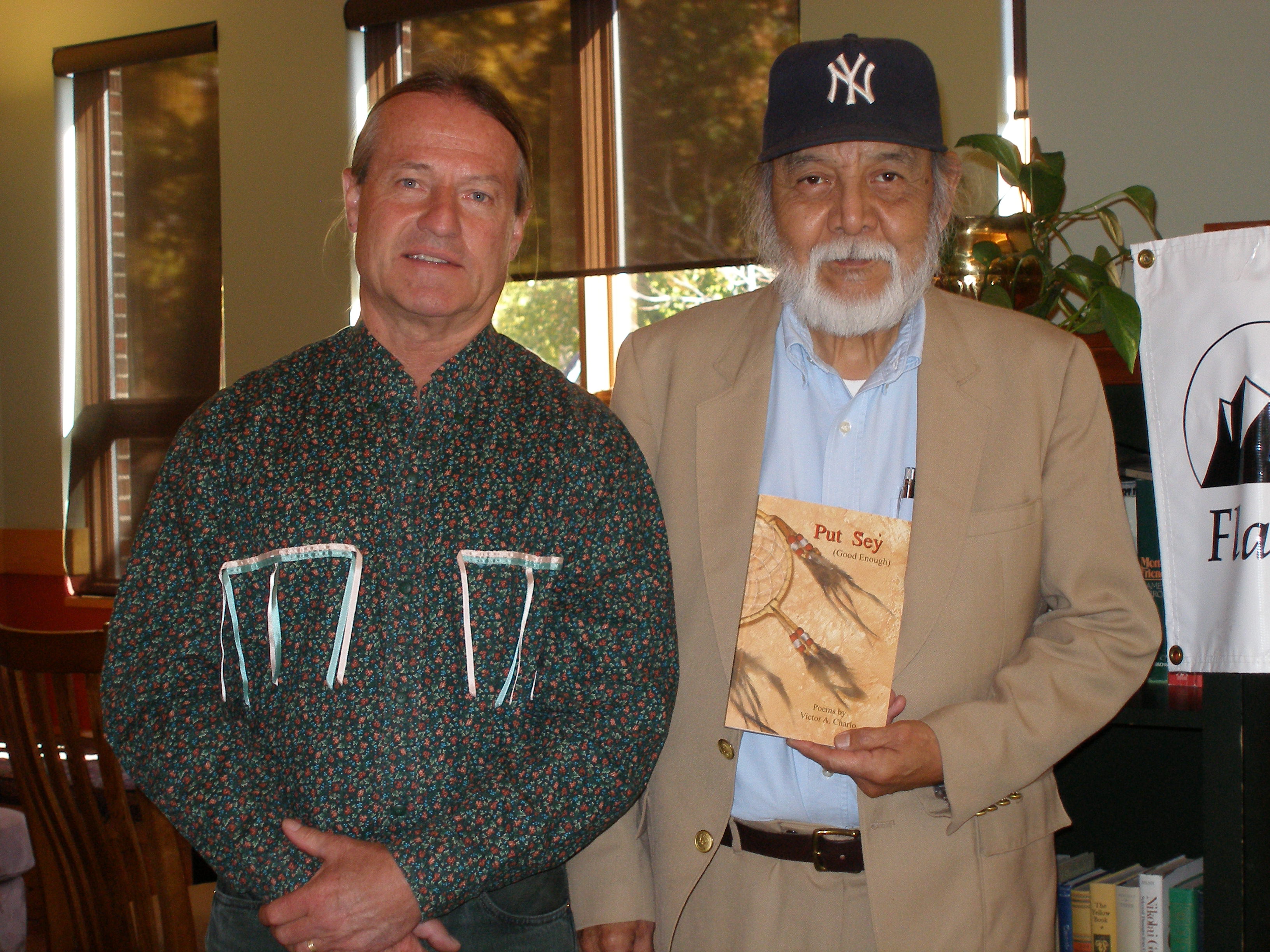
And I’m proud of the three books we’ve done by Native American poets Victor Charlo, Lois
Red Elk, and Minerva Allen. All three are risky enterprises; these deserving Native poets, now in their seventies, have gone so long without the attention their talents merit. Charlo’s book includes poems in Salish, Red Elk’s book includes poems in Lakota/Dakota, and Allen’s book includes poems in Nakoda (Assiniboine). These books are cultural artifacts, historical artifacts. These are voices singing at the margins of American culture. That’s what Many Voices Press is all about – a celebration of many voices.

So, yes, I want to publish more poets, especially more Native poets. But publishing is one thing and marketing a whole other thing. Hard these days to sell books in general, even harder to sell poetry. We’ve managed to persist through a lot of tough times. With the kindness of strangers.


Hannah: You’ve written four collections of your own poems. Do you have a new collection in the works?

Lowell: I’ve got a new collection, How Quickly What’s Passing Goes Past, now in search
of a worthy publisher. It’s a collection of poems out of my childhood in the 50s and 60s during the Cold War. I read someone somewhere who said, “Anyone who has been alive on earth for at least seven years has enough material to write about for the rest of his life.” I feel like that’s true. As a kid in the 50s and 60s I must have been walking around like grade school documentarian, listening to the conversations, filming the dramas, jotting notes in my sub-conscience. Now the memories are pouring forth faster than I can possibly shape them all into poems, sometimes four and five poems a week.


Hannah: What is it about the Cold War era that calls to your imagination?

Lowell: I was a kid with my eyes open. I saw neighborhood fathers digging bomb shelters. We hid under our desks at school when Civil Defense sirens commanded we should duck and cover. TV was new in our lives, and the /images were horrific – Hiroshima, Nagasaki. Then came the H-bomb, the Cuban Missile Crisis, the Kennedy/King/Kennedy assassinations, and napalm.

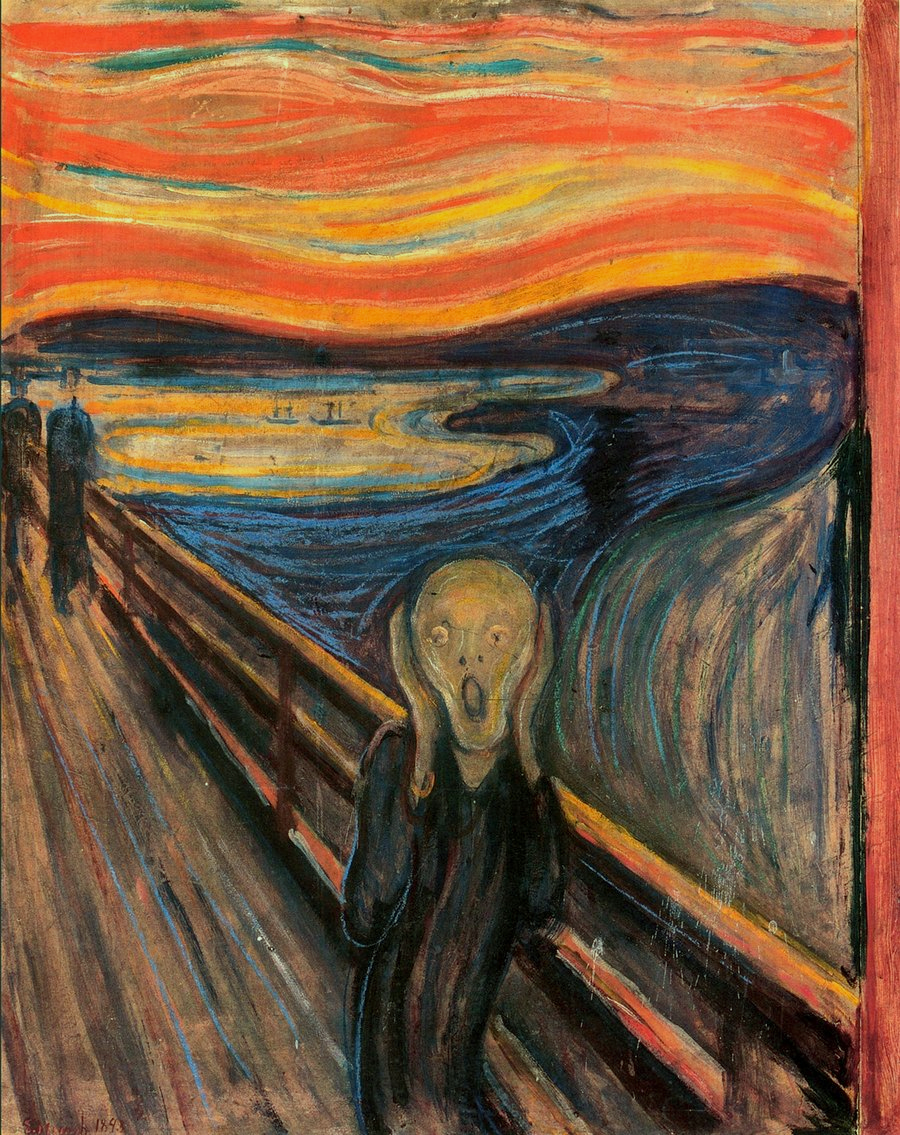
I recently saw again (on the r.k.v.r.y. Blog) the Nick Ut Vietnam War photo of the kids and soldiers fleeing for their lives down an empty road with the war blazing behind them. There’s that naked little girl – especially now, as a grandfather, I’m moved and pained by that image. But those are the sorts of /images I grew up with. I don’t know why I was so affected by that sort of thing; my brothers who shared that time in the world with me seem to have been living on a different planet. For them, the past is past. For me, the bombs just got bigger and bigger, scarier and scarier. I felt like that young boy in Ut’s photo, the boy wearing the look of horror. Doesn’t his mouth resemble that poor freaked-out little guy in Edvard Munch’s “The Scream”? That’s how I felt. That’s what many of my generation felt. That’s what this book  is all about.

Hannah: Calm down. Okay?

Lowell: Sorry. Sorry to sound so bleak. The new book, believe it or not, is also filled with a
lot of humor. As scary as those times were, they were also ridiculous. The whole idea of hiding under your school desk to save yourself from a nuclear blast is ridiculous, isn’t it. Or  radiation; we were always in dread of atomic radiation. Families owned their own Geiger Counters. Here, I’ll give you a humorous poem from the new collection. A poem called “The Test” which displays our ridiculous fear of atomic radiation:

The Test

Dad confided in Mom he’d heard it
from a guy at work who’d heard it
from another guy whose younger brother
worked a maintenance job at the plant
where they built the bomb.

Reports of super-secret testing, us
against the Commies, killing the atmosphere
with radioactive dust. The air
we breathed could burn us up
from inside and turn us into lepers

with bloody sores and wrinkled skin
hanging like rags. What if that’s just talk,
Mom said. Maybe, said Dad, but what about
all those babies born wrong
with no feet or no fingers or no arms?

Mom couldn’t push that thought back.
She’d incubated four boys and wanted grandkids
someday. I don’t see how that works,
she said. Why is atomic fallout
making babies born wrong? . . . Dad shrugged.

Nobody knows, he said. And would have left it,
except Mom called us boys
into the room and looked us up and down
for worries we hadn’t even dreamt of yet.
We should get ‘em tested, she said.

Well, Dad said, I think they’re safe
if they got balls in the right place.
Which is how four pre-teen boys lined up
and dropped their drawers for Dad’s inspection.
What the hell, we asked. What’s going on?

Dad bent his face close to where we’d hoped
to keep undercover. And squinched his brow.
I don’t see nothin’, Dad said. Mom looked

from a safe distance. She asked, You boys
feel all right? Then threw up her arms before our reply.

How will we know, she said. Lord, how we gonna know?


Hannah Bissell is Assistant Editor of Many Voices Press. She is currently a second year student in the Pacific University MFA Program.

“Yield” by Steve Mitchell


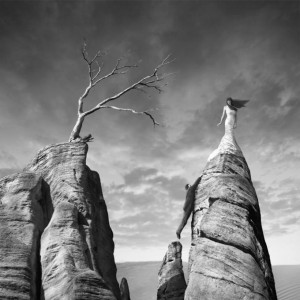
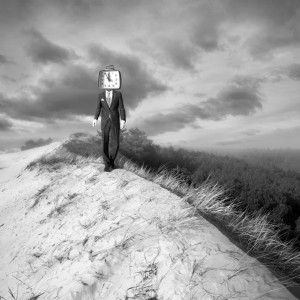
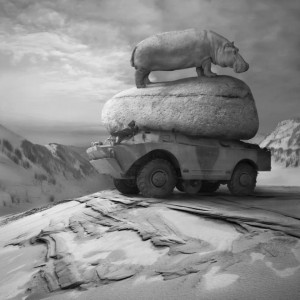
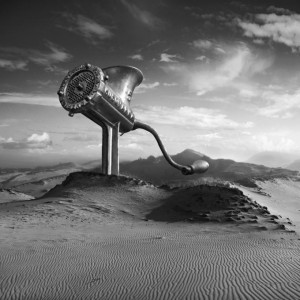
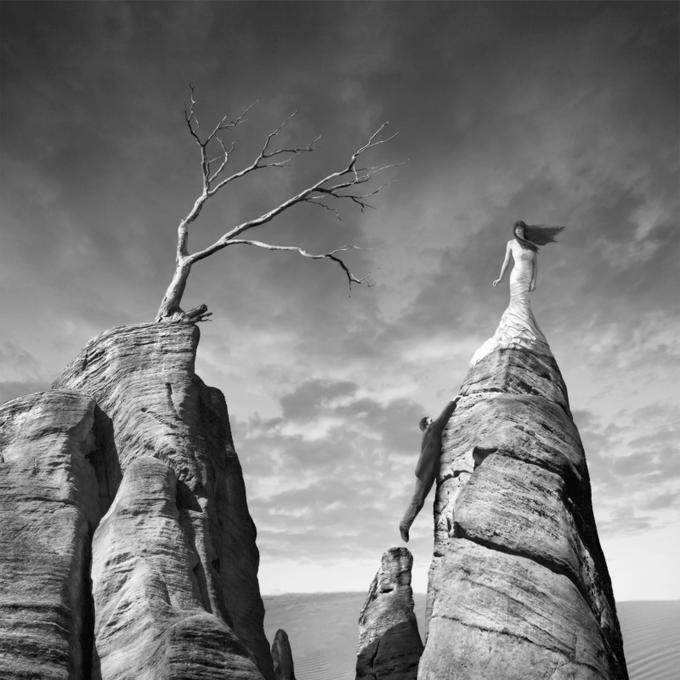
“Peak of Love” Image courtesy of Dariusz Klimczak

I’m laughing in the fall. Laughing the instant control dissolves, the laughter replacing fear somehow, the laughter a vanishing into space, a lightness, a return.

Emma hears my laugh from below. “You were like a kid,” she’d say later, “It was almost a giggle.”

I haven’t made it very far up the rock face before I realize I can’t go back. The ledges are too narrow and spaced too far apart, the sheer walls slick where they’ve been cut away. I was an idiot to start in the first place, but I’d seen guys scramble their way up before, then leap into the still pool below, and something about the quiet contentment of the day made me brave or adventurous, or simply stupid. Now, I cling to the smooth stone, my feet tensing on a narrow shelf, staring into the forty-foot drop below then tilting upward across sixty feet to the rock ledge above where everyone jumps.

Emma is staring off across the still surface of the water in the center of our picnic blanket. Now and then her gaze turns lazily toward me and she waves and smiles.

I shift my feet on the shelf, clutching a jut in the rock with one hand while the other flaps cluelessly in the air. I flatten my body against the stone, then lean out as little as I can to find a path above me, twisting this way and that an inch or so from the wall. The air is calm and silent. I slide my free hand over the face in front of me. It’s warm in the strong sun, polished and bright.

It’s easier once I accept the situation. I give up looking down, trying to determine how to return; I only look up. I don’t think about the ground, I think about the top. I find one handhold then another, inching up an arm’s length at a time, balancing my toes on the thinnest slip of rock, my fingers pushing into small crevices. Now and then, I come across a tiny stand of grass or a seedling tree clinging to a slight layer of collected soil.

I lose my breath twenty feet from the ledge and have to stop, my feet angled flat against the face, one hand over a crag. My knuckles scraped, my fingertips sore, calves trembling. I rest my cheek against the stone and listen to the surge of my pulse, my chest pushing at the rock until it settles.

The sky is a brilliant clear blue above the ledge and just before I crest, it’s the only thing I can see. I pull myself over the lip and onto the plateau. I lie there for a moment, the loose dirt and gravel sticking to my arms and face, then I roll onto my back, staring into the cloudless sky.

Emma is watching for me when I stand. She applauds, I take a bow. She lies back along the picnic blanket. Her dark skin and red swimsuit against the blanket calling to mind a languishing exotic bug.

There are higher ledges in the quarry—it’s impossible to know if anyone has attempted them—but my view is magnificent. The still bowl of the sky and the motionless water. The rose and umber layers of stone exposed in sheer cuts hundreds of feet high.

I brush the grit from my bare knees, drunk on the sense of achievement arcing the surface of my skin, the tips of my tender fingers. It’s a clean, blue burn with no thought and no voice; a particular kind of exhilaration I haven’t felt since I was a kid. A moment of stillness; the active hum sometimes felt after music ends.

The last notes fade and Emma raises on an elbow from our sprawl in front of my stereo. We’d met at a party, some large, swaggering house party. I was in my fourth year, she was in her third and it was a loud night of drinking, dancing, pushing people into the pool. It’s humid and sweaty and we’ve only just met but we start a conversation, shouting over the music and noise, a conversation that halts and spins with shouts from another room or someone lurching between us and collapsing onto the sofa.

And we talk, until we end up at my apartment, sprawled on the floor before the stereo, a few feet apart. And we listen to ‘In the Aeroplane, Over the Sea’, not speaking at all. We’re silent from start to finish because that’s why I’d brought her back and when she raises on her elbow in the stillness after the last note, opening her eyes for the first time since the CD began, her face slick and flushed, I believe I have some glimpse of her secret nature, something definite and mysterious.

The sense of silence changes shape when I reach the edge and look over. My body stutters back from the view, from the possibility of the limitless drop toward the surface, back six feet to the rock wall at the other end of the ledge.

There’s nowhere to go but up. Or into the water. I know the water is deep enough; I’ve seen others dive over and over, tanned bodies folding straight and razor clipped, slicing the surface and disappearing for so long I’d wonder if they were coming up again.

I resist the urge to look back down the rock face in hopes of finding a hidden traverse invisible before. I back away from the lip as if preparing to race forward and into the void but I’m not going to do that. I know I’m not going to do that. Instead, I make my way toward the ledge, gazing across the quarry toward the blank, opposite wall, then down into the motionless blue surface below.

I inch my bare feet over the edge, the crust of the rock scuffing into the soles, my toes curling over air, until only my heels bind me. But I can’t jump. My body won’t let me, my muscles contracting away from a leap and hunkering low. I don’t look down to Emma, pinned to her blanket far below. I don’t look down to the water or over to the opposing face. I can’t close my eyes, teetering there on the cliff. I look up, into the empty shell of the sky. After a moment, I do the only thing I can. I lean into the open.

I lean into the kiss. Hoping it is a kiss. Closing my eyes without thinking. Feeling my body tilt forward slowly, my calves tightening, my toes curling. My heart is racing. I can feel the pulse in my palms. There’s the strange sensation of the whole of my body at once, as a single arching motion. There’s the interval when I’ve gone too far to stop. I hang there, caught upon some invisible notch in the air.

The world narrows to a singular moment and overcomes me. There’s no separation, nothing to distinguish the world around me from who I am. We are exactly the same. I move through space in all directions, outward then back again, dragging the world with me, dragging it into me, pulling in as much as I can just before gravity takes me.

Closing my eyes, I follow a narrow thread of warmth to the glance of her skin then the damp exhaustion of her body shading toward mine and our lips find each other. I open my eyes, hers are open too, and we don’t touch, we don’t speak, we follow the rhythm our lips dictate, slow and soft, a caress diligently finding itself. It’s something we watch from a slight distance as it gathers shape before us, our bodies balancing at the point of contact like a pendulum magically arrested in its widest arc.

Emma’s hand comes to my face, the back of her hand warm on my cheek, and I lean further in, my hand rising from the floor to her bare shoulder. She tilts her head, lowering imperceptibly. I press my lips to hers. I feel her breath on my skin, the beer, the coffee, the chips, and something deeper at the base of her neck. My hand slips between her shoulder blades and her body gathers around it. I slide closer. She relaxes into my hand and we drift for a moment before she folds and I fold with her.

I arch into the open space. My toes leave the ledge, thrusting away at the last instant.

“You fell asleep,” I kidded her, years later. “The end of our first kiss and you were dead asleep.”

She chuckled, her hand snaking through the bedclothes to find mine. “I remember your arms around me, the last lines of that song. That’s all. What was it, four in the morning?”

“Something like that.”

“You were so sweet that night. Gentle, like you’d nearly vanished. When I woke up in your bed the next day, I wasn’t frightened or nervous at all.”

We were cocooned in our morning warmth, our legs and arms sliding over each other as we delayed the moment of leaving the bed. I turned toward her, eyes glazed with sleep.

“Terror,” I told her. “That’s all it was. I couldn’t catch my breath. I’d close my eyes now and then, just so I knew where I was.”

I’m standing at the foot of the bed. I don’t know what to do with my hands. Afraid to move, I let others rush around me. It’s a moment between breaths, extending to the instant Emma looks up to me, propped finally on the pillows, her hair damp, sweat trickling from her chin, her face radiant. The moment she looks up to me and gently calls me over.

“Johnny, come and see.”

And Maggie is there, quiet against her breast, her face finding itself after the effort of birth. Wisps of hair slicked to her head, eyes closed, tiny lips whispering.

Emma lifts her hand and I take it, sliding onto the bed beside her. She’s blazing, heat baking off in red waves, rising into my face and cradling the baby.

I can’t tear my eyes from Maggie. Her tiny fingers curling and clutching at the air, her tender cooing sounds. She finds her shape along Emma’s body, fingers pawing gently at skin, legs pumping beneath the thin blanket, lips working out a new language.

Emma drops her damp cheek to my shoulder and her body follows, her weight collapsing into mine, her heat pushing through my clothes. I can’t make out anything past the edge of the bed. The room is very far away. Emma calls my name again, softly, but I can’t turn to her; I can’t move at all.

“She’s…”

Maggie opens her eyes. Her irises a deep blue, her huge pupils gray and translucent pools. She opens her eyes into mine and I flicker out.

I open my eyes in empty space, leaving the ledge with a push. My breath burns away and I am light, waiting, with no more substance than a leaf at the reach of a spider’s thread. In this pause I’m thin and transparent. I could be that leaf. Or a sail, billowing full.

I close my eyes and I find the fall. I hear the rock wall skim past. The rush of the quarry rising up. My body tips and lengthens, extending itself into the descent, arms out at first then closing together. A swarm of air and a coolness.

I can feel the still reach of the glassy water rushing toward me. I know if I open my eyes I could watch my body plummeting toward itself, tumbling loose from the blue sky.

Emma’s smile breaks wide. “What are you laughing at?” she asks, her voice hoarse with exhaustion, her smile curling to one side in a private, intimate gesture. And I smile too, not knowing what to tell her, not realizing I’d been laughing.

The water bursts over me with a roar and a sudden hush, blotting away the light. The shock snaps my body into place around me. I’m thrown deep into the lake, momentum pressing hard, the water growing colder in the descent. I open my eyes but see nothing. I tunnel into the dark.

Finally, I drag to a stop, my lungs aching. I hang in the interim just before rising, before the pull of air and the cloudless blue sky draw me back.

I fall again, upward this time. I’m laughing in the fall. Emma hears my laugh, her body sloped into mine, her breathing shallow and quick. She squeezes my hand. She laughs too.

Afterward, I’ll try to make sense of it all. From the swim and press and hush. From the flutter of memory and what lingers in my flesh. I’ll place everything in a proper order, singular tiles set into a new mosaic. Afterward, it might all become a single story.

Now, everything happens at once. I rise from the dark toward Emma and the blanket. I break the surface with a deep and gasping breath.


Steve Mitchell has published fiction in The Southeast Review, Contrary, The North Carolina Literary Review and The Adirondack Review, among others. His short story collection, The Naming of Ghosts, is available from Press 53. He is currently completing a novel, Body of Trust. Steve has a deep belief in the primacy of doubt and an abiding conviction that great wisdom informs very bad movies. He is open twenty four hours a day at:www.thisisstevemitchell.com