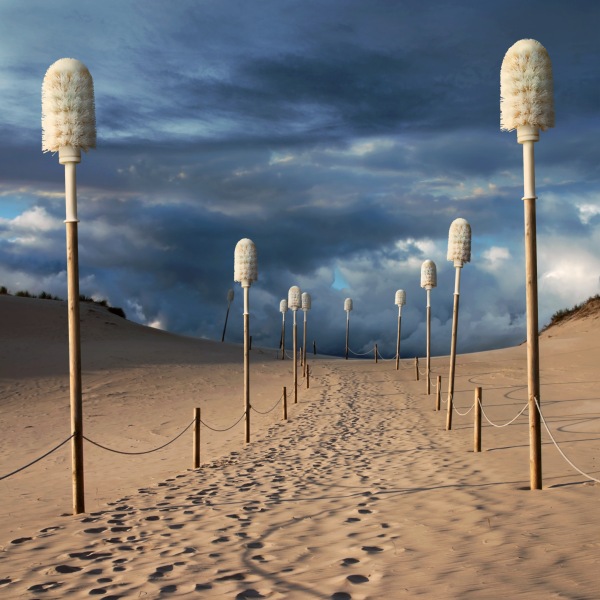
“Gardening at Dusk” by David Mohan


Image courtesy of Dariusz Klimczak

You have been out since early morning. You ate your breakfast on the patio watching a breeze lift the branches of the willow. At lunch, you ate your sandwich on the doorstep.

Just lately, the garden is your preferred room in the house. You like to get up early, before your thoughts begin. You wear a hat and gloves. You bring a towel to kneel on.  It’s like a form of prayer.

A garden is easier in the morning. It doesn’t have the same associations as the rest of your house. There are no old photos, no favorite chairs, no sides to the beds, no mugs or dishes that can bring an ache. Instead, it is all dying and being born – all rise and fall, all bloom and wilt. You can deal with that.  You can nurse something and watch it fade in such a place.

Like the roses you spray and cut. You see their petals fall off day by day. It is part of what they are, part of their beauty.

Now is the hour you wait for after each day’s work. You are kneeling by a raw bed of unplanted earth, your hair tied up, a smutch of dirt across your face. You are poised like someone preparing to dive. The last glimmers of the sun touch the box hedge.

The coming of dusk tingles down the row of gardens. You repress a shiver in the growing chill. All the gardens have been so alive this afternoon. You have worked in an envelope of echoes – the high tolling of children’s voices, the drone of lawn mowers, the clink of glasses and cutlery at lunchtime. You listened to the sigh of the morning passing with the warmth of the sun on your face. The whole day has been like a long exhalation.

But this is the tipping point. The dark is folding the gardens into houses, the rooms into shadows, the faces into veils.

Your intruder lights come on for as long as you need to kneel, will light your progress as you garden through the night.


David Mohan is based in Dublin, and received a PhD in English Literature from Trinity College. He writes poetry and short stories. He came second in the Sean O’Faolain International Short Story Award and won the Hennessy/Sunday Tribune New Irish Writer Award. He has had stories published in Necessary Fiction, Opium, Contrary, elimae, Flash International magazine, The Chattahoochee Review and killauthor. He has been nominated for The Pushcart Prize.

Read our interview with David here.

“The 8th of May: A Vow” by Daniel Nathan Terry


“Wooden House” Image courtesy of Dariusz Klimczak.
(See also “Leaf Music” by Sudha Balagopal.)

~Upon seeing a video of a man in North Carolina firing his rifle
into a sign asking citizens to Vote Against NC Amendment One.

There are oaks that remember
what we would forget–the burn of the rope,
how a body takes on more weight
the moment it breathes its last, how
the earth below shoeless feet grows
hungry for the slaughtered. There are rooms
where paint has been rolled over
blood, where the body’s salt has been
vacuumed into bags of dust, where the veneer
of a nightstand still bears the imprint
of a living hand’s last message. Ghosts
of children and men and women hang
from fences, linger in the corners
of dorm rooms, of courtrooms, of churches.
This is how we deal with it around here, he said,
after emptying his gun into a plea for equality, and some people
were shocked by his quivering pride. I will try
not to think of him when I stand in a room
in DC and vow to continue to love the man
I have loved for 16 years. I will try not to remember
that 17 years ago, a friend of mine opened his door
to a cry for help from the other side, only to be robbed
then stabbed to death with his own kitchen knives
because the thief felt threatened that my friend–
while begging for his life–revealed that he was gay.
I will even try not to think of my grandfather
who cannot forgive me for loving the man
who held me steady as I purchased the dress my grandmother
was to be buried in. I will try not to think of the memory
of these oaks, of those fences, of some rooms. I will say I will
and mean carry on loving you until death. I will
think of the dorm room where we first made love,
I will think of the fence around our house
and its roses that change color in the heat. I will
think of the Carolina oak who might remember
the night we kissed in the first bands of rain
from a hurricane just making landfall.


Daniel Nathan Terry, a former landscaper and horticulturist, is the author of Capturing the Dead (NFSPS 2008), which won The Stevens Prize, and a chapbook, Days of Dark Miracles (Seven Kitchens Press 2011). His second full-length book, Waxwings, was released by Lethe Press in July of 2012. His poetry has appeared, or is forthcoming, in many journals and anthologies, including New South, Poet Lore, Chautauqua, and Collective Brightness. He teaches English at the University of North Carolina Wilmington.

Read our interview with Daniel here.

“The Ride Home” by Ernie Quatrani

Dune House by Dariusz Klimczak (Kleemass) on 500px.com
“Dune House” Image courtesy of Dariusz Klimczak

The addicts have emerged. Twenty-one of them congregate to share hugs, encouragement, and smokes in the hellish July heat.

Nick’s people.

I’ve been waiting in the parking lot since the family support group meeting ended.

My people.

I guess I’m going to wait some more. I am running the air-conditioning, listening to the Phillies game.

“All they have is each other,” someone noted at our meeting tonight.

So be it. Anything, if it leads to a turning point.

Last summer, I sat waiting for Nick in the parking lot of the Bucks County Men’s Center, a prelude to his incarceration.

I AM a dedicated father.

Finally, Nick starts for the car and climbs in.

“How’d it go?’

No response.

I get pissy body language when I tell him to buckle his seat belt.

As I make a right turn onto Rodgers Station Road, I ask him to put his window up.

“I want some fresh air,” he says by way of refusal.

“And I want the AC on.”

At the light I ask again.

I get ripped for making a big deal out of nothing, as usual.

As a 25-year-old teenager, overreaction is one of Nick’s many unendearing traits. Addiction will do that to you.

I set the AC at max; he leaves the window down.

My jaw is clenched. I fight the urge to tell him to go to hell.

I flip on the turn signal as I approach Norristown Road, heading for the turnpike.

“Didn’t you notice I didn’t say anything all weekend? Didn’t you notice I haven’t gone anywhere in a week?” Nick asks.

Of course I had noticed. His silence was a freaking blessing.

“So?”

“Shouldn’t that tell you something?”

“What?”

Guess-what-I’m-pissed-at goes on for the 1.3 miles it takes to reach the ramp onto northbound 476.

Earlier this afternoon, a rant-a-thon  ruptured the weekend truce. I had been on the fence about going to the support group meeting, but after Nick’s diatribe, I couldn’t wait to go and at least get the hell away from him for a couple of hours.

I was unpleasantly surprised when Nick  announced at dinner that he wanted to go to Kennett with me for an addicts’ meeting. I have been going for several months. This was a first for Nick.

Maybe his coming along is a good thing, I rationalized.

What an ass am I.

The ride down had been mostly silent, except for a sarcastic critique of my radio choices.

Whatever.

I went to my meeting; Nick sat in the car listening to his far-superior music.

Now, as I wait at another light, I lean up against my door as far as I can. Right hand on the wheel. Left hand below my left thigh, giving Nick the finger. I smirk at my passive-aggressiveness and think about other things.

Nick gets frustrated when I don’t acknowledge his brilliant insights, so he attacks.

“You don’t care about other people.”

“You take everything personally.”

“You hold everything I ever did against me.”

“You think you know what I’m going through because you go to these stupid meetings. But you don’t.”

“Don’t roll your eyes like that.”

I’m trying to merge into 50-mph traffic in a narrow construction zone. There is a big orange truck filling my driver’s-side mirror. I briefly consider just going without looking. Who cares if I end up under a tractor-trailer? I don’t.

How did he see me roll my eyes?

At about the 25-mile mark on the Northeast Extension, I score my first and only point.

“If you think I’m incapable of knowing what you’re going through, and you need to talk to someone, get a sponsor.”

Cha-ching.

That buys me a few miles of silence. I know, and he knows, that a sponsor is key to his recovery. It’s been eighteen months since his first rehab stint. No sponsor. Plenty of heroin.

In the tenuous quiet, I catch up on the Phillies game on the radio. Not much of a diversion; they are getting hammered in Chicago.

A family rolls by in a van. Mom is smiling in the shotgun seat. I can see the DVD player in the back. Cartoons. I give them a salute. Enjoy. While you can.

At mile marker 28.7, nearing the Lansdale exit, our three-something minutes of peace are shattered as Nick ramps up the same-old-same-old.  “I’m bored to death at home.”

“Get a job, get some money, and move out,” I said.

“You said you would help me get a place to live.”

“Yeah, if you got a job and proved you could get by on your own.”

“I need a fucking car for that,” Nick whines.

“Not gonna happen.”

Nick’s license is suspended. Those pesky DUIs.

I continue, “Pick a train or bus route; get off at every stop until you find a job. Then get a place to live close to the train route.”

“You never fucking support me like you do Jimmy and Hannah.”

Been here, answered this. Apparently, free room and board, utilities, and food are not support. Same arguments I heard this afternoon, higher decibel level, more obscenities.

“We’re not talking about them, are we? And watch your mouth.”

Thirteen miles to go before I get off the Extension. I should have gotten off at Lansdale and walked home.

He finally puts his window up. I turn off the AC and put my window down.

Screw him.

I curse myself for insisting he put on a seat belt. I fantasize getting his door open and kicking him onto the shoulder of the road.

But after reflecting on the plan, I realize that I can’t do something like that.

The center console is too much in the way.

So, I detach. His punctuation-less rant continues on.

It is not getting to me like it used to. Yada, yada, yada would be less time-consuming and more interesting.

I notice I’m only doing 60; I press down on the accelerator. Traffic is thick, though; best I can do is 70.

Please, God, and PennDOT, no construction tie-ups.

I ask Nick to keep his voice down.

“I am not talking loud,” he shouts. A silent chuckle at the irony.

Nearing Quakertown, Nick informs me that Jimmy and Hannah also think I am a cold, distant, uncaring father. Another rerun. I think I’m smiling to myself again, but my lips apparently betray me.

“You think it’s funny that all your kids think you are a total asshole?”

“Nick, I’ll tell you what. Why don’t we just cut ties? If you strike oil keep it all for yourself. Send me a Christmas card if you want.” I am channeling Biff from Death of a Salesman.

As we go through the tollbooth, Nick picks up on my thread. Never, NEVER would HE suggest to me that we become estranged. I guess that’s his idea of the moral high ground.

I’m fantasizing about never seeing him again. I make sure my smile stays internal.

On 663 now, we pass Nichol Road. Nick finally dams his oral diarrhea. Maybe it’s because this is the intersection where he was stopped by a state cop and ended up having blood drawn which revealed traces of opiates that led to the hell of the last two years.

Or maybe it was just coincidence.

Or maybe he now finds texting more important. I can imagine what he is sending.

The Phillies are still losing to the pathetic Cubs, and Roy Halladay only lasted four innings. He had an awesome night compared to mine.

Finally, I start up Benedict Road. Nick unclasps his seat belt a quarter of a mile before the driveway. He is out the door before the car comes to a stop.

I sit in the car, resting my chin on my left fist, giving him time to go up to his room.

When I get out, I notice the driver’s-side window is still down, so I get back in, reinsert the key, and put the window up.

I also note the mileage in case Nick has any plans to hijack the car in the middle of the night. Again.

I say hello to Michelle, who is doing work at the kitchen table.

“How was your night?”

Thumb down.

“Why? What hap—”

I put my finger to my lips. I don’t want to talk about it. In case Nick is eavesdropping.

“OK,” Michelle says as she packs up her laptop. “See you upstairs.”

In the family room, I flop on the soft, blue couch. The Phils aren’t any better on television. Soon, I hear clomping on the steps.

Sigh.

Nick rushes into the family room.

“You never listen to—”

“You know what, I’m going to bed.” I shut off the TV and stand up.

He stomps outside. I climb the steps to the bedroom and lock the door.

Another day. Something to talk about at the next meeting.


Ernie Quatrani has taught in the Upper Perkiomen School District for thirty-three years, where he was heavily involved in co-curricular activities including the school newspaper, TV studio, and baseball. After coaching for thirty-two years, he retired and was inducted into the school’s hall of fame. He earned degrees from Temple, St. Joseph’s, and Villanova University. His work has been published or is forthcoming in The Main Line Times, The News of Delaware County, The Catholic Standard and Times, and The Town and Country.

“Smoke Break” by James Damiani


Image courtesy of Dariusz Klimczak

For three straight days, I stepped around the man lying in the middle of the hall. All the staff did and I followed their example. On the fourth day, something made me stop and speak to him. Maybe I had finally decided to actually acknowledge being the new psychiatrist on the ward.

“Why are you lying on the floor?”

He didn’t answer my question. I tried again. No response. I tried again. His head twitched as if my words were a mosquito, bothering him. His thick white hair lay spread out on the tile floor above him. He resembled a mop one of the staff had dropped on their way to an emergency.

I changed my question into a warning. “This is a hallway here at the hospital and people might step on you.”

Still, he said nothing.

A puddle of urine formed under him.

“Is that your urine?” I asked. Not the most ingenious question, but born of a more spontaneous impulse than the first few.

“Of course it is.” The anger oozed out of him. “Who would ever lay in someone else’s urine?”

“Good point,” I said. He believed he had silenced me with his sarcasm, but one of my best traits is being able to follow up one dumb question with a second even more inane one. I have found it can be very helpful for a psychiatrist to be a little off socially. My patients are trying to manage hallucinations and delusions in hidden worlds. They don’t have time for the polite lies and the confusing social niceties the sane world asks of them. Unbowed, I came back.

“So what are you doing lying in the middle of the hall in your urine?”

”I am trying to meditate, and achieve Nirvana by not breathing.” Bam. He might as well have said, “Take that, Uninvited Doctor Shrink Who is Trying to Fit Himself  Where He Doesn’t Belong.”

“Oh.” I nodded. How could I have forgotten this common piece of medical school wisdom? Still as his new physician and responsible for his health, I wanted him to be more interested in breathing. Admittedly it was self-serving, as it would make my job as his doctor easier if he continued breathing, but my motivations weren’t all selfish. My mother had suffered from depression my entire life. Watching her had given me an understanding of broken brains and a heartfelt acceptance of their plight. Taking care of mentally ill people seemed to be where I fit best.

I paused and carefully thought about what response to give, how best to let him know I could “relate.” I wanted to impress him with just the right healing words. Just then, one of the staff came by, prodded the man with a foot and said, “Smoke break Monk, let’s go.”

Monk’s eyes flashed open. He resurrected himself with a hop to his feet. Standing, he was about 5’5”, but you could add four inches if you counted his still erect hair. The worst and stiffest case of bed head I had ever seen. How his long fine white hair could stand straight up and defy gravity seemed to me the craziest thing. Thinking of a cigarette took his toothless face from long and drawn, and folded it into a squishy wide smile. Monk took in a deep cleansing breath, rattled himself like a boxer before a fight and then bumped me as he headed to the patio for his hourly cigarette.

While the patients were outside smoking, the floor got cleaned, beds were made, and trashcans emptied. Monk, after being dried to a crusty stink by the Florida sun, came in, got his clothes changed, lay back down on the floor and people once again stepped over him. Meanwhile I kept trying to find those magic words.

(There is a chaotic balance that exists on the psychiatric ward of a state hospital, a fragile harmony between people and ideas. I hadn’t known if I was going to last long enough at my new job to justify inserting myself into the equation. Adding myself to the mix would require the ward to come up with a new balance and I wasn’t sure I wanted them to go to all the trouble of fitting me in if I wasn’t going to last. But with nowhere to go and a family to feed, I decided to stay, or at least not leave right away. Monk, the other men and I began our negotiations. I first needed to learn more about them.)

Besides meditating, Monk got his nickname because he claimed to possess a divine ability. He didn’t bi-locate or levitate or live without food on a pole for six straight years like other famous saints—make him go more than an hour without the earthly pleasure of a good smoke and he got mad as hell. No, according to Monk his unique other worldly ability was that he would never defecate again.

I had seen and heard stranger things than Monk’s story. But the sane thing about Monk’s insanity was that, he told the truth, sort of. Our emaciated saint had survived surgery for colon cancer but been left with a colostomy. As a result of his operation, he would, as promised, have a permanently closed rectum.

As the days grew into weeks at my new job, I learned to follow the patients out on to the patio during their smoke breaks. I told the men about the hazards of smoking and how we could help them quit if they wanted to. Given his past history of cancer and how unfiltered Camels were delivering new carcinogens directly into his lungs daily, Monk became the focus of my anti smoking campaign.

“You know smoking is really not good for you.”

Monk laughed. “These Camels are good for me. Every time I smoke, I cough up more and more phlegm. Camels clear my chest.”

How could I argue with his logic? Smoking did cause him to cough up phlegm. Truthfully I secretly didn’t want to, because once an hour, while smoking, he looked so normal, so peaceful. All the men did. The General, a man constantly at war with his own labile moods, professionally scissored his cigarette between his index and third finger and waved it about reminiscent of a movie star. Smooth would pinch his between his thumb and first finger, especially when trying to suck out the last little bit of pleasure. Quincy used his to blow halos like my dad would, a magic of the tongue I still don’t understand. Somehow, for a brief time, the delusions which had been running rampant, lessened. We were an average group of men enjoying the breeze, ogling women and wondering what was for dinner.

I have never smoked, but I would sit out on the patio risking cancer with my patients, just to be with them. In time, Monk’s choice of Camels made perfect sense. All the men’s choices made sense. It got to the point that when a new man came I could guess if they were a Lucky Strikes guy, or a Marlboros man or a Kools fellow. My dad smoked Winstons. He and I might have found at least one way to connect had I been able to tell him I understood, at least about the Winstons.

Monk always sat on the edge of the bench, crossed his legs, and became a Rodin Thinker. He rested his left forearm on his thigh and drew lazily from the Camel held in his right hand. He would let the ash grow on the end of his cigarette. Just before gravity spilled it all over the ground, he would employ his thumb and with just the right amount of pressure flick the burnt tobacco into an ashtray. Monk loved his Camels and even shady love heals. The whole experience fascinated me, and it cost me.

“You owe me ten trillion dollars.” Monk blew a cloud of smoke off to his right.

“I don’t have that much on me.” I countered.

“That’s okay. You can pay it in installments.”

The degree and nature of Monk’s mental illness shifted often. His insanity had a dial. Each day the knob got spun and landed on a new setting. One day the pointer would land on the traditional: don’t breath until Nirvana happens, and he would lie on the floor for hours. The next day the meter might read: march until one o’clock, which he would do faithfully. He had, lean to the right days and even perform the odd religious ritual day.

“Monk what are you doing?” Emma the housekeeper screamed.

“I am sprinkling holy water on the ground.”

“That ain’t holy water from a cup, that is your colostomy bag and yuck.” She called for help and got the staff to replace the bag on Monk’s side. A blessing for all us rats maybe?

Life wasn’t all healings, sacraments and riches though. Sometimes the other residents reached inside Monk’s head and grabbed his thoughts. To defend himself he hit them as they walked by. Monk didn’t have many friends on the ward.

But Monk didn’t care about other people’s opinion of him, he had too much else to deal with. There were days when the evil stuck, when people stayed in his head, not just stole his thoughts. Those times Monk shut down, focused on not breathing and lay in his puddle. One especially dark day, I encouraged him to leave the ward for some fresh air, hoping a change of scenery might loosen things up for him. Five minutes later, he came back panting so hard it scared me.

“What happened?”

He didn’t answer. A long line of snot reached from his nose towards the ground. No amount of cajoling worked. He walked away and in a rough whisper said, “Demons.” The devil often tried to possess him. Trying to rid himself of evil drove Monk to act in unusual ways.

“What you doing, Monk?” He stood in front of the mirror performing jumping jacks.

“I am exercising the demons out of my head.”

“Oh.”

He flopped to the floor, did a few push ups, and popped back up. As he jogged in place he watched himself in the mirror, waiting for the demons to fly out. The devil might be in the details, but according to Monk, Satan could be exorcised with exercise. Now, I understood his search for Nirvana through not breathing. Devils can’t possess a brain filled with nothingness. No one could steal his thoughts if he didn’t have any.

I had my own demons and my own emptiness. A neglected childhood and a genetic predisposition to depression left me in a lifelong battle with the mood disorder. For decades I said rosaries every night, went to mass several times a week and prayed endlessly. In public, I hid behind career and achievements. But over time the loneliness had grown and slowly bled me of my will to live. This new job at the hospital was, in many ways, my settling into my seat on a train headed for a bridge where the tracks had been washed away by a raging river. Monk had gotten on the train earlier, but now we sat together and realized how similar our life journeys were.

Like Monk, I was anxious at times.Also, we each prayed endlessly, unclear about the effect of our petitions and we both got spontaneously aggressive with others for no logical reason. Finally, we both had hopeless times where we just wanted to disappear. Actually, Monk was me, multiplied. The small but crucial difference was that my brain chemistry just happened to be a little more predictable.

After this realization, even more tender feelings filled in the background of my dealings with Monk. I saw him “exercise” his demons and wished they would leave him alone. He let me watch him. Once, he stared at himself in the mirror and told me a cab driver had just driven into his eye and he couldn’t get him out. I didn’t know how to evict stubborn cab drivers that ride into brains, but I knew how a crazy idea could get in your head and stay there. I listened knowing what it felt like to have a painful thought bully me into sadness.

I made it my mission to be kind to Monk. I used a lesson I had learned from becoming a father and having children. Every morning I greeted him with the same genuine enthusiasm my family greeted me with each day. When I walked up to him, a warm feeling would spread through me, and I would say.

“Monk, how is the meditating going?” My smile would have disarmed most anyone.

Monk responded to my greetings with no more than a grunt. I didn’t care. It did me good to value him. No matter what the other voices said I knew he would hear one voice saying kind things to him. It comforted me to believe the evil things we believe we see in our reflections aren’t always accurate. Monk and I belonged, even if it was to a group of two outcasts. My mission made me immune to Monk’s frequent rejections. I kept wooing him any chance I got. I, his doctor, even lit his Camels at the hourly smoke breaks (sometimes more than one an hour but don’t tell anyone).

As much as he could, Monk warmed to me over time. I changed in a way too. I grew comfortable with a new reality. “I know Monk, I can’t believe some asshole put crap in your colostomy bag, let me help you clean it out.” “Yes, I imagine lying in your urine starts off warm but ends up being cold.” “I never knew Jumping jacks were the best exercise to exorcise demons.” These lines fell off my lips with a tone that bordered on boredom.

Thoughts of changing or curing him of schizophrenia never entered my mind. Not what you want to hear from a psychiatrist I suppose, but him being healed didn’t seem realistic. Forty years of non-stop psychosis outweighed any realistic expectation medications might suddenly work. No, a more reasonable first goal seemed to be greeting him happily for one straight year.

Our relationship stayed “normal” for several weeks until one particular day. We had stepped outside for a smoke break. Monk wore a frayed straw hat, a floral patterned shirt with a ripped pocket and massively wrinkled blue shorts. He also wore a pair of those flimsy oversized sunglasses people wear after having cataract surgery, though I had no idea how he got them. In short, picture a scarecrow on vacation in Hawaii who just stepped out of a hurricane.

The strangeness began when one of the more disorganized and psychotic residents, Ed, started begging Monk for his cigarette. The staff and I gasped. Was Ed suicidal? How could anyone dare try to get between Monk and his Camel? Monk looked at Ed and got very still.

I panicked when I realized we weren’t going to make it to Ed in time to protect him from the coming blow. Monk raised his hand, and gave Ed his one and only Camel. Not only that, Monk zipped Ed’s pants, buttoned and tucked in the disheveled fellow’s shirt and straightened Ed’s crooked collar. Having soldiered up the beggar, Monk blessed Ed’s shoulder with a warm squeeze as he walked past him and went back inside.

The pride pricked the hair of my arms. The schizophrenia had lifted long enough for Monk to connect to another person and that was a miracle. Monk’s eruption of innate kindness forced me to reconsider where prayer led. It also asked me to reassess if the train tracks, instead of being washed away, might still be there.


James Damiani’s work has appeared in The American Journal of Geriatric Psychiatry, The Gainesville Sun, and Journal of American Academy of Dermatology, and has been anthologized in Flashlight Memories.

Read an interview with James here.

“The Twisting Path” by Jim Brega


“Non Iron” Image courtesy of Dariusz Klimczak

At the door to the procedure room the smell of blood comes into my nose. Ever since I lost a rock fight at age six and went home with blood streaming from a gash in my head, my body has given this warning sign whenever my brain senses danger.

The room in front of me, though small, dim and cold, doesn’t seem particularly threatening: gray and white walls, cabinets, counters, floor. It could be a medical room anywhere; it has the same expectant efficiency as anything made from stainless steel. Near an examination table in the center of the room is a small, wheeled cart holding a battered monitor that reminds me of the oscilloscopes repair shops used to use to test television tubes. The anachronism is almost funny, like visiting the cockpit of a jet to find the navigator using a sextant.

The nurse who led me here is standing near the middle of the room, looking back at me in the doorway, waiting with diminishing patience, confusion beginning to cloud her expression. I’ve hesitated too long; it’s time for a decision.

There’s still time to flee. How would I do it? I could just say, “Sorry, I’ve changed my mind,” turn on my heel, and go. No one would stop me. They might be pissed; what do I care? Sure, it would mean choosing ignorance, rolling the dice, betting the pot on a hidden card. It would be dangerous, but the danger would be imagined and therefore, for a time at least, unreal, not believable. There is freedom—from dread, from responsibility, from necessity—in ignorance.

There’s one thing I do know: that by stepping forward I would start down the twisting path prescribed by modern medicine, a path that could lead from this room to others like it. A hospital room, an operating room, a radiation treatment room. Like tipping the first in a line of dominos, crossing this threshold could sweep me along in an accelerating rush to the final tumble. On this path, knowledge can bring confusion rather than understanding, false comfort instead of certainty, slavery in place of freedom.

My pause at the door to the room is becoming uncomfortable for both the nurse and me. I’m embarrassed, then angry for being embarrassed. In the end I can’t make another choice: I follow the nurse into the room.

“You can take off your clothes in here,” she says, pointing to an open door on the other side of the room. “You can keep your socks on but take off your shoes put on this gown and lie on the table on your side.”

Now that I’ve committed, there’s a perception of things slowing down. My mind becomes sluggish. As though drugged, I struggle to separate the nurse’s words into sentences that make sense. I try to remember the symptoms of shock, and crosscheck them in my head: a dazed state, narrowing of attention, inability to comprehend stimuli, disorientation.

Slow-walk to the small changing room, relieved to see that it includes a sink and toilet. I pee as soon as the door is shut, then again three minutes later after changing into the standard gown, opening in the back. The fabric is rough against my skin and smells of disinfecting detergent. I wonder how many people have briefly worn this gown—and the dozens of others I glimpsed in the closet—for similar reasons. I imagine a number in the thousands. Now it’s my turn, my uniform; putting it on I give up my uniqueness, become one more in those anonymous ranks.

When I open the door the nurse is waiting for me.

“Lie-on-the-table-on-your-left-side-bend-your-knees-slightly-would-you-like-a-blanket.”

“No, thanks,” I answer. Why is she talking so fast?

My response was too quick, too eagerly compliant; I want to be the perfect patient. I realize that I’m bargaining mentally for a better test result, and feel ridiculous. Lying on my side on the table, gritting my teeth to keep them from chattering from a mix of cold, nervous energy and dread, I think about the nurse’s words. Has she said them ten times this morning to ten other patients? Will she say them again, in exactly the same way, another ten times this afternoon? Is her rapid-fire delivery intended to imply brisk professionalism—something I’m supposed to find comforting—or bored disinterest? Does my over-eagerness endear or disgust her?

My back is toward the door to the room; my near-naked rear end, peeking through the limp gapping edges of the gown, will be the first thing the doctor sees when he comes in. I tug ineffectively at the rough fabric, trying to cover up. Everything here is a struggle; maintaining even a shred of dignity is a struggle. I should have said yes to the blanket.

Noises of the nurse going about her business: taking medical devices and instruments out of drawers, tearing open plastic bags of metal tools, clanging them onto a small roll-around metal table, all (purposefully it seems) just outside of my field of vision. Are the items on the table so frightening that I’m not  allowed to see them? Now that she’s behind me, I try to remember what she looks like. Wanting comfort, her short plumpness immediately transforms my image of her into a memory of my mother. If I ask her, will she pat my arm, place her hand on my forehead, tell me everything is okay? Is it something I could ask of her?

I realize I don’t know her name.

“Woodjew-likkapillo-foururhed” she says.

What’s she saying, what’s she saying, what’s she saying? I chant to myself.

“Um… sure,” I answer out loud. She gently lifts my head to place the pillow underneath. It’s something.

Suddenly the door flies open, the end of a loud conversation in the hall.

“Okay, we’ll talk next week!” the voice booms. I recognize it as belonging to my doctor; he sounds cheerful.  I decide to be cheerful too. The door swings closed and latches, returning us to dim isolation.

“Good morning! How are we today?” Brisk walk around front, quick handshake, my grip already tentative, weakened by uncertainty, then the sound of rolling metal wheels as he sinks onto a short round stool and slides across the floor behind me.

How are we? What a stupid question! You’d have to be brain dead not to be terrified of what’s going to happen here.

“Um… fine!” I wonder how many of us in the room I convince.

“Good!” Snap of latex gloves. “I’m just going to start with a digital exam.”

His index finger is in and out in a matter of seconds.

“Okay!” – to the nurse – “I think we’ll do 8 needles.”

Then to me: “This is the ultrasound wand.” He waves a metallic-looking stick about an inch in diameter and ten inches long in front of my eyes. A cord exits the end he holds in his hand and is connected to the monitor I noticed earlier on the small table. “I’ll be using it to get an image of your prostate on this.” He pats the ancient box. “It will help me get the needles to the right spots.” For emphasis he works a small button near his thumb, and a thin needle pokes out of the other end, retreats.

“Are you ready?”

“Um… I just want to mention that when I get anxious I have to pee.”

“You’re not anxious now, are you?” Big laughs from everyone but me. “Well, this won’t take long; we’ll be done before you know it!”

Yuk it up!  I don’t tell him that already this morning I had peed when I got up, again before I left the house, once when I arrived for my appointment, once more before I was called into the procedure room, and two times in the changing room. By my count that was six times in about two hours, the last time now at least ten minutes ago. I figure I have ten minutes, max.

The insertion of the ultrasound wand is surprisingly easy.

“OK –when I take a tissue sample you’re just going to feel a little pinch and hear a ‘snap.’ Are you ready?”

I can’t even imagine what being ‘ready’ for this would mean.

There’s a click-snap, and I feel a piece of my insides snatched away. I’m shocked at the idea that the needle’s tiny hook has punched through tissue walls, membranes, organs that are supposed to be separate from each other. I feel the trembling that betrays a ballooning anxiety begin in my shoulders and legs. I know that if I don’t do something to stop  the shaking, it will become violent. Almost immediately I feel the need to pee.

“That’s as bad as it gets,” my doctor is saying. “Are you going to be okay?”

There’s a metallic shuffling of needles in and out of the handle end of the probe going on behind me. Can I make it through seven more needles without peeing all over everything?

“I have to pee,” I answer.

“OK, we’re going to be done here in a minute. Can you hold on?”

I weigh the urge growing within me—like a wave building to its break—against my mental clock, which seems to have come to a complete stop. I know he’s lying about the “one minute” estimate.

“I don’t think so.” I feel a flush of shame at my admission of failure, at my inability to control myself. Immediately the urge becomes stronger.

“We can’t have a wet operating table.” Annoyance is creeping into his cheerfulness. “Grace, do we have a urinal in here?”

Grace! I think. Of course.

Cupboard doors open and close. I catch a glimpse of the plastic vessel in the nurse’s hand.

“Don’t worry,” my doctor says. “Grace has a two-year-old boy.”

I’m too desperate to try to understand his logic as Grace’s chubby fingers reach under the front of my gown and find my shrunken penis.

Grace, Graciella, Gracia mi salvador I chant in my head as my urine streams into the plastic bottle.

§

The diagnosis comes two days later. I’m standing on my back patio when the doctor calls.

“I want to give you the results of the procedure we did the other day.”

This is going to be bad. He can’t say the word ‘biopsy.’

“Sorry to give you this information over the phone, but I’m afraid the pathologist found cancer in two of the eight cores. Twenty percent of each of the two cores is involved. All the cancerous cores are from the right lobe.”

I realize I’m not breathing. As I look east across the valley, the sunlight and sparse clouds, like karma-dealing shadow puppets, create changing patterns on the mountains. The day is warm for March; the heat is teasing the scent of sage out of the winter-toughened leaves of the canyon brush. Fragile, lemon-green shoots carpet the normally powder-dry and odorless soil that a recent rain has turned dark, moist, and fragrant.

I draw a deep breath through my nose as the doctor continues. Suddenly the air feels cooler, and I recognize the metallic smell of danger as fear causes the tiny veins in my nose to fill with blood.

I have cancer I say to myself. Another breath: cold iron. The doctor’s voice drones on in my ear, talking statistics, grade, Gleason score. I stare across the valley toward the nearest hills, wooly with a coat of new green that looks farcically unrealistic. The next row of peaks is darker; the blues, blacks, and purples like massive bruises, unaffected by the changing sun and clouds. The third row of peaks is faint, hardly discernable; it’s difficult to tell where the earth vanishes and the pale blue-gray sky begins.

I wonder if today is the beginning of my own slow vanishing, of the gradual diminishment I’ve watched in a lover, then one parent, then the other; the relentless but almost invisible daily wearing away of personality, of vitality, of hope. I wonder what accommodation I’ll have to make for the disease: will my life be ruled by drug schedules, chemotherapy appointments, radiation treatments?

“Do you have any questions at this time?”

I stare at my feet, where large cracks vein the concrete patio like crazing in an old teacup. It looks unstable. I imagine the cracks widening, becoming ruts, ditches, gorges, and struggle to keep my balance, to avoid collapsing into them.

I realize this silence is my turn to speak, though I catch the perfunctory tone of the question. He’s busy. He wants to move on.

I imagine this topic being covered in the fifth week of year two of medical school: How to Deliver Bad News. “Explain the situation clearly and completely,” the textbook would say. “Give the patient the opportunity to ask questions, though there may not be any during the first conversation.”

I listen to the white noise of my doctor waiting, breathing, waiting.

It’s to be the twisting path, then.

In my mind I imagine the sound of one domino falling against the next.

“No,” I say. “No questions.”


Jim Brega earned his BA from San Diego State University and an MFA from the University of Illinois. His work has been published in A Year in Ink 5 and Foliate Oak, where his story “Little Red Bird” was selected for their 2012 “best of” anthology. He lives in San Diego with his spouse, John Castell. The two recently created the catalog for a large local corporate art collection. You can follow Jim’s progress on his blog, jimbrega.com.

Read an interview with Jim here.

“Ants” by Lowell Jaeger


“Peace,” image courtesy of Dariusz Klimczak

Ants do what ants do: hive
in creases and cracks, build
villages in my garden wall, and frenzy
through daily routine in what looks to me
as rushing to and fro for no
discernible cause—from where I stand,
at least, just now alert
to this nation’s invasion into my own
sovereign soils.
A bugle
wails its alarm, calling me to march
to the garden shed, survey the stores
—powders, sprays, bombs—
arm myself against this foreign assault.

In the blast of afternoon heat, the ants
zigzag from chore to chore, absorbed
in each career, lofting bits of leaf and bark,
grains of sand.  The queen’s orders relayed—we think—
in chemical codes of one’s antennae wiped
across another’s.  Do they suspect me?
Do they see me?  How can they comprehend
the impending doom
raining down
from my shaker of Bug-B-Gone,
guaranteed to rid any garden and lawn
of creatures unwanted.  The napalm
burns into their polished uniform hides.
Some run, some collapse, some writhe.
I bulldoze their bunker with my shoe,
over-ending stones beneath which lie

nurseries of the unborn, a next generation
assigned to care and feed the future hive, till
my shadow looms overhead,
and I’ve put an end to all of that.  Which is natural,
isn’t it?  Ants do what ants do.
My species too.


Lowell Jaeger founded Many Voices Press and compiled Poems Across the Big Sky, an anthology of Montana poets, and New Poets of the American West. His third collection of poems, Suddenly Out of a Long Sleep (Arctos Press) was published in 2009 and was a finalist for the Paterson Award. His fourth collection, WE, (Main Street Rag) was published in 2010. He received fellowships from the NEA and the Montana Arts Council and won the Grolier Poetry Peace Prize. Jaeger was awarded the Montana Governor’s Humanities Award for his work in promoting thoughtful civic discourse.

Read an interview with Lowell here.

“Excavation” by Lowell Jaeger


“Sandmachine” Image courtesy of Dariusz Klimczak

They’d carved
(this army of ants)
in the gravel . . .
an expressway!

My son and I stood watching
constant traffic.
Frenzied comings
and goings.

Aztecs.  Egyptians.
Giant blocks heaved
shoulder to shoulder,
bits of leaf and bark.

The hive mounding,
grain by grain
proudly skyward.
Whatever their plan

our lunchtime ended.
My son in the backhoe
and I with my spade
ripped the earth

beneath them.  Another
civilization lost.  Buried.
We laid a hundred
yards of crushed-rock

driveway that afternoon.
All the while, glancing
over our shoulders.
Feeling small.


Lowell Jaeger founded Many Voices Press and compiled Poems Across the Big Sky, an anthology of Montana poets, and New Poets of the American West. His third collection of poems, Suddenly Out of a Long Sleep (Arctos Press) was published in 2009 and was a finalist for the Paterson Award. His fourth collection, WE, (Main Street Rag) was published in 2010. He received fellowships from the NEA and the Montana Arts Council and won the Grolier Poetry Peace Prize. Jaeger was awarded the Montana Governor’s Humanities Award for his work in promoting thoughtful civic discourse.

Read an interview with Lowell here.

“Bigwig” by Brian Kamsoke


Image courtesy of Dariusz Klimczak

Mom called during my last year at Syracuse University and told me that Dad and she were getting a divorce. She said it was a mutual agreement. An agreement, she called it. I pushed her for answers, but she said only that it was an agreement. Then she said, “Don’t tell your father I said this, but I think it was the right thing to do.”

I knew what she meant by this. Both my parents are this way. Anytime they preface a statement with “don’t tell your mother” or “don’t tell your father” it means they want me to tell the other one. This is how they get vital bits of information to one another – through their only child.

I worried about my mother more than my father. I worried about the money, because money was always a problem. Mom was a receptionist, and Dad worked the line at an assembly plant. But if money was a problem, Mom didn’t let on.

She seemed fine with the divorce. She went to church functions and started bowling twice a week. She had lots of friends around town for support. Still, I couldn’t help but feel she had been hurt in some secretive way by my father. Did he have an affair? I didn’t know. I found myself angry with him, yet I didn’t know why.

Dad took me to dinner during Christmas break. He gave me my Christmas present – an Abu-Garcia Ultra Mag Baitcast Combo, fiberglass rod, ball bearing reel, a nice piece of equipment, very expensive. I guess it didn’t matter to him that I hadn’t fished in years, and cared little for fishing in general. He wanted me to go fishing anyway.

“We’ll camp,” he said, “like we used to. We’ll camp just like the Aborigines. Living off the land.”

Living off the land?

Dad watched too many nature documentaries. The Mountain Gorillas of Africa. Fishing the Gulf Stream. Life in the Amazon River Basin. Stuff like this amazes my father and captures his imagination. I know it makes him feel like an outdoorsman, but he’s not really. Because when we used to camp, we camped in state parks on sites with full hookup, running water, electricity, the works. I doubt any Aborigine ever stayed at a state park with color television.

I didn’t want to go fishing, but I said I would. I was going only because I wanted answers, not because I was looking forward to those awkward hours of fishing, adrift off a weed bed, Dad saying nothing for hours on end.

“One other thing,” he said. “Don’t tell your mother, but I’ve been laid off.”

Dad fumbled with a roll, trying to butter it, then the roll popped out of his hand and dropped on the floor. He leaned over to pick it up, and instead of just setting the roll to the side of his plate, he began to butter the same roll that had just been lying on the floor. I don’t know why, but if there was any doubt before, there was none now. Whatever the reason for my parents’ divorce, I knew it must, in some way, be my father’s fault.

“Pools,” he explained. “Bigwig needed a new pool. No trouble. After 20 years, I’m tired of working to buy Bigwig his pool and mansion on the hill.”

That was how my father justified the layoff. I worried more about Mom now than ever before. I worried about the money. And Dad? What was he thinking? What was he doing? I just stared at him, a company man separated from his company, separated from his wife, and after all those years, I wondered what he had to show for it.

I graduated the following May and got a job at a national marketing firm in downtown Syracuse. For a first job, I couldn’t have asked for more. Dad never came to graduation, but I saw him a few days later. It was the first time I’d seen him since our dinner together. He had grown a ponytail, and it looked ridiculous, to say the least. Bald on top with the remaining hair shaped like a horseshoe, the ponytail made it appear as though someone had lassoed his skull, broken the rope, and now he was  running wild.

I didn’t want to go on the fishing trip, but Mom wanted me to go. “It’s important to your father,” she explained. “But don’t tell him I said that.”

Dad’s one extravagant possession was a tiny 12-foot motorboat he kept moored on the St. Lawrence River. It was powered by an old Chrysler outboard motor that burned oil. Sometimes the motor stalled out on the river and wouldn’t start again. Sometimes we just drifted until somebody picked us up.

When Dad turned the ignition, the engine spit and sputtered and black smoke billowed out over the harbor. After a heavy rain the night before, the river oozed a thick, fishy smell that hung in the gray, morning air and became inescapable, almost suffocating, the farther out we motored.

Dad dropped anchor just off an island close to Canadian waters. The island was small, but the only house on it showed the manners and meticulous attention to detail that reflects wealth. A short, fieldstone break wall bordered the shore. Tall trees shaded the entire island.  Barely visible behind the trees was a two story colonial home with four balconies – one facing each direction. A large – perhaps thirty-foot – Carver yacht was moored beside a long dock. A man in a gray turtleneck sweater was on the fly bridge rolling up a blue canopy. He waved, and I waved back. Dad just stared.

Dad started casting and immediately lost three lures. Twice he tangled his line on the motor’s prop during his backswing. I was using live bait and a bobber. I watched intently as the bobber floated on the current, somewhere below the minnow tugging on it helplessly. Water sloshed against the hull of the boat. Across the river, a motor wound out in the  still morning air. Dad didn’t say anything. I watched the bobber. I watched the bobber. I watched the bobber.

It was just as I had expected: long moments of awkward silence, broken only by the rhythm of Dad’s casting – the whirl of the line, plop of the lure, click of the bail, winding of the reel – again, again, again. It hit me then that my father and I had nothing in common. I didn’t even know him. He enjoyed the still morning air, the smell of fish, and the simplicity of fishing. At the time, I didn’t understand this or recognize its significance.

I started telling my father about my job. I tried to explain marketing to him, how market position and sales were the basis for any successful business. I talked about profit margins and break-even points. But he seemed disinterested. I could have explained the business reasons for his being laid off: manufacturing was cyclical, the importance of controlling cash flow. There were sound business reasons for his layoff, not just that Bigwig needed a new pool.

When I asked what he was doing now, he started telling me about a nature documentary he’d seen on television the night before. He told me about a mountain gorilla, a silverback it was called. He was the patriarch of a family of gorillas that lived and scavenged for food along an African mountainside. One day, Dad told me, when the silverback became old and weak, one of the younger, stronger gorillas would sneak up behind him and beat his head against a tree stump, leaving the silverback broken and bleeding while the rest of the group moved on with a new leader.

“God, Dad!” I said. “What is that supposed to mean?” Couldn’t my father ever talk about anything normal? Anything real?

“It’s natural selection. The cycle of life.”

“Maybe for a gorilla it is, but in real life we don’t go around beating each other’s heads against a tree stump or scavenging for food.”

“We spend our whole life working hard,” he said. “Fighting the system to make money to raise a family. The conditions are different, but the principle is the same.”

I couldn’t wait any longer. I needed to know. I asked him, “Did you have an affair?”

His casting rhythm didn’t miss a beat, and he spoke as though his answer had been prepared well in advance. “I love your mother,” he said. “And I love you. You both are the best thing that ever happened to me.” Dad cast out again and started reeling. “I wouldn’t change a thing. Except, maybe, I wish I could have done more.”

Dad reeled his line in and stood silent for a moment. He pulled on his ponytail and stared at the man in the gray turtleneck sweater; the man walked off the dock and headed toward the house.  Dad said, “Now that you’re grown and gone, your Mom and me, we just don’t have anything to talk about anymore.”

I recognized what he was saying: I – their only child – had kept them together. But now, with me starting to make my own life, they didn’t have anything in common to share. It hadn’t occurred to me that day, but I realize it now. Unlike my mother and him, Dad and I never had anything to talk about – ever – unless I was relaying some supposed secret information from my mother to him. Dad and I never shared anything. Even now, I have a tinge of jealousy when I think of the relationship my mother had with this man – how she knew him in ways that I will never understand.

Dad told me to pick up an oar and help row to the island. I was still searching for a reason, something more, but I couldn’t think of anything to say, so I picked up an oar and started rowing. “What’s wrong with the motor?” I asked.

When we reached the dock, Dad jumped out and quickly wrapped a line around a mooring spike. “I’ll be right back,” he said, and before I could say anything, he was on the other man’s boat and had disappeared into the cabin below.

When I watched him slip onto the boat my heart started pounding so hard I couldn’t swallow. At any moment I expected the man in the gray turtleneck sweater to come running down the hill cursing us. I held onto the dock, trying to keep the boat from rubbing against the wooden planks and making any noise that would give us away. But I got curious and climbed out. I tried to look through the yacht’s tinted windows, but it was too dark to see what my father was doing.

I walked to where the dock met the land, looked back at the yacht and then toward the house, and started walking up the hill toward a screen door. I was just walking, without any fear of being seen. My heart pounded, but it was like being in a dream, a dream that started hazy but  moved into sharp focus. I was the man in the turtleneck sweater surveying his island home.

I stood outside the screen door. Inside the house, morning light poured through a large bay window, splashing across a polished oak desk. A gold lamp with a green shade sat on one corner of the desk. Shelves on the back wall were stacked with books to the ceiling. A sofa and coffee table were in the center of the room. A book was open on the coffee table, and a pipe was in the ashtray. The sweet smell of pipe tobacco spilled out the screen door.

A beautifully manicured flowerbed bordered the house – the flowerbed, perfectly cut and squared, the flowers and bushes nicely placed and positioned. I followed the flowerbed to the corner of the house, passing in front of the large bay window. Behind the house, under tall trees, was a stone fireplace that still smoldered, and next to the fireplace was a redwood picnic table with a red lantern.

A screen door snapped shut, and the man walked out carrying his pipe. He struck a match and puffed, then chucked the match in the fireplace, picked up the lantern and turned it over in his hands examining the base.

If I was breathing, I didn’t notice. I pressed my back against the cold stone exterior of the house and watched. Even though I didn’t know him, I had to admire the man in the gray, turtleneck sweater. I admired his yacht, his home, his education. I admired the way he held himself, the way he smoked his pipe. I admired his wealth. And I admired the fact that he stood in the center of his island domain, smoking that pipe under tall shade trees as the day took shape all around him.

Back at the dock my father stood on the fly bridge jumping up and down, waving his arms to get my attention. It was too far to tell, but I swear he was laughing. And there was something else; it was the way he held a railing to keep from tipping over. Then I noticed. The yacht’s stern sat lower, and the bow had lifted out of the water. I couldn’t believe it. My father had scuttled the man’s boat.

I looked back to where the man stood, but he was gone. I ran down the hill and onto the dock. Water was pouring over the stern now. The yacht lurched to port. The mooring lines drew taut, and the dock blanks began to buckle under the enormous weight of the yacht going down.

My father stood there, his hand held to his forehead in a grotesque salute. I knew what he was doing. Maybe for the first time in my life I knew what he was doing. He wasn’t just scuttling the man’s boat. He was scuttling bigwig’s pool and mansion on the hill. He was scuttling twenty years with the same company. And he was scuttling his marriage. He was scuttling everything he had ever known or done. He was scuttling his past.

A screen door snapped shut. “Stop that! Stop that!” The man was running down the hill, the pipe now clenched between his teeth. “Stop that! Stop that!”

“Start the motor!” my father yelled.

But the motor spit and sputtered and didn’t turn over.

My father threw the mooring line into the boat. “Hurry! Hurry!”

“Stop, you! Stop, you!”

The motor turned over once and quit. Black smoke poured out over the stern. My father jumped in, pounded the motor with his fist and pushed me away from the wheel. He started the motor and opened the throttle wide just as the man in the gray turtleneck reached the dock.

I crashed to the stern in a tangle of fishing line. The man was barely visible behind the gray, morning air. His yacht had completely rolled to port. My father laughed and didn’t look back. His ponytail flapped wildly in the wind.

That was the last time I saw my father. A few years later, I moved to Seattle to start my own business. I won’t go into the particulars, but it’s doing very well, the business. I’m married now, and we’re expecting our first child in a couple of months.

My mother still lives in New York and I call her often. She has gotten religion and raised her bowling average to 160. Once a year I get a box of letters shipped airmail from my father in Australia. He tells me he’s running around naked with the Aborigines. “Don’t tell your mother,” he writes, “but I’m considering marriage again, though the Aborigines don’t call it that.”

When I look across the quiet calm of Puget Sound to the large homes that line the water’s edge, I think to myself, I have more now than I ever dreamed. Bigwig, my father calls me. He says it in jest, but it hurts nonetheless.


Brian Kamsoke is a graduate student at Wichita State University, where he is pursuing an MFA in Creative Writing. His fiction has appeared in Reed Magazine, Pearl and The Flint Hills Review. He was awarded the MFA Creative Writing Fellowship at Wichita State University for 2012-2013.

“The Crackhead’s Palindrome” by Catherine Owen


“On the Road” Image courtesy of Dariusz Klimczak

It comes right down to this. Just one more hit
and he will be cured of the need
for this frenzy in the dark, this scrounging:
things he can pawn, lies he can tell.
She will know then; all will be revealed.
Something will save him from the sharp,
tight hankering in his brain, this net
he’s cast around the world: the feel
of pressing the glass mouth full, sucking
and the sense that he is everything
in that one split second rush.
Now he is Hercules eternally is he not.
So surely this time that will be it.

O surely this time that will be it.
Now he is Hercules eternally is he not?
In that one split second rush there
is the sense that he is everything, sucking,
pressing the glass mouth full, the feel
he’s been cast around the world, a net
tight & hankering in his brain.
Something will save him from the sharp She
who will know then; all will be revealed –
those things he’s pawned, the lies he can tell.
All for this frenzy in the dark, this scrounging
to be cured of the need.
It comes right down to this. Just one more hit.


Catherine Owen has published nine collections of poetry and one of prose. Her work has been translated and has appeared in journals in NA, Europe and Australia. Her website is www.catherineowen.org.

Read our interview with Catherine here.

“Mirrors Like Silence” by SJ Sindu


“Fly Away” Image courtesy of Dariusz Klimczak

Carlos was sleeping in his oven when we found him. The gas stove on, unlit. Empty liquor bottles rolled through the cramped apartment, their quiet tinking vibrating the empty walls.

This was not the first time.

I didn’t visit him in the Mental Health Crisis Center. Our friend Sarah called me with news and updates. I thought of all the Smirnoff I had mixed into his drinks over the years, the Gatorade bottles with booze that we had carried around campus, the pacts we made before parties to not let each other do something stupid, the frightened morning-after STD tests.

But I was clean now, out of college, getting engaged and applying to grad school.

I led a community writing group, and through the musk of stale whiskey that swirled over the table, I wondered if Carlos looked like these people now, with their murky brown coats and tenuous sanities. The young man who stared at his nails when others talked. Did Carlos sit in his psych ward bed with his hands splayed like that, trying to find himself through the fleshy webs between his fingers?

Borderline personality disorder. Alcoholism. Depression. I sounded these words out in my head, these words that taste like steel.

We both feel the brand of our brown skin, our dark hair. His body hair is sparse, mine is abundant. We took salsa classes, and shocked the instructors by wanting to learn the opposite parts: I wanted to lead; he wanted to follow.

Carlos had no family. His mother was dead, his siblings like strangers. He hadn’t talked to his Tex-Mex extended family in years. A ward of the state.

He had trouble remembering. He couldn’t recall his high school years, how he had flirted with suicide over a lost lover. He couldn’t remember the friends he had made.

In college Carlos was my wingman. It was his responsibility to keep me from bounding over chess boards to make out with butch lesbians; it was mine to keep him from humping men on the makeshift dorm-room dance floors.

“You get lucky,” he told me once. We were on the swings at a park close to my apartment. We were both single, both dating, both looking. The sun was low, the moon already rising from behind the university smokestacks. “You meet good people,” he said.

I didn’t go to see him until he got out of rehab.

He got strange when we talked about the past. He didn’t want to fudge truths, was hung up on the small details of dates and times, the numbers of people at parties and what we ate. To me, it didn’t matter if it was January or February. But for Carlos everything hung on these details. He was attached to the characters of his memory. He couldn’t let them go, couldn’t blur the lines of their existence.

Two years after he got clean, I ran into Carlos at a bar. Whiskey burned on his breath. He wouldn’t meet my eyes. He promised to call me to make plans for dinner or lunch—or brunch like old acquaintances.

He never called.

When I stumbled into soberness, Carlos didn’t follow. Or maybe I didn’t lead him well enough.

Carlos painted.

He hung the paintings on his new living room walls in the halfway house where we drank coffee every Sunday morning.

Canvas after canvas: a pale, blond young man crucified with swords; a gremlin surrounded by thick blackness, screaming in silence; a field of daisies, streaked with black from where a cold wind had taken life.


SJ Sindu received an MA in English from the University of Nebraska-Lincoln. Sindu’s creative writing has appeared in Brevity, Water~Stone Review, Harpur Palate, and elsewhere. Focusing on traditionally silenced voices—the immigrant, the poor, the queer, the female-bodied—Sindu is working on a novel and a collection of nonfiction essays.