“A Short History” by Lia Mastropolo


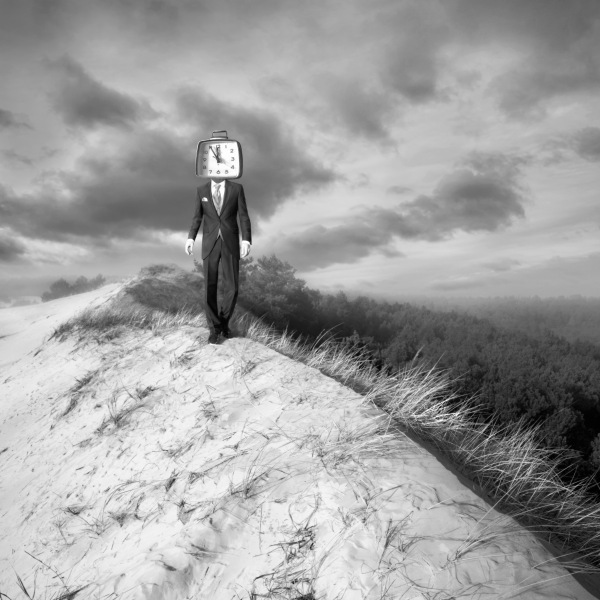
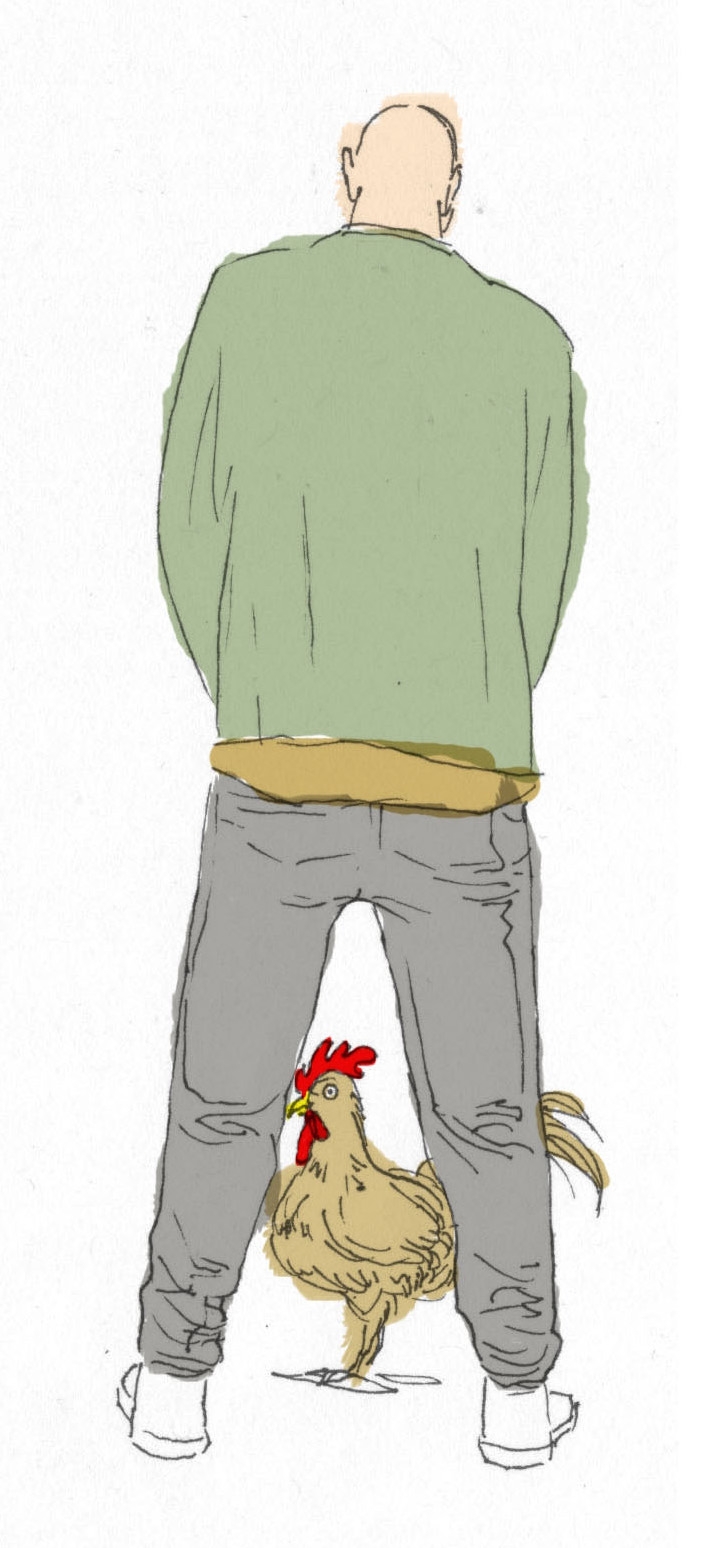
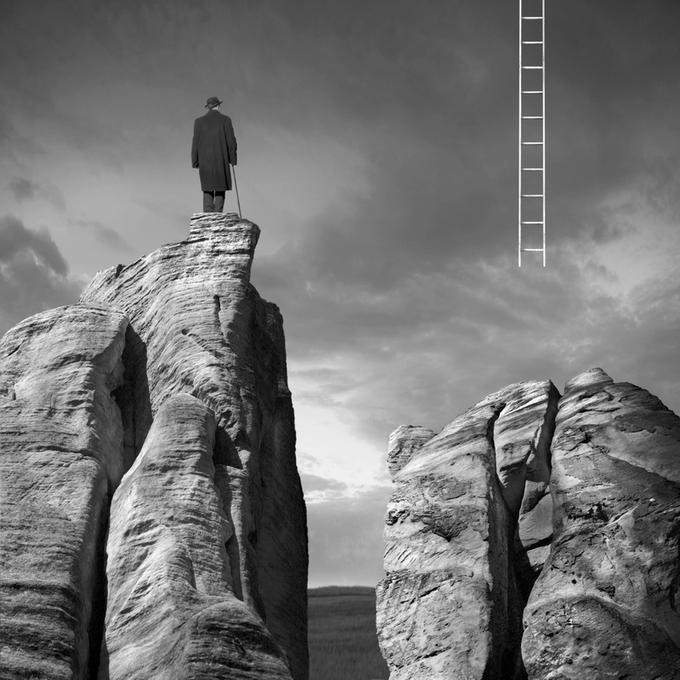
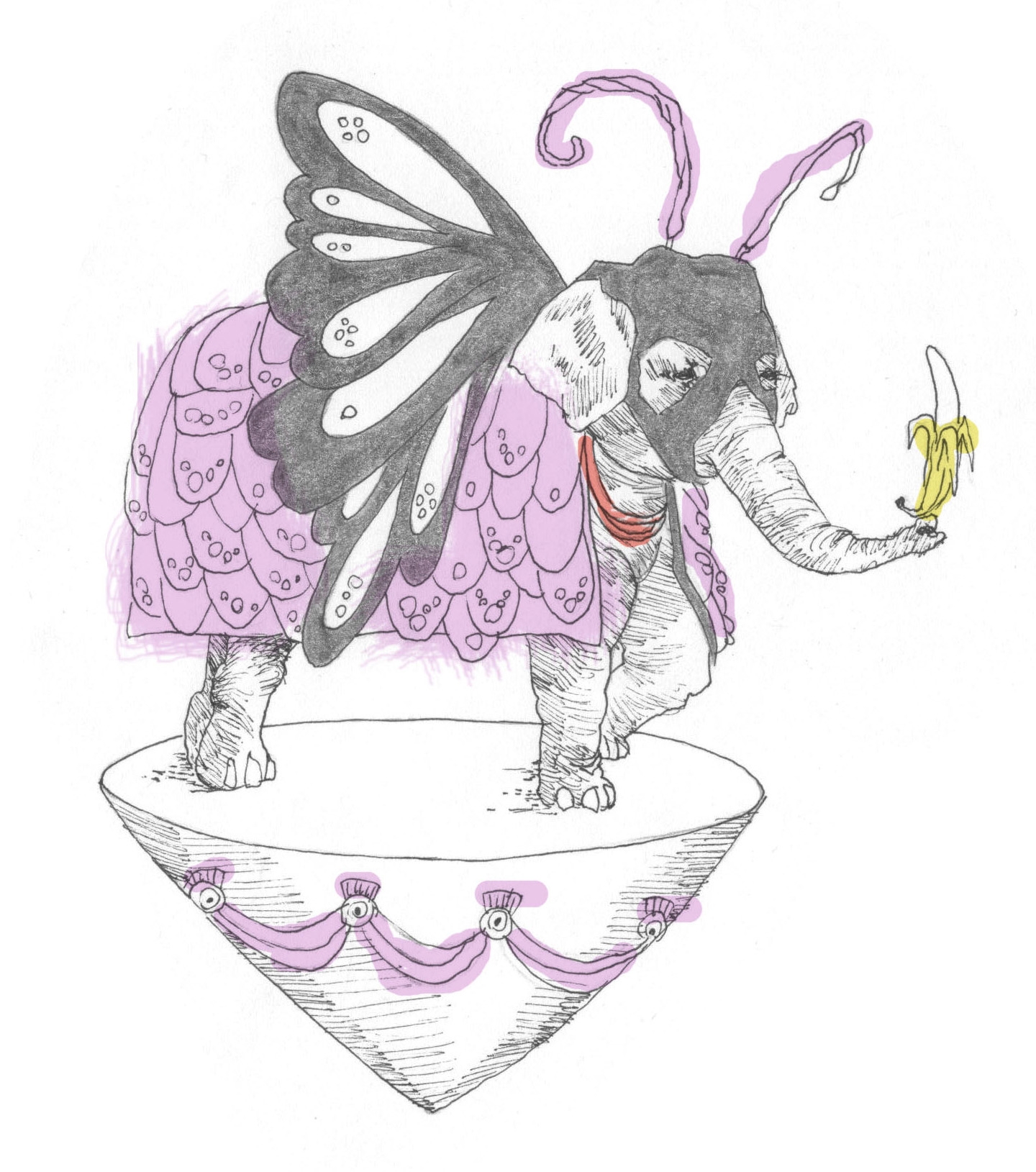
Image courtesy of Dariusz Klimczak

Bill took you walking the first day back. He’s that kind of guy. Maybe it was supposed to be a long walk, but it ended up being short because your legs were like pins without any joints.

He said, “It’s good to have you back, man. We were all a little worried there.”

When you started the triathlons in college you couldn’t swim very well. The race started at the boat launch and you had to dive in right away, like a razor, or you’d never catch up. With everyone thrashing and kicking and swimming over and under you, you could have sunk down into the bottom of the harbor and never come up. All the swimmers wore wetsuits, it was that cold. You took a deep breath and just swam under water like a frog as the mob passed over. When you had to breath, you’d fight your way up and men would take their faces out of the water and curse when they felt a head coming up against their stomach, or between their legs.

After a couple of years you were slicing though the tide of swimmers like a knife. You sliced and sliced, and then you biked, and then you ran. And the whole way, in every race, and all the time when you practiced, I was thinking yes.

I remember what happened right after the wreck. You woke up feeling, you said, like a head in a glass with nothing attached. And I couldn’t cry and I couldn’t even scream, and the doctor asked me if I wanted him to be straight.

They brought in a wheelchair so you could get used to looking at it. Of course you couldn’t use it at first, since you weren’t allowed to be moved. But it was something to shoot for, the wheelchair. A big silver beacon of mobility. If you healed up right, the doctors said, maybe one day you’d be able to sit up on your own.

The doctors were wrong, though. They were so wrong it makes my own spine tingle. When they let you, you sat right up.  Yes, I said, and you moved your fingers, and yes, and you moved your toes. Then you stood, leaning like a tent between three people.

Bill was worried that you seemed depressed. One day after a walk he took you to his church, a small gathering in a room over at the strip mall. When I asked you about it you said you sang Amazing Grace. “Is that all?” I said. “Yeah,” you said, “that’s all.”

The next day I took you to the pool. You were so weak I had to help you down the ladder. I stood in the water behind you and held you hips so you wouldn’t fall back. Your foot slipped, and you said, “Shit.”

A couple of little kids were playing in the shallow end near us, and they drifted over to watch.

“Hey,” I said, “Get out of here. Leave the man alone.”

But you climbed back up the ladder all by yourself and left. You took a shower that lasted a hundred years and when you met me in the lobby you said, “No more swimming. I can’t do this.”

You were putting on weight, but it was like your body wasn’t yours. You walked around the house as if on glass. You walked as if you were glass, ready to shatter if anyone looked too closely.

You and Bill used to be running buddies. But after the accident you became walking buddies. You walked together every evening after dinner, like old men, him carrying your cane because you couldn’t get the hang of it. But then one day Bill stopped going for walks with you any more. You said he needed the time to run, but I said maybe he thought you were being ungrateful.

“Ungrateful to who?” you asked, but I couldn’t really put my finger on it.

One Saturday when you were looking strong, I took you to the pool again. You were still afraid to drive. This time you got in the water, and we floated in the shallow end with those long foam noodles that little kids can ride like ponies.

I said, “Want to try some laps with me?” I pulled my blue goggles over my face and did a little dive towards the deep end, thinking somehow my enthusiasm could sweep you up like a wave. But when I popped up in the deep end, you were still standing with your noodle looking like a wet cat and not at all like an athlete.

You waved me on, and I swam a couple laps of backstroke out of sheer frustration. You lay on your back and moved your arms slowly back and forth to keep from sinking.

On Easter I drove you to my parents’ house, where everyone hugged you like you might dissolve into ash under their arms.

“I just can’t get over how lucky you were,” said my mother. “It’s like all our prayers were answered.”

My dad said, “So when are we hitting the golf course?” and everyone laughed. You said something about metal bones and how maybe you wouldn’t have to take as much of a handicap now, and they laughed even harder and fed you little pieces of quiche. Even after, at the table, when we were eating ham and scalloped potatoes and green beans almondine, they all kept stealing glances at your working arms, your legs, your upright torso. As if in just moments the spell would break.

The doctors said you couldn’t run or go back to the construction work you did before. They said it like you were asking them to reach up and pluck out the moon. “You start lifting,” said the physical therapist, “and that metal knee that took eight hours to connect to your femur will be shot in under a month.”

What you could do was work at a desk. You could talk on the phone and take people out to lunch just fine, so you got a job selling windows at a fancy lumberyard. Sometimes you saw Bill when he came in to buy things for this job or that one. He just looked you up and down, at your skin that was starting to tan and the absence of a wheelchair, of a coffin, and said, every time he saw you, “How ya feelin’, man?” He said it like he expected something. Like your life was a balance sheet with a whole lot still in the red.

I thought I had lost you. I knew that the body takes its own time to heal, and that some places in a person take longer than others. But even though you told me everything, you told me nothing.

Then one day in January I took you to the pool again. It was about four months after you’d gotten out of the hospital. We stood together near the deep end, and it must have been right after a swim meet or something because all the lane lines were still in and the diving blocks were still anchored to the concrete. I put on my goggles and said, “follow me.” From a racing block I dove arrow straight into the middle lane, and with everything in my body I pointed the way across the pool.  I swam the cleanest, straightest lap of my life. My freestyle’s not too bad. I made razors of my elbows. My hands cut the water without a splash. My legs beat out a drum-roll flutter kick behind me, and before I knew it I’d hit the other wall.

You were watching from the other side, and maybe, just a little, your expression changed. It was interest, I think. I hadn’t seen it in months.

“Now you,” I shouted, and it echoed in the empty pool room.

You were shaking out your legs and arms the way you used to as a swimmer. “Okay,” you said, “okay.”

Any minute now people would come bursting through the doors of the locker rooms, old ladies with kickboards and little kids with those puffy things they wear on their arms. A sea of artificial flotation. And the water would be cluttered, and there would never be this chance again. So you looked straight into my goggle-eyes, and I smiled, and you raised your arms to dive.

You dove. I could almost feel the rush of water on your skin. Rushing past your ears, a little getting in. The familiar up-pull of the surface and the down-pull of your weight as the force of the dive propelled you forward and up. You squeezed your shoulders to your ears and kicked like mad. All around was the rush of water and bubbles, and when you opened your eyes and exhaled the white stream of bubbles rose around your face.

Into the shallows, the bottom of the pool coming up to meet you. There were my legs and middle in the water, blue-tinted and soft, waiting for you as I will always be waiting for you. Come. You fluttered your feet and pulled with your arms and all your muscles needed air, but you were close so you pulled again and again and you kicked even harder and your life was rushing by and there it was, your head about to break the surface.


Lia Mastropolo studied literature and creative writing at the University of Connecticut, and environmental policy at the University of Pennsylvania. Her poetry, fiction, and nonfiction have appeared or are forthcoming in The Berkeley Poetry Review, Confrontation, Full of Crow, and Pindeldyboz, among others.

Interview with Andrew Stancek

Andrew Stancek

Stefanie Freele: In your excellent SOS flash, Natasha minimizes his dream as mere “elephants and banana leaves” – but there is so much more to his vision. You’ve paired together two authentic characters with opposing goals. Where did this idea stem from?

Andrew Stancek: Thanks, Stefanie for the compliment and let me say it is a thrill being interviewed by you since I am such an admirer of your work.

My writing tends to be character-driven and sometimes I am blessed with a premise visiting me almost wholly-formed. In “Elephants and Banana Leaves,” I wanted a Tamil background and I saw a wise Tamil man, displaced in North America, under whose influence an idealistic young man goes in search of wisdom. But his young wife has no such wish. My first image of Natasha was of her wearing red stilettos. She is also associated with a lacy black bra and a red thong. Such characters produce fireworks, not a common journey.


SF: If you could spend time with an author, studying with him, who would it be?

AS: I had the great fortune of studying with Alistair MacLeod, whose novel No Great Mischief and short stories I return to time and again. But I also think it would be exhilarating and empowering to talk craft with Colum McCann and Ian McEwan.

Elephant

SF: What have you read lately that you want the world to know about and read also?

AS: Almost all my reading these days is of writers whom I wish to emulate. I have been studying Robert Boswell’s Living To Be A Hundred. I keep rereading Chekhov and Kafka. I am about to reread Jennifer Egan’s A Visit from the Goon Squad which just blew me away when I first read it. William Trevor’s novels are always at my bedside. David Bezmozgis’s recent novel, The Free World, is a jewel. Ellen Gilchrist has a spectacular collection of interwoven stories called Nora Jane: A Life in Stories, which serves as a shining example of how to write a novel in stories. And since I talked earlier of my homeland, I must recommend a book about the Czech experience, written by a recently deceased friend, Josef Skvorecky, called The Bass Saxophone.


SF: In your bio, you mention seeing Russian tanks occupying your homeland. Can you tell more about that day? And, how the experience may have influenced your writing?

AS: Let me begin with a little bit of background. In 1968, in Czechoslovakia, a group of enlightened reformers tried to liberalize a rigid government and bring about a system “with a human face.” In August, the armies of five Warsaw Pact countries, led by the Soviet Union, occupied Czechoslovakia and overthrew the government of Alexander Dubcek. Faced with overwhelming power, the government advised its citizens to surrender without a fight.

Bratislava, my hometown, swarmed with hundreds of Russian tanks, driven by young men not much older than I was. Soldiers with machine guns patrolled around key buildings. Street signs disappeared overnight to confuse the invaders and make it more difficult to arrest the opposition. Pro-government, anti-Russian graffiti covered every blank space. Streets teemed with people. Panic, tears, shouting. Outside a downtown university building an overexuberant student was shot and his body was left on the steps for a few hours. The spot was transformed into a memorial with photos and flowers.

I turned thirteen on the first day of the occupation. I was bookish, idealistic, introverted. I
drank it all in. I had been sheltered and even as the events were unfolding, people had a sense that a world was ending. In the next six weeks it is estimated that 104,000 Czechs and Slovaks left the country for good. My family and I were among them. The occupation remains the turning point in my life. It took twenty-six years before I was able to go back for a visit. My writing is profoundly influenced by the events of that year, in obvious ways, such as being set in Bratislava, or less obviously in thematic preoccupations with dreams, flight, surrender, betrayal, retreat and loss of innocence.


SF: What a profound experience; it took 26 years for you to go back. What does recovery mean to you? What are you recovering from? Are you recovered?

AS: For me at least, I think it is impossible to be recovered. My childhood, adolescence, young adulthood were spent surrounded by dysfunction. I spoke already of the invasion of my country and the resultant relocation to another continent, culture, language. Melancholy, and depression are as familiar to me as breathing. But they are of course all fodder for stories. “Every experience you undergo, every pain, every dream is something you must write about,” is the advice a wise mentor gave me.


Stefanie Freele was born and raised in Wisconsin and currently lives in the Northwest US. Her short story collection, Feeding Strays released by Lost Horse Press was a finalist for both the Book of the Year Award and the 2010 Binghamton University John Gardner Fiction Book Award.Surrounded by Water, Stefanie’s second collection of short stories is now available from Press 53.

Interview with Yu-Han Chao

Yu-Han Chao

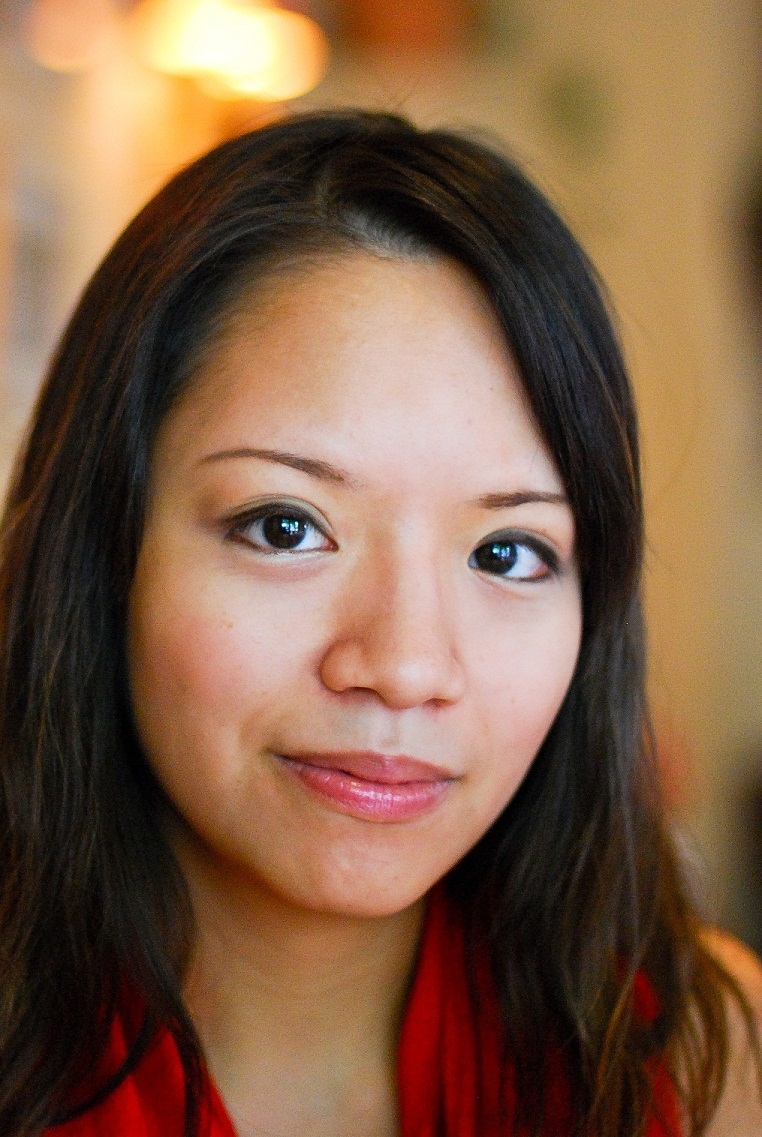
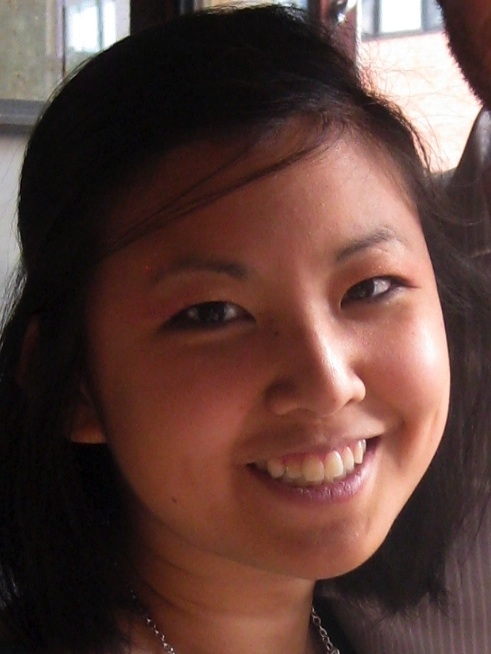
Yu-Han Chao, author of the story “Don’t Tell Her,” published in the July 2012 issue of r.kv.r.y. is interviewed here by her favorite librarian, Mimi Chong.

Mimi Chong: Since this interview is for r.kv.r.y., what are you recovering from currently?

Yu-Han Chao: Five weeks of false labor. An emergency C-section. The guilt of putting off revising my five-year-old novel manuscript. And this interview, for quite some time.


MC: Hope you’re feeling better. What books are you recovering from?

YC: Douglas Adams’s The Hitchhiker’s Guide to the Galaxy, which I enjoyed but felt like I didn’t get, and that really bugged me. Why 42?

Vladimir Nabokov’s Lolita. I will never recover.

E. L. James’s Fifty Shades of Grey. Why why why why why?


MC: I also want to know why. Do you draw from your Taiwanese background a lot?

YC: Yes, I kind of don’t have a choice, since that’s what I know the most, having spent most of my life there. I know it hurts me commercially because Taiwan isn’t as “sexy” or provocative as China (communism, ooooh!) and I don’t write historical fiction or about wars, and for some reason people in the publishing industry don’t seem to think Asians are a market worth selling to. Maybe they imagine we are too busy buying SAT/GRE/GMAT prep books. Or that we only read Chinese/Korean/Japanese/not-English-at-any-rate.


MC: From reading your stories, I get the feeling that Taiwan is a dingy, grim, materialistic kind of place. Is it really?

YC: It’s hard to generalize what an entire island is like, but the answer for the most part is no. Okay, maybe a little dingy, with open sewers and roaches and bloody betel nut stains, but for the most part people are terribly friendly and all sorts of lovely and delicious things are cheap so the materialism isn’t as bad as it could be. It is crowded, however, and the cost of living has been going up recent years.


MC: The story in r.kv.r.y. is about the death of a beloved son. Do you have personal experience with this?

YC: The Taiwanese woman who owned an Asian grocery store down the street from my apartment in Pennsylvania did. This story was really for her. A lot of things were changed, but her son did die falling during a hike, and I was there when she had just found out; it was heartbreaking. Thankfully, a few years later when I visited her, she was back to her cheerful self. R.kv.ry.


MC: What book is on your night stand now?

YC: My nightstand holds a Kleenex box, lotion, and Tiger Balm. There is a row of books leaning against my nightstand on the floor: Elizabeth Talent’s Time with Children, The Norton Anthology of Contemporary Fiction, Mark Costello’s The Murphy Stories, a Chinese nonfiction book, Gina Ford’s The Contented Little Baby and Sears & Sears’s The Discipline Book.


MC: What’s your favorite literary genre? Any guilty pleasures?

YC: Martial arts novels by Gu Long (Taiwanese writer). He was my first love; his prose is practically poetry. Even though he died an alcoholic suffering from repercussions of a knife wound sustained from a drunken brawl, I still fantasize(d) about being his girlfriend. Incidentally, towards the inebriated end of his career, his books were rumored to be ghostwritten by his girlfriends, and I would have happily done that.

I also really love Bridget Jones’s Diary and its sequel, in spite of what other people say. I wish Helen Fielding had written a series with Bridget as the main character that took up an entire library shelf, like the trashy teen series we all secretly devoured. I even wrote my own version, Bridget Zou’s Diary. It’s set in the Bay Area and my Bridget is Asian with immigrant parents and a Facebook-employed younger brother.


MC: Good luck with that novel. I’d buy it. There should indeed be more mainstream, non-historical-fiction with Asian main characters in American bookstores. Speaking of bookstores, what was the last truly great book you bought and/or read?

YC: Speaking of guilty pleasures, and also in response to this question, I am rereading Lolita on my Kindle for the umpteenth time. I have owned several editions of it in various stages of my life. My first copy had the black and white photograph of a schoolgirl’s inward turned knees on the cover. Reading the book at an impressionable age ruined me a little bit, but Nabokov’s (or Humbert Humbert’s) voice and word play are irresistible despite the awful content/sentiments.


MC: What was the last book that made you cry?

YC: Kazuo Ishiguro’s Never Let Me Go. It was actually the sad sex scene (too late, too late!) that made me cry. Ishiguro in general makes me sad in a good way, something about the emotional undercurrent behind his words and the understatement.


MC: The last book that made you laugh?

YC: Breakfast of the Champions by Kurt Vonnegut. I was probably quietly sniggering more than I was laughing. There’s so much in that book, I’m not sure where to begin. The humor in it was so matter-of-fact about terrible things that feelings of guilt followed my feelings of amusement, because it was plain wrong. For instance, “Vietnam was a country where America was trying to make people stop being communists by dropping things on them from airplanes.” And the narrator gave measurements of women and penile girth and width of men when introducing them. I’d love to write a book like that but don’t have the guts. Love the doodles, too.


MC: Which novels contain the best sex?

YC: Not Fifty Shades of Gray. I do not read novels for the sex, and honestly cannot remember anything that could be my answer to this question. In fact, based on my response to the sex scene in Never Let Me Go, it appears I like my literary sex nowhere near “the best,” if any.


MC: If you could meet any writer, dead or alive, who would it be? What would you want to know?

YC: Angela Carter, even though I would probably make her feel “as gross as Glumdalclitch” (from Burning Your Boats) because I’d be one of those “young and cute girls” she saw in Japan, and standing beside her I’d look like a munchkin. Regardless, I’d gladly be her personal assistant or maid for free just to be around her brilliance and delightful vocabulary. She seems like so muchfun.


MC: And among authors you’ve met already, who most impressed you?

YC: Junot Diaz. I didn’t actually meet him, but attended his reading at AWP in March 2010. It was a short and sweet reading of one of his racy, prepubescent boy stories and he answered the usual clichéd questions from the audience with patience and grace. He also seems like a lot of fun.


MC: What’s on your to-read list?

YC: Infinite Jest by David Foster Wallace, two Umberto Eco books, a bunch of half-read Margaret Atwood books, and I’m in the middle of Shame by Salman Rushdie. Also, some Norton anthologies to learn craft and maybe help me prep for the GRE subject test so I can apply for Ph.D. programs.


MC: Do you have a website? What do you think about the future of electronic and online publishing?

YC: www.yuhanchao.com

I love my first generation Kindle, and edit for online literary magazine The Rose and Thorn
Journal. Electronic publishing is the way of the future, and while pretty books are nice, websites can be just as if not more attractive and the interactive and multimedia possibilities are endless. And a lot of the time they are free, which is great.


MC: Like r.kv.r.y.

YC: Exactly.


Mimi Chong is a librarian, researcher and reviewer living in Boston, MA. She enjoys anime, fantasy and literary fiction. She is currently recovering from water retention.

Review of WE by Lowell Jaeger

We

WE
Poems by Lowell Jaeger
Main Street Rag, 2010

WE is a glimpse of the extraordinary, hidden within seemingly mundane everyday lives, and Lowell Jaeger gives us beautifully constructed portraits of the people you may not notice rushing to catch your bus or pushing past on a street when late for an appointment.

The titles alone reveal the objects of his scrutiny: “regular guy,” “stroke survivor,” “the wives,” ”dad,” and “door to door jesus.”

But what Jaeger gives his reader is something that transcends any idea of a lofty introspection. It’s quite the opposite. Jaeger solidifies this idea of exploring the seemingly simple and takes us deep into where these people live, how they work, and who they might be in a way that creates connections to us all.

In “If They Blow,’ the reader is dropped into the middle of a conversation as if we were eavesdropping in a crowded room full of strangers:

If They Blow

“…run for shelter, Dad said.
Means Krushchev’s launched his warheads.
I’d asked: Why the yellow horns on a tower
atop the grandstand’s roof? (31)

In “we all know trouble when we see it” the dialogue is realistic and so regionally dense that I was brought back to sitting in a diner as a kid fascinated by the chatter of the adults around me; a place of no secrets where verbal clues alone become the vehicle to understanding:

“Birdie snags the waitress to question
this or that about the bill. Silly,
but I hold my breath to listen…” (81)

“every mother” gives us the gruffness of the man, the tirelessness of the woman and the obliviousness of the children where a mere car breakdown can create a whole new level of frustration in an already exhausted day:

Try it again, the man shouts
like he’s peeved at her
when his machine won’t go.
He adds a string of curses,
drops his wrench, and she’s on the spot
with a wad of Kleenex
to nurse torn knuckles.” (19-20)

Lowell Jaeger’s WE is a collection of portraits that give us an inside view of people at their everyday tasks, errands, and jobs, but these characters become so much more than that by the end of the book. This is a contemporary view of who we are, where we come from, and where so many of us really live. WE is a beautifully crafted poetry collection with intimate language, densely sketched /images, and as realistic a viewpoint as any observer could discover. I have become a fan.

Interview with Indira Chandrasekhar

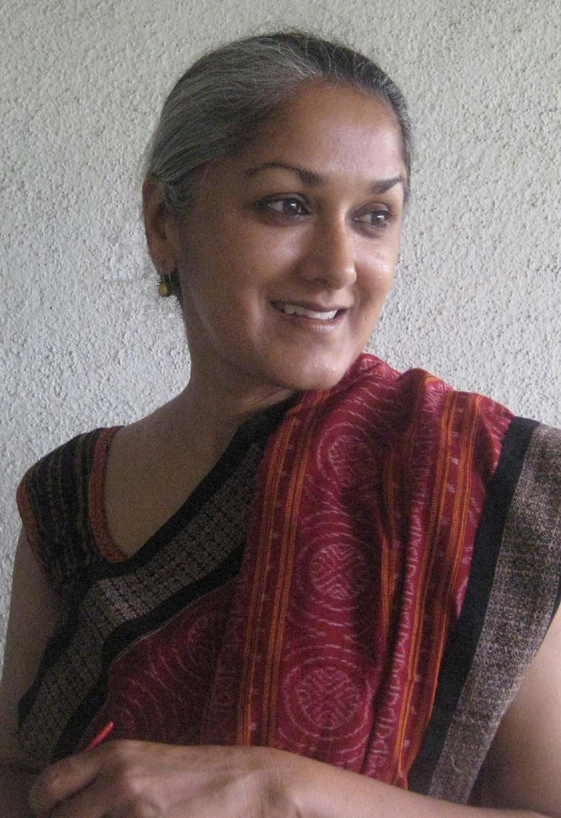
Indira Chandrasekhar.photo credit Mira Brunner.1

Rebecca Lloyd: Hello Indira. I’ve just been reading ‘My Kitchen, My Space‘ in r.kv.r.y. quarterly, and thinking what a good story it is. The helplessness of Mala’s situation is so exactly described. I wondered how you came to write it, I’m particularly interested in the ‘good’ and ‘bad’ saucepans in the story.

Indira Chandrasekhar: Thank you, Becca. I was interested in domestic aggression and the marking of boundaries in a relatively contemporary household that does not have an established hierarchy such as, for example, the traditional Indian joint family does. Mala is forced to move in with her mother-in-law but there is no reason why the relationship between the two women, who are in a modern context, cannot be civil. And yet, territory is paramount and feelings are brutal and violent. The story is set in the kitchen, because kitchens can so often be the sites of territorial strife in households, don’t you find?

So, indeed yes, the saucepans do end up being symbolic, and the Teflon-coated one is an easy victim, an obvious choice for the bad saucepan. That bit about the polymer debris, it came from the heart. One thing I’ve learned from discussions with many wonderful writers such as yourself is that as a story evolves you do have to let go of narrative strands however enticing they might be. Another aspect I wanted to allude to in this story is how ridiculous we can all become when we take uncompromising stances. I thought about having a feature of the conflict where, regardless of rationale and logic the old lady sticks to her opinion. As does Mala. In the end, this idea got obscured and I decided to let it go and keep the story focused on the saucepans.


RL: And can I ask you about your writerly habits? For example do you write every day, and do you carry a writer’s notebook with you when you are out and about?

IC: I do write daily. When my output is blocked, and a story simply will not emerge, I try at least to be careful about my everyday writing – emails, notes to the editors, things of that sort. When that correspondence gets sloppy I recognize that I am either tired, or, wonder of wonders, have another story coming.

Much of my inspiration comes from Indian cities. Mumbai (or Bombay as it used to be known), where I am most of the time, is intensely dense, one of the world’s most populous urban centers constricted geographically by the sea and the hills. Sights, conversations overheard, conversations had, people’s histories, the daily news – they are rich with many layers and have wonderful potential for stories. I used to carry a notebook but I find it distracting; when I am jotting things down, I cannot observe and absorb.

So I’ve taken to storing things in my head, and do my writing on the computer when I am back at my desk. Scenes – particularly sad, or disturbing or happy ones – tend to stay with me for a long time, and metamorphose, and I find myself putting them into stories that grow away from the original in strange ways. I find this is a blessing, for it helps me deal with writing about the kind of disparity one encounters daily in a city like Mumbai; it is so easy to veer into the obvious seduction of poor/rich, good/bad. The time that I find it useful to make notes, be it in a notebook or on a computer is when listening to family stories about extraordinary characters and events extending to a wide circle and going back many
generations. Good good stories.

https://mail-attachment.googleusercontent.com/attachment/?ui=2&ik=8832d3e75f&view=att&th=139d4496e96f1ee5&attid=0.2&disp=inline&safe=1&zw&saduie=AG9B_P_WfGhoZvfaZxES6Ypy1YnI&sadet=1347973000638&sads=h9FgiADossJ6clTgAtTQh_Dr_7E

RL: That’s interesting. And what about reading – do you get time to read, and do you believe as many writers have said in the past, that a writer when not writing should be reading?

IC: A difficult question. The simple answer to both questions would be ‘yes’ to both parts, but there isn’t a simple answer, is there?

How I read and what I read is very dependent on what I am doing. In the course of editing Pangea, when you and I were reading short stories with intense attention, just as I described that my writing was affected, so also was my reading. Fortunately with Out of Print, where I am constantly reading submissions, I have found a balance. All the same, when I am reading and editing with great engagement, either I have my editor’s lens on and find myself over critical, or my brain is simply too stretched. I am less able to immerse myself in a novel, or to lose myself in a story as I did in the past, when finishing a book would leave me with a sense of loss for the world I was leaving. The result is that I am more discerning, more selective in what I read, finding myself impatient with many of the things I loved before. I tend to seek work that is brilliant in craft. Does that make me sound pompous – what I am trying to say is that the time when I read purely for pleasure, without one part of my brain assessing what I am reading, where I am simply allowing my sense of things to go where the words take me, is precious.

To read when not writing, I think is truly important for a new or aspiring writer. Just in terms of the exposure to the craft and skill and subtlety that can be achieved. But as a universal prescription, I am not sure. I think writers have to find their own balance.

https://mail-attachment.googleusercontent.com/attachment/?ui=2&ik=8832d3e75f&view=att&th=139d4496e96f1ee5&attid=0.3&disp=inline&safe=1&zw&saduie=AG9B_P_WfGhoZvfaZxES6Ypy1YnI&sadet=1347973055174&sads=GOTyyxMpt9KYd0n9lvgxtWPRpPg

RL: … a difficult question answered very well, I’d say! So, just moving onto Out of Print, tell me a bit about that and what inspired you to set it up?

IC: When I started to feel more confident in my writing and felt that my stories were ready enough to try and place in literary journals (many thanks to your short story group on Writewords and to the input from Zoetrope Virtual Studios (where Mary Akers is also a member) most of the magazines that were interesting were outside India. Our rich heritage of small magazines in English (and many in local languages, although they were of academic interest since I write only in English) seemed to have disappeared.

Looking to journals outside India made me recognize that the worlds I was writing about were not always accessible to people outside the subcontinent. Which is not necessarily a bad thing. Without implying that my writing is anywhere on the same level, reading Achebe and Soyinka, Mishima and Murakami, Dickens and Woolf, Twain and Carver, opened new worlds for me. I began to wonder if contemporary subcontinental writing, with its vastly different regional and linguistic influences has a cultural commonality and what that looks like. It seemed worth opening a magazine to find out.


RL: I imagine it must have been a bit like opening a treasure trove; I’ve read some extraordinary stories on Out of Print. Do you feel that your own story writing is moving in a particular direction that you can recognize, or do the stories appear to simply pop up to be claimed by you, and with no obvious links to each other?

IC: Indeed, yes. We come across some wonderful work. Very diverse, written from different perspectives, with strong interesting voices. So, instead of providing a simple answer to the question about common threads to subcontinental writing, Out of Print seems only to have opened up new ones. Which is fine and exciting.

Speaking of wonderful work, may I say thank you, once more, for your terrifying ‘Finger
Buffet.’ That you were able to write about that incident by making the characters into people the reader could see was quite remarkable.

My own writing is shifting and growing, I can feel it. So although the stories do appear, just like that, to be ‘claimed’ by me (what a lovely way of putting it), and although my principal focus remains the complex, nuanced dynamic between people, I find myself occasionally trying to direct stories in specific ways. More often than not, however, what I am thinking about – the injustice, the power games, the greed, the politics, the gamut of things that affect life – ferments and waits to spew over into the stories. The challenge is to control and hone all those seething concerns so the story moves forward.

One way I am able to do this, is through setting the story, placing the characters in a situation where the issue that is pushing to the forefront of my mind, fits fairly naturally. Which makes it sound as if my writing is deliberate and intellectual. In fact, most of the time it is a choppy back and forth between getting the words out and dealing with something that the story is allowing me to address and stepping back to look at how it is all getting crafted. A bit messy, really. It’s in the editing that it usually comes together.


RL: Thank you for your thoughts about Finger Buffet, I was glad to see it print. My next question is what percentage of the stories submitted to Out of Print are good enough for publication, and of those, apart from good writing, what other qualities are you personally looking for, I know you work with two? other editors.

IC: Yes, I work with two other editors – who happen to be my niece and my daughter. Wonderful young women, and really smart readers.

We tend to publish less than ten percent of the stories that are submitted per issue. The thing that I look for in a story is engagement. When I begin a story, do I want to find out more? Do the characters, or the story have appeal? I am not talking about a first sentence that is crafted to grab the reader, I am speaking of something deeper, more essential than that. Perhaps it’s the honesty of the writer as regards the story, perhaps it’s the desire of the writer to explore the subject, perhaps it’s the approach the writer has taken to tell the story. I can’t pinpoint it precisely. But it is tangible. That is the thing, really, the author’s attitude to the story is tangible. And even if the work is derivative, or poorly written, or is telling a story that ultimately we don’t like or is unusable in Out of Print for other reasons, that genuineness comes through.

Well, you have made me think about my writing, Becca. I know there were other things we talked about discussing regarding my own work and writing in general. But, you are right. This seems a good place to stop. Thank you for taking the time to ask me such thoughtful questions. I really appreciate it.


Rebecca Lloyd is a novelist, short story writer and creative writing tutor. Her short stories have been published in Canada , USA , New Zealand, and the UK. She won the Bristol Short Story Prize 2008 for The River. Her novel Under the Exquisite Gaze was shortlisted in the Dundee International Book Prize 2010. She was a semi-finalist for her short story collection Don’t Drink the Water in the Hudson Prize 2010. Her first children’s novel Halfling was published by Walker Books in January 2011. She is co-editor, with Indira Chandrasekhar of Pangea, an Anthology of Stories from Around the Globe, published by Thames River Press in 2012 and developmental editor of The Female Ward by Debalina Haldar, due for publication by Thames River Press this year.

“On the Verge of Frog-Hood” by Richard Bader


Image courtesy of Dariusz Klimczak

My key was in the door when I heard the voice behind me.

“Do you have a minute?” it said.

A woman had materialized in my driveway, 40-ish, with short brown hair that curved in and forward at her neck and framed her face in a sort of oval. She was holding a large cardboard box. She wasn’t unattractive, but she wasn’t especially attractive either, and I was using this information to decide whether I had a minute. She set the box down. A light rain began to fall.

“Actually I was just leaving,” I lied.

“Oh!” she said, with either real surprise or mock surprise. “I thought I just saw you pull in.” She nodded toward my car. For all I knew she had felt the hood to see if it was warm.

“I came back to get something.” Lie two.

“Oh.”

I thought she’d take the hint and leave, but she stood there looking at me and I looked at her and soon it got uncomfortable.

“What’s in the box?” I guessed Bibles.

“My book,” the woman said. This didn’t entirely rule out Bibles.

“Your book.”

“A book I wrote. It’s a novel.” She opened the box and pulled out a hardback book with a plain blue cover and a title in white letters I couldn’t make out. “I’m trying to sell it.”

“Door to door?”

She smiled a smile that looked forced. “I published it myself. So yes.”

“Crazy way to sell books.”

“Are you a reader?”

No, I’m illiterate. “Yeah. I mean, I read.”

“Books?”

No, food labels. “Yes, books.”

“Wonderful! A lot of people don’t. Would you like to buy one?” She thrust the book toward me and I took it.

Tadpoles, by Amanda Boom. Amanda Boom—great name. You should have made it bigger on the cover.”

“It’s pronounced Boam,” she said. “It’s Dutch.”

“It’s really about tadpoles?”

“They’re a metaphor.”

“For…”

“That’s why you buy the book,” she said. She grinned, and it did something to her face that made her more attractive. It wasn’t until then that I realized she had looked sad before. The rain was picking up. “Your books are getting wet. Do you want to come in for a minute, Amanda Boom?”

Boam. Weren’t you just leaving?”

Now she was making fun of me. She was sharp, Amanda Boom was. Sharper than she looked.

“Do you have any coffee?” she said as we entered my living room. I went to the kitchen and made a pot. When I came back with it she was looking at a picture on the mantel.

“Your wife and daughter?” she said.

I wasn’t sure how to answer. It was Sophie, my daughter, with Anne, my wife, on a beach in Maine at sunset. But Anne and I were in day twenty-seven of a trial separation that was feeling less and less like a trial. I’d put the other pictures of her away. Leaving that one out was like saving a starter cell, something to clone the marriage back on to if it came to that. “Yes,” I said, not wanting to get into it.

“What are their names?”

“Sophie, she’s my daughter. And Anne.”

“And yours?”

“George.”

“Well, George, you have a beautiful family.”

I directed her to the couch and sat in a chair opposite. “So. Your tadpoles.”

“They represent loss.”

It was a ridiculous story. There’s a woman who every spring goes into this wealthy neighborhood where people have backyard pools. In the winter the pools are covered with tarps, and in spring frogs breed in the rainwater that collects there. Except when they take off the tarps, it kills them. So before they open their pools, this woman goes around and rescues the tadpoles with a net and takes them home in jars.

“Some become frogs,” she said. “But most die.”

“You ever know anybody who did this?” I asked. “Collect tadpoles from swimming pools?”

“No. It’s a novel. It’s fiction.”

“It’s just… You just don’t say, let’s have this woman who collects tadpoles from swimming pools. That has to come from someplace. Where in the world do you get an idea like that?”

“In your head. You make it up.” I thought I heard an edge in her voice.

“That’s crazy.”

“Crazy. That’s what the people say about the woman. She shows up year after year, a sign of spring, like dandelions or onion grass, and starts collecting. They talk about her, but no one talks to her, not really. No one bothers to learn her story. To them she’s just the tadpole woman. ‘Has the tadpole woman been to your pool yet?’ Like that, like she’s their tadpole woman, a quirky little break from their bland suburban routine. No one even knows her name.”

“What is her name?”

“You never find out. She’s sort of an Everyman.”

“Or Everywoman.”

“Exactly.”

“But every woman doesn’t collect frogs.”

“Tadpoles,” she corrected. “And everyone deals with loss. This is just her way of doing it.”

There was a car crash, she explained. The woman was driving, and someone ran a stoplight. It isn’t clear whose fault it was, but her young daughter is killed. Her husband blames her and the marriage falls apart. The neighbors feel sorry for her at first, but then start looking at her differently. She feels their scorn. She blames herself. She moves to a new town where no one knows what happened. The tadpoles become a way to cope with guilt. The whole thing was far-fetched, but I have to give her credit—she told the story pretty well. I thought she was going to cry when she described the car crash.

“Do you have kids?” I asked.

“It’s not about me.” That edge in her voice was back.

“It just seemed like you’d need to have a kid to know…”

“What it feels like to lose one? Is that really so hard to imagine? So she’s carrying around this secret. It’s too painful to tell people what happened, but it’s almost as painful to keep it to herself. And she doesn’t trust herself around people. The loss is devastating. The pain won’t stop. Who she was is gone, so she has to figure out who she is now, this new person that feels so disconnected from the old one.”

“I get it. Like tadpoles.”

“Exactly. On the verge of frog-hood. But totally oblivious to how their lives are about to change.”

“It’s like… what’s that word for when something turns into something else?”

“Metamorphosis.”

“Right. Metamorphosis. You should have called it that.”

“Taken,” she said.

When Anne said she wanted to separate, I was in shock. Twenty-one years of marriage and she could just walk away? She said she wasn’t “happy” anymore, and with Sophie away at college, she wanted to see if she felt happier apart. Happy. Jesus. Happy wasn’t something I thought a whole lot about.

That first night, after she told me she wanted to separate, she went to sleep in the guest bedroom. Twenty-one years—that’s like 7,000 nights—and it was the first time that had happened. So I’m lying alone in our king bed, staring at the ceiling. And what do I think about? The impossibility of life without Anne? This feeling that a piece of me just fell off? No. Logistics. Where will I live? What will I eat? What furniture will I need? House or apartment or condo? Rent or buy? Ikea or Ethan Allen? And the weird thing—would Anne approve? My wife is leaving me and I’m worried about reconstructing a life that she would endorse. But then the next day she said she’d move out, and she rented an apartment about a mile from here. Her car’s never there, though. I think she’s seeing someone else. Maybe she has been for a while.

“And that’s it? She lives out her life saving tadpoles?”

“Something happens to her.”

“What happens?”

“That’s why you buy the book.”

“Oh, c’mon.”

“Guess.”

“She falls in and drowns.”

Amanda Boom laughed, and her face did that thing again. I liked when it did that. I liked that I made it do that.

“That would make it a short story,” she said.

“She kisses one of her frogs and it turns into a prince.”

She kept laughing. “Now it’s a fairy tale.”

“Warts.”

More laughter. This was fun. I guess I felt “happy.” So I kept going. “She has an affair with a neighbor.”

This popped the whole laughter bubble. “Men always say that,” she said.

Men always say that. It was something Anne would say. Then I’d react, and then she’d react, and it would become this thing, and we wouldn’t speak to each other for a week. If Anne were here, she and Amanda would now be partners in a little anti-George coalition.

“Have a lot of men bought your book? It doesn’t seem like much of a guy’s book.”

“Some. Yes.”

“And what tips the balance? What makes them decide to buy it?”

“Is there any more coffee?”

I got up to get the coffee and gave her a refill. She took a sip and then sat staring at the cup in her lap. Finally she looked up. “One man asked me if I would have sex with him.”

She blushed when she said it, but looked me right in the eye, challenging me to something. I was confused. Was she saying, All men are basically pigs, and don’t I agree? Or was it some kind of come-on? It had been a very long time since I’d been on the receiving end of a come-on, so it was hard to tell. So now I’m sitting here looking at Amanda Boom and thinking about sex, thinking about sex with her. And then it happens again—I start wondering what Anne would think. Would she be jealous? Impressed? Would it make her want to come back? What would she think of Amanda Boom? It seems crazy to think about it that way, but I couldn’t help it.

“And did you?”

“Did I…?”

“Have sex with him?”

“What do you think?” she said.

“It’s an interesting marketing strategy.” I was suddenly really uncomfortable, and I tried to mask it by sounding clever. “Unorthodox, but you can’t deny its potential, and it would give you an edge on Amazon. Kind of extreme, though, just to sell a book.”

“Yes,” she said.

“Yes what? Yes it’s extreme?”

“Yes, I had sex with him.”

I felt like I was being led into another story. Like the woman in my driveway and the book and the tadpoles and the car crash and the dead daughter were all just so many breadcrumbs to take me to this other place that had something to do with this real woman sitting in my living room, whose name may or may not be Amanda Boom, who may or may not be inviting me to have sex with her, and who may or may not be the author of the book sitting on the coffee table in the space between my chair and her couch. I picked up the book and opened it, almost expecting the pages to be blank. But there were words there, just like with anybody else’s book.

“Not then, though,” she said. “I told him he had to buy the book and read it first. I said I’d come back in a week to see if he had.”

“And he believed you?”

“I guess it was worth $15.00 to see.”

“But you came back.”

“Yes.”

“For $15.00. There’s a word for that, you know.” I was angry. Not because I was judging her. I was angry because I was jealous.

“It wasn’t that simple.”

“How’d you even know he read it? Did you give him a test?”

“More like a quiz.”

“And he passed.”

“Flying colors.”

“You’re full of surprises, Amanda Boom.”

She shrugged, but didn’t look away.

“What difference did it make? Him reading the book?”

“He paid attention to my story. For three hundred and twenty-nine pages.”

“To the frog lady’s story.”

Another shrug. “It made him no longer a stranger.”

“Because you don’t sleep with strangers. At least not for $15.00.” I wanted her to react to that, but she didn’t. “Was it worth it?”

One more shrug, then a slight smile. But she didn’t answer.

“What did you get out of it?”

“Heard.”

“Hurt?”

“No, heard.”

“Ha,” I said. “No, you got laid. Did you see him again?”

She shook her head.

“On to other sales opportunities? Is this like a standard offer you make? ‘Now, for a limited time only, buy one book and screw the author for free’?”

“Anne left you, didn’t she?”

“What are you talking about?”

“There’s mail forwarded to her on the table next to the door.”

“She’s away on a business trip.”

“To a place in the same zip code?”

I wanted Amanda Boom to leave. “We’re separated. Not that it’s any of your business.”

“You don’t know what’s next, and you’re not even sure you want to find out. But something’s next, George. Something’s always next. You could get depressed and suicidal. You could start collecting tadpoles. You could invite a strange woman into your house.”

Neither of us said anything for a while. I couldn’t look at her, so I stared at the book.

“So what happens now?” I said.

“Maybe you turn the page.”

I laughed. “You win. I guess I will buy your book, Amanda Boom.”

“It’s Boam.”

“Right. Will there be a sequel?”


Richard Bader makes his living writing and consulting for nonprofit organizations. Fiction is a fairly new interest. He would love to be called a ‘young’ writer, but is afraid that ship has sailed. So he’ll settle for ‘new’ writer, or, with luck, ‘emerging.’ This is his second piece of published fiction.

Read our interview with Richard here.

Interview with Jami Nakamura Lin

Jami Lin

Alisha Karabinus: I loved reading “Savasana.” It has so many of the qualities of the nonfiction you usually write that I had to remind myself that it was fiction. How did you decide to switch to fiction? Where did this come from?

Jami Nakamura Lin: This actually stemmed from a couple of pages I found in an old notebook that I wrote in about 2009. I forgot that I wrote it. I found it again while trying to find material for my nonfiction thesis. The idea still seemed intriguing to me, so I ran with it. These days I only write fiction when I get fed up with memoir-y stuff and want to be able to make up worlds, but when I was a kid I wrote stories all the time– these stuffy, elaborate, but really imaginative pieces about girls who lived in the olden days. I think I was pretty influenced by watching my mother’s BBC adaptation of Pride and Prejudice.


AK: How would you compare the challenges of writing fiction to those of nonfiction? How did you deal with that in this piece?

JNL: Writing fiction is a process of creating more, while writing nonfiction, to me, is a process of cutting back. Writing fiction is difficult because you start with a blank slate– you don’t know where any storyline or narrative thread is headed. But that is also what I’ve found enjoyable about it. Nonfiction is restrictive in the sense that you can’t blindly make things up. You have a bit of leeway in the sense that you can pick and choose what and what not to include, and how to organize it, but you can’t just pull stuff out of nowhere. But that sometimes makes the writing easier, because you have parameters.

I think I struggle with plot in fiction. When I write nonfiction, I know what the ending is, so to speak, because it happened. That was the hardest part with this piece. Where should it end up?


AK: Can you speak a little about how you came to writing? I know you studied psychology in your undergrad, and haven’t been writing seriously for all that long (a fact that makes your skill and talent that much more astounding!)

JNL: When I was little I was an obsessive notebook-keeper. I called myself Harriet, after Harriet the Spy. I started religiously journaling when I was about eight, and now I’m twenty-three, so I have boxes and boxes of journals. I wrote a lot of stories as well. But I never thought I could do it  “for real”. I love kids, and I’m very curious about the mind, so I thought I would be a social worker. However, in my senior year of college, I didn’t get into a psychology class I wanted during the fall semester, and there was a nonfiction class scheduled at the same time, so I thought, “I love writing, I’ll sign up for that instead.” And I did. And through a lucky chain of events, I had to turn in my essay first, and my professor read it and encouraged me to apply for an MFA. Which sounded so much more rewarding than anything else I was planning on doing right after college.


AK: How was the transition to studying English and writing in graduate school after working in a different discipline in your undergrad, especially with the demands of graduate level study?

JNL: It’s hard because I’m not very well read, and I’ve missed out on a lot of the “canon” that everyone else takes for granted that we’ve all read and understood. To say nothing of theory! But it’s not too bad. Psychology and creative writing, for me, are quite related. I do both because I always want to know *why*.


AK: Since this story features a lot of yoga, I’ve got to ask: do you practice yoga? If so, what’s your favorite yoga pose?

JNL: I practiced yoga a lot in college, when we had free classes, but not so much anymore! At the time, my favorite pose was child’s pose, because it’s where you go to rest.


AK: Your nonfiction often addresses your struggles with mental illness in terms of brutal, heartbreaking honesty, and some of that turns up here, too. How do you balance connecting with those emotions and struggles, whether your own or someone else’s, and triggering yourself?

JNL: That’s something I always struggle with, especially with writing my memoir. I can get really absorbed in reading old journals. What’s helped is working on multiple pieces at once, and making sure some of them are lighter and not so self-obsessed. Right now, I am sketching out ideas for a steampunk-esque story that takes place on the modern-day prairie. Kind of like if the Industrial Revolution never happened, and we were all still living like Laura Ingalls in 2012. I’ll never do anything with the story, but it’s a nice breather.


AK: I just want to say I love the ending of “Savasana.” Thank you for taking the time to talk to me about it, Jami!


Alisha Karabinus is co-founder and Executive Editor of Revolution House magazine and an MFA student in Fiction at Purdue University, where she is the Managing Editor of Sycamore Review. Her work has appeared or is forthcoming in such publications as the Raleigh Review, PANK, and Per Contra. She lives in Lafayette, Indiana, with her husband and young son.

Interview with Clifford Garstang

Cliff Garstang

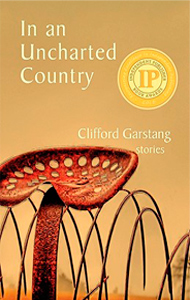
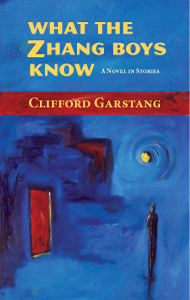
Virginia Pye: In your two collections of stories, a specific setting plays an important role in defining the parameters of your characters’ experiences. In In an Uncharted Country, it’s rural Rugglesville, Virginia, and in What the Zhang Boys Know, an apartment building in Washington, D.C.  Do you have a sense why location is so important to you and how you use it to help you delve more deeply into character?

Clifford Garstang: I think setting is a critical element in fiction, one that can work on a couple of levels to affect the experience of reading. On the one hand, by creating a setting that is both fresh and familiar at the same time, a writer can make a reader both comfortable when he or she enters the fictional world and also curious about that world. On the other hand, the setting needs to contribute to the underlying meaning of the work. In the case of In an Uncharted Country, the rural setting was meant to evoke a certain kind of community in which the quirky central characters would feel like outsiders—that is, it’s not terribly diverse, its values are traditional. As for the condo building in What the Zhang Boys Know, in some ways I was going for the opposite—an urban dwelling that throws together a wide range of people who have to deal with living in close proximity with humanity. There’s another point to be made here, too. These are both linked collections of stories, and setting is one way in which the stories are tied together. And you don’t get the setting all at once, which is the beauty of this form for me.

VP: You have chosen to write novels as collections of stories. While this method has been employed by authors for a long time, its use is often still questioned. As a narrative choice, it allows for a kaleidoscopic vision of character: we see them from completely different angles and perspectives when glimpsed in diverse stories. Can you tell us some of the advantages of writing novels in stories? Are there any disadvantages and do you think you’ll keep to that style or try a more traditional novel approach?

CG: One of the great advantages from the writer’s point of view is to be able to inhabit many different characters and perspectives. Even in a tightly woven book like Olive Kitteridge by Elizabeth Strout, some of the stories focus on characters other than Olive herself. In the classic example of the genre, Sherwood Anderson’s Winesburg, Ohio, the same is true, and the character around whom the book is organized is sometimes completely absent. In my two books, I’ve enjoyed these shifting voices and personalities. Another advantage is that the writer can explore multiple themes without straying too far from the central story. In my new book, for example, there is an over-arching narrative, but a few of the stories about some of the residents of the condominium building do swing away from that narrative for a while before circling back, although thematically they remain consistent. I don’t know that there are disadvantages for the writer or the reader of novels in stories, although agents and publishers still think these creatures are story collections and therefore are afraid of them. For now, though, I’ve moved on and have written more traditional novel forms.

VP: One of your reviewers has commented that your depiction of the apartment building in D.C. is “the Winesburg, Ohio of the 21st century.” Your setting has people of different races and backgrounds and thoroughly different experiences. Did you intend for it to encapsulate America today? And, if so, what does that say about our country now?

CG: I was terribly flattered by that Winesburg, Ohio comparison. I don’t think I intentionally meant for the diversity of the condo building to be saying anything about America, however; it simply reflects my own past experiences living in urban environments. But the diverseness of the residents of the building certainly was intentional, because I wanted to show that all of these very different people share things, not all of which will be immediately apparent. We are an incredibly diverse country, whether or not some people want to admit it. And we’re all witnesses for one another in ways that we sometimes don’t realize.


VP: You seem to have traveled extensively and have lived in Asia. Your central characters in the most recent collection are Chinese-Americans, some very recently arrived. Why were you drawn to write about immigrants? Have you ever felt like one yourself when in other countries? What does the immigrant experience show us about our country?

CG: Oh, this is complicated! For several years before I began writing this book I was traveling frequently to China. I’d been studying Chinese and reading a lot of Chinese history. And when I was imagining who my central character would be I wanted to find someone unlike me—someone about whom a reader might be curious and without firm expectations. So it doesn’t surprise me that I chose a Chinese immigrant. But this particular immigrant is married—or was married—to a Caucasian, and so their children are mixed-race. That blending of cultures was something I was really interested in. But also, the immigrant experience is one that provides built-in tension. It’s very unsettling to be thrust into an unfamiliar environment. And yes, I certainly felt that way on each of the occasions I’ve lived abroad, even though I knew that I wasn’t making a permanent home there. We’ve already touched on this, but I think it’s important to remind ourselves, just by looking around, that almost everyone is an immigrant.


VP: The Replacement Wife, one of the central stories in What the Zhang Boys Know, is told from the perspective of a young, Chinese-American woman. Although it’s a overused question, I can’t help but ask how the voices and experiences of your characters come to you, especially when they are ostensibly so very different from you as a white, male American.

CG: It’s a question I get a lot, particularly because the stories in my first collection were also from various points of view, of people who are very different from me. How do the voices and experiences come to me? I like to think that I’m an observant person—most writers are, I think—and I’ve traveled a lot and worked with a lot of people in my life. So I’ve seen and observed people like the people I write about. Yet, even though these people are different, we share a lot, too—we have similar emotions, we live in the same place and time. Years ago, a writing teacher recommended to me a book called An Actor Prepares by Constantin Stanislavsky. It’s an acting text, but there’s a lot that’s relevant to writers, too. He writes about “emotion memory,” a technique for calling on your own emotions to portray the emotions of a character. That’s what a writer needs to do, too. But I can’t discount the role imagination plays, too. Sometimes you just have to imagine the characters, provide them with appropriate emotions, and let them loose.


(Read “The Year of the Rooster” by Clifford Garstang)

VP: I’m curious about your decision to become a writer. Many people talk about the books they’d love to write, but they never get around to it, because they’re caught up in making a living in some other way. Weren’t you an established, successful professional in an altogether different field and then, in near-middle age, didn’t you decide to toss it all and take up writing full time? Had you written at an earlier point in your life and always longed to return to the practice? What propelled you to take the chance on becoming a writer, especially when your previous employment was so secure?

CG: Oh, my, but this is a long story! The short version is that I knew going to college that I wanted to write fiction, and I tinkered with it in school. But each choice I made after graduation took me further away from writing—first the Peace Corps, then law school, then international law practice, then international development consulting, then the World Bank. And along the way I did try to write a little, but nothing serious. Finally, as the new millennium approached, coinciding with the 20th year of my law practice, I decided that the time was ripe to take a leap and pursue my old dream. My friends and colleagues thought I was nuts. They may have been right.


Virginia Pye’s debut novel, River of Dust, is forthcoming from Unbridled Books in Spring, 2013. She holds an MFA from Sarah Lawrence College and has taught writing at the University of Pennsylvania and New York University. Her award-winning short stories that have appeared in numerous literary magazines, including The North American Review, Tampa Review and The Baltimore Review

“Lovin’ You’s a Man’s Man’s Job” by Jon Pershing


“Oldman,” Image courtesy of Dariusz Klimczak

I check her out at some quasi-church’s quasi-auction of used goods. I don’t belong to said church nor do I hunger for said goods. In my mid-thirties, never married, no kids, no assets greater than the car parked out back that Kelly’s Blue Book tells me is worth less en masse than the new clutch I put into it six months past. It seems I’ll go pretty much anywhere as long as there might be one single woman there. I look at her face and she looks at mine and I think to myself, “Now here’s something interesting.” But then I glance down to take in the rest and see a tow-headed urchin hanging his little arms about her waist and everything falls apart before it can get built. I’ve got nothing against children, love a slew of them who call me “Uncle” though I’m no such thing to any of them, but a child with a woman usually means there’s a man with the woman as well, and it’s that that I’ve something against. “Fuck,” I think, “One more woman one more man beat me to the punch to,” and I turn away and fix my gaze on the worn cowboy boots up for sale.

Of course, there’s an equation I haven’t considered. While woman-plus-child almost always equals man, woman-plus-child only about half the time these days equals husband. Fifty/fifty chance, more or less, and today’s my lucky day. I hate the knuckle-to-toe thrill that comes over me when I overhear her say she’s filed for divorce, know it’s not right to feel glee when somebody’s else’s shit hits the fan, but it’s just that she’s got dark hair and dark skin and dark eyes and a great smile and even a greater laugh—and she is laughing: just filed for divorce and yet she still manages to have a sense of humor—and it’s been so long since any similar situation yielded me even the least of results, I just can’t help but feel good. Like the sun is shining. On me, for me. And that’s even before I turn my back on the boots and find her looking at me—at me.

So I make a few moves and she makes a few more and before long I’m officially “dating Mommy,” though it’s months until we go on anything even resembling a date. Instead, we wait all day and half the night for her child to go to sleep, ride the couch as hard as we can when he does, wear ourselves both down to the nub with our late nights and our early mornings and all the beautiful wanting in between. There’s soccer and swimming and play dates and the park; there’s her job and my job and her soon-to-be ex-husband’s job of making her life Hell. I get to be a kid with her kid and it’s great. In time, we find other times to be alone; we plan dates; we prioritize. We laugh more than we have any right to laugh. She’s got a second lease on life and she’s investing it and I’m the beneficiary. Finally a woman who knows what she doesn’t want. And I’m not on that list.

I learn more about being a man from a man who isn’t being one than I ever did from those who were. Her soon-to-be ex-husband’s got himself convinced that the trouble with their marriage, and thus the trouble now with their impending divorce, has everything to do with her and nothing to do with him. He’s a forty-year old recovering pothead, a skater punk who never grew up, unemployed and living with his mother, a born-again woman with little love for her former daughter-in-law and no eyes to see what her son has been and still is and maybe always will be. He’s also filled with a tempestuous rage no Jonas could ever calm, part medical, part mental, a sufferer of both bipolar disorder and “small-man’s disease,” the latter caused by being physically smaller than the pack and feeling the need to prove your toughness, your manliness. Unlike mellow potheads the world over, the dope riled his mood-swinging self up, and so, already pissed, he grew even more so and directed his rage toward his wife who was slowly killing herself in a constant attempt to make him well. He contacts her a dozen times a day, leaving voicemails and sending text messages, not to check up on his son, but to berate and belittle her.

Her son, at times, is a spitting image of his father. Just five years old, his favorite words are “idiot,” “freak,” “stupid,” and “hate.” Fond of light sabers and pirate swords, he wields them with impunity, and when he can’t get to them because his mother has placed all potential weapons on top of the fridge, he resorts to his fists and his feet, punching and kicking and tossing his favorite words like daggers into the air. “You’re an idiot,” he says. Punch. “You’re a freak,” he says. Kick. “You’re stupid,” he says. Punch. “I’ll hate you forever,” he says. And on it goes, the little guy working himself into such a rage he loses the ability to speak and simply screams instead. He thinks the whole world is out to get him and is as hard on himself as he is on his mother, calling himself “stupid” at the slightest mistake.

I don’t see much of this—really see it—at first, of course. She’s upfront with me about her soon-to-be ex-husband and his problems, but she hasn’t yet gained the proper perspective to see what’s going on with her child, and so when he occasionally says he hates me or attacks me with a sword all she can say is, “I’m sorry: he’s five,” as if that explains it. For now, for her, it does. And for the most part, it does for me as well. But as the months go by and I spend more and more time with her and her son, I bear witness to what is starting to become a never-ending barrage of verbal abuse (often but not always coupled with physical aggression). I measure his tantrums against those of my friends’ children, which I’ve seen many times, and the only similarity I find is the depth of the emotion behind the outburst.

He scares me, this raging little five-year-old, even more so because when he’s not talking trash and hitting out at whomever’s in reach, he’s a great kid, funny and loving and creative, innocent and sweet, and I can’t help but think of the man he will become if only his father would stop fucking him up. But what can I do? “It’s none of my business,” I tell myself, and I try not to think about it when I lie alone at night waiting for sleep and wishing she was there beside me, but I hardly ever succeed. When the phone calls start rolling in, she turns to me for comfort, and I hold her and listen to her talk and offer support but never say what’s really on my mind—that I see no reason to believe her husband’s behavior and actions towards her will change once their divorce is finalized; that the excuse that her son is five doesn’t hold any water; that if she doesn’t do something to alter his behavior now he will go from an angry toddler to an even angrier teenager hell-bent on hurting anyone in his path, including himself.

There’s nothing in this woman that deserves any of this shit. I see their future as a carbon copy of their past, forever tied to the anchor of a man too selfish, too bitter, too full of rage and frustration, to realize the consequences of his actions. And if this is their future, what then of my own? “Better men than me have walked away from far less,” I tell myself.

“If this is all too much for you, I understand,” she tells me. “If you don’t want to deal with this, just pull the band aid off quick.” But I don’t want to lose her. If, as Flannery O’Connor believed, a good man is hard to find, then the same is true about finding a good woman. And I’ve found one—a great one.

Six months after we first met and after a lot of foot-dragging and nasty phone calls and text messages and threats of refusing to sign the papers from her husband, her divorce is finalized, but the drama rolls on. During our Spring Break at the university where we both teach, we meet her husband at a halfway point in Virginia and hand over her son for a week. Afterward, on the six-hour drive home, she is subjected to numerous angry calls from her ex-husband, and when she finally refuses to answer the phone, to angry text messages, all of which turn her into a jumbled mess of tears and worry, fear and sadness.

To distract her from the mess she claims she’s made of her life, I tell her for the first time in detail about the mess I made of my own before we met, of how I fell for a Christian fundamentalist girl-woman and spent the next five years being dragged deeper and deeper into the muck of her family’s Christian Right Hell. A high school teacher by profession, this girl-woman belonged more in the rows of fourteen- and fifteen-year-olds in their small desks than she did behind the big desk at the front of the room; indeed, the last time I saw the inside of her bedroom door, it was still pasted over with magazine cut-outs of hunky movie stars and bare-chested jeans models she had hung there as a teenager even though she was two months away from her twenty-eighth birthday. A triune controlled her life, but it didn’t consist of the Father, the Son, and the Holy Ghost. Instead, her family, the Bible (literally interpreted but only by piecemeal), and Fox News called her every shot, especially her family, especially her domineering mother and sister, who made sure she had no time to invest in our relationship. This triune dictated when she could move out (when she’d earned enough money for a down payment on a house of her own); when she could have sex (not until she was married); who she could vote for (Republicans only); whether or not she could take the medicine a doctor prescribed for her bronchitis (she could, but only after much debate); when she could spend time with me (only when her mother and sister were busy); what movies she couldn’t watch (nothing by Michael Moore); who she could have romantic relationships with (in theory, only fellow fundamentalists); and what wars she could support (all American ones, no matter the casualties, no matter the cause). And because this triune ruled her roost, I slowly allowed it to rule mine as well.

No, she never beat the shit out of me, but, by her refusal to be her own person and her insistence that I give up my personhood as well, she abused me all the same.

“For five years with this woman,” I tell her as we drive, “I never got to be a man. I never got to be a man because her family wouldn’t let her be a woman. All this shit you’re going through, all this shit I have to go through to be with you—it’s shit, yeah, but at least it’s adult shit. I can handle adult shit. And so can you.”

The next weekend, she goes alone to Virginia to retrieve her son, where her ex-husband screams at her and repeats his now standard litany of how she’s fucking up their son. Never mind the fact that as he rages and calls her a “fucking bitch” their son is witness to it all. Never mind the fact that for the first four and a half years of his life her son bore witness to hundreds of similar scenes of verbal abuse. Never mind the fact that she suspects he may be using again, that he might be high right now. In his mind, she is to blame for everything, always was, and always will be.

Her son, upon return, is a nightmare of rage and confusion. I can tell he’s worse than usual, but, more importantly, so can his mother. “Is he different since he got back?” she text-messages me a few nights after their return. “Or am I just finally seeing what’s always been there?”

“A bit of both,” I reply. The next night, a regular babysitter comments on his behavior and attitude, as does the woman who runs the daycare. That night, we talk long and hard about the most important thing in her life: her son. I tell her everything I’ve wanted to tell her but didn’t think it my place to. She calls a local non-profit organization that deals with abused women and children. She meets with her therapist, who specializes in children, and schedules a series of sessions for her son. She treats him as she always has, with nothing but love, but now with an added dose of preventive and corrective parenting. Her ex-husband keeps giving her Hell, but for the first time in ten years of dealing with the man, she doesn’t back down or give in. If she only sensed what was at stake when she decided to leave him, she now knows it with all her beautiful heart.

In the days ahead, there will be more bullshit and drama. There may be the legal battle she hoped to avoid when she settled for an 85/15 split of custody. There will be things that neither of us can anticipate. I don’t know what will happen to us, to her, to her son. All I know for sure is a man—a real man—doesn’t do this to a woman, any woman, and he certainly doesn’t do it to his child. Obviously, it takes a man to know this, and, right now, her child’s father is no such thing.

But what about the child himself? What does he know? What can he know at age five? It will be years before he will be old enough to understand that the words his father used to explain why his parents were getting divorced—“Mommy doesn’t love Daddy anymore”—weren’t an explanation at all, only another attempt to shift the blame to the child’s mother. At what age will he realize something every parent and teacher knows, that it’s usually the kid who’s quickest to point the finger at somebody else who actually performed the misdeed? And, when he does, will he be able to apply that knowledge to his own world, to his present, to his future, and, most importantly, to his past? Will he come to know his father’s failings and strive for something different for himself and for his family? Will he become the man his father might never be?

This man will do all he can to see that he does.


Jon Pershing is the pseudonym of a writer whose work has appeared or is forthcoming in MARY: A Journal of New Writing, Inside Higher Ed, Love Poems and Other Messages for Bruce Springsteen, Artichoke Haircut, Ray’s Road Review, and Lunch Ticket.

Read our interview with Jon here.

Interview with Anthony Doerr

Mary Akers: Thanks for agreeing to talk with me today. I loved your short story “Oranges” that appears in our July issue. It’s such a beautiful, wistful story and I really admire how you grapple with decades of time in what is quite a short story. The next-to-last paragraph reads:

“In the morning he’ll stand up in front of his seventh-graders. ‘History is memory,’ he’ll say. ‘It’s knowing that the birds who come coursing over your backyard are traveling paths ten thousand years older than you. It’s knowing that the clouds coming over the desert today will come over this desert a thousand years from now. It’s knowing that the eyes of the ones who have gone before us will someday reappear as the eyes of our children.'”

This idea of history-as-memory is lovely. It’s also what I’d like to focus on today, if you’re game, and since your most recent book is titled MEMORY WALL, I’m going to go ahead and assume that you are. In your writing, you often travel freely through time–forward, backward, into the future, and even into the pre-human past. This gives your stories such a sweeping feel, such a massive, monolithic presence. Does this style come naturally to you, or do you have to give yourself permission to take those leaps? Do you do it confidently? Or only with sweaty palms and trembling?

Anthony Doerr: Thank you, Mary!  Thanks even more so for being a promoter and protector of literary work.

Okay, time-travel in fiction.  Let’s see.  I do everything with sweaty palms and trembling, unfortunately.  But I take heart from the folks who have risked failure before me.

The first Alice Munro short story I ever read was “Walker Brothers Cowboy” and it includes these lines:

“He tells me how the Great Lakes came to be. All where Lake Huron is now, he says, used to be flat land, a wide flat plain. Then came the ice, creeping down from the North, pushing deep into the low places … And then the ice went back, shrank back towards the North Pole where it came from, and left its fingers of ice in the deep places it had gouged, and ice turned to lakes and there they were today. They were new, as time went … The tiny share we have of time appalls me, though my father seems to regard it with tranquility.”

As a kid I loved hunting for fossils, finding crinoids and brachiopods and (on the very best days) trilobites in the stones around our house.  And I loved making timelines out of long scrolls of paper and trying to understand the size of a human life in comparison with larger, geologic scales of time.  I remember one analogy in particular stuck with me, one my mother (a science teacher) taught us in middle school: What if a single calendar year, she asked us, represented the entire four-and-a-half billion year story of the Earth?

The Earth, we established, would form on January 1; single-celled life would show up in late March.  Animals with skeletons wouldn’t evolve until late November. Dinosaurs wouldn’t show up until Christmas and would be gone by the 27th. Recognizable homo sapiens didn’t show up until 11:48 pm on December 31st!  Columbus fumbled his way to North America 12 seconds before midnight!

That exercise freaked me out and excited me all at once.  Egypt, Greece, ancient China–great civilizations, who fought wars and built temples and created whole literatures, could fit into a few seconds on the calendar year of the planet’s life?  To a child, this represented a radical re-ordering of humanity’s place in the universe.  Mom and Dad hadn’t always been there!  Abraham Lincoln hasn’t always been there.  The idea of “Ohio,” the idea of cultivating vegetables in a garden like my Mom did–those things hadn’t always been there!

Like Munro’s character in “Walker Brothers Cowboy,” I was beginning to understand that I was only going to exist on Earth for an appallingly brief time: that I was hopelessly mortal.  This knowledge is what made me want to communicate some sense of the larger scales of time in my own work.  For years I couldn’t figure out how to do it.  But when I came across Munro, and saw how she used time (and then later Andrea Barrett, and Italo Calvino), that she didn’t believe short stories had to take place in one evening, or in one room, or in one day, I found my permission.

Incidentally, this knowledge, that life is short, is what made me decide, at a ridiculously early age, that I wanted to be a writer: I wanted to do what I loved to do before I ran out of time.


MA: That’s beautiful. I hope you get as much time as you need to say what you want.

A few years ago, I was privileged to attend a great lecture by Kevin McIlvoy in which he talked about the beauty and the value of “somatic writing.” Writing that you feel in your bones, in your soul. In the West, he says, we are moving farther and farther away from feeling. We test our children on facts without remembering that feeling the world is just as important. Neither do we teach them (or remember ourselves) to get worked up about language. He read from Anais Nin and referenced her work as being very emotional, very feeling-based, sensation-based. “I only believe in fire,” Nin wrote.

He told us to think about children, about how engaged they are in their world. “For example,” he asked, “how many of you have reached down to pick up an object off the floor of the Little Theatre…and put it in your mouth or nose?” Children are all about sensation. We can learn from them. He believes that our first gift is physical aliveness, and after that comes intellectual study/awareness.

He proposed using the word “prehension” to describe the act of being without words, feeling that there is something there…as opposed to “comprehension,” a word we all use. He said that writers are often trained and encouraged to intellectualize their work, to separate themselves, but seldom to feel as they write. Your writing style comes to mind when I think of work that I would call “somatic.” What do you think about this concept and is that something you consciously strive to be?

AD: Wow, I love Mc (well, I’m lucky enough to know him a little and call him, “Mc,” but I don’t know how the heck to spell it.  Mac?  Mack?).  He’s very good at those lectures.

No, I don’t think I try consciously to write “somatically,” but I am very interested in how stories and novels can transport, and transport absolutely.  I’m very much a believer in John Gardner’s notion that fiction writers stitch together dreams, and that we don’t want to unconsciously break those dreams and wake our readers up.  So I spend lots and lots of energy trying to make my sentences as sensual and grounded and seamless as they can be.  And the best way to do that–the best way to transport a reader into another place, another life–is through moment-by-moment sensory detail: through the mouth and the nose, as Mc put it.  The path to the universal, I tell my students, is through the individual.  You reach for the stars by playing in the gravel.

MA: Sensory details are important to me, and I admire how well you incorporate them in your stories. They are especially rich in the stories of MEMORY WALL. I’ve been formulating a theory of late, that goes something like this: the sensory details that strike us most deeply are often similes that require us to conjure up a an image or sensation first, before we apply it to the written word. A super-simile, if you will. This is getting convoluted, but let me give you a specific example from your wonderful story “The River Nemunas.” Your young protagonist Allison is in a strange new world, in her grandfather’s home in Lithuania. Here’s an excerpt in which she describes her first night there: “Grandpa Z’s bed is in the kitchen because he’s giving me the bedroom. The walls are bare plaster and the bed groans and the sheets smell like dust on a hot bulb.” That description hits me hard. Not because I’m generally familiar with the smell of dust on a hot bulb, but because I get there. I first have to conjure up what I think that might smell like, and THEN I can apply it to the sheets, and then BAM! Wow, I get it. And my theory is that we readers like to do that work. We like for a description to make sense after we have done the work, but we really like having done the work, on a subconscious level. It makes us feel smart, as if we have really gotten something important. Would you care to comment on this idea of the super simile?

AD: Hmm, I love that you’re thinking about similes, Mary.  The etymology of “metaphor” is super-interesting to me: “Meta” means “across” or “over” and “pherien” means “to carry” or “to bear.”  So a “metaphor” literally carries something across (I think of Saint Christopher ferrying the Christ child, who grows heavier and heavier, across the river.)  A metaphor freights meaning from one place to another, unexpected but apposite place.  That’s what my favorite similes do: they nudge a reader’s mind, for a split second, out of the literal world of the story and into another space (often a place of memory) for a couple of words.  They vibrate the string of the sentence, if that makes sense.

In “Procreate, Generate,” to use one of my own attempts as an example, when I have Imogene (who can’t have a child) put her husband’s 2-year-old nephew on her lap, I write that “his scalp smells like a deep, cold lake in summer.”  I settled on that simile because it takes a reader (and Imogene) to a place outside of the immediate scene for six words, a place that’s still sensual and (hopefully) vivid and surprising, but also a place suggestive of longing, of something she cannot reach, which is the whole point of the scene: she cannot have a child of her own to hold on her lap, and this is a painful thing for her to do.

Metaphor and simile is where complexity comes from: without them, we simply tell stories that are straight lines.  We write sentences that don’t vibrate, strings that only exist on one plane, and move in a single direction.


MA: Yes, a six-word escape. That’s a great line. Very evocative.

I recently watched a wonderful movie, MOON, which its director (Duncan Jones) called “intelligent science fiction.” Have you seen this movie? Basically, it forces us to think about the bigger question of human existence, most notably what it means to be alive, how we know we ARE alive, and what sort of feedback we need from the world in order to confirm/understand our humanness, our aliveness. And one of the core elements of being a human, it turns out, is our memories. (As your epigraph in MEMORY WALL confirms.) But do we own our memories? Or do they own us? (I also recently watched the movie INCEPTION which explores the idea of implanting a memory or an idea..and how far down into the subconscious mind we have to go to do that organically. The answer in the movie is three levels down–the dream within the dream, within the dream, in order to keep the subconscious from recognizing the memory-intrusion and rejecting it.) In a way, this is exactly what is happening in your title story when Luvo and Alma merge at this intense, existential level of memory. What was the inspiration behind this story? It contains so many fascinating levels. How difficult was it to write?

AD: I’ve said before that my grandmother’s journey through dementia was my inspiration for the story, and that’s certainly true, but to suggest a story comes from a single place of inspiration probably oversimplifies things.

That story was very difficult to assemble.  Seven months of work, I think.  I injured my knee and went through surgery (and recovery!) while I was working on it, and I spent a lot of odd hours confined to a bed or a chair working on that piece.  As usual, I tried to take on too much: class, race, Alzheimer’s, a remote geography, geologic time scales vs. human time scales.


MA: It is a lot to take on, but you make it work. And how nice to have something as small as a short story bring in all these larger issues. I enjoy the layers–they inspire me.

Memory can be such a slippery thing. Two people rarely have the same memory of any event. I worked with a fellow on a non-fiction book about his life (he was banished to Siberia as a child during WWII and his grandfather starved to death on purpose so the children would have enough food to survive). After escaping Siberia, he worked for years as a psychotherapist mining other people’s painful memories, and he came up with a theory that goes something like this: “What you choose to remember, and how you choose to interpret it, determines who you are.” That strikes me as pretty brilliant, and I think your stories in this collection bear that theory out. But it also makes me think about Esther, her urgency, and the seizures she courts as an entry into the land of memory…You know, I’ve talked myself into a circle here, and I’m not even sure I have a question, but would you care to comment on any of this?

AD: Well, that’s very compelling– who among us doesn’t whitewash our own memories about ourselves?  Who doesn’t glorify our triumphs, and rewrite our worst moments?  Who doesn’t want to forget, or revise, our smallest failures–the time we ate a second donut, turned back to cigarettes, yelled at the kids?  The only person we absolutely have to live with, after all, is ourself.


MA: Funny you say that. All this week, I’ve been focusing on memory in anticipation of our interview, and guess what happened? An old friend of mine from high school contacted me on Facebook to remind me about this nice thing I had done for her that she has remembered all these years. (Basically, I ran laps with her when she was in trouble for arguing with our track coach. If she hadn’t run the laps, she wouldn’t have been able to attend the end-of-year banquet.) I had zero memory of this. Even after she described it to me, nothing. But for her it was crystal clear. So…I have no memory of doing a kindness, but she has this lifelong comforting memory of a kindness being done. How odd is that? Do you think we are programmed to remember the nice things done for us more than the nice things we do? Is it some biological imperative of a social society? And yet how many of us are haunted by the things we have done that are not nice. The unkind word, or the bullied kid we didn’t stick up for, or the hurt we caused another. Those are rock solid memories for most of us–and also the good stuff of fiction. Do you try to give your characters regrets as a way to bring them to life on the page?

AD: That is beautiful and strange and interesting and mysterious, Mary.  Here I am thinking we try to revise our memories of difficult moments to protect ourselves, and here you are saying you’ve forgotten one of your best moments…


MA: I’m fascinated by the way Luvo becomes Alma near the end of “Memory Wall.” I’ve had dreams that feel so real my brain actually turns them into memories. A dream-memory. What’s that about? It’s like a computer taking a cookie from your Internet browsing history and turning it into an executable file. File: Dream; Save As: Memory. There’s some serious subconscious crossover going on in that case. Fascinating, isn’t it? Have you ever had this experience?

AD:  Super-fascinating. Yes, I willfully and consciously wanted to play with identity in the title novella (and in “Afterworld” as well).  I’m always interested in oppositions (Canada versus Kenya in “The Shell Collector,” Alaska vs. the Caribbean and ice vs. water in About Grace, etc.), and who could be more opposite than Luvo, the poor, erased South African kid, and Alma, the privileged, white, semi-racist widow?  As dementia erases Alma, her memories fill up Luvo.  To conceive of ways to have their identities eclipse each other engaged me from the start, and kept me writing through to the end.


MA: I think every reader has a special short-list of writers that they know they will always enjoy reading. My short fiction list would include Margaret Atwood, Rick Bass, Andrea Barrett, Ann Patchett, Barbara Kingsolver, and Anthony Doerr (not in that order). If you were to put on your intellectual/critical hat for a moment, and leave aside the fact that one of those writers is you, what would you say all the writers on my short list have in common?

AD: Wow, that’s an interesting question–thanks for including my work in that company, sheesh.  Let’s see: All are North American?  All write in English?  Those are mostly trivial commonalities, though.  How about: All pay attention to place, and believe that setting is more than window dressing, more than something a writer injects into a story like a nutrient?  All believe that where a character (any human being) lives fundamentally determines a person?  That we are becoming more and more divorced from place by corporations?  And that sentences should do more than simply deliver action?  That stories should be big, spiky, beautiful, strange, idiosyncratic, rich experiences?


MA: Lovely. I agree. And finally, because we are a recovery-themed journal, what does recovery mean to you? Or even better, what role do you think memory plays in the act–the art–of recovery?

 AD: Hmmm.  Recovery implies a kind of prior injury, doesn’t it?  A wound or illness?  Something from which to recover?  So obviously memory is something that must be managed and controlled–our memories of traumas are always odd and often unreliable, aren’t they?  As we recover, sometimes memories keep us from returning to dangerous places, scary moments, things we ought to face once more—here I think about people getting back on the horse, getting back behind the wheel, getting back into romantic relationships, etc…

And memory must be preserved, too, right?  So that we understand what the former world was like, before the injury, before this new, recovering, overlapping world arrived?  Here I think about deforested mountains, oceans stripped of life: what are we hoping they’ll recover to?  And I think about war: how wars are always remembered by the victors, how the victors determine the memories people are allowed to have.

For me I think all of life is a kind of pendulum: encouragement to discouragement and back; wakefulness to sleep and back; illness to recovery and back…


MA: Brilliant. Thank you so much for participating!

AD: Thank you, Mary!