Interview with Michele Whitney

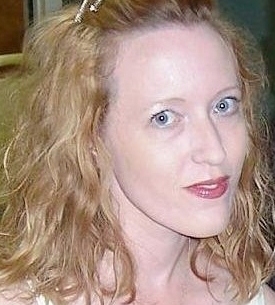
Michele Whitney

Mary Akers: Thanks for sharing your wonderful essay “The Shrink Who Killed Gazoo” with us. I love the way you use humor to tell this story. We all take ourselves too seriously, don’t we? Is humor a regular part of your writing routine? Do you laugh when you write it? (I ask, because I’ve written a few humorous pieces and always felt cranky and exhausted afterward. Being funny is hard work!)

Michele Whitney: Thank YOU for seeing the value in my piece. It is truly an honor to be published in r.kv.r.y.

Humor and laughter have always been a part of my life. My laugh is a bit of a national treasure. It’s one of those loud laughs where you either love it because its contagious, or you hate it because, well, you’re just an unhappy person. Humor was something that my mom instilled in me growing up; finding the humor in things when life isn’t so humorous. I also learned how to tell a funny story from my mom. There are so many stories that she has about growing up, or even about her courtship with my dad that still crack me up even after I hear the same stories over and over. I currently live with my mom, so I have exposure to these funny stories everyday. I’m thinking of compiling a book of these stories one day. The only “downside” to humor (I realize that’s kind of an oxymoron) is that too much humor can keep us in denial about our issues. There has to be a balance, or an “integration” of humor and laughter with the sadness and tears as well.

I would say that my traditional writing style is not predominately humorous. Humor is definitely integrated into my writing, it’s just not as obvious. This essay was a bit different from my traditional writing style because there was sharp, sarcastic, witty humor throughout the entire piece, whereas normally I am more heartfelt and gentle. I laughed as I was writing this piece. Only because the way I told it is the way it exactly happened. It was one of the few times that I took a relatively recent experience and wrote the whole thing within days after it happened. Every word and reaction made me laugh when it happened as well as when I was writing it. It was one of the “easiest” pieces I’ve ever written. The only real work was getting the background research done on “Gazoo.”


MA: One part of your essay in particular resonated with me: “I’m just the kind of person who thinks that everything is my fault. Perhaps it’s the conditioning of my conspiracy-theory-filled mother or the paranoia I formed from growing up in an alcoholic home. Or perhaps I’m just crazy. But if there is a conflict, I think it’s my fault. If there is tension, anger, sadness, or fear being expressed…it is my fault. If I experience loss…again, it’s my fault.”

I get that. I grew up in an alcoholic home, too, so what you wrote made a lot of sense to me. But it turns out a lot of people struggle with this idea of thinking everything comes back to them–that they must be at fault. John Rosemond, a parenting guru, calls it GAS. That stands for God Almighty Syndrome. (Why do we think we are in control of everything?? Do we think we are God?) And sometimes I have to remind myself when I feel guilty or anxious or responsible, that I’ve just got GAS. Anyway…my burning question after all of this is…have you killed Gazoo yet?

MW: Oh my goodness! I’ve got to use that…GAS! Now I know there is an acronym for it, so I feel much better. Ha! I think for me the issue was that growing up with an alcoholic father, I had little control over anything. And neither did my mom. Imagine me being maybe 12 years old one Christmas Eve, getting ready for Christmas Eve church service when there is a knock at the door from my dad’s work stating that he had been found face down drunk in the snow. Or imagine my heartbreak when I begged my dad over and over again on my high school graduation day to not drink, but for “some reason” he just had to have one beer. When you have little control over the outcome of things growing up; when there is so much uncertainty over many life events, I think you want desperately to never have that feeling again. So as an adult, you try to control everything. When I first started recovery from codependency, and one of the aspects of being codependent was “control,” I thought…”well I’m definitely not a controlling person!” But as I began to work the program, I realized that I very much wanted to be in control. I wanted to control the outcome of things, so that they would always be favorable. So that they would always turn out good.

As far as killing Gazoo. It’s funny, a friend asked me that same question literally the other day. I wish I could say he was completely dead. Perhaps he is on life support. It’s not easy to do away with something that has most likely been with you from the beginning of time. Remember, Gazoo is not necessarily evil. Sometimes he thinks he’s helping me because he thinks he’s protecting me. He represents the coping skills that may have worked in the past, but no longer serve me well as I become more evolved. The important thing is awareness that he is there, and to know the triggers that make him come out.
MA: I was reading over your blog (happy belated birthday!), and the idea of being “in-between” has stuck with me. Sometimes I wonder if we feel in-between because we spend so much time either dreaming about the future or remembering the past. What happens if we change the language and say I am “present”? That could also mean in-between, but maybe it has a better connotation? Words have power, don’t they? Both power for good, and the power to make us doubt ourselves. Another word I like to use to express the notion of in-between is “fallow.” In farming, you have to give a field a rest every once in a while. While it’s resting, good things are happening. Connections in the soil are being made, nitrogen is building up…good things. There is a lot of potential in a fallow field. So maybe being “fallow” is another way to think of this. Your thoughts?

MW: Thanks so much for stopping by my blog! And thanks for the birthday wishes. Wow, I love the concept of “fallow.” The reason I love that concept is that you definitely know that something good is going on in that “rest” season. But I’m assuming that in farming, “fallow” has already been proven to be a time of “good things.” There is no faith required, it just kind of happens the way its supposed to. This time of my life is filled with so much uncertainty (which I talked about before) and I can’t stand uncertainty! Some would say I have a huge lack of faith during this time, which is most likely true. What I struggle with and really struggled with prior to recovery is that I sometimes believe that nothing good is going on when I’m in this season of “fallow.” That there is no purpose in the in-between period, and that I’m just kind of floating around with no reason for being. My issue is that I’m in-between with so many things right now, including career, school, and love. The challenge for me is being present for everything in the here and now…practicing gratitude and having faith that things may not work out the way I want or expect them to, but they will work out…and they will work out good. Some people call it acceptance…that last stage of the grieving process. I used to think of acceptance as giving up. But now I’m realizing that acceptance is just a way of being present for “what is,” so that we can be open to “what will be.”
MA: Did you read much as a child? Who were (and are) some of your favorite writers?

MW: As a child, I liked to read, I wish I could say that I loved to read then. My “love” for reading really didn’t take off until I was in high school. I had a really cute English teacher, so it was fun going to class just to look at him. 🙂 And then all of a sudden I was reading. One of the assignments we had in the cute teacher’s class was to read  Richard Wright’s Native Son. It was one of the first books I really remember enjoying from start to finish. There was love, sex, murder, all told from an intriguing African American perspective and set on the South side of Chicago (where I’m from). As an adult, I acquired an unbelievable collection of books both real books and on my Kindle! I have diverse interests when it comes to writing, including mystery, romance, and self-development. Some of my favorite writers are Sidney Sheldon, Maya Angelou, Danielle Steele, Melody Beattie, and Stephanie Meyer (yes I’m a ‘Twi-junkie’).


MA: And finally, what does “recovery” mean to you?

MW: Recovery means “connection” to me. It means to restore our connection with the Divine. It means that we realize that we were never really separate from the Divine in the first place (however we choose to define the Divine for ourselves). It means being in constant connection with our “inner child”…the person we were before the “world” and its dysfunction got a hold of us. And finally, it means that we realize that all of the above is an imperfect process and that each day is a new day to begin again.

Introducing Dariusz Klimczak

We are thrilled to announce that Dariusz Klimczak will illustrate our upcoming October issue, which has, as its theme, MEN.

Dariusz’s /images are strong but fanciful, thought-provoking, but playful, and I can’t wait to see how they will interact with the fine written work we have chosen for this issue. Here are few /images to whet your appetite for the issue:

Dariusz was born in 1967 in Sieradz, Poland and graduated from Art School in Zduńska Wola. He eventually settled with his family in a village near Łeba, Poland where he now works.

Photography has been a major part of his life for the last 25 years, but it’s recently become his true passion. He has exhibited his works in the cities of Pabianice, Słupsk, and Ostrołęka. Dariusz prefers square frames & black and white pictures but doesn’t shun colours. In his photomanipulative works he seeks to evoke a sense of mood, humor, and universal symbols that will startle the viewer, make him think, or even laugh out loud.

You can learn more about Dariusz and view his wonderful photographs here. (If you don’t read Polish, there’s a link below the menu that allows you to select for an English translation.)

I’m so excited about this upcoming issue!

Interview with Justin Kingery

Justin Kingery

Joan Hanna: We were so happy to have your essay “The Deer Cabin” in our July/Asia issue. The narrator in this story seems caught between two worlds. Can you discuss how this clash of cultures affected your story?

Justin Kingery: The clash of cultures, along with its affect on me, is the story. Without that psychological stress my alternative perspective dissolves entirely. I think the ability to feel comfort and a sense of home is a very human emotion or state of existence. It’s also a dangerous one, as we have no real backup plan for loss, in most cases. It almost always takes us by surprise and knocks us on our backs.

Reverse culture shock, as best as I can describe it, is like waking abruptly from a very surreal dream, maybe a dream in which you could envision yourself living happily for the rest of your life. Upon waking, upon returning, things are blurred, perspectives have changed, colors seem slightly different, and there’s an extreme sense that something very special has been completely lost. It’s something that cannot ever be retrieved — a place and time in which you could have been content (at least you believe) for all of time. Gone. Traded, in a sense. And for what? In my case, it was so I could go back to the farm. To rusty fences and filthy cattle. After growing somewhat accustomed to life in a city of 16 million people, that’s quite the shock to the system. It’s at that point one begins to think very heavily about the value of his or her own life. The brevity becomes real. The cruelty of time is understood. I remember I couldn’t stop thinking to myself that I would never again see the things I saw there, and even if I would return, they wouldn’t be the same. That really upset me. But also at this point I was forced to make a decision: either I would succumb to this feeling and be sad for a long period of time or I would cherish my memories and work toward finding that happiness in all my surroundings. At the end of my story, I believe I was in transition from the former choice to the latter. It may have taken a while to realize it, but familiarity can be extremely comforting, especially in times of loss.

 
JH: Can you talk a little about this idea of old friends and the simplicity of common events shared over time and how it affects friendships when one of the group decides to move on?

JK: Old friends are, I think, some of the most valuable things in life. While I’m sure it’s different for various types of people, I find that I’m happiest in the company of shared experience. In my late history as a doctoral student, I studied narrative and personal experience, the ways our worldviews are shaped by the day-to-day events in our lives, large and small, significant and ordinary. To share a partial history with another person is to share a life, to co-exist and interpret meaning together. And it’s through these shared experiences that we’re able to see pieces of ourselves in others. It’s how we learn to empathize and process more clearly our human emotions.
As far as friendship is concerned, when a person leaves a close group of friends then returns some time later, as I did, there’s a gap. It’s a gap filled with experiences that were not shared, and therefore must be communicated. And communicating clearly is difficult. In my experience, how could I make my friends clearly understand the emotions I felt in China—emotions that I didn’t fully understand myself? I did my best, and maybe I only communicated a small fraction of what it was I actually experienced, but it was all I could do with the language and shared experience we all shared. Old friends and acquaintances often speak of picking right up where they left off after prolonged periods of time apart. This is the case because, at least I believe, of that experiential gap; picking up at the last point of contact is the easiest to do because that’s the point of the last shared experience. The gap and all that happened therein might be communicated, but it’s the shared experience that is easiest to connect with and understand. It’s the time we share together that makes the most sense to us and holds the most meaning.

 
JH: I love how the narrator finally settles back into the rhythm of his unchanged life before China. But I wonder how the experience will change after the initial homecoming. Do you think lifetime friendships can withstand this type of change?

JK: I believe very few things in life, and perhaps nothing, can last unchanged—friendships, love, memories, etc. Time affects it all, though the changes are often slow and difficult to see. My old friends from the story are still my friends today, but time and our individual experiences have continually redefined the boundaries of our friendships. We are not the same people we were in grade school or at the time of my return from China, and, therefore, we see one another differently now. Garret, one of my best friends from the story, was only 18 when I returned—still such a child in so many ways; last week, I sat at the hospital with him (he’s 24 now) as he held his newborn son for the first time. Time changes people, molds them. Garret is simply not the same person I wrote about in my story. And that’s the tragic beauty of this genre, nonfiction. It allows us to paint these portraits of one another, these memories, at very specific points in time. But just like a portrait on a canvas or a picture taken with a camera, they’re merely reflections of a single moment in an eternity of moments. We, along with our perspectives, change continuously, and there’s nothing to do but look back, document, and try to better understand whatever it is that makes us who we are. This understanding of identity, I believe, allows us to better understand each other, relate more closely in our differences and similarities and our struggles, and, ultimately, makes us more tolerant, loving people.

 
JH: Thank you again for sharing your work with r.kv.r.y. and for taking the time to talk a little bit about your process. I just have one final question, what does recovery mean to you?

JK: You’re so welcome. I’m honored to have my work shared through r.kv.r.y.

Recovery signifies to me a return to normalcy from some psychological state of unrest. And loss is always the culprit, isn’t it? —Loss of health, loss of a loved one, loss of trust, of interest, or of a dream. Unfortunately we lose all sorts of things. To recover is to find a way to reconnect with the world, to come to an agreement with fate or God or simply the unfairness of it all, and to keep on living in an altered state. And we’re constantly, every day of our lives, in an altered state; we are always in a state of recovery. Being the way we are, our greatest losses are commonly magnified because we take for granted the things we love most. We view them as inseparable from ourselves, which, after loss, leaves us feeling so much less. And sadly, it seems we’re always losing important things. Recovery then, in my own understanding, is everything that comes after. It is the process of living a human life.

Interview with Gary Dop

Gary Dop

Joan Hanna: We were so happy to have your poem “The Uncropped Photograph— Nick Ut’s Vietnam, June 8, 1972” as part of our July/Asia issue. I love that this poem narrates the story for the reader. Can you share your inspiration for this poem?

Gary Dop: When I came across Nick Ut’s iconic Vietnam War photograph a while back, I felt compelled to find more information about the photo. I’d seen the photograph several times, but in this new search I turned up a wealth of information, and I came across several versions of the picture, including one that appeared to be the full, un-cropped photograph. This “other” version felt important. I felt like I was seeing more of something, and this, for me, is the ground on which poetry is born. Poetry springs up when we see what we could not see in our normal, hypnotized existence. I found myself wondering what else mattered in the photo, and there was so much happening in it that begged to be uncovered.

JH: You have so intently filled in the details of this image for your audience. Why are you drawn to this style of poetry? What other types of poetry are you fascinated with?

GD: I’ve long been drawn to ekphrastic poems. My first and greatest encounter with ekphrasis was William Carlos Williams “Landscape with the Fall of Icarus”, a poem that still moves me with its simplicity.  The ekphrastic poem is fascinating in the way it succeeds only when it serves two masters—the newly created poem and the old work, which in WCW case is Bruegel’s painting. Most ekphrastic poems, mine included, end up unable to reach the height of the original work, which is fine, but the great ones, like Williams’ often exceed the original.

I don’t write a lot of ekphrastic poetry. I tend to write original narrative or persona poems, but I’m fascinated by about anything—except language poetry, which just confuses me and leaves me feeling lost (I know it’s likely some sort of genetic inferiority on my part). I want a poem that helps me open my eyes, helps keep me awake, and helps me stave off the waking sleep that flesh is heir to.

JH: Your final two stanzas are so chilling in their simplicity. Why did you choose these /images as the ending of the poem?

GD: For me, the poem had to come to the little boy. Every time I look, really look, at the photograph, I’m drawn to him. There’s so much more going on in the photograph—the intensity of the faces, the background, the naked young girl, the seemingly calm soldiers—but the boy is the only one of the children looking back, he’s the closest to the town, and everything about his movement seems hesitant. And behind him, behind the cloud, members of the childrens’ families have died. The photograph has so much movement, and it’s all away from Trang Bang. It’s a photograph consumed with place, even though place is disrupted so much by the simple “Vietnam” tag as we try to look at the picture today.

I like the way the end of the poem speaks of the boy’s gaze not being taken by time, as though all the others, those who look in the direction of the camera, including Phan Thi Kim Phuc, have been captured and revisited again and again by several generations now. The boy is alone, his gaze safe in the past.

JH: Please share links to your website, publications and book links with our readers.

GD: You can link to more of my work at www.garydop.com

JH: Thank you again for sharing your fine poem with our readers. Just one final question: what does recovery mean to you?

GD: The most formative years of my adolescence were spent in West Germany in the 1980s, soaking in a culture consumed with recovering from WWII and later the Cold War. Somewhere in my experiences in Bavaria, I came to understand life as nothing more than change, growth, and recovery–perhaps it was the day I realized the kind, old German men and women in our neighborhood would all have been in the prime of their lives during Hitler’s tyranny or perhaps it was the night I flipped the channel to see Berlin wall being demolished. Rilke, the great German-language poet begins one of his sonnets with the phrase that loosely translates as “Crave Change.” The reason we must crave changing is because we cannot remain as we were, scarred by our pasts—we must move forward. We are perpetually recovering.

Featuring Elizabeth Glixman

goldfish


Elizabeth Glixman’s lovely poems “Summer Kitchen” and “Fishes and Their Fathers” are featured in our current issue. She is a talented and well-published poet with a number of chapbooks out and one forthcoming. Here are the links:

In November 2012, Finishing Line Press will publish her latest chapbook, I Am the Flame (available for pre-order), about her female ancestors.

Her other chapbooks are:

A White Girl Lynching

Cowboy Writes a Letter and Other Love Poems

The Wonder of It All

And you can read more about her poetry, painting, fiction, and non-fiction at her blog here.


Interview with Lucine Kasbarian

OLYMPUS DIGITAL CAMERA

Joan Hanna: We were so happy to have “Elixir in Exile” for our July/Asia issue. This mysterious elixir created such a palatable backdrop for your story. Can you share more about your fascination for the elixir and how it held a connection to your childhood?

Lucine Kasbarian: Thank you for the opportunity to share an authentic tale pertaining to Armenia — a region of the celebrated Silk Road. Growing up in New Jersey, I witnessed my father’s thrilling storytelling – at family gatherings, dinner parties, and especially when relaying bedtime stories to me. He came from a family of storytellers and would regale me with tales about super-humans, talking animals and tevs (spirits) from our Armenian folklore. As he recalled what he knew about Iskiri Hayat – the mysterious elixir — a dreamy look would come over him. When I inhaled the fragrance of the elixir myself, it further stirred my imagination. The sensation took me to the far reaches of the earth. Even the elixir’s name had a faraway, magical sound. It represented unknown enchantments that can come from a place beyond one’s grasp.


JH:
Can you talk about the Armenian Genocide that you referred to in your story?

LK: The Armenian people — whose nation was the first to adopt Christianity as its state religion in 301 AD—were native to what is present-day Turkey for more than 3,000 years. However, they became an occupied nation following Turkic invasions in the 11th century. Although indigenous, as Christians Armenians were considered second-class citizens by their oppressors, and their human rights steadily declined and culminated in outright massacre by Turkey beginning in the 1800s. Their pleas for equal rights and even autonomy were met with a premeditated, state-sponsored genocidal plan which sought to eliminate the Ottoman Turkish Empire of non-Turks, including not only Armenians but Christian Assyrians and Greeks. The result was a combination of torture and massacre for adult men; torture, rape and abduction into harems, and forced conversions for select women and children; and torture, murder and deportations — also known as death marches — for the remaining Armenians. Although more than 1 ½ million Armenians, ¾ million Assyrians/Chaldeans and 1 million Greeks perished in the ordeals, today’s Turkish regime does not acknowledge the Genocide. And, there has yet to be restitution for these crimes against humanity.


JH: There are so many stories like this of lost family histories and broken branches of family trees. How do you think this heritage affects you as a writer?

LK: The adage “truth is stranger than fiction,” and the literary command to “write what you know,” apply here. In my lifetime alone, so many disastrous acts have gone unreported and remain unknown, which is why I prefer to write nonfiction. Moreover, those few writers who do report about the Armenian reality often get it wrong, intentionally or unintentionally.

I feel an obligation to tell our stories not only for posterity and truth but as a way to pay homage to peoples who suffered and sacrificed for the right to speak their language, honor their customs and practice their faith. We are nearing the 100th anniversary of this Genocide, and yet survivors and their descendants, like me, still live with sorrow and exile every day. How does one express the grief that one faces when contemplating the loss of a majestic and ancient culture? Today we still see such destruction happening in many countries. And around us are major world powers and stenographers posing as journalists who either tell us to forgive and forget, or themselves deny the truth to appease criminal regimes for the sake of political expediency. This is unacceptable. The world must press for restorative justice for all exploited, genocided and disenfranchised peoples, not just for peoples who as tokens may serve the interests of the powerful.

JH: Please share with our readers any links to your website, other publications, or published books.

LK: Gladly. Here’s a link to my website, and my article archive

My books can be found here:

The Greedy Sparrow

Armenia: A Rugged Land, an Enduring People

The Armenian Americans (Consulting Editor)


JH: Again, we would like to thank you for sharing your story “Elixir in Exile” with r.kv.r.y. I have one final question: what does recovery mean to you?

LK: “Elixir in Exile” is about a quest to recover a remnant of our lost history and culture through an ancient folk remedy that represents “home.” The essay also conveys the hope of a greater possibility: that while the lost dead may not be recovered, homelands can.

Can one ever make a full recovery? Perhaps from injury in the physical sense, but in the emotional sense, after a devastating experience, survivors are “in recovery” for the rest of their lives. In fact, future generations of survivors’ descendants continue to feel the after-effects of such devastation because the perpetrators and their heirs have not been held to account. As the saying goes, “That which resists, persists.”

Interview with Jen Knox

Jen Knox

Joan Hanna: We were so excited to have “The Warning” included in our July/Asia issue. Can you share a little about the inspiration for this story?

Jen Knox: My inspiration was experience. I was walking one morning when a woman pulled over to tell me to be careful outside this early, and that she’d seen a man. That was all she said. She drove off, and I was baffled. At first I thought, if you were really worried about me, lady, offer me a ride or something! But then, as I walked, I began to look behind me and after a little while I was hyper-aware. My fight or flight response had kicked in, and yet I had no real danger in view. I thought the dynamic was intriguing and I wanted to investigate it further.

JH: This story deals, on so many levels, about how we respond to fear or even a perceived threat. Can you expand a little on this idea?

JK: It was important to me to make this threat empty and vague. It was a simple warning, not wholly logical or detailed, from a stranger that sets this fear response in motion for this character. I really wanted to capture that to show how the fear cycle begins and how logic will often fall away when it peaks.

JH: I like that you so subtly let your audience understand that the narrator was a rape victim. Can you tell us why you chose this perspective?

JK: Readers need to relate to the character before they are able to feel empathy or much of anything for him or her. I wanted the character to come across as someone any reader can relate to on some level, the woman walking her dog early mornings before work; she might be a neighbor or a friend or just someone happening by; I wanted to show her in what would be a peaceful routine only for it to be shaken up by a stranger’s words. Trauma is a funny thing in that it seems to be below the surface, waiting to reappear until it is reconciled, and this jostling of our peaceful lives, this opening up of the past emotions, can come without warning. I wanted to capture that if only to show that as frightening as it may be, it is temporary and part of the healing.

book cover

JH: Please share links to your website, publications, or book links with our readers.

JK: My website is http://www.jenknox.com

I have a collection of short stories out entitled To Begin Again, and this is available at All Things That Matter PressBarnes & Noble, Amazon, and Indie Bookstores nationwide. I am also a contributor to the Short Story America collection, which is available on Amazon. My story, “Disengaged” can be purchased here: SSA Story Store.

JH: Thank you so much for sharing your work with r.kv.r.y and for taking the time to do the interview. Just one final question: what does recovery mean to you?

JK: We have to know we are not alone in our suffering. Everyone deals with trauma from some kind of physical or emotional loss; yet, it can often feel like we’re alone. By sharing our stories, we heal. It’s so crucial to remember that. Remembering, empathizing and enduring equal recovery.

“Summer Kitchen” by Elizabeth Glixman

Glixman-Summer Kitchen1

The children threw us both away,
chicken feed to the birds when you passed.
The house for sale with the garlic press,
the copper pots I made clean sold for ten cents each.
The beige crocheted lace that outlined the front door window
your boots caked with field mud scenes.
our wedding pictures, the picture of Hunter the dog,
gone to a bidder visiting estate sales.

Nothing feels like earth in my new home.
I pull old apple tree silhouettes in memory
through the kitchen windows
frenzied black lines in the dawn without a crunch
walking dreams that take me to the
beginning when we were warm and full.

I am a chicken without fat in this grassless yard,
a bent woman tied straight in a chair
watching the nurses go by delivering
dried cod fillet. potatoes and applesauce
with a dab of fake whipped cream.
They promise me  there will be more minutes
to recall the stained potholders on the hooks,
and the red wine stains on the curtains in the summer kitchen
where we got drunk when you were ill,
where the peonies you planted bloomed outside the window.
It all drifts in my head, rivers before this frost.
No children visit me.
You and I grew in that quiet home,
ate curry in the yard, met the spitting Llamas
our neighbors bought. Loved well.


Elizabeth Glixman is a poet, writer and artist. Her fiction and poetry have appeared online and in print in many publications including Wicked Alice, In Posse Review, 3 A.M. Magazine, Tough Times Companion, a publication of The Virginia Foundation for the Humanities, Her Circle Ezine, Frigg, Meow Poetry, Journey anthology and Velvet Avalanche, an anthology of erotic poetry. Her author interviews, articles, book reviews, and creative non-fiction pieces have appeared in The Pedestal Magazine, Whole Life Times, Spirit of Change, Hadassah Magazine, Eclectica and the anthologies Chocolate for A Woman’s Soul II and Cup of Comfort For Women. She is the author of four poetry chapbooks: A White Girl Lynching (Pudding House Publications, 2008), Cowboy Writes a Letter & Other Love Poems (Pudding House Publications, 2010), and The Wonder of It All (Alternating Current, 2011). I Am the Flame (Finishing Line Press) is forthcoming July 2012.


“The Uneasy Voice of the Grass: Cuwignaka Duta Tells Her Dream” by Lisa Ress

Ress-Uneasy Voice1

Dakota Territory, 1864

In my dream I am walking there
where the north fork of the Platte
and the Laramie meet, where the grass

grew thickest, tender and green.
as the dark heart shapes of cottonwood leaves,
as lacewings, delicate dragonfly needles,

fat hoppers, the killdeer’s sweet home.
I know red as the buffalo’s flesh,
woodpeckers’ crests flashing bright

tied in our warriors’ black hair, I know red
as blood, the color of my skin,
and my name: Red Dress.

And white I once knew as ice on the buffalo grass,
the winter cottonwoods’ ermine bones,
knew it sometimes as hunger.

Now I know white as treaties, as
bible tracts, bills of sale, the mission
schoolbook’ s icy pages,

In my dream I am struggling to walk
across endless white ground,
forcing my legs between stalks of ripped

parchment, the wind howling
around me, clawing to rip
sheets from the ground. This whiteness

has spread, it eats at the land. I look back
at my footsteps. “Tate,” I say to the wind,
I am here for a reason.

–After Susan Power’s The Grass Dancer (G.P. Putnam & Sons, 1994)

Lisa Ress first came to Appalachia (Blacksburg, Virginia) in the early 1960s and fell in love with the region, returned to go “back to the land” in Floyd County in the ‘70s and ‘80s and finally was able to retire to a co-housing community in Blacksburg after teaching college and university English and writing courses for a number of years. Over 100 poems have been published in a variety of magazines. Her first book, Flight Patterns, won the 1982 Associated Writing Program prize and was published by UVa Press. She was also awarded an NEA grant. Her second book, Object Relations, has just been published by Wilder Publications and is available at Banres & Noble and Amazon.