“The Uncropped Photograph— Nick Ut’s Vietnam, June 8, 1972” by Gary Dop

Dop-Uncropped Photograph1

Four children with little, naked Kim Phuc
run down Route 1 by Trang Bang. Seven soldiers

in uniform behind little, naked Kim Phuc
lift their boots away from Trang Bang.  One

often-cropped photographer, four steps beside little,
naked Kim Phuc, loads his Canon to shoot Trang Bang.

The children burn and run.  The soldiers walk,
but one, far off, a miniature ghost, talks to the cloud

and refuses to follow as the children dance away
from their pluming rose garden.  The helmets pull

the men toward the space between the fire
and the naked nine-year-old flying, her arms wings

of the fallen.  Phan Thi Kim Phuc’s family
are behind the firewall, among the dead.  Some

of the soldiers blur like the clouds
they called down.  One, who can’t consider the ground

of boiling blood, faces the smoke of freedom.  We all
look away.  Only the youngest child, a little boy

in a white cotton shirt, orphan of falling fires, looks back,
his eyes blistered away from time, toward Trang Bang.


Gary Dop—a poet, scriptwriter, essayist, and actor—lives with his wife and three daughters in Minneapolis, where he teaches creative writing at North Central University. He received a Special Mention in the 2011 Pushcart Prize Anthology, his essays have aired on public radio’s All Things Considered, and his poems have appeared in Prairie Schooner, Poetry Northwest, Agni, New Letters, Rattle, and North American Review, among others.

Read our interview with Gary here.

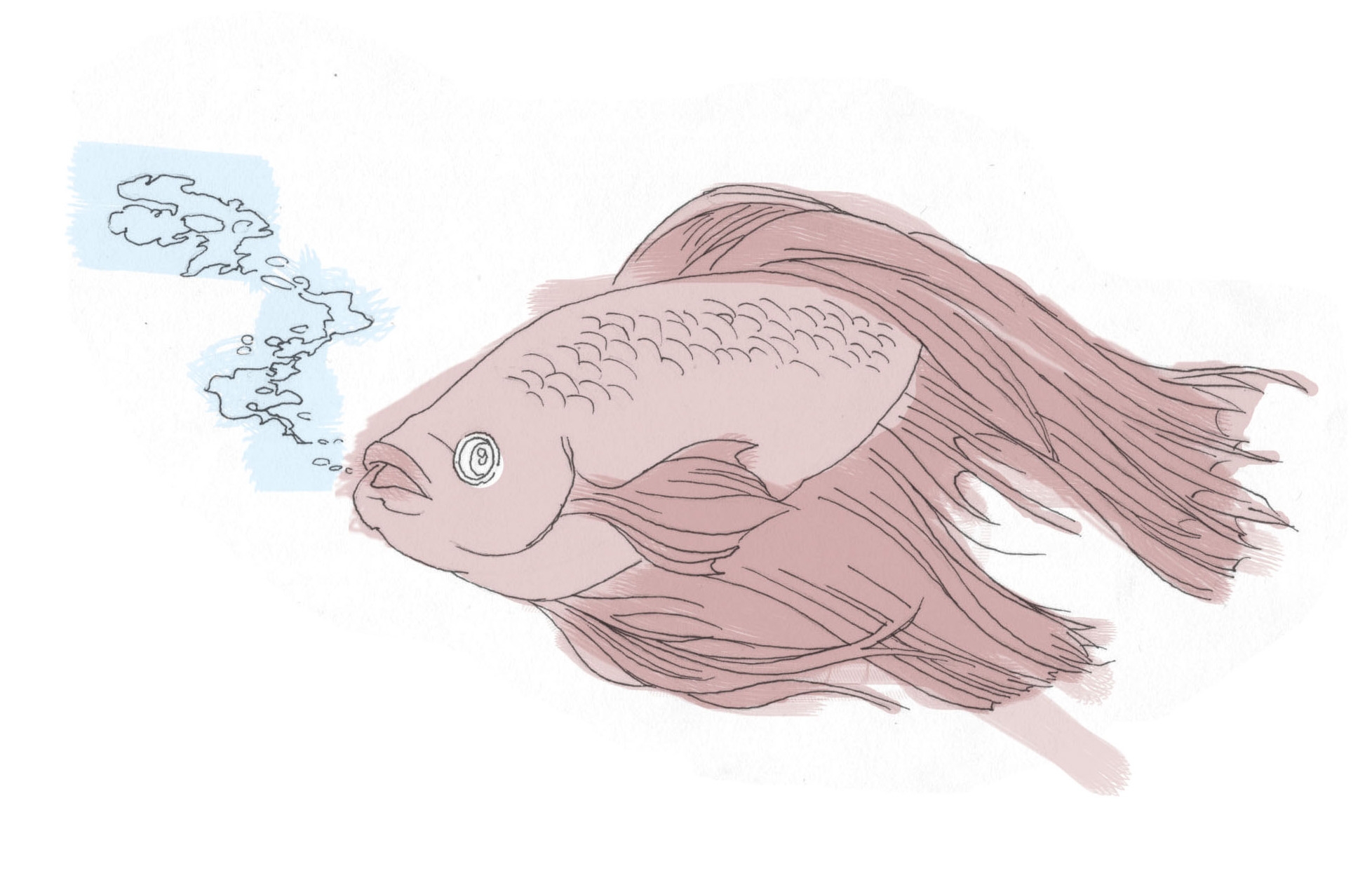
“Fishes and Their Fathers” by Elizabeth Glixman

Glixman-Fishes1
When the fish bowl needs scrubbing from your small handprints
I take a damp cloth dipped in castile soap
contemplatively wash around the outer curve of the bowl
like my hand followed the curve of my belly
when you were inside me feet kicking.
You need me to tell you its okay
that your father is not here as the
snow falls like fastballs thrown by a famous pitcher.
When your father is not there, when the pond is covered with ice

You want me to tell you he will return soon.
You ask where is the fish’s (the one in the bowl) father.
I tell you he is all grown up and does not need a father.
You ask about the other fish that are not grownup
and their fathers
under the ice in the pond.
I tell you the fishes and their fathers are underwater
telling stories to each other.
They will come to the surface in the spring after the thaw.
You say watching me wash the bowl
I want daddy to come home
So small a mumble I can hardly hear.
I take the cloth follow the roundness of your face
with my hand smelling of lavender
wanting to protect you from ice

I am your first teacher
I cannot teach you the way gases change from solids to liquids
and back the cycle of change
(you have conquered your shoelaces this week)
or how people never come home
Even when it is spring and the ice has thawed.


Elizabeth Glixman is a poet, writer and artist. Her fiction and poetry have appeared online and in print in many publications including Wicked Alice, In Posse Review, 3 A.M. Magazine, Tough Times Companion, a publication of The Virginia Foundation for the Humanities, Her Circle Ezine, Frigg, Meow Poetry, Journey anthology and Velvet Avalanche, an anthology of erotic poetry. Her author interviews, articles, book reviews, and creative non-fiction pieces have appeared in The Pedestal Magazine, Whole Life Times, Spirit of Change, Hadassah Magazine, Eclectica and the anthologies Chocolate for A Woman’s Soul II and Cup of Comfort For Women. She is the author of four poetry chapbooks: A White Girl Lynching (Pudding House Publications, 2008), Cowboy Writes a Letter & Other Love Poems (Pudding House Publications, 2010), and The Wonder of It All (Alternating Current, 2011). I Am the Flame (Finishing Line Press) is forthcoming July 2012.

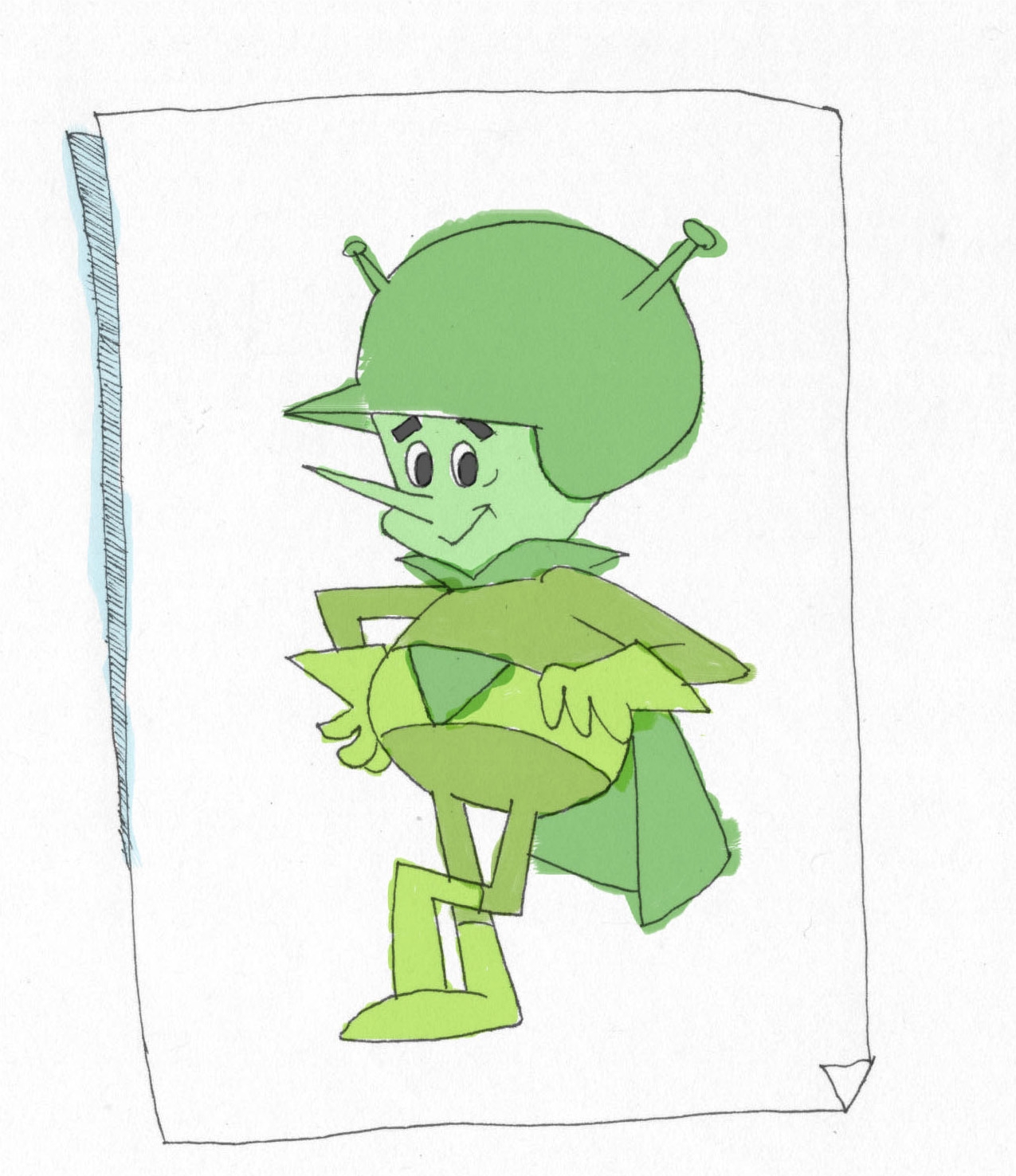
“The Shrink Who Killed Gazoo” by Michele Whitney

Whitney-Shrink Who Killed Gazoo1

“It’s all my fault.” When I say this to my  therapist, she frequently replies, “Seriously, Michele, you are not the center of the universe. You don’t have that much power.”

I’ve heard that choosing a therapist, counselor, or more affectionately known as a shrink is kind of like choosing a mate. Luckily I have been more successful in the shrink department than the mate department, but that’s a whole other story. So yes, I admit to having psychologically courted a few counselors until I finally found The One.

There is no shame in this.

Or maybe there is.

But at least I am working through my issues.

The surprising thing is that after years of going back and forth with different counselors, I found my “one” in an older white lady who had years of experience, but in my mind would never be able to help someone like me. When I say someone like me, I’m not saying I’m an alien or anything, but our culture and background on the surface is different. Or so I assumed. I am black, she is white. I am young, she is old…or older. I soon found out that I was wrong.

Once I was in a session where I was crying over a man who, for whatever reason, did not want me, but who I knew was perfect for me. Why oh why? What is wrong with me? I don’t understand why he won’t give me a chance.

My therapist simply told me, “He’s fucked up.”

“What?”

“It’s not about you; the guy is just fucked up.”

Is my therapist supposed to use the F word?

It didn’t matter because that was the recipe I needed to get me out of my rut. The main course was “the truth” for a gentle jolt out of my pity party. Add a side order of compassion to nudge me back into reality. And finally a shot of laughter to wash it all down.

Moving on to a different therapy session and me sulking over the same guy. Perhaps he really wasn’t attracted to me; maybe he just slept with me because he felt sorry for me.

“Did his penis work?”

I laughed. “Yes.”

“Then I would say he was very much attracted to you. The penis doesn’t work if there’s no attraction.”

Oh yeah.

~

A couple of days ago, I was in a therapy session where I was blaming everything on myself. I’m just the kind of person who thinks that everything is my fault. Perhaps it’s the conditioning of my conspiracy-theory-filled mother or the paranoia I formed from growing up in an alcoholic home. Or perhaps I’m just crazy. But if there is a conflict, I think it’s my fault. If there is tension, anger, sadness, or fear being expressed…it is my fault. If I experience loss…again, it’s my fault. An otherwise sane person would not think this way.  But I have associated myself with every bad thing that occurs. And it gets really extreme sometimes.

I could probably find a way to blame myself for the war in Iraq.

I never said it made any sense. It’s just what I do. I think it provides me with a level of comfort when things happen that I cannot explain.

My therapist told me that this “all my fault” thinking is called “magical thinking.” I was intrigued. I like to think of myself as a pretty magical person, so I thought at first it was a compliment.

But then she explained to me that I was thinking like a child…

I was a bit offended. But then I thought, I kind of feel like a child when I think this way. Children can be pretty self-centered.

You are not that powerful.

My therapist went on to ask, “Why is it that you believe you are at fault for so much?  Don’t you know the truth?”

I didn’t have a concrete answer. I sat there for a few minutes. Dammit, I was going to explain to this woman why everything is my fault! What kind of analogy could I use? And then the craziest thing popped into my head. “Do you remember Gazoo?” I asked.

“Who?”

“Gazoo. Do you remember the cartoon The Flintstones? Well, there was this little character called Gazoo that used to fly around and sit on Fred’s shoulder.”

“I remember the Flintstones, but I don’t remember Gazoo.”

The character’s name was actually the Great Gazoo, and he came in the last season of The Flintstones. He was this little, cute, flying green guy from outer space that spent most of his time with Fred and Barney and constantly caused trouble. He wasn’t bad, just a bit of a pest, and when he tried to help, he would always end up causing more harm than good.

So I told my therapist that my thinking goes that way when I’m visited by what I call the Bad Gazoo (as opposed to the Great Gazoo). So this little green guy sits on my shoulder and fills my head with guilt, shame, and blame, even though I know the truth. He thinks he’s helping me, but he’s really not. Gazoo is the little bugger that causes me to “magically think.”

I was satisfied with this theoretical explanation. But my therapist was not.  She leaned forward and calmly said, “I think you need to murder Gazoo.”

When she said that, I had the best belly laugh. I laughed so loud that I’m sure it echoed through her waiting room. My soul was smiling.

My shrink had done it again.

And so, as I write this, my shrink and I are planning the capture and ultimate murder of Gazoo. Rest in peace.


Michele Whitney is a writer, blogger, and musician from Chicago. She is currently a PhD candidate for public service leadership at Capella University where she is working on a dissertation titled: The Human-Animal Bond: A Phenomenological Study of People’s Attachment to Companion Animals. Her writing has been published in the Chicago Sun-Times, Diverse Voices Quarterly, Foliate Oak Literary Magazine, and other venues. Michele’s message of emotional healing, recovery, and connection can be found in her blog, Words of Compassion, Creativity, & Knowledge. Her free time is spent playing the flute, cooking, and practicing aromatherapy. She resides with her mom and her feline kid named Samson.

Read an interview with Michele here.

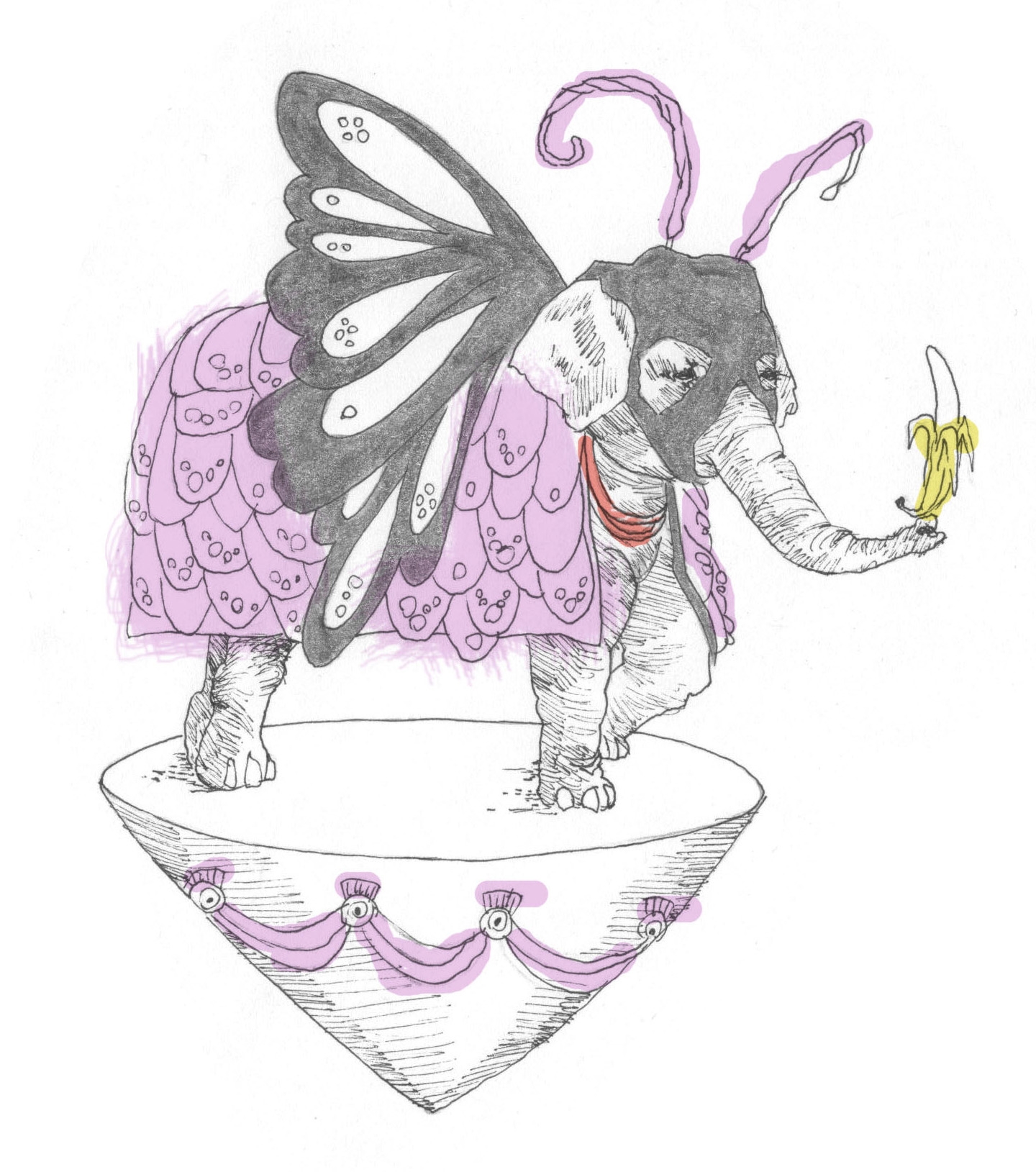
“Elephants and Banana Leaves” by Andrew Stancek

Stancek-Elephants1

The fire alarm shrills, pulls me awake. The clock radio blinks 2:37. Natasha moans in her sleep, but I’m too keyed up to sleep, dreaming of our new life.

“Natasha,” I shake her, “we have to get out. It might be real.” She turns away, buries her head. It’s the third consecutive night of ringing. Last night Mr. Jayaraman took ten minutes to turn it off, while the tenants of his five flats shivered in bathrobes and slippers on the sidewalk. At the end of the ruckus Mr. Jayaraman, wearing a nightshirt and a hat with a pom-pom at the end, waved us in, smiled and said, “Has the stormy weather set the whole sea in motion? No worries, my friends, electrical no doubt. I fix it.”

I shake Natasha again. She sits up, swats my arm. “Don’t touch me, Franti, don’t touch me again. You go outside, wait for your guru to turn the alarm off. I’ll stay and burn to a crisp in my bed.”

I pull at her blanket as the alarm goes silent. She burrows; I put my head on my pillow, sink my consciousness far from the chill of Toronto into the waves of the Indian Ocean.

When I wake up, she is sitting on the couch staring at a yawning suitcase half-filled with folded blouses, a lacy black bra and a red thong on top. She does not turn her head but speaks in a half-whisper. “I’m not going with you. I don’t belong with elephants and banana leaves.”

“Natasha, richer or poorer, from this day until death do us part.”

She slurps her coffee. “First Tamil proverbs from Mr. Jayaraman and now it’s vow recitations? OK, what about the dance at the wedding? Remember The Beach Boys? Remember “fun, fun, fun till daddy takes her T-bird away”? You’re not taking my T-bird away. You fly off, expand your mind in Sri Lanka, teach those kids English. Me, I’m staying. I’ll buy red stilettos today.” The suitcase crashes; her clothes spill out. She does not look back before she slams the door.

She still has not returned in the late afternoon. The glossy brochure on the kitchen counter is covered with rice flour. The music of Ramanathan keeps me centered as I recite lists of Tamil vocabulary. I wash potatoes, mix rice flour, chili powder, garlic paste and fry the potato bajji the way Mr. Jayaraman’s wife used to, as he weaves Tamil tales and stories of his wife and family in Colombo. I admit Natasha stormed out. “A family divided against itself will perish together,” he says, biting into the first bajji. “But sometimes it is good to taste loneliness. The husband that ran away has returned and is reconciled; therefore, she has adorned herself with jewels to excess. You must do what is right.  Teaching is noble. When you return, a good woman will rejoice to have you back.”

He leaves after eleven, after many cups of tea. Twelve days till we fly. I am drifting off with a dictionary and Tamil phrases in bed when Natasha stumbles in, smelling of beer and cigarettes. I don’t ask where she’s been. She does not speak. Through the open bathroom door I watch her spitting out pink toothpaste, its trickle down her chin. I long to touch her.

“I’ll sleep on the couch,” she says.

“Natasha, I can…”  Her look freezes other words. She pulls a packet of cigarillos out of her purse, lights one, blows smoke towards me. I cough.

There’ll be no screeching of fire alarms in the wee hours tonight, I want to say. Mr. Jayaraman told me he’d disconnected them. But in the thundering silence between us it does not seem important.

“Is it safe?” I had asked.

“To the timid the sky is full of demons. We all sleep better tonight.”  I straighten my sheet, turn to the wall. In the living room I hear coins spilling, a giggle, then a snore.

No sleep for me, I am sure, as I toss, alone. But I do dream after all of soaring above a Sri Lankan countryside, children and women singing, breaking twigs, feeding a bonfire.  I wake with a pounding head; I smell smoke, vomit.  “Natasha? Natasha?” Light switch flip does nothing. I run into the living room. The couch is empty. Did I dream her? I scurry from room to room, even open a closet, searching. I hear screams outside our apartment door, wailing. Sirens blare as I run outside. “Have you seen my wife?” I yell at Mr. Jayaraman on the sidewalk.

“She was carrying a suitcase, heading that way,” he points with his head. “Only one shoe on.” I look. The street is empty.

Mr. Jayaraman is at the airport to see me off. “If only I could fly, too,” he says, shivering in the air-conditioning. “You are the blessed one but I have my house to look after, the fire investigation. He who takes care of his property will not be robbed. Observe with young eyes, make note of everything. Teach them the language of Shakespeare and Milton, come back in a year, like seasonable rain.”

Neither of us mentions Natasha. When I ride on top of that elephant in Colombo, I expect she will streak by in her T-bird, hair shimmering in the wind.


Andrew Stancek was born in Bratislava and saw Russian tanks occupying his homeland. His dreams of circuses and ice cream, flying and lion-taming, miracle and romance have appeared recently in Tin House online, Flash Fiction Chronicles, The Linnet’s Wings, Connotation Press, THIS Literary Magazine, Thunderclap Magazine, Istanbul Literary Review and Pure Slush.

Read an interview with Andrew here.

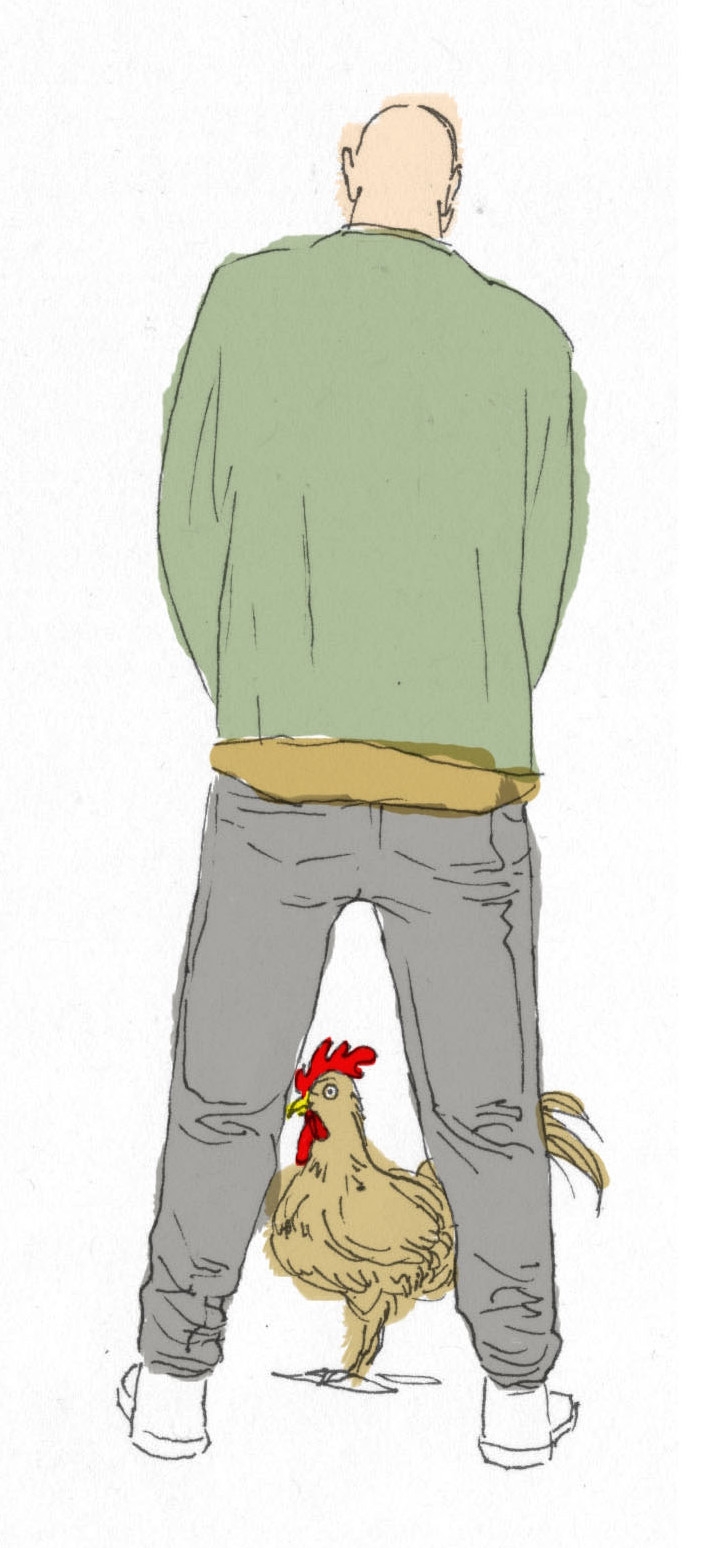
“The Year of the Rooster” by Clifford Garstang

Garstang-Year of the Rooster1

Bali is the perfect place for Oliver. It feels like the end of the road, the end of the world, where everything stops. No pressure, no pretense. Just the waves on the beach, constant, tempting. The bars in Kuta, art in Ubud, temples, music, beer, beautiful Australians, men and women.

He’s backpacking with a guy he’d met at the hostel in Bangkok, Barry, a sour kid from Brooklyn who couldn’t wait to get out of Thailand and now can’t wait to get out of Indonesia. He wants to leave, and Oliver wants to stay, maybe forever. So go ahead, Barry, go, have a nice life. Replacing Barry with a girl, or another guy, or both, could lead to a new world of possibilities for Oliver, arousing possibilities. But Barry backs off, says he isn’t serious about leaving, and, to show there’s no hard feelings, he’s got a special treat for Oliver.

Oliver is skeptical. In Bangkok, Barry’s idea of something special was a whorehouse. Not that Oliver didn’t thoroughly enjoy himself, but that was Bangkok. Another planet.

Barry leads him to a café. It looks like all the other cafés, and bottles of Anker beer arrive, along with a menu.

“A very special menu,” Barry says.

Special, indeed: blue meanie omelets, blue meanie soup (with carrots), blue meanies sautéed with onions and garlic.

They order the omelet, to share, and, when it comes, Oliver has to make a choice. This could be a colossal mistake. He’s heard about the effects, that mushrooms are like LSD, which somehow never came his way during college, and, although he’s curious, he’s just plain scared. He wants adventure, he wants experience, but it could kill you, right? Warp your mind?

The omelet is greasy and gritty, barely edible, but that’s hardly the point. When nothing happens, Oliver recalls the first time he smoked pot, how it had no effect. Barry is disappointed, too, and they go in search of a real meal.

As they walk down the sandy street, Barry jumps over the shadow of a palm tree. Oliver sees the same shadow, but suddenly it’s writhing like a snake, and Oliver is rooted where he stands. Barry laughs and jumps back over the shadow, kicking sand onto Oliver’s feet, and then he grabs Oliver, dragging him forward. When Oliver tries to pull free, they both tumble, laughing, into the sand.

As the mushrooms take hold, they return to their inn near the beach, where Oliver hopes to ride out the trip in safety. They sit on the porch, and he grips the railing, afraid he will fall or—and this seems a real possibility—drift into the endless sky. He’s thirsty, thirstier than he has ever been in his life. A beer materializes at his side, and then it is pouring into his mouth, dribbling down his chest.

A rooster struts through the courtyard. It picks and pecks, cocky. Peck. Cock. Prick. Cocky cock. The rooster looks at him and speaks, but he’s speaking Indonesian. Whatever he’s saying, it’s hilarious, and Oliver laughs. He can’t stop. Barry pulls his dick out and pisses on the rooster, which is even funnier. The rooster cackles and leaps away. Barry runs after him, spraying piss on himself, on the rooster, all over. Oliver is laughing so hard he spills his beer, and that makes him laugh more. He falls backward onto the porch. His head lands on the hard wood with a thud.

 ~

 Oliver opens his eyes. He remembers the rooster and he remembers hitting his head. He feels his head now and there is a bump. But he’s no longer at the inn. He’s on the beach. He’s wearing shorts, but he’s shirtless and barefoot. His skin burns. The sun is sinking, nearly gone.

He stands, dizzy. On the way to the inn he comes across a shop and asks for beer. His thirst is still epic. He reaches into his pocket, but his wallet is gone. He pats front and back, back and front. He runs back to the beach, anticipating the relief he will feel when he finds the wallet. But the entire beach looks like someone slept there, sand troughs and sand waves, and although he does find a spot that seems right, there is no wallet.

Did he have it when they went for the omelet? It was Barry’s treat, he knew he wouldn’t need money, so maybe it’s in the room? He runs now, with darkness deepening, and finds the inn.

The rooster still struts through the sand. Oliver jumps onto the porch. The door to their room is open, but Barry isn’t there. Barry’s backpack isn’t there, either. Oliver’s is there, though, open, disturbed. He pulls clothes from the pack, his guidebook, his journal, piling it all on the bed, until the pack is empty. His wallet is gone. The linen pouch with his passport is still there, but the travelers’ cheques are not. His camera. The tiny ruby he bargained for in Bangkok. The batik he bought in Jogjakarta. Gone.

He slumps on the porch, as close to tears as he’s been since childhood. If Barry appeared right now he might kill him. Oliver pounds his fist on the porch once—take that—and then again—take that—and again. The violence helps. He pounds the porch again. Better. He pounds the porch one more time and, when he looks up, sees that he’s being watched. In the glow of a lamp across the courtyard, two travelers, tall and blond, a man and a woman, lift bottles of beer in greeting. The man reaches into the bag by his side, pulls out another bottle, and holds it toward Oliver.

Oliver rises. The dizziness—whether from the mushrooms, or the fall, or the sun—is still with him. As he crosses the courtyard, the rooster eyes him warily and then, in a moment of clarity, runs for his life.


Clifford Garstang is the author of the novel in stories, What the Zhang Boys Know (Press 53, September 2012), and the prize-winning short story collection In an Uncharted Country (Press 53, 2009). His work has appeared in Bellevue Literary Review, Blackbird, Virginia Quarterly Review, Cream City Review, Tampa Review, The Los Angeles Review, and elsewhere, and has received Distinguished Mention in the Best American Series. He won the 2006 Confluence Fiction Prize and the 2007 GSU Review Fiction Prize. He has received fellowships from the Virginia Center for the Creative Arts and the Sewanee Writers’ Conference. In addition to degrees in law and public administration, he holds an MFA from Queens University of Charlotte and is the co-founder and editor of Prime Number Magazine.

Read an interview with Cliff here.


Introducing Vax Liu

Vax Liu

I am thrilled to announce that the illustrator for our July (Asia) issue is the lovely and talented Vax Liu!

I first discovered Vax’s work at a local student art show and was blown away by her eye for compostion and especially the power and strength of her line. She recently graduated with a Bachelors Degree in Communication Design from the University at Buffalo and she is definitely a rising star.

Vax read each and every piece going in to the July issue and designed a custom illustration for each one. What a thrill for our authors–the chance to see their literary vision interpreted in another medium.

Vax currently works as a freelancer in the fields of illustration, computer graphics, and web design.

Her website (where you can see more of her fine work) is http://cargocollective.com/vaxliu

I am so thrilled to be able to share her amazing work with our readers. Here’s a tiny preview–her cover design for our upcoming Asia issue:

Stay tuned for the July issue!

“The Warning” by Jen Knox

Jen Knox-The Warning1

I knew better than to acknowledge someone who would psst at me. But my dog, a mild mannered Australian Shepherd, pulled me toward the car so that he could sniff a torn plastic bag caught on something near the curb. The driver, a glossy lipped woman in a business suit, leaned toward me and said, “There’s a guy—” She scanned the sidewalk behind me and continued. “He’s been walking around here. Just be careful.”

“Um… okay,” I said.

As vague as this warning was, I noticed a twist in my stomach as the woman drove off. My dog had just finished peeing on the plastic and was now tugging me toward a large rock. I pulled him tight to shorten the leash and locked it, trying to ignore his pleading stare as I began to speed walk. We were a half mile from my apartment, nearer the neighboring complex that apparently housed suspicious-looking wanderers.

I couldn’t help but look back a few more times as I pulled my poor dog along like a puppet. I wondered at the motivation of the woman who’d pulled over. When I finally made it to Huebner, a reasonably busy street even at this hour, I looked back once more. I had positioned my apartment keys in my fist so that their jagged points stuck out between my  fingers. This would have the effect of brass knuckles, or better since they had sharp points, if I punched someone. I used to hold my keys like this. When I was attacked years ago, many people said it was the neighborhood I lived in. Here I was now, a near-suburbanite walking by a gated community on the north side of town, semi-old and semi-stable, and up early every morning; meanwhile, a vague warning was all it took to reintroduce the old guardedness.

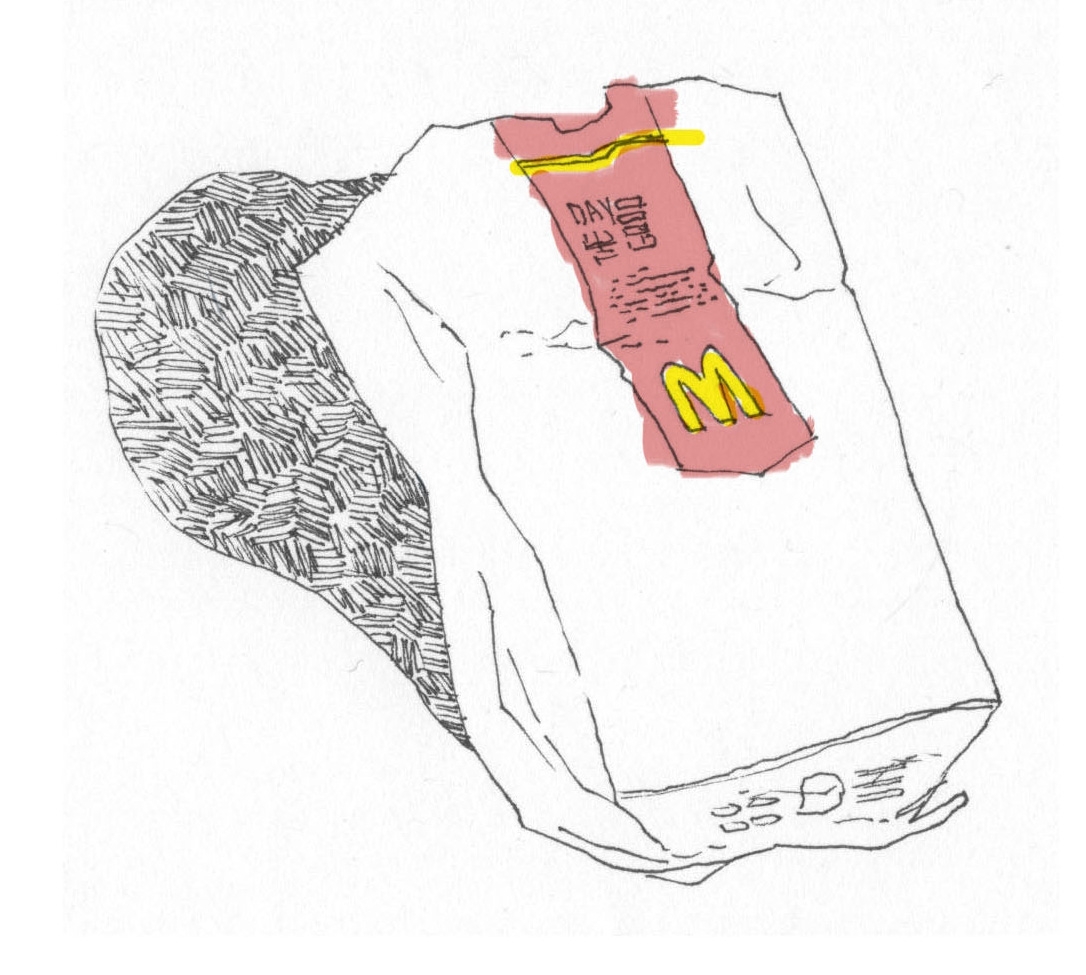
I heard something behind me and turned to find a young woman jogging. Her body was tilted forward as though her skinny frame had to counteract the morning breeze to remain upright. I moved over, allowed my dog to smell an empty McDonald’s bag. I could hear her jagged, heavy breath as she neared. A woman I’d met in a rape survivors group once told me that a jogger’s heavy breathing might invite sexual abusers because no matter how much ‘experts’ told us rape was about violence, it was also about sex. Strained breath makes anyone think of sex. She did sound like sex.

My dog gave the leash a hard tug, and I heard something breaking between his jaws. He’d found some sort of bone, which he knew to eat quickly before I could pry it from his mouth.

“Excuse me,” I said. The jogger wore short shorts, the type of thing she’d be chastised for if she were raped. “There’s some man walking around here. And he looks suspicious.” I sounded as vague and potentially crazy as the driver.

“Um,” the woman began.

“Just be careful.”

She nodded and thanked me, but her fine features hardened before she jogged off. Her tilted frame became smaller and smaller, until she disappeared around a corner. I had been wearing long pants when I was attacked, but it had also been after sundown. The first police officer to arrive asked what I was doing outside, alone. He spoke as though I were an accessory to the very crime that had been committed against me. He had assumed the same tone of the woman in the car: stern and disapproving.

I looked down at my hand and realized that the mail key faced the wrong way; a small circle of blood had appeared at the center of my palm. I thought about the warning I’d received. The driver hadn’t called the man dangerous, hadn’t said that he had a weapon; she’d only said that she’d seen a man walking. Maybe he’d locked himself out of his apartment. Maybe he was warming up for a jog.

I licked the salty blood from my palm. I opened my front door, switched my brain to the humdrum—what I needed to iron, what mood my boss would be in, what kind of coffee I’d stop for on the way. I unfastened my dog’s leash and went to lock the deadbolt. As I pushed the door, however, it didn’t close easily. Instead, I felt a push back from the outside. I saw the driver’s face, smiling: I warned you. I imagined a blunt kick to the backs of my knees. But the push against my door had just been the wind. I wanted to laugh, but I couldn’t. Not yet.


Jen Knox is the author of To Begin Again, winner of the 2011 Next Generation Indie Book award in short fiction and the 2011 Readers Favorite award in women’s fiction. Her short story, “Types of Circus”, was recently chosen for Wigleaf‘s 2012 Top 50 list. Jen’s essays and short fiction can be read in Annalemma, Bluestem, Gargoyle, Narrative, Short Story America, Thrush, Superstition Review, and elsewhere. She lives and teaches in San Antonio and is currently at work on a novel. Jen’s website is here: http://www.jenknox.com

Read our interview with Jen here.

“Savasana” by Jami Nakamura Lin

Lin-Savasana1

It was another of her weird ailments, what her mother called her stress symptoms. It was the year of swine flu, and everyone was concerned. There were pump bottles of congealed hand sanitizer in every office cubicle. Each dorm room had its own personal package of cleansing wipes. If you so much as coughed, someone would give you the stink-eye. In the midst of this, Coraline scratched and scratched.

At first it was surreptitious. She would sneak a little scratch here and there, waiting until she reached the privacy of her bathroom to attack her skin ferociously. Dead skin lodged beneath  her fingernails. The back of her neck was red and raw. Once, she accidentally broke the skin and thin rivulets of blood streaked down, pooling at her collar. She debated wearing clothes to hide the scabs, but turtlenecks were out of the question and it was still too warm for scarves.

Maybe go to the dermatologist, said Lyle. He lay on her beanbag body pillow, licking the gummy Life Savers he had around his pinky finger, stacked like a collection of sweet, pliable wedding rings. These are surprisingly delicious, he said. I mean, since they’re full of chemicals and everything.

Lyle was a huge proponent of everything organic. He worked at the Whole Foods downtown. Coraline’s mother called him “wholesome.” Coraline’s mother didn’t know about the pills. Coraline had done it once with him, watching him crush the pills on the counter top with the bottom of a beer bottle, then disciplining the powder into neat lines. She hadn’t known what it was—some type of upper—but it made her sneeze blue snot. When she inhaled, and the mucous dripped down her throat, it had tasted sweet.

A dermatologist, he repeated. They can give you cream and shit.

He looked dreamy. Coraline wanted to get to that place, the place of dreams, but instead she was like her pet Maizy when it got fleas.

A doctor won’t help, she told Lyle, positioning herself into downward facing dog on the carpet. You know it’s in my head. It’s okay. You can say it.

He shrugged. If you think it’s real… He trailed off. He waved his hand around and a Life Saver flew in the air and landed on her bed. Damn, he said, can you go get that?  He didn’t move off the beanbag.

I’m doing my yoga, Coraline said, grunting a little bit as she transitioned into upward facing dog. I’m trying to bring in good energy.

You know this type of stuff always happens to you, Lyle said. Remember last fall, when we missed the Formal because you were too sore to get out of bed?

She did remember. First it was the back pain. Then it was the constriction in her torso. That’s when they—the doctors, that impenetrable, collective unit—referred her to a psychologist. The psychologist didn’t help her, but she met Lyle there, so that was a bonus. He was completing the last hours of a field experience practicum for his master’s degree, shadowing the experts. This is all very unethical, he had said, the first time they met for smoothies at the juice bar. But by that time he had finished his practicum, which made it better, if not okay.

Now Coraline moved into child’s pose, her second favorite yoga position. Am I the craziest you ever saw in there? she asked, face toward the ground. Her voice was muffled.

Lyle chewed for a moment. This one girl, he said. I shouldn’t be telling you this even, but she carved words into her belly with safety pins. Once, she wrote a sentence.

A sentence? Coraline tried to picture it, a line of bloody, dripping letters running around some girl’s torso.

It was a short sentence, he said. Lyle closed his eyes. He placed his hands on his stomach.

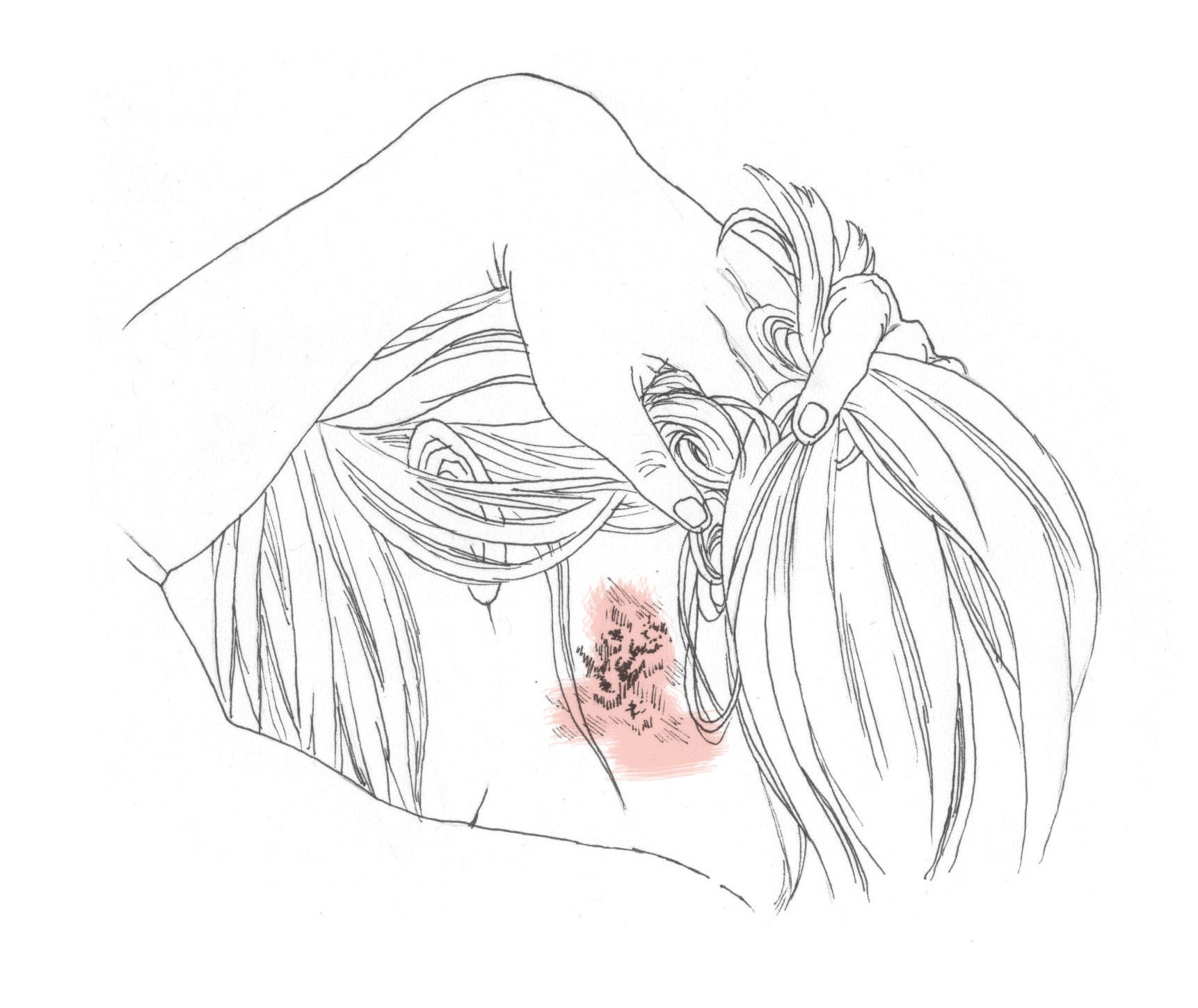
She stood up slowly.  I want you to look at my neck, she said. She sat in front of him, facing the other way, and lifted her hair to the side. He looked at her skin, inflamed and oozing. She wanted him to touch it, caress the tender redness. He didn’t. Instead, he moved her hair back in place.

I think I’m dying, she said to him.

Lyle laughed. He leaned over and kissed her on the forehead. His lips were sticky from the candy. You’re silly, he said.  Do your yoga. Lyle loved yoga, and he loved that Coraline had started going to the beginner’s classes twice a week. She did not take to it very well—her body wasn’t flexible, her mind was too fearful—but she loved that he loved that she was trying.

Later, after Lyle left to pick up dinner, Coraline lay on the ground with her arms spread as wide as she could stretch them. This was her favorite position, the savasana. It was the way her yoga teacher ended every class. All twenty students would lie in the darkened room, arms outstretched, and would breathe slowly. After five minutes of savasana, they would get back into lotus, put their hands to their foreheads, and say Namaste. The last five minutes were the best five minutes, and Coraline’s sole motivation.

She heard Lyle on the stairs but didn’t open her eyes. She heard the sound of him opening her door, then the rustle of the grocery bags.

Why are you in corpse? Lyle asked. Coraline’s eyes flew open. He was standing above her, his nose running a little bit.

I don’t know what you’re talking about, she said. She put her hands over her eyes. I was doing savasana.

That’s the same thing as corpse, he said. He lay down beside her. This is corpse pose, he said.

I don’t like that name, she said. He stretched his arms out. Her right hand flew to her neck, but he grabbed it. He held it. They lay still next to each other.


Jami Nakamura Lin is an MFA candidate in nonfiction at the Pennsylvania State University. She is a nonfiction editor at Revolution House literary magazine. A Pushcart Prize nominee, her work is forthcoming or has appeared in Rock & Sling, Niche, Monkey Bicycle, Thunderclap! Magazine, and Escape Into Life, among others.

Read an interview with Jami here.

“The Deer Cabin” by Justin Kingery

Kingery-Deer Cabin1

Today, in a Chinese city of fifteen million people, I step onto the biggest airplane I’ve ever seen, spend thirty of the most uncomfortable hours of my life running to gates and hitching connecting flights, and finally settle down into the back seat of my mother’s car.

I have been studying overseas for six months, and I have never felt so torn. In the black night as we drive the eighty miles home, I try to sleep, but every time I close my eyes, I see the faces of friends I will never see again. We all said we’d find each other again someday, somewhere, maybe in Mumbai or Singapore or Istanbul—hell, maybe even back in the filthy streets of Dalian or Beijing—but I know better. Back in the Midwest, snow is on the January ground, and I can once again see the stars from my middle-of-nowhere home.  I feel far away from everything. I make no sound. For the last few days, I have longed for home, for family, for a bed with a mattress, and a view of trees with green leaves. It’s a strange, uncomfortable sensation to feel comfort neither here nor there, to want nothing more than to go and also to stay.

At home, I sleep for two whole days. My biological clock is broken. My mother wakes me to make sure my heart is still beating. I tell her I am unsure. My bedroom is unexpectedly familiar, dull. When I came back from the East, I hoped to be surprised by the person I was before. I secretly longed to be like someone awaking from a coma or cryogenic hibernation who returns home to find that he remembers very little about who he once was. I imagined myself sifting through my own belongings as a stranger, struggling to piece together stories from a former life from nothing more than photographs in dark wooden frames or coins in a glass jar. But nothing has changed. I still remember where to find socks, favorite shirts, CDs. I left Missouri so I would come home and find that everything had changed, that I’d forgotten it all, but I was wrong. Everything is still the same. Even me.

I am depressed. I miss the energy and the smell of the city. I look out my window, hoping to see hundreds of people I will never meet, talk to, or see again, but all I see are open fields of white and Charolais cattle nosing around in muddy patches of snow. Missouri has never felt so lonesome. I think about my friends on the other side of the world cramming themselves into city buses, eating at unusual restaurants, trying to communicate with taxi drivers with nothing but severely broken Mandarin and hand gestures. I smile and remember the life I led just a few days before, the same funny things, but they feel like dreams and become foggier and foggier the longer I am awake.

I have lost all sense of the comfort of home, and I fear I may never find it again.

~

Some old friends, real country boys I grew up with, drive out to the house and pick me up. They’ve planned a night out at the deer cabin, and they want to hear about all the little “Chink gals.” I’m torn between offense and ennui. Nothing can ever be explained. I would rather not talk about any of it.

They take me out into the snowy woods for the night. Three of us ride in a small truck, and scents of tree bark, wet dirt, and fire smoke linger in the air. As we drive through a field and stop to unlatch three gates, I see the moonlight has covered the landscape in the same blue hue often used in nature calendars for the month of December—a solemn blue night scene to symbolize the death of the year. As the truck pulls up to an open spot in the field, there are others waiting for us, feeding wood to a huge bonfire out in front of the old wooden cabin, which is inhabited mainly during deer and turkey hunting seasons, with its patchwork tin roof, wooden stoves, kerosene lamps, and mismatched antique furniture. All around the 2500-acre piece of land are food plots, deer cameras, hunting blinds, and other things I don’t know much about. But I have spent many nights at the cabin over the years, just hanging out around the fire, listening to my friends, the outdoorsmen, tell stories of the hunt. A lone liberal amongst rural conservatives, I was the only one who didn’t hunt, but my disinterest was never questioned. We had grown up together over fifteen years with other things in common—schoolteachers, summer jobs, and baseball. We knew everything about one another. We were like brothers.

The fire outside the cabin grows tall and bright, and no one can stand too close to its heat. A few of us stand with our backs to the flames, turning like sausages when one side becomes too hot. There are eight of us out here, the sun has long gone down, and someone asks about the skillet’s heat. Chad violently shakes meat in a ziplock bag full of breading and yells that we’re going to have a feast. I ask what’s on the menu. Suckers, rabbit, venison, turkey, dove breast wrapped in bacon, chips, and cans of Coke. Garret even brought some crow meat in reminiscent celebration of a disgusting dare I had taken a few years back. He promised to eat it with me this time, to share the grotesque glory. They had been saving all this food and planning this night to celebrate my return from the East. For the first time in a week I smile and laugh and dodge surprise swats to my groin. We laugh and wrestle. Their voices are so incredibly familiar.

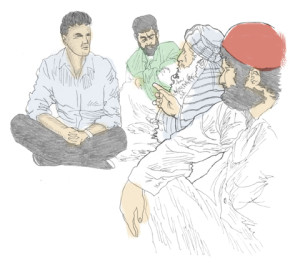
Around the fire we sit on pieces of wood or in camping chairs, our laps holding Styrofoam plates. A few boys eat within earshot on a wooden porch swing to keep an eye on the meat still in the deep fryer. They ask me about China, if I was a giant, if I ate any dogs or cats, and more questions like that, but they also ask where I lived, what the Great Wall was like, and if the food was any good. I give them my answers and tell them in my best words what life was like there, what my experience had been, what it meant to me. I let them know I am still trying to understand it all myself. They listen in near disbelief, say the things I am telling them—some of my stories—are hard to believe or crazy, some sound like fun, but my friends make it clear that they could never do it, that they could never go off on an airplane over the ocean to such a strange place away from here, that they could never leave this land or their families for any period of time or accept any danger of maybe never making it back. Too much at risk. Too much to lose. They would be here forever, but they would gladly listen to my stories when I had them to tell.

We eat and eat. My friends cook fresh meat like five-star chefs. They talk of different culinary oils, meat rubs, and the cooking herbs they grow in small gardens and on windowsills. They have honed their outdoor skills throughout their entire lives, and I have always been fortunate enough to reap the rewards, the edible final products. This is the first time I have eaten a hearty meal in more than half a year. “You’re skinnier’n a snake,” they tell me. We each eat twice our fill, and there is leftover food we will take home to our families tomorrow.

A few friends disappear around the back of the cabin as some of us are packing leftovers. A minute later, I hear laughing and look over to see them coming around the corner of the cabin pushing the golf ball cannon Chad and Adam’s dad built. Their family owns the cabin, so I have seen the black iron contraption before, with its heavy chase and dark bore. It’s secured somehow to an axel between two old bicycle wheels and has some other pieces of metal rigged up to absorb the kick—no doubt a personal project their father created during down time at the local steel plant where he’s worked for over thirty years.

With the cannon in place, Garret brings over a square hay bale and places a rotting pumpkin on top of it. Chad explains they had been saving the pumpkin for this occasion since Halloween, even though their mother complained of the flies it attracted to her porch. They pour black powder down the barrel and shove a white Titlist golf ball inside. Everyone stands back and covers their ears as Chad touches a fiery stick to the vent. Nobody sees the golf ball. The pumpkin explodes and a resounding boom travels across the fields and meadows where it will be heard miles away and someone will undoubtedly call the local police department and complain. Slimy chunks of pumpkin rain down all around us, onto our shoulders and into our hair, and we laugh. Chad and Adam tell a story about a neighbor more than a mile away who had found a lone golf ball in his field while out walking. They swear it had to be theirs.

The cold night gets colder. Once the cannon is wheeled back around the cabin, we all go to warm ourselves near the fire and talk some more. The focus shifts from my adventures in China to deer hunting, then to duck calls, then to crappy beds. I am happy to listen and watch my friends laugh and carry on, telling their own stories. Looking around, there doesn’t seem to be a whole lot out here in the middle of nowhere—an old cabin, a snowy woodpile, a couple of old rusty burn barrels, a saggy barbed-wire fence—but still, I cannot imagine myself never being here again.

Talk dwindles and we begin to nod off in our camping chairs, so we rise and surrender to the cabin. There is no electricity and only an old pot-bellied wood stove for heat, but the beds and down mattresses strewn throughout the rooms are covered with heavy homemade quilts to keep out the cold. Two hours before, Chad had built a fire in the stove to warm the cabin. We find our places on bunk beds and on couches, and Chad, the oldest of us, argues and wins his spot closest to the hot stove. I follow my two closest friends up the homemade ladder to the attic that holds the stove’s rising heat, where, in two beds, a few boys can sleep “pole to pole or hole to hole, just not pole to hole,” as Adam chimes like clockwork, an essential piece of his camping dialogue. The three of us laugh, having heard him deliver the line so many times throughout the years. The fire outside is still burning brightly, and light from the yellow flames enters though the small attic window and dances on the low ceiling. There are spider webs in all the corners, everywhere. Garret recalls a time a few summers back when we all ran out of the cabin in the middle of the night and slept in our trucks because the cabin was full of brown recluses. We share a nervous chuckle.

Once our bodies settle into the feather mattresses and under the heavy quilts, we talk quietly for a bit, retell old stories. As usual, Adam falls asleep first. After minutes of silence, Garret asks me if I miss China. I tell him yes, that I do, but maybe not as much as yesterday.

Without speaking, he and I listen to the fire outside crackle and die down. The wood is burning away, and early in the morning when we awake to a cold stove and pull the quilts up over our numb faces, ash, smolder, and blackened Coke cans will be the only signs of our time.


Justin Kingery recently completed the coursework for a PhD in Technical & Professional Discourse at East Carolina University, where he also taught composition and nonfiction writing, and soon after left academia to pursue a career in writing in his native home state of Missouri. His essay published here was originally written in 2006, after a study-abroad experience in Dalian, China.

Read our interview with Justin here.

“Elixir in Exile” by Lucine Kasbarian

Kasbarian-Elixer in Exile1

If Ponce De León could search for the Fountain of Youth, could an Armenian daughter demystify the elusive Iskiri Hayat?

Hidden away in my parents’ home in New Jersey is an extraordinary liquid in a glass decanter shaped like Aladdin’s lamp.

Tinted like a carnelian gem and with a spicy, musky, transporting scent, this exotic liquid seemed destined to be applied like perfume rather than consumed like a beverage. The liquid only emerges from its cabinet to be carefully meted out for honored guests or as a folk remedy for the odd illness.

Enter the rare and precious Iskiri Hayat. Persian for “the elixir of life,” this tonic has been a source of curiosity and admiration since my childhood—a cryptic key to a fascinating past.

The word iskir is a dialectical variant (Turkish corruption) of the Persian iksir (elixir). Hayat means “life” in Persian and Arabic. And from the veneration with which the beverage was spoken about and handled when I was a child, I was convinced that Iskiri Hayat had mystical properties.

Dèdè (my paternal grandfather) knew our Armenian ancestors concocted this liqueur in their native land, but not much else—other than that one whiff had the power to transport an inhaler from exile all the way back to our native province of Dikranagerd (present-day Diyarbakir, Turkey).

I once got a glimpse of the raw ingredients, each preserved in a cloth sack tied with string. Some of them—what looked like clusters of horsehair, or a bunch of petrified raisins—could have populated a witch doctor’s medicine bag. When I was old enough, Hairig (my father) would reel off the 20 ingredients of the liqueur to me in reverent tones: Amlaj, Kadi Oti, Koursi Kajar… Recited in succession, they sounded like an incantation. In fact, as an adult, I learned that Hairig regretted not asking Dèdè more about “the medicines”—what Dèdè called the herbs and spices comprising Iskiri Hayat.

On his last visit to Beirut in the 1950s, Dèdè returned with a batch of the ingredients given to him by Manoush, one of his three sisters. Illiterate, she prevailed upon her nephew, Vahan Dadoyan, to take dictation and write in Armenian script the name of each ingredient on a tag that would be affixed to each item. As was customary for that generation, women knew recipes by heart and gauged ingredients atchki chapov (by eye). Thus, Manoush did not identify any measurements.

Fortunately, Dèdè possessed a dry mixture of ingredients already combined. We don’t know where he got it, but Hairig had, since the 1950s, repeatedly used it to make the drink. Today, our quantity is scarce and the potency of those mixed herbs, roots and spices has been depleted. Only one bottle of Iskiri Hayat remains. This has only intensified Hairig’s mission to decode and recreate the family recipe for Iskiri Hayat.

How could my father, in the 21st century and far from his ancestral homeland, reconstruct the recipe when he didn’t even know the English language equivalent for the names of some of these captivating-sounding ingredients, nor how much of each ingredient to dispense?

Alas, like the melange of spices and herbs in this ethereal concoction, many of the ingredients’ names themselves were probably combinations of languages spoken along the Silk Road, including the Armenian dialect of Dikranagerd, Arabic, Western Armenian, Kurdish, Turkish and perhaps even Chaldean Neo-Aramaic. Even for someone like my American-born father, who was fluent in the dialect of Dikranagerd and possessed more than a dozen dictionaries for the languages in question, trying to make sense of some names was problematic.

He knew that Sunboul Hindi was Indian Hyacinth. And that Manafsha Koki was Violet Root. But what the blazes were Agil Koki, Houslouban and Badrankoudj?

So much was lost in the genocide. To cut the Gordian Knot for an Armenian of the diaspora is to locate his/her confiscated, ancestral house in Western Armenia. Since Turkish authorities deliberately changed regional names and landmarks after 1915 to obfuscate their Armenian origins, the directives (often descriptions of the house and surrounding areas, handed down verbally from genocide survivor ancestors) are today insufficient.

For Hairig, another vexing quest had been to find people, of Dikranagerd ancestry or otherwise, who could help him decipher the names and meanings of the elusive ingredients in Iskiri Hayat. Though the famous Cookbook of Dikranagerd possessed a recipe for Iskiri Hayat, it was not the formula he sought. And while some firms produce commercial formulas, he wanted our specific ancestral recipe.

While the task seemed insurmountable, my father had made some progress over the years. However, in recent times, he seemed to have exhausted his options.

So, when I decided to make the pilgrimage to the deserts of Der Zor—the killing fields of the Armenian genocide—last year, I hoped to extend our search to Haleb (Aleppo, Syria), where some genocide survivors (including my relatives) found refuge. There, I surmised, the right person would surely recognize the ingredients’ names, know what they looked like, and even point me to where I could obtain them. We could worry later about how much of each item to blend.

Ultimately, my aim was to refresh Hairig’s supply—and from a source logistically close to Dikranagerd. Doing so seemed a meaningful thing a grateful child could do for a devoted parent in his twilight years.

My father had never seen the home of his ancestors and, yet, he carried the ham yev hod (flavors and fragrances) of Dikranagerd in his words, thoughts and deeds—from his modesty, humor and hospitality, to his dialect and storytelling ability, to his culinary and musical aptitudes. A humble gift would be to help him make that remarkable elixir that could, at least emotionally, bring his ancestors, their way of life, and our lost homeland back to him. And was it not worth it to rediscover a missing and precious part of our culinary heritage, and perhaps share it with the world?

During those fleeting days I spent in Haleb and through fellow traveler Deacon Shant Kazanjian (another Dikranagerdsi—a person hailing from Dikranagerd), I met and quickly bonded with Talin Giragosian and Avo Tashjian, a married couple who possessed the fine qualities one would wish to encounter among Armenians. Talin also happened to be Dikranagerdsi, and it stirred the senses to hear her and Deacon Shant converse in our earthy, colorful, near-extinct dialect. Talin, an English teacher, tried her hand at translating the Iskiri Hayat ingredients we did not recognize, and even enlisted her mother’s assistance. However, they both were as baffled as my father had been over the virtual hieroglyphics. And with that, Talin and Avo met me at the famed covered Bazaar near the Citadel of Aleppo, where the passageways are said to extend from the Fortress all the way to the Armenian Cathedral of the 40 Martyrs in the Old City.

This underground marketplace was a reminder of what life was like centuries ago. Rather than seeming anachronistic and backward, the atmosphere was invigorating. The Bazaar lured visitors to connect with history by showcasing cultural features that had managed to remain intact despite the modern world’s creeping influence. Here, people were not “living in the past,” as some are inclined to say about those who don’t conform to modern habits. These people preferred to cling to their traditions, taking part in an authentic continuation of the past in the present.

As we entered the Bazaar, we marveled at the vaulted ceilings, the intricately carved doors and metalwork on the walls. Merchants — some wearing kaftans, others in Western dress — would call out to customers. Through the narrow, serpentine passageways, hired hands led donkeys carrying sacks of grain. Others carried supplies on horseback. Niquab-wearing women haggled over prices. Through the labyrinths, we passed through the jewelry, textile, pottery and camel meat districts, until we finally reached the herb and spice district.

Talin directed me to the stall belonging to the Spice Man of Aleppo. He was the eldest, best known and most amply supplied of the spice vendors. Talin surmised that the Spice Man, who inherited the business from his father and grandfather, retained the knowledge they had amassed and transmitted to him. This would have meant that when our ancestors emerged from the deserts of Der Zor speaking a variety of dialects, the Spice Man’s grandparents picked up the many names a product went by, including those used by the Armenians.

In spite of whatever their personal ambitions may have been, the Spice Man’s four sons all worked in the family business, operating out of a closet-sized stall. It was teeming with bottles, packets, canisters and jars filled with powders, liquids, seeds and roots. A ladder led to a trap door on the ceiling that opened into an attic, their main storehouse.

Unable to communicate with words, I still could not contain my zeal upon encountering the Spice Man. Stoic and world-weary, he had no inkling of or interest in the source of my enthusiasm. A man of few words as it was, the Spice Man did not speak English. But as Talin recited the shopping list to him, name by name, something incredible occurred:

“Do you have Agil Koki?”, she asked in Arabic.

The Spice Man gestured a grand nod of the head, like a solemn bow, to signal “Yes.”

“What about Badrankoodj?”

Again, the Spice Man’s head would slowly move from up to down until his chin brushed his collarbone.

And so this ritual went on. Talin would say a name, and the Spice Man would unhurriedly acknowledge that not only did he know what the word meant, but that he stocked the desired item.

Then, the Spice Man would call out to his sons to each fill different parts of the order.

By the time Talin was through, we had collected all but one of the ingredients on the list. Even if he were not interrupted by demands from his customers, the Spice Man still would not have been inclined to have a significant chat. We were neither able to cajole him to explain in Arabic some of the more esoteric terms, nor did Talin recognize mystery ingredients by sight or smell. However, the Spice Man’s sons did write down, in Roman letters, each ingredient’s name on its corresponding package—a revealing moment.

I was in mortal shock when we left the stall having completed the lion’s share of my mission. To celebrate, Avo, Talin, Shant and I went to the Bazaar’s bath oil and fragrance district and rewarded ourselves by purchasing traditional kissehs—the coarse washcloths used by our elders.

Back in my hotel room, I shed a tear while inhaling each aromatic ingredient. Then, I securely packed them into Ziploc bags, distributed them throughout my luggage, and hoped I wouldn’t be taken aside at Damascus airport for suspected drug smuggling. Even afterwards, the heavenly scents that clung to the clothes in my suitcase made my mouth water when I unpacked them back in the States.

What was Hairig’s reaction when I returned to New Jersey, told him my tale, and presented him with one packet after the next? He seemed gratified, but also at a loss. Were we really that close to our goal? It was almost too remarkable. He inspected each sachet carefully as if to say “So this is what Badrankoodj looks like!” and braced himself for the next step: finding a knowledgeable spice vendor who could give us English equivalents to foreign words with the help of visual stimulus.

From here, we will keep readers apprised of the last legs of our intoxicating voyage. The reconstituted beverage may indeed be so supernatural that the next time you hear from us may be from Dikranagerd itself.


Lucine Kasbarian, writer, political cartoonist and book publicist, has been immersed in book, magazine, newspaper and online publishing for more than 30 years. She is a descendant of survivors of the 1915 Turkish genocide of the Armenians, Assyrians and Greeks, which drove her grandparents from their native lands in Western Armenia (now within the borders of Turkey). Lucine is the author of Armenia: A Rugged Land, an Enduring People (Simon & Schuster) and The Greedy Sparrow: An Armenian Tale (Marshall Cavendish). Her syndicated works, often about the culture of exile, appear in media outlets throughout the world. Visit her at: lucinekasbarian.com

Elixir in Exile first appeared in The Armenian Weekly.

Read our interview with Lucine here.