Featuring B.D. Wilson

BD Wilson’s Shorts On Survival piece The Hardest Thing appeared in the April 2012 issue of r.kv.r.y.. She is a writer from Edmonton, Alberta, Canada whose work has appeared in the anthology Dark Pages from Blade Red press, Fictitious Force, and Niteblade Fantasy and Horror Magazine among others.


A firm believer in a virtual existence, BD’s home on the Web is located at http://www.bdwilson.ca


Here are some links to more of B.D. Wilson’s fine work:

Interview with Matthew Gasda


Joan Hanna: Matthew, we were so happy to have A Poem For Today as a part of our April issue. Can you share the inspiration behind this particular poem?


Matthew Gasda: This might seem vaguely melodramatic- but I wrote the poem on the morning of 9/11 this past fall. It was my first 9/11 living in New York and I felt in someway connected to the sense of grief surrounding that day which I hadn’t before. The poem obviously isn’t about 9/11, the title “A Poem for Today “could be applied to any day of grief– but that was the particular day of grief that set me to writing it… But a mood, an inspiration, is largely just the beginning of the poem, and I don’t think I could explain where any of the particulars in the poem came from– a deeper place in my own consciousness, at least, than I could trace in any exact way.


JH: This poem seemed to come from such a personal perspective. Can you tell us a little bit about other themes in your poetry and why you explore these topics?


MG: Well my first book, The Humanist, while it deals with death in a philosophical way, is a much more optimistic book on the whole than “A.P.F.T.” and the other poems that make up what will be my second book, “Memorium” (intentional misspelling). That is to say at least, The Humanist is largely about moments of joy, while Memorium is about moments of sadness. Both offer, however– or I hope they do at least– ideas about the possibility of recovery and healing. To me, poetry, philosophy, fiction, art, music– anything dealing with human existence– is an attempt to make sense on one hand of moments of sensuality in life– literally, the pleasure of being in a body; sex, smelling flowers, et cetera– and on the other hand, of dying– the knowledge and intuition that one will be stripped of one’s consciousness of all those nice, sensual perceptions. So for me, as a poet, it’s heartening to hear that you think a poem is “personal” because to me, these sorts of vast universal facts of birth and death, joy and sadness are deeply personal. The details might shift, but all of us are basically dealing with the same core existential situations and I want my poetry to work through that, both the good and the bad… APFT isn’t about any particular moment I’ve experienced but it’s an amalgamation of my experiences and observations about other people’s experiences that I hope comes together to make something that goes beyond just me, but still retains the sense of deep subjectivity… if that makes sense.


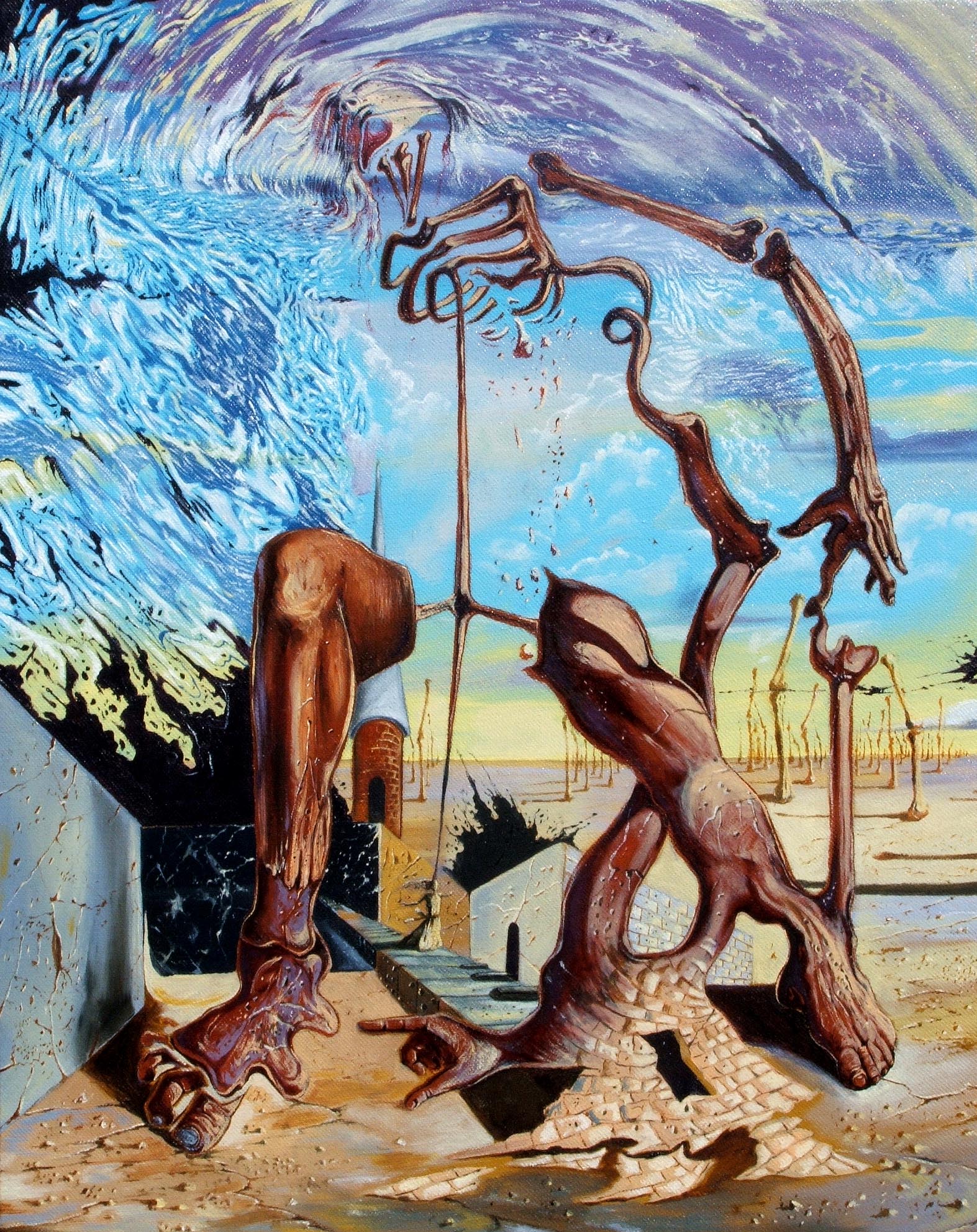
painting


JH: The illustration paired with your poem, The Disintegration of Adam, by Darwin Leon, was a very striking image. How do you feel that this image enhanced A Poem For Today?


MG: The two works share the theme of disintegration, literally to lose integrity. In my poem, what causes disintegration is grief, or loss, presumably the same is true, though in a different way in Leon’s painting. Adam, for instance, is cast out of paradise, which is famously “lost.” The deeper point here, maybe, is that the integrity of our lives, of our sense of self, our ethics, whatever, is largely contingent. Our lives can be shuffled up at any moment for reasons that are way, way beyond our control.


JH: Please share with our readers any links to your book, The Humanist, your website or any current or upcoming publications.


MG: Here’s the link to my book: http://www.amazon.com/The-Humanist-Literary-Laundry-Chapbook/dp/1614182019 and if anyone is interested in my upcoming publications this year– there will be a book of poetry and fiction I believe– they can email me at matthewgasda@gmail.com


JH: Matthew, thank you so much for sharing your poem and other insights into your process. Just one final question: Can you tell us what recovery means to you?


MG: The sense that destruction or loss or pain has been cleared away and that joy is possible again.

Interview with B. Chelsea Adams

B. Chelsea Adams

Barbara Ewell: I really like your poem For a Long Time. I like watching change come over the speaker even before it happens. The waiter and the bartender don’t know what the reader does – – how she’s going to move once she leaves that place. I think I have told you before that I love the way you bring me into the scene in your poems- – and in your fiction, too. You let the reader participate, oftentimes more fully than the other people in the piece. Does that make sense? Do you know you’re doing this? It’s as if you’re telling the reader little secrets, like an aside.

B. Chelsea Adams: I don’t consciously think about allowing the reader to participate in my work or about telling the reader secrets; though I’d like to do both. My more selfish motive is that I want to step into the place or situation I’ve created, to breathe the air, step on the grass or gravel, touch the tree. So my motivation is to imagine a place and then to be there, to know what the place is like, to know what the characters are up to, to hear their voices.


BE: You say you are “owned again” by the music. And that audial image wraps itself around you and becomes vapor-like cloth. Caresses the skin. Is that how it “owns” you?

BCA:
In a way. For me, music isn’t just about listening. It fills me up and wraps around me, takes me over on the outside as well as on the inside. It sets me moving. Whenever I’m at a concert, I can’t sit still. I look around at the audience, and wonder how some, maybe most, people aren’t moving at all. They sit so quietly. This mystifies me.


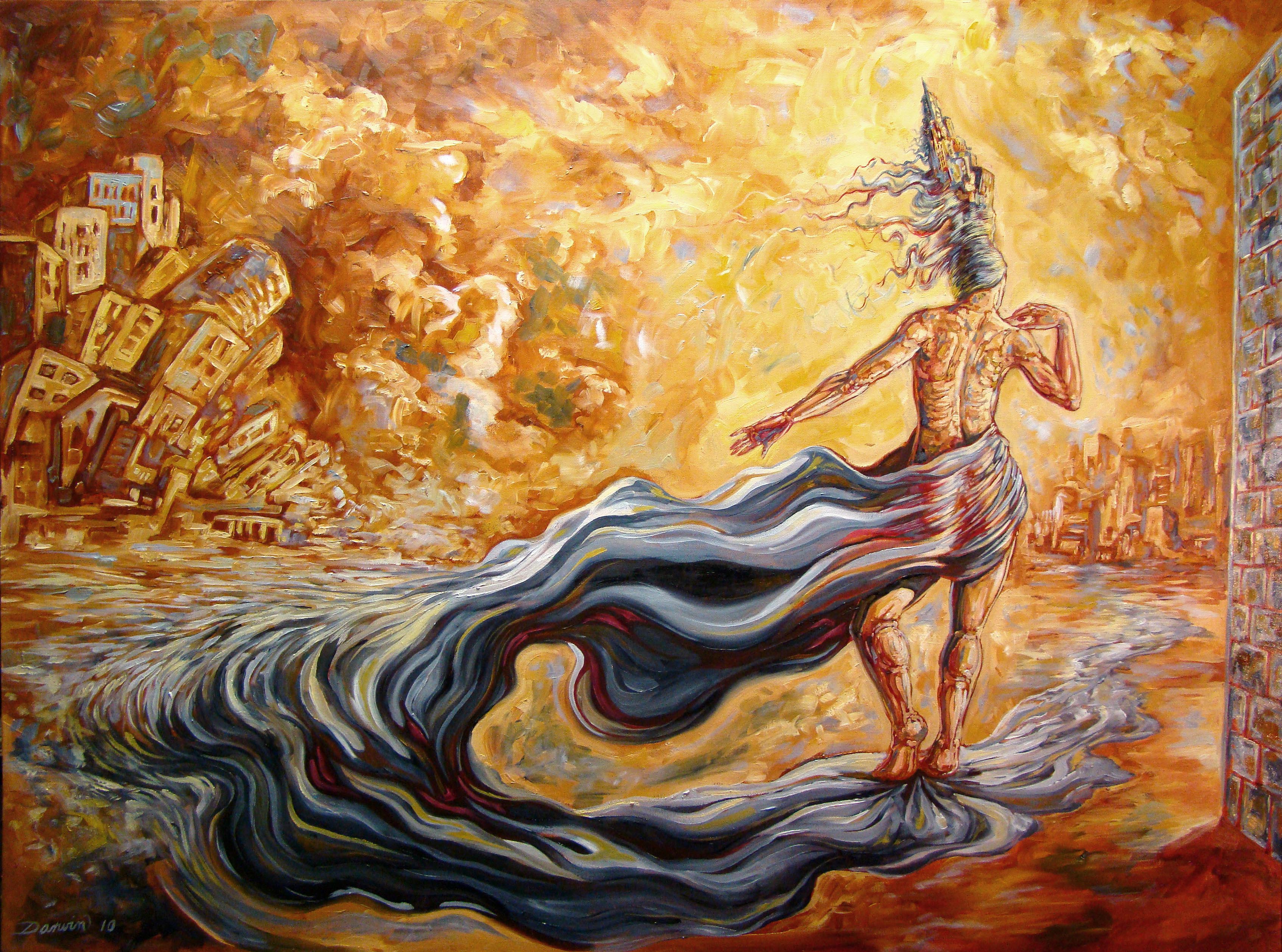
BE: The way sound becomes touch in your verse takes me back to Darwin Leon’s accompanying artwork, The Arrival of the Goddess of Consciousness. The poem does bring about an awakening to the consciousness of the senses, of joy— if that makes sense. Do you like the selection?

BCA: I love Darwin Leon’s artwork. I wondered if Mary Akers picked it because of the way the goddess’s flowing fabric is similar to the silky scarf in my poem. I thought too about how the power of the goddess could be compared to the power of the music.

When the goddess arrives, buildings topple; in my poem when the woman finally hears the music, the heaviness disappears, and she can sing to the moon. (The buildings collapsing, and just the look of them, made me think of the deck of cards in Alice as she wakes up back on the riverbank.)
painting

BE:
“For a Long Time” is a poem about music, about jazz. I know you love music, but I don’t know how it plays into your creative process. Does listening to music make you want to write? Which comes first, the horse or the cart? The listening or the writing?

BCA:
Sometimes the music inspires the words and sometimes the words find their music. The words most often arrive as a phrase I can’t get out of my head. The phrase often comes in silence, on a walk, driving the car with the radio off, sitting on the porch looking into the woods. The phrase keeps repeating until I hear the next line and start to discover whose talking, and where their words are taking me. When I get stuck and can’t find the words that come next in a line or a sentence, I try to find out what music or rhythm is needed. I kind of tap or drum it out. Is it anapest or iambic pentameter? Does it fit the melody in John Lennon’s “Imagine,” Ellington’s “Take the ‘A’ Train,” Ella’s singing of “It’s Only a Paper Moon,” or the tune my husband, a musician, is playing in the other room?


BE:
A lot of your poems have the speaker remembering voices. Voices from childhood games and fairytales, like in the Hopscotch manuscript–from lovers and children–as in At Last Light. You use a similar technique in Looking for a Landing and in the Java Poems. So my question is, are those really tapes? Do you “hear” voices, so to speak?

BCA:
The voices are always there just at the edges of things. In one poem I wrote, “Parallel Existence,” a speaker is sitting with friends at the same time she is in a memory, hearing voices from the past. Fairy tales, nursery rhymes, and favorite poems are also like songs, tapes in my head. I can’t memorize my own poems, but I have memorized these tales and rhymes from childhood and many songs.


BE: I noticed that several of the writers already interviewed talked about recovery as a theme in their work, as it is, of course, the main theme in r.kv.r.y. Do you see it as a focus in your writing? Is your writing guided by themes? This is another one of my horse and cart questions–which comes first: theme or poem?

BCA: When I first learned about r.kv.r.y, I didn’t think I had written any poems about recovery. But when I went through my work, I saw “For a long time…” and “Music Therapy,” poems where music saves a woman. Then I realized that many of my gardening poems fill the same function; many are poems of healing. And now for the second half of your question, what comes first, theme or poem? For me, the poem comes first or maybe just the phrase, the line. I never know where I’m going. I believe that discovery is what creates the joy of writing. And somewhere in the discovery the theme is found. But certain themes repeat in my work, nursery rhymes and fairy tales that I see speaking to the present, stairways and gardens that help one find oneself, or one’s place; jazz and coffee where I celebrate my addiction to their sound and taste. I’m sure I have other themes in my work as well, but these are obvious ones.


BE: I think every writer I have ever known personally, as well as the ones I have read about, says that their writing began in secret. Oddly enough, as long as we have known each other I have never asked you how you started to write? And why, if there were a why?

BCA:
How I started to write; I know it has to do with my mother, grandmother, and my mother’s sisters. They talked about books, bought me books, brought me to the library, wanted to see what I had written and to tell me how I could make it better. But my father’s family was important too. They told stories, family stories but also stories that were utter fictions, which when I was younger I believed. I loved to hear their stories. You asked about whether I wrote in secret, that did happen, but not until college. I think I became afraid, when I read so many wonderful, accomplished authors, that my work wasn’t as good as those others. I filled my drawers with writing, much like Dickinson. It was getting caught in the act of writing by friends that encouraged me to show my work again.


BE:
I already know the answer to my next question, but I’d like for your readers to know as well. And I’d like to know more. You know how I love my computer and do everything at keyboard. And I know you do not. “Cannot,” you tell me. So tell me more. How do you draft your work?

BCA:
I write longhand, usually in cursive. I can’t seem to write at the computer, though I do sometimes try. When I try, my writing feels clunky, has no voice. I often give up and begin again with pencil and paper. I think it is the difference in pressing keys down one at a time, rather than letting your pencil flow across the page. It is almost as if the words are in the motion of my hand, not in my mind. I just read back over what I’ve written longhand to answer these questions. Ironically, my first sentences are printed. When I get going, find my rhythm, I go to cursive. My writing also gets messier and messier as I go faster and faster. Writing in cursive where the letters are connected and my hand is making circles and swirls, seems to help my ideas connect, help me find out what I think, help me hear the characters’ voices and find the music in them.


BE:
I know how much you value the guidance you received at Hollins finishing the MA. Would you like to elaborate on how the program–or any program–can make a writer out of an almost-writer?

BCA
: Part of it is just the confidence building that comes with getting into a good program. But, and I can only speak for Hollins, having faculty work closely with you, having small classes where everyone has the same goal gives you and your writing the attention it needs for you to learn its strengths and weaknesses. And there you are with people who know how to overcome weaknesses, people willing to let you know their secrets. Students also form long lasting friendships with other writers. I cannot say enough positive things about the Hollins faculty and the time and support they gave. Also, we all know we learn from the example of professional writers.

book cover

BE: You like to workshop your poems and fiction. I have been in writing groups with you, and you are a wonderful reader for other writers. Do you have any suggestions about how to handle comments from a writing group? Responses can be quite varied.

BCA: One of the reasons I now am part of two writing groups, one for poetry and one for the novel, is that having a number of readers look at your work gives you a variety of criticisms. One reader is wonderful at telling you when your dialogue doesn’t ring true, another picks up problems with logic or grammar, another points out where you need line breaks or more powerful verbs, and another is gifted in pointing out when you need more about an idea or character or when you need to cut something. You do need to know which criticisms to take, and to trust your instincts about whether what they are saying rings true. Of course, if most of them are saying the same thing, it is time to listen.


BE: You are an inspiring teacher who values the craft of teaching. Did you ever have a student say something or write something that influenced your own writing? We both used to talk about how much we learned from students about the literature we had assigned, but did any of their insights ever spill over into your own writing?

BCA: They always helped me remember that we all are beginning writers. Each new piece needs something different. Also, when a piece of theirs wasn’t quite working, and I had to tell them why it didn’t work, I figured out something I could apply to my own writing. For one thing, it reminded me of things to avoid. But the most important thing was sharing the excitement of seeing a piece come together, of knowing they were excited and knowing they were now more confident writers, who had come to love writing.


BE: What do you read? Poetry? Fiction? History, or science? Do you have favorite writers that you always go to? Do you ever stop reading so you can start writing? Would you rather read or write? Or is that a dumb question?

BCA: I mostly read fiction, novels and short stories, but I read my favorite poets’s new books, Margaret Atwood, Russell Edson, Margaret Gibson. And, of course, there are more. I read my writing groups new poems and chapters, read new poets I discover, and read old favorites over and over. I’m also somewhat of a political junkie, so I read books about politics, history, and the environment. I teach the creative writing component of my granddaughters’ home school curriculum, so one of my joys is reading their work each week. I don’t ever stop reading. I know some writers do stop, especially when they are in the midst of a book. But I need to read always. It’s just part of my day, perhaps, an addiction. As to the last part of your question, I’m addicted to writing as well. These addictions keep my days very busy.


BE: What is the role of Poetry in the Whole Scheme of Things? I realized that that’s a what’s-it-all-about-Alfie question, but I would love it if you’d have a go at it.

BCA: I want to say that poetry is at the center of things, but so many people just don’t put it there, just don’t read poems, even poets. I would guess, most young people loved nursery rhymes, Shel Silverstein and Robert Louis Stevenson, maybe even loved poems right up to high school. Then, if they were asked to read Shakespeare, Wordsworth, Donne, and Keats without the necessary tools to understand the language, the time period, and the issues of those times, they felt stupid, but didn’t know why they didn’t get it, or they might have felt bored for the same reason. We need to be confident readers of poems before we can explore poems that we have to work at to understand. When I am doing a reading, and I’m reading stories, more people will come to listen, than when I read poetry. And yet, I believe my poems are accessible. But I am hopeful that poetry will have a renaissance as I see more and more readings, presentation poetry, and poetry slams, sponsored by local groups. In the small town of Floyd Virginia, once a month readers from 80+ to elementary school age read at a venue dubbed the Spoken Word. In Blacksburg Virginia a group has formed that sponsors readings at the local library and at local pubs. And Barnes and Noble in Christiansburg is sponsoring poetry readings once a month.


BE: What a positive note, Chelsea, to close the interview with–and the pun was unintentional. Thank you for letting me interview you.


Dr. Barbara Ewell, an English professor who also retired from Radford, and B. Chelsea Adams have been sharing poems with one another since 1982. They did a reading, where the poems they read were written as a conversation, first there would be one Barbara had written, and then Chelsea would answer it with one of her own. For over 5 years, they participated in a Round Robin with four other poets. Each poet would choose a line from the poet before them alphabetically, and inspired by that line would write her own poem. Years ago, Barbara began referring to Chelsea as her poetry sister.

Chelsea’s most current poetry chapbook, At Last Light, can be ordered from Finishing Line Press.

“Hot Glass” by Michael Milburn

Man Attempting (Michael Milburn)
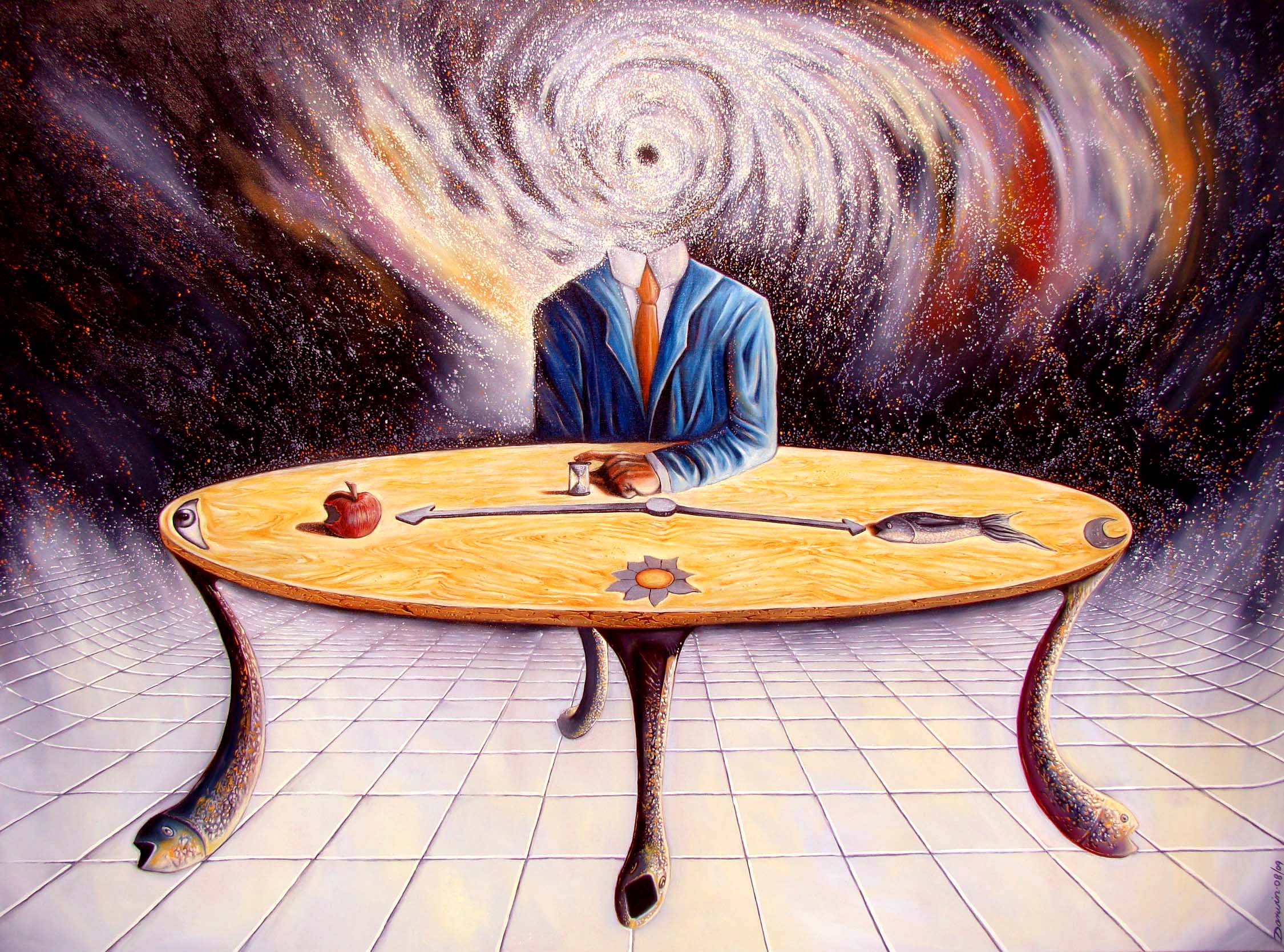
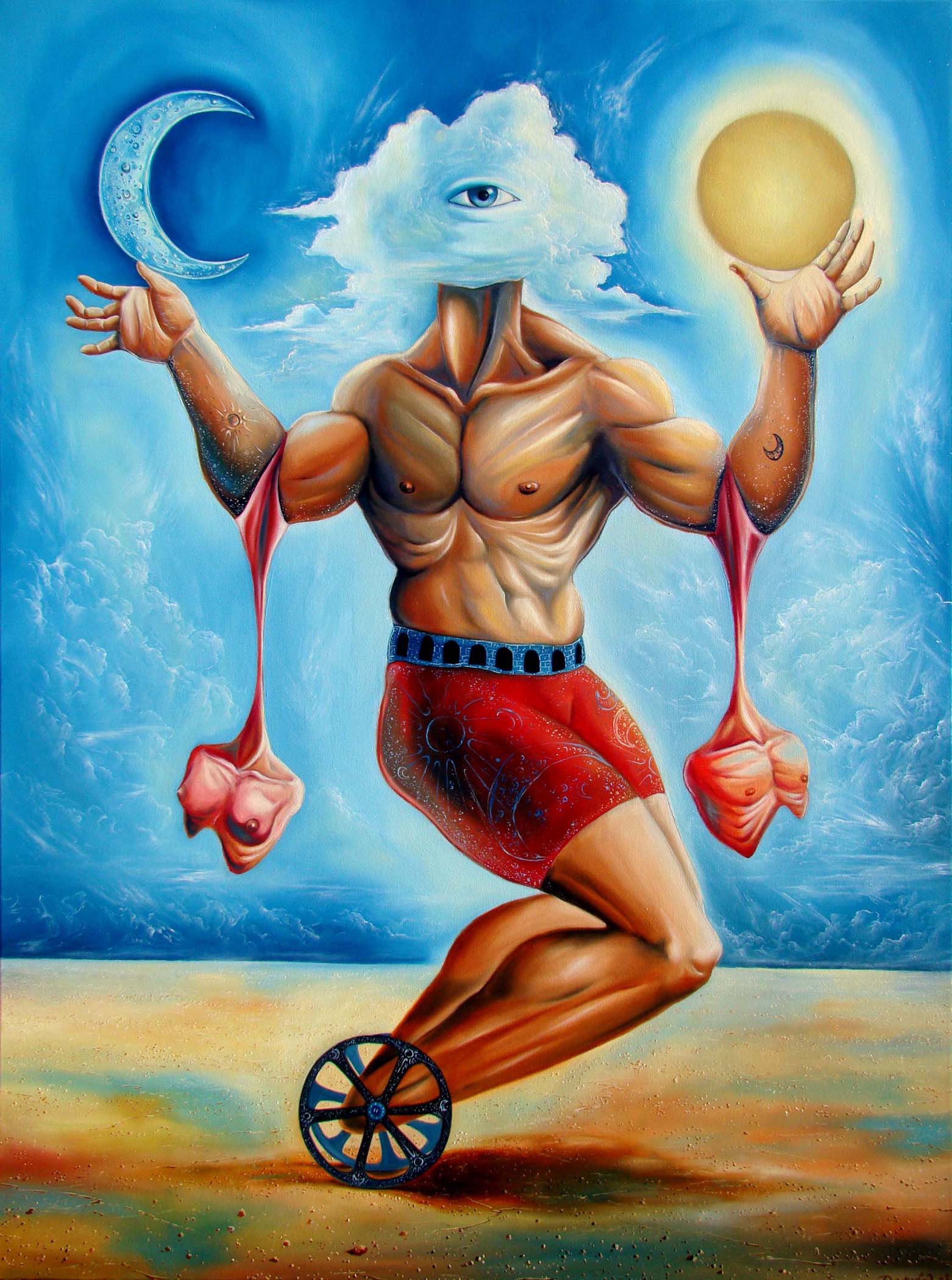
“Man Attempting to Comprehend his Place in the Universe, Time, and Space,” Darwin Leon.

“That was lethal,” my mother said, closing the front door behind her.

I didn’t know if she meant lethal for me to have downed three vodka screwdrivers before getting behind the wheel of my car, lethal to have arrived drunk at a college friend’s New Year’s Eve party the night before, or both. My parents and I had just returned from a neighbor’s house where my father wrote a check to repair the lawn I detoured through on the way home, churning up sod and sideswiping trees. Before disappearing into his study, he ordered me to come up with a repayment plan, the extent of my punishment. His restraint surprised me until I remembered that his own chronic recklessness with alcohol made it awkward for him to sound too disapproving.

In time, my parents came to refer to that incident as a typical youthful bender, a rite of passage for an eighteen-year-old boy who had reached the legal drinking age a few months before. I saw it that way, too, though it ceased to look so harmless in the wake of subsequent alcohol-related calamities. Factor in my childhood exposure to my father’s copious drinking, and my troubles with alcohol later in life, and that New Year’s Eve scene turns into an omen that I should have taken more seriously. Gulping alcohol has always been my way of pounding my nerves into submission; in those days, three drinks was the minimum required to get me out of the house to a social engagement.

Later that year, my college roommate announced that he had invited two girls to our dorm room. I hurried out to buy a pint of vodka and a quart of orange juice to neutralize my shyness. I drank so avidly in preparation for the girls’ arrival (they only stayed for twenty minutes) that I passed out in my clothes and woke the next morning having wet the bed. A Halloween party that fall ended with me carried home in my devil costume, my roommates (one of whom had just completed reserve training at Quantico) chanting a Marine fight song as they marched me through the quad. After that, it became increasingly hard to laugh off my binges, and I have since given up alcohol many times for periods ranging from a week to a year. Today, I strictly limit my intake with regard to when, where, how much, and how often I drink, but I have not stopped for good, a failing that I blame on alcohol’s power to extinguish my anxiety.

For as long as I can remember, I have suffered from phobias provoked by crowds, heights, enclosed spaces, and social interaction. Even alone and remote from any threat, I am subject to apprehension with no identifiable cause. By quelling these symptoms, alcohol makes me feel right in a way I never do when sober, a way that I imagine people who don’t crave it feel all the time. In his article “Who Falls to Addiction, and Who is Unscathed,” the physician Richard Friedman suggests that drug and alcohol abusers “may have blunted reward systems in the brain, and that for them everyday pleasures don’t come close to the powerful reward of drugs.” A study in the Archives of General Psychiatry confirms alcohol’s attractiveness and its danger when used as a balm for anxiety.

…of 34,653 American adults, 13% of the people who had consumed alcohol or drugs in the previous year said they’d done so to reduce their anxiety, fear, or panic about a situation….People with diagnosed anxiety disorders

who self-medicated at the start of the study were two to five times more likely than those who did not self-medicate to develop a drug or alcohol problem within three years.

My affinity for alcohol began in my father’s bar, a tiny room centrally located between our house’s living room and den. Its contents reflected his pride in being able to serve anyone’s beverage of choice on demand. A small antiquated refrigerator always stocked a six-pack of Heineken for him and my three older brothers, a bottle of rosé for my mother’s nightly two glasses, a vintage white or red wine for dinner, and on holidays a magnum of champagne wedged between ice-trays in the freezer. A cupboard held half gallons of vodka and gin alongside various expensive whiskeys received as gifts or earmarked for guests. Reserve cases of beer and wine filled a narrow closet.

I never had any difficulty obtaining alcohol growing up. My brothers were too prolific in their drinking to miss the Heinekens I carried out to my tree fort in the woods, and there were enough leftover bottles of dinner wine that I could sneak one up to my bedroom while my parents napped. A six-pack of beer and bottles of my mother’s rosé accompanied me back to boarding school after each vacation, swaddled in my duffel bag. If my father had discovered me pilfering his booze, his reaction would likely have been “That’s my boy.” He was far more eager to educate me in the rituals of alcohol than to shield me from its dangers.

When I was ten, he taught me how to make a mint julep by mashing mint leaves against the bottom of a tumbler filled with Jack Daniels. I poured this concoction over crushed ice, stirred in a packet of Sweet N’ Low—a nod to his current diet—and served it to him on the patio in a frosted silver goblet. I hated the taste, just as I hated the Budweisers that my uncle expected me to have open for him when he visited, but delighted my elders by taking healthy swigs from these drinks before handing them over. When I turned seventeen and my father allowed me my own glass of wine at dinner, I had been accepting sips from his glass for years. By then I had already acquired a taste for beer and wine and made myself sick enough on scotch, gin, rum, and tequila that I have never been tempted by them since.

At boarding school, drinking felt like a natural rather than a criminal activity. On weekend nights, I’d sit in the window of my dorm room with a smuggled bottle of my mother’s rosé. These solitary sessions would have astonished my classmates, who tended to break rules boastfully and in groups, and who knew me as the straightest of straight arrows, not just because I played sports, studied hard, and wore bland preppy clothes, but because I was so shy. None of my close friends drank, and I wouldn’t have dared approach anyone who did to invite myself along on a debauch. I had been getting drunk alone since I was thirteen and didn’t crave company or recognition. I drank to ease the anxiety that I felt in my school’s academically and socially competitive environment.

After midnight one Saturday, a boy strode into my room to borrow a book while I was occupied with my bottle of Mateus. He stared at me with a combination of surprise and respect before wordlessly accepting a glass. By the next day—or perhaps that evening after he left to spread the word—my reputation had undergone a dramatic makeover. One of the chronic miscreants who lived on the floor below passed me on the way to Sunday brunch, and with a medley of winks, nods, and oblique compliments let me know that he knew that I wasn’t as innocent as I seemed. This was unwelcome news—I knew how naughty I was and saw no profit in others knowing too, especially an image-conscious slacker unlikely to make it to graduation.

In college, where my multiple roommates made solitude impossible, my drinking retained its private aspect, as I focused on ingesting alcohol rather than enjoying the party. Several times a week my roommates and I partook of a local bar’s happy hour, surrounded by other freshmen. As my friends paid attention to each other and to the girls in the room, I hurried to get drunk enough to cope with any of the latter approaching our table.  An observer would have thought the scene harmless—a college freshman relaxing in boisterous good company. I was passing my courses and playing two sports. Looked at another way, I was spending most of my evenings drunk and much of the rest of my time looking forward to getting drunk. A ubiquitous public service ad at that time warned, “If you’re drinking to be social, it’s not social drinking.” Then what is it, I wondered, and why do it? Why not switch to ginger ale?

Even in comfortable company, with a friend or two in my dorm room, I outpaced everyone. I couldn’t plead social or other stresses at these times; getting drunk was a race to get out of my mind as quickly as possible. My tendency to pass out early usually spared me embarrassments like the New Year’s Eve drive and Halloween march. An exception occurred one evening in the college dining hall. Primed by several pre-dinner beers, a friend and I sat near two boys who lived in our dorm—precocious intellectuals who dressed conservatively and read The Wall Street Journal. I began making fun of the pair in a loud voice, mocking their dress and speech as my friend tried to shush me. “I think we’re being insulted,” one said as they rose to leave.

The memory of that scene still mortifies me, as if a demon had seized my tongue and forced me to speak as someone I neither was nor wanted to be. I can’t remember how I faced the boys in the dorm afterward, but three years later on the eve of commencement I encountered one of them walking through a quiet neighborhood near campus. Before he could stride past, I stopped him and apologized for my behavior as a freshman. He listened, nodded in acceptance, and walked away. Even if my immaturity mitigates my offense somewhat, it’s hard not to find evidence of alcoholism in my drinking at that age, my future temperance notwithstanding.

I first noticed the duality between drinking as fun and as destructive behavior in my father’s practice. On a typical weekday he might have a cocktail and wine at lunch with his Wall Street cronies, one or two beers in a Penn Station bar while waiting for his commuter train, another in the bar by our local Long Island station before my mother picked him up, a glass of sherry upon arriving home and wine with dinner. On vacations he’d announce at breakfast the precise time he planned to start drinking that morning. Once a year, usually on New Year’s Day, he went on the wagon as part of a new diet or on doctor’s orders for hypertension. After a week or so his resolve faltered, especially if one of my older brothers arrived home and began draining Heinekens in front of him.

My ex-wife used to press me to admit that my father was an alcoholic, and I’d exasperate her by demanding a precise definition of the word. How could a man so successful warrant that label? He was a Wall Street lawyer who worked full-time into his seventies and retained several clients beyond that age. He provided for his family, came home in time for dinner when he wasn’t traveling or preparing for trial, attended graduations and sports events, and took us on vacation to Bermuda every March. He was also a surly, vindictive drunk who humiliated my mother and taught his children to avoid him, and whose scorn left psychological scars on every member of his family. He showed up intoxicated and limping at my sister’s wedding after causing a car accident on the way to the church. Alcoholic? It depends how you look at it.

Perhaps my quibbling over labels betrays my reluctance to diagnose myself; I have drunk so sparingly for the past twenty years that there’s little outward evidence of a problem. A friend in AA jokes that if he had my self-control he’d never have had to quit drinking, though his sobriety demands far more discipline than mine. I simply avoid alcohol in situations where it impairs me. After squeezing my four-year-old son’s arm too hard during a beer-fueled scolding, I stopped drinking in his presence, and have not done so for the past twenty-one years. Realizing that disagreements were likelier to turn ugly if I was even mildly hungover, I stopped drinking around my girlfriend. In my thirties I stopped drinking in my parents’ house, where moderation was impossible in the face of my father’s persistent hospitality. My final withdrawal came a few years ago when two glasses of wine made me so inarticulate at a dinner party that I stopped drinking in public.

Today I only drink by myself, some wine or cognac on week-end nights when my family is asleep. I’d like to say that I stop after achieving a pleasant buzz, but in truth I drink the way I always have, fast and purposefully until the alcohol blots out my anxiety. As long as I stick to a strict schedule, I tell myself, I need never join my friend in recovery. Besides, what difference would it make if I stopped? My longing for alcohol would continue, and the only negative effect of my solitary binges is a slight hangover the next morning. That and my awareness that I cannot stop, and that calling my drinking harmless is as self-deluding as when I drove across the neighbor’s lawn thirty-five years ago.

In his essay “Under the Influence” Scott Russell Sanders worries that growing up with an alcoholic father has made him susceptible to abusing alcohol himself. As an adult, he confines himself to “…once a week, perhaps, a glass of wine, a can of beer, nothing stronger, nothing more.” Sanders recalls seeing his father take his first drink of the day: “I watch the amber liquid pour down his throat, the alcohol steal into his blood, the key turn in his brain.” For me that key turns when my first sip begins to deaden the quickened, frantic feeling that anxiety maintains in me. Nothing else, not therapy or meditation or success or love has given me such relief, and that’s why I do not or cannot give up drinking for good.

A few years ago I mentioned my fondness for English beer to my son and he said, “But I’ve never seen you take a drink.” Drinking alone allows me to keep my troubled relationship with alcohol a secret. People who know me would laugh at the idea of me being an alcoholic or even concerned about the possibility. At parties, my request for water or ginger ale elicits curious looks as I imagine strangers speculating about my alcoholic past. Like a man with that grim history, my outward temperance belies an inner craving. I look forward to my weekly ration more than to anything in my life. “Right now I would eat hot glass / if it got in the way of this fantasy” a line in a friend’s poem goes. When it comes to alcohol, that’s how I feel.


Michael Milburn teaches English in New Haven, Connecticut. His essays have recently appeared in New England Review and Hippocampus. His third book of poems, Carpe Something, will appear this summer from Word Press.

Check out our feature on Michael here.

“Afterward: a Draft” by Kathryn Winograd

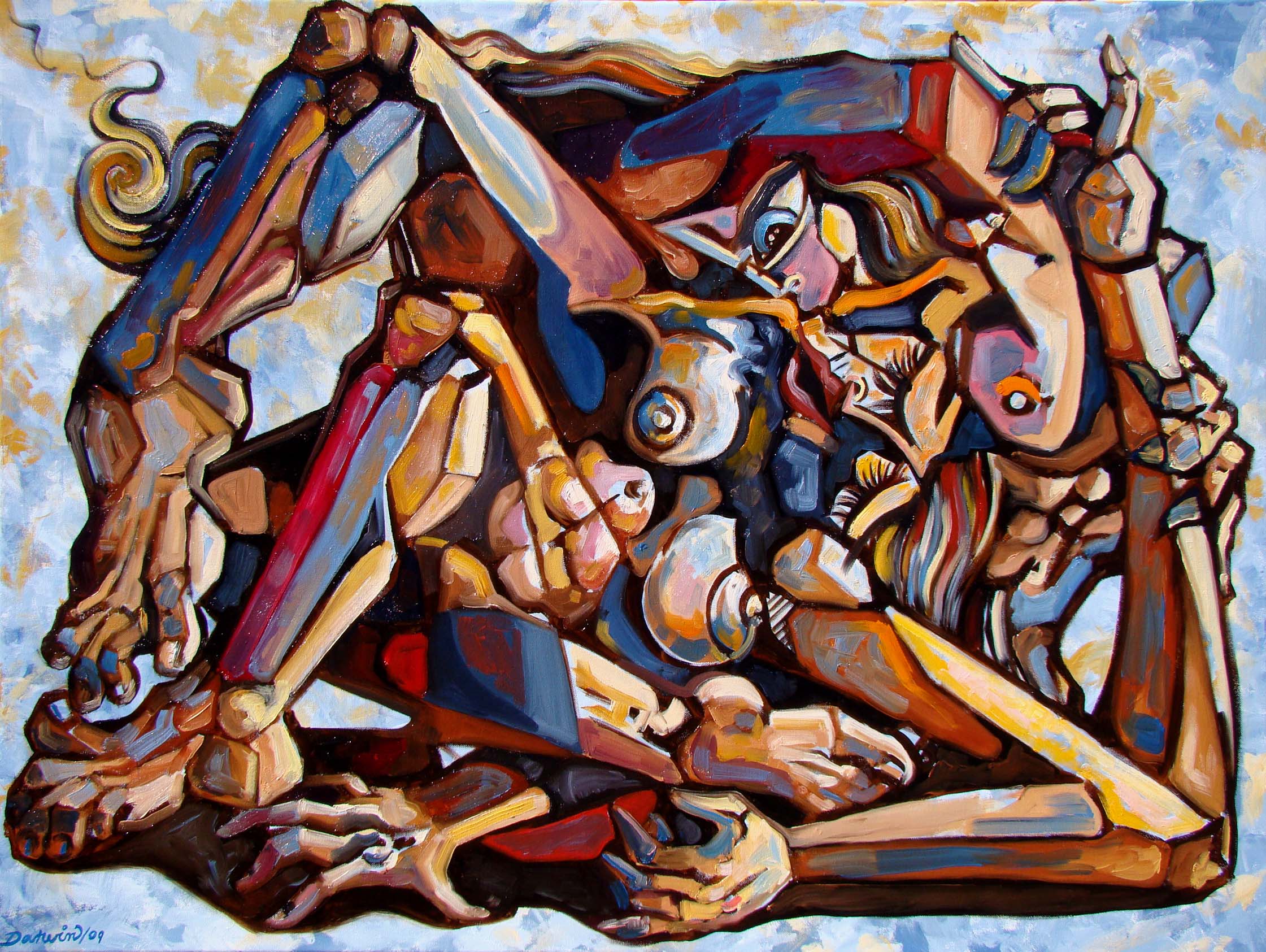
The Rape (Kathryn Winograd)
“The Rape,” oil on canvas, Darwin Leon

In the early 1970s, ’71 or ’72, I think, (see how already the narrative breaks down), I was raped by a man I did not know.

I was 13 or I was 12. I was in the 8th grade or in the 7th, both years lost, only an image left, an English teacher, who had dyed black hair, who was kindly, who asked me in the middle of class one day if I were okay, if I needed to leave the room, to go home. She touched me on the shoulder, I want to say. (What is the right narrative?) I don’t know what I was doing or what I looked like to cause her such alarm; I only remember sitting on the end of the row nearest the door and her asking me if I were okay, and my mother telling me later (so even this is wrong; where is the silence I only remember?) that this teacher had had a daughter raped too and so she was concerned for me, she understood. I don’t know if a year had passed by then or if it were in the same year; I don’t know if I left the class or if I stayed.

~

Most of my life I have not remembered this man’s name, this boy’s. (He was 19, and, at 52 now, I realize that I cannot think of him as anything else), and I won’t give him his name here, even though once I had the idea of looking his record up, of researching his life as if that would prove my indifference to him finally. He met me half way up the lane along the cemetery to our house; he must have watched from the graves as I stepped off the school bus. He asked me his question. I answered him. Politely. (I’ve read somewhere now that young girls are most often attacked because of this vulnerability. We are asked to be nice, to be helpful. And so we are.) He came up to me on the driveway by the cemetery. He asked me where the Smiths were. I told him. I pointed the way for him and then I turned away. Without fear.  Without surprise. (Small comfort, this, when I hear of another young girl or woman raped, murdered–I think when I was lying on the ground and he was finally leaving me that he could so easily have put his hands around my throat and I would have died. Or he could have stabbed me with a knife and I would have died. Without fear. Without surprise. Everything happened so quickly; everything was simply something that happened–detached, removed from me, my every sense heightened, but not in fear, only in wonder, only in minute-by-minute half-comprehensions. What I hope for those other women.)

He put his arms were around me from the back and said not to scream. He tried to punch me in the stomach but my coat was thick and sturdy and I felt none of it. He said he wanted to go steady, for me to be his girlfriend, all the time taking me further into the woods. The only fear I remember now was when he pushed me to the ground and ripped my pants from me and the wad of gum I had been chewing jammed up against my throat and I was afraid I would choke so I turned my head to the side to spit it out. I saw the dead leave then, what I remember most. He lay on me. I felt pain. Later a lawyer would ask me in court if I thought he had used his fingers to “penetrate” me. (I didn’t know what he meant. I had never been with a boy. Why would anyone want to put their fingers there?)

I bit him. Not bravely. He put his fingers near my mouth, so I bit him. He stood above me, crying. He said I had hurt him. He backed away from me into the woods, still crying. Only then was I afraid, that he might return. I wrapped my torn pants around my waist and ran to the barbed-wire fence that ran along the roadside. A man on a tractor appeared. I waved at him, crying. (He must have been a farmer in the area, but I don’t remember who he was and no one ever said anything to me about him.) I don’t remember how we got to my neighbor’s, if I rode his tractor or if he walked me there.  I sat on the couch with the girl I went to school with who lived in this house with no plumbing, no mother.  My parents were out of town, in Florida. There was no one to come and get me. I don’t know if I rode in a police car or if an ambulance took me someplace. My mother would tell me later how she wept and cried at the airline ticket counter in Florida, begging the airlines to give her a ticket home so that she could be with me. (There is that other narrative. And yet I keep saying we never spoke of it.) I was examined; evidence taken. I remember little of this: nurses talking to me, the curtain they pulled around the bed, perhaps some more pain. Medical students in a residency program my father oversaw came to take me home–I think. They had been staying with me. I don’t remember how we got home. I do remember vividly passing through our gate and being greeted by the large pack of dogs that roamed our farm and how much I wished that I had made it that far, to the gate, to the dogs that would have helped me. (I have kept dogs ever since.)

My mother arrived sometime late at night. I was asleep or half sleeping. She appeared, weeping. I remember little else of that night. My father offered a large reward for information regarding this boy.  He and I drove to the sheriff’s station one night, sat in the back of an unmarked car with the overhead light turned off and watched the sheriff call a possible suspect out of his home or out of a bar. I don’t know which. I didn’t recognize him. I think there was a lineup at some point, but I don’t know for sure. A young man my father and mother had befriended told them about seeing someone at a bar that night, with a band-aid on his finger. He had been bragging. He was arrested. We went to court.

My mother told me that I needed to do this, that the boy had attacked other young girls my age, that each time he had gone a little further, obviously accelerating what he was doing, that he had to be stopped in case he killed someone. That I had to be the someone to stop him. I remember little of the trial. My mother and father would take me, before or after, for ice cream. I don’t know what we talked about. I found out later, or I think my mother told me, (here again, that narrative of silence falters), that the judge for the case was the father of a young girl in my class. My mother made me a dress for the day I testified. It was red. It had blue anchors on it and a white collar. My mother said that I was so young it was really bad for this man. (I didn’t know that at the same time I was going through trial, women’s groups in the seventies were fighting to change rape laws that had forced women to prove physical resistance to the attack and personal chastity.) I don’t remember what I said in court or what was said to me except for that question about the fingers. At the end, he was convicted. I sat in the courtroom when the sentence was announced. The police led this boy past me. His mother appeared from the rows across the aisle, crying, “You told me you didn’t do it. You told me you didn’t do it.” I think I threw the red dress away, but I don’t know.

~

I think of the nineteen-year-old boys I teach in college now, the friends of my daughters, how young they are. Of the life I’ve had these past thirty-nine years–school, college, graduate school, marriage, children, work. A man, a good man, who loves me. Only last year my mother told me that “this guy,” she called him, had gotten out of prison after twenty-five years. (Could this even be right? I have been married twenty-five years and didn’t marry until thirteen years after this rape. Where is my narrative now?) I think of the Super Max prison in Florence, Colorado. And of the men I read about who are in solitary confinement for 23 hours a day, for years and years. I am not sure what we are trying to accomplish. I ask myself if even this boy deserved to be imprisoned for so long for such a stupid act when he was nineteen. (I remember hearing that my father, every year the boy came up for parole, submitted his statement that he shouldn’t be released. Later my mother telling that this boy’s sentence was extended over and over again, not because of me, but because of what he did in prison. “It’s not about you anymore,” she told me.) I don’t know what this boy did in prison. I don’t know how many other girls he touched before me that day. I don’t know what might have happened if he had not been stopped, had not been imprisoned. I did good, I tell myself.

Today I know this about rape–my own is insignificant. In 2008, after decades, centuries of systematic rape, the United Nations Security Council finally recognized “that women and girls are particularly targeted by the use of sexual violence, including as a tactic of war.” As of today, 200,000 women raped in the Democratic Republic of Congo: forty women a day. 200,000 women raped during the Bangladesh Liberation War. 20,000 women raped during the Bosnian War. In Liberia, 92 percent of 1600 women interviewed reporting sexual violence. Rape as a tool of war in Darfur, Uganda, Sierra Leone. Women not just incidentals now in the course of a war, but chattels of patriarchal societies, defiled to dishonor, to harm a man, his family.  Hundreds of thousands of women raped multiple times until their bodies are irreparably injured, until they bear the children of their rapists, and, through some grace, must still love these children, even as their own families ostracize, isolate, shame, humiliate, stone, kill them.

I know that there are women in refugee camps today, their men gone, dead, who are forced to gather wood or water or to take their children somewhere outside of these camps, their tents, to defecate. And they are raped. And their children raped. I think of the small inventions that can save them: the stove that does not need wood, the small community well dug for potable water. Amnesty International reports that Native American women are two and a half times more likely to be sexually assaulted than other women in the United States. I think of the women teachers I have worked with on the reservation for the past six years. What have they been through? What have they seen their daughters suffer? Their granddaughters? Even the statistics tell us nothing: most Native American women are reluctant to report sexual assault given the lack of assistance they are given in the process and the few times the perpetuators are even convicted. And yet it is the men who are the “holy” men, the only ones who can hear the holy voices. As in every society.

I know now that I perpetuated a crime in my silence, that every moment of my silence meant another moment of secrecy for a sect no woman wants to be a part of, that no woman should be blamed for. (No one said anything to me that I remember, except for the one English teacher whose daughter had been raped, who might have touched me in tenderness. Well, I know now I want to say that, to keep the narrative, but I know I am wrong. One day I was riding horses with a friend—round hair, round face, round cheeks in the sunlight on her horse. “You know what they are saying about you, don’t you? You should go to another school. Move away,” she said. Later my mother wanted to write the school a note for the principal to read over the intercom, to thank everyone for how good they had been to me. I had told my mother nothing of what had been said or not said.

“Where is my little sunshine?” my mother once asked me, forgivable now because I see the silence was mine, not hers.)

My daughter asks me a simple question: why should a penis have power over a woman? And I feel a physical shock. I have no answer for that. She tells me of a village where rape is unheard of simply because the society will not accept the idea of rape, that somehow the penis could be more powerful than the vagina, that a man taking a woman should mean ruin for anyone. I think of the simple physiology of that moment when I was raped–what I can’t even remember well, describe well, have not even forgotten well. I know now that my single experience, my five minutes, has cost me more than I should ever have allowed myself to pay, and that this is the real narrative.

Here I am: poet, essayist. I am supposed to transform all this into something, some metaphor about trees and rock, about a spinning wheel and a woman who keeps ripping out the shroud of her life, but I can’t. And now I won’t.


Kathryn Winograd, poet and essayist, is author of Air Into Breath (Ashland Poetry Series), winner of the Colorado Book Award in Poetry, and Stepping Sideways Into Poetry (Scholastic, Inc), a classroom resource book for K12 teachers. She recently won 1st place in the Non-rhyming Poetry category of the Writer’s Digest 80th Annual Writing Competition 2011, and 1st place in the Chautauqua Poetry contest. Her essay, “Bathing” was named a Notable Essay in Best American Essays 2011 and is included in The Fourth Genre: Contemporary Writers of/on Creative Nonfiction along with “(Note to Self): The Lyric Essay.” Recent or forthcoming publications include Fourth Genre, River Teeth, Hotel Amerika, Puerto del Sol, and Literary Mama.

Read an interview with Kathryn here.


Interview with Kelly Cockerham

Kelly Cockerham

Sherry O’Keefe: I enjoyed your poem “Becoming” in this issue, Kelly. Does your life inform your poetry, or does poetry inform your life? This is a bit of a chicken-or-the-egg question, but I’ve been a fan of your poetry since I first read you and I’ve come to realize one of the reasons for this is that I am drawn to the organic sensibility in your work.

Kelly Cockerham: This is a tricky one. I guess, logically speaking (which I don’t excel at), I’d say that my life informs my poetry, but at the same time, I hold to something I heard in a workshop once (but I can’t remember who said it):  I don’t know what to write until I know what I want to say, but I don’t know what I want to say until I write it down. I very often write things that I don’t completely understand. Those are the things I try to keep when editing, sometimes just because they sound good, but most often because I find that when I come back to the poem later, I get it. Then I wonder, how did I know that then? Poetry helps me figure out what I know, what I believe, what I love, what’s important, but I can’t go into the writing of it without knowing all of those things (on some level). It’s a chicken and the egg conundrum. So maybe, poetry helps me refine my life. It helps me pick out those details that rattle the rest of my life. What falls out of all of that rattling are the parts of life that I hold onto the tightest and you’ll see their wrinkles throughout my work.


SO: Writers are often natural observers, and good poets take that to a heightened level. Your poetry is a good example of the poet tuning into finer details. The price for this, though, often removes the writer/poet from the more immediate participation in life. So: are you outside looking in? Or are you inside looking out? And how do you balance this in your daily life when you are away from pen and paper?

KC: I think I’ve spent most of my life on the outside looking in. Growing up, I didn’t feel like I ‘fit’ anywhere, and so I spent most of my time, I’d say, content to sit back and observe, just watching everyone around me. I find people fascinating—what makes them do the things they do, say the things they say, feel the way they feel. If ten different me’s started out in the same place but made slightly different decisions through the years, how far away from the me that I am now would I be?  I try not to dwell on that in the fatalistic sense, the sense that I am not the person I should’ve / could’ve been had certain things not happened and I’ve found it a bit easier to do as I’ve gotten older. I think I’ve gotten better at accepting that everyone has lives they can’t completely control and things happen that change us. I’m extraordinarily lucky to be where I am now no matter where or how things started off, but sometimes I do wish I could live two or three lives simultaneously.

I think now, I’m more able to be on the inside but it takes a conscious effort to get there. I’m naturally an introvert, so having children and moving around a bit has forced me to step outside of myself more and join the fray. I’m not a large group person though; I prefer small, intimate gatherings with just a few friends. I find it much easier to step out of myself with just a few people at a time.

In either setting though, something in me tunes in to those moments that count, those ‘poet’ moments. Something says, this is important. And it’s at those times that I make myself step back, no matter the situation, and start studying people, paying more attention, and the poet starts taking notes. The poet opens the door to that other place and somehow the words, the moment, the people all start to blend together into /images and words, into language.

What I love about poetry, and what has always connected me to it, are the details. It’s all in the details, really. Life is in the details. I always tell people that I don’t write fiction because I don’t do plot, which is true, but fiction is just too big for me. What I love are those little things that tell a big story, how one word can buckle someone’s knees, one image can make people gasp in recognition. I did a poetry workshop once in a battered women’s shelter and I took in some poetry by Lucille Clifton. After we read “if I should,” one of the women raised her hand and asked what imploding meant (“the small imploding girl”), and when I explained it, she suddenly started to cry. I could see this room full of women crack on that one word. I love that about poetry, and that need to be specific, to make someone know exactly what I mean was as important to me when I started writing as a child as it is today.


SO: Let’s say you are in a canoe and it’s going to be a bit before you reach any shoreline. Very likely a poem will come to you on this water, and yet you are not allowed to be alone. That’s right—you are required to have someone in the canoe with you but not someone in your immediate life. Who would you hope would be in that canoe with you? (The usual lack of restrictions applies. Any universe, any century, any number of people.)

KC: I think I’d want Jason Shinder in my canoe. I don’t know if he’d be much help rowing but he’d be a pure joy to drift with. Jason was one of the kindest people I’ve ever known. There was something about being in his presence that was calming to me, that lifted me. He always made me smile, and I learned more from him than probably any other teacher. And somehow, he always made me feel like I already knew it. How did he do that?

I worked with Jason through The Writer’s Voice for years, and then I was blessed enough to have him as my teacher at Bennington. The world lost a little of its light with Jason. I can’t tell you how often his words come back to me when I’m writing, submitting work, despairing over having no time to write. “What gets in the way of the work is the work,” he always said. I repeat this like a mantra all the time.

The first time I ever felt my son move I was in a workshop with Jason. It was a bit early in my pregnancy to feel movement but I think Jason just drew people to him. Even unborn children.:) I’d love to welcome a new poem into the world, drifting along in a canoe with Jason. He’d probably give up his seat to make room.


SO: Recently a poet told me he avoided writing from his life because once on paper the reality would change. What happens to your reality when you write? How do you address the blur between what is remembered, what is real, what is recalled? And how does that affect you?

KC: I don’t know how not to write about my life. Is that even possible? When I write, it’s definitely a case of everywhere I go, there I am. Does the reality change? Yes, I’d never thought of it that way before, but I guess it does. I think that often the world of the poem seems more real to me than the event that inspired it, especially in a poem like Becoming because so much of the writing that I do about abuse is a sort of filling in the blanks. Those memories are scattered, fragmented, and often take on a kind of dream quality that makes them really difficult to pin down. The details that I think I have the firmest hold on are the ones I created in those moments of ‘going away.’ I think that’s what I was trying to capture in Becoming. I think a writer is always writing, whether the pen is in hand or not, and in those times of leaving myself, my body behind, I entered a world that was much more real and immediate. It’s the details of that world that come back to me so sharply; it’s the memory of the words I would say over and over, the room I built in my mind that I entered through the top shelf of the linen closet; it’s the words really, and that writer mind that saved me. I thought they deserved some credit, some props, for the role they played. I wonder too though, back to the chicken and the egg, would the words still have come for me without the abuse. I hope so, but I don’t know. Is this, for lack of a better word, ‘artistic’ quality in a person innate or born of necessity? I think it’s an interesting question but in the end, I’m just grateful. Being able to write a poem that pulls those memories together in one concrete place is important, it makes them real for me in a way that they haven’t been before I mixed their colors.

Becoming is its own reality, born of a flash of visual memory, a painful somatic memory, and this peaceful slipping away from reality in order to keep going. It sat in my files for quite a while next to lots of other poems that I thought no one wanted to read. Who wants to know about this? I wish I didn’t know about this, sometimes. That’s what I always thought, but that voice is still there, saying, tell the story, and she doesn’t shut up until it’s told. I’m grateful that a magazine like r.kv.r.y. is in the world and that Becoming found a home there.


SO: The mountain or the river? The wing-beat or the soar? The forest or the trees? (Ha, sorry, but could not resist.) The eyes or the touch?

KC: The river, for the movement, for the speed, for the traveling. The soar for the opportunity to watch in rest and take in rather than the fight for flight. Though maybe the poem is in the fight? Sometimes I’d like to sit back and watch someone else’s fight though.:) the trees because every one is different and tells its own story. I’m all about the individual as part of the whole, as representative of the collected work. Eyes or the touch? You’ve got me. They’re just too intertwined to separate or choose.


SO: If you could ask any bird any question, what bird, what question?

KC: That’s a tough one. I’m not sure I’d want their answers so much as their eyes and ears, to borrow their bodies for a bit. I’d want to be a mockingbird to know what it feels like to possess that form. There’s something so elegant just in their shape. I’m not so elegant, not very coordinated, so I love them; every time one comes to my feeder, I get a rush of oh! Something beautiful just flew through my life!

Or the gray catbird. It’s maybe a bit dull looking but it spends the winter way down south eating fruit and singing someone else’s songs. I want to know what they see, where they’ve been. Every year they come back to my yard and nest, eat the grape jelly and seeds that I put out, and generally entertain me, but I always wonder—where have you been? It seems like there must be a world out there with the birds that I can’t see and I want to see it. I want to go through their portal.


Sherry O’Keefe is the author of Making Good Use of August and The Peppermint Bottle. Her most current work can be found in Camas, Switched-on Gutenberg, THEMA, Terrain. Org., PANK, Avatar Review, Fifth Wednesday Journal, Prick of the Spindle, and Escape into Life. She is the poetry editor for IthacaLit and is an assistant editor for YB Poetry Journal and Fifth Wednesday Journal. Her next book, On the Corner of First and Prairie, is soon to be released by BW Books. Visit her here: http://www.toomuchaugust.wordpress.com

“Becoming” by Kelly N. Cockerham

Lean on Me (Kelly Cockerham)
“Lean on Me,” oil on canvas, Darwin Leon.

It was dark, a hand
over her mouth, nose.
Thump of feet kicking,
writhing in ribs,
cool cloud of it’s over
and dogs barking across
the bare roads of her arms.

The hand lifted—
not in mercy or regret—
came down again
somewhere else.  Then
a word came, repeating its name
until its meaning flew
into the leaves outside the window.
The word spread its long hair
over her eyes, rolled her lids
down on the busy desk of her body.
The word was a girl walking out a door.
The word was a lock clicking.
The word was a lost room on
the top shelf of a linen closet.

At night, the word
was a red-winged blackbird
in a flock of grackles, a shock
of color that mimicked light.
Beside her, the word traced
her features, spelled her name,
held onto her sleeve and didn’t let go.


Kelly N. Cockerham felt the soft tug of words at an early age and has followed their trail ever since. A graduate of the Bennington Writing Seminars in Vermont, her poems have appeared in The Leveler, Palooka, Soundzine, IthacaLit, and are forthcoming in Pebble Lake Review. She currently lives in Maryland with her husband and two children, but her heart resides on the west coast of Florida.

Read our interview with Kelly here.


“Ontario, California” by Kurt Mueller

Universal Acrobat (Kurt Mueller)
“The Universal Acrobat,” oil on canvas, Darwin Leon, 2010

A single caraway seed rolls back and forth across the dashboard as I navigate these curves and there’s a bag of juniper berries in the back and I think there may be some aniseed in here somewhere and I should be able to smell it, but all I smell is the jasmine oil some girl spilled on the front seat weeks ago and now I see the jasmine lines on the sides of the road, once a grander yellow, golden, fading to blend with the setting sun and it’s pretty, but I’ve seen this sunset before and I’ve been west before and this is not romantic. This eighty miles an hour is not romantic.

It’s only a hundred and fifty miles to Vegas and I’ll be awake all night and it’s been exactly thirty hours and twenty two minutes since I left and I’ve not slept at all. I look out the window.  I look at the sky and wonder where it is the angels fly. I look at the ground and wonder how many bodies are in it and why so many bodies are on it and that’s all we really are and I do not give a shit about anybody. We all need a villain and I suppose I’m my own.

I keep driving. Left hand midnight, right hand fixing my hair in cse I get stranded and some attractive girl should stop to help me. Even now my vanity is killing me. Right hand adjusting the rearview so I can make sure my collar is straight and my teeth are clean. Right hand turning the music up, and boy would I love it if someone would ever call me Big Poppa. Left hand out the window. Right hand waving at the desert around me. Look ma, no hands.

The Japanese beetle I picked up in Iowa is on its back on the dash and I watch it struggle to right itself, and its small wings, green and brown, metallic, flap until the bug finally flips over resting in the center of the panel, warding off evil like its ancestor scarabs of Egypt ages ago, the talisman and ornament to the pharaoh I’ve become. The beetle waddles about looking at the pictures I’ve taped up and left lying around and looks at me seemingly not believing my life, but it’s the only life I’ve got and these pictures prove it.

My car has one of those roofs with a piece of glass in it so I can get breeze in the day and create a sexy atmosphere at night with a girl in the car. It used to be called a sunroof. Now they call it a moonroof. Sexy.

So I look out the sex-in-the-roof and see nothing. I look through the windshield and wish everything else was this transparent. There’s some dead animal in the middle of the road. It must have been hit a few days ago. It looks real dead. I want to say it’s a raccoon, but I’m not sure. There is some fur left on the carcass. Most of it, though, is stuck in the little rubber crevasses in the tires of cars now scattered across the country. The animal must have been about fifteen inches long, minus the tail, if there was one, but it’s been condensed a bit. There’s a piece of lung becoming asphalt, and I can see the reflection of my tiny blue car in a shiny little tooth still attached to the head, and it can’t see me because both its eyes are missing and I’d assume some bird had them for breakfast this morning and I didn’t have breakfast this morning, but if I did I certainly wouldn’t have eaten eyeballs. A flat upturned paw waves me goodbye and I think all the claws are still in it and now I only see gray and red on the pavement in the side mirror inches from my left hand, and I’m pretty sure it’s a raccoon.

I see myself umpteen years ago on the center console and in the picture I’m trying to convince my mother’s sister that I’m dead and my brother is laughing at me and my mother has the camera and her eyes show me sprawled on the living room floor with my tongue out to the side and I have on some little shorts and a baseball shirt with partial sleeves and a Huey Lewis and the News logo ironed on it, and I remember now how my favorite song was Heart of Rock and Roll and my father took me to see them, and I would sing that song every time we watched Back to the Future and eat popcorn and I’d even eat the hard seed that didn’t pop and my brother said they would break my teeth but I didn’t believe him and he’s laughing at me, and it’s hard to pretend I’m dead with my eyes open.

Vegas is long gone and so are the mountains and so are a lot of things. I want to go to Disneyland, but the car won’t stop in Anaheim. Through Highland and Pomona I’ll drive past Euclid Elementary and kids will be playing tetherball and swinging and somebody will scrape a knee or get a bruise and I have a bruise on my leg and it’s not black and it’s not blue. It’s green like the shit I cough up in the middle of the night when I think my lungs are coming up. It’s green like the mucus that falls from my nose and hangs for a few seconds before getting stuck in the stubble on my chin. It’s green like the way it smelled when Opa died and I was five and the room was hot and bright and all my relatives were speaking German and crying and I didn’t know what was going on, but really it’s all broken blood vessels and dying skin, right, and all of us are dying whether or not we like to admit it.

There is a vent blowing air into my eyes and I can’t help but cry so I tilt my head back and swallow the gust and I swallow more before I switch the air flow to the floor vent and now it’s blowing onto my bare feet and the separate threads at the bottom of my pants tickle my ankles and I giggle and the threads finally settle, all fraying. All my ends.

I long for the double vision of back home but I can’t go back and I can’t sleep and I can’t stop. I have a bloody nose over on the passenger door. I must be about nine or ten and I’m crying and the picture is black and white but there’s a dark area under the collar of the white shirt I’m wearing.  My chin is pointed out and dripping and I’m holding my nose and crying. The woman next to me is not my mother. She is Tonka, the babysitter, and she smells like old people. I can’t stop crying and all I can think is that I’m dying and that God is letting go of me. I don’t want to go to Heaven. I want to go home, but I can’t. I want the bleeding to stop but it won’t and Tonka yells at me to settle down and I’d like to punch her in the stomach but I can’t see her because she’s making me keep my head back and all I want is for her to shut the fuck up.

I don’t think the leaves change color here. Every tree is bright and all the smiles are fake and the only world I know is this car I’ve been in for the last forty hours. Kids run and play and scream and joy is echoed through the metal and plastic of my little planet and the wheels rotate and my head feels like it’s spinning, everything I know echoing inside. All the cobblestone and history get run over and I keep going. I stick my head out the window, hair blowing in the wind like I’m the rebel without the fucking cause and right now I want to drive this car into something, anything. I wish I could take out the woman jogging on the sidewalk, silicone bouncing even in the sports bra and her hair can’t really be that blond and her skin is wrinkled and bronzed and she looks like a snake and she’s panting like she’s never had it this good before, and she must wish the prick in the blue car would quit staring at her and she wonders why everyone stares at her, and why does everyone have a fucking staring problem, and I’d like nothing more than for her to stare down the barrel of a shotgun and squeeze and get all the clutter out of her mind and onto the wall behind her.

I’ve gotten this far with a body dying behind the steering wheel that makes my hands sweaty and warm and my hands are running out of things to do and I tear down the picture taped in the upper left corner of the windshield over that strip of blue that’s supposed to block out the ultraviolet rays of the sun to make sure the water in my eyes doesn’t boil.  Out the window I go.

Now I can forget the family reunion when I was eleven that my brother brought his girlfriend home from college for and she’s there whispering in my ear how cute I am and how she wishes I was ten years older cause I’m much cuter than my brother and he’s good for nothing and they both laugh and hold their drinks in the air as my uncle sees us through a lens he bought for three hundred dollars and my father is impressed and tells my mother we need to get one and my mother tells me to smile and say cheese and my aunt tells me to say pickles and I don’t know what to say and my cousin punches me in the crotch and my mouth is wide open when the shutter opens and closes and we’ll all be run over hundreds of times today until we get blown onto a sidewalk somewhere and someone picks us up and wonders why I’m screaming and everyone’s mouths are in O’s except for the one little fucker laughing.

I don’t know how far the beach is but if I keep going west I know I’ll hit it and I’m on my way out of town. Billboards tell me to visit the largest mall in California and to eat more ice cream and drink more vodka and a sign tells me to have a nice trip and come visit again and see the new model colony for the twenty first century. In the rearview the windows of buildings become opaque the farther away I get.

The engine hums and I’m off to the beach. I forgot my surfboard and I forgot my trunks. I hope there’s sunscreen. I want to run and play in the sand and get a good tan and meet locals and have a daiquiri with a pink umbrella in it freezing my trachea making my face shiver, me feeling like my head will implode.

This tomb keeps going and all my remains go with it and right now I don’t want to see any of this road or any of these pictures. I want to see the inside of my eyelids and I want to see them for days. I don’t need memories so I take them down and throw them into the backseat with everything else I’m trying to forget, and the blue on the horizon keeps getting closer and I want the salt under my feet and in my mouth, washing away this tongue.


Kurt Mueller earned his BA from the University of Illinois, his MFA from Southern Illinois University, and currently teaches at the University of Wisconsin – Marathon County. His recent fiction appears in print and online.

Read our interview with Kurt Mueller here.


Featuring Jesse Cheng

Jesse Cheng

Jesse Cheng (Chance Reunion with Monsters) is from Southern California. His work has appeared or is forthcoming in NANO Fiction, Pear Noir!, and Asian Pacific American Journal. His website is jesse-cheng.com.

He is also expecting the birth of his baby girl any day now…and so, understandably, opted to do a feature rather than an interview. Smile

Congratulations, Jesse and family!

Here are some links to more of his fine work:

Prime Number Magazine

Stymie

Featuring Michael Milburn

Michael Milburn

We were honored to have Michael Milburn’s wonderful, unique essay “Hot Glass” appear in the Spring 2012 issue of r.kv.r.y. He currently teaches high school English in New Haven, CT and his book of essays, Odd Man In, was published by MidList Press in 2005.

His forthcoming book, Carpe Something, is a collection of poems and will be available sometime this spring.

Here are links to some of Michael’s other fine work:

“Tenants of the House,” in Readerville Journal.

Description: Buying a house once owned by a favorite author leads to some educational epiphanies.

The Sunlight of a Suggestion,” in Brink.
Description: College teaching always seemed like the goal, until the author found himself among poetry loving sixth graders.

The Second Education,” in Hippocampus.
Description: There’s more to teaching than “information that walks through the door and announces itself by light of day.”

Jack’s Room,” in The Montreal Review.
Description: An older sibling’s childhood bedroom embodies a world of influence and rebellion.

His personal website containing links to and Pdfs of his published essays can be found here: http://www.michael-milburn.com.