Interview with Stefanie Freele

Stefanie Freele
Stefanie’s story “In the Basement” appears in our April 2011 issue.

Andrew Stancek: Stefanie, congratulations on your new collection Surrounded by Water. I loved your first collection, Feeding Strays, and have been reading you all over the Net. I am so looking forward to the new one. Can you tell us a bit about putting a collection together: is there a commonality between the stories, do you try to include only similar thematic preoccupations or do you aim for a canvas as varied as possible? Are there stories you decided to not put in? Are they arranged in a particular way?

Stefanie Freele: Andrew, I think my canvas is fairly varied; however, if one pays close attention, there are a few characters who do cameo appearances in other stories, a couple from Feeding Strays that show up again in Surrounded by Water. I like to do that – let my characters live on. I love symbolism also, so there are places and objects that appear here or there that mean something. Arranging a collection is a daunting task, especially if there are many stories – Surrounded by Water has over 40. I’m assuming that people who have six stories maybe have an easier time organizing them. I tried to begin and end with a story that wasn’t too somber, too dark. I wanted the reader to end feeling pleased, not troubled. I made a big chart and tried not to get too many pieces in first person in a row, or third, not too many stories that were sort of slip-stream in a bunch and then a long row of more realist stories. And, length too – I wanted to scatter the longer stories. My goal was to mix them up. The collection went through many versions and I did yank a few stories out and fussed around with replacements. I would find myself removing that one story or another was the weakest link or too far different than the others, or a story I wasn’t as excited about. Finally, it just felt right.


AS: In the latest issue of Glimmer Train, Spring 2012, you have a story called “While Surrounded by Water” which just blows me away. I assume that story is in the collection. I love the characters in it, especially Janis. Her lines such as “That’s what river living is all about.” and “It’s something to look forward to – cleansing.” immediately made me think of Faulkner’s Dilsey and her “Endure.” Can you talk a bit about that particular story?

SF:
I have experienced three situations of flooding along the Russian River. When one goes through a disaster, one never forgets it. A flood will change a person for life. I’ve taken many details from those experiences and inserted them into my stories. In Feeding Strays, the flood begins with “The Flood of ’09” and later, “While Surrounded by Water” the story continues. It is quite possible I may have more flooding to write about yet. Janis is right, when you’ve lived so close to a river, you realize and accept: the river will cleanse its banks now and then.

book cover

AS: What are you working on now? Is there a novel lurking?

SF: I would like to think there is a novel lurking, at least I keep hoping one emerges, however in the meantime, stories keep rising up, yelling at me to write them.


AS: You have a young son. Can you tell us how you arrange your day between motherhood and writing and editing, when you find the time to write?

SF: There is no arranging. I’ve mentioned before to people that motherhood has helped my writing in that, my time is limited and I jam and write when I can. My immediate family is very supportive. They know, when Mama (or Kitten as my son call me) is on a story, leave her alone. I think if I had more time, I might write less, because I’d stretch it out more. You hear about people who rent a cabin for the winter to write their novel and spend most of it staring out the window.


AS: Can you talk about your process? Do you outline? Do you try to complete a draft before revising or do you revise continually? How many drafts, how much time elapses before you start feeling the story is ready to send out?

SF: I have never outlined in my life. Occasionally, I see an end and write furiously to get to that end. I’d like to give you an easy answer about this, but I really can’t. Each story takes a different path. Some come out fairly finished and I revise a few times. Some have taken years to play with till I get it to a point I feel satisfied. “While Surrounded by Water” the story that won the Glimmer Train Fiction Open, took about four months of rearranging, editing, revising. Sometimes I revise as I go, sometimes later.


AS: Who are the writers who inspire you?

SF: So many! I will tell you some authors off my shelf of favorites: Flannery O’Connor, Cormac McCarthy, Stephen King, Annie Proulx, Lydia Davis. Ray Vukcevich, Nancy Lord, Bruce Holland Rogers, David Wagoner, Russell Edson etc…


AS: I have a fascination with dreams. Much of my own writing, and the writing of others that particularly intrigues me, deals with dreams in some fashion. Can you talk about the role of dreams in your writing?

SF: I have always been an extremely vivid epic-long dreamer. However, I don’t think my dreams show up in my writing all that often. One of the reasons maybe they don’t is because I don’t usually write them down, but I wish I would take up that practice.


AS: Thanks so much for your illuminating answers, Stefanie, and I wish you mega-sales of the new collection.


Andrew Stancek’s story “Elephants and Banana Leaves” appears in the July 2012 issue of r.kv.r.y. His story “Nothing Left to Lose,” won the annual Flash Fiction Chronicles contest. Some of his recent work has appeared in The Linnet’s Wings, Thunderclap Magazine, River Poets Journal, In Between Altered States, Lost in Thought Magazine, Pure Slush, Prime Number Magazine, Istanbul Literary Review, Wilderness House Literary Review and others. THIS Literary Magazine nominated him for a Pushcart Prize for “The Year of the Dog.”

Interview with Lori D’Angelo

Lori D'Angelo

Joan Hanna: We were delighted to have your short story “My Own Private Wind” in our April issue. This story deals with a woman moving on in the aftermath of the death of her husband. Can you share your inspiration for this story?

Lori D’Angelo: I wrote this story last year (in 2011) at a time in our lives when we were going through a lot of changes. We had just moved, and the same week we moved, our cat got really sick, and we had to put him to sleep. His death was so sudden and unexpected that it was really devastating. And then I started thinking about people I had known who had died suddenly and unexpectedly. And then the movie Ghost happened to be playing on TV. The story contains several very specific references to that movie, including in the opening line. So I guess it was a collision of various life forces coming together to inspire this story.


JH: Along with those serendipitous collisions, I’m sure there’s a certain amount of research that goes into your fiction. Would you talk a little bit about how you research your stories?

LD: For this particular story, I didn’t have to do much research. My aunt works at a bank, and I used to go there with her when I was little. Also, I have visited very sick people at various times in my life. When I can, I try to draw on experiences I already have. However, sometimes I will deliberately do research. For example, in March, I attended a gun show because I wanted to learn what that was like and better understand the mindset of one of my characters. I also use reader feedback or ask people who know about a particular subject to read it and see if I’m getting it right. I tend to worry about research. As a former journalist, I don’t want to get anything wrong.


JH: You received a grant from The Elizabeth George Foundation. How has receiving this grant affected your writing?

LD: I think the main thing is motivation. It’s really awesome to know that someone else believes in my writing enough to fund it. So that motivates me to think, I have to do this. I’m going to do this. I’m not going to give up.


JH: I understand you’re working on a novel. How different is approaching a novel from writing a short story?

LD: A novel is challenging. But it’s a challenge I think, I hope, I’m up for. When I was an MFA student, I tried to write a novel. Before I applied to my MFA program, I attempted a novel-in-stories. But I kept having problems with plot and building tension. With a novel, you need to keep introducing new characters and new plot points whereas with a story you can follow one plot point, one arc from beginning to end.

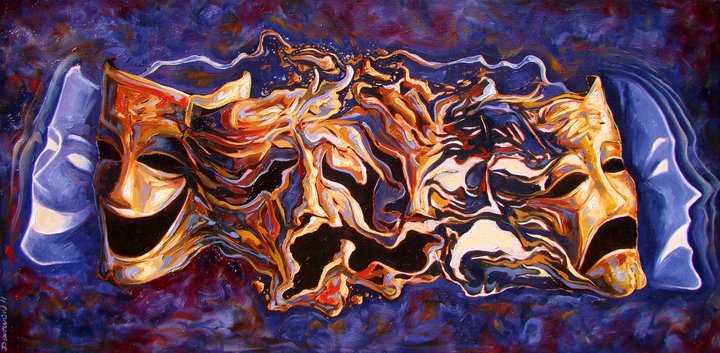
The Path of Irony
The Path of Irony, oil on canvas, by Darwin Leon.

JH: Do you have any links to your website or other work you would like to share with our readers?

LD: Yes, these are some stories that I’m particularly proud of:

Mary Rice” from Stone’s Throw Magazine:

I Met Death at the Patteson Drive Kroger” in Forge:

Balloon Ride” in Drunken Boat:

JH: Lori, thank you for taking the time to discuss your writing with us today. I just have one final question, on a personal level, what does recovery mean to you?

LD: I’ve known a lot of people who have died. I think that as we become adults, this is obviously part of the process of life, losing people, grieving. When I was 21, I lost my grandmother. And this was a really hard loss for me. So with subsequent losses, I remember that one. I remember how I thought nothing would ever be the same again. I remember how I thought that nothing would ever be good. But then, eventually, it was. Even though life wasn’t the same, I was able to find joy in it after a time. I think that’s what “My Own Private Wind” is very much about–the ability to find life after death, which is also, coincidentally, one of the themes that I’m writing about in my novel. I guess I write about recovery a lot.  It’s something that really interests me.

“The Red Car” by Beverly Jackson

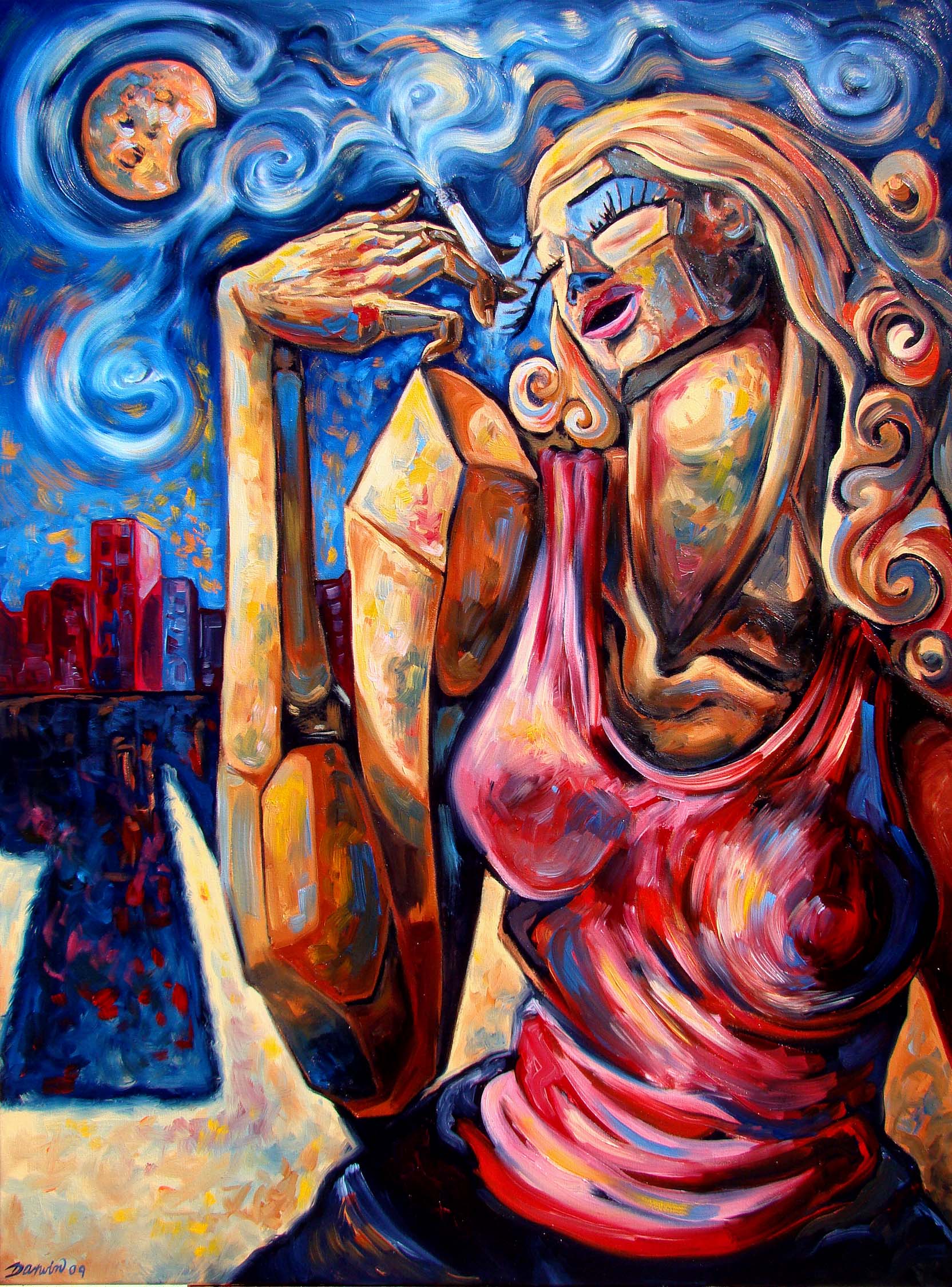
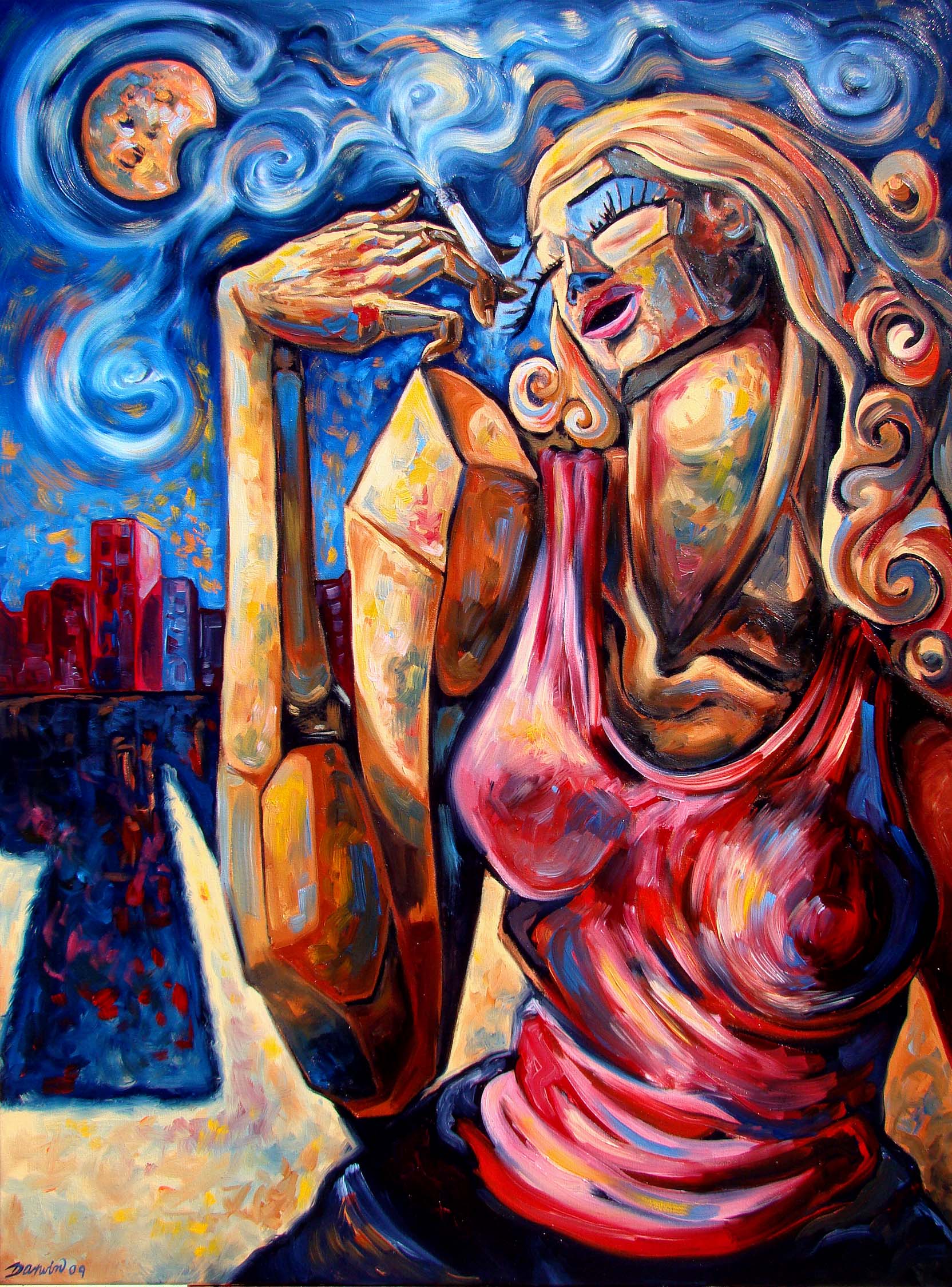
lMuse with Long Neck (Bev Jackson)
“Muse with Long Neck” oil on canvas, by Darwin Leon.

The daily papers in the back
seat spread atop the old women
who’ve come from the sex factory–
their mouths replaced
by labia, the desert beneath
their skirts sewn shut. The
passenger side is stacked
with old bones, like firewood.
Dead children and husbands,
parents and forgotten aunts,
polished ivory agleam
from years of travel. The driver’s
foot pumps the accelerator.
She leans into the wheel,
eyes squinting in the dimming
light. A ship of toothless smiles,
coy giggles–but the car
stands still, waiting, waiting
for the traffic light–three
black moons hung
above–to change.


Beverly Jackson is a poet, painter and writer living in Naples, Florida. She is widely published on the web and in print: credits here. She is currently working on a memoir “The Loose Fish Chronicles,” excerpts of which can be found here.

Read an interview with Bev here.

“My Own Private Wind” Lori D’Angelo

The Path of Irony (Lori D'Angelo)

So there was no “Oh, darling, I hunger for your touch” moment. It was not like that. We were not like that. We were quiet and reserved, the kind of couple who fades into the pavement, blends in with the blinds and the placemats, the kind of people you would walk by without noticing. We were like streetlights. We looked like we belonged.

We were supernormal, one dog, two kids, a minivan, a mortgage that we would have paid off in time. Then, Connor died. There was no weird cover-up/scandal with a bank. Just plastic cups and hospital straws and food that didn’t smell good enough to eat. And then. A funeral. Eternal rest grant unto him Oh God, and may perpetual light shine upon him.

Connor had life insurance and a will and all the things that people are supposed to have but don’t. A friend of mine from college with her long hair, coat down to her feet and boots up to her knees saying, “At least you’re taken care of, Gillie.”

“Yeah, right.” Because that was what I cared about. In the end. Money. I cared about that as much as folding the laundry and cooking dinner, which was why Connor did those things. Or had done those things. Before.

What there was was a quiet breeze on a day when there was no wind. What there was was a bright spot of sun for only me to bask in. What there was was a still, small voice.

We had no medium. It was just presence where there had been absence and then me saying to Jonathan and Gemma: I think Dad was with me.

Gemma at the kitchen counter looking up from painting her nails, the smell of her polish polluting the air, “Sure, Mom.” Gemma, 16 going on 30, talking to me as one talks to an Alzheimer patient. Jonathan, 13, standing in the middle of the kitchen, believing, hopeful. “You think he’ll visit me, Mom?”

I am reading the directions for the frozen lasagna off the package: Preheat oven to 450. It’s the kind of lasagna that comes in the orange box with a black plastic tray. The kind that all you have to do is turn the oven on and wait and wait.

Gemma, who is dark eyeliner and prominent silver crosses, saying, “Pizza would be faster and probably cheaper.”

“Not in this town.”

“Mom, this is the only town we’ve ever lived in.”

Gemma has a tendency to act like her life history is the only one that matters.

I am not looking to argue. “Okay, right.”

We move then. Like chess players. Gemma goes first. Me second. Jonathan last. Jonathan wears a polo shirt, Gemma mesh stockings. They look like they come from different reality shows. We shuffle into the living room, sit apart.

Jonathan, crosses his legs, sits up straight, and says to his sister from the rocking chair: “I bet Dad won’t visit you.”

Gemma doesn’t respond. Jonathan opens his mouth to wet his braces. He looks like a young Anthony Michael Hall. Gemma looks like a girl in a music video. We all sit tense. The flat screen TV we wanted so badly is turned off and covered with plastic. The stand beneath it has a layer of dust so thick that you could fill the vacuum canister with it. I think I see a cobweb, a spider.

Gemma, from the couch, with perhaps a note of excitement in her voice, saying, “This place would be a good room for ghosts.” She seems to be implying more.

I rise from the recliner, stand straight up. “I thought that we could use some time to talk away from the distractions.” That’s why I covered the TV, put the radio away.

“It’s cool,” Jonathan says.

“A little less conversation,” Gemma responds. Her nails have dried now, so she, too rises. It’s okay to reference the dead if they happen to play music.

Jonathan and I have nothing more to add. So we exit how we entered—Gemma first, Jonathan last. I serve as a buffer between them.

~

Four weeks before, I was lying in bed, sleeping late. The kids had gone to school. I should have gone to work, but didn’t. I knew that Hansel had been tolerant. Beyond tolerant. I waited for him to say: “Gillian, you are no longer needed here. But, so far, that had not happened. I think that part of me wanted to know how far his sympathy would go. The other workers talked. “Gillian was late again,” but Hansel, his wild hair flying high, straightened his tie and defended me, saying, “She just lost her husband. What would you do if you were in her place?” I knew, too, that part of his interest was more than friendly. It came from an attraction. There is something sexual in the grieving widow, the damsel in distress. Something that makes a decent man think, Lord, we have to help her.

I wrapped the sheet around my naked toes, phoned Hansel. “I’m going to be late,” I said.

He sighed. “Gillian. Is there reason?” He meant a valid reason.

The reason was I couldn’t bring myself to get up, to care enough. This was what I told him.

“You should see a doctor.”

It was on the train to work that I first saw Connor. Well, really felt him. That wind. The pages of my book blown open.

I turned to the passenger behind me. “Did you feel that?”

The man, a handsome black man with iPod buds in his ears, shook his head.

How could I merit my own wind in a closed in space? Was there an open window somewhere?

My thoughts didn’t go right to Connor at first.

It was later. Street chalk on the city sidewalks in blue and pink and orange. Let it go. Connor used to always say that. At first, I thought coincidence.

It was later. In the lunchroom cafeteria. The special that day at first read: Peace and Serenity. And then, a moment after, it didn’t. It was back to saying black bean soup and corn muffin.

I liked the other special better, so I ordered it.

“I’d like some peace and serenity,” I said to the woman behind the counter, whose long silver hair was braided and pulled up into a hairnet.

“What?” she asked.

“I’ll have the special.”

Hansel joined me for lunch. He didn’t ask if he could; he just did. He set his metal tray down across from me. I felt like we were prisoners. Or I was the prisoner. He was the warden, the parole officer, the one sent to make sure I made it through okay.

“Gillian, I’m going to have to fire you, if you don’t. . . ”

He tried to continue, but I stopped him. As I spoke, he sipped water from a red plastic cup.

“I know, and the problem is.”

This is the part that I can’t really explain at all. It was like. Time stopped, and everyone froze. I saw no one. But I felt. . .different.

I couldn’t bring myself to say what I would have said: and the problem is I just don’t care.

I felt tears running down my cheeks. “I’m sorry.”

“You’ve not cried since the funeral.”

“No.” I ate my soup with a spoon.

“This could be progress,” he said in a way that suggested interest.

I nodded. “I’ll try, okay. I’ll really try.”

~

For the next two weeks, I came in on time for work. I walked dutifully through the revolving doors and metal detectors. While there, I did what I was supposed to do. Hansel said he was glad to see the change in me.

“Before you were. Headed for promotion. And then.”

We stood in the lobby. With its hard floors and high ceilings, it felt like a museum, and I couldn’t help but notice how often Hansel found time to find me.

“I don’t want to talk about before.”

“I thought we agreed. Talking is good.”

“Sometimes. And sometimes it’s not.”

His hand on my shoulder. A touch of concern. I should mind more. Shouldn’t I? After all, Connor has just died. How long’s it been? An hour, a day, six months, a year. It’s been a year.

Wow. That long. So long and not long at all. I felt nauseous, a wave of queasiness in my stomach. I excused myself to the bathroom. On the mirror, someone has written with a finger or what looked like a finger: Let it go.

“Let what go?” I said aloud.

A woman in the stall closest to the door walked to the sink and gave me a strange look as she applied her red, red lipstick. Pink would be better, I thought. Red made her look too pale.

“I’m just talking on my Bluetooth,” I said. She acted like she didn’t believe me.

I waited till she has gone, and then five minutes more.

Another word came then. A series of them. Death. Let it go, Gillian. Live.

My office is ten floors up. I climbed the stairs instead of riding up. Hansel was waiting by my cube. A bit frantic, he questioned, “Where have you been? What happened? Is everything okay?”

I nodded.

“I am okay. Or I’m going to be okay. After now.” I looked at my calendar. The things I said I’d do yesterday, I did. It was a small step but still a step. I waited for him to go, but instead, he said, “We’re having lunch today.”

We’d had lunch together every day for the last two weeks, but, somehow it seemed an accident. We were just there together at the same time.

Then, he’d made a move to make it intentional. A step beyond, a step toward something else. Now, it was my turn. I had to let him know if we could move forward. Beyond accident to intention. He licked his lips. He waited. With his wild hair and square glasses, he looked nothing like Connor. Connor was wavy hair and working outside. Hansel is inside, office, business, business, business. Hansel waited. And yet, they are both compassion.

“Okay,” I said. “We’ll have lunch.”

~

The night I talk to the kids, I fall asleep on the train home and dream of Connor, and then I wake and think about my lunch with Hansel. It was just normal, except. There was this one moment where we both reached for the ketchup and his hand brushed my hand. An accident. But neither of us moved the hand away. Instead, we held them there. And then he said my name. A moment later, we were back to wherever we had been before, but it was not quite the same. Something had turned. That night, after Gemma has gone to practice guitar at a boy’s, a friend’s house, a boy who could be more than a friend, she hasn’t told me yet, but she will, Jonathan dries the dishes with a pink towel while I wash, and he asks me to tell him how I knew that it was really Dad, so I tell him the truth, which is simply this: Because I felt better.


Lori D’Angelo earned her MFA from WVU in 2009, and her work has appeared in various literary journals including Word Riot, Drunken Boat, Stirring, and Literary Mama.

Read our interview with Lori here.


Interview with Beverly Jackson

Elizabeth Glixman: Bev, I’ve always enjoyed reading your poetry. I am glad I have this opportunity to ask you questions about your work. The Red Car, your poem in the spring 2012 issue has different imagery and a different tone than the poems in your chapbook Every Burning Thing  (Pudding House Publications, 2008). Burning Thing’s poems were confessional to me. The Red Car doesn’t read that way. The imagery is surreal even magical. The women in the red car work at a sex factory. They are old and toothless with labias for mouths (amazing image) and there is a desert beneath their skirt (a powerful comparison). The traffic lights are not green, red, and yellow but all black moons (evocative image). The car is not moving. The /images elicit feelings of decay, stagnation, loss, aged women and their sexuality, economic exploitation and history. Do you agree that this poem is not like others you’ve written? What was your intention when writing it? Is it part of a larger group of poems?

Beverly Jackson:
Thanks, Elizabeth. I do agree that this poem is a little different. I don’t think it’s too off the mark of a theme that’s developed in my later work. A bit of surrealism seems to creep into many of my poems, especially those dealing with age. The first poem in my chapbook (borrowing from Rilke’s angels) is called Resurrection:

My own terrifying angels reappear after years of silence…
.. they dip into the bowl of my brain to wash their long white fingers…

The Red Car, however, is a more in your face with sexual imagery. Aging is this slowly evolving phenomenon that ultimately shocks most of us, I think. We still feel like our younger selves inside, but all has changed. Many adults who have been sexual beings feel suddenly like discards and unloved. Viagra has been developed for men, but women are mostly shelved for younger sexual versions of themselves. But for both genders, loss of sexuality is the taboo subject/the unaddressed grief of aging.

You mentioned that you found Every Burning Thing to be confessional. I’m guilty. I worry that it’s become an accusation these days to critique poetry as “confessional,” that it dismisses work as subjective self-indulgence. Do you, yourself a poet, worry about that?

It seems to me that all poets must be guilty, and I think it might account for the veiling of meaning and inaccessibility of much poetry. Just to avoid the accusation. However I don’t understand how anyone writes decent poetry at all without pulling out their own insides through their fingertips, trying not to leave blood on the page. So, I write what I feel—whether it’s about me personally or about others, it’s coming from some depths of me that I don’t tackle the same way in prose or painting. I guess The Red Car might be
considered confessional as well.


EG: I hear what you’re saying about the confessional poet label. I’ve had similar thoughts. I think a “confessional” poem can transform a personal experience into a universal one. I don’t think this is self-indulgent at all: “pulling out their own insides through their fingertips, trying not to leave blood on the page.” That communication of feeling is what poetry is about IMO. I find it hard to keep the “I” out of poems.

As to the veiling of meaning and inaccessibility of much poetry some people seem to like reading poems where things are not clear, they like to work at getting it. I can see how other readers might get turned off by that and look for poets whose work is easily accessible. Each to his or her own. Sometimes the “veiled” poems do seem like a form of hiding. Then again poets often think in terms of symbols so perhaps it isn’t hiding at all.

What poets have influenced you?

BJ:
My first influence at a very girlish age was Edna St. Vincent Millay. She is still a flower in my heart. Today I am enamored of Dorianne Laux, Thomas Lux, Chase Twitchell, and so many more. I’m not sure that my work is directly influenced by these fine poets, but they always inspire me to write.


EG: Along with being a talented poet you also write fiction and non-fiction are an artist and you were the editor of a print and online-lit magazine. How do you juggle all these activities and where is writing poems on your daily creative “to do” list?

BJ: Ha. I do all these things over decades, I’m afraid. Not all at once, at all. I can barely juggle lunch and a nap these days. I haven’t painted for a couple of years, and poetry is on the back burner until I finish the memoir I’m working on. So it’s sort of my own crazies that drive me from one endeavor to another. I have always felt there is not enough time to do all the things in this world that I want to do, and I’m cramming them in as fast as I can – including quilting, macramé, needlepoint, sculpting, collage, decoupage, and encaustics, tournament backgammon, to name only a few. I really do hope we all reincarnate because I’d like to have one lifetime to tackle just one endeavor and master it, for once.

book cover

EG: Do you think being a visual artist is an asset in writing poetry?

BJ: I don’t really know. They seem totally different to me. Painting comes from a place that doesn’t have words, so I hold it differently than the art of language. Emotionally they don’t even feel the same. I think there’s more joy in painting for me. It’s a kind of ‘dance’ and release. But my life doesn’t seem to want to focus on joy. Even though I have a very good time, writing seems more natural, and somehow (to me) more important.


EG The Loose Fish Chronicles is your memoir in the works. http://www.echapbook.com/memoir/jackson/ At this link are excerpts from the book and a quote by Herman Melville from Moby Dick of which the following is a part:

“What are all men’s minds and opinions but Loose-Fish? What is the great globe itself but a Loose-Fish? And what are you, reader, but a Loose-Fish and a Fast-Fish too?”

If this quote is from the book, please explain the choice and relevance of the Loose-Fish and Fast-Fish idea in the memoir.

BJ: In Melville’s time, when whalers threw a harpoon and it stuck in the hide of the fish, they had “dibs” on that whale and would chase it down without fear of another
boat stealing it because they had encountered it first, thus the harpoon held it “fast.” A loose fish was a whale that nobody had hooked, so it was fair game, anybody’s for the
taking. Melville pointed this up as a metaphor, and when reading Moby Dick, I instantly identified with it, since I have never been held fast to anyone or anything for very long. I’ve lived in dozens of different cities, countries, houses. I am without husband, children, parents, so truly a “loose fish.” So much of my writing has chronicled this loner lifestyle that I thought it was a fitting title and theme for the memoir.


EG: When will The Loose Fish Chronicles be finished?

BJ: Hopefully while I’m still alive. It feels like the endless project. But I’m guessing by the end of 2012.


EG: You’ve written your memoir as a series of short stories. I am not familiar with this manner of writing a memoir. I know of linked short story collections. Are there any linked memoir collections you know of on the market that may have influenced you? Why did you decide to write your memoir in this form?

BJ: No, I don’t know if it’s been done, though I’m sure it probably has. I had many short stories that were fictionalized versions of personal experiences. I decided to remove the fiction and let the truth stand alone. The truth is a loose fish too. I wondered if I was made of stern enough stuff to just tell it like it is, to be fearless It’s been a wonderful process. It’s very challenging to weed out the rationalizations, distortions and downright self-lies in telling a true story. In fiction, it doesn’t matter, so I find non-fiction much more difficult.


EG: I read on your blog that you are learning stock option trading. How does stock option trading compare to writing? Why stock option trading?

BJ: It doesn’t compare to writing. It’s the side of my brain that pays the rent and feeds the dogs and pays for the ink cartridges. I do it to make money. When I get good at it, I
hope to make a lot of money. Wall Street and stocks and bonds were always terrifying to me. Just to look at the Wall Street Journal pages of tiny lists of stocks with their secret
abbreviations and acronyms would make my eyes cross. But all the things that used to terrify me went on my Bucket List. I love conquering my fears. I didn’t have enough money to invest in stocks, but options are an inexpensive way to play the market. It requires much skill, so I’ve worked hard at it. I’m starting to understand investments now. (I used to be afraid of guns too. When I lived in North Carolina, I bought two of them, learned how to shoot them, and I just sold them the other day. I don’t need them anymore. I’m not afraid. Another item off the Bucket List.)

Muse with Long Neck

EG: I know you’ve done a lot of different things in your life: writer, artist, traveler, editor of Ink Pot, Literary Potpourri literary magazine. I imagine the memoir will be very interesting. Was it easy to know what to include or leave out about your life while writing it?

BJ: The memoir hasn’t been edited yet. Still a work in progress. I’m hoping an agent or editor will help cull what doesn’t belong in the book eventually. But yes there’s much to
write about. When you’re a loose fish, there’s lots to explore, and my life has stretched from 9 to 5 jobs to the New York stage and a stint on the Ed Sullivan show to fighting a
bull in Madrid, to say nothing of two failed marriages, myriad relationships and assorted dramas that they entailed. I’ve lived in North Africa, Trinidad, and Spain. I worked in the movie industry in Hollywood and rubbed elbows with celebrities. There’s more than enough material to use for the ‘bones’ of short stories, but the fabric covering them is the stuff of bildungsroman. And that’s what the book is really about. That journey which is so different for each of us, and yet somehow so much the same.


EG: rkvry is a magazine with a recovery theme. Recovery is defined in the magazine as “an act, process, or instance of recovering; a return to normal conditions; something gained or restored in recovering; obtaining usable substances from unusable sources.” How does The Red Car fit into this recovery theme?

BJ: When I submitted this poem to rkvry, I felt it was a fit because it was about misfits. Old women waiting to die, women who once “fit” and now they don’t.

Such people cry for resolution, for acceptance, for transformation. All of which can be generally encompassed in recovery.

There is no recovery unless there is an unhealthy or uncomfortable condition preceding it. For me, this is life. I feel like I have been recovering my entire lifetime from conditions of dysfunction, discomfort or dismay. The very fact of being born Homo sapiens is the condition. I would guess that most of my energies have been used in this lifetime to improve my condition, whatever level it may have attained. There has always been the next level, the next rung on the ladder of experience to be scaled. To me, it is a process – moving tirelessly from darkness to light for lack of a better image. Always waiting/hoping for the blacks lights to turn red, yellow, green. A recovery of sorts.


EG: Your take on recovery is a powerfully constructive perspective. It reminds me of this quote by life coach Michael Pritchard, “Fear is that little darkroom where negatives are developed.” You are changing the negatives in the dark room. That is inspiring.

BJ: Thanks very much, Elizabeth. Your questions and observations are very much appreciated. As a poet yourself, it’s lovely having you do this interview. I’m also very grateful to r.kv.ry for taking the poem and inviting us to this conversation.


Elizabeth P. Glixman is a poet, writer and artist. She is the author of the poetry chapbooks A White Girl Lynching, 2008; Cowboy Writes a Letter & Other Love Poems, 2010; both published by Pudding House Publications and The Wonder of It All, 2011 published by Propaganda Pressl.  Her latest chapbook  I Am the Flame is in the works at Finishing Line Press. Her author interviews, articles, book reviews and  non-fiction have appeared in Whole Life Times, Hadassah Magazine, and the anthology Chocolate for A Woman’s Soul II.  Visit her at http://elizabeth-inthemoment.blogspot.com/

“For a Long Time” by B. Chelsea Adams

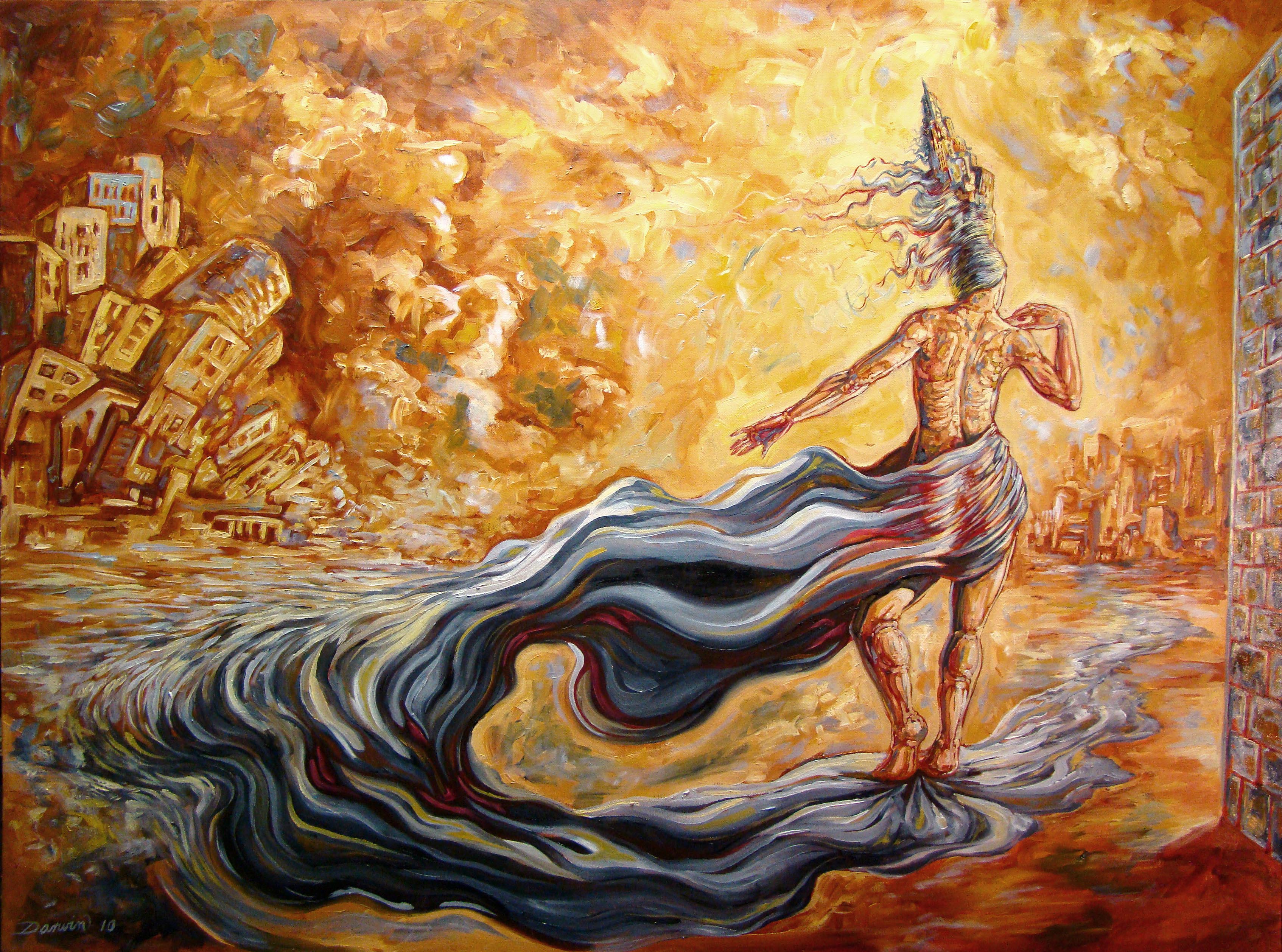
(For a Long Time)finalgoddess1
The Arrival of the Goddess of Consciousness by Darwin Leon.

I wasn’t drawn
to trombone,
sax or drum.

During those heavy days,
my head couldn’t hear
through the sadness.
Even my feet and shoulders
would not be stirred
by harmony or dissonance.

At last
I pushed the heaviness aside
like wind shoves clouds away.

And tonight, I’m owned again
by slide trombone, tenor sax,
snare drum.

I’m clothed in their cool silks,
loose scarves.

Slow licks riff
across my breastbone,
up and down my ribs.
I sway back and forth, hardly able
to stay seated.

The waiter thinks it’s the wine.
The bartender cuts me off.
They don’t know
each measure is being written
into me, deep inside
breast and belly,

that when I leave
I will swing down the pavement,
and in a syncopated rhythm,
sing and scat to the moon.


B. Chelsea Adams received her MA from Hollins College in Creative Writing and English. A chapbook of her poems, Looking for a Landing, was published by Sow’s Ear Press in 2000. Her stories and poems have been published in numerous journals, including Poet Lore, Potato Eyes, Albany Review, Southwestern Review, California State Poetry Quarterly, Huckleberry Magazine, Union Street Review, Wind, Lucid Stone, Rhino, and the Alms House Press Sampler. Java Poems a chapbook celebrating her addiction to coffee was published in 2007. She retired after teaching at Radford Univerity in Virginia for 23 years.

Read an interview with Chelsea here.


“The Hardest Thing” by B.D. Wilson

The Worst Blind (BD Wilson)
“The Worst Blind,” oil on canvas by Darwin Leon

The phone rang. Tess stared at it, saw the payphone number on the call display, listened to it ring again. Halfway through the third ring, she grabbed the receiver, lifted it to her ear. “Hello?” She held her breath.

“Tess?”

The air she was holding escaped in a rush. Her shoulders tensed, and her fingers curled tighter around the receiver. “Yeah, Dave, I’m here.”

“Tess, oh thank God, Tess.” His voice sounded sore, like someone had taken sandpaper to his throat. He coughed into the phone with an explosive noise that made her pull it away from her ear for a moment. “I need your help, please Tess.” The words came to her from a distance. She brought the phone back to her ear.

“Dave, I–” She stopped talking as he whimpered on the other end of the line. She drew in a deep breath, felt her fingers clenching now, nails digging into the plastic. “I told you last time, you can’t call me until you’re clean.”

“I want to be, Tess. I really do. I just– I can’t do it alone. I need your help, Tess, please.” He coughed again, hacking noises that had her picturing his blood-spattered sleeve, thick blackened blobs flying from his lips.

“That was what you said last time, and the time before. Too many times, Dave.” She tried to keep her voice soft and firm, heard the waver in it anyway.

“I can do it this time.” His tone was eager, the sound reminding her of childhood summers where he’d talked about becoming a vet like his grandfather, and she’d planned the opening of her own restaurant.

She’d made it; he hadn’t. “I know you can.” She didn’t have to fight to sound encouraging, at least.

“You have to believe me.”

“I do believe you, Dave. I do.” Her eyes started to sting, and she blinked fast and hard to get them to stop. “I believe in you. You can do it if you set your mind and try, really try.”

“Can I come there?” The whine wasn’t as hard to listen to when it was through a phone line and not face to face, but it still made her shake her head and bite her lip.

“No, Dave, you can’t.” It was her voice that sounded sore now, strained.

“But you just said—”

“I know you can do it, but I can’t help you.” Her eyes had stopped stinging, but the display panel on her phone was now just a watery blur, the number illegible. “You know what you have to do. We went through it last time.” And the time before. And the time before that. “This time, you have to go by yourself.”

“I can’t do this by myself.” He coughed again, a deeper, liquid, sound.

She closed her eyes and felt the hot tracks of the tears that seeped out and crawled down her cheeks. “You can, Dave. You’re strong enough. You just have to remember that you’re strong enough.”

“I’m not, Tess. Please, I need you. I need your help. I don’t know what to do.”

She bit her lip again, felt the chapped skin crack, tasted blood. “You do know. You just have to do it.”

“I can’t. Pease, don’t abandon me, Tess.”

That made her gasp, the indrawn breath wavering. “Dave, don’t–”

“Tess, please.” He didn’t wait for her to finish. It was always the same. If he begged enough, she would give in. He would come, try for a day or two, and then disappear with anything pawnable. She wouldn’t hear from him until the next call, the next promise to change. She couldn’t do that anymore.

“I’m sorry, Dave. Call me when you’re clean.” She set the phone down in its cradle with a soft click, and breathed in, then out. She did it again, measuring the pace. When she could get through the repetition without feeling the air catch in her throat, she opened her eyes and used one hand to wipe away the tracks on her cheeks. The other still sat curled on the receiver, now light and listless, waiting for it to ring again. This time, it stayed silent.


B.D. Wilson is a writer from Edmonton, Alberta, Canada whose work has appeared in the anthologyDark Pagesfrom Blade Red press, Fictitious Force, andNiteblade Fantasy and Horror Magazineamong others.A firm believer in a virtual existence, BD’s home on the Web is located athttp://www.bdwilson.ca

“The Hardest Thing” originally appeared in Long Story Short, March 2008.


“Arriving” by Tommy Dean

Unfinished Business (Tommy Dean)
“Unfinished Business,” oil on canvas, Darwin Leon, 2010

Jake pulled into the driveway and  saw Ruth sitting on the front porch steps, bundled in her parka, wool mittens, and a black stocking cap. Her arms cradling her legs, she looked like a child waiting on her father to arrive home from work. In the headlights, her eyes were radiant in the brisk chill of the coming dark. He cut the engine and scrambled out of the car. The snow crunched under his feet.

He placed his briefcase beside her and sat down on the step, careful to avoid the melting snow. She leaned her body into his and he put his arm around her. He couldn’t feel the heat of her body through the heavy fabric of their coats.

“You missed them. They built snowmen.”

In the neighbor’s backyard sat four snowmen in different shapes and sizes, each, he imagined, made to represent a member of the family. He concentrated on their features and was mildly shocked by the placement of the eyes, mouth, and nose on the smallest one. It looked like an expressionist painting, with everything slanted to one side. If it were his child’s he would have waited until the boy went inside and then corrected it.

“How long have you been out here?”

“An hour, who knows. After the appointment…I don’t know.”

He was amazed at the airy silence; shadows brave against the dying sunlight bounded around corners as the streetlights popped on. The search for the perfect excuse stirred in his hands keeping him warm. The snowman made him anxious, as though its imperfections would somehow ruin his explanation.

“I was sitting here trying to think of a way to hide it from you, but when those children came plowing out the  door, I lost it.”

He stood then and looked down at his wife; her face veiled in his shadow; her eyes liquid; her cheeks wind burnt and chapped, and then she shivered.

“Ruth, I’m sorry. That couple showed up late and there was all that snow melting on the hardwood floors. I couldn’t just leave it that way.”

“It doesn’t matter. Forget it, okay?”

She stood, wrapping her arms around his waist. She looked up at him. A strand of hair came out from underneath her hat, resting over her eye.

“Dr. Lesko went over our test results again and there are just too many of those things. God I can’t even say the word.”

“Cysts?” he asked, his voice sounding too loud in the muted darkness.

“Yes. God, cysts.” She crossed her arms over her chest.

“If there was something I could do…”

“So you’re off the hook.”

“But, I’m still you’re guy, right?”

“Oh hell, you know what I’d love?” she said. “I’d love to wake up tomorrow and look out the window and see them gone.”

In front of him a vista of white decorated the neighborhood like a baker’s frosting: cars, roofs, yards, and scaly tree branches doused in confectioner’s sugar. Above and below him, sky and ground shimmered like tiny  penlights.

“I could do that, I could.”

“God, I’m so…so utterly…Don’t I deserve to be angry?

“What if we had something else to concentrate on?” Jake asked.

“Not you, too. Don’t patronize me, not now.”

Staring down the street, he thought of all the parents putting their children to bed, giving them a quick kiss on the forehead, before heading off to their own rooms, where they’d cuddle together under the heavy covers. They’d fall to sleep knowing their children were safe and warm, happy to have another day in a happy life. Well that pissed him off, because he wanted to know just who had decided that they couldn’t have the same damn things.

“I can’t look at them anymore. It’s like they’re watching me,” she said.

“Go, then.” He softened his voice. “I’m right behind you. I just need to get something from the car.”

She sighed, her breath turning to fog then dissipating into the night. “Take your time.  That’s all we have left.”

She clomped her shoes on the porch, creating watery footprints. After she closed the door, he watched her walk into the house, coat and shoes still on. The water from her shoes would hide in the carpet and later he would step in it, soaking his socks and freezing his toes, his circulation too slow to keep his feet warm. Every winter they went through the same thing, he’d ask her not to wear her shoes past the kitchen and she would claim to forget. Ten years of marriage and nothing had changed.

He dashed across the street, almost slipping, but regained his footing and stood in front of the two smaller snowmen. He raised his foot and kicked at the base. A chunk of snow collapsed to the ground and the midsection shuddered and canted to the left. He punched and pawed at the baby until his hands were cold, red, and raw with the crust of melting snow. A carrot, broken in half, lay at his feet near the squished Oreo that used to be its eye. He turned his back on the mess and walked away, knowing that his footprints would harden overnight, and that tomorrow when the neighbor stood on their porch they’d forget, for just a moment that nothing would change.


Tommy Dean works as a high school English teacher. A graduate of the Queens University of Charlotte MFA program, he has been previously published in Apollo’s Lyre, Pindeldyboz, Boston Literary Magazine, Blue Lake Review, and 5X5.


Interview with Marko Fong

Myra Sherman: Marko, I really enjoyed your short story Simulators. It’s such a unique portrayal of addiction and recovery. I don’t believe I’ve read anything like it. Your ability to convey a serious subject in a fantasy world, in a manner both humorous and chilling, is remarkable. And with internet addiction now becoming a concern, the issues addressed go far beyond the world of gaming. I was most reminded of the Sci-Fi television series, Caprica, and its exploration of the dangers of living virtually. And that brings me to my first question. You’ve set this in what appears to be an alternate reality in the early 1980s. The time period is part of the story’s fascination, but still seems an unusual choice. Was there a particular impetus or inspiration for this story?

Marko Fong: Myra, first thanks for your always kind and thoughtful take on my story and I need to check out Caprica. Oddly, Simulators grew out of my real attempt to create a computer game in 1986. At that time, it was still mostly shooting or maze games. One of the exceptions for home computer was flight simulator. Supposedly, you could learn to fly without the danger or expense of actually flying an airplane. The mechanics of being a pilot aren’t that complicated. The thing that needs to be simulated is the fear of dying should you make a mistake. The computers of the time couldn’t convey visceral panic. You need to do these things with the instruments vibrating, the wind blowing, and your adrenaline screaming, “Help me Mr. Wizard!”

As mentioned in the story, AIDS and herpes were then on every single-and-looking person’s mind and Erica Jong’s “Fear of Flying” was still a Tonight Show monologue staple. Pre-internet computer games weren’t interactive yet. A “date simulator” needed to have something resembling artificial intelligence. Enter the Turing Test.

Alan Turing helped crack Enigma, one of the German codes in World War 2. Turing also happened to be gay and in those days gay dating involved a level of cryptography beyond the alphabet soup on Craig’s list or Perfect Match. The Turing Test was a simple humanistic measure of artificial intelligence. If a person couldn’t distinguish between the answers given by a computer program and those given by a real human being, then it could be said the program had achieved a level of artificial intelligence. We now know better – you can replicate human behavior, but actual intelligence is different, which explains Rick Santorum.

As with most magic (finding love being a form of magic), the illusion really comes from the willing suspension of disbelief more than it comes from making something impossible happen. It was pre-Nintendo Wii, but I wanted to attach sensors to a computer and use the feedback to determine how the computer game responded. The other “self” in the date simulator program would just be a projection of the player’s excitement level. Sadly, the friend doing the coding didn’t have the foggiest idea of what I was after and I was too lazy to write it myself and wound up without a Wozniak. Anyway, instead of becoming Steve Jobs 2, I turned the idea into a short story that no one would publish. In 1987, it wasn’t literary and it wasn’t science fiction. I should mention that I’m very shy in person and I had no idea how a good date was supposed to go.

Weirdly, the real world arguably caught up with the story. Mary took pity on Simulators and saw that it was about addiction and recovery and not just speculative fiction.


MS: I was quite taken with your prefatory note. It both places the narrative in the past and foretells the future. The ending may also offer insight into a time when we were just human, which adds so much. Did you first conceive of Simulators without the prefatory note? Or did you start with the note, and then write the story?

MF: I added the note in 2011. When I resuscitated the story, a few people told me that it was still funny, but arcade-based computer games felt too dated. I was reluctant to eliminate all my jokes about quarters. I stole a page from Canticle for Liebowitz and Atwood’s Handmaid’s Tale and it somehow added that same layer of “might have happened or maybe already did.”

Eye Always Was by Darwin Leon

MS: Then there’s the last line, I felt the coolness of her wedding band when she grabbed my joystick. I’m sure you’ve had many different reactions to this ending. I first thought it was funny, and not literal, but then began to wonder. I’m sure ambiguity was part of your intention, but could you clarify, or at least share how the line came to you?

MF: Those who hate electronic gaming call it a form of masturbation and I always found the visual similarity between joystick and phallus ironic. Addiction to pornography is partly due to the fact that the image you’re getting off to doesn’t have a mind of her/its own, but the fantasy is that it/she does and she wants to do these things with you. I had this image of Jerry and Gretchen turning themselves into flesh and blood date simulators.

Some readers were really offended by the drift into porn ending and I find that’s often a sign that you should keep something. It means you provoked someone emotionally. Gardner talks about the fictive dream, but I sometimes aim for the fictive splash of consciousness.


MS: One of this story’s strengths is your strong depiction of addiction. You’ve captured the obsessive-compulsive quality, rationalization, and escape into internal fantasies. At least that’s how I think of addiction. I’d love to know your thoughts on this, how you see addiction.

MF: Funny you should ask. In your wonderful short story collection, Jailed, I noticed how many of your characters were both affected by the literal walls of the jail but also how they were prisoners of various addictions which land them and keep them there. We get addicted because it’s a shortcut to some pleasure center of our brain that screens out pain. Over time, the path to that pleasure center gets grooved and at some point you start spending most of your life inside that groove. A rivulet of chemicals turns into you-on-this-little-raft-on-swollen-Amazon-rapids. The rush is very psychological and internal, but the triggers are very physical. It’s why the joystick and the quarters are such big players in the story’s physicality. Once he starts the routine, Jerry’s cycle gets shorter yet more consuming.


MS: Another intriguing idea was that people didn’t want personal home-Simulators. I found this surprising. Could you explain your thinking here?

MF: The one very dated bit in the story is the big blue box instead of the various tiny personal devices implanted into modern life. I recently lost my cell phone while on vacation and I felt some mixture of being either naked or having had something amputated. Twenty plus years ago, you could play Tetris or Space Invaders on your home computer, but I had noticed that it lost its appeal much faster. In the arcade, you could get obsessed with posting one of the 10 high scores even though you didn’t have the faintest idea who “MarylovesJack10” was, but it was like a dialogue with that unseen person. Once you made the “hall of fame”, you” owned” the machine, but someone else could show and lift his leg and mark your territory. Alas, Simulators didn’t anticipate the internet, so Re: the ownership thing, boy was I wrong! Explains why Steve Jobs is a famous dead person and I’m an obscure writer with a day job. Even when I saw the future, I couldn’t see enough of it.

For what it’s worth, I miss pinball, my long ago addiction. It was this 25-cent celebration of the marvels of the electro-mechanical age. “Tilt” made it alive and sexual in some way, even though it was unapologetically a machine. Also that thwack sound when you happened to win a game or got a match for a free game. Way more satisfying. My neighbor’s wife bought him a restored pinball machine. It just wasn’t as much fun without quarters. Had they kept that part, I might have covered their mortgage for them or at least their dsl connection.


MS: How would you explain the recovery process in your story? And what are your thoughts on recovery in general?

MF: I was trying to raise the question are Jerry and Gretchen recovered? Their real relationship as husband and wife becomes a kind of methadone. Is this a happy ending or are they just free of the physical addiction to the machines?

I think real recovery involves some form of fundamental change in your relationship to yourself. It’s very deep stuff and there’s no magic formula which is I suspect why Mary’s been able to build a journal around the subject. The Simulator in the story is really only a projection of the player. Jerry’s not really recovered until he’s open to love with Gretchen as another independent soul with all the risks and surprises that come with that. As it happens, the “soul” and whether or not it’s an illusion was one of the philosophical questions raised by the Turing Test.


MS: Thanks, Marko. Any last thoughts or comments?

MF: I still wonder how Darwin Leon knew what I looked like. Thanks for your very insightful take on Simulators and can I borrow some quarters?


Myra Sherman is a clinical social worker, and past r.kv.r.y contributor. Her short story collection, JAILED, is available from Desperanto Press. More information about Myra and her writing can be found at www.desperanto.com and www.myrasherman.com

“The Illusion Shatters” by Danica Green

The Passion of the Fallen (Danica Green)
The Passion of the Fallen, oil on canvas, by Darwin Leon.

She couldn’t scream loud enough to scare the vultures away, tired as she was of them picking at her corpse and feasting on the rotting heart that she felt so distantly attached to.

May was her favorite time of year, the night sky looked clear beyond the haze of her imagination and the stars shone lucidly through the pink fractals floating through the sky.  She couldn’t make out the figures on her watchface but it didn’t matter, one hour blurred into the next, and the next, until she was staring at an orange dawn though in truth it was still the dead of night. She yawned against her rucksack clutched to her chest as the stars came back into view and the trees spun lazily around her like fireflies, glowing with their own ethereal light.

She stood. The morning was raw in her mouth, infused with stale vodka and the taste of cigarettes. She took a sip from a bottle of water and dressed herself like a zombie, empty-headed with an instinctual hatred of the dawn. The carpet under her feet crunched like ice, the remnants of a thousand hasty junk food meals that she would never clean and she descended the stairs in a haze. She walked to the kitchen and sat down at the table, running a brush hastily through her tangled mass of hair and pinning it out of the way as her eyes fell to the program that stared up at her from the tarnished wood. “In loving memory” it said, “Elena Moore: January ’56 – March ’07. Gone but not forgotten.” She collected her handbag, straightened her long white dress and walked out of the door, tripping as she did on the pile of unsorted letters she couldn’t bear to touch.

She fell. Face down onto the dewy grass, her limbs contorted and not responding to her requests. She closed her eyes and breathed deeply the scent of the moist earth, trying to connect herself with reality though the fractal pictures haunted her even here, inside of her own eyelids. Her mind tried to grasp something, anything in this place that would take her back to that beautiful moment of enlightenment several hours previously, but her mind was racing, her decaying limbs, the dancing trees, her mother, the water-drop maggots that edged their way across her face. With an effort she braced herself against the ground and pushed.

She rolled over. Her neighbor stood over her, proffering a hand and asking if she was okay. She took vague stock of her bloodied knees poking through the tear in her dress like a corpse in the snow and stood of her own accord, ignoring the offer, neglecting to return to change her clothes or clean away the crimson fluid that worked its way down to her shoes. She walked to the car and got in, the engine roaring to life, sounding dull in her ears and she drove instinctively towards the graveyard. Stopping outside she saw them, the guests, the ghosts, all in white and moving around like specters come to haunt the last lingering memory of her mother. Moving towards them in her own otherworldly way she stared blindly, ignoring the comments, the condolences, the whispered fears of her state. It was then she saw it, the first thing she had taken notice of all day. The pale face, a deathly pallor accentuated by sleepless eyes ringed with tired bruises, the hair slicked down with two weeks worth of grease and the eyes, haunted, blind, dull, missing some vital indication of the soul that should lie within. She dismissed this vision and moved on, walking into the church and clenching her fists at her side.

The earth felt good as her fists clenched harder, digging her fingers into the ground, burying herself, grounding herself, finding a hold on something stable. Her breathing sped up to inhuman levels but she didn’t notice. She believed she had stopped breathing hours ago. The fractals in the night sky increased in number, illuminating the darkness, scraping across the canvas like fast-moving clouds, twisting and curving, and before long the stars joined in with their macabre dance. She hauled herself onto her knees, weeping bitterly and unknowingly, and tried to stand, swaying and tripping as with a final effort she managed to get to her feet and take stock of the field around her. Shapes moved in the darkness, demons come to take her away to the underworld, and she ran fitfully towards the trees that surrounded her, moving closer, then farther away, and closer again until she ran into one, shattering her wrist but not noticing the pain. The world tilted. She had taken too much. Pressing her back against the rough oak she slid towards the ground.

She sat down. The front pew of the church in sight of everyone, so much pity and scorn directed at her. She was alone here, no other family to speak of but her mother’s many friends behind. She stared at the coffin, barely seeing it as she had seen nothing that day, her mother’s rotting corpse a distant consideration in an otherwise blank mind. The priest began to speak, condolences and best wishes for the aggrieved, sentiments about Elena, stories from her life, joking and forlorn like an old friend though he had never known her. The service seemed to pass in a blur and she was the first to exit, unhurriedly, walking through a dream that just wouldn’t end. Someone grabbed her arm.

“Jennifer? What on earth happened to you?”

She was confused at first, but then followed the newcomer’s line of sight to her knees, crusted blood now brown like shit smeared across her, the scabs cracking and weeping like she herself. She looked up, unable to speak, unable to recognize the face of the intruder upon her solace, unable to understand what to do through the powerful and desperate need to go home. She tried to pull her arm away.

“Jennifer? Are you okay? Jennifer??” said the newcomer, eyes wide with fright, as were Jennifer’s own. She tugged harder, furiously trying to get away and the grip finally broke. She ran away from the watching crowd, ran to her car and got in, picking up the rucksack in the passenger seat and clinging to it in a daze.

She clung to the tree as an infant clings to its mother’s breast, desperate for the contact of something familiar in this alien world she now inhabited. Her heartbeat had sped unnoticed to a dangerous level and her mouth was dusty as ash. She bent like an animal and began licking the dew from the grass, ripping up the earth and shoving handfuls into her mouth, but it didn’t help. She could taste death. Beyond the rising panic, beyond the forgetfulness of reality she remembered her rucksack, left in the field when she ran to the trees. She tried to stand and fell, openly sobbing as she tried to claw her way back to her bag, crawling in fits and starts as the rigor mortis set in to her festering limbs and her body seized up. The world had become a carousel, everything spinning in one direction, blurred, unfocused, unable to make out either the mass of trees or a single blade of grass, but she felt where her rucksack lay, she knew it, and she knew she had to be with it. After what seemed an eternity she felt it under her hand, damp, and she clutched it to her chest though the small wave of relief was quickly swallowed back into the panic. She lay on her side and undid the fastenings. She opened it.

She opened the door, not closing it or taking off her shoes. She wasn’t even sure that she was coming back. She placed her rucksack on the kitchen table and stared at it for a long while, a small glimmer of common sense trying to slip in through the horror. Eventually she relented, as she always knew she would, and she reached into the rucksack, fingers resting longingly on something unseen inside before shifting to her focus and pulling out a dirty make-up bag. She walked to the sink and grabbed a spoon from the drawer, bent and blackened like most of them were, and began to cook her fix. As the needle penetrated her skin and released its poison she relaxed, pulling herself back to the fringes of normal, a vague sense of peace washing over her. But it was at that point, now, that it didn’t give her what she was looking for. It killed the paranoia, the feeling of detachment and brought her closer to a normal state of mind than she could have been without it, but through that normality the pain of her mother’s tragic death began to seep. She started to cry, fully realizing her emotions and flew into anger, throwing the make-up bag to the floor, screaming to the heavens and dry-heaving with grief and rage and hatred. She picked up the bag and cooked up another batch, and another, and another, each stab into her vein bringing numbness and relief from emotions she didn’t know how to deal with any more. Leaving the paraphernalia by the sink she grabbed the rucksack and left her mother’s house for the last time, clicking the key in the lock as she went.

The lock snapped open. The pages of the diary she had pulled from the rucksack were covered in an elegant hand in blue ink with hearts and flowers and happy faces doodled in the margins. She could not see this. She was so far gone that she was navigating the pages through touch. She felt for the crease, the crease that marked the last page her mother had written on and she ran her fingers tenderly across the script. She couldn’t see the vultures any more but she knew they were there, the vultures and the demons come to collect her body and her soul respectively. Her chest on fire and her heart close to bursting, she shook with a tremor that threatened to push the diary from her hand but she would take the thing to Hell if need be, to remind her, to always remind her, of the part she had played in her mother’s death, of the reason she was going to die today. She couldn’t see the writing but she knew it by heart, that last diary entry: “9/11 2001. Going to the city today. After more phone calls than I can count I have finally found an affordable place. Doctor Stevens seems a pleasant man and he says they have a high success rate. I have high hopes for Jennifer now, she’s willing to quit, she wants to quit…but she needs help. I’ll do a bit of sightseeing as well, take some pictures for her so she doesn’t get scared about the move. Hoping the facility is nice. I love her so much….” Jennifer closed the diary and  clutched it to her chest. She curled into a ball as a sharp pain exploded through her chest and her body gave in to the poison in her system. She couldn’t scream loud enough.


Danica Green is a UK-based writer with work appearing in over 50 literary journals and anthologies, including Smokelong Quarterly, Neon Magazine, PANK and Eclectic Flash.