Interview with Heather Harris

Heather Harris

Joan Hanna: We were delighted to have your poem, The Miracle, included in our January issue of r.kv.r.y., especially since it was our war/military themed issue. What did you think of the illustration we chose for your poem?

Heather Harris: Thank you so much!  I’m honored my poem was chosen for this issue, and to have my work included with so many great pieces.  The illustration chosen to go with The Miracle is striking.  It goes well with the /images/events in the first stanza, which are more about what a miracle is expected to be, as opposed to what you usually end up getting.  I like the depiction of ritual, as well, since it mirrors an ancient version of what’s going on in the poem: a call for divine intervention.   The fact that the image is originally from a children’s book just makes sense, the events that inspired The Miracle took place when I was very young, and I tried to write the poem with my feelings from back then at its core.

JH: There were some stunning /images in your poem. Can you talk a little about the specific incident or influences that may have inspired your poem?

HH: The Miracle is about two specific events, but I really don’t want to go into too much detail for fear of ruining the poem for someone else.  I will say the main concept of the piece is that, while there are bad things that shouldn’t happen but do, there are also bad things that should happen but don’t.  If there was a chart somewhere maybe you could study it to understand why things are happening, and give a couple of your lucky breaks to someone else.  Unfortunately, no one has that privilege as of yet, so we just have to make our peace with everything that does and doesn’t happen.

A lot of the imagery in the poem, the outstretched hands, bowed heads, and stained glass, come from having grown up in church.  Church can be a comforting, protective environment, and yet that stained glass is shattered, and what those outstretched hands are holding has fallen apart.  In some ways I suppose The Miracle is about losing your sense of safety in a world where things are beyond your understanding or control.  As you grow up you realize things don’t always go how they should, and you spend the rest of your life coming to terms with that.


JH: I can appreciate wanting to keep the incidents as inspiration and allowing the poem to stand on its own, which it absolutely does. Can you talk a little about some of your favorite poets and how you think they may have influenced your work?

HH: I’ve always appreciated anyone who could take every day things and make them interesting.  For example, Tom Leonard is a Scottish poet who writes almost exclusively on the mundane, “the case for lower case” being my personal favorite of his.  Shel Silverstein is another good transformer of nothing into something.  When I was growing up I read his books over and over again, fascinated by how he made things like your refrigerator and the sidewalks seem full of potential.  What I learned from writers like this is that the most powerful words are simple ones, and the most striking /images are common, so long as you take care to look at them properly.


JH: These are very interesting influences. I love this idea that the “most powerful words are the simple ones” it says so much about how you approach your writing. Would you like to share links to either your website or other publications with our readers?

HH: I have a blog at forniceties.blogspot.com, which has a list of my publications, along with all sorts of other little tidbits about life, the universe, and everything.


JH: Once again, Heather, thank you so much for sharing your lovely poem and insights with our readers. Just one final question: What does recovery mean to you?

HH: Well thank you for calling my poem lovely, and while I’m not sure I’ve shared too much insight with your readers, I hope they at least enjoy our interview.  To me the biggest part of recovery is accepting that what has happened cannot be changed.  Thinking about what could or should have been holds you back from moving forward, and generates even more pain about how things currently are.  You have to find that balance between remembrance and regret, which is difficult, and might not ever be mastered completely.

Interview with Benjamin Buchholz

Ben Buchholz

Mary Akers: Hi, Ben. Thanks for agreeing to talk with me today. I just loved your story “Runner.” We’re honored to have it as part of this issue. I’ve been reading through some of your online work (links follow the interview, below) and I would love to talk with you about form for just a bit. You have some very unusual forms for your short stories. How do you decide on the best shape for a short story and do you find inspiration for form in the work of any particular authors?

Benjamin Buchholz: Well, Kerouac hit me like a bombshell about five years ago.  And, by bombshell, I mean that with a little bit of a negative connotation insofar as it set me back in the writing of longer work (I tried, unsuccessfully, to place two full-length stream-of-conciousness novels) and had to relearn much of the art of writing-under-control in order to produce One Hundred and One Nights. Although, come to think of it, OHON also plays with form, albeit in a longer and slower way, taking the framing device from 1001 Nights and using it as a starting point until it eventually drops away as the narrator evolves (or devolves) inside the story.  Now I find that short fiction often gives me an outlet to just riff, to let that wildness and associative fun explode and go where it may. One must adhere to Poe’s dictum, though, that every word — and also every structure — ‘tells’ in a short story. I think that is the older denotation of ‘tell’ too, not the ‘show’ vs. ‘tell’ debate of modern writers’ clinics but the telling of churchbell, resonance. Every word and every structure is precious and should therefore be applied to bring about a state of feeling or understanding in a reader. I hope the structures that some of my stories take contribute to that feeling and understanding. I’m not sure I conciously decide on form, certainly not at the outset of writing. Maybe afterwards, if something strikes me as worthwhile, as contributing to the overall expression, then I’ll add or sharpen a form.


MA: What is it about the use of numbering in your fiction that speaks to you? I find it fascinating. Is it the ordering? Is it the juxtaposition of two ways of making meaning out of a crazy world: letters and numbers? Is it driven by your character’s mind? Tell me, please, what’s up with Ben Buchholz and numbers? 🙂

BB: Numbers make the mind stop and shift into a different mode. They break the stream of scansion and signify something, in different stories and in different places different somethings. A lot of my characters struggle with various amounts of war-induced suffering and often are, like Bill Murray’s “What about Bob?,” trying to piece just little simple snippets of their lives back together again, one thing at a time, one thing after the next, baby steps to the door. Numbers show that chronology and that simple in-the-now fixation that is necessary for a lot of people to move through shattered lives. Numbers add chronicity to a tale and they do it in a way that is incremental rather than gradual, jerky, freeze-frame.  They help me, sometimes, delimit and parse a story into only its essentials.


MA: I love your use of stream-of-consciousness and inventive word play. I was especially moved by “Mixtape for Annie Purpose” which includes the passage: “…no, hands out, show me, and the circus trick, gone, gone, headshots, all of them, in series like a photobooth confessional, palms up and empty, he’d seen her eyes, flashpoint, the facsimile of them, blank, folded in a motion into the inner crease, into the sleeve, nowhere and free and they were his, all his, on his heel, saluting, out and down the dustmote hall, clatter-waxed footfall, not knowing who but wanting, yes” That clatter-waxed footfall just absolutely sends me. Where do these onomatopoetic word-mixes come from? Do you wake up at night and have to write things down that bubble up into your subconscious?

BB: The writing doesn’t happen unless I make myself write. So, nothing bubbles of its own in the middle of the night.  But, once it starts very often it doesn’t stop until its done (or I’m exhausted) like a possession. If I’m writing in the SOC mode then there is a big alliterative suggestion that helps move the sentences from word to word and sometimes the ‘graphs from sentence to sentence. I also find a lot of tension in word choices, where one word can be made to say two things and leave two impressions in a reader’s mind, thereby confusing, troubling, wrapping the reader into a state they might not otherwise experience. That one word then becoming, later, a source for follow-up impressions of the same dual nature. “Clatter-waxed” is on the precise and onomatopoetic side of this equation, whereas when you look at something earlier in that same sentence, like “headshots . . . confessional” I hope the reader has to back-up, break scansion, reread, and decide whether to prefer the image of the photobooth, or of the flashpoint, trigger-like, guilt-ridden undertone of an action this narrator might have done, an action in the background of his deliberations and regrets. Mixtape, especially, rewards additional close reading of this sort. By the way, these photos are somewhat autobiographical (isn’t everything?) because the first time I saw my wife it was when I pulled a strip of photobooth headshots from a garbage can in the building where she and I both served as ROTC cadets. She was new. I found the photos, took them, kept them in the drawer of my desk. Love at first sight.

MA: I love that. What a wonderful story.

Hey, congratulations on the publication of One Hundred and One Nights! The cover is fantastic. I can’t wait to peek inside. Can you tell us a little bit about what the process of publication was like for you?

BB: Thanks! Outside of the massive Toyota! high kicking Irish-jigging moments involved in pitching and having the work accepted by Little, Brown, the process itself involved a lot of very careful and prudent and wise reading, both close and thematic, first by my agent, Jon Sternfeld, then my editor Vanessa Kehren, and then the copyeditors at Little, Brown. I can’t say how much this improved the novel, changed it, massaged it, reined it in. And I have to say that being open to revision on micro and macro levels is important for any author.  Striking a balance between preserving an artistic vision and making a manuscript really work on multiple levels (as I hope One Hundred and One Nights actually does) is tough but it is best, in my opinion, especially for a new author, to put aside ideas of ‘artistic vision’ and trust the professionals teaming with you on the project. I was in Oman for most of this time, so the work occured long-distance, through the miracle of our modern communication networks. Due to the time-zone change and the fact that the Omani weekend is Thursday-Friday, the overlap in working hours was strange to deal with! Overall, a really great experience and one I hope to duplicate with my next novel.


MA: Have you been doing readings for the book? What reaction do you get from your audiences? Do veterans come up to you to talk and tell you their stories?

BB: No readings so far, although I’ve done a number of interviews. I think I’ll have some readings in the future, including one at Princeton’s Labyrinth Bookstore in April. For my first non-fiction book “Private Soldiers” I was priveleged to address a number of veterans groups, including a reunion of the WWII veterans from a unit in my brigade. It was fabulous to talk with them about the enduring similarities of war and the startling contrasts between how they fought and how we fought (no email for them, no video chat, no phone calls home, no mid-tour leave to visit families in America!) Also, at one such reading for “Private Soldiers” the father of one of my soldiers from the Iraq mission approached me to say that he appreciated the book but that, as a straight history, it lacked insight into the emotional aspect of war. That comment stuck in my mind and helped me when I started writing One Hundred and One Nights.


MA: And finally, what does “recovery” mean to you?

BB: I think there must be some sort of imaginative longing embedded in the word ‘recovery’ — a sort of grass-is-greener-on-the-other-side falsehood. I really believe that there isn’t any point in living in the past, except insofar as it improves our present, teaching us, allowing us to learn and be better people. Likewise for the future.  So, to recover something implies that there was, at one time, a better state than the ‘now’ to which we are all, all the time and without exception, immediately subject to.  Maybe a person really enjoyed a better time, a better life. Maybe they only imagine it was better. Either way, it does not improve the present. A person — soldier, addict, bereaved, ill, wounded — might be changed by the specific instances of war, loss, longing, need or physical incapacity that occur in their lives, but still that person cannot live in the past.  It’s now or never, always.  Whatever we were we will never be again. We change.  Eventually our time runs out. As Coca-Cola’s ubiquitous branding proclaims, there is only one way to go, recovering or not, and that is, quite simply: “Enjoy!”


MA: Brilliant. I never once thought of the notion of recovery in that light. You just opened up my mind and let a little light in. Thank you.

Purchase: One Hundred and One Nights

Here’s a great review at The Washington Post.

And some links to stories with the same character in them:

“Mixtape for Annie Purpose” at Storyglossia

“New Joe” at Storyglossia

“Unpacking Sonny” in Alice Blue Review

“Oedipus Simplex” in Mad Hatters Review (R.I.P. to the extraordinary Carol Novack, editor and champion of everything experimental and edgy.)

Introducing Victor Juhasz

We are honored and absolutely thrilled to announce that the guest illustrator for the January 2012 issue of r.kv.r.y. will be none other than the fabulous Victor Juhasz. Work of his caliber, generously shared with us, along with his time spent personally reading each piece is a great gift for both our writers and our readers. I can’t say enough about how excited we are to have him adopt our January, military-themed issue. I am so looking forward to sharing this whole fabulous collaboration with the world. In the meantime, here is a small taste of his work to whet your appetite.

Juhasz artwork

I’m a huge fan of Victor’s whole body of work, but I especially admire his military sketches and watercolors in which he manages to depict a great sense of movement and emotion, primarily using the human figure in different postures and attitudes. (No easy feat!) And I’m not alone in appreciating his deft hand and eye–his artwork has appeared in such major national venues as TIME, Newsweek, Rolling Stone, Esquire, GQ, The new York Times, The Washington Post, and many others.

Victor Juhasz

Victor is also a member of the US Air Force Art Program in conjunction with The Society of Illustrators and his reportorial drawings and watercolors of military training and combat exercises are part of the permanent collection at the Pentagon in Washington, DC. Victor was part of a USO tour, Operation LINKS, of bases in Kuwait and Iraq during Thanksgiving week, 2008, accompanying David Feherty and other golf pros, drawing soldiers and Marines, and sending the originals to family members before Christmas. He will be doing the same in the coming week. For Victor Juhasz and his support of the troops, I give thanks.

Juhasz drawing

You can learn more about Victor’s fine artwork at his website and view slideshows of his remarkable paintings and drawings.

“Pose” by Christopher Searles

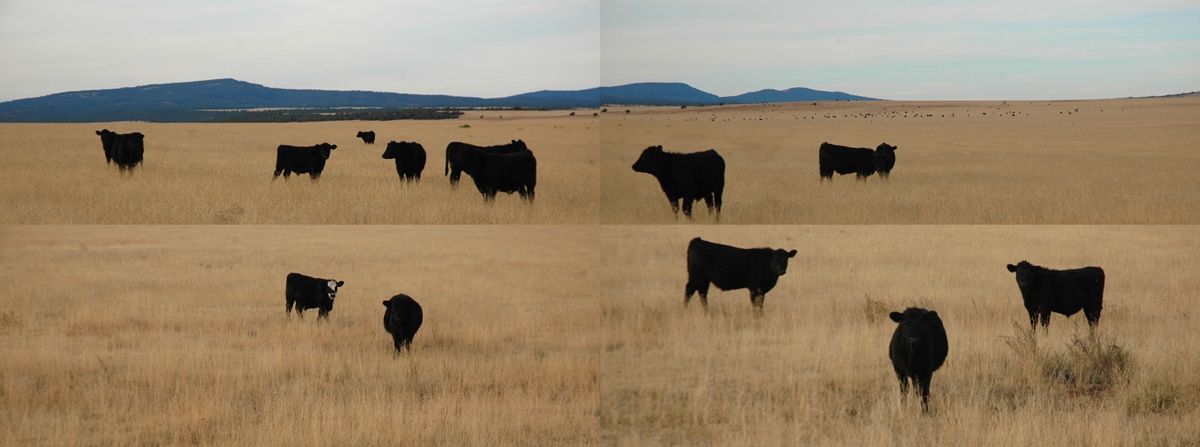
Cattle
Photocollage by Matthew Chase-Daniel, 2009

I slipped off my robe in front of everyone. My husband stood enraged, ready to jump the platform and wring my neck. But I knew when students began scratching their newsprint paper with conté, he’d have to teach.

There in his shirt and tie. His unassuming look. Complete with glasses. But in his head, flustered, wondering how I did it.

It didn’t take much to replace the scheduled life-drawing model. A hundred dollars to not sit naked for strangers was easy money. She had taken the cash and wished me luck.

I straightened out the folds in the platform’s covering sheet.

“Imperfections create depth,” he said, taking the robe from my trembling hands. I grinned, understanding his attempt to appear civil. He turned the small heater towards my flesh. I watched his every move, but sat still.

When I posed with my back erect, hands planted and eyes gazing upward, he circled the classroom. His words scattered. Distracted, by his wife spread out, breasts, ass, and pubic hairs exposed.

“Remember the darkest dark,” he said to a student who had his eyes fixed on my neck, just above a scar. Only a few weeks ago, that scar was a cut accompanied with a black eye and a busted lip to match.

“Next pose.” He said. His eyebrows raised and lips receded back. When I posed, he grimaced.

“What are you doing?” He mouthed with his teeth shut. “Stop it.” Everyone froze and looked around. But it only took one student to start drawing for the rest to attack my unusual pose.

I recalled every kick to my stomach, every punch to my face, every whack with an object to my body. And my eyes watered. He dashed from his position, knocking over a student’s easel and we caught a glimpse of my figure on paper.

My gaping mouth, the darkest mark on the page, I imagined he saw first. My hair, a mix of light and dark, yanked back with one hand. My back arched and knees spread out, pulled against the sheet causing what he called – depth. And the crosshatch shading on my skin, to me, resembled bruises.

“Professor?” A student shouted. I took a deep breath, closed my eyes and tensed my muscles.

And with a bang, the classroom door shut and he was gone. I stood up, slipped on my robe, and looked out at my audience. And for the first time, when my heartbeat returned to a normal pace, I spoke openly about my husband’s artistic work sketching my scars.


Christopher Searles has a Bachelor of Arts degree in English and creative writing. He also studied visual art at Seneca at York. For the past three years, he wrote short fiction while teaching English in South Korea. When he wasn’t teaching, or writing, he was learning about new cultures travelling throughout Southeast Asia. He currently returned to Toronto as a freelance writer. This is his first publication.

Read our interview with Chris here.


“My Mother’s Optimism” by John Guzlowski

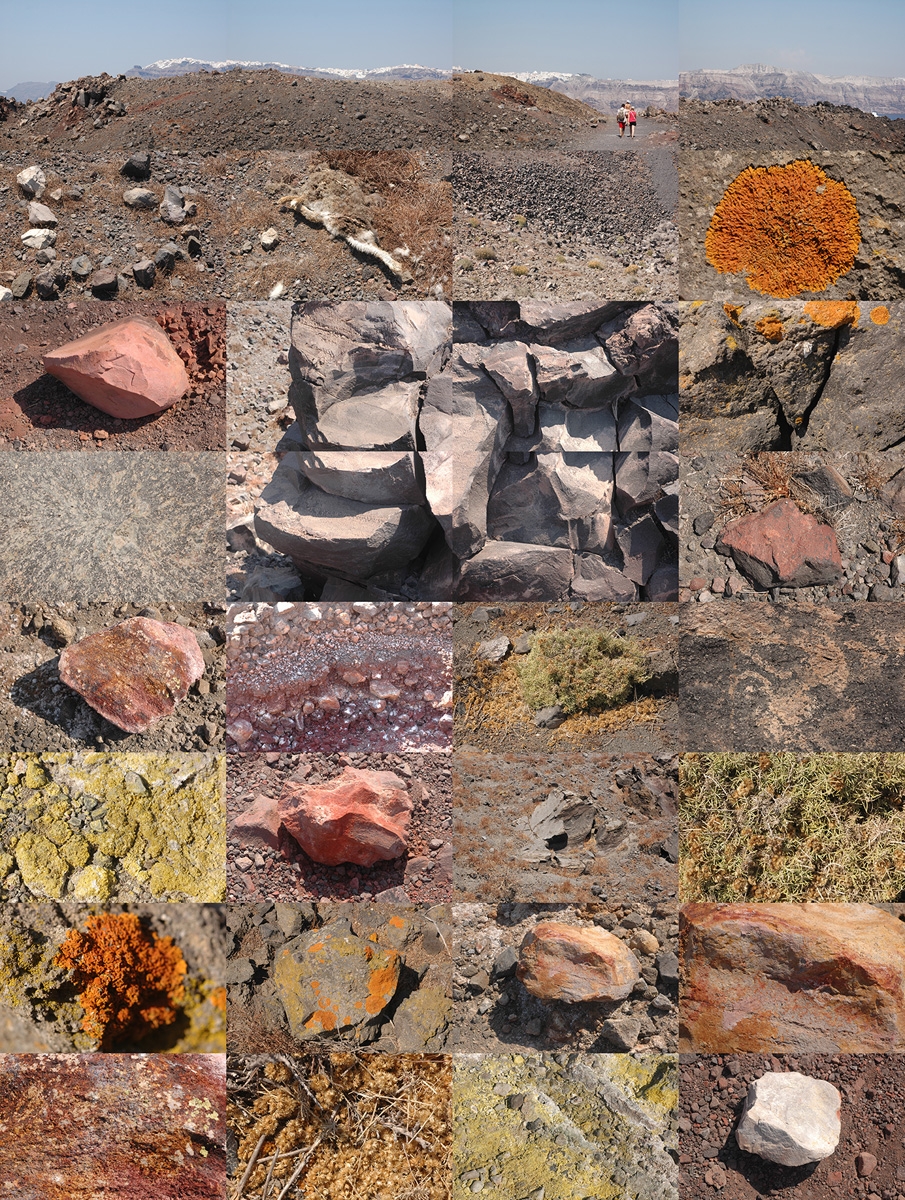
Nea Kameni, Santorini, Greece, 2010
Nea Kameni, Santorini, Greese, 2010

When she was seventy-eight years old
and the angel of death called to her
and told her the vaginal bleeding
that had been starting and stopping
like a crazy menopausal  period
was ovarian cancer, she said to him,
“Listen Doctor, I don’t have to tell you
your job.  If it’s cancer it’s cancer.
If you got to cut it out, you got to.”

After surgery, in the convalescent home
among the old men crying for their mothers,
and the silent roommates waiting for death,
she called me over to see her wound,
stapled and stitched, fourteen raw inches
from below her breasts to below her navel.
And when I said, “Mom, I don’t want to see it,”

She said, “Johnny, don’t be such a baby.”
Eight months later, at the end of her chemo,
my mother knows why the old men cry.
A few wiry strands of hair on her head,
her hands so weak she can’t hold a cup,
her legs swollen and blotched with blue lesions,
she says, “I’ll get better.  After his chemo,
Pauline’s second husband had ten more years.
He was golfing and breaking down doors
when he died of a heart attack at ninety.”

Then my mom’s eyes lock on mine, and she says,
“You know, optimism is a crazy man’s mother.”
And she laughs.


John Guzlowski’s fiction and poetry has been published in The Ontario Review, Atlanta Review, Exquisite Corpse and other print and online journals. His poems about his parents’ experiences in Nazi concentration camps appear in his book Lightning and Ashes. Regarding the Polish edition of these poems, Nobel Laureate Czeslaw Milosz says the poems are “astonishing.” Guzlowski blogs about his parents and their experiences here.

Read an interview with John here.

“Garnet” by Anne Colwell

Garnet
Photo Collage by Matthew Chase-Daniel, 2010.
(See also “Mei Lei” by Alena Dillon.)

Square-cut as a weight lifter’s jaw
And the hard red of congealed blood,
My grandmother’s garnet has nothing of glint,
Of sparkle.  It’s a stone of will.

Her hands in batter, bathwater,
Scrubbed down the spattered apron,
Hauling boxes of ketchup
To restaurants on her route, lifting
Children into beds, lifted in prayer
Behind two husbands’ coffins.
She willed the red ring
To my sister, whose birthstone is garnet,
Whose birthright’s this red.

The night I came to sleep on my sister’s couch,
Anemic, thin, after days of mornings
When I couldn’t lift even my small self
Out of bed, my sister slipped
The garnet on my hand.  Wear this, she said.


Anne Colwell has published a full-length collection of poetry, Believing Their Shadows (Word Press). Her chapbook, Father’s Occupation, Mother’s Maiden Name, won the National Women’s Press Association Prize for best book of verse published in 2007. She has published short stories in Octavo Magazine and The Delmarva Review. The University of Alabama Press published her book on the poems of Elizabeth Bishop, entitled “Inscrutable Houses: Metaphors of the Body in the Poems of Elizabeth Bishop.” An online chapbook of her poems appears in “The Poets” section of The Alsop Review. She has published individual poems and articles in a number of journals and quarterlies, including: Midwest Quarterly Review, Octavo, Southern Poetry Review, Eclectic Literary Forum, The California Quarterly and Dominion Review.

Read an interview with Anne here.


“Catching My Breath” by Susan Barr-Toman

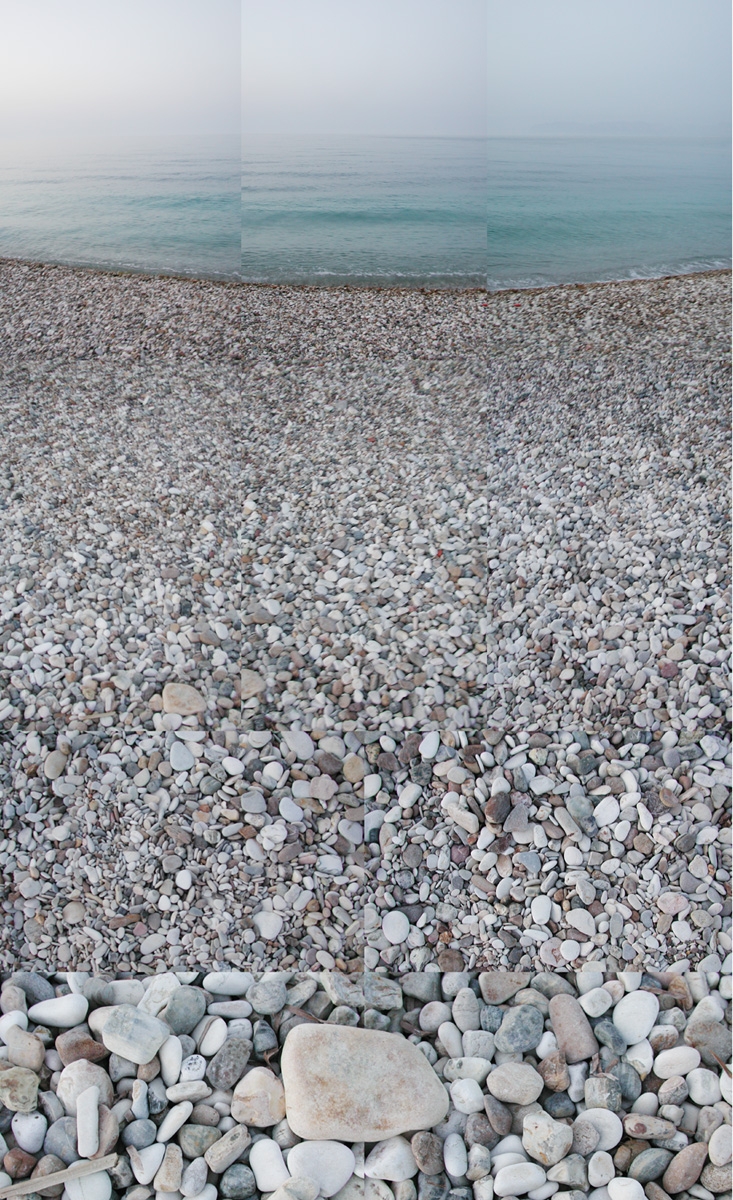
Beach
Beach at Scopello, Sicily by Matthew Chase-Daniel, 2000

I signed up for a yoga class for writers because I needed to focus.

I’d successfully written a novel; it was even published. But for the past year or so, I’d been unable to concentrate. During the first class in the series, which was about sound, Lisa, the instructor, rang a bell and we listened until the walls soaked up the ringing. We ohm-ed three times as a group, and the room vibrated with sound. We could feel it against our skin. We stretched and repeated the sun salutation; our bodies morphed into snakes, cats, dogs, and children.

For our first writing exercise, we sat in pretzel legs as my kids say. Our backs were straight; our hands palms up on our knees, thumbs and index fingers touching. Lisa instructed us on how to breathe. Inhale and fill the belly, exhale and bring the bellybutton toward the spine. I focused, in and out. How difficult could it be? But of course my breath was choppy. My belly expanded as I exhaled. I tried again. Perhaps Lisa saw the frustration on my face. She said, “Breathe without judgment, but with compassion.” I’d been breathing all my life, so I must have had some idea how to do it. I just lacked any grace in the matter. I persisted and tried to look upon myself with compassion.

We stayed seated, breathing and listening as Lisa put on John Coltrane’s “In a Sentimental Mood.” I’ve always loved Coltrane, but hadn’t listened to him in a while. I sat breathing, breathing, and then, crying. I bit my tongue and tried to keep my jaw from quivering. A tear escaped and I wiped it away, then another. I was no longer focusing on breathing, but on not crying. While I loved the music; I didn’t have an emotional connection to it. I wasn’t listening to it at the birth of either of my children, it wasn’t playing at my wedding, and I didn’t immerse myself in Coltrane following a rough breakup long ago. So why was I crying?

After a few minutes, Lisa asked us to write about the music, or about the other sounds we’d experienced in class. My first sentence was, “What the hell was that about?” I kept writing. Writing was why I had come. I needed to get back to it. For the past year and a half or so, I’d been unable to concentrate. I’d become a caregiver, not only for my children, but for my husband who at forty was diagnosed with cancer, and then later his mother, whose lymphoma had returned. Caregiver is too strong a word; it makes it sound like I did more than I did. But after all that had happened, I was emotionally bankrupt. I was empty.

Why Coltrane? I wrote. Why tears? Perhaps Coltrane was speaking to me; he understood about the past and about what was lost. I realized that it wasn’t the music alone that made me cry. It was the breathing. It was me breathing. Me, after all that had happened, catching my breath.

The class ran late, so when I arrived home our company was already there. The couple sat at the kitchen table with my husband. The children were playing upstairs.

“We’re swapping cancer stories,” my husband said.

I sat in my yoga pants with a glass of wine. Our company was a couple we’d met through friends and had seen a few times. The reason I like them is that they are unapologetic about really loving each other. The wife had thyroid cancer a few years back. Her torture was hormonal more than surgical, months of treatment, then finding the right balance of medicine so she could return to stability, to her family and life.

My husband had chemo and radiation, and four surgeries in the past year and a half. Sitting at the kitchen table, Peter was only up to recounting his second surgery, the one that was supposed to be a “procedure” followed by a few days in the hospital. Then we were to join our children down the shore. Two days after the surgery it was apparent something was wrong. My husband was a grayish green, panting and sweating, barely able to walk 100 feet. The day before he’d lapped the hospital floor fifty times. As he talked, I pulled myself into a ball on my chair and felt acid rise to my throat. I wanted my husband to tell his story. And I really didn’t.

It is all too raw for me and I find myself back in the hospital recliner, wedged between his bed and the windows, the overcast day showing on his face. Peter is asking me to stay overnight. He’s afraid and I act like I’m not. I watch him barely sleeping. He’s been the perfect patient. Everything up to this point has gone as planned. This procedure was to be the end of a yearlong ordeal. But it isn’t. He’s dying, I think, and I can’t do anything. I walk the hall and ask the resident to check him again and again. They take him into emergency surgery the next day; he’s in septic shock, then he’s in the ICU. Twelve days all told and we don’t meet our children down the shore.

In graduate school, I frequently got into discussions with my fellow fiction-writing friends about whether to write autobiographical stories. I was adamantly against it, for me. My argument was that I needed more time to process what had happened in my life, possibly for a decade or two, before I could incorporate it into fiction. Meanwhile they seemed to be able to write the story as the door closed behind their lovers or the ambulance pulled away.

Joan Didion says she writes to know what she’s thinking. After listening to Lisa, and my breathing, and to Coltrane, sitting at my kitchen table, I thought maybe I don’t need to process before I write, maybe I need to write in order to process. It won’t be fiction, at least not at first. I may never share it. But I need to write to know what I’m feeling, and maybe to let go of all that was lost.

Listening to great jazz is like listening to conversations. Sometimes it’s an argument, sometimes wooing, sometimes goodbye. That afternoon, Coltrane was whispering to me: tell me. Tell me everything. And in the quiet of my own messed up breathing, I heard him.


Susan Barr-Toman is the author of the novel When Love Was Clean Underwear, winner of the 2007 Many Voices Project. She was born and raised in Philadelphia where she still lives with her husband and two children and where she teaches creative writing at Temple University and Rosemont College. She holds an MFA from the Bennington Writing Seminars. Visit Susan at www.susanbarrtoman.com.

Read an interview with Susan here.


“Stella Blue” by Brian Pietrus

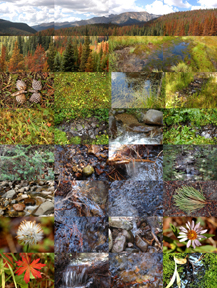
Stella Blue
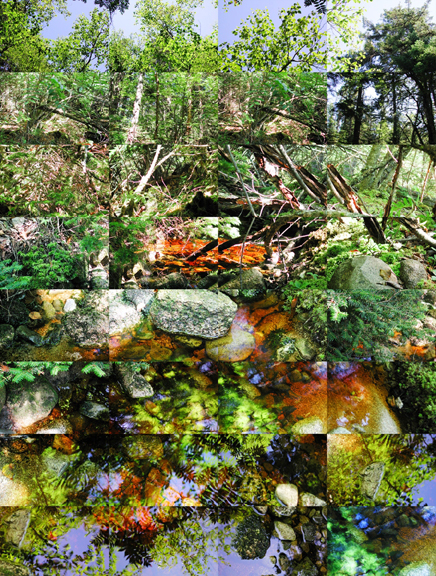
Headwaters of the Colorado by Matthew Chase-Daniel, 2009

When I picked my mother up at the small airport just outside of Yellowstone I felt like something of a veteran already. Of course I was excited to see her and glad she’d be experiencing the remainder of the trip with me, but I couldn’t help considering her a newbie.

Oh my God, look at the bison!

Yeah, I know—there’s a whole herd of them near the area where we’ll be camping.

They’re so cool! Can we get a picture?

If you want, I said. I have a bunch I took already.

She was excited, so I obliged. We stopped and took pictures on the side of the road with all the parked campers and SUVs from Nebraska and North Dakota. It was a little embarrassing, pulled over like a tourist. I felt like a teenager at the mall with my mom, and I hoped no one saw me, though I wasn’t sure whom I was afraid of being spotted by.

When we got to the campsite my mother wanted to call my grandparents to check in on them.

They’re fine, I assured her. Uncle George is stopping by after work.

I’d feel better, she said.

It was a tough spot for my mom. My uncle worked a lot, so he couldn’t be there as much to help out. My grandpa took good care of Grandma most of the time, but she was sick and needed extra care. It didn’t seem fair that my mom did most of the work. In retrospect it feels pretty awful that I considered it work. I love my grandparents, it was just frustrating. For both of us.

George doesn’t do things like you do, they’d confide to my mom. How long did you say you’d be gone?

All of this built up to a tremendous load of stress on my mother. I was just as needy as my grandparents, and I suppose we were pulling her apart. That was part of the reason she decided to take the time off from work to come out here and meet me. With me in college and her firmly tied down at home we were beginning to drift apart.

I set up camp in a flash. By the time she got off the phone everything was ready.

You’re pretty quick, she said.

Lots of practice.

I could set the tent up solo in 2-3 minutes. My mom brought a sleeping pad. I had been sleeping on the floor of the tent. I loved the firmness of the ground. We built a small fire and stayed up late catching up and scouting for meteors.

I love the smell of campfire, I confessed. Sometimes after camping I’ll re-wear my clothes for a few days before I wash them to hold on to that earthy smell.

It’s a nice smell, she agreed.

The night was quiet except for the occasional car driving down the road and idling when it came to an intersection. Crickets would stop their chirping and lay still in the dry grass when a car passed, and when everything was still again they sang.

The next morning we decided to rent a canoe from the outfitters up the road. My mother had never been in a canoe before. I knew a little about paddling from the times I’d gone with friends in the Adirondacks. We clumsily carried the canoe to my car with lifejackets slung over our shoulders.

Careful, I said. No, LIFT it! The lip of the canoe fell hard on my roof. I can’t lift it by myself.

I’m sorry. I’ve never done this before.

I knew she was right and I felt sore for it.

We strapped the boat to the roof. The bow and stern stuck out over the front and rear windshields. I knew it would make visibility worse when we removed it from the lake in a few hours, and the wet bow would rain down on the window, but for now it was only a looming shadow. We cranked the red straps through the doorframes so tightly I wondered if the rubber gasket would permanently scar and keep the door from closing right.

It was ten minutes to the lake. Even at low speed the wind was making the red straps vibrate like piano wire. I tried to steady one with my free hand while I steered with the other, but the tremendous reverberation felt like it would gash through my palm. It sounded awful. We turned up the radio to drown it out, but the straps overpowered all other sounds. I could have crashed into the fattest bison in the park and not heard more than a ripple in the road.

The meadows were packed with sagebrush and the wind was sweet with the smell of it, but sunscreen tainted the air everywhere we went. From the lakeshore we got the canoe into the water with ease. Moving it proved to be the hard part.

No, you paddle on that side when I’m paddling here.

Sorry.

No, we’re going in circles!

I’m sorry! You seem like you’re having a miserable time. Maybe I shouldn’t have come out here to meet you.

Don’t say that.

I didn’t know how to tell her. How to make her understand that I’d been on the road for almost a month, living out of my car and tent and more than one dirty motel off the highway with minimal human contact and how I’d gotten so used to being alone that I forgot how to interact with other people. We were floating in the shadow of one of the craggiest mountains in Wyoming. This was the kind of experience that was meant to be shared.

I’m sorry, I offered. I’m glad you’re here. Really, I am.

We cut through the inverted reflection of the peaks and I steadied the rims of the canoe and lifted my legs over the sides. The water was cold. I let it flush between my sweaty toes and up over my ankles.

Dip your feet in, I suggested. It feels great.

When Mom called my grandparents that night she told them about our canoe trip, her first, and about the mountains and the clear sky and clean air.

It sounds beautiful, my grandma told her. I’m glad you two got to go on this trip.

Mom felt guilty for leaving her parents for two weeks, but hearing those words—I’m glad—seemed to make everything better. She enjoyed the sights more and we both let down our guard.

That night we watched for meteors again. I didn’t see another shooting star until a few months later, back in the Adirondacks, the same night I got the call from Mom that Grandma had died. It was dark outside and I took a walk in the woods along a well-worn trail through white pines and maples. When I came to a clearing, I turned off my flashlight and lay on my back on the sandy soil. The grass was cold with wet dew and the sand stuck in clumps on my back and legs. It was a moonless night and the sky was dark and thick as ink. Far above me a steady stream of shooting stars blanketed the atmosphere, burning bright like broken angels, and if I blinked I might miss their icy blue streak as they faded away into the night.


Brian Pietrus recently graduated with undergraduate degrees in Biology and Writing. He is currently enrolled in the Creative Nonfiction MFA program at Eastern Washington University. He has since made an enthusiastic outdoor explorer of his mother and they often go on hiking trips together. Brian also enjoys photography, playing music, traveling and exploring.

Read an interview with Brian here.


“In the Café” by Bev Magennis

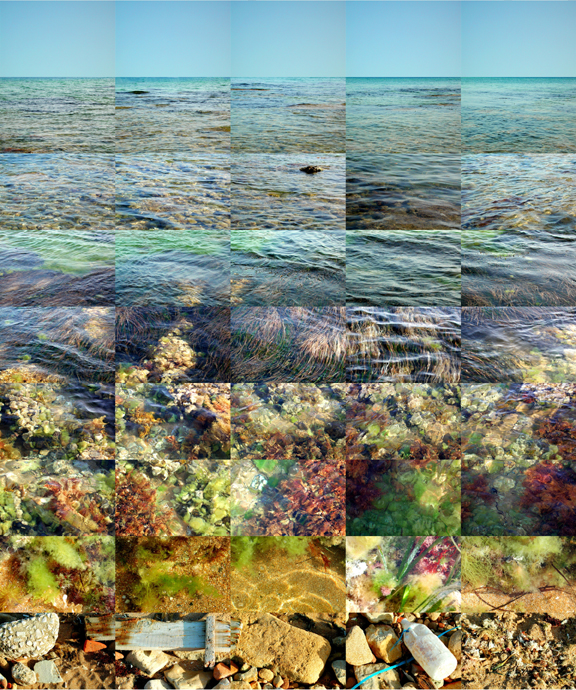
In the Cafe
Beach at Selinunte, Sicily, 2000

In the café, you complain about your husband. A year ago, I nearly died. Dr. Moller sliced a tumor the size of a cantaloupe from my abdomen.

You talk about spying on the cheat and order a latte and ask if I’d like one. My system can’t process the acid. I order decaf green tea.

You suggest we split the tab. Sure.

On the street you say you’ll confront the creep directly, no fooling around, no games.

My eyes follow sunlight on gold leaves shifting among branches.

What if Gary were having an affair? After eight months of not leaving my side, of delivering me to the emergency room, camping by my bed, accompanying me to doctors’ appointments, labs, scanning and imaging centers, he deserves a tall brunette with tits that look implanted but aren’t, creamy legs that sprout from black stilettos and disappear under a short, satin skirt. Someone whose voice purrs, whose gestures slice the air in clean, graceful arcs, whose eyes, under heavy lashes, hint at mischief. Optimistic, with few demands. Reasonable, but generous. Kind.

I’d set him free in an instant.

Alas, he’s stuck with me. Sixty-seven. Breasts sad as teardrops, face weathered and lined from working outdoors. The clichéd arms, thighs and neck of a skinny older woman. Old woman.

Not just old, high strung and bothersome – to a quiet man. My mind swims in an ocean of gray matter, poking among reefs for endless possibilities, various approaches, seeking the best solution to minute problems, until time runs out and I opt for one of a thousand final decisions. The process aggravates a black-and-white thinker who seldom asks a question, the consequences of curiosity not worth the emotional or intellectual engagement called upon to engage in the string of thoughts my response might unravel.

Yes, I’d set him free. But he doesn’t ask for that. And I don’t offer.


Bev Magennis was born in Toronto, Canada, in 1942 and immigrated to the US in 1964. She received her MA in Art from the Claremont Graduate School, Claremont, California. After a 30-year career as a visual artist, she started writing. In 2009 she was accepted to the Iowa Writers’ Workshop Summer Graduate Class. She was awarded a 2010 Pen USA Emerging Voices Fellowship, Los Angeles. In 2011, she received the Norman Mailer Fellowship in Fiction, Provincetown, MA. She has lived in New Mexico for 35 years where she has written two novels and is currently working on a third.


“Sometimes It’s That Simple” by April Ford

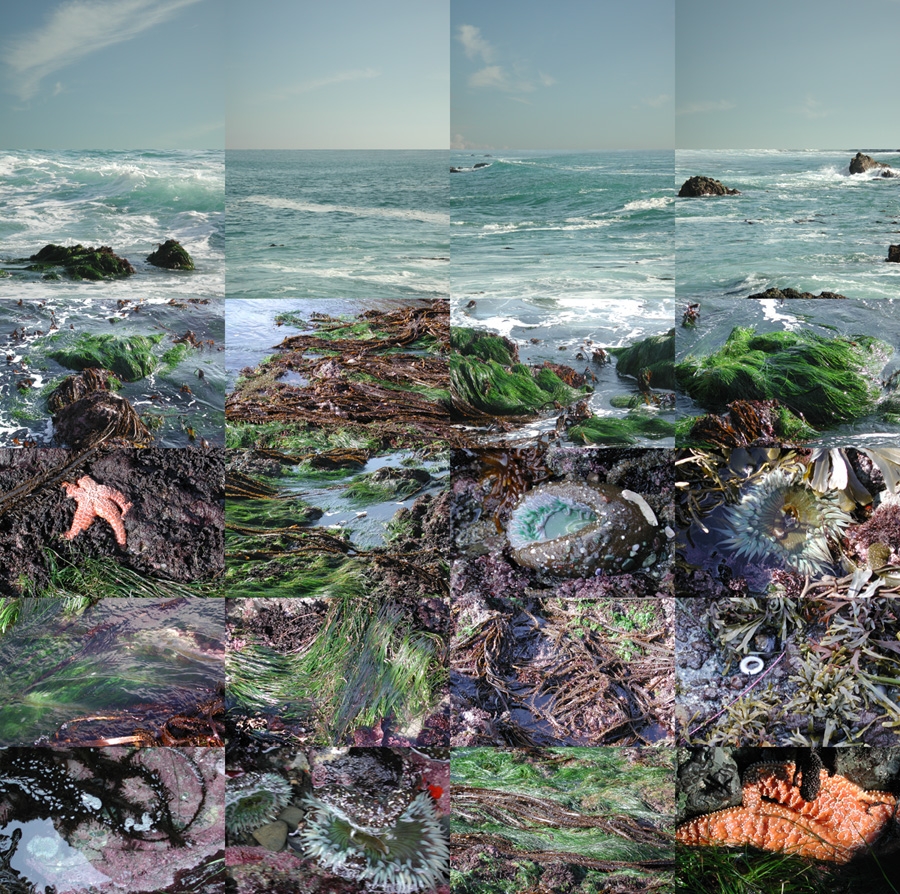
Pfeiffer Beach, California
North of Pfeiffer Beach, Big Sur, California, 2001 by Matthew Chase-Daniel

“Has your husband licked your anus recently?”

“Excuse me?” Olivia withdraws her feet from the stirrups and sits up. The paper sheet covering her from the abdomen down flutters to the floor and exposes any mystery about her Dr. Rattray might have speculated from his previously limited view.

“There’s a fungal growth irritating your hemorrhoids, a type of yeast commonly seen in oral thrush—that’s in the mouth.”

She can’t decide which is most devastating: the frankness with which this unfamiliar male doctor just asked an amazingly personal question, the way he blithely informed her she has hemorrhoids without telling her directly, or that his hand is still touching her backside, which is coated with lubricant and burning something awful. Deducing that matters can’t get worse, she presses her forearms against the examining table, politely lifts her rear off the doctor’s hand, and slides to the floor in immediate pursuit of her underwear and jeans.

Dr. Rattray goes to the sink to wash his hands and says he’ll return in a few minutes to review some details. Seeing she is safely away from public view, he opens the door to leave but then closes it and goes to the cabinet above the sink, where he retrieves a sanitary wipe and drying cloth.

“You might want to use these before you put everything back on,” he says, winking.

Olivia smiles from behind the protective covering of a chair; she can’t access her clothes without crossing to the other side of the room, and she’s exposed herself enough for one day. At work this morning when she confessed to her boss she had exaggerated on her CV about experience with social networking platforms, at lunch when her friend Molly asked why she hadn’t RSVP’d to the baby shower invitation yet, and now, the annual. If only she had waited until her regular doctor returned from vacation. No rush—although the burning and itching have become unbearable, to the point she can hardly sit through a movie at the cinema. Trenton, whose job if not life revolves around the cinema, has found this most worrying, explaining to Olivia how bad it looks when his own wife can’t sit through a screening of his film.

Yeah, well you see how it feels to have inflamed veins in your ass.

Nobody gets hemorrhoids at 34. That’s a disease for the middle-aged, and she has at least six more years to go. She’s entitled to those years and will not have some substitute doctor use words like “anus” on her. Olivia silently prepares a lecture while she dresses, but Doctor Rattray knocks on the door before she can come up with a civilized term for her anatomy.

“I apologize for the wait. Network’s all clogged up.”

“I’m sorry?”

“I phoned your prescription to the pharmacy. It will be ready tomorrow.”

“Prescription?”

Dr. Rattray holds his clipboard in the air and waves for her to sit with him at his desk. He plucks a pen from behind his ear and points it at her. “You, Mrs. Goodman, are to follow my orders for the next two weeks and then check in with your regular doctor.”

Who is this man Dr. Wein has allowed as a replacement? Olivia isn’t especially fond of Dr. Wein, but at least he never shocked her with information about her health or talked about it in such an offhand and vulgar way.

“What, exactly, is the problem, Dr. Rattray?”

As though he has been waiting all day for such a question, an opportunity not only to show off his knowledge of the medical world’s underbelly but also to showcase a hidden talent for exciting conversation, he claps his hands once and plunges into a monologue that passes right over Olivia.

“So it’s not your fault, Mrs. Goodman, and you will be able to resume all normal activities once it’s treated. In theory it has nothing to do with whether or not your husband licks your anus. But in practice, moisture makes yeast a very productive little fungus.” The doctor wags his index finger.

“Have you checked your husband for oral thrush? It’s quite easy to identify, usually a white patch on the top of the tongue that looks like hair—”

“Please, just tell me how to get rid of it. I’ll be happy to follow your instructions.”

“Get rid of it?”

“Yes, this…problem I seem to have developed.”

“Oh there’s no getting rid of hemorrhoids, Mrs. Goodman. They’re constricted veins that require treatment, sometimes even surgery, but I assure you they’re manageable. Did you know fifty-percent of people over the age of forty develop hemorrhoids?”

Olivia stares harder at the ground each time the doctor says the offensive word. It sounds like something German lovers might yell at each other during quarrels.

An hour after leaving the doctor’s office, she is stuck in traffic. According to the radio announcer, a five-car pile-up has narrowed the highway from three lanes to one. The occasional car zooms along the soft-shoulder only to encounter a roadblock of pylons up ahead, where a police officer gleefully tickets the deviant motorists and holds his hand up to assist them back into the nonexistent flow.

Summer traffic jams in Boston are unbearable; the normal level of driver aggression is amplified by the wasted time and dense humidity, and anybody who has been in this situation before knows to be on guard for cars to rev and force into the first available opening.

“Is it ever hot on this late July afternoon! If you haven’t gone to the new Toscanini’s in Cambridge yet, this is your chance. My personal favorite new flavor is Cherry Chocolate Chunk.  Think about that while you’re stuck in the throbbing heat for the next twenty minutes, and then meet me at Toscanini’s at seven pm and sign up to win a prize. That’s right, I said prize!”

Olivia leans forward in her seat and scoots her lower body back. Her legs are stiff and her rump is on fire. It’s really happening: Her body is beginning to malfunction. How utterly embarrassing. She doesn’t know if she can tell Trenton. But she has to. Apparently he might have oral thrush, although how she contracted that in her … it doesn’t make sense.

A car horn blares behind Olivia’s tree frog green hatchback and a gravelly Irish voice accuses her of holding everyone up. Sure enough, she has fallen four lengths behind the car in front.

A news helicopter circles overhead and Olivia wonders what the traffic jam looks like from an aerial perspective. Maybe it looks like a big swollen vein.

Trenton has set the dinner table and placed a single bird of paradise in a translucent red vase at the center. Small bowls of tapas fan out around the vase.

“You’re a darling for making diner,” she says, scooping a handful of tortilla chips before leaning toward Trenton for a kiss. She stops mid-lean, stuffs her mouth with chips, looks at the table again. “And my favorite wine, too!”

Trenton appears oblivious to the fact that his wife just dodged a kiss, and proceeds to explain the various tapas he spent the afternoon preparing.

“These little guys,” he says, pointing to thick finger-sized sausages marinated in a burgundy sauce, “are called ojales—or, buttonholes.”

“These,” he says, lifting a bowl of black olives in a cilantro paste, “are perdigones, or buckshots. Don’t they smell divine?”

He explains the other five dishes, but the whole time Olivia can focus on one thing only: his mouth. She’s never noticed until now that it barely moves when he speaks. In fact Trenton mumbles a lot of his words, streams them together and occasionally lisps. She remembers, vaguely, noticing the lisp when they met nine years go, but she was too polite to say anything so probably she’s just gotten used to it by now.

When his tongue finally does expose itself, Trenton covers it with the back of his hand to staunch a yawn. “Everything okay, Liv? Is the food grossing you out?”

Olivia sucks back her glass of wine. She needs courage to ask him about his oral thrush. “Do you—have you ever—did you know that….”

“What’s wrong? Tell me what’s wrong.” Trenton pushes the tapas aside and reaches across the table. “Sweetheart?”

She drops her head and stares at the tops of her thighs. “Just give me a minute.”

He stands and walks around to his wife. He hugs her against his stomach and rubs her shoulder blades. “Are you anxious about the screening tonight? You don’t have to come. I know it’s hard for you to stay awake after working all day.”

She whimpers into his stomach, his pleasantly soft yet flat stomach, and wonders if this will be the next thing on her to go. Maybe she’ll wake up tomorrow morning with a pouch that can’t be tucked behind the waist of her jeans no matter what she does. Or worse, a muffin top. She pats her stomach to check if this isn’t already the case.

Trenton pounces on the gesture. “You’re pregnant? Are you really? That’s wonderful news, Liv! Oh my God, I’m so happy I could—”

“I have hemorrhoids!”

When he releases her and steps back, she wonders if he’ll ever look at her the same again. Of all the vile things she’s ever said to her husband, this wins the blue ribbon.

She pours herself another glass of wine. “I’m sorry, I didn’t mean to yell. The doctor gave me a pamphlet, if you care to know more.”

A smile spreads across his face like a contagion—into his eyes, along the lines of his forehead, even the tips of his ears. He hugs Olivia to him once again and says, “Welcome to the club, darling.”

~

The next day Olivia leaves work early. After extensive research on the items Dr. Rattray prescribed for her, she has decided they are non-hazardous and easy to hide from Trenton. He must hide his products, after all, since she’s never seen any around the bathroom. Maybe he’s embarrassed, too. Her research has also taught her a coded vocabulary she can use with the pharmacist. Surely she isn’t the first person to fill a prescription of this nature, but she can’t risk exposing her horrifying secret.

After skillfully maneuvering her hatchback between two king cab pickup trucks with muddy off-road tires, she reaches into her purse for the CD she made during lunch break: A Free Guided Meditation for the Overburdened. She inserts the CD, presses “play,” and listens as a waterfall and gentle wind fill the car. This is kind of nice, she thinks.

A soothing male voice eventually fades in and encourages her to close her eyes and relax. “You are preparing for your spiritual enema,” the voice says.

She ejects the CD and snaps it in two.

The pharmacist tells her it will take ten minutes to prepare her order, so she walks up and down the store aisles in search of the non-prescription items she learned about online: witch hazel, fiber supplement, and stool softener. According to her research, these aides can help keep both her exterior and interior happy. She also visits the cosmetics section—her first time since adolescence, when wearing makeup had everything to do with fitting in and nothing to do with aesthetics. Other than a light sweep of clear lip-gloss, she presents herself to the world the way nature made her. And why shouldn’t she? Her skin is clear, her features are symmetrical, and she’s in her prime. Or was. She picks up a tester tube of Cover Girl lipstick and rubs the nub of dark pink onto her index finger. Next, she rubs her index finger across her lips and puckers them in front of the wall mirror. She moves down the aisle to the eye shadows and liners, then concealers, then blushes, and by the time she’s called to the prescription counter she looks like a mom whose little girl has played beauty shop on her.

The pharmacist smiles too generously as he rings up her purchases. “Tucks is on sale this week, if you’d prefer.”

“Tucks?”

“Generic witch hazel’s fine, but you’ll get more medicated pads for your money if you buy Tucks.”

She ignores the suggestion and promptly exchanges 20 dollars for her products.

Outside the store, she takes a moment to ensure she hasn’t left anything behind like her wallet or car keys. Two teenage boys lean against the brick exterior, smoking sloppily rolled cigarettes.  They are overdressed for such a blistering summer day, sweating yellow through their long soccer jerseys. With Olivia as their audience, they become animated and talk loudly at each other.  One of the boys produces a matchbook from his back pocket. He tears a match free and strikes it against the flint strip across the small square of cardboard, then holds up the lit match like he’s just performed a magic trick. The other boy sticks his thumb and index finger into his mouth and then presses his fingers around the flame. He grins at Olivia, but she is already halfway to her car.

Tonight she will ask Trenton to show her his tongue. As soon as he gets home, before he has removed his loafers, Olivia will know the secrets of his mouth. This is ridiculous! Why is she afraid to ask? They’ve shared so many things over the years, and he knows she now has hemorrhoids and a yeast infection. She just needs to take it one step further and alert him to the possibility he might have contributed to the second part of her ailment. Oral thrush can be caused by a variety of culprits—food-born bacteria, a tooth infection, aging—so this is a mystery to solve together.

Since Trenton isn’t due home for another hour, Olivia decides to familiarize herself with her cornucopia of treatments. As she lays the products out on the bathroom counter, however, she realizes she doesn’t know which to use first—the witch hazel pads or the anti-fungal cream. And how, exactly, does one “apply” anti-fungal cream? Had she not been in a rush to leave the pharmacy, she could have received a free consultation. The third product, psyllium caplets, is straightforward, so she starts here: Take one caplet with a glass of water. Next, she reads the directions on the stool softener bottle: Take one to two softgels at the first sign of hard stool. Ew. Finally, there is no getting around it; she’s left with the witch hazel pads and the anti-fungal cream. The products sit side by side on the counter like a pair of schoolyard bullies. She decides to apply the cream first, since witch hazel is merely a soothing agent. The anti-fungal leaflet instructs her to:

“Make sure infected area and hands are clean. Insert plastic applicator into tube and fill with cream until dotted line. From a standing position, bend forward at waist. Use one hand to stretch skin around anus. Use other hand to guide applicator to anus and gently insert tip. Do not force. With index finger, push down on top of applicator until all cream has been dispensed. Gently remove and rinse in warm water for reuse. Store in cool, dry place. See numbered illustration on back.”

 Olivia tosses the cream into the wastebasket beside the sink, sits on the edge of the bathtub, and cries. She weeps until Trenton comes home, blaming him for everything—the hemorrhoids, the yeast infection, the muffin top she will one day have, her indecision about what to do with her life, her stupid, aging body. By the time he comes to her, she has concluded their marriage is failing.

“What do you mean, Liv?” He appears to be suppressing a laugh—an actual laugh!

She wipes her face dry with a hand towel and confronts her husband. “You lied to me. That’s why. And you gave me a yeast infection in my ass! How is that even possible? Do you have any idea how degraded I feel?”

Trenton swishes his mouth from side to side for a moment and then says, “I have never lied to you. You’re acting a little mad right now.”

“Why didn’t you tell me about your hemorrhoids?”

“I didn’t think it was something you’d favor knowing.”

“What about your oral thrush?”

“My what?”

She squeezes her hand around Trenton’s chin. “Open.”

“Wawt?” He tries to wriggle free but she has him locked in place.

“Open your mouth and show me your tongue.” She feels an unexpected rush of bravery—a psychic liberation at having issued a command with such certainty.

Trenton’s nostrils flare with confusion, but he does as he is told. She peers into his mouth, maneuvers his head from one side to the other, shines a mini flashlight inside, releases her grip.

“You don’t have a hairy tongue,” she says.

“A hairy what?”

“A hairy tongue. Oral thrush. The reason I have an infection.”

He looks around the bathroom with intent, and then lifts his hand above his head as though to touch the light bulb that has just flashed in his mind. He turns this way and that, gathering her scented bath beads, shower gels, and beauty bars in his arms. She almost shrieks when he drops everything into the wastebasket.

“What did you do that for?”

“All those fake chemicals,” he says, hugging her to him and kissing the top of her head, “are hemorrhoid irritants. Sometimes it’s that simple. Besides, only teenage girls walk around smelling like flowers all the time.”

She slips a hand between herself and Trenton and touches her belly, which, thank God, is still neatly behind the waist of her jeans.


April L. Ford is a Montréal, Québec native. She is in her third semester at Queens University of Charlotte, and she is happily employed as a French lecturer at State University of New York, Oneonta. Her short story “Layla” appeared in the spring 2010 issue of Short Story magazine, and “Isabelle’s Haunting” will appear in the upcoming issue of The Battered Suitcase.

Read our interview with April here.