“Bridestealing” by Renée Giovarelli

Bridestealing
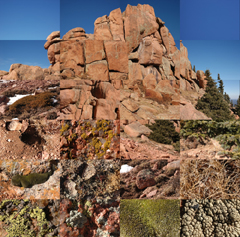
Pike’s Peak, Colorado, 2008

Sitting on a wool blanket outside a yurt in May, high in the mountain pastures of Kyrgyzstan, I hugged my body for warmth as women trickled into our circle from all directions.

My interpreter, Zina, and I chatted about the history of this village, Alai, as we waited for the women to come from their homes. We were interviewing women about the new land legislation and whether they received land from the State after the fall of the Soviet Union.

I tried to sear the view of the dark blue and purple mountains covered in cloud mist into my brain as we talked. We were surrounded by mountains and streams and horses and sparse grass—a difficult place to survive, but a magnificent place to live. The cool damp air was welcome after the hot sun of the Fergana Valley, where we had been interviewing women for the last week.

Alai was known for its strong women because one of their own, Kurban-Jan-Datka, a celebrated female warrior, tried to keep the Russian conquerors out by tumbling rocks onto their heads as they marched up the mountain in 1876. The Russians were not deterred by the rocks, but Kyrgyz heroes only have to be brave and clever, not triumphant.

Occasionally Zina would call out a direction to someone in Kyrgyz: “Bring a chair for the agi,” (old woman) or, “Get an extra blanket.” Zina was in her forties like me, short and stocky with a round warm face and eyes that were nearly hidden by her cheeks when she smiled. Used to taking care of foreigners, she was equal parts mother and drill sergeant.

Once or twice someone brought an extra blanket, and the circle expanded and re-shaped so more women could sit. I relaxed as I listened to the women talk to each other and arrange themselves. I am at home among rural Kyrgyz women; their gifts of felt and embroidery hang on my walls in Seattle. Sometimes I take a moment to bury my face in one of them to again smell these pastures—damp wool, and sheep, burning dried manure, and wood smoke from the samovars.

There were two other Kyrgyz researchers with Zina and me. Once we explained who we were and what we were doing, we intended to break into smaller groups. Anara, the lead Kyrgyz social scientist—the best in Kyrgyzstan–would take a group of young women away to another area and interview them. Girls would not talk in front of their elders, especially if they were in the same group as their mothers-in-laws. Anara was in her early forties, pretty, but thin and stern, dressed in jeans and a polo shirt. Even in urban clothes, Zina looked as though she belonged with the shepherd women in their long colorful dresses and pants tucked into worn leather boots. Anara looked like an outsider–a researcher.

Nearly forgotten by Zina and Anara much of the time, the other Kyrgyz member of our team, Chinara, was a young lawyer whom I had been working with on Kyrgyz land legislation for the past year. I insisted that Chinara come along on this fieldwork because, like most young lawyers in the capital, Bishkek, she believed that once a law was passed, it would be followed. Law was, in her mind, the answer to all social ills. I wanted Chinara to be able to ask women about these laws we had worked so hard to pass so she might see the laws’ limitations and not be so willing to stop at the initial–and usually ineffective–first step of passing the law. Chinara was from a northern tribe and had never been to southern Kyrgyzstan. She dressed as though she were still in the office in Bishkek: skirt, pantyhose, and heels. Her youth and her outfit made her virtually invisible to Zina and Anara—they called her an “arrogant little fool.”

When the women from the village had settled, and it seemed that no others were coming, I started with a simple question. “Do any of you own land?”

“Ova,” some older women said, and others nodded. Yes.

“What do you grow on your land?”

“Potatoes,” one woman said. “Hay,” another answered. “Sheep,” said a woman in the back, and everyone laughed.

A young girl brought us tea and “salt,” which means bread and hand-churned butter, a traditional Kyrgyz welcome. The bread was round, about two inches thick and crusty from being baked on the side of a clay oven fueled by the dried manure that was stacked under the eaves of the animal shed. The butter was whipped cream with salt. A few older women took the circles of bread, broke them into hand-sized pieces, and spread them around the blanket. I was served my ripped piece of bread first, a sign of respect. Among the Kyrgyz–traditional nomads–travelers and outsiders receive the highest honors: the sheep’s head and the first piece of bread. Age and gender are the next consideration; an older, male foreigner is usually offered the sheep’s eyes, ranking high above all others. As a foreign female woman of middle-age in a circle made up of women only, I would be first in all ceremonies, followed by Zina, then Anara, and then the older women from Alai. Chinara would be lumped into the category of young women–the servers, not the served.

My questions became more personal as we continued to talk. Were any of them divorced or widowed? Had any of their husbands taken a second wife? How did these family changes affect their rights to the land? They talked easily about their lives, teasing each other and daring one another to answer my personal questions about dowry, alcoholism, and poverty.

“Do you want to go to college or get married?” Anara asked one girl in Kyrgyz, pointing to her with her head.

The girl looked down and said nothing.

“Are you already married?” she continued.

The girl still looked down and shook her head no.

“You have to stand up for yourself. Do you let your husbands beat you?” she asked of the whole group.

There were a few women who shook their heads, but no one spoke.

“If your husband beats you, you have to go to the police,” she continued. I was growing uncomfortable because lecturing women was not part of the research protocol.

“Anara,” I said quietly, “let’s break into groups.”

Anara took a group of young unmarried girls with her, and they left us to move to the other side of the common area so that neither group could hear the other. I told Chinara to stay with me because I wanted her to ask some questions of the group. I encouraged the women who were left with me to take their turn and ask me any questions they wanted. I believe this is an important part of the process because it lessens the researcher-subject dynamic, and because I know I am as much a curiosity to them as they are to me. They were anxious to ask about my age, my husband, my children, and how much money I make. My age (40) surprised them; they insisted I was much younger. As usual with any group of Kyrgyz women, they asked how much money I make—the question is not considered rude. Although I hesitated to say because I know it is an unimaginable sum to them, I opted for understatement instead of refusal to answer. Still, they clicked their tongues at the amount, thinking about what they would do with that kind of wealth.

“Were you stolen?” one young, married girl asked.

“No.” I shook my head, slightly amused. “That’s not our custom.” Bridestealing, also called bride kidnapping, is practiced by the traditional nomads of Central Asia. While the custom was hidden during the time of Soviet rule, it has resurged in the last twenty years and is now common again in rural areas of Kyrgyzstan, although against the law. A young man and his friends kidnap a young girl from her home or workplace and take her to his mother’s house. There, the mother of the young man tries to put a scarf on the head of the kidnapped girl. The girl can resist but is pressured not to by her future mother-in-law, who tells her she will break all social norms by “crossing” an older woman. Other women in the boy’s family usually join in the pressuring as well. Once the scarf is on the girl’s head, she is considered married, and her wedding night ensues, ending with the bloodied sheet hung outdoors for the village to see.

“How did you meet your husband then?” the young woman asked.

“We met at law school.”

The girls nodded their heads in approval. My life was easy, and this delighted them.

“Do you want to see pictures of my children?” I asked, pulling out the photos I carry. They all moved in closer.

I showed them my young daughter, my older son, my husband, and my white standard poodle.

“Even your dog is beautiful,” one woman said wistfully.

As we walked to the van to leave, Anara complained that the girls she interviewed acted like sheep, not giving their opinion on anything.

“It’s not right for them to talk,” Chinara said quietly. “Besides what would they have an opinion about?”

Anara looked at her with scorn.

Toward the end of our two weeks of research, we interviewed teenage girls in a very remote part of the country where the Aga Khan, the hereditary spiritual leader of Ismali Muslims, had built a college. The hall outside the classroom smelled so strongly of urine that I had to cover my mouth and nose as I made my way to the interview. The old battered hand-written sign on the front door of the building said, quite unnecessarily, “Broken Toilet.” We slipped into a room where twenty girls sat in a circle on small folding chairs. The wooden floor was filthy; the walls were painted light blue but covered in a layer of dust. Still the girls wore mini skirts and blouses and tight jeans and strappy shoes. We talked of being girls and women and what they wanted to be when they grew up. They all had plans—scientists, doctors, lawyers, teachers. I wondered, but didn’t ask, how they could be so clean and beautiful and have only an outhouse and ditch water for their toiletry. Did they wear those shoes to the outhouse?

Toward the end of the interview, I asked, “How many of you want to be stolen?”

Giggles and head shaking. No one raised her hand.

“How many of you would stay with the man who stole you?”

They all raised their hands. All of them.

“It would be a shame not to,” several of the girls said at once.

In this case, “a shame” means shameful. But it doesn’t describe a feeling; it describes an ever-present force. Shame must be avoided at all cost and is the energy behind so many traditions: shame on the individual, shame on her family, shame on her ancestors. It would be a shame not to slaughter a sheep for a funeral, even if it were your last sheep. It would be a shame not to make a sherdak rug for your daughter’s dowry. It would be a shame never to marry. It would be a shame not to provide your guests with tea and bread and salt.

“We don’t want to be stolen,” one girl said, “but time will show us our way.” Everyone nodded.

The university was the last stop before returning to Bishkek. On the way back to the city, I asked the Kyrgyz women how they met their husbands.

Anara immediately responded, “At the university.”

Zina was not married.

“I was stolen,” Chinara said. She smiled, then shrugged.

An overwhelming sadness welled up inside me as Chinara told us her story. She had been a gymnast and had to stop her training immediately. She did not like her husband when he stole her; she knew him and did not want to marry him. But they were still married, eight years later, and had three children. The idea of bridestealing had always bothered me—yet, at the same time I found it appealing–something I had not admitted to myself until that moment. I was so interested in its otherness, its origins, the romanticism of being whisked away by someone who had chosen you from afar.

What would it feel like to be Chinara and participate in these interviews, with rural women, and then discuss the answers with us? But she hadn’t really discussed anything with us, I realized. She had remained silent except for one or two comments, immediately shot down by Anara.

Zina said something to her tenderly, in Russian. But Anara, exasperated and impatient, lectured Chinara that she didn’t have to stay married to him, as if Chinara could or would leave her husband after eight years and three children.

Anara znait vso,” Chinara whispered to me angrily when we finally got out of the van for a break. Anara knows all.

***

A year later, on a return trip to Kyrgyzstan, I got a call from Anara. She wanted to see me. Being with Anara was work, but refusing the invitation would have been an insult, so I agreed, and soon we sat at the conference table in her small office and talked about her family, and mine, and drank tea.

“Did you go to Lake Issyk-kul this year?” Lake Issyk-kul is a beautiful lake in Kyrgyzstan where much of the country goes during the summer.

“Yes. But it wasn’t a good vacation.”

I waited for her to say something else.

She and her husband and son were on the beach. Her husband and son decided to return to their room, and Anara said she would follow when she finished her book. On her way back, she passed a group of boys standing in a circle, laughing and cheering. She walked closer. In the middle of the circle, a girl was being raped. When the boys saw Anara, they ran.

“You know, I have been to the US and Europe,” Anara said. “I know how things are there. I knew to go to the police with the girl, to get help for her.”

“But they were disgusting. They made us sit there while they smoked and laughed. The girl knew the boy. I demanded they arrest him and threatened them by saying I knew the Minister of Interior and I’d get them fired if they didn’t.”

It was getting dark now, the office completely quiet. Our tea was cold. Anara had stopped pouring.

“The police agreed to talk to the boy and his parents. The girl and I went to tell her parents what happened. Her father said he would kill the boy.”

“I took the girl’s parents to the police station and we met the boy’s parents there. The boy had admitted to the police that he had raped the girl. His parents started begging me not to press for charges. He was only 21; he was their only son. He was a good boy. He was drunk. He wouldn’t get out of jail alive, and if he did, he would be ruined, and they would be ruined.”

“What did the girl’s parents say?”

Anara looked down, and paused. She ran her thumb up and down her index finger.

“The girl’s father said they would press charges unless the boy married their daughter.”

“What?” I stood up.

She nodded, still running her thumb up and down her finger.

The girl was no longer a virgin. If the boy went to jail, everyone would know what had happened to her. She would be an unmarried woman, and not a virgin. They were both from a small village. She would never get married. The village would take sides, and many people would shun her for sending him to jail. Both their lives would be wrecked. She would bring shame to her family.

“I agreed to that in the end,” she said quietly. “We all agreed that would be the best thing.”

“The marriage?” I looked down at Anara’s hands.

“Yes.”

Anara wanted me to understand what had happened to her–how she had changed in that moment. She wanted me to understand that there was no other way, not now, not in that village, not with those families. She wanted absolution.

The thought of the girl was almost unbearable to me. Was this worse than bridestealing? For some terrible reason, ranking the horror seemed important. I wanted to compare it to something that now seemed more normal. I wanted the girl to go to law school and become a lawyer like Chinara.

The paper we had written together was on the table, bound and published by the World Bank: “Women’s Rights to Land in the Kyrgyz Republic.” On the cover, an older peasant woman stands in a doorway, looking out at her barren, hand-plowed field. I couldn’t remember her particular story. I only knew that she worked all day, and in the winter ate mostly bread and cabbage. But she had laughed when she saw me take her photograph. She insisted on fixing her hair and posing for me—not in front of the door, but by the big birch tree. The second picture was a better one of her, and I sent it to her later. But I used the first picture on the cover, because she’s caught in a moment of her real life, when she wasn’t smiling or posing. She might have been thinking about how much work it would take to plant her potatoes before it was too late in the year. Or she may have been considering whether the manure was dry enough to burn. One can see, though, that she is not imagining another life.


Renée Giovarelli works for a non-profit organization as a lawyer on issues related to women’s land rights in rural areas of developing countries. She recently graduated from the Vermont College of Fine Arts with an M.F.A. in Creative Non-Fiction and has been published in New Letters and Numéro Cinq. She was short-listed for a prize with Wasafiri Literary Magazine.

Read an interview with Renée here.
 

Interview with Anne Leigh Parrish

Anne Leigh Parrish

Mary Akers: Hi, Anne. Thanks for agreeing to speak with us today. I loved your short story “The Keeper of the Truth.” It’s so raw and basic–that need we all have to save our loved ones from harm, even when the harm being done to them is coming from inside their own minds and bodies. It’s a helpless, tragic feeling when we find out that we can’t actually help, or that our “helping” may even have done more harm than good. The last few lines of the story I found especially moving:

Maybe that’s what she was best at – sitting and watching. It didn’t really matter. There were no visionaries, or special spirits, or gifted hearts. Only people who broke the rules. And others who covered their nakedness, kept them safe, and loved them so blindly that they never grew up or improved in any way.”

I’m curious, what life experiences did you draw on to capture that helpless feeling so well in The Keeper of the Truth?

Anne Leigh Parrish: I’ve known a lot of people who were compromised by personal weakness. Of course, to a certain extent, we all are, but I mean people who really can’t rise above their neediness and the impulse to escape. Sadly, the person who comes to mind was my father’s second wife (now deceased). She had a terrible drinking problem that my father sometimes acknowledged, and most of time enabled. He had this concept of “controlled drinking,” where you could limit your intake to a prescribed amount every day. It never worked.


MA: I like the title you chose for this piece. I think a lot about Truth (capital T) and what it is at its core, as well as how others define it, loosely or rigidly. I see an exploration of Truth in your story, especially in regards to who “owns” it…and/or “keeps” it and what our personal obligations are to it. Which sister’s truth is the real truth? Does Psychic Gwen offer Emily a truer truth? If we each “own” our own truths, are we obligated to accept another’s version of truth, no matter how skewed it appears to us? I’m not asking you to directly answer these questions, just throwing them out there to show my own thoughts after reading your fine story. But here’s the question I’ll put to you: Did you set out to make this piece an exploration of Truth?

ALP:
I set out to make this a story of being blind to the truth, while at the same time keeping it, or knowing it, I should say. How truth can live inside a person and be ignored or dismissed. Truth shows up unexpectedly, in the form of a weary acceptance of a situation that shows no sign of improving, only of going on the way it always has.


MA: What other themes (besides Truth) do you think run through this story? How about themes that run through your work as a whole?

ALP: Loneliness runs through the story, primarily Emily’s. I think if she weren’t lonely, she wouldn’t tolerate her sister’s excesses so easily. Not that her tolerance comes easily, but she’s used to it, to the roller coaster ride it causes. Overall, I think truth is a theme that runs through my work, along with the constant struggle to accept or improve one’s circumstances in life.

Book cover

MA: Speaking of your work as a whole, the cover of your recently released collection of short fiction (All the Roads That Lead from Home, Press 53) is gorgeous! Could you describe the process of finding and deciding on the right cover image for the book?

ALP: I give all credit for that to my publisher, Kevin Morgan Watson. I’d like to add that when I saw the photograph, I thought at once how much it evoked my own memories of where so many of the collection’s stories are set, in upstate New York. Imagine how surprised I was to learn, after I contacted the photographer, that she’s from Puyallup, Washington, just down the road (more or less) from where I live in Seattle.


MA: I’m looking forward to reading your collection. I was especially taken with the blurb from C. Michael Curtis, which reads in part,

…Parrish writes with painful clarity about marriages turned sour, children at war with their parents, women drifting from one damaging relationship to another, and about unexpected acts of generosity—an impoverished woman giving her battered piano to a priest who had befriended her, a schoolgirl who bribes a boy to pretend an interest in an overweight classmate, then finds that her kindness has disastrous consequences. These are potent and artful stories, from a writer who warrants attentive reading.”

 That’s a wonderful description. Do you feel like he picked up on the core of what you write about? What would you most like to see a reader “take away” from a reading of your book?


ALP:
That it’s possible to make better choices, or to at least to see and appreciate the failure of earlier choices. Also that redemption comes through patience and understanding.

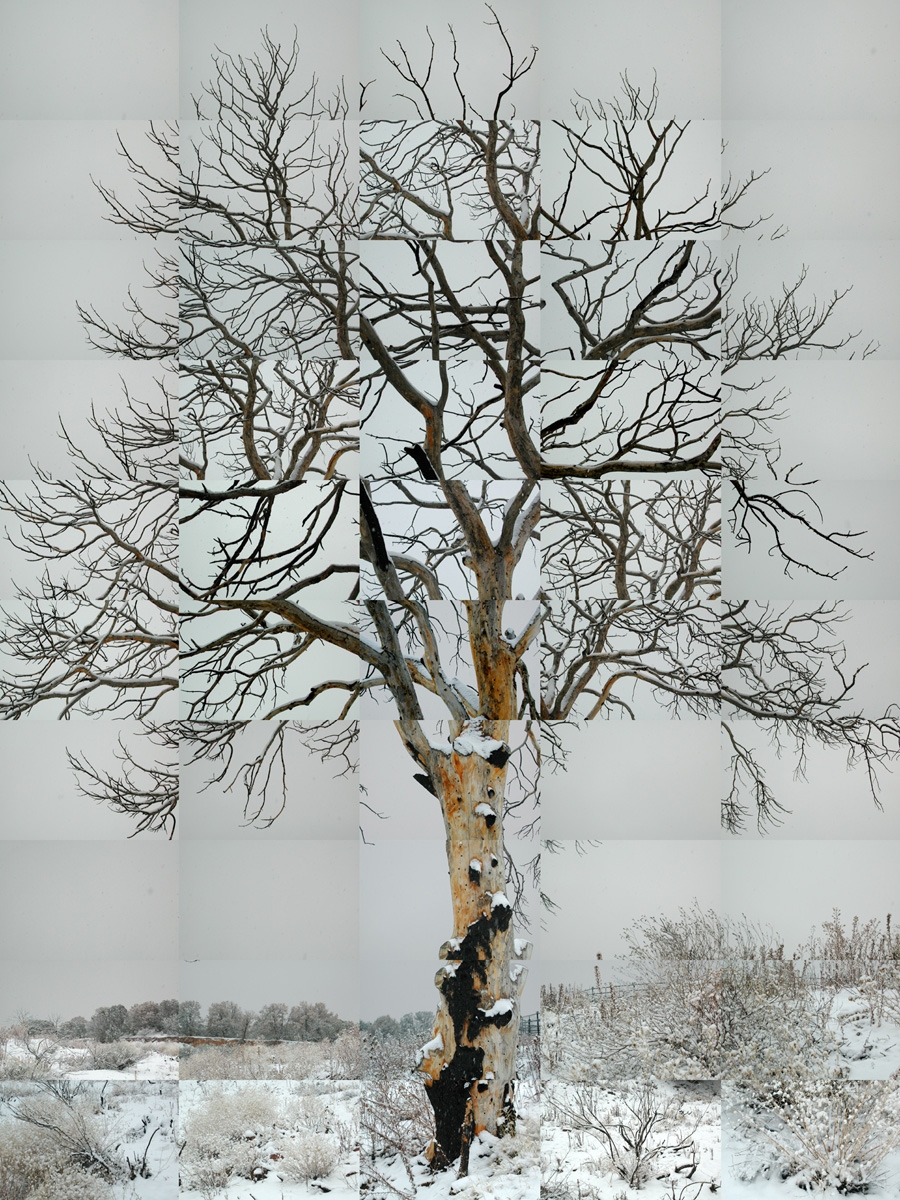
Tree in winter
Pinon, Santa Fe, New Mexico, 2004

MA: Our illustrator, Matthew Chase-Daniel, selected a beautiful image to illustrate your story. I’m often struck by the ways that writers and readers find something personal to relate to in the /images chosen for written work. Did you find any personal meaning in the image selected for “The Keeper of the Truth”?

ALP: Absolutely. The tree is bare, like a tired soul. The photograph was taken in winter, which is when the story begins. And the multiple /images which form a Cubist effect are very much like Emily seeing one small piece of her existence with her sister at a time, rather than a solid whole.


MA: Brilliant. I like your take on the illustration. And one final question: what does “recovery” mean to you?

ALP: Recovery means putting the past behind and moving forward. It means forming a attitude that welcomes positive change, and the strength to challenge our negative urges and drives. Recovery isn’t final. It’s the start of a better way of life, a process of improvement.

“Touching Margaret Atwood” by Valerie Fioravanti

beach /images

If there is one benefit to a Brooklyn upbringing, it’s a loud, booming voice.

You learn to be heard in the schoolyard–if not the cradle. In a world where sidewalk territory was conceded square-by-square, where insults were merely the foreplay of torment, I developed a knack for exposing secret shames.

Bully bed wetter? You can’t hide that smell up close.

Vet older brother caressing lampposts in the twilight? I’m not worth the risk.

My verbal abilities became protection and rescue from the neighborhood, and they served me loyally through college. Then I trailed a lover to Switzerland, home to four languages not my own. In that strange land of starched traditions and tight-lipped disapproval, words failed me habitually, publicly, until they sputtered to a complete stop, even on the page, in English.

The overarching Swiss aesthetic is one of attainable perfection. I couldn’t order bread without being marched through pronunciation and grammar lessons, my baguette dangled outside my reach as I repeated phrases a dozen times or more.

Je voudrais du pain, s’il vous plaît.

Non! Je voudrais du PAIN, s’il vous plaît.

Non! PA-in.

Alors, JE voudrais du pain.

My enthusiastic attempts to communicate blighted their ears, and even my partner, his native traits emerging on home soil, suggested I focus on pronunciation over vocabulary, as if a thing that wasn’t said elegantly wasn’t worth saying. This implication cut as deeply as any comeuppance I’d ever inflicted.

I didn’t fight this notion like the rebel I’d always believed myself to be. Instead, I channeled Bartleby, refusing to engage in daily corrections with my neighbors. I pointed at items I wanted in shops, and relied upon my honed urban glare when challenged. I grew more and more mute until I spoke rarely, at home, among friends, or otherwise. When I finally fled the Swiss, I found my silence a difficult habit to break. I had lost sight of words as my gift.

I was home a week when I learned about a “master” class given by Margaret Atwood. I believed my favorite writer, a Canadian concerned with the silence of being from that other country, could guide me back to my former place of surety. I had missed the submission deadline by one day, but I went to the program office to plead for consideration. In my mind, Switzerland was a nation of torment, yet invoking my time living abroad didn’t elicit sympathy or an extension from the program staff. I persisted, hoping to shake off the rust, to appear worthy of Margaret Atwood’s time.

“I can read you the first paragraph, and if you don’t think it’s good enough, that’s fine. I’ll accept that. The name Ainsley is an homage to my favorite character from The Edible Woman.”

They called security.

I trailed Margaret Atwood through her NYC appearances to promote Alias Grace. If my own words had failed me, hers remained a delight. She made time to read at an independent bookstore, a haven that would not survive the release of her next book. The crowd she drew was larger than the space, so she had fans circled around her on the floor.

The microphone wasn’t working properly. Whenever she spoke, the treble squeaked and bleated, but the noise of the bookstore and the Broadway street bustle meant she couldn’t be heard without it. Twenty minutes into the equipment troubles, Ms. Atwood rested her hand on the head of a young man with wild, shoulder-length curls, and the noises disappeared. The audience whooped. When she moved her hand, the bleating returned, but the big-haired boy scuttled away.

“Was it me?” she joked. The feedback heckled her laugh.

The space around her had widened, and my friend elbowed me. “They’re never going to fix that thing.”

I tripped over my own backpack, practically tumble-salting to her side, but the audience applauded my bravery. Ms. Atwood put her hand on my head, and the mike quieted. She swatted the tech crew away.

For a delicately featured woman, she had a firm, sure touch. I was in the grip of someone in command of more than her words, and I wanted that assurance to seep into me. As she read, her description of 1850s society women— jellyfish ladies—as lovely illusions moved me so literally that the feedback returned. She adjusted my head without interrupting the rhythm of her sentences.

I thought of the women who teetered through my neighborhood, heels high and hair higher. They appeared tough as they sashayed for attention, but that attitude was its own lovely illusion. They were modern jellyfish ladies desperate for rescue, and I longed to write them beyond such outdated notions. As my left hand itched for a pen, I wanted to sweep Margaret Atwood up and dance the mad-jig of inspiration. Part of me thought she could do this without missing a word from the chapter she was reading. She had powers, that one. I believed.

After the reading, she took my hand in hers and mouthed, “Thank you.”

I beamed my reply. Words didn’t fail me. They were unnecessary.


Valerie Fioravanti writes fiction, essays, and prose poems. Her linked story collection, Garbage Night at the Opera, won the 2011 G.S. Sharat Chandra Prize for Short Fiction and is forthcoming from BkMk Press in 2012. Her nonfiction has appeared in Eclectica, Silk Road, and Jelly Bucket, and she is working on an episodic memoir of sorts. Margaret Atwood remains her literary idol.

Read an interview with Valerie here.


Interview with Patrick VandenBussche

Patrick VandenBussche

Mary Akers: Thanks for letting us have your excellent short story “Vibrant Waters.” I’m an enthusiastic diver and snorkeler myself, so I was especially drawn to this piece.To me Vibrant Waters seems to be about how we see only what we want to see, and definitely about the loss of faculties that come with age. But there’s also a strange sort of dignity to be found in Dr. Handler’s misunderstood “observations” that I found very moving. That is me bringing my own life experience to the work, of course, but I’m curious what your intent was in the writing. Did you have specific themes in mind?

Patrick VandenBussche: We all need a little something to get us through those rough times. Some people need to sit down and read a certain kind of book, some people need to go out and start a new hobby, others just simply need to put in their favorite movie and escape for a while. Whatever it is we need to get us through the rough times, Handler needed the Vibrant Underwater Kingdom to be real. It may be slightly sad that in the end, it was indeed not real, but for the man living the adventure, it did not matter. It can go back to that age old saying “Ignorance is Bliss”. However we don’t need the Allegory of the Cave here – we don’t need someone leading Handler out of his fantasy world to the real world, because for him it was too important for his own mental survival to forsake.


MA: Please describe for our readers your personal connection to the ocean. Do you have a background in marine biology?

PVB: I grew up on the Great Lakes – right near the beach. No matter the season – I would always be there. Swimming in summer or skipping ice flows in winter (falling through more times than I’d like to), I’d always be by the water. I never majored in Marine Biology; however I was drawn to the underwater world and its creatures. I was fortunate enough to secure a job in marine animal husbandry, taking care of hundreds of species of fish, inverts, coral, sharks and rays. I quickly took to SCUBA diving off the coasts of Southern California – getting my AAUS certification and helping out with the Santa Monica Baykeepers – doing urchin relocation dives and kelp forest restoration projects. I also spent time identifying fish species and some minor morphological evolutionary work at a university lab – along with volunteer SCUBA diving at the California Science Center – feeding, and maintaining their kelp forest tank, helping with the species there. Surprisingly all of this only started happening in the past two or three years – so getting involved and surrounding myself in this world has inspired my writing. Do I plan on going back to school for Marine Biology? Perhaps – but for now I am happy with being a very involved enthusiast.


MA: You chose the epistolary form to tell this story. I love fiction that includes diaries and letters–it’s so voyeuristic and yet also pure, somehow. Could you talk a little bit about that choice and why you felt it was right for this piece?

PVB: Journal entries automatically make the reader assume that what is written is fact – they hardly question to wonder, unless set up to do so, if the character writing the journal is writing a falsity – after all, a journal is supposed to record actual events – so I believe it helps solidify the readers perspective that what Handler had experienced was absolutely real. The reader should believe in the reality of Vibrant Waters just as much as Handler did. There’s also something very real about writing a story in this way. What is written is no longer just ‘words on a page’ but the writing becomes an artifact – some genuine and real, as if the reader picked up these documents and began to piece a life and story together with real historical items. Much of real world history has been pieced together in this sort of matter, so patching together a fiction story in the same way was and is absolutely fun and exploratory.

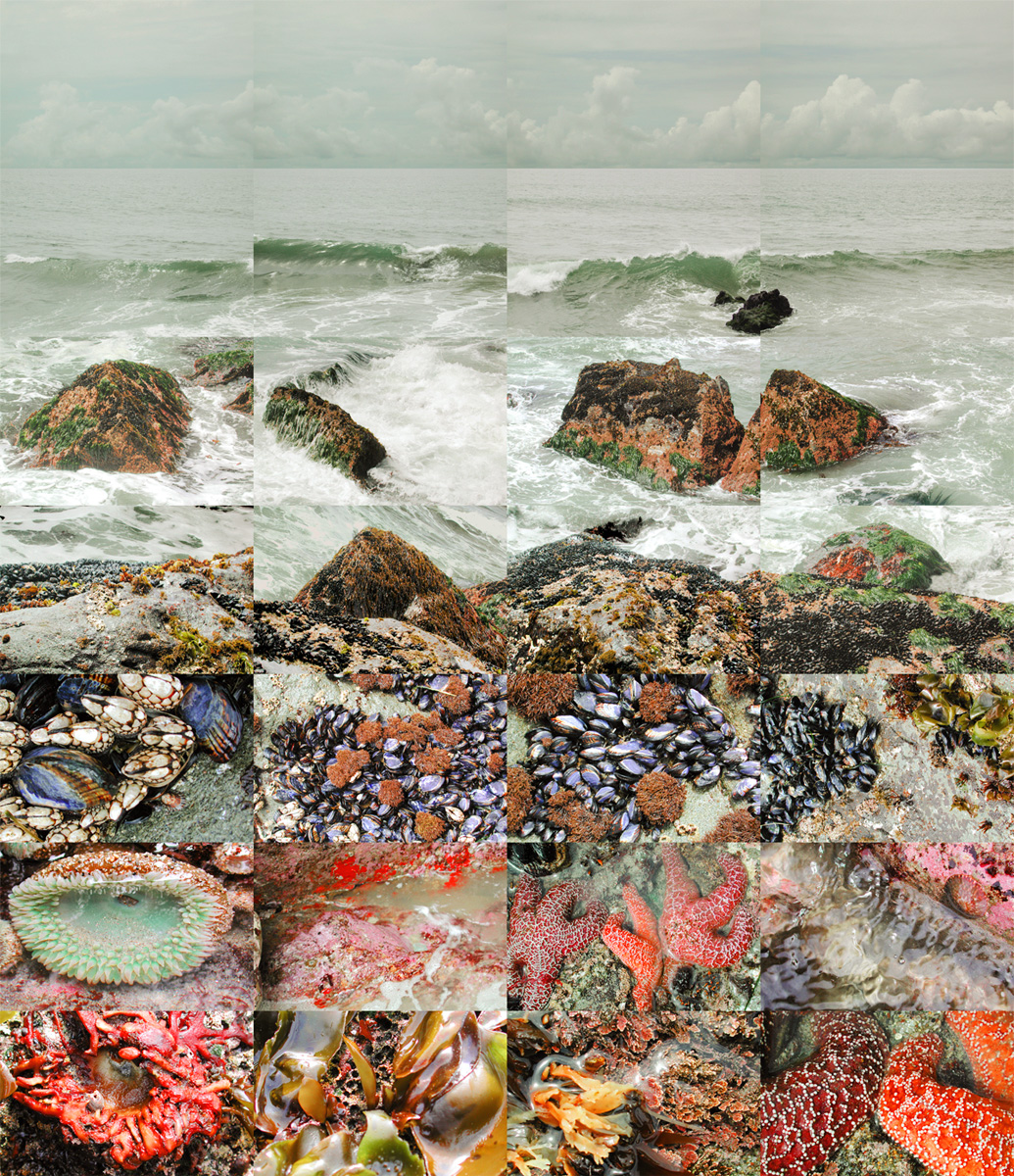
pacific coast

MA: What did you think of the piece that our illustrator, Matthew Chase-Daniel selected for your Shorts On Survival piece. Did you find any personal meaning in the image?

PVB: The best part about the piece was that it looked like he used a lot of imagery of species from the colder waters of the pacific – and anybody who has dove those chilled waters automatically feels a connection to the species and seascape those coasts offer. Diving off coast of southern California can be quite brutal. The visibility is low, there’s a lot of surge, a landscape of large rocks, and enough kelp forests to keep your underwater navigation skills sharp. Also, it’s fairly cold – I did a dive in November and the temp at 30 feet was around 40 degrees. Though it’s not an ice dive, it’s still enough to keep you shivering in a 7mm wetsuit.


MA: Do you have any other writing projects you would like to tell us about?

PVB: I am currently writing short stories – whenever an idea inspires me, or I have time, I try to get to writing. I am currently writing screenplays, working with my manager and writing partner in an attempt to break into the world of film. I will always love prose and fiction. In between the screenplays and short stories that I am writing I am, like just about every inspiring writer, working on a slow coming novel. For now, the best creative and rewarding release is short fiction.


MA: And finally, what does “recovery” mean to you?

PVB: We all go through processes of recovery – from those of us who have experienced major physical recoveries, to those who have seen harsh life changes and turns in the road. In Handler’s case, though he was slightly delusional, he was recovering from a lot of great changes in his life, including the onset of senility and physical limitations preventing him from doing his greatest passions. In those moments of life, where big changes happen, things go wrong, and suddenly in the course of a week, a person finds themselves turned upside down and nearly at the end of a rope – they may find a way to recover, to make a change in their life, and suddenly, they’re no longer struggling to climb that rope – suddenly they’re at the top, the sun is shining, and everything has a lucid clarity they never realized. And then they can finally relax.

Patrick can be reached at patvanden@gmail.com – and followed on twitter at @patvanden.

“Vibrant Waters” by Patrick VendenBussche

waves
Image by Matthew Chase-Daniel

Friday, April 26th 1996

It is here, in this populated lagoon nicknamed ‘Vibrant Waters’ by the public, where I have decided to stay and conduct my observations.

 Though a continual flow of boat traffic skims the surface and crowds of pedestrians surround the shores, the abundance and diversity of life under the calm, clear water makes this an ideal place to settle and conduct research.

 Right off, I note two mysteries about this area: The diversity of life in such a shallow lagoon, and the night divers.

 The night divers are men I have yet to physically approach. I see them appear on the far end of the lagoon as the sky grows dark. When the visitors have left, the divers slip into the lagoon and disappear into darkness.

 Watching them triggers a deep pull in my heart, for due to an irregular imperfection that has formed in my lungs in these later years, I am land-bound and unable to go diving.

 These divers seem to have no effect on the life down within Vibrant Waters. And what life there is! Fish of all types: Tangs, Angels, Damselfish, Anthias… and the corals… Acropora, Brain, and Polyps…  The numbers are too much to list. And there are sharks, squid, anemones… If only I could observe them closer. I look to these glimpses of life through the plate glass at the bottom of a boat as if I am watching a television. Why is there so much life in such a small closed off lagoon? The evolutionary diversity of this single lagoon is confounding. And what do these men of the night do when they slip into those waters and leave in the morning? Like any man of science, curiosity grips me harder than any love could.

 ~Dr. Henry Handler

*

Monday, April 29th 1998

Today there is a new arrival in the lagoon. A pair of dolphins: a mother and her calf. I never had much interest in dolphins, but it is good to see new life in the lagoon. Though the amounts of species are vast, I have also found them stale and unchanging. Each species I have noted has an incredibly low density. The dolphins don’t seem frightened by the boats (nor does much of the life out here) as they leap from the waves to say hello. They are more rigid in their swimming pattern then the dolphins I remember in my past. The ones I would see sailing on the Gulf, with the wind ripping through my hair and my fate bent on the sail. Nevertheless, it is good to see them.

~Dr. Henry Handler

 *

Tuesday, June 17th 1998

I was passively observing a school of Tangs from the boat when I made the most remarkable discovery. Keep in mind, I write this next passage as a man with a solid scientific mind. I write it as a man who has spent most of his life on or below the water… in all my years… I can barely write this! It was only a flash in the corner of my eye. What I glimpsed was… how can a man of science write this… or make claim to this? It was from what I could see… a mermaid. The myth of sailors and legends! I had seen her zoom from my sight, her hair trailing behind, pulsing in the surge. It was only a second, but I swear it was a mermaid!

 There is nothing to do now but keep watch. Keep watch and hope I am not going crazy.

~Dr. Henry Handler

*

Saturday, June 29th 1998

I yearn to go back into the water with SCUBA gear. The depressurization would be hard on my old body. The nitrogen narcosis would come on fast even in shallow waters. The gear would be too heavy and with my irregular lung passage it is too risky. But I am happy to be out near where the sea life is mostly familiar, even if its reasoning is so different. There are species of crab and lobster I never thought would be living in the same reefs and fish I believed only lived in other areas of the world.

 I contemplate my findings as I wander around this island paradise. The locals have plenty of food stands and markets. There is a hospital and a quaint downtown which reminds me much of the small old-fashioned streets where I grew up. I find that this place is one of the happiest places on earth, though during the summer months it can get quite crowded. It is during these months when I spend most of my time indoors or on the river, cruising to nowhere on a boat.

~Dr. Henry Handler

*

Wednesday, July 3rd 1998

There’s a mansion on the hill. They say it’s been haunted for years. I dare not venture there, for ghosts frighten me, though it seems to be a great attraction to many people and as of late (a lot more of an attraction then the lagoon). Boat traffic has slowed immensely. This makes me happy. For me, I would rather explore what is alive then what was. But we all have our interests I suppose.

 This is why I have decided that leaving isn’t on my agenda.

 I find that I miss my daughter, but there is too much work to be done in this lagoon. With this ‘mermaid’ I feel nearly chosen. As if her waving hair was beckoning me to her with a seductive motion. Of course, I am too old and too studied to believe she is real. I am certain it must have been a tuft of Maiden’s Hair algae adrift in the waters. Regardless, the small feeling of mystery I once felt in those days of discovery, before men had dropped down to the reefs in anything but a lead suit and began the use of the Aqua Lung… those unknown days which filled me with shocking warmth even in the cold Pacific… I feel it again. Even if it is a false emotion, I will hold onto it.

~Dr. Henry Handler

*

Friday, July 26th 1998

I glimpsed it again. I am certain it was a mermaid. Certain. There is no going back now. The spirit of adventure and exploration is alive. A myth is real. If men can believe in ghosts, why not a mermaid?

~Dr. Henry Handler

 *

Wednesday, August 7th 1998

The night divers came back last night. They continue to mystify me, but I will watch, always, over this lagoon that I have grown too fond of.

~Dr. Henry Handler

*

Tuesday, October 22nd 1998

I have spent more time looking for the mermaid than writing in my journal. She has not appeared again, yet the divers come every night. The dolphins have stopped surfacing. Fish are disappearing.

 I want to approach these mysterious divers, dressed in black wetsuits and carrying bags of tools and other bulky equipment. I want to stop them, but I am a feeble, old man, and I know men like these are dangerous. They slip in after sunset and leave before morning. They are doing something. Poaching, or killing, or building, but I haven’t been able to discern what even after my months of staying here.

 I will keep watch, always.

~Dr. Henry Handler

*

Wednesday, November 13th 1998

I apologize for my terrible handwriting. I am writing with a broken wrist, which is now bound in gauze and a splint. It was two nights ago. I was standing watch, as always, over the lagoon. I’d had a cup of coffee to stave off my early afternoon drowsiness, but the pot was more potent then I believed and it had kept me up all night.

 I watched the divers enter the waters after sunset as they always do. I attempted sleep, but it didn’t come. I went outside and spent my time between reading an old copy of The Great Gatsby (a personal favorite) and keeping an eye on the lagoon. When the sun broke in the morning, I found the divers coming forth from the water. This time dragging something…

 Pulling her from the water, roughly, yanking her by her hair… It was the mermaid.

 Of course, like the old fool I am, it was then I realized what they were after all this time.

 I am an old man, but I still felt the bite. The bite that a conservationist feels whenever they look at a rich forest of emerald green and know it is doomed for demolition. So I went after them.

 There was no plan. Looking back I should have grabbed something, anything, even a pan or a rolling pin. But I was in a rage. I ran at them, bellowing a roar I never knew I had inside of me. They saw my approach, barely moved. When I reached them (the mermaid, now on the ground, lying lifelessly on the grainy shore, without a twitch) it was only a matter of seconds before they strong-armed me into submission.

 I swung, I fought, I kicked, I bit. And then I was thrown to the ground where I landed on my hand. I heard the crunch of bone, and felt the fire of breaking ligaments.

 They loaded the mermaid onto the truck and drove away. One stayed to observe me until the island doctors arrived. We exchanged no eye contact and no conversation.

 I spent the last two days asleep. I will sleep for one more full day.

~Dr. Henry Handler

*

Monday, December 23rd 1998

Christmas doesn’t deter the tourists here. In fact, when the islanders decorate, the place is vivid, like a snow kingdom in the middle of a warm paradise.

 No mermaids have come back, and though I study the waters less and less, I find peace looking out across the lagoon. The cheers and squeals of children echoing as they see passing schools of Chromis, the parents in awe of the stranger creatures like cephalopods and nudibranches.

 But I am fine on my porch. Relaxed. Happy to see the sun rise and fall. Though I still think of the mermaid. In the darkest dreams I see her body lifeless on the cement, her face turned down. Only in the brightest moments do I see her in the water, a living myth only a few men could possibly have ever seen.

~Dr. Henry Handler

*

January 18th, 1999

The Office of the President – Imagic-Nation
Paradise Ave, Orange Valley, CA

Dear Dr. Judith Handler,

I am writing to offer my condolences regarding the recent passing of your father, Dr. Henry Handler. Like most boys growing up, your father’s books and the films of astounding underwater worlds that he studied during his lifetime enamored me. Without your father, a true pioneer, the underwater world would still be mostly a mystery. I credit your father for giving me the inspiration for building my park. Even many of the films I produced were tributes to Dr. Handler.

 In recent years, as you know, your father’s senility became quite severe. His delusions were extreme, and even that would be an understatement. To watch a mind and soul of such great intelligence and adventure wither to foolishness, I beseeched my heart not to break! To think of Dr. Handler spending his days in a home, in such a confined space compared to that vastness of dynamic life within the ocean… just the prospect made me sad. Which is why when your father visited the “Vibrant Underwater Kingdom Ride” in his elder days (you know this ride, we took you on it when you visited as a small girl – it is a horrid, little attraction where a series of glass bottom boats travel on a track around a lagoon full of plastic fish, killer squids, and a mermaid, even though she was removed in the later years due to constant breakdowns and a shoddy design) he would often forget he was looking at plastic marine life. Or perhaps he just had been starved so long of seeing it in the wild that he only wished it to be real.

When the lawsuits from the university and the mismanagement of your father’s properties came about, both his bank account and mind were deteriorating at a rapid rate. Too senile to handle a book deal or a TV show that could save his pocketbook, he was destined to be led to a small retirement apartment, a shoebox on the 32nd floor of a crumbling building downtown. That was when I built a small cabin on the lagoon of Vibrant Underwater Kingdom. He took up residency there with complacency. He would often watch the ‘animals’ and though I never quite knew what he was up to, he seemed like his normal self: as if he were back in the sparkling waters of Fiji and Bali or offshore of the Tonga in his boat the Yemaja exploring the unknown. When we removed his belongings from the cabin (we always told the guests it was a pump house, your father the pump house operator…you see, most people knew your father’s name, but his face was always hidden by one of those archaic two-hosed re-breathers) we found a journal he had been writing since he took up residency.

 Though I am sad to see him go, I know my diving repair engineers (who often butted head with your father for reasons I am sure you will see) are happy to be free of the old ‘pump house operator’, though I know deep in their hearts they feel the ache, as their night shift has become a lot less interesting.

 I think you will find this journal an interesting slice of your father’s life and mine.  I know you yourself are somewhere out in the Pacific, continuing where he left off, going even deeper then he could imagine. But I want you to know, even in his final days—his existence a small, pathetic, faux slice of his former reality—he was a happy man.

Yours Truly,

Rodney Mabel
President of Imagic-nation and Imagic-nation Theme Park


Patrick VendenBussche spends most of his time out on the Pacific and under the waves. An avid SCUBA diver, he volunteers most his time for coastal restoration efforts and aquarium diving for education. Between the water and his other volunteer work with therapeutic horseback riding, he is currently working on feature length scripts and more short fiction. Far from his homeland of northern Michigan, he now resides in West Hollywood, California.

Read an interview with Patrick here.


Interview with Christopher Searles

Christopher Searles

Mary Akers: Hi, Christopher. Thanks for sharing your excellent short piece “Pose” with us. This piece was written from the point of view of a woman, which I thought you handled very well. Are you comfortable writing from the female point-of-view or was this a departure for you?

Christopher Searles: Thank you Mary, I appreciate you publishing it.

When I first set out to write this story, it was from the male point-of-view. But the protagonist as a male didn’t work for me. The idea of domestic violence hadn’t even been derived at that point. When I changed the point-of-view to a woman, the story seemed to develop on its own and it seemed to flow. But I was still concerned whether women would be able to identify or relate with the protagonist, but I’m glad at least one woman (yourself) felt I handled it well.


MA: Having a character be naked always ups the stakes for readers. It’s certainly something we can all relate to, that feeling of vulnerability, of being exposed. But what I liked about your piece was that the naked character was the empowered one, and her nakedness actually exposed her husband’s misdeeds. Brilliant! Can you talk a bit about what inspired you to write this piece?

CS: A lot of my inspiration comes from my other passions. And visual art is another passion of mine. I have been in many life drawing classes in the past and I thought it would make for an interesting setting in a story. When beginning to write, I recalled the many poses in the classes I attended and the idea of one pose that would actually make me feel uneasy came to mind. From there, I just gave the pose context.


MA: My undergraduate degree is in fine art and I remember the first time we had a nude model in life drawing class. I was awed by her (and later, his) ability to be the only one in the room without clothes, with all eyes focused on the tiniest details of her/his body. But almost as soon as I picked up my charcoal, the model became an object to depict, a non-human still life with angles and curves, highlights and depth, textures and shadow. I think that is the distance that art provides and is also what allows us to write about the sometimes very personal process of recovery and find the sort of distance that takes away pain. Would you like to comment on this?

CS: I agree. I think the idea of writing about something so deep and personal that it causes pain can occur when the writer has been able to evoke emotions and feelings through the characters and their conflicts. And as the writer, I am able to distance myself from those emotions and feelings enough to complete the story because I’m viewing it as a form of art, thinking about specific nouns, strong verbs, and consistency of voice.

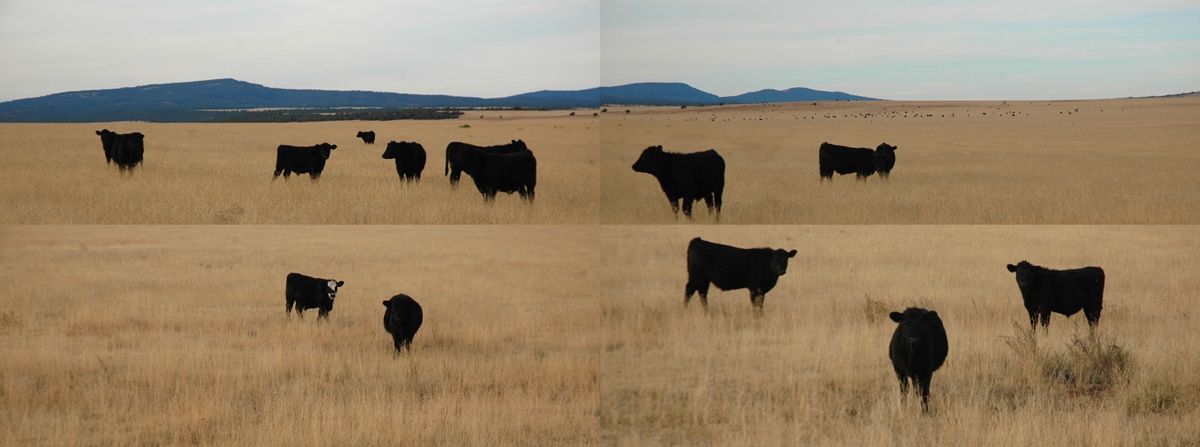
Cattle

MA: I thought that our illustrator, Matthew Chase-Daniel chose an interesting image to illustrate this piece. What did you think of it? Did you find any special meaning in the image?

CS: I was curious to see how the illustrator would depict my story giving that it was a piece that dealt with art. But I was amusingly surprised by the choice and saw the immediate parallels. Animals bear it all much like the protagonist did in the story.


MA: And finally, What does “recovery” mean to you?

CS: I try to view recovery as a process of growth. I’ll use the analogy of my workouts in the gym. I workout to get bigger muscles. I tear the muscles I have through lifting weights. When I leave the gym, I go through the recovery process. During that recovery, my muscles are growing bigger and stronger to compensate for the heavy weights I had lifted. The process is sometimes long and painful, but I’m better for it.


MA: I like that analogy. I feel like I tear my “writing muscles” every day, too. Thanks so much for speaking with us today, Christopher. I enjoyed it!

An Interview with Mel Jones

Mel Jones

Joan Hanna: First, let me say how thrilled we were to have “Shaping Stone” as part of our October issue. This essay gives the reader such a multi-generational viewpoint. Can you share a little more about your family history with our readers and how that might have influences in your writing?

Mel Jones: Thank you for taking the time to read my essay and share it with the world, surrounded by Matthew Chase Daniel’s beautiful artwork!

My grandmother was my greatest influences. She was a brave woman. My father’s mother, Nana, was my mentor. She taught me about inner strength and perseverance in the face of adversity. The word ‘can’t’ was not part of her vocabulary. She came to the United States with little more than the shirt on her back, and managed, with her husband, to buy a home in Boston, keep it through the Depression, and feed most of the neighborhood on a daily basis. Nana bought me my first dictionary when I was three—and she expected me to learn to read it. She went to a Hedge School in Ireland and believed the only way to find success was through words. Words are power. She encouraged all of us to learn new words, do crossword puzzles, and to write, almost from the time we could speak. She was a taskmaster. She had left behind depressed conditions in her country, and I believe her home to build a better life for herself.

My dad, was the epitome of a stereotype, he was a drunk, Irish cop in South Boston Mass. He died believing he was a failure. My siblings are following in his footsteps; each is medically addicted to something. When I moved to Virginia, I believed my choices were to move or die.

Like my grandmother, I left my family behind and forged a new family in which everyone acknowledges personal limitations and flaws (or at least works towards that ideal).

In many ways I see the world colored by the lenses of these two individuals. They instilled in me my love for words. Both of them looked up and learned a new word every day. They were both great storytellers. Nana told ancient stories, dad told sad stories. Beckett was one of his favorite writers. Their juxtaposing stories helped to create the writer I have become.


JH: You describe the very different experiences for other family members and what “the cliffs” meant to them. Can you explain a little further how this either set up or interfered with your own experience?

MJ: When my grandmother talked about Ireland, it was a magical place far away. It was a place that knew no sorrow or heartbreak. There were castles, rainbows, and fairies. She told magical stories that glossed the difficulties she had experienced; she inferred the lessons that should be learned. For Nana, I believe the cliffs were the symbol of an idealized strength, something hoped for, worked for, but rarely attained. They were something beyond the self.

When my dad talked about Ireland, the cliffs were filled with tragedy and dreams that were unattainable. Sailing by them was a surrender of sorts. He had his chance, and blew it. He

viewed most of his life that way; he had chances, but blew them and wallowed in a whiskey-induced melancholy. He saw his children as the only thing he had ever done right.

For me, the symbolism of the cliffs is an internal, rather than external, experience, a reflection. When I see pictures of the west coast of Ireland with its imposing cliffs and crashing white caps, I am reminded that that’s the landscape that shaped me. Thousands of years, of ancestors, can be seen in the face the ocean has shaped into the cliffs; craggy and rough. But there. Viewing the cliffs is a reminder not of who I could be, but rather, who I am. Gazing out over the ocean from atop the cliffs is an empowering and humbling experience. One has to face down the wind and find a strength that doesn’t come from out there—it resides within. If I can conquer the cliffs their strength becomes part of me…


JH: I really love that this became your own personal experience in the end, separate from your family influences. Can you give our readers a glimpse into the writing process that helped bring about that aspect in this essay?

MJ: It is easy to say my father was this, so I am this too. My parents treated me like that, so I am what I am. It is a continuing process for me to remove myself from that. Yes, I am influenced by the experiences of my childhood – and I can allow those experiences to build me. Or, I can create new experience based upon what I have learned from those events. Periodically, I write to remind myself of that important lesson and so I look at moments. Not events, or even experiences per se, but moments. I hold on to the image, the emotion that came with a particular image and build outward from there. How many things, concrete and abstract, can I connect to that moment? The cliffs—Dad—Nana—empowerment—surrender—family history—connection to the land—land connected to spirit—to me. This piece started as a free write and evolved into a braided piece. Most of my “serious” pieces are braided, because I cannot understand the world in any other way. I don’t try to make sense of anything I am writing until I finish a draft. I allow the connections to be made and follow where they lead, trusting that process. I refine after I have a complete draft.


JH: You’ve also described most of your other work as humorous and not as serious as “Shaping Stone.” How was this story different for you as a writer and why did you feel that a humorous approach would not do justice to the story?

MJ: I think a humorous voice comes naturally to me, and it doesn’t exercise my brain. Because I write nonfiction, humor is essential. Life is hard; we can laugh or cry. To delve deeply on a daily basis would drive me to that age-old Irish melancholy; drive me insane. Just as every moment has a lesson; there is always something ironic to be seen. I naturally gravitate toward that paradox.

The irony in Shaping Stone is too subtle for humor. Despite the fact that neither of the individuals that influenced me felt they were able to overcome limitations or failures, what they gave to me is what has created my inner strength and self-esteem. What they viewed as limits set me free to explore other things.

I have many humorous stories about both my grandmother and father. The learning (teaching?) moment of Shaping Stone is tied to the spiritual nature of the land and the culture that marries its people to that. To tell this particular story with humor would belittle the lesson, at least for me.


JH: I think it’s important to remember that many experiences come from a place of humor. I also find it a very diversifying way to share your work; having that option of seriousness or humor. Please share with our readers any inks, websites and other publications of your work.

MJ: I keep a blog at http://melwalshjones.wordpress.com. It is an eclectic place. Be warned.

Most recently, I had an essay published on Emily Rapp’s blog, Another serious, Irish piece.


JH: Thank you for taking the time to interview and for sharing not only your lovely story “Shaping Stone” but also your family history. Can you answer just one final question for our readers? Can you share with us what recovery means to you?

MJ: For me, recovery, like writing, is a process. I take one step at a time and accept that I am in the middle of the story and I have to let go of outcomes. I cannot influence the people around me any more than I can influence characters in a story. Recovery has nothing to do with ending a relationship with a substance and everything to do with beginning a relationship with the self. To recover from anything we must learn to cast our fears to the wind and put one foot in front of the other on the road to discovery.

I recently left a job that I loved after several confrontational interactions with my employer. Several well-meaning friends suggested that I needed time to grieve, to recover. Instead, I immediately took a job teaching composition – I discovered a new layer of who I am. That layer helped to salve the damage done. Each discovery takes us closer to recovering who we are in our hearts and spirits.

Interview with Brian Pietrus

Brian Pietrus

Mary Akers: Thanks, Brian, for letting us have your excellent short piece “Stella Blue.” I’m an enthusiastic hiker and camper myself, so I was especially drawn to this piece. To me Stella Blue seems to be about the healing powers of nature, and about sharing our passions with the people we love. That is me bringing my own life experience to the work as a reader, of course, but I’m curious what your intent was in the writing. Did you have those or other themes in mind?

Brian Pietrus: That was certainly part of it. It was a tough time in my life. My grandma was very sick, going through chemo, and I was having my own health problems at the time. Both of us put a lot of pressure on my mom, expecting her to be there for us. Hiking has always been a form of escape for me, something I do alone. But having my mom there sort of forced me to open up more and to accept that because of my personal problems I had become very withdrawn and introverted, which ran counter to who I am at heart, and that I needed to change.


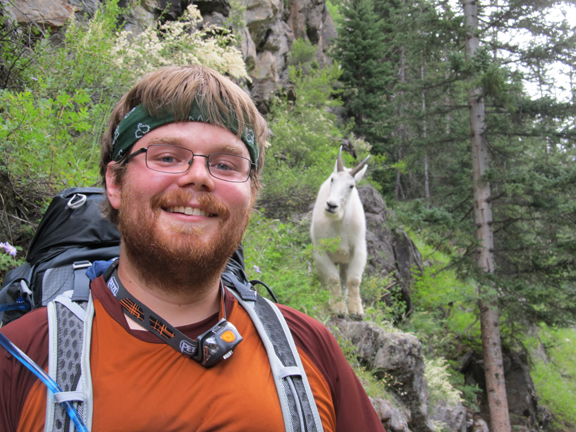
MA: Change is my favorite form of recovery. I love the photo you gave us to use–is that a mountain goat in the picture? How did you manage that?

BP: It is! Goats are one of my favorite animals, and I have always wanted to see a mountain goat. I was on a backpacking trip in Colorado this past summer, and about 2 miles in someone passing by told me there was a goat near the trail up ahead. I came around a blind corner and two other hikers were stopped in the trail watching the goat. He was standing right on the trail, munching on some plants, completely oblivious to us. One of the other hikers tried to scare him off the trail by yelling and making noise with his hiking poles, and the goat leapt up a vertical rock face to a perch about 5 or 6 feet above the trail. I was able to get this shot without getting close to the goat because he was above the trail, and I still kept a fair distance to be safe. We were all a little uneasy passing by under him, but he was really uninterested in us and didn’t feel threatened. But the kicker is he kept following me down the trail! We crossed paths 3 more times in the next hour, and I had to keep going off the trail to give him room so he wouldn’t feel threatened by me. He would pass me, then I’d pass him further down the trail. I got to see him do some impressive footwork on more than one steep rock face. It was the first time I’d ever seen a mountain goat on a hiking trip, so that was a great prelude to an incredible trip!


MA: How funny. You had an unexpected hiking buddy!

In writing Stella Blue, you chose not to use quotation marks for the dialogue in your piece. Could you tell us about that choice and why you felt it was right for this piece?

BP:
I had never really done that before in my writing, but one of my professors encouraged me to experiment with dialogue to make it feel less broken, less “like writing.” It was my hope that taking out quotation marks would ground the reader in the story.


MA: I think it did. Good call. I also think it made the piece feel more internal and intimate, which adds to the mood.

Can you tell me something about the wilds of Wyoming that makes it similar to the wilds of writing?

BP: Well, normally I would say it’s a very solitary experience, but since I had a hiking buddy I guess that doesn’t hold up so well in this case.

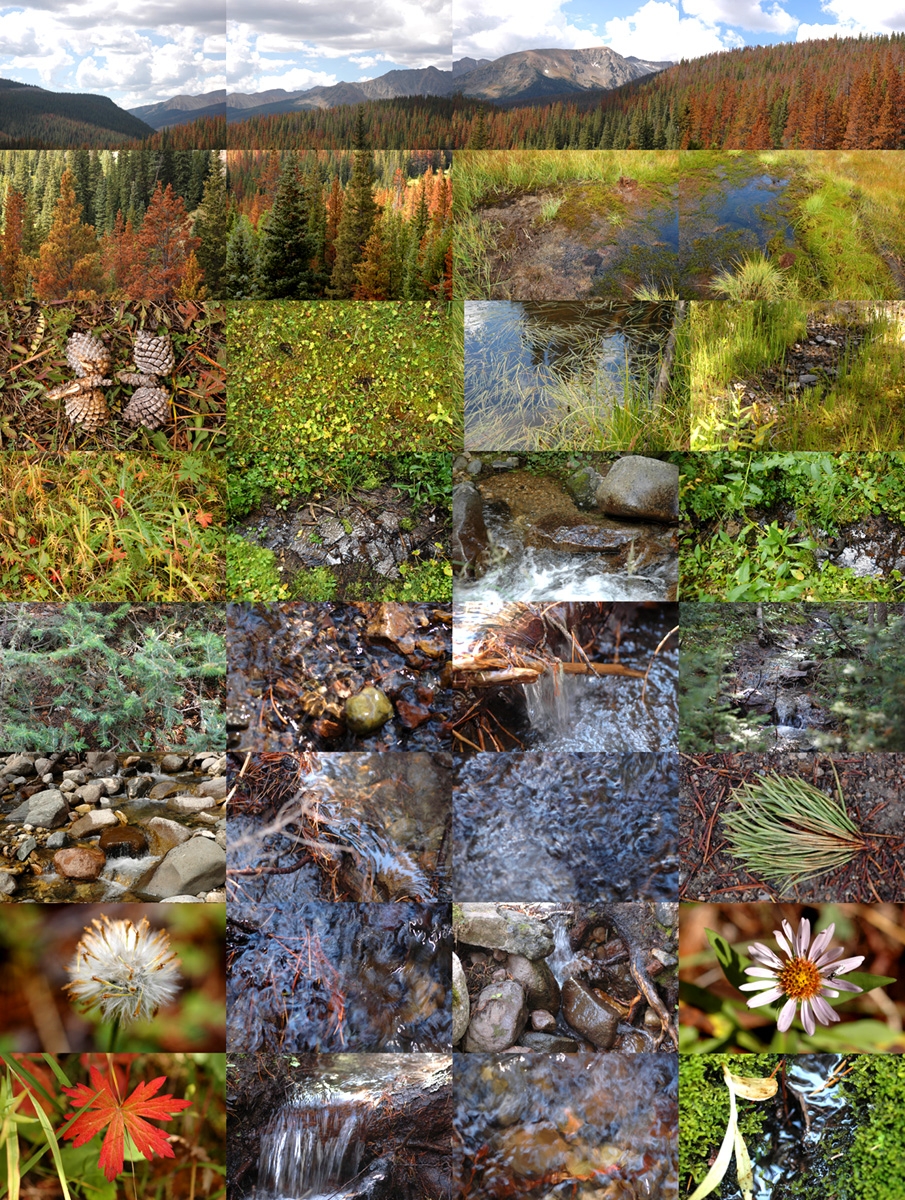
mountain meadow

MA: What did you think of the piece that our illustrator, Matthew Chase-Daniel selected for your Shorts On Survival piece? Did you find any personal meaning in the image?

BP: I loved it. I’ve always been a big fan of collage, and I think he created a really great “wholeness” out of the individual frames.


MA:
And finally, what does “recovery” mean to you?

BP:
I guess for me it means learning to forgive, whether it’s yourself or others being forgiven. Learning to put the past behind you and focus on the present. It means something different for everyone, but to me that’s what is at the heart of it.

Interview with Valerie Fioravanti

Valerie Favorianti

Sue Staats: Valerie, in your piece, Touching Margaret Atwood, you wrote of a near-miraculous encounter with her – a goddess in my pantheon as well – who, by her touch, seems to begin your process of healing during a time when you lost your words. I’m so curious: what happened next? Did you immediately begin to write again?  Did you write about the “modern jellyfish ladies?”

Valerie Fioravanti: My next step was to travel again, to Eastern Europe and Turkey, settings that I’ve returned to in both fiction and nonfiction. I did write from that point forward, but it probably took close to a decade to go back to the neighborhoods of my childhood, to give modern jellyfish ladies their due. I needed to mature as a human, to develop greater patience and empathy for the choices that were not my own before I could do their lives justice. The depictions of jellyfish ladies of every era are so full of judgment and contempt. I wanted to do better by them.


SS: And have you done better by them? Some examples, if you can, if the answer is yes. Some future plans, if the answer is no.

VF: I don’t think I have done justice to the type of women I mentioned in the essay, those high-haired, faux-tough chicks sashaying around in stilettos. My second collection seems one story shy of completion, so I think you may have sparked an idea here. I believe I have done justice to women who remain in the neighborhood because of their strong family ties, even when common sense tells them to flee. Garbage Night at the Opera has characters that take off at the first opportunity, and characters who stay behind to support this fused family unit which is so resistant to change.


SS: If an encounter such as you had with Margaret Atwood had happened to me, I would feel that connection, her hand on my head, forever. Or, at least in moments of self-doubt. Do you?

VF: The five years that followed were a bit of a whirlwind in terms of travel, opportunity, transformation from neighborhood girl to well-traveled woman who had very little patience with her own frailties. I think I buried the memory because it was so steeped in shame. Fast forward maybe fifteen years, to the Napa Writers Conference, and this memory comes pouring out of me in defense of Margaret Atwood, in response to a conversation about how difficult she was to work with. As I was retelling it, I could feel her hand on my scalp again, how much it had meant to me to receive this form of blessing. When I was finished, someone said, “Have you written about that?” I hadn’t, but I knew I would.


SS: Your linked short story collection, Garbage Night at the Opera, recently won the 2011 Chandra Prize and will be published by BkMk Press next fall. Do any of the pieces in the collection date from the experience described in the story?

VF: My first published story, which is in this collection, was set in Switzerland. It was published in Baltimore Review as “Why I Hate Geraniums” although it’s now “Weeds.” One of the themes of that story is loss of identity/displacement, although those issues are resolved by the story’s end. My earliest stories are mostly about overcoming obstacles, moving forward, refusing to be sidetracked. If I were to redo that story now, I’d probably spend more time owning her fears and doubt.


SS: You’re a writer of creative nonfiction, flash fiction, short stories and novels. What makes you choose one over the other, when you have an idea for a story and sit down to write? In other words, given that most stories have their inspiration in true events, how do you determine whether you’ll write the story as fiction, or as memoir? Or as flash?

VF: With creative nonfiction, my desire is to process experience. It’s more intellectual in nature, although of course I want my cnf to also have heart. The proportions are skewed toward intellect, toward shaping meaning. With fiction, it’s the opposite. I want to convey experience, which is all about being emotionally intelligent, stepping back and allowing the reader to be witness to something meaningful. But it’s important to mention that I am a huge fan of invention. I took a neighborhood and a family model I was very familiar with and created a fictional landscape.

In terms of the different types of fiction I write, it’s mostly a matter of scope. If I set out to write a story that ends up with novel-sized elements, I refocus my attention to something more appropriately story sized, a smaller part of the original whole. My linked collection emerged as part of that paring down. I was interested in the historical moment I had witnessed in Greenpoint, Brooklyn, the neighborhood at the core of Garbage Night at the Opera. In my early childhood, there was deindustrialization, the quick and wholesale loss of factory jobs that had supported that neighborhood for several generations. Then the neighborhood languished, neglected, as the families that couldn’t or wouldn’t move waited for “better times.” Finally, those times arrived with gentrification/renewal, but those same families were squeezed out by rising rents they couldn’t afford to pay. I couldn’t tell the entire arc in one story, but I could point toward that arc in a dozen inter-related stories.


SS: As a Sacramento writer, I’m very excited about the innovation and energy you’ve brought to the Sacramento literary scene. Why did you choose Sacramento? What inspired you to begin your teaching, the Master Classes, and Stories on Stage?

VF: Sacramento was meant to be a pit stop. I was teaching online and editing book manuscripts, so I wasn’t geographically constrained. I thought I would explore California for a bit, and then move to the coast. But Sacramento charmed me. I loved my Midtown neighborhood—it’s walkability; those funky, turreted Victorians; three great used bookstores coupled with a newsstand and indie bookstore with varied literary magazine selections (a combo which might lead to bankruptcy). I felt the writing community needed someone to be its advocate, to focus on what it might offer, rather than what it lacked. So I advertised some workshops and started up a reading series. Now, people bring their ideas to me. That’s how the Master Teacher Weekend Workshops began—with another writer asking for help to make one event happen. We brought the Atlantic’s fiction editor to town, and I thought, why stop?


SS: Any current projects – writing or otherwise – that you’d like to tell us about?

VF: Right now, my focus is on my second story collection, which is nearly finished. After that, I hope to return to my Italy novel, Bel Casino, which is a sort of sequel to Garbage Night at the Opera, as I’ve taken two of the recurring characters from the collection and set them loose in Italy as adults. In terms of creative nonfiction, I’ve been working on short pieces like “Touching Margaret Atwood” which I think might eventually cohere into a memoir.


SS: It’s a wonderful story. Have you ever thought of sending it to her to read?

VF: Thank you for saying so. Margaret Atwood has a poem in this issue (that I share space with her just thrills me), so maybe she’ll find it on her own? I’d like that, but I might just believe in letting idols be idols. This moment was big for me, but to her it was just a hiccup at one event in a life crammed with readings and speaking engagements. I don’t know—should we ask Mary Akers to forward the link to her? (Editor adds: I already did!)


SS: What’s the “recovery” experienced in the story “Touching Margaret Atwood,” and is that how you might define recovery, if you were writing your own dictionary?

VF: I returned from Switzerland less whole than I had left. This moment with Margaret Atwood didn’t change that–it just helped me turn the page, and move forward as a woman with a strong voice who now understood some things about silence and self-censorship. Whether it was a recovery in the truest sense or what that might mean, I’ll leave to others to decide.


Sue Staats
is a Sacramento writer of fiction and a recent Pacific University MFA graduate. Her short stories have been featured at Stories on Stage in Sacramento, and she’s a frequent participant in the Master Teacher Workshops, founded by Valerie.

Interview with Tiff Holland

Tiff Holland

Mary Akers: Hi, Tiff! Thank you for speaking with us and for allowing us to publish your fine essay “Status Check” in this issue. My favorite part of this essay was the easy relationship between the mother and daughter…who are both recovering, or trying to recover (aren’t we all?). What do you like most about your relationship with your mother?

Tiff Holland: I think what I like most is its history, which is ridiculous because we were more foils than friends most of my life. Still, that gives the essays/stories instant tension. It also allows us to be totally honest with each other. If one of us says something, anything, even as simple as “I love you” it has a greater meaning. The “ease” you mention comes from that as well. We know each other. We’ve had adventures. Think 30 year road trip.


MA: I had the distinct pleasure of hearing you read recently in Buffalo, from your chapbook “Betty Superman.” I was fascinated by your mom’s feelings about the book, how she felt being the inspiration for the main character. Could you tell us a little bit about her reaction to the book?

TH: She loves it! She always told me I should give up writing poetry (my initial writing focus for 20 years) and write about her life. She said then WE would be rich. She also accepts that it’s writing–not always completely literal. However, she was concerned that my two aunts might not feel the same way. Mom thought they might excise one story in particular. So, I sent the books for the reading to a friend’s house instead.


MA: Along those lines, we also spoke about how once something is put into writing and published, it often becomes the new reality, even for the writer. I know that I have occasionally had a “memory” that when I examine it more closely turns out to be something that started as fact, but that I completely altered in the writing in order to fit a storyline…and then I remembered it the altered way. Has that ever happened to you?

TH: Honestly, no. Prior to losing a large part of my short-term memory, I had perfect recall. It was actually kind of annoying for a writer–no editing! If I don’t remember something as it actually was, I have a sort of “white hole” that fills my consciousness when I think about it literally. The fictional version exists separately (and usually looks like an Edward Hopper painting.)

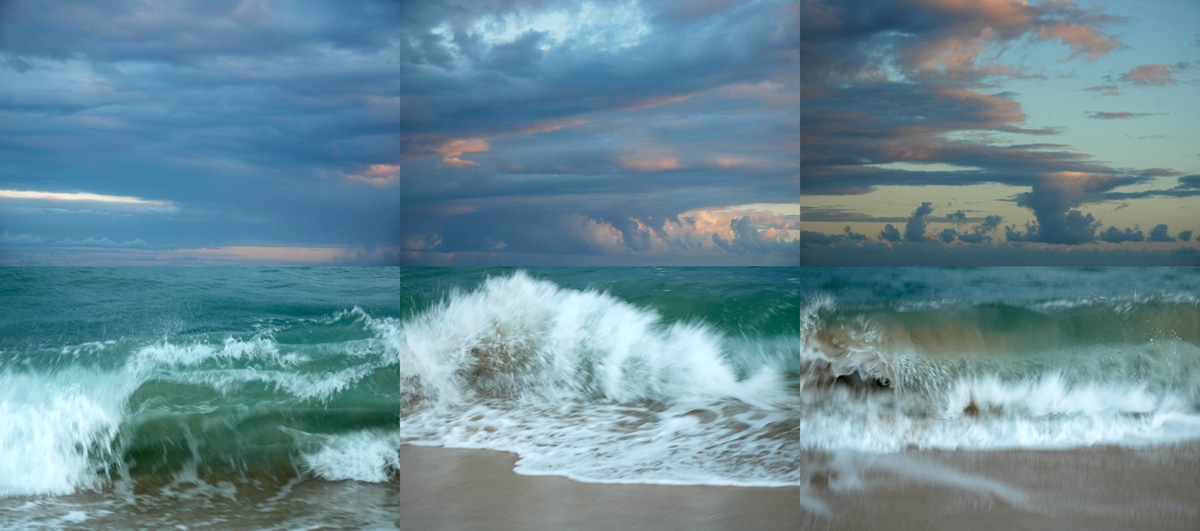
three waves in one

MA: What did you think of the piece that our illustrator, Matthew Chase-Daniel selected for your essay? I’m always struck by the ways that readers find something personal to relate to in the /images chosen for their work. Did you find any personal meaning in the image selected for Status Check?

TH: The piece was perfect and there is lots of personal meaning there. I can’t sleep without a sound machine for one thing, and I keep it turned to “ocean waves.” Also, I lived in Hawaii for three years, but mostly I like the way there are three parts to the image, the raising, the falling, the crashing. It’s so much like my  perception of the world in the months leading up to the stroke as well as to my relationship with my mother. It’s clear by the /images that they’re part of a cycle, something continuous and timeless. I need to get permission to print those up and frame them!


MA: And finally, I know you have an intimate relationship with physical recovery. Can you tell our readers what “recovery” means to you?

TH: Recovery is difficult to describe. My therapist discusses it as “creating a new paradigm.” For me it has been largely about accepting limitations, and I’m a perfectionist. Rather like the waves, it is a continuous cycle that rises and falls. I just know that every morning I have to check to see if I’m dizzy before I step foot out of bed and take a chance of taking a dive if I am. Every single second of every day my left ear is making some sort of infernal noise. I feel like “Harrison Bergeron” burdened with his handicaps, but no matter what I do, I can’t just rip them off, I can only hope for a moment of dancing in air before they pull me back down.


MA: Excellent. Thanks for talking with us today. And for our readers, here are some links to more of Tiff’s excellent work:

Dragon Lady

A Pool in February

Snow Globe

{in petals}