“Shaping Stone” by Mel Jones

Shaping Stone
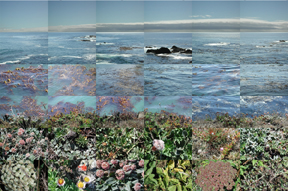
Photocollage by Matthew Chase-Daniel

The Cliffs of Moher rise seven hundred feet out of the Atlantic Ocean, on Ireland’s west coast in County Clare. I’m never quite sure if the ocean shapes the rocks—or the rocks the ocean.

Either way, the view cuts a deep impression into everyone who sees them. They are, for many, the definition of Irishness.

Imposing.

Unapproachable.

Daring invaders to try their strength, the Cliffs have survived—intact, better than any ancient wall. I can imagine the Romans coming across the sea and stopping at the Cliffs, and deciding not to push forward, deciding that penetrating those walls wouldn’t be possible. It doesn’t matter that the Romans didn’t come, it doesn’t matter that they would have come to the other coast and likely never seen the Cliffs, I imagine it anyway and Hadrian would have been humbled.

When I saw the Cliffs of Moher for the first time, I thought about my father and the only story he ever told me about his service in World War II. I don’t even know how much truth there is to it, but he did tell it the same way every time. He was headed for the beach at Normandy, for D-day. The boat passed by the coast of Ireland. All of the American soldiers of Irish descent on board came up to the deck to gaze at the shamrock shores of what they had always been told was home. They had grown up in South Boston, Massachusetts—Southie, a little Ireland. Every man saluted. They were close enough to swim to shore, but didn’t. Instead, they watched the coast in silence as the stories told by their mothers flashed before them and then melted back into the mists of the Atlantic.

No looking back. Instead, they saw the rest of Europe filtered through the adjustable-sight of an M1 Garand. They saved the world.

Dad always said that few of them ever saw Ireland again. It faded back into imagination and fairy tales, someplace remembered in a cultural consciousness, encoded in fiddle tunes and feises.

“Ah, it’s no matter,” he’d say, “Ireland’s just another place faraway where too many dreams died.” He’d pour a cure-all from the crystal decanter and slip into a silence that filled everything and everyone around him.

It’s not faraway places that kill dreams, but the silences we create right here.

Unlike my father, my first experience of the Cliffs was on Irish soil. I gazed out at the ocean from atop the Cliffs and imagined his taibhse-long that had so long ago passed by, with a hundred men saluting back at me, each of them filled with a sort of disenchanted longing. As I walked along the pathway to O’Brien’s Tower at the top, I talked to the Travelers, Irish gypsies. They line the busy path hawking their wares to tourists and pilgrims. I listened to their music and bought their handcrafted bowls, flutes, and sarongs. I walked along the Cliffs, not too close to the treacherous drop, and took in the view from several vantage points.

I did walk beyond the Danger and Hazard signs. Because I’m like that, daring the wind, pushing the boundaries.

I approached the rickety fences along the land’s edge, about three feet from the seven-hundred-foot drop. I had come to see the entire island from a thousand angles, to find what made me feel broken inside—what made me need to test the wind. I watched the people on the other side of the fence, lying flat and hanging over the precipice—what could they be looking for? What were they trying to see? I wanted to see—understand—my family, the family that had been silenced by the great span of water below. I wanted to know how that taciturn distance had shaped me.

Who were the ancestors, long dead, about whom I knew nothing, the family my father’s mother, Nana, had left behind and tucked away in her memory—never to be shared? I wanted to know the family that died with her so many years ago. I had come armed with my grandmother’s name, Nora Reidy, and the only town she ever mentioned to me, Miltown Malbay. I had come looking for the magic that my grandmother had always claimed lived over there. I had come knowing I was coming home—whatever that would turn out to be.

My grandmother carried one suitcase and her Irishness onto the boat for the three-week journey into the unknown, alone—a ritual—an initiation. Like her ancestors before her, who had survived Christianization, Vikings, famine, and the British, Nora Reidy would survive—in America. She would not surrender. She crossed the ocean and left poverty, disease, and any sense of family history behind. Silence prevailed, except in bedtime stories that subtly carried the ancient ways forward.

“’Tis not the land that makes ya Irish, sure. ’Tis the Irish that makes the land. ’Tisn’t a nationality dear, ’tis a spirit, and one day the pipes will call ye home.” That’s what my grandmother said. Like Muslims to Mecca, many Irish-Americans return to the tiny island of their ancestry, an obligatory pilgrimage. They return to touch the passion and the poison that has infused their lives. Like salmon swimming upstream, the desire to reach the mystical isle—to go home—can be overpowering. Back to the poetry, back to the pubs.

Singing was the only thing that Nana and Dad ever did together. And as I was growing up, they did it every night. I can still hear them singing about pipes calling, in harmony, as my younger brother Danny closed his eyes and drifted off to sleep. Next, it would be my turn for a song. In my hand-me-down foot-pajamas I would climb into Nana’s lap and sleepily listen to her rich brogue as she recalled for me, again, in songs and stories, her childhood on the west coast of Ireland in County Clare. I remember more stories than songs. There were tales of abbeys, all founded by Padriac—the great saint that he was—and castles where my brother and sisters and I could—would be king and queens, at least in our imaginations.

There were tales of banshees, solitaries, and fairies—the little people who took care of the earth; the ancient people, the world’s first environmentalists, who left the planet in our care. Her stories of the vast green landscape of her youth were filled with longing and lamentation. “That’s who we’re descended from—the peoples of the West—the magic folk. They had red hair, just like you. And they’ve left them to us, the animals and plants, to take care of, don’t you know. Yes, indeed,” she’d pause to stroke the family dog, “yes, we need to tend to them.” Her commentary stirred the imagination with /images of a simple, pure life without the intrusion of alcohol, arguing, and anger.

Then the moment would pass and Nana would carefully readjust her mother’s ivory woolen shawl to protect us both from the harsh New England cold that seeped through the insulated walls and defied radiator and furnace. She wrapped it around us. The shawl was all she had of her mother’s, all she had from home.

I coveted it.

“Have yer Da fetch me some Tay,” Nana would say with a wink. Her piercing blue eyes carefully watched as I scurried off to bring her the tea that Dad prepared for her each night. She brushed her long silver hair back off of her forehead and with elegant slender fingers braided one small piece underneath; with remarkable ease she used it to tie back the rest.

“There are magic places and ancient things—the great rock table, built by fairies, or was it giants?—Oh ’tis no matter now, ’tis it?” She would start her story as I climbed into her lap. “’Tis the most amazing thing I ever did see.” Nana waxed poetically about Irish mythological women, Maeve and Deirdre. She talked about their courage, their independence, and their strength. Their ability to endure and live life on their own terms. “Be like Maeve little one. Never let any one control ya. Or be like Deidre. Die first.”

“Don’t be fillin’ her with your tempestuous tales now. Jesus, Ma, fairies and dyin’!” Dad interrupted. “She has a wild enough imagination. Jesus, Mary, and Joseph. Fairies! This is Boston, not Miltown!”  My father walked to the crystal decanter that held some curious Irish cure for regret. He filled his glass, drained it in one swift motion and filled it again. He drank it like his thirst had no bottom.

“Can’t even get the name right, it’s Miltown Malbay, son. Say the whole thing, enough of your short-cuttin’” Nana winked to me again, “’Tis off to bed with ya, lass. Don’t pay your Da no mind. Who knows what dreams tomorrow holds.” She glared at my dad, “If you don’t believe in dreamin’ that’s your own problem ’tisn’t it? All your answers are there in that glass I ’spose? Whiskey is a powerful magic, ’tis indeed. The deeds done by its magic would shame all the demons in hell. Shame on you. Remember now,” she turned back to me, “don’t let anyone control ya!” She sang a chorus from Galway Bay, or Rose of Mooncoin as I drifted to sleep.

As the only redhead born into the family I was special. Nana, took possession of me when I was a newborn. She left my siblings to the care of my mother. Nana thought my mother was inept and she made no secret of that. In return, my mother never said a gracious or complementary thing about Nana. Their contempt for one another was palpable and I was between them. I was Nana’s chosen one and therefore, by default, devalued by my mother and envied by my father. It is said that the human personality is formed in the first two years of life. Nana molded me. But she moved into a nursing home when I was four, and died when I was six leaving me the different one, the odd child, standing slightly apart in family photos—with no arm encircling me and inviting me to join in.

I’m told that my mother was not my dad’s first choice for a bride. He was in love an elegant Irish-American woman named Kathleen, Kitty. Nana loved Kitty. Dad went to Europe to help save the world during World War II and Kitty married his best friend. He was heartbroken. Dad came home from Germany, met my mom, and they were married shortly thereafter. There were no stories of anyone swept off their feet, or wild romances. They met. They married.

Period.

My parents divorced when I was fourteen years old. That meant my dad didn’t sleep in the guest room anymore and dinners wouldn’t be shrouded in resentment and non-fights. Long silences would no longer be punctuated by wounded egos, slamming doors, and hidden whiskey bottles. Nine o’clock Mass and daily confession. I naively thought it could mean that my parents would find something a-kin to happiness out there. I’ve seen pictures of my parents looking like married people but I personally never saw them behave that way. They conceived eight babies, so at some point they must have had a connection. My mother lost four third trimester babies before delivering her first healthy child. I have two older sisters and a younger brother. Somewhere in those years something happened and the tenuous connection between my parents was broken and my father, drowning in alcohol, moved out.

The silence his absence left echoed in the void of my soul. I wondered what his mother, my Nana, would think of all that had transpired. I wondered what it took to shame demons. Their divorce took me one step further from the magic places and ancient things of my childhood. It buried deep in the recesses of my mind, castle ruins and places where every one could be a king or queen. But, what we learn at bedtime comes back to haunt us—or hold us—and as the sound of my dad’s car faded into the distance, in my mind I heard my Nana’s voice say, “Be like Maeve little one. Never let any one control ya. Or be like Deidre. Die first.”

And I believed a little piece of me died.

*

But my grandmother had also told me the story of CùChulainn. He is a mythical war hero. In typical mythical hero fashion, his dad was a god. CùChulainn was the embodiment of what we typically associate with the Irish: impetuous, courageous, and proud. He was a bit of a drunkard. He faced all of his enemies, come what may. Nothing could hold him back. In his final battle, his enemy, Lugaid, who just happens to have magic arrows, attacks him. CùChulainn’s charioteer is killed, then his horse. The hero is mortally wounded. He refuses to succumb to his wounds; instead he straps himself to a stone. He will die on his feet. The sight instills terror in his enemies and the only creature brave enough to approach him is a raven. Even in death, CùChulainn surrendered nothing.

I clung to CùChulainn’s story. And it has served me well. I can be all of those stereotypical Irish things. I can even add a few more adjectives about redheaded women.   I often wonder how my dad didn’t seem to know this story. Or if he did, why he didn’t use it as a model in his own life. When my parents divorced, he moved into a one bedroom apartment where he drank away his twilight years. He never walked the streets of Milltown Malbay, or stood looking out over the Cliffs of Moher. He closed the door behind him and yielded to his demons.

At twenty-six, I moved from Boston to Virginia because I didn’t want to become that. Like Nana, I was chasing a dream into the unknown, come what may. I moved to a farm. I taught my children tales of banshees, solitaries, and fairies—the little people who took care of the earth; the ancient people, who left the planet in our care. I taught them, as my grandmother had taught me, to protect animals. I sought a simple, pure life and eventually the pipes did call me home. And each trip to Ireland has taught me something about magic, survival, and the ability to face all enemies, internal and external. About myself.

During my last trip, I spent time in a pub with several local musicians. If I closed my eyes, I could hear Nana and Dad singing Danny Boy with them. I could feel the memory of the brush of an Irish wool shawl against my cheek. But, no one was drinking tea. The air was smoky, too warm, and heavy with the smell of Guinness and Jameson. I brushed my long hair back off of my forehead and braided one small piece underneath; I used it to tie back the rest.

At last call, a young woman began to sing, Sonny don’t go away, I’m here all alone. People shushed each other. The pub became silent as the patrons respectfully listened to the commanding, poignant voice sing a story it seemed they all knew too well. Many years have rolled on, though he’s barely a man.

I had never heard the song before but a chill of recognition ran through me. It was Dad’s story. I thought about my dad playing soccer by the L Street Pier in Southie with the grandfather I never met. He was killed, hit by a car, stumbling home from the pub, drunk. There’s not much to do, but he does what he can. I thought about the New York Mets and the contract my dad passed on to stay and home and take care of my widowed grandmother, Nana.

I ordered a double. Sits by his window, in his room by the stair.

I spent the next two days thinking about my father and his unrealized dreams—his alcoholism and of all that it robbed him. Many years have rolled on, Sonny’s old and alone. As I walked paths by Dysert O’Deas, I thought about Dad, in his one bedroom apartment everyday, hiding empty bottles from himself, looking up a new word in his ragged dictionary in the evening and watching Jeopardy—calling me six-hundred miles away to tell me he’d gotten every answer right.

Surrendering.

Every day wondering what his life might have been.

As I lay in my bed in my rented room at Ashgrove House, after a third night of singing at Fitzpatrick’s, I thought about the Irish mythology I knew so well: fierce, determined women with messages to share about passionate living. Deidre, and Maeve. Every night ended with Sonny’s Dream, a pub full of little surrenders.

I thought about CùChulainn tied to a stone and facing his death without flinching. I thought about my grandmother crossing the ocean alone to chase her dream—and not surrendering. As I lay there I was sure of one thing, I didn’t want to spend my sunset years wondering what my life might have been. I had come to Ireland to find the past, so that I would not be condemned to repeating it. But I realized that the past is open to interpretation. I could have Nana’s story, or Dad’s.

On my last day in Ireland, I drove out to the Cliffs of Moher for one final look. I’m still not quite sure if the ocean shapes the rocks—or the rocks the ocean. But the view cut a deep impression. They remind me of CùChulainn. Nana.

Me.


Mel Jones had her own poetry column in a local newspaper at 15 and was determined that she would be the next Shakespeare or Tolkien. But then life intervened. She grew up and raised a family. Mel did her undergraduate work at The College of William and Mary, and graduate work at Virginia Commonwealth University and Antioch University, Los Angeles. She holds degrees in History, English, Rhetoric, Literature, and Creative Writing (Nonfiction). Yes, she’s overeducated. She’s done extensive genealogical research, edited a now defunct literary journal, and has taught children ranging from kindergarten through college. Mel writes on a small leisure farm west of Richmond, Virginia where she lives with her partner, parrots, and progeny. She recently had an epiphany: if she sent her work out more, she would be published more. She’s working on that.

Read an interview with Mel here.


Interview with Anne Colwell

Anne Colwell

John Guzlowski: What first drew me to your poems was the strength of the grandmother in your poem “Garnet.” Could you tell me something about the strong women in your life? And the connection you feel to them?

Anne Colwell: “Garnet” is about two of the strongest women I’ve ever known, my grandmother, Anna Nolan Colwell, and my sister, Jeanne Colwell Iasella. My family is Irish Catholic, and one of the hymns that the choir sang at my grandmother’s funeral included the lyrics “gentle mother, quiet dove.” When the words floated out over the congregation, the pews erupted into quiet snickering! My grandmother was definitely not a “quiet dove” and she’d call any woman who sought to be quietly dove-like a “simple jackass.” She was fierce, in the best way, with a sharp sense of humor and a keenly ironic eye. After my grandfather died and left her with three children, she took over his job selling condiments to restaurants. She traveled up and down the Eastern Seaboard and she managed to do this and raise her family and send all three kids to college. She believed in work, in self-reliance, in going forward when you don’t think you can. She was fiercely loyal and fiercely determined and fiercely loving. My sister and I are both runners and we often run longer races together. We always joke that, even if our training isn’t what it could have been, we’ll be able to finish the last few miles “because we are our grandmother’s granddaughters.” My sister inherited my grandmother’s loving strength, clear determination and sharp sense of humor. Even though she is my younger sister, she has shaped my life by her courageous example and I often look to her for strength in times when I can’t find my own. That’s what “Garnet” is really about – a time in my life when I had lost all of my own strength, when I didn’t think I could go on. My sister leant me our grandmother’s birthstone ring so that I would remember, would have a symbol of the deep well of power that I could draw from. Jeanne’s daughters, my nieces, Anna and Francesca, are four- and six-years-old and I watch them and I see it happening all over again in the next generation. My grandmother’s strength, my sister’s strength, it’s in them, too, and it makes me so happy to watch it go on.


JG: Like you, I’ve also written critical, academic work about literary authors. Sometimes I think that doing so has been a misdirection and other times I can’t imagine how my own work could have developed without the kind of critical writing I’ve done. How do you feel about your critical writing?

AC: That’s a great question! I don’t think I’ve ever tried to put into words how my “academic” self has impacted my “creative” self. Of course, splitting them that way is already a problem, isn’t it? It suggests that there’s nothing creative about writing nonfiction critical essays and nothing “academic” about fiction and poetry. My husband, James Keegan, is an actor and a writer and an English professor and a painter and a musician. Sometimes when we’re talking about how to “do it all” and if one really should try to “do it all,” we will come down to the idea that “everything feeds everything else.” I guess that’s how I feel about the critical work, finally. Though I don’t really see myself as a critic, I think that a good deal of the critical writing I’ve done has had the effect of opening doors in poetry and fiction that would have been closed for me if I hadn’t had to grapple in writing with what other writers had accomplished and exactly how they accomplished it. My book about Elizabeth Bishop, Inscrutable Houses: Metaphors of the Body in the Poems of Elizabeth Bishop, examines her poems to figure out how she works, how she uses form to embody and overcome loss. I think that my critical writing is the expression of my student self, the part that can never learn enough, and maybe the kind of criticism I’m drawn to is the “taking apart the engine” kind of criticism, the kind that tries to understand how an artist creates so that I can emulate it.


JG: Years and years ago, I started out trying to write postmodernish fiction, writing that questions its own ability to arrive at the truth of reality, and it’s still a concern that comes up now and then in my poetry (“My Mother Reads My Poem ‘Cattle Train to Magdeburg'”). I noticed a similar concern with questions about writing in poems of yours like “Revisions.” The poem seems to signal such concerns in its opening lines: What you can’t see from this window, Although you’re six stories up, Although you see nearly the whole city, Is the green bench by the river, Or the woman standing beside that bench Who walks and sits, walks and sits, Or her hand readjusting the pink scarf Or the watch on her wrist that says Everything’s doubtful. Could you say something about your sense of the truths poetry can and can’t arrive at?

AC: Kenneth Koch called poetry “the language inside the language” and I think that’s a beautiful way to describe it. Poems seem to me to have the possibility, like dreams do, of pushing language toward the inexpressible, right to the edge of the abyss. We know that there are truths that we can feel or understand and yet have no words for; we experience this every night when we dream and wake up to say things like, “it was our house but it wasn’t our house and my father was my father but also a tiger.” Even as we try to describe dreams they disintegrate; they resist the logic of the conscious mind. Poetry, at its best maybe, is a language that can go deep into the depth of the subconscious and bring truths, emotions and /images, otherwise impossible into the light of the conscious world. One of the things that I love about “My Mother Reads My Poem ‘Cattle Train to Magdeburg'” is that the poem has such a strong “speaking silence.” You bring me right to the brink of language’s failure. I think that’s an amazing thing in a poem. Bishop does it over and over again in her work. Everything says “yes” and “no” at the same time and yet it makes perfect sense; it has a clear lucid surface. No fish can be covered with barnacles, no fish can have five hooks in its mouth, none of the details of her poem “The Fish” are possible, but you can see it, know it, believe it because language has so much power. “Revisions,” as you pointed out, lives in that land, too. It’s playing with ideas of perspective, of what can and can’t be known, of what words can make you see. The truth is the truth of the transformation, the imagination, and how it can transcend.


JG: I’ve moved away from poetry these last few years and have been spending most of my time writing fiction. I see that you too write fiction. Can you tell us something about your fiction? Do you see your fiction and poetry as being fundamentally connected?

AC: Several years ago now, I started writing little bits of stories that I would squirrel away and not pay much attention to. I didn’t know what to do with them or how they could fit anywhere. At the same time, I was falling out of love with poetry. I got tired of the way I wrote, but also I was tired of a kind of poetry that seemed to be everywhere around me, tired of the lyric fascination with the self. I can’t find the exact reference now, but I remember at the time I read a piece by a poetry editor – I think it was from the Paris Review – and he was commenting on the solipsism of contemporary poetry. He wrote a parody of the poems that came across his desk and it went something like this: I look out my kitchen window I am so important That said it. That expressed my own impatience with writing about myself and my life and my childhood and my growing desire to change, or even maybe to just stop. My good friend, Maribeth Fischer, who had published two books, looked at my little scraps of stories and she diagnosed me as having come down with a bad case of novel. So I started to write fiction. The first thing I loved about it was all of the space, all of the wide fields that a writer could fill. I also loved the imaginary world that I got to inhabit and the complete “otherness” of my characters. When I applied to the Bread Loaf Writers Conference for the first time, I applied in both categories, poetry and fiction, and I explained that I was a poet, but I was having an affair with fiction. Fortunately for me, I was accepted as a poet and I began the journey back to loving poetry again. Now I see writing fiction and writing poetry as two sides of the same coin. Maybe we can even, to come back to an earlier question, throw nonfiction critical writing in here, too. Writing teaches you to write. I’m newer at fiction than poetry, but I’ve learned a great deal by living in the imaginary worlds I’ve been able to create. I think that writing fiction gives me another way to be attached to and alive in the world and another means to play with language, to keep the tools sharp.


JG: We live in an amazing age–so many excellent poets, but what we seem to lack is audiences. Does that worry you? Should writers worry about audiences?

AC: Here’s the question where you discover my eternal optimism. My sister says that if you gave me a barn full of shit, I’d run through it screaming, “There has to be a pony in here somewhere!” So . . . It’s true that poetry does not sell, that many people, even very intelligent people, claim to hate it or complain that they “never understood it.” However, I belong to a small local writers group called The Rehoboth Writers Guild that was founded by Maribeth Fischer (the novelist I spoke of earlier). Once a month on a Monday night, somewhere between forty and sixty people of all ages and all backgrounds come together to hear each other read. Some read fiction and some read poems, but they support one another and they risk self-expression and they believe that the words change the world, even just a little. When terrible things happen, like the atrocities your parents saw, or 9/11, or any of a million horrors that humans perpetrate in the world, I think we turn to poetry to bring us as close as we can get to the humanity of the loss and the grief and the strange joys. I believe that we instinctively understand from the time we are children that musical language that is full of pictures is the right language for expressing strong feelings. I think that people only start to hate poetry when they are told in school that they can’t understand it. Better education is the way to an audience for poetry. I had great teachers! I was so fortunate. W. D. Snodgrass, Gibbons Ruark, Jeanne Walker, and Fleda Brown, all great writers, were my teachers and friends in graduate school. At Immaculata University, I worked with Dan Machon and Jim Mooney, Sister Loretta Maria and Sister Christine. They taught me that words mattered, my own and other people’s. Writers need to help educate readers about the crucial importance of poetry. I think they also need to be a better audience for poetry themselves. When I’ve taught creative writing, I always ask writers who they read. The answer I frequently get, especially from younger writers, is that they don’t read poetry; they only write it. Would any musician ever say that? Any painter? It’s preposterous, but they have somehow gotten the idea that they will lose their voice or be “poisoned” by careful study of the masters who have gone before and who are alive right now. I think we can change this. I believe that we can teach people to love poems because all of these amazing teachers taught me.

Here are a few links to other fine work by Anne:

Delaware Poetry Review

Believing Their Shadows

Mudlark

“The Keeper of the Truth” by Anne Leigh Parrish

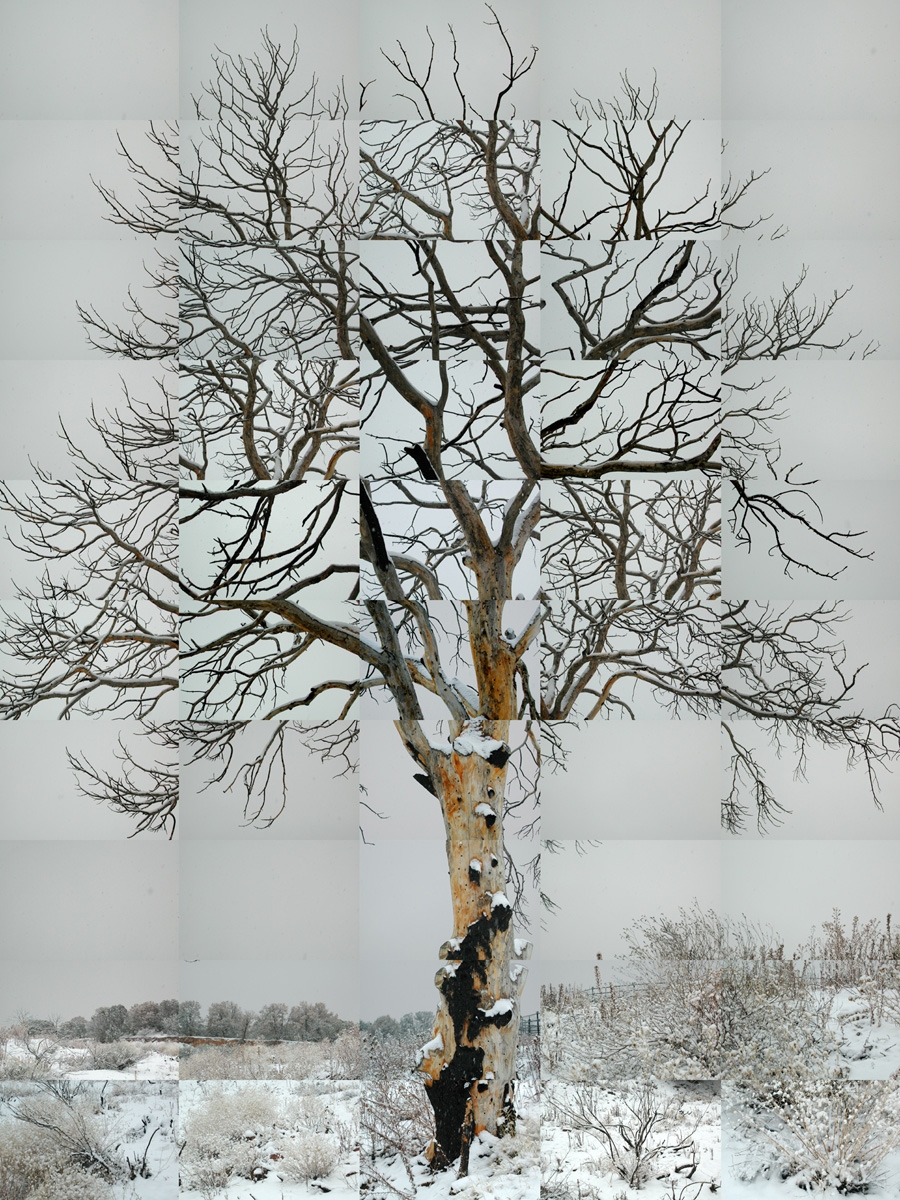
Tree in winter
Pinon, Santa Fe, New Mexico, 2004

The crystals in the window would have thrown a rainbow in the sun. The sun wasn’t out, though. It was winter, and the world was gray.

The woman was gray, too, not just her hair, but her suit, whose only decoration was a small pin in the shape of a seahorse angled on her right lapel. She didn’t go by Madame Zolara or any sort of exotic name that conjured an intimacy with the spirits, but by Gwen. Psychic Gwen. Painted in gold loopy letters across the dusty glass door.

Emily was there for research. She was writing a book on soothsayers, visionaries, and fortunetellers, women with gifts, women beyond the mainstream, and how they had been perceived – and treated – over time. She’d done enough reading, and needed a primary source, so had driven up South Hill in the snow, struggling to find the right address among the storefronts whose numbers had faded or disappeared.

Psychic Gwen gestured to a folding metal chair by a small, round table. Emily sat down, and Psychic Gwen took the chair opposite her. She didn’t know what to do next. The last time she had interviewed anyone was back in high school, when she’d worked for her local newspaper as an intern. The person they matched her up with was a local politician, a Second Ward alderman, a crusty old Irish Catholic who talked about “bad elements” moving to Dunston, and then offered her a cigarette.

Psychic Gwen held Emily’s gaze in a way that made her uneasy.

She said, “There are some things I’d like to ask you.” It was a short list: When did you first suspect that you were psychic? Did you tell anyone? If so, what was the reaction?

Psychic Gwen reached across the red velvet tablecloth and took Emily’s hand. She gazed into the palm, which had suddenly dampened with sweat, then turned it a little towards the only source of light in the room, a small lamp on top of a large and very dusty roll-top desk.

“You will live a long life,” Psychic Gwen said. “Much of it alone, but not all.” She peered more closely. “You will not have children, yet there was a child once.”

At twenty-two Emily had had an abortion. Her boyfriend was in love with someone else, needing Emily for comfort until his true love opened her heart. She never told him about the baby. She never told anyone.

She reclaimed her hand. “Please. There are things I must ask.”

Psychic Gwen took out a deck of Tarot cards from a drawer on her side of the table. She spread them out, face down, with the skill of Las Vegas dealer.

“The cards hold all your answers. Point to one.”

Emily sighed. This was a bad idea. She pointed to a card.

“The Chariot,” Psychic Gwen said. “This means you desire to exert control and find it difficult to do so. Choose again.”

She pointed to a second card.

“The Hanged Man. You want to let something go, change direction, reverse your fortune. These cards are in opposition, as are you, torn between two objectives, unsure of the outcome. The third card will decide your fate.”

Emily’s third choice was the Ten of Swords. “You feel like a victim, on the receiving end of another’s folly. You have put this person’s welfare above your own.”

Psychic Gwen put the cards back in the drawer, and told Emily she had a stain on her soul. “You have carried it there a long time. Yet one day, you may wash it clean.”

She gave up on the questions she’d prepared, handed Gwen the twenty-dollar bill she’d agreed to pay when she made the appointment on the phone, refused a receipt, and rose to go.

“I will see you again,” Psychic Gwen said. At those rates, Emily didn’t think that likely.

The snow fell harder. What had taken over thirty minutes on the way to Psychic Gwen’s became over an hour on the return home – to the house she had taken possession of from her mother and father when they moved to Arizona. They hoped to put it on the market within the year, and counted on Emily to supervise the sale. She lived there rent-free, because at the time the arrangement was made she was in school, plugging away on her doctoral thesis. Her parents assumed she still was. Emily had withdrawn from the university the previous autumn after the man she was having an affair with went back to his wife. At that point, school became too much.

She kept on with the project though, the book. Several weeks after seeing Gwen, she changed tack. Psychics were interesting (and unnerving, she had learned) but she wanted a wider subject, to emphasize current thinking about aberrant behavior, and then say how society had changed its mind over time about why people did what they did. Witches were just people who didn’t fit in, didn’t do what the world expected of them, had trouble following the rules. Today those witches would be labeled with low self-esteem, attention deficit or obsessive-compulsive disorder, addictive personality, or repressed memories only the most skilled therapist could uncover. People weren’t evil anymore, they were afflicted; given the right tools, the right environment, a guiding hand, they could be cured.

Emily explained this to her friend Lisa over a shared six-pack of beer, imprudently consumed on an empty stomach.

“You know why you’re so into this, right?” Lisa asked.

“Because I want to know about the human psyche. The soul.”

“No one knows anything about the soul. Except when it hurts.”

“Or has a stain.”

Lisa stared at Emily, then burped with the gusto of a seasoned drinker.

“The psychic told me my soul has a stain,” Emily said.

“Yeah, and its name is Melissa.”

Her sister wasn’t exactly a stain, she thought, though she’d definitely left her mark on the members of her family.

~

Two days after that conversation, Melissa showed up in the middle of the night from Boston, carrying all her possessions in one large backpack. Things had dried up on her there. Her contacts had moved on, and with an arrest for possession four years before, she didn’t want to chance some zealous undercover cop, maybe out to climb the departmental ladder. So she came home. She hadn’t been back two days when the calls started. Old friends, deadbeats wanting to hook up and get high, people she hadn’t seen in years showed up at all hours, woozy and smiling, or sullen, strung out, wanting to sleep on the couch.

Emily stayed out of their way. She was raised on tiptoeing around. Also on the theory of redemption. One morning, when Melissa got up before noon, Emily asked “What about What’s-his-name? Tom? Why don’t you give him a call?”

“No fucking way.”

Tom was someone Melissa had slept with on and off for years. He’d already offered her a bed at his place, but Melissa knew better. He had a bad habit of trying to rehabilitate her. He didn’t give her money, because he’d done that before, money for food and some classes at the community college that she put up her nose. Staying with him meant a lecture on free will and right choices, all the bullshit she’d heard forever.

As if sensing Melissa’s return, their parents called one night. She was out again, and Emily was free to fill them in. They made nice noises. That must be hard for you, and you’re so good to help out. The baton had been passed. Melissa couldn’t be abandoned. They just couldn’t turn their backs. A hand had always been extended, and would be again. They sent money. Emily took her share above living expenses. She was building a little bank account. As for the rest, Melissa would need new clothes – nothing expensive, just basic, practical. Jeans, shoes, underwear. Their mother was keen on new underwear. Emily would do the buying. Melissa was not to be trusted with cash. Or valuables, either, for that matter.

Two years before, Melissa had pawned their grandmother’s diamond brooch. The five thousand dollars kept her and her most recent boyfriend in pot and booze for two weeks in a Vegas hotel suite. Their mother’s face stayed hard for a month. Their father retreated behind the closed door of his study. The time for threats and rebukes had ended years earlier, after Melissa’s second arrest for drunken driving. The judge assigned her to substance abuse counseling. The sessions often involved a group. Melissa made friends easily with anyone who bought her a drink afterwards.  Her parents put her in therapy, first with an older woman who lived on a farm and raised goats and felt Melissa was responding to an unspecified childhood trauma. Then they sent her to a younger man who wore sweaters and pressed pants. Melissa tried to pull his heartstring. She wept through several sessions. He prescribed anti-depressants. She said she’d prefer Vicodin. He refused. She offered him oral sex. Again, he refused. She threatened to say he was the one who’d propositioned her. He gave her the prescription, and told her never to come back. After that, the help of outsiders was no longer sought.

~

On a gray, freezing Tuesday, Emily awoke with a taste of doom. The silence of the world was final and fatal. Her mind’s eye gave a scene of total destruction. She’d had these dreams before. The lone survivor. The keeper of the truth.

And there he was on the couch, snoring. A man she didn’t know. Her gentle nudge didn’t rouse him. Her hard slap did.

“What the fuck?” he said. He’d brought his dog, a leggy mutt with a bald patch who’d shit everywhere, then dug up her rubber tree plant.

“Out,” Emily said.

“She said she lived alone. Who the fuck are you?”

“Her mother.”

He sat up. His eyes came into focus. “Yeah, right.”

She raised her hand once more.

“Jesus. You got any coffee?”

Emily gave him five dollars from her purse, took his backpack, and tossed it out the front door. The dog ran after it, and peed liberally on the first bush it came to.

Afterwards she banged on Melissa’s door until she answered.  Her face was puffy, and her breath stank. She looked at the mess and nodded. Emily dressed and escaped.

She thought of walking by the lake, but the wind was bitter. She went to a coffee shop and sat for a long time. Melissa wasn’t bad. She was just weak. As a child, she could never resist temptation. She opened Christmas gifts early. She ate treats saved for guests. Emily, two years older, tried to correct her. They often fought. One time was particularly harsh. Their grandmother died suddenly when Melissa was six and Emily eight. Melissa said she knew it had happened when the phone call came. The grandmother was healthy and strong. They’d seen her only a week before. Her death shocked them. But not Melissa, who swore she sensed it as her grandmother kissed her good-bye and went down the walk to her car. Emily said Melissa didn’t know anything, that she invented the whole thing.

She went home. The house was clean. There was a vase of white carnations on the kitchen table, her favorite winter flower, and a card with a picture of a kitten and Melissa’s words, To new beginnings.

~

Melissa came home late, drunk, eyes dilated, stinking of cigarette smoke and sex. Her attempt to move silently through the house was foiled by breaking a glass in the kitchen. Since she had removed her shoes, the shards cut the bottom of one foot, right through the thin socks she wore. Emily found her sitting on the floor, looking at her bloody sole, sobbing.

She helped her to bed. The scope of her research had to include normal people affected by the spiritually lost. We are the light they fly to, she wrote in her notebook, then crossed it out.

Two days later, Melissa forgot her key and banged on the door well after midnight. Emily was still up, trying to organize her thoughts. She’d resurrected the light idea. We are the beacon that guides them home. When Emily didn’t answer, Melissa stood in the yard and shouted. Then she threw small pebbles at Emily’s bedroom window. Emily peered through the crack in the curtains. Melissa had no coat.

She sat another minute. She’d have to confirm if her theory were historically accurate. Had the visionaries had stable companions around them, people who helped them along? The idea of more research was thrilling and tiresome. She was a good researcher, though. Of that she was sure.

When she opened the front door, Melissa said, “You hate me.”

“Only the things you do.”

Melissa went to bed. Emily realized that her book still lacked the proper focus, and would never grab anyone’s attention. The next day, she put it in a drawer and left it there.

Spring came. The trees filled the blank spaces of winter sky with tiny soft buds and the air, still cool, was lovely and fresh. Melissa went to Florida with a college student she’d met in a bar and Emily had the place to herself.

Her parents called again. They said there was no point in doing anything with the house while Melissa was still there. Emily was relieved. They asked how her work was going. She said it was coming along nicely.

Melissa returned. She was tanned and sober. She had new clothes. The college student seemed to have a little money. She didn’t mention him, or say much about her time away. She wanted to make dinner for Emily. Emily didn’t like the idea, but she consented. Melissa was a decent cook, when she put her mind to it. She’d once talked of attending cooking school, even having her own restaurant one day. She asked Emily for thirty dollars to buy groceries. Emily said she should make a list, and she’d shop, herself. Melissa said she didn’t know what she was going to make, yet. She’d take her inspiration from what looked good at the store. Emily hesitated. Melissa got upset.

“You don’t trust me,” she said.

“No, it’s not that, it’s just . . . ”

“I know, I know. Can’t you see I’ve changed, though?”

She did look different. She was clean and neat. Even her nails were free of dirt.

At seven-thirty that evening, Emily sat alone with a glass of wine. Melissa had been gone for hours. She hadn’t called. Emily hated herself for believing that she would.

The next morning Melissa returned. She wasn’t clean or neat. Her jacket was stained with mud, and her hair, tidy and clipped the day before, hung in her face. She’d been crying.

Emily sat her down and gave her a cup of coffee.

“He threw me out.”

“The college kid?”

Melissa nodded. “He said his parents were coming up from the city, and I couldn’t be there. He didn’t want them to meet me.”

“Did you want to?”

She shrugged.

“It’s just the principal of the thing, right?”

Again, Melissa shrugged, but Emily knew she’d hit a nerve. Even Melissa, with all the harm she did to others, didn’t want to feel like a lowlife who wasn’t good enough to meet the family.

“You can’t expect people to treat you better than you act,” said Emily.

“What the fuck is that supposed to mean?”

“You make bad choices. People get tired of it, and they move on.”

“Yeah? Well, fuck them.”

“Easy to say.”

Melissa hung her head. She was still drunk, Emily could tell.

She looked around the dining room where they were sitting. The wallpaper had a pattern of daisies and bluebells. It was old, outdated, and ugly.

Melissa sneezed. “I think I’m getting sick.”

Emily put her hand on her forehead. “You feel warm. Go take a shower and get into bed.”

“Is there any wine in the house?”

“It’s ten-thirty in the morning.”

“Tell my head that.”

Emily got her a glass of wine. Melissa’s mood got better. She became expansive. She made fun of the college boy, said he was pudgy, and too fast in bed. Emily laughed. Melissa’s charm had always been like a crystal, throwing light here and there. Sometimes it fell on you, and made you a little brighter, too.

Melissa showered, got into her pajamas, and let Emily tuck her in. She was soon asleep. Emily took the manuscript she’d hidden in her desk drawer, tossed it into the fireplace and lit it. A lot of her life turned to ash as she sat and watched. Maybe that’s what she was best at – sitting and watching. It didn’t really matter. There were no visionaries, or special spirits, or gifted hearts. Only people who broke the rules. And others who covered their nakedness, kept them safe, and loved them so blindly that they never grew up or improved in any way.


Anne Leigh Parrish is the author of the story collection All The Roads That Lead From Home (Press 53, September 2011). Her work can be found in The Virginia Quarterly Review, Clackamas Literary Review, Carve Magazine, Storyglossia, The Pinch, Prime Number Magazine, Eclectica Magazine, Amarillo Bay, Knee-Jerk Magazine, Chamber Four, PANK, Bluestem, and American Short Fiction, among other publications. To learn more, visit her website.

Read an interview with Anne Leigh Parrish here.


Interview with Renée Giovarelli

Renee Giovarelli

Joan Hanna: We were so excited to have your essay “Bridestealing” as part of our October issue. This essay is moving and chilling on so many levels. Can you share with our readers a little more about your experiences and the non-profit organization you are working with?

Renée Giovarelli: I have been working at Landesa (formerly RDI) since 1995, with a 5-6 year break when I worked for myself. I’m a lawyer, and I work with governments of developing countries to help make legal and policy changes that will enable women to have secure rights to the land they farm. Right now I am working on projects in India, China, and Uganda. I am the Executive Director of the Landesa Center for Women’s Land Rights, and our focus is to train other lawyers to do this work, to pilot innovative ideas that might facilitate change in practice, and to develop a digital library that will have laws from all around the world that affect women’s land rights, specifically a collection of family laws.

My favorite part of the work is talking to rural women. It is such a gift to be able to listen to women tell the stories of their daily lives and to think with them about what changes could be made to improve their situation.


JH: One of the messages that comes through in this essay is the immense divide between cultures that at first seems somewhat easy to approach but becomes a very different practical matter when all of the cultural, religious and traditional beliefs are taken into consideration. Can you give our readers some insight into how you were able to balance your own beliefs with those of these women within their own cultural aspects?

RG: If I have learned nothing else, it is to work with what’s possible. Women may want a hundred things to change, and each of those things may be horrible in my view, but only a few are possible to change in that village or state or country at that time. So, why not start there? We try to take on the hard stuff–cultural change. For example in India we have a project that is working with very poor adolescent girls to help them use land their family has recently been given from the government so that they become more valuable to the family and as a consequence are less likely to be married at an early age. It’s a really complicated project involving the community and community attitudes, but I think it’s important to try. For me, the question is, what do the girls want for their lives? Then helping to figure out how to achieve those goals, one at a time–starting with what seems most possible.


JH: Anara goes through a very significant change by the end of “Bridestealing.” While appearing very idealistic in the beginning, her retelling of the story of the young rape victim and the ultimate choice made to deal with the problem in the end, appears to give us a more realistic understanding of the cultural needs of, not only the young girl and her attacker, but also the far reaching ramifications for their families and basically the entire village. Can you explain how you think working within these cultures and understanding how decisions like these are sometimes the only ones that can be made changes your perspective as a woman and also as a writer?

RG: I have come to believe that real change cannot happen for women unless they organize.

Women all over the world are beaten, sold, under-paid, over-worked, and treated as property. The kind of change that is needed requires a social movement, and women are difficult to organize. They are generally tied to the household by cultural norms, household duties, and responsibilities to children. As a writer, I would like to motivate people to care about how women are treated and to join a larger movement for change.


JH: Do you have any websites you would like to share with our readers? Either websites containing more information on these topics or your own personal website and/or publications?

RG: My organization’s website is: www.landesa.org. I have written a good deal about women’s land rights, and if you google my name, you’ll find my stuff. There seem to be no other Renée Giovarelli in the world at the moment who show up on google. My stuff is mostly academic/policy oriented–written for a foreign aid organization or the like. But, I am working on a collection of essays like “Bridestealing” that I hope to have published someday.


JH: What do you think recovery means for these women? And can they have recovery without help from groups like yours?

RG: Recovery means empowerment. I don’t think empowerment can happen without a real focus and effort from the larger world community.


JH: Again, we thank you so much for sharing “Bridestealing” with r.kv.r.y. Now that you have shared what you think recovery means for these women, can you also share what recovery means to you, personally?

RG: Ah, that’s a whole different thing, isn’t it? I am a recovering child of religious zealots and all that happens in a family when adults are afraid for their souls and their children’s souls. For me recovery is showing up as myself in person and in writing–a struggle always, but worth the effort.

Interview with John Guzlowski

Anne Colwell: John, your poems are full of strong voices and are particularly dramatic, giving us whole scenes with these voices, wrought beautifully in concise form. Can you talk about the creation of voice in your poems — not just your voice as the poet, but your parents’ voices?

John Guzlowski: The voice of the poems came pretty naturally. In talking about my parents’ lives, I’ve tried to use the language that I first heard their stories in, language free of emotions. When my mother and father told me many of the stories that became my poems, they spoke in plain language, straightforward language. They didn’t try to emphasize the emotional aspect of their experience; rather, they told their stories in a matter-of-fact way. This happened, they’d say, and then this happened: “The soldier kicked her, and then he shot her, and then he moved on to the next room.” I’ve also tried to make the poems storylike, strong in narrative drive, to convey the way they were first told to me.

Another thing about the voice of the poems that’s important to me is that I’ve tried to incorporate my parents’ actual voices into the poems. A number of the poems contain some of the language they told those stories in. The first poem in the Lightning and Ashes collection, “My Mother Reads My Poem ‘Cattle Train to Magdeburg,’” is pretty much written as she spoke it. I’ve cut out some of the things she said, polished others in that poem, but the poem has her voice.

The poem “My Mother’s Optimism” that r.kv.r.y published is another example of using my parents’ voices. The story of my mother’s cancers and her recovery that the poem includes is given a sense of reality, for me, because I included four quotes from my mom starting with the quote in the first stanza:

“Listen, Doctor, I don’t have to tell you
Your job. If it’s cancer it’s cancer.
If you got to cut it out, you got to.”

When my sister Donna read the collection, the first thing she commented on was how much she could hear our parents in it.


AC: Speaking of drama, I haven’t had the chance to see you read in person yet, but I watched the video of the reading from St. Francis and I know that you are a powerful reader. Could you say a few words about what reading poems out loud does to the process of writing a poem for you?

JG: What I’m trying to do in a lot of the poems is to recreate my first hearing of the stories my parents told. I want to capture what they said, and I want to make the reader feel the way I felt when I heard the stories for the first time.

When I read the poems in front of an audience, I’m trying to channel my parents, their voices, their emotions, their inflections. I guess what I’m trying to say is that I’m conscious of the drama of their lives and the stories they told me, and I’m trying to pass that on to the audience.

Many of the poems were painful to write. My parents were troubled people who never fully recovered from what they experienced in the war. Writing those poems about them, I knew when I got them right because I was pretty much emotionally a mess. I knew when a poem was done if I was sitting at the desk with tears in my eyes.

Reading the poems aloud in front of an audience is sometimes hard for me because I remember the times when my parents told me their stories, and I remember the emotions that were going through me when I was writing the poems, and I remember my parents.

I sometimes hear their voices coming through the poems, and that’s hard.


AC: Both of us, I think, in different ways use poetry to try to understand and perhaps overcome the world our parents gave us. I was haunted by the designation “Displaced Persons” when I read it in your biography as a term applied to your parents and yourself, your community. It seems such a heavy burden at one level, but it has also been traditionally a very powerful place for the artist — standing outside society, looking in with a different perspective and insights impossible for “placed persons.” Can you discuss the way that placement and displacement have shaped you as an artist?

JG: The thing about displacement that has really shaped my writing is that I didn’t start writing about my parents until I was 31 years old. I didn’t want to have any contact with them and their lives and what my mother used to call “that camp shit.” I grew up in a neighborhood in Chicago full of survivors and refugees and displaced persons, and as a kid growing up I felt hobbled by all that sorrow and all that difference, all that apartness. I fled displacement.

I turned to books and literature and college, a world where there were no displaced persons, no refugees. During all those college years, I never thought much about the strange lives my parents had lived during the war. At least not until the very very end of my college career.

I was a year short of finishing my dissertation when I wrote my first poem about my parents.

I guess you could say that I had to be “placed” before I allowed myself to be “displaced.” I had to overcome their world, before I could enter it.

But even then, it was a slow process. It took me about 20 years to write the first 20 or so poems, the poems that became my first chapbook, Language of Mules.


AC: I love the way that your poems — I’m thinking here of poems like “Cattle Train to Magdeburg” and “My Mother Reads ‘Cattle Train to Magdeburg'” — look at different versions of the past and also the silences that surround them. Can you say a few words about the ways that your poems explore the past, what is recoverable and what is unrecoverable? This is especially interesting for the readers of r.kv.r.y.

JG: The process of writing the poems about my parents has been pretty amazing. It’s been going on for 33 years, and in some ways it even extends further than that. Some of the poems are based on stories that I heard when I was 5 and 6 years old. At the time, my father was the one telling me the stories. My mother didn’t want to have anything to do with telling the stories. I think she didn’t want to tell her stories because she was afraid of the effect they would have on us, her children, and I think she was afraid of reliving the horrors she had gone through. All of this changed after my dad died in 1997. My mother started telling me about her experiences then, and her versions were of course different in some ways from my father’s.

All of this complicates the stories and the telling of the stories and my reception of the stories.

The first poem I wrote about my parents is called “Dreams of Warsaw.” It addresses some of this complexity. It talks about my parents “leading unhurried lives” of “unhurried memories”—memories that are dreamlike.

The poems are like that for me. They are memories but memories recast almost as dreams.

There’s my parents’ years in the camps, my father’s retelling of that story, my mother’s retelling of that story, my childhood memories of their retellings, and then my adult attempt to place all of that within the context of my life and of course in the context of a poem.

So what is recoverable?

I wish I could say that everything is recoverable but that would be a lie.

Finally, I think that there’s very little that is recoverable.

When my parents were still alive, I felt that I could get to the truth of their experience, but now that they are both dead, I realize that I will never know what happened to them. And I realize also that finally I will never understand what they experienced. I’m pretty much only a tourist in their lives—poking here and there, looking around for some souvenir, a poem. The truth of their lives in all of its misery and suffering is something I’ll never know. And I think my parents would be happy with that.

But that doesn’t mean that I’ll stop trying to understand their lives. Every so often, I open up the folders that contain the notes that I took of my conversations with my parents and study them, looking for some clue to who they finally were and what was it that happened to them.


AC: So . . . maybe one question that’s more fun? It’s a beautiful autumn afternoon and you are sitting somewhere watching the leaves fall and reading a book of poems. Whose book of poems is it?

JG: That’s an easy one. Whitman’s Leaves of Grass. He was the first poet I really loved. After I discovered him in college, I carried around a thick volume in my backpack for years. I read him in subway cars, on beaches, in dark rooms with blue party lights. I especially loved the opening sections of “Song of Myself.” They were perfect. Here’s one of my favorite passages:

Houses and rooms are full of perfumes, the shelves are crowded with perfumes,
I breathe the fragrance myself and know it and like it,
The distillation would intoxicate me also, but I shall not let it.

The atmosphere is not a perfume, it has no taste of the distillation, it is odorless,
It is for my mouth forever, I am in love with it,
I will go to the bank by the wood and become undisguised and naked,
I am mad for it to be in contact with me.

What do I like in Whitman? The sense of openness, possibility, inclusion, confidence, equality, love, and hope. His world is never damned.

And here are some links to John’s other work:

Lightning and Ashes

My Father’s Teeth

What the War Taught My Mother

John’s BLOG

Interview with April L. Ford

April Ford

Mary Akers: To set the stage a bit for our readers, I had the pleasure of hearing you read an excerpt from your short story at an open mike event earlier this year. I loved it, and so your piece “Sometimes It’s That Simple” was work that we solicited. I’m pretty certain I wasn’t the only one handing you a business card that evening after your reading. What did it feel like being solicited in that way?

April Ford: The whole experience was dreamlike. And wobbly. I had purchased a pair of flashy heels earlier that day just for the occasion, but I hadn’t figured out how to walk in them with perfect grace. My plan had been to glide to the lectern and wow the audience with my flair; this seemed a good insurance policy in the event my reading drove everyone to Zinfandel refills. I can’t stress how brand-new my story was at the time—I hadn’t even practiced reading it out loud! I do not recommend this strategy, but then it did make for a fresh reading for all, yes?

Nobody has ever solicited me with as much certitude as you did, Mary, and it was exactly what I needed to motivate me to finish “Sometimes It’s That Simple.” I had started writing the story a week before the open mike, with the intention of reading from it, but doubt got the better of me about a thousand words in. Your enthusiasm and absolutely catching energy renewed my sense of duty to find a cure for Olivia’s plight.

The truth about me and solicitations: Back in my home city of Montréal, I occasionally get solicited by some stammering middle-aged man if I stand too long on the wrong street corner, but I have been solicited only twice for my fiction—and each led to publication!


MA: The r.kv.r.y. editors solicit work often, always being on the lookout for good work, but a solicitation from us is never a guarantee of acceptance, since we still send work through the editorial channels. We also ended up editing your excellent piece down a bit to fit our word-count requirements. You took the suggestions with great aplomb and then mentioned that you have a background in editing. Could you tell us a little bit about what sort of work you’ve done in the past and how it felt to be on the other side of the editing equation?

AF: I felt relieved, pleased, and entirely comfortable with r.kv.r.y.’s editorial suggestions; it was clear the team had read my story closely and was treating it as a polished work despite some requests for change. And when I responded with a request for change (which the journal had encouraged me to do), my request was honored. From one phase to the next, I felt like an esteemed contributor, not an irritant in the way of the October 2011 fiction quota. Thank you, Mary and r.kv.r.y. team!

I’ve worked in a number of editorial capacities since 2002, the year I decided to give myself wholly to the reality of being a writer. I wanted work that would keep me as engaged with language as possible, which, now that I can look back a decade, was pretty smart of me to figure out so early on. I started by enrolling in a Creative Writing major and Professional Writing minor at Concordia University, in Montréal. I was a little older than most students beginning their college degrees (I was 23 and had completed another college degree a few years earlier), and I was focused on one thing only: Learning everything I could about language. I did unspeakably poorly in my first Professional Writing course, “Grammar, Usage and Style.” I had never worked so hard for a grade! So what did I do? I audited the course the following semester and wrestled every part of speech to the ground. The teacher was impressed and pointed me toward my first writing job: Proofreader for a children’s book series. That was when I discovered my love for editing. I took Concordia’s English department by storm and worked on every literary publication there—Soliloquies, Headlight, and Matrix. All of that experience helped me advance to editor-in-chief and managing editor positions—roles in which I function best, I discovered. I love being part of a team as much as I love being squirreled away in my home office every morning to write—I need both to feel balanced emotionally and professionally.

Revisiting the topic of solicitation, I picked up a bunch of interesting non-writer jobs during that period—the best thing a person can do for herself professionally, it turns out, is love the work and excel at it. Word of mouth is a fabulous agent. In 2004, I was hired as stage manager for a production of Wilde’s The Importance of Being Earnest, all because one of the actors had worked on a magazine with me and told the director I was great at organizing people. A job well done as stage manager led to an offer (I accepted) to produce a pilot for a Canadian television series called Spicy Secrets, a reality cooking show with a little prime time heat to it. Since I moved with my husband to central New York State in 2009, I’ve worked as a faculty lecturer at SUNY College at Oneonta. I love it; it’s not that different from steering the masthead of a literary publication, since it involves people, deadlines, and cooperation.


MA: You read wonderfully by the way. Your excellent, deadpan delivery made the piece even funnier. In fact, I worried a bit that reading it on the page, I might not have the same reaction to it, but was pleased to find that it was just as funny in print. I’m curious: do you have any sort of background in funny? Stand-up comedy? The youngest child? Class clown?

AF: Would you mind I made up stuff for this interview? Like: Why, yes, Mary, I have an extensive background in comedy. You didn’t know Alec Baldwin is my father? We have the same muscular thighs.

Thank you for your generous compliment on my reading that night—as I’ve mentioned, I hadn’t practiced! Even though I tend toward jobs that require me to regularly address groups of people, I otherwise shy away from public speaking. The night of the open mike, and any other time I’ve read to a public, I’ve done so because my writing deserves it—that’s what I have to tell myself, anyway. I suppose my father was a funny guy, and I know he was a demon child, lighting people’s decks on fire, sticking lit cigarettes in the handlebars of his father’s bike, and so on, but I don’t know that my friends would identify me as funny if asked to highlight any of my outstanding traits. They’d probably say I’m deadpan.


MA: I’d consider “deadpan” a compliment. I’m curious, though, do you find writing humorous work difficult? I’m asking mostly because I’m always really cranky after spending hours trying to be funny on the page. Timing, setup, follow-through, every stage of a comic line is important, and it has to be integral to the story at large as well–random funny lines often feel forced. Is it a trial for you to be funny?

AF: “Sometimes It’s that Simple” is my first intentionally humorous piece; it has even inspired a nascent collection of other possible funnies, though I’m aware of my colossal potential for failure. My husband is one of my best readers (he’s got that Professor of Eighteenth-Century Literature thing going on) and claims many of my stories have humor in them, even the dark and depressing ones. I see his point: even sad, ugly things can make us laugh. Context, more than intention, I think, is what makes a story, or a scene within a story, humorous. As I have yet to sit down and say, “I am going to write a funny story on purpose,” I can’t relate to this particular crankiness you speak of, Mary, though I once tried to write erotica, and failed, which left me feeling hugely inadequate and frustrated. Perhaps that’s where the problem lies, forcing oneself to write humor, or erotica, or any kind of “mood” piece, for I believe humor is a mood rather than a style or a technique.

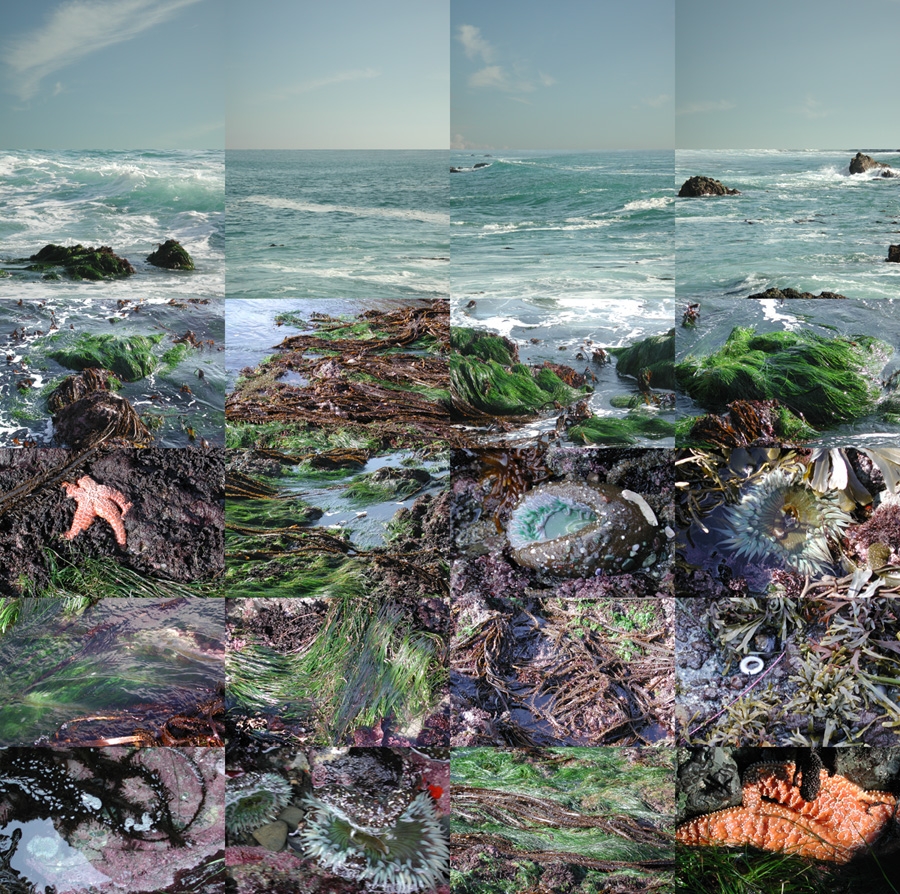
oceanside collage

MA: What did you think of the illustration that Matthew Chase-Daniel chose for your piece? Representational was probably out, given your subject matter and first line, but what meaning did you find in the image?

AF: Love it! My thoughts upon first seeing it went immediately to Olivia in her tree frog green hatchback, listening to the relaxation CD. If I were to read the story to an audience again, I would want the illustration projected on a screen behind me. Subtlety is a beautiful thing.


MA: Do you have any other projects in the works that you’d like to tell us about?

AF: Yes, please! I recently finished a collection of fiction I’ve been working on since spring 2005, called The Poor Children. “Isabelle’s Haunting” and “Layla,” both in the collection, have appeared in The Battered Suitcase journal and Short Story magazine respectively. I’m of course hoping to find a publisher interested in the entire manuscript.

I have two novels in early stages of development, but I want to finish editing The Poor Children before turning my full attention to them. There’s pressure on writers to say, “I’m working on a novel,” whether they are or are not; it’s like some arbitrary means of singling out the real writers from the wannabes. I prefer not to discuss my writing until I have at least a finished first draft. That time, for me, is private and vital to my relationship with the story, like when a mother bonds to her baby by nursing him for the first time. It’s when I make decisions and discoveries that are too fragile for external influence. Often when I feel the impulse to announce a new project, on some level I already know the project is a false start, and what I’m looking for isn’t approval but someone other than myself to blame.


MA: And finally, what does “recovery” mean to you?

AF: Recovery is the constant state of writing, even before the writer has formed it into words on a post-it note, a legal pad, a typewriter page, a computer screen. For me, it’s the voice that speaks to me on a morning walk about what it’s like living with a father who won’t get the toilet fixed; it’s the story with a first line I’ve rewritten ten times because something’s off, and I can’t tell whether it’s the rhythm, the diction, or the punctuation; it’s typing “END” and closing the Word file; it’s not writing anything greater than a grocery list for a week, maybe a month, maybe longer; it’s crying when I don’t know what else to do.

We’re always looking to take care of our work—to protect it from negative, destructive readers, to showcase it where it will be loved, to learn everything we must in order to make it as sophisticated as it should be. In that sense, our writing is always in a state of recovery; if it weren’t, we wouldn’t be so driven to care for it like a newborn baby, even when all authorities claim, “It’s ready! It’s fantastic! It’s won a prize!”

And we, too, are in a constant state of recovery; we’re not separate from our work, and sometimes we need somebody to protect us from criticism, to show us off and remind us we’re pretty awesome. I’m lucky: my family and closest friends all do that, even the ones who don’t understand why, exactly, I turned down a cushy five-figure job offer in favor of a ball-busting career that sometimes pays and sometimes doesn’t.

Interview with Susan Barr-Toman

Susan Barr-Toman

Anthony Rosato: Thank you for joining us, Susan. In your essay Catching My Breath, you write, “I thought maybe I don’t need to process before I write, maybe I need to write in order to process. It won’t be fiction, at least not at first.” Have you found that to be true? Has the writing since that point focused on fiction or non-fiction?

Susan Barr-Toman: Normally, I don’t discuss my personal life with many people and I never write about it. My fiction is not autobiographical. I have to say I was nervous about publishing this essay, but then Mary Akers (wonderful writer, editor and person) calmed me down and told me not to worry. The response has been very supportive, and surprisingly mostly from men who’ve said, I didn’t know you felt that way about Coltrane.

I have found that writing to process my thoughts has been very helpful. After taking that yoga class, I would sit and write about what I was thinking as if I had an audience. This made a big difference. Years ago I read The Artist’s Way and wrote my morning pages every day. I have notebooks filled with me whining about how I’m not writing. I really missed the point on that one. And I really should shred those babies. Without an imagined audience, I’d just drone on and on, but with an imagined audience I really tried to make sense of what I was feeling, why I was anxious or angry.

Once I got all these poisonous thoughts out of my head and faced what it was I’d been feeding my brain, I was able to return to fiction writing.


AR: I’m sure to some the concept of “yoga for writers” may seem more gimmick than substance. Why do you think you had such a strong experience?

SBT: It does sound totally cheesy. But it worked. It’s about discipline of the mind. (Of course, having taken one class, I’m now an expert.) It was what I needed, when I needed it. During that difficult period of time, my brain shut down creatively. There was this constant loop of things to do and things to worry about. This sense that life had been zapped of its potential. Anything could happen, and at that point it seemed like that meant only bad things. I would get all worked up and do very little work. I needed the ability to quiet my mind, to keep those thoughts and worries at bay. I hadn’t done that. Sitting in that class, listening, was like being alone with myself after a very long time and realizing how neglected I’d been. I was hanging by a string and yet holding everyone else up. I realized what a precarious situation I was in.


AR: What are you working on now?

SBT: Next month, my sister Sarah Barr and I are publishing a children’s picture book, called Mary Mulgrew, What Did You Do? It’s based on a story we begged our mother to tell us over and over again as children. Collaborating with Sarah was so much fun. You don’t get to do that a lot as a writer.

We’ve decided to self-publish (fingers-crossed, hope it goes well,) because apparently we’re breaking all the rules. When submitting a picture book to a publisher or agent, you should only submit the text. No pictures. They want to choose their own illustrator. They don’t want to work with teams. And they don’t want any rhyming, which seems crazy if you’ve ever had a child or read to a child or been a child. Kids love rhymes. We don’t want to bend to any of those rules and we have people clamoring for copies, so we’re doing it on our own.

Now I’m working on what I think is a middle grade novel. This could be because my kids were home with me most of the summer. I would write a scene and then share it with them. They enjoyed it and began asking, “Did you write today? Will you read us what you wrote?” It was nice to have an eager audience.

So a picture book, a middle grade novel, at this rate, I suppose I’ll write YA book next.

AR: You’re a Creative Writing Teacher as well as a writer. Do you find that teaching other writers drains or helps your writing?

SBT: Well, it definitely takes time away from writing. But it pays the bills. Well, maybe it covers the cable bill. I really should cancel the cable.

But I love it. I love being in the classroom and talking about how great writers put stories together. I love seeing all the potential in my students, so many different ideas, so many ways to tell a story. It’s exciting and it does energize me.


AR: What’s the most common “newbie” mistake you see in your writing students’ work?

SBT: When students are just starting out they approach the story as a mystery. I suppose that’s from all those years of studying stories in school with the approach that they are something that needs to be figured out. Then, when they go to write their first story, they try to create a puzzle for the reader. As a result, you don’t even know what’s happening in the story. Who is where? Who is talking? What is real? So we talk about structure, clarity, and craft elements. Your reader needs what is happening. The mystery should be why and how it’s happening and what will it mean for the protagonist.


Anthony Rosato lives in Wayne, PA with his wife, two daughters and a cat that doesn’t seem to care for him. His short stories and essays have been published in several literary quarterlies and magazines. He is working on his first novel, which, at the current rate of progress, should be finished in 2024.

Interview with Allan Johnston

Allan Johnston

Joan Hanna: We were so happy to have your poem “Walking” as part of our October issue. Can you share with our readers a little about how this poem came about?

Allan Johnston: Actually, I remember very little about writing the poem. I was writing a lot every day at the time, and this was one of the pieces that came out. I wrote it over ten years ago, and for some reason I associate it with the parking lot at Oakton Community College in Des Plaines, Illinois, where I was probably teaching at the time.


JH: Are the themes in “Walking” typical subject matter for your poetry? What other themes or topics are you drawn to?

AJ: I find myself going all over the place thematically, though “getting on with life” seems an important one. I have more recently tried to write thematically connected collections, and this is a new direction for me.


JH: You published a full-length poetry collection Tasks of Survival (1996) and also a chapbook, Northport published in 2010. Can you give our readers a little more information about these books and how either your writing process or your poetry has changed in the time span between the publication of the two books?

AJ: Northport is a result of a thematically oriented collection. The poems are about the time I spent in the American Northwest in the 1970s, during what one could call the “back to the land” movement.

Tasks of Survival was a more eclectic volume, my first attempt to publish a book, and a learning experience. In Tasks of Survival I veered from spontaneous creation to strict order. Both books for me move outward from the self into nature.


JH: Are there any links to websites, other publications or links for purchase of your books you would like to share with our readers?

AJ: This link is my Columbia College page where there are lots of secondary links to online poems and other writings: Columbia College

The two books are best found on Amazon.com:

Northport and Tasks of Survival


JH: Thank you for discussing your work with our readers at r.kv.r.y. If you could answer one final question: Can you share with us what recovery means to you?

AJ: Recovery is an ongoing process of adjusting to what life has to give.

“Veal” by Christina Salme Ruiz Grantham

Veal
Cattle, Novato, California, 2004

¿Adonde voy? Where am I
And where am I meant to be? Nowhere,
at home, all day, trapped in my
mother-built mind-house,
closet-sized box, still.

¿Adonde estoy?
Some days she walked me to my room, slid
the closet door, helped me climb
into the ever-empty shelf.
She told me “stay” in the closet of
her discontent, like a dog worth beating.
“A storm,” she said, “stay quiet,” she’d say,
“not one peep,” checking and
rechecking through the slit—
open, close, open, peek.
Her palpable nerves ensuring I’d stay
still, quiet, more scared she’d find me
gone, of what might happen if
I touched the door, if I fingered
the unpainted inner wood
found a grasp, a toe hold
reopened my closet from the inside, clambered
to bed. Less frightened she’d forget me
than a splinter in my hand would betray me.
I stayed quiet for hours like days, day after
infinite day, listening to her moaning fright through
the plasterboard separating their thin room from mine.
How lonely she spent the storm, how
she must be aching. Yes I’d be still
but for the shaking of those walls,
Yes but
for the metallic rumble of my shelf.
Quiet
except for the storm, my ally.

¿Adonde fuí? At five, the moving box in
an unfurnished room—room in a different country—
where we’d play hide and seek, mother,
daughters, but mostly hide
at her insistence, hide from an elder
sister, try to win any game
by being more than silent—cardboard—win
against a greater force,
a sister, a mother like a child herself,
who never came looking for me until
I’d fallen asleep
in a box too tall to crawl out of,
too narrow in which to lie down.


Christina Salme Ruiz Grantham obtained her MFA from the University of Maryland, College Park in 1998. In 1999, she received an Individual Artist Grant from the Maryland State Arts Council, and Governor’s Citation for Artistic Merit. More recently, she attended the 2004 Bread Loaf Writers’ Conference, and was a scholarship winner in 2005. Also in 2005, she won an Individual Artist’s Grant from Prince George’s County, Maryland where she lives with her husband and twin sons. Mrs. Grantham has been previously published in Earthwise Review, Mobius, The Allegheny Review, and Borderlands.


“Walking” by Allan Johnston

Sarcobatus Falt, Nevada
Sarcobus Flat, Nevada, 2007 photocollage by Matthew Chase-Daniel

One starts by leaving the present,
because, as always with shoes,
it’s tied to hold the pieces in.
Funny to think of a foot

as a whole, yet when it’s rendered
in marble or schist
it only plants us further in.
There is every reason

to walk carefully
but whatever you might step in
is not one of them.
Some unavoidable things need blessings.

One possibility is to talk
about days, for every one of them
bears a mandate of light.

Walk in air, walk on water.
Some things are tougher.  Walk in and out.
Crawl into life. Fall out of life.
Pick it up.  Keep on walking.


Allan Johnston earned his M.A. in Creative Writing and his Ph.D. in English from the University of California, Davis. His poems have appeared in over sixty journals, including Poetry, Poetry East, Rattle, and Rhino. He is the author of one full-length poetry collection (Tasks of Survival, 1996) and a chapbook (Northport, 2010), and has received an Illinois Arts Council Fellowship, a Pushcart Prize nomination (2009), and First Prize in Poetry in the Outrider Press Literary Anthology competition (2010). Originally from California, he now teaches writing and literature at Columbia College and DePaul University in Chicago. He serves as a reader for Word River and for the Illinois Emerging Poets competition, and is the editor of the Journal for the Philosophical Study of Education. His scholarly articles have appeared in Twentieth Century Literature, College Literature, and several other journals.

Read an interview with Allan here.