Interview with Jude Marr

Jude Marr

Joan Hanna: We were so happy to have your poem, “The Autobiography of Miss Jane Doe” as part of our July Issue. Your poem is a fascinating view of responses that attempt to reconstruct a life from recovered bones. Can you share with our readers why you became fascinated by this topic?

Jude Marr: I guess the idea of Jane came to haunt me through a TV documentary I watched about a year ago. The show I saw used a mixture of CSI-type techniques and
historical research to reconstruct a young woman’s life story from her recovered bones. The bones weren’t that old—from the mid-nineteenth century—and as I watched, I became more and more uncomfortable with the implications of fleshing out a person—someone who lived in the lifetime of my great-grandparents—from her disinterred remains. The real Jane Doe’s age, her likely death from venereal disease, and her passive, post-mortem exposure as a source of entertainment all produced a deeply-felt, and deeply feminist, response in me.


JH: Knowing that you had such a feminist response to this incident I find it very interesting that you used a technique of multiple voices in this poem. I wonder if you would give our readers a little bit of insight as to why you chose to represent the academic, artistic and archeological in this way?

JM: In fact, the original version of this poem had only one voice. When I began to write, I was very focused on expressing my reaction to what seemed to me a particularly egregious example of the objectification of women—in academia, in art, and even in advanced decomposition. However, I eventually came to realize that, although I felt better for having turned my ire into irony, I was as guilty as anyone of using “Jane” without her permission. Of course, there’s no other way to write about someone long dead, but at least I could give this young woman another name and a chance to tell her own story. I liked setting my imagination against dry bones. And—for me, the nicest irony—May’s tale turned out to be rather different than science expected.


JH: “The Autobiography of Miss Jane Doe” version in our July issue is very different from the one voice version of the original poem. There was a strong editing component in getting “The Autobiography of Miss Jane Doe” ready for publication on r.kv.r.y. Can you elaborate a little about that experience with our readers?

JM: Yes, indeed. Well, I submitted the poem without May’s voice. And I was absolutely delighted to get any feedback, let alone the positive offer of editorial input. I’m relatively new to the process of sending my poems out into the world. I’ve had a couple of other things accepted—which was extremely pleasing, of course—but I think I got even more of a thrill out of working with you guys to improve what I submitted. That’s when I felt like a real writer. Both the original critique of the poem’s tone and the suggestion of adding another voice brought me to the realization I described above, and I believe to a much better poem—one that’s at least as much felt as thought.


JH: Thank you so much for giving our readers a glimpse into the evolving writing process for this poem. Do you have a website or links to other publications or projects you would like to share with our readers?

JM: I don’t have a website, although all kinds of people tell me that I should. Maybe now that I’m embarking on my MFA at Georgia College, I’ll have the time and the courage to take more than baby steps toward the web-version of my life. I can, however, offer a link to two of my poems which appeared in a recent edition of The Cortland Review


JH: Thank you, Jude, for taking the time to interview and share your fine work with r.kv.r.y. Congratulations on entering the MFA program at Georgia College, I’m sure that will be an amazing experience for you. I have one final question: can you share with our readers what recovery means to you?

JM: I’ve been thinking about this a lot. I guess I have a habit of talking all around a subject, even when I know what I most want to say, but this time I’m going to keep it simple. Simply, for me, recovery means strength.

And thank you so much, for liking my work enough to publish it, and for giving me this chance to expand. I’ve loved the whole process, and I’m telling all my friends!

Interview with Brian Hall


Image courtesy of Jenn Rhubright

Joan Hanna: We were so pleased to have “Bearing Down” in the July issue of r.kv.r.y. This was a very interesting retelling of an incident that happened just before your grandfather’s suicide. Although you begin your story stating that your grandfather committed suicide, this was not the focus of “Bearing Down.” Can you give us a little more background into how this story came about?

Brian Hall: First, I want to say how happy and grateful I am that “Bearing Down” found a home in r.kv.r.y. I never imagined five years ago, when I began to focus on this essay, that I would find a place as perfect for it as r.kv.r.y.  I guess you can say I began the essay almost immediately after my grandfather had committed suicide in 2003. I knew I would have to write about it to understand what the hell had happened, or, more accurately, why it happened, which, I think, is a natural reaction. I know many in my family wondered why, and it seemed many friends of the family tried to stop us from asking this question. One friend of the family even came to me after the funeral and said, “You’re going to kill yourself if you keep wondering why this happened.” Though the statement’s phrasing could have been less fitting to the situation, the message was clear: asking why is the most dangerous question because, many times, the easy answer is to blame ourselves, to say, “If I only visited more,” or “If just picked up the phone and called,” or “If just did this or that,” he wouldn’t have done it.

I think many times we believe we could have been super heroes and saved the person if we only had done one or two things differently. When in reality, as in my grandfather’s case, nothing I could have done or said would have changed his mind. He wanted out, and wanted out on his own terms. Of course, that hasn’t stopped me from asking why and dealing with the subsequent blame. When I seriously began to work on the essay, I decided to focus on the “blame” aspect. I wanted to explore that last moment I saw him alive and show how I missed an opportunity to really talk to him. I realized, in hindsight, that his failure to answer the, “What’s the matter with you?” question, is my failure to see that he had not come out of his depression at all, and really, what’s bearing down on me is what happens when I focus on blaming myself: guilt.

I didn’t get serious about writing the essay until 2006. Before then I did try to write about it, but many of those early drafts were more cathartic than reflective. I believe I needed the catharsis before I really could honestly reflect on the suicide and my grandfather’s life. Though there was something really satisfying about writing down—unleashing really—a litany of obscenities to describe him and his actions, I was able to really focus on the essay while in the MFA program at the University of Wisconsin-Madison. An exercise in a Creative Nonfiction class was to write a short essay while staying under a set word count. I chose either 800 or 850. I decided that I would try to honestly reflect on my grandfather’s suicide for this assignment because I wanted to keep it simple, focusing on that last moment I was with him. I also didn’t want the suicide to be a surprise at the end, which may have created a more sentimental essay than I wanted, so I decided to lead with it, letting the reader know, matter-of-factly, that my grandfather committed suicide and here is what happened the last time I saw him. It was important for me to maintain that matter-of-fact tone throughout the essay because, again, I didn’t want to be sentimental, which I think would have weakened the essay.

As you can probably tell, I am very aware with sentimentality. I’m not saying that there is never a time or a place for it, but I think a writer needs to pick his or her spots to be sentimental because sometimes a sentimental moment in writing comes off as cliché. For example, when my mother called and told me what happened, I reacted like someone in a movie. I screamed, “No! No!” into the phone, dropped to my knees, and cried. I don’t think if this essay started that way, the essay would have been very good. Even though it was true, it was not very original. I decided when I wrote it to maintain the tone and to use a moment, such as the left-foot accelerator, as my way to creatively explore a moment that could have easily been cliché.


JH: In this essay you seem, although somewhat reluctantly at first, to have a soft spot for your grandfather. Can you explain how this emotional aspect of the relationship between you and your grandfather helped to shape this story?

BH: My grandfather always had a personality that can be described as kind-hearted and also abrasive. He was always willing to help friends and family as much as he could, and he would always tell you exactly what he thought of you or your situation. Very much like the essay, when he spoke to you, it always seemed like it was your fault and that you were somehow incapable of doing the simplest of tasks. As you could probably imagine, there were many moments when he made me feel completely insecure and self-conscious because his words cut that deep.

When I began thinking about this essay, I knew it would be a personal essay (and not a nonfiction piece that explored, objectively, the suicide rate among the elderly, which was one direction I considered), and I would, essentially, be a character in it. As a character in the essay, I didn’t want to be pick one of the moments when he made me feel bad about myself because of something he said to me. If I chose a moment like that, the reader would see a kid feeling sad because an old man verbally attacked him. I don’t think the reader would have been able to connect or understand why I wrote an essay about him. Taking him to Canton for the accelerator was the best because it showed vulnerability in both of us. I appeared as cold-hearted grandson who didn’t want to help his depressed grandfather, and he was an ornery old man who really missed the way his life used to be.

In short, the emotional aspect allowed my grandfather and me to become characters in the essay, and we had our own strengths and weaknesses. I think it is important in a personal essay to show the reader that all the people involved, especially the narrator, are not perfect. I think it helps give the writing depth.


JH: What I really liked about “Bearing Down” is that it comes across as a kind of heartfelt remembrance. Can you share with our readers how you were able to add this type of detail into the story despite the fact that you were dealing with your grandfather’s gruff personality?

BH: I think the gruff personality is part of the heartfelt remembrance. I didn’t want to be around him when he was depressed because he was not abrasive, gruff. I didn’t know how to handle him when he became more introverted because, during the time after my grandmother’s death and his hip replacement surgery, he seemed weaker—emotionally, physically—than I ever remembered him. This seemed to shatter my perception of him as someone who would, and could, stand up to anybody. When he began to critique my driving and asking the “What’s the matter with you?” questions, I began to feel more comfortable with him because he became the ornery person I remembered, and I truly did (and do) miss that about him.


JH: Do you have any current projects, websites or blogs you would like to share with our readers?

BH: I don’t have a website. I’ve tried blogging at a few different places, but I’m terrible at maintaining them. I do have a few recent publications that range from fiction to creative nonfiction.

I have a short story in THIS Literary Magazine: Natural History Museum

I have essay in Shadowbox: Study Bible: The Parable of Natural Law  You can find it by clicking on the center magazine and then clicking on the top right bottle. (It will make sense when you get there.)

I also have another essay in The Chronicle of Higher Education: Educating Our ‘Customers’

JH: Brian, thank you so much for sharing not only your story but also these very personal events with our readers. We are honored to have “Bearing Down” as part of our July issue. Just one final question: can you share with our readers what recovery means to you?

BH: The first word that comes to mind is “acceptance,” but I think there is more to it than that. I think it is fair to say that I’m still recovering from my grandfather’s suicide, and I have had to do more than just accept it. I had to be honest about it in so many ways, so that’s what recovery means to me: honesty.

Interview with Ed Falco

Ed Falco

Mary Akers: Hi, Ed. Thanks for agreeing to be interviewed. I so enjoyed your story The Athlete. I was thrilled when SMU Press graciously agreed to let us reprint it in this issue. In fact, that whole collection was a delight to read. I’m embarrassed to admit it, but I’m new to your work. When I raved to several writer friends about your latest collection, Burning Man, the most common response I received was some version of “Well, duh.” It was as if I’d crashed a really happening party that everyone else had been enjoying for hours. “Hey, Mary, where’ve you been? Come on in, the writing’s FINE!” I look forward to immersing myself in more of your excellent work. What would you recommend I read next?

Ed Falco: You’re far from alone in missing this particular party. I’ve never managed to break through to a large readership with my stories, or with any of my writing for that matter. I think short story lovers know my work, and I suspect those are the friends you mention. I’m of two minds about all this. I would love to have a larger readership. It would be great to walk into a bookstore and find my books on the shelves––which is something that only rarely happens. On the other hand, I publish almost everything I write in good literary journals and with terrific university or independent presses (like Unbridled Books and SMU, publishers of my most recent couple of books), and I know from reviews, letters, emails, and the occasional prize or award, that my stories connect with lots of good readers. On most days I’m happy with where I am as a writer. On some days I wish for more.

Unbridled Books put together a nice selection of my short stories in Sabbath Night In The Church of the Piranha: New and Selected Stories, and I’d happily recommend that collection to you. And I’d recommend my last two novels from Unbridled: Saint John of the Five Boroughs, and Wolf Point. Wolf Point is a dark literary thriller that got especially good reviews, from The Sunday New York Times, where it was an Editor’s Choice selection, to Mystery Scene. For more reviews, you can go to my website (http://edfalco.us) and click on the book covers.

MA: Hey, on Amazon it says that customers who purchased Burning Man also purchased John Banville’s The Sea, Colum McCann’s Let the Great World Spin, and Paul Harding’s Tinkers, all three excellent reads and big prize winners, too. It sounds to me like your fans know exactly where your work belongs.

I love this quote from a review of your novel Saint John of the Five Boroughs: “A saga of a family ruptured and an artist discovering herself, in which far-flung elements knit together skillfully, movingly—and not a little frighteningly. As always in [the work of] Falco, the drama is dominated by its women, seen frankly yet with empathy. Early missteps all but hobble the women here, younger and older. But this winning accomplishment, a new benchmark for its author, reminds us that few things can be so beautiful as a scar.” (John Domini on Emerging Writers’ Network) What a great description. I thought the women in your collection were strong characters skillfully rendered. What is it about employing a feminine voice/point-of-view that appeals to you as a writer?

EF: In that John Domini review, I especially appreciated his noticing and mentioning that I often write about women, since I’ve heard myself tagged before as a guy’s writer. It’s true that in my short stories especially the narrators are mostly men. The reason for that should be obvious, and I think it might be strange if it were otherwise. I wouldn’t expect to pick up a Lorrie Moore collection and find a preponderance of male narrators. I have written from a woman’s viewpoint, however, especially in my novels, and I don’t find this a particularly difficult trick. To write at all one has to believe that he or she can inhabit other worlds––other characters, other circumstances, other times and places. Otherwise we’d all be limited to writing as navel-gazing.

I grew up around women (one twin and two older sisters) and have spent much of my adult life around women. I’ve been married twice, and I’ve raised a daughter. For several years I was a single parent. I’ve had ample opportunity to engage with women of every age. Seeing the world truly through another’s eyes is indeed a kind of magic trick, but it is not one that’s limited by gender. As for what appeals to me about writing from a woman’s point of view, same thing that appeals to me about all writing: the immersion into and exploration of an engaging fictional situation, the attempt to follow the characters and the situation to a moment that’s revelatory.

MA: Art is a big part of my life (my undergrad degree is in Fine Arts and I was a potter for ten years), but oddly enough I don’t draw on my art background in my writing all that often. You have written a lot about art and artists. Why is that a recurring theme for you?

EF: I’ve spent a lot of my life around art and artists. I’m close to my older brother, Frank, who is a visual artist. Frank was married to an actress. Art runs in the family, and so I feel like I know something about an artist’s life. Like all writers, I use what I know.


MA: I recently had a chance to visit the Georgia O’Keefe Museum in Sante Fe and while there I watched a film of her speaking about her life. She said that when she first saw New Mexico, she realized it was “a place where she could breathe.” Do you have such a place in your life? If so, how does that place enter your work and/or inspire you?

EF: I suspect I can write pretty much anywhere I can find space, a degree of peace, and quiet. Place doesn’t inspire me in the way that seems to have inspired Georgia O’Keefe. I live largely inside my own head, though I make an honest effort to get outside myself, to open my eyes to the world around me, to see. I have to make the effort though, otherwise I wind up right back inside my own thoughts, dreams, fantasies, concerns, etc. I love the ocean, does that count? I hope to wind up living close to the ocean one day. I feel expansive around bodies of water. I feel opened-up. When I start writing, though, I go right back inside my own head.


MA: The idea of a novel written in hypertext fascinates me. It makes the process of transferring text from writer to reader even more interactive than it already is. How did you get into this and what about the form intrigues you? Also, how do you think the recent rise of e-readers will affect the form?

EF: I’ve always been interested in writing that isn’t linear, that jumps around, that works by association rather than the straightforward progress of logic and linear design. I was influenced early on by Rimbaud, by the surrealists, by Gertrude Stein, by the craziness of Dada. So when I discovered Eastgate Systems’ hypertext authoring system, Storyspace––a software program that allowed writers to construct literary mazes the reader navigated by the near magical technology of the link, I jumped at the chance to experiment with it. This, keep in mind, was back before everyone owned a personal computer, a period of time in which only a few people had heard rumors of something called the World Wide Web. In 1997, Eastgate published A Dream with Demons, a 350 page novel I wrote in which every chapter is linked to a collection of linked notes by the purported author of the novel, Preston Morris. The novel tells a straightforward story, which the notes interrogate, question, and undermine. If more than 25 people have actually read the whole thing, I’d be shocked. My favorite hypertext piece (of mine) is “Charmin’ Cleary,” which is still available via Eastgate’s Reading Room.

Technology, as is it want to do, changed rapidly.  In short order it was possible to link not just text, but /images and sound, video and animation.  I started calling the genre hypermedia rather than hypertext, and I wrote a number of pieces that are still available on the web, including Self-Portrait as Child w/ Father and Circa 1967 – 1968

Lately, Flash animation dominates what is now called Electronic Lit or New Media Writing.  I’ve only written one piece in Flash (Chemical Landscapes, Digital Tales) and I haven’t written a new piece of electronic lit in several years now, though I continue to edit The New River, an online journal I founded in 1996, making it the first and the oldest journal devoted exclusively to new media writing.

It’s been evident for a long time to anyone who has thought about the issue that reading would eventually make the transition from the page to the screen. It’s inevitable. The economics of book production are solidly 19th Century and have long-been doomed. Up until recently, however, I thought the transition would be further off in the future than now appears to be the case. The iPad appears to be an attractive device for reading on screen. Between the iPad, the iPhone (and most other smart phones), the Kindle and the Nook, there are already large numbers of people reading on screen. Eventually, when writers grow up composing on computers, with their multi-media capabilities, and reading on devices capable of rendering multiple media, I expect new forms of literary-visual art will emerge. These new possibilities are, in fact, what the online journal The New River is designed to explore.

Having said all that, I remain a hard-core book lover. I prefer hardcovers to paperbacks and paperbacks to e-readers. I doubt that will change for me and for millions more like me. We like curling up in a favorite chair with a beautiful book in hand. A press like Unbridled, for example, produces books that invite you to settle down and fall into a good read. E-readers on the other hand tempt you with fifty other things you might do other than read.

In the near future, my best guess is that books will become more expensive, and still those of us who can afford to buy them will do so. The rest of us will read on screen, as the price of a read becomes less expensive. What all this will mean for writers in terms of economics and income remains unclear.

MA: That’s fascinating, Ed. Thanks for the links. I look forward to checking these out. And I’m especially intrigued by the idea of physical books becoming more expensive objects as e-readers increase. In my twenties, I worked as a bookbinder in Colonial Williamsburg and in the 18th century, books were incredibly labor-intensive objects to produce. First paper had to be made from pulverized rags, cured for months, the type was all hand-set, backwards and upside-down, piece-by-tiny-piece, one sheet at a time was hand-pressed, each folio was folded by hand, the folios were then sewn onto a loom, then the cardboard covers were attached, the pages trimmed, the spine glued (with horsehide glue) and hammered into round, the leather shaved down and shaped (the paste cooked from flour and water), and finally the end pages were pasted down. Consequently, in the 18th century, the simplest of books cost as much as a week’s wages. Can you imagine being a book lover back then–with no public libraries? It’s a big part of why Thomas Jefferson went broke. But I can just imagine how much more we would cherish our books if we paid a comparable amount for them today. Books! The new/old luxury item.

Speaking of books, congratulations on being selected to write The Godfather prequel. That is such exciting news! Have you been a longtime fan of the Godfather movies? Have you read the two sequels? What did you do for research?

EF: Thanks. Writing The Family Corleone, a prequel to The Godfather saga, was a great pleasure. Yes, I have been a longtime fan of both movies, and I had read Puzo’s novel many years ago and enjoyed it. For research, I reread the novel and one of the sequels, by Mark Winegardner, The Godfather Returns. I also reread Doctorow’s Billy Bathgate and World’s Fair, and William Kennedy’s Albany trio, as well as several other books of fiction and nonfiction that touched on the era of the depression and subject of crime. I watched the movies again, read the newspapers from the time, and watched video and audio clips from the thirties online.

By the time I started writing, I was thinking of The Godfather as American mythology. The characters, after their various incarnations in multiple movies, books, and a video game, have moved into the realm of mythical figures. Once I started thinking of the story as mythology, it was easy to see myself as an interpreter of the myth, someone taking the established outlines of characters and events and manipulating them to my own ends. This is not unlike the way poets and writers for centuries used Greek and Roman mythology.

In addition to the larger outlines of the story from the books and movies, I also had the general outline of a story developed from pages extracted from Puzo’s screenplays for the Godfather III and IV (unproduced) to guide me. Starting with characters and an outline made the process of writing the novel much easier, and left me free to concentrate on other elements of the story. All in all, I had fun with it. It was an engaging fictional problem. How do you write a good book that fits into a well-known saga, with universally known characters, a book that can stand on its own and still be of a piece with the other books and movies? I hope I solved those problems, but I’ll have to wait and see what others have to say about that. I think a lot of people will be surprised by The Family Corleone. If I’m right, it’s going to be fun to see the responses the book garners.

And maybe I’ll finally get that larger readership I’ve been looking for.


MA: I sincerely hope so, Ed. I believe you are a true writer’s writer, and it’s always gratifying when someone devoted to the craft gains a wider audience. Hey, I can promise you at least one sale.

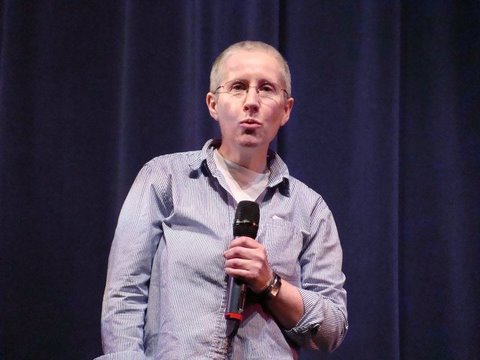
Interview with Jen McConnell


Katie Phillips: Hi, Jen. We were thrilled to have your story “Shakespeare’s Garden” in this issue of r.kv.r.y. Please tell us a bit about your writing process. Do you prefer a certain time of day? A certain place in your home or apartment? What habits do you practice to get in the writing groove?

Jen McConnell: Sometimes I wish I could schedule myself to write every day, say for two hours to work steadily at this story or that novel. And sometimes I can. I did National Novel Writing Month last November and got up most mornings and wrote, half awake, from 6:30 – 7:30. But I could only keep that up for a limited time. Life just gets in the way.

Virginia Woolf said we need a room of our own to write, but for me, I write where I can, when I can – at home, at a coffee shop, on a computer, longhand in my journal. Most writers I know are like this. I think those writers that can schedule four hours blocks of writing time every morning, like Stephen King, are the exception, not the rule.

While I was in Goddard College’s low-residency MFA program, I was lucky enough to work just part-time. Some days I could write for 10 hours straight in my sweats in my apartment. Other days I was lucky to get an hour at the coffee shop.

Any sense of schedule I had went out the window after my daughter was born in 2005. Since then it’s been even more ad hoc. But that’s just the physical act of writing.

My creative process, however, is much more specific to my personality.

For me writing is the way I release the thoughts and feelings–coherent or not–that rattle around inside me. I don’t consciously plan out what story I’m going to tell. The story comes to me.

The stories I like to read most are those that don’t feel like they were written by someone. Those stories that feel as if they were out there in the world and were simply transcribed or translated from an invisible language.

Alice Munro, Richard Ford and Charles Baxter are great examples of getting out of the way of the story. At my best, I feel like this kind of translator. As if a story is handed to me, fully formed, and it is my duty to write it down as best as I can. This has happened to me a few times.

The first draft of my story “What We Call Living” was written longhand during a plane ride. I did very little editing between the first and final drafts and, because of that, the raw emotion remained intact. Different scenes in the story “The Last Time” had been recurring to me–separately–for years but one day, like jigsaw pieces finding each other, they suddenly snapped together.

The latest short story I’ve written, “The Divorced Man’s Guide to the First Year,” came to me so unexpectedly that I pulled my car to the side of the road to write in my journal as fast as I could. This is what I mean by getting out of the way of the story.

Other stories, like Shakespeare’s Garden, are much more challenging. In fact, the final version that is published here took ten years to get to.

With these more difficult stories, the ideas and emotions are there at the beginning but by the end of the first draft something is just not right. So I try something else–add a new character, change the setting or reverse the point of view–but I have finally learned that instead of tinkering endlessly with a draft, I need to open up and let the real story come to me. It is much easier for me to let go now, after fifteen years of writing, when it was at the beginning, when I so desperately wanted to control what I was writing.

colorful flowers

KP: In “Shakespeare’s Garden,” Evelyn and Janey experience grief in different ways. How do you feel their respective experiences fit in with the theme of recovery?

JM: I don’t actually create the characters in my stories. I simply chronicle their actions. In that vein, I believe that Evelyn and Janey act as they always have (and always will): Evelyn waits and Janey ignores. Because of this, when Richard dies, Evelyn’s life comes to a complete standstill, which she was heading for all along. Janey tries to smooth things into shape by having the driveway fixed. This is how the women cope. They have preempted recovery by not confronting their own grief. Unfortunately, this only postpones the inevitable, and painful, process of recovery. A friend of mine who has M.S. told me once that nothing hurts as much as healing does.


KP: What do you find to be the most challenging aspect of writing?

JM: Having an incomplete idea. Ideas come to me all the time – for scenes, stories, screenplays, novels. But besides not having enough time to write (every writer’s biggest challenge), I am overwhelmed with these bits and pieces when I have no sense what to do with them.

Sometimes I will have part of a story in my brain for years but it doesn’t go anywhere. Sometimes I’ll try to force it into another story or idea I have, but it just doesn’t gel. So I let the idea go. I have dozens of these ideas floating around.

But sometimes, one idea will find another and they will give birth to a whole story. It sounds silly when I write this, but that’s how it happens for me. Inevitably, the ideas and stories that don’t work are the ones I try to force.

Most times though, ideas find each other when I am NOT thinking about them – usually while I am walking the dog or in the shower. That’s when I have to hurry and find my journal and get it down before it’s gone.


KP: Which work of Shakespeare inspires you most and why?

JM: Hamlet is a close second. It is such an amazing character study. But my very favorite is Twelfth Night. I’ve seen it performed many times and it’s just so clever and fun. Each time it is so refreshing, it’s like watching it for the first time again. I think being able to read or view something over and over again is the highest compliment that we can pay to art.

One of the best nights of my life was seeing Twelfth Night performed under a night sky in London at the reproduction of the Globe Theater. I was filled with joy during the entire performance, and amazed that a story, written hundreds of years ago, can still be so transformative without any “modern” translation. Seeing it reminds me of the true power of words and inspires me to keep writing.

Interview with Doug Bond

Doug Bond

Mary Akers: Hi, Doug. Thanks for giving us your excellent short piece “Traces in the Winter Sky” for this issue. I think what struck me about it right away was that it’s about a marriage, about love, but it isn’t tragic, or ironic, or forced. How refreshing! Instead it’s about recovering the love in a marriage, and what married person doesn’t have to do that almost every day of married life? I’m curious: was that the recovery theme that you also felt would make it a good fit for us? Or did you have another take on this story?

Doug Bond: Ha! Great first question, Mary. Yes! I did have another take on this story…but only at first, many, many revisions ago, and as it nudged slowly along to its current state I can say that it was my discovery of r.kv.r.y. and the mission of your journal which gave me the impetus to stretch the way I’d been approaching the story.

The piece started out as a simple sketch of a middle aged guy walking his dog on a cold clear winter night, the Orion constellation prompting in him a reverie about youth and 1st love.

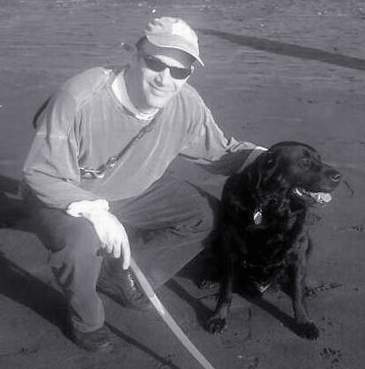
So the first sense for me of “recovery” in the storyline related to a past, an emotional state, that had gone lost. As I continued to work on the story, I was led to a conception of this man, Tyler, as a person who has recently gone blind. The motifs were already there: searching in the dark, distant light,  Orion’s mythology (once blinded but sight regained), the presence of the dog (a lab!) I just didn’t see it at first! The first set of versions in which I made the blindness too present felt heavy and freighted, so I tried backing off on making his sightless-ness overt or specific in the narrative.

The withholding of information ended up creating an intriguing tension which I felt balanced the more potentially syrupy or sweet framing in the story. As it turns out it’s not necessary at all for the reader to know or believe Tyler is blind. But since I wrote with this strongly in mind, I ended up relying on senses other than sight to set his relationship in the world.

Once I had the “blindness” done right in the story there was still something missing…it couldn’t just be him feeling sorry for himself and remembering the good old days. So the biggest epiphany for me in writing the story came in discovering that the girl, Jenny, he romanticizes during his memory of high school is, fifty years later, the woman waiting for him at home. I began to see them together…like the two stars in Orion’s belt…so close together, they’d become one, a co-dependence, and it’s tensions, escalated by Tyler’s infirmity in the world.

I did some superficial research on the constellation Orion (ok, I “Wiki’ed it). But this line re: the double star (Mintaka) in the belt really anchored the piece in my mind as being at core about the marriage: The Mintaka system constitutes an eclipsing binary variable star, where the eclipse of one star over the other creates a dip in brightness.

Eclipse and recovery. The sum greater than the parts, something that can project an elegant luminescence from a distance wherein at core is a fiery exchange of energy between two distinct entities rotating in mutual dependence.

Yikes! Is it any wonder we project so much onto the night sky…it’s been pulling stories out of us for a long, long time! But truthfully, I really didn’t have a theme in mind at all when I wrote this…I just wanted very badly to have a story published with both the word’s Betelgeuse and Rigel playing a starring role.

MA: Oh, I love what you say about the night sky pulling stories out of us for eons. So true. Brilliant.

Your use of time is interesting in this story, too. Tyler spends at least as much time thinking about the past as he does existing in the present. And the past is where the change of heart occurs for both the character and the reader. I find that time shifts can be really tricky to convey, but you do it well here. Are time shifts and backstory devices that you feel comfortable using to tell a story?

DB: Thank you for saying that the time shift worked. It was tricky. Lots of re-writes, and the adding of little subtle details in an attempt to try and not disorient the reader. Since the emotional energy for me in telling this story came from a place of wistfulness, I pretty much had to commit to a time shift. Tyler is in the present and I want the reader to be inside him in that “now” but to know what he’s feeling about the past and what it is that he is contending with in these memories.

The “blindness” conceit actually helped here since I had to make all of the “present” setting experienced by him exclusively through non-visual references…the sounds, of wind, dog tags, the coldness of the air and the ballasting feel of a tree trunk. Tyler’s communion with the past comes to him through the non-visual senses too…taste and smell, but the memory of light is what comes through the strongest.

I had strong advice in an early draft to avoid any in depth backstory. Ended up being a goad. There are so many un-written rules about writing, and particularly flash-fiction….what “not” to do and time-shift rides up there high on the lists, as does withholding information, which I am also guilty of….ie. regarding Tyler’s blindness and just who it is he was reminiscing about. Maybe sometimes trying to dance around these rules gives an otherwise un-tappable energy to a narrative, but for god’s sake take my advice and don’t ever try to write flash with backstory. The POV headaches can make you go…well, never mind.

MA: What did you think of Jenn Rhubright‘s illustration for your piece?

DB: I was really floored when I saw it. I thought…how did she do that? I’d kind of expected, since the piece is so strongly anchored by the Orion constellation, that the  accompanying image would be much in parallel….a re-rendering, in some creative way, of the Hunter image or of the belt or a larger tapestry of stars. Jenn’s illustration feels so much more intimate to me. She focuses the light into one delicately set white circle, pearl-like in the composition. It actually spills a reflective heat into the darker space around it…the way she captures the glow. But it’s the tangled weave of threaded black along the midnight blue that got me….an intimation of something sinuous in conflict with, but pushed aside by, the pulsing of the light. I loved this aspect of participation with r.kv.r.y. Jenn’s work brought a wonderful dimension to the entire issue.

MA: What does “recovery” mean to you?

DB: I think one’s first instinct in defining “recovery”, is to believe it has to be a return, like in the mathematical sense, to a previous balance, a putting back again to a prior state of wholeness. In the few, as yet, truly difficult “recoveries” I’ve witnessed first hand or been a part of what you realize as you come through is: that’s impossible. There really is no turning back of the clock. Time will always exact its costs, moneyback guarantee be damned.

But the gift which comes in recovery is realizing that your initial ache for “return” was somewhat puerile, and that in the alchemy of recovery lies a transformation which does indeed make you perhaps, better…improved…there’s something in the release of what’s lost which allows a new balance to be attained.

For Tyler, his life has been altered by an age-related infirmity, a dramatic one. Whether literal or psychic, he has suffered lost vision. He feels untethered. And into this doubt and confusion comes a memory, an image of something immutable, to his thinking, the winter sky, unchanged in 50 years of 5 million. It’s all a matter of perspective with the sky though, isn’t it…Red Giants, White Dwarfs, exploding Blue Supernova and an earthbound lens skewing all the angles. Everything is in flux…even the Christmas lights.

Still, if only in imagination it is the “firmament” (what a wonderfully archaic word!) which gives Tyler an arc to his earlier self, and inspires a connection with his wife, the actual touching of her face at the end of the story, renewing the light within them both, and in that way lays before them a chart of hope and endurance for the future. Thankfully they have a very well trained dog to keep them on the right path.


MA: Wonderful, Doug. Thanks for speaking with us. It’s been a great conversation. And in true guide-dog spirit…I will guide our readers to more of your fine work:

The Thing That Filled First (Used Furniture Review)

Where the Ocean Ends (Necessary Fiction)

Go hide! (Staccato Fiction)

Knock It Off, Honey (Up the Staircase)

Why Aren’t There Fireflies (Camroc Press Review)

Tea with Mrs. Doyle (Wilderness House Literary Review)

Interview with Shara Lessley

Bruce Snider: Can you talk a bit about the origins of your poem, “Two-Headed Nightingale”?  What inspired it? How long did it take to complete?

Shara Lessley: Inspiration? Because the poem was written eight years ago, I honestly can’t recall! Its source might have been an image at the Circus World Museum in Baraboo, Wisconsin, or one pulled from some online archive. Regardless of where I first saw the conjoined songstresses’ photo, I remember being very moved by both the biographical and fictive details surrounding the lives of Christine and Millie McCoy. At the time, I was struggling — and failing! — to write narrative poems in a rather straightforward way. “Two-Headed Nightingale” demanded I abandon linear strategies. The poem’s voices and viewpoints are multiple, ever-shifting. Christine and Millie speak, of course, as does the general public (audience members, promoters, a mortician, etc.). As I remember it, the drafting process was quite frenzied: while the poem’s various players argued about the reductive sum of the sisters’ identity — are they miraculous, monstrous, inferior on grounds of race or gender, medical curiosities, substantially talented, or simply slaves? — I was pursuing a larger argument about the possibilities of how I might move poetically. Whatever its limitations, “Two-Headed Nightingale” was critical for me in that I entered the poem still wrestling with the idea of plot and emerged from the poem’s confines secure in my identity as a primarily lyric poet.


BS: Would you call your process for this poem typical for your work?

SL: The poems of my own I’m most married to have come rather urgently from start to finish in some approximation of what will be their final form. In other words, it’s extremely difficult for me to piece together fragments, lines, and phrases culled from different periods of time. If I can’t find my way out of a draft during the first sitting — even if the ending is temporary and reworked a hundred times over — it’s unlikely that piece of writing will survive. I envy poets with a gift for hoarding, those whose talents include rescuing and recycling a sentence here, a stanza there. I, on the other hand, remain chained to my desk hour after hour in an attempt to chisel the air.

As with all things, I suppose, there are exceptions. “Wintering“, for example, was written over some odd months during long walks across Stanford’s campus. “Already winter makes a corpse of things,” rang in my ear for days until it was joined by the phrase “Snow reshapes what ice has taken.” When an emotional declaration later emerged to counter the initial sentences’ descriptive impulse, a breakthrough occurred: “You’ve lost interest in letters. So let sunrise come.” Frankly, this psychological turn left me perplexed. Letters from whom, I wondered? And why had their author “lost interest”? After a few more weeks of running the lines in my head, the speaker’s identity revealed itself: a woman abandoned and left to fend for herself somewhere in the unforgiving northern plains of the late 1800s. Particular and peculiar as it seemed, I didn’t question it. The rest of the draft followed shortly.


BS: As is often true in your poetry, you use line in “Two-Headed Nightingale” to provide a remarkable source of tension. Can you talk a little bit about the relationship between the poem’s formal elements and its narrative?  Is line something you think about in the early stages of composition?

SL: Truth told, I’m syntactically obsessed! I’m completely charged by the possibilities of what a sentence can do musically — the elongation of a phrase by Donne, for example, followed by some swift and unanticipated contraction. Whereas diction and phrasing provide the poem’s rhythmic score, I like to think of the line as a kind of choreography that both extends and counters its sonic movement. At times, the line underscores music: it seems to dance with it, to provide the kind of support as would an ideal partner. A phrase’s volume is increased via enjambment, for example, by calling attention to a particular word dangling at its end. In such moments, the lyric moment is amplified. Elsewhere, the line might create emphasis by resisting rhythm. Breaks, in other words, can delay, suspend, counter, or work against the poem’s essential rhythms. They can be quite surprising. Do I think about the line’s greater contributions to musical and dramatic tension during the early stages of composition? Absolutely. For me, structure is muscular. In this regard, I’m very much like a trained dancer; that is, at all times I try my best to be sensitive to (and conscience of) the line’s integrity.


BS: Who do you think of as your primary influences?  And have those changed over the years?

SL: Where to begin! My influences, it seems, are simultaneously ever- and never-changing. I love Marianne Moore and Elizabeth Bishop for their gusto and precision, as well as more recent work by contemporary poets like Brigit Pegeen Kelly and Terrance Hayes. I often crave George Oppen and Keats. I’ve already mentioned Donne, I think. I can’t resist Plath’s dramatic urgency. This fall, I spent a lot of time savoring select poems by Lorca. Lately, I’ve been acquainting myself with poets and writers from the Middle East. I also read a lot of prose. A few days ago I finished Flaubert in Egypt. It was horrifying and a hoot all at once.


BS: You mention that “Two-Headed Nightingale” was written eight years ago. What about your more recent work?

SL: “Two-Headed Nightingale” is the title poem of a collection forthcoming from New Issues in 2012. I’m currently working on a manuscript tentatively titled The Explosive Expert’s Wife, which takes as its subject the history of stateside bombings and life in the Middle East. Overall, it’s a much more cohesive project than Two-Headed Nightingale. Although I live in Amman, the poems themselves aren’t necessarily autobiographical. For the first time in my writing life, I have lists of titles from which individual poems are emerging. As a result, the drafting process feels very fresh.


BS: You recently moved to Jordan. Has life overseas affected the direction of your work?

SL: It’s difficult to articulate the extent to which living in Amman has deepened my relationship with poetry. Jordan itself is complicated and rich, beautiful, challenging and, at times, utterly baffling. Petra, Wadi Rum, the Dead Sea, Jerash: what a gift to have such places within reach! The region’s sounds and textures, its history, geography, political complications — I find all of these factors deeply impacting. Granted, there are times I feel very far away from home. After many months, I’m still struggling to learn Arabic. Although the process isn’t pretty, I find joy in the daily failures. With the shift of a single vowel, for instance, I recently told someone “the sky is a giant apricot,” instead of “the weather is quite sunny.” From this I gather that whatever my location, language is damned well determined to remind me that my mistakes are often more interesting than the security of their everyday counterparts.


Bruce Snider is the author of Paradise, Indiana, winner of the 2011 Lena-Miles Wever Todd Poetry Prize (forthcoming from Pleiades Press), as well as The Year We Studied Women, winner of the Felix Pollak Prize in Poetry (University of Wisconsin Press). A former Wallace Stegner Fellow and Jones Lecturer at Stanford University, he is the 2011 writer-in-residence at the Amy Clampitt House in Lenox, MA.

Interview with Stefanie Freele

Stefanie


Mary Akers: Your story In the Basement really struck a chord with me, and I’ve heard the same from readers. I wonder if the use of second person to tell this story in part accounts for the way we take it in as readers. Do you use second person often? What do you think the advantages of it are? The disadvantages?


Stefanie Freele: I’m not a huge fan of reading second person, nor writing in it, even though obviously I occasionally do. Sometimes the ‘you’ can be unnecessarily intrusive, too pointing-at-the reader, even accusatory. I wrote this story in third person, changed it to first person and settled in second. In this story, third person felt too distant – as if the character’s anguish was too far away, leaving a mile of safety in-between the reader and the character: third was too comfortable for the reader, yet this story is about discomfort. First person felt too much like Stefanie Freele is the narrator which could position the reader back toward the author instead of toward the protagonist. When I tried out second, it seemed right – like binoculars finally zooming in. I think second person can be used for a variety of good reasons: explanation, allegation, etc. In this story, now that I think about it, I perhaps chose second person for the uneasiness such a perspective might cause.


MA: Congratulations on winning the Glimmer train fiction contest! I was thrilled to hear that you had won. How did you react when you first got the news?


SF: Certainly I won’t forget that day. Elated! Surprised! Flabbergasted.


MA: Recently, I had a conversation about “success” with a good friend of mine who is also a writer. She defines it very differently than I do and I wonder about what has to happen before a writer thinks of himself or herself as a successful writer. I think we often spend too much time looking toward the next goal and attaching a feeling of success to obtaining that. How do you define “success” as a writer?


SF: I’ve always had a hard time with the word success. It seems to be such a black and white concept. If you aren’t successful, then you are a failure. And, success is such an individual notion. My garden’s first strawberry is something to rejoice; your seven rows of healthy asparagus might be a chore to pick. I don’t think I use that word, “success,” in my vocabulary – it reminds me of people who drive posh vehicles but have huge car payments. I like the words content or pleased or happy instead. And, if you were to ask me, am I content as a writer, yes I am – I’m writing. I’m learning, reading, growing, my writing is improving, I know some of my weaknesses and I’m working on them, fussing with them.


MA: That’s brilliant. I think I need to adopt your asparagus-strawberry success point-of-view. Perhaps even start a movement. Single Strawberry Successes unite!


I know that you grew up in Wisconsin. Do you think the idea of “place” creeps into your writing? If so, how does it reveal itself?


SF: Growing up in Wisconsin creeps into everything about me. I loved growing up there. The seasons are extreme, the northern colors stunning, the people down-to-earth. I feel like I haven’t yet done Wisconsin justice actually, I have a bunch of stories sketched and brewing (excuse the Milwaukee pun) that take place in Wisconsin.


In the Basement


MA: Morgan Mauer’s illustration for your piece was one of my very favorites. What did you think of it? Did you find any special meaning in it?


SF: I could over-analyze the illustration, but I like to leave art to speak for itself. The artwork is stunning, haunting, symbolic – perhaps especially for me, the author of the story. In the first draft of “In The Basement”, I used wording in the end something like ‘that she was walking toward death’ but that was too obvious. I changed the language to walking in the direction of more food – which if things continue on that tangent for her, she will die. The illustration has a giant D in it, which really grabbed me as an indicator

of “Death”. The profile – emphasizing the body parts that can be destroyed by bulimia – in its scientific portrayal, overlaps the border, becoming stronger as the picture moves right, or weaker toward the left toward that daunting D, depending how you look at it: I love that careful detail.


MA: What does “recovery” mean to you?


SF: Recovery is everywhere. The character from “In The Basement” is in can’t-find-the-way-out hell. That is a form of recovery: knowledge that this-right-here isn’t working. There are so many stages of recovery: hitting a bottom, turning it over, moving on, seeking help, doing the right thing, reaching for the highest good, etc.etc. I’m thinking even that hurt of compulsion – like the heaviest anchor — is part of recovery.


MA: Yes, that’s excellent, Stefanie. I think it is, too. Thanks so much for sharing your thoughts and your fine work with us.

Interview with Matthew Vollmer


Mary Akers: I really enjoyed your story Bodies. Especially the fantastic voice of the first-person narrator who is a self-admitted drunk, but somehow manages to endear us to him through his fresh use of language and by being both hard on himself and funny. Here’s a good example of what I mean:

“Like a true hot shot, I woke up in the sand, among broken seashells and cigarette butts and ice cream wrappers and those plastic discs you snap on the tops of soda cups. I dragged myself into a sitting position, smacked ants from my legs, and stared at the churning sea. It occurred to me that Primordial Man might’ve watched a similar sunrise bleed across this same froth. He had not, however, smelled doughnuts, and that was one of a few things I could think of that separated his world from mine.”

That’s a perfect paragraph in my world. If I might ask you to analyze your own words for a moment, what do you think it is about that paragraph that works so darn well? And why do we, as readers, get enjoyment from reading about fatally flawed characters?

Matthew Vollmer: I actually like that paragraph, too. And I can’t say that about most paragraphs I write. This story came after a trip to Carolina Beach, where I’d been reading, for the first time, some stories by Barry Hannah. I liked how so many of his narrators seemed ticked-off, furious, bad-tempered, cocky, and rude. I wanted to try to harness that energy, and somehow, when I started imagining this dude and heard his voice, I just started to transcribe it.

I’m probably not the best person to analyze why the paragraph works. I can tell you though, that I like how it starts: “Like a true hot shot, I woke up in the sand.” For me, any character who’s basically saying “I’m an idiot” automatically endears themselves to me. I guess there’s a lot of contrast here, what with the beach, which is supposed to be and often is beautiful, and the trash embedded in the sand, so maybe there’s some tension generated there. Finally, there’s an absurd quality to the last line, what with the of primitive man staring at this same scene and the narrator thinking that smell of doughnuts is one of “a few things” that separate the two worlds; the understated-ness of that always sort of made me chuckle.

MA: Not only did I like “Bodies” but your entire collection (Future Missionaries of America) was a really enjoyable read. You did some inventive things with structure that messed with my head in a wonderful way. In particular, I’m thinking of the story “Will & Testament” which is (stay with me, readers) a copy of the last will and testament of Andrew Walter, written shortly before his death and mailed to 27 unknown people, their names selected from the phone book, asking them to distribute his final remains and possessions. (Complete with extensive footnotes.) It’s brilliant, really, in the way it looks both forward and backward in time, anticipating all contingencies and getting the final say. I also appreciate how well it maintains the legal-speak throughout the story. If you received such a letter, would you agree to be his executor?

MV: Honestly, I don’t know. If I received a letter like that I would probably freak the eff out. But I would be intrigued and probably tempted to honor the requests. Though I’d have to check with an attorney about the legal ramifications. I’m not sure how legal it is to actually cut up and distribute sections of a dead man’s brain… even if the dead man left instructions to do so.


MA: And staying with the idea of structure a moment longer, could you say a little bit about how your stories find their structures? (i.e. ahead of time? in the process of the writing?)

MV: Mostly in the process. I rarely write from beginning to end. My process is messy and haphazard. I’m impatient to get to the “good parts,” whatever those may be, so usually I end up writing the sections of the story that I’m drawn to first, then perform a lot of shuffling.


MA: I love stories that incorporate a character struggling with a specific religion or any widely held belief system. I admire how seamlessly you do this in your stories. It’s been my experience that stories with any sort of religious reference or focus can be difficult to place. Have you found this to be the case, as well? And if so, why do you think that is?

MV: I actually haven’t had that experience. Epoch took the title story about two weeks after I’d sent it. And I don’t remember “The Digging” (the one about the boy performing “free labor” at a Christian boarding school) being all that difficult to place… I enjoy reading stories that focus on a character struggling with some kind of internal conflict, and because religion has been such a relentless presence in my life, I end up coming back to it again and again.

MA: Salt is the publisher of the copy of Future Missionaries of America that I own, but I understand that they were not your original publisher. Could you describe a little bit of the history of your path to publication? I think it would be a very interesting and instructive story for our readers…and could even speak to the idea of “recovery.”

MV: My collection was actually accepted first by Salt. I’d sent to MacAdam Cage as well, and when I got the news from Salt I checked in with MC. They said they wanted it, so I brokered a deal with both houses so that MC would do US and Salt would take care of UK/Europe. My book was originally slated for 2008 but due to some technical problems with the manuscript it got pushed back to 2009. Unfortunately, that was right after the economy tanked and MacAdam Cage was forced to basically fire their entire staff and replace them with interns. It was basically a nightmare. To make a long and super complicated if not maddening story short, let’s just say that the New York Times review of my book came out, but there was no book to be had. It didn’t come out until two months after that. Originally, MC was going to publish a hard and soft cover version simultaneously, but they ended up only publishing the hard cover, and eventually decided, despite having received a significant number of orders for the paperback, that they were done with the book. So I had my agent retain the rights, which we then gave to Salt, and now they’re distributing it in the U.S. So I suppose THAT was a recovery of sorts… Many times I wondered if this was it, if the book was on the brink of death, but it kept coming back.

MA: And finally, what does “recovery” mean to you?

MV: For me, recovery usually involves arriving at a place where I look back on a time in my life and think, dang, what was I thinking or why did I allow myself to be put in that particular situation? I made a lot of stupid decisions as an adolescent and college student and I often remember those days and think 1. I’m glad to have survived THAT part of my life and 2. thank God I’m not there anymore.


MA: Thank you, Matthew. And thanks for sharing your fine, inventive work with us. For our readers, you can find out more about Matthew at his website and access his stories and essays here.

Interview with Diane Hoover Bechtler

Mary Akers: In your piece “The Darning Needles,” you write, “I don’t know how to mend things.” That is a moving and potent statement. Could you speak a bit about the link between mending (as a concept) and recovery (as a concept)?

Diane Hoover Bechtler: “I don’t know how to mend things” is obviously a metaphor for not being able to mend my broken marriage. I lost my husband, my dream house and my health all in a short period of time. Had I tried to absorb all that loss at one time, I would have drowned in the tsunami created by the huge amount of loss. My husband and I put that house together and appointed it perfectly. My furniture, my art, even my workout equipment all stayed with him. After 18 years I had to build an entirely different and new life.


MA: Your piece says something important about loss–of objects and of people–and how the two can feel linked in our minds. Are there other sorts of loss do you think we might link together?

DHB: All the change and all the loss had to seep in to my life and reach the groundwater. That way I could survive. Seep is the key word. Everything had to move slower. But it didn’t because that’s the nature of life.

My survival depended on moving forward and I was paralyzed. I was overwhelmed. I learned that life will move you forward because it goes on. Seasons change; friends change; children leave home; fashion changes; politics change. So life in all of its changes pushes you forward. Whether I wanted to recover or not hardly mattered. Since there’s nowhere to hide, you find yourself moving on because life is moving on.


MA: You also write about a lack of memory as an act of self-preservation. Can you expand on this for our readers?

DHB: Not being able to remember is a powerful coping tool. It all comes back, but not in a flood. It comes back in droplets. Easier to absorb. Very few positive things were happening in my life–this caused me to cling to the things that were positive as tightly as I could. I threw myself into school. It became my lifeline.

MA: What did you think of the illustration Morgan Maurer did for your piece?

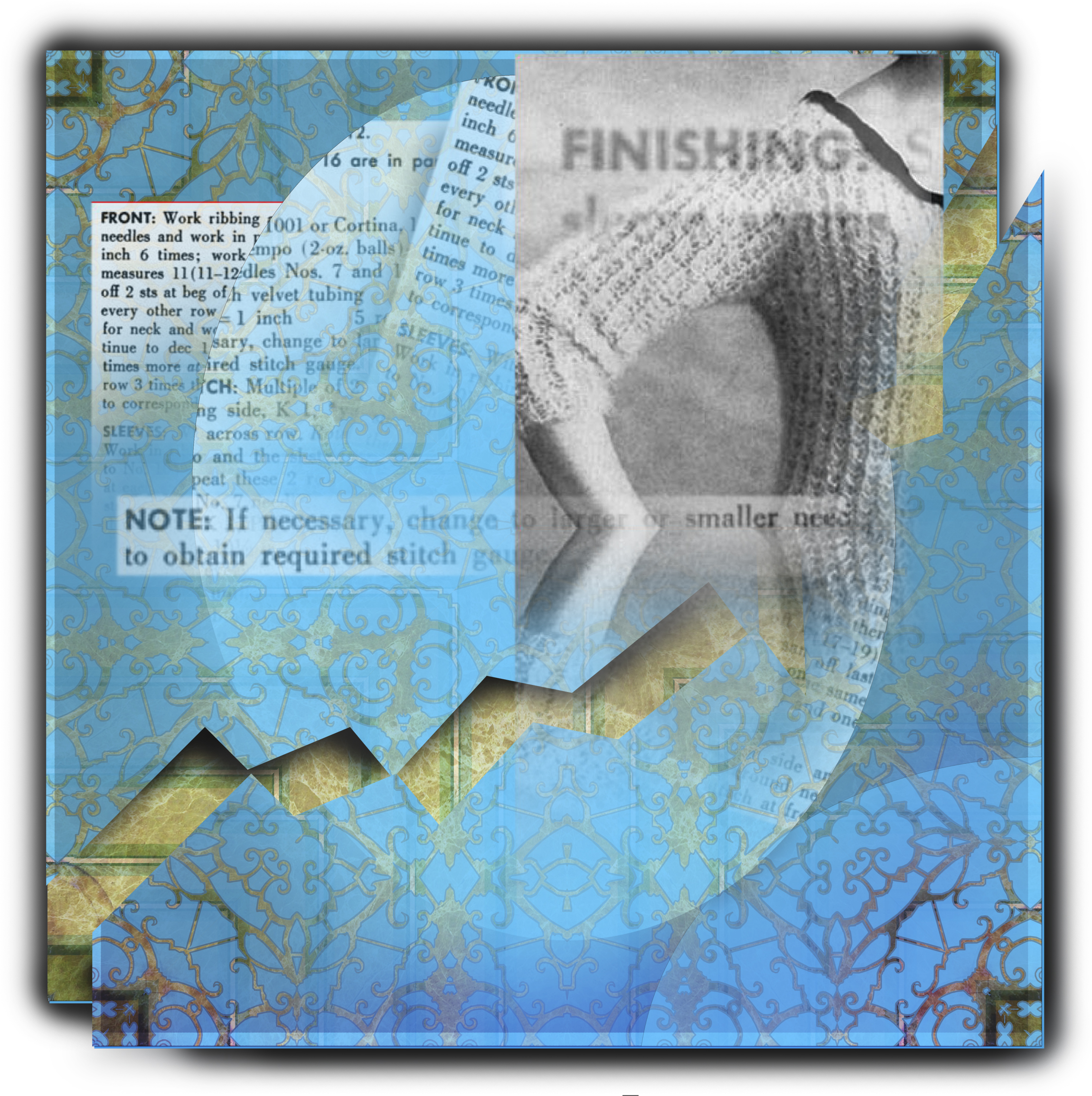
DHB: The artwork done by Morgan Mauer was particularly appropriate. The sweater was being knitted or unraveled. It was changing. It was coming or going. On the other side of whatever was happening it was going to be a different thing.


MA: And finally, what does “recovery” mean to you?

DHB: Recovery is active. I wanted to be rescued which is a passive motion.


MA: Thanks so much for talking with us today, Diane. And for our readers, here are some links to more of Diane’s fine work:

My husband, the Chevette

Feasting

Dental Floss

The Secret to Eternal Life

The Death of Love

An Interview with Dora Malech

Joan Hanna: I so enjoyed both poetry selections, “God Bless Our Mess” and “Cold Weather” in our current issue of r.kv.r.y. “Cold Weather” was more of a prose poem while “GodBless this Mess” used a more traditional poetic line break. Can you tell us a little about how you choose form in your poetry?

Dora Malech:
I’m glad that you liked those poems. I suppose the short answer is that the form chooses the poem. The longer answer is as follows: when I think about “form” and “content” in my poetry and in the poetry that means the most to me as a reader and writer, I can’t help but put quotation marks around those terms because (and I’m certainly not the first nor the last to take this approach) I find it most fruitful to think of them as inseparable, symbiotic elements that create the thing we call the poem. I think that whatever anxieties, confusions, obsessions, and so forth necessitate a poem in the first place also necessitate its formal shape and movements. I like to think of form as a poem’s vital structure, its very body, not the outfit it wears, a decorative afterthought. As such, there’s a lot of give and take between what the poem “is” in my mind and what it “does” on the page and in my mouth and ears and heart throughout my writing process.

There’s a wonderful essay by the poet Kathleen Jamie (“Holding Fast – Truth and Change in Poetry”) in which she talks about the shape-shifting that happens as a poet looks and listens and attempts to let the poem find its “true” form. I love that writing a poem feels like a conversation with the poem itself. With a bit of distance from the poem “Cold Weather,” I can say that perhaps the prose form works for “Cold Weather” because the poem’s materials are so strange and dream-like that a more “out there” form might spiral the poem into a kind of three-ring circus, and perhaps the couplets and long lines of “God Bless Our Mess” reinforce the sense of a routine in which one moves forward but gets nowhere. These comments are, however, as much the comments of a reader as “the writer,” since in the act of writing the poem I move more intuitively. I suppose it’s like dancing or a sport; you learn the moves and practice the moves so that they can be a kind of second nature when you need them.


JH: One of the techniques that really jumps out in your poetry is a delightful use of wordplay. Can you share with us a little about how these word and image connections
make their way into your poetry?

DM: My poems often “accumulate” in my notebook as a jumble of observations, linguistic fragments, and so forth. As the poem starts to find an intuitive kind of shape, those pieces begin to cohere, and the cohesion is initially as much about “senses” (feeling and hearing) as about “sense” (enforcing a meaning). I think that this element of play frees my critical mind somewhat; without it, I would probably browbeat myself out of the poem before it even had a chance to get going. Once a poem gets going, however, it’s really important to me to put pressure on it and make sure that the play isn’t “just” play. I do worry that my own love of language and sound will carry me away, and I’ll end up with a poem that’s falling-down-drunk and can’t form a coherent thought. I think this is why that “sober” revision process is important to me. I kind of have to write on instinct and then step back and let my conscious and critical mind have a go at the poem and then perhaps re-immerse myself. And so on.

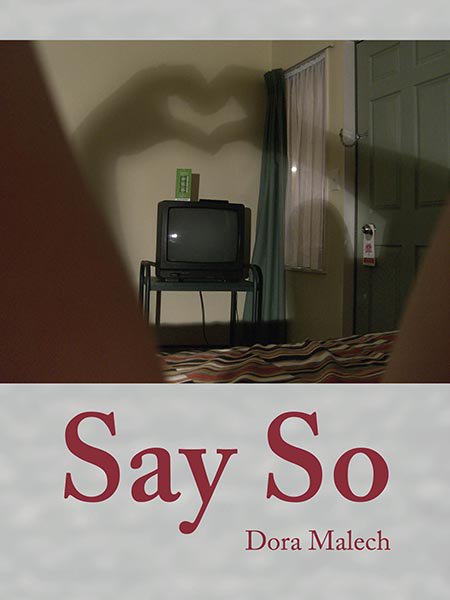
JH: I was so excited to review your poetry collection, Say So published by Cleveland State University Poetry Center, for our current issue. Can you tell us how this book came together? And along a similar line, can you tell us how this differed from your first collection, Shore Ordered Ocean, published by Waywiser Press in 2009?

DM: Your review was an honor. Thank you. Say So and my first collection, Shore Ordered Ocean, are kind of like fraternal twins, in the sense that they’re books with quite different personalities and interests that gestated together. I kept trying to work poems from Say So into earlier drafts of Shore Ordered Ocean, but they wouldn’t play well with the Shore Ordered Ocean poems. They felt more irreverent and playful, more fidgety and wild. At a certain point, I realized I was writing two books. Shore Ordered Ocean was more outward-looking, concerned more with politics and distance of all kinds, whereas Say So was more inward-looking, concerned with language, the mind, the heart, the body, origins, and relationships. These differing thematic concerns naturally manifested in different formal concerns as well. Say So is pretty obsessed with form and a relationship with “the tradition,” but it’s also obsessed with axiom and cliché, the kind of “pre-packaged” language with which we’re bombarded daily. These two push up against each other in Say So, the friction sparking.


JH: Thank you so much for sharing your poetry and giving us a chance to review your book for our readers. Can you share with us what recovery means to you?

DM: I know that my definition of or relationship with any word, let alone a word as packed with cultural significance as “recovery,” will change as my life changes. It will probably change from day to day, even. At this point in history, I hear the word and immediately think of the “economic recovery” we’re in, and the irony of how this “recovery” seems to be shifting into a willful forgetting of lessons learned. It makes the word start to come loose in my mind, as if perhaps this vicious cycle is hidden in plain view in the word itself, contradicting itself: as we “recover” (get better) we “re-cover,” (cover over whatever truths on which we shone some light along the way). Perhaps this is part of why one must call oneself a “recovering” addict, not “recovered.” We must never have the blind hubris to display the “Mission Accomplished” banner on the deck of the aircraft carrier, so to speak. I suppose we are always doing, never done.

To learn more about Dora Malech and her exquisite poetry, visit the following links:

An excellent video of Dora reading at Prarie Lights.

Purchase her book Say So.

Visit her website.

PBS Art Beat

And read a brand new poem here.