Interview with Maureen Lougen


Victor Juhasz image


Hunter Campbell: Congratulations on being published in rkvry!

Maureen Lougen:
Thanks. It’s great (and surprising) to be among such outstanding company in such a wonderful journal.


HC: We’ve briefly discussed writing in the abstract before, but not in the specific, so let me get right to it: your story God’s Forgottens is a compact tale of love and redemption. Where did you get the idea for it?

ML:
Honestly, I have no idea, other than it jumped off of the Rolodex of story ideas in my brain one day and refused to be ignored. Most of my stories and novels are about
something terrible happening to a person and they try and hide from it, and someone else from that person’s life finds them wherever they are, whether they’re hiding internally or externally, and brings them back into life. So, this was just one more cog in that wheel. Or – one more entry in that Rolodex.


HC: It’s a spare telling, very minimalistic in details and dialogue. Was that a conscious choice or just the way it came out?

ML:
I’m not sure that anything I write is a conscious choice. I watched the story take place through the bartender’s eyes and listened to him describe it, and he’s apparently not one to waste words. One thing I’ve learned in all my long years of writing – the reader is much smarter than I am and can fill in all those bits of detail much better than I ever could.


HC: Did you notice that nobody in the story actually has a name?

ML:
Caught that, did you? Yeah, the narrator, the bartender doesn’t know anybody’s name. He’s a good guy and a better bartender and he knows his clientele. He knows they don’t need or even want anybody knowing their names.


HC: Do you know their names?

ML: Oh, yeah. I mean, it took me writing a couple more chapters, but I found out what their names are. Most of them anyway.


HC: Where did you get the title for the story?

ML: I stole it from the narrator’s dialogue. When I heard him describing the patrons as “God’s Forgottens” I knew that had to be the title.


HC: You stole it from the dialogue? Isn’t that your dialogue? You wrote it, didn’t you?

ML: Honestly? No. Well, yes. But – I don’t create dialogue as much as I listen to the characters talking and then just write down what I hear. I didn’t hunt around in my brain for a name for the narrator to apply to his patrons; I just listened to him describing the scene and that’s the name he came up with. Most of the stories I write, it’s just a matter of me watching the scene unfold and listening to the characters talk and just writing it down.


HC: He has an interesting “voice”, the bartender. Do you know someone who talks that way, or did you make that up?

ML: I think it’s half Mater from the Cars movie (we watch that a lot at our house…) and half I don’t even know what. It’s just how I heard him talking in my head. If I can hear a character’s voice clearly, my job is half over. I find it hard if not impossible to write a character whose voice I can’t hear.


HC:
For some reason, the line about Godzilla coming into the bar off the lightning storm really caught me, it’s a great detail.

ML: Thanks. I live half a block from the shores of Lake Ontario, and one night last year there was a dry lightning storm and I took my son down to the end of our street to watch it over the lake. Some clouds were bluish, some were reddish, and as the lightning jumped from one cloud to another, the phrase “Heaven & Hell playing keep away” came to me, and I knew I had to use it in a story. So into the Rolodex it went until I could put it into this story.


HC:
You started writing when you were still in single digits. Do you remember the first story you ever wrote?

ML:
I don’t remember the story itself, but I distinctly remember the thrill I got when I wrote it down and then realized that I could go back and read it over and over again. I remember thinking that that was the best thing ever. I was hooked.


HC: Your son Joshua recently turned 10. Did becoming a Mom change your writing?

ML:
I don’t think there’s a single thing that becoming a Mom didn’t change. Joshua is the single biggest influence in my life. He’s outgoing and brilliant and charming and totally oblivious to the effect he has on people. How people are just drawn to him. A  friend of mine said that having Joshua is the best thing that happened to me because something as simple as going to the store isn’t just going to the store, it’s having to stop to talk to fifty people. Because – no surprise since I’m a writer – left to my own devices, I am not a people person. I’m an I’ll-sit-in-the-corner-and-write-while-you-go-somewhere-else-and-not-bother-me person. I’ve always been that way, even at family functions. But with Joshua, my life has opened up to countless new situations and meeting people by the dozens. I don’t know if that’s changed my writing per se, but it has definitely changed my life.


HC: What’s the hardest thing about writing?

ML: Having to stop writing to do something else. Anything else. If I have a minute to think, I’m thinking about writing. It’s like putting a videotape in, watching a movie play, “watching” my stories play out, tweaking them, polishing them, writing them even if I’m not at that moment writing them down. These days though, I’m more likely than not to have my attention called away every other minute by my son, “Mom! Guess what?!” and “Mom – look! Mom! Watch!” and “Mom! C’mere!” I love and adore my son. He’s the best thing that ever happened to me. It’s just when I’m in my head writing and I have to switch gears to focus on something else, it’s like stopping a tape and having to rewind to get back where I was.


HC:
What was the hardest thing about writing this story?

ML:
When I found out I was going to be published, it was the middle of the night, and I had no one to tell! Joshua and I were in Nashville for a convention, and it was after midnight when we got back to the room and Joshua went to sleep and I fired up my laptop to check my email. There was the email from Mary saying she wanted to publish the story – and no one I wanted to call was awake to share the news with. I had to wait until the next day. That was incredibly hard on my poor, fragile ego.


HC: Is your family supportive of your writing?

ML:
Very. Especially my sister Mare. Every Christmas and birthday and vacation that involves souvenirs, she makes sure to keep me well-supplied with pens and paper. She listens to me when I rattle on about my characters like they’re real people I actually know, and she either knows or knows how to find out the answer to most of the questions I ever pose to her when I’m stuck in a spot in a story. Actually, now that I think about it, she probably would’ve been okay being rudely awakened at 2am to hear my good news.


HC:
What are you working on these days?

ML:
Lots of things, unfortunately. It’s hard for me to single out one thing to work on exclusively until it’s done. I usually have a dozen stories going all at once. I don’t know if that’s fear of failure or fear of success. Or adult attention deficit disorder. But – amongst the many things I’m working on, I’m trying to finish the next 2 chapters of God’s Forgottens and get them ready for public consumption. I also have some stories for sale on Amazon and I’m working on their next chapters as well.


HC: What stories do you have on Amazon?

ML: There are three so far. The Badge, which is set in 1852 Texas. A Scatter of Bones, which is set at the end of the Civil War. And The Best, which somehow managed to actually have a modern day setting, go figure.


HC: Do they all have the theme of recovery?

ML:
They do. Most of my stories do. Well, The Badge not so much. A Scatter of Bones is about a young man returning home from a Confederate prisoner of war camp and trying to figure out where he fits into his family again. The Best is about a motherless little boy who’s supposed to write a paper for school about what moms do best. The Badge is about a teenage boy who has to bring in the man who shot and wounded his father. There’s recovery in a broad sense in the first two stories, but not so much in the third. You know, until I write the sequel.


HC:
Are most of your stories part of a larger series?

ML:
Apparently. I never plan it that way, but after a story is done, or even while I’m in the middle of it, something else in the characters’ lives will jump up into my awareness and I either start working on it right then, or it goes into the Rolodex to be worked on later. It just doesn’t stop.


HC: What does “recovery” mean to you?

ML: In simplest terms – it’s the healing after the horror.

Interview with Tania Hershman

Tania Hershman

Tania Hershman: I decided that I was going to interview myself and ask the questions I’d always wanted to ask or been scared someone would ask. How does that sound?

Tania Hershman: That sounds fine, fire away.


TH: So, Dissolving, what’s that all about? Is it even a story?

TH: Ha! Well, I never explain my stories, especially the really tiny ones, because they are really whatever the reader wants them to be.

TH: Oh come on, you must know what it means! Why don’t you want to tell us?

TH: Look, there’s a woman, there’s a lover, he’s not answering, end of story. It’s not one of my more cryptic pieces.

TH: It is a bit, well, like a poem, isn’t it, maybe? Or something else? Is it a poem? What is it?

TH: Another question I’d rather not answer.

TH: You’re an annoying interviewee.

TH: You’re fairly annoying too. Look, does it matter if it’s called a short short story, flash fiction, microfiction, a prose poem? It’s all just writing, the rest are labels. I’m delighted that r.kv.r.y liked it enough to want to publish it, that’s the main thing, that it’s an arrangement of words that spoke to someone else.

TH: Okay, fine. How does it fit into the r.kv.r.y “shorts on survival” section?

TH: This is her way of surviving a relationship that she feels is verging on the imaginary. She gets drunk, she does something she’ll probably regret, but something she needs to do. I think we all know that feeling. I think we all know what it is like to dissolve, to come apart into our constituent atoms. For me, this combines tragedy with hope. She will survive, she may be altered but she is not defeated.


TH: That’s nice. I like that. Well said. Do you think you write about survival a lot?

TH: Yes, thinking about it, I probably do. Surviving failed love, surviving difficult parents, surviving unpleasant children, surviving society’s expectations. Hmm, yup, a lot of my stories deal with it, in some way. Actually, I think that for me, and I suspect for many writers, writing is survival. This is me playing out scenarios, testing to see what might work, what might not, like “thought experiments” in science, where you don’t do the actual experiment, you think it. I also believe that the role of stories is to help us survive. The first person who told the story about almost being eaten by a woolly mammoth, that would help everyone else avoid the same fate. But the story had/has to be gripping enough so that people listen. I think “story” is part of our highly-evolved survival strategy.

TH: Every kind of story?

TH: Look, I’m no academic, I don’t have a well-thought-out theory on this, but I do wonder why society loves stories, in all forms – TV, films, books etc… What do we get from it? We get to put ourselves in others’ shoes, and maybe, on a purely evolutionary level, this helps us get by in the world, make sense of the world, of experiences we haven’t had yet. Oy, I sound so serious!


TH: Tell me something funny.

TH: I’m really bad at jokes.

TH: Believe me, I know that. Okay, last thing: did I hear you have a book coming out?

TH: You heard right, I do – My Mother Was An Upright Piano: Fictions, will be published in May 2012 by Tangent Books and will contain 55 very short fictions, including Dissolving.


TH: “Fictions”, what does that mean? Why not “short stories”?

TH: I feel like even calling them “short stories” is a label. The one thing I can say about them is that they are fiction. Definitely. I thought I’d leave the labelling to someone else!

TH: I do think sometimes you’re a bit crazy.

TH: That’s charming. Thanks. And thanks for having me. Next time, I’ll get a better interviewer.

Interview with Patrick Cook

Patrick Cook

Joan Hanna: Patrick, we were thrilled to have your essay The End of the War as part of our military and war themed issue. One of the things that struck me while reading this piece was the correlation between your time in Vietnam and the death of your mother. Can you share with our readers how these two incidents came together in this story?

Patrick Cook: Thanks for this opportunity, Joan. I don’t get published so often, so this is a big thrill. Of course the surface connection between my time as a hospital corpsman on the USS Sanctuary and my mother’s death is that these experiences were both nursing. The more important connection, though, is that they were both times of profound emotional involvement. I remember standing on the deck of the Sanctuary, looking at one of the glorious tropical sunsets. The way the light shone through the clouds, glowing dark red, reminded me of the deep exit wounds caused by an AK 47 round through a patient’s thigh. I had to turn away from the sunset. Too many /images like that were burned into my brain.

Incidents in my mom’s care, even things that weren’t that similar, inevitably reminded me of my time in Vietnam. Long watches in the night, seeing her in pain even through the morphine—the connections kept bubbling up. I felt the emotions again, remembered the scenes again.


JH: I love the parallels and contrasts in your story. There is a tactile sense of responsibility between the two memories. Can you elaborate a little on how you think that incident in Vietnam may have affected your response to your mother’s illness?

PC: I’m glad you picked up on the sense of responsibility that runs through the essay. Nursing is very important in the healing of wounded patients. For the first time in my life, things I did were truly vital, actions that could mean life or death. I wasn’t that young—I turned 24 that year—but it was the first time I had to act like an adult. In the same way, nursing my mother was a maturing event. Her death meant not only that she depended on me, but also that I could no longer depend on her. Again, it was time for another step into maturity, into responsibility.


JH: There are often conflicting emotions with siblings when a parent is ill and you illustrate this well in your story. You also have the added layer of your response to this incident shadowed by your experiences in Vietnam. Do you think your siblings understood how your service in Vietnam affected your reaction to your mother’s illness even though it was so many years later?

PC: We were concentrating on helping Mom get through this. I don’t think my extra private pain came into the picture. Actually, I hope it didn’t. I was impressed by my sisters-in-law, who demonstrated their kindness and love so clearly, by my brothers and my sister, who cooperated so well. I think we were all trying to be extra careful, because we knew this was one of those times when misunderstandings arise, and cause pain for years. One more thing to recover from, and we didn’t need that.

JH: Sometimes we feel that we are able to handle trauma with a certain sense of detachment because of experiences we have had. For instance, someone with medical training could be considered somewhat of an expert and is expected to handle a personal trauma more easily. Your story illustrates that our experiences don’t always give us a strong foundation for dealing with trauma in our own lives. Can you describe how personal trauma affects you as a writer?

PC: I’ll make one of those blanket statements, which is almost entirely true. Personal trauma is the only reason I write—to express a pain that readers can understand and recognize in their own lives. This is true even of my humor pieces. Yes, I write humor, too. It’s harder than a straight narrative. But even in a funny piece, my account of frustration with bureaucrats or my garden is ultimately based on some kind of pain.


JH: Do you have any other stories, publications or websites that you would like to share with our readers?

PC: Some years ago, I published a piece on the very different circumstances of my younger brother’s death. You can find “The Mayor of Gardenville.” at www.conteonline.net. For the funny stuff, go to www.fonsandporter.com for “Laments of a Quilter’s husband.”


JH: Patrick, thank you for sharing your story with our readers. We were delighted to have you as part of our winter issue and we especially thank you for sharing such personal thoughts and feelings about your essay. Just one final question: could you share with our readers what recovery means to you?

PC: I’ve had a lot of opportunities to recover. I handled some of them better than others. I’ve been sober for twenty-six years now. I was able to stop smoking. I don’t get a sinking feeling when I hear a helicopter any more. Most of all, I’m able to use traumatic experiences to make a kind of art. That helps a lot in my recovery. Thanks again for publishing my essay, and for giving me the opportunity to talk about it.

Interview with Tracy Crow

Tracy Crow

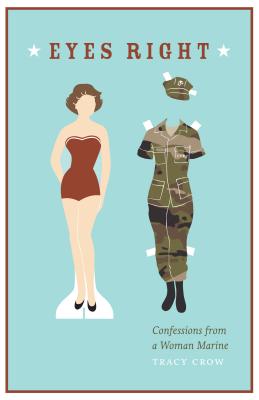
Mary Akers: Congratulations on the publication of your memoir Eyes Right: Confessions from a Woman Marine! And thanks so much for sharing an excerpt with us. Can you tell our readers a little bit about what the publication process was like for you? I know the journey was a long and winding one, so whatever you feel you want to share is fine.

Tracy Crow: Long and winding is right. I started the book ten years ago, worked on various drafts for a few years, and put it away when my agent decided the timing wasn’t good. He thought the flood of memoirs from Iraq and Afghanistan would overshadow a book about the 1980s. He told me to write a novel. But when he abruptly left the business a couple of years later, I contacted the University of Nebraska Press, and reminded them they’d had interest before I signed with my agent. They moved quickly on it. Of course, the publication process of revisions, copy editing, and book design takes a long time. In my case, another two years.


MA: What sort of things did you learn during your time as a US Marine that you find have helped you as a writer?

TC: Self-motivation. Tenacity. How to take (figurative) punch after punch in the gut – I’m referring to rejection – and become stronger for it.


MA: Do you have any advice for writers who may be beginning to feel beat down by the process of trying to get published?

TC:
One of the joys of seeing a book reach publication is the journey of getting it there. I don’t say this because, okay, it’s happened for me now, so I can be glib. Sure, for some, the journey is shorter than for others. Who can say why? I can say it’s not always because one book is better written than another. For whatever strange and mysterious reason, the journey varies. Along the way, if we’re paying attention, we’re learning a precious lot about ourselves – like what we’re willing to sacrifice, or not, for success. When success didn’t come as quickly as I wanted, I got a little angry. When I got a little angry, I sent out more query letters, revised again and again, sent out more query letters. If I have any advice, it’s to get a little angry. Nobody but you is really going to care whether you ever publish a book, so you have to care a great deal.


MA: I’ve been thinking a lot about success lately, and what that word means. I’ve decided that every writer has their own notion of what success looks like for them. What do you see in your heart-of-hearts visualization of success?

TC: A bit cliché, maybe, but success for me is about feeling comfortable in my own skin. I’m 53, and not there yet.


MA: As a writer of memoir, I’m sure you have wrestled with the notion of capital-T Truth. What side of that divide do you come down on? That truth is slippery and changeable and our own, subjective truths are where Truth lies? Or that verifiable, factual Truth is an attainable and desirable goal?

TC: When you publish memoir, you enter into a contract with your readers that the material is grounded in truth, and for me that truth is verifiable fact. Except for memory. Memory is the slippery slope. I didn’t show EYES RIGHT to my mother, brother, or daughter until it was off to the press because I didn’t want to be distracted by protests of their memories. (Fortunately, there were none.) However, I’m firm about not allowing myself or my memoir students to fabricate people or events to suit a version of the truth, or for art. I do encourage memoirists to explore their own memories, because what we remember and don’t remember are equally telling.


MA:Your memoir examines various themes associated with military life in the 1980s. What about EYES RIGHT sets it apart from more recent memoirs that address experiences in war?

TC: Every generation of women for the past 120 years has broken ground in some significant way. Certainly today’s generation is breaking ground. But ours was no different. Here’s why: we were the first women allowed to remain in the military after we became pregnant. Just think, every woman who came before us had been forced to choose between motherhood or military career. Thanks to a change in regulations just before I joined in 1977, my generation could have both, and this reinforced the 1980s’ mantra, you-can-have-it-all. But we were an anomaly. Our commanders, including women who had chosen career over motherhood, were often hostile, or at the least baffled about how to treat a pregnant woman in uniform. Their hostility compelled us to push our physical and emotional limits, and for many of us, certainly for me, the need to prove we still belonged created disastrous life-changing consequences. While Eyes Right is my story, I soon realized that nothing had been written about my generation, and the story needed to be told. Thanks to my generation, today’s military mom, for better or for worse, serves in places like Iraq and Afghanistan.


MA: And finally, what does “recovery” mean to you?

TC: Being forever open to self-reflection. Being truthful about motive, which fascinates, even frightens me at times.

And for our readers, here’s a write-up about the book and a link to purchase.

Purchase the book!

“Just out of high school in 1977, her personal life already a mess, Tracy Crow thought the Marines might straighten her out. And sure enough, in the Corps she became a respected public affairs officer and military journalist—one day covering tank maneuvers or beach assaults, the next interviewing the secretary of the navy. But success didn’t come without a price.

When Crow pledged herself to God, Corps, and Country, women Marines were still a rarity, and gender inequality and harassment were rampant. Determined to prove she belonged, Crow always put her career first—even when, after two miscarriages and a stillborn child, her marriage to another Marine officer began to deteriorate. And when her affair with a prominent general was exposed—and both were threatened with court-martial—Crow was forced to re-evaluate her loyalty to the Marines, her career, and her family.

Eyes Right is Crow’s story. A clear-eyed self-portrait of a troubled teen bootstrapping her way out of a world of alcoholism and domestic violence, it is also a rare inside look at the Marines from a woman’s perspective. Her memoir, which includes two Pushcart Prize–nominated essays, evokes the challenges of being a woman and a Marine with immediacy and clarity, and in the process reveals how much Crow’s generation did for today’s military women, and at what cost.”


Tracy Crow is an assistant professor of creative writing at Eckerd College in St. Petersburg, Florida, and the nonfiction editor of Prime Number magazine. Her essays and short stories have appeared in a number of literary journals and been nominated for three Pushcart Prizes. Under the pen name Carver Greene, Crow published the conspiracy thriller An Unlawful Order, the first in a new series to feature a military heroine.

Interview with Benjamin Buchholz

Ben Buchholz

Mary Akers: Hi, Ben. Thanks for agreeing to talk with me today. I just loved your story “Runner.” We’re honored to have it as part of this issue. I’ve been reading through some of your online work (links follow the interview, below) and I would love to talk with you about form for just a bit. You have some very unusual forms for your short stories. How do you decide on the best shape for a short story and do you find inspiration for form in the work of any particular authors?

Benjamin Buchholz: Well, Kerouac hit me like a bombshell about five years ago.  And, by bombshell, I mean that with a little bit of a negative connotation insofar as it set me back in the writing of longer work (I tried, unsuccessfully, to place two full-length stream-of-conciousness novels) and had to relearn much of the art of writing-under-control in order to produce One Hundred and One Nights. Although, come to think of it, OHON also plays with form, albeit in a longer and slower way, taking the framing device from 1001 Nights and using it as a starting point until it eventually drops away as the narrator evolves (or devolves) inside the story.  Now I find that short fiction often gives me an outlet to just riff, to let that wildness and associative fun explode and go where it may. One must adhere to Poe’s dictum, though, that every word — and also every structure — ‘tells’ in a short story. I think that is the older denotation of ‘tell’ too, not the ‘show’ vs. ‘tell’ debate of modern writers’ clinics but the telling of churchbell, resonance. Every word and every structure is precious and should therefore be applied to bring about a state of feeling or understanding in a reader. I hope the structures that some of my stories take contribute to that feeling and understanding. I’m not sure I conciously decide on form, certainly not at the outset of writing. Maybe afterwards, if something strikes me as worthwhile, as contributing to the overall expression, then I’ll add or sharpen a form.


MA: What is it about the use of numbering in your fiction that speaks to you? I find it fascinating. Is it the ordering? Is it the juxtaposition of two ways of making meaning out of a crazy world: letters and numbers? Is it driven by your character’s mind? Tell me, please, what’s up with Ben Buchholz and numbers? 🙂

BB: Numbers make the mind stop and shift into a different mode. They break the stream of scansion and signify something, in different stories and in different places different somethings. A lot of my characters struggle with various amounts of war-induced suffering and often are, like Bill Murray’s “What about Bob?,” trying to piece just little simple snippets of their lives back together again, one thing at a time, one thing after the next, baby steps to the door. Numbers show that chronology and that simple in-the-now fixation that is necessary for a lot of people to move through shattered lives. Numbers add chronicity to a tale and they do it in a way that is incremental rather than gradual, jerky, freeze-frame.  They help me, sometimes, delimit and parse a story into only its essentials.


MA: I love your use of stream-of-consciousness and inventive word play. I was especially moved by “Mixtape for Annie Purpose” which includes the passage: “…no, hands out, show me, and the circus trick, gone, gone, headshots, all of them, in series like a photobooth confessional, palms up and empty, he’d seen her eyes, flashpoint, the facsimile of them, blank, folded in a motion into the inner crease, into the sleeve, nowhere and free and they were his, all his, on his heel, saluting, out and down the dustmote hall, clatter-waxed footfall, not knowing who but wanting, yes” That clatter-waxed footfall just absolutely sends me. Where do these onomatopoetic word-mixes come from? Do you wake up at night and have to write things down that bubble up into your subconscious?

BB: The writing doesn’t happen unless I make myself write. So, nothing bubbles of its own in the middle of the night.  But, once it starts very often it doesn’t stop until its done (or I’m exhausted) like a possession. If I’m writing in the SOC mode then there is a big alliterative suggestion that helps move the sentences from word to word and sometimes the ‘graphs from sentence to sentence. I also find a lot of tension in word choices, where one word can be made to say two things and leave two impressions in a reader’s mind, thereby confusing, troubling, wrapping the reader into a state they might not otherwise experience. That one word then becoming, later, a source for follow-up impressions of the same dual nature. “Clatter-waxed” is on the precise and onomatopoetic side of this equation, whereas when you look at something earlier in that same sentence, like “headshots . . . confessional” I hope the reader has to back-up, break scansion, reread, and decide whether to prefer the image of the photobooth, or of the flashpoint, trigger-like, guilt-ridden undertone of an action this narrator might have done, an action in the background of his deliberations and regrets. Mixtape, especially, rewards additional close reading of this sort. By the way, these photos are somewhat autobiographical (isn’t everything?) because the first time I saw my wife it was when I pulled a strip of photobooth headshots from a garbage can in the building where she and I both served as ROTC cadets. She was new. I found the photos, took them, kept them in the drawer of my desk. Love at first sight.

MA: I love that. What a wonderful story.

Hey, congratulations on the publication of One Hundred and One Nights! The cover is fantastic. I can’t wait to peek inside. Can you tell us a little bit about what the process of publication was like for you?

BB: Thanks! Outside of the massive Toyota! high kicking Irish-jigging moments involved in pitching and having the work accepted by Little, Brown, the process itself involved a lot of very careful and prudent and wise reading, both close and thematic, first by my agent, Jon Sternfeld, then my editor Vanessa Kehren, and then the copyeditors at Little, Brown. I can’t say how much this improved the novel, changed it, massaged it, reined it in. And I have to say that being open to revision on micro and macro levels is important for any author.  Striking a balance between preserving an artistic vision and making a manuscript really work on multiple levels (as I hope One Hundred and One Nights actually does) is tough but it is best, in my opinion, especially for a new author, to put aside ideas of ‘artistic vision’ and trust the professionals teaming with you on the project. I was in Oman for most of this time, so the work occured long-distance, through the miracle of our modern communication networks. Due to the time-zone change and the fact that the Omani weekend is Thursday-Friday, the overlap in working hours was strange to deal with! Overall, a really great experience and one I hope to duplicate with my next novel.


MA: Have you been doing readings for the book? What reaction do you get from your audiences? Do veterans come up to you to talk and tell you their stories?

BB: No readings so far, although I’ve done a number of interviews. I think I’ll have some readings in the future, including one at Princeton’s Labyrinth Bookstore in April. For my first non-fiction book “Private Soldiers” I was priveleged to address a number of veterans groups, including a reunion of the WWII veterans from a unit in my brigade. It was fabulous to talk with them about the enduring similarities of war and the startling contrasts between how they fought and how we fought (no email for them, no video chat, no phone calls home, no mid-tour leave to visit families in America!) Also, at one such reading for “Private Soldiers” the father of one of my soldiers from the Iraq mission approached me to say that he appreciated the book but that, as a straight history, it lacked insight into the emotional aspect of war. That comment stuck in my mind and helped me when I started writing One Hundred and One Nights.


MA: And finally, what does “recovery” mean to you?

BB: I think there must be some sort of imaginative longing embedded in the word ‘recovery’ — a sort of grass-is-greener-on-the-other-side falsehood. I really believe that there isn’t any point in living in the past, except insofar as it improves our present, teaching us, allowing us to learn and be better people. Likewise for the future.  So, to recover something implies that there was, at one time, a better state than the ‘now’ to which we are all, all the time and without exception, immediately subject to.  Maybe a person really enjoyed a better time, a better life. Maybe they only imagine it was better. Either way, it does not improve the present. A person — soldier, addict, bereaved, ill, wounded — might be changed by the specific instances of war, loss, longing, need or physical incapacity that occur in their lives, but still that person cannot live in the past.  It’s now or never, always.  Whatever we were we will never be again. We change.  Eventually our time runs out. As Coca-Cola’s ubiquitous branding proclaims, there is only one way to go, recovering or not, and that is, quite simply: “Enjoy!”


MA: Brilliant. I never once thought of the notion of recovery in that light. You just opened up my mind and let a little light in. Thank you.

Purchase: One Hundred and One Nights

Here’s a great review at The Washington Post.

And some links to stories with the same character in them:

“Mixtape for Annie Purpose” at Storyglossia

“New Joe” at Storyglossia

“Unpacking Sonny” in Alice Blue Review

“Oedipus Simplex” in Mad Hatters Review (R.I.P. to the extraordinary Carol Novack, editor and champion of everything experimental and edgy.)

Interview with Heather Harris

Heather Harris

Joan Hanna: We were delighted to have your poem, The Miracle, included in our January issue of r.kv.r.y., especially since it was our war/military themed issue. What did you think of the illustration we chose for your poem?

Heather Harris: Thank you so much!  I’m honored my poem was chosen for this issue, and to have my work included with so many great pieces.  The illustration chosen to go with The Miracle is striking.  It goes well with the /images/events in the first stanza, which are more about what a miracle is expected to be, as opposed to what you usually end up getting.  I like the depiction of ritual, as well, since it mirrors an ancient version of what’s going on in the poem: a call for divine intervention.   The fact that the image is originally from a children’s book just makes sense, the events that inspired The Miracle took place when I was very young, and I tried to write the poem with my feelings from back then at its core.

JH: There were some stunning /images in your poem. Can you talk a little about the specific incident or influences that may have inspired your poem?

HH: The Miracle is about two specific events, but I really don’t want to go into too much detail for fear of ruining the poem for someone else.  I will say the main concept of the piece is that, while there are bad things that shouldn’t happen but do, there are also bad things that should happen but don’t.  If there was a chart somewhere maybe you could study it to understand why things are happening, and give a couple of your lucky breaks to someone else.  Unfortunately, no one has that privilege as of yet, so we just have to make our peace with everything that does and doesn’t happen.

A lot of the imagery in the poem, the outstretched hands, bowed heads, and stained glass, come from having grown up in church.  Church can be a comforting, protective environment, and yet that stained glass is shattered, and what those outstretched hands are holding has fallen apart.  In some ways I suppose The Miracle is about losing your sense of safety in a world where things are beyond your understanding or control.  As you grow up you realize things don’t always go how they should, and you spend the rest of your life coming to terms with that.


JH: I can appreciate wanting to keep the incidents as inspiration and allowing the poem to stand on its own, which it absolutely does. Can you talk a little about some of your favorite poets and how you think they may have influenced your work?

HH: I’ve always appreciated anyone who could take every day things and make them interesting.  For example, Tom Leonard is a Scottish poet who writes almost exclusively on the mundane, “the case for lower case” being my personal favorite of his.  Shel Silverstein is another good transformer of nothing into something.  When I was growing up I read his books over and over again, fascinated by how he made things like your refrigerator and the sidewalks seem full of potential.  What I learned from writers like this is that the most powerful words are simple ones, and the most striking /images are common, so long as you take care to look at them properly.


JH: These are very interesting influences. I love this idea that the “most powerful words are the simple ones” it says so much about how you approach your writing. Would you like to share links to either your website or other publications with our readers?

HH: I have a blog at forniceties.blogspot.com, which has a list of my publications, along with all sorts of other little tidbits about life, the universe, and everything.


JH: Once again, Heather, thank you so much for sharing your lovely poem and insights with our readers. Just one final question: What does recovery mean to you?

HH: Well thank you for calling my poem lovely, and while I’m not sure I’ve shared too much insight with your readers, I hope they at least enjoy our interview.  To me the biggest part of recovery is accepting that what has happened cannot be changed.  Thinking about what could or should have been holds you back from moving forward, and generates even more pain about how things currently are.  You have to find that balance between remembrance and regret, which is difficult, and might not ever be mastered completely.

Introducing Victor Juhasz

We are honored and absolutely thrilled to announce that the guest illustrator for the January 2012 issue of r.kv.r.y. will be none other than the fabulous Victor Juhasz. Work of his caliber, generously shared with us, along with his time spent personally reading each piece is a great gift for both our writers and our readers. I can’t say enough about how excited we are to have him adopt our January, military-themed issue. I am so looking forward to sharing this whole fabulous collaboration with the world. In the meantime, here is a small taste of his work to whet your appetite.

Juhasz artwork

I’m a huge fan of Victor’s whole body of work, but I especially admire his military sketches and watercolors in which he manages to depict a great sense of movement and emotion, primarily using the human figure in different postures and attitudes. (No easy feat!) And I’m not alone in appreciating his deft hand and eye–his artwork has appeared in such major national venues as TIME, Newsweek, Rolling Stone, Esquire, GQ, The new York Times, The Washington Post, and many others.

Victor Juhasz

Victor is also a member of the US Air Force Art Program in conjunction with The Society of Illustrators and his reportorial drawings and watercolors of military training and combat exercises are part of the permanent collection at the Pentagon in Washington, DC. Victor was part of a USO tour, Operation LINKS, of bases in Kuwait and Iraq during Thanksgiving week, 2008, accompanying David Feherty and other golf pros, drawing soldiers and Marines, and sending the originals to family members before Christmas. He will be doing the same in the coming week. For Victor Juhasz and his support of the troops, I give thanks.

Juhasz drawing

You can learn more about Victor’s fine artwork at his website and view slideshows of his remarkable paintings and drawings.

Interview with Anne Leigh Parrish

Anne Leigh Parrish

Mary Akers: Hi, Anne. Thanks for agreeing to speak with us today. I loved your short story “The Keeper of the Truth.” It’s so raw and basic–that need we all have to save our loved ones from harm, even when the harm being done to them is coming from inside their own minds and bodies. It’s a helpless, tragic feeling when we find out that we can’t actually help, or that our “helping” may even have done more harm than good. The last few lines of the story I found especially moving:

Maybe that’s what she was best at – sitting and watching. It didn’t really matter. There were no visionaries, or special spirits, or gifted hearts. Only people who broke the rules. And others who covered their nakedness, kept them safe, and loved them so blindly that they never grew up or improved in any way.”

I’m curious, what life experiences did you draw on to capture that helpless feeling so well in The Keeper of the Truth?

Anne Leigh Parrish: I’ve known a lot of people who were compromised by personal weakness. Of course, to a certain extent, we all are, but I mean people who really can’t rise above their neediness and the impulse to escape. Sadly, the person who comes to mind was my father’s second wife (now deceased). She had a terrible drinking problem that my father sometimes acknowledged, and most of time enabled. He had this concept of “controlled drinking,” where you could limit your intake to a prescribed amount every day. It never worked.


MA: I like the title you chose for this piece. I think a lot about Truth (capital T) and what it is at its core, as well as how others define it, loosely or rigidly. I see an exploration of Truth in your story, especially in regards to who “owns” it…and/or “keeps” it and what our personal obligations are to it. Which sister’s truth is the real truth? Does Psychic Gwen offer Emily a truer truth? If we each “own” our own truths, are we obligated to accept another’s version of truth, no matter how skewed it appears to us? I’m not asking you to directly answer these questions, just throwing them out there to show my own thoughts after reading your fine story. But here’s the question I’ll put to you: Did you set out to make this piece an exploration of Truth?

ALP:
I set out to make this a story of being blind to the truth, while at the same time keeping it, or knowing it, I should say. How truth can live inside a person and be ignored or dismissed. Truth shows up unexpectedly, in the form of a weary acceptance of a situation that shows no sign of improving, only of going on the way it always has.


MA: What other themes (besides Truth) do you think run through this story? How about themes that run through your work as a whole?

ALP: Loneliness runs through the story, primarily Emily’s. I think if she weren’t lonely, she wouldn’t tolerate her sister’s excesses so easily. Not that her tolerance comes easily, but she’s used to it, to the roller coaster ride it causes. Overall, I think truth is a theme that runs through my work, along with the constant struggle to accept or improve one’s circumstances in life.

Book cover

MA: Speaking of your work as a whole, the cover of your recently released collection of short fiction (All the Roads That Lead from Home, Press 53) is gorgeous! Could you describe the process of finding and deciding on the right cover image for the book?

ALP: I give all credit for that to my publisher, Kevin Morgan Watson. I’d like to add that when I saw the photograph, I thought at once how much it evoked my own memories of where so many of the collection’s stories are set, in upstate New York. Imagine how surprised I was to learn, after I contacted the photographer, that she’s from Puyallup, Washington, just down the road (more or less) from where I live in Seattle.


MA: I’m looking forward to reading your collection. I was especially taken with the blurb from C. Michael Curtis, which reads in part,

…Parrish writes with painful clarity about marriages turned sour, children at war with their parents, women drifting from one damaging relationship to another, and about unexpected acts of generosity—an impoverished woman giving her battered piano to a priest who had befriended her, a schoolgirl who bribes a boy to pretend an interest in an overweight classmate, then finds that her kindness has disastrous consequences. These are potent and artful stories, from a writer who warrants attentive reading.”

 That’s a wonderful description. Do you feel like he picked up on the core of what you write about? What would you most like to see a reader “take away” from a reading of your book?


ALP:
That it’s possible to make better choices, or to at least to see and appreciate the failure of earlier choices. Also that redemption comes through patience and understanding.

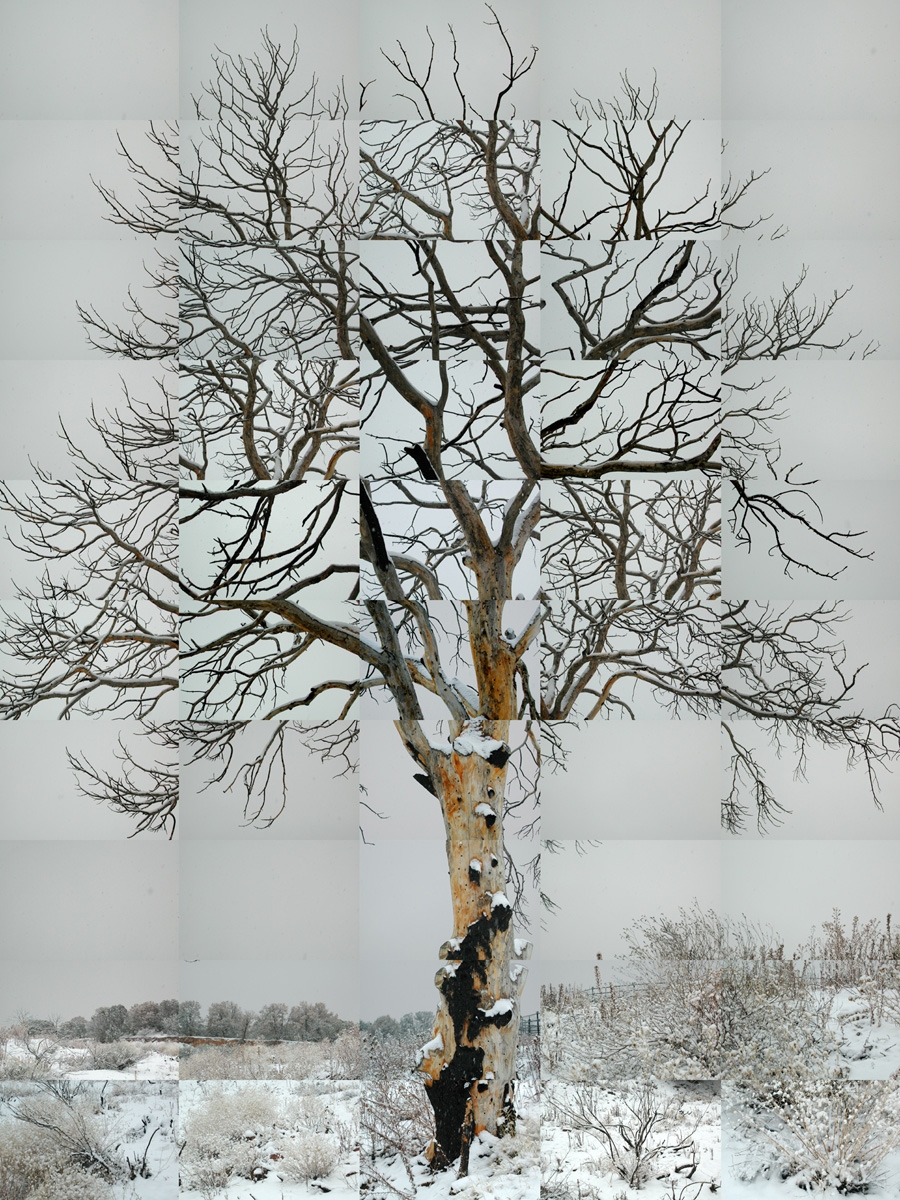
Tree in winter
Pinon, Santa Fe, New Mexico, 2004

MA: Our illustrator, Matthew Chase-Daniel, selected a beautiful image to illustrate your story. I’m often struck by the ways that writers and readers find something personal to relate to in the /images chosen for written work. Did you find any personal meaning in the image selected for “The Keeper of the Truth”?

ALP: Absolutely. The tree is bare, like a tired soul. The photograph was taken in winter, which is when the story begins. And the multiple /images which form a Cubist effect are very much like Emily seeing one small piece of her existence with her sister at a time, rather than a solid whole.


MA: Brilliant. I like your take on the illustration. And one final question: what does “recovery” mean to you?

ALP: Recovery means putting the past behind and moving forward. It means forming a attitude that welcomes positive change, and the strength to challenge our negative urges and drives. Recovery isn’t final. It’s the start of a better way of life, a process of improvement.

Interview with Patrick VandenBussche

Patrick VandenBussche

Mary Akers: Thanks for letting us have your excellent short story “Vibrant Waters.” I’m an enthusiastic diver and snorkeler myself, so I was especially drawn to this piece.To me Vibrant Waters seems to be about how we see only what we want to see, and definitely about the loss of faculties that come with age. But there’s also a strange sort of dignity to be found in Dr. Handler’s misunderstood “observations” that I found very moving. That is me bringing my own life experience to the work, of course, but I’m curious what your intent was in the writing. Did you have specific themes in mind?

Patrick VandenBussche: We all need a little something to get us through those rough times. Some people need to sit down and read a certain kind of book, some people need to go out and start a new hobby, others just simply need to put in their favorite movie and escape for a while. Whatever it is we need to get us through the rough times, Handler needed the Vibrant Underwater Kingdom to be real. It may be slightly sad that in the end, it was indeed not real, but for the man living the adventure, it did not matter. It can go back to that age old saying “Ignorance is Bliss”. However we don’t need the Allegory of the Cave here – we don’t need someone leading Handler out of his fantasy world to the real world, because for him it was too important for his own mental survival to forsake.


MA: Please describe for our readers your personal connection to the ocean. Do you have a background in marine biology?

PVB: I grew up on the Great Lakes – right near the beach. No matter the season – I would always be there. Swimming in summer or skipping ice flows in winter (falling through more times than I’d like to), I’d always be by the water. I never majored in Marine Biology; however I was drawn to the underwater world and its creatures. I was fortunate enough to secure a job in marine animal husbandry, taking care of hundreds of species of fish, inverts, coral, sharks and rays. I quickly took to SCUBA diving off the coasts of Southern California – getting my AAUS certification and helping out with the Santa Monica Baykeepers – doing urchin relocation dives and kelp forest restoration projects. I also spent time identifying fish species and some minor morphological evolutionary work at a university lab – along with volunteer SCUBA diving at the California Science Center – feeding, and maintaining their kelp forest tank, helping with the species there. Surprisingly all of this only started happening in the past two or three years – so getting involved and surrounding myself in this world has inspired my writing. Do I plan on going back to school for Marine Biology? Perhaps – but for now I am happy with being a very involved enthusiast.


MA: You chose the epistolary form to tell this story. I love fiction that includes diaries and letters–it’s so voyeuristic and yet also pure, somehow. Could you talk a little bit about that choice and why you felt it was right for this piece?

PVB: Journal entries automatically make the reader assume that what is written is fact – they hardly question to wonder, unless set up to do so, if the character writing the journal is writing a falsity – after all, a journal is supposed to record actual events – so I believe it helps solidify the readers perspective that what Handler had experienced was absolutely real. The reader should believe in the reality of Vibrant Waters just as much as Handler did. There’s also something very real about writing a story in this way. What is written is no longer just ‘words on a page’ but the writing becomes an artifact – some genuine and real, as if the reader picked up these documents and began to piece a life and story together with real historical items. Much of real world history has been pieced together in this sort of matter, so patching together a fiction story in the same way was and is absolutely fun and exploratory.

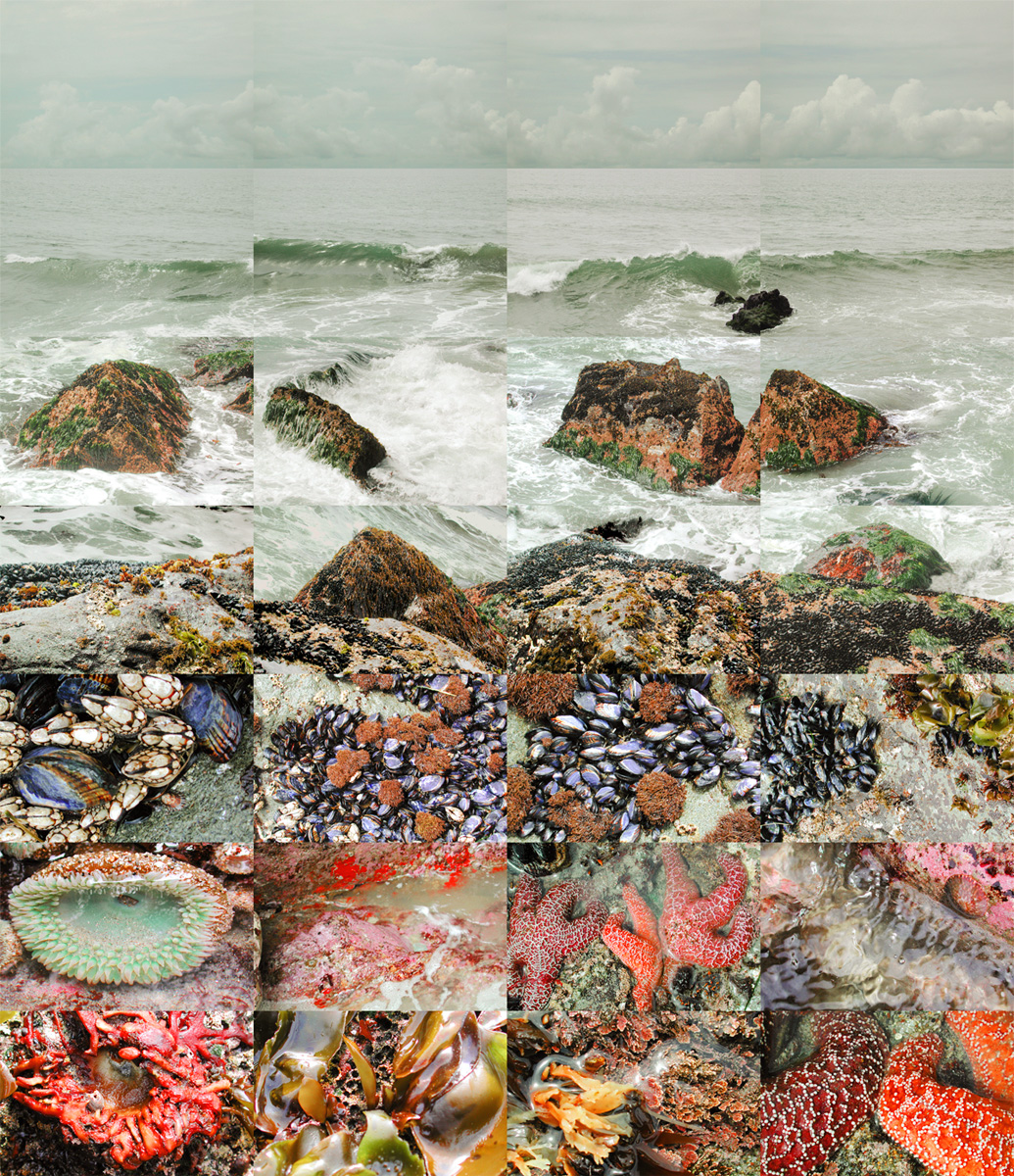
pacific coast

MA: What did you think of the piece that our illustrator, Matthew Chase-Daniel selected for your Shorts On Survival piece. Did you find any personal meaning in the image?

PVB: The best part about the piece was that it looked like he used a lot of imagery of species from the colder waters of the pacific – and anybody who has dove those chilled waters automatically feels a connection to the species and seascape those coasts offer. Diving off coast of southern California can be quite brutal. The visibility is low, there’s a lot of surge, a landscape of large rocks, and enough kelp forests to keep your underwater navigation skills sharp. Also, it’s fairly cold – I did a dive in November and the temp at 30 feet was around 40 degrees. Though it’s not an ice dive, it’s still enough to keep you shivering in a 7mm wetsuit.


MA: Do you have any other writing projects you would like to tell us about?

PVB: I am currently writing short stories – whenever an idea inspires me, or I have time, I try to get to writing. I am currently writing screenplays, working with my manager and writing partner in an attempt to break into the world of film. I will always love prose and fiction. In between the screenplays and short stories that I am writing I am, like just about every inspiring writer, working on a slow coming novel. For now, the best creative and rewarding release is short fiction.


MA: And finally, what does “recovery” mean to you?

PVB: We all go through processes of recovery – from those of us who have experienced major physical recoveries, to those who have seen harsh life changes and turns in the road. In Handler’s case, though he was slightly delusional, he was recovering from a lot of great changes in his life, including the onset of senility and physical limitations preventing him from doing his greatest passions. In those moments of life, where big changes happen, things go wrong, and suddenly in the course of a week, a person finds themselves turned upside down and nearly at the end of a rope – they may find a way to recover, to make a change in their life, and suddenly, they’re no longer struggling to climb that rope – suddenly they’re at the top, the sun is shining, and everything has a lucid clarity they never realized. And then they can finally relax.

Patrick can be reached at patvanden@gmail.com – and followed on twitter at @patvanden.

Interview with Tiff Holland

Tiff Holland

Mary Akers: Hi, Tiff! Thank you for speaking with us and for allowing us to publish your fine essay “Status Check” in this issue. My favorite part of this essay was the easy relationship between the mother and daughter…who are both recovering, or trying to recover (aren’t we all?). What do you like most about your relationship with your mother?

Tiff Holland: I think what I like most is its history, which is ridiculous because we were more foils than friends most of my life. Still, that gives the essays/stories instant tension. It also allows us to be totally honest with each other. If one of us says something, anything, even as simple as “I love you” it has a greater meaning. The “ease” you mention comes from that as well. We know each other. We’ve had adventures. Think 30 year road trip.


MA: I had the distinct pleasure of hearing you read recently in Buffalo, from your chapbook “Betty Superman.” I was fascinated by your mom’s feelings about the book, how she felt being the inspiration for the main character. Could you tell us a little bit about her reaction to the book?

TH: She loves it! She always told me I should give up writing poetry (my initial writing focus for 20 years) and write about her life. She said then WE would be rich. She also accepts that it’s writing–not always completely literal. However, she was concerned that my two aunts might not feel the same way. Mom thought they might excise one story in particular. So, I sent the books for the reading to a friend’s house instead.


MA: Along those lines, we also spoke about how once something is put into writing and published, it often becomes the new reality, even for the writer. I know that I have occasionally had a “memory” that when I examine it more closely turns out to be something that started as fact, but that I completely altered in the writing in order to fit a storyline…and then I remembered it the altered way. Has that ever happened to you?

TH: Honestly, no. Prior to losing a large part of my short-term memory, I had perfect recall. It was actually kind of annoying for a writer–no editing! If I don’t remember something as it actually was, I have a sort of “white hole” that fills my consciousness when I think about it literally. The fictional version exists separately (and usually looks like an Edward Hopper painting.)

three waves in one

MA: What did you think of the piece that our illustrator, Matthew Chase-Daniel selected for your essay? I’m always struck by the ways that readers find something personal to relate to in the /images chosen for their work. Did you find any personal meaning in the image selected for Status Check?

TH: The piece was perfect and there is lots of personal meaning there. I can’t sleep without a sound machine for one thing, and I keep it turned to “ocean waves.” Also, I lived in Hawaii for three years, but mostly I like the way there are three parts to the image, the raising, the falling, the crashing. It’s so much like my  perception of the world in the months leading up to the stroke as well as to my relationship with my mother. It’s clear by the /images that they’re part of a cycle, something continuous and timeless. I need to get permission to print those up and frame them!


MA: And finally, I know you have an intimate relationship with physical recovery. Can you tell our readers what “recovery” means to you?

TH: Recovery is difficult to describe. My therapist discusses it as “creating a new paradigm.” For me it has been largely about accepting limitations, and I’m a perfectionist. Rather like the waves, it is a continuous cycle that rises and falls. I just know that every morning I have to check to see if I’m dizzy before I step foot out of bed and take a chance of taking a dive if I am. Every single second of every day my left ear is making some sort of infernal noise. I feel like “Harrison Bergeron” burdened with his handicaps, but no matter what I do, I can’t just rip them off, I can only hope for a moment of dancing in air before they pull me back down.


MA: Excellent. Thanks for talking with us today. And for our readers, here are some links to more of Tiff’s excellent work:

Dragon Lady

A Pool in February

Snow Globe

{in petals}