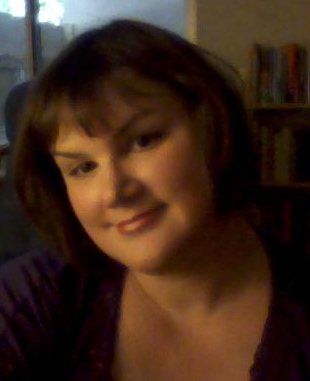
Interview with Valerie Fioravanti

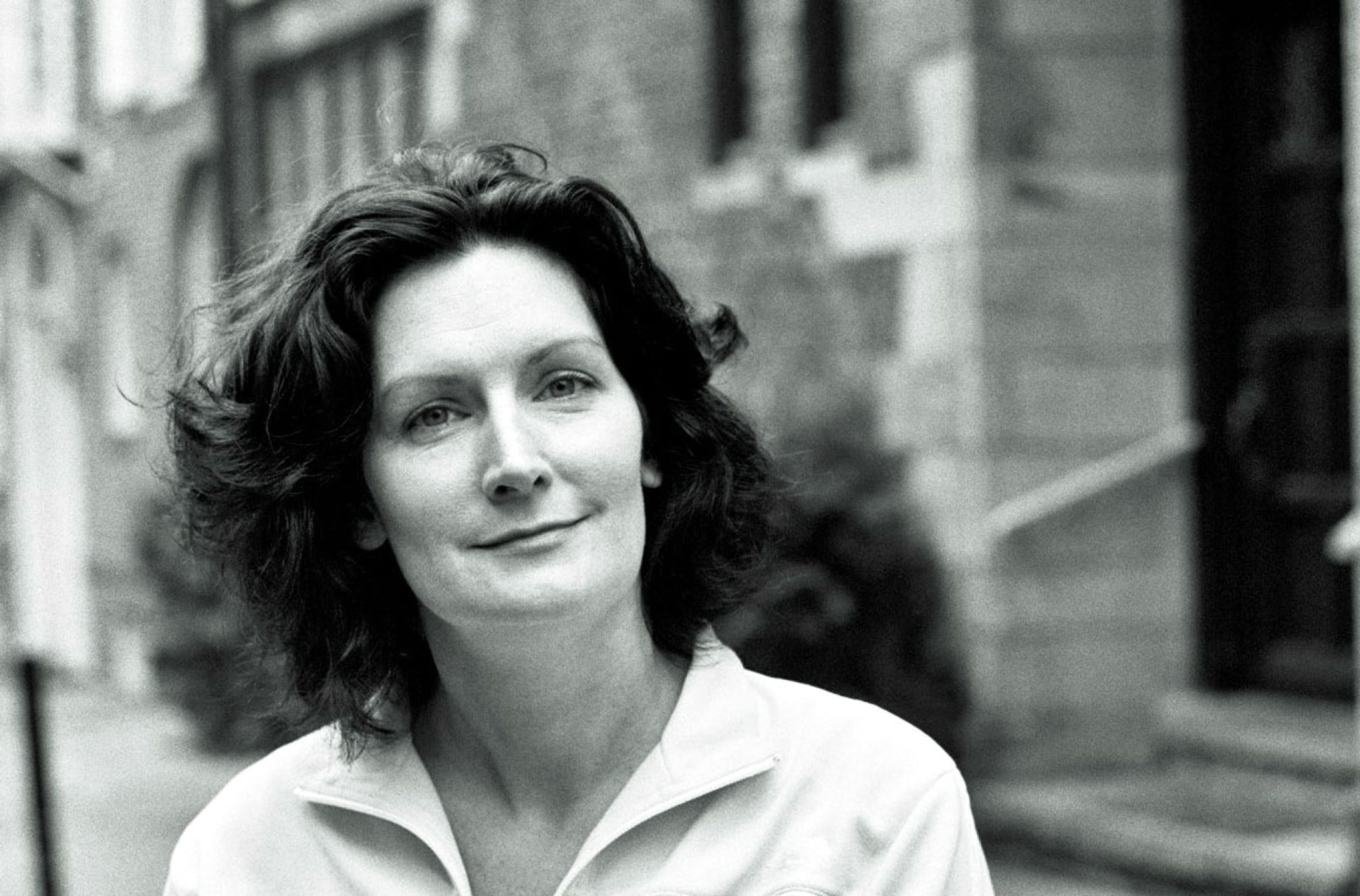
Valerie Favorianti

Sue Staats: Valerie, in your piece, Touching Margaret Atwood, you wrote of a near-miraculous encounter with her – a goddess in my pantheon as well – who, by her touch, seems to begin your process of healing during a time when you lost your words. I’m so curious: what happened next? Did you immediately begin to write again?  Did you write about the “modern jellyfish ladies?”

Valerie Fioravanti: My next step was to travel again, to Eastern Europe and Turkey, settings that I’ve returned to in both fiction and nonfiction. I did write from that point forward, but it probably took close to a decade to go back to the neighborhoods of my childhood, to give modern jellyfish ladies their due. I needed to mature as a human, to develop greater patience and empathy for the choices that were not my own before I could do their lives justice. The depictions of jellyfish ladies of every era are so full of judgment and contempt. I wanted to do better by them.


SS: And have you done better by them? Some examples, if you can, if the answer is yes. Some future plans, if the answer is no.

VF: I don’t think I have done justice to the type of women I mentioned in the essay, those high-haired, faux-tough chicks sashaying around in stilettos. My second collection seems one story shy of completion, so I think you may have sparked an idea here. I believe I have done justice to women who remain in the neighborhood because of their strong family ties, even when common sense tells them to flee. Garbage Night at the Opera has characters that take off at the first opportunity, and characters who stay behind to support this fused family unit which is so resistant to change.


SS: If an encounter such as you had with Margaret Atwood had happened to me, I would feel that connection, her hand on my head, forever. Or, at least in moments of self-doubt. Do you?

VF: The five years that followed were a bit of a whirlwind in terms of travel, opportunity, transformation from neighborhood girl to well-traveled woman who had very little patience with her own frailties. I think I buried the memory because it was so steeped in shame. Fast forward maybe fifteen years, to the Napa Writers Conference, and this memory comes pouring out of me in defense of Margaret Atwood, in response to a conversation about how difficult she was to work with. As I was retelling it, I could feel her hand on my scalp again, how much it had meant to me to receive this form of blessing. When I was finished, someone said, “Have you written about that?” I hadn’t, but I knew I would.


SS: Your linked short story collection, Garbage Night at the Opera, recently won the 2011 Chandra Prize and will be published by BkMk Press next fall. Do any of the pieces in the collection date from the experience described in the story?

VF: My first published story, which is in this collection, was set in Switzerland. It was published in Baltimore Review as “Why I Hate Geraniums” although it’s now “Weeds.” One of the themes of that story is loss of identity/displacement, although those issues are resolved by the story’s end. My earliest stories are mostly about overcoming obstacles, moving forward, refusing to be sidetracked. If I were to redo that story now, I’d probably spend more time owning her fears and doubt.


SS: You’re a writer of creative nonfiction, flash fiction, short stories and novels. What makes you choose one over the other, when you have an idea for a story and sit down to write? In other words, given that most stories have their inspiration in true events, how do you determine whether you’ll write the story as fiction, or as memoir? Or as flash?

VF: With creative nonfiction, my desire is to process experience. It’s more intellectual in nature, although of course I want my cnf to also have heart. The proportions are skewed toward intellect, toward shaping meaning. With fiction, it’s the opposite. I want to convey experience, which is all about being emotionally intelligent, stepping back and allowing the reader to be witness to something meaningful. But it’s important to mention that I am a huge fan of invention. I took a neighborhood and a family model I was very familiar with and created a fictional landscape.

In terms of the different types of fiction I write, it’s mostly a matter of scope. If I set out to write a story that ends up with novel-sized elements, I refocus my attention to something more appropriately story sized, a smaller part of the original whole. My linked collection emerged as part of that paring down. I was interested in the historical moment I had witnessed in Greenpoint, Brooklyn, the neighborhood at the core of Garbage Night at the Opera. In my early childhood, there was deindustrialization, the quick and wholesale loss of factory jobs that had supported that neighborhood for several generations. Then the neighborhood languished, neglected, as the families that couldn’t or wouldn’t move waited for “better times.” Finally, those times arrived with gentrification/renewal, but those same families were squeezed out by rising rents they couldn’t afford to pay. I couldn’t tell the entire arc in one story, but I could point toward that arc in a dozen inter-related stories.


SS: As a Sacramento writer, I’m very excited about the innovation and energy you’ve brought to the Sacramento literary scene. Why did you choose Sacramento? What inspired you to begin your teaching, the Master Classes, and Stories on Stage?

VF: Sacramento was meant to be a pit stop. I was teaching online and editing book manuscripts, so I wasn’t geographically constrained. I thought I would explore California for a bit, and then move to the coast. But Sacramento charmed me. I loved my Midtown neighborhood—it’s walkability; those funky, turreted Victorians; three great used bookstores coupled with a newsstand and indie bookstore with varied literary magazine selections (a combo which might lead to bankruptcy). I felt the writing community needed someone to be its advocate, to focus on what it might offer, rather than what it lacked. So I advertised some workshops and started up a reading series. Now, people bring their ideas to me. That’s how the Master Teacher Weekend Workshops began—with another writer asking for help to make one event happen. We brought the Atlantic’s fiction editor to town, and I thought, why stop?


SS: Any current projects – writing or otherwise – that you’d like to tell us about?

VF: Right now, my focus is on my second story collection, which is nearly finished. After that, I hope to return to my Italy novel, Bel Casino, which is a sort of sequel to Garbage Night at the Opera, as I’ve taken two of the recurring characters from the collection and set them loose in Italy as adults. In terms of creative nonfiction, I’ve been working on short pieces like “Touching Margaret Atwood” which I think might eventually cohere into a memoir.


SS: It’s a wonderful story. Have you ever thought of sending it to her to read?

VF: Thank you for saying so. Margaret Atwood has a poem in this issue (that I share space with her just thrills me), so maybe she’ll find it on her own? I’d like that, but I might just believe in letting idols be idols. This moment was big for me, but to her it was just a hiccup at one event in a life crammed with readings and speaking engagements. I don’t know—should we ask Mary Akers to forward the link to her? (Editor adds: I already did!)


SS: What’s the “recovery” experienced in the story “Touching Margaret Atwood,” and is that how you might define recovery, if you were writing your own dictionary?

VF: I returned from Switzerland less whole than I had left. This moment with Margaret Atwood didn’t change that–it just helped me turn the page, and move forward as a woman with a strong voice who now understood some things about silence and self-censorship. Whether it was a recovery in the truest sense or what that might mean, I’ll leave to others to decide.


Sue Staats
is a Sacramento writer of fiction and a recent Pacific University MFA graduate. Her short stories have been featured at Stories on Stage in Sacramento, and she’s a frequent participant in the Master Teacher Workshops, founded by Valerie.
Interview with Brian Pietrus

Brian Pietrus

Mary Akers: Thanks, Brian, for letting us have your excellent short piece “Stella Blue.” I’m an enthusiastic hiker and camper myself, so I was especially drawn to this piece. To me Stella Blue seems to be about the healing powers of nature, and about sharing our passions with the people we love. That is me bringing my own life experience to the work as a reader, of course, but I’m curious what your intent was in the writing. Did you have those or other themes in mind?

Brian Pietrus: That was certainly part of it. It was a tough time in my life. My grandma was very sick, going through chemo, and I was having my own health problems at the time. Both of us put a lot of pressure on my mom, expecting her to be there for us. Hiking has always been a form of escape for me, something I do alone. But having my mom there sort of forced me to open up more and to accept that because of my personal problems I had become very withdrawn and introverted, which ran counter to who I am at heart, and that I needed to change.


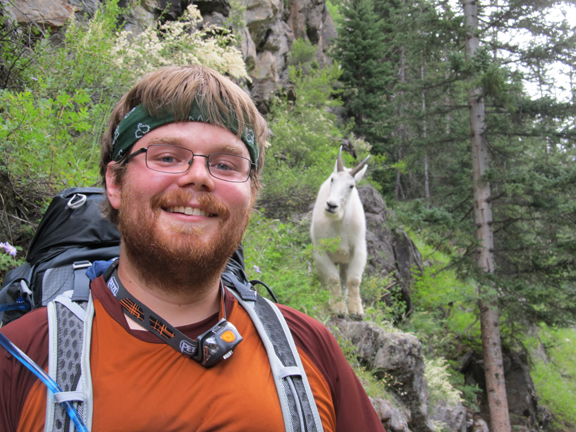
MA: Change is my favorite form of recovery. I love the photo you gave us to use–is that a mountain goat in the picture? How did you manage that?

BP: It is! Goats are one of my favorite animals, and I have always wanted to see a mountain goat. I was on a backpacking trip in Colorado this past summer, and about 2 miles in someone passing by told me there was a goat near the trail up ahead. I came around a blind corner and two other hikers were stopped in the trail watching the goat. He was standing right on the trail, munching on some plants, completely oblivious to us. One of the other hikers tried to scare him off the trail by yelling and making noise with his hiking poles, and the goat leapt up a vertical rock face to a perch about 5 or 6 feet above the trail. I was able to get this shot without getting close to the goat because he was above the trail, and I still kept a fair distance to be safe. We were all a little uneasy passing by under him, but he was really uninterested in us and didn’t feel threatened. But the kicker is he kept following me down the trail! We crossed paths 3 more times in the next hour, and I had to keep going off the trail to give him room so he wouldn’t feel threatened by me. He would pass me, then I’d pass him further down the trail. I got to see him do some impressive footwork on more than one steep rock face. It was the first time I’d ever seen a mountain goat on a hiking trip, so that was a great prelude to an incredible trip!


MA: How funny. You had an unexpected hiking buddy!

In writing Stella Blue, you chose not to use quotation marks for the dialogue in your piece. Could you tell us about that choice and why you felt it was right for this piece?

BP:
I had never really done that before in my writing, but one of my professors encouraged me to experiment with dialogue to make it feel less broken, less “like writing.” It was my hope that taking out quotation marks would ground the reader in the story.


MA: I think it did. Good call. I also think it made the piece feel more internal and intimate, which adds to the mood.

Can you tell me something about the wilds of Wyoming that makes it similar to the wilds of writing?

BP: Well, normally I would say it’s a very solitary experience, but since I had a hiking buddy I guess that doesn’t hold up so well in this case.

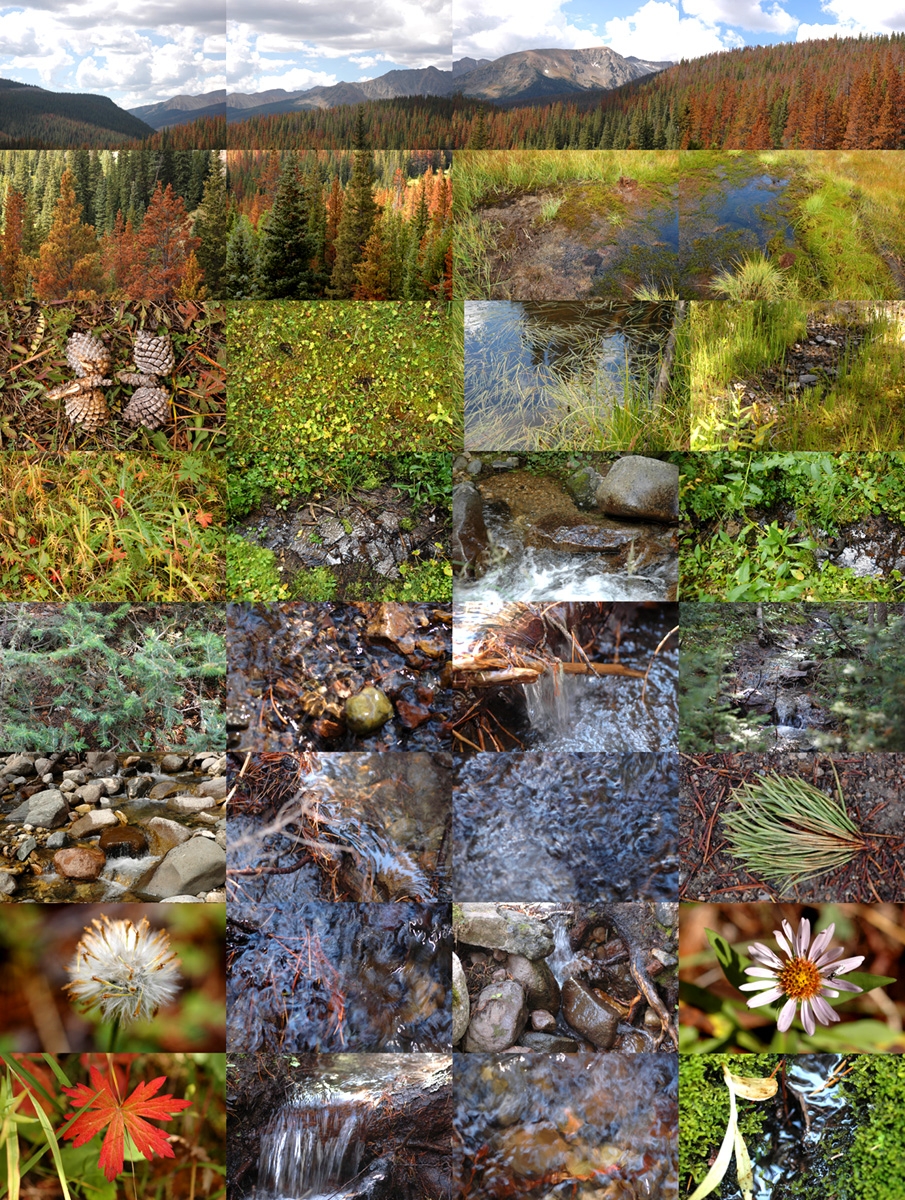
mountain meadow

MA: What did you think of the piece that our illustrator, Matthew Chase-Daniel selected for your Shorts On Survival piece? Did you find any personal meaning in the image?

BP: I loved it. I’ve always been a big fan of collage, and I think he created a really great “wholeness” out of the individual frames.


MA:
And finally, what does “recovery” mean to you?

BP:
I guess for me it means learning to forgive, whether it’s yourself or others being forgiven. Learning to put the past behind you and focus on the present. It means something different for everyone, but to me that’s what is at the heart of it.

An Interview with Mel Jones

Mel Jones

Joan Hanna: First, let me say how thrilled we were to have “Shaping Stone” as part of our October issue. This essay gives the reader such a multi-generational viewpoint. Can you share a little more about your family history with our readers and how that might have influences in your writing?

Mel Jones: Thank you for taking the time to read my essay and share it with the world, surrounded by Matthew Chase Daniel’s beautiful artwork!

My grandmother was my greatest influences. She was a brave woman. My father’s mother, Nana, was my mentor. She taught me about inner strength and perseverance in the face of adversity. The word ‘can’t’ was not part of her vocabulary. She came to the United States with little more than the shirt on her back, and managed, with her husband, to buy a home in Boston, keep it through the Depression, and feed most of the neighborhood on a daily basis. Nana bought me my first dictionary when I was three—and she expected me to learn to read it. She went to a Hedge School in Ireland and believed the only way to find success was through words. Words are power. She encouraged all of us to learn new words, do crossword puzzles, and to write, almost from the time we could speak. She was a taskmaster. She had left behind depressed conditions in her country, and I believe her home to build a better life for herself.

My dad, was the epitome of a stereotype, he was a drunk, Irish cop in South Boston Mass. He died believing he was a failure. My siblings are following in his footsteps; each is medically addicted to something. When I moved to Virginia, I believed my choices were to move or die.

Like my grandmother, I left my family behind and forged a new family in which everyone acknowledges personal limitations and flaws (or at least works towards that ideal).

In many ways I see the world colored by the lenses of these two individuals. They instilled in me my love for words. Both of them looked up and learned a new word every day. They were both great storytellers. Nana told ancient stories, dad told sad stories. Beckett was one of his favorite writers. Their juxtaposing stories helped to create the writer I have become.


JH: You describe the very different experiences for other family members and what “the cliffs” meant to them. Can you explain a little further how this either set up or interfered with your own experience?

MJ: When my grandmother talked about Ireland, it was a magical place far away. It was a place that knew no sorrow or heartbreak. There were castles, rainbows, and fairies. She told magical stories that glossed the difficulties she had experienced; she inferred the lessons that should be learned. For Nana, I believe the cliffs were the symbol of an idealized strength, something hoped for, worked for, but rarely attained. They were something beyond the self.

When my dad talked about Ireland, the cliffs were filled with tragedy and dreams that were unattainable. Sailing by them was a surrender of sorts. He had his chance, and blew it. He

viewed most of his life that way; he had chances, but blew them and wallowed in a whiskey-induced melancholy. He saw his children as the only thing he had ever done right.

For me, the symbolism of the cliffs is an internal, rather than external, experience, a reflection. When I see pictures of the west coast of Ireland with its imposing cliffs and crashing white caps, I am reminded that that’s the landscape that shaped me. Thousands of years, of ancestors, can be seen in the face the ocean has shaped into the cliffs; craggy and rough. But there. Viewing the cliffs is a reminder not of who I could be, but rather, who I am. Gazing out over the ocean from atop the cliffs is an empowering and humbling experience. One has to face down the wind and find a strength that doesn’t come from out there—it resides within. If I can conquer the cliffs their strength becomes part of me…


JH: I really love that this became your own personal experience in the end, separate from your family influences. Can you give our readers a glimpse into the writing process that helped bring about that aspect in this essay?

MJ: It is easy to say my father was this, so I am this too. My parents treated me like that, so I am what I am. It is a continuing process for me to remove myself from that. Yes, I am influenced by the experiences of my childhood – and I can allow those experiences to build me. Or, I can create new experience based upon what I have learned from those events. Periodically, I write to remind myself of that important lesson and so I look at moments. Not events, or even experiences per se, but moments. I hold on to the image, the emotion that came with a particular image and build outward from there. How many things, concrete and abstract, can I connect to that moment? The cliffs—Dad—Nana—empowerment—surrender—family history—connection to the land—land connected to spirit—to me. This piece started as a free write and evolved into a braided piece. Most of my “serious” pieces are braided, because I cannot understand the world in any other way. I don’t try to make sense of anything I am writing until I finish a draft. I allow the connections to be made and follow where they lead, trusting that process. I refine after I have a complete draft.


JH: You’ve also described most of your other work as humorous and not as serious as “Shaping Stone.” How was this story different for you as a writer and why did you feel that a humorous approach would not do justice to the story?

MJ: I think a humorous voice comes naturally to me, and it doesn’t exercise my brain. Because I write nonfiction, humor is essential. Life is hard; we can laugh or cry. To delve deeply on a daily basis would drive me to that age-old Irish melancholy; drive me insane. Just as every moment has a lesson; there is always something ironic to be seen. I naturally gravitate toward that paradox.

The irony in Shaping Stone is too subtle for humor. Despite the fact that neither of the individuals that influenced me felt they were able to overcome limitations or failures, what they gave to me is what has created my inner strength and self-esteem. What they viewed as limits set me free to explore other things.

I have many humorous stories about both my grandmother and father. The learning (teaching?) moment of Shaping Stone is tied to the spiritual nature of the land and the culture that marries its people to that. To tell this particular story with humor would belittle the lesson, at least for me.


JH: I think it’s important to remember that many experiences come from a place of humor. I also find it a very diversifying way to share your work; having that option of seriousness or humor. Please share with our readers any inks, websites and other publications of your work.

MJ: I keep a blog at http://melwalshjones.wordpress.com. It is an eclectic place. Be warned.

Most recently, I had an essay published on Emily Rapp’s blog, Another serious, Irish piece.


JH: Thank you for taking the time to interview and for sharing not only your lovely story “Shaping Stone” but also your family history. Can you answer just one final question for our readers? Can you share with us what recovery means to you?

MJ: For me, recovery, like writing, is a process. I take one step at a time and accept that I am in the middle of the story and I have to let go of outcomes. I cannot influence the people around me any more than I can influence characters in a story. Recovery has nothing to do with ending a relationship with a substance and everything to do with beginning a relationship with the self. To recover from anything we must learn to cast our fears to the wind and put one foot in front of the other on the road to discovery.

I recently left a job that I loved after several confrontational interactions with my employer. Several well-meaning friends suggested that I needed time to grieve, to recover. Instead, I immediately took a job teaching composition – I discovered a new layer of who I am. That layer helped to salve the damage done. Each discovery takes us closer to recovering who we are in our hearts and spirits.

Interview with Christopher Searles

Christopher Searles

Mary Akers: Hi, Christopher. Thanks for sharing your excellent short piece “Pose” with us. This piece was written from the point of view of a woman, which I thought you handled very well. Are you comfortable writing from the female point-of-view or was this a departure for you?

Christopher Searles: Thank you Mary, I appreciate you publishing it.

When I first set out to write this story, it was from the male point-of-view. But the protagonist as a male didn’t work for me. The idea of domestic violence hadn’t even been derived at that point. When I changed the point-of-view to a woman, the story seemed to develop on its own and it seemed to flow. But I was still concerned whether women would be able to identify or relate with the protagonist, but I’m glad at least one woman (yourself) felt I handled it well.


MA: Having a character be naked always ups the stakes for readers. It’s certainly something we can all relate to, that feeling of vulnerability, of being exposed. But what I liked about your piece was that the naked character was the empowered one, and her nakedness actually exposed her husband’s misdeeds. Brilliant! Can you talk a bit about what inspired you to write this piece?

CS: A lot of my inspiration comes from my other passions. And visual art is another passion of mine. I have been in many life drawing classes in the past and I thought it would make for an interesting setting in a story. When beginning to write, I recalled the many poses in the classes I attended and the idea of one pose that would actually make me feel uneasy came to mind. From there, I just gave the pose context.


MA: My undergraduate degree is in fine art and I remember the first time we had a nude model in life drawing class. I was awed by her (and later, his) ability to be the only one in the room without clothes, with all eyes focused on the tiniest details of her/his body. But almost as soon as I picked up my charcoal, the model became an object to depict, a non-human still life with angles and curves, highlights and depth, textures and shadow. I think that is the distance that art provides and is also what allows us to write about the sometimes very personal process of recovery and find the sort of distance that takes away pain. Would you like to comment on this?

CS: I agree. I think the idea of writing about something so deep and personal that it causes pain can occur when the writer has been able to evoke emotions and feelings through the characters and their conflicts. And as the writer, I am able to distance myself from those emotions and feelings enough to complete the story because I’m viewing it as a form of art, thinking about specific nouns, strong verbs, and consistency of voice.

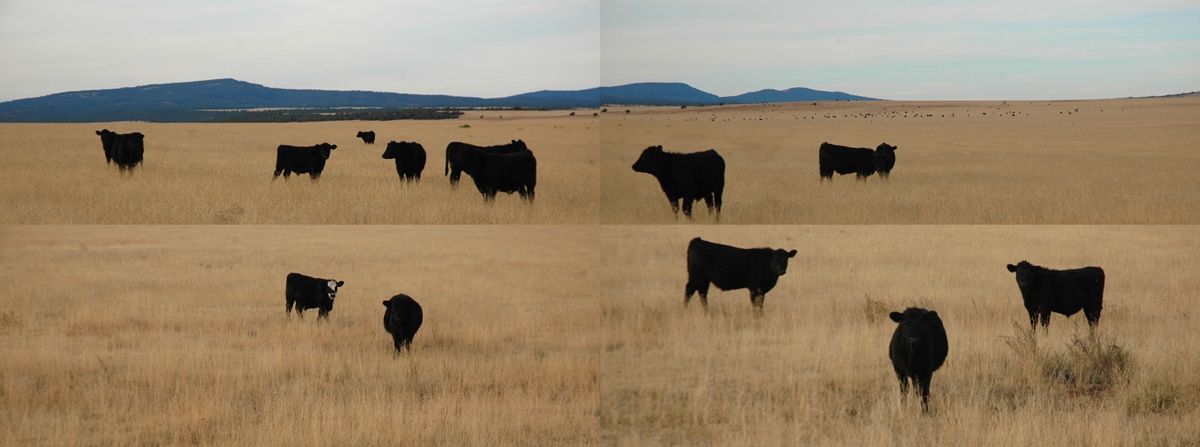
Cattle

MA: I thought that our illustrator, Matthew Chase-Daniel chose an interesting image to illustrate this piece. What did you think of it? Did you find any special meaning in the image?

CS: I was curious to see how the illustrator would depict my story giving that it was a piece that dealt with art. But I was amusingly surprised by the choice and saw the immediate parallels. Animals bear it all much like the protagonist did in the story.


MA: And finally, What does “recovery” mean to you?

CS: I try to view recovery as a process of growth. I’ll use the analogy of my workouts in the gym. I workout to get bigger muscles. I tear the muscles I have through lifting weights. When I leave the gym, I go through the recovery process. During that recovery, my muscles are growing bigger and stronger to compensate for the heavy weights I had lifted. The process is sometimes long and painful, but I’m better for it.


MA: I like that analogy. I feel like I tear my “writing muscles” every day, too. Thanks so much for speaking with us today, Christopher. I enjoyed it!

Interview with Anne Colwell

Anne Colwell

John Guzlowski: What first drew me to your poems was the strength of the grandmother in your poem “Garnet.” Could you tell me something about the strong women in your life? And the connection you feel to them?

Anne Colwell: “Garnet” is about two of the strongest women I’ve ever known, my grandmother, Anna Nolan Colwell, and my sister, Jeanne Colwell Iasella. My family is Irish Catholic, and one of the hymns that the choir sang at my grandmother’s funeral included the lyrics “gentle mother, quiet dove.” When the words floated out over the congregation, the pews erupted into quiet snickering! My grandmother was definitely not a “quiet dove” and she’d call any woman who sought to be quietly dove-like a “simple jackass.” She was fierce, in the best way, with a sharp sense of humor and a keenly ironic eye. After my grandfather died and left her with three children, she took over his job selling condiments to restaurants. She traveled up and down the Eastern Seaboard and she managed to do this and raise her family and send all three kids to college. She believed in work, in self-reliance, in going forward when you don’t think you can. She was fiercely loyal and fiercely determined and fiercely loving. My sister and I are both runners and we often run longer races together. We always joke that, even if our training isn’t what it could have been, we’ll be able to finish the last few miles “because we are our grandmother’s granddaughters.” My sister inherited my grandmother’s loving strength, clear determination and sharp sense of humor. Even though she is my younger sister, she has shaped my life by her courageous example and I often look to her for strength in times when I can’t find my own. That’s what “Garnet” is really about – a time in my life when I had lost all of my own strength, when I didn’t think I could go on. My sister leant me our grandmother’s birthstone ring so that I would remember, would have a symbol of the deep well of power that I could draw from. Jeanne’s daughters, my nieces, Anna and Francesca, are four- and six-years-old and I watch them and I see it happening all over again in the next generation. My grandmother’s strength, my sister’s strength, it’s in them, too, and it makes me so happy to watch it go on.


JG: Like you, I’ve also written critical, academic work about literary authors. Sometimes I think that doing so has been a misdirection and other times I can’t imagine how my own work could have developed without the kind of critical writing I’ve done. How do you feel about your critical writing?

AC: That’s a great question! I don’t think I’ve ever tried to put into words how my “academic” self has impacted my “creative” self. Of course, splitting them that way is already a problem, isn’t it? It suggests that there’s nothing creative about writing nonfiction critical essays and nothing “academic” about fiction and poetry. My husband, James Keegan, is an actor and a writer and an English professor and a painter and a musician. Sometimes when we’re talking about how to “do it all” and if one really should try to “do it all,” we will come down to the idea that “everything feeds everything else.” I guess that’s how I feel about the critical work, finally. Though I don’t really see myself as a critic, I think that a good deal of the critical writing I’ve done has had the effect of opening doors in poetry and fiction that would have been closed for me if I hadn’t had to grapple in writing with what other writers had accomplished and exactly how they accomplished it. My book about Elizabeth Bishop, Inscrutable Houses: Metaphors of the Body in the Poems of Elizabeth Bishop, examines her poems to figure out how she works, how she uses form to embody and overcome loss. I think that my critical writing is the expression of my student self, the part that can never learn enough, and maybe the kind of criticism I’m drawn to is the “taking apart the engine” kind of criticism, the kind that tries to understand how an artist creates so that I can emulate it.


JG: Years and years ago, I started out trying to write postmodernish fiction, writing that questions its own ability to arrive at the truth of reality, and it’s still a concern that comes up now and then in my poetry (“My Mother Reads My Poem ‘Cattle Train to Magdeburg'”). I noticed a similar concern with questions about writing in poems of yours like “Revisions.” The poem seems to signal such concerns in its opening lines: What you can’t see from this window, Although you’re six stories up, Although you see nearly the whole city, Is the green bench by the river, Or the woman standing beside that bench Who walks and sits, walks and sits, Or her hand readjusting the pink scarf Or the watch on her wrist that says Everything’s doubtful. Could you say something about your sense of the truths poetry can and can’t arrive at?

AC: Kenneth Koch called poetry “the language inside the language” and I think that’s a beautiful way to describe it. Poems seem to me to have the possibility, like dreams do, of pushing language toward the inexpressible, right to the edge of the abyss. We know that there are truths that we can feel or understand and yet have no words for; we experience this every night when we dream and wake up to say things like, “it was our house but it wasn’t our house and my father was my father but also a tiger.” Even as we try to describe dreams they disintegrate; they resist the logic of the conscious mind. Poetry, at its best maybe, is a language that can go deep into the depth of the subconscious and bring truths, emotions and /images, otherwise impossible into the light of the conscious world. One of the things that I love about “My Mother Reads My Poem ‘Cattle Train to Magdeburg'” is that the poem has such a strong “speaking silence.” You bring me right to the brink of language’s failure. I think that’s an amazing thing in a poem. Bishop does it over and over again in her work. Everything says “yes” and “no” at the same time and yet it makes perfect sense; it has a clear lucid surface. No fish can be covered with barnacles, no fish can have five hooks in its mouth, none of the details of her poem “The Fish” are possible, but you can see it, know it, believe it because language has so much power. “Revisions,” as you pointed out, lives in that land, too. It’s playing with ideas of perspective, of what can and can’t be known, of what words can make you see. The truth is the truth of the transformation, the imagination, and how it can transcend.


JG: I’ve moved away from poetry these last few years and have been spending most of my time writing fiction. I see that you too write fiction. Can you tell us something about your fiction? Do you see your fiction and poetry as being fundamentally connected?

AC: Several years ago now, I started writing little bits of stories that I would squirrel away and not pay much attention to. I didn’t know what to do with them or how they could fit anywhere. At the same time, I was falling out of love with poetry. I got tired of the way I wrote, but also I was tired of a kind of poetry that seemed to be everywhere around me, tired of the lyric fascination with the self. I can’t find the exact reference now, but I remember at the time I read a piece by a poetry editor – I think it was from the Paris Review – and he was commenting on the solipsism of contemporary poetry. He wrote a parody of the poems that came across his desk and it went something like this: I look out my kitchen window I am so important That said it. That expressed my own impatience with writing about myself and my life and my childhood and my growing desire to change, or even maybe to just stop. My good friend, Maribeth Fischer, who had published two books, looked at my little scraps of stories and she diagnosed me as having come down with a bad case of novel. So I started to write fiction. The first thing I loved about it was all of the space, all of the wide fields that a writer could fill. I also loved the imaginary world that I got to inhabit and the complete “otherness” of my characters. When I applied to the Bread Loaf Writers Conference for the first time, I applied in both categories, poetry and fiction, and I explained that I was a poet, but I was having an affair with fiction. Fortunately for me, I was accepted as a poet and I began the journey back to loving poetry again. Now I see writing fiction and writing poetry as two sides of the same coin. Maybe we can even, to come back to an earlier question, throw nonfiction critical writing in here, too. Writing teaches you to write. I’m newer at fiction than poetry, but I’ve learned a great deal by living in the imaginary worlds I’ve been able to create. I think that writing fiction gives me another way to be attached to and alive in the world and another means to play with language, to keep the tools sharp.


JG: We live in an amazing age–so many excellent poets, but what we seem to lack is audiences. Does that worry you? Should writers worry about audiences?

AC: Here’s the question where you discover my eternal optimism. My sister says that if you gave me a barn full of shit, I’d run through it screaming, “There has to be a pony in here somewhere!” So . . . It’s true that poetry does not sell, that many people, even very intelligent people, claim to hate it or complain that they “never understood it.” However, I belong to a small local writers group called The Rehoboth Writers Guild that was founded by Maribeth Fischer (the novelist I spoke of earlier). Once a month on a Monday night, somewhere between forty and sixty people of all ages and all backgrounds come together to hear each other read. Some read fiction and some read poems, but they support one another and they risk self-expression and they believe that the words change the world, even just a little. When terrible things happen, like the atrocities your parents saw, or 9/11, or any of a million horrors that humans perpetrate in the world, I think we turn to poetry to bring us as close as we can get to the humanity of the loss and the grief and the strange joys. I believe that we instinctively understand from the time we are children that musical language that is full of pictures is the right language for expressing strong feelings. I think that people only start to hate poetry when they are told in school that they can’t understand it. Better education is the way to an audience for poetry. I had great teachers! I was so fortunate. W. D. Snodgrass, Gibbons Ruark, Jeanne Walker, and Fleda Brown, all great writers, were my teachers and friends in graduate school. At Immaculata University, I worked with Dan Machon and Jim Mooney, Sister Loretta Maria and Sister Christine. They taught me that words mattered, my own and other people’s. Writers need to help educate readers about the crucial importance of poetry. I think they also need to be a better audience for poetry themselves. When I’ve taught creative writing, I always ask writers who they read. The answer I frequently get, especially from younger writers, is that they don’t read poetry; they only write it. Would any musician ever say that? Any painter? It’s preposterous, but they have somehow gotten the idea that they will lose their voice or be “poisoned” by careful study of the masters who have gone before and who are alive right now. I think we can change this. I believe that we can teach people to love poems because all of these amazing teachers taught me.

Here are a few links to other fine work by Anne:

Delaware Poetry Review

Believing Their Shadows

Mudlark

Interview with Renée Giovarelli

Renee Giovarelli

Joan Hanna: We were so excited to have your essay “Bridestealing” as part of our October issue. This essay is moving and chilling on so many levels. Can you share with our readers a little more about your experiences and the non-profit organization you are working with?

Renée Giovarelli: I have been working at Landesa (formerly RDI) since 1995, with a 5-6 year break when I worked for myself. I’m a lawyer, and I work with governments of developing countries to help make legal and policy changes that will enable women to have secure rights to the land they farm. Right now I am working on projects in India, China, and Uganda. I am the Executive Director of the Landesa Center for Women’s Land Rights, and our focus is to train other lawyers to do this work, to pilot innovative ideas that might facilitate change in practice, and to develop a digital library that will have laws from all around the world that affect women’s land rights, specifically a collection of family laws.

My favorite part of the work is talking to rural women. It is such a gift to be able to listen to women tell the stories of their daily lives and to think with them about what changes could be made to improve their situation.


JH: One of the messages that comes through in this essay is the immense divide between cultures that at first seems somewhat easy to approach but becomes a very different practical matter when all of the cultural, religious and traditional beliefs are taken into consideration. Can you give our readers some insight into how you were able to balance your own beliefs with those of these women within their own cultural aspects?

RG: If I have learned nothing else, it is to work with what’s possible. Women may want a hundred things to change, and each of those things may be horrible in my view, but only a few are possible to change in that village or state or country at that time. So, why not start there? We try to take on the hard stuff–cultural change. For example in India we have a project that is working with very poor adolescent girls to help them use land their family has recently been given from the government so that they become more valuable to the family and as a consequence are less likely to be married at an early age. It’s a really complicated project involving the community and community attitudes, but I think it’s important to try. For me, the question is, what do the girls want for their lives? Then helping to figure out how to achieve those goals, one at a time–starting with what seems most possible.


JH: Anara goes through a very significant change by the end of “Bridestealing.” While appearing very idealistic in the beginning, her retelling of the story of the young rape victim and the ultimate choice made to deal with the problem in the end, appears to give us a more realistic understanding of the cultural needs of, not only the young girl and her attacker, but also the far reaching ramifications for their families and basically the entire village. Can you explain how you think working within these cultures and understanding how decisions like these are sometimes the only ones that can be made changes your perspective as a woman and also as a writer?

RG: I have come to believe that real change cannot happen for women unless they organize.

Women all over the world are beaten, sold, under-paid, over-worked, and treated as property. The kind of change that is needed requires a social movement, and women are difficult to organize. They are generally tied to the household by cultural norms, household duties, and responsibilities to children. As a writer, I would like to motivate people to care about how women are treated and to join a larger movement for change.


JH: Do you have any websites you would like to share with our readers? Either websites containing more information on these topics or your own personal website and/or publications?

RG: My organization’s website is: www.landesa.org. I have written a good deal about women’s land rights, and if you google my name, you’ll find my stuff. There seem to be no other Renée Giovarelli in the world at the moment who show up on google. My stuff is mostly academic/policy oriented–written for a foreign aid organization or the like. But, I am working on a collection of essays like “Bridestealing” that I hope to have published someday.


JH: What do you think recovery means for these women? And can they have recovery without help from groups like yours?

RG: Recovery means empowerment. I don’t think empowerment can happen without a real focus and effort from the larger world community.


JH: Again, we thank you so much for sharing “Bridestealing” with r.kv.r.y. Now that you have shared what you think recovery means for these women, can you also share what recovery means to you, personally?

RG: Ah, that’s a whole different thing, isn’t it? I am a recovering child of religious zealots and all that happens in a family when adults are afraid for their souls and their children’s souls. For me recovery is showing up as myself in person and in writing–a struggle always, but worth the effort.

Interview with Susan Barr-Toman

Susan Barr-Toman

Anthony Rosato: Thank you for joining us, Susan. In your essay Catching My Breath, you write, “I thought maybe I don’t need to process before I write, maybe I need to write in order to process. It won’t be fiction, at least not at first.” Have you found that to be true? Has the writing since that point focused on fiction or non-fiction?

Susan Barr-Toman: Normally, I don’t discuss my personal life with many people and I never write about it. My fiction is not autobiographical. I have to say I was nervous about publishing this essay, but then Mary Akers (wonderful writer, editor and person) calmed me down and told me not to worry. The response has been very supportive, and surprisingly mostly from men who’ve said, I didn’t know you felt that way about Coltrane.

I have found that writing to process my thoughts has been very helpful. After taking that yoga class, I would sit and write about what I was thinking as if I had an audience. This made a big difference. Years ago I read The Artist’s Way and wrote my morning pages every day. I have notebooks filled with me whining about how I’m not writing. I really missed the point on that one. And I really should shred those babies. Without an imagined audience, I’d just drone on and on, but with an imagined audience I really tried to make sense of what I was feeling, why I was anxious or angry.

Once I got all these poisonous thoughts out of my head and faced what it was I’d been feeding my brain, I was able to return to fiction writing.


AR: I’m sure to some the concept of “yoga for writers” may seem more gimmick than substance. Why do you think you had such a strong experience?

SBT: It does sound totally cheesy. But it worked. It’s about discipline of the mind. (Of course, having taken one class, I’m now an expert.) It was what I needed, when I needed it. During that difficult period of time, my brain shut down creatively. There was this constant loop of things to do and things to worry about. This sense that life had been zapped of its potential. Anything could happen, and at that point it seemed like that meant only bad things. I would get all worked up and do very little work. I needed the ability to quiet my mind, to keep those thoughts and worries at bay. I hadn’t done that. Sitting in that class, listening, was like being alone with myself after a very long time and realizing how neglected I’d been. I was hanging by a string and yet holding everyone else up. I realized what a precarious situation I was in.


AR: What are you working on now?

SBT: Next month, my sister Sarah Barr and I are publishing a children’s picture book, called Mary Mulgrew, What Did You Do? It’s based on a story we begged our mother to tell us over and over again as children. Collaborating with Sarah was so much fun. You don’t get to do that a lot as a writer.

We’ve decided to self-publish (fingers-crossed, hope it goes well,) because apparently we’re breaking all the rules. When submitting a picture book to a publisher or agent, you should only submit the text. No pictures. They want to choose their own illustrator. They don’t want to work with teams. And they don’t want any rhyming, which seems crazy if you’ve ever had a child or read to a child or been a child. Kids love rhymes. We don’t want to bend to any of those rules and we have people clamoring for copies, so we’re doing it on our own.

Now I’m working on what I think is a middle grade novel. This could be because my kids were home with me most of the summer. I would write a scene and then share it with them. They enjoyed it and began asking, “Did you write today? Will you read us what you wrote?” It was nice to have an eager audience.

So a picture book, a middle grade novel, at this rate, I suppose I’ll write YA book next.

AR: You’re a Creative Writing Teacher as well as a writer. Do you find that teaching other writers drains or helps your writing?

SBT: Well, it definitely takes time away from writing. But it pays the bills. Well, maybe it covers the cable bill. I really should cancel the cable.

But I love it. I love being in the classroom and talking about how great writers put stories together. I love seeing all the potential in my students, so many different ideas, so many ways to tell a story. It’s exciting and it does energize me.


AR: What’s the most common “newbie” mistake you see in your writing students’ work?

SBT: When students are just starting out they approach the story as a mystery. I suppose that’s from all those years of studying stories in school with the approach that they are something that needs to be figured out. Then, when they go to write their first story, they try to create a puzzle for the reader. As a result, you don’t even know what’s happening in the story. Who is where? Who is talking? What is real? So we talk about structure, clarity, and craft elements. Your reader needs what is happening. The mystery should be why and how it’s happening and what will it mean for the protagonist.


Anthony Rosato lives in Wayne, PA with his wife, two daughters and a cat that doesn’t seem to care for him. His short stories and essays have been published in several literary quarterlies and magazines. He is working on his first novel, which, at the current rate of progress, should be finished in 2024.

Interview with April L. Ford

April Ford

Mary Akers: To set the stage a bit for our readers, I had the pleasure of hearing you read an excerpt from your short story at an open mike event earlier this year. I loved it, and so your piece “Sometimes It’s That Simple” was work that we solicited. I’m pretty certain I wasn’t the only one handing you a business card that evening after your reading. What did it feel like being solicited in that way?

April Ford: The whole experience was dreamlike. And wobbly. I had purchased a pair of flashy heels earlier that day just for the occasion, but I hadn’t figured out how to walk in them with perfect grace. My plan had been to glide to the lectern and wow the audience with my flair; this seemed a good insurance policy in the event my reading drove everyone to Zinfandel refills. I can’t stress how brand-new my story was at the time—I hadn’t even practiced reading it out loud! I do not recommend this strategy, but then it did make for a fresh reading for all, yes?

Nobody has ever solicited me with as much certitude as you did, Mary, and it was exactly what I needed to motivate me to finish “Sometimes It’s That Simple.” I had started writing the story a week before the open mike, with the intention of reading from it, but doubt got the better of me about a thousand words in. Your enthusiasm and absolutely catching energy renewed my sense of duty to find a cure for Olivia’s plight.

The truth about me and solicitations: Back in my home city of Montréal, I occasionally get solicited by some stammering middle-aged man if I stand too long on the wrong street corner, but I have been solicited only twice for my fiction—and each led to publication!


MA: The r.kv.r.y. editors solicit work often, always being on the lookout for good work, but a solicitation from us is never a guarantee of acceptance, since we still send work through the editorial channels. We also ended up editing your excellent piece down a bit to fit our word-count requirements. You took the suggestions with great aplomb and then mentioned that you have a background in editing. Could you tell us a little bit about what sort of work you’ve done in the past and how it felt to be on the other side of the editing equation?

AF: I felt relieved, pleased, and entirely comfortable with r.kv.r.y.’s editorial suggestions; it was clear the team had read my story closely and was treating it as a polished work despite some requests for change. And when I responded with a request for change (which the journal had encouraged me to do), my request was honored. From one phase to the next, I felt like an esteemed contributor, not an irritant in the way of the October 2011 fiction quota. Thank you, Mary and r.kv.r.y. team!

I’ve worked in a number of editorial capacities since 2002, the year I decided to give myself wholly to the reality of being a writer. I wanted work that would keep me as engaged with language as possible, which, now that I can look back a decade, was pretty smart of me to figure out so early on. I started by enrolling in a Creative Writing major and Professional Writing minor at Concordia University, in Montréal. I was a little older than most students beginning their college degrees (I was 23 and had completed another college degree a few years earlier), and I was focused on one thing only: Learning everything I could about language. I did unspeakably poorly in my first Professional Writing course, “Grammar, Usage and Style.” I had never worked so hard for a grade! So what did I do? I audited the course the following semester and wrestled every part of speech to the ground. The teacher was impressed and pointed me toward my first writing job: Proofreader for a children’s book series. That was when I discovered my love for editing. I took Concordia’s English department by storm and worked on every literary publication there—Soliloquies, Headlight, and Matrix. All of that experience helped me advance to editor-in-chief and managing editor positions—roles in which I function best, I discovered. I love being part of a team as much as I love being squirreled away in my home office every morning to write—I need both to feel balanced emotionally and professionally.

Revisiting the topic of solicitation, I picked up a bunch of interesting non-writer jobs during that period—the best thing a person can do for herself professionally, it turns out, is love the work and excel at it. Word of mouth is a fabulous agent. In 2004, I was hired as stage manager for a production of Wilde’s The Importance of Being Earnest, all because one of the actors had worked on a magazine with me and told the director I was great at organizing people. A job well done as stage manager led to an offer (I accepted) to produce a pilot for a Canadian television series called Spicy Secrets, a reality cooking show with a little prime time heat to it. Since I moved with my husband to central New York State in 2009, I’ve worked as a faculty lecturer at SUNY College at Oneonta. I love it; it’s not that different from steering the masthead of a literary publication, since it involves people, deadlines, and cooperation.


MA: You read wonderfully by the way. Your excellent, deadpan delivery made the piece even funnier. In fact, I worried a bit that reading it on the page, I might not have the same reaction to it, but was pleased to find that it was just as funny in print. I’m curious: do you have any sort of background in funny? Stand-up comedy? The youngest child? Class clown?

AF: Would you mind I made up stuff for this interview? Like: Why, yes, Mary, I have an extensive background in comedy. You didn’t know Alec Baldwin is my father? We have the same muscular thighs.

Thank you for your generous compliment on my reading that night—as I’ve mentioned, I hadn’t practiced! Even though I tend toward jobs that require me to regularly address groups of people, I otherwise shy away from public speaking. The night of the open mike, and any other time I’ve read to a public, I’ve done so because my writing deserves it—that’s what I have to tell myself, anyway. I suppose my father was a funny guy, and I know he was a demon child, lighting people’s decks on fire, sticking lit cigarettes in the handlebars of his father’s bike, and so on, but I don’t know that my friends would identify me as funny if asked to highlight any of my outstanding traits. They’d probably say I’m deadpan.


MA: I’d consider “deadpan” a compliment. I’m curious, though, do you find writing humorous work difficult? I’m asking mostly because I’m always really cranky after spending hours trying to be funny on the page. Timing, setup, follow-through, every stage of a comic line is important, and it has to be integral to the story at large as well–random funny lines often feel forced. Is it a trial for you to be funny?

AF: “Sometimes It’s that Simple” is my first intentionally humorous piece; it has even inspired a nascent collection of other possible funnies, though I’m aware of my colossal potential for failure. My husband is one of my best readers (he’s got that Professor of Eighteenth-Century Literature thing going on) and claims many of my stories have humor in them, even the dark and depressing ones. I see his point: even sad, ugly things can make us laugh. Context, more than intention, I think, is what makes a story, or a scene within a story, humorous. As I have yet to sit down and say, “I am going to write a funny story on purpose,” I can’t relate to this particular crankiness you speak of, Mary, though I once tried to write erotica, and failed, which left me feeling hugely inadequate and frustrated. Perhaps that’s where the problem lies, forcing oneself to write humor, or erotica, or any kind of “mood” piece, for I believe humor is a mood rather than a style or a technique.

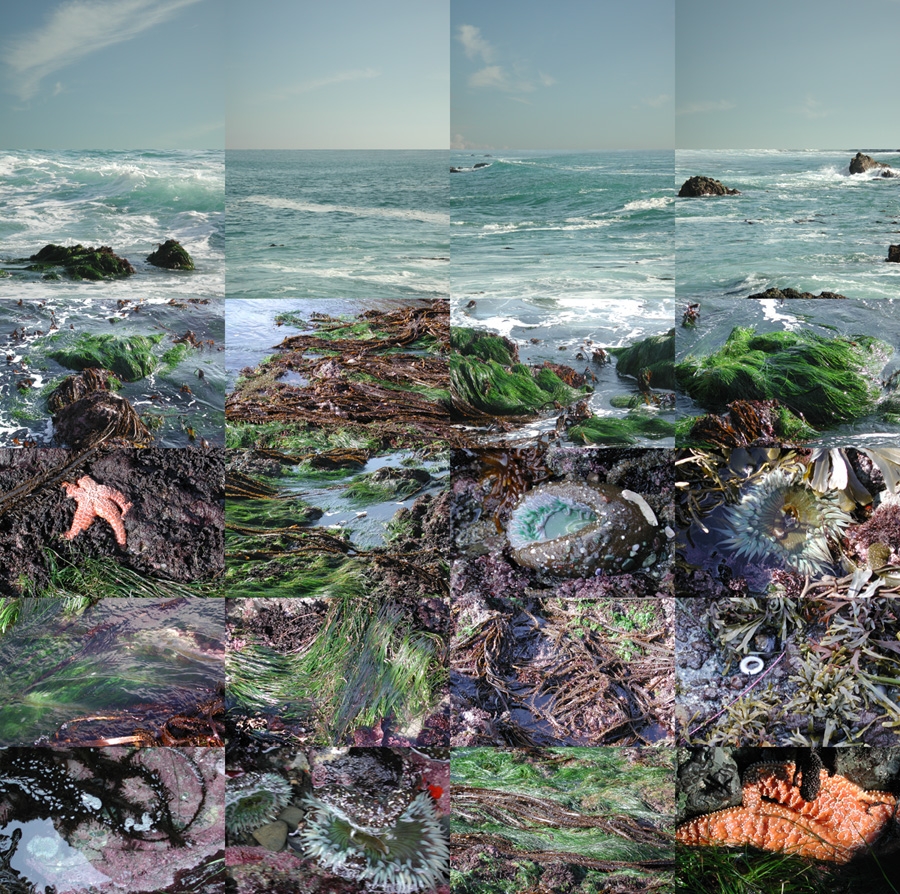
oceanside collage

MA: What did you think of the illustration that Matthew Chase-Daniel chose for your piece? Representational was probably out, given your subject matter and first line, but what meaning did you find in the image?

AF: Love it! My thoughts upon first seeing it went immediately to Olivia in her tree frog green hatchback, listening to the relaxation CD. If I were to read the story to an audience again, I would want the illustration projected on a screen behind me. Subtlety is a beautiful thing.


MA: Do you have any other projects in the works that you’d like to tell us about?

AF: Yes, please! I recently finished a collection of fiction I’ve been working on since spring 2005, called The Poor Children. “Isabelle’s Haunting” and “Layla,” both in the collection, have appeared in The Battered Suitcase journal and Short Story magazine respectively. I’m of course hoping to find a publisher interested in the entire manuscript.

I have two novels in early stages of development, but I want to finish editing The Poor Children before turning my full attention to them. There’s pressure on writers to say, “I’m working on a novel,” whether they are or are not; it’s like some arbitrary means of singling out the real writers from the wannabes. I prefer not to discuss my writing until I have at least a finished first draft. That time, for me, is private and vital to my relationship with the story, like when a mother bonds to her baby by nursing him for the first time. It’s when I make decisions and discoveries that are too fragile for external influence. Often when I feel the impulse to announce a new project, on some level I already know the project is a false start, and what I’m looking for isn’t approval but someone other than myself to blame.


MA: And finally, what does “recovery” mean to you?

AF: Recovery is the constant state of writing, even before the writer has formed it into words on a post-it note, a legal pad, a typewriter page, a computer screen. For me, it’s the voice that speaks to me on a morning walk about what it’s like living with a father who won’t get the toilet fixed; it’s the story with a first line I’ve rewritten ten times because something’s off, and I can’t tell whether it’s the rhythm, the diction, or the punctuation; it’s typing “END” and closing the Word file; it’s not writing anything greater than a grocery list for a week, maybe a month, maybe longer; it’s crying when I don’t know what else to do.

We’re always looking to take care of our work—to protect it from negative, destructive readers, to showcase it where it will be loved, to learn everything we must in order to make it as sophisticated as it should be. In that sense, our writing is always in a state of recovery; if it weren’t, we wouldn’t be so driven to care for it like a newborn baby, even when all authorities claim, “It’s ready! It’s fantastic! It’s won a prize!”

And we, too, are in a constant state of recovery; we’re not separate from our work, and sometimes we need somebody to protect us from criticism, to show us off and remind us we’re pretty awesome. I’m lucky: my family and closest friends all do that, even the ones who don’t understand why, exactly, I turned down a cushy five-figure job offer in favor of a ball-busting career that sometimes pays and sometimes doesn’t.

Interview with John Guzlowski

Anne Colwell: John, your poems are full of strong voices and are particularly dramatic, giving us whole scenes with these voices, wrought beautifully in concise form. Can you talk about the creation of voice in your poems — not just your voice as the poet, but your parents’ voices?

John Guzlowski: The voice of the poems came pretty naturally. In talking about my parents’ lives, I’ve tried to use the language that I first heard their stories in, language free of emotions. When my mother and father told me many of the stories that became my poems, they spoke in plain language, straightforward language. They didn’t try to emphasize the emotional aspect of their experience; rather, they told their stories in a matter-of-fact way. This happened, they’d say, and then this happened: “The soldier kicked her, and then he shot her, and then he moved on to the next room.” I’ve also tried to make the poems storylike, strong in narrative drive, to convey the way they were first told to me.

Another thing about the voice of the poems that’s important to me is that I’ve tried to incorporate my parents’ actual voices into the poems. A number of the poems contain some of the language they told those stories in. The first poem in the Lightning and Ashes collection, “My Mother Reads My Poem ‘Cattle Train to Magdeburg,’” is pretty much written as she spoke it. I’ve cut out some of the things she said, polished others in that poem, but the poem has her voice.

The poem “My Mother’s Optimism” that r.kv.r.y published is another example of using my parents’ voices. The story of my mother’s cancers and her recovery that the poem includes is given a sense of reality, for me, because I included four quotes from my mom starting with the quote in the first stanza:

“Listen, Doctor, I don’t have to tell you
Your job. If it’s cancer it’s cancer.
If you got to cut it out, you got to.”

When my sister Donna read the collection, the first thing she commented on was how much she could hear our parents in it.


AC: Speaking of drama, I haven’t had the chance to see you read in person yet, but I watched the video of the reading from St. Francis and I know that you are a powerful reader. Could you say a few words about what reading poems out loud does to the process of writing a poem for you?

JG: What I’m trying to do in a lot of the poems is to recreate my first hearing of the stories my parents told. I want to capture what they said, and I want to make the reader feel the way I felt when I heard the stories for the first time.

When I read the poems in front of an audience, I’m trying to channel my parents, their voices, their emotions, their inflections. I guess what I’m trying to say is that I’m conscious of the drama of their lives and the stories they told me, and I’m trying to pass that on to the audience.

Many of the poems were painful to write. My parents were troubled people who never fully recovered from what they experienced in the war. Writing those poems about them, I knew when I got them right because I was pretty much emotionally a mess. I knew when a poem was done if I was sitting at the desk with tears in my eyes.

Reading the poems aloud in front of an audience is sometimes hard for me because I remember the times when my parents told me their stories, and I remember the emotions that were going through me when I was writing the poems, and I remember my parents.

I sometimes hear their voices coming through the poems, and that’s hard.


AC: Both of us, I think, in different ways use poetry to try to understand and perhaps overcome the world our parents gave us. I was haunted by the designation “Displaced Persons” when I read it in your biography as a term applied to your parents and yourself, your community. It seems such a heavy burden at one level, but it has also been traditionally a very powerful place for the artist — standing outside society, looking in with a different perspective and insights impossible for “placed persons.” Can you discuss the way that placement and displacement have shaped you as an artist?

JG: The thing about displacement that has really shaped my writing is that I didn’t start writing about my parents until I was 31 years old. I didn’t want to have any contact with them and their lives and what my mother used to call “that camp shit.” I grew up in a neighborhood in Chicago full of survivors and refugees and displaced persons, and as a kid growing up I felt hobbled by all that sorrow and all that difference, all that apartness. I fled displacement.

I turned to books and literature and college, a world where there were no displaced persons, no refugees. During all those college years, I never thought much about the strange lives my parents had lived during the war. At least not until the very very end of my college career.

I was a year short of finishing my dissertation when I wrote my first poem about my parents.

I guess you could say that I had to be “placed” before I allowed myself to be “displaced.” I had to overcome their world, before I could enter it.

But even then, it was a slow process. It took me about 20 years to write the first 20 or so poems, the poems that became my first chapbook, Language of Mules.


AC: I love the way that your poems — I’m thinking here of poems like “Cattle Train to Magdeburg” and “My Mother Reads ‘Cattle Train to Magdeburg'” — look at different versions of the past and also the silences that surround them. Can you say a few words about the ways that your poems explore the past, what is recoverable and what is unrecoverable? This is especially interesting for the readers of r.kv.r.y.

JG: The process of writing the poems about my parents has been pretty amazing. It’s been going on for 33 years, and in some ways it even extends further than that. Some of the poems are based on stories that I heard when I was 5 and 6 years old. At the time, my father was the one telling me the stories. My mother didn’t want to have anything to do with telling the stories. I think she didn’t want to tell her stories because she was afraid of the effect they would have on us, her children, and I think she was afraid of reliving the horrors she had gone through. All of this changed after my dad died in 1997. My mother started telling me about her experiences then, and her versions were of course different in some ways from my father’s.

All of this complicates the stories and the telling of the stories and my reception of the stories.

The first poem I wrote about my parents is called “Dreams of Warsaw.” It addresses some of this complexity. It talks about my parents “leading unhurried lives” of “unhurried memories”—memories that are dreamlike.

The poems are like that for me. They are memories but memories recast almost as dreams.

There’s my parents’ years in the camps, my father’s retelling of that story, my mother’s retelling of that story, my childhood memories of their retellings, and then my adult attempt to place all of that within the context of my life and of course in the context of a poem.

So what is recoverable?

I wish I could say that everything is recoverable but that would be a lie.

Finally, I think that there’s very little that is recoverable.

When my parents were still alive, I felt that I could get to the truth of their experience, but now that they are both dead, I realize that I will never know what happened to them. And I realize also that finally I will never understand what they experienced. I’m pretty much only a tourist in their lives—poking here and there, looking around for some souvenir, a poem. The truth of their lives in all of its misery and suffering is something I’ll never know. And I think my parents would be happy with that.

But that doesn’t mean that I’ll stop trying to understand their lives. Every so often, I open up the folders that contain the notes that I took of my conversations with my parents and study them, looking for some clue to who they finally were and what was it that happened to them.


AC: So . . . maybe one question that’s more fun? It’s a beautiful autumn afternoon and you are sitting somewhere watching the leaves fall and reading a book of poems. Whose book of poems is it?

JG: That’s an easy one. Whitman’s Leaves of Grass. He was the first poet I really loved. After I discovered him in college, I carried around a thick volume in my backpack for years. I read him in subway cars, on beaches, in dark rooms with blue party lights. I especially loved the opening sections of “Song of Myself.” They were perfect. Here’s one of my favorite passages:

Houses and rooms are full of perfumes, the shelves are crowded with perfumes,
I breathe the fragrance myself and know it and like it,
The distillation would intoxicate me also, but I shall not let it.

The atmosphere is not a perfume, it has no taste of the distillation, it is odorless,
It is for my mouth forever, I am in love with it,
I will go to the bank by the wood and become undisguised and naked,
I am mad for it to be in contact with me.

What do I like in Whitman? The sense of openness, possibility, inclusion, confidence, equality, love, and hope. His world is never damned.

And here are some links to John’s other work:

Lightning and Ashes

My Father’s Teeth

What the War Taught My Mother

John’s BLOG

Interview with Allan Johnston

Allan Johnston

Joan Hanna: We were so happy to have your poem “Walking” as part of our October issue. Can you share with our readers a little about how this poem came about?

Allan Johnston: Actually, I remember very little about writing the poem. I was writing a lot every day at the time, and this was one of the pieces that came out. I wrote it over ten years ago, and for some reason I associate it with the parking lot at Oakton Community College in Des Plaines, Illinois, where I was probably teaching at the time.


JH: Are the themes in “Walking” typical subject matter for your poetry? What other themes or topics are you drawn to?

AJ: I find myself going all over the place thematically, though “getting on with life” seems an important one. I have more recently tried to write thematically connected collections, and this is a new direction for me.


JH: You published a full-length poetry collection Tasks of Survival (1996) and also a chapbook, Northport published in 2010. Can you give our readers a little more information about these books and how either your writing process or your poetry has changed in the time span between the publication of the two books?

AJ: Northport is a result of a thematically oriented collection. The poems are about the time I spent in the American Northwest in the 1970s, during what one could call the “back to the land” movement.

Tasks of Survival was a more eclectic volume, my first attempt to publish a book, and a learning experience. In Tasks of Survival I veered from spontaneous creation to strict order. Both books for me move outward from the self into nature.


JH: Are there any links to websites, other publications or links for purchase of your books you would like to share with our readers?

AJ: This link is my Columbia College page where there are lots of secondary links to online poems and other writings: Columbia College

The two books are best found on Amazon.com:

Northport and Tasks of Survival


JH: Thank you for discussing your work with our readers at r.kv.r.y. If you could answer one final question: Can you share with us what recovery means to you?

AJ: Recovery is an ongoing process of adjusting to what life has to give.