“Mermaid Rock” by Helen Branch


Image by Kristin Beeler

Adele sits on the wooden Adirondack chair, her elbows and hands resting on the paddle armrests.

The dense summer air makes it too hot to move. Gnats encircle her head.  She keeps her eyes and lips closed against them, but they whine in her ears and enter her nose.  She is stone, she thinks, although the sawn off edges of the chair are sharp against the skin of her thighs.

As a child, she had gone to the cabin with her mother and father.  It was the only cabin on the lake, surrounded by the wild woods. She had brought books to read, curling in the cushions of the swing seats hanging in the wide front porch.  The cushions were covered in green plaid material that had a plastic sheen and smelled of damp.  It was a time in her life when she could read all afternoon and be dazed when someone called her name.

She had gone swimming in the lake.  Parts were very deep.  She would float in an inner tube, her arms hooked over the rubber, warming in the sun.  The current would take her into ribbons of startlingly cold waters; she would tread to stay in pockets of warm.  Near the dock the water was shallow.  Adele could wade out twenty feet before she couldn’t touch bottom.  Another fifty feet beyond was an unusual rock formation.  Like an iceberg, most of the rock was submerged under water, but enough of it protruded out to create a mini-island in the lake.  She had named it Mermaid Rock.  The first time she really swam, she swam to Mermaid Rock.  There was just room enough for her to climb out and bask in the sun.

After her marriage, she had brought Tim.  When they drove in the first time she pointed out where to park, where pine needles dampened the ground and cleared off encroaching undergrowth.  He had gotten out of the car, breathing in the air, looking over the cabin and its porch facing the water.  She had been pleased watching him take it in.  He’ll love it as much as I, she thought, thinking of him opening an unanticipated gift.

He had stripped off his shirt, stepped out of his sneakers and shorts and in bare feet had run down the path onto the dock.  Don’t dive, she called after him.  It’s too shallow.

The heat continues into the third day.  She thinks I have made a mistake coming here.  That night, she reads by the light of a gas lantern, and then bored, she carries her lantern up to bed.  She peels off her t-shirt.  Drowned gnats are pooled in the hollow between her breasts.  She wipes them off and stepping out of her shorts, she lies down naked on top of her bed, and puts out the light.  Her bed is in front of a screened window.  She hears the awakening of the night as creatures move in the brush.  There is no breeze.

One time they had hiked into the woods.  Tim carried a backpack and in it Adele had packed some sandwiches and a thermos of iced tea.  They ate their lunch in a small clearing, sitting on a fallen tree trunk.  They saw a praying mantis clinging to a twig.  Look how large it is, Adele said.  Tim touched it, tried to catch it, but it fell into the grasses and they couldn’t find it again.

Adele lies in bed for some time listening to the woods. Inside herself she rustles and scratches, picking at things buried.  Finally, she gets up and running her hand along the wall, goes down the stairs and outside.  She leans against a round log post that supports the roof of the porch.  It is cedar, tall and straight, its bark peeled off and the surface hard and smooth.  She wraps her arms around it, places her cheek against the wood.  It is cool.  Where branches had been there are worn rounded knobs.  One presses against her hip bone and hurts.

They had walked until they came to the railroad tracks.   The ground on either side had been cleared of brush and the tracks themselves were on a long raised mound of earth.  It was steep to climb to the top but Tim scrambled up and walked from beam to beam.  Come on up he said.

There is no air to breathe, few stars.  The full moon is larger than life, a cool imitation of the sun, casting shadows that slide in place.  The light plays on the surface of the lake and, from where she stands, alone, she can see Mermaid Rock.

It’s a freight line, Adele had said.  It’s still used.  I counted one hundred and twenty one cars one time.  Tim squatted down looking up the line where the rails disappeared into the distance.  He sat on the middle of a tie and put a hand on each iron rail.  I’ll feel it coming before I see it.  And then he lay down, his arms outstretched.  Come on up here, he said.  It’s too steep, she said.

That was a sign, she thinks now.

Come on, let’s do it, Tim had said.  Here on the rails.  She said what? Are you kidding?  Outside where anybody can see?  The trains come through here all the time.  It’s too dangerous.

Tim had laughed, teasing.  It’s coming, he said.  I feel it.  Come up here now before you miss it.

Tim, she had called.  Get down now.  And Tim had laughed and said it’s coming, I can feel it.

Adele had looked down the line to each side, had climbed up a bit of the slope to see better and then she did see the train, a bright light on point.  Tim, she said, please, but she backed down and moved beyond where sharp gravel had been poured to keep back the weeds.  She could see Tim’s hands gripping the rails and now heard the train, the sound catching up.  Then the train arrived roaring over the rails, deafening and sharp with friction.  And, she couldn’t see Tim.  He had disappeared.

Adele had sat by the side, watching the train cars go past.  Car after car, minute after minute.  He’s rolled to the other side, she thought. She brought her knees up to her chin, sitting like she sat when she was a little girl at the edge of the fire pit her father made, watching the flames and sparks twirl up into the air.  When the last car went by, she climbed up the slope, looking for Tim, waiting to hear his laugh, laughing at her for her timidity, embracing her.  But, Tim wasn’t there.

She had headed back to the cabin.  How strange, how disorienting it was to walk back alone.  She knew the path and kept to it, checking off the landmarks as she came to them.  Could Tim find his way back without her?  Should she call the police?

When she had gotten back to the cabin, Tim was swinging in the hanging chair under the roof of the porch.  How did you get here ahead of me, she cried.

She thinks now, she will swim to Mermaid Rock.

The path down to the lake is steep.  There are flat stone steps and a dirt path.  She walks carefully, the sharp little pebbles biting into her feet.  She reaches the dock.  There is a ladder on the side of it so that you don’t have to pick your way over the slippery green muck near the shoreline.  Turning around, she steps backwards and down.

Tim had gotten tired of her.  She was a drag on him.  They never did anything, he said.

The first brush with the water is a surprise.  Her breath catches high in her throat. She pauses as the water laps around her ankle.  She takes her next step down and the coolness twines itself around her shins.  The next step brings her to the bottom.  She stops there, feeling the sand and pebbles slip under her feet, the water rocking, and then settling as she stands.

The surface of the lake is unbroken until Mermaid Rock pushes through.

Adele wades out away from the dock.  The lake bed yields to her with little whirlwinds of sand.  The water raises cool up her legs, up her thighs.  She holds her arms up, arced in front of her, above the surface of the water and still she goes deeper.  The water’s edge laps over the curve of her hip, rising to below her navel.   Adele holds her stomach in tightly as every pulse of the water reaches new skin.  A flush of cool sensation ripples up her chest and radiates around her breasts drawing each nipple tight.  Looking down, the moonlight is reflected. She is bisected now, two Adele’s.  One is heavy, above the surface, clammy with the day’s sweat.  The other glows softly, cool, her pubic hair curled densely with small seed pearls of air, little baubles that lift themselves and circling, float up.

She takes a breath and tilts forward, falling.  The water catches her.  Her arms shape a v for her head.  She lifts her hips up, pushing her torso down under the water and forward, moving to Mermaid Rock.   The cold, through her hair, down her neck, engulfing her is stunning.  But, as quickly as she feels it, the shock is over.  The water rushes against her ears, supporting her weight, but beyond that, the water has ceased to exist like the air she breathes.

It takes only a few short strokes and she is at her rock.  She touches it with her hand.  It is granite, hard and studded with quartz that glitters in the moonlight.  She climbs up it and the lake sends out ripples to the shore that echo and then grow quiet. She lies on her back, her feet still under water, her spine following the gentle upward curve.  Adele shimmers like Mermaid Rock in the night.


Helen Branch is pursuing an MFA in Creative Writing at Fairleigh Dickinson University.  She holds a BA in Political Science and a Masters in Industrial Relations and worked in Human Resources before resigning to raise her two sons.  She currently volunteers at a domestic abuse agency.

Read our interview with Helen here.

“The Revolving Door” by T. J. Forrester

postcard
Image by Kristin Beeler

Sometimes the nurses call us by our full names. I don’t know why. Maybe it offers insulation from the inevitable, or maybe dying creates such gravitas the weight of our first-n-lasts give the halls the resonance a hospice deserves.

Like I said, I don’t know why. I do know the nurses are the only ones in the place resigned to our deaths.

Demetri–silk thong aficionado–isn’t dying until a Democrat is elected president. Michael isn’t dying until the tech stocks rebound. Newly converted, he carries a bible and preaches repentance. The only heterosexual in the northeast wing is Chad Quail. Michael disputes Chad’s sexuality, claiming he crotch-watched while they had tea in the sitting room. Demetri, of the opinion no queer eye can resist a pink thong, swears Chad is straight but not narrow. Demetri is correct. How do I know?

I am Chad Quail, and I am the longest living resident.

We share a house on Jump Street in St. Louis, Missouri. Our rooms are small and spare and nearly identical. Mine is decorated in Ocean Delight, and I have a beachscape on the wall above my desk. I spend my time on a computer researching addresses of old lovers, an activity that brings little satisfaction. Michael, the broke stockbroker with the newfound righteousness, says writing letters is my way of staying alive.

Bah.

A rap at my door, and a nurse enters. That’s another thing that comes with dying. Or should I say, goes with dying. Privacy. I could have been whacking off. Not that she’d care. The old biddy probably hasn’t had a lover in twenty years.

“You missed breakfast,” Mrs. Franklin says.

Her blue eyes look me up and down. She smells like strawberry shampoo and her uniform bulges at the waist. Like the night nurse, and the weekend nurse, and the nurses who fill in, Mrs. Franklin speaks in a professional voice tinted with diplomacy.

I shift the pad on my desk. Today, I addressed a letter to Skyler Langley, a young woman I remember vividly. She had brown eyes and boobs that hung to her belly button. Skyler wouldn’t let me touch her boobs, although one time I snuck a grope when we were doing the nasty. They were mushy as mashed potatoes.

We met in a bar when I was bumming around Tampa, Florida, and two days later we were naked in her trailer with an eight ball of coke and a needle. I’d never put drugs in my arm, but she sweet-talked me and I’ll never forget that rush. My heart beating like an insane drummer, my johnson so hard she rode it for hours. In the morning, we fought, I remember that, and she gave me a black eye and I think I broke her ribs. We were together for three months, then she went into rehab. I never saw her again.

“Time for your cocktail,” says Mrs. Franklin. She holds a silver tray with two glasses of water and a cup brimming with pills. At that moment, I am struck at how little we know each other. I suppose, if she had a son, he’d be about my age. She grasps my elbow and props me in my chair. That’s the thing about hospice nurses. They spend their days plumping pillows, buttoning collars, zipping pants, and when they see an out-of-kilter patient, they unreel their plumb bob and make an adjustment.

“I’m not a two-by-four.” I purposefully tilt toward the floor, and she shoulders me upright.

“You take your pills by lunch and I’ll sneak you an extra slice of apple pie.”

“How are the homos this morning?” Yesterday, Demetri curled into a fetal position. He’d better snap out of it; his birthday is next week and I ordered a gift, a heart-shaped thong, from Victoria Secret.

“Don’t you worry, Chad Quail, you take those pills and we’ll see about getting you that pie.”

“My shoulder itches.”

“Here?” Her fingernails ripple my skin, and my chin droops to my clavicle. The touching . . . I miss it most. In here, no one touches.

“A little to the left. . . there . . . that’s the spot.” I yip and paw my stomach. I like it when she smiles.

~

Dear Skyler,

How ya doin snookems? Long time no see.

I pause and ponder my chicken scratches, then flip a page and doodle. Sometimes I think about women I almost bedded but didn’t, the ones who said “no” for whatever reason. Was that divine intervention, a voice inside their heads saying, “Tell him you’re on your period, or you have a boyfriend, or you have the clap. Tell him anything but don’t let him stick it inside you.” Of course, back then I didn’t know I was sick, a small consolation, because I for sure knew I took chances with the needle. If I gave them something they couldn’t shake, it was their fault as much as mine. And visa versa. I mean, let’s get real, my illness isn’t an Immaculate Infection. Someone gave it to me. Was it Skyler? That guess is as good as any.

Dear Skyler,

Whatz up? Bet you don’t know who this is?

The doctors say I contracted the disease twelve years ago. Out of the 172 women on my list, that puts approximately 90 in the danger zone. But I can’t dwell on it. That’s why I write my letters, to keep my mind off things. I opt for my standard approach.

Dear Skyler Langley,

I regret to inform you that . . .

Skyler’s letter is letter number twenty-one. The previous twenty, mailed over the last eight months, elicited three responses. I haven’t read them. For now, telling them is enough.


WEDNESDAY IS LOVING HEART MIXER DAY, the noon hour when residents meet in the sitting room and stare at each other. It’s winter and ice crystals coat the windows. Outside, snow swirls and according to the weather channel the air is a crisp 28 degrees. The chairs, sofas, recliners, are arranged in a circle. A table in the center has chips and dip; and lemon punch in a crystal bowl. Michael and I are early. He holds a bible on his lap. His fingers, long and gaunt, riffle pages.

“It says it right here.” Michael’s eyes bulge in flesh-tightened sockets. “The unrighteous will suffer mightily at the hand of God.”

We are dying for the same reason, and while I think it’s intriguing my favorite body part played a role, Michael doesn’t appreciate the irony.

“Demetri’s still in bed,” I say. “I think this is it for him.”

From the southwest wing, cancer patients stumble into the room. They are five strong, three women and two men, bald-headed and scrawny, white gowns draped over their shoulders. In a way, I envy them and their disease. To die without guilt is a gift.

From the southeast wing come the Alzheimer victims. There is nothing in their eyes, not even a reflection. Nurses with firm hands push the wheelchairs. I don’t envy the ancients. To live without knowing is a fate no one deserves.

From the northwest wing, alcoholics file around the table and sit on the sofa along the wall, limbs swollen like boiled hotdogs. Their faces wear a perpetually surprised look, as though the bottle snuck up and hit them on the head.

“It’s like West Side story,” Michael says. “We’re the Crips, and the Lushes are the Bloods. The Chemos are the Mexican Mafia, and the Airheads are the Cosa Nostra–”

“Shut up,” I say.

“Fucking faggots,” an alcoholic says, and rocks back and forth.

“Chad’s not gay,” Michael says, and I’m surprised Demetri’s opinion dented Michael’s hard-boiled brain.

A woman, her dome shining under the fluorescent lights, speaks in a whispery voice. “Can’t we all get along?”

The joint cracks up. I laugh so hard snot runs out my nose. Michael pounds his knee, and the sour alcoholic has tears on his cheeks. It feels good to cut loose, like we staved off Grim Reaper for another day. Too soon, though, giggles subside. No one eats. No one drinks.

At 1:00, a voice on a speaker puts us out of our misery. “Ladies and gentleman, we hope you enjoyed the Loving Heart Mixer. Please return to your rooms.”

Glass enclosures line the hallway and inside each cubicle, ash-filled urns, like respectful sentries, watch our passage. It doesn’t surprise me residents who die here choose to remain here. We are modern-day lepers, the diseased limb society has severed. Up ahead, Michael slows and I sneak behind him and pinch his ass.

“Bitch.” He slaps my hand.

“Just trying to make you feel at home.”

“It doesn’t help.”

I am instantly sorry. Sexual overtures, even if they are made in fun, are a no-no among the dying. There is nothing attractive about two bone-racks slogging to their rooms so they can choke down their next round of horse pills.

I make a right to Demetri’s room and Michael continues down the hall. My friend, a knobby lump, lies under a blanket. All I can see is a tuft of black hair. I know he doesn’t want to talk. We have a lot in common, he and I. He was a mason, myself a carpenter, both drifters, both flunked out of college. Me because of a woman, him because of a man. On his walls dangle a variety of pink thongs, and I suspect they are there to remind him who he is. I stand quietly for a few minutes, then leave without saying goodbye.


IN THE GARDEN, March tulips are aflame. Clouds laze across the sky. Mrs. Franklin wheels me under an oak tree and says she’ll come back in an hour. Michael and Demetri are dead, and I’m strapped in a chair. Under my hospital gown is an elastic diaper, an embarrassing development, but my biggest worry is my fingers. Stiff and complaining, they make writing a chore.

Yesterday, I sent a letter to Joy Goochland. She was a bartender in Seattle when I was living out there and selling crank to college kids. She was fifty-five, fifteen years older than yours truly. I won’t lie. Glands under my throat were swollen and I’d had trouble shaking colds, so I suspected something was wrong. I didn’t dwell on it; the sex was too good to pass up.

“Chad Quail, you have a visitor.” Mrs. Franklin has returned, and with her stands a black-haired woman wearing a lavender blouse. The woman’s hair feathers across her forehead and she tucks the strands behind her ear. The curve of her throat stirs a memory too buried to surface, but I know her, I swear I do.

Mrs. Franklin leaves, and I study the woman’s face, trying to pick up a clue. When she speaks, her gaze sharpens and her words tumble. “You mailed my daughter a letter. She’s dead, I want you to know that. Been dead six months. She’s dead and she’s not coming back.”

The woman wraps her slender fingers around my wrist, squeezes until I wince and pull away. Her voice is hoarse, dark and dank, from a place I don’t want to go.

“My baby’s dead.”

I see her now, I see Skyler’s face in her mother’s, and I work spit around my mouth to loosen my tongue. The words don’t come at first, and when they do, they’re garbled.

“My name is Chad Quail and I’m a medical miracle. I should have died two years ago and the doctors don’t know why.”

“What?”

“I’ve seen seventeen Homos die. I’ve seen fourteen Chemos, seven Lushes, and four Airheads die and I’m still here. I’m still here and I don’t know why.”

“Didn’t you hear me? My baby’s dead.”

“Demetri died three days before his birthday. I still have his present in my room. Michael died on Valentine’s Day and wanted to be cremated with his bible. I’m still here, Chad Quail has outlived them all.”

The woman’s brown eyes, Skyler’s eyes, no longer focus on me. She turns, and walks down the curved sidewalk and disappears inside the hospice. My bowels relax, and sludge warms my crotch. I cross my arms and ponder the visit. What should I have said? Your daughter was a junkie and it’s a tossup who killed who. Bah. The blame game is for the uninfected.


IN THE MIDDLE OF JULY, the nurses hold a barbecue on the lawn, and if I worm up my pillow and look out the window, I can see residents in white gowns, some sitting in lawn chairs, others in wheelchairs, a few standing. Faces have changed but the illnesses have not. The only constants in the joint are the nurses; the floors, the walls, and the ceilings; the Wednesday, Loving Heart Mixer, which I no longer attend, and of course, me. It’s going on two and a half years, and I’m still here. Fourteen more Homos have died. I can’t keep up with residents in the other wings; lately the revolving door spins so fast I’ve lost count.

Nurses grill sausages and hamburgers. A breeze drives smoke downward, and a nurse coughs and turns her head. Under the oak, my favorite spot, a cancer patient nibbles a hamburger, then doubles over and vomit spews from his mouth. He puts down his plate and wipes his chin. An Alzheimer patient chews a hot dog, the pace of her jaw reminding me of a straining locomotive.

I wish the hospice would bring in someone dying of something different, anything, I don’t care. Give me a Muscular Dystrophy or a Lou Gherig’s Disease or a Parkinson’s. Give me anything but what I’ve got.

I’m sick of it all, but mostly I’m sick of writing these letters. The response stack no longer fits in the desk drawer, and envelopes are stacked alongside the computer. I’m working on a letter to Judy Prescott. My memory, once so clear, has hazed, and although she’s the last lover on my list, I can’t see her when I close my eyes. We met in a Greek restaurant in San Francisco. She smelled like Juicy Fruit, I do remember that. I also remember she was half my age, and liked rap. We didn’t last long. Oh! That’s right. She had red hair, close cropped, like she went to the barber instead of a stylist. I might have been her second or third lover. She hadn’t had many.

Today, I scratched out a consonant and tomorrow I’ll add a comma and then the day after tomorrow I’ll start on the message. The two words are barely legible, letters scrawled in starts and stops, but maybe she’ll recognize her name.

Mrs. Franklin bustles into the room. She takes my temperature and wipes sweat beads from my forehead. I close my eye, a slow droop, open it, then force my lips apart in what I hope is a smile.

“Why, Chad Quail,” she says. “Are you flirting with me?”

I nod.

She takes the pencil and pad; and puts it within easy reach. Although she knows how difficult it is for me to work my fingers, she has not offered to write my letters. I don’t hold it against her. Outside, a summer shower surprises the party, and the residents and the nurses scurry for shelter. Smoke from the grill whitens, then stops altogether. A patient in a wheelchair, a man with wiry, white hair, turns his face to the clouds and spreads his arms to form a cross. His gown is drenched and water drips from his elbows. It is a symbolic gesture. In here, everyone, sooner or later, welcomes death.


LABOR DAY COMES AND GOES, and I am still here. I’ve completed my letter to Judy Prescott and it’s folded inside a stamped envelope on my bed stand. October and November rumble in and out of my life, and I am still here. It’s been seven months since I received a response, and dust collects on the letter pile on my desk. I recognize some of the names on the return addresses—June Popular, Holly Mackinaw, Mary Sue Treadwell, Tyesaha Buttons—but some are unfamiliar and these I suspect are the fathers, the mothers, the brothers and sisters, the distraught husbands.

In December, Mrs. Franklin transfers to the Alzheimer wing, but she comes and sits with me in the evenings. I don’t know why. I weigh sixty-six pounds, and I’m all bone. Most of the time a white sheet covers me from neck to toe, but during the sponge baths, I can see, I can see what’s happened to me. My ribs peel from my sternum in hard curves, and my arms, thin as straws, lie motionless at my sides. My legs have atrophied and protrude from my pelvis like grisly crowbars. Chad Quail looks like someone attached a suction hose to his ass and sucked him dry. Where did he go? What happened to the 180-pound man, the sexy guy who could get any woman, what happened to him?

Now, with the Great Beyond closing in, when the guilt drawer opens I don’t have strength to slam it. Sleep is my only reprieve, but I’m scared, I’m scared to sleep. Most days, I stare at the ceiling and think about the letters. They are the only unknowns in my life. The only dumpsters I’ve not crawled into.

Outside the oak leaves flutter and twist in the wind, some floating to the ground, others clinging to limbs. Mrs. Franklin is by my bed, the letters in her lap, and she reads somberly. I catch a phrase now and then, but my gaze is on the ocean mural above my desk. There’s a small boy with a bucket and a red shovel, and he hovers over a sandcastle. Over his head, against the turquoise sky, a gull is in full flight. Mrs. Franklin’s voice drones in the background.

Go to hell.

I imagine the sounds of the beach; the rhythmic crash of breakers on sand; the growl of the motorboat in the distance; the faint buzz of a seashell held to the ear.

Thank you for having the courage. . .

I can smell sunscreen, mine? and cool, ocean air. It’s salty, and clean.

Bastard.

The sand is gritty under my feet, and the sun is warm on my face. The water laps against my legs, then my waist, but Chad Quail will go no further.

I forgive you.

Mrs. Franklin puts down the letters. She holds his hand. She wipes his forehead. Chad Quail, are you ready to mail it now? Are you ready to mail this last letter? He studies the sky, the water; he smells the air; he feels the wet sand between his toes. He focuses on the young boy, the boy on the sand with the shovel and the pail, the boy with the quizzical look, the innocent, the boy with a future. Life is short, Chad Quail thinks, and slides into the surf. Yes, he says over his shoulder, yes, please, if you have the time, please send that last letter. The waves lap his face and he strokes hard for the watery air. It’s time, he says, it’s time.


T. J. Forrester has a debut novel forthcoming February 1st, 2011. He wrote Miracles, Inc. while living in Virginia. The attic room was small, chilly in the winter, but his landlord was very kind and fed him when he was without food. His stories have appeared in numerous literary journals, including The Emerson Review, Harpur Palate, The Literary Review, The MacGuffin, The Mississippi Review, Potomac Review, and Storyglossia.

Read our interview with T.J. here.

“Weight of the Moment” by Jeffrey Hess

place setting with wine
Image by Dawn Estrin

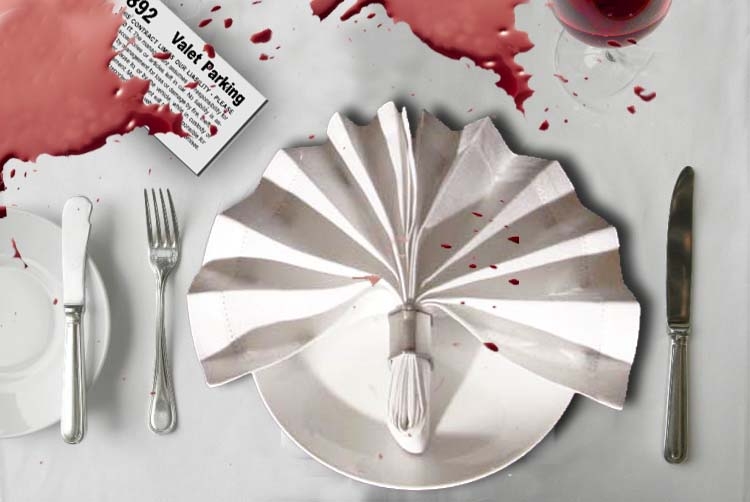
As Hank rolled to a stop in front of Bern’s Steakhouse, the valet opened the door for his wife, Laura. The ride was short and uneventful which gave him the feeling that the evening might go smoothly.

It was their eleventh wedding anniversary and Hank took a moment to check his face in the rearview mirror. He wished he had shaved again before leaving.  Sex was guaranteed on anniversaries and a full day’s beard reddened Laura’s soft flesh. It was the kind of oversight that might put her out of the mood. He suppressed the thought by extracting himself from behind the wheel in time to see Laura hand the valet a twenty-dollar bill. It wasn’t the money that annoyed him but the coy smile she shared with the skinny bastard.

The kid met Hank by the trunk of the car, waved a ticket stub in his face like a cigarette being discarded.

On the other side of the revolving door, he said  “Twenty dollars? Really? It’s a BMW, not a Bentley, honey.”

“Enough,” she warned.

He watched her walk ahead of him, searched her back for signs of annoyance.

She’d been the same weight since college. Exact same size. And why shouldn’t she be? With what Hank paid to the long list of personal trainers and coaches.

Once inside the dining room, Laura sat to Hank’s left at their usual table. The chair was small beneath him and despite the padding, the edges of the seat cut into the backs of his thighs.

“It’s crowded in here tonight,” he said.

Without looking up from her menu, she said, “It’s always crowded in here during tourist season.”

He scooted as close to the table as possible, tucked his feet under the chair, then sank back. If he had stayed in his suit, he would have had the wingtips. He wished he’d at least worn socks with his Topsiders. He said, “It’s crowded tonight.”

“You already said that.”

Laura’s hair was down, framing an oval face as creamy as cashew butter. Hank looked down at his menu trying to ignore the warm current of heat radiating between the side of his knee and the front of hers. He wished they could skip dinner and go straight home. It had been so long since they were intimate. He wanted to find out if she still kept her privates bald as a peach or if she had grown hair there again. Hank shifted, tried to provide some slack in the front of his trousers.  Eleven years, and she still gave him spontaneous erections.

He’d been doing okay on Atkins lately, not going gangbusters, but not depriving himself either. He pulled at his shirt to flatten the material against his chest, hoping she’d notice the weight he’d lost in the last couple days. But she never noticed. Or if she did, she kept it to herself.

After a moment, they made eye contact. Hank smiled and looked down at the silverware. Neither reached a hand across the table toward the other, they never touched in public.

The saliva in Hank’s mouth grew thick. Nerves did that to him, but three sips of mineral water diluted the pastiness and made his teeth slick.

Laura lifted her linen napkin and motioned toward her forehead, pantomiming one of those little signs they’d worked out years ago.

He looked at his napkin folded on his plate in the shape of a fan, the crisp edges shiny from too much starch. He picked it up–knew what to do. The napkin sucked moisture like sponge cake.

Laura smoothed her napkin and looked up. “Tourists stay down here later every year,” she said.

Hank nodded, watching her mouth, but not hearing her words. Those lips, perfect even before the collagen.  Her nail polish the same shade as the roses he’d sent that morning.

The waiter approached the table like a quarterback receiving an award—wavy brown hair and a red server’s jacket in place of shoulder pads and helmet. Hank ordered a bottle of Cabernet ignoring the fact it would overpower the salmon he planned to have.

The waiter lingered, asked Laura about every detail of her meal. Meanwhile, Hank sorted through the wine list and double-checked the bin number. When he looked up, he could have sworn he saw Laura smile at the waiter with even more eyebrow and teeth than she did with the valet. It gave him a spasm under his sternum. Made him cough. Wiping his mouth with his wet napkin, he convinced himself he was reading too much into it. It was nothing. Just courtesy.

He stared at Laura, undressing her in his mind—those legs, the curve of her ribs, the scar on her hip from a bicycle accident as a child. The waiter came back to open the wine. Without asking, he poured the sample in Laura’s glass. Hank gathered his voice but swallowed it when he saw Laura smile. “That’s awfully good,” she said with a sigh.

He closed his eyes. They had celebrated ten anniversaries with no catastrophes, other than that brief incident on their fifth, when they were staying at a dude ranch in Montana and he’d first gone carb free and ordered the Cowboy Buster 32-ounce, boneless rib-eye, and suffered through every bite while other diners had left their tables to crowd his and watch with excitement and speculation. Every bite was like an inning in the World Series. After finally “beating the meat” Hank received a commemorative certificate and a free “Cowboy-Buster Buster” t-shirt. Size 4XL. He would rather have had his dignity back.

He’d packed on more weight in the years since and regretted every pound.

A toast, he thought. But instead of speaking, he watched Laura sip her wine. The lifting of the glass. The arching of her neck. Whenever he watched her, he felt voyeuristic. Like some hidden-camera peeping Tom stealing eye-time; peeking at his own wife.

He huffed the wine’s bouquet. Sucked in a chest-full of ethereal magic, all red and velvety and rich. Oak overtones and raspberry crème brulée. He raised his glass. “Isn’t this excellent, darling?”

She shifted, re-crossed her legs. “We should get a case for the house.”

He nodded without meaning to. It was a reflex. He didn’t approve of her bottle-a-day habit, especially at a hundred dollars per.

Her blouse matched her eyes and illuminated her face in a glowing blue-gray radiance. He’d like to tie her arms with the matching sweater when they got home.

“What are you looking at?”

“Most beautiful bride ever.” He breathed the words as he leaned back, proud for whipping out a spontaneous line so quick, so concise.

“Please.” She stared into her wine. “I’m hardly a bride.”

He searched for a counter to her remark, something clever, but came up blank. That’s why he was in real estate law instead of a trial lawyer. He rarely had the wit. That ability for dialogue. But this should have been a meatball on a silver platter. Perhaps it was nerves. He’d been a jumbling bag all day. Sex on their anniversary had been wordlessly scheduled. And today was a conjugal visit.

Sitting at that table he fantasized about feeling Laura’s palms on his chest, her nails pulling at the flesh, like a greedy animal. Like in the wild. Carnal. Before the image faded, his stomach rumbled. He’d only had one burger at lunch. No super-sizing today.

He tried to look calm there in his seat in the restaurant as he patted the top, then back, of his Berber hair, hoping none of it sprang wildly as it was prone to do. He turned again, this time remembering to tilt his belt buckle, and looked at Laura. It would be a long time before another opportunity appeared on the calendar. He threw her a slow wink. Her features softened. A swell of hope floated over him.

When their food came, he prepared himself. It was time to eat, not indulge. Feel hungry. Be hungry. He repeated it like a mantra.

DESPITE INTENTIONS, the internal shark devoured a feast he didn’t remember ordering.

What happened to the fist-thick slice of beef? All the Amaretto-soaked carrots, that huge potato, the onion strings? That scalding bowl of French onion soup, the cheese on top so thick that he had to cut it with a knife? And what about that monster Caesar salad, prepared tableside, with a near-violent scraping as the waiter mixed the anchovies and garlic? Did he really eat all of his salad and half of Laura’s too? What about the entree?

He again looked to his plate hoping for the image to change, but it was as empty as Laura’s expression. She was silently reapplying her lipstick and Hank wished he had ordered the fish as he’d originally planned.

She sat back. “Well, that was delicious.”

He panicked. His plate was clean. Hers too. Laura never finished more than half of anything she ordered and always offered him the rest.

Now, his diet was blown and he couldn’t bear to think what she would think of him when she saw him naked in the pale light from the streetlamp flooding their room later that night. He sucked in his stomach, tried to hide his fear. “I’ve got to go to the bathroom. Be right back, sweetie pie.”

“Stop calling me that,” she said.

Climbing the marble stairs to the men’s room, he stopped halfway, caught his wind. Breathing in heavy wads of air, he looked up. Nine more steps. Instead of stopping at the top, he walked directly to the men’s room. At the door, sweat rolled down his back. His shirt stuck to him.  He entered the stall. He was a marshmallow in a matchbox.

He pressed his arms against the stall, bent over the toilet, poised to do the only thing he knew that might get him in bed with Laura later that night. Staring at the bowl, he tasted the salty remnants of garlic toast on his index finger as he wiggled it over his tongue, past his tender uvula. As he reached the reflex point, his stomach heaved into his ribs with a dry convulsion that made his anus constrict and his heels lift off the tiled floor. Nothing came out.

“Damn it,” he yelled and then leaned forward again. In one fluid motion he opened his jowls a little wider and forced his finger past the trigger point. That effort got the finger deeper. Better angle. Hit the spot. The reward was a colorful regurgitation of all he’d just consumed. A violent flow pulsing in subsequent waves. Coughing back the bitterness in his throat, Hank hunched over the bowl. Hands on his knees. A triple-take shudder rolled through him. Was there really that much in there or did the water make it look more voluminous? He guessed the carrots made that glowing shade of red by combining with the wine, or possibly the pound of Chateaubriand he’d downed.

Streaks of vomit splattered down the yellow backdrop of the silk shirt Laura had given him that morning as an anniversary present. The stains formed a purple zodiac design as they expanded through the fibers of the material. The only sound in the room was the dusty exhaust fan, directly over the stall. Spinning in clicking revolutions. Sounding as if it were chuckling. It was the sound of God Himself, looking down and laughing. He realized that the opportunity to have sex with his wife had been purged as well. Even if Laura could get past this sulfuric smell on his clothes, he would never get his breath fresh enough no matter how many times he brushed, rinsed and repeated. And he could floss a hundred times but he’d never have the confidence of cleanliness. The stress wouldn’t help matters downstairs either.

Dieting had always been an illusion. Just like Laura’s fidelity. He’d hidden from the reality of both issues the way a bear hibernates to avoid winter, but his cave was the refrigerator. His pillow was the cookie jar. The further he sank into self-pity, the more he couldn’t blame her, and the more doughnuts he grabbed for buoyancy.

He’d never caught her. Never got off his ass to investigate. But he’d never wanted proof. It was easier to digest a Titanic wad of suspicion than it was to risk a morsel of evidence.

He stood and leaned on the back wall, resting his head on his meaty forearm. After swallowing hard several times to clear the biting acid that coated his teeth, he muttered, “Christ.”  He felt, not empty, but hollowed out, like a melon scraped raw from the inside but left just as round on the exterior as he’d been before. It was surely too late.

This thought circled his mind as he flushed the pungent contents and watched them swirl around the bowl. If only he could pull a hidden lever on his body and flush away the excess pounds, never to see them again.

In the mirror over the sink, just like at the beginning of his day, Hank saw a blob looking back at him. A stained sack of failure. Wiping them with a paper towel, inhaling the strawberry fragrance of the soap, he hoped it would dilute the smell of vomit. He wondered how he was going to explain this to Laura when he went back to the table.

Hank reached for his mints, filled his mouth with them until he was on fire, and headed back to the table.

The restaurant was mostly empty now. Laura seemed perfectly content talking to the waiter, her posture relaxed and casual. She plucked at the platinum chain around her neck and tossed her head back in laughter. The chain was his anniversary gift to her. She’d purchased it herself at Tiffany’s earlier that week.

Hank looked at the waiter, whose arm was extended, the sleeve of his jacket pushed up.  Laura was tracing his tattoo with her finger.

That acid taste returned to Hank’s mouth.  His arms quivered with some primordial instinct.

Laura’s thick lips tightened when Hank approached.

“What happened to you?”

“Forget the shirt,” Hank said. “What’s going on?”

“I was just keeping her company,” the waiter said, “ ‘til you got back.”

Hank charged the punk. Got street-fight close. “Well, I’m back.”

“Hank!” Laura said, her hand on her throat like a southern-sorority girl.

His caveman arms flapped at his side, up and down twice, “So take off, pal.”

“Easy, buddy.”

Hank grabbed the waiter’s shoulders.

He stepped away. “No need to make this physical, man. I don’t want no trouble.”

“Bring me the check.”  He took his seat.  Sweat rolled down his back.

“It’s been taken care of. The lady paid cash.”

“Good,” Hank said, then stood.

As he came around the table, Laura touched his arm. “I’ve never seen you like this,” she said, looking up into his eyes.

Hank didn’t speak or pull her chair out for her. Instead he fished into his pocket, retrieved his valet stub.

Outside, he tossed the stub onto the valet stand and watched the kid’s shirt billow in the breeze as he ran to get the car.

Hank walked to the driver’s side as his car pulled up.

Holding a ten-dollar bill, he asked, “You got change for this?”

“Not on me.” The valet reached for the bill.

“Fuck you, then.”

Hank wedged himself behind the wheel and drove off, not even looking in the rearview mirror.


Jeffery Hess is the editor of Home of the Brave: Stories in Uniform an anthology of military-related fiction (www.homeofthebraveanthology.com). He holds an MFA in creative writing from Queens University of Charlotte and his writing has appeared in numerous corporate publications and websites, as well as in The MacGuffin, Plots with Guns, The Houston Literary Review, the Tampa Tribune, and Writer’s Journal. He lives in Florida where he leads a creative writing workshop for military veterans and is completing a novel.


“Fallen” by Alicia Gifford

Fallen
Image by Dawn Estrin

On the one-hundredth day of not speaking, Max called, wanting to reconcile over drinks at the Polo Lounge. Toni scurried to Nordstrom’s and bought a way too expensive little black dress with a neckline down to there, and splurged on a ridiculous pair of sparkly fuck-me shoes and a beaded little ladybug bag.

She showered and shaved, perfumed and plucked; she took extra feminine hygiene measures and then chugged over Coldwater Canyon arriving thirty minutes too early, so she drove around Beverly Hills and scored a traffic ticket for a slow slide through a stop sign. She made an okay living as a new junior associate at a Miracle Mile investment firm, but lately her spending was a whole robbing-Peter-to-pay-Paul ordeal, and the last goddamn thing she needed was a ticket.

But Max!

At five minutes to seven, Toni pulled up to the hotel entry and the valet took her VW Beetle, she so glad that she’d run it through the car wash a few days ago and emptied it of  the fast food wrappers and empty Starbucks cups . She’d been grieving-by-drive-through, and if it weren’t for the fact that she regularly paced half the night instead of sleeping, she would’ve gained more than the five pounds that went straight to her tits and ass. The extra jiggle made her feel more present in a room.

She made her way to the Polo Lounge, sat at the bar and ordered an appletini, feeling break-through sweat in her armpits despite two layers of industrial strength deodorant. Birds batted in her chest. Max thrilled her deeply, viscerally. She could devour him like a ham sandwich.

At seven-fifteen, she ordered another appletini.

She’d loaned him a hundred dollars. It was clear that it was a loan. Mostly, she paid for their nights out, and Max liked his nightlife. If Max had some kind of acting gig, they’d split expenses and she was more than glad to do it.

But it was definitely a loan and all she did was ask when he thought he could pay her back. She asked because it had been a few months and he’d gotten some bit parts on a few sit-coms and then he’d flown to Vegas for a few nights with the guys, and so she thought maybe it had slipped his mind or something.

He wrote her a check, mad, stopped calling, and wouldn’t return her calls.

The check bounced.

And she grieved, given to sudden crying jags, insomnia and the comfort of a cheesy bean burrito. The irrational love-junkie in her knew how to kidnap and kick the shit out of her self-esteem and logic.

She hoped that Max would fuck her tonight. She needed a fuck and even though the fucking wasn’t all that great with him, even though he was pretty selfish and awfully quick, the possibilities of what it could be kept her hooked.


AT SEVEN-THIRTY the man sitting across from her raises his drink. Hers is empty again, but she raises it and the man indicates to the bartender to get her another. Toni thinks of protesting but another drink is exactly right.

At seven-forty-five the man sits next to her. My name is Ara, he says.

I’m waiting for someone, she says. Ara smells like oranges and incense and like what she’d imagine myrrh to smell like. He has a slight accent, a burgundy cashmere sweater and black silk velvet jacket. Groomed up the wazoo.

She checks her cell, no calls. She calls Max, no answer. Ara orders her a fourth appletini. She imagines straddling him as he talks of the Arabian horses he raises somewhere. She might-could let him fuck her in the ass, she thinks, as he talks of Turkish coffee and clotted cream on the Bosporus. She leans close and feels a magnetic field, a heavy alchemy, something she’s felt with only a few dozen men in her life.

I have a room, he says, paying the bar bill. I don’t think your friend is coming.

My friend? She tries not to slur. Fuck my friend, she says.

He takes her arm and she wobbles in her sparkly fuck-me shoes, hoping not to fall. They pass through the lobby and she sees Max rushing, a cellophane-wrapped bunch of supermarket flowers in his hand. She flutters her fingers, but he doesn’t see her. Ara pushes the elevator button. Up.

Fuck my friend, she mumbles again.

In the room, Ara pours little splits of champagne. To life, he says.

They drink and he kisses her, fully, passionately. She is ready to suck his asshole. If she had a tail, it would be thumping.

Then he asks her if they should take care of business first. She thinks he’s talking about taking a leak, but then she sees him reach for his wallet. For one horrible moment she wonders if he expects her to pay him, gigolo-like, the desperation and need so obvious in her, but then she gets it and she flares with mortification despite her solidly drunk state, to think, that he thinks, that she, USC, MBA, magna cum laude—

He’s swarthy and suave, hirsute with sensual lips and dark dangerous eyes. She’s ecstatically drunk, hopelessly horny. She’s in the Beverly-fucking-Hills Hotel. What’s she supposed to say, that she’s willing to give it up real good for free? She could use some recouping.

A thousand dollars, she says. She hiccups; holds her breath.

My pleasure, he says. He pulls out ten new one-hundred dollar bills and gives them to her. She tucks them into her cute little ladybug bag.

And they fuck, up, down, sideways and under, and then a hard, deep sleep.

Next morning he’s in a terry cloth robe, already showered and oozing his spicy citrus smell. He offers her coffee from a silver tray replete with croissants, Danishes, cheeses, jams. Her head pounds, she has to pee. He hands her a robe and she gets up, pees, and wipes some of the makeup off from around her eyes, swipes at her teeth with his toothbrush. She stuffs her ragged panty hose into the trash and dresses in her wrinkled little black dress and fuck-me shoes, garish and sad in the California light of day.

I have a meeting, he says. But next time I’m in Los Angeles I’d love to call you.

She gives him her phone number. She bites her lip. I’m not really, I’m not—

He pulls out another hundred-dollar bill. I love your enthusiasm, he says. She blushes hotly. She does recall a fair amount of enthusiasm. She takes the money.

One day, Toni will manage Ara Babajanian’s fifty million dollar portfolio. He will be one of her most loyal clients at the conservative investment firm that will one day make her a partner, and one day Toni and Ara will share more champagne and they will laugh loud and hard about this night. By then, Max will be a dim memory, a shallow notch on the headboard of her life.

But right now she holds her head high as she struts lightly through the lobby to the main entrance, realizing that attitude is half of everything. She could feel degraded, corrupt, fallen—but the cool clear reality of being fabulously fucked and financially flush trumps. Win, win. She digs into her ladybug bag and gives the valet a hefty tip, and then gets into her car and drives away, a little less wide in the eye, a little less dew on the petal, wiser, maybe, sadder, hardly.


Alicia Gifford‘s short fiction has been published in Alaska Quarterly Review, Narrative Magazine, Hobart, The Los Angeles Review, Confrontation, FRiGG, The Barcelona Review, Best American Erotica, and more journals and anthologies.“Fallen” first appeared in Pank 4. Reprinted with permission.

“Tears of Christ” by Myra Sherman

hand, necklace, lightning
Image by Dawn Estrin

I didn’t get treatment until I hit menopause. That was thirty years ago.

I’ve had all kinds of medication, gone from monthly psychiatrist appointments to weekly therapy sessions, to daily groups at the Acute Outpatient Program, AOP they call it, for patients who are too depressed for the regular clinic but don’t need to be hospitalized.

My therapist is a nice man but today he seems tired. I’m tired too. Sick of being sick, yakking about the same problems day after day. I’m sitting by Dr. Peter’s desk, pretending I don’t see him swallowing yawns, close enough to get a whiff of his aftershave. The citrus smell reminds me of spiced lemonade, which reminds me of my mother, which starts me crying. My mother died when I was eight. Almost eighty years and here I am, bawling like a baby.

“I feel so hopeless,” I say.

“It will get better.” Dr. Peters hands me a tissue box, the extra soft kind with lotion.

I blow my nose and wipe my eyes, sigh. “Not now.”

“Betty, you can’t give up. This is temporary.”

But when I stand and maneuver into the walker, we both know it isn’t.

“Maybe I should see the psychiatrist again,” I say, reaching for straws. “I don’t think the Cymbalta’s working.”

“Dr. Reed just changed your medication.”

“I’m dizzy from it.”

Dr. Peters rubs his forehead. When he holds the door his blue shirt shows dark sweat rings under the arms.

My attendant is waiting in the hall to drive me home. “Good visit?” she asks.


I’VE ALWAYS BEEN INDEPENDENT. Until three months ago I was gardening, making cannoli for St. Basil’s, cooking for my friend Martin. I never let the depression slow me down or interfere, just soldiered on. But that accident on New Year’s did me in.

I was just back from dinner at my nephew Frank’s and even with his wife Ann so sick from chemo it was very nice. “To the New Year,” we’d toasted. “May we all be well,” Frank added, looking sad. I prayed for Ann as I drove home, grateful it wasn’t me. Female cancer’s the worst. My sister Helen had it too, awful, how she suffered.

If I hadn’t decided to take the garbage out…one minute celebrating, the next crumbled helpless on the ground. I wasn’t tipsy, though that’s the first thing Frank asked. “The wine at dinner, Auntie, your drinking, I worry.” It wasn’t an alcohol kind of thing. I’m not supposed to drink with my medicine, but I’m Sicilian. I like my wine, all my life, no harm done.

I want to blame my slippers, or the step where the wood pulled out, but don’t know. I was balancing the garbage in one hand and my keys in the other, halfway down the stairs, when I walked into nothing and landed on my left foot.

I couldn’t sit up never mind stand, sprawled on the cement in front of my house surrounded by garbage, in my plaid flannel robe. The pain was unbearable, like daggers up my leg. My ankle was swelling, turning reddish-purple.  I was desperate for someone to help me.

I shivered on the ground forty minutes before my neighbor found me. “Ms. Lombardo, you gotta be more careful,” she said. “At your age…”

Mrs. Cole is black, like most of the neighborhood now. She bought the house next door, where the Lenzis lived, ten years ago.

“Don’t worry, we’ll just get you right to the hospital,” she said, calling to her teenage son to help get me in the car. I collapsed in the back of her Toyota, moaning with pain.

I was in the emergency room three hours. The doctor said I was lucky. I could’ve broken my hip instead of my ankle.

“And how are we this lovely May morning?” my attendant, Victoria, asks when she arrives. She’s wearing a yellow cotton dress that shows off her bosom. She has strapping arms and smooth, dark skin.

I nod and stare at the television.

“Going to your program?” Victoria’s South African. She wears large hoop earrings and long fake braids.

I haven’t been to AOP in two weeks, not since my psychiatrist appointment. “There’s nothing else,” Dr. Reed said. “No other medication.”

The truth is they don’t want me there. “It’s her age, intractable depression,” Dr. Reed told Dr. Peters. Like I wasn’t even in the room.

That’s okay. I’ve had enough of them anyway, enough of everyone. Martin using me for a meal ticket and Frank waiting for my money and Dr. Peters pretending to care—good-time Charlies, all of them.

I’m alone except for Victoria, who’s paid help. Who’s supposed to cook and clean, not boss me around with her British accent and superior air. If I want to hibernate and vegetate it’s my business.

Once I heard two women at AOP talking about me. “Isn’t she adorable? So sweet, I could just hug her.” My blood boiled but I didn’t say anything. I was never adorable or sweet, not even as a child, but especially after my mother died.

I’ll never forget her hanging from the beam—the bathroom smell, tongue sticking out, nightgown open, her breasts and pink panties, red toenails. I was eight years old. The church sent me to a home until my sister was old enough to take me. I lived in a dorm with twenty cots, with girls who whispered about my mother’s sin.

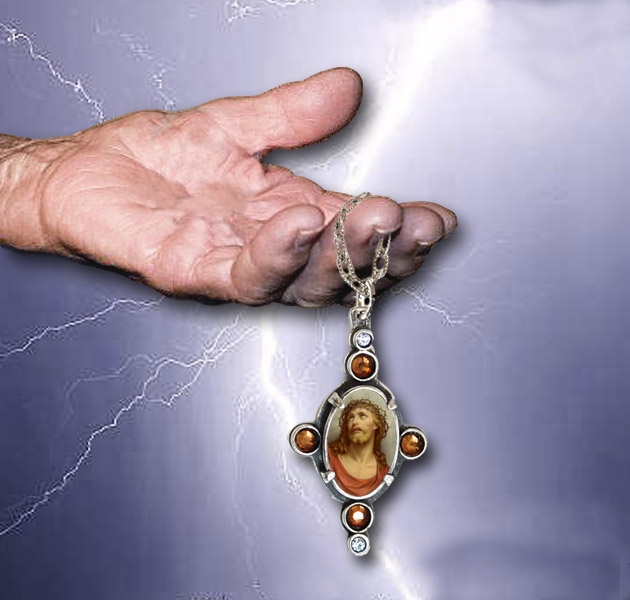
In her suicide letter my mother wrote she was sorry. Give Betty my Tears of Christ pendant, she wrote. I wore it until I was thirteen, when the pendant turned black on my neck.


FRANK CAME TO VISIT yesterday and was very upset. “Auntie, I’m really worried. Almost a month, not getting dressed, doing nothing all day,” he said.

“Did Victoria call you?”

“What about your program? Why did you stop?”

Lots of questions that asked nothing, but Frank kept nagging and eventually I let him call the clinic and talk to Dr. Peters, who said I should go to group the next day and after they’d have a special family meeting with Frank and me.

So here I am, back in group, kicking myself for giving in. Three months of groups with strangers who act like your best friend but don’t know you, talking about their depression and suicidal thoughts, work problems and job stress, I don’t know how I stood being here, never mind liking it and looking forward to coming.

A skin and bones blond is crying, saying she can’t eat and would rather be dead. Then a Philippines woman says she wants to die and a red-faced fat fellow says he dreams of hanging himself. It’s too much to take. They don’t know anything.

“Suicide is stupid and selfish. If you don’t care about yourself think about your families.” My voice is too loud and my face is wet from crying and my right leg, the good one, is shaking. “You don’t know,” I say, and tell them about my mother, finding her and what it did to me. “No matter how depressed I get, I’d never kill myself.”

The group leader already knew but the others are shocked and say how sorry they are, they had no idea, how brave I’ve been all these years. I barely listen, thinking of what I said, how suicide hurts the ones left behind.

When the group ends I go to Dr. Peters’ office. Frank is there, with Dr. Peters and Dr. Reed. I know they’ve been talking about me.

Dr. Peters explains we’re meeting to discuss treatment options since nothing’s worked and I seem to be getting more depressed. Frank looks troubled and I notice how old he seems, all wrinkled and bald. I’m trying to figure his age when Dr. Reed starts talking, so I miss the first things he says. I decide Frank is seventy and then notice Dr. Peters is frowning, Frank’s eye is twitching and Dr. Reed is nodding, like he’s saying something important.

“ECT is our best option,” Dr. Reed says.

“Isn’t that an outdated treatment?” Frank asks. He’s a dentist and knows a little about medicine, but not as much as he thinks.

I hear ECT but don’t know what they mean. My mind wanders, thinking here I am with three doctors and they have the advantage with their educations and I need to watch out.

“Real improvement, especially with the elderly chronically depressed who don’t respond to antidepressants,” Dr. Reed says.

“What’s ECT?” I ask.

“Electro-convulsive therapy,” Dr. Peters says.


I FEEL SO BETRAYED, so angry, so afraid. Like when my mother died but worse, because then I had my life ahead of me, and now I have nothing. My nephew and my doctors, telling me to get electroshock, like Jack Nicholson in Cuckoo’s Nest. I don’t care what the video said. They want me brain-dead, like a zombie.

“I’ll never do it,” I tell Victoria.

We’ve just watched the film about ECT, the one Frank and me saw at the clinic yesterday with Dr. Peters, that they gave me to take home. Seeing it the second time doesn’t make me feel better, being unconscious and paralyzed, then having electricity run through your brain.

“It will help you,” Victoria says. “Anyway, you won’t remember.”

“Exactly, you heard what they said about losing your memory.”

“That’s only for a short-time. I meant you won’t remember the procedure.”

“Or anything else.”

“You should listen to your doctors.”

Before she leaves for the day, Victoria serves dinner, baked chicken breast and rice, tasteless and dry. I wait until she leaves, then hobble to where I hid the grappa in my sweater drawer. It was a Christmas present from Martin, so Victoria didn’t dare get rid of it when she took my wine. “Doctor’s orders,” she’d said, like she was a nurse and not a glorified housekeeper. I’m sick of Victoria, and if it wasn’t for my hands shaking so much and the weakness I could do for myself, even with the walker. I’d like to try anyhow but whenever I bring it up Frank says no, like he has the right to control my life.

The grappa tastes better than I remember, warming my bones and easing my fears. I’m sipping from the bottle, lying in bed, when I remember the group that afternoon, when everyone was talking about suicide.

For the first time I think about doing it. No hanging, I don’t have the strength. No knives. But I have lots of pills and they’re in the medicine chest and it’d be so easy. But if I killed myself would Father still do the Mass and could I be buried in my plot from church? I didn’t go to my mother’s funeral, but she’s buried in a Catholic cemetery.

I’ve never had much sympathy for my mother. I blamed her for leaving me. For not caring what would happen to me. When I was younger I wondered what my life would’ve been like if she’d lived.

My sister was seventeen when my mother died. Helen was able to finish high school, live with a girlfriend’s family. She never had to stay in an orphanage, with the nuns and the unwanted unloved children. Helen was never depressed, like my mother and me.

I don’t know if losing my mother made me depressed, or if I inherited the gene.  Maybe both, from what I’ve learned in AOP. I look like my mother, short and slim, brunette until I went gray.

Because I could’ve married and didn’t people called me feisty, a firecracker, a pistol. I didn’t start therapy until my fifties; by the time I learned I was afraid of getting hurt it was too late. My time had come and gone. Still I had my moments, my gentlemen friends and flings. I have no regrets.

Besides, my sister married and what did it get her? A lazy husband who barely helped with the deli, left the work to the two of us, but still we made money. They sent Frank off to school. I bought my house. Then Helen got cancer in her ovaries. It took two years of misery before she died.

Frank’s the only one left and now his wife is dying and their daughter is in New York, so they never see her. If I’d married I would probably be a widow by now. Maybe I’d have children, but they grow up and grow away. At my age I’d be alone, no matter what, all the old white-haired ladies, going to church and having lunch, with their TVs and mementos, relics to the rest of the world, waiting to die.

I don’t know what to do. My doctors are right. The depression is getting worse, taking me over. I can’t go on like this.

After weeks of agony, Ann has mercifully died. I should’ve seen her at the hospice, but I’ve been in bed myself. The weakness and shaking and I couldn’t eat or do anything and poor Frank, having to worry about me, at a time like this. I feel so guilty.

I can’t believe June is half over. I can’t believe Ann is gone.

It’s Tuesday, when Victoria is here, so she’s taking me to Mass and the burial. She’s dressed for church, in a navy blue outfit I’ve never seen with a matching scarf over her braids. She says she goes to Mass every Sunday.

I guess we’ve reached an understanding, Victoria and me, or maybe we’re just used to each other. “I’ve got your clothes ready,” she says, patting my hand.

Getting dressed is a struggle. When I’m done and look in the mirror I feel awful.  My good black dress that used to be fitted hangs like a sack. “You’ve lost too much weight,” Victoria says, shaking her head. She puts on my shoes because I can’t reach down without getting dizzy. Finally I’m ready to go.

“Thanks for the help,” I say.

“I have something for you,” she says, reaching in her bag.

She hands me a gray velvet box and helps me open it. Inside is the Tears of Christ pendant, polished silver, the tarnish gone. “I found it under your night-stand. I hope you don’t mind. The jeweler put a coat on, so it won’t turn black again.”

I hold the pendant in my hand and remember how it looked on my mother with her holiday suit, how pretty she was and how happy she seemed. When Victoria puts the pendant around my neck, I start to cry. “From joy,” I say to her.

Somehow I get through Mass, not at St. Basil’s, but the new church Frank goes to. Even with our family pitifully small, just Frank and me, his daughter and her twin boys, there are lots of people. Ann’s sister from New York and her cousin from San Diego, Frank’s dentist friends, women from Ann’s book and quilting clubs.

It’s harder at the burial. I always hate that the most, the final descent, the weeping and solemn prayers. I keep touching the pendant, trying to find comfort. Some people would say Ann had a full life, even dying in her mid-sixties, family and friends, her faith, her volunteer work and hobbies. I don’t know though, I keep looking at Frank choking his tears, his daughter weeping, her sons, the generations left behind and nothing seems to really mean anything.

My funeral will be small. Just Frank and his daughter, people from St. Basil’s, Martin, maybe Victoria will come. People will say she’s had a long life but no one will remember me when I was young. I’ve outlived family and friends. My generation is almost gone.

I’m picturing my burial, the casket I’ve already picked, the flowers, when I realize I don’t want to spend my final days waiting to die. I’ve always been a fighter, all the people in AOP said I was, being in treatment at my age.

Before Victoria leaves for the day I thank her for everything. “I was on the pity wagon,” I explain. Then I tell her I’ve decided to have ECT.


“OKAY BETTY,” a nurse says. “I’ll just find a vein here and put the tube in. You won’t feel anything with the medication.”

I’m in the ECT room. It’s been two weeks since Ann’s funeral. Frank brought me to the hospital a few hours ago and stayed with me while I signed the insurance papers and consents. “I’ll be waiting outside Auntie,” he told me. “The procedure is only fifteen minutes or so, over before you know it.”

The blood pressure cuff on my arm keeps inflating, the heart monitor is beeping, I smell chemicals and plastic. I try to take everything in, to remember, the bright overhead lights, the coldness of the pads on my head where the current will go. I imagine electricity pouring through me and panic. I don’t know if I’ll be the same person, with my wits and my memory. I don’t know…

I think of the things I want to remember, my mother happy, Helen’s wedding, my first lover, the deli, Martin, Victoria, the people from AOP. What makes up a life, gives it meaning. I see my mother’s body, hanging from the beam, how could she, I’ll never understand, a young widow with two daughters. I know people look at me and see a cute little old lady, white-haired, dressed in pastels, my true self hidden away. Will anyone remember me, will I remember myself?

There’s a red electric smell, scorching lights. Victoria is with me, patting my hand. The ice cream grappa she gives me tickles my brain and makes me laugh. When it’s done I want more.


Myra Sherman lives in Northern California. She was a finalist in the 2006 SLS-Kenya Fiction Contest and the 2006 Moment-Karma Short Fiction Award. An excerpt from her recently completed novel was a finalist in Glimmer Train’s Best Start 50 List for June 2009. Her fiction and essays have appeared in numerous literary journals including Ars Medica, 580 Split, Fifth Wednesday Journal, Thuglit, Mobius, Zygote In My Coffee, Storyglossia and Skive. She has fiction upcoming in Another Sky Press Horror Anthology, Inkspill Magazine, The Medulla Review and Kerouac’s Dog.

improvised explosives

stock photo2

The summer moon was full and I came bounding out the front door of my house, feeling no pain, in hot pursuit of a pack of cigarettes that I had left in my car.I didn’t see the jogger at first. He was passing the house as I was coming out, and I must have spooked him. He took a tumble on the sidewalk, and, naturally, I wanted to see if he was OK.

“That looked like it hurt,” I said. The young man made a grunting sound.

I gave him a hand to help him up and I noticed that he had blood running from his knee. “Your leg is bleeding,” I said.

“That’s a good sign,” said the jogger. “I’m more worried about the other leg.”

That’s when I noticed it – the other leg was made of stainless steel or something like stainless steel. It looked like something from The Terminator. The jogger was rubbing the little ball of his knee cap, which was perfectly round, checking it for scuff marks. Two slightly angled steel rods with a space of open air between them took the place of what would have been lower leg bones, and those rods met at a complex ankle joint engineered to disappear into a special New Balance running shoe.

I could see why he was so proud of the fake leg. He hopped up and down on it like a pogo stick and declared himself fit. Before he could go, I extended my hand again and introduced myself. “I’m Howard,” I said.

I didn’t remember seeing him around before, but he said his name was Matt and that he lived down the street not too far. He wasn’t very old, several years younger than me by the looks of his face.

“Do you mind telling me what happened to your leg?” I asked. I couldn’t help it; I didn’t want to let him go until I found out the story.

He gave me an odd look, as if trying to decide whether or not I was worth it.

“Most people are afraid to ask,” Matt said. “So I guess I can tell you.”

He shifted his weight onto his good leg and started talking, and he didn’t give me the short version either.

“I was going down the road with a guy who was maybe 19. While this kid was driving, he was telling me all about the sluts he’d done it with back home. Crude stuff. But here we were and we were laughing and joking. The kid had also been farting all morning. He thought that was so damn funny. Finally, I decided, what the hell? I might as well make a contribution…”

Matt put his weight back on the fake leg now, snorted, and looked down at the ground before continuing.

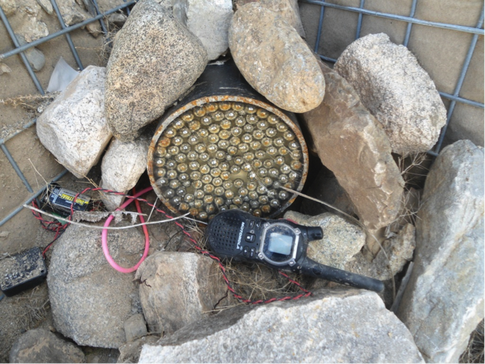
“And that’s when all hell broke loose. It was like I had ignited the atmosphere. I could feel my leg exploding and then everything was on fire, everything around me was red. I don’t remember anything else until the hospital. They must have pulled me out of there fast.”

He looked up. I nodded, and I guess he felt like it was OK to keep going some more.

“I woke up in some hospital, I don’t even know what country it was in. Everything was hazy, but I tried to sit up and look around. I was surrounded by all of these patients, you know, and I could already see that they were missing arms and legs. I wasn’t even thinking about my own leg at this point. I think I was probably crying or laughing like a mad man, waving my arms, trying to get the attention of a nurse. I had this overwhelming feeling that I had blown all of these guys up, you know, that it was all my fault.”

He studied my reaction now. “Crazy,” he said, as if that summed it all up. “No way,” I told Matt. “You’re probably the biggest hero I’ve ever met.”

I don’t know if he was buying it, but he looked relieved. I didn’t ask him what happened to the kid he’d been driving with.

“I’ve been back for a while,” Matt said, “but I’m just now trying to push this thing a little at night, you know, when not a lot of people are out. Walking works fine, but apparently I don’t have the running thing down just yet.”

He jumped up and down again. He didn’t really bounce that much, but his leg really did make a sound like a pogo stick makes.

“You like to fish, Matt?”

I don’t know why I asked him that. It was right out of left field. I just felt like he should definitely be able to get away and do the things guys like to do, that it was important. But, for all I knew, he already had buddies to go fishing with.

“I haven’t been fishing in a long time,” he said. “I used to know a few places to catch bass.”

“I know a pond,” I said. “You wanna go some time?”

“Tell you what,” Matt said. “Next time you see me, ask me again. I just might be in the mood to catch a few one of these days.”

I didn’t see Matt again for a month or so. To tell the truth, I had pretty much forgotten about meeting him. The Fourth of July came and went, and then I saw him again. I was on my way to the store to pick up a 12-pack one night when I saw him jogging in the neighborhood.

I pulled up right beside him but didn’t spook him too bad. He was trying to figure out who I was.

I had the windows down. “It’s Howard,” I said. “Remember, you had a fall in front of my house.”

“Oh, yeah,” he said.

“So when do you want to go fishing?”

He moved closer to the car. “OK, then,” he said. “When do you want to go?”

He told me where his house was and we decided to go the next day.

It rained the next morning, but by late afternoon there wasn’t a cloud in the sky. I loaded the poles carefully into the car and put my tackle box and a cooler of beer in the trunk. I put on my fishing hat and felt good about things. Then I got back into the trunk to get a few beers for the drive.

I don’t know what Matt’s story at home was, whether he was living with his parents, or if he had a girlfriend or a wife, maybe even kids. He came out the front door before I had a chance to honk.

We headed south out of town a few miles. A guy I used to work with had a nice pond that was full of small-to-medium-sized largemouths. They liked to take purple plastic worms, and I had rigged up both poles.

We drank a beer on the way out there. “I can’t say much for your taste in beer,” said Matt, looking at his can of Old Milwaukee. “This stuff will probably give me the shits, but it sure does taste good right about now.”

We parked on the side of a gravel road by the pond and then unloaded the stuff. I could have kicked myself for not bringing the folding chairs, just in case. “We’ll just fish for a while,” I said. “It shouldn’t take long for us to catch about a dozen.”

We drank another beer beside the car and then hit the pond. The bank was muddy from the morning rain, but we were able to find a spot where the mud gave way to some harder dirt and grassy weeds. You could practically cast from one end of the pond to the other, so positioning ourselves close wasn’t a big deal.

“Just bring it in real slow,” I told Matt after he made his first cast. “They like to tap it first.”

Before I could get my line in the water, Matt was already reeling in a nice one. He had the biggest grin on his face. “Hot damn,” he said.

By the time the sun was starting to set, we had lost count of how many bass we’d caught and released. We lipped all but one. Matt threw it into a mess of cattails on the side of the pond. Set the hook a little late on that one,” he confessed. “Oh well. A little something for the turtles to eat.”

This is where it gets kind of weird, and I’m almost ashamed to tell it. But, as we were making our final casts of the evening, I got the urge to break wind out loud. I thought it would be funny – you know, guy stuff. But as soon as I farted, and it was a big one, Matt jumped forward and went down like his hair was on fire.

He was crouching by the water, covering his head. Things had been going so well, and now this. I walked over and tried to give him a hand. He looked up, disoriented, embarrassed, and maybe a little disgusted. “I’ll manage,” he said.

But when he tried to stand up, he was stuck in the mud. The New Balance running shoe attached to his fake leg was really planted. He pulled hard on the leg with both hands. He finally got himself free, but the shoe was still stuck.

It took us a few minutes to dig the special running shoe out with our hands. Matt tried to laugh once and even said he was sorry for freaking out, but he didn’t say much of anything else. The foot on his fake leg was like a little clamp. Without the special shoe attached, everything was difficult. He had to hop on his real leg until we got completely away from any mud and he was able to put some weight on the nubby device at the end of his other leg.

In the car, Matt just stared at the muddy shoe in his hands. I don’t know if the clamp was broken or what, but he didn’t try to reattach the shoe.

“I guess I wasn’t ready to go fishing yet,” he finally said as we pulled into his driveway.

“It’s my fault,” I said, feeling horrible about what had happened back at the pond.

Matt hobbled out of the car, holding his shoe. He started to head for the house, but he stopped and glared back at me.

“Don’t apologize,” he said. “You were never even there.”

I thought he was going to leave it at that, but then he said something else.

“Couldn’t they have thought about it a littler harder before they put us in this position?” he asked.

He didn’t wait for an answer, but it wasn’t hard to imagine what he was getting at.

I still had five or six beers left by the time I got home. I put on a Nirvana disc and felt stupid and contagious. Then I tried like hell to scrub the fish smell off my hands. I used half a bar of Lava, but, no matter how hard I tried, it wouldn’t go away.


Lance Feyh still lives in the Ozarks where he continues to enjoy indoor plumbing. He has published short stories in Community Slop and Third Wednesday.

“Going In” by Patty Somlo


At first, there was only one.  His name was Alan Waite.  That Monday morning, Alan drove his immaculate Honda Accord into the parking lot at five minutes before eight o’clock.

As he had done for the past fifteen years, he pulled into an empty spot two hundred yards from the agency’s back door.  After stepping out of the car, he lifted a black leather briefcase from the open trunk.  Then he took an extra moment to study his reflection in the back window on the driver’s side.  He walked across the parking lot next and around to the building’s front door.

As usual, he arrived while the receptionist was still getting settled.  Anna noticed Alan heading toward the elevator.  She didn’t think anything might be wrong.  Anna had worked for the agency going on six and a half years now. Besides herself, she knew that Alan Waite was the earliest employee to arrive.

Alan took the elevator to the third floor.  The elevator made a light last lift and thumped ever so modestly down.  Alan waited for the elevator doors to slide apart. When the doors opened, Alan found himself staring at the beige carpeting in the third-floor hall.  He stepped out.  Overhead fluorescent lights hummed, brightening the already bright white walls.  Alan turned left, then a quick right, walked midway down and entered through a glass-topped door.

He looked at the empty desk up front.  His assistant Joanna was probably going to show up late or call in sick, claiming a sore throat.  He made his way past the reception area and a few feet before his door.  Then he realized Joanna would not be coming in at all.  Joanna had been laid off.

With a quiet sigh, he stepped into his office and looked around.  The desk was bare.  So were the walls.  Other than some scattered pieces of furniture, a computer and phone, the office had been relieved of its contents.

Alan set his briefcase down on the floor.  It was too early to know if anyone else would show.

Like his assistant, Alan, had been laid off.  After fifteen years that capped an unblemished career, Alan’s boss had given him the news and two weeks’ notice.  Those last ten days, Alan waited.  Every day, he expected his boss, in a slightly apologetic tone but without taking an ounce of blame, to explain that she had found funds to keep Alan at his job.  This was what Alan assumed because there had been financial crises before.  He’d always managed to stay on.

But no one called Alan in and instructed him not to go.  One by one, he took his framed photographs of snow-covered mountains and lakes and palm trees in Hawaii off the walls.  He thought as he did, I’ll show them. The city manager, the mayor and the director of HR didn’t believe he’d leave, is what Alan thought.

All weekend, Alan waited for the call.  On Sunday night, the phone rang.

“Some of us met this afternoon.”  It was Ray Starr.

Like Alan, Ray had gotten his notice and was not expected to return to the agency on Monday morning.

“Alan,” Ray said, almost in a whisper.  “Are you there?”

“Yes.  I’m here.”

“We’ve decided,” Ray said.

Alan began to fidget with a piece of fringe on the sofa.

“What is it that you’ve decided, Ray?”

“We’re going in.”

There was silence on the other end.  Alan grabbed hold of the pause to try and make sense out of what Ray had said.

“Going in, Ray?  I’m not sure I get what it is you’re telling me.”

“We’re going in to work.  Tomorrow morning.”

“Who’s we, Ray?”

“All of us.  All of us who’ve been given the ax.  We want you to come in with us too.”

It was starting to make sense, what Ray had been trying to say.

“Why?” Alan asked.  “Why would we do that?”

“Don’t you see, Alan?  We make the point.  We’re willing to work without pay, a certain number of days anyway, to keep our jobs.  They never gave us the chance.  They never even asked.  We’re going to have all the local TV stations there.  Hey, we might even make it to the national news.”

“So, it’s all a gimmick.  To get on TV,” Alan concluded.

“This is no gimmick, Alan,” Ray answered back.

Alan could hear Ray breathing hard now.

“Alan, this is the only way we can think of to try and get our jobs back. Have you seen what it’s like out there?  I don’t know about you but I haven’t looked for a job for twenty years.  Hell, I started workin’ at that agency when Reagan was president.  If I don’t get this job back, I’m probably never gonna work again.  Who wants to hire some old man like me?  I walk in for the interview and first thing the kid interviewin’ me thinks is how much I remind him of his grandfather.”

Alan let Ray’s invitation start to slowly settle in his mind.

After Alan’s wife went upstairs to bed, he poured himself a glass of red wine.  Normally, he never drank on what he and his wife Ellen referred to as “school nights.”  But now that he’d been laid off, Alan figured he had the right.

He sat down in the wide comfortable olive green chair across from the television and took several sips.  He cupped the goblet in his right hand and held it up to the light.  All this time working at the agency, what he’d most enjoyed were the two weeks he and Ellen spent in Hawaii each year.  At the end of the day before throwing some steaks or a couple fresh pieces of Mahi Mahi on the grill, Alan would sit with Ellen on the lanai and watch the sun set over the water.  Alan liked to drink one glass of dry red wine, while Ellen sipped a slightly sweet white.  The hours spent watching the clock at work and the humiliation Alan suffered from his boss, checking and re-checking his work, disappeared.  All of what Alan knew now was a perfectly meaningless life felt worthwhile when Ellen reached for his hand and the last of the sun’s glow disappeared below the horizon.

Alan woke as usual the following morning at six o’clock.  He touched Ellen’s shoulder and said, “Honey.  It’s six o’clock.”

He walked downstairs to the half-bath he and Ellen thought of as his bathroom.  As he’d done every Monday through Friday morning the past fifteen years, he washed his face, brushed his teeth, gargled and shaved, before combing his hair and giving himself a long hard stare in the mirror.

“Everyone’s decided to go in,” he said to Ellen.

She had just entered the kitchen, dressed in a navy blue knit pantsuit.

“What are you talking about?”

She pulled the refrigerator door open, leaned over and grabbed a carton of one percent milk.

“Ray Starr called last night,” Alan explained.

“Ray Starr?  How did he get your number?”

“I don’t know.  Probably from one of the agency lists.”

“What did Ray want?”

“To tell me that they were all going in.”

“Who’s they?

“Everybody,” Alan said.

He shoveled in a spoonful of raisin bran.

“Everybody that got laid off.”

He finished chewing the last bite.

Since he’d been laid off, Alan didn’t think it would be right to walk down to the break room and pour himself a cup of coffee.  He recalled that during a previous budget shortfall, the boss had proposed that employees pay for coffee and tea.  The staff figured they might as well walk across the parking lot to Starbuck’s if they had to pay.  The pay-for-coffee-policy was soon abandoned.

Instead of walking down the hall, Alan dropped into his chair and turned to face the window.  The sun had climbed and now cast a rosy glow on the snow blanketing the mountain.  When Alan first started working here, he couldn’t believe that he had an office with such a view.  He recalled his and Ellen’s first trip to the city.  They had taken the early morning flight.  Moving down the long corridor from the plane to the baggage claim area, Alan noticed a billboard of the mountain that was lit from behind.  He’d said to Ellen that they should learn to cross-country ski, if he got the job and they relocated here.  Every winter, Ellen brought it up.  Looking at the mountain, Alan realized that they  hadn’t taken a single lesson.

“Alan.”

He knew it was his boss without having to turn around.

“Katherine,” Alan said, keeping his eye on the mountain and his back facing the door.

“What are you doing here?”

Alan heard the tremor in Katherine’s voice.  He realized how this must look.  A sudden crazy urge to slide the fingers of his right hand in between the buttons of his shirt, making her think he was carrying a pistol, slammed into his thoughts.

“Did you forget something?”

He dropped his right hand down to his side.  Turning around, he buried the hand in his pants pocket.

Katherine stood with her arms wrapped around her chest, across the narrow expanse of the office.  Yes, he had forgotten something.  But at the moment he couldn’t remember what.  He studied Katherine without emotion.  Yes, he could admit it now.  He was no longer cowering in her presence like a beaten dog.  She was, he could see, exceptionally small.  In the years he had worked for the agency, the petite woman had grown old.  Her flat black hair lacked the brilliance of random highlights, indicating that her straight bobbed locks were dyed, probably at home.  Katherine was neither pretty nor ugly, but – and this surprised Alan most of all – she had a completely forgettable look.

In fact, nothing about this woman would have encouraged Alan to stay if, as he crazily thought now, someone had set them up for a blind date.  He would have lingered a polite time, over an hour but hardly a second beyond an hour and a half.  Then he would have punched his right fist into the air, freed his watch from under his blue shirt sleeve, and said, “I’ve got to get going.”

Katherine continued waiting for a response.  She’d clenched her jaw.  The small muscles were causing tiny indentations on each side.  He had never pondered a response to Katherine, in the ten years since the city manager appointed her to head the department, without offering Alan a chance to apply.  Watching her, Alan knew now.  If he’d hesitated just once, he would have shown her who really was boss.

“I think you’d better leave, Alan,” Katherine said.  Her voice came out in a hoarse whisper.  “I’m going to call Security.”

With that, Katherine wheeled around and out the door.

Alan didn’t move, relishing the rare sensation of having won a battle he’d been fighting most of his life.  Ellen had scolded him for years.  “Just speak up,” she’d chided.

Instead, Alan complained.  Some nights, he made light of his work, laughing and saying how stupid his boss was.  He stared at the empty hall now, wondering why he had waited so long.

The silence was broken by shouts coming from the parking lot.  Alan stepped out the door and over to the window on the other side of the hall.

They were carrying signs.  A cameraman appeared to be filming.

The man with the large black video camera followed the crowd moving toward the door.  Ray Starr was marching at the head of the line.

Alan could hear chanting but was unable to make out the words.  His heart started to rattle high in his chest, pulsing at the sides of his throat.

As he stood at the window, the crowd filed in the door, followed by two more cameramen.  There had been a time when he would have been out there, shouting and waving a sign.  The thought made him clench his fists, though he didn’t realize that’s what he’d done.

Alan turned just as Clarence Spencer arrived.

“Hello, Clarence,” he said.

Clarence was a large man with a round face and skin the shade of burnt toast.  His ID badge hung at the end of chain.  The badge stopped inches below his belt.

“Hello, sir,” Clarence said.

Alan looked at Clarence.  He realized that he hadn’t actually hadn’t seen this man for years and in that time, Clarence’s neatly clipped hair had grown gray.  Clarence had applied for the security job and interviewed initially with Alan.  Alan thought back to that day.  Had it been ten years?

“Katherine asked me to come up here, sir,” Clarence said, after clearing his throat.  “I’m gonna have to escort you out.”

For some reason, Alan’s mind fixated on the word escort. That’s what they’d been taught to say, once an employee had been terminated.  There was this notion that by saying the word escort, you were taking the heat off a potentially explosive situation.  Alan had done his share of escorting the shamed and sorrowful to their cars.  In most cases, the women cried.  Men made abusive remarks, using foul language, or stewed in silence.

“There won’t be any need for that, Clarence.”

Alan started to walk toward the door.

“That’s my orders, sir,” Clarence answered.  He stepped aside just a few feet or so from the door.  “I can’t let you walk out alone.”

Alan nodded his assent but continued to walk across the hall, into his old office.  The sun had climbed high enough so the snow on the mountain appeared clean and white.

After another thirty seconds or so, Alan swung back around.  Clarence reached for his phone.

Yes, Alan agreed, as he scoured the room with his eyes.  There was not a single shred of evidence that the office had ever been occupied.  One day soon, in a month or a year’s time, another sap would walk in and tack his favorite photographs on the wall.

When he was done, Alan felt sure the new guy would step over to the window and gaze out.  The sun would probably just be coming up.

He’d see the sun turn the snow a golden-edged shade of rose.  At that instant, the entire universe would appear to be glowing.

Alan made eye contact with Clarence, as he pressed down the phone.

“Let’s go, Clarence,” Alan said, and he let Clarence escort him down.


Patty Somlo has had her articles, reviews, fiction, poetry and creative nonfiction published in numerous journals and newspapers including the San Francisco Chronicle, the San Francisco Examiner, the Star Bulletin, the Baltimore Sun, the Santa Clara Review, and Fringe Fiction, among others. Her short story “Bird Women” was nominated for the Pushcart Prize.

“The Hanging Tree” by Rex Sexton


(Image by Bart Galle)

Jumble, fumble.  The alarms go off.  Faster than a speeding bullet the cops show up.

Camacho catches the El train, rooftops interrupted by flashes of lightning.  Cold, alone, pounding rain.

Full pedal, passing the bottle, Plugger races the car down the side-streets at a hundred or more.  You don’t ride often in a flying coffin but ain’t that what life is for?

“So he gave me inches seven,” the wild white girls sing some anglo “bottle of beer on the wall” song variation in the back seat.  “I said honey this is heaven.”

Two wheeled corners, slides, skids, the radio blasting something about things going better with Coke.

Someone say coke? Yeah man.

“So he gave me inches ten, I said double it again.”

Houses a blur, whoosh, whoosh.  Minds in a whirl, whoosh, whoosh.

ENCHILADAS

They flash past a curbside stand in the industrial district where their parents slave every day for minimum wage.

“Enchiladas!”  The white girls giggle.

Plugger slams the breaks, slides, skids.  Camacho laughs as Plugger jams it into reverse and they fish-tail back.

“You no can do that.”  The proprietor shakes his head.  “Park on the sidewalk.”

They all pig out. The wild white girls with relish. They wash down the food with whiskey and malt.

“So he gave me inches twenty,” the girls sing, gleefully, greasy goodness stuffed in their mouths,  “I said honey that’s sure plenty.”

They creep cautiously down the darkened streets, through the blackened gangways, along the unlit alleys.  They spot their hit while cruising the main strip – a cluster of punks drinking beers in the bowling alley parking lot.

“Geronimo!” They whisper.

They park Plugger’s junker in an alley around the corner – an old beat-up taxi painted black and lettered eerily with “Tales From The Crypt,” and “Death You Deserve IT,” scrawled on the sides in swirls of white – an American flag flying from the antenna.

There are a dozen of the enemy. They have to do it quickly, before the bowling alley gang gets wind of their guerilla attack and piles out on them en masse.  Plugger walks straight at them, Mr. Goodwrench hidden in his army surplus jacket.

“You guys seen my brother?”

They fan out around the cars gripping tire-irons, crowbars.

“Who’s this jerk?”

“It’s me, Tony.”

“Anyone know this punk?”

They rush them, swinging.  The punks are fast.  Camacho blocks a bottle.  Sixteen stitches along his arm later, no problem.  They beat the punks bloody.  Bam, bam.  No one died.

The punks must have had God on their side.  Next day the punks jump them back, outside their pool hall.  Have themselves a ball.  Good training for war.  With jobs scarce, everyone is thinking about joining up when they are old enough.  Even Camacho.  Why not?  The streets of Iraq or here?  At least you get paid for being over there.   Someone has to fight the wars.  Nothing in it for the sons of doctors and lawyers.

A good run.  Camacho leaves the pool hall, pockets the fives, ones, puts the tens and twenties in the duty booty for his parents.  Too good to leave behind, he takes his beer with him and drinks it in the alley.

Dissolving night over urban blight, the rising sun pointing at the “on the run” like a gun.  All over the Dead Zone the junkies are searching the catacombs for that breakfast of champions hidden in the labyrinths.

Being, being, nothingness.

Camacho closes his eyes and downs the beer, feels the darkness of the universe and all its shadows disappear.

“We’re done man!”  Skinner’s teeth chatter as they sit shackled together on a lockup bench waiting for the Sergeant.  “Murder one!  Life man!  Unless they give us death!  You don’t think they’ll do that?”

Things happen.  This one had happened fast.  Camacho said: “Stick ‘em up” and the gun went off.  They had bolted out the back door and down the alley.  Camacho threw the gun in a frenzy at a backyard tree where it disappeared in the leaves.

The cops were right there.  They must have been cruising by and heard the shot.  Camacho watched the tree as they grabbed them, put them in cuffs, roughed them up – two troublesome looking teenagers in the middle of suspicious circumstances.  It didn’t fall, the gun.  It must have got stuck in some branch, something like a golfer’s hole-in-one, or a basketball player’s one-in-a-million full court shot.

“Look Skinner,” Camacho whispers, “we went in the front and came out the back.  No one saw us enter or exit.  No one was in the old man’s shop.  Hey, we were just cutting through the alley.  As far as they know, whoever blasted the old man went out the front while the cops were wasting their time arresting us.  They got nothing except us being in the wrong place at the wrong time.  Not even in it, just near it.  They got no weapon, loot, and it ain’t like we got long rap sheets like hardened criminals.”

“Unless the gun comes down!” Skinner hisses.  “Then it’s homicide!”

“Calm down Skinner.  We got luck on our side.  Enjoy the ride.  Unless some little bird talks, we walk.”

They walked all right –morning, noon and night, Camacho and Skinner, alone or together in any kind of weather, up and down the alley past the tree, braced to jump the fence and snatch the evidence before it fell from some branch on the grass and the old couple who lived there found the gun and the cops had their ass.

“I’m going in there.”  Skinner hollered.  “I’m climbing that tree and getting that fucking thing!”

“You ain’t doing shit, half-wit.”  Camacho spat at a garbage can.  They were sweating bullets.

It was the dog days.  Flies swarmed around them.  “When the leaves fall we’ll be able to spot it up there.  Maybe.  I’ll jimmy up there faster than you can.  Bim bam the monkey man.  For now we leave it alone.  I don’t need your skinny, clumsy white ass clowning around and falling down.

It’s a miracle.”  Camacho’s voice was hushed as he stared at the tree.  “It’s like divine intervention or something. Like God said: ‘Wait, fate, give them a break.’”

“Miracle?  It’s a curse!  It’s torture!  If you think God’s protecting us you’re nuts!  We’re killers – at least you are.  If God’s doing anything he’s giving us a taste of hell before we go to jail!”

“So it just dumb luck!  Don’t fuck it up!  You’re as guilty as I am and just as damned in the eyes of God or in the eyes of The Man.  Get your head together, amigo, you’re going loco!”

They never even charged them at the station with anything, although they questioned them long and hard for hours.  Skinner almost broke.  He started crying like a baby and babbling incoherently.  Luckily all he bawled was, “I didn’t do it, I didn’t do anything, leave me alone.”  Meanwhile the pigs combed the shop, alley, backyards, rooftops, and finally had to let them go when they came up with zero.  Camacho had washed his hands as soon as they hit the station, jumping up and down and complaining he was about to pee in his pants.  They never did the forensic test.

“Skinner, look.  It’ll be OK.  We’ll get the gun.  The shooting was an accident.  We just wanted to scare the old man.  We didn’t want nothing like that to happen.  God, fate, whatever, we got a break.  Maybe a chance to change, repent, do good things not bad.  Think about that.

You know what they say: God works in mysterious ways.”

Jesus Skinner was a handful.  No cojones.

Skinner was dangerous.  In his tiny, sports-poster-filled bedroom, Camacho lay propped up by pillows on his bed and stared at his rumpled reflection in the dresser mirror. With his sweat matted hair and haggard face, he already looked incarcerated.  Skinner would squawk, Camacho knew, and soon.  He would get some neighborhood mouthpiece.  They came cheap enough.

Quick and dirty plea-bargains were what they were all about.  He would show the cops where the gun was, testify.  The miracle tree and the magically hanging gun were a gamble that Skinner’s nerves couldn’t handle.  Could Camacho blame him?  Freedom or life, all or nothing.  They would try them as adults, two slum punks with nothing and no one to prop them up or hold their hand. The court would pull the chain and flush them down.  But Skinner could be out before he was thirty if he played his cards right.  Point the finger at Camacho.  Would he do the same if it were the other way around?  God if it only had been!  If only he had not been holding the gun that shot the old man.

The room was a hot box.  Camacho pulled off his shirt.  He tried to mop the sweat off his face and chest, but the shirt was sopping wet and his efforts were useless.  Through the paper-thin walls, he could hear his family talking and laughing – his mother and sisters in the kitchen cooking, his father and brothers noisily watching the baseball game in the living room.  He closed his eyes and shuddered as he listened.  This would kill them.  His father would die inside.

His mother would go crazy. His brothers and sisters would be locked up in their own little prisons with him, and would miss him on Christmas, birthdays, weddings, births, graduations; all the times a family came together, he wouldn’t be there.

For the thousandth time he reran the nightmare in his mind.  It was a two-bit jewelry store, no cameras, alarms, but enough gold school rings, trinkets, wedding bands to make a take even the head honchos in the neighborhood could celebrate.  Fence it, melt it down.  The price of gold was climbing through the clouds.  The place was a piece of cake. He was amazed that no one had hit the store before.

But the gun went off and the old man dropped.  He dropped like a rock.  It wasn’t like the shootings you see on TV.  It was like the old man was a puppet and Camacho cut his strings.

“Julio we gonna eat now!”

His sister Maria shouted from the kitchen.  He could hear the clatter of plates and utensils, the sliding of chairs.  He couldn’t face them.

“Pronto Julio!”  His sister Nanette shouted and laughed.  “You don’t come quick we gonna eat it all!”

“Eat it all!  Eat it all!”  Little Fernando laughed and stomped around the living room floor.

Camacho rose slowly and faced his reflection in the mirror.  Julio Camacho, he brooded, the pretty boy with the ugly name.  Camacho meant humpback.  “We’re all humpbacks in this neighborhood,” was one of his father’s favorite jokes, “we’re all bent over by the burdens of the poor.”  He felt another weight on his back now.  The weight of a murderer.  This weight he couldn’t throw off, despite his sculpted muscles.  He was a champion wrestler on the high school team, at least in his weight class, short like most Mexicans but strong and quick.  If he stuck out two more years of high school and managed to pass, he could probably get a college scholarship.  But that was a gamble he couldn’t handle.  Try as he might, he could never understand the complexities of math or science, or the world of chemicals and gases, all those protons, electrons, neutrons, formulas, equations, astronaut stuff.  Camacho felt a fool in school. The champion with his muscles was El Stupido in the classroom. This delighted his teachers who liked to stick it to him, ‘that cocky Camacho kid.’ “Mr. Camacho, today’s lesson seems to have you in a strangle hold.

Maybe you should exercise your brain now and then. Instead of biceps and pecs, try to put some muscles in your head.” To save face he played it down, swaggered around.  “Fuck that book shit!”  He would blow it off to his friends.  “Who needs it?”  They felt the same way.  Brains were a liability.  Didn’t that honor student in the black neighborhood just get beaten to death because he wanted to study and not join the gang?  Besides, did book brains ever do anyone any good in the hood?  His odds for getting out of the ghetto, like theirs, were zero. So, say he did get into college, how long would he last?   So he could wrestle, was he Olympic material?  The gangs were all he was good for, Camacho knew, committing crimes, running drugs.  His glory days were here and now on the streets where he could flash money and strut his stuff.  But that street of dreams had its dead end coming.  It was written on the walls with graffiti scrawls. “Eat, drink and be merry amigos.”  Their leader Pena would salute them with his toast.  “If you don’t die on the streets you’ll die in jail.”

“Poppy, I got to get out of here.” Six months ago, he had sat down at the kitchen table with his father after the party they had given him on his sixteenth birthday.  The tiny, appliance cluttered room with its faded walls and warped linoleum was still decorated with streamers and balloons, as the rest of the house had been, courtesy of his sister’s talented hands. “I want to join up.  Next year, if you sign for me, I can go in now.  Be a Marine.  I can get my GED while I’m there.  Pursue a military career.”

His father was sipping a beer.  He looked tired and old beyond his years.  He had spent his life in these South Side slums, before and after he had served in Desert Storm; and the mystery to Camacho was that he never seemed to regret a day of it, even though he must have seen and lived a life of hardship without letup.

“You want to go to Iraq?”  His father had lifted his eyebrows.  “You want to get blown up?”

Do you know what war is, muchacho?  I don’t think so.  No.  You finish school, get a job, wife, have a life.  Of course, when you turn eighteen you can do what you want. Like I told you, Camacho means hump, you want also to walk with a limp, be blind, crippled?  Be my guest.”

“But it’s no good here, Poppy.”  Camacho’s mind swirled with the life in the hood, drugs, guns, gangs. Things were different now than they had been for his father when he was a kid, no matter how bad things were back then. It was a different world.  If you didn’t join a gang now you were a marked man.  “Es muy malo aqui, Poppy.”  Camacho pleaded.

“Malo?  Bueno?  If it’s no good here,” his father tapped his heart, “it’s no good anywhere.”

“Julio, we’re waiting!”

“Un momento, Mama.  I got to change my shirt!”

Camacho fished a tank-top from the dresser and pulled it on.  He pondered his biceps, dark eyes, wavy hair.  What the zombies wouldn’t do to him if he landed in stir.

“I’m almost there! Presto, Change-O!”

He glanced at the window as he ran a comb through his hair.  After everyone was in bed he would slip down the fire escape.  He would meet Juanita in the church yard, go drinking with his friends.  He had to get out of there, get some air, get high, forget about Skinner, the murder, before he lost his mind.

A peek-a-boo moon in a storm chased sky, like an avenger’s eye peering through its cosmic keyhole at the sinner below, watching for the chance to transform the night into God’s holy wrath and cut his throat with a lightning bolt.

Skinner moved through dark and street glow past the poolrooms and the taverns, the seedy blue-lit lounges, down into the back alleys of the catacombs amidst the midnight prowl of shadows. No one went at night to No Man’s Land.  Even during the day you didn’t want to go alone.  You went after school in pairs or groups to your favorite trick to get your treat clicking switchblades and looking mean. Hands in his pockets, sweating bullets, Skinner stumbled down the unlit streets, over the broken sidewalks, amidst the abandoned buildings, most of them fire-scorched shells, like they weren’t in America but some third-world war zone.  The hanging tree waits for me.  Skinner sang to himself tunelessly. Phantom figures stalked him.  He didn’t care.

Hanging tree, hanging tree.

For the thousandth time, he reran the robbery in his mind.  How scared he had been when he saw Camacho’s gun. “How else we gonna rob him?  Say: ‘Give me your money or I’ll kick you in the shin?’”   They went in as soon as the old man opened.  No customers then. They lifted their t-shirts over their noses, pulled down their hats, wore dark sunglasses.  But the gun went off.  Boom.  Skinner had never seen anything like it, the way the old man dropped.

“If we repent and are serious and we beg god’s forgiveness with all our heart and soul.”

Camacho put his arm around Skinner’s shoulder as they patrolled the alley. “God will forgive us, amigo.  God wants to give us another chance. It was an accident.  I’ll get the gun.  We won’t go to prison.”

Was Camacho feeding him some jive, as if he were stupid?  Maybe Camacho really believed all that bullshit?  Camacho was not so bad.  Camacho was his only friend.  If it wasn’t for Camacho, Skinner knew, he probably would have been dead long ago.  Eventually the gangs would have stomped him good.  They had come pretty close more than once.  Maybe they would have set him on fire with gasoline, or whatever, like the gangs did to that white kid on the news.

“What you doin’ here white trash?”  They surrounded him after his first day at school.

Skinner’s family moved to the neighborhood a year ago. “You come to give me some money?  No? I think maybe you better have some tomorrow.”

Skinner’s father had lost his job.  They lost their house, savings, everything.  Both his parents worked in the packing plant now for minimum wage and were lucky to have that.  The new life was a shock.  They came from the suburbs, good schools, jobs.  The more Skinner tried to fit in the worse it got.  The gangs would taunt him, shake him down, beat him up – the blonde, blue-eyed target.  Now everyone left him alone.  He hung with Camacho.  “Muy intellegente.”

Camacho would pat Skinner on the back when they ran into his pack.  “A master mind.”

Camacho would tap his temple.  “He gonna rob a bank with his brains and put you Frito banditos to shame.”

“Dealer.”  Skinner whispered and tapped at a sheet metal door across which “Death” was spray painted.  The building was an old, brick, boarded-up warehouse. The phantom shapes behind him ghosted away.  “Dealer.”  He tapped harder.

“Nada mas.”  A dark voice hissed.  “Go away.  We closed.”

“It’s Skinner.”  Skinner stammered.  “Camacho’s friend.  You know – Blanco.”

“Beat it.”

“I got money.  Plenty.”

“Stick it up you ass.”

“It’s an emergency.”  Skinner pleaded.  “Camacho sent me.”  He lied.  “We got this party, these chicks.  Camacho begs you.”

Skinner had stolen a hundred dollars from his parents’ savings.  He could sell the crack over the next few days and put it back.  He was going crazy.  He had to talk to dealer.  His mind was in a frenzy.

“How much is plenty?”

“A hundred?”  Skinner held his breath.

“That’s plenty?  Shit!”

The door swung open.  Looking at Dealer made you shudder.  He had wild hair and a shock theater face, nose ringed, eyebrow ringed, the forehead, cheeks, chin slashed with zipper-like scars.   His eyes could stare down a firing squad.  Camacho had gotten the gun from him.

“Blanco.”

Dealer swayed in the doorway and sneered at Skinner.  He stood stark naked, holding a gun.

His sinuous brown body shimmered with tattoos: devils, demons, screaming faces, snakes, magic numbers, voodoo writings.

“Let’s have it.”  Dealer stuck out his hand.  Skinner’s pale one shook as he paid him.  “Stay there.”  Dealer pointed at the doorstep with his gun.  “Lilliana!”  He turned and disappeared.

“Bring me my box.  It’s in the closet!”

The room beyond the doorway looked like a psychopath’s nightmare. Skinner had been in it with Camacho a few weeks ago.  It was a huge, dimly-lit space. Somehow Dealer managed to reclaim part of the warehouse from extinction with plumbing and electricity.  Miracles like that happened in the hood everywhere – mystery electricity, phone connections, cable TV.  In the vast, warehouse space, naked light bulbs dangled from steel beams.  The walls were painted with surrealistic street scenes in which giant, garishly colored figures, twisted in a hell that raged from floor to ceiling.  Hell was the hood on fire.  The jumble of toppling tenements and gaudy storefronts were whipped by flames and peopled with demons.  In every building’s windows, Hispanic families howled with torment. Dealer must have gotten the neighborhood graffiti artists in there and supplied them with paints and brushes.  Their vision was a holocaust of chaos, despair and destruction. Dilapidated furniture was scattered throughout the room. In a corner there was a kitchen, television, computer, CD player.  Beyond Dealer’s torture chamber, blocked off by a maze of cinder brick walls, was a gutted shell filled with rubble and junk, inhabited by stray dogs, winos, druggies and rodents.

“Enjoy your blow.”  Dealer reappeared and tossed him a bag.  “Don’t do this no more, Blanco.  Never.  When I say ‘no mas’ you get lost, fast.”

“Dealer.”  Skinner stammered.  “Can I ask you a question?  I don’t have a computer anymore so I can’t look up the answer.  Do guns attract lightning?  I mean they’re made of metal.  I know cops wear guns everywhere.  But say a cop stands by a tree in a storm.  Trees get struck all the time. Would a gun increase the odds of lightning striking?  If anyone would know, you would.

Dealer?”

Night winds whispered around them in the tangled parish garden, like chanting saints or nuns at prayer.  Or maybe it was more like midnight angels fluttering in the dark, or priests reciting sermons, or choirs caroling incantations.  Sweet sin, the sensations on their skin as they kissed, tangled in delight, naked in the garden moonlight.

“Bueno.”  Camacho groaned. He leaned over Juanita and searched her features, tasted her breath, felt her quiver.  The heavens opened up on a world that is enough.  “Bueno.”  He repeated.  “Amen”

They had attended the night mass, knelt together, prayed, or at least Camacho did.  It was his idea.  He had showered after dinner, put on a silk shirt and new chinos, had an impulse to attend the service, “Oh, I don’t know Julio.”  Juanita hesitated before the great doors of the grand cathedral with its ringing bells, towering steeple.  “It doesn’t seem right.  We can’t pray, then go out in the garden and – you know.”

“It’s OK.”  Camacho squeezed her hand.  “We’ll pray for a baby.”

“I don’t think so!  I think I pray the other way!  Julio you crazy!”

Darkness adorned with candlelight, silver and gold flickering in the shadows, stained glass windows that sparkled like jewels, sacred statues, the alter, the pulpit, the crucifix, the priest, alter boys, hallowed music, heads bowed they closed their eyes and crossed themselves, silent before the holy rituals and the mystical aura of a transcendent world.

Camacho had quit going to church long ago.  He would pretend he went, saying to his parents that he would attend a later mass.  He was too tired Sunday mornings from his week of school and wrestling practice.  The mysteries of birth, death, living, dying, creation, sin, meant less and less to him as he grew up in the hood.  “Bless me Father for I have sinned.”  What did that mean?  He lived in a no man’s land of stab and grab, where everyone was on the make, take, fake – not just the barrio but the whole country –  everyone running around with their bag of tricks, rip-offs, tip-offs, payoffs, shakedowns.  Where were the goodies in his Christmas stocking?

He figured out real fast he had to fill it on his own.  And it wasn’t through worship and  prayer – that never got anyone anywhere.

“If it’s no good here,” his father tapped his heart, “it’s no good anywhere.”


Rex Sexton is an award winning Surrealist painter exhibiting in Chicago, and his writing tends to have that illusory element about it. His novel “Desert Flower” was published by B&R Samizdat Express. His short story “Holy Night,” which received the Eric Hoffer Critic’s Choice Award, was published in Best New Writing 2007. His poems have been published in Willow Review, Mobius, Waterways, Edgz and others.


“Stents” by Deanna Wulff

He’d seen her wheeled in just last Friday, mid-heart attack, curly brown hair floating past on the gurney, doctors in a rush around her.

He didn’t think much of her, if at all.  She was just another patient in his temporary white-walled prison, another person crowding the tight rooms, grumbling. He was counting the days, the hours, the minutes, until his release, and he kept marching through the halls, searching for something to do, something to focus on besides himself. He stumbled upon her in the hospital library the next day. She was fluttering through the books, smiling and commenting, and tossing them into a great pile in the center of the library table. She was animated, talking to herself, occasionally laughing and gesturing at the texts.

He came in silently, pausing at the door for a brief look around. The room was pleasant by hospital standards; it had deep mahogany furniture, green and brass library lamps, and stacks and stacks of books. Unfortunately, the books were mainly the donated variety: the middle English version of Chaucer’s Canterbury Tales, at least 20 Louis L’Amour novels, several awful Danielle Steele romance novels with the sex scenes dog-eared, and the occasional self-help book, How To Love Yourself with 100 Words A Day.

He noticed those books discarded in a growing mass and chortled, “Don’t care for fiction, do you?”

She turned, startled, resting her eyes on him, “I’m looking for something a bit more inspiring, something to let my mind soar for a minute or two.”

Not bad looking for 60-year-old just after a heart attack, he thought. Her skin was glowing and taught, and her eyes were bright and clear.

“What did you find in the mish-mash, any gold?”

“Oh, only an American anthology, probably left by a college student,” she said, pulling up a chair, her small frame easily sliding next to the table. “Maybe some Emerson is hidden in here.”

He sighed, exasperated. But for a brief moment, he was intrigued; he was finally going to have a genuine conversation in this horrible place. And of all people, here was a transcendentalist! He hated transcendentalists.

They were just a bunch of overblown vagabonds with too much time spent outside, coddled from civilization and reality. Of course, when no one is talking to you, you can make the rules and be as happy as you want – but it’s a lie. We are not wood nymphs, he thought as he grasped the table edge. We need something much more than parks and ponds. We need something linear, logical, human.

He looked at her, his face flushing. How could she smile at him? This woman had just suffered a heart attack.

Clearly, Walden Pond hadn’t saved her. She should know better.

He placed his personal paperback copy of Atlas Shrugged on the table, and nudged it towards her.

“Why not try a little Ayn Rand? I’ll lend you my copy. That’ll toughen you up.”

Her eyes flashed, and she threw a haphazard barb, “Aren’t you a bit old for that ridiculous idealism?”

His face reddened—apparently, transcendentalists with single stents in their hearts didn’t soften their blows. He rubbed his bandages, a scar was forming from his recent surgery, expanding and contracting with each breath. He sat down. “Are you saying that with age comes the loss of ideals? Have you given up so soon?”

She carefully closed her book and took a solid look at him, brushing her curls back. “Clearly, you’ve never read Emerson. He has plenty of ideals, and he speaks from the heart.”

She looked at his bandages and then looked into his eyes.

He avoided her gaze, and instead, picked up his book. “Are you saying that Rand doesn’t have heart?” He wielded his book like a sword, waving it in the air.

“May I?” She held her hand out, and he placed the book carefully in her palm. It was brown, worn, and passages had been circled with a ball point pen. “Let me see what I can find in here.”

He watched her pore over the book. She raised her eyebrows, sighed, muttered a few words, smiled again. “Oh that’s a good one,” she paged through for a few minutes and then straightened up. “Here, here we go. Let me quote her. Until and unless you discover that money is the root of all good, you ask for your own destruction.”

She looked up at him and raised her eyebrows, “What are we supposed to do with that statement?”

“It’s the truth. Take it in,” he nodded at her, keeping his eyes averted and his face to the door. “Money makes the world go round.”

She inhaled and exhaled, sharply, “How can you say that? Rand is so incredibly narrow.” She shook her head and thumbed through the book again. “The best moments can’t be found in a bank statement. When I keel over, I hope that I’ll be considering the joys that I’ve experienced in my life.”

“Brought to you by the dollar,” he said, tapping the table. “Your free time, your vacations and your hospital stays have a price tag.”

“I’m not against the dollar,” she said, and then paused, waiting for him to look at her. He brushed his hand through his silver hair and threw her a short glance.

“I just don’t think the dollar is everything, and Emerson doesn’t even really mention the ‘economy.’ Have you actually read him?”

“I…” he paused, looking down, thinking. The books in his library only covered economic theory and particle physics, all part of his 30 years at the DOE. He felt his temples throbbing again, and he sighed. He was too exhausted to lie.

“I have read Thoreau, some Hawthorne, but no. No Emerson.”

She leaned back. “Oh, well, of course, then. That explains it. Why don’t you give it a try? Twenty minutes of reading, maybe an hour will get you through all of Self Reliance, one of his best.” She put his book down, and then reached back to the anthology, paging through eagerly.

He drifted off, idly flipping through L’Amour’s Riding for the Brand. And then he stared straight ahead, almost frozen, with only his green eyes clouding up. He was considering his relationship with his late wife. He had been missing her and alternatively cursing her all day. She had argued with him on the very same subjects, but bitterly, in angry 10 minute tirades, and he never had a moment to get a word in edgewise. He had learned to tune out.

Anna stopped reading and watched his eyes and face—bitterness crossed his brow, then resignation, then abrupt sadness. “You don’t have to like Emerson,” she said, quietly. “I’m just suggesting you try something new.  I didn’t read him until well out of college, not until my forties. And it was in my weaker moments that somehow, I could find some strength in his words.”

“Are you a teacher?” he asked, crossing his arms.

She laughed, “No, not really. Well, I do occasionally teach watercolor classes. That’s my passion, but mainly I’m a mother. I’m a new grandmother, too. And I love to read.” She laughed again. “That’s plenty.”

Her light and easy laugh put him at ease, and he leaned back in his chair. “Why is that funny?”

“I don’t know. Just so many changes.” She glanced down at her chest, her smile growing faint.

“Yes. I understand,” he twirled his mustache. “It’s hard to know what to expect. You think you’ve finally got a handle on it, and then, well, then you have a heart attack.” He looked at her now, and they exchanged a long glance.

“That’s it exactly,” she said, touching her cheeks.  “Sometimes, a good book can carry me past all the confusion and hurt. Emerson just reminds me of what I’ve forgotten. I need a reminder now and then.”

“That’s how I feel about Ayn Rand.”

Anna picked up his book, “You know, I’ve read all her books. I have liked her at times. Just not so much over the years.”

“She speaks for the individual,” he nodded at her. “You can have that copy, if you like.”

“Oh, I couldn’t. It looks like this book has been your friend for a while, and I’ve read it twice already. Anyway, why do you dislike authors whom you haven’t read? That’s hardly fair, you know?” She patted the anthology. “We have to give people a chance.”

He began to answer. But the door, which was half open, swung wide and slammed against the metal garbage can with a loud clang. Only a tiny hand emerged, belonging to a golden haired boy. His thirty-something year old mother followed, her flaxen hair forming delicate wisps around her flushed face.

The woman hurried in. “Oh Mom, I knew you would be hiding in the library.  Aren’t you supposed to be in your room? Isn’t someone supposed to be monitoring you?”

“You know how I like to sneak off,” Anna said. They embraced for a long time.

“Sarah, this is my new friend, Mr.—” she paused. “I don’t believe you gave me your name.”

“It’s John,” he smiled and extended his hand. “We were just discussing books,” he added.

“Oh, I see Mom is rambling on her favorite topic again. And you’ve endured it!” she shook his hand. He felt the warmth spread up his arm.

“It really hasn’t been all that bad, honest,” he said, with tacit sincerity.

“Yes, it’s not that bad, not at all,” Sarah said. Her eyes were bright, but the edges were about to brim over.

Anna put her arm around her, “Let’s get some lunch. They have a really awful salad here, I’m told. Would you care to join us, John?” They waited by the door.

He paused. “Oh no, you enjoy your family. I’m just going to peruse through the library here a bit longer. I’m in room 57. Perhaps we can discuss books later, if you care to stop by.”

“Sure,” she said. “I will.”

The curly-haired group bustled down the hall, and he watched them go, carefully closing the door. His only visitor that morning was his sister, who had come and gone in a rush, and he had another unfortunate day of rest and monitoring after his surgery. There was nothing else to do but to consider his life and his past, and he’d had just about enough of himself that day.

Anna had left the thick 1000-page American anthology closed on the table. Thumbing through it, he found Thoreau and scoffed to himself, “What an idiot!” and then there was that essay by Emerson, the one she had mentioned, Self-Reliance. He paused.

It was a warm spring day, and there was a nice bench under a maple that he had been eyeing. Anything was better than that dull white hospital room, the soap opera blaring and his neighbor alternately snoring and complaining. He stood up and collected the book in his arms and then wandered down the hall.

He didn’t even notice that his step was light.


Deanna Wulff has been a ranger, a river guide, and a dance instructor. She began her writing career as a news reporter, then shifted into technical writing and editing and has now arrived at fiction and creative non-fiction.

“Threshold” by Richard Holinger


I hate retirement homes, even the good ones. Especially the good ones. When you cross the threshold through automatic doors, a perfectly manicured woman wearing a pressed white blouse and too much perfume welcomes you with a smile that says, “I’m sorry you have to be here, sir, but we’ll try to make your stay more like doing penance than serving time.” I sign my name, Tansey Martin, pour a cup of coffee from the silver urn costing me thousands of dollars each month, and stride down the hall hung with framed Audubon prints to elevators where a metal cage houses a large brown and white rabbit attractive to grandchildren.

Not my grandchildren. I never married. Well, technically, I did, but it was over before the month was out. Dahlia and I were both virgins, our choice, and we thought our abstinence would bring us closer. On our wedding night, my wife cried when I walked out of the bathroom naked. She jumped in the hot tub, thinking, perhaps, coitus couldn’t occur under water. Her father, a Baptist minister, had led her to believe, she explained later that night, that God allowed only Adam and Eve bare-skinned bodies. He told her that it was a sin to lust after a man’s body, and penetration should occur solely for the purpose of procreation, and then only fully clothed—or the nearest thing to it.

After five days of feeling cotton breasts and a denim ass, I got horny enough to propose we have a baby. That night she wore men’s pajama bottoms, a turtleneck and ski socks.

A few years later, she married a Jew and went with him to live in Israel. She kept in touch, sending me periodic updates on her conversion not to Judaism, but to an offshoot of Christianity that defied title, as far as I could tell. Her letters rang with the conviction of church bells: God’s presence was accessible as a cell phone call, Jesus sat at a 911 desk 24-7, the difference between life and death, here and there, was all in our heads.

Any time you felt the need to leave earth to enter heaven, the threshold would open admittance, with the right spiritual leaning, guaranteed.

A liberal Methodist minister, my father would never have bought such rot, and I, a contentious agnostic (after only one college physics class), thought Dahlia had stepped into the Twilight Zone, but she didn’t press her views on anybody, as far as I knew, so I treated her new-formed faith as harmless. When hearing Dahlia had finally found her right match, my mother, who loved to go on giggling shopping trips with her, was delighted.

After our divorce, she spoke to Dahlia more than when she was my wife, Mother ringing Israel from the States so her ex-daughter-in-law could save on phone calls, their relationship sparked by opposite charges, jolted by a wicked beauty each beheld in the other.

Some twenty years after the divorce, I wrote to let Dahlia know my mother was dying. I hadn’t remarried, having found solace in the silence of home and the solemnity of a prestigious law firm.

Father had died before my marriage, dropping during a Sunday sermon as though offering his congregation an example of how to deliver oneself into God’s domain with the sanctity such crossing deserved. A doctor performed mouth-to-mouth and pushed on his chest while the masses prayed. Neither worked. If he had an out-of-body post-life experience, if he hovered in the rafters and looked down on us like an ethereal end zone camera, if he breezed down a long tunnel bedecked with angels and dead relatives ending in a bright light, he must have liked what he saw there more than the promise of life back here.

My mother lost her mind not through a dramatic mid-morning stroke, but gradually. She forgot first the little things, like where she put her makeup, looking in kitchen drawers, then the big-ticket items, setting out in the car to a hair appointment with a coiffeuse who had left the business twenty years previously. When she fell asleep with pork ribs broiling, smoke leaked into neighboring condos, resulting in firefighters breaking a window to purge the apartment and take out the overdone ribs, burned the color of Sterling silver.

That’s when I moved her into Brewster McFain. I visit every Sunday when the Bears play a noon game. She appears happy to see me, but often doesn’t use my name. I kiss her on the cheek, then, for half an hour, listen to phrases echoed every few minutes, each time voiced with the same inflection and enthusiasm.

“I love that shirt. It must be new. It makes your eyes look lovely and blue.”

Attendants keep her hair combed, fingernails clipped, lipstick applied. Less than a minute after leaving, I know she’ll recall shovel and pail days on Jones Beach, her Chicago speakeasy dates, and her honeymoon at Lake Banff more clearly than where the foot-high plastic Christmas tree came from she watched me weave with lights and tinsel.

I got the call at around 2:00 a.m.

“Mr. Martin? It’s the Brewster McFain Home. I need to convey some information.”

I already had the light on, and was sitting on the edge of the bed ready to write. “Yes, yes. Go ahead.”

“It’s about your mother. She’s, well, she’s disappeared.”

I saw her empty room, the tree’s tiny white lights illuminating a bed with the covers thrown off and the private bathroom door hiding dim shadows inside. “Go on.”

“She’s been known to leave her room at night. She comes to the desk to ask when her husband is coming home. She accuses him of faithlessness. Ordinarily, she returns to her room. Tonight the attendant was called away from the desk, and apparently your mother got into the elevator.”

“When did this happen?”

“The attendant last saw her at around 11:30.”

I couldn’t think of anything to say.

“The police have been notified. Our own security is searching the building and grounds. It would be a fluke for her to have gotten out of the home. We’re quite sure she is still in the building.”

I made sure she had my cell phone number before hanging up. In less than ten minutes, I was in the car, even though the voice had encouraged non-participation. “There’s really nothing you can do that our staff and authorities aren’t already doing,” she advised.

Half and hour later, I pumped the brakes to a stop on the black ice lake of the home’s parking lot, empty except for cars driven by graveyard shift staff. I took a handicap space next to the door and left the car running, the heater on. Even though visiting hours ended long ago, I wanted to be nearby. A snowstorm the day before covered everything in blue light from a full moon. I scanned the channels until Christmas carols filled the car. “Silent Night, Holy Night.” “Away in a Manger.” “White Christmas.” An ambulance came and went. Somewhere a siren wailed. I dozed.

My cell phone’s 60s rock and roll classic woke me.

“Mr. Martin? We found her. Security discovered her in a closet next to the elevators where they store the pet supplies. An empty rabbit cage alerted the guard. Your mother was inside holding it on her lap.”

“I’m in the parking lot. Let me in.”

“Mr. Martin.” The woman’s voice paused. “Mr. Martin, she’s not here. We sent her to the hospital. Her left side did not respond. It seems she lost some voluntary movement.”

I turned off the radio and drove to the hospital. Christmas music, call-in shows, infomercials, nothing seemed appropriate. Only dead air soothed. Dementia had transformed my mother psychologically, and now her brain was attacking her physically. Slurred speech, too, the woman said. However, she added, her condition could improve.

“Oh, and one more thing you need to know, Mr. Martin. For your mother to stay here, she needs to be able to eat independently. In her present condition, she’ll find it more suitable in our Lewis Cotton facility. They are prepared to work with people who have advanced assisted living needs.”

The night staff asked me to have a seat in the waiting room. Two hours later, an Indian doctor told me the obvious, that they were going to run tests today and tomorrow. She had a private room, and I could see her during visiting hours. She had been given a sedative, and would not be much fun right now.

With her room’s telephone number in my pocket, I went home, showered, tried to read, then watched the weather, its clean, bright graphics sweeping white clouds our way.

Then I called Dahlia to give her the latest. She wanted to know everything, so I gave her everything. After that, I let my law office know, and followed up by personally talking to clients who might need a partner’s advice. Most people understood.

I started out, most of the way luckily following a salt truck scraping snow and pelting salt. The three-tiered parking garage looked too much like a mausoleum, so I risked losing my car under a foot of snow by parking in the roofless lot, plodding my way to the canopied entrance. With visitor card in hand, I rode the elevator to the third floor, wishing I had gotten Dahlia this morning instead of leaving the terse message that covered the basics: stroke, paralysis, phone number.

My mother’s eyes spoke for her. One eye, her right, worked well, zigzagging furiously, telling at me to make everything normal. Her other eyelid hung half-closed and inert. From her mouth came guttural groans punctuated by intakes of breath or fits of coughing. A soap opera blared on TV. She never watched soap operas. I turned down the sound and looked at the screen. A young man and woman sat at a restaurant table with white linen and a red and green seasonal floral centerpiece. He ate, looking solemn; she refrained, looking angry.

I leaned over and kissed my mother on the cheek. A few minutes later, the doctor walked in. After perfunctory greetings, he said without smiling, “If your mother will not calm herself, we will give her another sedative. Distress has taken your mother hostage. There is no reason for suffering in today’s world.”

When I didn’t say anything, he continued, “Physical therapy will help your mother. They have made great leaps.”

For the next five minutes, this young Indian doctor in blue jeans and running shoes sticking out beneath his white hospital coat assured me that victims of stroke today could count on science, therapy and hope. When he had gone, I sat by the bed and watched her eyeball run an invisible track around the ceiling. She won’t remember any of this, I reminded myself. She lives in the moment. How wonderful. How dreadful.

The bedside phone rang. Mother’s good eye darted at me. She didn’t know it would be Dahlia, of course. How could she? She said something that might have been, “I know you have been told.”

“Hello?”

“Tansey, tell me everything that’s happened since you left your message.”

Mother’s eye quieted as I relayed what I knew, promising to send mother’s new Brewster McFain assisted living phone number. After I finished, she said, “You know, don’t you, the end is near?”

She was beginning to sound like an Old Testament prophet. “They can do wonderful things,” I told her. “They work with them in bath-warm swimming pools.”

Unbelievably, she laughed. “Get a grip. Face it, your mom’s mind is a cracked record stuck playing the same thing over and over. Now she can’t even wipe herself. You know what she loved: parties, people, gift-giving, vodka, volunteer work, raising you.”

I didn’t say anything.

“Put the phone up to her ear,” Dahlia ordered. “Right now.”

I reached over and pressed the receiver to her ear. After about a minute, she mumbled something and handed it back to me.

“I can’t come see her,” Dahlia told me, “but I’ll get back to you. Bye.”

“That was Dahlia, Mom,” I said like an idiot. “She’ll call again. Soon.”

I held her hand. When I said goodbye, there was a slight increase in pressure.

Two days later, the advanced assisted living wing called. When they were transporting her into her new room, she had fallen out of the wheelchair and hit her head on the floor.

“I thought you attendants were trained to move patients safely.”

“It was not the attendant’s fault,” the voice said flatly.

Did that imply intentionality? Furious, I thought about who at the firm could help me sue the incompetent staff. Before I got to the hospital, however, I realized my reaction only revealed my denial that the mother who raised me had left this woman’s body long ago. I was in love with a stranger.

The nurses’ station told me my mother was getting a brain scan, so I waited in the room she shared with a woman recovering from “cardiac infarction.” A man I took to be her son said gravely, “She never stopped smoking.”  Dressed for a business meeting in shiny black shoes, black suit, and a black overcoat he had left on, he nodded toward the empty bed. “What’s your problem?”

“Stroke.” I wished he would go back to his mother’s side to watch TV with her.

The man had left by the time they wheeled in my mother and slid her onto the bed. There was a gauze bandage taped to her forehead, but other than that, she looked the same.

“Mom?” I took her hand. No pressure. Cold as cheese.

That’s when I called Dahlia.

“What happened?” she asked as if knowing the phone’s ring brought bad news.

I told her about the fall, the incomprehension, the lack of responsiveness.

“Tansey. Tell  her this. Tell her the threshold is open.”

“What?”

“Just tell her, ‘The threshold is open. You can go through now.’”

“You’re nuts.”

“Look, do you want your mom to keep suffering, or do you want her happy?”

“I don’t remember any ‘threshold’ mentioned in Sunday school. What sect are you into over there? What kabala are you quoting?”

“Does it need a name and a justification if it’s true?”

“I know you love my mother and wouldn’t hurt her, but death is personal. Not to mention eternal.”

“And you, an unbeliever, are willing to risk her comfort for principles as inconclusive as ours. Do what you want, but your mom and I have an understanding. Connections you will never understand.”

The businessman strolled around the curtain. “Oh, on the phone. Won’t disturb.”

I nodded. “All right,” I promised Dahlia. “I’ll tell her. Do you want to hang on?”

“I’m in Israel, stupid. No, I don’t want to hang on. Call me back.”

I hung up.

“Everything okay?” The man’s GQ face wore an understanding half smile.

My bitterness melted. This guy who I didn’t know from Dr. Seuss was asking if everything was okay. I couldn’t hold back the tears.

“Coffee shop brews a good latte,” he said. “I’ll bring you up one.”

“Is it allowed?”

“If they don’t see it.”

He smiled again, gave me a thumbs-up and disappeared. After wiping my eyes with a corner of the bed sheet, I sat on the edge of the bed and took her hand. The good eye swept the ceiling.

“Mom. I heard from Dahlia. She said to tell you the portal is open. No, wait. The threshold.” I looked around to make sure the businessman wasn’t listening to this nonsense. “Whatever. Anyway, it’s open now and you’re supposed to go through. If that makes any sense.”

The eyeball slowed, looked up, then down, then floated back home. The lid fluttered, considered closing, thought better of it, rose, then shut tight. Something left the hand I was holding.

I lifted the bony hand, stroked its freckled knuckles, fingered the unpainted nails. Once full of gold rings topped with giant gems, these long, elegant fingers expertly played a three no-trump.

“Didn’t know if you took extra cream,” a voice whispered behind me. “I’ll just leave it on your mom’s tray. Nice she finally got to sleep.”

I let go of her hand. Or, rather, I let go of her. Standing up, I turned and swung back the curtain. The man, halfway into the visitor’s armchair, pushed himself up with a look of surprise.

“Thank you.” I thrust out my hand. “Thank you very much for the coffee. I’ll pay you back. No. I’ll get the next round.”

He shook my hand. I held onto it until he eased his grip, then I walked backwards, pulled closed the curtain and dialed Dahlia. After telling her what I knew, I hung up and reached for the cord to the neon light over my mother’s bed. The late afternoon sun was out and wanting to come through the curtains. I threw them open, then went to look for someone in charge.

On the way out, I picked up the coffee cup, and drained it in long, sure swallows.


Richard Holinger has been nominated for a Pushcart Prize three times. His fiction has appeared in The Iowa Review, Witness, Other Voices, The Madison Review, Whiskey Island Magazine; creative nonfiction and book reviews in The Southern Review, Midwest Quarterly, Cimarron Review, Crazyhorse, Northwest Review; and poetry in Boulevard, Chelsea, Southern Poetry Review, The Ledge, the new renaissance, Hampden-Sydney Poetry Review, ACM, The Texas Review, among others.  Ph.D. in Creative Writing from The University of Illinois at Chicago and an M.A. in English from Washington University.  He is the recipient of the Illinois Arts Council Artists Grant for poetry. Richard teaches English at Marmion Academy, a college prep school, in Aurora, Illinois, and has facilitated several writing workshops in northeast Illinois. He lives in Geneva, Illinois, with his wife and two children.