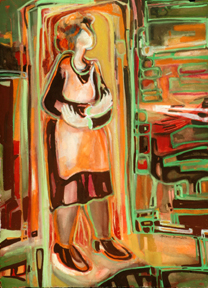
“If Only the Rain Would Come” by Natalie Sypolt

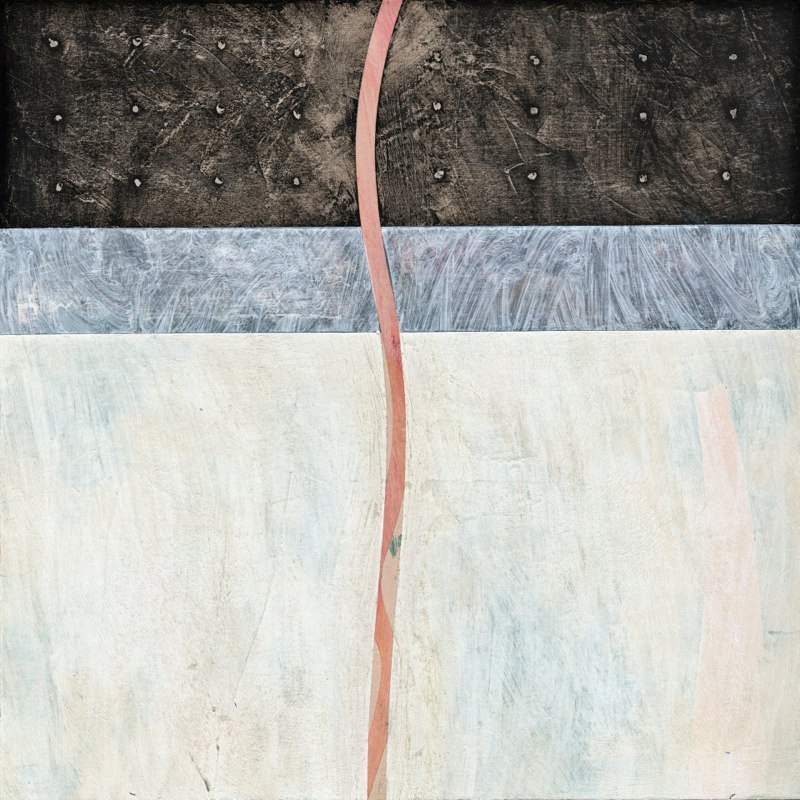
no escape (If Only the Rains)
“No Escape” by Peter Groesbeck

The little motel room smelled pink–fruity and warm from the soap, shampoo, all that woman stuff that Sam didn’t understand, but sometimes wanted to use when he was over at Hazel’s in the afternoon.

It was the twentieth day in a row without rain; too hot for May. Hazel’d left the bathroom door ajar as she showered and the wet steamy heat had pushed the fragrance of her out into the room where it hung like a cloud. Sam left the door to the outside open and lay down on the bed.  The air was thick and sticky, but the weatherman called for severe thunderstorms to roll in overnight.

He’d come right from work and just wanted to be still for a while, lay there with his arm tight over his eyes, pressed hard so he’d see dark spots. She knew he’d come, even though he’d told her no more. He’d told her to go find some undamaged man who didn’t have a wife, a kid, who could see her all the time in the light of day. She didn’t try to argue or convince him—just got that thoughtful look on her face and said, “I’ll see you on Thursday.”

The shower was sputtering and he heard Hazel cuss the slow stream and the cooling water. He hated having to bring her here because the Tallyho-tel was not such a nice place and he worried that it made Hazel feel like a whore. She never complained, though.

It was better when she could get away from her teaching job in the afternoon and they could meet at her neat little house out on Back Road. It was out a ways where no one was around to see his truck parked in front, and she had that little crick that ran back behind. After it rained hard, that thing would rage like it thought it was a river and Sam liked to just sit on Hazel’s back porch and listen and think about how this might be how it could have always been. If he’d paid attention to Hazel in high school the way she’d paid attention to him, maybe he would have married her instead of Kelly and maybe Hazel wouldn’t have let him join up, wouldn’t have watched him with a tear in her eye and a baby on her hip as he left for Afghanistan, wouldn’t have been so scared and skittish a creature when he came home. Likely, though, it would have all been the same, just with a different woman, and a baby with springy red hair instead of hair so white it almost made his eyes hurt to look at it. And he would have ruined Hazel just like he ruined Kelly.

Right then, Kelly was probably getting ready to go to work. She worked late shift at the hospital in the next county. She was the woman who came around and woke people up just when they got to sleep to stick needles in their arms. She’d taken the classes at the career college and got the job while he was deployed. She’d lived on the base for a while after he’d left, but then said she couldn’t stand it anymore, the community of women sitting around just waiting to hear who’d been killed. She took the baby, only a few months old, and went home to her mama, enrolled in school, and started figuring out how life would be without him.

He thought it was good at first, before the explosion that ripped off pieces of him, left the skin on his back a patchwork and thick scars on his neck that everybody stared at. Before his blood had seeped into the dirt and sand so a part of him would always be over there. Now the smell of hospitals and the sight of needles made his stomach clench.

Every money problem was his because he refused to go work in the mines. He was healed enough, sure, on the outside, and his daddy could have probably gotten him on. He was retired now, but still had friends. Sam would have had to take classes and get certified, but the military would have likely paid for some of that. He just wouldn’t do it. He’d seen enough devastation. Seen houses and cars and people turned to piles of unrecognizable trash. Craters and holes, bloody earth. In his head, he knew that coal mining wasn’t the same, but inside, it still felt like it was. He would not be part of that tearing down again.

He kept his hard, low paying job on the little asphalt crew in Morgantown, patching potholes and paving parking lots and driveways. From now on, he was only going to fix things that were already there instead of trying to ruin and destroy to make something new that was almost never better.

Kelly was right, though, in thinking some things would have been a little easier if Sam had come home more like the boy who had left and more like what they all expected. If he got a job that paid better money, for instance, they maybe wouldn’t be living right in back of his folks in a singlewide trailer, having to know what every other Crystal in the holler was doing. Having always to do just what his daddy and mama wanted. Having to look over at his brother’s place across the road and know he’s not there, that while Sam was in Afghanistan walking with death every day, it was his brother, his twin, who was dying in West Virginia from a cancer that moved so quick and ugly that by the time Sam found out and put in to come home and visit on a hardship, it was too late. All he could have come home to was a funeral, so he stayed because he couldn’t stand to see Walker laid into the ground, a wasted piece of himself.

Walker left those two boys, Andy and Solomon, and Sam did try the best he could with them. At first they’d felt like strangers. Sam and Kelly’d been gone since Andy was eight and Solomon was four. Now Andy was sixteen, just one year younger than his daddy and Sam had been when he was born. Sam didn’t know a thing to do for them, and when he looked at them he saw only the ugly parts of himself reflected back. Fear and anger and confusion. That feeling of being hemmed in and wanting to run.

Lisa, the boys’ mother, wasn’t of much account, hadn’t been even before Walker died, but now left the boys home alone more often than not.  Twice in the past two months Sam had been called by Tom Swentan, a friend from high school who now worked as a town cop, to come down and scrape his sister-in-law up from the Nowhere Bar and Grill where she’d passed out cold. Sam knew Tom thought he was doing the Crystals a favor by not running her in, but Sam wished he just would. He had enough of his own problems without having to worry about his dead brother’s drunk wife. And every time Sam took her home, she thought he was Walker and would try to kiss him or put her hand down the front of his jeans. The worst part, once he’d kissed her back, and thought for a minute about how it might be easier just to let himself be his brother for a while to see how that’d turn out.

Walker was always happy to stay here and work hard, party harder, be a Crystal through and through. It was Sam who was itching to figure out any way he could to go, until he did, until he went so far that all of him never could get back.

He knew that Andy and Solomon were heading for trouble. Hazel had told him how they both skipped school and then just yesterday, Chris Johnson had come and told him that Solomon had flicked a lit cigarette at his wife, Rachel’s, leg at the school house. Rachel was a new teacher, a friend of Hazel’s, and Chris said he wasn’t mad, really, but just thought Sam should know before those boys got too out of control.

Chris had come out to the job site, pulled up in his truck while Sam was shoveling down a pile of hot asphalt. They’d been good friends in school, him and Chris, but hadn’t talked much since they’d both been back. Sam knew from letters his mother had sent when he was oversees that Chris’ parents had died not too long before Walker, and that Chris had moved back to take care of his daddy’s lumber company. “It’s a sad time,” Sam’s mother had written. “A dying year.”

Sam also knew that Chris had visited Walker in the hospital right before he died, and then had been a pallbearer at Walker’s funeral. Of those things that Sam could never forgive, one was Chris for being there, and another was himself for not.

“I was just going to give you a call, but I come into town to get some things and saw you over here,” Chris said from the window of his shiny black truck. He looked just like always, just like he hadn’t aged a day. He was wearing those mirrored sunglasses and when Sam got closer, he could see tiny versions of himself reflected in the lenses.

“Glad you did,” Sam said. “I’ll take care of it.” Chris nodded and looked out the windshield. He seemed so easy there, his arm casual on the steering wheel. Sam couldn’t remember the last time he’d felt so gentle in his own skin, so cool. Usually these days he felt like fire ants were crawling all over him.

Chris made some small talk then about the job, the parking lot of the new AutoZone they were getting ready to be paved next week. He asked after Sam’s mom and daddy. “And how are things with you?” he said finally, looking over at Sam with those damn bug eye glasses, and Sam knew that behind those lenses were soft, pitying eyes. “How are you doing?”

“Some good days, some bad,” Sam said and shrugged, as if it didn’t matter.  Chris nodded and stared out the windshield again.

“We should get a beer sometime,” he said. “Like the old days. Remember them?”

“I try not to so much,” Sam said and tried to laugh, but it came out wrong, not like a laugh at all, but a gagging sound or a strangle.

“Yeah, well,” Chris said and started up his truck. “I guess I better get back. You come by the house sometime, huh? Rachel’s a terrible cook, but we’d still like to see you.”

“Sure,” Sam said, though they both knew that Sam would never show up on Chris’ front porch. Hazel had told him that Rachel was expecting a baby, but Chris never mentioned it. They weren’t friends who shared good things anymore.

After he left, that whole day, Sam felt the fire building up in him. He didn’t even ask Solomon what he’d done, just grabbed him in the front yard and pulled him by the arm over to the old stump behind his daddy’s house.

“What’d I do? What’d I do?” Solomon was crying and trying to pull away, and Andy was coming up behind them, hollering at Sam to stop, but nothing could have stopped him then.

Out back was the stump from a big old maple tree that had been cut down when Sam and Walker were just kids. It was the perfect size to sit on while you leaned a boy over your knee for a whipping. Sam had been taken to that stump plenty of times, but not as many as Walker. Solomon was a big kid, but Sam was bigger, and stronger too, and full of rage and embarrassment.

“Chris Johnson had to come out to my work and tell me about you,” Sam said, spitting the words, hot and ugly. “You know how that felt? Having him out there?”

“I didn’t! I didn’t,” Solomon was gasping for air.

“You ain’t so big now, huh?” Sam had him over his knee and for the first few hits, Solomon still squirmed and tried to pull away, but then went limp and just whimpered. Sam didn’t know how hard he hit, or how many times. He didn’t know anything but how Chris Johnson looked in that big truck, that shame he felt when he saw himself in Chris’ mirrored glasses.

“That’s enough,” someone close to Sam said, but Sam didn’t stop until his daddy grabbed his wrist as he raised his arm up in the air for another smack. “I did say that is enough.”

Solomon sort of rolled off his knee then and crawled over to where Andy helped him up. Andy’s face told Sam that he’d kill him if he got half a chance, and probably Sam deserved it.

The commotion had brought both Sam’s parents out, and his Uncle Clarke and Aunt Ginny, too. Kelly was standing on their porch, holding their kid tight to her hip. She had such a look on her face, some fear but mostly disgust, and Sam wanted to bend her over his knee, too. And his daddy. He wanted to bend the whole wide world over his tired knee and whip it until he felt better.

“Well, Jesus H., Sam. You ’bout gave me a heart attack.” Hazel was standing in the doorway of the bathroom, a dingy looking towel around her and another wound turban style on her head. “How long you been here?”

“I don’t know,” he said, looking at her askance from under his arm. “A little while. I shouldn’t of come.” He could see her eyes going over him, taking in his dirty clothes and no doubt thinking of the dusty outline he was leaving on the bed. She didn’t say a thing, though.

“It’s hot. I think it’s really going to storm,” she said, standing at the open door and looking out for just a minute before going to the dresser. She got a big comb and he watched as she unwound the towel, rubbed her hair vigorously a few times, and then began pulling the comb through the wet strands. She had thick, curly hair, dark copper. Sam had some vague memory of her from high school, her hair a wild frizzy mess, but since then she’d decided not to fight her hair’s nature, or her own, anymore. “I am what I am, I guess,” she’d said. “No use trying to change it.” Most days her hair hung in bouncy coils. Sam liked to wind each finger up in one, coating his fingers in silky bits of her.

“Come here,” he said. “Please.”

“Hey,” she said, leaning over to kiss him. Her wet hair dripped onto his face, like balm to a burn.  “You’re burning up. You’re always so hot. It’s like you just keep all that heat from the day bottled up in you somehow.” She kissed him, her lips like fleshy fruit against his dry, sandpaper ones. He wanted her to say to him then, “What will you do for me, Sam? What can I ask?” because it would have been anything. He would have given her anything to just soothe him like that, for a little while. He wanted to agree to anything she asked then, when he couldn’t think about it. If she’d ask him to leave Kelly, to forget about her, his family, to quit his job and lie on her back porch all day, to just be still, he’d do it. He could do it then.

Hazel moved from him, and he reached after her, catching only the edge of the old towel. When she came back, she was holding a few pieces of ice from the ice bucket. She held them to his face, slipping the ice around his hot skin, over his eyelids and lips. Around his chin, down his throat and then to the scars on his neck, down into the collar of his shirt. “This is something Mary Magdalene would have done for Jesus,” he thought, and the feeling in his chest grew and swelled up into his throat like a choking sob or an ecstatic scream.

Hazel straddled him. She said his name close to his ear, said it again and again as if trying to remind him of who he was. He moved his hands up her calves, and then smoothing over her shoulders, his skin dark from the sun and hers so pale and freckled; her all soft, round curves. She let the towel fall to the floor. She, nothing rough or hard. The magic in Hazel’s glowing skin, her copper hair, the way she remembered the old Sam and believed him to still be somewhere inside. If she just would, she could make him forget what it felt like to hit Solomon out of control, to see himself in Chris Johnson’s eyes, to feel like the best part of himself was left behind or buried. She could pull his teetering body back from the edge, keep him from turning finally into ash. If only she would.

“Ask me,” he whispered. “Please, just ask me.” She laughed a little against his neck where she’d been kissing the soft spot beneath his chin.

“I didn’t know I had to ask,” Hazel said and moved her hand to the buckle at his waist.

Sam turned his face into the comforter as Hazel undid his belt. How could she ask if she never even knew?

He heard a low rumble of thunder from outside, the storm moving closer, and the pressure in the room was building as if to spark. If only the rain would come to push down the dust and wash it all clean. Or strong winds to blow it all down. A flood. A tornado. Some excuse to start again.


Natalie Sypolt’s work has previously appeared in Willow Springs Review, Kenyon Review Online, Queen City Review, Potomac Review, Oklahoma Review, and Kestrel. She’s had book reviews appear in Mid-American Review and Shenandoah. She is also the 2009 winner of the Betty Gabehart Prize, sponsored by the Kentucky Women’s Writers Conference and was shortlisted for a Pushcart Prize in 2010.

Read an interview with Natalie here.
“Sex Studies” by Christopher James

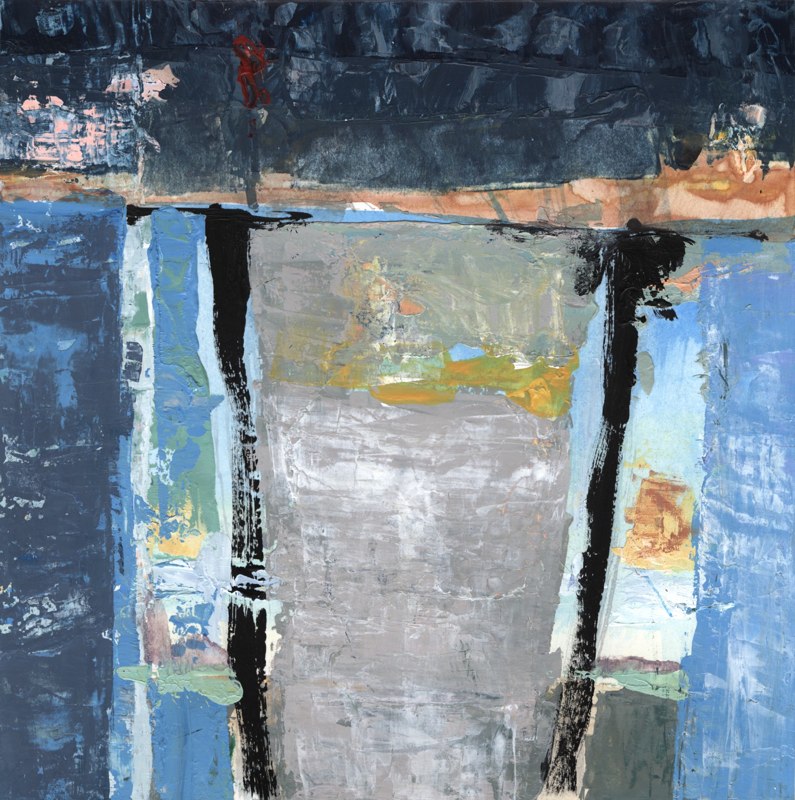
I couldn't.wait (Sex Studies)jpg
“I Can’t Wait” by Peter Groesbeck

I met Nina when I was twenty-one and she was sixteen. Nowadays, that would be borderline illegal, but then it was okay.  I was at university, thinking about dropping out, and she was finishing school. She was French, from France, her parents had moved to London only a year earlier. They made me have dinner with them, and sent Nina to her room to do homework while we ‘talked.’ They were okay with my age, they said. Nina’s mother thought it was good for girls to have a sexual relationship with older men, she said. I didn’t say we’d not had sex, in order not to disappoint her. I spent half the dinner blushing.

“If you ask me,” said Nina’s father, “schools should teach you much more about sex. One of the most important things in life, and schools don’t teach you anything.”

“We watched a video,” I said. I don’t think I was really ready for this conversation, like a Sunday driver being dropped into a Grand Prix. “They were playing volleyball on a nudist beach. Miss Jones taught the class. I think she was a virgin.”

“That’s not sex,” said Nina’s father. “That’s only mechanics. This video, what did it teach? That the penis becomes hard when it fills with blood, that you grow hair in puberty, that sperm pierces the wall of the womb? That’s not sex. What do you do if you want to make a woman come? If you suffer from impotence? How do you eat a woman out? How do you talk frankly with your lover? What do you do if she bleeds? If you bleed? How do you introduce a discussion of anal sex? How do you ask for oral sex? School, all it teaches is the Pythagorean theorems of sex. Where do you go when you want to learn the art, not just the science? Hmm? Meanwhile, I spent half my life not knowing how to get a woman, half my life not knowing what to do with her once I had her. I thought there was something wrong with me. The first time I had sex I thought I’d broken my penis. Why hadn’t school prepared me for that?”

I definitely wasn’t ready for this conversation. I think I’d had sex with maybe four girls before I met Nina, none of them for very long. I wasn’t a virgin, but certainly not fluent. Nina’s mother and father probably had more sex before breakfast than I had had my entire life. They were talking to me as if I were an equal, but I wasn’t. Perhaps, on reflection, they knew that. Perhaps that’s why they talked to me so.

“Because school didn’t prepare you, darling,” said Nina’s mother. I couldn’t imagine a school preparing anyone for thinking they had a broken penis. I got the idea they’d shared this discussion before. I wanted to feel mature for being part of a conversation about sex with proper grown-ups, but my maturity was undermined somewhat by my blushing hot pink throughout. Yes, definitely Nina’s mother and father knew what they were doing, embarrassing their young daughter’s boyfriend so mortifyingly. That must be where Nina got it, later on. To this day I can’t imagine their casual conversation about unsheathed penises and anal sex etiquette was accidental.

Nina and I didn’t have sex together, as it happened, until she was eighteen and I was twenty-three. I understood. I had a friend whose parents were alcoholic; he’s never wanted to drink his whole life. She wanted to wait, and I was comfortable with that. If we had sex, there was a feeling we’d have to discuss it over dinner with her folks. We got married when she was nineteen. She was young and innocent and I used to write her long poems full of words I pulled from Roget’s thesaurus. I stayed away from her parents as often as possible. It was hard to reconcile their frankness with Nina, a shy virgin bride.

Then Nina sold a Freddie Mercury-signed condom in the wake of his death, made a lot of money, and almost overnight she changed. The dark side of commercialism unearthed a hard-core bitch within her psyche. She grew a lot harsher, a lot less innocent. A lot more like her parents, in fact. She developed a Bettie Page fixation, had her hair cut like the 1950s bondage porn star. She pushed me to have rougher and rougher sex. She liked nipple clamps and being punched in the tits and tying my wrists behind my back to my ankle.

I lost my mojo, frightened of the new Nina. For ten years we stayed married, but we had sex less and less often. She became harder and harder. I didn’t.

For example: She had an impersonation of Whitney Houston she liked to do. She’d throw her hands in the air and say “Not in the face, Bobby, not in the face.” When Rihanna was in the news for being battered she updated her impersonation. “Not in the face, Chris, not in the face.” When Whitney died, while the rest of the world watched Kevin Costner and Alicia Keys at her funeral, Nina pulled out her Bobby line again.

She got angry with me at the drop of a hat. Nina’s father and mother were right about at least one thing. Nothing in school had ever prepared me for sex and women. Most of this happened in the days before Google was a verb. I didn’t know who to turn to for advice. The two of us tried to sort our problems out on our own, and we made a big fuck-up of it.

We stayed partners in the shop, but had papers made and signed to turn our informal co-ownership into one contractually bound. I think we were both afraid of losing out to the other one in the inevitable break-up. We felt safer behind a piece of paper. Nina arranged a schedule that guaranteed we were never both present in the same place at the same time, pinned it proudly on the notice-board in the shop’s office. Another piece of paper to feel safe behind. This was before we even separated. We took our prompts on marriage guidance counselling from TV shows, from magazine articles, from self-help books. We mished and mashed conflicting ideas together and hoped that we could somehow muddle our way back to being a happy couple. It never happened.

Nina started wearing bondage gear as part of her everyday wardrobe. She began talking about how a person went through different stages in life, how it was difficult to find somebody ready to go through the stages at the same time as you. Is the man you want to fall in love with the same as the man you want to have children with? She didn’t even want children, she’d heard the argument on Oprah or something similar. A realization – she turned into her parents, perhaps. She took another man to bed, a tattoo artist who’d cultivated two-inch diameter holes in the sides of his nose. I saw the two of them, the two holes in his nose, yes, but also Nina and this man, their bodies wrapped around each other in my bed. Nina must’ve started yoga. Her ankles were behind her ears. She knew I’d be in the house on that day, at that time, it was part of her schedule, so presumably she wanted me to see her infidelity. Even so, I was ready to forgive her, to let it go. It was Nina who finally suggested divorce.

After such an adversarial marriage, our divorce was surprisingly gentle. Neither one of us wanted to give up half the shop, so we didn’t. The schedule set up to avoid seeing each other formed the backbone of our divorce. It was the most successful arrangement in our time together, something Nina’s lawyer told me she was photocopying to pass on to other clients. Some couples are proud of their children. Nina was proud of an excel spreadsheet that made sure we never had to see each other.

Helen, my girlfriend now, thinks I tell the story of my divorce all wrong. “You only concentrate on the beginning and the end. It’s all you ever care about, beginnings and endings. The whole way you describe your marriage is centered on its failing. You don’t talk about any of the middle parts. There must have been good bits in the middle, that’s the way to remember a marriage.”

“Even a failed marriage?”

“Especially a failed marriage. In fact, that’s the only way to remember anything. The ending and the beginning are all men ever concentrate on. For example – you told me about World War Two. You talked for twenty minutes about why it started, you talked about why England won for twenty minutes. Anytime you talked about what happened in the middle of the war it was only so that I’d understand the ending.”

“I told you about the football match. That was in the middle.”

“Right! That’s what you should tell me. That’s what you should think about. The soccer matches. That’s much more important.”

“Football, honey. Not soccer.”

“If you ever wrote your biography it would have ten chapters on birth, ten chapters on death and photos of your wedding and your divorce.”

A story from the middle of my marriage, long before our divorce

Nina took the tube at rush hour, which meant that she hated it. She queued to get through the gates and listed people who deserved cancer. The man with the wheely-case in front of her should get brain cancer. The woman who’d brought her children with her should get ovarian cancer, serve her right for procreating. The old man afraid to hop on the escalator, so slow, should get lung cancer, or liver cancer, or bowel cancer. Old people always deserved cancer. There was a reason why old people had free travel outside of peak times.

She was behind the old man all the way down the moving stairs. He stood on the left instead of the right. At rush hour everybody did that. HIV from bad blood transfusions for all of them. She got past him at the bottom of the stairs, on the way to the platform. She turned left, walked to the end, where it wasn’t so busy. The train was late. The train driver should get ebola for Christmas, bleed through his skin, his eyeballs should fall out.  She bumped somebody pushing through the crowd. “Mind it,” said the bumpee.

“Fuck your mother!” said Nina. She took a minute to berate the bumpee. “Talk to me again and I’ll stick my hand down your throat, grab your pea-sized testicles and rip them up through your esophagus, leave them hanging out your mouth like your senile grandmother dribbling because she’s lost her tiny mind. I’ll staple your lips together so you can’t swallow your testicles back into place, for the rest of your life you’ll have balls banging against your chin, you’ll know never again to speak when you’re not wanted. You fucking ballchindangler.”

Nina stared for long enough to make her point, then carried on heading left. She kept an ear open, hoping the bumpee would dare to say anything. She hoped he would challenge her understanding of human anatomy. She’d never stuck her hands down anybody’s throat before. She reached the end of the platform and the old man was there. She watched him stumble forward, watched him fall to his knees, watched him slide off the platform and onto the rails.

“You stupid old man,” she said to him. “You’re going to make the train late.”

“Help me, please,” said the old man. He looked scared. He was small. Standing on the rails his nose didn’t even reach the platform. He was just a pair of frightened eyes hovering over the G in MIND THE GAP. Nobody else noticed him, they were wrapped up in iPods and free newspapers and Harry Potter books.

“Help yourself. Don’t you watch TV? Didn’t you read Seven Habits of Highly Successful People? You don’t get anywhere in this world relying on others. If you want something to happen you’ve got to go out there and make it happen. Take me, for example. If I waited for my husband to make a success of our business I’d die poor and failing. My husband doesn’t have what it takes. My husband is a loser.”

Helen: In this story, does she talk about you often? Is this a true story, or did you make it up? It feels like a fairly biased interpretation of events.

Me: Shh. It’s a true story. Let me tell it.

The old man wrenched his arthritic fingers up to the edge of the platform, where they clawed above the H and P of MIND THE GAP, tensed and white, like he was hanging off a cliff in the movie remake of  a popular Western TV series, having been thrown from a runaway stagecoach.

“I’m going to die if you don’t pull me up. The train will hit me.”

“Pah!” said Nina. “I have problems of my own, I don’t need to deal with yours.”

So Nina left the old man and he was hit by the train. Nina watched the eyes of the train driver for as long as she could. It was a woman, a larger woman, who looked too big to fit into the tiny train driver’s cabin at the front of the train. Nina saw her from the tunnel, concentrating on stopping the train in the right place on the platform. This is one of the train driver’s greatest responsibilities, to stop the train in the right place. She didn’t see the old man until she’d hit him, and then his blood flew up over the windscreen.

The old man saw the train a few seconds before he felt the train. He had time to think about his life. In that second, Nina saw what he saw. She saw him in the thirties, not even in double figures yet, playing amongst bombed out estates in the East End. She saw him in the forties, learning to dance to the American dances, quite a ladies man, leaving buttons undone on his shirt. She saw him in the fifties, taking his son to the park to feed the ducks, taking his son to the cinema to see the latest thing, a feature length animated movie, taking his son bowling, helping his son push the ball down the aisle. All of it a waste of time, Nina thought, his son had problems with his brain and didn’t understand ducks or cartoon princesses or the rule that says you can’t cross the line on the bowling aisle. She saw him in the sixties, when his son died, and he went to the funeral in a black leather jacket like the Rolling Stones wore. Later, when his wife died, and he went to her funeral in the same jacket. She saw him in the seventies, and the eighties, and the nineties, and the noughties. He changed with the fashions, a little slower each year, until he stopped changing and started wondering what was happening to the rest of the world, wishing he could keep up, and finally not even noticing that the rest of the world was changing around him.

Some people on the platform saw him, some didn’t. There was a jumble as information was passed from the observant to the unobservant, and then a pause. The train doors stayed closed. The people stayed where they were, waiting for something to happen. Waiting for someone to tell them what to do. The train doors opened, people were asked to leave. A voice from above told people this train would not be leaving this station. It advised passengers to seek alternative routes to their destination. Nina was ahead of the crowd, already on the way to the Piccadilly line.

She spent exactly five minutes thinking about the old man’s death, wondering if she should take the rest of the day off work. She decided not. She remembered that the old man had been wearing an old leather jacket, wondered if it was the same one he’d worn to funerals in the sixties. She didn’t think his death was a loss. When you stop changing, you’re already dead.

THE END

Helen: What’s interesting to me is not whether that story is true or not, maybe it is, maybe it isn’t. But I know that you and Nina are getting close again. I’ve heard you talking to her on the phone recently, getting ready for the new store. I’ve heard you laughing. I’ve heard the pauses. So what’s interesting is that of all the stories you could’ve chosen to tell me from the middle of your marriage you choose to tell me one that reassures me you think Nina is a cold heartless bitch.

Me: Helen, honey, there’s nothing happening between Nina and me.

Helen: I know there’s not. It’s just nice that you wanted to reassure me. It shows that you care.

Saying I do care, emphasising the do, suggests I’m contradicting something Helen has said, rather than agreeing with it. Helen told me once that emphasis and excessive adjectives are sure signs a person’s lying.

Me: At my age, honey, you have to care.

Suggests I’m getting old. Shifts attention from one sensitive area to another. Helen seems to accept it, or maybe she’s just putting this conversation aside – we can revisit it later if I want.

Do I want to revisit it later? Am I getting closer to Nina again? We were in love once, that doesn’t all just go away. But how could I want anything from Nina now that I have Helen, lovely, wonderful, beautiful, smart, perfect Helen?


Christopher James lives and writes in Jakarta, Indonesia. His stories are found or forthcoming in Tin House Online, Camera Obscura Online, the Times and the Smokelong Ten Year Anthology. He is always but always failing to work on a novel.

Read an interview with Christopher here.

“One Day a Year” by Kevin McIlvoy

One Day a Year. green_evolution

“Green Evolution” by Suzanne Stryk 2010

One day a year, but only one, Smoothie and The Tailor talk about the past. They buy a Proto-burrito and a small Styrofoam cup of refried beans at Proto’s Eateria, and they eat in the back of the bus. They talk about the news, about their paper sales, their regular customers – as much as they can remember. They talk about the look of the new automobiles inside and out. They sing together a little. The Tailor is Smoothie’s oldest living friend.

For over twenty years Smoothie has been bundle captain on the Route 9 bus in Las Almas, New Mexico. He distributes the newspaper bundles to the street vendors, and he troubleshoots for them. He chooses new members of the team whenever that must be done.

His first full day on the job was November 22, 1983.

~

The fare machine tumbled his fifty cents.

“Are you sitting here?” he asked the elderly woman, the sole passenger, because she had rustled mysteriously, had glanced at him in unsettling readiness as he sat down near her in the front of the bus.

“I’m always here,” she answered. She removed her red vinyl shoulder bag from between them: the zipper closed around the nose of a gun barrel. “Bee. Two e’s,” she said. Her chipped nails were painted pale-sky blue. Her shining lipstick was Vaseline. Her damp hand went inside his, weakly gummed and gripped him.

“Where to?” he asked. He actually wanted to know. He wished he had asked differently.

“Going to hell,” she said. “You going?”

One: where she was. Two: who she was. Three: where she was going. Four: what she wanted to know. In thirty seconds she had told him all of that.

The blackening sunspots under her eyes and on her temples were not at all attractive. Her short silver hair and her small ears were severely compressed against her head by a scarf. Her black eyes were gold-flecked. Old leopard are the words that came to his mind. Later, he would write them down. He was a man who wrote things down. Long after, not knowing how they mattered, he would throw them away.

As the bus departed from the Mesilla Valley Mall, the doors made the hydraulic sound he liked on buses, probably because he had that sound in his memory, and it reminded him of how many years he had ignored public transportation. He had owned a car and known people who owned cars. He had rented a house when he had a job, when he was in circulation, had friends and still made new ones.

Bee said, as if to the bus driver, “Lord, look at him,” and he was on the bus alone with her, so he looked at himself reflected in the opposite window. He should rinse his neck and face in a sink. He should slap the dust out of his black jeans, get a belt or rope to hold them up better. He should, he thought, recite the verses of his colorful tee shirt: that would – it always did – make him happy.

Heart-Healthy Nutritious
Supreme Smoothie!
Mineral-Infused Vitamin-Maximized
Supreme Smoothie!
Mouth-Watering Invigorating
Supreme Smoothie!

Out the window beyond them was more of the radiating New Mexico desert heat, the white match-head of afternoon light during the day and the icy wind at night. At Lenox & Elks, a stooped old man boarded, sweatshirt on and hood drawn close around his face. “Firey!” he said to Bee who said, “No lie,” and said, “This here’s Smoothie, our new Captain.”

Now Bee grinned, and the old man bent down to get a close look, and spit-laughed a stinking spray directly at Smoothie. Smoothie thought it must have been that he was funny, that something about him was humorous. He said, “Do you always ride this bus?”

The man’s face retreated a little into his hood. “The bundle bus. Bee’s bus,” he muttered.

Bee said, “Show Smoothie some respect.”

Talking through Bee to Smoothie, the bent man said, “Him? He’s our new Bundle Captain?”

Smoothie said, “I don’t –“

Bee said, “He –“

“Today?” the man asked.

“Today,” she said.

Smoothie knew he could not add to or improve upon this kind of conversation. Once, it would have made him anxious to be talked about or at. In order to be rid of that, at thirty-eight he had been prescribed an anti-anxiety drug. The drug worked so well he was able to tell the unwelcome truth to his family members, to old and new friends at the newspaper production offices where he worked. He found that all of them thought he was a good man right up until the time he was actually an honest man. The drug released him from trying so hard to free others from their curses. It made him turn himself in for his own crimes. It made him run at blind cliffs of self-recognition. When he owed, he knew how much. When he fell, he saw how far. The drug was The Supreme Smoothie. It had taken only three years to sail him from what felt like the center of things to an unassignable destination.

~

Bee said that they were right on time for a call from The Super. When they pulled over at Telshor & Del Rey and stopped in front of the Shell, the pay phone was ringing, and she made him come with her to take the call.

She stretched the steel phone cable so she could stand in a wedge of shade from the building. She listened to The Super, she pushed at the nylon shroud of her scarf and scarf knot; she said back to the person on the other end of the phone line: “I name the day.”

The black shade seemed to have bowed her upper body towards the ground. She cupped the phone to her ear, her other hand to the other ear. Smoothie thought he saw her cower. “Smoothie is his name,” she said into the phone, and, “Well, you will soon enough.” She handed Smoothie the phone. “Say hi.”

“Hi,” said Smoothie.

“Route 9,” said the other person in a tin-bell voice, “a good route.”

Bee took the phone back. She stepped into the light, the silver phone cable and the handset glinting. She hung up, and they returned to the bus. He remembered his mother’s voice, so much like the voice of Bee’s boss. She had been the last of Smoothie’s living relatives to die.

~

A woman in a knee-length paper-thin dress boarded, carrying a water-filled gallon and a cardboard sign. U Buy I Sing U Don’t I Sing.

That steaming sound. Departing.

Bee, who knew her of course, introduced him as Smoothie.

Her sign facedown in her lap, the woman asked, “Is that name the truth?”

Smoothie said she could count on it.

She greeted the old man as “Tailor,” and took the seat next to him, offered him her gallon. She had to punch his arm to keep him from draining it.

“Give a crush,” The Singer said to The Tailor who tightly grasped invisible oars as he puckered up, and they leaned toward one another in their small imaginary boat, and kissed so hard they slurped.

The Singer sang, not nearly loud enough. The Tailor and Bee sang softly with her, “All at once am I several…

The bus driver probably sang, but in any case, some bass crept in. It could have been the bus driver.

When they were done and the bus was accelerating again, the group seemed to appreciate Bee’s honest assessment of it as unjustifiable songicide. They applauded her, and Smoothie joined them. Bee opened her purse, raised it and swung it in front of her so that it seemed like a small puppet making a bow or curtsey for her. She sat.

“He’ll do,” said The Tailor.

“He might,” said The Singer. “Starts tomorrow?”

Bee said, “That’s the plan.”

Smoothie could not fathom how Bee had chosen him. He looked the part; it was the opportune day; his need seemed the greatest: this is what he later speculated.

He was offered a handshake from The Tailor, and, from Bee a pat on the shoulder, and, from The Singer the gallon, which he refused. She unsuccessfully offered again. She rummaged in her dress pockets, stood up in order to rummage deeper. She hooked what she was fishing for but only fingered it, only looked into the pocket, without withdrawing her hand. “Got it,” she said.

“Good,” said Bee. “Little gift?”

The Tailor leaned forward, gave Bee the on-the-downbeat signal of people in a band.

The Singer offered Smoothie an unwrapped glycerine suppository in silver foil.

The object mattered to her. Its bubble was triple-coated in space-age plastic; its crenelated foil backing was embossed, compounding its mystery and communicating its worth with a holy invocation: EDILGYSAE. Smoothie could see how it mattered. It was cool to the touch, and it smelled of warm silverware drawn from a soapy sink.

He accepted.

It was time to accept.

Now The Tailor asked, “How long?”

“Hard to say,” Smoothie answered. He held the silver-cloaked bullet up to the light. How long have I been homeless? he thought. It had all begun three years ago; he had landed on the streets two months ago, or weeks, or even less. He decided he wouldn’t answer The Tailor until he could remember.

“It found me,” said The Singer. The gray tip of her tongue moistened her lower lip. “It did. It did.” Smoothie could almost imagine the unlikely path; some teenage driver would think how funny that would be as payment for a newspaper; some doctor would offer it with confusing instructions.

Smoothie gave the suppository back, for which she was grateful. It could have traveled to her from galaxies eons away. She held the suppository package near her face and read it wth the dessicated bark of her fingertips, her transfiguring strangeness emerging into full view.

At the Flea Market stop Temp and Tech, dark-skinned twin brothers, Smoothie’s age or a little younger, or fifties, or late fifties, introduced themselves.

~

Tech and Temp were found in the Valley View Elementary dumpster, dead from exposure, on December 7, 2001. In 1989 The Singer’s daughter boarded the bus, told them The Singer had died two days earlier on September 11, from undiagnosed cancer. They had never met her, though they knew of her. She asked for a crush. Her voice, familiar to them all, verged on song. She got off at Telshor & Del Rey. The driver, at sixty-three years of age, would die of stroke on the Route 9, at Roadrunner & Foothills, Veteran’s Day of 2000: a lasting sleep after a drive-thru meal at Proto’s. Bee took her own life on November 22, 1983.

~

Tech and Temp carried twelve newspaper bundles on board. They sat atop the two high piles like Rumplestiltskins.

“Our new Bundle Captain,” said Bee.

“He’s ugly, ain’t he?” said Tech.

“Correct,” said Temp.

Tech and Temp received a crush from The Singer, and she forgot herself and gave them another, forgot herself and gave another, longer, to The Tailor. And then there was soft off-key singing, “Can you hear a lark,” and everyone, including Smoothie, singing, “in any other part of town?” And The Singer, fanning herself with her signage, grinned at him.

And Tech said, “Loverly,” and Temp said, “Es verdad.”

Inside him, Smoothie braked. His thoughts pedaled backward – better at that than moving forward – and he counted the crew members: Tech, Temp, The Singer, The Tailor, Bee, the driver, and himself.

His first day on the Route 9 bus. His first day as bundle captain. He asked, “What day is it?”

The bus stopped at Mesa Grande & US 70. A woman with an almost-newborn, those tiny hands reaching out of blankets, stepped up into the bus, glanced at all of them. She stepped off.

Smoothie thought the baby in those rosy blankets had sounded like it might say something. It didn’t have words, but it had emitted a wordsome gurgle. The Tailor looked like 2 AM and The Singer a little before. The brothers, perched side by side atop their bundles, stretched out their legs next to each other, clock hands in the minute-past-midnight position. Their worn khaki pants were the same country club color of marigolds.

“What day is it?” he asked. His first hour ever completely surrounded by the crew. He asked them all, “What day? Tell me.” He was too embarrassed to ask what year, what month.

“Eighty-three – November-twenty-two,” said The Singer as if that was an answer. Her face was crusted with sunspots at her temples and jaws, the same as Bee, as The Tailor, Tech and Temp. The brothers had swept-back white hair and very full identical fu-manchus; they breathed through their blistered mouths, blowing yellowing white moustache hair outward.

Smoothie stared because he wanted to stare. On his meds he acted and, in fact, was like the human a human might think he was. He stared at their lean jaws and slack, squamous necks and heads, and at the unlit jewels of their eyes.

They stared back, baring what teeth they had left. He said, “You call me ugly?”

“We agree on it,” said Tech. Temp nodded, with conviction.

Bee said, “You really are. But –“

Temp said, “Plain fact.”

“Homely,” said The Singer.

The Tailor said, “All your life, I bet,” and seemed to size up Smoothie for a custom ugly suit.

The driver raised his hand, though he had no question. He was pointing at the sign above the windshield: DO NOT TALK TO THE DRIVER WHILE THE BUS IS IN MOTION.

Bee said, “Unanimity,” evidently pleased that her crew could be so accurate. Smoothie remembered a half an hour earlier when she had handled her purse that certain ventriloquist way.

“He’s ‘homely,’ then,” said Tech. “We agree?”

Definitely. The driver might have said it, Smoothie couldn’t be sure.

The driver had stopped the bus at Roadrunner & Morningstar where no one came on but where the fare tumbler loudly chewed the coins, and the inadequate engine hmmphed and huffed under the bus hood.

The doors steamed shut and the STOP sign near the driver retracted like a wing stump or a gill. When the driver’s shrill-sounding wide turn emptied all the brightest light from the bus, Smoothie asked, “Will you tell me what time it is?”

“No,” said the driver. It was him. Or it could have been him.

Bee told The Singer to fan Smoothie, though he doubted if she meant for her to fan so hard, circulating the diesel and gasoline exhaust that perfumed them all.

Smoothie said, “Put that down. And don’t look that way at me: I don’t want a –“ he caught the switch in her expression – “crush. And –“ she was already humming – “no song, okay?” Already, the words were coming, “Are there lilac trees—“

“Is that your whole damn repertoire?” he asked.

A man, unnaturally tall, a spotty thin gray beard furring his chin and neck down to the bottom of his throat, leaned over Smoothie. He had come from nowhere. His shaved head was shiny and smelled of oranges studded with cloves. He kissed Smoothie’s forehead. “Plenty of time. ‘s early.” He did not move. Smoothie could pull away but. Smoothie could wisecrack, he could be rude, but.

The man said, “’s almost one in the afternoon, Captain.” As if Smoothie had been awoken from a pirate nap, his head still far inside his pillow, his closed hands warm under it. As if a dream had placed him on a bus with steam sounds, with a motor coughing and coins clinking and his mother’s singing voice fading.

The gray man had been the last on, but he was the first dropped off with his bundle of newspapers at the westernmost part of town, the stop at Roadrunner & Morningstar.

Smoothie thought he heard Bee say, “No one will pick you up at 7:10,” but he misheard.

Later that evening – promptly at 7:10 – everyone on the bus called out to him, “Grayman!” He boarded.

Grayman was fifty-one. He was as old as he would ever be.

He took Smoothie’s elbows into his hands. He took Smoothie’s forearms, firmly took them, pulling him forward. Grayman’s ears and eyelids and brows and temples were sunburned almost black. For the longest time, he did not let go.

~

At 6:50, before they picked up Grayman, they picked up Tech and Temp at the Flea Market. Tech reported that he and Temp had sold almost fifty. He reported it to Smoothie. Smoothie, flustered, said, “Well. Well.”

“God bless,” muttered Tech.

~

Before them, at Lenox & Elks, The Singer boarded. “Poor sales,” Bee said, not quite loud enough to be heard. “Always, poor sales.” Bee nodded at the facedown sign. “The singing.”

The Singer shared the water bottle and good crushes all around. 6:40

~

Before her, The Tailor – “Good location,” said Bee, “Telshor & Del Rey” – climbed aboard at 6:30. He jingled his change-maker and held up his coin-stained wooly palms, and everyone high-fived him, Smoothie and Bee last.

~

Bee and Smoothie had spent the day at what was his new, his destined location, Loman & Telshor, where she showed him the ropes as she had been shown by her predecessor.

Hardly believing where he was now, Smoothie wondered where he was then.

~

On that same day in ’63, he was nineteen years old and at a job interview for copy reader at the Las Almas Sun-Times.

The interviewer, a very old man, shoulders bowed, back bent, had him sit down. He waited for the young man to settle before telling him the news about The President. He explained he had over forty years in at the Sun-Times. It was done. It did no good to hope it wasn’t. Drawing typed questions from a clean manila folder, the man then tried to interview Smoothie. At that time in his life, Smoothie had a name. For the life of him, he couldn’t remember his full name: the answer to the first interview question. The old man’s eyes and Smoothie’s filled with tears. The two felt as if the bones and muscles and the skin of their faces could not hold. Tears poured into their throats.

“Impossible,” said the interviewer, instantly not a stranger at all.

Smoothie tried. He could not speak.

~

He remembered thinking that the interviewer was right. To be flung from the world as if you were a word crossed through: impossible.


Kevin McIlvoy lives in Asheville, NC. As “mcthebookmechanic.com” he offers mentoring, manuscript editing, and writing workouts. His work has recently appeared in Iron Horse Literary Review, Kenyon Review Online, and Hayden’s Ferry Review. Graywolf Press published his most recent book, The Complete History of New Mexico and Other Stories.

Read a conversation with Kevin McIlvoy here.

“His Son” by Marc Larock

His Son.Earthworks-(Polyphemus)-det
“Earthworks–Polyphemus” by Suzanne Stryk (detail)

You’ve got money problems, my accountant tells me. You’ve got too much money just sitting in the bank doing nothing.

What do you suggest I do?

Retire, fall in love, and buy a vacation home in Tahiti, he says.

So I tell him: Thanks, Dave. I’ll think about it.

Fact is I don’t think about it. I don’t think about it at all. That’s not my life. I’m sixty-one years old and divorced. I live in a one-bedroom apartment on the seventeenth floor of a twenty-floor apartment building in downtown Boston.

My apartment is sixteen hundred square feet, overflowing with antique furniture. The spoils of my marriage. What didn’t fit in my apartment or go with my wife ended up in a storage unit across town.

My front door doesn’t open all the way. That’s because I have three chests of drawers lining the entrance hallway. No room for them anywhere else. I have two armoires in the bedroom. One’s empty and the other isn’t. There’s not really enough space for the antique German king-sized bed in there. I don’t care because I don’t sleep in the bedroom. I sleep on an old sofa I purchased at an estate sale two years ago. It’s paisley and ugly, but it’s comfortable. And that’s what I care about now. Comfort. I sleep with the TV on, the sound off. I usually fall asleep listening to some jazz CDs, something mellow. Cymbal and snare as soft as mouse footsteps over fine paper, liquid piano, distant fade of trumpet, something that makes you think you’re disembodied, underwater, floating.

I made a rule two years ago: No more than four bourbons before bed. Just enough to fall asleep. No hangovers. I don’t need that. Just sleep. Sleep, alone in the dark.

I work at a law office, I do contracts, I work as much as I can. I bill forty, fifty hours a week. I used to be full-partner, now my name’s just on the wall in the waiting room. Younger guys bought me out five years ago. They let me stay on. I don’t make the big decisions and that’s fine with me.

My ex-wife got remarried last year. Her name’s Gayle. His, Ron.

I go into the office most weekends. I take extended lunches. I go to a nice seafood restaurant nearby. There’s a waitress there: Holly. She’s pretty. Working her way through Northeastern as a communications major. She’s blond and tall and has a perfect figure. Perfect. I leave her big tips. Sometimes thirty or forty percent. She flirts a little, she doesn’t need to flirt, but she still does.

I don’t want to come off as the dirty old man. So I don’t ask her many questions. I don’t want to know she has a boyfriend. I pretend to read the Wall Street Journal. I pretend to care about the world while I eat. She works every Tuesday, Wednesday, and Saturday at lunch. Friday evenings at dinner. I take lunch late and say I want to sit near the window, so I can sit in her section. I pretend to look out the window. I can see her reflection in the glass as she cleans off the tables behind me.

What do you do? she asks me one Saturday afternoon as I pay my bill.

I’m a lawyer, I tell her. I tell her my son works at my firm. I tell her: He’s taking the whole show over in a couple of years. That’s when I’ll retire to Florida with my wife, Gayle. He’s hard at work back at the office right now. Works right through lunch most days. He’s more ambitious than I am. He’s about your age, I say. I’ll bring him in here to eat with me next time.

She smiles and blushes and tries to change the subject. I never forget that smile. I think about it when I’m half asleep in the morning, when it’s still dark out and the room is silent and I might fall back asleep.

Truth is, my son Jeremy never worked for me. Last time I saw him he loaded what he called his life into the back of his friend’s car. He gave his mother a kiss and a hug. She was crying in the front yard, telling him not to leave. Then he got into the car and he drove off with his friend. I watched all of it from his bedroom window. Then Gayle turned and looked up at me. I knew she would leave too. I punched him in the face earlier that day. He told us he was gay. He told us he was moving to California. He told us that he never had a chance to live a gay life and that’s what he wanted to do in California.

That day was the third time I punched him.

The other times. Once when he was fifteen and he came home with a pierced ear. The second time we were walking in the park near our house. I told him about hard work, about getting into the right schools, and what it takes to be a success. He was seventeen years old and he told me he never wanted to be like me. He called me a loser.

That’s it. He left and never came back. He stayed in touch with his mother through e-mail.

I think about that stuff now and it makes me want to drink. My doctor tells me I can’t drink as much I used to and he tells me to cut back. Something wrong with my liver. So, I don’t think about that stuff.

Not thinking is a habit. It’s a way of looking at my life. Sometimes I look at myself as I lie on my sofa at night, trying to sleep. A rumpled-up blanket covers my legs. I look down at my legs and I think they might not even be there. From this view it wouldn’t make a difference. Same view, legs or no legs. I think: that’s how people with no legs get by, that’s how they don’t go crazy. They look down and from a certain view their legs might as well be there.

So, you take another drink and close your eyes and you fall asleep thinking you’re a whole person again. I’ll bet that’s how it works.

~

One evening, I’m working late at the office and Gayle calls and says that Jeremy was in a car accident. Her voice is shaking and electrified. Jeremy is in the hospital, in critical condition. That’s all she knows. She’s on her way to the airport with Ron. So, that night I pack and I get on a plane and fly to L.A.

I drink on the plane. I sit there and I try not to think. I can’t sleep. It’s early in the morning. Pure black outside. A dull roar – the steel-grinding sound of turbines – crushes everything inside.

I start to remember. It’s almost ten years ago now and Jeremy tells me he’s gay. He sort of teeters there for a while after the blow, like he’s numb. I’m standing there, fists clinched. He’s standing there trying to re-focus. I think: He’s going to lunge at you and then you’re going to push him against the wall and get him in the stomach. I look at him. He just stands there. I think he might fall over. He doesn’t. He never looks at me. He never lunges at me. He just looks stunned and then walks out of the room and goes upstairs and shuts his door and packs. I go fix myself a drink and try to think about a case I’m working on. No good. I hate him at that point. I want him to hate himself. I wonder if he does. I wonder if that would make me happy. I think so. I fix another drink. I’m drinking alone in my study, doors closed, and then I want to kill myself for hating him the way I do.

Now I’m on a plane. I think about that day. All of us in a big house behind closed doors. That was my fault. I shake my head and mutter something to myself. The guy in the seat next to me hears it. I don’t care.

The flight attendant walks by. I order another drink.

~

I get to L.A. and take a taxi straight to the hospital. I find the I.C.U. on the hospital directory. I wait in line in front of the reception desk. Ron sees me. He’s been waiting there for me. He hugs me. I don’t hug him back, not really. I only put my arms around him in a perfunctory sort of way. Gayle’s in the bathroom, he says. She’ll be out here in a minute. We’ve been expecting you for some time. Christ, I’m so sorry about this. Thanks, Ron, I say.

I don’t ask Ron how Jeremy is. I don’t want to know. Then I see Gayle. I look at her face.

Now I know. I see it. It comes to me as she walks towards me, unspoken.

~

Gayle wants to go with me back to Jeremy’s room. We walk down a long corridor and finally get to his room and she makes right for him. I just stand there in the doorway. I can’t bring myself to walk into that room. Gayle starts talking to him, crying. He’s unconscious. Tubes are running over him. His neck is in a brace. His head and face are bandaged. I can’t even tell that it’s him. Even his legs are bandaged.

There’s a shrill sound filling the room. It’s like, beep, beep, beep, beep, beep… Except really fast. I know that’s the sound of an E.K.G.

I walk across the room to the window. I get to the window. It looks out over L.A. It’s morning. The whole town is gross and brown and greasy looking. The traffic is bad and I can see cars jammed up on the streets below. I see all these people crawling around down there like filthy little bugs. I think that if the window could open, I could hear them yelling at each other in ugly voices.

I lean forward and put my forehead on the windowpane and it feels cool and clean. When I look down, I see all those little bug-people walking around down there in the streets. It looks horrible and chaotic. After a few seconds a helicopter flies over the hospital. I look up at it. It’s a little solitary shape moving fast through that big yellow L.A. sky. The sky that’s the color of pee and almost makes me sick to look at it. I just stand there, watching it go until I can’t see it anymore.

Pretty soon, Gayle notices the E.K.G. and says she’s going to find the doctor or somebody to try to get his heartbeat under control.

Now Gayle is gone. She’s off down the hall looking for the doctor.

I take a good look at him. I walk over to his bed. My lips move and I hear my own voice and I say, Hey there, kiddo. Those stupid words tumble from my mouth like words spoken in a foreign language I’m not very good at. He’s still. No response. He didn’t hear me. Thank God.

I listen… All I hear is, beep, beep, beep, beep, beep

I sit down on his bed, right there, right next to him. I see his arm there beside him. I touch his arm with the backs of two fingers. Skin I haven’t touched in years. Then I put my hand on his arm. Then I hear it: Beep, beep, beep, beep, beep…beep… beep… beep…beep…beep…beep… Of course it startles me. I take my hand away and then I hear that beep, beep, beep, beep sound real fast again.

I’m scared, more scared than I’ve ever been in my whole life. And I’m thinking that if he would just give me that again, just one last time, that’s all I will ever ask for, from anyone. Do it for me, just one last time. That’s all I’ll ever need.

So, I put my hand down on his arm again, on his forearm there, like I did the first time. I listen. Then, after a few seconds, beep, beep, beep, beep…beep… beep…beep…beep…beep… Just like before, the sound like tides. Wow, I think to myself.

Just listen to that. Wow.


Marc Larock received his B.A. in philosophy from the University of Colorado at Boulder and his M.Phil. in philosophy from the University of St. Andrews in Scotland.  He teaches philosophy at Metropolitan State University of Denver.

Read an interview with Marc here.

“Sex for Groceries” by Kirie Pedersen

Kirie Pederson.FactsofLife

“Facts of Life” by Suzanne Stryk

“…During a summer storm of three or four days of chilling rain, flocks leave the nesting grounds and may fly hundreds of miles until they encounter favorable weather. After the storm, they return in small groups to the nests. In their absence, the young survive without food, becoming torpid: cold, motionless, and barely breathing. Lower metabolism prevents starvation, thus allowing the young to be raised through alternating periods of plenty and shortage.”  ~National Audubon Society Field Guide to North American Birds Western Region


“When your mother dies,” Matthew said, “Your molecular structure breaks down and is rearranged. When it’s over, you literally become a different person.”

Matthew is my love. I don’t know what else to call him. He endured the deaths of my father and mother, a year apart, and in between, Zoe’s murder. It was as though a hole opened up in the universe and sucked them all away.

Rather, I should say, Matthew endured my family. And me. My father refused to acknowledge him, and made snide comments about Jews. My mother adored him, but of course, my mother loved everyone. In grief, I became insane.

“Now you will truly be an orphan,” my therapist said, “a real orphan because your parents are dead and dying. And you will cast off your family.”

Cast off my family?

“Your family is the embodiment of evil.” Pam tilted her head, examining me as if  for self-inflicted burns, cigarettes crushed out on my belly. “I see you standing on the porch of a burning cabin. You can go back in and rescue everyone. Or you can save yourself. You’ll be lucky to escape with your car keys.” Pam wore a silly purple beret and jaunty scarf. She didn’t care what other people thought about her. “Have you read the Old Testament? You must cleave unto your lover.” That shut me up. Pam quoting the  Old Testament. Sucked as I was into the tarpit of my family, it seemed logical I should jettison Matthew. If I increased my losses to the highest possible level, I wouldn’t have to feel anything at all. It was like pressing on a bruise on my wrist to ease the throbbing in my skull.

After decades without drinking or smoking, I wanted to drink and smoke. I’ve never done heroin, but that sounded fine too.

If not heroin, throw myself off a cliff.

“Want anything to take the edge off?” Pam asked.  Sweet words. But I knew from long experience that I wouldn’t simply ease the edge.

“I’d take one, then the whole damn bottle, and then crave more,” I said. “But if you give me an IV I can lead around on a leash, with just the right dose trickling in? I’ll take that.”

Instead, I walked for miles in the Olympic National Park. I walked so far and so fast my collie and golden retriever couldn’t keep up.  I walked until I reached an altered state. Adrenalin or endorphins or exhaustion kicked in, or the sun streaked through the trees to illuminate a single fire-singed stump, turning it blue and black, and at the same moment, a Pileated woodpecker made its “high clear series of piping calls” overhead.

My toenails bruised and turned blood dark, like those of a marathon runner.

Dad died first.  Matthew and I left Manhattan and returned to the Pacific Northwest. It was a long dark spring, or so I remember: rain without ceasing. We were shipwrecked in our cabin, death and darkness folded around us. Sometimes, I wanted to be even more alone, in a tiny space, like a baby’s crib. I wanted to move into our guest cottage, called Eagle Cottage because bald eagles perch overhead. I wanted a cell-like bed separate from all others, to be attached to that bed by a slender chain, floating away from time.

Yet I could not sleep unless Matthew wrapped himself around me, holding me tightly, forming a womb, and even that was not enough. I never lost awareness of my mother, a few miles away. After sixty years of marriage, she slept alone in her own cell-like basement room in the hospice. I wanted to fashion a pouch, like those in which newborns are swaddled, clutched to the chests of their fathers or mothers. I would carry my shrunken little mother twenty-four hours a day, singing to her in her own dying days.

Every dawn, I awakened to a heavy fist of dread striking my heart. I dreaded visiting Mother, and then felt guilty for my dread. I dreaded her actual death. I was sad about my sisters, and how estranged we had become. I fantasized the lovely sisters again united, singing perfect four-part harmony. This happened, briefly, at my father’s memorial down on the shore. After the guests left, the siblings sat on the grey stone sea wall Dad had built by hand. It was dusk. We sang every song we remembered, someone starting one up and the rest picking it up, on and on, until the moon rose red over the horizon.

And then the next morning, the calls and texts and emails began, the awful things this person said, or that.

Sometimes I woke with renewed energy to take action, to quit feeling sorry for myself. I wanted to accept death as a natural, even healthy part of life. I wanted to accept death as beautiful, a way of prayer, a simple cessation of heartbeat and breath. I did not have to die because Dad died, because Mom was dying. Yet the child, alone, without parents, does die. If she can’t find sustenance or shelter, she dies.

When Matthew and I were in Manhattan, I taught a class on addiction, weight and body image. It was nice to be around teenagers. The women, girls, really, were beautiful and brilliant. It was difficult to understand how they could hate their bodies, want to hurt themselves, cut into their flesh, as most did, but Manhattan is filled with ambition, and even the very young are driven to accomplish by thirty what others, in other parts of the country, the Northwest for example, might be content to achieve in a lifetime.

Two days before Matthew and I were to return to Portland, one of the young woman called. She begged me to attend a “ladies tea,” as she called it, in my honor. I had already begun to push the students from my mind, my way of protecting myself from loss. “I can’t,” I said. “I have too much to do. I like clean departures.”

Zoe insisted. Sweet Zoe was spectacularly beautiful, a gifted singer and piano player, on scholarship to Manhattan School of Music. She had a glow about her, the same glow my mother had, but she also had a craziness I couldn’t quite put my finger on, perhaps only my own madness when I was nineteen.

“We want to celebrate your Kirieness,” Zoe said.

And so the dozen women from the class gathered in Zoe’s studio apartment. Everyone dressed up, and perched along two facing couches, and on chairs, chatting about this and that. I was staring out the window at a brick wall, thinking about Matthew and my dead father and my dying mother, and then, as if from nowhere, as if from far away, I heard Zoe say “I trade sex for groceries.”

She needed groceries to feed her child, her scholarship didn’t cover food. Or child care.

I didn’t know Zoe had a child.

“Oh yeah,” she said. “I lost custody. See, when I was eleven, this guy talked me into going to his apartment, and then he raped me. When he was done, he threw, like a hundred dollars on me. On my body.”

“How awful.” My heart went out to her, this beautiful smart young girl, her life shredded. When I was the age Zoe was now, in art school and working as a model, the same thing happened, and the guy threw a few dollars on a chair. This is all I’m worth? I remember thinking that.

Zoe said the man became her pimp. And she was on a yacht one day, and the client left for a moment. She felt something beneath the bed, poked with her high heel, and she saw the body of a woman shoved underneath. Still in her heels, Zoe ran for her life across the dock.

I wondered if this was how I sounded, too, at her age, when I tried to tell my sisters or my friends what had happened. Zoe cried a little, but the tears fell straight down onto her beautiful dress, as if beyond her bidding.

Then Zoe laughed. “I escaped,” she said. “I’m alive. I’m starting over.” She would regain custody of her little girl. She would finish school, support her family. Relieved, we all laughed too, a glitter of sound across the darkening room. Zoe poured chamomile tea into fragile cups, passed around trays of lemon cupcakes.

“Violence changes the brain chemistry,” I told the young women. “Experiencing it, I mean.” I cannot help talking like a professor. It’s better than feeling. “Talking about these experiences with each other lessens the pain,” I said.

“I’m going to be a therapist,” Zoe said. “Like you. I’ll do music therapy with young girls who’ve been damaged. And help them live.”

A week after our gathering, when I was already back west, the story was all over the news. Zoe met a man who was once a client. She met him in a hotel room where they’d often met before. She thought he was in love with her.  He was a law student, and maybe he would help her with college, with her daughter. It seemed he wanted to tie her to the bed, or tried to. Zoe ran, actually made it to the door, and then he shot her in the back.

“I’m hysterical,” I told Matthew. “I’m so sorry. I should know better.”

Matthew disagreed about what I was, what I should be sorry for. “Hysteria is deep healing,” he said. “The more deeply you cry, turn yourself inside out, the deeper the healing.”  He said grief is like being hit by napalm, immolated and melted. Or boiled to a grinning skeleton of bone.

“I would rather light myself on fire than continue to cry like this.” I put my hand over my belly as if protecting an embryo. “If my molecular structure changes now, what will I be when it’s over?”

“It’s never over,” Matthew said. His parents had died decades before. I’d always felt sorry for him, but now I envied him.

“Was it like this for you?” I asked. “Did you feel like this?” Every day, I asked him that.

As our mother embarked on what the hospice nurse called “active dying,” we four sisters gathered a final time. We sat around our mother’s narrow cot and sang every song we knew, the songs she taught us. We folded our coats into pillows, and slept on the floor, breathing ragged as she did. When she stopped breathing, she looked like herself again. Her folded-up body straightened out. She was beautiful, like concentrated sweetness.

I howled like a baby, a pierced animal.

“I’m not sure I’m coming back this time,” I told Matthew.

“I know,” Matthew said. He reached over and touched my knee. “I’m not sure either. Let’s just go ahead for now.”

When I was attacked, I left my body. I saw the event, but I was outside it, looking down from near the ceiling. I never returned to that body. That girl was dead. I developed the head, the brain, and even some of the credentials to help others. I did help others. I didn’t save Zoe, but I’m sure I helped a few people.

That day, when Matthew touched my knee so lightly, I re-entered my body. Just as the assault took place at a specific time and place, on a specific day, to a specific body no longer mine, so I returned to my new body, this rejiggered constellation of molecules, almost with a thud. It was as if a screen or shroud lifted all at once. Below the cabin, the high tide lapped on the grey stones of the shoreline, and in the Douglas fir and madrona clung small clusters of golden crowned kinglets, bushtits, creepers, and nuthatches with their tumbling chatter, their tinkling descending warble. I shook my head and looked around at the waxing gibbous moon, the turquoise water. The moss was freshly green in the cold spring rain. I wanted to pet it. I wanted to lie down in it and roll around. I wanted to pray to it. I wanted to learn its name.


Kirie Pedersen has work forthcoming or published in Quiddity, Wisconsin Review, Eclipse, RiverSedge, Utne Reader, Folly Magazine, Eclipse, Women NetWork, Alcoholism the National Journal, Northwest People, Caper Literary Journal, Laurel Review, Teachers and Writers, Regeneration (Rodale Press), Glossolalia, Avatar Review, Chaffee Review, Black Boot, Eleven Eleven, Folly Magazine, and elsewhere. She holds an M.A in fiction writing and literature and blogs at www.kiriepedersen.com

“The Physics of Memory and Death” by Curtis Smith

Physics (Who Am I)
“Who Am I?” by Marilyn Sears Bourbon

Sara wakes after midnight. The moon is bright, the room lit in indigo and bone. The lacy curtains billow. On the breeze, the scent of salt, the waves’ ceaseless crash. Sara’s shoulders are sore to the touch. She smells of lotion. She lights a cigarette and, with lips pressed to the window screen, blows a smoky plume. Her parents had fought earlier—too much bourbon and too many cigarettes. Now another sound, a rhythm like the surf. Soft moans. Sara rises from her bed and lays a hand on the thin wall.

A conch shell rests atop the dresser. Sara lifts the shell from its wooden stand. The shell’s shape reminds her of her brother’s old football. She runs a finger along the bony ridges, wipes dust from the opening’s shellac-glistening tongue. Using two hands, she raises the shell to her ear.

Of course Sara does not hear the ocean. The low-frequency hiss is born from the fact that the shell acts as a closed-pipe resonator. Its wave-mimicking song is white noise, the blank slate upon which all recognizable sounds are etched. In a bit of Mobius logic, its gentle purr is also the washed-out resultant of all sounds, a tone which gravitates more than any other toward purity and which also contains almost every audible frequency.


Hot the next day, the air thick with haze and a fishy odor. Sara lies in the umbrella’s shade but soon grows restless. She is annoyed by the stink. Annoyed by the radio station the boys beside them play. She tries to focus on the sounds of waves and gulls, on the call of children’s voices. From behind her sunglasses, she considers her parents. There are all coping with memories, with silences and empty spaces. She goes for a walk. The seagulls hover, the shoreline thick with their calls and the too-close beating of their wings. There are no swimmers in the water, the surf overtaken by wave-nudged jellyfish, dozens, maybe hundreds of them. In the wet sand, a boy pokes one with a stick. The texture and thoughtless cruelty of the scene make Sara ill.

She lies back on her towel. Sand bristles the nook of her upper thigh. She pulls the elastic aside and brushes out the granules. Turning, she catches the boys with the horrible music looking her way. The boys smirk. One leans over and whispers into a friend’s ear. Sara rises and shakes out her towel, ensuring the boys are hit in the fallout. She repositions the towel on the other side of her parents and lets the sun beat upon her face.

Friction is the rub of this world. Friction wears on a body from without and within. The smoothest surfaces are rough at the microscopic level, imperfect despite their machined polish. Mu is the measure of the coefficient of friction. The higher the mu, the greater the frictional force. Mu is equal to the force applied divided by the force perpendicular. Both forces are measured in Newtons, which, upon calculation, cancel, leaving mu as that rare phenomenon of physics, a number unclaimed by a unit’s measure.

Last year, Sara’s science teacher introduced her class to mu in a lab involving sliding blocks. Calculating the frictional coefficient was simple enough, but despite her teacher’s words and diagrams, Sara struggled with the notion of mu. She found its lack of a proper unit vexing, the unshackled numbers threatening to flutter off like a summer butterfly, but today, on the sun-baked beach, she feels a previously unappreciated force all around her—in her mother’s crinkling page turns, in the boys’ music and banter, in the breeze that stinks of rot and death. Here, perhaps, lies the crux of her consciousness, the most telling confirmation she exists registered in the rub between herself and the world.


That night, they go to the boardwalk funhouse. There is always a hitch at times like these, the memory of her brother, dead these eight months. A car accident, a night of bad decisions. Gone. The funhouse would be his kind of thing. Spooky, silly, stupid. Sara is not the type to scream—yet she does, her hands clutching her father’s arm when a knife-wielding woman bursts through a curtain.

They enter a room of mirrors. A dozen reflections surround her, fragmented views, distortions fat and thin. Sara grows disoriented. She reaches for her father, but she is fooled, her hand grasping air. “Daddy?” she calls.

In physics, /images are divided into the real and the virtual. A real image’s rays converge at a focal point, which in turn can be observed on a screen or sheet of paper. A virtual image does not exist in these terms; rather, it is a trick of the eye and the properties of light, the plaything of magicians and the subterfuge-filled origin of the phrase “done with mirrors.”

Upon exiting the funhouse, Sara thinks again of her brother. Recently she’s been distressed by his fading image, another abandonment, leaving her nothing more than memories and photographs, /images both real and not.


Sara sits atop the sloping shoreline. The late-day sun strikes her back, her shadow stabbing far into the foaming surf. Nearby, a little boy dips a bucket into the lapping waves and empties the water over his sister’s feet. A bigger wave rolls in. The boy tumbles but the girl pulls him from the water. The children yell and laugh. Seagulls hover on the breeze. The lifeguards are gone, and most of the day’s crowd has left. The light is warm and yellow and rich.

A complex wave is formed by two frequencies separated by more than 7Hz. The world is awash in dissonance, two waves that mesh in an unpleasing manner. But if the resultant sound is pleasant, consonance is achieved and a chord is formed. Cultural and experiential influences surely affect the judgment of consonance and dissonance. The symphonies of John Cage and other avant-garde composers raise the question of whether our values of consonance can be altered by experience. Traditional music of the Far East, with its pentatonic scales and lack of quantitative rhythms, often registers as odd, even unpleasant, to the Western ear. Thus, unlike most of the hard-set rules of physics, the values of consonance and dissonance appear to be flexible and open to interpretation.

Sara listens to the children. What a deceptively simple magic, their voices able take the surf’s crumble, the caw of gulls, and elevate them into chords. Sara closes her eyes. She hears her brother’s voice and hers, arguing, laughing, teasing. In this echo, her brother lives. She will keep this chord in her heart.


Curtis Smith’s stories and essays have appeared in over seventy literary journals and have been cited by The Best American Short Stories, The Best American Mystery Stories, and The Best American Spiritual Writing. Press 53 published two recent story collections Bad Monkey and The Species Crown. Casperian Books published the novels Sound + Noise and Truth or Something Like It. Sunnyoutside Press recently released his latest book, Witness, an essay collection.

Read our feature of Curt (including the author’s own words about his work) here.

“The Sequined Shawl” by Simone Davy

The Sequined Shawl (Survivor)
“Survivor” by Marilyn Sears Bourbon

There were three women. They all had dry skin, good nails, an ability to gossip and husbands who didn’t know what to say. Marge and Angela wore curlers at night and hair lacquer during the day. They both said that Sabrina should dye her hair a chestnut colour and put on a bit more make-up. Marge was the mother of Angela and Angela was the mother of Sabrina.


Marge

I was twenty two; it was 1938, just before the war. It was a smashing time for dancing; I wanted to be Ginger Rogers. I didn’t know much about men, only what I’d learnt from Joan, my brother’s wife. She said marriage wasn’t all it was cracked up to be. The wedding dress was as good as it got, it was all downhill after that. Especially once the baby arrived. Boiling nappies up in a large saucepan was what you had to be getting on with, oh and making the hubby’s bread and butter pudding. But we had a nice house, better than most, a proper front garden with a row of standard roses that flowered yellow and red in the summer. I’d been married just over a year the first time. I’d missed a couple of months – I guessed one must be on the way. I was upstairs brushing my teeth when I felt it. Sharp as anything it was. I shouted for Harold, Mrs Bell next door must have heard me.

‘I’m bleedin’ to death,’ I said, as he came up the stairs two at a time.

I grabbed his arm and squeezed so tight it left marks on his skin.

‘You better get me an ambulance fast, I’ve not got much time left,’ I was bent over with the toothbrush still in my hand.

‘Get a grip, Marge. You’re gonna be alright.’

He left me on the stairs and ran down the road to phone for an ambulance. There was only one phone in the street. I bet there would be a queue, being it was Sunday morning. I couldn’t get to that hospital fast enough. Once I was there I wished I was back at home.

The doctor was a bit curt. He stood looking down, with the metal bed guard between us. Acted like he’d catch something if he got too close.

‘You’re probably losing your baby Mrs Dearing. Only twelve weeks so it won’t be too bad. A few days in bed should sort it out one way or the other.’

‘Will it hurt Doctor?’ I wondered what he was like with his wife.

My mam always said having a baby was the worst pain ever. She’d put me off sex telling me that. Even when I married Harold I was a bit reluctant. It took a good year before I got up the courage. Harold was quite patient but even he’d had enough. Everyone kept asking if we’d had any luck. If a baby wasn’t on the way within a year they thought you were having troubles.

‘It’ll hurt a bit, Mrs Dearing, but you’ll be right as rain in a week or two.’ He wrote something on his clip board, nodded at Harold and then went off in a hurry. I lay on the bed and looked at the cracks on the ceiling and took deep breaths as the pains came and went. I felt like I was on a rough sea without any travel sickness pills.

The doctor didn’t tell me I’d bleed for a month, not see the curse until January and that I’d be crying into the washing. He missed out the bit about it hurting like hell too. I didn’t tell anyone about it, not even my sister Nelly.

Angela arrived in the end, after another few goes. She was the bonniest lass, golden curls with blue eyes. I felt like I was right back home looking at her. We’d sit together and imagine we were up in the mountains looking over the lochs. Naughty at times mind, but we had a laugh. I just had the one girl. It never worked out again; though I did my best to try. On the mantel piece I’ve got a picture of the three of us on the beach down at Southend. I’ve got my hair all long and curly, nice dress too, stripes always looked good on me. Just the three of us.


Angela

My mother made such a fuss about those sorts of things. She spent all my teens lying down. I was listening to The Beatles in my room and she was listening to The Stones in hers.

‘Where’s Mum?’ I’d ask Dad when I got in from school.

‘She’s got one of her heads,’ he’d shout from the kitchen, where he’d be trying to cook kidneys in tomato sauce. Smelt like someone’s intestines.

She didn’t tell me much and definitely not the facts of life. I found most of it out from books, especially Lady Chatterley’s Lover, everyone got that one. I used to work in a boutique along Oxford Street, as a window-dresser. We had all sorts in our shop, so there wasn’t much I didn’t know when I met Don. Still no one told me you could get pregnant and then it could all go wrong. I knew my great-grandmother had died in childbirth but that was a long time ago – before the NHS.

I was in there for about two months, Bushy Maternity Hospital. It was a small hospital, just forty beds. I’d wake up at six to the smell of porridge and the sound of the nurses pushing round their trolleys. A whole row of us not allowed to move. We woke up in the morning and the first thing we’d do was put on our make-up. I liked to look nice for Don when he came in. Foundation, black eyeliner and lipstick, of course. We’d wait for the doctor to come round. The young nurses would sit on the edge of the bed and watch. They said I was just like Twiggy, thick eyeliner sweeping upwards.

‘I don’t want my ward smelling like the perfume counter at Selfridges,’ the staff nurse would moan, pulling her starched collar up around her loose neck.

We’d all had a few misses and they preferred to keep an eye on us for the last bit. Don visited in the evenings, escaped from Mum who seemed to be delivering a constant stream of steak and kidney pies; even though it was summer and too hot to eat anything but a chicken salad.

I spent most of the time crocheting lurex gloves. The feel of the wool on the hook, calmed me. I’d rather count stitches than weeks.

‘I reckon you’re carrying a girl, you’re carrying low,’ said Eileen, in the bed opposite.

‘I’d like three boys – Don doesn’t mind.’

‘Sounds like hard work.’

‘I’d call them Anthony, David and Michael.’

I had a girl and I called her Sabrina after a French woman that used to come in our shop. The last time I tried I was in my forties. I got to about ten weeks. I was out shopping with Don’s mum and Aunt Lil. We’d just been in Debenhams for a coffee and cake. I felt it start. I didn’t tell them. I left them all having their tea and rushed to the ladies. It was everywhere, I almost fainted it was so hot in there. No windows, just bright red lino and white tiles to look at. So that was it, it wasn’t fair on Sabrina to keep trying, she was getting older. She wouldn’t have wanted a baby in the house.


Sabrina

The waiting room was full of women, large and cheerful, stroking bumps of various sizes. You’d think they would separate us out. There were posters on the wall showing breast-feeding mothers and immunisation dates. A video was playing; you could choose a ‘normal’ birth or one in a giant pool with an inflatable ball. On the table in front of me was a pile of magazines all called ‘Mother and Baby’. Nick put his bag on top, to cover them up.

‘Miscarriages are very common, Mrs Wilson. One in three embryos are lost before twelve weeks. Most women even after three miscarriages are very likely to take home a healthy baby.’

‘My Mum and Nan had one girl each and at least sixteen miscarriages between them.’

The consultant paused and wrote it down in my nice new set of notes.

‘We don’t usually run any tests until a woman has had three miscarriages but……’.

“Well, I better get on with it then.”

I fitted three in within the year. Had lots of tests and eventually got to take aspirin every day until 36 weeks. This one was going to stick.

It was two am on the 29th January 2003, they said heavy snow was due. But there was no snow yet and in the room it was so hot that there was a fan on to thin the air. The bed was high enough that I could watch the night bus taking nurses home to their beds.

I hadn’t expected it to be like this. I couldn’t feel my legs. I’d left them behind hours ago. I was so relieved when the epidural delivered a numbness that meant I could actually concentrate on breathing. It seemed impossible that when I looked down something small and new lay there. I had heard a midwife tell Nick that this helps the bonding process. All those magazines I’d been reading talked about those marvelous first few moments with your baby. All I could think of was numbness, stitches and the fact that my face looked like Tyson had done a good job. I didn’t realise that I’d need any help bonding. Her eyes were so tightly shut, so determined not to let in the light. I couldn’t recognise anyone in that face, not yet. I kept seeing ribbons floating above my head. They were beautiful, multicoloured shimmering slips. They were so far up I couldn’t reach them. Nick stroked my bare arm, talking to me about how I needed to feed the baby.

The room was heaving in its usual way. Women queuing with urine sample bottles in front of the tank of fish. Toddlers being sick in the play area, fathers trying not to look at the woman whose bump was so large, she could hardly fit in a chair. They were playing Take That on the radio.

‘I’m back again.’

‘Everyone comes back. They say they won’t but a few years later I get to see them all over again. Early scans, tests, aspirin, heparin injections, women will do it all. Over and over.’

‘Shall we take some blood then?’ I stuck my arm out willingly. That needle was like sucking treacle from a spoon.

‘I can’t imagine what it’s like to be a sister. I can’t imagine what it will be like for my daughter to be one.’

‘What do you think it’ll be like?’

‘I think it will be like having a sequined shawl when your shoulders are cold.’ She laughed at me, I bet she had lots of siblings.

‘You’re in for a shock then, it’s more like wearing a coat with holes in it.’

‘Shall we check for a heart beat at seven weeks?’

There were two sisters one curly and blonde, the other straight and dark. As they grew up they dressed up in scarves, hats and rows of plastic beads. Amber and Grace argued about who should plant the sunflower seeds in the vegetable patch. Their mother told them stories about girls who got locked up in towers and women who fell asleep for a hundred years. She made sure that when they crossed the road they held hands so tightly there would be no chance of them letting go.


Simone Davy has had her work published in What the Dickens? Magazine and her story Cockle Shells is to be published in the anthology ‘You, Me and a Bit of We,’ Chuffed Buff Books. She aims to create imaginative fiction that explores ordinary life events. She is currently working on a novel set in 1930s Epsom, England, where she lives with her family. As well as writing, she also works as a Social Science tutor with the Open University. You can read her blog here.

Read an interview with Simone here.

“Crustacean” by Katherine Russell

Crustacean (Four-Red-Birds)
“Four Red Birds” by Marilyn Sears Bourbon

Roshani is going to be an oceanographer. Her mother tries to make sense of this career choice by telling relatives her daughter is going to college to be a scientist, and oh, look at the BP oil spill in the Gulf of Mexico and how useful scientists are in that situation. It’s impressive enough that she managed to raise a child in war-torn Nepal – but to bring her to America and put her through college? That deserves some sort of Nobel Prize.

For the most part, Roshani lets her mother brag when the mood strikes because it doesn’t happen often. Usually she’s agonizing over how Roshani recently dyed her pitch-black hair with the slightest hue of red, or making wary comments about Roshani becoming “just another cushy, entitled American.” When they came to the US a few years ago, a school counselor recommended Roshani take anti-depressants for Post Traumatic Stress Disorder, and of course, when her mother saw the prescription in the medicine cabinet, she flared into laughter. “Are you serious? You don’t need drugs. These Americans just like to diagnose things.” Roshani watched as she flushed them down the toilet.

At the same time, her mother seems to have left their past in Nepal. She discourages talking about the day at the market when they saw those dead men, or the long bouts of depression her mother has suddenly shown since Roshani’s father left six months ago. Her black hair has grown unkempt, her body sagging like a frayed tapestry, her oval face—which once resembled Roshani’s—has thinned. The closest she ever came to explaining her overwhelming lethargy was, “Your father, he was usually the one I talked to.” Which leaves Roshani in some position of being the new source of comfort, a job she’s not even sure how to do for herself.

After her mother curls into bed tonight, Roshani slips into her tightest jeans and a shirt that shows just enough cleavage. She pokes her head in her mother’s doorway to wave goodbye and sees her swallowed by the striped comforter, her tulip eyes staring at the ceiling fan. She secretly wants her mother to order her to cover up some of that skin – anything that will indicate she’s seeing the world in front of her.

“I just have a little headache,” she says instead, but Roshani knows it’s something fiercer, more insidious, eating away at her. She’s too afraid to offer her company because she knows she’ll likely take her up on that offer.

“Sleep should help,” she offers. To her, sleep is the act of hushing all thoughts. She and her mother could dangle in nothingness like specks near the deepest ocean shelf. There, sunlight won’t penetrate and life forms numbly float, hoping to crash into an ally or a predator, anything that reminds them that they’re not alone down there.

Outside, Roshani’s date-of-the-week has been patiently waiting to take her to the other side of the Bronx where a small-time street race is happening. She slinks through the heavy summer night humidity to his Dodge Charger, and a burst of air conditioning hits her when she opens the door.

“Hey, Marcus,” she says. He looks slightly different than she remembers from when she gave him her number – more confident, perhaps. His face is strong, with a firm jaw and straight teeth. His eyes are a dark shade of brown, verging on black, and his hair is just long enough for her to let her fingers disappear into it. He’s listening to heavy Caribbean rap, the kind she likes to hear in clubs because the syncopated beat gets everyone moving as one glimmering mass, as if they’re all part of one big flock of birds.

“Damn, about time,” he says. His teasing has a biting undercurrent of impatience. “You ready now?”

“If you’re so tired of waiting, why are you talking instead of moving?” she returns with a smile, slightly taken aback by how unfiltered his tone is. She fingers the side of her seatbelt for a second then opts to leave it off. Speeding without it feels like freedom.

Marcus shrugs away her joke and pulls the car from the curb. Roshani takes a moment to convince herself she doesn’t like guys with a sense of humor anyway, that his impatience indicates a measure of depth and complexity. They met only a week ago at a mutual friend’s party, and they had exchanged looks – then a dance – then a kiss – then phone numbers. Despite their quick connection that night, the excitement of finally being alone together feels stale.

She tries to warm things up. “Are we stopping to grab some drinks?”

“Na, don’t have time,” he says, the irritation blatant this time. He then throws a smile in her direction as if to salvage the mood. “But after?”

“Sure.” She relaxes into the fat leather of the passenger seat. Her arms are folded against the blasting vents, her shirt too small to offer much warmth.

Marcus reaches to the stereo and turns the volume knob down. “So what do you want to talk about?”

The candid question is endearing, in a way. Roshani catches herself stroking the side of her cheek to keep from giggling uncomfortably, her fingers grazing the raised skin of a two-inch scar. She wants to say the right thing. Something interesting but not too personal. Something that will make him remember her when this night is over. Her mind scrambles desperately but comes back with nothing.

“I’ll talk about anything,” she replies, though this isn’t completely true. Thought after thought is discarded: her mother, following the hypnotizing circles of the ceiling fan. Her father, off with another woman, probably someone with soft curves and contagious laughter. Her old friends, still in Nepal, who have fallen completely out of touch.

She could talk about Nepal. About how she used to hide under her covers at night when the rebels spat out bullets or how her mother used to drive her to the market when curfew was lifted for a couple hours each day. One day her mother told Roshani to cover her eyes at the military checkpoint in the road, but she didn’t listen. Roshani opened her eyes too wide and saw men preparing to torch bodies with bloody pinholes punched through, the skin drained to the faded color of shale. It smelled like spoiled lamb and ash, and the hot acid of vomit had burned her throat while she tried to swallow it back down.

“Do you party a lot?” Marcus asks this halfheartedly.

Her mind snaps back to the cold car, Marcus’s indifferent silence. She wonders why his mood is so heavy, if it was something she said. “Once in a while. Do you?”

“Same.”

She fidgets with her hands, tries to find something to keep the silence from becoming too noticeable. Nothing. When she thinks of partying, she’s only brought back to a time before she came to America five years ago. Lately, as she fills out college applications and eats silent dinners with her mother, those are the only memories that matter. She thinks of how when she was twelve in Nepal, she and her neighborhood friends used to line up on a break wall and sip bottles of stolen malt liquor. They’d play balance games: try to walk the narrow strip of crumbling concrete without falling off. She’s not sure why she suddenly recognizes this memory with worry. They were only twelve years old; no one even suspected that alcohol would be on their breaths. Even though those moments already passed without injury, she fears that the children in those memories will unexpectedly stumble and fall off the wall, break the growing bones in their bodies, disfigure themselves.

Marcus and Roshani don’t speak until they get to the barricaded street, where several cars are lined up, their drivers clustering behind them. Marcus pulls up to a starting line of sorts and gets out. The goosebumps on Roshani’s body melt off when she exits the car, and she’s reminded that it’s summer.

Marcus tells her to “hang on” while he steps over to his friends. She leans against his car door as they greet each other, slap bets into firm palms, check out one guy’s new rims. They audibly tease him about being late – to which Marcus clicks his tongue apologetically, jerks his head in Roshani’s direction, and the other guys perceptively go, “Ohh.” It’s only a few minutes before he gets back, but by then, she has thought of something to say.

“How often do you race?”

“Every other week about,” he says.

She smiles. “Then I’m safe with you,” she says lightly.

“Safe?”

His look makes her feel like she’s chock-full of naïveté. She’s bothered for only a passing moment, and then she realizes she’d rather him think that than have her explain why she’s not naïve.

“The cops could bust this at any moment, and you call it safe?”

She shrugs casually and looks down at her shirt as she straightens the neckline. Marcus doesn’t watch; he goes to the other side of the Dodge and gets in to start it. His car purrs like a jungle cat, and Roshani gets in timidly.

She finds the courage to ask, “Something wrong?”

He throws her a look that seems to laugh at her. “I’m just focused on the race. You not enjoying yourself?”

“No, I’m good,” she says. “This is cool.”

Their surroundings are shaken by revving engines. Spectators are sprinkling the sidewalks. Some glance around nervously for flashing police lights, while others quietly study the drivers. Roshani feels misplaced in the passenger seat, as if she’s not supposed to be there. But isn’t this feeling familiar? Hasn’t she felt this way since leaving Nepal? No one ever told her where to be – she just ended up somewhere far away, where the only way to avoid danger is to keep moving, keep occupying herself. She doesn’t want to become like her mother, counting ceiling fan rotations. She wants Marcus to like her. She always wants her dates to like her, but something usually seems to be amiss. She’s narrowed the explanation down to this: she either shows too little or too much of herself.

Marcus is focusing on the road and moving his hands along the steering wheel as if rehearsing every turn. Roshani wonders why he brought her here. To impress her? To see how she’d react to this setting?

Someone waves a flag, Marcus punches the gas, and the car lurches forward. The streets have been scouted out and barricaded, and the four cars take full reign of the four open lanes. Their noses line up for a while, then one after another pulls ahead or drops behind.

Roshani can’t take her eyes off the speed limit. 70…75…80…85…90… The borough is blurring along East Fordham Road: away with abandoned apartment complexes, dimly-lit tattoo parlors, auto repair shops with faded signs. The street lights strobe in and out of the windows; the sheer force of velocity presses her back, wills her to be calm. She thinks of nothing but movement.

In a way, she expects the race to take her somewhere – a beautiful destination, perhaps. Something more than a finish line. But they pass another flag several minutes later, and it’s over. They come in third. Marcus slaps the dashboard but doesn’t say anything. He slows the car, and they’re soon like any other driver on the road. They have to clear out of the scene fast, settle their bets in a parking lot ten blocks away. Again, Roshani waits in the car as things are worked out between the racers.

When the lot clears, Marcus’s mood has changed. He turns to Roshani with new interest, a sudden focus. She can smell the ginger in his cologne. Something inside tells her this is the moment he’s ready to pretend he is interested in what she has to say. She is ready to let him.

“You smoke?” Marcus asks.

“Sometimes.”

Marcus immediately produces a small plastic film case containing weed and a square piece of paper. He rolls the joint like an expert. They light up, and her thoughts ping pong between fast and slow.

She finds herself leaning toward the windshield and looking up at the sky. In Nepal, the stars would stick out like a billion pin pricks in large, sweeping clusters. The Bronx is different. Everything is clouded, smogged-up, bloated with light so that she often forgets there are stars at all.

“What are you thinking about?” Marcus asks, studying her thin face, her wide-set eyes. As she avoids his gaze, she catches the sight of a stray cat creeping from house to house.

For a second, she lets herself sink into another memory of Nepal, of being five years old and watching her mom crack the neck of a chicken. She helped her pluck the feathers in fistfuls. She never imagined being here, with chickens already dead and plucked and stacked in grocery store refrigerators.

Marcus realizes she is clamming up, and he urges kindly, though in a somewhat jocular way, “You can tell me.”

Maybe it’s the weed, but she wants to trust him. She wants to tell him about her future in oceanography, about how she’s finally found something she understands. It comforts her about death, about how they are all just floating crustaceans suspended in slate-black depths of the ocean, and dying is like knocking into an anglerfish’s bioluminescent lantern. There is a magnificent wash of relief at finding a lambent orb of light, the type of relief that devastates the heart with too much happiness. Everyone feels this right before the giant jaws clamp over them, back into darkness, and truth is, in the scheme of things, barely anyone will notice they are gone.

Instead of saying this, she surprises herself. “Just this weird memory, something back in Nepal, where I’m from.”

“Tell me,” he says, though she feels he wouldn’t care either way.

Still, it’s been so long since she’s talked about Nepal with anyone. Her mother treats those memories like garage clutter she prefers to neither examine nor throw out. “I’m just remembering slaughtering a chicken,” she says, almost as if she’s confessing it.

Marcus scrunches his nose. “Why?”

Immediately, she’s angry she said this. She tries to shrug it off, but she doesn’t want to leave without an explanation. “Strange, right?” she tries to laugh, but it sounds unnatural. “I guess I’m just trying to find something beautiful in things.”

“There are plenty of beautiful things about you,” he says, not understanding. He smiles as if to charm her. “You have the prettiest smile I’ve seen in a long time.”

My smile? she wonders. The one with the two-inch scar curling up the side, the one she got from a piece of shrapnel in a bomb blast?

Marcus is just twisting words, but still she gives him credit for being there with her. She knows what he actually wants, so she gives it to him. She lets her dimples show and runs her hand up his thigh to his pants’ zipper, and he smiles back. She goes down on him with her eyes open, but she does not see, like sleepwalking. Being noticed in this moment is the farthest from being alone that she can be; it is the closest to healing she can imagine. Every time he sighs, he acknowledges her, that she’s giving him something perfect in this moment. She’s a frigid, floating crustacean, grasping for something warm to hold onto in metallic water.

When he finishes, Marcus offers to take her home. After giving him directions, she turns up the stereo to make the silence less noticeable. The car rips recklessly through the Bronx, hitting the staccato of potholes, speeding up for yellow lights. This night has given them all it has to offer; in that, she senses an undercurrent of urgency to end it.

When they pull up to her house, Marcus says, “See you around.”

“Yea,” she says, knowing the noncommittal insinuation of that statement.

When she gets inside, she goes to the sink and washes out her mouth with cold water. She wonders if her mother is still in bed. She goes to her to see if her headache has gone away or if she needs ibuprofen.

Her mother is curled up but not sleeping, her arms wrapping around her body to keep the world out or her soul in. The room has the deadweight heaviness of fatigue but the restless feeling of insomnia. Roshani forgets what she came to ask her and just stands in the doorway, adjacent to the dimmed lamp and the tissue-littered nightstand.

Her eyes are open, but she is not seeing. Roshani can tell she is still thinking, still churning her marriage over exhaustively like turning over couch cushions to find missing keys. Nothing was missing from you, she wants to say.

“Roshani.” Her voice is achy from crying. “What is this loneliness?”

The feeling she gets is bare-boned, as if something has been slowly scraping her raw for days, months, years. The man who helped raise her is gone, but it is worse for her mother. The man she loves, the man who held her during the hardest times, has left.

Roshani crawls onto the bed and lies down next to her, cradling her back into her chest like a shell. Her mother’s sobs crescendo, and Roshani squeezes her tighter to let her know she is there to take care of her, still love her. And together, they float into sleep.


Katherine Russell is a freelance writer and editor residing in Buffalo, NY. She’s currently working on finding an agent and publisher for her novel, Without Shame, which looks at the interactions between an American English teacher and pre-independent Bangladesh. She recently came out with a poetry chapbook called Shapes of Water, which chronicles “coming of age” with cystic fibrosis, a genetic lung disease. She maintains a blog for cystic fibrosis patients at www.lifewitheverybreath.com.

Read our interview with Katherine here.

“Yield” by Steve Mitchell


“Peak of Love” Image courtesy of Dariusz Klimczak

I’m laughing in the fall. Laughing the instant control dissolves, the laughter replacing fear somehow, the laughter a vanishing into space, a lightness, a return.

Emma hears my laugh from below. “You were like a kid,” she’d say later, “It was almost a giggle.”

I haven’t made it very far up the rock face before I realize I can’t go back. The ledges are too narrow and spaced too far apart, the sheer walls slick where they’ve been cut away. I was an idiot to start in the first place, but I’d seen guys scramble their way up before, then leap into the still pool below, and something about the quiet contentment of the day made me brave or adventurous, or simply stupid. Now, I cling to the smooth stone, my feet tensing on a narrow shelf, staring into the forty-foot drop below then tilting upward across sixty feet to the rock ledge above where everyone jumps.

Emma is staring off across the still surface of the water in the center of our picnic blanket. Now and then her gaze turns lazily toward me and she waves and smiles.

I shift my feet on the shelf, clutching a jut in the rock with one hand while the other flaps cluelessly in the air. I flatten my body against the stone, then lean out as little as I can to find a path above me, twisting this way and that an inch or so from the wall. The air is calm and silent. I slide my free hand over the face in front of me. It’s warm in the strong sun, polished and bright.

It’s easier once I accept the situation. I give up looking down, trying to determine how to return; I only look up. I don’t think about the ground, I think about the top. I find one handhold then another, inching up an arm’s length at a time, balancing my toes on the thinnest slip of rock, my fingers pushing into small crevices. Now and then, I come across a tiny stand of grass or a seedling tree clinging to a slight layer of collected soil.

I lose my breath twenty feet from the ledge and have to stop, my feet angled flat against the face, one hand over a crag. My knuckles scraped, my fingertips sore, calves trembling. I rest my cheek against the stone and listen to the surge of my pulse, my chest pushing at the rock until it settles.

The sky is a brilliant clear blue above the ledge and just before I crest, it’s the only thing I can see. I pull myself over the lip and onto the plateau. I lie there for a moment, the loose dirt and gravel sticking to my arms and face, then I roll onto my back, staring into the cloudless sky.

Emma is watching for me when I stand. She applauds, I take a bow. She lies back along the picnic blanket. Her dark skin and red swimsuit against the blanket calling to mind a languishing exotic bug.

There are higher ledges in the quarry—it’s impossible to know if anyone has attempted them—but my view is magnificent. The still bowl of the sky and the motionless water. The rose and umber layers of stone exposed in sheer cuts hundreds of feet high.

I brush the grit from my bare knees, drunk on the sense of achievement arcing the surface of my skin, the tips of my tender fingers. It’s a clean, blue burn with no thought and no voice; a particular kind of exhilaration I haven’t felt since I was a kid. A moment of stillness; the active hum sometimes felt after music ends.

The last notes fade and Emma raises on an elbow from our sprawl in front of my stereo. We’d met at a party, some large, swaggering house party. I was in my fourth year, she was in her third and it was a loud night of drinking, dancing, pushing people into the pool. It’s humid and sweaty and we’ve only just met but we start a conversation, shouting over the music and noise, a conversation that halts and spins with shouts from another room or someone lurching between us and collapsing onto the sofa.

And we talk, until we end up at my apartment, sprawled on the floor before the stereo, a few feet apart. And we listen to ‘In the Aeroplane, Over the Sea’, not speaking at all. We’re silent from start to finish because that’s why I’d brought her back and when she raises on her elbow in the stillness after the last note, opening her eyes for the first time since the CD began, her face slick and flushed, I believe I have some glimpse of her secret nature, something definite and mysterious.

The sense of silence changes shape when I reach the edge and look over. My body stutters back from the view, from the possibility of the limitless drop toward the surface, back six feet to the rock wall at the other end of the ledge.

There’s nowhere to go but up. Or into the water. I know the water is deep enough; I’ve seen others dive over and over, tanned bodies folding straight and razor clipped, slicing the surface and disappearing for so long I’d wonder if they were coming up again.

I resist the urge to look back down the rock face in hopes of finding a hidden traverse invisible before. I back away from the lip as if preparing to race forward and into the void but I’m not going to do that. I know I’m not going to do that. Instead, I make my way toward the ledge, gazing across the quarry toward the blank, opposite wall, then down into the motionless blue surface below.

I inch my bare feet over the edge, the crust of the rock scuffing into the soles, my toes curling over air, until only my heels bind me. But I can’t jump. My body won’t let me, my muscles contracting away from a leap and hunkering low. I don’t look down to Emma, pinned to her blanket far below. I don’t look down to the water or over to the opposing face. I can’t close my eyes, teetering there on the cliff. I look up, into the empty shell of the sky. After a moment, I do the only thing I can. I lean into the open.

I lean into the kiss. Hoping it is a kiss. Closing my eyes without thinking. Feeling my body tilt forward slowly, my calves tightening, my toes curling. My heart is racing. I can feel the pulse in my palms. There’s the strange sensation of the whole of my body at once, as a single arching motion. There’s the interval when I’ve gone too far to stop. I hang there, caught upon some invisible notch in the air.

The world narrows to a singular moment and overcomes me. There’s no separation, nothing to distinguish the world around me from who I am. We are exactly the same. I move through space in all directions, outward then back again, dragging the world with me, dragging it into me, pulling in as much as I can just before gravity takes me.

Closing my eyes, I follow a narrow thread of warmth to the glance of her skin then the damp exhaustion of her body shading toward mine and our lips find each other. I open my eyes, hers are open too, and we don’t touch, we don’t speak, we follow the rhythm our lips dictate, slow and soft, a caress diligently finding itself. It’s something we watch from a slight distance as it gathers shape before us, our bodies balancing at the point of contact like a pendulum magically arrested in its widest arc.

Emma’s hand comes to my face, the back of her hand warm on my cheek, and I lean further in, my hand rising from the floor to her bare shoulder. She tilts her head, lowering imperceptibly. I press my lips to hers. I feel her breath on my skin, the beer, the coffee, the chips, and something deeper at the base of her neck. My hand slips between her shoulder blades and her body gathers around it. I slide closer. She relaxes into my hand and we drift for a moment before she folds and I fold with her.

I arch into the open space. My toes leave the ledge, thrusting away at the last instant.

“You fell asleep,” I kidded her, years later. “The end of our first kiss and you were dead asleep.”

She chuckled, her hand snaking through the bedclothes to find mine. “I remember your arms around me, the last lines of that song. That’s all. What was it, four in the morning?”

“Something like that.”

“You were so sweet that night. Gentle, like you’d nearly vanished. When I woke up in your bed the next day, I wasn’t frightened or nervous at all.”

We were cocooned in our morning warmth, our legs and arms sliding over each other as we delayed the moment of leaving the bed. I turned toward her, eyes glazed with sleep.

“Terror,” I told her. “That’s all it was. I couldn’t catch my breath. I’d close my eyes now and then, just so I knew where I was.”

I’m standing at the foot of the bed. I don’t know what to do with my hands. Afraid to move, I let others rush around me. It’s a moment between breaths, extending to the instant Emma looks up to me, propped finally on the pillows, her hair damp, sweat trickling from her chin, her face radiant. The moment she looks up to me and gently calls me over.

“Johnny, come and see.”

And Maggie is there, quiet against her breast, her face finding itself after the effort of birth. Wisps of hair slicked to her head, eyes closed, tiny lips whispering.

Emma lifts her hand and I take it, sliding onto the bed beside her. She’s blazing, heat baking off in red waves, rising into my face and cradling the baby.

I can’t tear my eyes from Maggie. Her tiny fingers curling and clutching at the air, her tender cooing sounds. She finds her shape along Emma’s body, fingers pawing gently at skin, legs pumping beneath the thin blanket, lips working out a new language.

Emma drops her damp cheek to my shoulder and her body follows, her weight collapsing into mine, her heat pushing through my clothes. I can’t make out anything past the edge of the bed. The room is very far away. Emma calls my name again, softly, but I can’t turn to her; I can’t move at all.

“She’s…”

Maggie opens her eyes. Her irises a deep blue, her huge pupils gray and translucent pools. She opens her eyes into mine and I flicker out.

I open my eyes in empty space, leaving the ledge with a push. My breath burns away and I am light, waiting, with no more substance than a leaf at the reach of a spider’s thread. In this pause I’m thin and transparent. I could be that leaf. Or a sail, billowing full.

I close my eyes and I find the fall. I hear the rock wall skim past. The rush of the quarry rising up. My body tips and lengthens, extending itself into the descent, arms out at first then closing together. A swarm of air and a coolness.

I can feel the still reach of the glassy water rushing toward me. I know if I open my eyes I could watch my body plummeting toward itself, tumbling loose from the blue sky.

Emma’s smile breaks wide. “What are you laughing at?” she asks, her voice hoarse with exhaustion, her smile curling to one side in a private, intimate gesture. And I smile too, not knowing what to tell her, not realizing I’d been laughing.

The water bursts over me with a roar and a sudden hush, blotting away the light. The shock snaps my body into place around me. I’m thrown deep into the lake, momentum pressing hard, the water growing colder in the descent. I open my eyes but see nothing. I tunnel into the dark.

Finally, I drag to a stop, my lungs aching. I hang in the interim just before rising, before the pull of air and the cloudless blue sky draw me back.

I fall again, upward this time. I’m laughing in the fall. Emma hears my laugh, her body sloped into mine, her breathing shallow and quick. She squeezes my hand. She laughs too.

Afterward, I’ll try to make sense of it all. From the swim and press and hush. From the flutter of memory and what lingers in my flesh. I’ll place everything in a proper order, singular tiles set into a new mosaic. Afterward, it might all become a single story.

Now, everything happens at once. I rise from the dark toward Emma and the blanket. I break the surface with a deep and gasping breath.


Steve Mitchell has published fiction in The Southeast Review, Contrary, The North Carolina Literary Review and The Adirondack Review, among others. His short story collection, The Naming of Ghosts, is available from Press 53. He is currently completing a novel, Body of Trust. Steve has a deep belief in the primacy of doubt and an abiding conviction that great wisdom informs very bad movies. He is open twenty four hours a day at:www.thisisstevemitchell.com

“Bigwig” by Brian Kamsoke


Image courtesy of Dariusz Klimczak

Mom called during my last year at Syracuse University and told me that Dad and she were getting a divorce. She said it was a mutual agreement. An agreement, she called it. I pushed her for answers, but she said only that it was an agreement. Then she said, “Don’t tell your father I said this, but I think it was the right thing to do.”

I knew what she meant by this. Both my parents are this way. Anytime they preface a statement with “don’t tell your mother” or “don’t tell your father” it means they want me to tell the other one. This is how they get vital bits of information to one another – through their only child.

I worried about my mother more than my father. I worried about the money, because money was always a problem. Mom was a receptionist, and Dad worked the line at an assembly plant. But if money was a problem, Mom didn’t let on.

She seemed fine with the divorce. She went to church functions and started bowling twice a week. She had lots of friends around town for support. Still, I couldn’t help but feel she had been hurt in some secretive way by my father. Did he have an affair? I didn’t know. I found myself angry with him, yet I didn’t know why.

Dad took me to dinner during Christmas break. He gave me my Christmas present – an Abu-Garcia Ultra Mag Baitcast Combo, fiberglass rod, ball bearing reel, a nice piece of equipment, very expensive. I guess it didn’t matter to him that I hadn’t fished in years, and cared little for fishing in general. He wanted me to go fishing anyway.

“We’ll camp,” he said, “like we used to. We’ll camp just like the Aborigines. Living off the land.”

Living off the land?

Dad watched too many nature documentaries. The Mountain Gorillas of Africa. Fishing the Gulf Stream. Life in the Amazon River Basin. Stuff like this amazes my father and captures his imagination. I know it makes him feel like an outdoorsman, but he’s not really. Because when we used to camp, we camped in state parks on sites with full hookup, running water, electricity, the works. I doubt any Aborigine ever stayed at a state park with color television.

I didn’t want to go fishing, but I said I would. I was going only because I wanted answers, not because I was looking forward to those awkward hours of fishing, adrift off a weed bed, Dad saying nothing for hours on end.

“One other thing,” he said. “Don’t tell your mother, but I’ve been laid off.”

Dad fumbled with a roll, trying to butter it, then the roll popped out of his hand and dropped on the floor. He leaned over to pick it up, and instead of just setting the roll to the side of his plate, he began to butter the same roll that had just been lying on the floor. I don’t know why, but if there was any doubt before, there was none now. Whatever the reason for my parents’ divorce, I knew it must, in some way, be my father’s fault.

“Pools,” he explained. “Bigwig needed a new pool. No trouble. After 20 years, I’m tired of working to buy Bigwig his pool and mansion on the hill.”

That was how my father justified the layoff. I worried more about Mom now than ever before. I worried about the money. And Dad? What was he thinking? What was he doing? I just stared at him, a company man separated from his company, separated from his wife, and after all those years, I wondered what he had to show for it.

I graduated the following May and got a job at a national marketing firm in downtown Syracuse. For a first job, I couldn’t have asked for more. Dad never came to graduation, but I saw him a few days later. It was the first time I’d seen him since our dinner together. He had grown a ponytail, and it looked ridiculous, to say the least. Bald on top with the remaining hair shaped like a horseshoe, the ponytail made it appear as though someone had lassoed his skull, broken the rope, and now he was  running wild.

I didn’t want to go on the fishing trip, but Mom wanted me to go. “It’s important to your father,” she explained. “But don’t tell him I said that.”

Dad’s one extravagant possession was a tiny 12-foot motorboat he kept moored on the St. Lawrence River. It was powered by an old Chrysler outboard motor that burned oil. Sometimes the motor stalled out on the river and wouldn’t start again. Sometimes we just drifted until somebody picked us up.

When Dad turned the ignition, the engine spit and sputtered and black smoke billowed out over the harbor. After a heavy rain the night before, the river oozed a thick, fishy smell that hung in the gray, morning air and became inescapable, almost suffocating, the farther out we motored.

Dad dropped anchor just off an island close to Canadian waters. The island was small, but the only house on it showed the manners and meticulous attention to detail that reflects wealth. A short, fieldstone break wall bordered the shore. Tall trees shaded the entire island.  Barely visible behind the trees was a two story colonial home with four balconies – one facing each direction. A large – perhaps thirty-foot – Carver yacht was moored beside a long dock. A man in a gray turtleneck sweater was on the fly bridge rolling up a blue canopy. He waved, and I waved back. Dad just stared.

Dad started casting and immediately lost three lures. Twice he tangled his line on the motor’s prop during his backswing. I was using live bait and a bobber. I watched intently as the bobber floated on the current, somewhere below the minnow tugging on it helplessly. Water sloshed against the hull of the boat. Across the river, a motor wound out in the  still morning air. Dad didn’t say anything. I watched the bobber. I watched the bobber. I watched the bobber.

It was just as I had expected: long moments of awkward silence, broken only by the rhythm of Dad’s casting – the whirl of the line, plop of the lure, click of the bail, winding of the reel – again, again, again. It hit me then that my father and I had nothing in common. I didn’t even know him. He enjoyed the still morning air, the smell of fish, and the simplicity of fishing. At the time, I didn’t understand this or recognize its significance.

I started telling my father about my job. I tried to explain marketing to him, how market position and sales were the basis for any successful business. I talked about profit margins and break-even points. But he seemed disinterested. I could have explained the business reasons for his being laid off: manufacturing was cyclical, the importance of controlling cash flow. There were sound business reasons for his layoff, not just that Bigwig needed a new pool.

When I asked what he was doing now, he started telling me about a nature documentary he’d seen on television the night before. He told me about a mountain gorilla, a silverback it was called. He was the patriarch of a family of gorillas that lived and scavenged for food along an African mountainside. One day, Dad told me, when the silverback became old and weak, one of the younger, stronger gorillas would sneak up behind him and beat his head against a tree stump, leaving the silverback broken and bleeding while the rest of the group moved on with a new leader.

“God, Dad!” I said. “What is that supposed to mean?” Couldn’t my father ever talk about anything normal? Anything real?

“It’s natural selection. The cycle of life.”

“Maybe for a gorilla it is, but in real life we don’t go around beating each other’s heads against a tree stump or scavenging for food.”

“We spend our whole life working hard,” he said. “Fighting the system to make money to raise a family. The conditions are different, but the principle is the same.”

I couldn’t wait any longer. I needed to know. I asked him, “Did you have an affair?”

His casting rhythm didn’t miss a beat, and he spoke as though his answer had been prepared well in advance. “I love your mother,” he said. “And I love you. You both are the best thing that ever happened to me.” Dad cast out again and started reeling. “I wouldn’t change a thing. Except, maybe, I wish I could have done more.”

Dad reeled his line in and stood silent for a moment. He pulled on his ponytail and stared at the man in the gray turtleneck sweater; the man walked off the dock and headed toward the house.  Dad said, “Now that you’re grown and gone, your Mom and me, we just don’t have anything to talk about anymore.”

I recognized what he was saying: I – their only child – had kept them together. But now, with me starting to make my own life, they didn’t have anything in common to share. It hadn’t occurred to me that day, but I realize it now. Unlike my mother and him, Dad and I never had anything to talk about – ever – unless I was relaying some supposed secret information from my mother to him. Dad and I never shared anything. Even now, I have a tinge of jealousy when I think of the relationship my mother had with this man – how she knew him in ways that I will never understand.

Dad told me to pick up an oar and help row to the island. I was still searching for a reason, something more, but I couldn’t think of anything to say, so I picked up an oar and started rowing. “What’s wrong with the motor?” I asked.

When we reached the dock, Dad jumped out and quickly wrapped a line around a mooring spike. “I’ll be right back,” he said, and before I could say anything, he was on the other man’s boat and had disappeared into the cabin below.

When I watched him slip onto the boat my heart started pounding so hard I couldn’t swallow. At any moment I expected the man in the gray turtleneck sweater to come running down the hill cursing us. I held onto the dock, trying to keep the boat from rubbing against the wooden planks and making any noise that would give us away. But I got curious and climbed out. I tried to look through the yacht’s tinted windows, but it was too dark to see what my father was doing.

I walked to where the dock met the land, looked back at the yacht and then toward the house, and started walking up the hill toward a screen door. I was just walking, without any fear of being seen. My heart pounded, but it was like being in a dream, a dream that started hazy but  moved into sharp focus. I was the man in the turtleneck sweater surveying his island home.

I stood outside the screen door. Inside the house, morning light poured through a large bay window, splashing across a polished oak desk. A gold lamp with a green shade sat on one corner of the desk. Shelves on the back wall were stacked with books to the ceiling. A sofa and coffee table were in the center of the room. A book was open on the coffee table, and a pipe was in the ashtray. The sweet smell of pipe tobacco spilled out the screen door.

A beautifully manicured flowerbed bordered the house – the flowerbed, perfectly cut and squared, the flowers and bushes nicely placed and positioned. I followed the flowerbed to the corner of the house, passing in front of the large bay window. Behind the house, under tall trees, was a stone fireplace that still smoldered, and next to the fireplace was a redwood picnic table with a red lantern.

A screen door snapped shut, and the man walked out carrying his pipe. He struck a match and puffed, then chucked the match in the fireplace, picked up the lantern and turned it over in his hands examining the base.

If I was breathing, I didn’t notice. I pressed my back against the cold stone exterior of the house and watched. Even though I didn’t know him, I had to admire the man in the gray, turtleneck sweater. I admired his yacht, his home, his education. I admired the way he held himself, the way he smoked his pipe. I admired his wealth. And I admired the fact that he stood in the center of his island domain, smoking that pipe under tall shade trees as the day took shape all around him.

Back at the dock my father stood on the fly bridge jumping up and down, waving his arms to get my attention. It was too far to tell, but I swear he was laughing. And there was something else; it was the way he held a railing to keep from tipping over. Then I noticed. The yacht’s stern sat lower, and the bow had lifted out of the water. I couldn’t believe it. My father had scuttled the man’s boat.

I looked back to where the man stood, but he was gone. I ran down the hill and onto the dock. Water was pouring over the stern now. The yacht lurched to port. The mooring lines drew taut, and the dock blanks began to buckle under the enormous weight of the yacht going down.

My father stood there, his hand held to his forehead in a grotesque salute. I knew what he was doing. Maybe for the first time in my life I knew what he was doing. He wasn’t just scuttling the man’s boat. He was scuttling bigwig’s pool and mansion on the hill. He was scuttling twenty years with the same company. And he was scuttling his marriage. He was scuttling everything he had ever known or done. He was scuttling his past.

A screen door snapped shut. “Stop that! Stop that!” The man was running down the hill, the pipe now clenched between his teeth. “Stop that! Stop that!”

“Start the motor!” my father yelled.

But the motor spit and sputtered and didn’t turn over.

My father threw the mooring line into the boat. “Hurry! Hurry!”

“Stop, you! Stop, you!”

The motor turned over once and quit. Black smoke poured out over the stern. My father jumped in, pounded the motor with his fist and pushed me away from the wheel. He started the motor and opened the throttle wide just as the man in the gray turtleneck reached the dock.

I crashed to the stern in a tangle of fishing line. The man was barely visible behind the gray, morning air. His yacht had completely rolled to port. My father laughed and didn’t look back. His ponytail flapped wildly in the wind.

That was the last time I saw my father. A few years later, I moved to Seattle to start my own business. I won’t go into the particulars, but it’s doing very well, the business. I’m married now, and we’re expecting our first child in a couple of months.

My mother still lives in New York and I call her often. She has gotten religion and raised her bowling average to 160. Once a year I get a box of letters shipped airmail from my father in Australia. He tells me he’s running around naked with the Aborigines. “Don’t tell your mother,” he writes, “but I’m considering marriage again, though the Aborigines don’t call it that.”

When I look across the quiet calm of Puget Sound to the large homes that line the water’s edge, I think to myself, I have more now than I ever dreamed. Bigwig, my father calls me. He says it in jest, but it hurts nonetheless.


Brian Kamsoke is a graduate student at Wichita State University, where he is pursuing an MFA in Creative Writing. His fiction has appeared in Reed Magazine, Pearl and The Flint Hills Review. He was awarded the MFA Creative Writing Fellowship at Wichita State University for 2012-2013.