“The Stick in the Big Boy’s Hand” by Jacqueline Jules

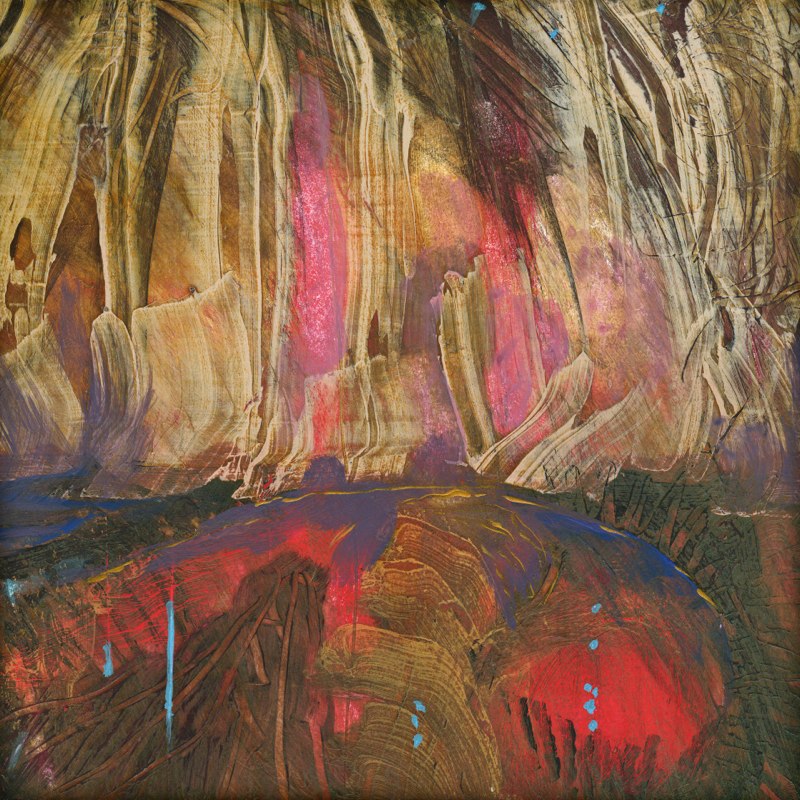
the path of pain (Stick in Big Boys hand)
“The Path to Pain” by Peter Groesbeck

I saw my little sister go next door
with the neighbor boy.
White sandals on her small feet,
short pink socks with frilly lace cuffs,
and blue flowered shorts
matching a cotton button-down shirt.
Mama always dressed us nice, even to play outside
on a slick June morning, two days into summer vacation.

Wet blades squeaked beneath my shoes
as I followed up the hill. Reaching the crest,
I thought, at first, she’d slipped,
seeing her prone in the dew,
her cheek pressed into the long grass
until I saw the stick in the big boy’s hand
and her bare bottom, pink as her lacy socks.
Only a naive nine myself,
I didn’t know what to do, who to tell, or how to stop
the stick in the big boy’s hand.

Forty years later, my little sister lies
with her cheek against the pillow,
her bottom still pink and bare, as she mumbles why
she can’t get dressed for the fourth day in a row.
“Too dangerous to go outside,” she insists. “The grass is slick.”
I watch from the doorway, not knowing what to do, who to tell,
or how to stop the stick, still in the big boy’s hands.


Jacqueline Jules is a Northern Virginia author and poet who writes for children and adults. Her books for young readers include Zapato Power, No English, and Unite or Die: How Thirteen States Became a Nation. Her poetry has appeared in numerous publications including The Broome Review, Sow’s Ear Poetry Review, Christian Science Monitor, Chaminade Literary Review, Sunstone, Imitation Fruit, Potomac Review, and Minimus. She won the Arlington Arts Moving Words Contest in 2007, Best Original Poetry from the Catholic Press Association in 2008, and the SCBWI Magazine Merit Poetry Award in 2009. Visit www.jacquelinejules.com

Read an interview with Jacqueline here.
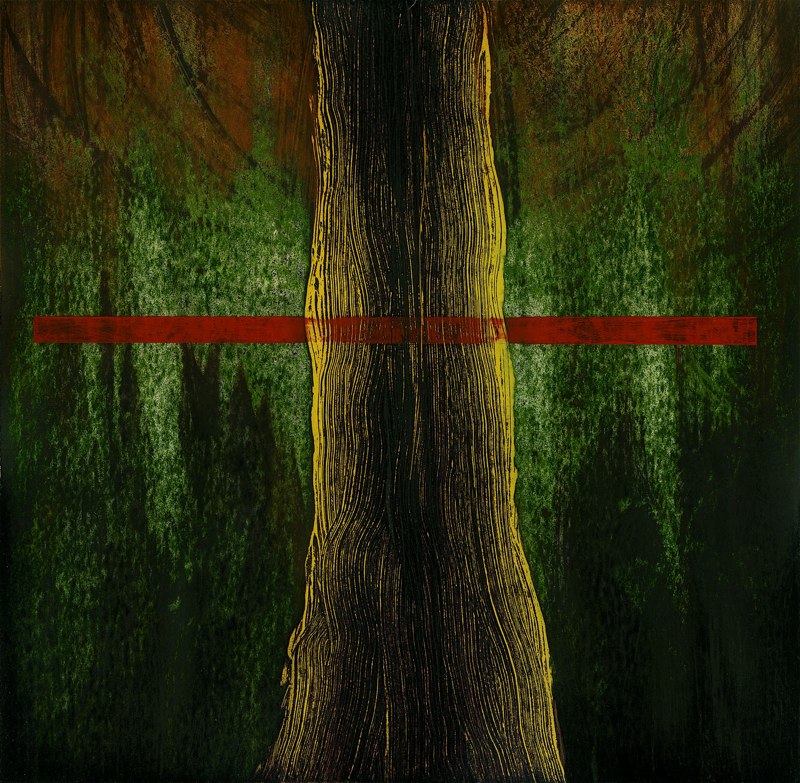
“Grimoire” by Kristin Camitta Zimet

plea(Cover Image)
“Plea” by Peter Groesbeck

don’t/ can’t/ should/ never/ bad:
These are the spells to bind
her ballerina feet to stubs,
stiffen her hips, seal her breasts
and snap her waist in two.
A sister’s or a mother’s mouth
babbles them behind her, so as fast
as they braid up her hair and zip
her dress, they disassemble her
into limp strings and gaps.
A toad tied to her headboard
shrills them, shredding her dreams.

The counter-spells cannot be hissed
but crooned. Words stuttered like a comb
through broken ends, then sidling higher,
stroking from the crown. Words slipping
silver baby spoons between her lips,
trickling half-heard chimes
into her ears, piecing her mirror
like a crazy quilt. Spells she has to say
herself, in chorus, every splintered bit
hunting its cricket voice into a crack,
say them for years, before they take:
do/ can/ may/ this time/ good.


Kristin Camitta Zimet is Editor of The Sow’s Ear Poetry Review and author of the full collection Take in My Arms the Dark. Her poems are in journals including Poet Lore and Bellevue Literary Review. She is a photographer and nature guide in the Shenandoah Valley of Virginia.

Read an interview with Kristin here.

“Scars” by Anne Dyer Stuart

raking over our souls (Scars)
“Raking Over Our Souls” by Peter Groesbeck

Bumped up tracks
redder than the rest of you.
Rivers of corduroy worn like scarves.
Your little hurts.

Inside: sleek, unblemished.
Inside: the same you God stitched
together—hastily, in Heaven,
then threw down like a stone.


Anne Dyer Stuart holds an MFA from Columbia University and a PhD from the Center for Writers at the University of Southern Mississippi. Her lyric nonfiction won New South journal’s 2012 prose prize, and her fiction received the Henfield/Transatlantic Prize from the Joseph F. McCrindle Foundation. Her work has appeared or is forthcoming in Pembroke Magazine, Sakura Review, The Midwest Quarterly, Poet Lore, The Louisville Review, Third Coast, Midway Journal, Best of the Web, storySouth and elsewhere. She teaches at Bloomsburg University in Pennsylvania.

Anne is featured here.

“Christmas Cactus” by Ann Goldsmith

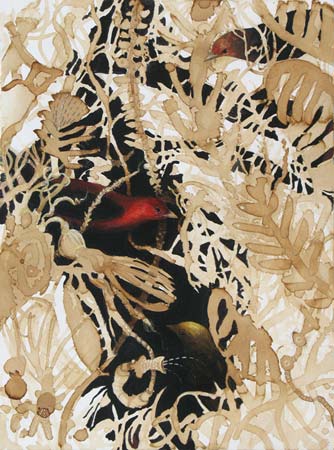
Christmas Cactus.Sanctuary
“Sanctuary” by Suzanne Stryk 2007.
(See also “Christmas Lights” by Wanda Deglane.)

A year ago, the Christmas cactus
sashayed in with its pink and
white party hat crowning the long
stems like ecstatic shrimp.

When the blossoms fell off,
each with its soft pink pod,
how bereft the stems looked,
jammed so closely they must be
strangling one another at the roots.

Removed to the patio in May
for repotting, my cactus rested
through October untouched
except by wind and sun,
mostly green, but barren,

surely dead—like some fake plant
pre-tinted with indelible dye.
When autumn days drew down,
it returned to the living room,
light as paper but still mostly green—

except for pink fins
pressing out in November,
month of my birthday,
from every suddenly laden stem.

Two days in the house—and
air schools of shrimp
took to the warm currents,
crowning the whole head
for an entire week!

Now it is December,
winter before us,
but spring still so new
I can rinse my hands in it.


Ann Goldsmith‘s second book of poems, THE SPACES BETWEEN US, appeared in April 2010. She won the Quarterly Review of Literature’s Poetry Prize for her first book, NO ONE IS THE SAME AGAIN. Goldsmith holds a doctorate from the University of Buffalo, where she taught English for ten years. She has also served on the faculties of D’Youville and St. Trocaire Colleges, and worked as Western New York Coordinator for ALPS, a statewide poetry-in-the-schools organization. She has served as poet-in-residence at the Chautauqua Institution, and taught writing at Buffalo’s Trinity Center, which granted her an Excellence in Teaching Award. Her recently completed book of poems, WAITING AT THE TURN, is looking for a publisher.

Read an interview with Ann here.

“Absentee” by William Kelley Woolfitt

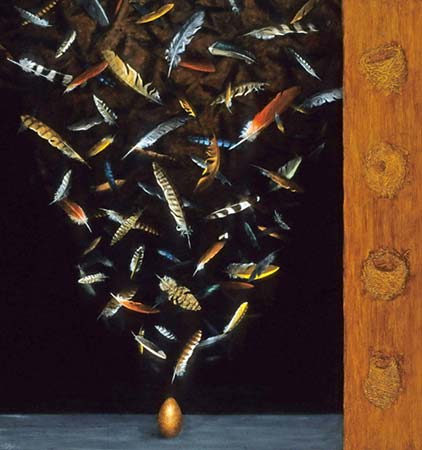
Absentee, Eclipse Salamander

“Eclipse Salamander” by Suzanne Stryk 1996 gouache on paper

I come from the careening wrong turn,
Holy Rollers, multiflora rose, and fists;
siltstone and slate embossed with ferns;
bituminous coal that pocks our land with holes
and pits, and makes an overseas company rich.
My trailer stands at the end of a derelict road
I never would have found.  Showers at night
fill my gutters with knuckles of hail,
scattershot ice a bruising reminder to me
that I am really in my body, and not in a dream,
when I go out to smell the world set alive.
Taking welts on my back, I move past wood scraps
and junk cars, to the well-house where I draw
sulfur ooze, a bucket of the true, the dark, the raw.


William Kelley Woolfitt lived in West Virginia for over twenty years, and now teaches creative writing and literature at Lee University, in the foothills of the Appalachians. He is the author of The Salvager’s Arts, co-winner of the 2011 Keystone Chapbook Prize. His writings have appeared or are forthcoming in Cincinnati Review, Michigan Quarterly Review, Ninth Letter, Shenandoah, Los Angeles Review, Sycamore Review, Southern Humanities Review, and Hayden’s Ferry Review. He goes walking on the Appalachian Trail or at his grandparents’ farm in West Virginia whenever he can.

“Absentee” first appeared in Talking Leaves, in slightly different form.

Read an interview with William here.

“Skunk Stroll” by Lisa J. Cihlar

Skunk Stroll. the collectors secret

“The Collector’s Secret” by Suzanne Stryk 2001

These are the things she buried: the skull of her pet rabbit whose name was Sometimes Fred, a dog whistle, a pair of purple knitting needles, a feather from a guinea hen, all black and white laddered. She climbs the oak and joins herself to the trunk with streamers of spider web and weary people come to watch her turn to shaggy bark. It is taking a long time, but that she expected. The people send up sandwiches using the pulley system she pilfered from a tree house where the children no longer play. The Ladies Garden Club brings old tires and fills them with dirt to plant Sweet Williams and Purple Viking potatoes. One morning she sees a man walking his white turkeys. In the evenings when all the people have gone back to their domesticities, she watches a family of skunks tumble past in the moonlight. She dreams when it is windy, but mostly about the stove and iron. Did she remember to turn them off?


Lisa J. Cihlar‘s poems appeared or are forthcoming in The South Dakota Review, Green Mountains Review, Crab Creek Review, Southern Humanities Review, and Blackbird.   She has been twice nominated for a Pushcart Prize. Her chapbook, “The Insomniac’s House,” is available from Dancing Girl Press and a second chapbook, “This is How She Fails,” is available from Crisis Chronicles Press. She lives in rural southern Wisconsin.

“A Sudden Tilt of the Head” by Michael Sarnowski

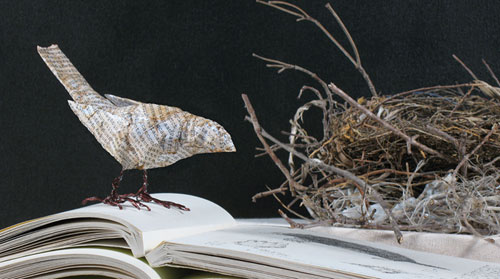
M. Sarnowski. LivesoftheBirds
“Lives of the Birds,” (detail) by Suzanne Stryk, 2010

Believe me when I say
I tried not to apply deeper meaning
to ordinary happenings
like the blood that dripped from your nose
onto the splayed open pages
of the book on my nightstand
but we think divine
of the commonplace
to entertain and explain
to explore the connections
at the synapse
that abstract the direct
blur the narrative
into a form that takes new meaning
like the title page spotted
with dried brown blood
as if the American
who fucked his way through Paris
in the pages that followed
had something important to say.


Michael Sarnowski earned his MFA in Creative Writing from Vanderbilt University, where he was a recipient of an Academy of American Poets Prize. His poetry has appeared in Potomac Review, The Adirondack Review, Underground Voices, and Foundling Review, among others. He currently lives in Rochester, New York, where he is a Visiting Assistant Professor of English at the Rochester Institute of Technology.

Read an interview with Michael here.

Tuesday a.m.

LivesoftheBirds.Lori May
“Lives of the Birds” #4, by Suzanne Stryk, 2009

Looking to buy some happiness
maybe a dose of self-respect
she combs her fingers through the racks,
sale or otherwise,
knowing the possibility is there.

If only she could find it.

The one thing to guarantee bliss,
carry her weight
for the rest of the day.

Cold marble floors
industrial with purpose
polished three hours earlier
know the point of her pursuit.

Brushed cottons
loose linens
raw silks
hold comfort.

Here,
in this buffet of hope
she seeks out a smile,
a reflection in the chrome
she will at once recognize.

Intercoms and lost children
mists of new scents
the intoxicating knowledge
that anything is possible.

Smartly altered mirrors convince
and disguise last night’s restless sleep.

Here,
there is a chance of renewal.
Plastic overpowers and creates an armor
offering just a taste of worth.


Lori A. May is the author of four books including The Low-Residency MFA Handbook: A Guide for Prospective Creative Writing Students (Continuum, 2011). Her poetry and literary nonfiction has appeared in publications such as Phoebe, Caper Literary Journal, Steel Toe Review, and qarrtsiluni. She lives online at www.loriamay.com.

Read an interview with Lori here.

“Still Shining” by Leslie Nielsen

Still Shining (Housebound)
“Housebound” by Marilyn Sears Bourbon”

Long from now you will remember nighttime too light
for sleeping when springtime came.  You will

remember feathery guitar from downstairs,
the dish, splash, laugh of evening a lullaby

with no hurried rhythm, a drift, a chord,
a slipdown of sounds.  You

will remember birdcall and footsteps, voices and soft
dragonfly fabric over your west window, the green

scarf with tassels and fish on the north
window.  You will remember your sister

calling “Mom” for water out of the waking
silence, the dawning dark—

You will remember our calico cat on the foot
of your bed, her purr a current

pulling you down into the moment
you won’t remember—when sleep becomes

deep green and lavender, when the song
you didn’t know you were humming becomes breath.


Leslie Nielsen has lived and made art in Ohio and Denmark. As a founding member of Living Fountain Dance Company and founding director of The Art of Worship conferences, Leslie has led classes and workshops in many art forms, always with the goal of enriching participants’ inspiration, creativity, and awareness. She holds an MA in Literature and an MFA in Poetry Writing, teaches part-time at Kent State University, and works actively in words, music, and visual art.

Read an interview with Leslie here.

“Harold” by Jonathan H. Scott

Harold (Eve with Cain)
“Eve with Cain” by Marilyn Sears Bourbon

I am born with my grandfather’s name,
A joy to break the fever
Of his death—
My mother’s mourning sweated
Out—labor
Of loss, delivery of me.

Me into the world of linens, a whiteness
Of nurses, of lilies, of sun-paled walls.

We are our tears—mother and me,
A weep, a wail,
At the first pang of a new death
In the distance, at the last expulsion
Of placenta.
Recovery is ours to begin.

She in sleep—replenishment.
Me in purple bouts of struggle.


Jonathan H. Scott lives in Birmingham, Alabama. His poetry and short-stories have been published in The Able Muse, Blood and Thunder, Hospital Drive, Measure, Muse and Stone, and others.