
“Making the Moon Howl” by Maria Ercilla


It’s all madness. It has to end,
he kept repeating,
all along pressing me into the sand
that afternoon in Cabo,
drinking rain in between his words.
I will never forget you . . .
You’re in my bones . . .
in the very marrow, he continued,
a lazy hand cupping my left breast.
But I can’t leave her. You understand.
I looked up at him with swollen eyes.
He kissed my eyelids.
We made the moon howl, didn’t we? he sighed,
feeling powerful,
then whispered,

You know I will always love you.
I hugged him tightly
then emptied out all my love for him
with one quick thrust of my knee
in his groin.
He howled like never before.
And I will always hear your cry, I said,
rolling him off me for the last time.


Maria Ercilla was born in Havana. She has a B.A. in English and M.A. in Education from UCLA. Her stories and poetry have appeared in Calyx, Puerto del Sol, Amelia, and other journals. Her awards include The International Hemingway Poetry Award and the Allen Tate Memorial Award. Her work recently appeared in So Luminous the Wildflowers, an anthology of poetry by California writers. She is presently at work on her third novel, The Year of the Bad Boy. Ms. Ercilla lives in Los Angeles, California with her son and daughter.
 

“Reconstructionism” by Michael O’Brien


He was never one
for talking much.

For affection
he’d offer
a joke or two.

Then the stroke. Bro
ken sentence chunks unglued syn
tax poured from him
some
times laughing and I
smiling with his smile
some
times crying, and well…

Now empty of words.

I wish him
power of syntax
reconstructed

lithe words to
reinvent his life to speak
to his wife “love”

to boggle grandkids
with boy tales
unleashing brash verbs
upon Hutchinson, Kansas.

Then to play with words:
swing them and slide them
to monkey around bar
ring nothing
and slowly
uncover
his poetry

father
who’d read only
the paper
before.


Michael O’Brien has been writing and publishing his poetry for forty years. His poetry has been widely published, most recently in a college text book, California: Dreams and Realities, Vol. IV (Bedord/St. Martins).

“Jesus Loves Me” by Kris McHaddad


The day my father told me I was bad,
he stopped taking pictures of me.
I knew that not even Jesus
in all of his goodness
could save me.

For years, each night
I prayed to god,
each night I dreamed
my father raised his knife
against me.

He also taught my brothers,
to walk looking down,
but they searched for treasure:
crumpled dollar bills,
broken watches,
empty bottles we would redeem
at the grocery store
for a nickel.

I took each step
gingerly, watching
for the ground to come up
and meet me. I was looking
for salvation, head bowed,
trying to lay up
my treasures in heaven,
trying to believe
in my feet.

Each Sunday,
I watched the other girls
white shoes
running, heads held high,
feet flying out
behind them,
trusting Jesus
to catch them
if they should fall.


Kris McHaddad is a first grade teacher in the Leona Valley whose poetry has been published widely.


“Death by a Thousand Cuts” by Robbie Gamble


Disclosure hangs in the air, thick as the humidity.
Everyone smokes, everyone lies, everyone carries
that little ice ball in the crook of the stomach.
Over a cluttered suburban horizon, marriages
implode in small showers
of vacuum-tube mercury.
The dial dulls, falls silent. Resurges. Spews static.

Over these shabby rehab lawns
squirrels loll, not yet fat,
as summer withers down.
Why should they care?
The nutmeats in their caches aren’t talking.


Robbie Gamble is a nurse practitioner who works with the homeless, helping them gain
access to health care. His poetry has been published in Poesy, Edgz, The Christian Science Monitor, Ibbetson St., and Nerve Cowboy.


“The Scales Fall Away” by Robbie Gamble

Well, yes,
I was found
to be swelling
the ranks of this nation
of petty addicts. We wandered
the landscape, our blinkers askew.
There were thresholds everywhere,
and we scuffed them all
with our little cloven angel feet.
Eventually, we learned not
to ruminate on justice, but to stand
back and watch the skies,
and then we began to discover untended parcels
left on our morning subway commutes. Sometimes
we even ignored the security warnings,
and opened them. Of course, we continued
to hoist up daily on callused knees,
anointing each other with spit and sacred mud,
floundering in our ever-widening vision.


Robbie Gamble is a nurse practitioner who works with the homeless, helping them gain
access to health care. His poetry has been published in Poesy, Edgz, The Christian Science Monitor, Ibbetson St., and Nerve Cowboy

“On Comparing Photos of Our Holy Communion” by Liz Dolan

I sit, age five, legs crossed, sprite-like, in my sisters’ hand-me-down,
bodice, puffed sleeves revived by satin ribbon.
On the cover of my prayer book, the drape of Jesus’ garment shields
two innocents like grace.

Years later, my sister, chubby-cheeked, kneels
in ruffled white nylon, her eyes already old.
Why didn’t we pass the thrice-blessed dress on to her?
In my giddiness in the May twilight did I forget its fragility,
as I hid under a parked Ford to avoid a ring-a-leavio dungeon?
Did we forget her? Too young, she knows a stranger’s smile false
and a black-veiled nun cruel.

On a screen, Christ floats, fingering the bread of life.
Like a Fourth of July sparkler, He flickers
behind her head.


Liz Dolan is a wife, mother, grandmother, and retired English teacher.  She is most proud of the alternative school she ran in the Bronx. She has seven grandchildren who live on the next block. Liz has published poems, memoir and short stories in New Delta Review, Nidus, Rattle, Pedestal, Ginbender, Mudlark and other journals. She has received many grants from the Delaware Division of the Arts and is currently implementing a grant by organizing a traveling poetry exhibit throughout southern Delaware.

“The Liver Needs a Rest” by Diane Payne

After crawling to the bathroom
and watching red rice
splatter
then chicken
then the flushing
hoping

no one notices.

I remember second grade
informing the class everything
Chuck ate for breakfast.  Particle
by  particle, identifying lunch,
supper, breakfast. Up Chuck Chuck.

So damn funny, I spent one more day
in the hallway listening outside
the room, Then the principal’s
heels clicking, wanting to know
what I did this time.

Did it matter?

My daughter and I are spending the night with friends,
and I am the guest from Hell
hoping they hear nothing.
The husband sees me race to the bathroom
short coat pulled over naked body.
He must know what is going on,
and coming up.

Their fancy Bombay gin.
His rotisserie chicken.

Later I wake to a doctor
pressing hands on my liver,
glaring, saying “You need to give
your liver a rest.”

Just like that, I knew everyone heard,
remembering my own father crouched above the can,
drunken accidents, endless visits to jail,
paychecks purchasing endless drinks
but not one box of food,
heads shaking when I announce my stomach hurts
before crawling into bed, avoiding
the floating Scrabble tiles.

Rest.
Rest.
The liver needs a rest.


Diane Payne lives in a dry town in the Delta.  Her poems have been published in Circle, Maverick, Snow Monkey, Hip Mama, Literary Mama, Story House Quarterly, The Concrete Wolf, and numerous other magazines.


“Mentors” by Maureen Tolman Flannery

All the hermits and holy men of my formative youth
were alcoholic sheepherders in self-imposed exile–
left alone from year to year, from binge to bender
with none but goddesses of timber and sagebrush,
with a horse, a dog, and their unacknowledged longings,
their only visitors the camp tender
come to move the sheep wagon to new grazing ground
and bring more grub
and we, the rancher’s little girls
eager for adventure stories
expecting the gift of an empty Bull Durham bag—
unbleached muslin with a yellow drawstring
just right for holding little doll,
or an abrasive, thorned pet horned toad
that prehistoric pilgrim from another age
that could cling three-fingeredly to cloth.

A herder perfected something of the weaver’s art–
working the limitless yarn of thin, immaculate air
spun in the nearly-touchable sun
daily back and forth, in and out of the warp,
the confining sheep wagon
drab as slag, gray as February hay.
He chewed on this rhythm of contrast–
cloud-sheep in blue skies, his herd on green feed,
wood-stove grease on compartments
where his canned goods were stored;
daybreak eagle-racing his skittish horse,
warding off demon cravings of the moon-dark night;
climbing the heights, crawling into his bedroll;
the mountain to conquer, the cave to transform.
He was the shuttle and he wove his scratchy wool life.

These men held knowledge not inferior to any priest’s–
where the purest waters spring icy from the depths of earth,
the kindness of the star-flung night,
how to jacket a motherless lamb with the hide of another,
healing arts for scours or a maggoty sore from a shearer’s knick,
how to check yourself for ticks,
when to let sheep graze and when to bunch them
and where to send the dogs if some aren’t there,
ways of splitting logs, mounting bareback,
calling mountain gods to account,
beating the obvious odds at solitaire.

They showed us how to whittle pine,
turn quartz and limestone boulders
into monuments whose strange configuration
told rare passers-by
how we had spent long idle afternoons.

Beyond all these things, they taught paradox,
for what I sensed in them,
even as a child who had not learned distinctions,
was that they’d lived events so disparate
from the gentleness of sheep,
their sometimes ravings having evened out
the clean reliability of mountain sunrise.
They volleyed all their lives for balance
between responsible sobriety
and each year’s two-week drunk
when they’d spend every dime,
pawn saddle and rifle,
befriend all manner of gold-digging women,
perhaps sign my dad’s name
to a few bad checks across the state,
before returning humbly to our door
to dry out and go back to the mountains.

And there in the mountains year after year
they were my teachers and my friends,
each with his sheep wagon
in its predictable summer meadow–
matted as an artist’s print in blue and purple
by lupine and shooting star,
each telling tobacco-stained stories,
each spitting snuff or rolling his own
and saving the tobacco bags
for my sister and me.


Maureen Tolman Flannery has just released her latest book, Ancestors in the Landscape: Poems of a Rancher’s Daughter.   Although she grew up in a Wyoming sheep ranch family,Maureen and her actor husband Dan have raised their four children in Chicago.  Her other books are Secret of the Rising Up: Poems of Mexico; Remembered Into Life; and the Anthology Knowing Stones: Poems of Exotic Places.  Her work has appeared in forty anthologies and over a hundred literary reviews, recently including Midwest Quarterly Review, Amherst Review, Slant, Buckle&, and Atlanta Review.


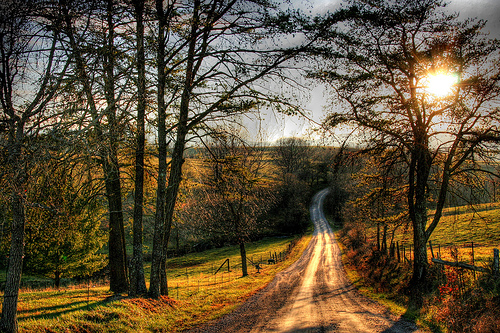
“How to Walk Down a Country Road” by Felicia Mitchell

F.Mitchell 2004

One.  You don’t really need a guide to help
You find the way.
Just follow all the doves
That gather on the wires until you see
No more. Then you will know you’ve gone so far
There are no wires or houses.  Two. Avoid
Advice that says to face the traffic when
You’re on a curve.  Look at those doves.
They know
The difference between life and death is not
As easy as all that.  It takes some sense
To cross the road when cars are tumbling down
Like cold, white water with no place for you
To navigate.
Three. Lose the road. You don’t
Know country roads until you’ve stepped aside
Into somebody’s pasture or a stream
With rocks as smooth as wings on doves-or stopped
Beneath an apple tree and eaten one
To prove you could survive in nature if
You really had to.  Four. Turn back before
Your time runs out.  Five.  The doves may look
As if they’re watching over you.  They’re not.
The crows aren’t either.  Not the cows, the leaves,
The lines on asphalt separating gray
From gray.  You’re on your own.  Find your way home
Alone and then you’ll know exactly what
It’s like to walk right down a country road.


Felicia Mitchell teaches creative writing at Emory & Henry College.  Her poems appear regularly in journals such as Terrain, Many Mountains Moving, and Survivor, and are found in a few anthologies and chapbooks. Many of her poems touch on issues of abuse and the theme of psychological survival.


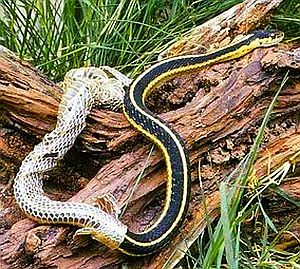
“Unbroken” by Sara-Anne Beaulieu

stock photo

27 years, I have tried to
shed your skin, weighted
on me like an overcoat.

27 years, I pick this pen
up, stand tall to your
reddened toothless face, spit

flying from your lips.
To draw my adult form
over the child, her inky

jagged body in the corners
of the mind.
She looks

at you, unable to separate newly
sobered you, from old, stagnant scent of booze,
bloated belly full of beer, hair trigger

temper. Separate the you
from the demons that
that still flare your nostrils

monstrously. Demons that dig wide fingers into
my arm, dragging me, the child, out the door,
screaming

shut your ungrateful mouth; to get
the fuck out. So slick, no bruise surfaced.
Beneath skin, blood rattles,

heart, hands, legs quake.
A low familiar howl
escapes from the child’s lips

as your back turns to me,
and I scream not again, not
again.

Watch me father. Watch
me throw the coat
to the ground,

the fists, the
slammed cupboards, the
beer bottles spinning in infinity.

Enough.

My voice shakes, trying to
destroy this black eye of
rage and sickness; save the child

who has been waiting
10 years ago, yesterday, this
minute.

Waiting for me to shed your skin,
the fracture of 27 years, and emerge
unbroken.


Sara-Anne Beaulieu is a recent Masters of Fine Arts graduate at New England College in Henniker, New Hampshire. She has studied with poets Anne Waldman, Jeff Friedman, and Joan Larkin. She has just completed her thesis on Diane di Prima’s Loba, and her own manuscript No Roses. Ms. Beaulieu currently resides in Rhode Island.