Homepage Winter 2016

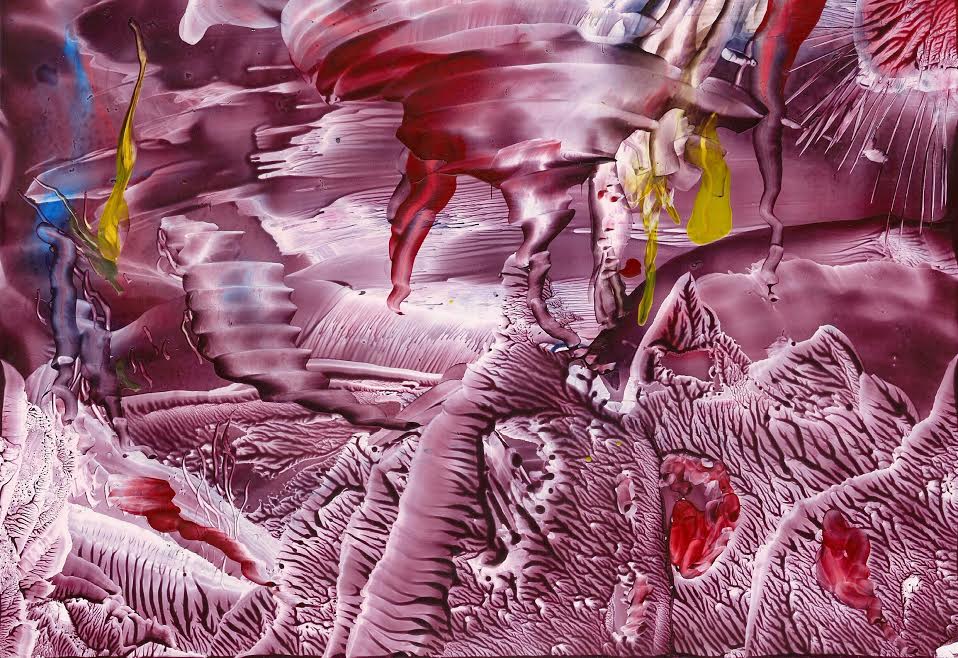
Cover Image
All artwork appears courtesy of the artist.

Welcome to our Winter 2016 “FLAME” issue. We’re incredibly proud to present to you the exciting and diverse array of voices in this issue, enhanced by the beautiful artwork of Laura Didyk which she has graciously donated for this issue.

I’m thrilled with the way everything came together for this issue. We have a list of new readers for the journal, all of them are prior contributors, and I’m thrilled to see how their aesthetics influence future issues. We have a new Shorts On Survival editor, too, the discerning and talented Bev Jackson. And a big thank you to my devoted editors and readers who have hung in there for years now, and also the contributors to this issue who have trusted us to bring their work out into the world. Also, thanks for the gorgeous artwork, Laura. You made each piece pop just a little bit more.

Our April 2016 themed issue will be HURRICANE and the July issue has a tentative theme of BLINK. As always, thanks for reading.

Yours in Recovery,

Mary Akers
Editor-in-chief

Interview with Avital Gad-Cykman

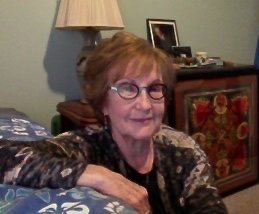
Avital

Mary Akers: Hi, Avital. Thanks for letting us have your wonderful short story “Fulfillment.” I love the details in this piece, so honed and specific. They really speak to me as a reader and as a writer, too. I love this paragraph, especially:

Walking tentatively toward the north, she stopped when a masculine voice called, “Hey, hello, want me to read your palm?” As expected, the man, unkempt and in his thirties, wearing an oversized jacket, leaning against a rare robust tree, was looking at her. People always thought she was easy prey. She shook her head, able to sense the rough surface of his blackened hand rubbing against the palm of her hand, and what good future could come out of that?

It has a great specificity of menace and creepiness to it–both aspects of work that I gravitate toward. Do you enjoy encountering literary creepiness as a reader?

Avital Gad Cykman: Thank you for having me and my story!

What a great question! It made me think about my different preferences as a reader and as a writer. As a writer, I’d take any ride, anything that comes out of my consciousness and sub consciousness. As a reader, “creepy” literary stories such as Joyce Carol Oates’s amazing “Where Are You Going, Where Have You Been?” scare me so much it’s hard for me to enjoy their flawless narration. Having said that, I adore reading ambivalent texts containing a menacing subtext as long as I can doubt the inevitability of upcoming disaster.


MA: It also reminds me a bit of the work of Margaret Atwood whose work I know we are both superfans of. Want to say something geeky and gushing about her work? (You know I will agree.)

AGC: We love her for a reason! Margaret Atwood has written so much, so well, and in so many forms and genres that if a reader doesn’t like her, it’s simply because he/she has not read the right work. I love her sharp, insightful poetry that drills right through the surface of relationships into the mud underneath. Take for instance these famous lines: “You fit into me/like a hook into an eye/a fish hook/an open eye.” She has no mercy! Of the huge variety of her fiction I mostly admire her intimate books such as Cat’s Eye and the historical ones like Alias Grace. In these she builds layers and more layers of her characters’ identities and lives while also involving the readers emotionally, playing with meanings and elaborating important social concerns.

MA: Your wonderful book “Life In, Life Out” is so different and original. I would say it has a unique voice, but it has much more than one voice or one particular style. What do you look for in story collections as a writer and a reader?

AGC: Thank you for these words and for asking this crucial question. When I listen to music I usually put it on “random” so I can listen to a variety of songs unless a CD is a long project with a theme. I love variety in story collections, getting to know different aspects of the author’s world and a diversity of characters. In a novel, on the other hand, I expect certain unity, a world and its related themes and characters. Therefore, when I put a collection together, I thread stories that are related in the same way people are: they reflect on one another without necessarily having a strong similarity. My novel is different, as I am entering one woman’s world.

Fulfilled

MA: When I choose work to illustrate each issue, I’m often surprised to learn that the image I chose ends up having special significance to the author–a significance that I couldn’t have known. I think this speaks to the way our minds crave to connect disparate things–especially inter-genre connections (like dance and music, visual art and text, etc). What did you think of Mia Avramut’s image used to illustrate your story?

AGC: I gave one glance at Mia Avramut’s image and everything clicked: my story, the drawing, and their existence within a womb in which an unexpected life, an impossible pregnancy grows. The plant in the womb cannot really exist, and yet it’s lively and full of life, giving hope. This is the reason I emailed you right away and told you the choice was inspired.


MA: In this piece, you use the line “the electric pleasure of the city” which I love. What, as a writer, gives you that electric pleasure–either in the writing or the reading?

AGC: Oh, the electric pleasure…I love beautiful prose that combines humor, compassion, intelligence and the capacity to expose the unseen, unheard of and irregular in a visceral, involving manner. I try to write this way-never to address only one layer or one emotion-and make it interesting both to me and to my (hopefully not imaginary) readers. I’m hoping that the novel I’m going to finish editing within days now holds at least some of these things.


MA: And finally, because we are a recovery-themed journal, what does “recovery” mean to you?

AGC: After a certain age or experience, aren’t we all in recovery, doing the best we can within the circumstance? Recovery means daring to hope even against the worst odds, and having the strength to live intensely and laugh at the face of the next disaster.


Interview with Ting Gou

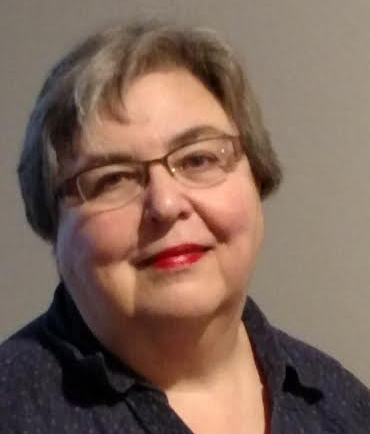
Ting Gou

Jude Marr: In your poem “Excavation: Mobile, Alabama, 1996” the dichotomies include an exploration of the mortal and the immortal. Can you say more about what you consider to be immortal?

Ting Gou: This is a very interesting question, Jude! I’m not sure I consider anything to be immortal in the sense that it lasts forever, without exception. But I do think that we tell ourselves stories about immortality in order to give meaning to our experiences. It’s these beautiful myths that keep us alive.

Memory is the closest thing to being immortal that I can think of, and I’m not just referring to the memory of someone who has passed away. Memory, by definition, is immortal. The fact that we can remember something means that it continues to exist for us.

Some actions are also immortal, in the sense that we remember them forever. When I was a medical student on the hematology oncology service this past year, I was taking care of a young man who was dying from acute lymphoblastic leukemia. I don’t remember most of the chemotherapy drugs now, but I remember hugging his mom while standing in line in the cafeteria. I also remember hugging the mom of another leukemia patient later that month.

This poem is an ode to memory, I guess. The memory of my mother opening the fish and finding the worms inside. The memory of a house from childhood. But also: memory as a source for imagination. Memory as self-reinvention. Building a future for yourself in the face of terrible things is, in a way, practicing a kind of immortality.


JM: I’m struck, as ever, by your precise use of both language and imagery. As you write, how conscious are you of your life as a scientist?

TG: Thanks, Jude! To be honest, I’m not conscious of being a scientist at all, probably because I’m not currently doing bench research. I’ve done some clinical research in medical school, but working with computer models and Excel spreadsheets is very different from the hands-on pipetting and centrifuging and dissecting I did when I was an undergrad at Princeton. I kind of miss the dynamics of a wet lab.

I’m more conscious now of my other identities when I’m writing: as a medical student, an Asian-American, a southerner (whatever that means), and new Michigander. But I think my background as a molecular biology major does infiltrate my poetry subtly (and sometimes not so subtly). Like many of my poems, “Excavation” contains questions, maybe because I’ve always had a desire to figure out what is really going on. Lately, my poems have been containing more and more questions.

Excavation by Ting Gou

JM: The title, also, is very exact—and yet it seems to beg a question. To what extent does location matter?

TG: This poem is based on an event that actually happened, unless I remembered it incorrectly. Isn’t it interesting and terrifying how we construct our identities out of imperfect memories? But I suppose the way in which our memories are imperfect is also useful. I’m thinking about an archaeological dig where you have to infer what happened based on what you find. You can think of the artifacts as specific aspects of the memory. If you find a lot of clay pots, can’t you infer that the civilization liked to store things in clay pots? Similarly, if you find yourself remembering mostly the horrific aspects of an event, can’t you infer that the event was at least somewhat disturbing?

Sorry, I kind of got off topic. But I think location is important, because it’s often the only thing we know for certain about a memory.


JM: How would you react to being described as a poet of the senses?

TG: “Poetry is one-third imagery, one-third emotion, and one-third intellect.” I think Joseph Millar said that during the workshop we took with him and Dorianne Laux. I think it’s helpful to think of imagery as working in conjunction with everything else. It can be the most important thing in some poems, but some poems don’t need any imagery at all. I think it all depends on what the poem needs.

If being a poet of the senses means that you take in your surroundings as best as you can, then I think every poet is a poet of the senses. You don’t have to include a lot of sensory details in your poems, but you have to be open to perceiving them in your environment.


JM: What do you see as the relationship between dissection and poetry?

TG: In both, you are trying to figure out how something is put together. It could be a body, or it could be your childhood. You are digging under the surface. You are exposing things to light.


Interview with David Alasdair

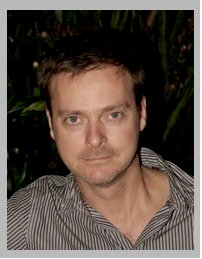
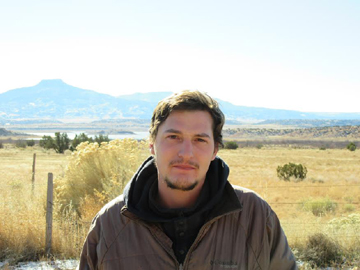
David Alasdair

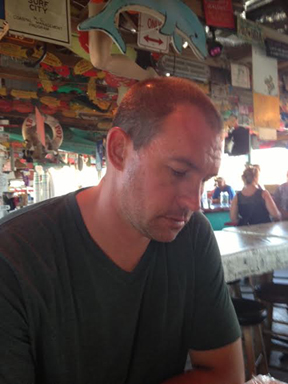
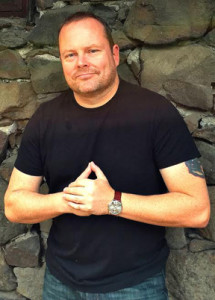
David is a great storyteller who has a way of accessing what many male writers cannot. We conducted the interview in a bar nestled in the corner of one of those strip-malls with a Radio-Shack where we had been sitting at a table for the past two hours surrounded by collections of families and lovers and groups of friends. It was mid-day and there were two empty pint glasses on the table and a faint trace of mildew which waved by every few minutes. I was no closer to knowing any of David’s secrets and I wasn’t leaving until I had at least one.

RAJAH BOSE: Your first piece of nonfiction was nominated for a Pushcart Prize.

DAVID ALASDAIR: You can’t say it’s my first, you’ve gotta build up my reputation. They say it’s easy to sit back on your laurels. I have like one laurel and I already want to sit on it.

Waitress: Would you like anything?

I get the the Taco Salad with Tofu. David orders the Pork Tacos. There’s a brief look between us – a sizing up – and I add two more beers to the order.

RB: Ok fine, I’ll cut that question out. You wrote this essay during your MFA and now it has been nominated for a top writing prize. There’s always someone who thinks your piece needs work – I might be a hater while someone else loves it. How do you decide this is the right time for something you’ve written?

DA: Really smart people were giving me advice that I didn’t think fit. It only happens occasionally but this piece came out fully formed. I thought about editing it and then I decided, fuck it, I like it how it is. It’s like having a kid: maybe I wished their eyes weren’t so close together, but I love them for who they are.

RB: In your essay (The West Elm Sofa), you talk about recovery and the people that help you get through the struggle. You are both vulnerable and secretive. How do you choose the elements that you are going to allow people to know and what to keep secret?

DA: I’m a big believer in the gaps. I remember a few years ago in high school they made us watch Shane, the old cowboy movie, which has very little dialog. Afterward they told us to go write an essay where you suggest everything without saying it. When I was a kid that was a revolutionary concept, to suggest something without saying it. So I try and do that whenever possible. It’s quite clear there’s loss involved in my characters and it’s more universal when you leave it to the reader to fill in the gaps. I bet everyone who read that piece has had some kind of loss and they can imagine themselves having one space where they have some kind of solace. They don’t need me to explain why.

RB:  Speaking of kids, let’s talk about Kerry Howley’s book Thrown, I’ve heard you talk about that book more than you talk about your kids. What have you learned from other people’s writing that you brought to this essay and your work otherwise?

DA: The one thing I say to people reading that book is “Don’t get discouraged.” Because it’s a book where you can read it and think “I have to give up,” because I could never be that good. The music of her language, the ability see something anew, is just phenomenal. For instance, when she talks about all the fighters drinking PediaLite and she describes the crushed teddy bears on the floor. I guess it’s like Walter Kirn said: “Music comes first.” You have your own particular music. Don’t be afraid to describe things the way you see them and to be musical in your language. So much of our training is about being clear, but a little bit of abstract, a little bit of musicality is a good thing.

Our tacos and salad arrive. David eyes the grilled tofu, I check out the tacos. I offer him a bite that he declines.

Waitress: Another round?

There’s another sizing up. “Sure,” says David.

RB: You write about sports, your balls, fighting, masculinity and your feelings. Explain.

DA:  One time I wrote about my balls.

RB: And you read it at VoiceOver. In front of 100 people. Including your daughter.

DA: True. Maybe it’s just the world I know. The cliché is that women will talk about everything and men will talk about sports, but I think it’s pretty normal for a guy to talk about his feelings. You get into a very macho setting like a gym or a soccer team and you think
that men won’t communicate on an intimate level and they do. I guess I just try to capture that.

RB: So we’ve mentioned that you write about your balls…

DA: One time.

RB: …I wrote a recent essay about cowboys and manhood, and there’s a scene about cutting off the manhood of a bull. There’s also a bunch of other introspection about masculinity and roles, etc…

DA: Did I read that?

RB: No, it’s new. The problem is, when people read it, they kept saying: go to the balls, go the balls. I didn’t think it wasn’t about that, but I feel that people often want to explore what is off-limits.

DA: I don’t think it’s the off-limits that works, it’s the structure of a joke. There’s a setup and a punchline. The ending should feel inevitable but not predicable. So you’re like, “Ah-ha. I get it. I didn’t predict it, but I get it.” When people do it to be outrageous, it doesn’t work. There has to be a story.

RB: Is that to say that all of your pieces are just jokes?

DA: [Laughter] No, they just have the mechanics. Not necessarily a punchline, but an ending you didn’t predict.

RB: There are male writers who write about their feelings: Jess Walter in Financial Lives of the Poets or Shan Ray in his recent poetry book Bailfire.

DA: Agreed. I feel if I went into a locker room with a guy and couldn’t talk about my feelings, I would think this is not a solid relationshipthis is pretty superficial. Mind you I have that relationship with some women.

RB: Well, I guess we should talk about our feelings.

DA: OK, it’s your interview.

Waitress: Another round?

“Yes,” we both say at the same time.

RB: So. Tell me about your feelings.

DA: You tell me about yours.

There’s a long pause.

RB: My girlfriend is too good for me.

DA: Yes, she is.

RB: She thinks she’s lucky to have me. But it’s the other way round. I don’t know what she sees in me.

DA: A good-looking, well-dressed, talented artist who is both very masculine yet also sensitive. Yeah, I don’t know what she sees in you either.

RB: Your turn.

DA: I get lonely. Not as lonely as when I first moved here and I knew no-one, but still.

Waitress: You guys need more beer?

“We’re talking about our feelings!” I say.

The waitress turns and walks away unimpressed. She shouts over her shoulder, “That’s great. Let me know if you need anything else.”

RB: [Laughter] She doesn’t care.

DA: I don’t blame her. We might not be making much sense anymore.

RB: We should do this more often.

DA: We should.


Rajah Bose is a veteran photojournalist from Spokane, Washington. He is good-looking, well-dressed, and masculine yet sensitive. You can see his work at http://www.rajahstudio.com/blog/.

“Clair de Lune” by Marcus Iannacone

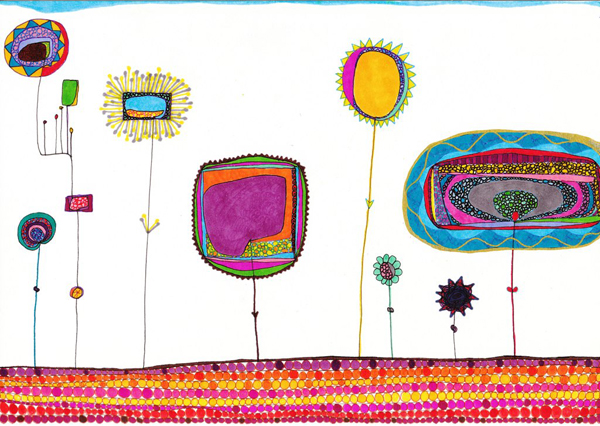
Claire de Lune (flowers)
“Flowers” by Laura Didyk, Sharpie on paper, 2015.

The night is deep. Hills to the west are illuminated slightly by the highway, our neighborhood still, dimly lit by streetlamps and pale moonlight. Our footfalls are distinct from each other. My father’s seem quicker.

“Uh! I’m happy we’re through the hot days,” he says. We walk almost every evening. It’s the main exercise he gets, and it helps him work off some excess calories. These walks are his opportunity to commune with nature, something he’s not afforded much. He works hard. He’s overweight and over-stressed and he does very well. He fits a paradigm in that way. He talks about the movements of Earth on these walks: the seasons, where the stars are now, changing weather, the circular, fractal patterns of the observable world. At twenty three, the age I am now, he was a geology student at Yale researching corals in the Caribbean.

We turn the corner of our street. There is a swirl of gnats above the guardrail of the bridge. The thin brook below croaks with frogs. Other insects harmonize, a train whistles, and we walk. Because we walked yesterday, and we will walk tomorrow and the next day there is never any reason to say how savagely awful I feel walking with him. It wouldn’t make me feel any better, and it would be excessively cruel to him. I feel terrible walking by myself or doing anything, regardless.

I would like to forget that there was anything else. When I’m by myself things are empty, and I imagine that my brain consists only of tiny microscopic miners pushing carts down a shadowy track to somewhere else. No more memories. The evolutionary mechanisms of my mind can shudder along the rails, providing preference, seeking areas of comfort, and I don’t have to be present for despair, or confront the complex abyss of depression.

But my father loves what he sees. He realizes the profundity of everything–fleeting life, color, love, the preciousness of galaxies and animals, himself, and me. But it is his explicit pronunciation for all this when we walk which reminds me of what’s lost, that it’s the way I see things which I can’t seem to change, that meaning and love are still part of this world but I can hardly be part of it. He loves me and I have only the most minimal capacity to reciprocate love to another human being. I can’t really bear all that, but we keep walking every day, and it’s why the discomfort of these walks is so acute, so remarkable.

He says, “Listen to those bugs!” and a familiar reaction moves over me, immediate repugnance and then succeeding guilt dull in my throat. I say, “Yea,” almost too quietly. He puts his head down and strides a little faster.

Sometimes my process of thought is like a stock ticker of sentimental nonsense: There’s the world of dreams and the world of thoughts and the world of despair…There’s the reality of work and roads and responsibility. I can’t believe anyone really wants to continue humanity… Maybe that’s why we have children, to shift the responsibility of death to them… Maybe the effort of love yields love… Loving unequally seems to be the bane of all, civil rights, the fear that we love unequally is as unavoidable as movement… all that anthropology runs red eventually so who knows…Do I need a tattoo or can I just write “futility” on my hand and make the call later?… I don’t want to call anyone… Do I have an obligation to try to relate?… If I don’t I’ll probably be lonely and have wasted my life…. Are there really sixty more years of this?… I’m going to have to push for forty… I wonder if there’s some way to give myself over to science… And this is the beautiful struggle… Here, have a seat on the big couch of ideas…

My father says, “Look at those flowers. They’re still blooming!” I light a cigarette. Then he asks, “What class do you have tomorrow?” “English and Spanish. I have to leave first thing”, I say. “Oh. When can we work?” he asks. “Tuesday. You want to finish the ceiling?” “Yea.” I’m turning the filter of the finished cigarette back and forth between my fingers. One of my eyes is tearing up.

I think of my dog. He used to go on these walks. His bones are under flowers and a marble slab behind our house. It’s a memory I avoid. I could have done better with one of the only things that mattered. When he was dying I had nonstop nightmares. It was a sleep paralysis thing, obviously from going off all the medications and getting drunk. I was running then, maybe fifteen miles a week, and I ran more in order to sleep better but it didn’t work.

Finally I just avoided sleep, stayed up late watching movies, but eventually I would doze and always had nightmares. The dog was dying on the floor and I was in my bed wanting to–whether asleep or awake. So he started sleeping next to me. He had bad dreams too and sometimes howled in his sleep, twitching. I’d shake him and he would wake startled, his eyes wet. My desperation for anything that wasn’t human, anything that wasn’t terror, ate through everything, and he was all there was, disintegrating in every instant. I would be left with my nightmares, my hatred and my grey existence, not able to figure out how to die, and he was a dimension of some love ending. Before he died the streak of bad dreams broke. The last two nights I slept fine. I had anticipated being affected significantly when he was finally gone but nothing happened. It just hurt.

My father sniffs, exhales a hum of satisfaction, “Fall is my favorite! I can’t wait for it to get really cool,” I say, “Yea. Me too.” He starts to talk about something he heard on the radio. We start up a rise in the road and he takes longer steps. He says “whoo-“ as we top the incline and slow our pace.

It didn’t happen all at once. There was no one event that changed everything. There were moments but nothing that’s solely responsible. There were warnings—out-of-the-ordinary short jabs, and every time I felt an eerie despair that would disrupt my life for a few days, and I always wondered the reason for that sense of loss.

We’re still in stride, descending on the street that brings us back home. He puts more swing into his arms.             We turn at the end of the street and onto the one we came from. No more gnats swarm on the bridge. The brook is black and trickling, and the moon is half-full above the path formed by the water, clear of trees. There is a pinkness in the dark sky, and flat clouds are moving slowly north.

We pass under the magnolia tree at the beginning of our street. I can’t think of anything to say, and we both advance silently on the asphalt, blue, grey and black with different rectangular patches like a denim quilt in the moonlight.


Marcus Iannacone lives in New Jersey, a carpenter by occupation who tries to find time for working with language and ideas

Contributors Winter 2016

Chloe Ackerman
Chloe Ackerman (Flame) hails from the Land of Enchantment but currently resides with her dog in the much rainier (but no less enchanted) Pacific Northwest, where she recently completed a doctorate in clinical psychology. She has edited or contributed to a small number of literary magazines and anthologies and has been published in Mirror Dance. She hopes to one day be both a famous author and a renowned psychologist because she believes in having it all, but she would also be happy with a supply of tea and a tiny house in a forest.

Christopher Allen
Christopher Allen (Wile E.) has had work in Indiana Review, Eclectica Magazine, Night Train, Literary Orphans and over a hundred other journals and anthologies. Read his book reviews in [PANK), The Lit Pub, Necessary Fiction and more. Originally from Tennessee, he now splits his time between Munich and Dublin. Allen is the managing editor of SmokeLong Quarterly and blogs HERE.

KathleenBurgess
Kathleen S. Burgess (At Old Oraibi), poet, editor, retired music teacher, union officer, statistical typist, server, factory solderer, videographer, and hitchhiker through North, Central, and South America, has poetry in North American Review, The Examined Life, Evening Street Review, Malpaís Review, Turtle Island Quarterly, Mudfish, other journals and anthologies. A chapbook Shaping What Was Left and the anthology she edited Reeds and Rushes—Pitch, Buzz, and Hum are Pudding House publications. Two new collections Hitchhiking to Peru and The Wonder Cupboard are forthcoming.

Laura Didyk
Laura Didyk (Illustrator) makes art and writes poetry and nonfiction. Her work has been published in Diagram, Post Road, Alligator Juniper, and the Sun, among others, and her artwork has been printed in No Tokens magazine. With an MFA from the University of Alabama, she has been a writing fellow at Yaddo, the MacDowell Colony, and VCCA. Currently at work on her memoir, she writes, teaches, and makes art in the Berkshires.

Susan Gower
Susan Gower (Three Moons Over Maple Grove) is a freelance writer. Her work has appeared in magazines, newspapers and literary journals, including Woman’s Day, Good Housekeeping, and Talking Stick. She lives in Luck, Wisconsin, with her husband Mike.

Ashley Hutson
Ashley Hutson (Hot Bones) lives in rural Western Maryland.  Her work has appeared or is forthcoming in McSweeney’s, SmokeLong Quarterly, The Journal of Compressed Creative Arts, The Conium Review, Threadcount, and elsewhere.  Find her at www.aahutson.com.

Marcus Iannone
Marcu Iannacone (Clair de Lune) lives in New Jersey, a carpenter by occupation who tries to find time for working with language and ideas

Kristin Laurel
Kristin Laurel (Anxiety) is employed as an ED and Flight Nurse. She completed a two-year master track program in poetry at The Loft Literary Center. Her poetry and prose can be seen in CALYX, The Raleigh Review, The Mom Egg, The Main Street Rag, Split Rock Review, and many others. Her first full-length publication Giving Them All Away, won the Sinclair Poetry Prize from Evening Street Press. She lives in Waconia, MN.

Mary McCluskey
Mary McCluskey (Revenge Served Hot) has had prizewinning short stories published in The Atlantic, The London Magazine, StoryQuarterly, London’s Litro Magazine, on Salon.com, and in literary journals in the United States, the United Kingdom, Australia and Hong Kong.  Her novel, INTRUSION, is scheduled for publication by Little A in March 2016. She divides her time between Stratford-upon-Avon, in England, and Los Angeles.

Simon Perchik
Simon Perchik (As if these leaves) is an attorney whose poems have appeared in Partisan Review, The Nation, Poetry, Osiris, The New Yorker, and elsewhere. His most recent collection is Almost Rain, published by River Otter Press (2013).  For more information, including free e-books, his essay titled “Magic, Illusion and Other Realities” please visit his website at www.simonperchik.com.

Scott Sanders
Scott Loring Sanders (Argument with Myself) has had work included and/or noted in Best American Mystery Stories and Best American Essays. He’s published two novels with Houghton Mifflin and was the Writer in Residence at the Camargo Foundation in Cassis, France. His essays have appeared in Creative Nonfiction and other journals. He currently lives in Cambridge, Massachusetts and teaches at Emerson College.

Nicole Stanek
Nicole Stanek (Decaying) is a poet based out of Long Island. She is a graduate of Dowling College with a B.A. in Psychology and Media. She currently leads the Westhampton Poets Society, a writer’s group on the East End of Long Island.

William Kelley Woolfit
William Woolfitt (Funk Island) teaches at Lee University in Cleveland, Tennessee. He is the author of two books of poetry, Beauty Strip (Texas Review Press, 2014) and Charles of the Desert (Paraclete Press, forthcoming). He is also the author of a fiction chapbook, The Boy with Fire in His Mouth (2014). His poems and stories have appeared in Shenandoah, Michigan Quarterly Review, Threepenny Review, Tin House online, and elsewhere.

“As if these leaves” by Simon Perchik

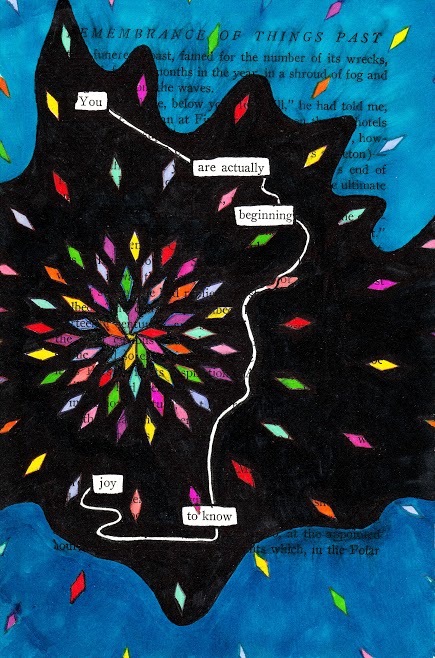
Cio Che C'e.LOVE REDACTED
From the “Love Redacted” series by Laura Didyk, Sharpie on paper.

As if these leaves are no longer at home
this match is breaking away-–by itself
strikes against the wooden door

demands it open her eyes, already smells
from hair loosening around her shoulders
as smoke –you need more wind

and the sky to level out, clear this place
for the stones growing wild side by side
no longer feel your fingers kept warm

by gathering more and more leaves
to their death just to want to be held
as never before by the burning.


Simon Perchik is an attorney whose poems have appeared in Partisan Review, The Nation, Poetry, Osiris, The New Yorker, and elsewhere. His most recent collection is Almost Rain, published by River Otter Press (2013).  For more information, including free e-books, his essay titled “Magic, Illusion and Other Realities” please visit his website at www.simonperchik.com.

“Funk Island” by William Woolfitt

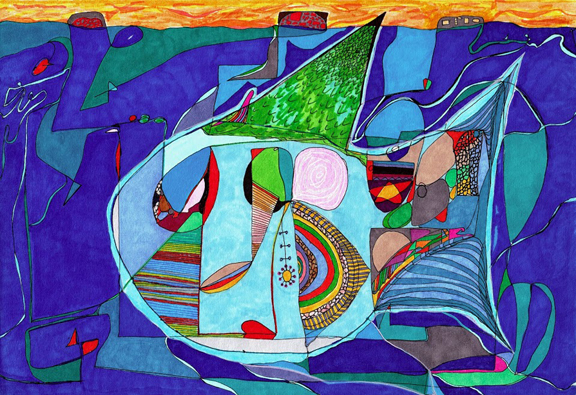
(Argument with Myself) Big Fish
“Big Fish” by Laura Didyk, Sharpie on paper, 2015.

You secure a research grant, you rent a dory at Seldom-Come-By, you want data about the extinction of great auks on Funk Island. You ramble about their plumage and diet and social habits, the sea is smooth glass and you call it a good omen, you are animated and gleeful until we step ashore. I feel the sinking in you, the crumbling, the let-down, as we stand on the bare flat rock that seafarers called the Funks. Everywhere, the cacophony of birds, a continuous and grating squabble, the whirr of wings, and when we breathe, the reek of excrement and decayed fish. Your shoulders droop, your eyes look tired, your face loses color. Murres still nest here, covering the ground like great patches of snow, and black-legged kittiwakes who chatter to their eggs, and a mercy of puffins. You drive tent stakes into the lumpy turf while I light the camp-stove; you strike something solid, tiny, pale, one something, then several, then your hands are full, too many to count. Gizzard stones, I say; maybe the Beothuk tribe feasted here, used the stones for a game. You scold me for my sunny outlook. Sleeping on a massacre site, you say. At times like this, you are mercurial, prickly, superstitious, swinging between highs and bottoms, dreamy anticipation and sour disillusionment, back to soaring dream. I know from my study of you. You have two moods, high and low, and if I favor one, you go scrambling after the other, and that means you also scramble away from me.

Two centuries ago, the Beothuk paddled their birch bark canoes here, killed the great auks for meat, dried the yolks of their eggs, made puddings and cakes from the egg-powder. We are surveying the island, lowering ourselves into a gulch. I provoke you so that you will counter me, forget to mope. I say, some might argue that the Beothuk were as ruthless and inhumane as the Europeans. You look over your shoulder, frown at me. Think about the colonists and sealers, you say. Stopped here when their provisions were low, butchered and barreled the fatty auk-meat with salt. And the cod-fishermen who stoned the great auks. And chopped them up or snatched auk chicks for hook-bait. And the eggers of Labrador who tramped through the auks’ nesting grounds, and ensured the freshness of their product by crushing all the eggs beneath their heels, and then returned a week later to gather whatever eggs were newly laid. And the feather hunters who ripped feathers from living auks and let them bleed to death, or clubbed the auks and drove them into stone corrals. Boiled them in kettles to loosen their feathers. Used their oil-rich carcasses to fuel the kettle-fires. Gathered their feathers for mattresses. That was cruelest, I say. Flightlessness cost the auks dearly, you say. And trust in humans.

In the dome tent, both of us cocooned, poured out, limbs around trunk, haunch against shank, curled together like snowberry creepers, like blood-vines. You are cheery when I wake, energetic, whistling, you offer me French press coffee and oatmeal and half a tangerine, you tell me that your auk data will help you brainstorm strategies for the survival of the animal kingdom. Many or most species, you say. Even our kind. At the dig, I set out brushes, scrapers, and picks; you mark a square foot, bite your lower lip, take a trowel, gently run the long edge over the packed earth, the lightest of pressures, loosening a few granules and bits, a few more, and I feel the tender in you. The bright angle in you, the stony road. If you come up empty-handed, I will tell you that there’s a flyaway chance, light as sweater fuzz or stray hairs, for creatures to come here and hope. The vagrant black goose, for one, and the naturalists who came, bringing kegs, clam-hoes, arsenic soap, labels, and gauze. We both call out when you find our jackpot, sunken in the guano and ash, bones, more bones, thousands of bones.


William Woolfitt teaches at Lee University in Cleveland, Tennessee. He is the author of two books of poetry, Beauty Strip (Texas Review Press, 2014) and Charles of the Desert (Paraclete Press, forthcoming). He is also the author of a fiction chapbook, The Boy with Fire in His Mouth (2014). His poems and stories have appeared in Shenandoah, Michigan Quarterly Review, Threepenny Review, Tin House online, and elsewhere.

“At Old Oraibi” by Kathleen S. Burgess

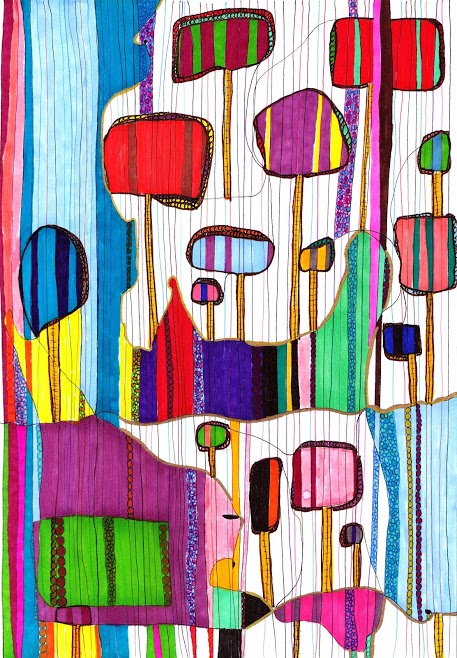
At Old Oraibi_rules and signs
“Rules and Signs” by Laura Didyk, Sharpie on paper, 2015.

In winds that skirt the San Francisco Peaks, we
wait to understand the village silence with our own.
Signs warn, Do Not Enter. Buildings seem in ruins.

Other tourists come, go away. We hear murmurs,
wind, but no words until an elder of the Bear Clan—
the chief—materializes, beckons, unlocks the gate.

Her 10-year-old grandson Ray shines like his name,
a beam of light through banked clouds. He guides us
over Third Mesa to the ruins of a mission church

taken down three times by lightning and fire. Why?
we ask. Because it was Spanish? He answers, Yes.
Amid the debris of centuries, we reconsider history

of the Pueblo Uprising. Only the Hopi remained free.
Now women offer us crisp cornets of blue corn piki.
Ray swings a bull-roarer of lightning-struck pine,

a long, thin, turquoise leaf shape. One side painted
with a cloud, lightning bolts, two bear paws; the other,
with a bear kachina. Spinning on a string, it buzzes

like a tiny wing, whirrs the call for thunder and rain.
We buy this handmade toy to remember that Hopi
rituals mean to save the world. Without electricity,

or running water, the Hopi conjure corn from dust,
trusting fields to snowmelt, cloudburst, or water cans.
So leaves leap fresh that bear no witness to drought.


Kathleen S. Burgess, poet, editor, retired music teacher, union officer, statistical typist, server, factory solderer, videographer, and hitchhiker through North, Central, and South America, has poetry in North American Review, The Examined Life, Evening Street Review, Malpaís Review, Turtle Island Quarterly, Mudfish, other journals and anthologies. A chapbook Shaping What Was Left and the anthology she edited Reeds and Rushes—Pitch, Buzz, and Hum are Pudding House publications. Two new collections Hitchhiking to Peru and The Wonder Cupboard are forthcoming.

Read an interview with Kathleen here.

“Argument with Myself On How to Write a Competent Essay” by Scott Loring Sanders

ARGUMENT flowers for him
“Flowers for him” by Laura Didyk, Sharpie on paper, 2015.

After fourteen years, the cherry tree has died. It was a gift from my wife, celebrating six months of sobriety. A kind gesture, one that always meant more to me than she knew. Every time I’d mow around it, I’d think about how I was still sober. Usually the thought only lasted a few seconds, though occasionally I’d get lost and reflect. On my last night as a hopeless drunk, I pounded twenty-eight beers. By myself. The tree lived fourteen years. Fourteen is half of twenty-eight which

Okay, seriously? Fourteen is half of twenty-eight? Cut everything except the first two lines.

What’s wrong with it? I planned to explore how I struggled with alcohol for half my life.

Jesus, that’s awful.

What do you mean? Too maudlin?

It’s a prime example of a shallow writer trying to make ridiculous, nonexistent connections that are supposed to have some “deeper meaning, man.” Lose the Zen or feng shui or whatever the hell and just tell the story. And maudlin? Really? What an asshole-ish word.

I’m sad when I look at that dead tree now because it was a simple reminder of how my life had improved. But a disease invaded, which is fitting.

Let me guess. Alcoholism is a disease? It’s hereditary? Every branch of your family tree has been touched by it; all your roots are soaked in alcohol?

Too cliché? Okay, how about this? I joked with my wife that maybe the tree’s demise meant I could start drinking again. (Part of me wanted that to be true. Any excuse to drink, even after all this time, still lingers somewhere deep within.) To my surprise she said, “If you think you can handle it…” (Permission. It was an opening which my inner-demon—a demon who never quite died—pounced on immediately. What if? Maybe just one or two? It’d be nice to have a cold beer occasionally) “…but it’s probably not worth chancing,” she finished. And the little demon went dormant, stuffed back into its dark hole. Until the next test. So I plan to cut down the tree soon, burn it in the woodstove. It’ll keep my family warm for a night…That’s good, right? There must be a connection, some sort of ironic symbolism? Burning the devil who’s haunted me or something?

Oh, puke. Is George Washington next? Can’t chop down a cherry tree without giving him a shout-out.

Well, actually, the whole “never tell a lie” motif was a consideration. I mean, I lived a lie ever since that first drink—

You’re really going there? Damn, we almost made it through this essay without that trite comparison. You hate authors who blatantly pull at your heartstrings. You want to punch them. Don’t be a douchebag.

You know, I’m glad that word’s back in the vernacular.

What word?

Douchebag.

On this we agree.

Remember as kids, in the late 70s? We used it constantly. Had no idea what it meant—and to this day, I’ve still never actually seen one—but man, what a word. Then it disappeared for thirty years. Now it’s back.

Maybe douchebag is cyclical, like fashion.

Yeah, maybe. Remember when the vet advised, after the dog got sprayed by a skunk, that a douche was the best remedy?

Sure, but remind me again how that’s remotely pertinent to this essay?

It’s a cool aside.

Cut it. Your brain wanders when you write.

I’m keeping it.

Just tell the story.

I got sober. My wife bought a cherry tree to mark my six month milestone. I was still foggy then, angry and bitter, struggling, but the gesture was kind. Fourteen years later, the tree has died, the leaves withered, the bark split and peeling like old paint. I pondered the significance, tried to impart some deeper meaning, but in reality it was just a dead tree. I don’t need it to remind me of my progress. Every day is a reminder: no hangover, a clear world, life is great. Tomorrow I’ll cut it and burn it in the woodstove. When I feel that warmth, maybe I’ll have a brief internal ceremony. Perhaps a second of reflection. Say, “Good job, dude” and that will be that. I’ll go upstairs and watch college football. If I get real crazy, I might even crack open a ginger ale. Then I’ll start a pot of chili or stew. Something hearty for a cold November evening. Mayb

Stop. Less is more.

This?

Learn when something’s finished.

It’s only 750 words.

Precisely.


Scott Loring Sanders has had work included and/or noted in Best American Mystery Stories and Best American Essays. He’s published two novels with Houghton Mifflin and was the Writer in Residence at the Camargo Foundation in Cassis, France. His essays have appeared in Creative Nonfiction and various other journals. He currently lives in Cambridge, Massachusetts and teaches at Emerson College.

Read an interview with Scott here.