Interview with K.A. Wisniewski

KA Wisniewski

Mary Akers: Hi, K.A.. Thanks again for letting us have your wonderful SOS piece “A Taste of Peppermint” for our Caregivers issue. There’s something so poignant about this piece, really a vignette, but a vignette that “spins out” into something larger. I had a writing professor (Fred Leebron) who talked about the importance of “Chekhovian Spinout” in the endings of short work. I believe it was a term he coined, but it has stayed with me. I guess it’s similar to “resonance” in which a final tone keeps reverberating into the silence, but bigger somehow. An ending that stops but also opens out. Have you ever heard of this phrase before? Do you agree with it and/or strive for Chekhovian Spinout in your writing?

K.A. Wisniewski:  Thank you for the kind words. It’s funny because this vignette is actually pulled from a larger essay or story about thirty-pages in length. So, at one time, it did spin out into something larger.

About ten years ago, I visited Austin, TX, and heard this song called “Penthouse in the Ghetto” playing on a jukebox. I became a bit obsessed with this song and researched the blues artist Peppermint Harris who wrote and recorded it.  For several months, I thought of this as a fun research project that might spin into a journalistic essay, but ultimately I stepped away from it. Several years later, I was listening to some of Harris’ songs from the 1940s and 50s while walking around the streets of Philadelphia. There was this interesting contrast between what I was seeing and what I was hearing, and the result was this invented story of this aged bluesman recalling moments from forty years earlier.

When I returned to the story again this past year, I ultimately decided to chop it down to what is now “A Taste of Peppermint” to give this sense of resonance. It’s just a vignette, a moment following this musician across the street to a local bar. Nothing happens. The idea was have the readers fill in the gaps themselves and ask the same questions I did while listening to his songs for the first time. Who is this guy? What’s the backstory? How did he or we get there?

I appreciate you bringing in Chekhov here. I had a professor who referred to these endings as “anti-epilogues,” but I really like this idea of the spin-off. I think Chekhov’s the master at this sort of ending. Instead of this happily-ever-after, neatly tied-up ending, he often leaves his readers what will happen next, of stopping short. I’m interested in this idea of stopping short, not fulfilling readers’ expectations but instead giving them a more active role in the story-making process.


MA: And, related, do you read Chekhov? Do like his work? If so, what’s one of your favorites?

KAW:  I haven’t read Chekhov in a little while now, but I think I should return to him. My favorite story might be “A Joke.” It’s ends in a classic Chekhovian fashion when in one-line the narrator reflects on a joke he once played a girl while sledding. He would whisper, “I love you” in her ear and later deny it. Years later, he realizes that this was this missed opportunity for love. Chekov has a way of framing these little moments where nothing and everything happens for a character or characters and then just cuts away. In an instant, the moment is over and the world carries on as it did before. Only later does the character imagine that moment as a moment of possibility.

I guess this is similar to my image of Peppermint Harris. There was a moment when he was somewhat famous and had a number 1 song on the Billboard Charts. Then the moment was over. Life continued on, and next month’s rent was due.


MA: I know from your bio that you wear many literary hats, working as an author but also an editor and a managing editor. In my book that makes you a good literary citizen, giving back to the community that sustains you. Do you find that doing such work informs and enhances your writing? Or is it a tricky balance you are striking between the personal creative pursuits and the “giving back?”

KAW:  I love my work as an editor. I love being on the frontline, reading new work.  Sometimes being among the first to read them, and sometimes seeing them still in-progress and imagining what they will become. The making-process is the greatest part of the experience.  I love talking to artists and authors about their work and troubleshooting. People often look at this process as cold and bureaucratic. I’ve been fortunate enough to see the poetics in these exchanges. So I see publishing and editing itself as a creative pursuit.

And I’ve made great friends in this process. This is one of the reasons I’m attracted to small presses and literary magazines. You see and feel the collaborative spirit and energy of writing (and publishing). You see your work as a part of an ongoing conversation. These experiences definitely shape my own writing. I’m always learning from these authors, editors, and texts. They motivate me to keep writing and re-writing.
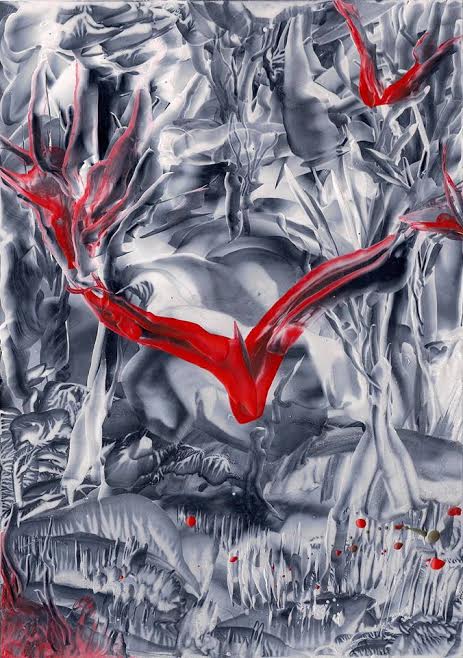
Taste of Peppermint

MA: Are you primarily a flash writer? I find that form so deliciously varied and inclusive–flash, micro, short-short, prose poem, etc. Could you say a few words about your attraction to the form?

KAW:  I’m actually arriving a little late to the flash scene and am just beginning to experiment here. But I’m attracted to it because of this lack of definition and because of the way it makes me rethink or re-envision my own work. I’m now asking new questions and trying to get to the heart of whatever I’m writing. It’s an interesting shift for me to stop asking, “What happening here? What’s the story about?” It’s shifting from narrative to the emotional, the affective.

I’ve recently read a few collections or serials on what’s called twitterature, and I’m especially interested in seeing how this genre will evolve as we move further into the digital age. Reading or surfing on the Internet has taught us that there is no longer a linear narrative or specific route. Here, I think the figure (and the feeling that follows) might replace the narrative.


MA: I like the theme of this piece. For me, it’s something akin to “Dignity of the Downtrodden.” And also highlights the fact that we often have no inkling of the mysterious lives that our elders have lived–frequently recognizing only the shell of the body and moving on, dismissively. Would you like to say anything about that?

KAW:  We live in a society that often dismisses or undervalues the needs, talents, and awesome experiences of the aged community and what they bring to the conversation.  My partner Molly is an advocate for the rights and well being of the elderly, so I’m especially conscious of this. While both their rights and ongoing contributions to the arts and culture need to be addressed and reconsidered in general, I think there’s a real gap that exists in creative writing communities. A good example is public readings and community groups.  I’ve been to readings where participants and audiences are either filled with young adults or students or with retired persons. Rarely do I see a diverse representation, and I’d really like to see local creative writings groups find a way to bridge the gap here.


MA: Granted, this may be a question more for future scholars of your work, but what do you think are some of your most common themes? What do you find yourself revisiting over and over?

KAW: Memory is certainly a reoccurring motif in my work, how memories change or are distorted over time and sometimes how we’re haunted by what we’ve once said or didn’t say or how one obsesses or reflects on what was or could have been. I guess for that reason a lot of my poetry and creative work focuses on specific moments of embarrassment or awkwardness. A lot of these feelings play up our own anxieties, those anxieties that break with the logical or rational but still deeply affect us. In reflection. some of this is absurd or humorous. I look to moments that will connect the readers to a specific feeling or moment in their own lives.


MA: And finally, because I always love the answers I get when I ask this question, What does ‘recovery’ mean to you?

KAW:  In terms of my writing, recovery might refer to amplifying those small moments or those scraps of writing that would ultimately get cut from a work. Those notes or ideas that were jotted down “in the moment” that inspired you to start a project in the beginning. Recovery is to return to that instance of excitement.  In the case of Peppermint, it’s returning to the image I first imagined. Not clouded by research or over-thinking narrative structure or dialogue. Returning to the bliss of writing and imagining.

Announcing our Winter Illustrator–Laura Didyk!

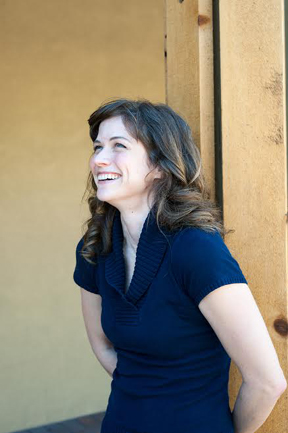
Laura Didyk

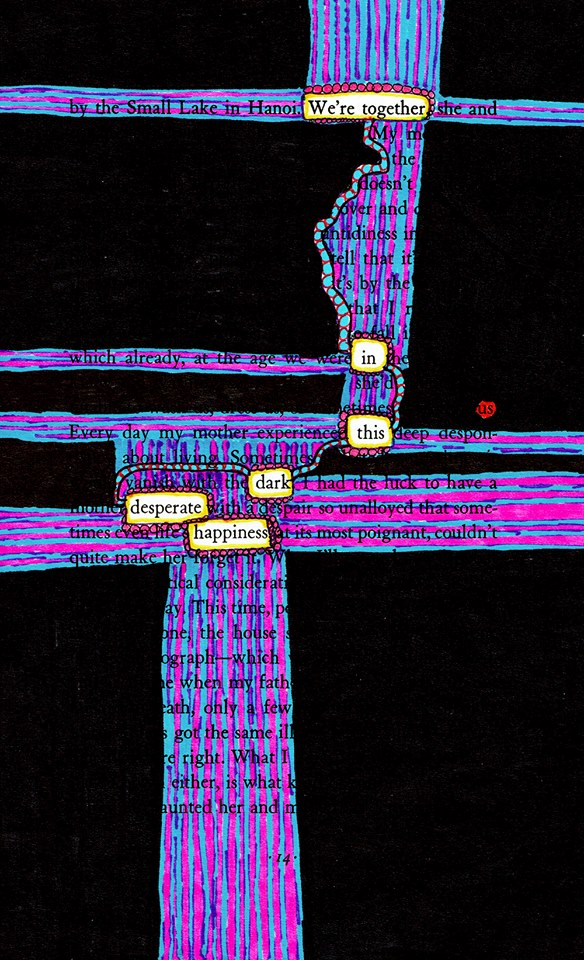
I am so thrilled to announce that our January Illustrator will be the lovely and talented Laura Didyk. I first met Laura at VCCA during an artist’s residency and responded instantly to her great laugh and later to her fascinating memoir when she gave a reading from it to the group.

Together

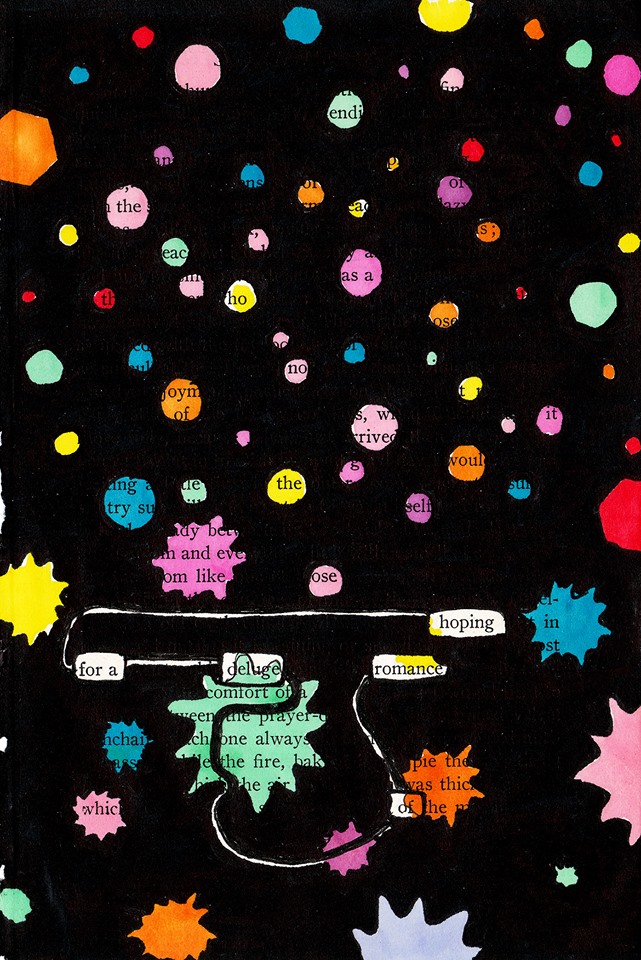
It was only later that I got the chance to see Laura’s wonderful artwork which started as redacted poetry from book pages (brilliant!). It’s grown to so much more and I’m a huge fan. Its color and whimsy will be the perfect accompaniment to our January issue. I’ve included a few images to whet your appetite. And more can be seen at her Instagram page @lauradidyk

Deluge of Romance

And here’s her official bio: Laura Didyk makes art and writes poetry and nonfiction. Her work has been published in Diagram, Post Road, Alligator Juniper, and the Sun, among others, and her artwork has been printed in No Tokens magazine. With an MFA from the University of Alabama, she has been a writing fellow at Yaddo, the MacDowell Colony, and VCCA. Currently at work on her memoir, she writes, teaches, and makes art in the Berkshires.

Stay tuned!

Interview with Jennifer Williams

Jennifer Williams

Mary Akers: Hi, Jennifer. Thanks again for letting us have your wonderful short story “Europa Hides an Ocean.” I loved this piece so much. It was one of those read-and-accept finds that make editors feel a little giddy. One of the first things I admired about the story was your stylistic choice to use a close third person, while keeping the main characters generically described as “the girl” and “her mother.” It reminds me a bit of Hemingway’s “Hills Like White Elephants.” The names-as-descriptive-nouns actually (at least for this reader) left me feeling closer to the characters because of their “anyman” quality. Can you say a little bit about what that narrative choice meant to you?

Jennifer Williams: Your enthusiasm for my story means a great deal to me, thank you so much.

As a writer I’m particularly interested in the shared characteristics of people: what we have in common rather than what makes us unique. For stories, I tend to be focused on the relationship, or perhaps an event—whatever particular tension is at hand—rather than the individual. So, descriptors sometimes work better since giving a character a name, even if it’s just Bill or Jane, immediately focuses the narrative and makes it about exactly one person’s experience. Of course, I still strive to make my characters more than place-holders. But with “Europa,” I was less worried about giving readers full characters sketches than I was about shining light on a particular moment. That is, when the mother and daughter finally switch directions and begin to climb out of their grief. And I love the idea that this inflection point ending up occurring at such an ordinary stage in their trip. I like all my stories to have a bit of mystery—something that’s initially hidden and, if I’ve done it right, only understood at the end.

As with first person, a close-third can actually facilitate this sort of narrative obfuscation since it gives the impression of intimacy even as the narrator or protagonist continues to hide things from the reader. Maybe this is why the story gives off hints of “Hills Like White Elephants” since there’s still that wall. Not to mention that big thing that’s not being talked about! I didn’t imagine the two characters in Europa were afraid to discuss anything. But their loss wouldn’t have been new. What might they say to each other that hasn’t already been said? This is an ordinary moment, not a moment of confrontation, and even when the girl complains about missing the truck (her way of saying what’s already been said) her mother responses wearily. I think tension, a building block of the short story, can be found almost anywhere.


MA: Yes, that weary response says so much. Another thing I love about this piece is your expert use of sensory details so that we are connected to the girl by sights, smells, sounds, touch, and taste. I’ve been thinking a lot lately about what makes a piece of writing “atmospheric” and I think sensory details are a big part of that. Do you consciously add them in, or is that something that comes naturally to you? Are sensory details important to you in your own lived experience?

JW: I like that word, atmospheric!  Some of that focus on sensory detail might just come down to what got drilled into my head during my MFA: show don’t tell, remember that everything we experience comes to us first through one of the five senses. I don’t think all stories have to be this way, but the physical world is a great place to start. And when I’m writing and I get stuck somewhere, taking things back to the immediate, the senses, can be a helpful way to push forward. For this story in particular I rely on it heavily because the narrator is limited to what she can or is willing to communicate. I need those descriptions to build the meat of the story because neither the girl nor her mother is talking directly about what’s going on.

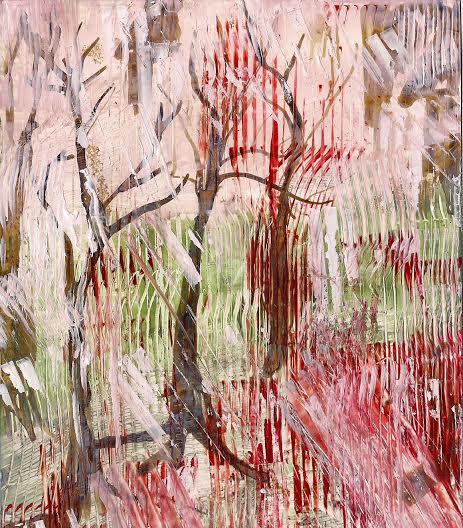
Europa Hides an Ocean cropped

MA: When I choose work to illustrate each issue, I’m often surprised to learn that the image I chose ends up having special significance to the author–a significance that I couldn’t have known. I think this speaks to the way our minds crave to connect disparate things–especially inter-genre connections (like dance and music, visual art and text, etc). What did you think of Mia Avramut’s image used to illustrate your story?

JW: If I had to distill this story down to one word, it’d be obscurity, and Mia Avramut’s piece, “Rainfall,” captures this perfectly.  In fact, her work made me realize how much I played around with what can and can’t be seen, or heard, or understood, in the story. I think this happened as a natural output of me trying to get into the girl’s skin, imagining how frustrating it might be to be so young in that situation. There are all sorts of limiting factors—the physical, of course: darkness, foliage, distance.  But also what her mother may have explained or withheld, as well as the girl’s general lack of experience. “Rainfall” includes a very identifiable scene that is then deliberately blurred through its topical affect.  It is very much in line with the girl’s worldview.


MA: Nice. I love everything about that. And finally, because we are a recovery-themed journal and because the answers to this question are always interesting, could you tell our readers what “recovery” means to you?

JW: Recovery, to me, means redefinition. Facts may not be malleable but interpretation certainly is, and I think recovery involves a great deal of reinterpretation—not of an event, not of ‘what happened’ but of its meaning and consequences, how it connects with identity. I’d argue that recovery from trauma comes when we redefine the world around us to such an extent that we move ourselves into a new life, a new reality. I don’t mean physically moving necessarily, although my characters in “Europa” took this route. But if we’re lucky, we redefine our priorities, our points of view, sometimes our partners or our friends, until the new life is sufficiently unique then the trauma can be contained inside a previous chapter, relevant to a previous you. I think that to some extent what’s real and true and important to a person is negotiable. I always consider this when I wake up from a particularly vivid dream. During those first waking moments the dream world seems more real—I’m still afraid, or I’m still trying to catch that train. Then the new world takes shape and I very quickly shed the dream world. I just let it slip away and quite readily accept the new one.


Our 2016 Pushcart Nominations

Pushcart Prize 2016 Cover
Our nominations are in! We published a total of 56 wonderful pieces in poetry, fiction, essay, and flash this year and it was a tough decision to find only six (the maximum allowed) to nominate. Thank you to all the writers who shared their fine work with us this year. I wish we could nominate you all. But decisions were required and so I consulted with my hardworking editors and together we came up with a list that took into account our personal favorites, and also the tastes of the Pushcart editors (based on past editions) as well as making sure each genre that we publish was represented. We were very essay-heavy this year–we’re feeling fortunate to have so MANY wonderful essayists trust us with their work.


Here’s the list of what we’re nominating:

1) “Grip,” a flash by Kathy Fish

2) “The Way it Really Was,” a poem by Ann Goldsmith

3) “Nine Months of Peanut Butter,” an essay by Sara Dutilly

4) “Laundry,” an essay by Kate McCorkle

5) “The West Elm Sofa,” an essay by David Alasdair

6) “Rules,” a short story by Laura Moretz

Congratulations to the authors and again, a big thank you to my wonderful staff of readers and editors. I truly couldn’t manage this labor of love without your contributions of time, energy, and literary stewardship. Onward to 2016!


Homepage Fall 2015

Europa Hides an Ocean
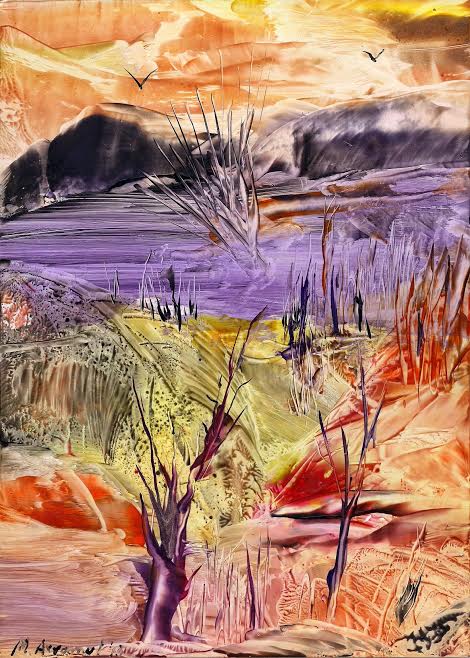
“Lady of the Lake” by Mia Avramut, wax on paper, 5.8 x 8.2 in.
All images in this issue appear courtesy of the artist.

Dear Readers,

Welcome to our Fall 2015 “GOODWILL” issue. We’re incredibly proud to present to you the wonderful and diverse array of voices in this issue, all complemented by the beautiful artwork of Mia Arvamut which she has graciously donated for this issue.

I’m thrilled with the way everything came together for this issue. We have a list of new readers for the journal, all prior contributors, and I’m thrilled to see how their aesthetics influence future issues. We have a new Shorts On Survival editor, too, the discerning and talented Bev Jackson. A big thank you to my devoted editors and readers who have hung in there for years now, and also the contributors to this issue who have trusted us to bring their work out into the world. Also, thanks for the gorgeous artwork, Mia Avramut. You made each piece pop just a little bit more.

Our January 2016 themed issue will be FLAME and the April issue will have the theme of HURRICANE. As always, thanks for reading.

Yours in Recovery,

Mary Akers
Editor-in-chief

“Excavation: Mobile, Alabama, 1996” by Ting Gou

Excavation by Ting Gou
“Revelation” by Mia Avramut, wax on paper, 5.8 x 8.2 in.

What happens when you leave
a house? Its body begins to rot

for you and live on for another.
As much as you deny it,

there are always two houses,
two sets of furniture—

one with refrigerator doors
collecting grime between plastic lips,

new family, new broken-down car
killing the lawn.

Then, there’s the house
as you remember it,

swimming upstream
in your imagination, year

after year, consistent as salmon.
That summer, my mother

obtained a box of fish,
their bellies emptied

of caviar.
Leaning over the counter

by the sputtering garbage disposal,
she intended to make dinner

out of those eggless pouches.
No air conditioning, no job,

no images for our eyes
but burnt grass splayed out for miles

like dirty lace doilies,
houses set in the middle

like cheap teacups.
She deroofed the scales

from spiculated skin.
Her movements calculated,

her cuts deliberate,
her gasp sharp but short

when she saw the worms,
pink pencil cores of muscle

sheathed around bone,
pockets of activity in the otherwise

dead. How I’ve tried to bury it,
the sound of useless flesh

falling into a trash bag.
How I’ve been drawn to it,

as to a place where something
remarkable happened,

how I stand in that kitchen
and it’s me who’s opening

boxes and boxes of freshwater fish,
each more terrifying than the next,

looking for what was broken,
what is still alive.

All things rot, even houses,
but what happens afterwards?

And who will stumble
upon our remains and ID us,

will they know us from our bones
or the troughs left empty

in the dirt?
I tell her we will last.

Blessed be the calcified heart,
the mineralized shell

of life hardened in the sun.
The tar that keeps us together

long enough to be found,
documented, crushed into tea,

no ingredient too taboo
for a mother, a daughter.


Ting Gou lives and writes in Ann Arbor, where she is a student at the University of Michigan Medical School.  Her poems have appeared in the Bellevue Literary Review, Best of the Net 2014, Ghost Ocean Magazine, Midwestern Gothic, and elsewhere.

Read an interview with Ting here.


“Europa Hides an Ocean” by Jennifer Williams

Europa Hides an Ocean cropped
“Rainfall” by Mia Avramut, wax on paper, 5.8 x 8.2 in.

The creek that runs through the fifteen-mile canyon north of Sedona is lined with box elder and ash trees. Their campground, terraced into a wooded slope, overlooks a rocky bend, and towering limestone hugs the opposite bank. The girl sits on the largest boulder, midstream. She wears checkered flannel, her last clean pair of jeans. Her shoes are good for slippery stones. She waited all morning for the light to hit the water. Now, she closes her eyes and lifts her face.

A rustling noise makes her jump. She hasn’t forgotten the host’s warning. “Rattlers,” he’d said, poking through dark vegetation. All weekend, he carried around a bucket and pronged pole. Now, she scans the bank grasses and bower vines. But all she sees moving are some white butterflies and the shifting leaf shadows on the graveled shore.

Her new walking stick lies within those shadows. It’s smooth and dove gray, with purple-rose shading along its textured lines. She wants to take it with her. She looks up at her mother wrapping the breakfast mugs in towels. Their tent is gone, stuffed into the duffle to be hauled to the car. They’ll cart things out this way—in bundled loads up the concrete steps. From where she sits, the stages are clear: bank rise, then campsites, then cars. Her gaze slips across the narrow parking lot and up the steep ramp that cuts to the road. Through the mingled canopy of pines and creek trees, the girl makes out a red car flashing around the highway curve like an apple on the move: there, then there! then gone.

When they’d arrived, someone was parked in their spot. It was late Friday, and three tents were already clustered on the site next to theirs, the largest glowing from a lamp inside. The two smaller tents were the low-slung type meant just for sleeping. They glowed, too, though more softly, and only on the side that faced in.

Her mother had dimmed the headlights coming down the ramp, and now they idled by the other car, staring through the darkness at the tents, until the host brought his face to their window. “One campground, one car,” he said, marking his clipboard. “I’ll have them move.”

The girl slides down the big rock and tests a few stones for balance. If she wanted to, she could make it to the opposite bank. But there’s not much shore, and the wall of rock goes straight up, higher than any building she’s seen. Besides, she’s already tried what she could to engage it: on their first morning, she crouched with both palms against it and pushed.

Now she balances on two flat stones and squats down, eyeing a shallow pool for the flicker of trout. She’s quiet, patient, but only something minnow-sized glides through. When she twists up she sees her mother again, closer, standing with her hands on her hips. Just above the crest, the girl can make out the tops of her mother’s boots, but the splashing of the creek makes her still seem far away. The girl frowns when her mother points towards those boots, towards the ground where she’s standing.

It takes both hands to climb up the bank. She leaves her walking stick propped at the base of a tree and uses roots and vines to pull herself up. Near the top, a wolf spider darts across her thumb. It vanishes under leaves before she even registers what it was.

“I called you three times,” her mother says, pulling a white scarf over her dark hair. The scarf reminds the girl of her old pirate costume, and she wants to make a joke—after all, this weekend was different. They’d played cribbage and cards, plowing through every two-person game they knew. Her mother didn’t try to let her win, and she won anyway.

Instead, the girl looks up. A fat squirrel sits above their heads. Flakes of what it nibbles float down, and a piece lands on the scarf, then another one. The girl is getting taller. She can see the little pieces like pepper on a tablecloth.

They start hauling bags to the car. The biggest they carry up together, with the girl pulling, stepping backwards at the top. The neighbors are cooking bacon, even though it’s lunchtime, and it smells like the pancake restaurant near their house.

“If you lived on another planet,” the girl says, stealing glances towards the campfire, “how many moons would you want?”

Her mother arms her forehead, but doesn’t stop. “How many can I have?”

“Neptune has thirteen.”

“Too bright! I’d never sleep.” They drop the bag near the trunk. “I don’t know,” her mother says, slowly thumbing a knuckle, “maybe last night’s moon was enough.”

They fill the trunk, the passenger seat, and all the space behind the driver. It’s not the best arrangement: the cooler only opens partway, and on sharp turns the aluminum chair slides off the bedrolls, smacking the girl’s shoulder. She wishes aloud that they still had the truck. Her mother is bent away from her, leaning into the stacks to make everything fit. Without looking back she answers, “I know, baby. I know.”

The girl has the same hair as her mother, dark and wavy. They used to wear it in similar braids, and it pleased the girl when people joked they were twins. But her mother recently had hers cut. “Chopped,” was her word, and she had tried to explain about fresh starts. The girl still likes her braid, but she knows the only way to match her mother again is to cut hers, too. She reaches back now, considering this, and hooks the braid forward to suck on the end.

Side-by-side, they survey the empty site. They hear less of the creek where they are now, and more small noises from the trees and other campers. Nobody talks too loudly, but they hear a few tent zippers and a short beckoning whistle that echoes. Even after the sound dies, the girl lets the fragment pulse in her memory. Her mother says the canyon is like a church.

Everything’s loaded, but they don’t leave. On previous trips, they would have been gone right after breakfast. There would have been concerns about traffic. This time, she and her mother are continuing north, passing over mountains and through national parks.

A great deal has been explained to the girl: the trip will take all summer; they are not in a hurry; they will zigzag and sleep in the tent or a cabin, every so often a motel; some of the mountain roads pass above 10,000 feet. They’ll visit old mines and swimming pools, and eat ice cream cones in every town. Everything her mother can promise has been promised.

The girl thinks she sees a Painted Redstart and whispers to her mother. They crisscross the parking lot, trying to spot it again. It becomes a race and they split up, creeping around different cars. Her mother almost laughs when they bump into each other, both of them backing up, scanning opposite trees.

Back at their own car, they spot three boys climbing single-file over the rocks down by the water. The girl recognizes them from next door, and the first boy carries her stick. “That’s mine,” she says, but her voice is quiet. He’s older, and in any case, she is never allowed to take things out of nature. Sticks, rocks, even wishbone wands: everything stays. It’s still a family rule.

The night before, the boys set up cots to sleep under the stars. The girl fell asleep thinking about whether she’d like to do the same, and in the morning, she poked her head out. Two boys had disappeared into their sleeping bags. But the one with her stick now had his face turned towards her. After a second, he pulled his arm from the warmth of his bag and gave a small wave.

The girl watches the boys reach the tree where she’d found egg-shaped stones in the space between two roots. She doesn’t protest about the stick again. She’s already pushing the want away, packing it up, taping it closed like all the boxes: winter clothes; Mom bath; tournament albums, SAVE.

Her mother looks over at the clustered tents. The adults are eating at the picnic table. Suddenly, the girl is glad about the family rule because she wouldn’t want her mother going over there, explaining. But when she looks back her mother is already hopping down the steps, striding across their campsite—not towards the adults, but towards the water. The tall boy stiffens and glances at the girl. She wants to drag her mother back. But it’s too late, her mother has dropped over the bank and is at the water’s edge, extending her hand. The girl has never seen her mother do this to a kid. The boy takes the hand slowly and shakes it.

He quickly relinquishes the stick, but her mother stays down there. She reaches out and because of whatever she is saying, they all look in the direction of the towering rock. While the girl waits, she kicks at the old retaining wall edging the lot. She looks around the treetops, the parked cars, then over at the neighbors, who don’t seem to notice her mother at all. The girl hears one of the boys laugh as she toes the crumbling mortar.

In September, she’ll start a new school. They’ll live in Spokane, first with her grandmother, then, when the boxes arrive, in an apartment. Her mother doesn’t know if the school has many stories, a lot of kids, or even if the playground has swings. The girl is almost too old for swings, but she’d like them to be there anyway.

When she spots her mother again it’s her hands that show up first, over the edge of the bank. Then come the scarf and new haircut. But the girl quickly forgets both these things because her mother’s got the stick between her teeth like a dog. At the top, her mother steadies herself and looks up. Even with the stick, the girl can tell she’s grinning. She spits it out and stands there with her hands on her hips, panting in an exaggerated way. The boys are laughing. Her mother laughs, too. But the girl covers her mouth: she’s too happy to make a sound.

Her mother starts the car, cracks the windows. Sunlight strikes their knees. “Those boys just saw a snake,” her mother says. “In the rocks where they were standing. Can you believe it?” She turns in her seat, but she doesn’t look scared, or even relieved. Just happy.

The girl smiles back. “I wish we’d seen it, too.”

Their little car crawls up the steep drive. The girl rolls her window down the rest of the way and the boys wave from the abandoned site. “Say, Bon Voyage,” the girl yells to them. At the top of the ramp, she’s surprised to realize she can still hear the water. She closes her eyes to capture the sound.

When they’re past the first big turn, the girl pats her stick propped against the stack to her left, holding back the bedrolls and aluminum chair. She feels the coziness of the car, the gentle strobe of sunlight as they skirt high walls and break away past the trees. “Jupiter has sixty-three moons,” she says, resting her feet up against the seat in front of her.

“Why so many?”

The girl shrugs. “And some of those moons are huge, with names from Greek mythology.” She pulls her braid forward, flicks the end. “They’re practically planets, too.”


Jennifer Williams is a graduate of Pacific University’s MFA Program. Prior to writing, she worked as an engineer in Phoenix. Her short story “Gore Junkies” appeared in the Oregon anthology, The Night, and the Rain, and the River and she lives in Portland, Oregon.

Read an interview with Jennifer here.

“Fred” by Shaula Evans

Fred
“The Other Side” by Mia Avramut, wax on paper, 8.2 x 11.6 in.

My grandmother’s boyfriend, whom she’ll never marry (she’s had enough of fetch and carry after three husbands), this man not my blood kin, drives my grandmother to family dinners at our house to sit in his gray wool hat at the end of the table with us children and other outsiders. Fred makes me gifts: my face, close-cropped, in roses, irises, a wineglass–no Photoshop, no fancy photography, just Fred snipping, scissor handles wedged past the inflamed knuckles of his retired craftsman hands. Fred glues me into beauty. I mumble thanks, abandoning his faces to ashtrays, water marks, Safeway slab cake icing smears, while Fred smiles with hungry old man eyes at crumbs I proffer as politeness. When grandfathers disappear overnight it is dangerous to love a man who hovers between chauffeur and family.


Shaula Evans is a writer, editor and translator. Born and raised in Canada, and educated in Montreal, France and Japan, she currently resides in New Mexico after spending 6 ½ years traveling around North America in a Mini Cooper. You can find her online at shaulaevans.com and on Twitter at @ShaulaEvans.


“Out of the Nest” by Heidi Siegrist

Out of the Nest
“Nest” by Mia Avramut, wax on clayboard, 6 x 6 in.

It was right around my college graduation day that the snake came. I wasn’t home to witness any of what happened. I was in Chicago, selling everything in my college apartment and using the cash to go out drinking. It was hot, and my days of packing produced a sticky feeling of discomfort that would come back like bile minutes after stepping out of a cold shower.

I had been following what was happening at home because my dad liked to write me about it most days. I imagined him typing out his emails to me in his study, around 8:00, right after the sun had gone down and his beer had leaked language into the happy peacefulness of his mind. He was elated, these days, to spend each evening after dinner out on the porch. He and my mom had recently renovated it. They bought new, comfy furniture– the familiar rusted chairs with mildewed cushions were gone. My mom hung potted flowers all around the porch ceiling, and somehow convinced ivy to grow along the beams. At the edge of the porch, as if to mark off this magical space, they strung white Christmas lights and windchimes.

Because of all this beauty, a California wren had ventured into our backyard to nest in one of the hanging porch baskets. Among my mom’s peonies, she laid her eggs. California wrens are small and fat. Their color is a humble light brown, and when they look at you with their inscrutable bird eyes you see dignity in the streak of white, eyebrow-like, on the sides of their heads. In the summers, you hear them everywhere. They sing often, and with impressive range.

June in Chicago, the sounds outside were of cars pulling up outside of soon-to-be-abandoned college homes, the growl of suitcases along sidewalks, and the smugly triumphant shrieks of day-drunk seniors. I was impatient and sloppy in packing all my stuff into boxes. I threw wine glasses in with leftover boxes of pasta and didn’t fold my clothes or even turn them right-side-out before stuffing them into duffel bags. It was hugely satisfying to see my cluttered room turn clean and empty. A guy bought my desk for $50, and I used half the money for a cheeseburger and beers at the campus pub with my friends. We talked about our plans for the summer and what we thought we might do after that, and didn’t think of how easy it was to take for granted that we would always get drunk together.

The next morning, while I dozed sweaty and headachy, my dad sent me an email about how the wren’s eggs had finally hatched. When he went out on the porch with his coffee, he heard a chorus of little squawks in brand new voices. He wanted to look at the eggshells, now empty and useless, but he didn’t want to disturb the babies. The mother wren was so excited, he wrote. She flitted back and forth, chirping at her babies with a new, joyful song he hadn’t heard before. He was proud that she had gotten so used to him that she let him listen in on their celebration.

Goodbyes came in stages: I can’t believe this is the last time we’ll eat here, the last time we’ll drink together on campus, the last week we’ll be living in Chicago, etc. They did not seem real except for one. I’d had a falling out with my oldest friend. First year, we used to laugh so hard on the floor of her dorm room that beer dribbled out the corners of our mouths. Now, we stood braced against separate walls and I told her I hoped she enjoyed Oxford. “Thanks,” she said. “Maybe next year when I come back, we can…start over, and see how it goes.” The cause of the falling out was a mutual feeling of abandonment, not worth describing, which day to day seems irrelevant but builds and builds.

The next day there was no email. My dad called me instead, while I was lying on my bed doing nothing, with the fan on. He said that when he had come outside for his beer, he had found the California wren jumping from spot to spot but never landing in her potted plant. She was calling out sharply. He could hear a commotion from the unseen baby birds, and it was a sound he had not heard from them before. When he looked in the basket, seeing the chicks’ soft brown feathers for the first time, he also saw a snake. It was curled lazily around two of the baby birds, the third a lump in its stomach. He picked up the snake and flung it by its tail into the yard. It hit the ground with the thump of a thing already in motion. Then my dad went to the shed and got the hatchet that he used to weed kudzu out of the garden. As the snake slithered away he brought the blade down hard. At the age of 62, he killed his first living being. While he stared at the two pieces at his feet, the wrens cried.

But–two babies still remaining under the safe white lights.

My bed was the only piece of furniture remaining in my room at that point. I couldn’t sell it, because a couple of the slats were broken from a drunken and overly aggressive hookup with someone I did not know well or much like. I was just going to throw the bed in the alley, after my last night in the blank white room. Graduation was a day away. When I hung up the phone with my dad, picturing the events that had led up to him standing there over the dead snake and baby bird, I felt fear swallow me. Cliches ring true because we seek them out, match them up to the experiences that would otherwise bewilder us. They become signs, omens as bright as Easter eggs.


 Heidi Siegrist is currently trying to make it/fake it in Chicago. She is also an MFA student at the University of the South, and is working on a collection of essays about entanglement (whatever that is).


“The West Elm Sofa” by David Alasdair

Wesy Elm Sofa
“Dusk” by Mia Avramut, wax on paper, 5.8 x 8.2 in.

Jon’s apartment is the top floor of a four-level brownstone in an aging beauty queen of a neighborhood in the heart of Washington DC. The kitchen, living room, and the small glass table in the bay window that makes up the dining area are all one space, filled with odds and ends that mostly only make sense to Jon: photos in mismatched picture frames, Argentinian love masks, decorative candlesticks, an oversized poster of a 1950s Spanish motorcycle festival, and a small flock of tourist-shop Buddhas sitting happily in scattered locations. The tiny coffee table is littered with the wanderings of a mind that can’t make itself up: a biography of Bill Belichick, Gibran’s The Prophet, Shape magazine (“for the exercises”), a reference manual on management techniques, The Complete Calvin and Hobbes, and endless notes to self. And in the middle of it all is a small L-shaped sofa.

The sofa is actually the Blake combination love seat and chaise from West Elm, a swanky furniture store for yuppies who’ve outgrown IKEA. The love seat can sit no more than two side by side without getting intimate—it is after all a love seat—but there’s room for another on the chaise next to it. Technically the chaise is a “fainting couch,” because it has a back and an arm, but West Elm’s customers are would-be-metrosexuals like Jon, not the heavily corseted ladies of Victorian times, so it’s a chaise. It’s hard not to want to faint into it, however. The flow of the room, the giant welcoming down-filled pillow behind you and the long expanse of the chaise coaxes even the most excited of guests to lie down and take a moment.

This particular West Elm combination is putty gray in color, with chocolate-colored legs, and a slightly rough, though not uncomfortable “basketweave” finish. In all honesty, it seems a pretty ordinary sofa, until you sit on it. Only then do you realize how ridiculously comfortable it is. Not in that cheap Swedish way that feels right only in one position and only in the showroom, nor in the overgenerous softness of a reclining, swiveling, drink-holding, faux suede All-American sofa. The Blake is firm, yet giving, and feels snug whether you sit upright or lounge haphazardly. It’s nothing less than a favorite lover wrapping arms around you and whispering stay awhile.

More often than not the love seat becomes the guest’s, while Jon and his partner JJ stretch out on the chaise together, her head falling to his chest, sometimes in sleep. Conversations between friends will continue on in to the night, and become increasingly dream-like. When eventually the stories and half-awake debates have ended and sleep is taking everyone together, the couple departs wordlessly, and the guest is left with the whole sofa to stretch out on.

As comfortable as the West Elm is to sit on, it is literally a dream to sleep on. It’s wide enough to roll from side to side without the gymnastics of most sofas, and it’s thick, firm padding would shut any princess up about a pea. This is the city, so there’s no true dark and no true silence. But the street light, which stands mercifully below the window, scans patterns through the treetop onto the old plaster ceiling above that are the envy of any child’s mobile, and with the window open, the distant sirens, car horns, and shouts are as reassuring as any summer’s breeze. To sleep here is to sleep like you’ve never slept before.

The record for residence on the West Elm is nine months, held by my friend Zach. After wandering around the world—fighting wildfires, acting in a “ghost town,” working as a carpenter—Zach came out of the blue to stay with Jon. He had no job, no money, and nowhere to go, though that did not seem to be a huge point of concern for either man. At one point, Jon found Zach a job painting the walls of a nearby dive pizza joint. The owner told him he could paint what he wanted. He meant white or cream. Zach instead painted a mural that took three months to complete. When he was done he refused any payment except the original fifty bucks he’d been promised. Later he was asked to fix a shelf by one of Jon’s friends who’d heard Zach was a carpenter. Zach created a small library of built-in bookshelves, and this time refused payment of any kind because it was for a friend of Jon’s.

When Zach finally moved on, his record remained. Despite many guests—family visits, travelers passing through, friends in need—his record stood for years until Sherpa arrived for “two or three days, a week at most.” Sherpa is Taiwanese not Tibetan and has never climbed any mountain, but he’d been given the name the first time we met him, the way boys do, and kept it forever. He followed a stellar college career with a high-paying Capitol Hill job, which he parlayed into entrepreneurial success, buying three townhouses in a rundown DC neighborhood that gentrified overnight and quintupled in value. For years he was the successful one while the rest of us were still finding our way. Then he fell in love with the wrong girl and his life imploded. Within a year he was heartbroken, bankrupt, and homeless, his properties having been signed over to her in a final futile act of defiant love.

At first Sherpa was concerned with being the perfect guest. He’d lost his high-paying job, but found work stocking shelves, and he’d steal steak and bottles of wine and cook dinner for his hosts as a way to thank them. He’d make sure to regularly go out for long walks to give the couple some time to themselves. But as the weeks wore on, formality gave way to familiarity. By month two, anyone walking into the apartment was less likely to find him cooking and more likely to find him in his underwear studiously working his way through a 24-pack of PBR. He stopped going out for walks and told Jon to “fuck whenever you want, it doesn’t bother me.”

By the time nine months had passed, Sherpa had gotten his life back to a semblance of together and was ready to move on. But he stayed anyway, joking that he needed to break Zach’s record. Every evening Jon would come home from work and yell, “Still here?” in mock outrage, but, in truth, Sherpa had become both sidekick and mission, and he was happy for him to stay. It was ten months before Sherpa went on his way.

When it was I who was lost, and my turn to take the West Elm sofa came, I thought of its previous occupants and where they had gone after their respite with Jon. Zach wandered for years until finally he fell in love, married, joined the Rangers, traveled to Afghanistan—where he said he’d never felt more alive or satisfied with his life—and died in a firefight at age 31. Sherpa wandered too. He packed everything he owned in a tarpaulin sheet and traveled to Argentina, studying for a month in Buenos Aries before setting off on foot across the Patagonian Mountains. I heard from him next in Paris, living in a room as big as a closet in the shadow of the Eiffel Tower, and sharing a corridor bathroom with a continually passed-out drunk. From Paris he walked for months on El Camino de Santiago—the old pilgrimage route to Galicia, Spain, to visit the remains of the apostle James in the Cathedral of Santiago de Compostela. He’d Facebook from the churches he stayed in along the way, surrounded by other glorious lost souls, as happy as I’d ever seen him.

I stayed three weeks with Jon, receiving his blunt, good-natured counsel every evening, and soaking up the West Elm’s restorative powers every night. Then I followed Zach and Sherpa back into the world. Both had come back to Jon’s sofa for far shorter stays at various moments over the years, as have I. It is the haven we have all shared. Other sofas are a place to crash. The West Elm is for those uncertain times when you don’t know where the next step will take you. Watching the lives of my friends spin off from here, even if tragically as in Zach’s case, is always heartening, because I know a similar road lies open for me.

When Zach died, Sherpa and I returned to travel with Jon to the funeral in Cape Cod. That night, we drank heavily and happily, and told endless stories of Zach. When Jon finally took his leave, Sherpa and I were left alone on the West Elm in the awkward silence of an unspoken question. Who sleeps where? After a few moments, I took the guest’s love seat, and left him the chaise. He was the record-holder after all.


David Alasdair earned an MFA from Eastern Washington University in Spokane, WA, has seen the Loch Ness Monster, been in the world’s longest chorus line, and occasionally makes Shrek-like noises with his right ear.

Read an interview with David here.