“Alternative Therapies: See ‘Juicing'” by Hannah Baggott

Alternative Therapies

You and I fight in the kitchen—juice splattering the walls,
kale flesh on the floor, ginger dripping down our vertebrae—

because I had taken too much Ritalin, but it’s fine;
the neurologist said it’s fine, it’s fine. And I am crying

over the dirty dishes in our old sink that doesn’t drain well.
Recycled saline, I say. But your fingers whisper small circles

behind my ears, singing bluegrass hymns over the train whistle
we hear every hour. It’s okay. It’s okay, you say, holding up

a straw to my deaf mouth. After, my teeth beet-tinted, I shiver,
so you run the shower hot because you know

how Solumedrol makes me cold and Interferon makes me cold
and IVs make me cold. You take off your clothes

and mine; the carrot juice washes off my hands like rot.
Then, you see the bruises— the space

between the skin and the veins pooling to shades of blackberry
and eggplant. You trace the holes.

I tell you how yesterday, I watched the blood spray out
at the sweaty nurse in the faded scrubs.

I keep seeing him jump back and goddamn,
forcing gauze so fast on the opening,

I thought I burned him. You’d never burn anyone,
you say, planting your feet to rinse the brine off us both.


Hannah Baggott, a Nashville native, is a poet of the body. She is pursuing an MFA in poetry at Oregon State University while teaching writing courses. She has received awards for flash fiction and critical writing in gender studies. Her work can be found in Tupelo Quarterly and other journals. Learn more at hannahbaggott.com.

Read an interview with Hannah here.

“The Survival of Uncle Peachy” by Laura Long

The Survival of Uncle Peachy

For twenty-seven years my Uncle Peachy drove trailers of brand new automobiles from Detroit to everywhere else. He saw a thousand towns at twilight glimmering like stars dropped amid trees, but not a single person in a single house knew his name, nor he theirs. Wherever he stopped, a dog barked. The moon grew juicy, withered to a bow, rose over his shoulder, and kept her distance.

Peachy drove. His hands gnarled around the steering wheel. His bones rattled, resettled harder than before, and his eyes became flat as burnt coffee. He chewed over every joke, every good story, and tried to forget the voice of his first wife on the phone when suddenly his daughter was dying. “Shellie’s in the hospital. Where the hell are you?”

After his divorce he would fall asleep by remembering his mom’s hands putting pickled beets on his plate. He’d picture his dad planting corn after he went blind, knowing the field by feel, then mowing half of it down by accident. The old man cussed for an hour, then sat on the porch, his dog at his heel and his face turned toward the last splurge of July light.

During his second marriage, Peachy settled his wife Kendra and son Perry near where he grew up in West Virginia. He drove home on his way to Missouri just to hunt one morning with his son. Perry’s face seemed as guarded as a young man’s, but his piping voice told his correct age, six years. Peachy didn’t scold the boy when he cried because the pretty deer fell. He stopped himself from saying, “Eight point buck, kid.” Peachy held Perry and let him cry.

Later that year, near Hondo, Texas, Peachy was shooting pool and doing laundry at the Diesel Fried Chicken Truck Stop when he spotted a shriveled man sitting by the pay phone. Next to him the receiver dangled on its silver cord. The man stared through the green-tinged air at nothing. He’s smoke, Peachy thought when he touched the man’s hand, then called 911. I don’t want to turn into smoke.

“I’m staying,” he told his wife the next time he strode through the door.

“Good,” Kendra said, stirring spaghetti-os for Perry. “Now we can finish wallpapering the hallway.”

Peachy applied for janitor jobs at the grocery stores, Wal-Mart, Home Hardware, the paper factory, the lumber mill. He was 57, an Army veteran. Peachy gave every manager a handshake and a crooked grin, and said, “I want you to know, getting paid to push a broom will be easy street for me.”

Peachy got on the graveyard shift at the new Kroger’s. He claimed, “I wax them floors till they’re smoother than the highway to hell, or the driveway to the Governor’s mansion, same difference.” As late night Kroger shoppers rolled their carts down the aisles, Uncle Peachy maneuvered around them, hat over his eyes, chewing over an old joke or a new story he would tell someone tomorrow.

I was around my Uncle Peachy for a while when he first came back, the trucker settling down. He said, “I’m gonna feed my family. The world can go as crazy as it wants.” I thought his life wasn’t much to live for, compared to mine, because I was going to college soon. He’d been taught that as a man he fed his family, no whining. He’d decided that everything else was the craziness of the world.

Now, I’m decades past college, and it’s no small thing to get along day after day, year after year, and let the world be as crazy as it wants, with whatever miniscule difference I might make. Sometimes the craziness tears at me and reminds me of how a raccoon tore up my neighbor’s caged chicken, reaching its clawed hand in and pulling the chicken’s feathers and flesh through the wire little bit by bit. Sometimes late at night I think of Peachy driving the night roads, perched high up in the cab, the highway barreling through his heart, his heart a migratory bird, circling back toward home.


Laura Long’s first novel Out of Peel Tree is published by West Virginia University Press. She has published two poetry collections, The Eye of Caroline Herschel: A Life in Poems (2013) and Imagine a Door (2009). Her work appears in Shenandoah, Southern Review, and other magazines and she has received a James Michener Fellowship and other awards. She teaches at Lynchburg College in Virginia and in the Low-Residency MFA Program at West Virginia Wesleyan.

Interview with Danielle Collins

Danielle Collins

Valerie Fioravanti: In your Shorts On Survival piece “Spelunking,” you deliberately shut off your lamp in the black of a lava tube. This feels like the makings of a writing metaphor. Is it?

Danielle Collins: In real life, I did shut off my headlamp to conserve batteries, and I felt the heebie-jeebies of being alone in a dark cave. This unsettling memory became a great building block as I wrote the piece. As an English major, I definitely see the symbolism of extinguishing my own light, and wow, wouldn’t that be an awesome metaphor to play with. . . but in actuality, it was a happy coincidence in my writing.


VF: I thought of it, at least in terms of writing metaphor, as courage to face the darkness. That’s present in the best of writing, no?

DC: Yes, I see what you’re saying. I think it definitely takes courage to face our individual fears lurking in the metaphorical darkness. It’s really challenging to take a step back from these fears and observe ourselves, to talk to ourselves and understand why we feel scared. I also think it takes courage for writers to put ourselves on the page, and then share that with the public. Readers are eager to identify with the piece and see themselves reflected back, and the best way this happens is when the writer is able to authentically share.

Spelunking (lava park)

VF: The setting, especially the line, “I could meld with these curtains of basalt right now,” suggests a connection with the natural world. Is that a theme in your work?

DC: You’re right, I do incorporate a lot of the natural world into my work. I write mostly creative nonfiction, and focus on my relationships, and the memories I bring to the page are often set against a backdrop of striking natural beauty.   I’ve written about beekeeping in Paraguay, about my grandparents in Appalachia, and about the natural wonders of the Southwest. I love traveling, especially to places off the beaten path, and this comes through in my writing. I also love photographing rural landscapes and forgotten spaces.


VF: Another line that struck me was, “I realize that a part of me wants to be free and alone, to disappear into this darkness — to retract like the lava in these tubes, leaving only a memory.” That desire for freedom speaks to me as a reader. Is this a thread you come back to in your writing?

DC: The desire for freedom is a common thread in my writings about certain romantic relationships. Looking back, I realize that in each of those relationships, we did the best we could – but I am left with this sense of frustration that I was unseen, when really want I want, and what most people probably want, is to feel cherished.


VF: Congratulations on publishing “Spelunking.” What’s next?

DC: My number one project is the writing of Surfacing, my in-progress memoir. Surfacing covers the eight-year period when I shifted from dating artists to becoming an artist myself. I am also finishing a braided essay about the relationship of my grandparents. This piece has evolved through many drafts and is almost fit for public consumption.

Another creative outlet for me is my website, JammieWalker.com. This site gives me space to blog, and to feature my writing and photography.


VF: What other piece in this issue of r.kv.r.y. would you recommend to readers?

DC: I enjoyed so many pieces, it was a rich issue. There is one piece that had such a strong voice, it still resonates with me, and that’s “Just Enough Hope” by Toby Van Bryce. He captures the confusion and longing that someone attending their first Alcoholics Anonymous meeting would likely feel. I appreciated that the narrator felt gratitude, rather than judgment, when he listens to people share at the meeting. Instead of telling himself he has nothing in common with the people in the room, he embraces their stories and finds comfort in their recovery. I was left feeling hopeful the narrator would find his way as well.


Valerie Fioravanti writes fiction, essays, and prose poems. Her linked story collection, Garbage Night at the Opera, won the 2011 G.S. Sharat Chandra Prize for Short Fiction and is forthcoming from BkMk Press in 2012. Her nonfiction has appeared in Eclectica, Silk Road, and Jelly Bucket, and she is working on an episodic memoir of sorts.

Interview with Jessica Handler

Jessica_Handler

Mary Akers: Hi, Jessica. Thanks for agreeing to talk with me today. In your introduction to Braving the Fire: Writing About Grief and Loss, you write: “After you’ve survived the death of a loved one, an illness, a broken romance, the loss of a home,  country, or even a social structure, the story of who you are changes.” Wow. I really like that. It’s one of those truths that seems simultaneously deep and yet also obvious. I read your first book, Invisible Sisters: A Memoir (and loved it), so I suspect you’ve long had a sense of wanting to explore and write about loss. But I’m curious: When did you realize that you wanted to help others learn to write about their losses? The two seem like very different animals.

Jessica Handler: When I was doing author events with Invisible Sisters: A Memoir, time after time members of the audience approached me privately to tell me that they, like me, were “an only one left,” and to ask not only about my process in writing the book, but what it was really like, emotionally and intellectually. I teach writing workshops, and I know that people struggle with the particular responsibility of telling their own stories of loss or trauma. I’ve been there, and I love to teach, so the two ideas came together naturally.


MA: Ah, of course. That makes perfect sense.

You talk about Kubler-Ross’s five stages of grief in your book, and then you go on to add “renewal” as a sixth stage. Renewal seems like an important step in the process of healing. As you aptly put it, it’s a process of “building a bridge between who you were and who you have become.” Can you talk a little bit about what that bridge looks like for you? And, a related question, do you have multiple bridges?

JH: My bridge is paved with artifacts and actions that keep my sisters, my mother, and my father in my life. A bad day and I hear my mother encouraging me to enjoy life, to work in the garden, to pet the cat. I hear a song on the radio that reminds me of my sister Sarah and I sing along. A child’s picture book and I think of Susie. Social justice, and I act on my father’s behalf. All these people and interactions made me who I am now, and I try to keep that in perspective. And then there’s my husband, who loves me and keeps me grounded in the present and the future and our own past. He’s a bridge.


MA: I really like that you include analysis of and insights from the work of other authors in your book. How instructive/enlightening was it for you to contact these authors whose work you’ve admired and pick their brains?

JH: Wonderfully so! Some of the authors are writers who have been mentors to me and I know personally, and others I took a deep breath and reached out to, and every single person was generous and kind and insightful. Their insights helped verify my own thoughts and approaches. Despite our different personal experiences, writing styles, and levels of recognition, we had similar instincts and concepts about writing about grief and loss. And I learned a great deal from each of them. Those interviews were kind of a personalized master class, and I’m so grateful.

MA: Another thing I liked was the extended metaphor about the flame. The flame of grief and loss that burns through us, the way we have to be brave enough to put the hand back over the fire that has already burned us if we want to write about grief, but also the idea of afterward being “the keeper of the flame.” You are the keeper of the flame as the last surviving sister, and most of us who write are also keeping the flame in some form, or will be soon enough. No question, I guess, but would you care to comment?

JH: We’re the keepers of the flames of whatever’s gone behind us but has made us who we are, whether it’s the death of loved ones, the loss of a way of life, a home, a romance, or a way of being. That flame doesn’t always have to rage, but it’s like a spark, or a pilot light.

MA: In the first chapter, you discuss The Right to Write, which is an excellent guide to starting the process. As you know, I helped an older gentleman write about the time when he was five years old and watched his grandfather starve to death on purpose (in Siberia) so the children (my co-author and his younger brother) could have enough food. That was a very moving project for me, but I worried a lot about “getting it right,” especially since I wasn’t writing about my own experience. But I expect it’s just as easy to worry about “getting it right” when it is your own experience. Perhaps even more so. How do you satisfy your inner critic that you’ve gotten it right (or right enough)?

JH: I loved Radical Gratitude! My maternal grandfather was born in Siberia, so the book gave me some insight into his internal landscape. In a memoir, you’re getting your own story right, so some of what you have to honor – or learn to honor – is your recollection of an event, or your emotions or reactions to an event. These might not be another person’s feelings, but they’re your emotional or subjective truth. That’s the hardest to ‘get right’ because we naturally question ourselves as time passes, and that passage of time is part of memoir, too. That “right to write” means accepting that you want to write what you know to be true. This doesn’t mean that a memoir is entirely subjective. Our lives take place in the larger world, which means that facts are necessary. Those are objective truths, which are much easier to pin down; dates, weather, news events, and so forth, which can be corroborated with research. I love research, and devote a part of “Braving the Fire” to innovative ways to conduct research. That can also mean accepting that there will be things a writer will never know. How do you write about those things?


MA: Exactly! After we published Radical Gratitude, my co-author (a psychotherapist by trade) came up with this maxim: “What you choose to remember…and how you choose to interpret it…determines who you are.” I would say that also applies to the writing of memoir. Since we can’t write about everything, the selectivity serves to shape the book. Would you agree?

JH: I agree. I’m not a psychologist at all, but I know from personal experience that people remember things differently, or not at all. A memoir isn’t a tell-all that covers every moment of the author’s life, it’s merely a lyrical examination of an event that changed the author. Merely. 🙂


MA: And finally, if it isn’t too bold of me to ask a question that you have spent a whole book answering, what does “recovery” mean to you?

JH: Moving ahead, changed and aware and happy.

Interview with David Jauss

David_Jauss

Mary Akers: Thank you for agreeing to talk with me today, David. I loved your story The Stars at Noon in this issue. It’s such an interesting point-of-view to write from–that of a dying nun. What was the inspiration behind this story?

David Jauss: I grew up surrounded by nuns. From first through eighth grade, I went to a Catholic school where all the classes were taught by the School Sisters of Notre Dame. My mother was good friends with several of the nuns, so I saw them frequently outside of school too. I always found them mysterious; I wondered what made them decide to become nuns and wear their black habits and white wimples. I tried to imagine what they were like when they were young girls, and I remember looking around the room at my female classmates and wondering if any of them would grow up to become a nun and, if so, why. For some reason, I didn’t find priests mysterious, and I didn’t wonder if any of my classmates would become one. Priests seemed pretty much like other men, but the nuns didn’t seem like any women I knew. So I was curious, and of course curiosity is what precedes every act of the imagination. I should also point out that two of the nuns who were my teachers died, so I was curious not only about what they thought and felt as young girls but what they thought and felt when they died.


MA: Fascinating. I find nuns mysterious, too. They’re generally more progressive than priests and more hands-on within the community of needy people, aren’t they? The front lines of the Catholic Church, so to speak.

Your collection Glossolalia blew me away. I read an ARC (advance reader copy) and loved it so much I had to buy my own copy. I think that’s the first time I’ve ever done that. The stories are New and Selected. I know you had many stories to choose from. Can you talk a little bit about what the selection process was like?

DJ: First things first: thank you to the nth power for your very kind words. They mean a lot coming from the author of Women Up on Blocks and Bones of an Inland Sea, two books I love and regularly recommend to my friends and students.

Selecting the stories for Glossolalia was both easy and impossible. The easy part was eliminating the dozen or so stories I’d published that just plain weren’t up to snuff. The impossible part was trying to choose which of the remaining thirty stories to include. I felt a bit like Styron’s Sophie, having to choose which of my children would die. Eventually I took the coward’s way out and sent all thirty stories—nearly 500 pages’ worth—to Press 53. Ultimately, I have to give credit to Christine Norris, my editor, for the selections. She sent me a list of seventeen stories—250 pages’ worth—that she thought would work well together, and if I remember right, I made only one substitution. But she and Kevin Morgan Watson, the publisher, said they wanted to publish the rest of the stories too. So there’ll be a second New & Selected Stories coming out, probably sometime next year, and it’ll contain a few things there wasn’t room for in Glossolalia, including a novella, plus several new stories.

MA: Ooh, I can’t wait! I hope you do another advance book tour. That was a lot of fun.

I’m always interested in who other writers read, but I know it puts them in an awkward spot to name names since many of their friends are also writers. So instead, I’ll ask (and find your answer equally as interesting) who did you read when you were 11 or 12?

DJ: I read virtually every novel Jules Verne wrote; dozens of books from the Landmark series about American history; Esther Forbes’s Johnny Tremain; Robert Louis Stevenson’s Treasure Island; Paul de Kruif’s Microbe Hunters; numerous Hardy Boys mysteries; Clair Bee’s Chip Hilton series of sports novels, especially those, like Fence Busters, that were about baseball; a slew of biographies of famous baseball players; and a Catholic propaganda novel called Knockout, in which a group of humble Catholic boys take on a group of over-confident Protestants and whoop them one by one in every major team sport and then, in the final chapter, the captain of the Catholic team takes on the captain of the Protestant team in a boxing match and—well, I think you can guess how that turns out.


MA: How fun! And that’s a great list. One of the reasons I ask the question is because Ray Bradbury has said that he believes those preteen years are the ones during which writers form their lasting obsessions, either in terms of pivotal events in their lives or books they read at that age. Would you agree? And if so, do you see influences from those years emerging in your own work?

DJ: He may be right about pivotal life events but I think he’s wrong about the influence of books read at that age. I would hate to think that our literary interests and aspirations are determined when we’re preteens. Mine definitely weren’t. I see little to no connection between what I read then and what I read and write now. I still love baseball and I’ve written one story about a baseball player, though it’s far from being anything like a Chip Hilton story. I have no interest in writing or reading science fiction or mysteries or sports novels and only minimal interest in historical fiction. And if I read Knockout today, I’d be pulling for those poor doomed Protestants who not only have inferior athletic abilities but are headed to hell for eating hot dogs on Friday.

Although I read a lot as a kid, it wasn’t until I was sixteen that I read any author who influenced me in any crucial way. I had a Current Events teacher then (this was 1967) who was rabidly anti-Communist and who argued that the only way to avoid WWIII was to rain atomic bombs on Russia immediately. I couldn’t stand the guy, so I went to the school library, asked the librarian if they had any books by Russians, and she led me to The Brothers Karamazov. I had no intention of reading it—I merely wanted to prop it up on my desk to irritate my teacher—but one day in study hall I started reading it and before I knew it I was living in a whole new world, one full of very different dangers than the kind I’d encountered in the Hardy Boys or Chip Hilton stories or Treasure Island. I finished that novel with my brain on fire and my DNA changed, and I began seeking out other writers of by-god Literature. Of them, two that I read incessantly in high school—Hemingway and Salinger—have been among my most enduring influences.

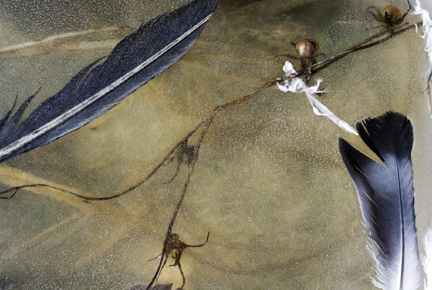
The Stars at Noon (Frozen Feathers)

MA: You know, now that you say that, I think you’re right. Bradbury said it about events, not books read. I must have made that up to validate my early reading choices. 🙂

By the way, I really love that your introduction to by-god Literature came about as a way to spite a professor you despised. That’s brilliant.

You write and publish across all genres. I’m so impressed and awed by your list of publications. What haven’t you done? Or maybe I should ask: Is there something you’ve always wanted to do that you haven’t done YET?

DJ: Oh, there’s a lot I haven’t done—I’ve never written a novel or a memoir or a play—but there’s not really anything I wanted to do that I haven’t done. All I really want to do is write better stories, poems, and essays. I’ve never felt any desire to write a novel and, to be honest, I don’t even enjoy reading novels all that much. Even the novels I most love strike me as full of inessential details, characters, and events, not to mention long dreary bouts of exposition. I like the idea of trying to convey the world in a grain of sand, not an entire beach. And I think it’s much more possible to achieve something akin to perfection in a poem or story than it is in a novel. Novels seemed doomed by their very length to fail. As Randall Jarrell said, “A novel is a prose narrative of some length that has something wrong with it.” And I couldn’t possibly write a memoir—I have a very poor memory, and nothing too exciting or interesting has happened to me. And although I tried my hand at playwriting once when I was an undergrad, I’m too much of a control freak to want to write a play or screenplay and turn it over to a director and actors who’d bring it to a very different life than the one I imagined. So, for better or worse, I’ve found the genres that fit my temperament and aesthetic goals.


MA: A control freak, eh? I wonder if all short story writers have a bit of the control freak in them. It is such a deliciously containable form. I liken a novel to a great sprawling mural and a short story to a closely observed, meticulous sketch.

Margaret Atwood has said that a book is a form of brain transfer, that art takes two brains to be fully realized–the creator’s brain and the experiencer’s brain. Do you agree?

DJ: I do believe that art takes two brains to be fully realized, but I think it’s important to acknowledge that the experiencer’s brain often prevents the work of art from being fully realized—and, alas, the creator’s brain often does too. But let’s assume a writer creates a successful story, one that supplies all the essential information a reader would need to understand it and feel the emotions the author wants him to feel. If the reader fails to notice key facts of a story, invents her own details, imposes his own experience and opinions on it, or extrapolates wildly from some detail to a conclusion that’s not supported by the text, I think the brain transfer is partial at best. An example: I once had a student complain that a character named Brian in a classmate’s story couldn’t possibly lift an oak table by himself because he was “scrawny and weak.” In fact, the character was described as a longtime weightlifter; the reader had failed to notice that fact and imagined the character to be like a particular Brian he knew, someone who was scrawny and weak. He was reading a story, yes, but not the one the author wrote.

One more example: after reading a poem about a woman walking down a hallway of closed doors in search of a quiet, peaceful room where she can be alone, one student said he thought the poem was about driving through Texas and trying to get a good station on the radio. The poet’s reference to turning a doorknob had led him to think of turning radio knobs. And, not surprisingly, he had not too recently driven through Texas and had trouble finding a good station to listen to. So yes, art needs two brains to be fully realized, but it needs two well-trained and attentive brains. The reader has to be as well trained in the discipline of reading as the writer is in the discipline of writing. And he has to resist the temptation to treat the work as a Rorschach blot about which any opinion or response is as legitimate as any other.


MA: This is so fascinating! (And a little discouraging, I must admit.) So…we bring our own experiences to the table when reading–or experiencing any art form–but apparently sometimes we bring TOO MUCH of our own experience and it leads to a gross misinterpretation of the work. How very interesting. (Why had this angle never occurred to me?) I feel like this concept also begs a couple of (rhetorical?) questions. How much of that misinterpretation is okay? Is valid, even? Where is the line? As artists, we have to accept that no one is ever going to get all of our references, but how much can we expect them to get without feeling cranky that they didn’t get it? Your answer makes a good case for the argument that we should write the books we want to read.

And finally, because we are a themed journal and I never get tired of hearing people answer this question, “What does ‘recovery’ mean to you?”

DJ: I think “recovery” is just a synonym for “life.” Some people may be recovering alcoholics, but all of us are recovering human beings. I think life is largely a matter of recovering from what we’ve witnessed or experienced, of finding a way to go on after life gives us a kick in the teeth. And for writers, “recovery” could just as well be a synonym for “writing” too. Writing is a way to recover (or at least try to recover) from the wounds life has given us. And, I’d argue, recovery from the past is possible only through recovery of the past: we have to go back and relive in a way the traumas we’ve endured, finding this time a way to reimagine and revise the past in such a way that we can deal with it. Whether we write in an overtly autobiographical way or not (and I don’t), we’re dealing with our personal wounds and trying to put them into a context that heals them. To return to “The Stars at Noon” for a moment: when I was in first grade, my teacher, Sister Aloysius, got sick and had to go to the hospital. The other nuns told us all to pray that she get well, and we did so, daily and fervently, because we all loved her. But she died. It was the first time in my life that someone I knew died, and just as important, it was also the first time I realized that praying didn’t necessarily get you what you want. I didn’t understand why I wrote “The Stars at Noon” until well after I’d finished it, but now it’s clear to me that I wrote it to do two things at once: grant my childhood prayer that Sister Aloysius live and make the fact that she died more tolerable by imagining that she wanted to die.


MA: Oh, my. Beautiful Thank you, David. It’s been a real pleasure.

“The Beginnings of Sorrow” by Pinckney Benedict

The Beginnings of Sorrow

Vandal Boucher told his dog Hark to go snatch the duck out of the rushes where it had fallen, and Hark told him No. In days to come, Vandal probably wished he’d just pointed his Ithaca 12-gauge side-by-side at Hark’s fine-boned skull right that moment and pulled the trigger on the second barrel (he had emptied the first to bring down the duck) and blown the dog’s brains out, there at the edge of the freezing, sludgy pond. But that unanticipated answer—any answer would have been a surprise, of course, but this was no, unmistakably no, in a pleasant tenor, without any obvious edge of anger or resentment—that single syllable took him aback and prevented him from taking action.

Vandal’s old man, now: back in the day, Vandal’s old man Xerxes Boucher would have slain the dog that showed him any sign of strangeness or resistance to his will, let alone one that told him no. Dog’s sucking the golden yolks out of the eggs? Blam. Dog’s taking chickens out of the coop? Blam. Dog’s not sticking tight enough to the sheep, so the coyotes are chivvying them across the high pastures? This dog’s your favorite, your special pet? You wish I would refrain from shooting the dog? Well, sonny, you wish in one hand and shit in the other, see which gets full first. Blam. Nothing could stop him, no pleading or promises, and threats were out of the question. But that was Xerxes in his prime, and Vandal wasn’t a patch on him, everybody said so, Vandal himself had ruefully to agree with the general assessment of his character. So when Hark said no, Vandal just blinked. “Come again?” he said.

No.

Well, Vandal thought. He looked out into the reeds, where the body of the mallard he had just shot bobbed in the dark water. That water looked cold. Hark sat on the shore, blinking up at Vandal with mild eyes. It would have struck Xerxes Boucher as outrageous that the dog should balk at wading out there into that cold, muddy mess, the soupy muck at the pond’s margin at least shoulder-deep for the dog where the dead mallard floated, maybe deep enough that a dog—even a sizable dog like Hark—would have to swim.

But damn it if, on that gray November morning, with a hot thermos of his wife’s bitter black coffee nearby just waiting on him to drink it, and a solid breakfast when he got home after the hunt, and dry socks—Damned if Vandal couldn’t see the dog’s point.

“Okay,” he said. “This once.”

He was wearing his thick rubber waders, the ones that went all the way up to the middle of his chest, so he took off his coat—the frigid air bit into him, made his breath go short—laid the coat down on the bank, set the shotgun on top of the coat, and set off after the mallard himself. The waders clutched his calves as the greasy pond water surged around his legs, and his feet sank unpleasantly into the soft bottom. He considered what might be sleeping down there: frogs settled in for the winter, dreaming their slick wet dreams; flabby catfish whiskered like old men; great knobby snapping turtles, their thick round shells overlapping one another like the shields of some ancient army.

They were down there in the dark, the turtles that had survived unchanged from the age of the dinosaurs, with their spines buckled so that they fit, neatly folded, within their shells; and their eyes closed fast, their turtle hearts beating slow, slow, slow, waiting on the passing of another winter. And what if the winter never passed and spring never came, as looked more and more likely? How long would they sleep, how long could such creatures wait in the dark? A long time, Vandal suspected. Time beyond counting. It might suit them well, the endless empty twilight that the world seemed dead-set on becoming.

Vandal didn’t care to put his feet on such creatures, and when his toes touched something hard, he tried to tread elsewhere. The pond bottom was full of hard things, and most of them were probably rocks, but better safe than sorry. He had seen the jaws on snapping turtles up close, the beak on the skeletal face like a hawk’s or an eagle’s, hooked and hard-edged and sharp as a razor. Easy to lose a toe to such a creature.

When he reached the mallard—it was truly a perfect bird, its head and neck a deep oily green, unmarked by the flying shot—he plucked its limp body up out of the water and waved it over his head for the dog to see. “Got it!” he called.

Hark wasn’t paying any attention to him at all. He was sitting next to the tall silver thermos and gazing quizzically at the coat and, cradled on the coat, Vandal’s shotgun.

~ ~ ~

“I told him to go get the duck,” Vandal said to his wife, who was called Bridie. Then, to Hark, he said, “Tell her what you told me.”

No, said Hark.

Bridie looked from her husband to the dog. “Does he mean to tell you no,” she asked, working to keep her voice even and calm, her tone reasonable. “Or does he mean he won’t tell me?”

No, the dog said again. It wasn’t like a bark, which Bridie would have much preferred, one of those clever dogs that has been taught by its owner to “talk” by mimicking human speech without understanding what it was saying. “What’s on top of a house?” Roof! “How does sandpaper feel?” Rough! “Who’s the greatest ballplayer of all time?” Ruth!

DiMaggio, she thought to herself. That’s the punchline. The dog says Ruth! but really it’s DiMaggio.

Vandal laughed. He was a big broad-shouldered good-natured man with an infectious laugh, which was one of the reasons Bridie loved him, and she smiled despite her misgivings. The dog seemed delighted with the turn of events too.

“That’s the sixty-four dollar question, ain’t it?” Vandal said. He clapped Hark on the head in the old familiar way, and the dog shifted out from under the cupped hand, eyes suddenly slitted and opaque.

No, it said.

Much as she loved Vandal, and much as she had hated his bear of a father, with his great sweaty hands always ready to squeeze her behind or pinch her under her skirt as she was climbing the stairs, always ready to brush against her breasts—glad as she was that the mean old man was in the cold cold ground, she couldn’t help but think at that moment that a little of Xerxes’ unflinching resolve wouldn’t have gone amiss in Vandal’s character, in this circumstance. She wished that the dog had said pretty much anything else: Yes, or better yet, yes sir. Even a word of complaint, cold, wet, dark. Afraid. But this flat refusal unnerved her.

“He takes a lot on himself, doesn’t he? For a dog,” she said.

“Talking dog,” said Vandal, his pride written on his knobby face, as though he had taught the dog to speak all by himself, as though it had been his idea.

Hark had begun wandering through the house, inspecting the dark heavy furniture like he had never seen it or the place before. Not exploring timidly, like a guest unsure of his welcome, but more like a new owner. Bridie thought she saw him twitch a lip disdainfully as he sniffed at the fraying upholstery of the davenport. He looked to her for a moment as though maybe he were going to lift his leg. “No!” she snapped. “Bad boy!”

He glanced from her to Vandal and back again, trotted over to Vandal’s easy chair with his tail curled high over his back. He gave off the distinct air of having won some sort of victory. “Come here,” Bridie called to him. She snapped her fingers, and he swung his narrow, intelligent head, looking past his shoulder at her.

No, he said, and he hopped up into Vandal’s chair. Bridie was relieved to see how small he was in the chair, into which Vandal had to work to wedge his bulky frame.

There was room for two of Hark in the seat, three even, so lean was he, slender long-legged retriever mix. Vandal nodded at him with approval. The dog turned around and around and around as though he were treading down brush to make himself a nest, in the ancient way of dogs. In the end, though, he settled himself upright rather than lying down, his spine against the back of the chair, his head high.

“Xerxes wouldn’t never allow a dog up in his chair like that,” Bridie said. And was immediately sorry she had said it. Vandal had adored and dreaded his brutal, unstoppable old man, and any comparison between them left him feeling failed and wanting. Xerxes, Xerxes. Will he never leave our house?

“Xerxes never had him a talking dog,” Vandal said. He handed the dead mallard to her. Its glossy head and neck stretched down toward the floor in a comical way, its pearlescent eyes long gone into death. It was a large, muscular bird.

“Not much of a talking dog,” Bridie said. She turned, taking the mallard away into the kitchen when she saw the flash of irritation in Vandal’s eyes. She didn’t look toward Hark, because she didn’t want to see the expression of satisfaction that she felt sure animated his doggy features. She wanted to let Vandal have this moment, this chance to own something that his father couldn’t have imagined, let alone possessed, but it was—it was wrong. Twisted, bent. It was a thing that couldn’t be but was, it was unspeakable, and it was there in her living room, sitting in her husband’s chair. “Not much of one, if all it can manage to say is no.”

~ ~ ~

Hark reclined in the easy chair in the parlor. The television was tuned to the evening news, and the dog watched and listened with bright gleaming eyes, giving every appearance of understanding what was said: Wars and rumors of wars. Earthquakes and famines and troubles. None of it was good at all, it hadn’t been good in some little time, but none of it seemed to bother him in the least. He chewed briefly at his own hip, after some itch that was deeply hidden there, and then went back to his television viewing.

Vandal sat on the near end of the davenport, not appearing to hear the news. From time to time he reached out a hand to pet Hark, but Hark shifted his weight and leaned away, just out of reach. It was what Bridie had always striven to do when Xerxes went to put his hands on her but that she had somehow never managed, to create that small distance between them that would prove unbridgeable. Always the hand reached her, to pet and stroke and pinch, always when Vandal’s attention was turned elsewhere. And them living in Xerxes’ house, and her helpless to turn him away.

About the third time Vandal put his hand out, Hark tore his gaze from the TV screen, snarled, snapped, his jaws closing with a wicked click just shy of Vandal’s reaching fingertips. Vandal withdrew his hand, looking sheepish.

“No?” he asked the dog.

No, Hark said, and he settled back into the soft cushions of the chair, his eyes fixed once more on the flickering screen.

~ ~ ~

Over Bridie’s objections, Hark ate dinner at the table with them that night. Vandal insisted. The dog tried to climb into the chair with arms, Vandal’s seat at the head of the table. Vandal wasn’t going to protest, but Bridie wouldn’t allow it. She flapped the kitchen towel—it was covered in delicate blue cornflowers—at him, waved her hands and shouted “Shoo! Shoo!” until he slipped down out of the chair and, throwing resentful glances her way, slunk over to one of the chairs at the side of the table and took his place.

He ate like an animal, she noted with satisfaction, chasing the duck leg she had given him around and around the rim of the broad plate with his sharp snout, working to grasp the bone with his teeth, his tongue hanging drolly from the side of his mouth. Always, the leg escaped him. Each time it did, she put it carefully back in the middle of the plate, and he went after it again. From time to time he would stop his pursuit of the drumstick and watch Bridie and Vandal manipulate their utensils, raise their forks to their mouths, dab at their lips with napkins. His own napkin was tucked bib-like under the broad leather strap of his collar, and it billowed ridiculously out over his narrow, hairy chest. Vandal watched this process through a number of repetitions, his brow furrowed, before he put down his knife and fork.

“You can’t let a dog have duck bones like that,” he said. “He’ll crack the bone and swallow it and the sharp edges will lodge in his throat.”

Good, Bridie thought. Let him. The dog stared across the table at her, his face twisted into what she took to be an accusatory grimace. Hark had always been Vandal’s dog, never hers, and she had never felt much affection for him, but he had always seemed to her to be a perfectly normal dog, not overfriendly but that was normal in an animal that was brought up to work rather than as a pet. Restrained in his affections, but never hostile. Lean and quick and hard-muscled, with the bland face and expressions of his kind. And now he looked at her as though he knew what she was thinking—an image of Hark coughing, wheezing, hacking up blood on the kitchen floor swam back into her consciousness—and hated her for it.

Was there an element of surprise there too? she wondered. He hadn’t known about the bones. An unanticipated danger, and now he knew, and she could sense him filing the information away, so that such a thing would never be a threat to him again. What else was he ignorant about?

Bridie had never disliked Hark before, had never disliked any of Vandal’s boisterous happy-go-lucky hunting dogs, the bird dogs, the bear dogs, the coon dogs, all of them camped out in the tilting kennel attached to the pole barn. They shared the long fenced run that stretched across the barnyard, and they would woof and whirl and slobber when she went out to feed them. Dogs with names like Sam and Kettle and Bengal and Ranger. And Hark. Hark the waterdog, a little quieter than the others, more subdued, maybe, but nothing obvious about him to separate him from the rest of them. They were Vandal’s friends and companions, they admired him even when Xerxes fed him scorn, and they were kind to him when even she herself wasn’t. She didn’t fool with them much.

Something had come alive in Hark, something that allowed him, compelled him, to say no, and now he was at her table when the rest were outside in the cold and the dark, now he was looking her in the eye. That was another new thing, this direct confrontation; he had always cast his gaze down, properly canine, when his eyes had locked with hers in the past. He’d regained his earlier cocksureness, and the impression of self-satisfaction that she had from him made him unbearable to her.

Vandal was leaning over, working his knife, paring the crispy skin and the leg meat away from the bone. “Here you go,” he told the dog, his tone fond. Hark sniffed.

“If he plans to eat his food at the table like people,” Bridie said, “then he better learn to pick it up like people.”

Vandal stopped cutting. Bridie half-expected Hark to say No in the light voice that sounded so strange coming out of that long maw, with its mottled tongue and (as they seemed to her) cruel-looking teeth. Instead, he nudged Vandal out of his way and planted one forepaw squarely on the duck leg. He understands, Bridie thought to herself.

The plate tipped and skittered away from him, the duck leg tumbling off it, the china ringing against the hard oak of the tabletop. The dog looked perplexed, but Vandal slid the plate back into place, picked up the drumstick and laid it gently down.

Just as gently, Hark put his paw on the leg bone, pinning it. He lowered his head, closed his teeth securely on the leg—the chafing squeak of tooth against bone made Bridie squint her eyes in disgust—and pulled away a triumphant mouthful of duck. He tossed it back, swallowed without chewing, and went after the leg again.

“Good dog,” Vandal said. The dog’s ears flickered at the familiar phrase, but he didn’t raise his head from the plate. Bridie bit into her own portion. Duck was normally one of her favorites, but this meal filled her mouth like ashes. Vandal stopped chewing, leaned down close to his plate, his lips pursed as though he were about to kiss his food, his eyes screwed nearly shut. He made a little spitting noise, and a pellet of lead shot, no bigger than a flea, pinged onto his plate, bounced, and lay still.

~ ~ ~

After supper, as Bridie retted up the kitchen, Vandal sat cross-legged on the floor in the parlor, the shotgun broken down and spread out on several thicknesses of newspaper on the floor before him. A small smoky fire—the wood was too green to burn well, hadn’t aged sufficiently—flared and popped in the hearth.

Hark sat in the comfortable chair, and his posture had become—she felt sure of this—more human than it had been previously. He was sitting like a man now, a misshapen man, yes, with a curved spine and his head low between his shoulders, but he was working to sit upright. He looked ridiculous, as she glanced in at him from where she was working, but she felt no impulse to laugh. Was he larger than he had been? Did he fill the chair more fully? While she watched, he lost his precarious balance, slipped to the side, thrashed for a moment before righting himself again.

The television was on, the usual chatter from the local news, a terrible wreck out on the state highway, a plant shutting down in the county seat, a marvel on a nearby farm, a Holstein calf born with two heads, both of them alive and bawling, both of them sucking milk. Who could even take note of something like that in these times, Bridie wondered to herself as she worked to scrub the grease from the plates. The next day it would be something else, and something else after that, until the wonders and the sports and the abominations (how to tell the difference among them?) piled up so high that there wouldn’t be any room left for them, for her and for Vandal, the regular ones, the ones that remained.

A talking dog? Was that stranger than a two-headed calf? Stranger than poor old Woodrow Scurry’s horses eating each other in his stables a fortnight earlier? Every day the world around her seemed more peculiar than it had the day before, and every day she felt herself getting a little more used to the new strangenesses, numb to them, and wondering idly what ones the next day would bring.

How you use? They were Hark’s words, clumsy and laughable, coming to her over the din of the voices on the television. There was another sort of show on, this one a game of some type, where people shouted at one another, encouragement and curses. That thing, Hark said.

“So,” Vandal said, “you can say more than No.”

How you use that thing, Hark said again. A demand this time, not a question.

The shotgun, Bridie thought, and she dropped the plate she was washing back into the sink full of lukewarm water and dying suds and hurried into the den, drying her hands on a dishtowel as she went.

“Don’t tell him that,” she said.

Vandal looked up at her, startled. Just above him on the wall hung a picture that his mother had hung there as a young woman. She had died young. In the decades since it had been hung, the picture, it occurred to Bridie, had taken in every event that had occurred in that low-ceilinged, claustrophobic room. It depicted Jesus, a thick-muscled Jesus, naked but for a drape of white cloth, getting his baptism in the river Jordan. The Baptist raised a crooked hand over his head, water spilling from the upraised palm.

Vandal was fitting the barrels of the shotgun—which had been his old man’s but which was now his, like the house, like the farm—back into the stock. The metal mated to the wood with a definitive click. “Why in the world wouldn’t I tell him?

Bridie was at a loss for a cogent answer. It seemed obvious to her that Vandal ought not to impart such information to the dog just for the asking, but he didn’t share her worry at all, it was clear. How to explain? The dog looked at her with, she thought, an expression of feigned innocence. “A dog ought not to know how to use a gun,” she said.

Vandal chuckled. “He doesn’t even have hands. He has no fingers.

“So why tell him how a gun works?”

“Because he wants to know.”

“And should he know everything he wants to, just because he wants to know it?”

Vandal shrugged. Bridie felt heat flooding her face. How could he not understand? He thought it was terrific, the way the dog had decided to talk, the way he could sit there with it and watch television, the way it asked him questions, the way it wanted to know the things that he knew. He was happy to share with it: his table, his food, his house, his knowledge. He was treating the dog like a friend, like a member of the family. Like a child, his child.

“What he wants is to have hands. What he wants is to be a man. To do what you do. To have what you have.”

She caught Hark gazing at her intently, his eyes gleaming, hungry, his nose wet, his broad flat tongue caught between the rows of his teeth.

“What’s wrong with that?” Vandal wanted to know.

He is not your boy, she wanted to tell him. He is not your son. He is a dog, and it’s wrong that he can talk. You want to share what you have with him, but he doesn’t want to share it with you. He wants to have it instead of you.

The dog wrinkled his nose, sniffing, and she knew suddenly that he was taking her in, the scent of her. A dog’s nose was, she knew, a million times more sensitive than a man’s. He could know her by her scent. He could tell that she was afraid of him. He could follow her anywhere, because of that phenomenal sense of smell. In prehistoric times, before men became human and made servants out of them, Hark and his kind would have hunted her down in a pack and eaten her alive. Her scent would have led them to her. Hark’s eyes narrowed, and her words clung to her jaws. She couldn’t bear to speak them in front of the dog. She blinked, dropped her gaze and, under the animal’s intense scrutiny, fled the room.

Behind her, Vandal spoke. “This here’s the breech,” he said. The gun snicked open. “This here is where the shells go.” The gun thumped closed.

**Excerpted from Miracle Boy and Other Stories (Press 53).


Pinckney Benedict grew up on his family’s dairy farm in the mountains of southern West Virginia. He has published three collections of short fiction (Town Smokes, The Wrecking Yard, and Miracle Boy) and a novel (Dogs of God). His stories have appeared in Esquire, Zoetrope: All-Story, StoryQuarterly, Ontario Review, the O. Henry Award series, New Stories from the South, the Pushcart Prize Anthology, The Oxford Book of American Short Stories, and The Ecco Anthology of Contemporary American Short Fiction. He is the recipient of a Literature Fellowship from the National Endowment for the Arts, a Literary Fellowship from the West Virginia Commission on the Arts, a Michener Fellowship, the Nelson Algren Award, an Individual Artist’s grant from the Illinois Arts Council, and Britain’s Steinbeck Award. He is a professor in the English Department at Southern Illinois University in Carbondale, Illinois.

Read an interview with Pinckney here.

Interview with Mark McKain

Mark McKain

Mary Akers: I loved your poem To His Wife in our July “Endangered” issue. I had the pleasure of hearing you read it–and a few other poems–then I also found Chameleon online. These are really fascinating subjects for poems. Are they part of a series? Or are you simply drawn to writing about animals?

Mark McKain: I am drawn to writing about animals, plants, rocks and places. This has led to writing a series on endangered species: endangered humans (friends, relatives, indigenous groups) as well as nonhumans whose existence is in question. My rule is that I have to have encountered these endangered species by being in their physical presence, usually in places I have lived. For example, I went to high school in West Texas and the horned lizard (horny toad) was very common in our backyard. One day my youngest sister borrowed a white sweater from my older sister then went outside and picked up one of those lizards. Little did she know that they can actually squirt toxic blood out of ducts beneath their eyes. She got blood all over the white sweater. I was very surprised to learn those lizards are now threatened, and I wanted to write about that. I wanted to write about it so that it included my own teenage experience of this animal and of my family situated in the semi-desert of West Texas. And I then wanted to write about endangered animals in Kentucky, Puerto Rico, Louisiana, Texas, California and Florida—all places where I have lived.


MA: Do you consider yourself an environmental writer? I’m asking because I think of myself as one, but I’m not sure there’s a clear definition of what an ”environmental writer” is. Do you have a definition you’d care to share?

MM: I do consider myself an environmental writer, but I try to resist definitions. I have been reading a lot about this very question: what does and does not make good environmental writing. One author that has really nailed some the problems of environmental writing for me is Lawrence Buell. In Writing for an Endangered World, he makes the point that environmental writing becomes distorted when animals are Disneyfied or portrayed in anthropomorphic terms. This is a type of Romantic personification. Animals and plants have worth in themselves and are not just foils or reflections of our own emotions and values. So good environmental writing keeps other species strange and other, different than humans, valuable as a living being. I do want to show animals as valuable in and of themselves, but I also want to show humans (usually my family) as part of the environment, and that the environment has an impact on us, especially, for me in the places where I have lived. Sandhill cranes flying over the busy I-4 corridor remind me of a close friend who as died and who I want to say something to as the sun comes up. A lizard flashing it red throat scared me when I was kid and now seeing this reminds me of the strange tropical world I entered upon moving to Puerto Rico when I was seven. I think about the near extinct Puerto Rican parrot which I never saw, the (near) extinct Carib peoples—did I actually see a few survivors with my father on weekend trips into the rain-forested mountains? My father, who just recently died, was so important to introducing me to these experiences, so I can’t and don’t want to separate my experiences from animals and the environment.


MA: Who do you read for inspiration?

MM: I am drawn to poetry in translation as well as science and natural history: Karen Solie’s Pigeon, Raul Zurita’s Song for His Disappeared Love, Alfonso D’Aquino’s fungus skull eye wing, Kim Hyesoon’s All the Garbage of the World Unite, Lorine Niedecker’s Lake Superior, Ida Stewart’s Gloss, Alfred Russel Wallace’s Footsteps in the Forest, Forest Gander and John Kinsella’s Redstart, Matthew Calarco’s Zoographies.


MA: You traveled to Antarctica and that trip inspired “To His Wife” among other poems. Do you often travel for inspiration? What is it about travel that makes you want to write?

MM: I try to travel at least once a year. Last year to England as I followed up on my Antarctica/South American expedition, visiting the Polar Museum in Cambridge, which has great exhibits on the English Antarctic explorers Scott and Shackleton, and also to the Sedgwick Museum, where Darwin got interested in geology and fossils. London is so rich culturally and there something about being in a strange and wonderful place that opens my eyes, slows me down and lets me see things in a fresh manner. I scribble while eating lunch in the crypt beneath St. Martins. More sentences waiting for the waterbus to take me to the Tate. The notebook comes out at the café at Foyles bookshop, thinking about my visit to the Physic Garden. My rule is to just take notes of my observations and see what comes of them later.


MA: Where would you like to visit that you haven’t yet? Do you have a bucket list for poetry inspiration?

MM: Since I’ve been to Tierra del Fuego and through the Beagle Channel, I’m thinking of continuing to follow Darwin’s journey to the Galapagos. But this may be vanity. I would like to go to Alaska and to see a volcano in Iceland. I need to go back to Puerto Rico, but may go birding in Cuba instead. I’m going to the Grand Canyon after Christmas. My father died in June and now I am going to West Virginia where his ashes will be interred. I want to celebrate him and remember all that he gave me, including the desire to travel and learn about the environment and cultural history.


MA: And finally, because we are a themed journal, what does “recovery” mean to you?

MM: I do believe in healing and the power of writing to help us heal. Life, the earth, the body renews itself continually. The environment will not be what it once was—but it will heal. Nothing will be what it once was. I do think we can come to terms with our own powers, and we must treat animals, plants, things, and each other with dignity, respect and equality. The earth isn’t ours to exploit. It is a place for all living things to flourish. If we can recover the rights of all living things to exist, all peoples to exist, then we may be on the path to healing.

“There Is No Such Thing As Spring” by A. Inguanta and S. Squillante

Spread Your Wings

but airplanes, they are such a thing.
My body, steel-encased and careening,
and waiting, always waiting
for the pressure drop, for the forced air, for the budding
between lips, the bloom worked for,
worried over, open, finally, flown.

The woman in the painting beside my bed wants to know this: “flown.”
Only part of me cares to respond, the other part rifles through.
This woman aches just as I do.

There are three main types of flight:
Echo, arrow, and spiral.
Crocus, Iris, Fiddlehead unfurling.
Her body: Intuition, God.


Ashley Inguanta and Sheila Squillante have both published poetry collections with Dancing Girl Press. Sheila is Associate Editor at PANK, and Ashley is the Art Director of SmokeLong Quarterly.

Read an interview with Ashley here.
Read an interview with Sheila here.

“Sitting in the Sandbox” by Eva Marino

Goldfinch (Sitting in teh Sandbox)

The summer sun made my skin tingle, which I guessed was the feeling of being slowly broiled. I could feel the heat of the rubber black seat seep through my shorts, and I refrained from touching the swing’s metal chains. Sweat dampened my socks, and I could feel sand building at the toe of my shoes as I half-heartedly pushed myself to and fro. My friend, Dahlia, sat in the swing next to me, clutching the chains and staring at the empty red playground. The wind blew tiny dust devils across the sand.

“Say something,” she mumbled, letting go of the chains and massaging her hands. Her palms were red and blistering.

“Like what?” I asked. What could I say? In my sixteen years of life, I’d never been confronted with this situation.

“Anything. I’m dying here.”

I looked at her. This girl who I thought I knew after she stepped away from the protection behind our mothers’ legs; this girl who zipped her heart shut for so many years, was now a girl who tore herself open and needed me like a patch over a fresh wound. But I was only a band-aid, and she was bleeding more than I could staunch.

Her long ebony hair hid her face as the wind blew wisps of it around her head. “Tell me what you’re thinking.”

I inhaled the dust surrounding us. “I’m thinking of how I couldn’t see it before, or why you never told me about it.”

“How could I tell you? I barely knew myself.” Her voice was thick as she stared down at her raw hands. “My parents are gonna kill me if they find out.”

“No they won’t. They love you.”

“You don’t know my parents.” She kicked sand into the air and watched the wind carry it away. “They want people like me to burn in Hell.”

I rubbed slick palms across my shorts and bit dry skin off my lip. Then I said, “Well, if it makes you feel any better, I think you deserve to be in heaven.” She looked at me with blue glossy eyes, and I smiled back. “We’ve endured the early terrors of puberty, and I think that’s punishment enough.”

She managed to giggle, and I swung over to bump her seat with mine. We swayed like that until our swings stilled and our laughter quieted. She was the one to start speaking again as she looked up at the blue sky. “What do you think would happen if I swung really high and jumped off?”

I pondered her question for a second, saw the muscles in her bare arms tense as she twisted her wrists around the chains, and then I replied, “You’d probably break something.”

“We’ll see.” She gripped the chains again and began to rock back and forth, pushing off the sand to add some height. Her swings became smoother, longer, stronger, until she let go and soared through the air. For the briefest moment, it seemed as if she floated. But gravity possessed her again and threw her into the sand. A wave of sand rose and fell when she landed on her heels. She flailed her arms, her legs buckled, and then she collapsed onto her back. Her hair spread around her head like petals on a flower.

I rushed over to her and saw that she was laughing, her arms over her eyes, her cheeks glistening with tears.

I swallowed my heart that crept up my throat and asked, “Is anything broken?”

She shook her head and started to sob.

I lay down beside her, feeling the same sting of the sand against her skin. Grains slipped into my shirt, hid in my scalp, crammed into my fingernails. “What hurts?”

“Everything,” she managed to choke out, “and nothing.”


Eva Marino is new to the literary world, and this is her first published piece. However, she is experienced in studio art, and had three paintings showcased at the Tempe Center for the Arts three years in a row during her high school career. Additionally, her art has won second place twice in the Tempe Sister Cities Art Contests, and has won third place in the Arizona Congressional Art Contest. Currently, she is studying Visual Communications at Northern Arizona University, and is following her passion for writing and drawing.

Read an interview with Eva here.

“Elemenopy” by Sylvia Foley

Elemenopy

Mornings often smelled like tar, although other things might burn: eggs on the stove, toast in the toaster, a cigarette hole in a robe. Be good, Ruth Mowry’s daddy said when he left for work such mornings. My girls, he’d call out, kissing Ruth and her mother on top of their heads when he came home. At dusk the crows cried Tar! Tar! as they tumbled out of the sky.

The Mowry house stood near-last on a dead-end road, and after the dead end came the tar flats, a piece of Carville land which in 1959 nobody wanted, now the boom was over. A one-lane access road ran a hundred yards further out to the tar pit itself. Barrels of tar, even a road roller with its giant foot (smooth as a baby’s rump, Ruth Mowry’s daddy said, his hand resting on the warm metal) had been forgotten nearby. On hot days the tar bubbled at the tops of the barrels, and a rippled heat rose off the flats. Ruth was let out barefoot; her father said any child of his ought to know enough to watch for nails. Tar’ll keep her stuck down fast, he persuaded her mother—she won’t get far.

To Ruth, who was four, a sturdy child on scabbed legs, each night arrived from nowhere. Suddenly it was close to bedtime; her parents put the lights out before her eyes. You are bigger now than you were, they told her. When in the dimness they stepped away from her, she checked her parts. Here was a gray arm. Here was the brutal hair in her eye, and her bitten tongue, and the dark holes in her head and privates. When you were born you had a strawberry birthmark, her mother murmured, here, at your nostril. You couldn’t breathe right, so the doctor took it out. Ruth took to watching how her chest rose and fell. What if she forgot?

“You’d die,” her daddy said one night over his ice cream.

He grinned. He held her mother’s swollen feet on his lap under the table and rubbed them until her mother pulled away. Finally he said, “But don’t worry. You can’t forget. It’s built-in, that control; it’s set deep in your fishy brain.”

She understood the idea of automatic breathing, the helplessness of it, though she could not articulate how she knew.


One day Ruth and her mother were having lemonade on the back stoop when a neighbor, name of Mrs. Doone, stopped by. Doone had sharp red elbows, and Ruth did not like to be near her, or most other people. She leaned back against her mother.

“Don’t.” Her mother swatted at her tiredly, and sent her in for the whiskey bottle. “Be quick but don’t run.”

The kitchen was full of dull green light that filtered through the shades. Ruth made out the chrome handle of the refrigerator, the silvery pots and glasses in the dish rack. The shape of the bottle was here, too; it was on the counter, blocking the stove clock’s eye. Outside on the stoop her mother and Doone murmured back and forth. With both hands Ruth pulled the bottle down.

She was quick as her parents saw she would be, quick legs, quick mind. The alphabet’s toy words came easy: abee seedy, elemenopy. She understood the bottom layer, the simple parts of what her parents said: the blocks, if not the tricks they could do with words. Supper talk was plain. Daddy is an engineer, Daddy makes machines. What kind? Refrigerators. She did not like the slippery talk they spoke with whiskey. When her mother said things such as “I got a bug in my machine, too; I want him home at night,” to Ruth it meant a kind of No, no, gimme! “I want” or “I don’t want” were often clear to her, but not the rest, the wanted things. She hung behind the screen, listening. The stove eye saw her. All she wanted was for Doone to go away.

Her mother was muttering about the baby she said was in her belly. “I can’t see my damn feet. I can’t hardly walk a step without the floor tripping me up.”

“Such won’t last, Iris,” Doone said. “Baby’ll get itself born soon enough.”

Ruth pushed open the screen door, holding the bottle fast by its neck.

“Let go now, honey,” her mother said, taking the bottle, and to Doone, “Freshen that?”

Doone smiled and tried to pet Ruth’s hair.

Ruth hopped back against her mother’s legs, meaning to escape just so far. But the legs gave way, and she tumbled over the side of the concrete stoop. As she fell, a hand reached out and snagged her arm, and another caught her shorts, and they lowered her to the ground. “Oh, she’s all right,” her mother said. Ruth squatted in the driveway, just beyond.

At twilight the street lamps came on. Her mother’s face stood out flat and white as a plate. Their voices seesawed back and forth until, finally, Doone got up to go home. She waved good-bye and ducked under the clothesline, Ruth’s daddy’s shirtsleeves brushing her shoulders.

Ruth’s mother rubbed her own swollen belly and closed her eyes and smoked. The cigarette’s orange coal at last flew out and landed at Ruth’s feet. There was no more talk, only the night-cooled smells of smoke and tar, until her mother said in her tired voice, “Let’s go back inside.”


Next day was too hot; the road shimmered early on. Ruth’s mother kept her in after lunch.

She built a city on the kitchen floor. First she had to decide—night or day? The sun was there in the ceiling, showing itself in the blaze of the lightbulb. She stacked baking pans for buildings. Certain alphabet blocks stood for people; the red rubber bands were balloons that showed what they were thinking.

This one thinks of how a baby got into its stomach—eaten. This one picks up the sister (Ruth picked up the saltshaker) and shakes it until the insides come out. That one rides to work on a bus. Here is a rabbit in the grass; here (bit of electrical tape) a crow. These are the telephone wires singing with headaches. These are the refrigerators holding the cold food. Here is me (Ruth gave the shaker a rubber band) on my tricycle. Here is me finding Daddy’s money for him in his pocket. Here I am falling down.

Now it is suppertime, and the crows have flown home, and the eye in the stove sees you while you play. Your mother has gotten up from the couch and is standing by the sink, just waking up. Her eyes drift to one side and her mouth yawns to show her egg teeth. The bottle slides from her hand and falls in the sink with a broken sound.

Ruth’s mother jumped.

“I’m clumsy,” she said, her eyes angled so she couldn’t really see Ruth. She got the dustpan and picked slivers of glass from the white sink and pretended to hide them in Ruth’s dirty hair along with her damp fingers. “Did you get cut? Look what I found!” Obediently Ruth said Ooh over the sprinkle of brightness found on her. The bristle brush appeared. The fire ants swept over her scalp. The windows went dark. Her mother stood Ruth on a chair, and washed her hair under the faucet.


Ruth’s daddy was building a cellar under his house; in fact, he bragged, it was almost done. In Carville, Tennessee, nobody put cellars under houses. He could not understand that. Everything he did made room around him. There was money in his pockets when he came home. He loomed in the kitchen doorway. He washed his hands at the sink, humming in the refrigerator’s monotonous language. Ruth knelt on the stool beside him and dug his money out. He turned and opened his mouth wide for her. “Look at all this gold,” he said, bending so she might examine his molars.

“Are we rich?”

He burst out laughing. “When I’m dead you can tell the undertaker to yank it all out for you,” he said, patting Ruth’s head. He opened the refrigerator door and basked in the coolness.

At supper he hunched over his plate; his hair waved out from his cowlick where it had grown long.

“You look like a lunatic, Dan. Get a haircut,” her mother pleaded.

“I don’t get you Southerners.” He cut into his fried eggs with a steak knife. “Where is a man supposed to put things? There’s no garage on this house, either.” He said this as if it were proof of some failing. He trimmed the whites and scooped up each yolk to swallow whole.

“Disgusting,” her mother said. She went and put her plate on the counter, tossing back her messy hair, her red mouth around a new cigarette as she turned and leaned against the sink. “You, finish,” she said to Ruth.

The cold eggs rubbed unpleasantly against Ruth’s teeth.

After supper they sat out on the back steps awhile. When her mother rose to do the dishes, her daddy pulled on his black knit cap. He winked at Ruth, and she followed him and stood exactly where he told her to in the driveway, holding a flashlight. He carried two-by-fours into the cellar hole under the living room. He buttoned his collar and pulled his cap low over his ears against spiders. They nested in the floorboards above his head, a dangerous rain, he told her; black widows eat their own husbands. She shivered for him. “You see? I’m all right—go back inside now,” he called from the floodlit cellar. But she wanted to hear the hammer sound—he was making the walls.


What she would remember was the three of them dancing in the living room to the loud Mexican records until her mother fell down. She would remember how exultant they were, stamping and whirling. When her mother’s tangled black hair caught in her daddy’s hands, he pulled her head back sharply, and kissed her neck. She was laughing when she fell, slumping heavily to the couch, her eyes rolling back. “Faker,” he said. “You’ve got nowhere to go, Iris.” But she didn’t rise, so he stood over her, his face flushed, breathing unevenly. His shirt was dark with sweat. He raised her legs to the cushions and covered her with a sheet. She stiffened and rolled away from him, showing the underpants that cut under her big belly. There was spit on her cheek.

He picked Ruth up and said she was his good girl. She had never seen him as happy as he was that minute. He carried Ruth into her room and shushed her. He showed her the rabbit’s head on the wall. He sucked the rabbit’s ears—his fingers. “Daddy’s checking you,” he said, “hold still,” and he hummed his soft hum. There: he poked between her tired legs. She jerked and whined when he cracked her open.

She understood nothing. These are the letterless blocks; these are the whiskey bottles her mother pulls from under the floor; this is the money she takes from her daddy’s pocket. Daddy put his fire-ant finger on her, and shivered like a very cold man. She lay quite still. She watched the ceiling for the sun. It’s still night, her daddy whispered. Why? Because it is. When he put on the lamp, that was when he looked scared. A little blood was coming out of her. “You fell,” he said. “You fell, that’s all. Did I see you? You and your mother were dancing so fast.” He patted her clean with a washcloth. “Good thing I checked you,” he said with his sweaty mouth. “You’ll be okay.”


In the morning Ruth’s mother called the doctor to say Ruth had another infection. “It’s the badness coming out, is all,” she said into the telephone. She put Ruth in the bathtub and washed her with hot water and tar shampoo. There was a red rubber band around her own hair, wrapped tight so no one could guess what she was thinking.

The water hammered from the faucet and was shut off. “Daddy’s gone,” she told Ruth. “He went to work, but he left you these.” She showed her paper children, the kind that came in McCall’s magazine, and left her a towel to dry with.

The boy doll had curly hair that was coming unstuck from its backing. Ruth peeled his face to see how he was made. When she tried to fix him, pressing her thumb over his damp eyes, his face kept lifting away. She felt the sudden pump of her heart as she climbed out of the tub.

In the magazine there were not only doll’s clothes to punch out, but spare arms and legs. You laid the pink flesh of a new arm over an old one. She waited for her mother to forget her. She was good at remembering. She was a breather like her daddy, who loved her. The baby living in her mother’s belly was so heavy it pulled her mother down.


The habits that came to Ruth were those of quickness, and falling. She understood plain things, eggs and rectangles and rhymes. When her father sang the one about falling, Rock-a-bye Baby, she was never afraid. She didn’t yet understand things such as jealousy, and tearing sadness.

June bugs smacked the kitchen screens as soon as evening came. Her mother whacked a head of lettuce against the sink to get the water out. The alphabet towers had toppled in the corner. The cellar door squeaked when Ruth pulled it open. “You’ll fall. You’re not allowed down there, so don’t try anything,” her mother said without turning. “I’ve got eyes in the back of my head, you know.”

Ruth stood at the top of the cellar stairs listening to her daddy’s sawing—he was home again. The lights were blazing. Lightbulbs were the color of salt; that was why moths licked them. Then the moths’ wings burned. Did it hurt when that happened? No answer from the red rubber bands, or the dolls’ mouths. The steps ran down to the cellar like a steep block slide, and when she looked she saw it was her turn. She felt her mother’s eyes on her like a push.

“Shoo, flies,” her mother said to the June bugs. What did the tricky words mean: you’ll fall, you fell. What was falling like? Ruth tried, but she couldn’t remember any other falling, only Doone’s and her mother’s hands picking her out of the air. The boy doll was in her hand. She pinched his flat head to keep him still, and swayed out until she lost her balance.

It was a quick, loud fall, with no thinking in it, only hard banging against the stairs that echoed in her different parts. At the end her ear struck the bottom step; her legs pointed up the stairs. Her daddy ran to her and put his thumbs to her eyelids, trying to see in. My God, his mouth said; she could not hear him very well. He felt her bones and picked her up. His nose ran. She tried to say, Wipe it, Daddy; no air would leave her. She could hear her mother calling her, saying, Ruth, Ruth! Want my baby, under the salt light, and she was so thirsty, but she felt no push to answer.


Sylvia Foleys first book,  Life in the Air Ocean (Knopf, 1999), a collection of linked short stories, was named one of the Best Books of 1999 by the Los Angeles Times. The title story won GQ’s 1997 Frederick Exley Fiction Competition. Her stories have appeared in various literary journals, including Story, Open City, LIT, Zoetrope, and The Antioch Review; and in the anthologies On the Rocks: The KGB Bar Fiction Anthology (St. Martin’s Press, 2002) and They’re At It Again: Stories from 20 Years of Open City (Open City Books, 2011). Her poetry has appeared in Black River Review, Sinister Wisdom, Conditions, and Alaska Quarterly Review. She holds an MFA from Columbia University and has received fellowships from the Virginia Center for the Creative Arts and Yaddo.

Elemenopy first appeared in Life in the Air Ocean (Knopf, 1999).

Read an interview with Sylvia here.