“No Such Thing as a Small Secret” by Debbie Bradford

No Such Thing as a Small Secret

“What do you look for in someone you love?” my mother asked, shifting on the bench to face me.

I thought for a second. I had pretty expansive criteria for a thirteen year old. “Well,” I said, staring into the patch of purple flowers behind her, “they have to be cute, smart, funny, cute…”

“You never said it had to be a man.” She paused. “See, honey, it’s not that I prefer women. I just prefer Naomi. If Naomi were a man, I’d be heterosexual. Make sense?”

I looked back in the direction we’d come. Flowers bloomed everywhere, in every color. I guessed, as settings went, the Dallas Arboretum was as beautiful a place as any to learn your mother was a lesbian, if you had to learn it. Well, to learn your mother was a Naomi-sbian, at any rate. I wondered how Amy was taking the news.

“So, Naomi is telling Amy now?” I didn’t know why they needed to tell my twin sister and me separately.

“No,” my mother replied. “I’m telling you because you asked me. When Amy’s ready to know, she’ll ask.”

“Oh. So, it’s a secret?” I felt the familiar pull in my throat.

“Not exactly. It just isn’t something we’re telling people.” She reached for my hand, then added a barely audible “yet” – like it wasn’t really coming; it was just the logical end to that sentence. “It’s not a big deal. We’re just not ready to talk about it.”


I’m no good at secrets. I think my ability to process information is situated in my vocal cords. If I can’t talk about it, I can’t deal with it. An undiscussed secret invariably sits like a popcorn kernel in my throat. And this one was a whole bowl of them.

For the next two weeks, I tried to get Amy “ready-to-know.”

Amy stood at her full-length mirror, putting on makeup for drama club. I couldn’t imagine spending more time at school than I had to; I’d already skipped gym twice that week. I sat down on her floral comforter – her bed meticulously made, as always, and perfectly smooth, pillows tucked neatly under the bedspread, and Cuddles, her teddy bear, sitting in front of them. He had excellent posture for a stuffed animal. I looked across the hall to my room and saw a wad of blue sheets and blankets hanging from the bed, my pajama pants and T-shirt balled up next to them.

“So, I went to Mom’s room last night to ask her something, and she wasn’t in there.”

“She was in Naomi’s room again?” Amy continued penciling black eyeliner around her already-lined eyes.

“Yeah, of course she was. Don’t you think it’s weird that they sleep in each other’s rooms?” I asked, getting up to check myself in the mirror. My just-dyed blue-black hair looked suitably jarring against my pale skin.

She nudged me out of her way. “Nah, they’re like sisters.”

“I don’t know, dude. Reagan said the reason Mom has a vibrator is because she’s gay.”

“Don’t be ridiculous. That’s for her back. She showed us, remember?”

I remembered. “Right. I’m sure back massagers are always shaped like that.” I pulled a tube of lipstick out of the top rack of Amy’s pink Caboodle. I twisted it open, and poised the waxy, Pepto-Bismol-colored lipstick over my mouth, waiting for my sister to notice. “Amy, just ask her if she’s gay. Tell her someone at school said it, and you just wanted to ask her yourself.”

“Debbie, give me that,” she said, grabbing the lipstick. “Shouldn’t you be wearing ‘Black Death’ or something?” She flipped her dirty-blonde hair over her shoulder.

“Very funny.” I picked up her eyeliner and sat down in front of the mirror.

“Why don’t you ask her? You’re the one who thinks it. Get out of my way, please,” she said, stepping over me en route to her closet.

“But I don’t want to ask!” I whined. “Come on. You’re the big sister this year anyway.”

As kids, our parents told us Amy was older in odd years, and I was older in even ones. We were seven before a friend’s big brother pointed out that 1979, our birth year, was an odd one – making Amy officially older and giving credence to her big-sister bossiness. When presented with that flawless detective work, my parents folded and told us the truth: Amy had six whole minutes on me.

But I was the crafty one.

Amy sighed. “Fine. Could you move, already?” She sucked in her stomach and adjusted her halter-top in the mirror.


I expected to feel relief when Amy knew, but it took a few days before she would talk about it. She was too busy slamming doors and not looking at my mother, except to glare at her turned back.

My mom spent those days repeating lines from the recent divorce: “It’s okay to be angry. I know you love me, and you know I love you. You can tell me you hate me. I will still love you. We’re a family.”

I felt the popcorn kernel growing.


I tried writing a diary. I didn’t feel any different.

I tried accidentally leaving my diary on the living room table, opened to the page where I had written (in big fat letters) how I desperately wanted to talk to somebody.

“Sweetheart,” my mom said, handing the closed diary back to me, “Naomi and I told Rabbi Singer about us so you’d have someone to talk to. Should we set up a meeting? Or, you know you can always talk to Naomi or me.”

Naomi stood next to her, silent, as she had often been lately.

“Great, thanks.” I folded my arms around my diary, went to my room and shut the door.

Naomi, we’d been told, had moved in with us for financial reasons. We needed to get out of our tiny post-divorce closet of an apartment, and Naomi wanted to make the move from New Orleans to Dallas without committing to a house. So we rented together. I liked Naomi. Loved her, even. She was like a fun aunt you could giggle away an entire evening with – a much-needed lift from our new, heavier lives.

But she wasn’t my fun aunt. She was my mother’s lover.

It wasn’t the being lied to that bothered me. It was the lying. Telling people Naomi was my aunt. Lying to Amy to make her ask so I wouldn’t be carrying the truth alone. Keeping the secret from my friends – the people who knew what I’d gotten on my geometry homework, what stupid thing my dad and I had fought about on the phone the night before, what boy had called on the other line while we fought, and which ripped JNCOs and hoodie-sweatshirt I planned to wear to school the next day.

I didn’t care if my mom was a lesbian or a Democrat or a garbage collector – at least I didn’t think I did. I just felt like I should. Everyone else would (if they knew). And they’d despise us. Maybe somewhere else in the country lived lots of homosexuals and their beaming, well-adjusted children. Maybe normal families invited them over for Thanksgiving or birthday parties. Not here. Not in Dallas, Texas. Not in 1992. Here, my mom would lose her job (as a school principal, not a garbage woman). People would talk. There would be no more invitations to anyone’s Bar Mitzvah or birthday party. We’d be ignored, laughed at. We’d be outcasts.

A few open diary entries later, my mother said, “You and Amy can each tell one person.”

I tried bargaining: “Just one? But I can’t tell Emma if I don’t tell Abby.” And I can’t tell Emma and Abby if I don’t tell Blair. And I can’t tell Blair if I don’t tell Jaime.

“One person,” my mother repeated.

“I’m telling Quinn,” Amy said.

What a stupid idea, I thought. No way would I have told Jesus-Freak Quinn. I’d had enough of “being saved.” If Amy wanted to tell her, fine, but I had no interest in hearing that now my mother was destined for Triple Hell: one for Jews, one for divorcees, one for gays.

I decided on Emma, primarily because I saw her first. I didn’t feel nervous; she was my most liberal friend (though growing up in Texas, I didn’t actually know what that meant – just that her parents both had long hair, ate tofu, smoked pot, and didn’t give her a curfew).

Emma didn’t have much of a reaction. She belonged to a Unitarian Universalist church; she knew lots of gay people, probably three or four even. I couldn’t remember ever meeting one.

God loved everyone, she reminded me, so why shouldn’t she? It was no big deal, I shouldn’t worry about it, it didn’t change anything, and, of course she wouldn’t tell anyone.


My confession felt anti-climactic. I decided Abby should be my “one person” instead. I just hoped she wouldn’t hate my mom or Naomi after. The night I planned to tell her, we were in her living room with her mom, who was like another mother to me. It wouldn’t hurt to tell them both – they could count as one.

I cried while I said it. They hugged me. They promised to keep it between us.

“It’s okay, honey,” Abby’s mom said the next morning as I grabbed my bag and headed out the door.

Then she stopped letting Abby sleep over.


I thought maybe I should tell Hailey. Even though we hadn’t been hanging out long, she was quickly becoming my new best friend. In elementary school, Hailey had been friends with Amy, and she’d even come over to our old house once before the divorce. But their friendship ended suddenly and dramatically when Amy allegedly stole one of Hailey’s stickers.

Hailey and I had never had classes together, but that semester, we’d been assigned as lab partners. I got my first B in that class. After passing notes and laughing through a month of lectures and experiments, we started going to each other’s houses after school. Maybe it was too soon to tell her, though. What if she thought I liked girls, too?

One day, after I’d decided definitely not to tell her, we sat in her driveway, practicing our newly acquired cigarette-smoking habit, giggling as usual. Mid-laugh, I blurted: “My mom’s a lesbian.”

Hailey cracked up. So did I. I laughed until I cried.

“You’re serious.” She looked at me like I’d just told her my mom had a brain tumor.

I continued crying. Hailey put her arm around me and lit me another cigarette.

“You can’t tell anyone, okay?”

She nodded.


My sister told Quinn and did not immediately burst into flames. She didn’t tell anyone else. After my fifth or sixth “one person,” Amy developed and perfected an impression of me meeting anyone she could think of – a new boy, the doctor, the President: “Hi, I’m Debbie and my mom’s a lesbian.”

I wondered if my dad knew. My mom said we couldn’t tell him, not even if he asked. She didn’t think he’d try to get custody, but she couldn’t know for sure. Either way, she reiterated, her situation was not public knowledge.

When I met Gavin, my first “serious” boyfriend, a few months later, I asked my mom if I could tell him. I don’t know why I asked; I’d never bothered before. Maybe I wanted to make up for all the people I’d told already. Maybe I figured she’d want him to know, if someone had to. She liked Gavin: he said hello to her on the phone before asking for me, showed no signs of shock or fear when she made him drive her around our neighborhood before she’d let me get in his car, and – her favorite – he hugged her every time he came over. She said yes.

After I told him, he grinned. “That’s really cool! You’re so lucky. You have two moms!” Gavin’s own mother had died a few years back. I cried as usual, but this time for Gavin.


Feeling especially brave at a tattoo shop down in Deep Ellum one day – after not passing out from getting my nose pierced – I decided to tell my new friend Alyssa who was getting her belly button done. I wanted to shock her, I think. But she just said the usual: No big deal. No, she wouldn’t tell – not even her druggie boyfriend, Trevor. She seemed grateful to be trusted, and genuinely concerned for me.

When we walked into my house that afternoon, my mom stared at me vacantly and said: “You have a hole in your nose.”

I pretended it was no big deal. I was getting good at that.

I cringed when that evening Alyssa’s earring got caught in my mom’s sweater as they hugged goodbye. Would Alyssa think my mom enjoyed her ear pressed against her breast? I walked Alyssa outside, apologizing.

“It’s okay. Don’t worry about it,” she said, her cheeks not yet returned to their normal color.

I faked a smile and waved goodnight. But I was tired of hearing it was okay. It’s okay was just another lie.


One night, Matt and I sat facing each other on opposite ends of his ratty green couch with our legs up (his on the outside, mine on the inside), a typical middle-of-the-night scene for us. Hailey and I had been sneaking out somewhat religiously, just to Matt’s apartment though. He was the only person we knew who lived on his own.

Before we met him, Matt had been through everything from a drug-induced heart attack to living in his car. Now he was getting his life together: working at a gas station; staying clean; and lately, trying to keep his tearful, insecure, fourteen-year-old admirer from heading down the same path.

Even though we’d only known each other a few months, he was already more important to me than almost anyone. Not like a boyfriend or anything – though a few weeks after we’d met, he’d stopped his car in front of my house, turned to look at me in the passenger seat, and said: “I know you think you’re in love with me.”

I loosened my grip on the door handle. I didn’t know if he was about to tell me he loved me, or I was too young, or he never wanted to see me again. I tried to look simultaneously beautiful and like I didn’t care. Please don’t break my heart.

I nodded.

“That’s sweet,” he said, his hand on my arm. “But you’re wrong.”

That was one I hadn’t anticipated.

“You’ve just never had a relationship like ours, especially not with a guy. I’m in love with you, too, in a way.” He shrugged. “I love you more than I love my own sister.”

The tears, predictably, welled in my eyes. He was right; I’d never felt this way, not about a friend, a boy, my sister – like all my daylight minutes just needed to be gotten through so I could end up in his smoky apartment, looking at him from my end of the couch, while everyone I knew slept, feeling safe in their beds in their dark rooms. I only felt that with him.

“You’re not in love with me; you just don’t know what else to call it,” Matt finished. He opened his arms and I settled my head against his chest.

Whatever this was, I trusted Matt to look out for me, to know what was best for me, to have answers. I knew that for the rest of my life, I’d be comparing all of my unworthy boyfriends to him and trying to become the person only he knew I could be. I loved him even more then.


Usually, Matt’s apartment was filled with “friends” from his former life: good-looking, grungy eighteen-year olds with long hair and heroin-user builds hidden inside ill-fitting Pearl Jam and Soundgarden shirts, passed out in various rooms, sleeping it off or smoking joints on the porch. Tonight it was just me and Matt.

“My mom’s gay,” I said, lighting up a cigarette and picking up an overly-full ashtray from the floor.

“Yeah?” Matt pushed his stringy blonde dreads out of his face. “My sister’s gay too. Actually, she’s a dominatrix, but, you know, she’s a lesbian too.” He flashed me a sympathetic smile and reached out for my cigarette, which desperately needed ashing.

I knew what was coming: my throat constricted. I leaned forward to rest my head on his bent knee, wrapped my arms around his leg, and sobbed. He ran his fingers through my hair for a few minutes.

“It’s gonna be okay, sweetie,” Matt said finally, sober blue gaze pinning me.

The words sounded different. Not like a dismissal or just the thing you say when someone tells you something big. This time it felt true.

I wiped my eyes, and even though the sky hadn’t so much as hinted at morning, I asked Matt to drive me home.


Debbie Bradford received her MFA in Creative Writing from Lesley University. Her work has appeared in The Washington Post, The Connecticut Review, Wicked Alice, Scribblers on the Roof and The Writing Disorder, among other publications. She currently teaches developmental English at Tunxis Community College.

* Names have been changed.

Read an interview with Debbie here.

Contributors, Fall 2014

Patrick Bahls
Patrick Bahls (Pas de Deux) is Associate Professor of Mathematics and Honors Program Director at the University of North Carolina, Asheville. He is the author of the recent text Student writing in the quantitative disciplines: A guide for college faculty. His poetry has appeared in Adirondack Review, Eunoia Review, Far Enough East, Unshod Quills, and Walking Is Still Honest.

hannahbaggott
Hannah Baggott (Alternative Therapies: See “Juicing”), a Nashville native, is a poet of the body. She is pursuing an MFA in poetry at Oregon State University while teaching writing courses. She has received awards for flash fiction and critical writing in gender studies. Her work can be found in Tupelo Quarterly and other journals. Learn more at hannahbaggott.com

Pinckney Benedicts
Pinckney Benedict (The Beginnings of Sorrow) grew up on his family’s dairy farm in the mountains of southern West Virginia. He has published three collections of short fiction (Town Smokes, The Wrecking Yard, and Miracle Boy) and a novel (Dogs of God). His stories have appeared in Esquire, Zoetrope: All-Story, StoryQuarterly, Ontario Review, the O. Henry Award series, New Stories from the South, the Pushcart Prize Anthology, The Oxford Book of American Short Stories, and The Ecco Anthology of Contemporary American Short Fiction. He is the recipient of a Literature Fellowship from the National Endowment for the Arts, a Literary Fellowship from the West Virginia Commission on the Arts, a Michener Fellowship, the Nelson Algren Award, an Individual Artist’s grant from the Illinois Arts Council, and Britain’s Steinbeck Award. He is a professor in the English Department at Southern Illinois University in Carbondale, Illinois.

Debbie Bradford
Debbie Bradford (No Such Thing As a Small Secret) received her MFA in Creative Writing from Lesley University. Her work has appeared in The Washington Post, The Connecticut Review, Wicked Alice, Scribblers on the Roof and The Writing Disorder, among other publications.

Mark DeFoe
Mark DeFoe (Sago) teaches in the MFA Writing Program at West Virginia Wesleyan. His latest book is In the Tourist Cave (Finishing Line Press, 2012).

Gina Detwiler
Gina Miani Detwiler (Voice Talent for Mouseskull) has a BA in English and Drama from Vassar College and studied Theatre Directing at Columbia University. She worked for several years as a theatre specialist and Entertainment Director for the US Army in Germany and has acted, written and directed for theatre companies in Colorado and New York.  She loves reading aloud to her kids and was thrilled to be asked to contribute to r.k.vr.y with an audio version of the amazing story Mouseskull. She’s written the novels Avalon, The Hammer of God, and the forthcoming Forlorn. www.ginamiani.com

Sylvia Foley
Sylvia Foley (Elemenopy)’s first book, Life in the Air Ocean (Knopf, 1999), a collection of linked short stories, was named one of the Best Books of 1999 by the Los Angeles Times. The title story won GQ’s 1997 Frederick Exley Fiction Competition. Her stories have appeared in various literary journals, including Story, Open City, LIT, Zoetrope, and The Antioch Review; and in the anthologies On the Rocks: The KGB Bar Fiction Anthology (St. Martin’s Press, 2002) and They’re At It Again: Stories from 20 Years of Open City (Open City Books, 2011). Her poetry has appeared in Black River Review, Sinister Wisdom, Conditions, and Alaska Quarterly Review. She holds an MFA from Columbia University and has received fellowships from the Virginia Center for the Creative Arts and Yaddo.

margaret frey
Margaret A. Frey (Pillars of Salt) writes from the foothills of the Smoky Mountains. Her fiction and nonfiction has appeared in: Notre Dame Magazine, Camroc Press Review, Kaleidoscope, Foliate Oak, Flash Fiction Online, Used Furniture Review, The Dead Mule of Southern Literature and elsewhere. Most recent work appeared in the summer 2014 issue of The Stinging Fly.

Asley Inguanta
Ashley Inguanta (There is No Such Thing As Spring) is the Art Director of SmokeLong Quarterly.

Laura Long
Laura Long (The Survival of Uncle Peachy)’s first novel Out of Peel Tree is published by West Virginia University Press. She has published two poetry collections, The Eye of Caroline Herschel: A Life in Poems (2013) and Imagine a Door (2009). Her work appears in Shenandoah, Southern Review, and other magazines and she has received a James Michener Fellowship and other awards. She teaches at Lynchburg College in Virginia and in the Low-Residency MFA Program at West Virginia Wesleyan.

John McKernan
John McKernan (I Tried to Drag Back) grew up in Omaha Nebraska and recently retired from herding commas after teaching for many years at Marshall University. He lives – mostly – in West Virginia where he edits ABZ Press. His most recent book is a selected poems Resurrection of the Dust. His poems have appeared in The New Yorker, The Atlantic Monthly, Paris Review, Field, and elsewhere

Eva Marino
Eva Marino (Sitting in the Sandbox) is new to the literary world, and this is her first published piece. However, she is experienced in studio art, and had three paintings showcased at the Tempe Center for the Arts three years in a row during her high school career. Additionally, her art has won second place twice in the Tempe Sister Cities Art Contests, and has won third place in the Arizona Congressional Art Contest. Currently, she is studying Visual Communications at Northern Arizona University, and is following her passion for writing and drawing.

Ann Pancake
Ann Pancake (Mouseskull) grew up in Romney and Summersville, WV. Her first novel, Strange As This Weather Has Been (Counterpoint 2007), features a southern West Virginia family devastated by mountaintop removal mining. The novel was one of Kirkus Review’s Top Ten Fiction Books of 2007, won the 2007 Weatherford Award, and was a finalist for the 2008 Orion Book Award. Her collection of short stories, Given Ground, won the 2000 Bakeless award, and she has also received a Whiting Award, an NEA Grant, a Pushcart Prize, and creative writing fellowships from the states of Washington, West Virginia, and Pennsylvania. Her fiction and essays have appeared in The Georgia ReviewPoets and WritersNarrative, and New Stories from the South. She lives in Seattle and teaches in the low-residency MFA program at Pacific Lutheran University.

Mike Q
Mike Quesinberry (Illustrator) graduated from Floyd County High School in 1984 and Radford University in 1988. He is currently a manager at Slaughters’ Garden Center in Floyd and avidly pursues his passion of creating meaningful and beautiful photo-art.

Keith Rebec
Keith Rebec (In the Waking Hour) resides in the Upper Peninsula of Michigan. He’s a graduate student working on an MA in Writing at Northern Michigan University. His writing has appeared or is forthcoming in Shenandoah, The Portland Review, Monkeybicycle, Hobart, Midwestern Gothic, Devil’s Lake, and The Doctor T. J. Eckleburg Review, among others. He’s the managing and nonfiction editor for the literary journal Pithead Chapel, and you can learn more about him at www.keithrebec.com.

Sheila Squillante
Sheila Squillante (There is No Such Thing As Spring) writes poems and essays in Pittsburgh. She is the author of three chapbooks of poetry: In This Dream of My Father (Seven Kitchens Press), Women Who Pawn Their Jewelry (Finishing Line Press) and A Woman Traces the Shoreline (dancing girl press). Her full-length collection, Beautiful Nerve, is forthcoming from Tiny Hardcore Press in 2014. Her work has appeared in Brevity, The Rumpus, Hobart, Barrelhouse, South Dakota Review and elsewhere. She is an assistant professor of English in Chatham University’s MFA program, where she serves as editor-in-chief of The Fourth River literary journal. From her dining room table, she serves as associate editor at PANK.

“SAGO: Buckhannon, WV–January 2, 2006: 6:30 a.m. ET” by Mark DeFoe

Sago

Only I alone escaped to tell you—Ishmael—Moby Dick

They’d see they were moving along at sixty minutes an hour
on a mountain road, into a future that was a mirror with no glass,
there was nowhere to pull over, and cars lined up behind them honking
“The Briar Plans a Mountain Vision Center”—Jim Wayne Miller

Outside my window rise stalks of bamboo,
planted by my home’s former owner, clums
brought from the Pacific as a prize of war.

I think of Sago. The mine is long closed.
The story is cliché and typical,
but the memory still soaked in sorrow.
The miners not crushed in the usual roof fall,
but trapped by the ubiquitous blast caused by
unknown factors, starved of air by
ubiquitous methane and carbon monoxide.

We like miners living on the edge
of the good old days, but not too high-tech,
singing of fate. We want times to get better,
but not too fast. We need them to gnaw
the shank of the hog. Corporate HQ
likes trickle down safety, after the coal dust bomb
(see Upper Big Branch South) after the last black lung
victim wheezes his last(see WV hospital records 1913—2013)

We have trudged down this road before. We vote
for good ol’ boys(and gals)–a hearty slap
on the back and request that they tar-and-feather
the EPA and OSHA and chase
that Socialist Nigger out of Our White House.

They stood in the mud and waited for word–
kin and hangers-on and media types.
The country preachers worked their moment,
got folks drunk on desperate GLORY GLORY
HALLELUIAHS. The Nazarene would hear their pleas,
and the saved would float from that dread portal
on the waters of Galilee. But it all came

to a bad phone line, a sad misunderstanding.
It all came to emptiness times twelve dead men,
the stunned hours times the clueless questions
of the talking heads, times the ceaseless
strobe of spectral light, garish orange and blue.
Today, up in the sun, on the granite slab,
the faces of the lost regard the present.
Their images etched by Laser, precise,
though before if I had met them on the street
I would not have known them. Nor the kid
who did not succumb, Randal McCloy Jr.,
whose own slow, maimed voice could tell us little.

Why did the miners go where the sun never shines?
For father and grandfather before them?
For lack of choice? For fear of failure in
the world of light? For food on the table?
Check all the above and pass in your survey.

Some wives they left behind stare at the wall,
waiting the company check. Some, tough as any
miner’s wife, weep their allotted sorrow and find
another man. Daughters go off to nursing school,
sons work the Shale, get hooked on Meth or star
on a college team, lose a leg in Kabul.
Some spell in the county spelling bee
or become the lovely Strawberry Queen.

I think of how the men flickered, praying in
the toxic dark, scrawling their notes, their lamps fading,
self-rescue devices not fit to save a dog.
Waiting for the scattered rescue teams to drive
the winding roads, made late by the hills they
all loved, and besides it was the weekend.

What do I know, bystander, trying to
patch the quilt of our history with words?
I listen to the click of the wind, a green song
through my bamboo, rustling like the skirt of
a swaying, sashaying, laughing woman.

How lonely to be a up here, sucking
my lungs full of the good spring air.


Mark DeFoe teaches in the MFA Writing Program at West Virginia Wesleyan. His latest book is In the Tourist Cave (Finishing Line Press, 2012).

Read an interview with Mark here.

“I Tried to Drag Back” by John McKernan

I Tried to Drag Back

That earlier me
That kid with the kite

That child
Carrying a lunch bucket
To his grandfather at work

That I
Wearing his cub scout uniform
Looking for old people
To help across the busy street

When I approached him
He adopted a karate pose
Pulled a Boy Scout knife from his pocket
And screamed   Get away from me
Right this instant     You bloody creep


John McKernan grew up in Omaha Nebraska and recently retired from herding commas after teaching for many years at Marshall University. He lives – mostly – in West Virginia where he edits ABZ Press. His most recent book is a selected poems Resurrection of the Dust. His poems have appeared in The New Yorker, The Atlantic Monthly, Paris Review, Field, and elsewhere

“Pas de Deux” by Patrick Bahls

Pas de Deux

I saw a sliver of sun
like a fingerlake
in the afternoon
rainclouds

I saw clear
if only for a moment we were
the twists in the paper that bind
one piece to its partner

we were the dancers en pointe
and we slid across the rooftop
where a strong wind
would take us over the edge

and we were old branches
worn raw waiting for the cold
to settle in in silence
like snowflakes on a subway rail


Patrick Bahls is Associate Professor of Mathematics and Honors Program Director at the University of North Carolina, Asheville. He is the author of the recent text Student writing in the quantitative disciplines: A guide for college faculty. His poetry has appeared in Adirondack Review, Eunoia Review, Far Enough East, Unshod Quills, and Walking Is Still Honest.

“In the Waking Hour” by Keith Rebec

In the Waking Hour

On Tuesday, after catechism, we took turns holding Jimmy’s Daddy’s gun—a nickel-plated .44 Magnum—that he kept on a nightstand next to his bed.

“You ever shoot it?” I asked, aiming the long-barreled six-shooter at the 19-inch television.

“Hell yes,” Jimmy said. “It’s like a cannon. It’ll tear somebody’s heart clean out.”

I tried holding the handgun steady, but after a minute my right hand shook from its weight. “Can we fire it?”

“Better not,” he said. “Daddy would probably stick his boot so far up my ass it would bust a femur. Besides, we’re in town.”

“Come on. Just once. We can go into the backyard and squeeze off a round. Nobody will know.” I touched the tip of the barrel against the bedroom window. Out on the sidewalk, two girls in white dresses shrieked: one tossed a knotted sock between chalk lines, and the other hopped over the pink squares. “Bang. Bang,” I said, and laughed.

“Be careful!” Jimmy said. “Christ, it’s loaded,” and he stuck his hand out.

“Whatever,” I said, plopping the pistol into his palm. “It ain’t the first time I’ve handled one. What’s the worst that could happen?”

Jimmy laid the gun down gently onto the bed. “Want to see some nude pictures?”

“Of who?”

“My Mom.”

“Sure,” and I flipped on the TV while Jimmy dug in the closet. A plump talk show host was asking a disabled woman questions. The woman leaned slightly to the left in her wheelchair and smiled often at the female host, at the audience who applauded her every word. She seemed young—sort of cute even—as she described the challenges of losing her arms and legs to some flesh eating bacteria, of waking one day to the better part of herself gone. “I never saw it coming,” she said, and raised her hooked hands. “Tragedy strikes when you least expect it, and you’re just never the same afterward.”

“Damn,” Jimmy sighed. “The pictures used to be here.”

“What happened to your mother anyway?”

“She split, left us for a woman, a coworker from the hotdog factory.”

“Really? How’s your daddy feel about that?”

“How do you think he feels? He’s pissed.”

I dropped the remote onto the bed and picked up the handgun. Outside, the girls still screamed and laughed, and one of them yelled, “Your turn.”

I leaned against the bed, spun the pistol’s ammunition cylinder. I cocked the hammer and sighted the short barrel at the TV. The disabled woman was still discussing the accident, how the tragedy kept reaping more and more of her.

“Finally,” Jimmy said and dropped a thin stack of photos onto the bed.

“I want to shoot this thing,” I said. “Let’s go into the backyard, take a quick shot at your mom.”

“I told you we can’t.” He stepped forward and reached for the gun. “Gimme it, bastard,” he said.

“No,” I said. “I will after we shoot it.”

“Screw you,” he said, and shoved me against the wall.

“Fine, take it,” and when he yanked the gun from my hand it discharged.

After the smoke cleared, my ears still rang. We stood in the gunpowdery haze—touching our chests and arms for open wounds—trying to confirm whether or not we’d been hit and would be dead soon.

“Fuck,” Jimmy said. “You about killed me.”

The bullet ripped through the wall in Jimmy’s Daddy’s bedroom; the hole was chest-high and the size of a golf ball, and through it I could see the parched lawn and the gray asphalt of the street beyond.

Jimmy still clutched the pistol. “I’ve got to find another bullet before my Daddy gets home. You figure a way to plug that hole.”

We waited a few more seconds for sirens, for screams somewhere far off, but none came. I moved to the window. The two young girls no longer hopped along the sidewalk. They stood cheek by jowl peeking into the house across the street.

“Something’s up with those girls,” I said. “They’re peeking through your neighbor’s window.”

“What?”

Jimmy moved alongside me. The girls leaned against a small window with cupped hands. Then one of the girls slipped to her knees and pushed the other aside, hogging the glass.

“I wonder what they’re doing,” I said.

“It’s nothing. Probably waiting for ice cream.”

When I stepped outside, the girls remained transfixed, and the rest of the neighborhood was quiet except for barking dogs.

“Hey,” I said, when I reached the street, “you girls.”

The taller one, a redhead, eyed me. She nudged the short one on the hip and that girl stood, then once again they crowded the view.

Before I could reach them, Jimmy caught up and followed me through the neighbor’s yard.

“I need help, dammit,” he said.

I nodded.

When we climbed onto the porch, the girls stepped aside and one said, “Mrs. Denton’s house done been hit with a missile.”

So Jimmy and I leaned against the busted pane. The woman rocked back and forth in a ratty green recliner and a toy poodle lay across her lap, not moving.

“Oh shit, I think we’re done for,” Jimmy said.

“You think,” I said.

The damage, a hole roughly the size of a woman’s fist, was an inch back from Mrs. Denton’s head, and a mound of white plaster particles littered the carpet behind her chair. She rocked and scratched the dog around its ears. McLintock roared on the TV, and John Wayne was slugging a man and rolling in mud—and when John knocked the man cold, Mrs. Denton laughed.

“Christ,” Jimmy said. “She’s deaf as a tire. Look at those aids, man.”

“She’s pretty much already done for. Ain’t much we can do for her now,” I said.

“Yeah,” he said. “Dead.”

So we used our shoes to brush the glass shards away from concrete steps, then headed for Jimmy’s Daddy’s place to patch the more vital hole.


Keith Rebec resides in the Upper Peninsula of Michigan. He’s a graduate student working on an MA in Writing at Northern Michigan University. His writing has appeared or is forthcoming in Shenandoah, The Portland Review, Monkeybicycle, Hobart, Midwestern Gothic, Devil’s Lake, and The Doctor T. J. Eckleburg Review, among others. He’s the managing and nonfiction editor for the literary journal Pithead Chapel, and you can learn more about him at www.keithrebec.com.

“Pillars of Salt” by Margaret Frey

Nothing But Trouble (Pillars of Salt)

Nina didn’t recognize him at first. He strolled into the dingy ambience of Ott’s Bar—low ceiling, scarred horseshoe bar, vinyl booths hugging a dimly lit perimeter–with a skinny, yellow-haired girl. He was thinner. His hair was shorter, too, unlike his kid-self who would’ve howled at the mere suggestion of a shorn, Semper Fi look. Though Nina had heard about his good-behavior release, she hadn’t pursued the details. Lyle-related news wore her down.

Lyle craned his neck searching the bar and booths. Nina was tempted to duck, crawl out the back exit. The thought evaporated in a loud “Hey!” Lyle pointed then thumped his chest, the way movie stars gesture ‘Gratis, Love You’ to an adoring crowd.

Regulars at the bar swiveled in their seats and gave Nina the once over. Wishing she’d worked through her lunch hour, she polished off her margarita, heavy on the salt.

Lyle and the girl swung into Nina’s booth after Lyle awkwardly took the girl’s sweater and shoulder bag. He held the girl’s scrawny arm while she slid across the vinyl seating. The girl was pregnant, maybe four months. She supported her small, rounded belly, hand cupping the swell like a volleyball server. Lyle slid in beside her.

“What’s happening, Mama Mia?” He grinned and drummed the tabletop.

Nina gazed at the snake tattoo curving playfully around his forearm. “Same old, same old. Ordinary life. When were you released?”

“Few months ago. Wanted to get settled before I dropped by.” His brows knitted. “Jesus, forgot my manners. This is Janine, Mom. Janine, this is my first mother, Nina Evers.

“I’m his only mother, Janine. Lyle’s stepmother lives in Wisconsin. With his only father.”

The girl smiled cautiously. “Nice to meet you, Mrs. Evers.

“Ms. Evers. My maiden name.” The girl blushed.

“Don’t let my mother fool you, Janey. She’s a pussycat at heart.”

Lyle winked. He put his arm around the girl then gave her a squeeze. Smiling, the girl looked down at her hands. She stroked her belly then rested her head against Lyle’s shoulder. He kissed her forehead, the way one might reassure a child.

Nina looked away, caught the leering eye of a middle-aged man at the bar then turned back to Lyle. “Does your father know you’re out?”

“Nah. Don’t think he’s interested after . . . ”

“The fire?”

He scowled. “Whatever. Accidents happen.”

“Particularly when you’re cooking drugs in the basement.” An edge had crept into her voice.

“I don’t want to do this right now. It’s done, finito. I’m a changed man.”

“Hope so.” Nina checked her watch. “Need to get back. Nice meeting you, Janine.”

She picked up the bill. Lyle grabbed her wrist.

“That’s it? I’ve been away for five fucking years and you don’t have an extra ten minutes?”

Lyle’s eyes welled up. A nervous tic made his right eye twitch.

She’d always surrendered to this drama, embracing Lyle, saying she expected better the next time and the time after that. Her willingness to forgive Lyle’s troubles and disasters had been well intentioned. As had years of rehab and therapy. Lyle, always sorry and anguished, promised to change. Nearly twenty years of waiting. A weariness ran through her, a deep, familiar ache.

She slipped from Lyle’s grip but held his hand gently. She recalled his chubby childhood fingers, his infectious laugh. She let go. Glancing at Janine–mouth pinched, eyes blanched with worry–she knew the girl would never last. She’d have the baby’s welfare to weigh against Lyle’s shattering excuses. She’d have her own sanity to take into account.

“Time to go.”

Hurrying to the register, she told the barkeep to pocket the change then pushed through the heavy front doors. She resisted the sharp, burning urge to turn and glance back.

She no sooner arrived in the office than her manager Richard yelled, “You’ve got a call, Nina. Says he’s your son. I’ll transfer him to your office, line 3.”

She mouthed a ‘thank you.’ Entering her office, she closed the door. She let the phone ring several times, longer than normal. Every day she fielded calls from frustrated construction crews and disgruntled homeowners: fix this, change that, get your act together. How do you repair or restore a broken life to anyone’s satisfaction? She thought of the girl then, the way she’d held her swollen belly, supporting then stroking the roundness, a crazy act of faith.

She lifted the receiver. She took a deep breath feeling an unnamed something crumble around her.

“Hello, Lyle.”


Margaret A. Frey writes from the foothills of the Smoky Mountains. Her fiction and nonfiction has appeared in: Notre Dame Magazine, Camroc Press Review, Kaleidoscope, Foliate Oak, Flash Fiction Online, Used Furniture Review, The Dead Mule of Southern Literature and elsewhere. Most recent work appeared in the summer 2014 issue of The Stinging Fly.

Read an interview with Margaret here.

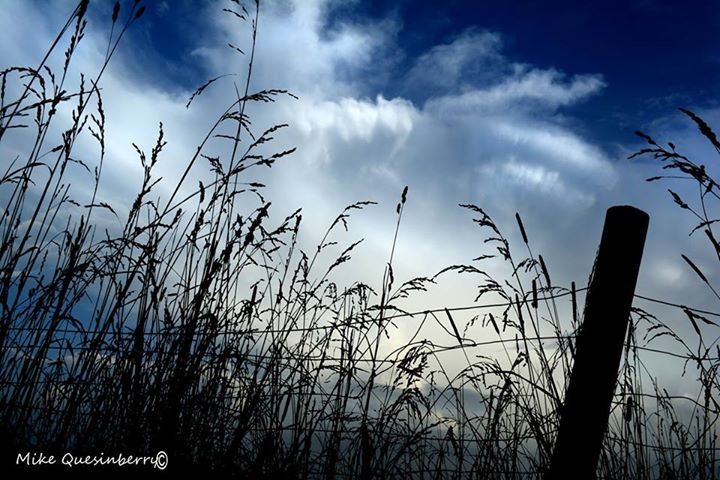
Announcing Our Fall Illustrator Mike Quesinberry

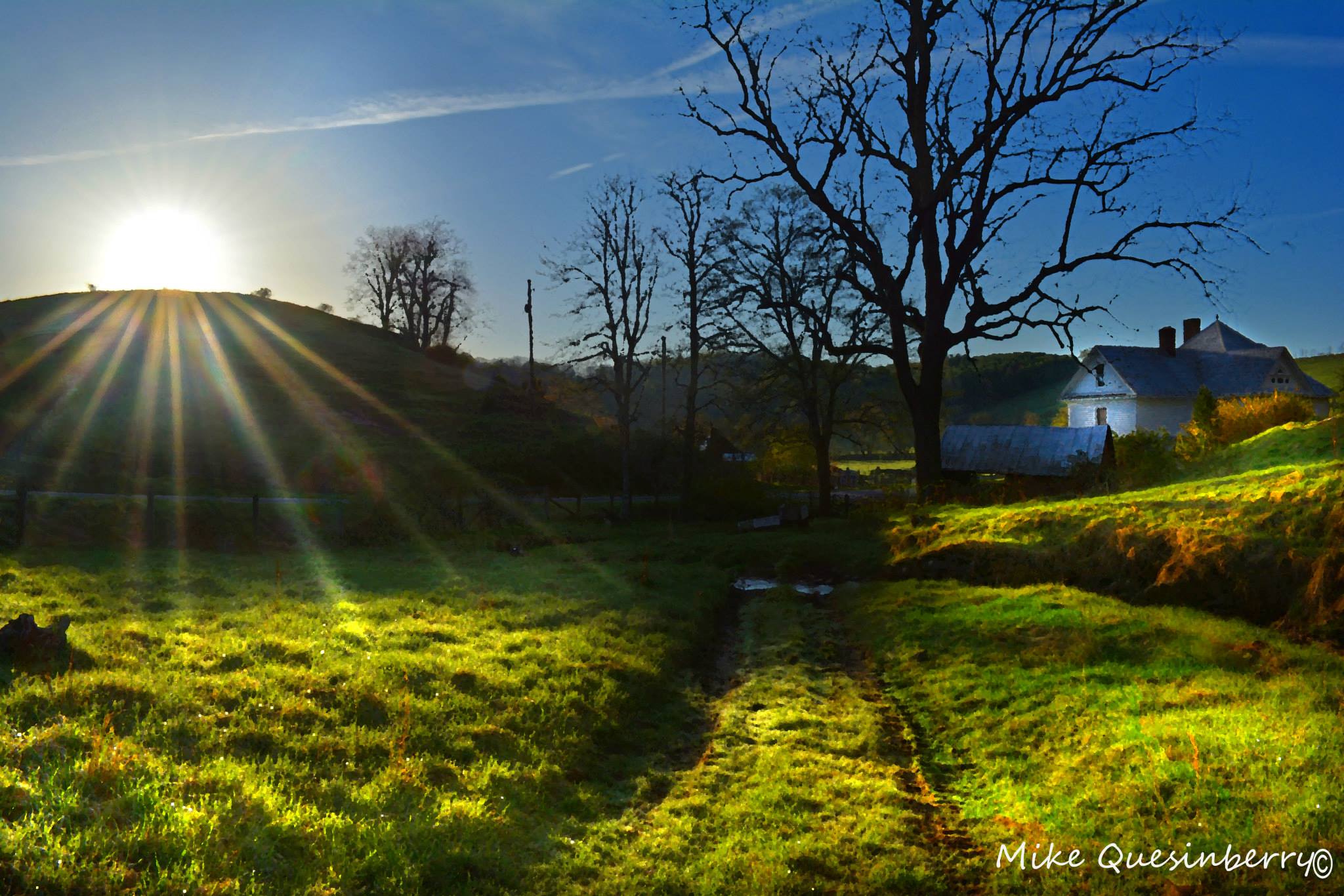
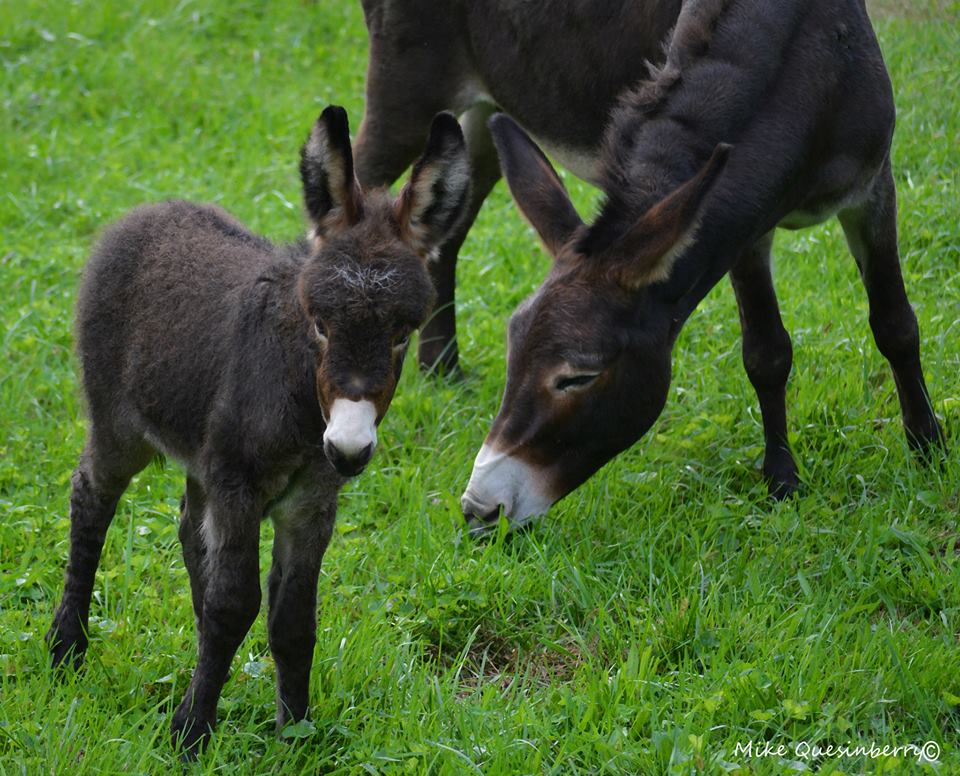
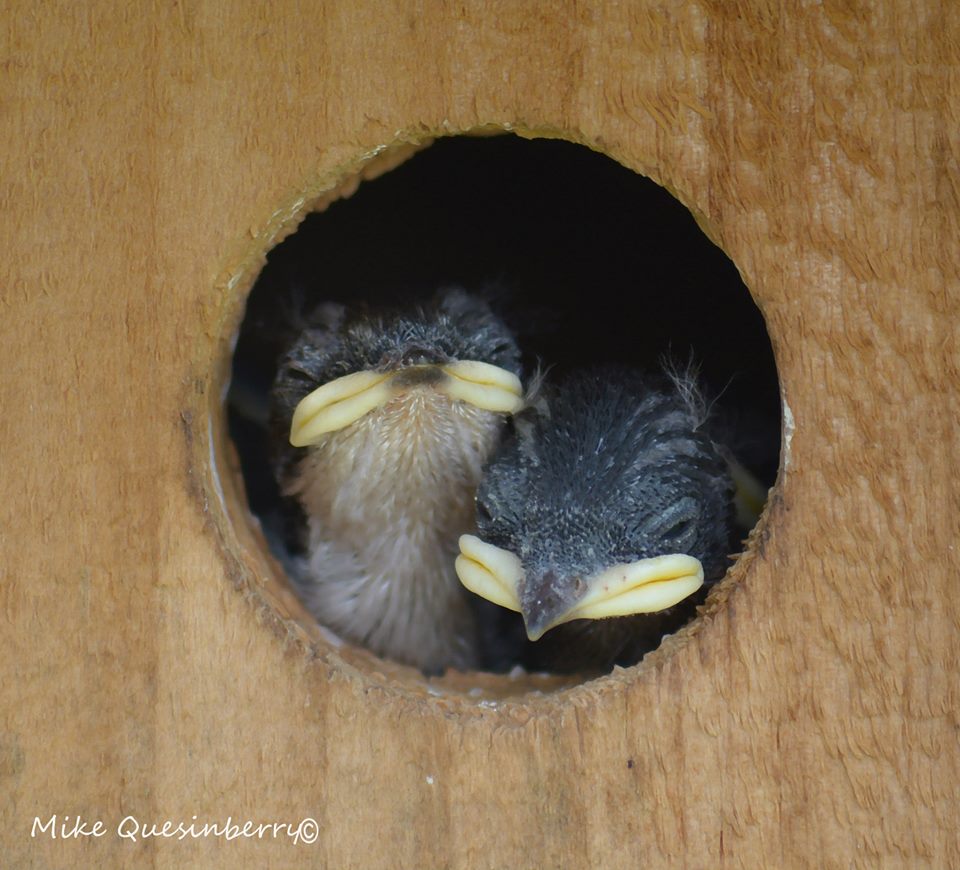
I’m really excited to showcase the work of Mike Quesinberry, a photographer who was born and raised in my home town of Floyd, Virginia. He produces stunning images within and of the Blue Ridge Mountains of Appalachia, a part of this great country that always makes my eyes fill when I return and see those beautiful ridges in the distance.

Rising Above

Mike graduated from Floyd County High School (my alma mater, too!) in 1984 and Radford University in 1988. He is currently a manager at Slaughters’ Garden Center in Floyd and avidly pursues his passion of creating meaningful and beautiful photo-art.

Fire Weeds

I offer a few images here in order to whet your appetite for our Fall “APPALACHIA” issue. Stay tuned!

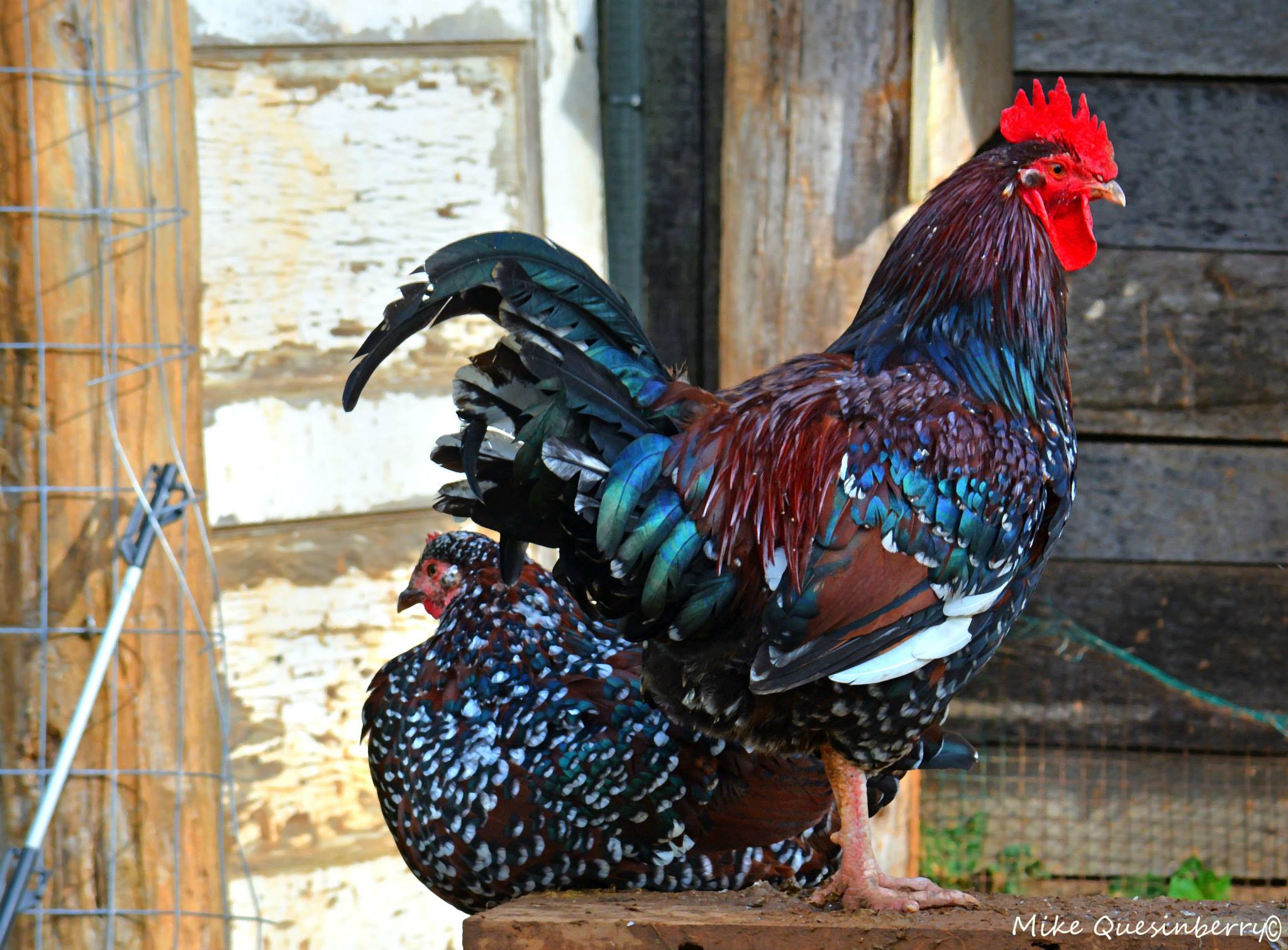
Having a Seat, Chicken Style

Interview with Karen Bell

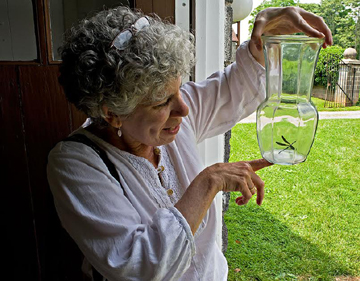
Karen Bell

Mary Akers: I first saw your beautiful photographic artwork when you opened your studio at VCCA and I was blown away by the subject matter, quality, and the innovation, too. How did you get into photography?

Karen Bell: It’s been a long time. I always had some type of camera – I still own my very first Kodak Hawkeye Brownie. In college, a boy friend – 2 words – was a photo major.  He  taught me how to process film in a closet in the dorm. My folks were going on a business trip to China – I asked for a camera. That was 1971. And that was the real beginning. I was a Government major back then, with thoughts of going into politics. The 1972 presidential campaign did me in. I was floundering. Tried being an English major for one semester, then took Photo 101. Really liked it. To go further I had to submit a portfolio of images. I did, went home for the summer, came back to visit friends, saw that my name was on the top of the list. Bingo. I’d found a direction.

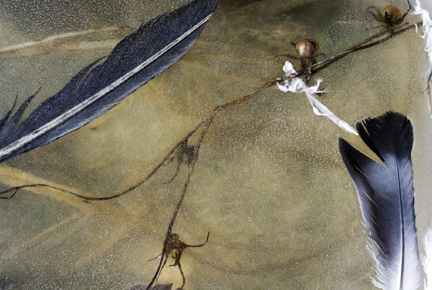
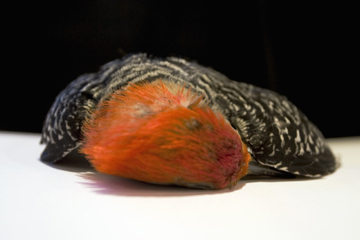
The Stars at Noon (Frozen Feathers)

MA: I’ll say! And a great direction, if your art is any indication.

All art forms evolve, but it strikes me that photography–with the advent of digital images and the ease of their manipulation–may have undergone the most radical changes of any traditional art form in the past fifteen years. Would you care to talk about that?

KB: The more things change… Digital has upended more than the way photographers photograph. It has changed the way many people see the world. Polaroid offered some instant gratification. Digital has made that possible for all. Big exception – Polaroid was always expensive, so some thought went into what you were shooting. Shooting digitally, you can shoot endlessly – and share endlessly. The word “edit” has gone out the window for a lot of people. Sure – if you shoot 100 versions of the same subject you’re bound to get a “good” one. Personally, I miss the lag time: the time when you shot the image to the time when you got to see what you shot. I try never to edit while I’m shooting. I continue to like the pleasure, or dread, when I review my images at the end of a day.

I have too much to say on this, so I”ll stop here.

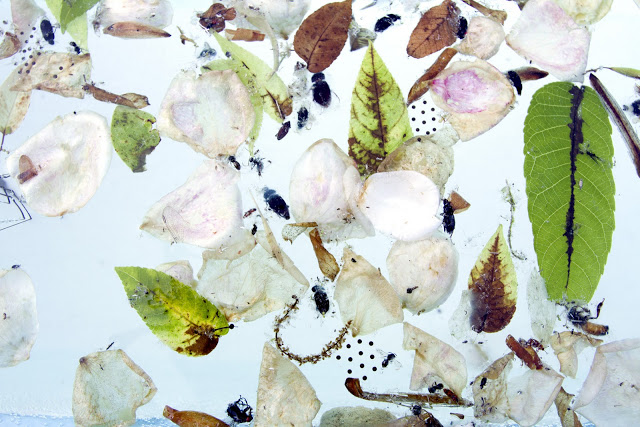
I am Always (Flower Petals and bugs)

MA: Your stunning photo-collages from the natural world really inspire me. I adore them. Could you talk a little bit about those pieces? And a related question: How has your art challenged and sustained you over the years?

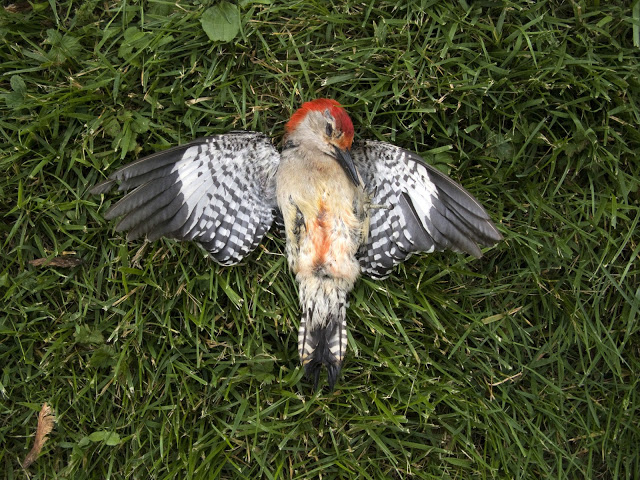
KB: For years I traveled to photograph. I’m a big city kid, but I love being in environments completely other than what I knew. Then my hip/back started to hurt. It put the kibosh on traveling with my equipment, driving endless miles, hiking, etc. I had to rethink how I worked. I can’t say exactly when I started looking down – but that’s sort of what happened.  I”ve always been fascinated with insects, birds, flowers, etc., and back in the old black and white days, I would do an occasional still life, but mostly I was out THERE. With my changed physical abilities, I started to bring THERE home. VCCA has  been an enormous part of my creative life for more than 20 years. The surroundings are so stimulating. The concentration of a group of people working tirelessly on their own creative endeavors has always made me reach down deep and find a way – whatever it was. It was at VCCA where I found my first bird. There is so much to see/observe without too much physical ability at Mt. St. Angelo – so I started to walk, wander, collect. I would bring my findings back to my studio and see what happened. Now that i’m feeling healthy again – I am back out THERE  – but still collecting, wandering, bringing stuff home to see what happens. I liken myself to a nerdy kid picking things up, turning them over in my hand, just because.

Recovery ( At Rest)

MA: Margaret Atwood, one of my favorite writers, has said that in the discussion of whether or not to fund The Arts in public schools, we only need to consider the things that children explore and do naturally, on their own, as they grow. What do they do? They sing, draw pictures, make up stories, dance. Creativity is at the core of what makes us human. What are some of your earliest memories of being creative as a child? Have they stayed with you in later life?

KB: Ah, Margaret Atwood. The 100 year writer. I went to sleep away camp for more years than I can remember. The usual stuff- lanyards, ashtrays – shows my age…I loved shop in high school. My memory is I had to “beg” to take it instead of another round of Home EC.  where we never got to finish whatever it was that we cooked, and Mr. Berman, my Earth Science teacher would come in and eat it regardless. My school art experience was nothing memorable. I went to public school in Brooklyn. Class sizes were enormous. Carving with ivory soap stands out.  And, I played piano. My parents weren’t artistic, though if life had been different for my father, I think he would have enjoyed being creative. I was a shy kid. A very shy kid. My mother tried to encourage (push) me to take art classes at the Brooklyn Museum, but I would never go. In hindsight, I wish she had pushed harder.

I loved art, but didn’t understand why. I loved music – all kinds. It was embarrassing to love classical music in the 60’s. It wasn’t cool. I still love music – all kinds. I have a much better understanding of art now that it has become my life, but I still don’t understand a lot of what I see. The difference is now I enjoy the challenge instead of being afraid of making a fool of myself.

And – I always had a camera.

Cover Image (Recent death)

MA: And finally, because we are a themed journal, what does “recovery” mean to you?

KB: Recovery. Healing. Getting on with it. Picking up the pieces when you don’t know what to do with the pieces and figuring out pieces are good, too.

Recovery – not letting the bad, the sad, the miserable get you down so low you can’t find a way up and out again. My art is my constant recovery. It’s not always easy to remember that, but when I do, all is well in my world.


Interview with Vyshali Manivannan

Vy Manivannan

Mary Krienke: In your essay “I Am Always in Transition When Disaster Strikes,” you write about the 2004 Indian Ocean earthquake and tsunami that killed over 230,000 people in fourteen countries, with Indonesia being the hardest-hit country, followed by Sri Lanka, India, and Thailand. You also write about 9/11. I don’t need to give the stats on that one, which, of course, reveals so much. What I think you are writing about here, as you have touched on in some of your other writing, is that it can seem difficult for some to experience other people’s pain if that person does not look like them, does not have the same background, a similar-looking life. Do you think it is a conscious decision for people not to look or do you think it is a self-protective mechanism to create distance between them and those that are suffering? While it is a writer’s job to look at those difficult aspects of humanity and to bridge that distance, how does a writer successfully confront this resistance?

Vyshali Manivannan: It should go without saying that looking is hard. It leaves us vulnerable, speechless, guiltily ashamed of our comfortable lives, our failures to donate; it renders visible what we never want to see, the intimacy of a body destroyed mid-motion, ended without even a whimper. If we confront these images of death, we have to recognize that all bodies, laid open, are the same. We have to empathize or be labeled sociopath. We have to open ourselves to all the feelings described above. We can’t deny our culpability because when our troops kill, the corpses look like this too.

I’ve always, possibly to my detriment, chosen to look, because I felt guilty over my survivor’s guilt, feeling like I’d survived nothing; I wanted to simulate survival in the act of looking, and so I avidly consumed tragedy online. I can’t fault anyone for self-protection, whatever my own decisions are. But I think it’s crucial to be aware of why you’re choosing not to look. Two very opposed events come to mind: one, an article in The Onion about an everyman whose goal was to get through the Syrian conflict without reading so much as a single headline about it; and two, recent exhortations to refuse to view the beheading of journalist James Foley by ISIS. There’s an interesting contrast here, between the idea that not-looking equals willful ignorance, and the idea that we look to develop a tolerance for the grotesque. I think there’s room on this spectrum for a kind of looking that doesn’t glorify violence, doesn’t dwell on horror, but refigures the meaning of the image to an outcry against the ideologies that make such violence possible.

With regards to confronting the resistance to look, I think the first step is recognizing—before I even begin writing—that it’s not solely about the economy of taste and decency. There’s a whole network of practices that promote this resistance to looking: for instance, images of bodies are almost always bodies of foreigners in international situations presented as intractable or unsolvable, like the perpetual crisis in the Middle East, facilitating cultural indifference via cost-benefit analysis, practically telling us, “You can look, but looking won’t change anything, so why damage your psyche by looking?” So my first task is to change that evaluation and say, “Your looking at this will change something.” That something may be as invisible as ideology, but ideological change is paramount. It’s the first step in several regards: conflict resolution, post-conflict reconciliation, transitional justice measures, erasing the binary of Us and Them.

What’s left after that is to forge an emotional bond between readers and the narrator. Representing violence-in-process is, I think, an implosion of the moment itself, the individual experience of sense-making, and the tools used to do so, be they the Indian Ocean tsunami, HBO’s Tsunami, or the experience of watching both unfold.


MK: You are Sri Lankan American and you have family still living in Sri Lanka. You write about feeling both connected to and disconnected from a country you have visited twice in your life. You were born in New York and grew up in Louisiana and Missouri. You have written about feeling always outside of your own experience, that it is difficult to make something “your own.” In my experience of your writing, you respond to this sense of being an outsider by creating an identity that is always shifting, always evolving. How does this constant positioning and repositioning affect your writing?

VM: It’s my hope that this continual shifting of identity enables me to more accurately articulate, in writing, experiences that are mine, that are part of a larger collective experience marked by ethical and political variance, that I can’t claim as mine because I find it impossible to reconcile what I’ve survived with what victims of war have survived. Constantly repositioning myself mandates an acceptance of my struggles with hybridity and its associated grievances, and more importantly invites empathy with all parties involved. This repositioning ultimately strives to recognize Otherness and erase it in its tracks, to create humans where an “us” or “them” once stood, to deconstruct the binary and replace it with empathy and the possibility of reconciliation.

It’s strange to contrast it with my fiction process, because I think the goal is similar but the process itself is exacerbated, as it can only be achieved through inhabiting multiple characters and voices and playing out their interactions, whereas my nonfiction—with all its evolutions— ultimately feels more like the body I occupy in real life.


MK: You write a lot about the Sri Lankan Civil War, a conflict that was rarely covered in the U.S. media, until the endgame (and still then there was a media blackout and it was, as I recall, very rarely front-page news). Other international conflicts get consistent front-page coverage in the U.S., presumably because they are of “greater interest” or “relevance” to Americans. There always seems to be a privileging of one suffering over the other, a willingness to engage in one multi-faceted situation and not another. To me, it seems as though entire peoples, entire conflicts are invisible and that there is an effort to keep them that way. How do you address this in your work?

VM: Because the Sri Lankan conflict hits so close to home, I privately resent its invisibility in mainstream news. I’m sure I’m in the company of individuals who survived or grew up in the shadow of this or other conflicts. It was striking to me that Sri Lanka appeared in the news again at the precise moment its invisibility peaked, during the media blackout toward the war’s end, as though to suggest that absence is necessary to restore presence in the public eye. Like when it’s inaccessible, we want it.

I feel like in my work I’m constantly negotiating a balance between making conflict visible and asserting that it is worthy of visibility, that war doesn’t begin and end when the news media say so but simmers to a boiling point long before it explodes into Black July, or continues with refugees in camps, sexual abuses, privation, arbitrary detainment. We—be it countries or individuals—invest in conflicts that are the most worthwhile to us in terms of emotional costs, economic resources, cultural or political or physical similarity. There’s a concept known as “compassion fatigue,” where being inundated with stories and images of war in Gaza, Syria, Sudan, Libya, Ukraine, etc., etc., anesthetizes us to atrocity. But I think there’s more to it. While there’s some truth to inuring oneself through repeated viewing, as I’m prone to doing, it’s sort of a generalization that removes agency from the public, positioning the government and media as the purveyors of compassion. I want my writing to ask: Can we displace the register of compassion from governmental policy to public empathy, catalyzed not by war photographs (which never exist in isolation) but by intertextual narratives within a social, economic, political context at home and abroad.

And maybe that’s the best description of BLACK TIGER, WHITE VAN, which seeks to refigure the terms of looking—not at consequences but at violence in process, when intervention still seems possible, when we are more willing to engage.

I am Always (Flower Petals and bugs)

MK: You’ve had quite a few pieces from your larger work BLACK TIGER, WHITE VAN published in various journals. When I met you, I knew you only as a fiction writer. BLACK TIGER, WHITE VAN, much like this piece, touches on the unreliability of memory and how memory is as much fiction as nonfiction. It is clearly a painstaking process, trying to sort out conflicting reports, memories, feelings. In your fiction, do you feel an opportunity to step outside of this constant dissection? How do the process and its effects differ for you?

VM: To run with your surgical analogy, writing nonfiction like BLACK TIGER, WHITE VAN feels like an unrelenting debridement at my own hands, a crude attempt to scrape off the dead tissue of the past to preserve what’s left, to encourage the healing of wounds I’m still unwilling to fully own. It’s a process of recovery in and of itself. Not only does it insist that I confront past experiences that are emotionally difficult or potentially re-traumatizing—and I’m thinking specifically of a recent publication, “ThisIsMyManifesto.htm,” where the narrator simultaneously confesses to self-injury, attempted suicide, disability, queerness, and vicarious trauma—but it also demands that I make this experience accessible to strangers. So I’d say half of my nonfiction process is bracing myself for reopening old wounds, while the other half is craft: putting enough objective distance between myself and, say, the hallucinations I used to have, to find a way to make them as terrifyingly present to others as they were to me.

Fiction, on the other hand, feels like human vivisection with a defter touch, maybe because the lives I’m crafting ultimately aren’t mine even if they reflect aspects of my reality. It’s less a question of “How do I articulate this?” than “What makes this person tick?”In some ways there’s more research involved to create people who come to life for me, who move naturally through their environments. Problematic as it may be, I try to occupy their minds and spaces as much as possible, and I let them inhabit me. If I had to give you a breakdown, I’d say 80% of my fiction process is understanding these people in their ordinary circumstances; 10% is sadistic mental experimentation to gauge their behavioral changes and see what makes them move their worlds; and the rest is the writing itself. Once I’ve sorted out the characters and their motivations, the writing unfolds naturally, like a Borgesian map, mile-for-mile matched to my imagining.

So, to address your first question, neither process is outside dissection. Where my nonfiction process is an inward-looking deconstruction, my fiction is eternally stargazing, world-building, but keen to possibilities to take apart and exploit. I actually think both processes boil down to the same thing: the need to figure out why we do what we do in the face of adversity, when pushed to extremes. It’s still a contradiction. It’s like reaching with one hand for an Answer, capital-A, while with the other rejecting the notion of absolute Truth.


MK: I know from your mention of Harvey Dent in this piece and various Batman references in other pieces (and from our mutual obsession with all things Batman), that the Dark Knight holds a special place in your heart. For me, my fascination with Batman cannot be summed up in words. It’s a feeling of being drawn to something self-destructive yet noble. There is something to be said about the self-destructive and constructive process of writing. We pick ourselves (and oftentimes our loved ones) apart, put ourselves (and them) on the line, and hope it is a noble effort, one that outweighs the damage we do to ourselves and those we love. When I read your writing, I am stunned at how brave and singular your voice is. For you, whether in process or after the work is already finished, published, out of your hands, is there a moment of separation, when you can look at what you’ve done and see you have given up a part of yourself to save yourself, to maybe save someone else? Do you feel the sacrifice is worth it?

VM: I couldn’t describe it better than “self-destructive yet noble.” Maybe because of that awareness that I’m breaking the code of silence, exposing myself, my family, my friends to an unfamiliar readership, I have difficulty revisiting my work after publication. I’m forever asking my agent or a close friend to read it and remind me that it’s emotionally compelling; or I hesitate until people, without asking, tell me they were moved, or that reading the piece in question was like hearing their lives told back to them. I like to cite an experience in high school in the Bible belt, where a short story I wrote—interrogating sexuality and religion, mind you—made the rounds in the band room, and at least one person was so changed by it she has the hard copy to this day. More recently, a reader told me, “I love you for having survivor’s guilt. I love that it is an homage to those who didn’t get out.” Moments like those, I can close my critical eye and feel fulfilled.

So the short answer is yes, the sacrifice is worth it.
MK: I have known you for I think nine years at this point, and what strikes me about you, as well as your writing, is how you are always trying to find meaning in every detail, which is, I think, the mark of a great writer. The details are not superfluous, they are not accidents, they are not artistic flourishes. They are at the heart of it all. At what point did you realize that you were a bit obsessed with the details, and what do you think pushed you and continues to push you to obsessively turn these details over and try to fit them into a larger narrative?

VM: Given my background in science, role-playing games, and having to piece together an early understanding of the Sri Lankan war from details lifted out of context, I think I was always aware of the primacy of details. I understood scientific inquiry as revealing and explaining details; RPGs demonstrated that a single choice could permanently alter the narrative; and the Sri Lankan conflict was nothing but details because there was no larger narrative to guide me, I had to fashion my own. So I honestly can’t remember a time when I wasn’t obsessed with details. When I’m writing, I begin with a detail and extrapolate a reality: BLACK TIGER, WHITE VAN coalesced as a project when I caught myself repeatedly looking at the face of a Tiger cadre corpse, one of many in an unfilled trench; the novel I’m currently working on started with the shape of an astrocytoma and the proceedings from the First International Conference on psychotronics in Prague in 1974. Existence is an experience of contingency and intuition, I think, and I think this is emulated in my writing process, like making decisions of plot or symbolism on the fly only to discover, twenty pages later, that that tiny choice dictated something much larger. I have great faith that, by writing the details, I’ll intuit the larger narrative. It’s resulted in rewrites in the past, but it hasn’t really failed me yet.


MK: You write a lot about creating order amidst the disorder. Does the process of writing help create order or are there moments when it feels like the opposite, that the process of writing is just a reflection of the disorder of your own mind, the world around you? Or is it a constant fluctuation between the two?

VM: I never personally escape chaos. I experience moments, while writing, when the stars align and the disorder unfolds exactly as it should on the page, and all the seemingly arbitrary choices I’ve made so far—a character’s birth year, a physical attribute, a name—make sudden, blinding sense. But between sessions, or when I’m interrupted, I think my process of mental (re)composition does reflect a chaotic landscape. In that sense, it fluctuates. Additionally, when I write, I bounce all over the page, leaving unfinished lines or words as signposts to be revisited, knowing they won’t make the same kind of sense in a future writing session, but trusting that they will make a kind of sense, a semblance of order.

It’s almost as though the work and my mind can only operate in inverse: while I prefer to write in marathon sessions to retain the feeling that I am sense-making and creating order, approaching a work-in-progress after I’ve lost the thread forces me to be more mentally organized, if messier on the page; but taken all together I think it culminates in the expression of an order that is fractured, and does not eschew disorder, which I think is an essential part of being in the world.


Mary Krienke is an agent at Sterling Lord Literistic. She received her MFA in Fiction from Columbia University and represents literary fiction, creative nonfiction, and realistic YA that pays close attention to craft and voice. She is especially drawn to new and emerging writers who seek to push boundaries of form and content, and she responds most strongly to writing that reaches great emotional and psychological depths. She is equally interested in work that illuminates through humor or by playing with genre. Her other interests include psychology, art, and design.