“Roadside Flowers” by Karin C. Davidson

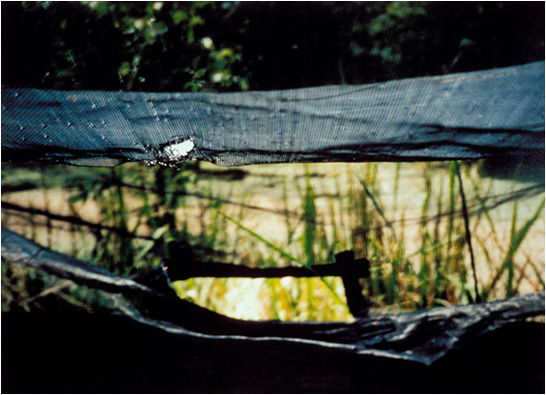
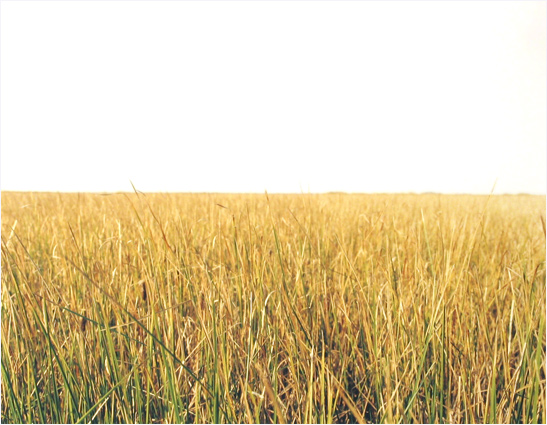
Roadside Flowers (Yellow Grass Field)
Yellow Grass Field, Chromogenic Print by Karen Bell

Hoa leaned down and snatched another stem. Her fistful of flowers was leggy, tattered, but brilliant. Gold, orange, red. Just seven years old, she stood in the center of the path, her toes sunk into the fine pale dirt. She waved the flowers at me.

“Jaymes-man,” she called. “You take picture?”

Earlier in the week I’d let her wear the thin leather camera strap around her neck and take pictures of her father and mother, her aunts and uncles, the cooking fires, the rice fields, earthenware bowls of pho, even me. I’d developed the film and made enough prints to share. From each, faces peered, looking down, laughing, pointing. In one, Hoa’s grandmother offered a bowl of steaming noodle soup, fogging the lens and catching the moment before everyone squatted to eat. In another, a baby brother was hidden under his mother’s blouse, the blur of his small kicking feet a contrast to his mother’s silent gaze. And one without faces, only cumulus clouds, sunlight, a sweep of green grass and purple cattails.


Assigned to my battalion as a photographer, in the field I carried the Kodak I brought from home, a dozen film canisters, an M-16, ammunition, and a pair of canteens. I’d signed on as an infantryman, but my CO caught wind of the camera, decided I was better suited to capturing images than VC, and put me in charge of changing the mood. “I’m talking morale, Williams. Get these men’s fucking bravery and honor covered; you’ll do better there than covering their asses.” Stars and Stripes published nearly everything I gave them, only a tenth of the photos I took. The other percentage was out of focus, or out of bounds, the negatives sealed in envelopes and filed in heat-resistant boxes.

It was Year of the Rat, and we all became water rats, sinking in rivers and rice paddies, my camera and film bag held above my shoulders along with my rifle. We had wit and curiosity, and we were nervous and aggressive. Tagging along behind the point man, itching for a fight, smoking in order to stay quiet. Waiting, listening. I measured my steps, I refocused, I balanced my load, so much smaller than some. The light meter gave me a reading; I adjusted the viewfinder; I pressed the shutter release, advanced the film, and just as quickly discovered the next image, a fraction of the field before me, the picture as contained as the war was wide.


Sometimes you have to go away to come back.

My orders were to honor men and make them noble by documenting their actions. “Now let’s get this straight, Williams! We are not talking about combat. We are not talking about the goddamned beauty of the battlefield. We are talking about survival and making sense out of this mess.” My orders were to look through a lens into men’s souls. “These are not your friends, goddammit! These are heroes. Make it so.” My orders were to hump into the hills with my own platoon, with my own rifle, with my own canteens and 35 mm camera, but not with the lump in my throat that came from seeing and hearing and disbelieving.

I tried my best, and still, the CO kept on yelling.

“He just loves you, Williams, bro,” Shields promised. “He just wants to get all up inside of that sweet shiny lens himself.”

“Why don’t you get some pictures of the girls for us, Jamesy-boy?” McPhee licked his fingers and squeezed one eye closed, as if he were aiming a camera instead of an M-60. “Slide up under some ao dai and see what they have to offer.”

I did take pictures of women, in silhouette, from afar. Women in yellow, red, white ao dai, like flowers, their long black hair swept under their conical hats, shadows over their faces. They walked through the markets and called out to the merchants, laughing, taking green papayas into their arms, silver fish into their baskets. Sometimes they looked at me—me trying to frame their eyes, their burdens—but mostly they looked away.

I was the grunt, the new boy, the one chosen to shoot pictures, rather than people.

The children in the villes found me curious and stared and followed me when their elders let them. Children standing at the front gate of a school, waving and calling out until their teacher called them back inside. Children in flooded rice fields, their trousers pulled waist-high, catching crabs and small fish. Later these same fields were flooded with light, that of the moon and artillery fire, the petals of water lilies scattered with the scales of dead fish, the carcass of a buffalo calf, and men’s bodies hidden beneath the tall, silent grasses.


I’d heard about the bamboo jungles, tigers that appeared shining like bright butter in the forest when all was quiet. I’d heard of the meadows of poppies, opium available in rooms above the bars in Saigon, an long arm’s length away from Long Binh Jail. And I learned there were tunnels that reached under the earth for miles and miles, and pits covered in thatched grass to hide the punji stakes. Firsthand, these became my education, better than that of a classroom, and I memorized each breath of each day, laden with salt from the salt tabs in our packs, laying low under sniper fire, old timers telling me to stay down if I wanted to see the sun set.


“Williams Jaymes-man,” Hoa said. “You come home soon?”

I had been in country for barely a month and had almost the full tour still in front of me.


I knew how to fish in Florida mangrove swamps. Hunting for Charlie was something entirely different. The underwater roots of the Vietnamese mangroves hid leeches, not bonefish. Straight from the bottle I had my first taste of backwash whiskey, on the banks of that brown-water stretch of river, in a downpour that outclassed any thunderstorm in the Keys. No matter the tropical heat, I shivered under the standard-issue rain poncho, in a daze of fever and confusion, not sure whether to hold my rifle or camera.

“You got to take your Monday pills, baby boy,” Shields said.

Monday pills. CPs. Chloraquine-Primaquine. Anti-malaria pills. Another standard-issue item that hadn’t gotten lost in the mail between boot camp and the boonies. I had been given the dosage, same as everyone else.

I shook harder, and Shields raked me with his stare.

“You think you’re going somewhere, Williams? You ain’t going nowhere, man. You are staying right here in this shithole, just like the rest of us.”

McPhee was bad enough; Shields was worse. Shields was bad news, trippin, kick-em-til-they-die crazy, one re-up too many. Sly slept with one eye open, Torchdog with the other eye shut—partners in crime. Tibbs wrote in a notebook that he rolled up inside his sleeve after each entry. Baker hummed under his breath, and hid a harmonica in his pack. Mankiewitz kept quiet and then kept us all guessing.

Mankiewitz, who in the middle of one already miserable sodden night, sent incoming our way by yelling, “Come over here and light up my landing zone, Little Miss Saigon!”

The same night Shields broke down and kissed the ground one final time. The same night marionettes danced in the jungle and not just in my mind. The same night the rain spiraled down in strands, like those beaded curtains in that one-time bar. The same night poppies grew from my chest and bloomed bright and vermillion right there in the mud. The same night the dust-off flew out one KIA and one WIA.


“Jaymes! You go away long, long time?” Hoa stood on the road and waved her flowers. I held up my camera, but didn’t wave back.


Karin C. Davidson‘s stories have appeared in The Los Angeles Review, Passages North, Post Road, and elsewhere. She has an MFA from Lesley University, Pushcart and Best of the Net nominations, and awards including the Orlando Prize for Short Fiction, the Waasmode Short Fiction Prize, and the Ohio Arts Council Individual Excellence Award. Her fiction has been shortlisted in several writing competitions, including the Jaimy Gordon Fiction Prize, the Faulkner-Wisdom Writing Competition, and the UK Bridport Prize. A chapbook of her story collection was a finalist in the 2012 Iron Horse Literary Review Single Author Competition. Originally from the Gulf Coast, she also writes at karincdavidson.com.

Read an interview with Karin here.
You Don’t Know Me

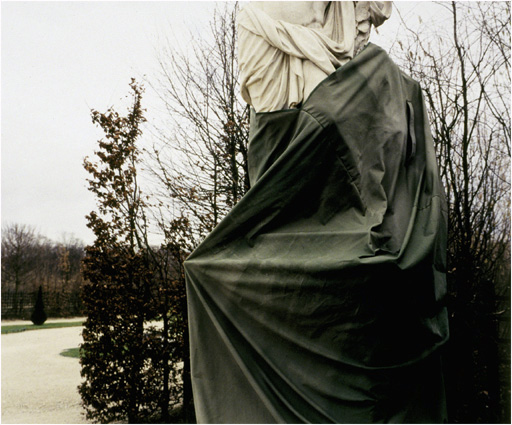
You Don't Know Me (Female Statuary, Versailles)
Female Statuary – Versailles, Chromogenic Print by Karen Bell

She sleeps with the bedroom door open because her children have night terrors. It’s how Nina hears the intruder in the hallway. Less than a week in this new house and they’ve found her.

The clock/radio says it’s 4:08 AM.

Nina planks in bed and bites her tongue to stop from yelling: waking her son and daughter in the next room would just get them killed, too.

The recent spate of death threats ricochet through her mind. She left Guatemala before but work drew her back. Thirty-four years old and she doesn’t want to die like this, not like this, not when she’s finally making a difference.

Already it’s too late to search for a weapon and the intruder pauses in the bedroom doorway shapeless as spilt ink, then clumps his steel toecap boots across the yawning floorboards toward her bed, lighted now by the claret haze of the clock/radio, this man stands to her right and leans his face toward hers. He wears no mask. Wants her to see him. The whites of his eyes full-moon bright, glossy as hardboiled eggs.

No point calling the Policía Nacional Civil because this man is a uniform-wearing officer. He’s one of the You-Don’t-Know-Me. In every level of government. Used to be the Civil Defense Patrols back when the death squads operated with impunity.

He leans closer, their faces almost touching now, and stutters hot breath on her wet skin.

He has eaten hotdog. Drank guaro.

The officer moves back a step, towers over Nina, studies her supine form wearing panties and bra, too hot at night in this house to have sheets. She moves her hands onto her belly, covers what little she can. And waits.

4:12 AM.

4:16.

4:20.

He leaves.

Oily cologne lingers.

~

Nina stands at the kitchen window and watches vehicles conga line at a roadblock. Mixed Army and PNC on patrol. A daily occurrence.

Eight-year-old Jairo and his younger sister Flor are sitting at the breakfast table.

“Was someone here last night?” Jairo asks.

Nina moves a wall of black hair behind her shoulder. It’s middle-parted like a grade school teacher’s, and everything about her features seems crumpled like an overworked checkout operator, everything except her espresso-dark eyes.

“Yes, a man was here.”

“Did you know him?”

She bites her lip and turns back toward the window and the tears are hot and wild in her eyes.

Jairo stabs the fried egg on his plate and mops the yolk with a corn tortilla. Flor pastes refried black beans on her tortilla but gets most of it on her hands. Nina wets a dish cloth under the tap then remembers the water isn’t safe and instead uses a wet wipe.

“Does this mean we have to leave again?”

~

“This is 2005,” the caller says. “It’s almost nine years since the ‘96 peace accord. The only thing changing is everything’s getting worse. More people poor. More Mayan farmers killed and displaced.”

The line clicks dead.

Nina’s morning show on Radio Universidad, nine-to-noon daily, has no one waiting on the switchboard to speak. When she started a year ago, there were always too many. But the recent trouble, the murders, has scared them off.

“The terror structures remain as they have during the war,” she says into the mic. “Operating with impunity. Their members hold key positions in political parties, the Supreme Court, the media. Unless we fight for reconciliation through truth, this evil will never leave our country. Our memories, your voices, are the only way we can ensure history does not repeat itself. These evil people are hidden and they think that because we don’t know who they are they’re safe to keep doing what they’ve been doing forever. But we know who they are. We know.”

A switchboard light blinks with a caller.

“I was there in 1982 when Montt’s military personnel attacked my village, Dos Erres. Montt was looking for Fuerzas Armadas Rebeldes. There were none. We were ladinos, mixed white. A small village with two churches, Catholic and Evangelical. Carlos Antonio Carias, the army commander, gave us a proclamation. Join his civil-defense patrol. We refused. Two hundred and fifty were slaughtered, men, women, and children. I was twelve. They let me live because I was lighter skinned and have green eyes…”

He stops speaking.

“How did you survive?”

He weeps, chugs like an engine turning over. The call ends.

“Without strong individuals like that we will never know the truth… Our next caller, please, take your time, tell us anything you want.”

The woman says, “What makes you qualified to ask these things?”

~

Nina’s father dies in an accident. He’s a university professor. Her mother is distraught, has five children to provide for. Nina is nine.

She’s thirteen and in the library. Researching. Nina always asking questions. She finds an article about her father that says a death squad entered the college and cut down seven professors, knocking them like bowling pins, and it happened out in the open for all to see. Her father was murdered.

Her mother, traumatized by the incident, has lied all these years.

Nina graduates from university with a degree in journalism. She still has no way to get the truth about her father out. She goes to the biggest radio station. Nothing.

For three months she pursues the director of Radio Universidad. She gets a meeting.

“Your listeners need to hear someone young, a woman.”

He laughs. “And who is that going to be?”

She smiles and raises her hand as if answering a question at school. “Me!”

~

“Some records suggest that over two hundred thousand, mostly Mayan, lost their lives during the civil war. But no one knows for sure. We need the victims, those who have witnessed, endured and suffered to call in and tell us their story. The truth is the only weapon we have.”

~

Nina enters Jose Miguel’s office. He’s the editor of Prensa Libre newspaper, has thick plummy lips and a solid eyebrow across his forehead like it’s been drawn with an eyeliner. He is sitting on the edge of his desk, waiting for her.

“I’m worried you’re making too much trouble for yourself.”

“It’s the truth.”

He lifts a printout of her previous article and reads: “Since 2001, in just four years, a thousand women have been murdered. Ninety percent have been raped first.”

“I have a daughter. I don’t want her growing up in a world like this.”

“If she ever gets to grow up.”

Nina pulls back her hand to slap him. He doesn’t blink but his cheeks redden.

“I shouldn’t have said—”

“Maybe I should just run back to the US?”

He places the printout on the tabletop. Sucks his teeth while he thinks. “This other article you have sent me…” He lifts another printout. Scans through it.

Civil Defense Patrols. Paramilitary groups. Countless murders. Control of supreme court, customs, immigration, import/export, the drug trade. Refusal to be dismantled as per the 1996 peace accord. Evidence of terror structures still operating with impunity as they had done during the civil war. The main difference: instead of acting directly for the state, they now have free reign. Powerful enough to have breached political parties and the media.

“I would ask you not to publish it,” he says.

“Are you scared?”

“Nina, the fallout from this will be terrible. You would need to leave Guatemala first.”

~

Nina kisses Jairo’s forehead; he sleeps with his thumb in his mouth. Flor clutches a stuffed lion. Nina watches her sleeping children for a long time in the hard light of the naked hallway bulb. Their breathing is slow and regular like ocean waves.

She steps into the hallway and the rough-sawn floorboards creak.

“I don’t want to move again,” Flor says. Nina faces her daughter but she has rolled onto her side and is looking away. “I’m tired of moving.”

“Is the man coming back tonight?” Jairo asks. “I can stay up and keep guard.”

~

“Are you not afraid?” the caller asks.

“I’m terrified.”

“You have a family. Do you not worry for their safety?”

“I had to publish the article,” Nina says. “And I can’t keep running. None of us can keep running.”

“What if they take you?”

“They won’t,” she says. “I’m in the public eye. Media attention is keeping me alive. But the people I ask to call into this show, the ones without protection, they’re the one who are in danger. Calling in, telling what happened, that takes courage I don’t have.”

~

Nina is at a market stall.

Licuados en leche. Sin hielo.”

The man next to her is staring. He’s watching her and is making a point of letting her know he’s watching her. She avoids eye contact, snatches her fresh fruit shake and rushes off.

The man follows.

She darts through a gaggle of students.

Outside the market, Nina crosses the street. She checks to see the man is gone and takes a breath. She had forgotten to breathe. A police officer collides with her and she clatters to the pavement. A young couple come to her aid, demand to know why the officer did this. The officer spits on the ground and sets his hand on his holstered pistol.

Nina springs to her feet and runs.

~

The single room hut is constructed of bare blocks and contains two beds for five people. A single rack of shelves behind a curtain contains everything Nina owns, everything she could grab before fleeing her home. There’s a single bare bulb for light and a portable TV in the corner with aluminum-foil rabbit ears. The kitchen is outside and has a wood fire. Water for the pila comes from a hose in the street.

Jairo and Flor are playing in the backyard. It’s walled in. Relatively safe.

The day after Nina’s article appeared in the Prensa Libre, her radio show was canceled. Intimidation escalated. Bullets pinged her car. She was uninjured.

“I have nowhere left to go,” she says, “nowhere to turn. I can’t go outside because they’ll find us.”

The man who has come to help her doesn’t respond, keeps watching out the window, scrutinizing the street.

“I want to leave,” she says. “You can get me and my family across the border?”

“You have friends here,” Eliseo says. “We have arranged a meeting with Amnesty International. They want to help, maybe they can make you into a spokesperson. The others won’t dare hurt you then.” He carries a holstered sidearm and they have arranged to take turns manning the perimeter.

~

Lunch is a chicken taco and a little pile of shredded lettuce topped with two slices of tomato – all that ever passes for a fresh garden salad. Nina is getting used to it. In the US they had a never-ending array of vegetables, but here they are surprisingly rare.

“You have been staring at the lettuce for an hour.”

“I don’t know what to do.”

“Get the story out,” he says. “Same as you always have.”

“But there’s no radio station. No newspaper.” Her hands tremble. Couldn’t help but think about her father, how hard it had been to get to where she was, to get her story out.

“You already have a radio station. And a newspaper.”

She glances at the laptop which was given to her by an anonymous friend. There was no box and the charger was from a different model.

~

Hello Dolly.

The first post on her blog is about Nelson Hernández López, an indigenous union and campesino leader murdered on return from a protest march.

An hour later, a reply to the post reads: It doesn’t matter if the guerrillas were going to turn Guatemala into another Cuba. Rape, torture and murder of all civilians, whether they supported the guerrillas or not, is indefensible. Montt must be brought to justice and tried for these abominations he carried out on behalf of the state.

Nina receives an email: Encarnación Quej, indigenous Tzutuhil leader, is murdered by masked men on his way to work today. She broadcasts the news on her website.

More emails. Gerónimo Ucelo Medoza, leader of the minority Xinca indigenous group, is murdered and five colleagues kidnapped. They are still missing. The group had been demonstrating against mining operations by a Canadian company.

The next day, Nina starts Familiares de Desaparecidos which is a forum in memory of the disappeared. She writes, “After decades of questions without answers, and a growing list of victims, we create this forum so that the memory of the disappeared will remain. Their stories will be remembered.”

She conducts an interview with the New York Times: “Forced disappearance in Guatemala still happens. In fact, it has expanded. And it relies on silent collaboration. It’s a means of social control and political dominance which has gained the power of impunity because of the vast political and commercial powers that finance and conceal these crimes.”

~

Knuckles rap the door. There is always someone knocking. Nina opens it. Outside is an injured woman, a woman who has come from the protest at Cuatro Caminos intersection. Her head is bandaged with a man’s white cotton shirt and there are freckles of blood. She wants to speak about the army killing unarmed protesters. Today it is a friend outside but Nina knows one day they will come for her, same as they did for her father. At least she will know who they are.


Michael McGlade grew up in an Irish farmhouse where the leaky roof didn’t bother him as much as the fear of electrocution from the nightly scramble for prime position beneath the chicken lamp, the only source of heating in the house – a large infrared heat lamp more commonly used for poultry. He has had 36 short stories appear in Green Door, J Journal, Ambit, Grain, Downstate Story, and other journals. He holds a master’s degree in English from Queen’s University, Ireland. You can find out the latest news and views from him on McGladeWriting.com.

Contributors, Summer 2014

Karen Bell
Karen Bell (Illustrator) received her MFA in Photography from RISD.  Her photographs and artist books have been exhibited widely including: The Brooklyn Museum, Rosenberg & Kaufman Fine Arts, Ellis Island Immigration Museum, White Columns, NYC; The Alliance Gallery, Narrowsburg, NY; Phillips Exeter Academy, NH.  Public and private collections include Brooklyn Museum, New York Public Library, Ellis Island Museum, Pfizer Pharmaceutical, Akin Gump Strauss Hauer & Feld LLP.  She has received grants from Lower Manhattan Cultural Council/Governors Island 2011, The New School, Womens Interart Center, NYC and fellowships to Yaddo; Virginia Center for the Creative Arts. Karen teaches at The New School and The Brooklyn Botanic Garden in New York City.

Toby Van Bryce
Toby Van Bryce (Just Enough Hope) attends the University of San Francisco’s MFA Creative Writing Program. His work has appeared in Knock Magazine.

Danielle Collins
Danielle Collins (Spelunking) originally hails from Virginia, but has lived in Northern California since 1994.  (Little of her Southern accent remains but every now and then she will gleefully say “y’all.”)  Previously, she practiced Africanized beekeeping in Paraguay.  She also earned an MA in Communication Studies from the University of Michigan, and enjoyed a past career as a fundraiser for nonprofits.  Today, she is pursuing her writing and photography, and lives with her fiancé, Pete, and her wild dog, Boo.

Mickey J. Corrigan
Mickey J. Corrigan (Sleight of Hand) publishes pulpy fiction with presses with names like Breathless, Champagne and Bottom Drawer. Her most recent novella is the spoofy romantic comedy F*ck Normal. A coming of age novel is due out later this year. Poetry and short fiction have appeared in literary journals. Visit at www.mickeyjcorrigan.com or on Goodreads.

Karin Daidson
Karin C. Davidson (Roadside Flowers) has had stories have appear in The Los Angeles Review, Passages North, Post Road, and elsewhere. She has an MFA from Lesley University, Pushcart and Best of the Net nominations, and awards including the Orlando Prize for Short Fiction, the Waasmode Short Fiction Prize, and the Ohio Arts Council Individual Excellence Award. Her fiction has been shortlisted in several writing competitions, including the Jaimy Gordon Fiction Prize, the Faulkner-Wisdom Writing Competition, and the UK Bridport Prize. A chapbook of her story collection was a finalist in the 2012 Iron Horse Literary Review Single Author Competition. Originally from the Gulf Coast, she also writes at karincdavidson.com.

Bill Glose
Bill Glose (Age of Consent) is a former paratrooper, Gulf War veteran, and author of the poetry collections Half a Man (FutureCycle Press, 2013) and The Human Touch (San Francisco Bay Press, 2007). In 2011, he was named the Daily Press Poet Laureate. His poems have appeared in numerous publications, including Narrative Magazine, Chiron Review, and Poet Lore. Now a full-time writer, he undertakes intriguing pursuits—such as walking across Virginia and participating in a world-record-setting skinny dip event—and writes about them for magazines. His website (www.BillGlose.com) includes a page of helpful information for writers.

Jessica_Handler
Jessica Handler (Tips for Writing About Loss) is the author of two books of non-fiction, Braving the Fire: A Guide to Writing About Grief and Loss and the memoir Invisible Sisters. She earned her MFA in Creative Writing from Queens University of Charlotte and her essays and features have appeared on NPR, in Tin House, Drunken Boat, Full Grown People, Brevity, Newsweek, The Washington Post, and More Magazine. Jessica lives in Atlanta, but frequently travels to teach workshops and give readings. She is techsavvy—tweeting @jessicahandler and ready to Skype with book groups, bloggers and journalists. Learn more at JessicaHandler.com.

Jessie Hennen
Jessie Hennen (Squandering the Fellowship) recently received her MFA in fiction (and other subjects) from the Iowa Writers’ Workshop. Before her time at Iowa, she worked in Munich, Germany, first as a nanny and then as a marketing project manager. Her work has or will appear on The Millions.com, in Untoward Magazine, Fiction365 and the Minneapolis Star Tribune. She is currently at work on “Flight”, her first novel. (Photo credit: Kristina Martino)

David_Jauss
David Jauss (The Stars at Noon) is the author of the short story collections GlossolaliaBlack Maps and  Crimes of Passion, and two collections of poems, You Are Not Here and Improvising Rivers, as well as a collection of essays, On Writing Fiction. His short stories have been published in numerous magazines and reprinted in such anthologies as Best American Short Stories, The O. Henry Awards: Prize Stories, and, twice in The Pushcart Prize: Best of the Small Presses. He is the recipient of a National Endowment for the Arts Fellowship, a James A. Michener Fellowship, three fellowships from the Arkansas Arts Council, and one from the Minnesota State Arts Board. His collection Black Maps received the Associated Writers and Writing Programs Award for Short Fiction. He teaches creative writing at the University of Arkansas at Little Rock and in the low-residency MFA in Writing Program at Vermont College of Fine Arts.

Evelyne Lampert1
Evelyne Lampart (Reassurance) lived to become a clinical social worker and had clients in hospitals where she was a patient at one time. After 20 years in the field, she happily retired, and now runs an art workshop in the mental health clinic that served to help her heal so many years ago. Her life has turned one hundred and eighty degrees more than once.

Mike-McGlade
Michael McGlade (You Don’t Know Me) grew up in an Irish farmhouse where the leaky roof didn’t bother him as much as the fear of electrocution from the nightly scramble for prime position beneath the chicken lamp, the only source of heating in the house – a large infrared heat lamp more commonly used for poultry. He has had 36 short stories appear in Green Door, J Journal, Ambit, Grain, Downstate Story, and other journals. He holds a master’s degree in English from Queen’s University, Ireland. You can find out the latest news and views from him on McGladeWriting.com.

Mark McKain
Mark McKain (To His Wife) has had work appear in The New Republic, Agni, Subtropics, Cimarron Review, The Journal, American Letters & Commentary, Cortland Review and elsewhere. He was recently awarded a Writing Fellowships at the Virginia Center for the Creative Arts. The Center for Book Arts published a limited edition Broadside of his poem “Wild Coffee,” and he is also the author of the chapbook “Ranging the Moon.” He teaches screenwriting at Full Sail University in Orlando, Florida.

Vy Manivannan
Vyshali Manivannan (I Am Always in Transition When Disaster Strikes) is a Ph.D. candidate in Media Studies at Rutgers University. She has published and presented scholarship on comics and animation, Internet subcultures, and the value of transgression, most recently in Fibreculture. Her first novel Invictus was published in 2004, and she has also published work in Black Clock, theNewerYork, Consequence, and DIAGRAM.

Jeanetta C Mish.jpeg
Jeanetta Calhoun Mish (Recovery) is a poet, writer and literary scholar. Her first poetry book,Tongue Tied Woman, won the Edda Poetry Chapbook Competition for Women in 2002 and her second poetry collection, Work Is Love Made Visible (West End Press, 2009), won the 2010 Oklahoma Book Award for Poetry, the 2010 Western Heritage Award for Poetry from the National Cowboy and Western Heritage Museum and the 2010 WILLA Award for Poetry from Women Writing the West. Mish has published poetry in The Fiddleback, Naugatuck River Review, Concho River Review, Poetry Bay, Blast Furnace, and others. She is also the editor of Mongrel Empire Press and Director of The Red Earth Creative Writing MFA program at Oklahoma City University. www.tonguetiedwoman.com

Leslie Nielsen
Leslie L. Nielsen (Breathing Without Air), originally from Ohio, immigrated to Denmark in 2013 where she continues editorial work for Poets’ Quarterly and River Teeth Journal. Her poems have appeared in journals such as r.kv.r.y., The Missing Slate and Literary Mama.  She holds an MA in English Literature from The Ohio State University and an MFA in Poetry and Creative Nonfiction from Ashland University. She teaches writing, leads workshops in creativity, and occasionally blogs.

Jillian Ross
Jillian Ross (Starry Night) earned her MFA in Creative Writing at Fairfield University in 2013. Her work has appeared in Dappled Things, The Noctua Review, Dogwood, The Penwood Review, Extracts, Poetry Quarterly, Mason’s Road, Weston Magazine, The Country Capitalist, Fairfield County Life, and Connecticut Gardener. Jillian lives in Connecticut with FaxMachine and CopyCat, mirror-image tuxedo cats who are fascinated by the working sounds of technology.

Lauren Sypniewski.jpeg
Lauren Jo Sypniewski (Minnows) Lauren Jo Sypniewski grew up in woodsy and earthy Northern Michigan before moving to Boston to obtain her MFA in Creative Writing from Emerson College, where she also taught writing. Since then, she’s wound around the world searching Australia for new words, new moments. Her essays and poetry have appeared in The American Council for Polish Cultural HeritageDiscovering Arguments, and the Pine River Anthology.

“Age of Consent” by Bill Glose

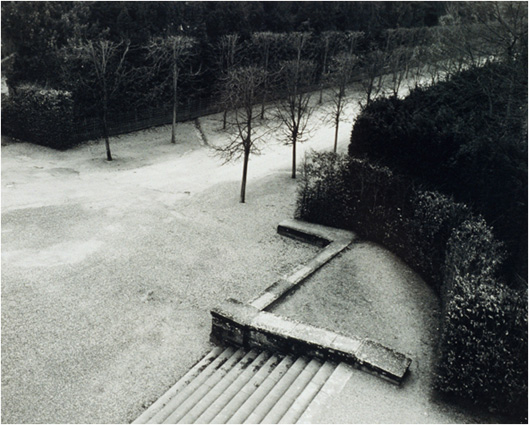
Glose (Garden Path #2 - Versailles
Garden Path #2, Versailles, Gelatin Silver Print by Karen Bell

Easy to forget how young I was
when asked to kill or be killed.

The past is a window caked with
ashes of spent years. Tutankhamen

clasped his first golden scepter
at ten. Released it at nineteen.

Framed by a striped Nemes headdress,
face on his sarcophagus is confident,

wiser than time. Our own pyramids
were built atop recruits fresh

from high school, more comfortable
holding a rifle than a razor. Wars

are always fought by children. A kid,
once dared, will leap from a rooftop

into a pool. Regret is a word
in dictionaries of old men.


Bill Glose is a former paratrooper, Gulf War veteran, and author of the poetry collections Half a Man (FutureCycle Press, 2013) and The Human Touch (San Francisco Bay Press, 2007). In 2011, he was named the Daily Press Poet Laureate. His poems have appeared in numerous publications, including Narrative Magazine, Chiron Review, and Poet Lore.

“Just Enough Hope” by Toby Van Bryce

Van Bryce (Santee Canal Park, SC #6)
Santee Canal Park, SC #6 by Karen Bell

A van from rehab that looks like it belongs to a psych ward takes us to our first outside meeting. Most of us are drugged up on Ativan and Librium to detox and probably look like psych ward patients—drooling and dazed. We get to an old white church with high steps and get out of the van and smoke cigarettes. The general consensus of everyone is that there is no God and we hate him.

We all walk to where the meeting is and see a square shape of tables set up with almost every seat full. I sit down at an empty seat and stare at the people across from me. They don’t look like any of us. The guy directly across is wearing a blue pin-striped blazer with a silk white shirt and black creased slacks. The girl next to him has on a black business suit with a purple blouse and black high heels. I’m wearing sweat pants with sandals and a hooded sweatshirt that says Bong on it. The girl sitting next to me is wearing pajama pants and a hooded sweatshirt. Everyone looks at us like we’re retarded 10-year-olds.

The meeting starts and I get up to get some coffee. Someone begins reading the Twelve Steps. I sit back down and they finish the readings then some guy in a suit and black spikey hair stands up front to tell us his story. He says his name is Dan and that he’s an alcoholic, he starts talking about his childhood. I guess his father used to beat him and he was poor all his life. He has spent years in prison for robbing a store high on methamphetamines. Dan lived on the streets and says he was a prostitute having sex with men to get high. Listening to Dan gives me gratitude I did not know I had.

After he’s done sharing, everyone claps and they pass around a basket for money but no one from rehab has any. The other people pull out their wallets and wads of money. Part of me wants to grab someone’s and take off to get high but I don’t. At least I know these people have money again, and I’m guessing they didn’t when they first came in, which gives me hope that someday I will too.

A blonde girl shares next. She has tan skin with perfect mascara and red lipstick. She’s wearing a tight black tank top and says her name is Carrie. Carrie talks about being addicted to cocaine and not being able to stop and wanting to commit suicide. Every morning she would say she wasn’t going to do coke the next day but by that night she did and hated herself for it. I can relate to this.

In the end Carrie didn’t have money and had to have sex with dealers just to get high. Her family disowned her and she spent a year in prison on a drug charge. This girl looks like a head cheerleader from a Midwest high school, but her past makes her ugly. I can relate to this too.

An older guy who looks like a roughed-up Jack Nicholson shares next and tells us he has done so much damage to his body that he has cirrhosis of the liver and Hepatitis C. The doctors tell him if he drinks again he is going to die, but they won’t put him on the liver transplant list because he hasn’t been sober for a year. He can never seem to make it, always relapsing before the year is up. Dan says his life is on the line and he can’t stop drinking and he is powerless over alcohol and everything is unmanageable.

The next guy stands up and says his name is Gus and that he’s an alcoholic. He looks at each one of us from the rehab and tells us how his life has gotten better. He used to eat out of garbage cans and sleep on the street, but now he has a job and an apartment and his family back. Alcohol consumed him, and since he went to rehab and cleaned up he has been sober for years and is a productive member of society. He points at all of us and says we can do it too and to keep coming back and life gets better.

Hearing that these people’s lives were worse than mine and they’ve gotten them back gives me hope. I see that they have money and are happy and that’s exactly what I need because right now I want to die and I don’t know how I am ever going to live without drugs and alcohol. I don’t know how I’m going to deal with all the problems I have caused myself over the years and all the people I have hurt. I don’t know how I’m going to make money to eat and I don’t know where I am going to live. I am scared and these people have just given me enough strength to get through the day.

After a moment of silence I blurt out, “I’m Toby, and I’m an alcoholic. I just want to thank you all for telling your story. I’m scared as shit, and I don’t know what I’m going to do.”

I pause and take a sip of coffee. “I related to all of you, and I see that you guys are getting your lives back and it gives me hope that I can too.”

Take another sip of coffee. “I have been trying to stop doing coke for years and I can’t. I really related to your story.” I point to Carrie. “Every morning I tell myself I’m not going to do coke but every night I do it again and hate myself the whole time I’m high. I haven’t lived on the streets,” I point to Gus, “but that’s where I’m headed if I don’t stop because I have no money and no one to help me.”

I look back at the group. “Hearing that you guys have gotten your life back from doing the Twelve Steps gives me hope that I can too. Thank you,” I say.

I sit back down in my chair and drink the rest of the coffee in my cup nervously, not knowing what else to do with myself.

The other people from rehab start sharing just like I did. Telling the others how their stories helped them and that they are really depressed and don’t know what they’re going to do. They say all they want is to drink and hearing the stories makes them know things will get better. The meeting ends and we stand in a circle and hold hands and say the Serenity Prayer.

After the meeting guys come up to me and write down their numbers, telling me to call them. Some ask if I have a sponsor which is a person who takes you through the Twelve Steps. I tell them no, and people offer to sponsor me but I’m too scared to accept.

I go outside and smoke a cigarette really fast, totally overwhelmed from what just happened. We all load back into the psych ward van and head to the rehab with just enough hope to last us until we wake up the next morning.


Toby Van Bryce attends the University of San Francisco’s MFA Creative Writing Program. His work has appeared in Knock Magazine.

Interview with Sarah Einstein

Sarah Einstein

Mary Akers: Hi, Sarah. Thank you for agreeing to talk with me today, and for sharing your wonderful work with us. One of the (many) things I liked about your essay “What I Know of Madness” was the accompanying pictures you supplied. I feel like they add to the mood and understanding of your essay. Sometimes images say more than words can articulate. Have you ever done this before? Paired an essay with your own images? How do/did editors respond to this?

Sarah Einstein: This is the first time I’ve used images in an essay, but I was so struck by the things I saw on the tour that I couldn’t see how I could leave them out. I was particularly struck by the awfulness of the sign that reads “Your Mother Doesn’t Work Here! Clean Up Your Own Mess!” hanging in, of all places, the children’s ward. The sheer obscenity of that took my breath away, and I can’t imagine anything I could write speaking so clearly to the way in which inmates (because that’s what they were) were so thoroughly dehumanized than the cruelty of that sign. It struck me like a punch to the gut, and I wanted the reader to have that same experience.


MA: It was definitely a punch to the gut for me, too. Shocking in its callousness. Speaking of images, what did you think of the image selected for your piece by our artist Wiley Quixote? Do you feel like it shapes the reader’s perception of the story before reading? If so, is that a good or bad thing?

SE: I love the image, and I think it’s perfect for this piece. The way in which the the man’s face, eyes closed, is obscured by shadows that look as if they come from bars on a window speaks so clearly to the experience of the former inmates. I was very pleased that the journal chose to focus on the actual people who had lived and died in the old State Hospital rather than on the ghosts that had been conjured for the tourists.


MA: Wonderful. That’s what struck me–the real people who lived and died there. But…now that you’ve said that, of course I have to ask. Do you believe in ghosts? What (if anything) changed in your mind after visiting the Trans-Alleghany Asylum?

SE: I don’t believe in ghosts, but I do believe that places can be haunted by the horrific events of the past. In fact, what bothered me most about the sanitized ghost stories that were told on the tour–the stories of little Victorian girls who danced to music boxes and of protective, maternal spirits–was that they made the old asylum less haunted, obscured the truth of the atrocities that happened there. I wanted the guides to tell the more awful, more true stories of patients who died because we called torture “treatment,” of patients who were lobotomized to make them easier to deal with and not to make them healthier or happier, of the ways in which the administrations benefited from the slave labor of inmates. These are the things which haunt the Trans-Allegheny Lunatic Asylum, not pretty little girls who dance.


MA: I agree. Thanks for this insight and your wonderful essay. And finally, because we are a recovery-themed journal, what does “recovery” mean to you?

SE: I think “recovery” means so many things. In this piece, I try to “recover” the truths that the fictional ghost stories elide, the stories of people who themselves were sent to “recover” from illnesses we didn’t understand very well, and who were “treated” with the most horrific tortures imaginable. People who, when they were finally released, called themselves “psychiatric survivors” and worked to recover the human rights that had for so long been denied to them. All of this is recovery, and all of it is important.

Announcing our July Illustrator

We are THRILLED to have the wonderfully talented Karen Bell providing her images and photo-collages for our July Endangered issue. I’ve been a fan of Karen’s work ever since I attended her open studio showing at VCCA where we were both fellows.

6trees_versailles

Karen Bell received her MFA in Photography from RISD.  Her photographs and artist books have been exhibited widely including: The Brooklyn Museum, Rosenberg & Kaufman Fine Arts, Ellis Island Immigration Museum, White Columns, NYC; The Alliance Gallery, Narrowsburg, NY; Phillips Exeter Academy, NH.  Public and private collections include Brooklyn Museum, New York Public Library, Ellis Island Museum, Pfizer Pharmaceutical, Akin Gump Strauss Hauer & Feld LLP.  She has received grants from Lower Manhattan Cultural Council/Governors Island 2011, The New School, Womens Interart Center, NYC and fellowships to Yaddo; Virginia Center for the Creative Arts. Karen teaches at The New School and The Brooklyn Botanic Garden in New York City.

When we came up with the theme of ENDANGERED, I knew her work would be perfect to grace that issue. Lucky for us, she graciously agreed to let us use her wonderful images.

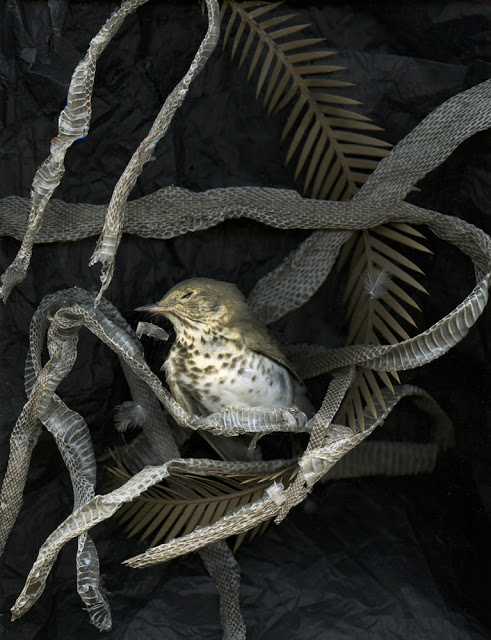
Bird on Perch

These are just a few teaser samples. Join us July 1st for the whole, gorgeous issue!

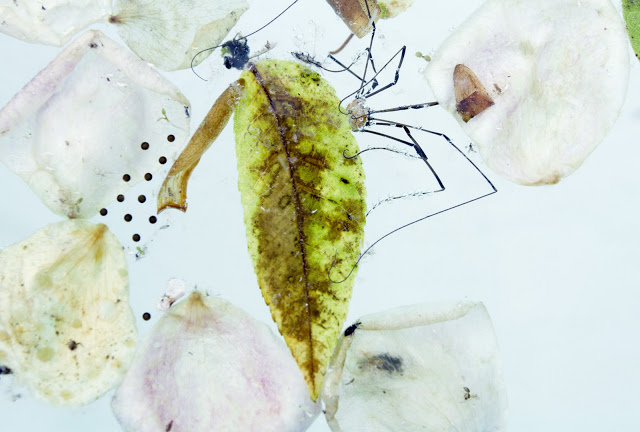
Spider_3705

Phantom Limbs

David Faldet
by David Faldet

Thinking about the sources of my poem, “Tilt,” what comes to mind is phantom limb pain. I wrote the poem when my father-in-law was in a nursing home and my mother-in-law was living alone in the home they had shared for many years. After I wrote the poem my father-in-law passed away. This has only deepened my mother-in-law’s keen sense of absence described in the poem.

The poem ends with an image of two flowering crab trees: one cut off at ground level, the other with its trunk and limbs tilted away from the first to make way for the space the absent tree took when it was living. The cut-down tree is a phantom tree, its presence registered in the twist and angle its limbs etched into the shape of its neighbor.

When my father-in-law was in the nursing home, as in the poem, he was a diminished man, with little short-term memory. Even there, his worries as caretaker of his house remained in exaggerated form: concern about the garage door, an outdoor light, a touchy furnace, the door locks. He couldn’t follow the evening news or read a newspaper story. He was too weak to work a trowel, grub out a weed, or pick a flower: activities that once filled his days. Now, he is gone completely.

And yet, that is a lie. He left a real though unoccupied space, a deep and complex impression, especially on his wife. My mother-in-law spends much of her day going through his papers, his records, his pictures, his souvenirs of a long life as a married man, a family man, a Lutheran pastor. Though in her eighties she has a memory that puts mine to shame. All those pieces of her dead husband’s life are keen, colorful, and evocative of feeling in her mind. Though she has taken his name off the address on the gas bill, her heart is filled with the man whose life intertwined with hers for sixty years.

Although phantom limb sensations can register as freedom of movement and activity, doctors say these feelings are dominated by pain. That may not be true for the living memories of the dead whose lives have grown lovingly intertwined with your own, but from my experience those memories carry a shadow of pain.

Tilt (Faldet)

Interview with Zarin Hamid

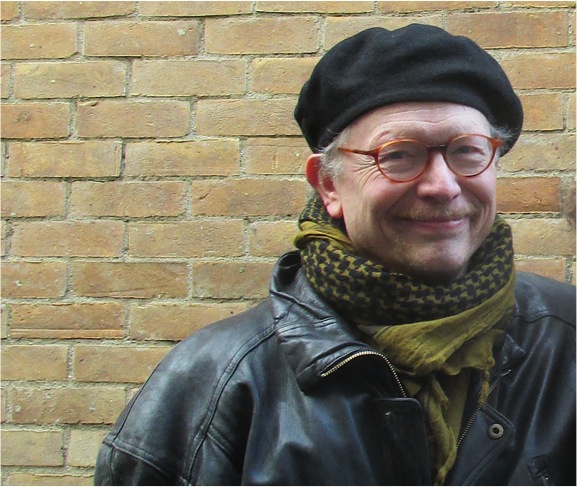
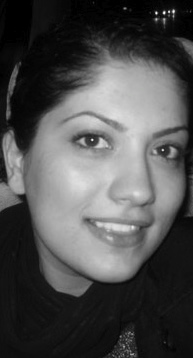
Zarin Hamid

Amanda Meader: I found your piece People Eat Chickpeas Bathed in Vinegar to be very evocative and moving. What was the inspiration behind it?

Zarin Hamid: That poem came about last summer, in the heat and humidity of New Jersey, and it was really just a result of longing across space for Kabul in the summertime, full of sun and dust, but also abundance of fruits and vegetables and cool mountain air once you get outside the city. The weather in the summer is very similar to southern California, even the landscape is similar, and I was reaching for that feeling of happiness of countless times I was stuck in the horrendous traffic of that city, but right next to rose bushes planted in between opposite going lanes, which in itself should give you a picture of the duality of the city, and of the people – nature loving people with their lives and their land ravaged by war. And overall, Afghanistan is a large part of my consciousness, and often my poetry unashamedly treads back to it.


AM: How does your professional work inform your writing?

ZH: My professional work is focused on, in broad terms, values of peace and gender equality, and often so is my writing. But what I often tend to write about has been with me as long as I have been able to think consciously and critically. Maybe my understanding of what I write about has improved over the years, and that is linked to my academic and professional work which has made me grow as well.

I don’t think the professional work informs my writing though – I think it’s the other way around. And I think I have given myself the freedom to go professionally where I am most moved or feel most ethically drawn to, and that often tends to be related to the natural environment, social justice issues, or international events. My critical consciousness first woke up as a young refugee child, and seeing my parents struggle, and trying to make sense of why we were in that situation. This has forced me to look outward, to the world, and to the connections of why and how our world is the way it is.

People Eat (Zarin Hamid)

AM: What is your biggest challenge as a writer?

ZH: Finding the time to write, and to really give it the care and attention it deserves.


AM: Do you have a designated writing space? What special object do you keep on or near your writing space to inspire you?

ZH: I don’t have a writing space – I tend to write in any place, and I don’t have any objects that particularly inspire me to write. In the last few years, I’ve started typing on the computer and usually only use paper when away from a computer or a phone. In that case, I end up using whatever bits of paper are around. In the summertime, on long lazy days, I do love to write outside, though.


AM: What are you working on now?

ZH: I’m editing and organizing previous material and I’m hoping to create a few more pieces this summer, because honestly, there is a limit to editing and you really need to just write until something decent comes out of the mess.


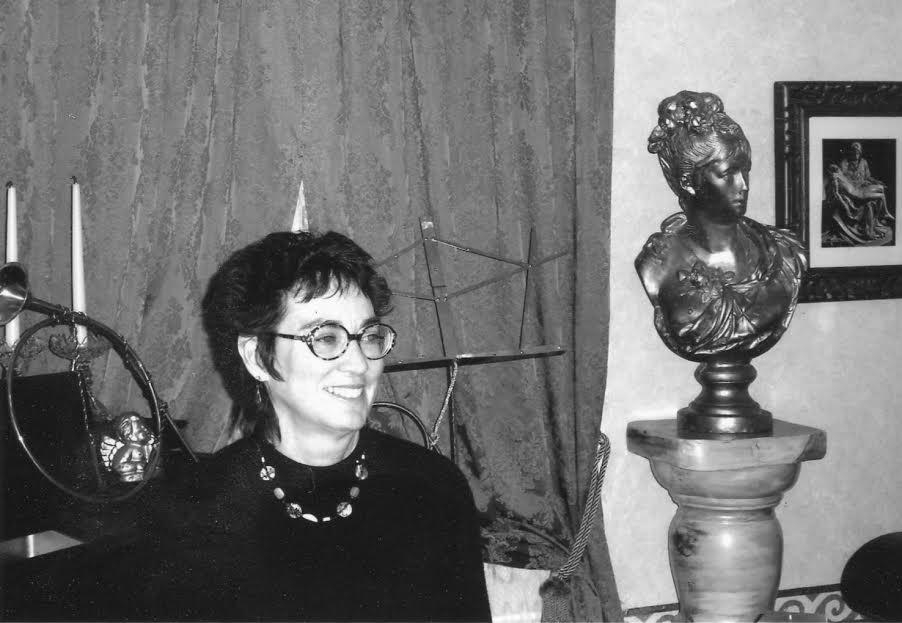
Amanda Abbie Meader was born and raised in Maine, where she returned to practice law after graduating from Cornell Law School in 2004. By day Amanda is a staff attorney for a non-profit organization; by night she is the wife of a very patient man and the mother of two ridiculously spoiled Boston Terriers. Reading and writing infuse her with peace and energy in a way that nothing else can, and she is constantly dreaming up ways to devote more of each day to pursuing her true passion.

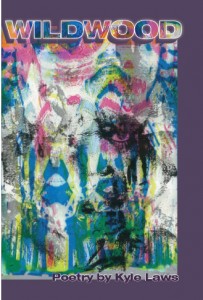
Interview with Kyle Laws

Kyle Laws
Kyle’s poem “Labradorite” appears in the April 2014 issue.

Barbara Daniels: Can you tell us about the title of your new book, Wildwood? I know it refers to a New Jersey shore town, but does it mean more than that, maybe all the wildness in your family or that you’ve encountered in your travels? Do the wonderful bars in the book, such as The Ugly Mug and Smitty’s Bar at the New Jersey shore, imply some wildness in you as well?

Kyle Laws: The name Wildwood has always had a special meaning to me, much more than the town that goes by that name. I grew up on the Delaware Bay, in a town first known as Wildwood Villas that was later shortened to the Villas. It was carved out of land held by the descendants of whaler yeoman families that had settled the area in the late 1600s and early 1700s. It was a “wild,” cut-off part of New Jersey, which is why it was so pristine when I was growing up. Many of the original trees had never been cleared, and some advertisements for the lots made a point of them being wooded. So, it was not only wild in its cut-off way, but wooded as well, which made it much more suited to the name of Wildwood than the barrier island on the ocean side. And, unlike most of the other residents, we lived there all year round in a house converted from a saloon. So, if bars show up repeatedly throughout the work, it’s because I grew up in the remnants of one. Liquor had been stored in the basement where I played hide-and-seek. And because story-telling was so much a part of my mother’s personality, I grew up with that history repeated over and over. The bar, owned by one of the original thirty-five whaling families, was lost in a tax sale.

From there I came west to Colorado, which certainly fits with being wild and wooded. It’s the extremes of landscape that have always been my home.

Barbara: Your book portrays fascinating people—Kay, Ordelia, and your father among others. Did growing up around these people influence your sense of the dramatic or inspire you to depict extremes of emotion?

Kyle: I think people have always sought places that were large enough to contain them, where something besides themselves was in charge. The West originally drew people who didn’t fit in the polite society of the East, who had a respect for the land and the native inhabitants. Of course that changed. The personalities in my family didn’t seem so extreme when compared to a nor’easter. And the overwhelming sense of their own morality (although a sexually-charged one) was not out of place in resistance to the culture of the town. It was two places, one in winter, one in summer. Winter was poor and lonely, but so pure in its way, so stripped of artifice. Summer was like a carnival. To be able to live well in those extremes takes a certain type of personality. And our family had it. It was a place where you could be yourself, no matter what that was. Who were you going to offend? The horseshoe crabs, the seagulls, the families who barely got by because of lack of work?


Barbara: In what ways are you a poet of place–the mid-Atlantic region where you grow up and the American West, where you live now, as well as all the places you’ve traveled to?

Kyle: More than anything else, I’m a poet of place. I remember being at a poetry conference in Cape May, New Jersey in winter, and someone commented that they didn’t really understand my reverence for the land. I was in front of a window looking out as the waves crashed on a shore lightly crusted in snow. It was the shore at its most beautiful. And even though I knew the winter wind would bite my face, I had a strong desire to walk along the tide line. I didn’t understand how that could be lost on people. In some ways it’s about your homeland, even if it’s an adopted one as mine in the West. I remember looking up at a man in the group who was born in Israel. I could tell he got it. Every evening in the Villas, people walked to the top of the street to watch the sunset. It was a ritual. It kept you connected to where you were, what was going on. I think if you understand the land, you understand the inhabitants. And you really need to understand people, even the wild ones of your family.


Barbara: You write so vividly about specific locales, such as La Veta Pass in Colorado, Decatur Street in New Orleans, and the Deer Dance at Taos Pueblo. Do you return to the same places again and again for inspiration or head out in new directions when you travel?

Kyle: I return to a place until I think I’ve gotten it down in all its aspects. Then a new idea will pop up, and there I go back again. I’ve returned to the Villas at least once a year for twenty-five years. My mother’s ashes were spread from the Cape May-Lewes Ferry, and my sister and I visit her resting place each January. I’m now working on another series about the area and my family’s connection to it. But I’m always going someplace new. Often I follow threads backward. The four trips to Haiti were following threads from New Orleans, and threads from the American West. The first horses in the Americas were brought to Hispaniola, now Haiti and the Dominican Republic. But here, in Colorado, to go anywhere south you have to cross a pass, and that’s why La Veta shows up so frequently. This fall, I’ll be returning to Taos once again. I’m hosting a Poetry Rendezvous over Labor Day weekend at the Sagebrush Inn. The Rendezvous group has been getting together for twenty-six years now, longer than the fur traders from which the name came.


Barbara: My favorites among the poems in Wildwood include “The Other Thing Kay Said at the Ugly Mug,” “Ranson,” “Father Left on Monday for the Swing Shift,” and the title poem, “Wildwood.” Do you have favorites among the poems in the book and if so, why?

Kyle: Not necessarily favorites, but I do have a fondness for the long poems in the book, “199 Steps to the Top of the Lighthouse,”“Bottom of My Voice,” “Coronado’s Trail,” and The Bridge Builder.” I like the extended rhythms that can be developed in a long poem. “The Bridge Builder,” and why it’s named that, was written to the rhythms in a sound recording of Hart Crane’s “The Bridge.”  “Coronado’s Trail” was written on the route of that trip. “199 Steps to the Top of the Lighthouse” and “Bottom of My Voice” were also written on location. So, they bring up thoughts and feelings as listening to a song on the radio will about where you were and what you were doing when you first heard it. And as I look through the table of contents, I realize that the majority of the poems were written on site.


Barbara: Some of your poems, such as “Bottom of My Voice,” are love poems. Do you set out to write love poems or are you surprised to find that you’re writing them?

Kyle: I think the hardest thing to write is a love poem, and because of that I would never just sit down to write one. For me, it would be a sure recipe for disaster. I have found that when writing about the relationship between two things, even in a landscape, that a love poem can come out of it. It’s the tension. And I don’t think I’ve ever thought about that until you asked the question.

Labradorite (Kyle Laws)

Barbara: Often your poems are about losses (such as the buildings “washed away by the sea” in “199 Steps to the Top of the Lighthouse” and the darkroom your father lost “to his own darkness” in “Coronado’s Trail”), yet your book as a whole is remarkably upbeat, and, it seems to me, life affirming, full of passion, energy, and desire. Did you intentionally choose such poems for this book, or is your work usually positive?

Kyle: Because I believe in the power of transformation, from dark to light, from despair to hope, that must come through. I’m always interested when people say what they do about the narrative being upbeat. I once had a psychologist scream at me for not acknowledging my family’s negative effect. I came to find it an interesting story, and one that had its origin in a specific time and place. Once I understood that and them, it had little to do with me, and more to do with them. And they were hardly boring. I cannot even imagine growing up with “normal” parents.


Barbara: In “Waiting in New Orleans” you mention “something unsaid” between Hawthorne and Melville. Your poems reveal some secrets about yourself and your family history, but is there “something unsaid” in your own work, some theme or topic you’ve shied away from? If so, why?

Kyle: Someone once asked me about how I got through the things I did, and my answer was “I always told the truth.” If you don’t have secrets, then there’s not much anyone can do to hurt you. There’s little I shy away from. There are things I might not shout about because I’m protecting someone else, but not myself. Because not much would shock me, I am the kind of person people talk to. I hear a lot of interesting things that I never write about. It all goes into the mix of understanding human nature, which is fascinating. But that being said, there are always secrets, ones you don’t even know. Like my maternal grandfather’s family claimed to be Scots and “Indian” as they called it. Well, they were Irish, not Scottish, but at the time if you could pass with a name that sounded Scottish, it was best to use it to your advantage because the Irish were looked down on. It was a variation of Dundee: Dundess. And recent research has the “Indian” showing up as “Mulatto” on a census. I’m still trying to track that down. Wildwood Villas had a covenant in all the deeds against anyone other than the Caucasian race living there. Talk about secrets.


Barbara: You allude in Wildwood to work by other writers, including the poet J.C. Todd’s Nightshade and a verse novel, Ludlow, about a deadly labor dispute in a Colorado mining camp. Are there poets or teachers that have influenced your writing?

Kyle: The first influences were the French Surrealists, especially André Breton. I diagrammed a number of his poems to learn how to layer and build images. After a while, I could see patterns. And I did study with Diane di Prima, a Beat poet, early on. Books mentioned in poems are often ones I’m reading at the time of writing, and there’s some connection to what I’m working on. I prefer the mention to a footnote.

I would have to say artists have influenced me more than writers. I have always looked for strong women in order to figure out how to live my life. Georgia O’Keeffe, Frida Kahlo, Emily Carr, and George Sand (the one writer in the group) come to mind as influences. I have always thought of writing as an outgrowth of how you lived. Create the life; then write about it.


Barbara: The titles of the poems in the book sometimes transport readers to specific times and places, such as “Nat King Cole and Pepe’s Cottage on the Bay 1961,” while other titles are wonderfully mysterious, such as “I Walk the Abyss” and “The River Is Hungry.” Do you choose your titles first or do they occur to you as you’re writing your poems?

Kyle: I always title a work after it is done, after the full concept of the poem has been developed. So, the poem determines the title. Sometimes I try to set a mood for the poem by the title so the reader has a frame of reference for what follows, and titles can do that without having to explain a lot in the poem. The more mysterious titles have a tendency to be philosophical in nature and often provide a link to the poems around them.


Barbara: Your poem “Dazed” is about your first experience of writing poems. What prompted you to begin writing? “Dazed” mentions “the bends / on the way to the surface,” during the process of writing. Does your writing still sometimes cause pain, or is this something associated more with your early work?

Kyle: That image came from the thought of the sheer volume of material and experience I would have to go through to get to any kind of truth, as if I could not hold my breath long enough to get there. The nice thing I discovered about poetry is you don’t have to do it all in one poem. You can take a whole book to do it.

I began writing seriously in my mid-twenties after being a dancer for years. The body wasn’t going to continue to cooperate. Since I’d written pretty consistently since grade school, teachers always encouraging me, I thought it was something I could do if I worked at it.


Barbara: You’ve sometimes written poetic sequences.  Do you plan them ahead of time or do the poems coalesce around specific themes and situations?

Kyle: I would say both. I have finished a poem to find that it doesn’t tell all there is that is interesting about a subject, so have continued onto another, and another, an organic process. And I have started out with a very specific subject and structure in mind. I recently completed a 30/30 Project series for a Tupelo Press fundraiser, thirty responses to Zane Grey’s Desert Gold. That was conceived ahead of time. The structure, which consisted of text from the novel, responses to the text, and related historical and personal footnotes, really helped with writing and posting a poem every day.


Barbara: What has kept you writing for thirty years?

Kyle: I think I have a writer’s temperament. I’ve always been a meticulous observer, and while observing I often draw connections to other things. I see interrelationships, or make them up in my mind. I love to research. I enjoy it as much as writing. My sister recently spent two days in the County Clerk’s office in Cape May Court House (the name of a town, not just the building), NJ patiently sitting in a chair while I researched 300 years of deeds, drawing connections I had anticipated and those that were surprises. I dragged her to a cemetery at dusk to see the site of a mass grave for nine African American Union soldiers washed up on shore not far from where we grew up. She bragged to my brother about the cemetery, but not the two days in the stacks. It really is the adventure of discovery, coupled with the telling. I write easily. It’s the editing that is a slow go, as it should be. Poetry is my main medium. I love the rhythm and sound of words.


Barbara Daniels received a 2014 fellowship in poetry from the New Jersey State Council on the Arts, and one of her poems was selected for the 2013 Best of the Net Anthology. She is the author of a book of poems, Rose Fever, and the chapbooks The Woman Who Tries to Believe, Quinn & Marie, and Black Sails. She earned an MA at New York University and an MFA in poetry at Vermont College.