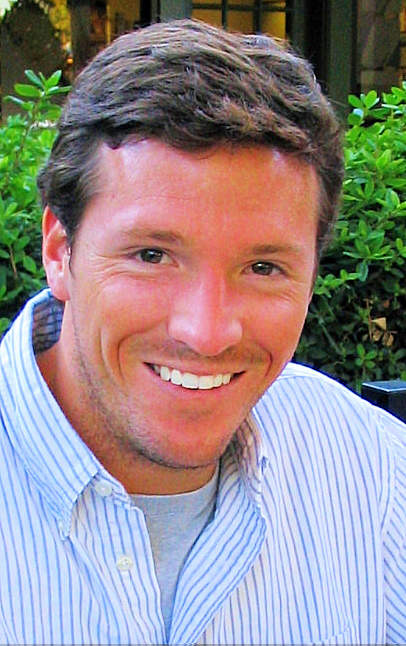
Scratching the Surface of Writer and Artist Murray Dunlap

Murray Dunlap


When you visit Murray Dunlap’s author website, the image that appears at the bottom of the homepage is of a horribly mangled Volkswagen Jetta. Above it is the cover of his recently-released story collection, Bastard Blue. The photo, which he took himself on family property in Carlton, Alabama, is of a peaceful, misty southern lake. This dichotomy seems to capture Dunlap’s life in so many ways—in the violent crash that changed his life so dramatically, and in the creative world that has been his oasis. This dichotomy also lives on in his stories, which foreshadow much of the suffering that he himself will face after all these stories were written.

Dunlap grew up in Mobile, Alabama. He went to the University of California–Davis, with the purpose of studying under Pam Houston, a writer he much admires. There, he married a woman from his hometown, graduated, and moved to Tennessee. In 2008, St. Paul’s Episcopal School hired him to teach English and creative writing. So, he returned to Mobile, Alabama. But just two weeks later, on his way to the recycling center (because it’s in those mundane moments that accidents often happen), and on an odd date (6-7-08), someone ran a red light and came close to killing Dunlap instantly.

But Dunlap survived. In what he calls “a time out, a time to heal,” he lapsed into a 3-month coma. What needed healing? A fractured pelvis, a broken clavicle, and the most broken part of all—his brain. When doctors, unsure if he would ever wake again, played his favorite singer Ray Lamontagne (because music, it’s been discovered, will stimulate the brain), still in a coma, he began to sing along. This was the first sign that Dunlap would revive.


When the time out was over, the hard work began. As someone with a traumatic brain injury (TBI), he suffered from amnesia. He had double vision. And this once fit young man, who had run 5 marathons and spoke of long-distance running as keeping him “going,” along with hikes with his dogs, was now wheelchair bound. Thus began the long journey back to himself. One year of therapy every day took him from the chair to a walker. And after necessary eye surgeries, his double vision improved, his balance is returning, and he recently began to attempt to jog again. “More like a crawl,” he calls it. But that crawl is a huge victory.

Along with these physical challenges came the journey out of amnesia back to himself. If you can’t remember who you are, who are you? Dunlap had to ask these questions constantly, and his marriage became another casualty as a result of this unclarity. His wife felt that he’d changed to the point where he wasn’t the person she’d married.

Therefore, Dunlap had to begin a new slate in all ways—physically and emotionally. Before the accident, he painted, photographed, hiked, ran, and wrote. Mostly, he wrote. He’d published in respected magazines before 2008, received two Pushcart Prize nominations, and an earlier version of Bastard Blue was a finalist for the Maurice Prize in Fiction. Since 2008, he has edited What Doesn’t Kill You …, an anthology comprised mostly of fictional survival stories (two are nonfiction, Dunlap’s included), and his own thematically linked story collection was intentionally released on the 3-year anniversary of his accident, June 7, 2011. Both books are published by Press 53.

So, how do you rethink who you are? Here’s a glimpse “beyond the surface” of Murray Dunlap’s inspiring journey.


Tara Masih: First, Murray, congratulations on the publication of your story collection Bastard Blue. Can you tell us a little bit about what this means to you?

Murray Dunlap: It is utterly amazing. I have been on and off again working on this book since I was in college about 20 years ago. It is an amazing thing to have, what deep down I knew was good, under my arm like a football. I finally get to cross over for a touchdown!
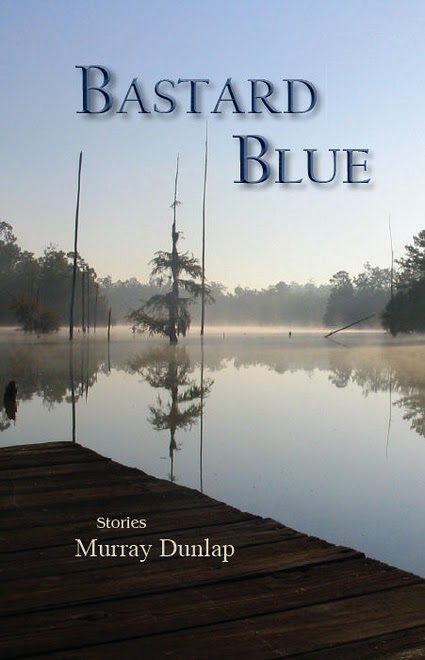
 

Book Cover

TM: In another interview, you discuss how you revised the collection, once titled Alabama, to suit an editor’s wishes. Then the editor dropped the book. What did you learn from this disappointing experience?

MD: I learned not to get overexcited when the paperwork has not yet been signed. Not to trust anything until it is a done deal. I learned to be a bit of a skeptic. But I have to say, due to my inexperience, I really didn’t know what I was doing with Alabama. I knew some of the stories had been published individually, but I didn’t get how it all fit together. So, now I have a collection that at last all fits together. It makes more sense as a book. I also have to say that I am glad that Alabama was not taken then. I am much more proud of Bastard Blue and, to be honest, feel it does a much better job of describing who I am and what sort of writer I am.


TM: Your stories are wonderful. I wanted to skim the book, to save time, but I had to read every word. Your use of names is intriguing—Jimbo Thames, Tripper, Elvis. Can you tell us what it is about naming that makes you pay special attention to this part of the characters you create?

MD: In my mind—and I may be making this up out of thin air—the name of the character reads into the first impression the reader is given, and therefore, puts a seed in the reader’s brain that stays with them. I enjoy naming characters and find it gratifying when a character (like Elvis) lives up to this specific quality. I also tend to be reminded of the people I know who might be a bit like the character. I then proceed to allow that name to guide me to find one in fiction, as I don’t want to be sued!


TM: Your use of dialog reminds me of Raymond Carver’s. You deftly reproduce conversation, with subtle subtext. Did you learn this from someone, or is it a natural ability?

MD: Now that is easily the most flattering question I have ever been asked. Carver! He is maybe my all-time favorite writer. I think what I have learned in dialog started with Michael Knight and ended with Pam Houston. Now those two writers—like Carver—have a knack for being honest within the character that is remarkable. I try my hardest to emulate these two in all of my dialog, every single time.

The thing about dialog is that it must be truly honest. If you think for even a second, “Hey, that guy would never say that”—the honest flow is ruined. Honesty with the character’s world is paramount. I’ll say it again. Within the world of the character, the writer has to maintain a running sense of what he or she would or would not say. It has to be honest.


TM:
You’ve said that writing has helped you recall your personality. In what ways? What has come back to you?

MD:
Rereading scenes in my own work has been extremely revealing. I do believe that my sense of humor has been the most easily attained part of me to get back. By reading my own dialog and seeing what the characters think is funny and why I, as a writer, think it is funny, I can figure out the context. For example, the way the men at the bar in “The Black Oyster” story have a natural jibe with one another is funny to both the narrator as well as the reader—I hope.

Also, as another example, “The Dogs Go Too” taught me about my love of the canine species. I guess I didn’t need to relearn that, but it has been good to see that I was like—
and am like—the person I want to be. A dog-loving writer with a touch of a sense of humor.


TM: Yes, there is gentle humor in your writing, and dogs are ever-present. And wolves. I loved “A Wolf in Virginia.” What about these creatures inspires you?

MD:
My entire life, I have been in love with dogs. I am not sure why it is that I feel the need to understand them, but it has carried over to wolves. I think in wolves we see a truly wild animal, and we have dogs, a humanized creature close enough to wolves that we can identify with and are lucky enough to be able to recognize the beauty in. It makes me happy that you enjoyed “A Wolf in Virginia.”


TM: I couldn’t help but have this sense of constant foreshadowing when I read your book. Your stories are like the cover—the surface is placid (for the most part), but there is something lurking in the water and in the stories, which are very much layered. Alligators, car and train accidents, death masks, fire, tumors, infidelity in attic spaces, wolves—there is even a story centered around the loss of legs in “60 Seconds.” Have you realized all this yourself? Does it make you in any way feel that you had some premonition?

MD: More of an after-thought with “60 Seconds.” That story is fiction, but based on an entirely nonfiction accident where my own legs were chopped up by a boat engine. No kidding. It has also given me the feeling that I have premonitions. For example, in “Cat Stories” I talk about a girl who is forced to relearn almost everything due to a car accident. Makes me wonder what else I already know!
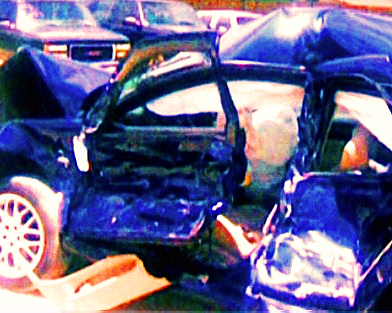
 

mangled car

TM: The color blue also seems to be prevalent in your life—in the car that crashed, in your painting, in your cover, in your title, in the name of a fictional dog. Does the color have some meaning for you? Or is it just a coincidence?

MD: I simply like the parallel between the color and the emotion for which it represents. Not really sure there is any more to it? I will say that my car I was in was blue, when I was very, very close to dying in that car crash, so maybe that has given it even more weight.


TM: I also want to congratulate you on your recent attempts to run again. Since that was taken away for three years, what other ways have you found to “keep going”?

MD: So much was taken away, it has been a circus act of attempting to relearn all sorts of things. Thank you for the congratulations! Running has been such a big part of my life that somehow the addiction for endorphins managed to survive a 3-month coma and a year in a wheelchair. I’m a bit in shock that I am still plodding along!

But I also have to admit that I have no idea what drives me to do this. I suppose the waistline is part of it, but there is clearly something else at work. I am learning in this mess that I am one very determined person, and I guess maybe that’s it more than anything . . . that this has become a goal that I simply refuse to give up.


TM: I understand you did some sculpting. Tell us about the sculpture, WTF2.

MD: It’s an old college sculpture that I think had more humor in it than anything. But now that my life has become fairly dramatic, the humor has converted into disbelief concerning my present situation. Hourly, I am forced to shrug my shoulders and invent an explanation for why I can’t do something anymore. Or simply explain why it is that everything is more difficult. For example, I almost broke my neck this morning getting out of the shower. I have major balance problems, and that combined with a moment of leaning too far forward and having slippery feet . . . well, you can imagine the rest.
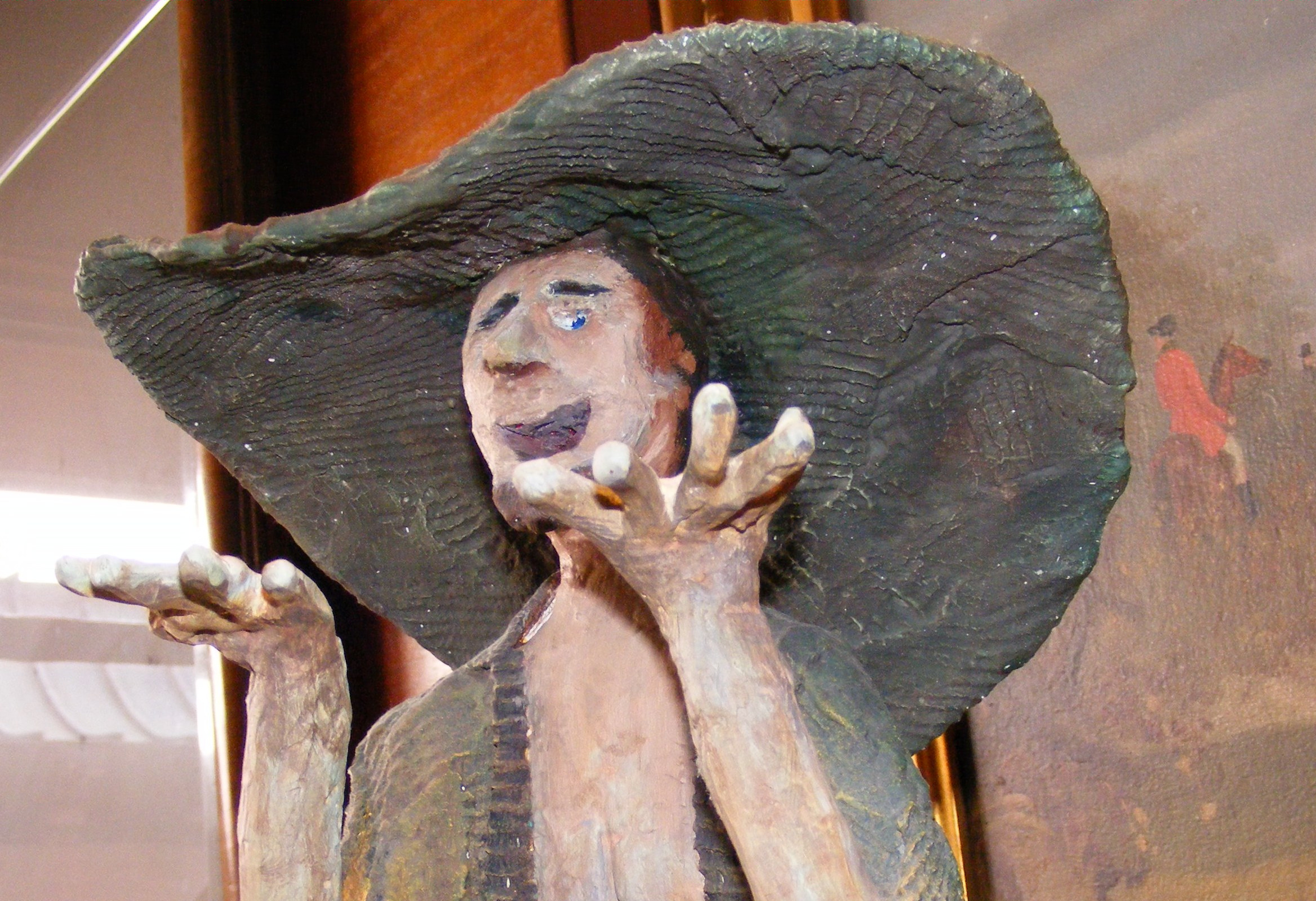
 

Shrugging cowboy

WTF2, plaster sculpture by Murray Dunlap


TM:
Well, I’m very glad you didn’t! So you were speaking of writing when you said this before the crash, but what do your words mean to you now?: “You’ve got to have a support system as long as a river. You’ve got to know that there is no end to the struggle and that the struggle is the thing itself.”

MD: Of course! It is that trying to make enough sense as a writer to get words out there that demands a support system. And struggle is what it is all about. If we all lived in paradise, no one would need—or care—for all of this introspection, and the underlying tones of struggle in our daily conversations reveal more than most of us realize. We care because we want to know how to deal with each other, and thus, how to look at our struggles in a productive way.

So the support system I have now found outside of writing, in the process of recovery from TBI—and surely we all find this at some point in our lives—is that family and friends are not just handy for kindness, but required to survive. I can’t imagine where I would be without the love they have held out for me to hold on to.

One example: my dear mother has been my “driver” for all of this, and I cannot imaginegetting through this ordeal without her help. Because our society has revolved around the ease of transportation, that has been the most truly irritating thing to suffer through. I can drive now, but I’ll be honest, our state system simply does not work. There are so few people who work for the state as driving rehabilitation specialists, you can spend months at a time between visits. As a victim of traumatic brain injury, it is simply the state trying to keep everyone safe. And I should add that not all states have this system, and therefore, I am lucky to have the process in place at all. That said, I repeat that it doesn’t work. I owe my mother the world for helping me through this ordeal!


TM: Finally, as an artist, writer, human being, what advice would you give to people who are affected by TBI? And to their friends or relatives?

MD: Keep, keep, keep active! Never give up on yourself if it is you that has been hurt, and never give up on your friend who has been hurt. Just remember that TBI drastically affects memory and your friend may not remember what you have done to help him. Remind him! Anyone with a TBI will understand what you are doing and appreciate the help painting a clear picture of what has happened! For the one with the TBI, I cannot emphasize enough the importance of staying active. . . . Anything you used to do, figure out a way you can at least do a version of whatever it was. Like jog. As ridiculous as I look, and despite the number of times that I get called out to—“Are you OK?”—it is ENTIRELY worth it to return to this simple act of exercise. And write. I don’t think what I have written since the wreck is as good (yet), but just doing it allows my brain to return to the various connections that I was familiar with before and to return to my old self. It has given me a life back. It has been 150 percent worth it to keep trying!


Tara L. Masih graduated with a minor in sociology from C.W. Post College in Greenvale, NY. During this time, she worked as a part-time teacher’s assistant in a school for children with emotional and physical disabilities, as well as at the school’s weekend Respite Center. She also answered a crisis hotline for several years. Today, she is an award-winning editor and writer. Her most recent book is Where the Dog Star Never Glows.


“Status Check” by Tiff Holland

Polihale, Hawaii
Polihale, Kauai, Hawaii, 2007

I call Mom every morning, or she calls me. We check on each other. She asks if the room is spinning. I ask about her breathing. Most days it’s a quick hello, status, goodbye. I ask how she is and she says, as well as can be expected. When she asks me how I am, I tell her I’m fine.

I’ve been mostly fine for almost a year now, but some days she doesn’t believe me. She’ll ask again, maybe even a third time. “Are you sure?” she’ll say. “A no-shitter?” And I’ll tell her it’s a no-shitter. Maybe she’ll say my voice sounds tired, ask, am I tired, but I sleep more than anyone I know. I have to.

Usually, if I sound funny it’s because I’m still in bed. What she hears is my sound machine, the near white noise of the sea crashing on waves. I tell her this and she tells me to go back to bed, but if she calls while I’m still in bed, I’ve slept too long or lingered too long with the dogs. So, I get up. Staying horizontal too long is a sure way to get dizzy.

I can tell a lot about Mom by her voice, too. When I talk to her she’s always been up for hours. Her husband, Three, gets up at five, wakes her getting ready for work. He doesn’t know how to be quiet. When he comes to the house his voice echoes off corners that don’t seem to exist the rest of the time, amplifies him. He walks loud and always manages to jingle the dogs’ collars when he leans down to pet them. His chair scrapes the tiled floor and when he opens a paper bag, the whole house opens, the whole world.

Sometimes the world still falls down underneath me, but it almost always rights itself quickly. My vision rarely bobs. The blurriness is minor. I’ve only seen double once in the last six months. We’ve finally straightened out my meds, even found one to stop the ringing in my left ear. There are days I can actually hear her voice, garbled but her, without my hearing aid. Mom has always had a great telephone voice, so feminine. I never understood how a voice could be so feminine. When she’d answer the phone at the beauty shop it made you want to come in, sit in her chair, tell her your secrets. And when a man would call, it would turn ever so slightly, smoother, like pillow talk standing up. In person, with a man it sounded tangerine. I don’t know how else to explain it. Her voice made her sound even prettier than she was, made the man feel like he was more desirable than he could ever be. But now her voice is weak from the steroids, the oxygen, the inhalers. Usually, when I ask how she is she tells me she’s fine, it’s just the meds, but lately, she’s started to tell me how hard it is to get her breath. She’s started talking about maybe not being around. She lost a tooth and didn’t want to get it repaired, and this worries me, this not caring. Last week she admitted that she absolutely couldn’t catch her breath—twice. She didn’t tell me when it happened but told me a few days later: no air came in or went out, no matter how hard she tried.

Yesterday, she couldn’t speak a complete sentence. I drove straight over, hooked up her portable oxygen, held her arm as we walked the ten steps to the car. She had to stop twice. I wanted to be strong enough to pick her up, carry her. Instead, I took her to the hospital, had her admitted. That’s when I learned she was still smoking.

She had this gorgeous doctor, and she admitted to him she’d been smoking, probably because he was so good looking, because of her own weakness for that sort of thing, because he held her hand when he talked to her and promised he’d make her feel better. She pointed at me when she made her admission, as my jaw fell, told me not to judge. She told the doctor it was only four cigarettes a day. He had perfect features and hair, which she complimented him on adding she knew what she was talking about.

Later, after the morphine, she told him that while he was good looking, she would have given him a run when she was younger, that’s how good looking she was, and he told her she was still very pretty. She waved him away, turned her head, but her skin gained a luster I hadn’t seen in a while. He asked her more questions. Apologized he couldn’t fix her up there and would have to admit her, and she said that might not be that bad, maybe she’d see him again. She actually tried to conjure up that magic voice, when she said it, but she couldn’t. It was gone.


Tiff Holland’s work has recently appeared in Blip, elimae and Frigg and has been thrice nominated for the Pushcart Prize. Her chapbook “Betty Superman” won the 2011 Rose Metal Prize for short-short fiction. Her poetry chapbook “Bone In a Tin Funnel” is available through Pudding House Press.

Read an interview with Tiff here.


Showcasing the work of Margaret Atwood

I am a huge, slavering fan of Margaret Atwood’s work. I first read The Handmaid’s Tale in 1985, and it took the top of my head off. Thereafter, I read everything of hers I could get my hands on. The Double Voice, the poem she graciously permitted us to print in this issue, became a standout poem for me in those early years when I was grappling with what it meant to be a woman, and a creative woman at that.

I grew up spending a lot of time in the wilderness. Our first house in the Blue Ridge Mountains was located down a narrow dirt road in a holler, a mile away from our nearest neighbor, with two creek crossings (no bridge–we just drove right through). In the winter, we kept our vehicles at the top of the hill and first walked up there to drive to town, then brought our groceries back down by toboggan, usually once a month. (We bought a lot of powdered milk and pinto beans.) I’m sure it was a difficult existence, especially for the adults, but it was a magical time for me. I’ve read that Margaret Atwood spent many months in the Canadian wilderness as a child, and I can’t help but wonder if some of my affinity for her work is related to the similarities of our early experiences, although back then Canada seemed like a world away from Check, Virginia.

Our first winter in that house was the winter of 1976, an especially snow-heavy winter all over the east coast. I missed school the entire month of January because of the excessive snow. I also remember watching the news after the freak snowstorm in Buffalo that year that left people climbing out of their second-story windows to get out of their houses. I distinctly remember thinking, “Who in their right mind would ever live in such a place??” And here I am now, going on 11 years in Suchaplace, NY. A southern girl at heart, I now live so far north that parts of Canada are actually south of me. Oh, irony.

Anyway, this was meant to be a post about Margaret Atwood and her amazing work. I’ve heard her speak several times, once in Buffalo, once in Toronto for her clever, theatrical, and environmentally consciencious launch of Year of the Flood. For intellectual stimulation and wry wit, she never disappoints. In 2012, at the annual AWP conference in Chicago, she will be keynote speaker–a Do Not Miss event.

Here is a video link of her brilliant talk at a tech conference in which she discusses The Publishing Pie (featuring her own hand-drawn slides). I highly recommend this discussion of the role of authors in the changing publishing landscape. In response to popular demand, she made several of the slides into t-shirts, including the Dead Author t-shirt pictured below, that you can purchase at Cafe Press. Clearly she’s an author not afraid to embrace new technology, and that alone would be enough of a reason for me to admire her.

And here is a fun video from one of my favorite shows, The Rick Mercer Report, in which she answers the question Poet first? Or novelist first? Surprise answer? Goalie!

And in our new October issue, we have a wonderful piece by Valerie Fioravanti that features an appearance of the Divine Ms A herself: Touching Margaret Atwood.

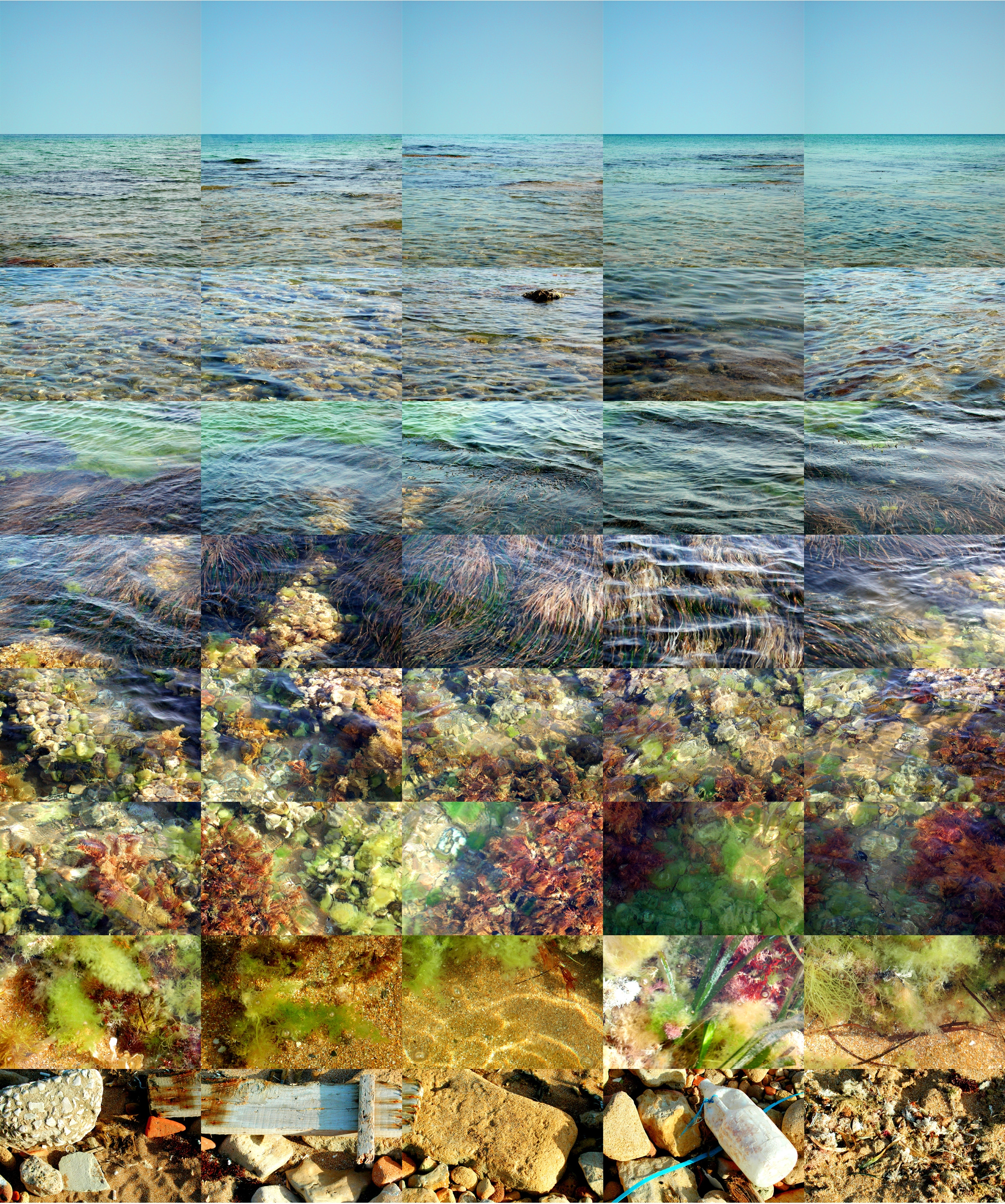
Introducing Matthew Chase-Daniel


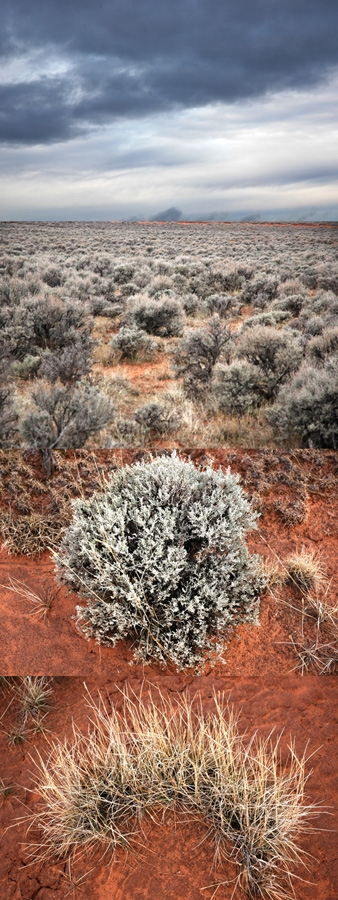
We are honored and absolutely thrilled to announce that the guest illustrator for the Ocotober issue of r.kv.r.y. will be the fabulous Matthew Chase-Daniel. I’ve admired his work ever since I was first introduced to his photo-assemblages in an issue of Orion (one of my very favorite magazines). These are gorgeous, landscape-and-nature-themed pieces that embrace the cubist notion of seeing many things all at once. But I’m probably mangling the explanation of his intent. Here are a few sample pieces and a better description in Matthew’s own words:


desert path


“However accurately photography has captured /images, it has not always represented the way in which we see. Seeing is a dynamic activity. A traditional photograph captures a brief moment in time and place. The camera is still, focused on one particular spot, the shutter opens and closes in a fraction of a second. How we see however is vastly different. We glance about. We focus on minutiae at our feet, than scan the horizon. We watch the play of shadows on the land as clouds blow by overhead. We walk down a beach or down a forest path, collect shells, watch flocks of birds fly on the wind, see waves gather momentum, crest, break and withdraw.

In my series of Photo-Assemblage I work to capture this elongated experience of seeing. I do not photograph only one moment in time, but rather a group of moments, selecting the most essential details of a place. Creating works of art this way draws on the traditions of photography, painting, and cinematography. Composition happens in two distinct phases. The collection of /images takes place in the field. This process might be completed quickly, or may take hours or days. I often return repeatedly to a certain place, waiting for a particular convergence of elements such as light, tides, or weather. Sometimes I move very little or not at all while collecting the elements. At other times, I may walk, climb trees or a ladder, wade into the ocean, or paddle across a bay. The second phase involves the arrangement of the photographs. This is a process of editing, of choosing the photographs that flow together to express the original experience of seeing a place through time.”


beach


You can learn more about Matthew’s fine work at his website and view slideshows of his remarkable photo-assemblages.


Matthew is also involved in a fascinating mobile-art venture (an art gallery on wheels) based in the Sante Fe area: Axle Contemporary. Please check out his work and support a fellow artist!


desert

Interview with Walter Giersbach

Maria Robinson: Hi, Walter, thanks so much for giving us “Million Dollar Find” for this issue! I’d like to start with a question about your inspiration for the story. The antique “smalls” you mention—cigarette tins and “toogles” (what a great word!) and phone-dialers—are such immediate conduits to “the past that’s disappearing,” as Archie says to Maureen. As soon as the toogle was described, I found myself imaging a whole world around it. Were you inspired by a real-life “small”?

Walter Giersbach: Hi Maria, thanks for wanting to talk about “Million Dollar Find.” The story was generated by a writing prompt using the words “million dollar yard sale find.” A score of my stories published in recent years have been generated by prompts—good thought-provokers.

I hang out at flea markets, and used to drop off my daughter to work at a sweatshirt concession in Englishtown back in the late ‘80s. And I wandered the aisles in those days collecting fast-food drinking glasses. (I still have more than 300 in my attic.) The flea market is a field of dreams for the Saturday-morning searcher—a place where past and future meet and the unraveled pieces of lives are knit together. Often, the treasure found is unexpected.

For me, the poignancy of the story lay in a retired widower floating through his dwindling days until he stumbles into a possible relationship. Will it reach fruition? Perhaps. I hope that it also feels right that surprises come from unlikely places.


MR: Fast food drinking glasses–I remember those! I’m not surprised to learn that you have a personal relationship to flea markets and collecting given how deftly you captured those elements in your story. And I love that the “find” at the end—the connection between Archie and Maureen—is so different from the sort of find that we start out expecting.

I’m a writer, but I’ve never been a collector. For you, do the two have anything in common?

WG: There’s no connection, unless you count collecting rejection slips or filling a filing cabinet with published stories. Rather, the writing comes from inquiry into oddities: one of my stories, “Where’s Old Bill Hughes, Now” (published in World of Myth) came from an apocryphal story of a shipwreck survivor across the decades; another, “Misunderstood Identity” (Big Pulp) is a somewhat true story of an impersonator; and “Fish Stories and the Mermaid” (Bewildering Stories) is a speculative piece built off the fact that animals are adapting to humans. Currently, I’m trying to find a fictional way into prosopagnosia, the neurological condition that makes it tough to recognize people—and the reason why I walk right by old friends.


MR: That does sound like an interesting premise for a story. It seems like you’re rarely at a loss for subject matter! What’s your biggest challenge as a writer?

WG: The biggest challenge often isn’t creation, but editing. Several things need to take place as I exchange the creator’s metaphorical light bulb for the editor’s green  eyeshade: 1) let the story marinate for a week, a month or even a year until I can dissect it dispassionately; 2) scrutinize every word, phrase and sentence to see if they meet my objective, carry the plot forward and advance my idea; 3) read the piece aloud to see where the flow is interrupted by writerly locutions that that are awkward; and 4) realize that for a good writer the story is rarely finished.


MR: So true! That reminds me of a quote from the poet Paul Valery that I often think of when I’m in the midst of revision: “In the eyes of those who anxiously seek perfection, a work is never truly completed—a word that for them has no sense—but abandoned.”

Thanks again for taking the time to talk with me about your work, Walter. I’d like to end our interview with a question about the idea of “recovery”—could you tell us a little about how our theme resonated with you when you were deciding where to submit “Million Dollar Find”?

WG: Actually, an insight, when I realized Archie Mezinis was living through the trauma of being retired, losing a wife, and having little connection with his daughter-in-law. This “unrecovered” life was the theme that meshed.

R.kv.r.y. has an attention-grabbing premise to its focus. The act of recovery doesn’t have to be negative or morose in tone. It describes a lot of perfectly normal actions we go through without realizing we—or our fictional characters—aren’t living optimal or fulfilling lives. Maybe Archie and Maureen will find that heavenly connection without disappointing their friends or family or past.


MR: I hope so. Do you have any other work you’d like our readers to know about?

WG: Just a thought that “Million Dollar Find” is in keeping with my volumes of short stories.  Crusing the Green of Second Avenue (Volumes I and II) were published by Wild Child Publishing and are also available at Barnes & Noble. There’s a lot of recovery–and some small regrets–in those stories.

Interview with Jill Christman

Jill Christman

Jill Christman was kind enough to sit down with me during the summer session at the Ashland University MFA Program where she is an instructor and discuss her very personal story “Nineteen Weeks and One Day.”

Joan Hanna: I was so excited to have “Nineteen Weeks and One Day” in our July issue. This story, like most of your other writing, comes from a personal experience. Can you share with our readers how you came about writing this essay about Hypoplastic Left Heart Syndrome?

Jill Christman: “Nineteen Weeks. . .” was a rare circumstance for me in that I didn’t think I could tell this story. In my first book, Darkroom: A Family Exposure, I tackled
everything from sexual abuse and accidental death to drug abuse and eating disorders. All of these were hard topics, of course, but I felt always positioned to deal with them. In writing about Baby Brother (the name we call the baby we lost), I felt a new kind of challenge as a writer and as a human being—and I don’t know that I’ve gotten to the bottom of this challenge.

Baby Brother’s story is central to a memoir I am finishing now called Blue Baby Blue. This book spans the time from my pregnancy with my first child to the birth of our second living child—about five years. I’ve had five pregnancies and I have two living children. What I’m trying to do in this new book is examine my relationship with fear through the lens of motherhood.

This book was well underway before we found out our baby had Hypoplastic Left Heart Syndrome. The chance of having a baby with this condition—which the doctors told us
was “incompatible with life”—is about 4 in 10,000. Writing this story was particularly difficult because this was not something that was done to me; we made the choice to end the pregnancy. It was an impossible decision to make, and we had only four days to go through with the surgery for legal reasons. In the end, we could not make the choice for him to suffer the way he would have suffered.


JH: I can’t imagine having to make a decision like that so quickly. How long of a period of healing did you have after choosing to end the pregnancy and before you actually were able to write this essay?

JC: It was almost immediate. I got out of surgery, got on a plane and went to my mom’s house in Washington State. I started writing letters to the baby. That’s all I wrote that summer until I wrote this essay—less than a month after the diagnosis. I want to say it was almost like a confession, but confession is too strong a word because I would make the same choice if I were faced with it again. I could actually make the decision much easier with all I know today about what happens to these babies if we try to save them. My husband, who is a poet, and I had this unspoken agreement between us that this was a thing that was so private, so personal, and so painful that we could not tell this story.

People knew we had lost a child but only our closest friends knew the whole story.


JH: So of course, you had to write about it.

JC:
Exactly. I had this compulsion to write about it and my husband had the same need. We realized on the same day that he was writing poems and I was writing these love letters to the baby. The reason I wrote this separate short essay was because I needed to see if I could speak our loss in a more public forum. Reading the essay to the MFA program here at Ashland last summer was a really important part of the process because I was at a point with Blue Baby Blue where I had to decide whether I could make this story part of the book. In the end, I couldn’t not include it; it was too important.


JH: All of your work has these themes of loss and rising up and continuing. Is this rising up and moving on something that comes to light in the process of writing? Or is it a product of healing which you apply to the writing?

JC: I don’t know how to separate the two. I couldn’t live without the writing. I don’t think I could do the healing and the rising up without the writing because it allows me to circle around and around something in a way that is fundamentally healing. In order to write something, you have to think about that something hard, from every possible angle, and what that does for me is clear out the dark and unexamined corners—until those shadowy places no longer have the power to scare or hurt me.


JH: One of the techniques you use is to break the protective wall between you and your reader. For instance, in “Nineteen Weeks” you stop at one point and say, “Wait, No, I’ve written this all wrong. This is not the story. I am lying. I am a terrible liar. I made it up. Let me try again.” I love that you stop and say that. What do you think this does for your reader?

JC: Although I do use that as a technique, in the case of “Nineteen Weeks,” I had reached a kind of human break. I couldn’t finish telling the true story that ended with our baby’s death. It came out on the page in that way and I left the trace of my inability to speak there. Also, I was putting a question to myself: if I could retell the story and make it come out the way I wanted it to, what would I do? Which of course is a way of telling the real story in the negative space.


JH: Jill, thank you so much for sitting down with me today and sharing not only this emotional experience but also your writing process. I have just one final question: What does recovery mean to you?

JC: Recovery for me comes after we do the hard work of grieving, after we go right through the middle of things. This active grieving (much of which I do through writing) is a kind of spiritual, emotional, and psychological inner burning in the space where all the gunk has collected—the grief, the shame, the sorrow, the rage—to get to a place where I can feel joy again. That’s recovery.

When I was writing Darkroom, I came to understand that I had allowed myself to be wholly defined and shaped by outside forces—my free-wheeling mother and my absent father, my elementary school art teacher and my abuser, photographs and family stories, therapists and teachers, my very own flesh and skin—and the act of writing was an opportunity to use my own creativity and intelligence to take an active role in shaping my own life. And what do you know? I think it might have worked.

Interview with Dylan Landis

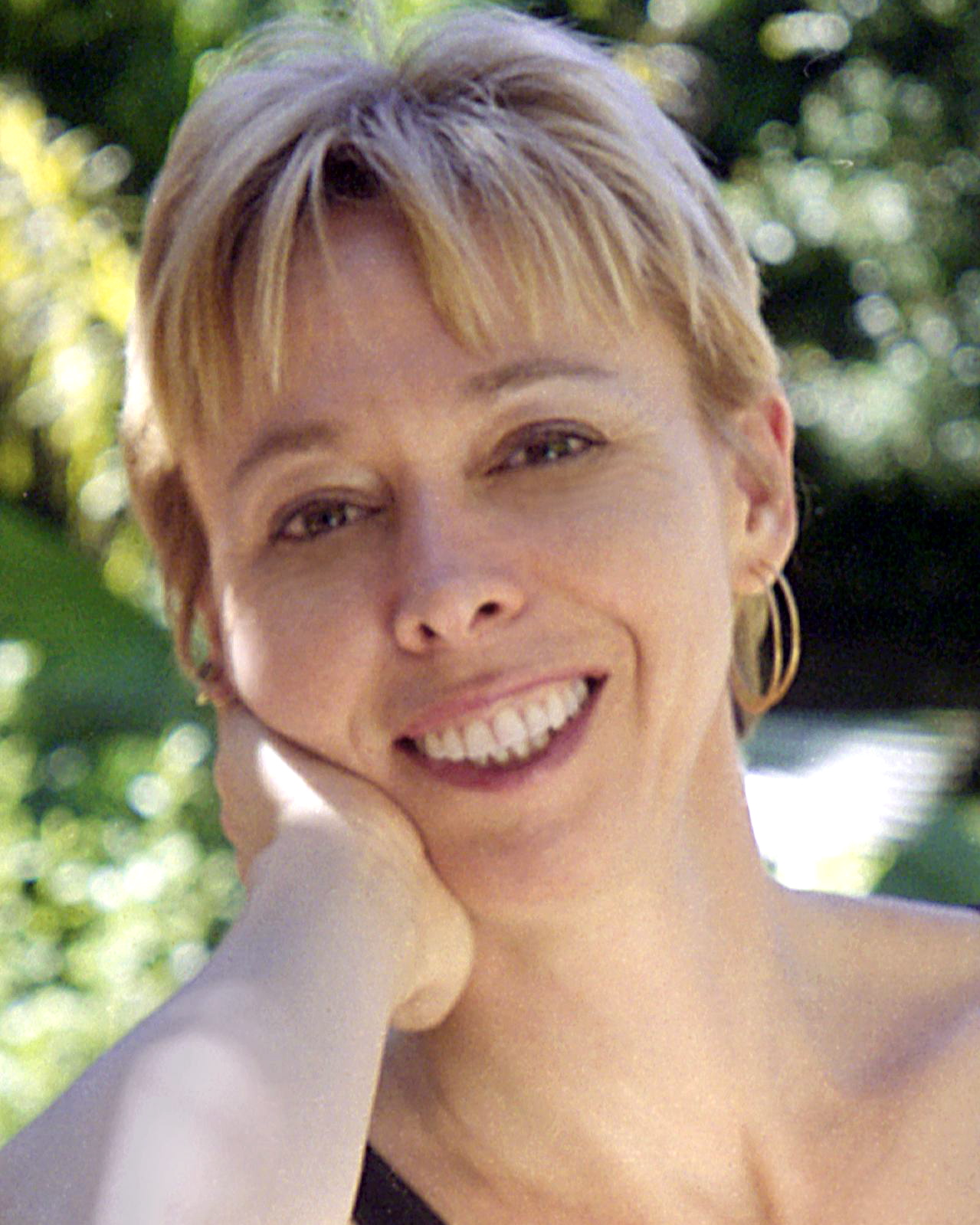
Dylan Landis

Mary Akers: Hi, Dylan. Thank you for agreeing to talk with us today. Where do I begin?? I loved your short story ROSE. It was one of those stories that I simply devoured–for the language and the characters and the circumstances. It struck me as being fresh and pristine. However, I know that what reads easily on the page often requires its author to sweat blood. Could you talk a bit about your writing process and what it takes for you to feel like you have a finished story?

Dylan Landis: I can’t see resolution coming till the very end, and then I struggle toward it. If you wanted an image, I’d give you this—imagine crawling through a culvert for a long time. You don’t know if it will let out, if you’ll ever see sky. And then you smell the ocean, you anticipate sky.

That’s my first glimmer of an ending. It’s a feeling, a grasping for something. In Rana Fegrina, I sensed a profusion of smells on the way, mixed up with a line of Walt Whitman. In Rose, I sensed it would be about the loss that comes with maturity and knowledge, and the imagery of a flower opening. Often I understand my endings viscerally, but not cerebrally.

And I receive false endings, meaning the language appears full of truth and beauty, but it’s really just pretty. The more perfect my ending seems when I first reach it, the more certain it is that I have to get back in the culvert and crawl. It’s always hard.


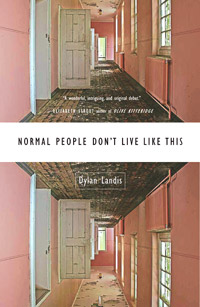
MA: Your stunning novel-in-stories (in which I first had the pleasure of reading “Rose”) is titled NORMAL PEOPLE DON’T LIVE LIKE THIS (Persea Books, 2009). How did you arrive at that title? It’s perfect for the book, and yet I feel like I struggle with titles every time one is required of me. I’d love to hear how the titling process went for you.

DL: I began with a barbiturate title: Daughter, Fifteen. Helen thinks those words in a moment of connection with her daughter, Leah, who’s been stealing and smoking, and it was a story title at one point. So I typed it on the manuscript, where it looked poetic for about five minutes.

Then I tried Rana Fegrina, because the pulse of the book beats hard in that story. My mother thought people would struggle to remember it, and she has good literary instincts.

So I reread the manuscript from page one. I asked it to instruct me, to please tell me what it wanted to be called. At one point Helen marvels at the wreckage of another woman’s apartment and wonders why Leah, whose best friend lives there, never confided in her about the mess: “She knew normal people didn’t live like this.”

I should have bowed to the manuscript at that moment. What a gift.

Book cover

MA: I’ve found that my readers often feel compelled to tell me which of my stories they liked best and which the least. I wonder why that is. Maybe it’s that “box of chocolates” thing–finding the chocolate truffles and avoiding the toothpaste-filled ones, but ironically, one man’s truffle is another man’s toothpaste. Have you found (after publishing your collection) that readers feel compelled to tell you which story was their favorite? And their least favorite? And did that vary widely?

DL: You too? Maybe it’s psychological. If you spread a table with Rorschach cards, people are bound to pick one up and start divulging. But then you’re talking to a psychoanalyst’s daughter.

Some women want to talk about Jazz, in which Rainey Royal, thirteen and sexually precocious, gets molested and possibly screwed by her father’s best friend. It’s not that Jazz is necessarily a favorite. Rather it seems to hold some urgency for them. Some want to discuss whether or not this is rape, because Rainey is feeling both her power and her lack of power. Some want to carefully work their way around to asking if this ever happened to me, but I think what they are really saying is that some kind of violation has happened to them, and they want to know if it’s okay to tell about it.

For that I prescribe the Sharon Olds poem I Go Back to May 1937.

Some people tell me they like Excelsior, about the mother, in which Helen is on the verge of awakening from a life of rigidity into a life of sensuality and art. These readers are often mothers or women in mid-life, like me.

Fiction writers gravitate toward Rana Fegrina. It’s the best thing I’ve written. Sometimes I have no sense that Rana came out of me, and yet I still feel it powerfully.

Richard Ford said, “If loneliness is the disease, the story is the cure,” so perhaps each reader picks out the most cathartic chocolate in the box.


MA: Along those lines, Rana Fegrina was definitely a truffle story for me. I wanted to savor it with tiny bites and make it last, but I also wanted to devour it in one big pleasurable bite. It has stayed with me for years. (I’m sure that says something about me, as a reader.) As the writer-creator, which story is your favorite?

DL: Rana Fegrina is my truffle too.

Writing Rana is the only time I’ve been emotional throughout the process. Symbols of the crucifixion and of Christian grace began appearing during Leah’s biology lab, at a time when her father is dying. I’m Jewish and secular, but I stood in the shower every morning and cried every morning before getting to my desk, thinking about my own father and what the world would be like without him in it, or about Jesus in Gethsemane not wanting to die. Then I would dry off and read Flannery O’Connor’s Mystery and Manners, and get weepy again, reading about grace.

Then I’d work on the story.

Crying every day made the story so much harder to pull off. Too much sentiment. You know Chekhov’s advice—”When you depict sad or unlucky people, and want to touch the reader’s heart…you must be cold.” I was neither cold nor in control. Jim Krusoe, my first reader, said the story failed to capture the transcendence I’d been aiming for. I remember despairing about that, and it took three more months, finally working from some emotional distance, to finish the story—a total of nine months, a gestation.

MA: I’ve read that you feel one of your themes to be “the redemptive power of art.” I love that. It makes so much sense to me, but I’m wondering if you could extrapolate on that for our readers.

DL: I’ll say this inadequately, as neither a scholar nor an artist. I’m an ex-newspaper reporter who spent thirteen years getting her first book of fiction out.

Art requires so much discipline, and receptivity; and in return it connects you with humanity, and transcends what is mundane about humanity, too. This may sound crazy, but striving for all of that makes me feel forgiven, like I have a right to be here after all. Just the act of reading and writing, or answering your questions and looking up what Chekhov said about being cold, bonds me with other souls who care about story, books, language, a higher purpose. I need that. And I need to write about people who don’t yet realize what it means to be touched by that.

Of course I may be producing absolute dreck while rereading Faulkner or Toni Morrison. But as long as I show up, I’m plugging into something larger and more vibrant than anything else I could probably manage to do.

So I wish that for my characters. I see art—and science too; think of Andrea Barrett’s work—as a driving force for some of them, or as a real lack in their lives. Remember that art can be provocative, and artists troubled. The possibilities in fiction are intense.


MA: I’m a big fan of Andrea Barrett’s work, in which art and science are closely linked. My undergraduate degree is in fine arts and I’ve thought a lot about the function of art, the accessibility of art, and the conversation between artist and “consumer.” I believe that art takes two. The artist makes a thing (poem, sculpture, meal, song, whatever)–we could even call it an art widget–but at first it is simply the artist talking to him-or-herself until there is someone on the other side of that art, enjoying it, experiencing it, or even hating it. But in a sense, art takes two brains to be fully realized–the creator’s brain and the experiencer’s brain. Would you like to comment on this?

DL: Janet Fitch talks about the novel as a half-empty envelope. The novelist writes enough to fully engage the reader, who in turn uses her imagination to fill the rest of the envelope. Maybe this is the difference between art and craft: Art invites the participant to interact with it, to complete it. To respond with an imaginative and also a subconscious kind of thrumming.

There’s an extraordinary series of fourteen paintings—black and white lines—called Stations of the Cross, by Barnett Newman. Really, it’s just vertical lines. You walk into the room and think, “What stations? What cross?” and either you dismiss the whole thing, or you keep engaging with it. It seemed to me that on each canvas, he had deconstructed the crucifix into its two component beams—this is simply what I felt, and it was my doorway into the work. It also seemed that the beams’ edges got more static-y, more distressed, as the moment of crucifixion approached.

Barnett Newman said, “A painter should try to paint the impossible.” If the reader or viewer is led to perceive the world in some way that transcends the usual, haven’t mundane and sad and terrible things been washed away, if just for that moment? Is that not redemptive?


MA: I recently had the opportunity to visit the Georgia O’Keefe museum and it felt like a pilgrimage to me. I found myself shedding tears during the movie about her life (and trying to wipe them away discreetly without the other moviegoers noticing). One of the things she said was that the first time she saw New Mexico, she knew it was “a place where she could breathe.” Do you have a place like that?

DL: It sounds inspiring and enviable and productive. But no.

I like to be near other writers, inhaling the same oxygen, and often it helps to leave home to work. I love the Virginia Center for the Creative Arts and the Center for Fiction in New York. I’ve written many pages while sharing desk and dining-table space with novelist- and poet-friends: Susan Coll, Natalie Baszile, Heather Hartley. Once I flew to Portland to work at Cheryl Strayed’s dining table for ten days when she was away. I like writing anywhere while my husband reads nearby.

A perfect space where I could breathe—that sounds a little intimidating, like my writing would have to be perfect, too. My writing is terrible, until it isn’t. The only thing that sends me screaming from the room is the sound of television.


MA: And finally, since we are a recovery-themed journal, what role do you think recovery plays in the creative process? Have you found yourself drawn to /images or themes that you later realized stemmed from something you needed to work through?

DL: Yes, and I hope I never finish working through them. Self-worth, sexuality, body image, childhood. Has anyone finished dealing with this stuff? If you can find it in my book, I’m probably grappling with it in some way – but not in the way that it appears in any one story.

Because this is fiction.

When I gave my galleys to my parents, I said, “I hope you’ll read this as a work of imagination. Fiction is not a Rorschach.” And my father, who is not only a psychoanalyst but a painter, laughed gently and said, “Yes, it is.” Of course, we’re both right.

There’s a bit of my troubled psyche in every character. Or is that empathy, or both? I’m in Helen, the mother, when she’s starving herself. I’m in Rainey when she’s bullying Leah. I’m in Pansy when she’s her most emotionally detached. I’m in Bonita when she thinks she’s embodying Kahlil Gibran’s wisdom and really she’s letting her daughters down. I’m even in Richard, when he’s damaging Rainey with his appetites, though I could never, ever be Richard. I just mean: I couldn’t write Richard if I couldn’t sympathetically inhabit him, if I couldn’t find some small, sick part of my own soul that briefly aligned, during the writing, with the enormously sick part of his.

That’s the dark side, and it’s critical. Think of Mary Gaitskill. But I’m also aligned with Helen when she is loosened by art, and with Leah when she is spiritually moved by science, and with Rainey when she’s lifted above her problems by the sound of jazz.

If any recovery was involved—and surely there was—it probably had more to do with the discipline of writing and revising than with the creative process. I don’t write in order to recover. I write in order to write.


MA: Yes. Perfect. Thank you so much, Dylan. This has been a wonderful, redemptive interview for me and I’m sure our readers will find their own take-away meaning, too. And now for the links.

Dylan’s wonderful collection NORMAL PEOPLE DON’T LIVE LIKE THIS, which I highly recommend, can be purchased here.

You can find out more about Dylan and her work, as well as find links to other outstanding interviews at her website.

And here’s a great audio interview with Dylan. (Hers starts halfway through.)

Review of TORN by C. Dale Young

TORN
by C. Dale Young
Four Way Books
March 2011
85 pages

In TORN, C. Dale Young’s most recent book of poetry, he continues to explore the themes of human frailty, both physical and spiritual, of love and passion, and of tenderness and cruelty.

The poems in this collection beautifully express the irony of the human craving for precision and accuracy—particularly in the field of medicine and in the realm of love—and the unfortunate and inherent fallibility of both. Often Young employs repetition of a word or a phrase, guiding the reader toward understanding by modifying the context each time the word or phrase appears. This repetition also serves to deliver a sense of urgency to the cadence of the poem and the meaning of the whole.

In fact, the very organization of the collection pulls the reader forward through the book, as if moving through a life. Its sections call to mind Blake’s Songs of  Innocence and Experience.

Section I opens the book, delivering the reader into a world of heady innocence, of childhood desire on the edge of understanding, of love just beginning. Consider these exuberant lines from the poem “The Bridge”:

“And I love fountain pens. I mean
I just love them. Cleaning them,
filling them with ink, fills me
with a kind of joy, even if joy

is so 1950. I know, no one talks about
joy anymore. It is even more taboo
than love. And so, of course, I love joy.
I love the way joy sounds as it exits

your mouth. You know, the word joy.
How joyous is that. It makes me think
of bubbles, chandeliers, dandelions.” (25, 26)

By the time the reader reaches Section II, the perils of Knowledge (with a capital K) come to the fore as Young explores the human tendency toward doubt and sin. The poem “The Seventh Circle” expresses it thusly:

“Did Michelangelo dream of hell
while he manipulated shadows
in an attempt to show us heaven?
Did he betray himself with his hands

that admired the strength of other men’s hands?
If he did, we have forgotten.
Yes. Here we see the luxuries of heaven,
the bodies clothed only in light
languishing above painted shadows
that separate these glories from hell.

There will be no Cerberus in our circle of hell,
we are told, only hundreds of swaying hands
reaching up from even darker shadows.” (46, 47)

And finally, section III brings the reader forward, into a world of post-experience, of regret, judgment, and fallibility, and even a weary sort of forgiveness. Consider the following lines from “Self-Portrait at 4 AM”:

“…The mirror

is of no use. It lies, dirty and spattered
with toothpaste and beard stubble and crud.
It lies. That man staring at me is not my friend.

That man wants to hurt me. He has
hurt me before. I have hurt myself.” (72, 73)

In TORN, his third collection of diverse and beautiful poems, C. Dale Young has given his readers a celebration, a gorgeous lamentation, and an attempt, as the surgeon in the title poem tells us with despair, at perfection. And here, Young has come as close to that ideal as fallible words and human hands can.

“Sepsis” by C. Dale Young

Tree in mist
Image by Jenn Rhubright

The fog has yet to lift, God, and still the bustle
of buses and garbage trucks. God, I have coveted
sleep. I have wished to find an empty bed

in the hospital while on call. I have placed
my bodily needs first, left nurses to do
what I should have done. And so, the antibiotics

sat on the counter. They sat on the counter
under incandescent lights. No needle was placed
in the woman’s arm. No IV was started. It sat there

on the counter waiting. I have coveted sleep, God,
and the toxins I studied in Bacteriology took hold
of Your servant. When the blood flowered

beneath her skin, I shocked her, placed the paddles
on her chest, her dying body convulsing each time.
The antibiotics sat on the counter, and shame

colored my face, the blood pooling in my cheeks
like heat. And outside, the stars continued falling
into place. And the owl kept talking without listening.

And the wind kept sweeping the streets clean.
And the heart in my chest stayed silent.
How could I have known that I would never forget,

that early some mornings, in the waking time,
the fog still filling the avenues, that the image
of her body clothed in sweat would find me?

I have disobeyed my Oath. I have caused harm.
I have failed the preacher from the Baptist Church.
Dear God, how does a sinner outlast the sin?


C. Dale Young practices medicine full-time, serves as Poetry Editor of the New England Review, and teaches in the Warren Wilson College MFA Program for Writers. He is the author of The Day Underneath the Day (TriQuarterlyBooks, 2001), The Second Person (Four Way Books, 2007), and Torn (Four Way Books, 2011). He is a previous winner of the Grolier Prize, the Tennessee Williams Scholarship in Poetry from the Sewanee Writers’ Conference, both the Stanley P. Young Fellowship and Amanda Davis Fellowship from the Bread Loaf Writers’ Conference, and a creative writing fellowship from the National Endowment for the Arts. His poems have appeared in The Best American Poetry, Asian American Poetry: The Next Generation, Legitimate Dangers: American Poets of the New Century, American Poetry Review, The Paris Review, Ploughshares, and Poetry. He lives in San Francisco with his spouse the biologist and composer, Jacob Bertrand.

“Sepsis” from TORN (c) 2011 by C. Dale Young. Reprinted by permission of Four Way Books. All rights reserved. Read our review of TORN here.


“Torn” by C. Dale Young

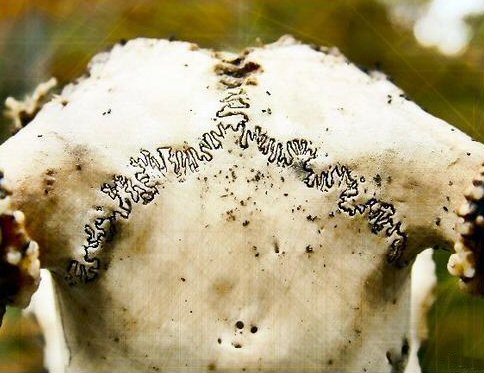
cow skull
“Cow Skull,” Image by Jenn Rhubright

There was the knife and the broken syringe
then the needle in my hand, the Tru-Cut
followed by the night-blue suture.

The wall behind registration listed a man
with his face open. Through the glass doors,
I saw the sky going blue to black as it had

24 hours earlier when I last stood there gazing off
into space, into the nothingness of that town.
Bat to the head. Knife to the face. They tore

down the boy in an alleyway, the broken syringe
skittering across the sidewalk. No concussion.
But the face torn open, the blood congealed

and crusted along his cheek. Stitch up the faggot
in bed 6
is all the ER doctor had said.
Queasy from the lack of sleep, I steadied

my hands as best I could after cleaning up
the dried blood. There was the needle
and the night-blue suture trailing behind it.

There was the flesh torn and the skin open.
I sat there and threw stitch after stitch
trying to put him back together again.

When the tears ran down his face,
I prayed it was a result of my work
and not the work of the men in the alley.

Even though I knew there were others to be seen,
I sat there and slowly threw each stitch.
There were always others to be seen. There was

always the bat and the knife. I said nothing,
and the tears kept welling in his eyes.
And even though I was told to be “quick and dirty,”

told to spend less than 20 minutes, I sat there
for over an hour closing the wound so that each edge
met its opposing match. I wanted him

to be beautiful again. Stitch up the faggot in bed 6.
Each suture thrown reminded me I would never be safe
in that town. There would always be the bat

and the knife, always a fool willing to tear me open
to see the dirty faggot inside. And when they
came in drunk or high with their own wounds,

when they bragged about their scuffles with the knife
and that other world of men, I sat there and sutured.
I sat there like an old woman and sewed them up.

Stitch after stitch, the slender exactness of my fingers
attempted perfection. I sat there and sewed them up.


C. Dale Young practices medicine full-time, serves as Poetry Editor of the New England Review, and teaches in the Warren Wilson College MFA Program for Writers. He is the author of The Day Underneath the Day (TriQuarterlyBooks, 2001), The Second Person (Four Way Books, 2007), and Torn (Four Way Books, 2011). He is a previous winner of the Grolier Prize, the Tennessee Williams Scholarship in Poetry from the Sewanee Writers’ Conference, both the Stanley P. Young Fellowship and Amanda Davis Fellowship from the Bread Loaf Writers’ Conference, and a creative writing fellowship from the National Endowment for the Arts. His poems have appeared in The Best American Poetry, Asian American Poetry: The Next Generation, Legitimate Dangers: American Poets of the New Century, American Poetry Review, The Paris Review, Ploughshares, and Poetry. He lives in San Francisco with his spouse the biologist and composer, Jacob Bertrand.

“Torn” from TORN (c) 2011 by C. Dale Young. Reprinted by permission of Four Way Books. All rights reserved. Read our review of TORN here.