Interview with Ru Freeman

Mary Akers: Thanks for agreeing to be interviewed, Ru. I found your essay (In All Things, Absent) about the loss of your mother to be so moving. Mother-daughter relationships can be fraught with conflict, can’t they? Even in the most loving relationships. A huge question, but, why do you think this is?

Ru Freeman: I think the relationship between mothers and any child is fraught. Physically bringing a human being into the world makes the whole world a woman’s concern; once a small human incubates in one’s body, the boundaries between what is felt within and what is happening outside dissolve. A woman becomes involved in creation, evolution, metamorphosis, all of those big things. How can she then disassociate from the product? Because in a very real sense, a being that was once physically a part of her is now wandering abroad! How do you stay in one place and nurture the happy but also sometimes deeply unhappy wanderer? So, yes, fraught.

The relationship between mothers and daughters are conflicted for all the best reasons – the need to distinguish a daughter’s version of mothering/creation from her mother’s approach, the desire to be somehow original as you go about being a woman in the world when so much of what we do as human beings is timeless and requires no change. So we turn to the way we cook, clean, do or do not coddle children, do or do not tolerate life’s injustices – particularly as they are meted out to women by men – choose to work outside the home or not, even how we dress. In Sri Lankan culture, too, a daughter (or son), remains a child. Then they grow up and have children of their own and I think it is hard for a mother to see that and assume that their child is going to be fully able to take care of little people. The possibilities for conflict? Endless!
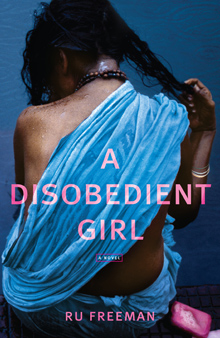
MA: Your gorgeous novel A Disobedient Girl wrecked me in the very best possible way. The relationship between Latha and Thara, the two young girls who grow up in the course of the story, struck me as another meditation on the complex ways that women can simultaneously love one another and undermine that love. Would you care to comment on that?

RF: I love women. I love their multi-faceted way of existing in the world and I want to gather them in my arms and keep them safe from everything! As I raise my three daughters now, I am often struck by the ways in which they pick up the obvious put downs that popular cultures inflicts on women. You know, the bitchy, catty words we are taught to use on other women. I find myself saying “don’t dress like a road tart,” while also defending the people one or the other may describe as being one! I tell them to beware of the temptation to call a beautiful girl a tramp or a slut just because of how she looks, and I tell them unless you actually saw a girl-friend engaged in some sort of unsavory behavior, don’t repeat the gossip.

One of my favorite books is Toni Morrison’s SULA. I think that novel encapsulated for me the way that women’s relationships are fractured by the introduction of men. I grew up with brothers, longing for sisters, and so almost all my most meaningful friendships are with women. They are the ones I feel I must trust even when that trust is betrayed. I am always deeply hurt when that happens, I find myself literally staggering back thinking “But how could she do that? We are the same.” And yet I have caught myself undermining other women with regard to the affections of men. A part of me would like to believe that women play these games because so many men lack the depth to be more than playthings. And so like cats with foolish mice we bat them here and there and amuse ourselves and, just like the felines, often aren’t even interested in consuming the catch! And part of me believes that the reason we consider it fair game to engage in that kind of behavior with another woman’s man is because we believe that no man is ever worth the end of a friendship with our women friends.  But then there’s love. And that complicates what is already so intricate, so complex between women.

If you remember, Latha’s first revenge was not against Thara but Thara’s mother, Mrs. Vithanage, and it didn’t even occur to her that in choosing that particular form of revenge she would be hurting her friend. In writing the story of Latha and Thara, I wanted to explore the parts of them that forgave each other and loved each other no matter what. In the end whatever Thara is screaming at Latha, her real anger – in my mind, I don’t know what the reader thinks – is reserved for Gehan. And in Latha’s mind the real betrayal is also from Gehan. I wanted to go to that place where a woman can find the reasons to explain away the guilt of a woman friend, when she is simultaneously unable to forgive a man.
A Disobedient Girl

MA: Yes, I do remember! I thought that was a brilliant touch. It strikes me that the setting of A Disobedient Girl is so important to the story, as well.

I recently had the chance to visit the Georgia O’Keefe Museum. She spoke (in a film clip) about “the power of place,” and the first time she saw New Mexico and knew it was “a place where she could breathe.” Do you have a place like that in your life? Could you tell us a little bit about the inspiration that place gives you as an artist?

RF: The place that I have felt happiest at is at the Bread Loaf Writers’ Conference in Ripton, VT. In fact for years the background on my computer was a scene of the campus, with two empty Adirondack chairs facing the far mountains. Going there has been intensely affirming of all the parts of me that I like the best – the writer, the people-person, the dancer, the performer, the cross-cultural permanent foreigner,  the quiet walker, even the socialite. In being all those things, I also got to set aside my biggest responsibility, being a mother, which is so full of fatigue and difficulties and drudgery that it is often hard to remember the grace and joy of it. For a short time I get to open all the hidden parts of myself and let the fairies and the goblins that live inside, out to play and get some oxygen. Bread Loaf rejuvenates my soul in a way no other place has ever done.

When I think of writing, however, something I rarely do at Bread Loaf, I think of Yaddo where I finished my second book. The immense quiet of the place during the hours that are usually the loudest outside its gates freed me to write non-stop and without a single moment of questioning – my work, my words, my ideas, my themes, my story, myself, anything. I derived great comfort from visiting the grave of Katrina Trask, and sitting there in contemplation of life, death, the vision that enables someone to imagine a place such as Yaddo is, and the generosity of spirit that made it possible to see beyond grief to gift. Even now I can close my eyes and go back to that time, and from there to the time before when she was still alive, her children were still alive and then back closer to when they were all gone and what she had left was a broken but remarkable heart. She chose to affirm life. It’s a great lesson and one that I learned there.


MA: You have strong convictions and have done a great deal of work in the areas of humanitarian assistance and workers’ rights. Could you tell us how (and if) those issues enter your creative work? 

RF: Well, I think for most people who are involved in these things, it is a way of looking at the world, a way of existing. These issues with which I’m preoccupied all the time inevitably seep into my writing. I am concerned with “little” people, “ordinary” lives and very personal struggles. In my first novel, for instance, the matter of finding safety – literally, a roof over their heads, food – is the entire story of Biso and her children. And the matter of actualizing the self despite the way that her social status made Latha almost invisible was her story. Both tie into my interest in the social injustices that we, the privileged, are trained to airbrush to serve our own purposes.


MA:What role do you think politics has in the creation of art? Can/should good art be political?

RF: I think that every personal choice is a political one that impacts other human beings. Unless you are living off the fat of the land in the wilderness and even then – I mean, you’d have questions regarding who owns the land, what is in the water, etc. etc! And art, particularly art that involves the written word, deals with personal choices. The trick is, I think, to figure out how to create narratives, whether fictional or non fictional, that reflect but don’t necessarily comment upon the politics of choice. If it can be managed, it is, to borrow our old hackneyed workshop dictum, far more transformative to “show” a reader what is before them than to to “tell” them how or what to think about it. To allow the reader to absorb the story, consider the implications and come up with a response that they can own, that is the only way that someone like me can effect social change through the creation of art. I think though that in the end, the subtlety and compassion in that kind of writing is far more useful than what I do the rest of the time: browbeating people into submission with the spoken word, debating and arguing them into the ground!
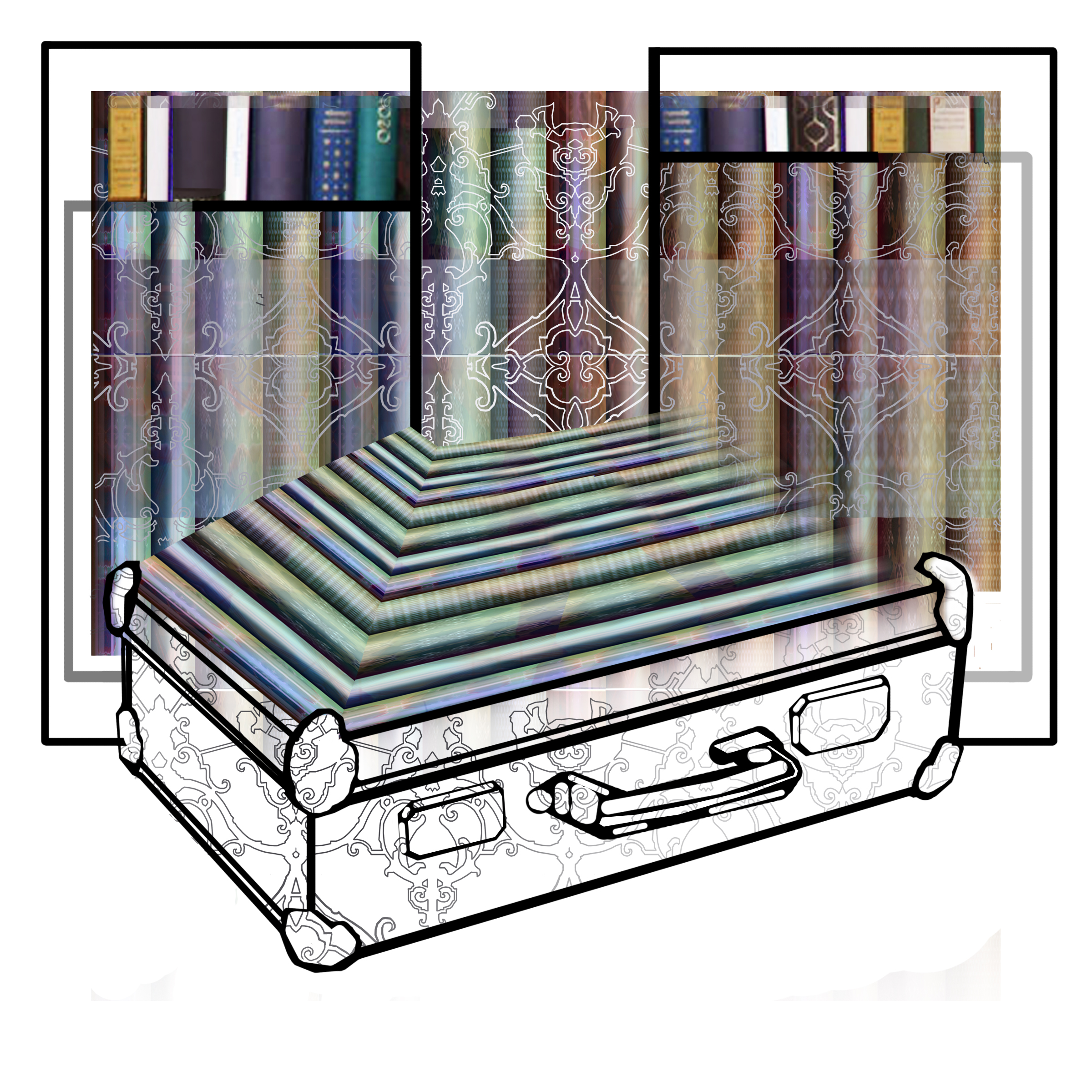
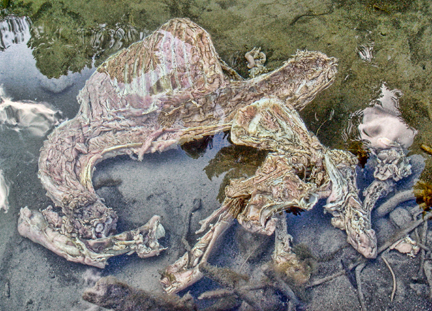
MA: What did you think of the illustration that Morgan Mauer designed for your piece? Did you find any special meaning in it?

RF: I was intrigued by the way Morgan had depicted the treasure box of books. I didn’t have many books when I was growing up, but my family, my mother in particular, was the receptacle of stories. My first poetry, short stories, plays, all these things came to me in the voice of my mother, listening to her as she taught other students and, later, one of my older brothers and eventually me. I found it interesting also that the colors that Morgan had picked were colors that my mother loved – lilac and pink and green.


MA: And finally, what does recovery mean to you?

RF: In Buddhist philosophy, we don’t necessarily recover from loss or grief or hardship, we absorb those aspects into our lives. So recovery for me means living with a different awareness, of the consciousness of finite time. It also means looking more deliberately at what I still hold in my hand, knowing that it won’t always be so. It means understanding that all that I see before me will outlive my many and daily attempts to impose my will upon it. When I think about my mother and I want her back, I want to smooth away the rough edges in our relationship, tie up the loose ends, explain everything. As a Buddhist, I am comforted by the sense that she is, or will be, somewhere else in the universe, and that through samsara we are reborn among those with whom we have unfinished work. She and I, we were a work-in-progress, and in a way, while I wish that she is spared of the suffering that accompanies human life, I am also soothed by the sense that we will meet again.


MA: Thank you so much, Ru, for speaking with us today. It’s been a great discussion. And for readers, who wish to read more of Ru’s wonderful writing, visit her blog, which is also part of her gorgeous website.
Interview with Alice Lowe


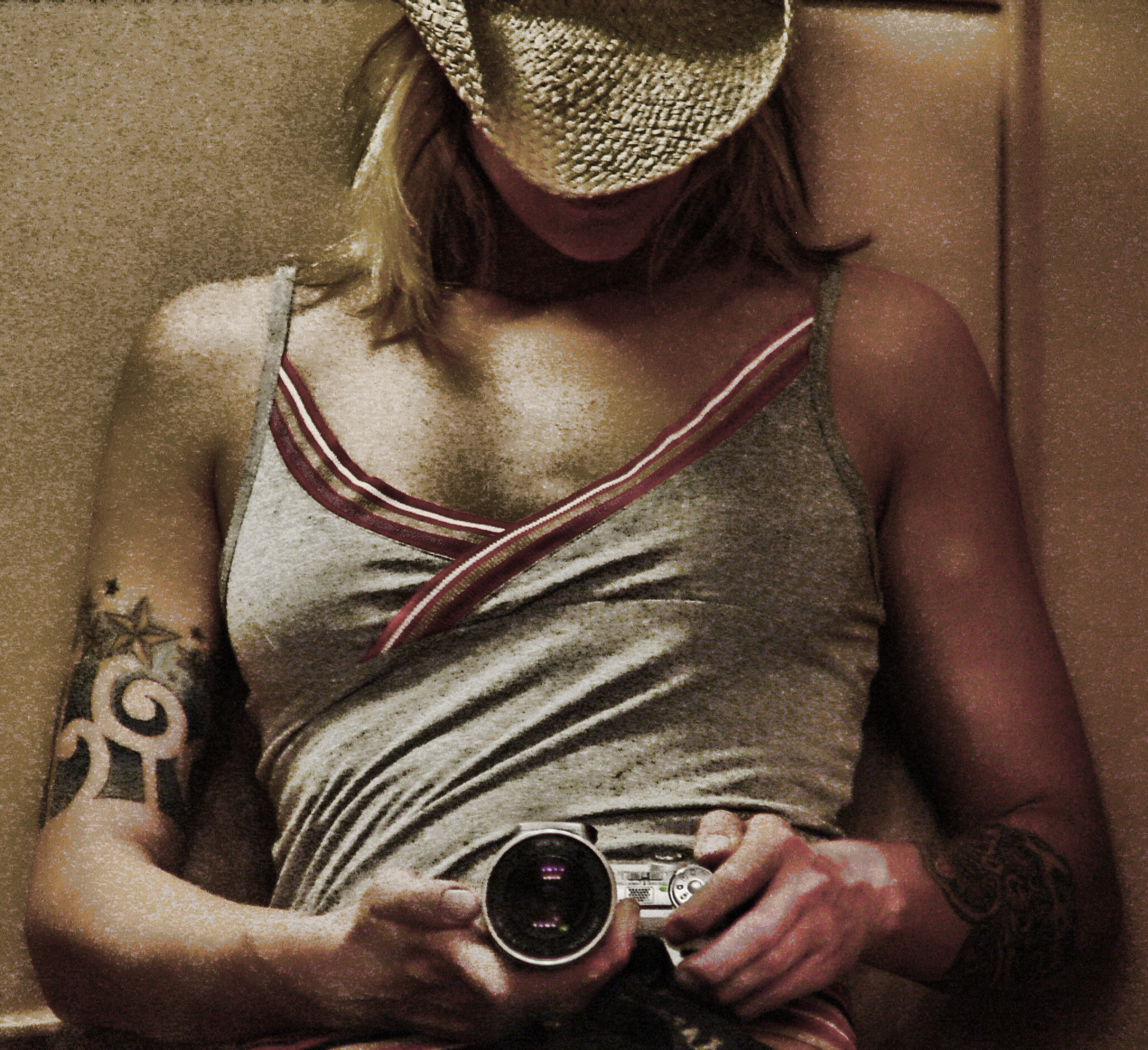
Image courtesy of Jenn Rhubright

Joan Hanna: Hi, Alice. We were so pleased to have “My Moving Cage” as part of the July r.kv.r.y. issue. Can you share with our readers why you decided to write a story on the subject of hodophobia?

Alice Lowe: My experience, even though it was many years in the past, has always remained vivid. And over the years, after I discovered that it was a recognized, i.e. “legitimate,” phobia, I became increasingly interested in it, as well as remarkably reassured, even long after the fact, that I wasn’t alone, that it wasn’t a personal failing. Realizing that it had a name and a definition and that there were treatments for it inspired me to learn as much as I could and to write about it.

Writing personal narrative depends on being able to mine one’s past, to compile those experiences and memories that are vivid to us but also might have a broader appeal, might speak to our shared human condition. That includes pain and sorrow and humiliation, and it also means having the ability to laugh at ourselves and to expose our own foibles.

I’ve shared this work with a number of friends and acquaintances since its publication, and only a couple of them ever knew what I had gone through. I told them that I find it ironic that in writing personal narrative, we tell “the world,” so to speak, things we haven’t even told our close friends. Perhaps, I said, we know all along that it’s “material,” and we’re saving it for our memoirs or our fiction.

I didn’t write this with the idea that it would speak to “fellow sufferers,” in spite of the fact that my own discoveries about it were vitally important to me. One person said that she thought it was hilarious; “that’s what you intended, isn’t it?” she asked. Well, if that’s how it strikes you, sure, was my response. But others felt sorry for me, commiserated. I was surprised that the primary response has been people telling me about their own discomfort driving on bridges, even though they don’t profess to have a full-blown phobia, or their fears and phobias about heights, which is of course related. A therapist told me of another technique that she thinks is better than “tapping,” and offered to demonstrate it to me. Please, no, I said, that’s not the point!


JH: Yes, there does seem to be a connecting on an emotional level with readers especially when the details and imagery in this story were so tactile I found myself squirming as I read your story. How were you able to focus so keenly on the physical aspects of this phobia?

AL: Probably because they were intense, and the experience was unusual for me, so out of character. I remember thinking, this isn’t me—I don’t behave this way. That, as you see in the story, is part of my problem—the need to be in control of every aspect of my life, especially of my own behavior and reactions. That lapse was jarring for me; I felt vulnerable. And then, of course, once I started writing, it all came rushing back. I was able to project myself back to that time and almost feel the panic again.

I realized too, that time and distance had given me a different perspective—I was able to find a lot of humor in the experience. Falling off a cliff is tragic; almost falling off a cliff is a hair-raising story that one can embellish with all kinds of gritty, dark and funny detail. And so I set about extracting the pathos and finding the dark humor in my escapades. I like to think that my descriptions of the physical responses evoke the kind of squirming that you get when you read a creepy story, like the monster in the closet from children’s books.

Would you believe, I had an opportunity yesterday, while in the midst of thinking about your interview questions, to test the authenticity of my descriptions. My car died on a busy stretch of the freeway. Just crapped out suddenly, and I was barely able to pull off onto the shoulder. And I saw that I was on an overpass, just a thin rail separating me from the edge and the road crossing underneath. Jeez, I thought, I don’t believe this. I called AAA, and while I waited, my eyes were glued to the rear-view mirror, fully expecting someone to plow into me, wondering if the impact would send me careening into the path of someone doing 70mph, or over the side. It was harrowing, and I felt that old panic.


JH: I noticed that you mention :“The White Album,” by Joan Didion, Home Before Dark,” by Susan Cheever, and Virginia Woolf in your story. I wonder if you found these writers as you were researching this phobia or if you felt an affinity to them before you understood you even had hodophobia?

AL: I’ve had to bite my tongue—more accurately my fingertips—to keep from mentioning these sources from your very first question, as they played an important part in my experience, including why I decided to write it, how it remained so vivid.

Of course I read voraciously—isn’t that ultimately what makes us turn to writing?—and since starting to write personal essays, I’ve been fascinated by the way literature weaves itself into our lives. I’m stimulated with the idea of examining the ways in which fictional characters and writers themselves, in their memoirs, not only reflect the human condition—of course they do—but analyze and shed light on complex phenomena. The premise of Jonah Lehrer’s Proust Was a Neuroscientist is that artists and writers—Proust, Woolf, George Eliot and others—discovered things about the mind (memory, feeling, the self) before neuroscience validated them.

“The White Album” was the first revelation—I think I screamed aloud when I read her describing the experience that was still too embarrassing for me to disclose. Ruth Reichl’s similar experience was the next one I came across. I’m a fan of both of them—Didion’s insightful essays and caustic wit, Reichl’s marriage of Proustian food memories to life events, her life in food—I felt honored to be sharing even their phobia, and of course it occurred to me that there must be others, many others. This was pretty much pre-Google, though I don’t know how one would even search for this kind of thing anyway.

The other literary references were purely chance findings after I had already started working on it. Learning about John Cheever from his daughter’s book and then seeking out the story he wrote about it—truly the most riveting description of all, if you really want to squirm; rereading Anne Lamott’s All New People because it’s just so ironical and funny and painful, and finding the reference there that I’d completely forgotten.

Finally, I am a Virginia Woolf devotee—an independent scholar, not an academician—I’ve read and studied her life and work for years and have written a number of essays and reviews, presented at conferences, etc. As a result, Woolf has permeated my life and certainly my writing. Sometimes intentionally and other times serendipitously she makes appearances in my personal essays, even one about baseball! If and when I collect them into a volume, she will be the thread that runs through them.

A Writer’s Diary, extracts from her five volumes of published diaries, is the work that most inspires me, and the particular passage that I used in my essay, in which she admonishes herself to observe everything, even her own depression, was in the last entry of that volume, written just a few weeks before she took her life. She goes on to talk with some excitement about going to the museum, reading history, bicycling, keeping busy. About recovery, in a word! She ends by saying that it’s time to cook dinner: “Haddock and sausage meat. I think it is true that one gains a certain hold on sausage and haddock by writing them down.” My paper at the last Virginia Woolf Conference, was “A Certain Hold on Sausage and Haddock: Dining Well in Virginia Woolf’s Life and Work.”


JH: I’m glad you shared those references with our readers. I especially like the idea that as writers we can analyze and shed light on complex phenomena. How do you think your hodophobia was affected by moving from “a one-church, one-pub village in England’s West Country” to suddenly be thrust into the bustling activity of California and the necessity to cross bridges like the Coronado Bay Bridge? And, ultimately how has this effected either how you approach your writing or just writing in general?

AL: The height of the phobia was in the year preceding my time in England. I wanted to put it out of my mind while I was there—Scarlet O’Hara style, “I’ll think about it tomorrow”—and I was partially successful. I was still faced with my driving limitations, but it’s expected that Americans have trouble driving in Britain anyway, so I laughed it off and let people think it was just general discomfort. And I was able to tool around the countryside without too much trouble.

My six months in England was an idyllic period. Having a block of time—not working for the first time in my adult life—was extraordinary, but I was almost crippled with my own expectations; remember, it was the anticipation of this venture that may have triggered the hodophobia in the first place. I thought I would write, but as it turned out I needed that time just for decompression. I had to learn to slow down, to be able to do nothing, to observe and think. To “just be,” in New Age jargon. I think that was all very necessary for me in order to be able to write, and having somewhat limited mobility may have even been advantageous. It was there and then that I discovered Woolf and A Writer’s Diary, which had a critical impact on me.

I think there was a part of me that thought that I would come home altered and everything would be okay, that time and distance would have taken care of it, but of course nothing had really changed. Except that it had been helpful in allowing me to distance myself from the problem; what I brought back was the determination to not let it get the best of me. I had my old fighting spirit, and that’s what ultimately won out.


JH: Do you have any current projects or links to website or blogs that you would like to share with our readers.

AL: I don’t have a website, but I’m being told repeatedly that it’s time—I’ll put it on my list.  I don’t have a “blog of my own,” but I contribute regularly to the Virginia Woolf blog, focusing on contemporary writers who evoke Woolf. The latest is about Anne Fadiman, also a Woolf fan, whose personal and “familiar” essays I find outstanding: http://bloggingwoolf.wordpress.com/author/alicelowe88/

A couple of my other personal essays have been published in recent months:

Seventh Inning Stretch,” my “baseball and me” piece, is at Hobart online.

Another piece, “Elvis Standing By,” tells about some of my Woolf adventures (Woolf and Elvis, don’t you like that juxtaposition?). It’s in Eclectica.


JH: We thank you again for sharing “My Driving Cage” and your insights into these lovely influential writers with our readers. Just one last question: can you share with us what recovery means to you?

AH: I’m presently writing an essay about “Re-Entry”—my experiences as a “re-entry,” i.e. older university student; it’s also about re-invention, reawakening, regeneration—you can see where I’m going here, all these “re-” words. All of them, and recovery too, are to a certain extent about self-discovery, about looking at the past and learning from it in order to get a handle on the present and future.

I tell how my going back to school in my late 30s came in part as a result of my recovery from a bad relationship. I had gone down a rocky path until I hit a wall, and then I rebounded, I recovered. The same with my hodophobia. Recovery doesn’t necessarily mean that one is completely cured, good as new; to me it’s more of a taking control. I’m back at the wheel—literally and figuratively—I’m in charge of my life again; even if I never drive across that damned bridge.

“Rose” by Dylan Landis

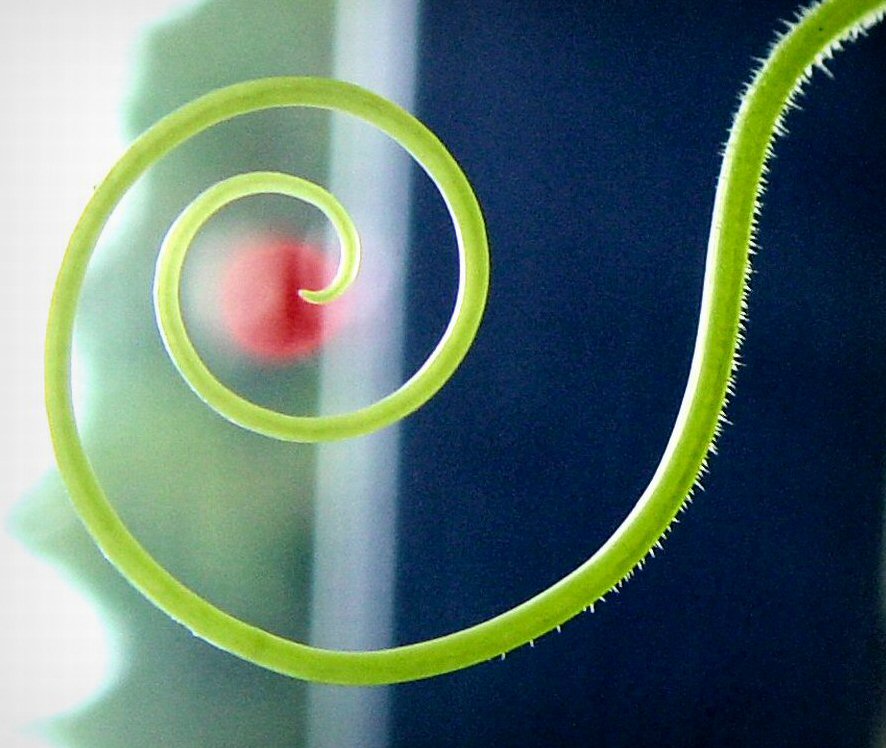
squash curl
“Squash Tendril” by Jenn Rhubright.
(See also “Convalescence” by Billie Tadros.)

Leah’s grandmother washed and dried her dinner plates, stacked them in the oven and set it on broil. She hid her pearls in the toilet tank, where they coiled under a rubber flap and created a perpetual flush.

“Nine is green,” said Grandma Rose. “Four is red. Mint tastes like flashes of light.”

Leah’s parents decided it was time. They said Leah could stay with any friend she wanted. Oleander, said Leah. Helen and Leo were so busy gabbing on the phone to the social worker in Pottsdam and the Hertz people on 77th Street, they didn’t say no.

“I don’t see why you have to put her away,” said Leah, watching Helen fold tissue paper into her clothes—a winter-white sweater, because fall came early upstate, and a herringbone silk scarf. Helen hated wind in her hair.

“Leah, this is painful for me,” said Leo. He was tethered to the phone in the hall. “But it’s better than letting her die in a fire. And she can’t communicate her needs. Her mind is deteriorating.”

Grandma Rose’s mind looked like her bedroom, Leah decided. It was a wonderful room. Hair pins napped in the rumpled bed. Dark hairs from her wiglet drifted into the cold cream. Tubes of Bain du Soleil lost their caps and slid into open drawers, releasing the oily fragrance of summer into white nylon bloomers. Nor did Rose seem to register, when Leah was allowed to stay with her, that Leah smoked in the basement, riffled through her grandmother’s pocketbook and skimmed every paperback with a passionate couple on its cover.

“Why do they mix up the colors?” Grandma Rose said, peering over Leah’s shoulder at a title. “O isn’t red.” The word was “romance.”

“Red like a heart?” said Leah.

“My shayna maideleh,” her grandmother said gently. “O is as white as an onion.”

“She’ll burn down the house if she keeps baking the plates,” said Leo, gently.

“Maybe that’s how she wants to go,” said Leah. “Maybe the flames will talk to her.”

Her father took his palm off the receiver and said, “Do we need a lawyer for that?”

“I wish I heard colors,” Leah said. “I bet purple sounds like Joan Baez.” She tapped the suitcase, three left and three right. But her parents kept getting ready to drive off and kidnap her grandmother. Oleander, when Leah telephoned, said sure.

“Don’t you have to ask your mom?”

“Ask what?” said Oly. “Just bring your stuff. You won’t believe what’s going on here.”


The night roof was alive. It ticked and crackled. Ventilation fans flashed in their cages.

“This is where we’re gonna do it,” said Pansy. She hugged a damp Sloan’s grocery bag containing a towel, two joints, and a rubber stolen from their father’s room.

Ten stories below the night roof, the brakes of buses sang. Leah wondered if she could make herself jump off a parapet. Then she couldn’t stop wondering. Fly or die, fly or die. It was like standing in the bathtub and wondering should she touch the switch. Some thoughts she couldn’t control when they cycled through her brain. Mrs. Prideau, who was Pansy and Oly’s mother, did not have this problem. When they left the apartment Mrs. Prideau was standing in the kitchen, spooning ice cream out of the Schraft’s box and writing on some typed papers in red pencil and ignoring the most amazing things. She ignored the leak under the sink that was wetting the grocery bags. She ignored the paint hanging from the ceiling like notepaper. She ignored that Oly and Leah threw eggs from the windows sometimes, or that Mr. Prideau slept by himself in the second bedroom because it was cheaper than divorce.

“Going to howl at the moon?” she said. “Don’t fall off.” God, Leah loved Mrs. Prideau.


Standing pipes, tall as people, stuck straight up from the tarpaper. Leah tried to act casual in the face of the enemy. She edged closer to Oleander. “I bet those pipes move when we’re not looking,” she said, knowing it sounded crazy. “I bet they’re like the roof police.” She was tapping like crazy, fingers jammed in her pockets so no one could see.

Oleander fixed it. She touched each pipe, calling PLP— Public Leaning Post. Meanwhile, Pansy started up the ladder to the water tower, which stuck up high above the roof. This was worse than the roof police. The water tower had no windows. It had no mercy. Leah imagined falling in, grasping at walls all slimy below the waterline.

Fly or die, fly or die, she whispered, while Pansy Prideau crammed the Sloan’s bag between the ladder and the curving base of the tower.

Pansy climbed down again, flipping her hair. “No one’s gonna notice that,” she said.

Leah, enraptured, remembered how Pansy slept on her stomach because she rolled her hair around Minute Maid cans. She watched Pansy look down over a parapet at the singing buses. A plane blinked through the black sky toward her ear. It disappeared into her head, then eased out the other side, propelling through waves of her Minute Maid hair.

That’s when Leah inhaled—worshiped the night roof, remembered to breathe.


Saturday morning the milk smelled bad, so they got to eat Trix from the box. Then they went stealing. Leah palmed a Chunky at Manny’s Fountain on Broadway just to feel it nest in her hand, silvery and square. At Ahmed’s Candy & Cigarette, Oleander slid a comic down the back of her jeans. Then she trashed it down the block. “No one reads Archie,” she said. Leah kept her hands out of the garbage. She liked to admire Veronica’s bust, but she knew not to say it.

Leah and Oly, they were magnetic. Sweet things clung to them. When they stole, they had secrets, and when they had secrets, they shone.

They ducked under the turnstiles on 86th and changed subways twice and did Lord & Taylor’s, where they tried on five brassieres each. Leah put back four and Oleander put back three. Then back down the clacky wood escalators to the main floor, where Oly stole the White Shoulders eau de toilette tester without even smelling it, just vacuumed it into her purse.

“You ditz,” said Leah. “My grandmother wears that.” Then she browsed at Christian Dior, smiled at the lady and stole the Diorissimo tester. She didn’t smell it first because she knew it from the heartbeat of her mother’s wrist.

Leah’s mother knew all about department stores. She dispensed strange and dangerous facts. She said department stores had lady guards who pretended to shop. They lingered over gloves or garters, but were actually spies. “They watch your hands, and they look for women who glance around,” Helen said. “At night they check the ladies’ rooms, so no one sleeps over on those lovely chaises longues.” Helen was eating again, twelve hundred calories a day, and she worked for a decorator, ordering fabrics and sketching drapes. At night she studied pictures of French chairs.

“Don’t glance,” Leah warned. Oly had stopped at wallets.

But Oly couldn’t help it. What Leah did was, she listened with her skin. Leah’s skin was electric and it knew when she was invisible, and that’s when she made things disappear. Then she tapped on the counter or in her pockets or even on the floor, as if she’d dropped a safety pin. Three left, three right. It made her safe, plus it was some- thing she had to do.

The girls burst out of the same glass slot in the Lord & Taylor’s revolving door. They walked fast with our heads down, except Oly kept glancing back.

“Holy Mary mother of God pray for us sinners now and at the hour of our death Amen,” she said. Her eyes were like penlights.

“When can I throw up?” said Leah. Because that’s what stealing made her want to do, after.

“In the park,” said Oleander fiercely. “Puke in the park.”

In Central Park Leah threw up behind a bush and spit nine times, three times three, to clean her mouth. They bought Creamsicles and walked to Oly’s apartment, except on the way they did the Grab Bag on Broadway, where the clothes were all burlap and ribbon and lace— artistic, Helen said. Under glass, silver earrings lay on black velvet and tarnished in their sleep. On the counter, beaded earrings dangled from a rack; you could strum them with a finger.

“Steal me,” they whispered.

Things spoke to Leah often. She did what they said.

Saturday evening no one said a word about dinner. Mrs. Prideau sat on her bed and turned her manuscript pages and watched Pansy get ready, as if this was what daughters were supposed to do, go out with boys. Sometimes all Mrs. Prideau said about dinner was “Oh, just forage,” and Leah hoped she would say this soon so they could eat more Trix.

Pansy leaned over the bathroom sink, dabbed blue shadow on each eyelid and stared at herself in the mirror. She had a face like a Madame Alexander doll, the expensive kind in glass cabinets at FAO Schwartz. She looked like a cross between seven and seventeen. Leah watched her from the doorway, hoping to learn something. What she learned was how to put on blush. First you grin. Then you rub lipstick on the part of your cheek that sticks out like a cherry tomato.

Oleander opened bureau drawers and slammed them, pulling out tops and shoving them back in. No one at Oly’s had private drawers or private shirts or even private beds, because Mrs. Prideau and Oly and Pansy shared two beds in the one big bedroom and didn’t have space for private anything. Sometimes this made Leah so jealous she could die and sometimes it made her want to go home and straighten her desk. A bandanna halter came out with a froth of socks and Oly put it on and went in the bathroom and sprayed a cloud of Right Guard around her armpits.

“Oh, good, deodorize the toothbrushes,” said Pansy, fanning at the cloud.

“Any toothbrush of yours it’s automatic B.O.,” said Oleander, and sat the can on the sink, where Leah knew it would mark the porcelain with a ring of rust.

“Any toothbrush of yours it’s automatic pus,” said Pansy.

“Oh, shit, here they go,” said Mrs. Prideau, and looked at Leah like they might actually share some sliver of understanding. She lit a clean cigarette with the old one and jabbed the old one out. The butts in her ashtray were all kissed red at one end and bent jagged at the other.

“Your parents go anyplace fun?”

“Upstate,” said Leah. “They’re kidnapping my grandmother.”

Mrs. Prideau’s eyebrows lifted into question marks, thin and elegant. “Are they taking her anyplace fun?”

“Old folks’ home,” said Leah. “Her mind is deteriorating.”

“Really.” Mrs. Prideau looked at Leah like she was trying to figure out where to insert a key. “How can they tell?”

Leah shrugged, but Mrs. Prideau kept waiting. “She sticks plates in the oven and they melt. She’s going to burn down the house.”

“She might,” said Mrs. Prideau. “If she has dementia, your parents are probably doing the right thing.”

“Plus,” said Leah, “she sees things. She says nine is green, vowels are white, stuff like that.” She hated the way she sounded, as if Rose were someone else’s crazy grandmother.

Mrs. Prideau sat straight up and looked at Leah. “Well,” she said, “I don’t know about the vowels. A is light pink and E is almost scarlet. But nine is definitely green.”

Mrs. Prideau was not beautiful like Helen. She had short spiky hair and she wore black turtlenecks and jeans. She had ink on her hands instead of nail polish. But there was some kind of light that went on inside her, and at that moment Leah thought if she stood very still, the light might shine on something she needed to see.

“Not all vowels,” Leah said carefully. “She said O and I were white like an onion. I thought it was because they’re in the word onion.”

“No, it’s because they’re white,” said Mrs. Prideau. “I also see Q and X as white, but you don’t run into that as often.”

Leah didn’t move. Tap now, her brain instructed, but for the first time in her life she disobeyed.

“It’s called synesthesia,” said Mrs. Prideau. “It runs in families, but it missed my daughters. You too?”

Leah shut her eyes and concentrated. She wanted Mrs. Prideau’s voice to reveal a shape, a scent. She thought it might smell like Diorissimo, or float like a string of pearls.

“It missed me,” she said.

Pansy walked out of the bathroom with frosted white lips. She looked perfect. Leah wanted to lay her down flat to see if her eyelids would glide shut. “Tell her what her name tastes like, Mom,” she said. “Mine tastes like tea biscuits.”

“Very thin biscuits,” said Mrs. Prideau. “Leah tastes like cucumber.”

“It could be worse,” Pansy said. She spotted Leah’s shoplifted earrings on the bureau, threaded one into her ear. “We had a babysitter once named Renee whose name tasted like pennies.”

“Syn, together, aisthesis, perception,” said Mrs. Prideau, not even flicking her eyes toward Pansy, who was taking one of her cigarettes. “It means the senses work in pairs. It’s a gift. Synesthetes are often artists,” she said. “Scriabin had it. Kandinsky, though he may have been faking. Nabokov. Is your grandmother creative?

“No,” said Leah, who had no idea what she was talking about.

“I bet she is,” said Mrs. Prideau. “Kandinsky said synesthetes are like fine violins that vibrated in all their parts when the bow touched them.”

The doorbuzzer made its jagged rasp. “Oh my God,” said Pansy, “it’s Robbie,” and she left the cigarette burning on the bureau, a fringe of ash hanging over the edge. Oleander glanced at her mother, whose lap was spread with red-penciled pages, picked the cigarette up and brought it to her lips. Leah couldn’t believe what she was seeing. Her parents would have a coronary.

“We are the bows from which our children as living arrows are sent forth,’“ said Mrs. Prideau. She looked at her younger daughter with the cigarette and closed her eyes, as if she were searching for something deeply internal.

“Kahlil Gibran,” she said, opening her eyes and, as Leah wondered if she would ever understand, “Don’t be discouraged, Leah. We never know what we inherit.”


They watched her.

They hid behind the elevator shed and watched her on the roof.

He did everything exactly in order, first base, second base, third base, home. Leah liked it, liked the way his hands traveled on Pansy and the way Pansy let her body be a highway for them. He pulled her jeans off. There wasn’t any underwear. This was a revelation, that a person could not wear underwear. They saw his hands move where his fly was and then he pushed onto her and Pansy made a sound like she had stepped on a piece of glass, and he put his hand over her mouth. When he took it away he kissed her. Then he pushed some more. This got boring, but Oleander kept saying “Jesus” under her breath, so Leah just hung back a few minutes and didn’t look, and thought about what it was that they might have inherited, she and Oleander and even Pansy, who was fifteen and barely spoke to them.

The boy pulled up his jeans. He lit a joint and Pansy took it from him. The roof police didn’t do a damn thing. They just stood there.

They were just pipes.

“Was that home?” said Leah.

“Yeah,” said Oleander, “Jesus,” and they were breathing words more than talking them. They carried their sandals so they wouldn’t scuff and moved toward the stairwell cautiously, as if stepping over puddles.

“It hurts,” said Leah, amazed.

“Only when you lose it,” said Oleander, and Leah felt a rose open in her body, felt a release as its petals fell open and flew apart, and she wondered what she had lost, and why it did not hurt.


Dylan Landis is the author of Normal People Don’t Live Like This, a novel-in-stories that made Newsday‘s Ten Best Books of 2009. She has received fellowships from the National Endowment for the Arts, the Norman Mailer Center, the Sewanee Writers’ Conference and the Virginia Center for the Creative Arts. She is working on a novel.

Read our interview with Dylan Landis here.

“Rose” by Dylan Landis, excerpted from Normal People Don’t Live Like This, copyright (c) 2009 by Dylan Landis, reprinted here by permission of the publisher, Persea Books, Inc., New York. All rights are reserved.


Interview with Cezarija Abartis


Mary Akers: We were so happy to have your story “The Haircut” for this issue of r.kv.r.y. One of the things that struck me was the ending. It can be tricky withholding information from the reader, but it worked really well in this story. Could you talk a little bit about why you chose to hold that information to the end and how you made it work?

Cezarija Abartis: I’m surprised about the question: you’re right, of course, but I’ve read my story a hundred times in the course of revising it, so it doesn’t seem surprising to me. I just checked, and the ending was there in the first draft, though flat, undeveloped, and unbelievable in the last three paragraphs:

“Oh, I’m sorry. I didn’t mean to pry.”

“My daughter. She died. A car accident.” He poured out Miranda’s whole life, her aspirations and virtues. He cried. He wiped his eyes with his handkerchief.

She watched quietly and understood.

Yuck. What I inserted in subsequent drafts was the father’s hidden, awkward grief. I guess I was stumbling toward a plausible surprise. I think what I worked toward in the many drafts was the reader’s investment in the characters: I wanted the reader to like the middle-aged customer and the young and artistic but not always understanding beautician. They talk at cross purposes sometimes, so the reader senses their inability to communicate.

Really, we tell secrets to each other in literature and painting. We writers want people to understand what is in our heads and hearts, but not completely. In “The Haircut,” the main character wants to tell his secret and also not tell it, not admit that his daughter is dead. There’s probably an element of disguise and masking, of not telling in all art (and life) as well, of apparently telling one story while actually telling another.

Besides the formal concerns there is a thematic inspiration. I remember sitting in a graduate seminar on Chaucer with the writer John Gardner as he showed us the meaning of The Book of the Duchess, in which the apparently thick-headed narrator probes the grief of the Knight, so that the Knight will reveal his sorrow and the narrator will extend his human compassion. John Gardner’s explanation of our attempts to allay each other’s pain by communication has stayed with me all these years.


MA: “Stumbling toward a plausible surprise.” I like that. What about working in the short form appeals to you?

CA: Oh my goodness, I’m so glad I discovered flash a couple years ago! I’ve been working on novels for years and they seem endless. I’m climbing a mountain I cannot see around. When I write a flash, I remind myself that I can finish a piece, I can structure it, I can discover its theme.

MA: About your short story collection, Nice Girls and Other Stories, Margot Livesey wrote, “”I admire the range and depth of her characterization and the often surprising twists with which these stories unfold. An exhilarating debut.” What do you like about “surprising twists”? Do you also like them as a reader?

CA: Margot Livesey is such a generous teacher and wonderful writer–I have to get that in. As for surprise endings, I don’t like them. A story should not be a contest or puzzle to fool the reader. David Mamet cites Aristotle in explaining that the plot should be surprising yet inevitable, and that this is hard to achieve. The descriptive details and the characters too should be surprising yet inevitable. I think what Aristotle and Mamet mean is that plot, character, details should avoid the predictable and the cliched. Judith Thurman, in her biography of Isak Dinesen, compares storytelling with making an exquisite consomme: “The recipe calls for you to keep the spirit but to discard the substance of your rough ingredients: eggshells and raw bones, root vegetables and red meat. You then submit them, like a storyteller, to ‘fire and patience.’ And the clarity comes at  the end, a magic trick” (186). I like that notion of “fire and patience,” the passion and humility that are required of the author.

MA: I’m often surprised to learn that an illustration will have a special meaning for the author. Was there anything about Jenn Rhubright’s illustration that especially spoke to you?

CA: It’s a brilliant design: the child is not perfectly beautiful, but human and real and therefore even more beautiful. She seems determined, alert, pensive, patient, curious–the child any parent would want. I love the door and the symbol in the background. The small circle echoes the circle of her face. And there are all these boundaries: the ropes and hooks and doors.


MA: What does “recovery” mean to you?

CA: Regaining health but also carrying the wound always, covering it over perhaps and recovering it. I hope that doesn’t sound too grim.


MA: Thank you, Cezarija, for speaking with us. I enjoyed your answers. And for our readers, here are some link to more of Cezarija’s fine work:

Lovers” at Wignleaf

The Writer” at Waccamaw

“Dawn” at Brain Harvest

The Testimony of the Dead” at Annalemma

Hubris. Halcyon. Guacamole” at Prime Number

Interview with Sarah Voss

Sarah Voss

Mary Akers: Hi, Sarah. Thanks for agreeing to speak with me today. I loved your poem at first read. We’re honored to publish it. “Untitled” is what you chose to call it. That really interests me because it still is a title, in the same way that not making a decision is still a decision. Could you talk a little bit about that and why it felt like a good way to introduce your poem?

Sarah Voss: You do cut to the heart, don’t you, Mary?  I’ve always hated poets who use “Untitled” when there “should” be something much more profound and descriptive.  So I surprised myself when, after the poem had come out of the birthing ink, I found myself typing “Untitled” at the heading.  As often as not, my titles come first, but this one was just “there” and I never even second-guessed it.  However, after your insightful commentary above (which, alas, never even occurred to me), I’m a little more humble than I was before.  It’s similar to the negativity I felt about divorced women until I became one.  Sometimes I learn to let go of my “judging” addiction the hard way.


MA: Well, honestly, I expected you to say something about the link between the theme of futility and the futility of searching for a title for this poem. That’s where I was going with it, anyway. 🙂

I’m curious. Did you read poetry as a child? What were some of your favorite poems or poets?

SV: As a child I read voraciously, and that included some children’s poetry, but, alas, time has an insatiable appetite for memory, and has eaten so much of mine that I can’t remember any specifics.


MA: What inspires you most about the poetic form?

SV: Initially, I loved the rhyme and metric patterns found in formal poetry and for a while I was challenged to turn these templates into poems that both made sense and flowed well. In hindsight, most of my efforts at writing traditional poetry turned out to be somewhat stilted. Nonetheless these formal exercises gave me a basic sense about poetic structure which I “feel” when crafting the free verse that I now prefer. It reminds me of playing chess with my 5 year-old grandson this past weekend.  Incredibly, he had all the moves down perfectly and was lightning quick in making them.  He still needs to learn to strategize, though. When he masters that, he’ll be totally amazing. Well, okay, he’s already totally amazing!  I mean, I had to really work to keep that little tyke from beating me. Smile

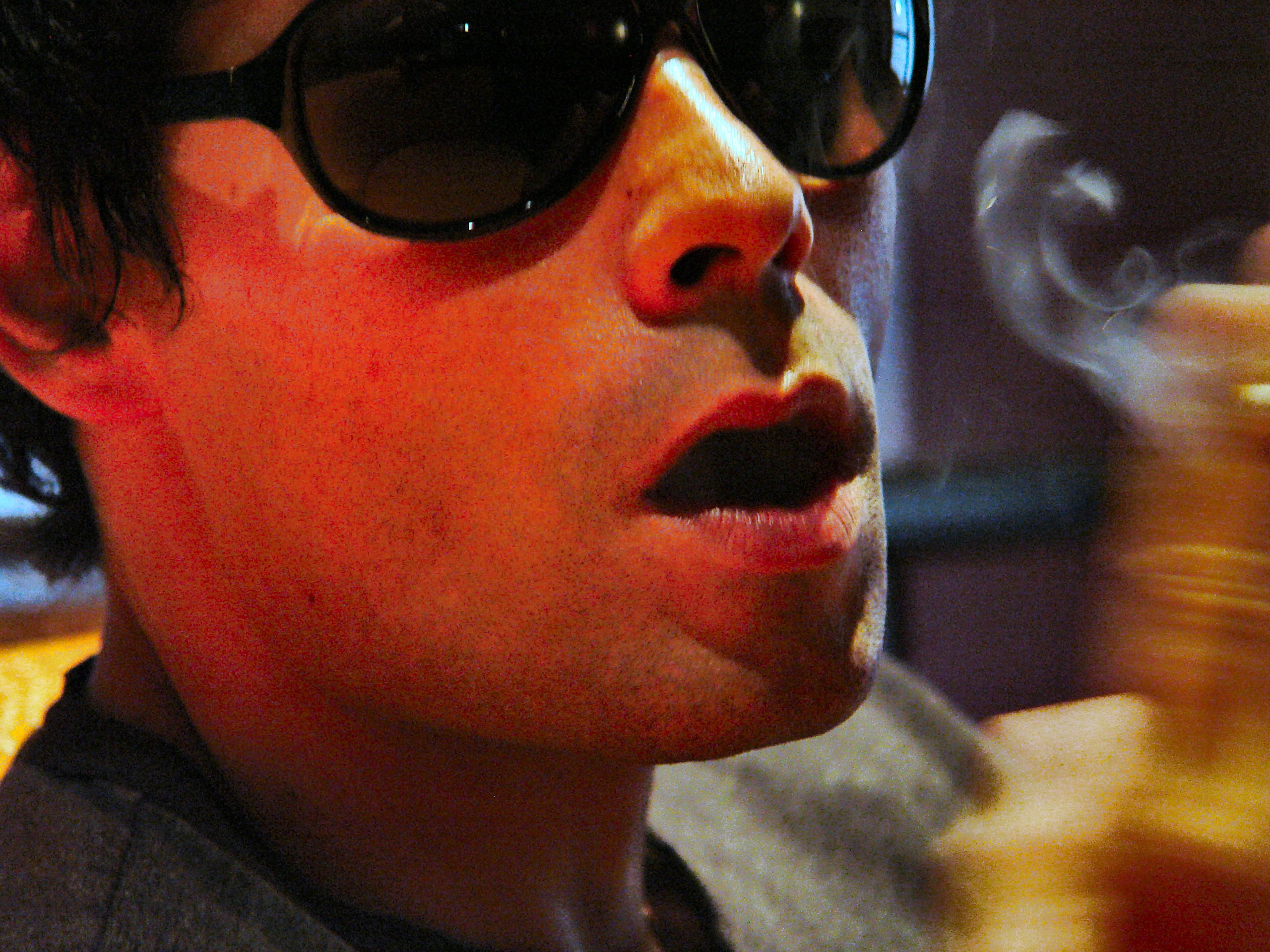
Young man, wreathed in smoke

MA: I’m always interested to hear what authors think of the illustrator’s selections. What did you think of the image Jenn Rhubright chose for your piece? Did it carry any special meaning for you?

SV: One of my best mentors didn’t like this poem at all.  It turns out that he didn’t like the personification.  But Jenn not only highlighted it, she gave that old man futility a face.  Awesome.  And a little scary, too.


MA: And finally, what does “recovery” mean to you?

SV:
Some things (and some people) in life keep hounding us, trying to teach us something we need to understand. Recovery is one name to describe that delicate moment when we realize we finally learned whatever it was we needed to learn and the incessant hounding has somehow disappeared.

MA: Mmm. I like that. Thanks for speaking with me today, Sarah. I enjoyed the discussion. And for our readers, here are some additional links to learn more about Sarah’s work.

Sarah’s webiste

And another interview

Interview with Erin McReynolds

Erin McReynolds

Joan Hanna: I so enjoyed “I Nearly Lost You There” and was excited to have it appear in our July Issue. Can you share with our readers why you chose to write about domestic violence?

Erin McReynolds: I’m writing a memoir in short segments about my mother’s 2004 murder at the hands of her boyfriend, and my finding her body – I guess that’s incorrect: it’s really about our lives together up to that point, as well as my life after it.


JH: The subheadings you use are really interesting and one of the things that drew us into your work. Can you speak a bit about how you formatted this piece and how you envision the subheadings enhancing the reader’s experience?

EM: I wanted to write a book about my mother’s murder and the trauma of finding her body, of our wholes lives together, really. It was always going to be written in segments – some more fleshed-out stories and some essays, and some more crafted vignettes like this one. At first, I thought about organizing the book by stages of grief, but I found that I was missing some stages (anger, depression) and enjoying brand new ones (obsession, an almost jacked–up “high”). This segment illustrates the obsessive phase that lasted for about a year or more, in which I constantly imagined “what if I’d gotten there just a few seconds after it happened? What’s the latest I could have arrived and still saved her life?” The first part plays that out; the second part goes back further, to earlier in the evening – we learned at the trial a few years later what that night was like, and I wrote this piece soon after; the third part is the way it actually happened, which was that I found her three days after she’d died. If the question put forth by the piece is, “How far back would I have to have gone to save her life?” the fourth and final piece answers that with a “never.” She and I will always be suspended in the moment where I see I’ve lost her; I can’t control her. In the end, my turning away is an act of letting go of the obsessive misapprehension that I could have saved her.

JH: Great insights. Thank you for giving us a glimpse into your process. Are there links to any current projects you would like to share with our readers?

EM: I kept a blog for a while here, where I tried to find a home for the unbelievable maelstrom of thoughts, memories, dreams, weird facts and occurrences that came from my trauma. I’ve recently published another essay, this one about my mother’s and my relationship with violence at Prime Number Magazine called “We Hit People,” and a fictionalized version of my sort-of anger phase called “VIVA!” in the Winter 2011 issue of North American Review. I’m about halfway done with the book.


JH: Thanks for allowing us to publish “I Nearly Lost You There” as part of our July Issue. I’ve enjoyed discussing it with you. Just one final question: Can you share with our readers what recovery means to you?

EM: I’d love to – because that’s really why I’m writing this book. When my mother was alive, I detested a lot of things about her: her wide hips, her sloppy eating, her carefree attitude towards everything, the way she picked her lip manically when nervous. And then, she was gone, and an amazing thing happened: I found her in my own wide hips, my own nervous tics, my own increasingly relaxed attitude towards things. I hear her when I sneeze, when I yell, when I talk to the dog. That’s recovery for me: I now love and accept these indelible parts of myself because they came from her. That’s a gift that loss can offer, if you are willing to accept it.

“The Double Voice” by Margaret Atwood

the double voice1

Two voices
took turns using my eyes:
One had manners,
painted in watercolours
used hushed tones when speaking
of mountains or Niagara Falls,
composed uplifting verse
and expended sentiment upon the poor.

The other voice
had other knowledge:
that men sweat
always and drink often,
that pigs are pigs
but must be eaten
anyway, that unborn babies
fester like wounds in the body,
that there is nothing to be done
about mosquitoes;

One saw through my
bleared and gradually
bleaching eyes, red leaves,
the rituals of seasons and rivers

The other found a dead dog
jubilant with maggots
half-buried among the sweet peas.


Margaret Atwood is the author of more than thirty-five volumes of poetry, children’s literature, fiction, and non-fiction. She is perhaps best known for her novels, which include The Edible Woman (1970), The Handmaid’s Tale (1983), The Robber Bride (1994), Alias Grace (1996), and The Blind Assassin, which won the prestigious Booker Prize in 2000. Atwood’s dystopic novel, Oryx and Crake, was published in 2003. The Tent (mini-fictions) and Moral Disorder (short stories) both appeared in 2006. Her most recent volume of poetry, The Door, was published in 2007. Her non-fiction Payback: Debt and the Shadow Side of Wealth, part of the Massey Lecture series, appeared in 2008, and her most recent novel, The Year of the Flood, in the autumn of 2009. Ms. Atwood’s work has been published in more than forty languages, including Farsi, Japanese, Turkish, Finnish, Korean, Icelandic and Estonian. In 2004 she co-invented the Long Pen TM. She currently lives in Toronto with writer Graeme Gibson.

“The Double Voice” by Margaret Atwood, used by permission of the Author. Available in the following collections: In the United States, SELECTED POEMS I, 1965–1975, published by Houghton Mifflin, ©Margaret Atwood 1976; In Canada, SELECTED POEMS, 1966–1984, published by McClelland and Stewart, ©Margaret Atwood 1990; In the UK, EATING FIRE, published by Virago Books, ©Margaret Atwood 1998.

See also Showcasing the Work of Margaret Atwood.

Interview with Jenn Rhubright

Jenn Rhubright


Mary Akers: Hi, Jenn. We were thrilled that you agreed to illustrate this issue of r.kv.r.y. I’ve been a fan of your work for several years now and it’s wonderful to have the opportunity to share your /images with our readers. One of the things that I love most about your photographs is the richness of color and the depth that your /images achieve. Do you also feel these are some of the strengths in your work? What do you feel makes your work so unique, so fresh?

Jenn Rhubright: Well first of all, Mary…a resounding thank you for your compliments on my work! It’s funny, photography is so instinctive for me. I honestly have a hard time not really knowing what makes it unique or intriguing to other people. All I know is that I like what I see, I take a picture of it, and 92% of the time I like the end result of said picture. I was a writer for many years before picking up a camera so to be able to tell a story, or more importantly, for other people to be able to create their own story, from one of my /images…is…in a word: rad.


MA:
Yes, I love that confluence. This whole issue came together beautifully, thanks to your unifying /images. Was there one poem or essay or story that especially stood out for you, or tugged at some part of your creative brain?

JR: Yes. Carrying The Day by Sylvia Hoffmire. Partly because I recently adopted my son, Aiden James, so of course the topic hit home for me. But more than that, it was Hoffmire’s incredible imagery combined with the multiple levels of emotion conveyed in a short piece of writing that impressed me. She’s got mad skills, I’ll definitely be looking out for more of her work.


MA: I’m a big fan of Sylvia Hoffmire’s work, too. And along those lines, I’ve long felt that one of the reasons art is a deeply moving experience for people is because they take it in and make it their own–ascribe to it some part of their own personal history, if you will. And I think we sometimes work very hard to do this when we view creative work, even when we aren’t aware of working to make those associations…rather like a computer humming in the background, processing data while showing something very different on the screen. I’m babbling a bit here, but trying to get at the idea that some of the authors may have found meaning in your /images that you didn’t anticipate (and couldn’t have anticipated). I know some of them wrote to you after the issue went live. Were there any notes about your /images that surprised you?


JR: We artists always seems to be tuned in to similar frequencies wouldn’t you say? Just like you and I respect each others work so much as well as marvel (humbly I might add) at how the collective end results compliment each other so nicely. Yes, I did get a great response from the writers about the /images I matched with their pieces and the validation was good medicine for someone who hasn’t been creating art as much as I would like (read: new mom).

MA: I think every artist wishes they had certain talents that they don’t believe they possess. If you could enhance your abilities in some part of your process, what would it be?

JR: Interesting and tough question! The one trait I wish I possessed more of…and I’m not sure it qualifies as a talent, is the act of following through. I suck at deadlines, whether they’re imposed by someone else or myself. But all in all, I’m very grateful for the talents I have been given as well as the ones I have nurtured. It’s an honor to be an artist.

MA: Well, you made this deadline just fine. Thank you! 🙂

I love seeing how an artist’s body of work changes over time. Have you found your creative focus altered at all by the experience of being a new mom? (Congratulations, by the way.)

JR: Thank you! Being a mom rocks, no doubt. The biggest challenge of course is finding the time to write, photograph and keep up with my music, but I am confident that the time spent being a good parent is part of the artistic process for me. And it’s an amazing personal epiphany for me to learn that motherhood is an art form unto itself.

MA: And finally, what does recovery mean to you?

JR: Hmmmm..well, to me recovery is synonymous with process, as we charter through this life journey we are constantly recovering from old experiences as well as new ones. Recovery is never ending when one equates it with the goal of being the best earthling one can be in this lifetime.

Interview with Sylvia Hoffmire

Mary Akers: Hi, Sylvia. Thanks for agreeing to talk with me today. I enjoyed your wonderful Shorts On Survival piece “Carrying the Day.” The first line is fantastic. It starts “I know the sun was shining that day or I wouldn’t have been hanging sheets on the line to dry.” What a simple sentence, yes? And yet it manages to feel very ominous. How can that be? It amazes me every time I read it. Why do you think it reads as such an ominous first line?

Sylvia Hoffmire: The sense of foreboding conjured in that first line arose in my perception from the implication of a reluctantly forced memory, the fact that she can only be certain the sun had shone through a recalled action. My intention was to convey a sense of her obfuscated  memory.


MA: I’ve been thinking a lot about the importance of beginnings lately. How do you find your first lines? Do they come to you right away, before anything else? Or do you have to go back and mine your writing to find just where the piece will start?

SH: Finding the beginning, the exact right place to enter the story, can stall me for days when beginning a new piece. Even though I know that it may change many times in the process of revision, I need to feel that I’m in the right place at the right time before I can embark comfortably and productively to discover the unfolding narrative. And when I’ve found that place, then, of course, the crafting of the opening sentence becomes the challenge. Often, I just have to take myself firmly in hand and get on with it, banking on the fact that at some point in the process the opening will reveal itself…


MA: I think one of the things that makes your story so visceral, so real, is the way in which you use commonplace details described in a fresh way. “His playpen bare as birth” and “the back steps sagging toward the middle” and “my hair, fresh washed and lemon rinsed” are just a few examples of what I mean. Could you talk a little bit about how details work to create a mood in this story?

SH: With this story, in particular, I knew from the outset that it would be a very short, very compressed piece, and I wanted every single word to be freighted with the narrator’s controlled despair. I knew this story’s success hinged on the reader’s empathy; therefore, the sensory details were key. In all my writing I rely heavily on visual details to convey character so that what the narrator sees and remembers provides clarity for the reader, entry into the particularity of the narrative. And I would venture to say that my teaching (of creative writing) focuses on encouraging recognition of  the significant details contained within the mundane. In my daily practice, as well as my teaching, I know that’s no small order.

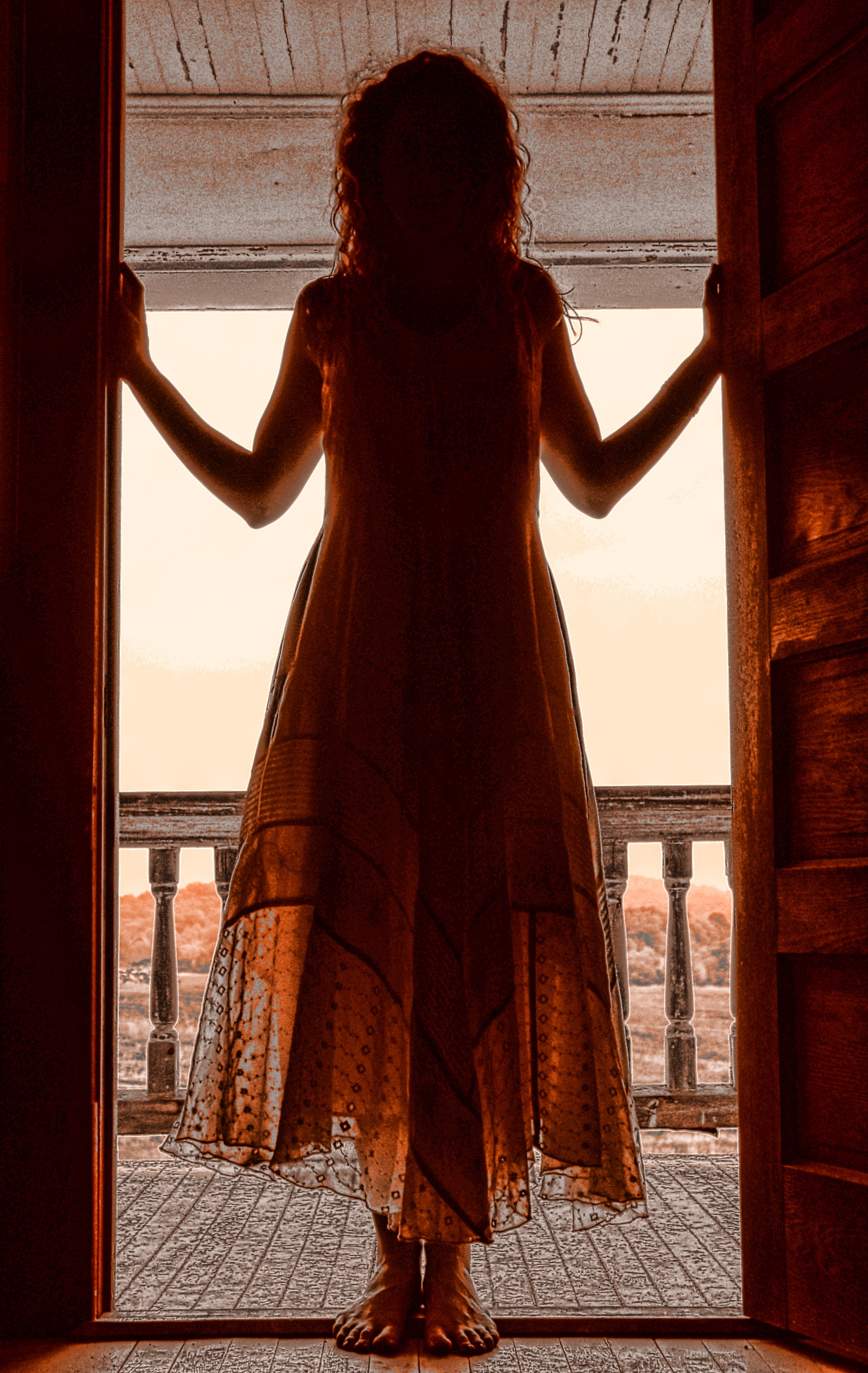
MA: What did you think of the illustration that Jenn Rhubright picked for your piece? I’m always surprised by how often the writers find the illustrator’s selection to be spot on for some reason that couldn’t have been known. Did Jenn’s photo have any special resonance for you?

SH: An illustration’s meaning is so embedded in the eye of the beholder.  For me, Jenn Rhubright captured a moment in time which actually precedes the narrative – is back story, if you will. She depicted a moment in the protagonist’s life when she was free. Though she can never be free again –  that instant in the doorway, the illusion of choice – resonates in her life everyday.


MA: And finally, what does recovery mean to you?

SH: With something as deeply wounding as the loss of a child, I can’t imagine that recovery is ever possible, but, clearly, endurance might be essential for many reasons. How or why she chose to endure…or didn’t… evoked  the ambivalence present in the ending of the story.

Showcasing the work of C. Dale Young


C. Dale Young’s fine poetry has been published in such well-respected journals, such as Ploughshares, The Paris Review, The Southern Review, and The Virginia Quarterly Review, among others. He teaches at the Warren Wilson low-residency MFA program in creative wwriting and is poetry editor for The New England Review. And somehow, in his spare time, he works full time as a doctor. Which is why he didn’t have time to participate in an interview–as if saving lives and stuff was more important than our interview. The nerve! No, seriously, we get it, we understand, and we’re just delighted to have his work in our journal and a review of his latest book, TORN.


We are also delighted to be able to point you to his two other books of poetry.


His first book was The Day Underneath the Day. (2001, Northern University Press)


“Gifted with a vivid and exact skill, Young’s writing resembles an intricate anatomy lesson. His powers of observation probe the small energies of the natural world. Again and again the ordinary details of life transform themselves under the delicate pressure of his words-the movement of birds’ wings, the color and texture of tropical flowers, the study of the ocean waves, the “scalpel of light” cutting through the beginning of the day. The language of Young’s poems evokes an ultimate sense of place through a gorgeous marriage of tone and diction that echoes James Merrill and Amy Clampitt. As he meticulously maps out human passions and emotions, he explores both the surfaces and depths of everything that he surveys. His confident and polished verse unfolds intricate layers of landscape, seeking the order that lies beneath the unruly patterns of our lives.”


Here is a sample poem from that collection:


Fireweed

A single seedling, camp follower of arson . . .

Follower of ashes; follower
of the bleached-out, burned-out
cascade of buildings, lotfuls

of whitened soil speckled with debris
let down by a gutted church
still aspiring to an ether-blue sky

centuries gone; follower
of scripts apotheosized into smoke,
notes lifted into air by flames

that all but threatened the entire lane
with the silence we call a bed
of dirt; follower of the match,

the instigator here and abroad,
the matutinal magnifying glass
focusing light into unwitting

summer grass, into cruciform twigs;
follower of the caveat
ignored because it was too small;

follower of the fourth oldest dream —
the landscape burning and burning.

in memory of Amy Clampitt


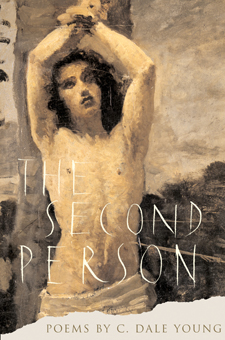
His second book was The Second Person (2007, Four Way Books) which was a finalist for the Lambda Book Award.


“In The Second Person, we encounter the searing presence of the Beloved—a “you” that seems to advance and retreat from the gaze of both the speaker and the reader. Young, a vivid renderer of landscape, has shifted his painterly eye from the exterior world to an interior one filled with the complexities of failure and doubt. In the collection, we continue to get the verbal precision and accuracy we already identify with Young’s poems, but we also get a more compelling poetry, one infused with the tradition of the love lyric and a relentless exploration of loss.”


Here’s a sample poem from that book:


The Architects of Time

and so, the lot had to be vacant
except for the lone tree.
The first, on arrival, would

throw his hands up, reaffirm
that with a gesture he could
return the leaves to the branches.
Another, tired from the journey,

would lie down
and, closing his eyes, hasten
the demise of the locusts.
It was always the same.

A week, a century, the empty lot.
The last architect, the great
philosopher, was late as usual—
when they talked about the end,

he would laugh and remind them
they were now at the mercy
of the scientists, without whom
the architects would cease to exist.


And finally, the gorgeous TORN, also from Four Way Books. The two poems in this issue of r.kv.r.y. are taken from that book and can be read here: Torn and here: Sepsis


You can also read more sample poems at the author’s website.