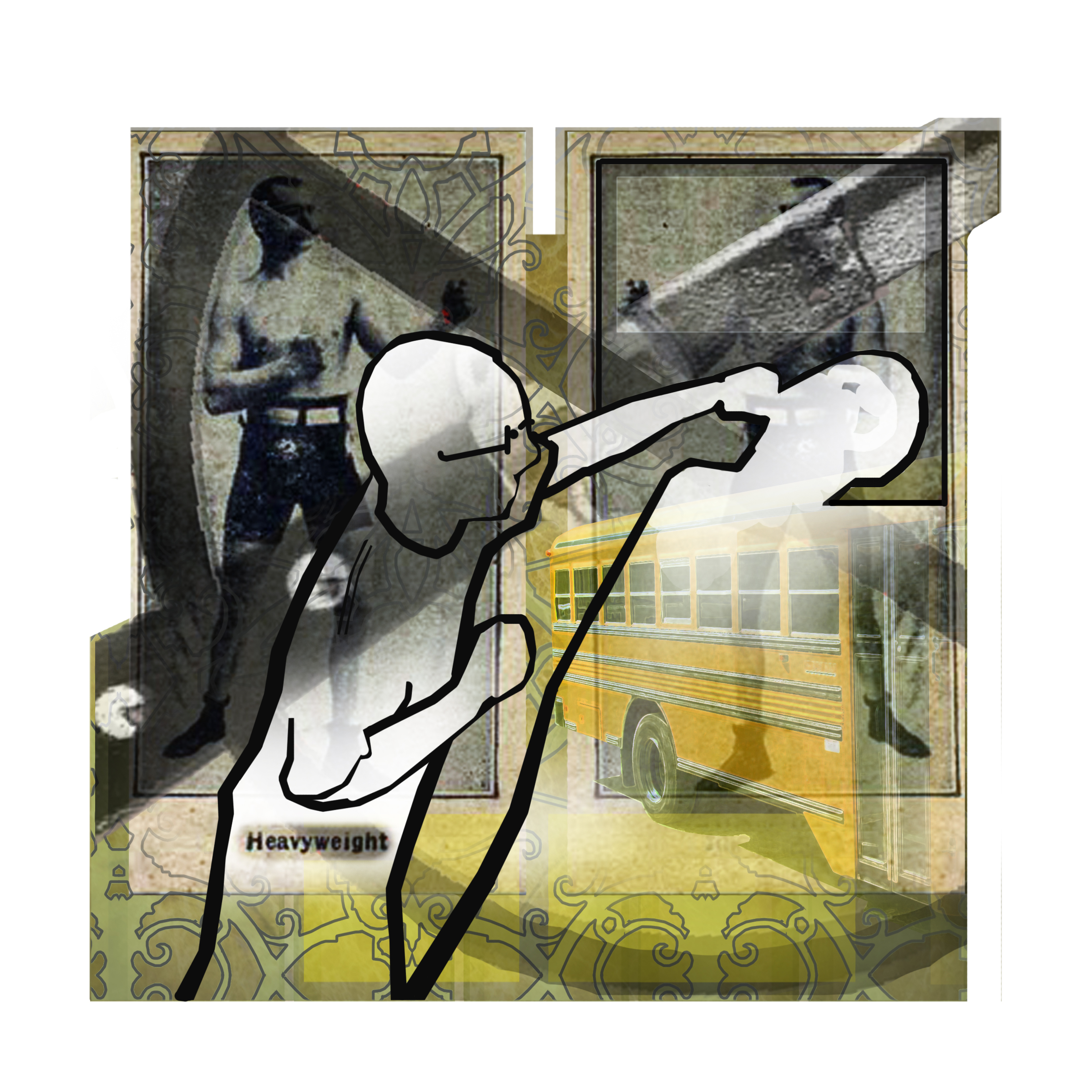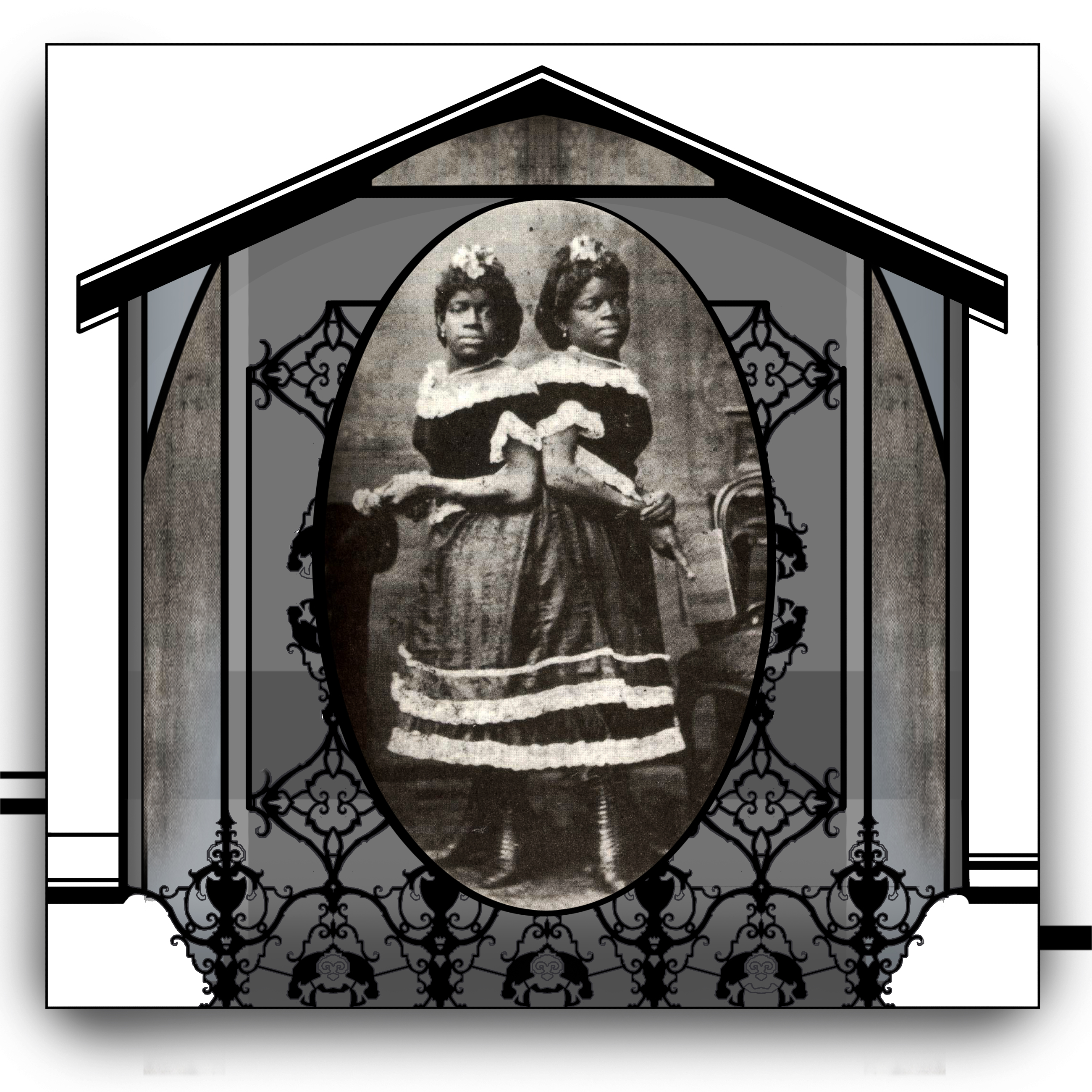
“The Pugilist” by Kevin Jones

The Pugilist
Illustration by Morgan Maurer, 2011

The grass I’m lying on is wet and hasn’t been cut in several weeks judging by its length. There’s a small bug slowly crawling across one long, flat blade and I watch, fascinated by the fact that something could move so carefully, so unaware of the chaos all around it.

This insect lives contently in a universe of its own. I am vaguely aware of movement behind me. I sense, rather than hear, people shouting from above me. I pay no attention; I am happy to watch the bug make its way through its little world. Everything is quiet. Still. Like the world is holding its breath for one small moment.

Behind the bug the background is a blur; my glasses were knocked clean off of my face with the first hit Marco landed.  I can only focus a few feet in front of me. Now, lying on my stomach in the grass beside the bus stop, the morning dew seeping through my coat, I am content to lie here in this sudden and surprising silence for the rest of my life. No more teasing. No more going to the bus stop and waiting in fear to see if Marco is going to walk to school or ambush me near the oleander bushes at the intersection where the other kids wait for the bus. A small gallery of children that has become a loyal audience for my daily hazing.

Last week Marco was sick and didn’t come to school and the other kids were actually disappointed that I was left alone. I made a joke about it, the first step on a long journey toward a sarcastic and self-deprecating sense of humor. “Sorry guys,” I said. “No show today.” I smiled at them like we were all buddies.

Buddies.

These kids who had never once helped me out while I was pushed around the street like a rag doll. Never ran and got an adult from the neighborhood when this bully, this giant kid who was old enough to be a sophomore in high school but had failed so many grades he was still in middle school, pounded me day after day.

They are bored.

And I am the show.

And this is the way of my world.

And today I have had enough. Today, I am finally tired of sneaking back into my house without my mother seeing another black eye, split lip, or random abrasion that I try to explain away as a playground injury.

A particularly rough game of touch football at PE.

A bathroom door that swung open at an inopportune moment.

But never a bully.

My mother will not know what to do about a bully.

Her idea of how to handle things will be to report it to the school. To call the sheriff’s department and file a complaint. Worst of all, to go to the bully’s house and talk to his parents in an attempt to “sort things out.”

Things that will only make my life worse. My teasing more intense. The image of my mother holding my hand and standing next to me at the bus stop with the other kids, this image, it’s beyond horrible.

And she’ll do it too.

I secretly confided in my stepfather, a career military man who, although not a great thinker by any stretch of the imagination, had a certain masculine philosophy that seemed appropriate at a time like this.

“You’ve got to fight this asshole,” he told me one night after I admitted that my cut lip was not from getting hit in kickball.

I blinked in astonished surprise.

“Red,” I said (He was Red to everyone who knew him. I didn’t find out his real name for years. I’m not even sure my mother knew it when she married him). “This guy is huge. He’s fifteen or something.”

“Get a stick,” he said.

I just blinked again.

“Or a rock, or a brick, whatever,” he said. “What I’m saying is, get an equalizer. If the guy is bigger than you, get something to take away that size advantage. It doesn’t matter how big a guy is, if you bash his head in with a stick, he’s gonna go down.”

“Something like a knife?”

“No. Never ever use a knife.” He was adamant, and I remember thinking that this was odd. What could be a greater equalizer than a knife?

He went on. “And if he tries to use a knife, just tell him you’re going to take it away from him.”

The idea of me and my skinny body telling anyone that I was going to take a knife away from them seemed absolutely ludicrous, but I didn’t mention this to my stepfather.

“What I’m trying to tell you is, even if you get beat up, it’s better than being afraid to go to school. It’s better to fight your enemies than to run away. Don’t ever run away from trouble. Be a man and fight for yourself, or you’ll never be able to look yourself in the face.”

This was not only the longest piece of advice Red ever gave me, it was also one of the most profound.

It’s also how I ended up on my belly on the side of the road.

Another Northern California weekday. Forty degrees or so, light fog, and a pack of twelve year olds waiting for the bus in their Lacoste polo shirts and Levi’s Jeans. I arrived in a pair of blue, threadbare corduroy trousers (one of four I owned) with very visible hem marks from where my mother lowered them at the start of the school year. This was her way of saving money. Buy pants that were several inches too long for me and then just “let them out” as the year went on. As a child my body grew up, not out, and I was able to wear my clothes for as long as my mother was willing to patch up the knees and elbows of my middle school wardrobe.

I made my way to the bus stop each morning, the corduroy zip-zipping as I walked down the hill towards the intersection below my house. No one else wore pants like mine. The other kids had designer labels and shopped at the mall for their clothing, and they weren’t hesitant to let me know it.

Marco began picking on me at the beginning of the school year and I never found out why. I was a small, skinny kid, but that was hardly unusual at my school. I wore glasses, but this too was not unique. I was poor, but so was he. If I was going to psychoanalyze the situation I’d say that he was beating up on me in order to fit in with the other, more affluent kids in the neighborhood, only he wasn’t. Marco treated me like shit everyday he was there, but made no effort to talk to the other children at the bus stop.

Even at school, he hung out by himself. Occasionally, someone would report that he was “smoking weed” with some older kids from the high school out behind the large dirt circle that served as the school’s track and field course. But never was it apparent that his punishment of me led to any sort of social advancement.

Marco was huge for seventh grade. Not only had his parents started him late in an attempt to “make him bigger for sports” a not entirely uncommon event in my neighborhood, somewhere along the way he had seen fit to fail a grade or two. Thus, at fifteen years old he towered over the rest of the kids waiting for the bus like an ogre. He couldn’t have looked more intimidating if he tried. He was the perfect bully; straight from central casting. His hair was cut, if it could be called that, into a shaggy, jet black mullet that perpetually hung in his eyes. He wore an olive drab fatigue jacket year round, beat up and dirty with US Army tapes still above the pocket, blue jeans stained with motor oil, and black motorcycle boots that he stuffed his enormous feet into. He looked like a cross between a heavy-set Joey Ramone and a Mexican wrestler and he scared the shit out of me.

But today I have had enough.

Today, when Marco pushed me at the bus stop, I turned around and hit him in his eye as hard as I can. I had to stand on my toes to do it, or maybe I just jumped up when the time came, it’s not really clear anymore. I’m not sure what I thought would happen. In all of the movies that I’d seen, the bully went down like a stone when the victim finally stood up to him. I imagined Marco clutching his eye, collapsing on the ground in pain. Perhaps, in my more dramatic pugilistic fantasies (and there were, admittedly, several of these) blood spurted forth and my attacker permanently lost the use of his eye.

Of course, none of these things happened in real life.

In real life, Marco took a small step back and gave me a surprised look.

Then he threw me to the ground like a rag doll and began kicking the shit out of me.

Somewhere during the journey from standing erect to huddling in a fetal position on the ground my glasses had flown off. I could feel kicks hitting my ribs and shoulders as I lay there, but also something else.

Relief.

I had stood up to Marco, and now, in my seventh grade logic, he would see that I wasn’t going to take it anymore and leave me alone. He wouldn’t have any choice; bullies don’t pick on kids who stand up for themselves. This was the irrefutable law of every television After School Special.

Faintly, in the distance and between the kicks, I can hear a low rumbling noise.

Salvation.

Delivery from pain.

The School Bus, hallowed be thy name.

The one rule held amongst all suburban children, regardless of their social status, was that all mayhem stopped when grown-ups arrived. Especially teachers or other school employees. The bus was no exception.

The blows stop and I hesitantly get to my feet. I can see a big green Marco-blur moving towards the intersection where the other children are forming an orderly line. I can feel hot salty tears covering my face that I don’t remember crying. I am waiting for my face to swell up, my legs to give out. For someone to tell me that my nose is covered in blood.

None of this happens.

The show is over.

It’s time to go to school.

Someone touches my arm.

A girl that I’ve never seen before is handing me my glasses. They’re wet, and one of the arms is bent, but they are otherwise unharmed. I stammer out a thank you but when I look up she is gone. I carefully straighten them out and place the gold rimmed teardrop shaped lenses on my face. My mother suggested these frames when I started wearing glasses a year earlier because they “looked like something a motorcycle rider would wear.” My guy who lives across the street from me is a motorcycle rider. He spends all day working on his bike in the front yard, shirtless in faded jeans. Old, blurry blue-green tattoos cover his arms like a disease, their original shapes lost to time. Sometimes I wonder what they mean, and how this skinny, weather-beaten man ended up in our moderately safe suburban neighborhood of used American cars and weekend Nerf football games.

My stepfather says he’s a dirtbag.

I wipe water from my face and blink a few times to clear my eyes. My world is a bit clearer, my body starting to ache. My head still buzzes with what has just happened. The rest of the world moves on, but something in me has changed. Slight, imperceptible right now, but growing.

I walk over and stand behind Marco who is last in line for the bus. We shuffle forward, inching towards the open door of my savior, big yellow #31. I can hear the offbeat tic-tic sound of the windshield wipers, like an irregular heartbeat, as it starts to sprinkle. My jacket is already soaked from the damp ground where I was tossed. There is dirt on my sleeve, and my trusty blue cords have a rip in one knee.

In what seems like a dream, I grab Marco by the sleeve and lean in close so that only he can hear me. I don’t know why I do this, only that I have an intense need to confirm what I feel here, now, at this moment. That things have changed. Things are different. I can feel him tense up, but I know that he won’t do anything with the bus right here.

I say, “We’re done now.”

I say, “This is over.”

I have no idea where this is coming from, I only know that it’s true.

Marco turns and looks down at me, and I notice that his left eye is red where I hit him.

“Nothing’s over,” he says. He points a finger at his hurt eye. “If this turns black, I’m going to kill you.”

“We’re done Marco. It’s over.”

My body is shaking and I want to cry but I’m too young to understand that this is adrenaline and it’s normal. I’m twelve years old and I think that I’m weak because my voice is shaking so hard that it sounds like I’m freezing to death while I stand here.

Marco faces away from me and we get on the bus. I used to worry about him picking on me during the ride to school, but not anymore. My worst fear was getting into a fight with him, and now I have. I am concerned that his eye might turn black, and that he will get mad again, but part of me also hopes that it does. A kid can say that nothing happened at the bus stop, that he didn’t lose the fight, but every child knows that the kid with the black eye is the one who got his ass kicked. If people at school think that I kicked Marco’s ass, that won’t be such a bad thing.

I would like to say that all of the kids on the bus are looking at me differently now. I would like to say that they all have a new respect for me that wasn’t there before, but I can’t. I am still the poor kid who shops at Woolco for his school clothes and has patches on the knees of his corduroy pants. I am the one who wears polo shirts with a tiger on the pocket instead of an alligator or a man riding a horse. I am the one whose mother trims his bangs once a month and calls it a haircut.

I am the one who hit Marco in the face and gave him a (possible) black eye.

The bus driver (who also looks like he might be a motorcycle rider) gives Marco and me the once over and then shuts the door.

“You want to sit up front behind me kid?” he says.

There is a long moment where the only sound in the world is my breathing and the Steve Miller band singing “Abracadabra” from the driver’s radio bungee corded to the dashboard. Marco has already sat down and stares at me from a few rows back. He sits by himself, like he does everyday. He looks angry, but that’s the way he looks all the time, and I’m through being afraid every day.

I look back at the driver, slouched in his chair, smoothing out his whispy blonde moustache. I can see a pack of cigarettes poking out of the pocket on the olive drab fatigue shirt he is wearing. There are military unit insignia and name tapes on the shirt in all of their proper places. Army units. I wonder briefly if our driver was in Vietnam but he looks too young. I am only twelve and a boy and war is still something romantic and misunderstood to me, something I will later learn is fought by boys not much older than I am now.

“No thanks,” I say. “I’m okay.”

I make my way back to an open seat near the emergency exit, my ribs starting to throb and my glasses crooked, a stupid grin on my face.


Kevin Jones’ work has been featured in The New York Times, Ink Pot, and the anthologies Home of the Brave: Stories in Uniform and Boomtown: Explosive Writing from Ten  Years of the Queens University of Charlotte MFA Program. He lives on Florida’s Gulf Coast where he teaches writing and literature.

Read our interview with Kevin here.

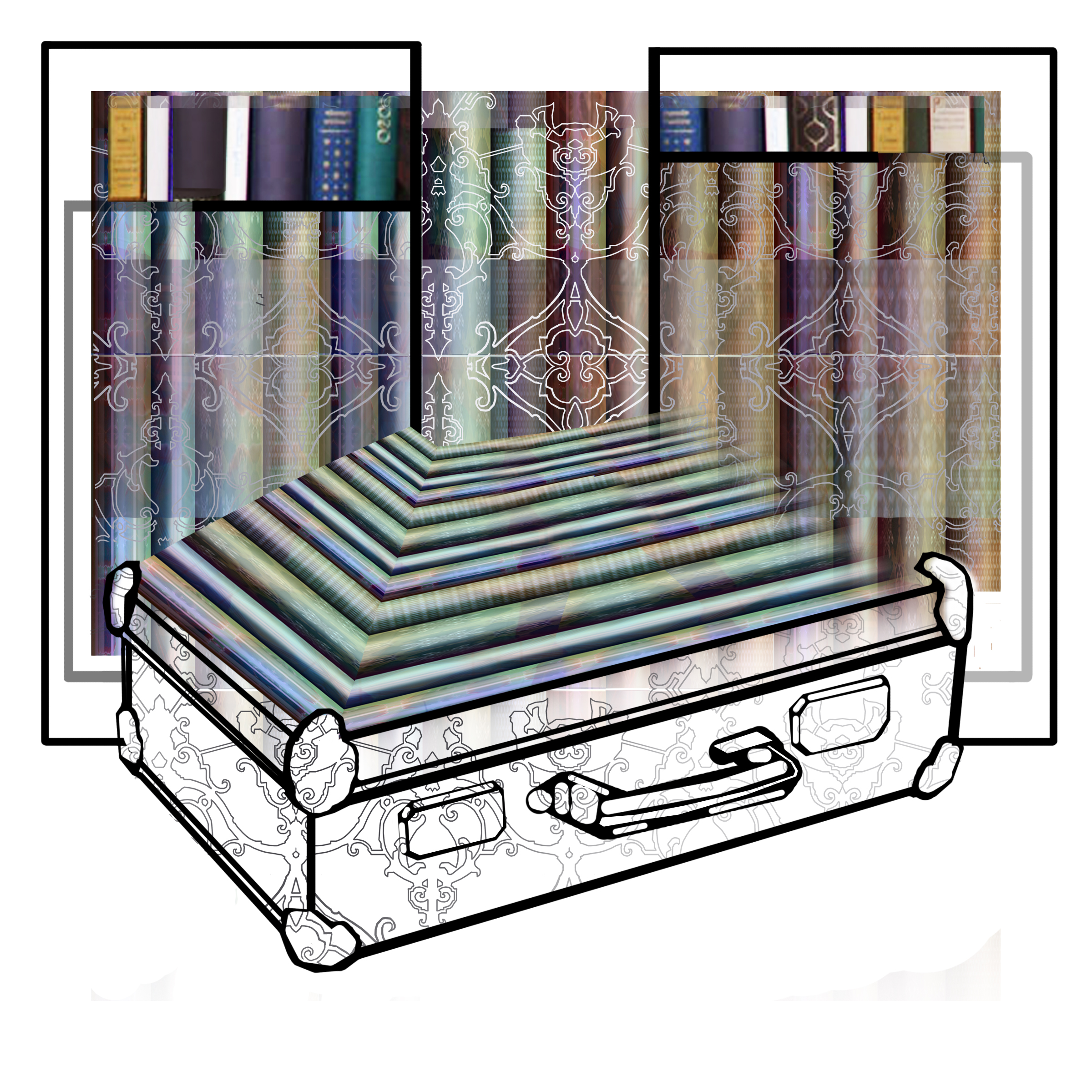
“In All Things, Absent” by Ru Freeman

suitcase
Illustration by Morgan Maurer, 2011

In an article titled ‘Estrangement,’ in a summer 2008 issue of AARP, the writer, Jamaica Kinkaid articulates her attempt to come to terms with the fact that she stopped speaking to her mother three years before her death.

Her effort, however, is not full of regret, but incomprehension that she misses her mother, incomprehension that she does not wish to be buried next to her and, also, does not know if she wishes that her own children be buried beside her someday. She ends with the words, “I do not know, I do not know.”

The loss of my mother fills my life with a similar unknowing. My mother was, as her favorite student described her during his heartfelt and perfect eulogy, difficult. And it was her difficulties that my brothers and I, as adults, responded to, not her ease. I learned to dismiss every concern she brought up, about my brothers, their wives, her grandchildren, me, my life, my father, and her health. Her own regrets and sorrow were so deep that I feared that I, too, would fall into that bottomless well and never come up for air, or that my affirmation of those sentiments might seal her forever in that tomb of despair. Had I been listening harder, perhaps, I might have heard the mothering behind what she said, might have assumed, rather, the role that she wanted of me, of a gentle and caring child, of the never-grown-up companion I had once been, of being again the girl whose goal in life had been to wear her clothes and do what she did for a living, teaching literature and Greek & Roman Civilization to armies of devoted boys.

Instead I was the opposite of her. I prided myself in taking no shit from anybody. I was flamboyant where she was conservative, boisterous where she was quiet, and forswore the undying affection of schoolboys and replaced it with the fickle attention of grown men. I frolicked in the man’s world that had circumscribed her life and I laughed when she spoke of devotion, consistency and simplicity, never letting on that in act though not in word, I was all those things. Whereas she had waited, as refined women of her time did, to have her appearance or clothes or work admired by other people, I paid myself compliments. I wrote about politics when all she cared about was the pride felt in seeing her children’s bylines. Somewhere during all those shenanigans I recall seeing both delight and fear in my mother’s eyes.

She seemed to both love the cloak of freedom that I had flung so seemingly easily around myself, and fear for my life. I was not a good woman, I was not a good wife. Somewhere down the line, my husband was bound to leave me. Somewhere down the line, I would need something besides flair and flourish and did I have those other, inner resources? I did, I do, but I was not going to let her see those aspects of myself that were so similar to the strengths she possessed. All I would say in response to her “he might leave you,” was, “and if he does I won’t spend my life running after some man who doesn’t want me.”

In more ways than one, I was trying to define for my mother a life that I wanted her to live. I wanted her to be more like the person I was playing for her. I wanted to rub away the timidity that overcame her whenever she boarded an airplane to America, the kind of thing that would lead airport officials to fling her bags around and deny her compensation for lost luggage and which I could secure on her behalf with no greater skill than a simple steady glare that would leave her full of awe at powers she believed I had; powers she was glad I had, in this strange, unfriendly, place, but whose acquisition she regretted for, as far as she could tell – and she did tell it! – they had exacted the price of tenderness. I wanted to nullify all of her regrets and fears, to drag her into the future where everything was impossibly hard and yet also possible and full of loveliness. I wanted to put make-up on her face, I wanted her to wear the beautiful clothes she owned but never put on, falling back constantly on her worn saris, the old skirt, the tattered nightdress.

But I held that tattered nightdress to my face when I returned home for her funeral, and breathed in not what it showed to the world – its faded, overused fabric – but the sweet perfume it had earned for itself and still held. My mother’s life was full of a doing with which mine could never compare. She had no time for the kind of self-creation with which I had become so adept; she was too busy making a living, staving off hopelessness and, more than everything else, helping the people who came looking for her in a ceaseless stream… People who did not care that she wore no make-up, that she traveled in buses and scooter-taxis in a country where such travel is perilous even for the young and healthy, that she sometimes opened the door to them with a smile, sometimes – quite often – with a scathing, unfiltered criticism, did not care that her home was an uncertain refuge where sometimes the gate was padlocked, and the phone unanswered and nobody could find her, or that she was awash in eccentricities that led her to scream for Brand’s Essence of Chicken as though it was a cure certified by the pantheon of multi-origin Gods whom she worshiped, drive her children out of her house “to go live anywhere,” or hang a sign on one of her precious plants with the following statement: “We are very poor and we have no money for your religious festivities. If you have any money to spare, please leave some here – Happy Vesak, Happy Christmas, Happy Ramazan, Happy Deevali!” That spirit perfumed her clothes, her hair, her life. It did not make everybody admire her, indeed many people – most specially her students – were terrified of incurring her wrath, but it made them love her unabashedly. It made them write to her and come and visit her carrying the cakes and sweets she was not supposed to eat, willing to forgive her moods. That spirit frayed her clothes, splashed them with mud, ripped at their seams.

Over the course of the two days before she died, my mother had hauled a chair to be mended (so the set could be given to my oldest brother), cleaned her house, given her sister money for an operation, called up all her friends, all her relatives, all her favorite students, and all of our friends, and, of course, secured for herself a bottle of Brand’s Essence of Chicken. She had given away much of her wardrobe of beautiful, unspoiled saris and dresses, and most of her vast collection of perfumes. Whatever precious jewelry had not already been given away had been robbed. On the day she died, unbeknownst to any of us, she was so weak she had to ask the woman who worked for her now and again, to boil water for her and bathe her. On that day, after that bath, she used whatever strength she had left to sit down with one of her students to help her with a college application, an application that has since secured a place for her at an Ivy League school. She climbed into a car carrying two saris she wanted to give to the servant of the friend who came to pick her up, and spent most of the journey laughing. She suffered a heart attack right as she was trying to field a telephone call from another student’s tennis coach. She left mid-thought, mid-act, mid-goodness.

I can tell myself a variety of things to stave off the grief that I feel. I can say my brothers were there, their wives were there, she was not alone. I can accept what other people say to me, that a mother does not remember the disappointments, but rather the good times. I can say that she knew, she knew, that though I did not write and did not call, my inner conversations were always with her, that every time I stood before a crowd, or walked down a street or performed some good work or signed a book, or sang to my daughters, what I felt was her presence, her glad acknowledgement that yes, heaven be praised, he had not left me yet, I was still the most beautiful person in the room, the smartest one, the best, in all things the best. In her absence I will never again be that “best” that she saw whenever she looked at me. In a crowd full of women, in my mother’s eyes, I was always more than any of them. On a shelf full of books, mine was better. My words were articulated more clearly, my clothing was more stylish, my deeds were greater, my husband was perfect, my children flawless. I can tell myself stories but they are as useless as my wearing the cardigan that I had bought for her during her last visit, as futile as my attempt to fill it up with her, to feel her around me.

What I remember now is not all the things that I did not affirm in my mother, all the things that I wished she hadn’t done or said, but the things she did do. What I remember is that she brought me music, theater, literature, language, a sense of humor, confidence, strength, joy, and a model of motherhood that runs in my veins as naturally as my blood.

I remember that she found it funny when I placed 38th in a class of 40 students and asked flippantly if I had failed math too, as we walked hand in hand away from the Convent I attended. What I remember is that when I was expelled from that convent for an array of irreverences but subsequently invited back, my mother – though she screamed at me in private and threatened to cut off my hair which, she said, was the source of all my problems – dismissed the offer from the nuns and enrolled me in a “school more suited to (her) daughter’s spirit, intelligence and interests.” What I remember is that she paid for piano lessons when we did not yet own a piano, swallowing her pride and letting us go next door to practice. I remember her voice pouring song after song into all of us, bringing Ireland, England and America to us through lyrics and melodies and that those songs still take the edge off the acts of governments that were also discussed in the house. I remember that she polished the floors of our house on her hands and knees with coconut refuse and kerosene and now and then with polish, that she planted every blade of grass in the garden and pruned her lawn and hedges with hand-held shears that left blisters on her piano-playing fingers and that out of the arid earth that surrounded our city home, she could make flowers bloom. I remember that she gave me a girl-only space in a house that held so many permanent and transient visitors, and that it contained a dressing table, a fan, an almirah, a bed, a table, a bookcase, and the silk bedspreads that had once been gifted to her, and that all of these things made my room magical in a time when magic rarely translated into concrete evidence. I remember that she listened to me read, that when I asked her if she was sleeping, the answer even when it took a while for her to say it was, always, a comforting “no, of course I’m not sleeping!” I remember that she encouraged me to wear my hair short and climb our roof and play French Cricket and run faster than the boys and, also, to steal guavas and skip school to attend cricket matches…

And I remember that she spent a teacher’s salary on buying bolts of fabric that she stored in a suitcase, beautiful cloth waiting to be turned into dresses by the best of seamstresses according to designs I sketched in ballpoint pen. I remember that except for there being no compromising on decency and modesty, she put no restrictions on the clothes I chose to put on, literally and metaphorically. She stood by and let me be everything that she was not. I wish I had done the same for her.

Not long ago, just before I left for a residency where I finished writing my second novel, completing it on the first anniversary of my mother’s death, I went to listen to Jamaica Kinkaid read and speak at Bryn Mawr College. She read from new work, from a story that is told from the perspective of two children who scorn their mother for writing and writing about her own mother, her country of birth. Her answers to the questions posed afterward continued to reflect that conflict. But when I went to introduce myself to her and mentioned that I had used her words to guide me through this new lifetime of grief, she reached out and held my hand. “Oh my dear,” she said, gazing deep into my eyes, “now you are truly an orphan. It doesn’t matter, it doesn’t matter that your father is here with you, when your mother is gone, you are orphaned.”

There are things for which we are never prepared. Childbirth is one of them. The loss of a mother is another. It has been said that, as human beings, there are only three or so significant decisions that we make: whom we marry, whether or not to have children, where we choose to work and live; each of these decisions narrows the world a little further, concentrating our attention on the work involved in succeeding at any of this. But the death of a mother, I have discovered, unravels those decisions and the accompanying work. It has set me adrift in a place where nothing at all makes sense, where there are no anchors or guarantees, where even the statement, “you are going to be taller than me,” uttered to a daughter at the bus stop this morning, comes with a shadow sentence which tells me, even if I don’t say it aloud, that I can make no promises: of the return of the bus, of the greeting at the door, of years in which she might grow into a height that exceeds my own. I can only promise that there will be regret and that the world will, one day, become dislocated for them as it has become for me. But it is a promise I cannot articulate; it waits for them as it did for me.


Ru Freeman was born into a family of writers and many boys in Colombo, Sri Lanka. After a year of informal study at Murdoch University in Perth, Western Australia, she arrived in the United States with a Parker ink pen and a box of Staedler pencils to attend Bates College in Maine. She completed her Masters in Labor Relations at the University of Colombo, and worked in the field of American and international humanitarian assistance and workers’ rights. Her creative work has appeared or is forthcoming in Guernica, Story Quarterly, Crab Orchard Review, Kaduwa, Pebble Lake Review and elsewhere. She has been awarded four consecutive writing scholarships to the Bread Loaf Writers’ Conference and been a fellow at Yaddo. She is a contributing editorial board member of the Asian American Literary Review. Her debut novel, A Disobedient Girl, is published by Atria Books/Simon & Schuster in the USA and Canada, by Viking/Penguin in the UK and territories, and has been translated into Dutch, Italian, Simplified and Complex Chinese, Portuguese, Turkish and Hebrew. She calls both Sri Lanka and America home and writes about the people and countries underneath her skin.

Read our interview with Ru here.

“Ashes” by Virginia Williams

Ashes
Illustration by Morgan Maurer, 2011

We brought Ben’s ashes home on a sweltering Thursday in July, six and a half months after his sudden death on a bleak midwinter’s day.

As with many days of that year, Simon and I were quiet on the drive to and from the funeral home, lost in grief for our stillborn child. The unspoken question between us—what now?—would remain unanswered for months, long after we placed Ben’s ashes in the room that would have been his, closed the door and tried to leave the pain inside.

The night he died we fought over a small, stupid thing that had been festering for months. I went to bed angry; Simon went to the basement to resolve the problem – a utility sink blocked up with accumulated household detritus. We woke up mad the next day, too proud to apologize or admit how silly we’d been. It was the day before New Year’s Eve, 2003.

Thirty-nine weeks and four days into pregnancy, I was tired, ready to bring my baby home and be done with aching hips and heartburn. I wanted to meet this new little wonder who was coming to change my life. Outside, it was cold and gray, mirroring my exhaustion; inside, Charlotte, our three-year-old, had an ear infection and fever, and, much as we wanted Ben, we were nervous about bringing a second child into our lives.

That last morning, I stewed in the doctor’s office, angry with Simon, annoyed by the doctor’s slight delay, wishing my regular OB weren’t on vacation. I didn’t notice that my boy wasn’t moving. Blind to everything but myself own self-righteous annoyance, I was confident Ben wasn’t going to arrive anytime soon.

When I finally got to the exam room and on the table, Dr. Todd, a doctor new to me and my pregnancy, rolls out the Doppler heartbeat monitor. He smears cold jelly on my stomach and places the microphone on my belly. Static. He tries again, and still, nothing. He asks where we usually hear the heartbeat, and I indicate the right side of my belly. He tries again. Nothing. My heart starts to beat a little faster.

Dr. Todd remains calm and tells me he thinks the Doppler machine has been dropped on the floor a few too many times, and runs off to retrieve another. We try again. We wait. And nothing.

But then, very faint, is a rapid heartbeat. Dr. Todd says he thinks it might be my heartbeat, and checks my pulse. It is, indeed, my heart racing with fear.

I look at him and say, “Please tell me not to panic.”

He says nothing.

Dr. Todd keeps trying with the Doppler, then says, “I’m going to send you over for an ultrasound to see what’s going on.”

I think that’s when I knew that Ben was dead. I don’t let myself believe it; I tell myself I’m going to have an emergency C-section after the ultrasound and start planning a phone call to Simon.

As I walk out of the office, the receptionist calls out, “Have a Happy New Year.” I think, “If you only knew.”

In the ultrasound room, I lie down yet again while a technologist puts gel on my belly and runs her wand over my protruding stomach. I hold my breath and stare at the ultrasound screen, at my perfect little boy, looking desperately for something, anything, to help me decipher what is happening.

Another doctor enters the room; Dr. Baird is young, with long brown hair, about my age. She briefly looks at the screen and reaches out to grasp my hand. “How are you feeling right now?” she asks.

“I’m feeling pretty scared.”

“I’m sorry to tell you,” she says softly, “but he’s gone.”

And this is when my world stopped.

~

Minutes later, someone leads me down the hall to a small room used for moments like this. There is a box of tissues on a coffee table, some pamphlets on grief, a sofa and two standard medical office armchairs, a side table and telephone. One window looks out onto a cloudy December day, traffic moving past, people bundled up against the cold waiting for the bus. I cannot fathom the world that is carrying on outside this place when I need to tell my husband Ben is dead.

I dial our phone number, wipe away my tears and tell Simon, calmly enough, that I have bad news.

But I don’t know how to tell him the next thing I must say. I gulp for air like a fish on dry land and gasp it out: “The baby died,” and burst into tears once more.

Normally unflappable Simon falters. “What should I do? What should I do?” I instruct him to phone our neighbor and ask her to watch Charlotte. I tell him where to find me in the hospital, begging him to get here soon.

Sobbing, collapsed on the floor, I phone my friend Patty. She’s not at work, but doesn’t answer at home. I phone my friend Sandy at her job. No answer. In desperation, I phone Patty again. Miraculously, she answers. She is home with her children and parents-in-law, and after I say hello, my voice breaks again.

“Patty, the baby died.”

And I cry. She insists on coming to me immediately, her composure a brief respite from the agony of unrelenting sorrow.

Unable to make more calls, I wonder why I didn’t know that Ben was dead. Dr. Todd and Dr. Baird come check on me, help me up from the floor and into an armchair. I ask them how I could not have known Ben was gone, but they have no answers. “I don’t care what you think you did or didn’t do,” says Dr. Baird, “Whether you missed a prenatal vitamin once or ate something you shouldn’t have: you did nothing wrong.” It doesn’t help. For now, I am too stunned to be rational; my heart is twisting itself into knots. It was my job to keep Ben safe, and I failed.

Shortly after Simon and Patty arrive, Dr. Baird returns to talk about what happens next. Our options are few: Doing a caesarean on a mother whose baby has died is too risky, she tells us. Labor can be induced, however, and she suggests we go home, get some rest and come back in the morning. There is no way I can go home and sleep while my baby lies dead in my belly, so we arrange to return that evening, after we’ve found someone to look after our daughter. Once our plan is set, we get up to leave.

Walking down the white hallway in the glare of fluorescent lights, in some bit of cosmic cruelty, all we hear are the heartbeats of other women’s babies. There are doors on either side of us, with other pregnant women, unknowing, unconcerned, bathed in the joy of their particular miracles. Patty and Simon, on either side of me, keep me from dropping to my knees and succumbing permanently to my grief.

~

Just before six o’clock that night, Patty drives us to the hospital. I remember strange and ordinary things from that night: I picture Patty in her winter hat and coat, hugging us goodbye, watching her minivan pull away. The night sky is beautiful, deep and dark. Before I turn to go inside, I catch a glimpse of stars and wonder if Ben is up there too.

~

On the building’s second floor we try to remember where to check in. A young resident sees our confusion and points us toward the Labor and Delivery doors. Thankfully, he doesn’t make any of the polite exchanges many might in this situation: “Good luck” or “Congratulations.” Maybe he sees the sadness on our faces, maybe he knows.

Once we are settled in our room, we are assured that we will be given as much privacy as possible for as long as we are there. A nurse asks me an extensive list of questions to help pinpoint why our baby died: do we have a cat, and did I clean out the litterbox while pregnant? Did I eat rare meat or raw seafood? Is there any family history of birth defects? The answer to all is no. We can think of no reason why our son is dead.

Later, the nurse takes twelve vials of blood from me, which will be tested for various disorders. I have an IV of Pitocin, an IV for fluids, an IV of antibiotics to treat a strep B infection. Another needle is inserted into my spine for an epidural, which helps the physical pain, but there is nothing to be done for my mental anguish. The epidural, however, doesn’t completely take, and they kindly give me another narcotic drug, one I would ordinarily have refused. It eases my fear and anxiety, but can’t cut the ache in my heart.

Throughout the night, Simon and I alternately sleep (another blessing of the epidural is that the numbing of the contractions allows me to rest), read, and cry. And I think, maybe, just maybe, Ben isn’t really dead.

Around 5 a.m., someone tells me it’s time to push. The doctor is called, the nurses return to hold my legs and Simon holds my hand. It is quiet in the delivery room, somber. Through the night I’ve heard other women down the hall, shouting as they push their babies into the world. I am scared of what we might find when Ben is born. Is he deformed? What will he look like? Why did he die?

Unlike a regular delivery, no one offers me a mirror to watch the baby arrive. They don’t ask me to hold my legs, nor do they have Simon help. I am positioned so that I cannot see whatever might emerge below. And I am grateful for that.

I push when I am told, and, at 6:01 a.m., Ben is – what? What should I call this process of birthing, his delivery into the world? There is no word for this. How, I will later wonder, can we be given a death certificate for someone never, officially, born?

Minutes after his birth, I push out the placenta and the doctor cries, “Look at that. There’s a knot in his umbilical cord.” Dr. Todd shows us a perfect knot, pulled tight. “He must have wriggled himself around, probably weeks ago, and then last night pulled on his cord and died.”

“Did it hurt him?” I ask.

“No,” he says. “He wouldn’t have felt a thing.”

I burst into tears, and wail out to the room, “I want my son. I want my son.”

Simon pulls me close, and we cry.

~

Sometimes it feels like Ben was just a dream, a shadow that passed across my life, like the shadow of an airplane over my backyard on a bright summer’s afternoon. But the effect of a shadow never lasts as long as the effect of this child in my world. I will spend the rest of my life longing to go back to him, to the day he was born.

My world turned to ash that day seven years ago; all I knew, all that I held on to, flaked away and crumbled into dust. I built that world up again, but the solid core has weakened, the edges are soft. Those ashes I hold in my hand and heart; my son’s ashes, in an urn, sit now in my living room. Neither is palpable, but they hover invisibly, like wisps of smoke after a candle has been extinguished.

My world has not ended, but I have learned how much can be lost, and how quickly. The question—what now?—no longer lingers in the air. The answer was in what we were doing all along: we just go on. Slowly, the pain recedes, changes us, and becomes forever part of who we are.


Virginia Williams’ essay “What No One Tells You” was published in the anthology They Were Still Born: Personal Stories About Stillbirth, in November 2010 by Rowman & Littlefield. She has worked as a columnist for ClubMom.com, an online community with over two million members, contributed articles to the Absolute Write e-newsletter, the web site WeddingChickie.com and worked as a Buzz Blogger for Prevention.com. Williams blogs about parenting after a loss at http://www.landofbrokenhearts.blogspot.com, and is currently at work on her first book.

Read our interview with Virginia here.

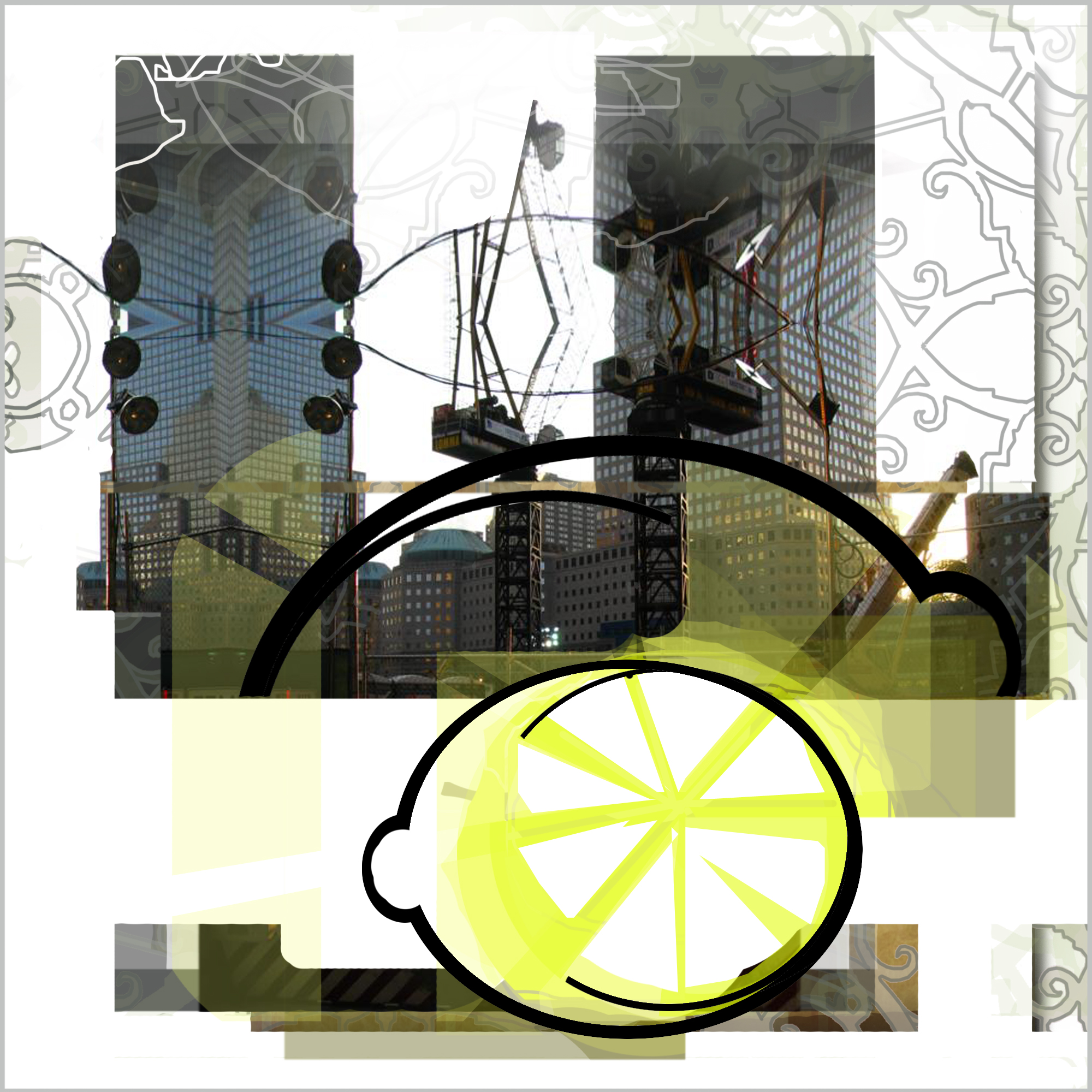
“The Lemon Method” by Anne Elliott

The Lemon Method
Illustration by Morgan Maurer, 2011

He stands four floors below, outside the window, playing God Bless America all goddamn day.

Across the street, a chapel is covered in ash, festooned with flags, crayon drawings, chains of origami birds. Gravestones in the churchyard, two centuries old, gray dirt, dead grass. Even the grass, dead. Looming behind, stubs of famous office tower, gravestones too, lit yellow into the night, still smoking.

Our old office is damaged, off limits, behind checkpoints we can see from our window.  Our new office is a conference room, four of us crowded around one table.  Laptops, papers, Doritos, dry-erase board.  And a lemon.  Tasha brought it to deal with our troubadour.

“If you show him the lemon,” Tasha says, “He won’t be able to play. It works to stop a whistler.” An old Russian trick, like medical suction cups bruising your back, like dog saliva to ward off infection.

“You just show it to him?” I’m laughing. I’m skeptical. This lemon is the best thing I have seen for awhile.

The lemon sits on the table for weeks, while the fife plays on. He doesn’t know we are in here, that we hear him all day, that his song penetrates our jumpy bodies like ash: particles of asphalt, computers, bones.

Phone calls from Boston, clients growing impatient. Now I notice how loud this colleague chews, that one laughs. Eyes to my screen, but nothing gets done. I look at the same word fifty times, and forget it fifty times. Every number looks wrong to me. A war of feet under the table, and apologies grow less sincere. That person’s lunch smells disgusting. I look straight ahead, out the window, at the newly empty sky.

I can’t take this song any more. I grab the lemon and go outside, ready to face the enemy.

On the street, tourists push against police barriers to get a glimpse of what isn’t there. Eyes turn skyward, mouths gape, taking in the dirty air.The fife guy breathes this all day. This is the gritty wind going through his instrument. The hat beside him holds quarters, no bills. He’s just an entrepreneur. He’s a symptom.

I hold the lemon up, show it to the disease. The stars and stripes, the new sirens, the horrid blue sky, the junk of grief.  I give it a good squeeze. It pushes back, solid and cool in my hand. When I go back inside, the fife plays on. The gritty wind is still there. The lookers still gape. Nothing has changed except my palm. It has turned waxy white, and smells like an innocent summer.


Anne Elliott is a securities analyst / writer living in Brooklyn. She has performed spoken word, with and without ukulele, at PS122, The Whitney Museum, St. Mark’s Poetry Project, and Woodstock ’94. Her stories have appeared in Hobart, Pindeldyboz, Opium, and others. Her hobbies include knitting and feral cat management.

Read our interview with Anne here.

“The Athlete” by Ed Falco

The Athlete
Illustration by Morgan Maurer, 2011

It had been years since El played a game of chess on an actual chess board with actual pieces, and even longer since he had chatted easily with a woman, and yet there he was, in the ornate living room of an old Victorian home in Lexington, Kentucky, seated in an overstuffed chair across from Tess, a tall-ish, athletic-looking woman of about his age, mid- to late-fifties, though he’d have guessed when he first met her that she was younger.

She sat across from him in another overstuffed chair, looking down to the slate table between them at a handsome antique chessboard and pieces. She wore faded blue jeans and a thin pale-yellow turtle-neck sweater that hid the loose folds of her neck, where, he had noticed the night before, her age did show. In her eyes he found a mix of intelligence and weariness he associated with successful women. He’d just explained that all the chess playing he’d done lately had been on a computer screen, with anonymous opponents from all over the world, and she’d said huh, as if it amazed her anyone would want to spend his time playing chess with someone he couldn’t see. They’d been talking like this, sharing little bits and pieces of their lives, for the past day and a half, since they’d been seat-mates on a flight out of New York to Roanoke, Virginia––a flight that had been diverted because of fog. They’d wound up in the Lexington airport late in the evening, and when flights there were grounded because of snow, they wound up sharing a cab to the same Bed and Breakfast a few miles from the airport, where they wound up sharing nightcaps in Tess’s room, followed by more easy conversation that lasted for hours and ended with them making love and falling asleep in each other’s arms.

In the morning, to El’s surprise, there was very little awkwardness. They’d risen, showered, dressed, and then gone down to breakfast chattering away, talking about everything in the world, from their histories and their lives to politics and science. It was as if neither of them could talk fast enough. Turned out, they both lived in TriBeca, relatively close to each other: El on North Moore Street, Tess on Leonard. They were both divorced, El for the six years, Tess for ten. El had been married for a dozen years before the divorce, Tess for more than twenty. They both had grown children: Tess, two girls and a boy; El, a son and a daughter. Tess worked in fundraising, El was in sales.

After breakfast, they’d retired to the living room and spent most of the rest of the day in front of an open fireplace, and every hour or so one or other of them took a chunk of wood from a stack on the red brick outer hearth and tossed it into the flames. Late in the afternoon, when it was clear there would be no flights out of Lexington until sometime the next day, the woman who ran the B&B, a grandmotherly figure with a balding head of gray hair and a belly that made her look impossibly pregnant, asked if they’d mind if she left them alone for awhile while she went to look after an elderly friend. Now it was late afternoon, the light outside gray and solemn, and they were alone in the house, midway through a chess game neither of them cared much about, a game that was meant only to provide an occasional diversion from their ongoing conversation.

Tess looked up from the chessboard, out a bay window overlooking a sloping hill and a trail that disappeared into a line of snow-covered trees. “Let’s go for a walk,” she said, “before it gets dark.”

“Seriously?” El looked out the window again, as if he might have been missing something. The snow was still coming down, though lightly, and there looked to be a foot or so on the ground. The scene was peaceful if dark––gently falling snow over fields and woods––until a gust of wind sent furious white swirls spinning into the trees.

“You’re a big guy,” Tess said. “You can take it.”

El said, “Looks awfully cold out there,” and then opened his arms and gazed down at himself, at the thin, dressy slacks and black shoes, at the white cotton shirt with fine blue stripes, more appropriate for a board meeting than a hike in the snow.

“She’s got everything,” Tess said. She jumped up from her chair, as if officially announcing the game of chess was over, and she motioned for El to follow her. “Look at this.” She opened a door off the foyer to reveal a closet stuffed full of winter gear in a variety of sizes: coats, scarves, boots, hats, gloves, multiples of everything. “Elwood,” she said, using his full name, teasing a little. “They have actual real woods here in Kentucky. Right out there, in fact.” She pointed out the bay window.

El wrapped a long green scarf around his neck and foraged through a line of winter coats, looking for something that might fit him. He was six-one and bulky, with thick legs and heavy thighs. “Did I tell you I played point guard in college?” he asked as he tried on the only coat he could find that would reach down to his waist.

“Really?” Tess said. “I love basketball. Were you good?” Then she added, quickly, “I mean, you must have been good––”

El laughed and said, “That’s all right.” He was struggling to get the coat zipper up over his belly. “I was too small to get much playing time, but when they let me on the court, I usually did pretty well.”

“Did you like playing?”

“Loved it,” El said, and left it at that. He took a step back and opened his arms. The coat was too small for him, but he’d managed to get it zipped up and buttoned.

“You need to put a second pair of pants on over those,” she said. “Do you have anything a little sturdier?”

“Pants?” He shook his head. “I’ve got another pair of dress slacks.”

“Better go get them,” she said. “The wind will whip right through those; might as well be naked.”

El said, “Fine. I’ll be a well-dressed woodsman,” and he went back up to the bedroom, where he found a heavier pair of socks and put them on over the first pair, and then struggled into a second pair of pants.

Before leaving the room, he looked at himself in a free-standing, full-length mirror. As he expected, he looked ridiculous: a big guy with a round face framed by a full head of gray hair, wearing a too-tight winter coat and a long green scarf with gray dress slacks, two pair. He smiled, amused at the figure he cut––and then his thoughts took a quick turn back to basketball. He had been modest with Tess. He hadn’t told her that in high school he’d been the team’s leading scorer sophomore through senior year, and that one college scout who watched him play said he had the sweetest three-point shot in the region. Still, he had no offers from Division I schools. Too small. He’d heard it over and over, through high school and college. Too small. After high school, he traveled halfway across the country to play for Oklahoma Wesleyan, a good Division 2 basketball school––only to get limited playing time, because, of course, he was too small to compete against the bigger, stronger players in the league.

Too small. The words were lodged somewhere deep inside him like slivers of heat. He told Tess he loved basketball, but his feeling for the game, back then at least, was something more than that. His whole life was immersed in basketball. When he wasn’t playing, he was practicing. When he wasn’t practicing the game, he was thinking about it. He did only what he had to do to get through the academics in high school, and the same in college. He was a good basketball player, and he believed that would be his future. In high school, he believed he’d be recruited by a division 1 team and go on to play in the pros. When that didn’t happen and he went on to a division 2 school, he believed he’d be noticed there and go on to play in the pros. When that didn’t happen, when he finished college having spent infinitely more time on the bench than on the court, he found himself ill-prepared for the work world. He wound up in sales by default, and he’d been in sales ever since. When he thought of basketball now, it was often with anger. His coaches and team mates, his parents and his friends, they’d all tried to tell him. He was too small for the pros. It wasn’t going to happen. He’d never forgiven them for being right, nor himself for not proving them wrong. His memories of basketball were buried in him like flames, like a roiling circle of heat.

Downstairs, he found Tess in front of the bay window, bundled up in a red quilted ski jacket, a white knit cap with ear muffs, and a long green scarf identical to the one he was wearing. “You look like a Christmas tree,” he said, and then laughed at his own joke.

“I put out some boots,” Tess said, “that look like they’ll fit you.” She pointed to the closet.

El said, “perfect,” as he slid his foot into a boot. A moment later he’d donned a knit cap and gloves and was heading out the front door with Tess behind him.

“Cold,” Tess said, announcing the obvious. She pulled her hat down over her forehead and wrapped her scarf over her face so only her eyes were exposed.

They waited together for a moment on the front steps of the house, looking across a snow-covered lawn that descended to a blacktop road. A plow had gone by less than an hour earlier, and the road was slushy with patches of ice and snow. Beyond the road was an open field surrounded by trees.

El said, “Sure you want to do this?”

Tess said, “I bet you it’ll be warmer when we get into the trees and out of the wind,” and then she lurched forward, down a pair of steps and toward the driveway.

“That’s a theory,” El said, following her, “but I wouldn’t bet on it.”

On the other side of the house, as they trekked over snow toward the tree line, a gust of wind kicked up and seemed to cut right through El. He stopped to tuck his pant legs into his boots, and when he looked up Tess had turned her back to the trees and was waiting for him. She pulled the scarf away from her face to reveal a smile. “Hey!” she called. “It’s gorgeous, isn’t it?”

El gave himself a moment to take in the white expanse of field enclosed by towering green-and-white speckled trees, their branches loaded with powdery snow. He jogged to catch up with Tess. When he reached her, he put his arm over her shoulder and pulled her close. She felt solid in his grasp, her body slim but muscular, and they continued trekking together through the snow toward the trees.

El’s marriage was largely a disaster, but as he walked through the cold and wind with his arm around Tess, his thoughts returned a moment to the good early days, when he had been in love with his wife, when they used to take long walks and talk about their future. El hadn’t had a loving thought about his wife in so long the memory left him feeling first disoriented and then sad. She had turned both his children against him. She had cost him a fortune in lawyer’s fees. She’d wound up with the house and most of his retirement fund, so that now he’d never be able to retire comfortably. He was distant from his children, money was tight, and he’d be working in sales until he got too old to do it anymore. After that, he didn’t know what would happen to him.

“Look,” Tess said. She pointed to a gap in the trees.

“Trail head.” El squeezed Tess’s shoulder and then let her loose. In the last several years, he had trained himself, with the help of a therapist, not to think much about his wife. There had been a point, before he started seeing a counselor, when he’d been so eaten up with bitterness he’d found himself thinking about murder and suicide, about killing his wife and his children and then himself. That he could even entertain such thoughts had frightened him into counseling. His therapist put him on medication for a couple of years, and that had helped––and now he lived an essentially solitary life that revolved around work. When he met people, it was through work. When he did anything social, it was through work. He had a distant, formal relationship with his children, and though he would have loved something more intimate, he didn’t know how to make it happen. He hadn’t spoken to his ex since the last time they’d met in a lawyer’s office, six years ago.

Once they were in the woods and out of the wind, it turned out Tess was right, and it was noticeably warmer. Tess leaned back against a boulder and undid her scarf, which she had wound around her neck and face. “Isn’t it great to be out in this?” she said. “I love Manhattan, but, wow . . .” She gestured to the snow-covered trees and the scattering of rocks and boulders all around them. “I’d forgotten how beautiful.”

El crouched in front of her and wrapped his arms around his knees. “But it’s still cold,” he said, “really cold.”

“This world . . .” Tess said, and she turned to look out through the trees, toward what appeared to be a meadow, some forty, fifty feet in front of them, at the bottom of a hill.

El pulled himself upright, embraced Tess, and kissed her. Tess seemed surprised at first, but then she put her arms around him and kissed him back.

“This is crazy,” El said. “Don’t you think?”

“What is?”

“Us,” El said. “This.” When Tess didn’t answer, he said, “Is it just me?”

Tess watched El for a moment, her eyes on his eyes, and then she kissed him again. “It’s all crazy,” she said. She reached for his hand and pulled him along.

El followed Tess on the trail, which curved around one boulder that was several feet high, and then between a pair of boulders that formed a narrow corridor and opened onto a steep downhill slope to the meadow. When the wind stopped for a moment, the woods grew suddenly quiet. El let go of Tess’s hand, possessed suddenly of an urge to touch the ragged surface of one of the boulders. As Tess continued down the hill, he took off one glove and pressed the palm of his hand to the rock. It was cold and solid. What else did he expect? Still, he held his hand against the stone and pushed his fingertips into the gritty surface. How long, he wondered, had this boulder been here, unmoved and unmoving? A few hundred thousand years? Millions? He rummaged around in his memory of geography classes and came up with an image of mountainous glaciers slowly retreating, gouging holes in the earth and leaving huge boulders scattered like pebbles.

Tess waved from the bottom of the hill. “Come look at this,” she called. “It’s lovely.”

Before El reached Tess, midway down the hill, it occurred to him the meadow wasn’t a meadow. It was too big, and there was something about the way the trees on the far side, now that he could see across . . . the trees all descended to the open space. It reminded him of his visits to the ocean in Oregon, the way the mountains descended to the sea. There was a space of perhaps two or three seconds between the moment it first dawned on him there was something odd about this meadow and the moment he realized it wasn’t a meadow at all, but a pond, a large pond surrounded by woods––and in those two or three seconds, Tess stepped out onto the ice and her feet slid out from under her.

El yelled “Wait!” and started to jog down the hill. He had only taken a couple of steps when he tripped on something, a rock or an exposed root. To keep his balance, he reached for a tree and slammed sideways into it, and then lost his balance anyway and tumbled and rolled for several feet before finally coming to a stop. Through all this, he was keenly aware of the bulk of his body: it felt like a great weight, utterly beyond his control, radically different from the body of his youth, the one he could hurl about on the basketball court so athletically. He didn’t know what shocked him more, the fall or that sense of his body as lumbering, uncontrollable bulk.

“It’s all ice,” Tess said. She had pulled herself to her feet and was looking up the hill. “Are you okay?” she asked. “You’re bleeding.”

“It’s a pond,” El called back to her. He wiped blood from the side of his face. First he thought he must have gotten scraped up when he hit the tree; then he realized there was too much blood, and he had gashed himself somewhere.

“You think?” Tess said. She was crouched and looking at the ice under her feet, her arms spread for balance. “Guess so,” she said.

A gust of wind came up and sent a spiral of snow across the pond as Tess took a careful step toward the shore and most of her body disappeared under the ice. El didn’t hear anything crack. There was no sound at all. One moment Tess was upright on the ice and the next she was submerged to her shoulders.

Tess said “Oh,” and then “Lord,” and looked up at El as if she were embarrassed.

At the bottom of the hill, El got down on his knees and worked to extricate a long branch from a pile of icy brush. The gloves were interfering with his grip and so he pulled them off and tossed them onto the ice. Tess had said only those two words—“Oh,” and “Lord”––and then she had gone silent as she struggled to pull herself out of the water, pushing her body forward. She appeared to be trying to walk, and slipping with each step. Her body lurched upright and then fell forward three times in quick succession, and then she stopped, her eyes open in a frightened glare, staring up the hill. She seemed to be conscious and aware. She was breathing hard, but she wasn’t moving or speaking.

When El, at last, was able to pull the branch free, he lay down on his belly and extended it to Tess. The ice was cracked and shattered now all the way to the shoreline, and he could see that the drop off was steep. Tess was only ten feet in front of him and the water was up to her breasts. “Take it,” he yelled. Tess clutched her heart with one hand and looked at the branch as if she couldn’t quite make out what it was or what to do with it. Her free arm rested easily on a heavy chunk of ice pressed up against her chest. “Take it,” El repeated. “I’ll pull you out. Grab hold of it.”

Tess looked at El and then at the shore, and then she lunged at the branch, reaching for it with both hands. For a second she managed to grab hold of it. One moment her arms were wrapped around the branch, her whole body leaning over it––and the next moment she was gone, disappeared under the water.

El shouted her name and rose to his knees. An instant passed then that felt more like several minutes. First, he explored his options. He could try to run and get help––but that would be the equivalent of leaving her to die. He might try lying to himself, he might try rationalizing––but he knew if he left her there, the only point in returning would be to retrieve her body. Or he could go in after her. He’d have to submerge himself in the water, pull her out, and then carry her up the steep hill, across the long field, and back to the house. He figured the chances of succeeding were exceedingly small. But maybe. Maybe he could do it. There was at least a chance.

Still, kneeling at the edge of the water he hesitated. His thoughts flew in a heartbeat first to his ex-wife, whom he saw in his mind for a moment vividly, her expression tender and concerned, and then to his children––and in a flash of memory he recalled his daughter falling from her bike, her legs and face scraped and bleeding, and how desperately she’d wrapped her arms around his neck as he carried her home. Both these /images came to him in the instant’s hesitation before he stepped into the freezing water.

The shock was stunning. It hit him like a body blow, as if he’d been slammed into a wall. After his first step he was in up to his waist, and the next step he was under water, struggling to make his brain work, commanding his feet to feel for the ground, his arms to search for Tess. Then, a heartbeat later, there was no thought at all, only a panicked, urgent thrashing until he found Tess and pulled her to the surface choking and spitting. Her body seemed impossibly heavy, as did his own, the two of them weighed down by thick layers of soaked clothes. They were surrounded by chunks of ice and slushy water, and El had come up facing the opposite shore, so that what he saw in front of him was a wide expanse of pristine snow surrounded by trees. He leaned back, his arms around Tess’s waist, and slipped and fell with his first attempt to take a backward step toward the shore. As he went under, his hip smacked into something hard and unmoving, and the impact was dull and sharp simultaneously––a dull thud and a sharp shock of heat shooting up his spine. When he found footing again and came up out of the water, he was facing the shore, his arms still fast around Tess’s waist.

They were close to solid ground now, only a few steps, only a few more feet––and El wasn’t at all sure he could do it. His arms and legs felt stuck, unmovable, his arms wrapped around Tess as she continued to cough and spit while laboring to breathe, his legs planted under the water. With a grunt he gathered all his strength and surged forward, pushing Tess out in front of him, heaving her toward land, and then he was under the water again, his feet slipping out from under him, and when he broke the surface for the second time, he saw Tess clawing her way out of the pond, pulling herself to the shore. With what strength he had remaining, he flung his body toward her, pushing through chunks of ice that pummeled his chest and legs, until he was finally beside her, and he managed to pull both himself and Tess all the way out of the water before collapsing onto his back and breathing hard while he waited for his heart to quit its terrible pounding, to slow down enough that he could manage something more than his own hard breathing.

Though his body felt exhausted beyond functioning, his mind apparently was still working methodically. He entertained a dim hope that someone might have seen them struggling in the water. They were, after all, nearby a small American city: they weren’t in the middle of the wilderness somewhere. Perhaps someone in a house on the other side of the pond, some kids out playing in the snow––perhaps someone saw them and was at that moment on the phone, dialing 911. Then, if they could hold on, others soon would be hurrying down the hill to take them away in ambulances––and all would be well. Maybe. El entertained these comforting thoughts until his heart stopped raging in his chest and he was able to turn over onto his side, where he found Tess, still on her back, breathing a little easier, looking up into the trees as if she saw something interesting there.

“Tess,” he said, his voice raw. “Tess. Can you hear me?”

Tess nodded and turned her head to look at him. “I can’t move,” she whispered. She added, almost inaudibly, “I can’t move my body.” Then her lips moved again, as if she might have thought she was speaking, but all that came out was a whisper of breath.

“Our clothes,” he said. “They’re weighing us down.”

Tess looked back at him, but made no effort to speak.

“Okay,” El said, with no idea what he meant. He struggled and managed to get himself sitting upright. His arms and legs felt as though they weighed tons, and it took him forever, fumbling with numb fingers, to get the zipper of his jacket down. By the time he had managed to get out of his coat and unwrap his tangled scarf from around his neck, he was exhausted again. He waited a moment and listened, his sodden jacket and scarf already beginning to freeze where they lay beside him in the snow. He had hoped to hear the sound of an engine in the distance, or the sound of boots trudging through the snow, or, best of all, maybe voices, voices calling for them.

But he heard nothing of the kind. Snow had started to come down harder and the wind blew constantly at about the force of a light breeze––and what he heard was the soft whisper of snowfall in the woods, and wind soughing through trees.

His first plan had been to carry Tess up the hill and back to the house––but that was impossible, and he understood that now with certainty. He could barely move himself, let alone carry Tess. He considered trying to get Tess out of her wet clothes, which he could see were already stiffening as ice crystals formed on the outer layers near her neck and wrists. He couldn’t figure which would be better for her, to leave her packed inside of wet, icy clothes, or to leave her further exposed to the wind and cold with them off. While he tried to consider that question, he noticed his thoughts had started to move sluggishly, and that in turn frightened him into moving.

“I’m going,” he said, meaning he was going to get help. He pulled himself to his feet and looked up the hill, which seemed to him now mountainously steep. He turned back one more time to Tess, stretched out on her back in a bright red jacket and green scarf, her hair stiff with ice, a light layer of bright new snow untouched around her. He thought to shout something reassuring to her, but he couldn’t come up with words, and he realized he was at least a little dazed now and his mind wasn’t functioning entirely right––and again that realization provided the surge of energy he needed to push himself forward and up the hill.

His exhaustion was overwhelming, like nothing he’d ever felt before. Even in his days playing basketball, when he’d sprint from one end of the court to the other at full speed until his legs finally gave out, when he’d fly up and down the stadium stairs, or work the weight machines until his arms were rubbery––none of it was anything like the exhaustion he felt climbing that hill. Each step required all his remaining will. Every time he fell, he tried to fall forward, so that when he got up again, which he did, over and over, he’d made a little progress, moving himself farther along––and in that manner he made it to the top of the hill, where he could see through the trees to the open field behind their B&B. In another fifty feet, he’d be out of the woods––and even if he couldn’t make it all the way across the field, he still might be seen by someone, by the old woman who owned the house, by kids out playing, by a car passing on the road. If he could make it out of the woods, he told himself, his chances were better, and if he could make it all the way to the house, he might yet still save himself and maybe Tess, maybe Tess also could be saved.

With those thoughts rattling around in his head, he stumbled forward, pushing himself one step at a time, and not until he reached the pair of boulders that formed a narrow corridor, did he allow himself to fall to his knees and rest a moment . . . just a moment, out of the stabbing wind, within the protection of the two ancient rocks, the one he had touched with wonder a million years ago, when the earth was still young and much was possible; when Tess, a woman who had appeared out of nowhere in his life and with whom he had been peacefully cuddled in the warmth of a down comforter the night before; when Tess, who was beautiful and smart and funny; when Tess was a dozen feet in front of him and ambling down a hill toward the pond that they both thought then was a meadow. He was at ease there, between those rocks, and suddenly, overpoweringly sleepy. When he thought about the intense desire to sleep that was overcoming him, and when he realized at the same moment he was no longer kneeling, but rather he was stretched out on his belly between the boulders, he had another, brief, panicky moment. He knew he had to pull himself up to his feet, he had to get up and keep moving, and he pushed his mind back to the /images that had come to him in the moment before he stepped into the water, in that moment when he made his choice to go in after Tess. He remembered his children and his wife, and his daughter’s arms around his neck as he carried her home.

One more time, then, he struggled to pull himself to his feet, and when his body wouldn’t move, he struggled harder, he struggled with all he had in him; and at the moment when he was about to give up, when he was on the verge of resigning himself to sleep, at that moment, suddenly, miraculously, he was fine. He was saved, both he and Tess. Together they walked away from the cold, out of the woods and over the surface of the pond. All around them, pristine snow gathered. When the wind blew, it danced in circles and sailed off into the stands of surrounding trees. They had both taken off their clothes to free themselves of the sopping, burdensome weight, and they walked easily over the ice, sure-footedly, side by side, leaving a trail of mist behind them, falling off them like smoke. The mist coming off Tess was white and wispy, while the mist off El was thick and swirling and tinted red. He saw himself then as if from above, a big man, bulky, walking beside Tess on the pond, leaving a cloud of red mist behind him, as if his body were casting off heat and leaving behind a trail of flame. He continued watching calmly, the bodies beneath him on the ice growing smaller and smaller as he rose higher, until they were merely points of light, and then they were nothing at all.


Ed Falco‘s most recent book is the short story collection, Burning Man, from SMU Press, in which “The Athlete” first appeared. Other recent books are the novel, Saint John of the Five Boroughs, and the short story collection, Sabbath Night in the Church of the Piranha, both from Unbridled Books. His stories have appeared in The Atlantic Monthly, Playboy, TriQuarterly, Best American Short Stories, and the Pushcart Prize anthology, among others. As an award-winning playwright, Falco is the author of Home Delivery, Sabbath Night in the Church of the Piranha and Radon.  In the summer of 2001, Falco worked with artists and actors from the United States, England, Greece, Bosnia, and Germany in an international theatre project meant to explore the healing power of drama. Ed lives in Blacksburg, Virginia, where he directs the Virginia Tech’s MFA program, and edits The New River, an online journal of digital writing. You can read more about Ed and his work here.

Read our interview with Ed here.

 

An interview with Carolyn Kreiter-Foronda


[Carolyn’s fine poems from the January 2011 issue can be read here and here.]

Mary Akers: Hi, Carolyn. Thanks so much for agreeing to talk with me, today. I know that in addition to your fine poetry you are a painter and sculptor, and I was hoping we could talk a little bit about art and creativity. First off, I’m wondering if you find that your poetry and artwork inform or overlap one another in exciting and/or inspiring ways? And could you talk briefly about the joys and frustrations of the overlap?

Carolyn Kreiter-Foronda: Because I frequently experiment, I find that this inclination informs both art forms. Just as I’ve been heavily influenced by the philosophical insights of Jackson Pollack and the abstract innovations of the Washington, D.C. painter, Sam Gilliam, I’ve been influenced by my former creative writing professors, Peter Klappert and Ai, whose dramatic monologues opened doors of exploration in my own poetry. Secondly, as an abstract colorist painter, I rely on colors to speak emotionally to viewers. As a writer, I interweave color into ekphrastic, or art-inspired poems, by carefully selecting words or syntactical arrangements that visually engage the reader. Another overlap that exists in my poetry and artwork emerged after studying Georgia O’Keeffe, who taught me to look closely at a subject to really see it. My paintings and poems zero in on a subject to offer my audience a close-up view. However, I seldom use my own artwork as an impetus for a poem. Nor does the overlap between the two arts ever frustrate me. I attribute this to the joy I derive from creating.


MA: My undergraduate degree is in fine arts, and I was a potter for ten years, so I’ve thought a lot about the function of art, the accessibility of art, and the conversation between artist and “consumer.” (And I use the word consumer, not in the commercial sense, but in the sense of “the person on the other end.”) I guess I’m trying to touch on the idea that art takes two. I feel this very strongly. The artist makes a thing (poem, sculpture, meal, song, whatever)–we could even call it an art widget–but at first it is simply the artist talking to him-or-herself until there is someone on the other side of that art, enjoying it, experiencing it, or even hating it. But in a sense art takes two brains to be fully realized–the creator’s brain and the experiencer’s brain. I’ve rambled on, but would you like to comment on this? What is your perspective on the idea of conversation being inherent in the creation/realization of art?

CKF: I enthusiastically agree with you. Art does take two to be fully realized. For years I wrote for myself, largely using poetry as a therapeutic act of coping. I had a near-death experience as a teenager, surviving the harsh realities of a life-threatening illness by minutes. During the nine-month healing stage, I wrote frequently, often exploring the richness of the world and the gift of life I’d been given. Sadly, a few years later my mother, a close friend, and our family physician passed away, leaving me grief-stricken. My solitary jottings became a source of comfort. In graduate school my professors encouraged me to publish, thereby sharing my work with an outside audience. Receiving feedback from magazine editors, readers, and friends opened my eyes to “the conversation between the artist and consumer”—as you so aptly describe this exchange. We need to be open-minded and welcome a conversation with the viewers/readers of our work. After all, others’ perceptions might inform the next step we take as creative artists.

River Country by Carolyn Kreiter-Foronda

MA: Yes! A brilliant observation, and one I hadn’t considered: that sometimes the reactions of others help us take our work to the next level. In my experience, a piece of writing can mean very different things to different readers. Probably because each reader brings his-or-her own life experiences to the reading of the work. In a sense, the reader completes the work that the writer begins. Do you find that readers interpret your work in ways that surprise you? How do you feel about that?

CKF: I’m constantly surprised by the array of interpretations my poems evoke. I vividly recall an exchange with a student, which took place over twenty years ago in a high school Advanced Placement English class. As a guest poet, I was candidly asked by a student if the horse in one of my poems symbolized my adolescent desire for sex. I fumbled for a moment, and then told the inquisitive young man about my horseback riding experiences, which had inspired the poem. I honestly acknowledged that writers sometimes subconsciously add symbolic suggestions to their work. I explained that the critic, who exercises analytical thinking skills when interpreting a poem, brings an entirely different set of skills to the reading of a work than does the poet, who relies on creative thinking to hone a piece. We as writers have no control over a critic’s interpretation of our poems, since each reader’s background of experiences will affect his/her interpretation. How do I feel about this? I’ve learned to let go of a poem or book once it’s published. Because I revise exhaustively and subject each poem to harsh scrutiny, I’m hopeful that others’ interpretations won’t be too far afield from my intentions.


MA: I recently attended a wonderful lecture by Margaret Atwood (who is a poet, a fiction writer, an essayist, a cartoonist, an inventor, a knitter–clearly she loves to create) and one of the things she spoke about was the basic human need to be creative. She said that if we doubt that at all, we should think about the things that children explore and do naturally, on their own, as they grow. What do they do? They sing, draw pictures, make up stories, dance. And so we need to nurture the arts in our public schools because creativity is at the core of what makes us human. What are some of your earliest memories of being creative as a child? Have they stayed with you in later life?

CKF: First, let me say that Margaret Atwood is one of our most gifted writers and thinkers, whose range of creativity is astounding. I wholeheartedly agree with her contention that we need to nurture the arts in public schools. As a former English Specialist and Writing Resource teacher for a large public school system, I developed teacher workshops that would encourage creativity in elementary through high school. On the college level, I taught teachers how to read and write poetry in hopes that they, in turn, would offer similar lessons for their students. We must remember that all meaningful discoveries and inventions which impact the future direction of mankind come from creative thinkers. I often use Bill Gates as an example of one who altered the world with his creative gifts. Unfortunately, schools which primarily teach “test-taking skills” stifle many great minds.

My earliest memories of being creative as a child remain vivid. My mother—a brilliant woman—offered me countless opportunities to draw and write. Armed with crayons and paper, I wrote my first poem before entering elementary school. In addition to enrolling my sister and me in summer art classes, my parents took us on field trips. We visited art galleries, civil war sites, and historical museums. But we also invented our own playground, sculpting mounds of sand into mountains for our toy cars to scale. I was a tree-climber, who spent hours daydreaming in the arms of an old oak. Today’s kids seldom reap the benefits of exploring nature. Few can identify a Carolina wren’s call or distinguish a hickory from a loblolly. We need to limit the time young learners spend in front of a television or computer. We need to offer challenges which encourage our children to embrace creativity in an outdoor setting.

How have childhood acts of creativity stayed with me? Ten years ago when I retired, my husband and I moved to the country. I turned once again to the rural life to ignite my imagination. Since uprooting myself from the big city life of Washington, D.C., I’ve produced enough paintings to be featured in three solo art exhibits, as well as several group exhibits. I’ve completed three books, with another manuscript on the way. I’m grateful that my parents recognized the importance of fostering creativity in their children. For me, it’s the most natural way of thinking.

Dragon Flight

Dragon in Flight by Carolyn Kreiter-Foronda

MA: This next question is a bit of an aside, but I’ll ask it anyway. I’ve seen videos of elephants painting pictures in Thailand. Some of the paintings they produce are remarkably expressive and graceful. What do you make of this? Do you think it is an elephant simply performing a trick to please a trainer? Or a fellow sentient being enjoying the creative act?

CKF: Years ago while on an African safari, I learned a great deal from our guides about these large, intelligent mammals. What’s astonishing is how easily elephants grasp seemingly impossible concepts that other animals fail to master or learn as tricks. I feel certain that these gifted creatures are trainable, as evidenced by featured shows in circuses. Like you, I’ve marveled at the videos of elephants painting pictures. But then I’m one who believes in the human/ animal connection. If the bond is strong enough and if the reward—e.g., a treat—is ample, the animal will likely respond, as elephants do, by learning to paint. Is the elephant enjoying the creative act? I’ll leave it to the experts to answer that!


MA: And finally, since we are a recovery-themed journal, what role do you think recovery plays in the creative process? Many prisons, trauma counselors, psychotherapists, survivor’s groups, veterans organizations and the like employ art to help patients heal. Have you found yourself drawn to /images or themes that you later realized stemmed from something you needed to work through?

CKF: Absolutely. In fact, as a teacher, I’ve worked in nursing homes and homeless shelters to help patients heal. As noted earlier, I, too, benefited at an early age from using poetry as therapy. My book, Death Comes Riding, and my current manuscript-in-progress about the relationship between Diego Rivera and Frida Kahlo both deal with the recovery theme. Often, I’m drawn to themes that stem from a problem I need to work through. One art has never been enough to help me cope. I’ve studied classical music, art, poetry, as well as dance. All of the arts quell my spirit by offering an outlet to meet my emotional needs. Without the arts, life would lose a vital dimension—one which nourishes the soul.


MA: I feel like I could talk with you about these subjects for hours. I know I need to find a place to end our discussion, but I’m really inspired by your wide creative study and especially your interest in Frida Kahlo and Diego Rivera (an interest I share). Clearly their lives have been an inspiration to many creative types over the years. Barbara Kingsolver’s recent novel The Lacuna comes to mind, as does the incredible 2002 film Frida by the director Julie Taymor and starring Salma Hayek, just to name two. Many of the people inspired by Frida are women artists themselves. I feel like she represents some aspect of ourselves that we often keep hidden. Anyway, sorry, that’s not my question. My question hearkens back to the idea of the artist as conversationalist, and it strikes me that Diego and Frida had very different styles of communicating. Diego clearly wanted a dialogue with the people. His massive murals were all about history and society and social justice. But Frida’s paintings were more private explorations of pain and loss and identity. Much of her creative work was a variation on the self-portrait, and yet that speaks to us so very deeply. Would you care to comment on this?

CKF: You’ve described my book perfectly!  Diego and Frida were conversationalists.  I became interested in the duo after visiting El Museo del Barrio in New York where I viewed a marvelous exhibit of both artists’ work.  In 2006 I talked my husband, a Spanish-speaker, into traveling to Mexico City with me to see Diego’s immense murals on site.  Prior to experiencing his art firsthand, I had thought that Frida’s work would speak to me more forcefully, but I was wrong.  Diego’s interest in representing the struggles of the common people, as well as their working habits and joyful festivals tugged at my heartstrings.  I returned home and spent hours researching his work, his life, and his relationship with Frida.  I then turned my attention to her paintings, primarily focusing on the riveting self-portraits which reveal the inner workings of her mind.  In 2010 my husband assisted me during a return trip to Mexico to see Diego’s frescoes in the Ministry of Education building.  These works of art inspired eleven monologues.  We also toured for a second time Frida’s Blue House in Coyoacan, where she lived most of her life.  Appropriately, the epigraph which introduces Frida’s section of the book reveals her self-understanding:  “I am not sick.  I am broken.  But I am happy to be alive as long as I can paint.”  The majority of the poems in this section are two-voice poems that reveal the dual nature of a woman, fraught with pain over losing her ability to have children, as well as the destructive nature of her relationship with Diego.  Writing this book has been one of my most challenging and intriguing experiences–an ambitious undertaking, but one which I feel was worth my effort.

MA: Well, after all you’ve revealed in our discussion, I’m sure your book will be wonderful. I can’t wait to read it. And thank you so much for participating, Carolyn. This has been an enjoyable and enlightening discussion.

If you’re interested in finding out more about Carolyn or her work, you can visit her website here or listen to audio files of her work inspired by the paintings of Frida Kahlo at Terrain.org

There’s also an audio interview with Carolyn here.

“God Bless Our Mess” by Dora Malech

God Bless Our Mess
Illustration by Morgan Maurer, 2011

Day by day, the days dissolved into the simplest of cross-stitched requests.
The sky let herself go—a fistful of sleet, a leftover moon.

Looking down became a hobby which payed off the morning when I found
an unmarked house key and a poorly molded plastic soldier.

On the path by the train tracks, I taught myself to recognize the marks
made by a limp in snow, shuffle in snow, stagger through snow.

There were calls to field, long-distance. Also, catcalls from moving trucks.
Some days I drove by Every Bloomin’ Thing and was tempted to turn off

into the parking lot and march into the greenhouse, remove my scarf and gloves
and stand bare-chested, crying pothos, ficus until I grew moss or was dragged away.

Some days I reached for my turn signal but kept driving. Thus, the weeks looked
like this: Monday—small claims court, Tuesday—leaky vessel,

Wednesday—scratched laugh track, Thursday—ritual burial, Friday—
blank check, Saturday—strip mall, Sunday—closed concession stand.

Another refrain snagged in my mind like a hangnail on some sweater’s pilled knit—
lit from within lit from within it went as I watched other women emerge orange

into the winter night, the sky a contusion, the streets all slush and no action,
their backs to a borrowed summer, to the bright lights of Jamaica Me Tan.


Dora Malech is the author of two collections of poems, Say So (Cleveland State University Poetry Center, 2011) and Shore Ordered Ocean (Waywiser Press, 2009). Her poems have appeared in numerous publications, including The New Yorker, Poetry, The Yale Review, Poetry London, American Letters & Commentary, and Best New Poets. She has been the recipient of a Ruth Lilly Poetry Fellowship, a Glenn Schaeffer Poetry Award, and a Writer’s Fellowship from the Civitella Ranieri Foundation. She has taught writing at the University of Iowa, Augustana College in Illinois, Victoria University in New Zealand, and Saint Mary’s College of California. She lives in Iowa City. “God Bless Our Mess” was first published in Chelsea, and appears in the collection Say So (Cleveland State University Poetry Center, 2011).

Read an interview with Dora here.


“Two-Headed Nightingale” by Shara Lessley

Two-Headed Nightingale
Illustration by Morgan Maurer, 2011

Christine & Millie McCoy, 1851-1912

tear open the breast                        and heart to tell
biological truth: no:                         the black, deformed
birth: yes: slavery                             of the interior

unlock the shackled                          spine to show
in sixty-one years monstrosity: yes:
she never left my side the fusion of vertebrae

the malformation                              of blood and bone
collision? no                                   our walk, a side-step
the backbone braided                        dance: a waltz

born 1851                                       as slaves: the body
twice betrayed: the sky                    held the sun: no, moon
“MOON AND SUN                              UNITED ON STAGE”

illusion? no: miracle:                           the sisters
merged, their voices                         layered like the nightingale’s
sheath of feathers,                            light hitting its wings

breaking up light –                            negress? no: they are
crimson blazing,                                their song quick and agile
as their hearts’ pumping:                      yes: one beat:

one pulse: one soul, two                   thoughts, from darkness,
a final note                                         dividing the air: the sudden outward
breath rushing to fill                            the other’s departure


Shara Lessley is a former Wallace Stegner Fellow in Poetry. Her awards include an O’Connor Fellowship from Colgate University, the Gilman School’s Tickner Fellowship, the Diane Middlebrook Poetry Fellowship from the Wisconsin Institute for Creative Writing, and a “Discovery”/The Nation Prize. Shara’s writing has appeared in Ploughshares, The Kenyon Review, Threepenny, Black Warrior Review, The Southern Review and Alaska Quarterly Review, among others. She was the recipient a 2009-2010 Artists’ Fellowship from the North Carolina Arts Council, and currently lives in Amman, Jordan. “Two-Headed Nightingale” first appeared in the journal Gulf Coast.

Read an interview with Shara here.


Featuring the work of Cathy Smith Bowers


I have long been a fan of the fine work of Cathy Smith Bowers and was delighted when our poetry editor Tom Lombardo selected her work to feature in this issue. The body of her work expresses such a fresh and yet intuitive sensibility. In fact, I think what I admire most about Cathy’s work is the fact that it contains–nay, embodies!–so many logical contradictions. Her poems surprise, even as they make perfect sense. They are innocent yet full of wisdom. They make you want to cry even as they give you hope in humanity.


If you haven’t had a chance to read the poems we featured in this issue, I highly recommend checking out Groceries and Learning How to Pray (which took my breath away the first time I heard her read it). Also be sure to read J. Stephen Rhodes insightful review of her most recent (and fabulous) book of selected poems: Like Shining from Shook Foil, published by Press 53.


And, I am happy to report, that Cathy is not only a fine poet but a kind and generous individual. Fred Leebron once called her “The beating heart of the Queens MFA program.” In her role as North Carolina Poet Laureate, she has said that one of her main goals is to make poetry accessible to those who are not computer savvy, so she made time to appear once a month on an Asheville radio station. Her poems have been published and appreciated widely, from The Atlantic Monthly to The Kenyon Review. In addition to her book of selected poems, she has written four other wonderful collections of poetry: The Love That Ended Yesterday in Texas; Traveling in Time of Danger; A Book of Minutes and The Candle I Hold Up to See You.


And, finally, so you can see the woman in action and get your own sense of her magic, here are two excellent YouTube videos of Cathy reading from her work:


Language


Snow

Interview with Jason Schneiderman

Mary Akers: Hi, Jason. Thanks for agreeing to let me pick your brain today. First let me say that I just loved your piece “Enough.” One of the things that struck me right away was the voice of your narrator. I especially like how he stays detached from the proceedings enough to describe them to us, and yet engaged enough to be frustrated and somewhat bemused by the speaker he is watching (and the reaction of both his father and the audience to the speaker). I know you are primarily a poet (and I’m a fan!), but it strikes me that a lot of your work has this same sort of engaged/clever/bemused starting place to its voice. Can you say a little something about voice in general and the voice of your work in particular?

Jason Schneiderman: I work really hard to reach that place of detachment. I have this sort of excessively expressive face, and I’ve always gotten in trouble for being too emotional. I am fascinated by the ways in which we are constantly refusing interdependence. The United States of America has this weird foundational tension between the inter-dependence of democratic governance and the rugged individualism of colonizing expansion. It’s like the Whiskey Rebellion never ended. I wanted the detachment in this piece to sort of switch sides– the advocate for inter-dependence has to separate from the individualists. Then again, a fantasy is often more powerful than reality, so the speaker loses. It’s like Oscar Wilde said in the Portrait of Mr. W.H. No one ever kills himself to defend the truth. You kill yourself to defend your lies.


MA: True. I also feel like the liars are the ones who shout the loudest, as if volume alone can make their words true.

When we worked together on turning this into a short piece as opposed to a poem, you said it would be your first publication as fiction. Congratulations on crossing a genre! But I’ve always felt that short-shorts like yours exist somewhere outside the realm of strictly fiction or non-fiction…in the same way that poetry does. A poem can be confessional, have a voice, and yet can also be not be the personal experience of the author. Do I have that right? Would you like to say something about this?

JS: I think that since modernism, poetry has been less defined by any set of consistent criteria than as something that is not distinctly another genre. If you look at some of the “poems” of Tristan Tzara or Jackson MacLow, their poems can seem more like a game to see what can be in poetry’s big-genre tent than as poetry proper. In some ways, that big tent playfulness and experimentation has destroyed the popular audience for poetry, because poetry is so exhausting to the novice who realizes just how much there is to know. The poems that a popular audience loves tend to be the poems that are defined as poetry via rhyme, meter, repetition, etc. The-capital-P-Poets, on the other hand, sort of love what the poets are doing. I liked thinking about the piece as fiction, because it clarified for me the genre conventions: Character, setting, narrative arc, conflict, crisis. I don’t want to be reductive about the nature of fiction– but it was nice to work in a genre with larger sets of rules. Then again, my first successes as a poet were all with sonnets. So maybe I’ve always been a rule bound kind of boy.

But I think that fiction writers want to enjoy the fun. I like that when the essay wanted to have more fun it got called the “lyric essay.” I was like, right on essayists. Get lyrical. Go big tent.

Rose
MA: Our guest illustrator, Kristin Beeler, read each piece of writing for this issue and designed a unique piece of artwork for each. It’s really such a gift that an artist is willing to do that for us each issue. To me, it brings the written work to life in new and exciting ways that expand its original reach. It makes it a conversation between artists that we the readers get to enjoy. What did you think of the image she chose for Enough? How would you describe it as relating to your piece?

JS: The image is very delicate and a bit disturbing, in that the flower’s bloom has this sort of tubular, worm like quality. It’s pretty, but it looks like a distended colon too. I couldn’t quite find the membrane attaching the picture to my piece, which in a certain way was a relief. It avoids the danger of illustration, which I vehemently distrust/dislike– even though there is interesting work being done on the relations of text to image (and text as an image itself). But I don’t do that work myself.


MA: Interesting. I assumed that she took the image from this line: “I want to ask about how the rose bush in my backyard was developed by botanists…” In that sense, I can imagine that she may have been looking for a rose image that was distorted, maybe even manemade/semi-grotesque in order to match the theme of your piece which to me was about human excess and coldness. But who knows. I love how authors take the /images and make them their own–assigning meaning based on their own lives.

And finally, my favorite question of all (because the answers are always so different): what does “recovery” mean to you?

JS: I’m not sure I believe in recovery. I mean, I understand “recovery” in the most literal sense of “getting back”– but you never really get back something you’ve lost. And if you do, its fundamentally different. I think that the metaphor of recovery is often a refusal of loss. In the vernacular, I have “recovered” from my mother’s death, but isn’t that a way of masking the fact that I can never literally “recover” my mother? The comfort of the metaphor masks the horror of the literal.

I think “recovery” does make sense in the context of naming the experience of living after trauma, grief, addiction, dissappointment, etc. But “recovery” then cannot mean a way of returning to wholeness, but rather must name a way of being functionally damaged– of trying to let the scar be the skin. My understanding is that addicts never get to leave “recovery”– that it’s an endless process. One is always recovering, never recovered. I’m not much for denying myself pleasures (again Wilde: I resist everything but temptation), but I can imagine that if denial is a fundamental part of one’s life, it has to be omnipresent. Recovery becomes an asymptote that you can never reach, even if you can get closer.

To return to the material, I’ll give you an example of what I mean about recovery. I have a CD I kept as a memento from my first boyfriend (“kept,” “stole,” who’s keeping track?). He periodically asks about it, since the deal was that he could have it back the next time we meet. But even if I were to give it back to him, he’d never “recover” the same CD. The object would be as fraught with meaning on his shelf as it is on mine. He could download the songs and listen to it on iTunes, sure. But the actual object is unrecoverable. The transformation is ineluctable.


MA: Great example. The concept of “ownership” begs its own myriad of questions, doesn’t it? (Here’s hoping your friend doesn’t read about his CD here!) Your answers have been wonderful, Jason. Thanks so much for taking the time to consider and respond. You’ve given me and our readers a lot to think about.