“The Autobiography of Miss Jane Doe” by Jude Marr


Image by Jenn Rhubright

Archaeology rescued J. Doe’s remains
from a re-zoned potter’s field, before the backhoes
flattened clods into the basis for a co-ed dorm—

dirt-rain muck-churned mud-red on midwife’s boot sheet-reek and mama dyed at my
first wake

Pathology measured Doe at fifty-seven inches,
and an estimated twenty years. Her diseased joints,
her skull’s deformity, screamed tertiary syphilis—

my Rory my beau lost at sea Rory raw and bonny rest his soul Rory made May maid
no more

History judged, from the situation of the grave
and the condition of the bones, that Jane Doe must have lived
a whore, before post-Reconstruction’s Gilded Age—

pa traded me for meat plucked fowl blood sausage mutton rare sweet not spoiled not like pa’s wee May

Women’s Studies gave Ms Doe more shape: urban-slum child,
further pauperized by gender; tender cherry-
flesh broken/sold/assaulted by misogyny; a face made hideous by pox—

nor bairn’s nor women’s sickness dosed with mercury I shrink from sticks and staines from stink from me

Art played with Jane. Art digitized her skull, repaired
the syphilitic parts, layered virtual clay. Maybe J’s
reconstructed face, her blunt unwholesomeness, failed to inspire;
still, Art clicked SAVE—

tenement bed-wretched breath blood coughed consumption they say can’t wake May

Meanwhile, Buildings and Grounds scheduled another hole
(fifty-seven inches—four-foot-nine) and re-buried
Unidentified Human Remains, Female #63.

dirt-rain muck-churned mud-red on digger’s boot who says amen wakes me wakes May

Moral Philosophy may plant a cherry tree at her feet.


Jude Marr was born in Scotland and has lived for many years in England, but always with the United States on her mind and in her work. In the last two years, she has traveled to workshops and residencies in New England, New York and Florida. Right now, she is folding up her old life and putting it in a drawer with her winter clothes, getting ready for the new school year as an MFA candidate at Georgia College in Milledgeville. Her poems have also appeared in The Cortland Review, and she recently completed a novel she hopes may see the light someday. She is fifty-two years old and feels like her life just got started. Dreams can come true.

Read an interview with Jude here.


“Untitled” by Sarah Voss

untitled
Image by Jenn Rhubright

Old man futility is hovering
over my shoulder again. My third eye
catches him fiddling with my inner ear.

As always he looks strong, invincible
but hides his face. Let me in, he pleads.
It’ll feel familiar, comfortable.

My mother housed him most of her life.
Then he discovered me and I lugged him
around for years as if I had no choice.

One day I found my daughter holding him
tight, like a lover. I watched, weeping,
while he tried to wreck her self esteem,

mangle her mind. An old soul though, she
prevailed. I call her to let her know
he’s back. I share what he’s whispering.

She’s quicker than I, this daughter. Tell him
he’s lying, Mother. Familiar maybe, but
comfortable? Tell him he’s lying, Mom.

My voice gains power as I practice. Liar,
I yell. Liar. Liar. I spit on his feet, a first
for me, and he slinks off, skunked.


Sarah Voss’s poetry has appeared in literary journals including Writers’ Journal, The Mid-America Poetry Review, Thema, Earth’s Daughters, Ellipsis, Porcelain Toad, Plainsongs, and Whole Notes, and in several anthologies including Nebraska Presence: An Anthology of Poetry; Times of Sorrow, Times of Grace: Writing by Women of the Great Plains/High Plains. Her three published books, including What Number Is God?, all contain a smidgen of her poetry. She is a past contributor to r.k.v.r.y. (“Backbone” Spring 2008)

Read our interview with Sarah here.


“Torn” by C. Dale Young

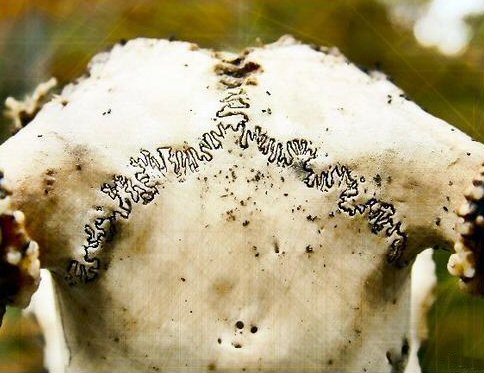
cow skull
“Cow Skull,” Image by Jenn Rhubright

There was the knife and the broken syringe
then the needle in my hand, the Tru-Cut
followed by the night-blue suture.

The wall behind registration listed a man
with his face open. Through the glass doors,
I saw the sky going blue to black as it had

24 hours earlier when I last stood there gazing off
into space, into the nothingness of that town.
Bat to the head. Knife to the face. They tore

down the boy in an alleyway, the broken syringe
skittering across the sidewalk. No concussion.
But the face torn open, the blood congealed

and crusted along his cheek. Stitch up the faggot
in bed 6
is all the ER doctor had said.
Queasy from the lack of sleep, I steadied

my hands as best I could after cleaning up
the dried blood. There was the needle
and the night-blue suture trailing behind it.

There was the flesh torn and the skin open.
I sat there and threw stitch after stitch
trying to put him back together again.

When the tears ran down his face,
I prayed it was a result of my work
and not the work of the men in the alley.

Even though I knew there were others to be seen,
I sat there and slowly threw each stitch.
There were always others to be seen. There was

always the bat and the knife. I said nothing,
and the tears kept welling in his eyes.
And even though I was told to be “quick and dirty,”

told to spend less than 20 minutes, I sat there
for over an hour closing the wound so that each edge
met its opposing match. I wanted him

to be beautiful again. Stitch up the faggot in bed 6.
Each suture thrown reminded me I would never be safe
in that town. There would always be the bat

and the knife, always a fool willing to tear me open
to see the dirty faggot inside. And when they
came in drunk or high with their own wounds,

when they bragged about their scuffles with the knife
and that other world of men, I sat there and sutured.
I sat there like an old woman and sewed them up.

Stitch after stitch, the slender exactness of my fingers
attempted perfection. I sat there and sewed them up.


C. Dale Young practices medicine full-time, serves as Poetry Editor of the New England Review, and teaches in the Warren Wilson College MFA Program for Writers. He is the author of The Day Underneath the Day (TriQuarterlyBooks, 2001), The Second Person (Four Way Books, 2007), and Torn (Four Way Books, 2011). He is a previous winner of the Grolier Prize, the Tennessee Williams Scholarship in Poetry from the Sewanee Writers’ Conference, both the Stanley P. Young Fellowship and Amanda Davis Fellowship from the Bread Loaf Writers’ Conference, and a creative writing fellowship from the National Endowment for the Arts. His poems have appeared in The Best American Poetry, Asian American Poetry: The Next Generation, Legitimate Dangers: American Poets of the New Century, American Poetry Review, The Paris Review, Ploughshares, and Poetry. He lives in San Francisco with his spouse the biologist and composer, Jacob Bertrand.

“Torn” from TORN (c) 2011 by C. Dale Young. Reprinted by permission of Four Way Books. All rights reserved. Read our review of TORN here.


“Sepsis” by C. Dale Young

Tree in mist
Image by Jenn Rhubright

The fog has yet to lift, God, and still the bustle
of buses and garbage trucks. God, I have coveted
sleep. I have wished to find an empty bed

in the hospital while on call. I have placed
my bodily needs first, left nurses to do
what I should have done. And so, the antibiotics

sat on the counter. They sat on the counter
under incandescent lights. No needle was placed
in the woman’s arm. No IV was started. It sat there

on the counter waiting. I have coveted sleep, God,
and the toxins I studied in Bacteriology took hold
of Your servant. When the blood flowered

beneath her skin, I shocked her, placed the paddles
on her chest, her dying body convulsing each time.
The antibiotics sat on the counter, and shame

colored my face, the blood pooling in my cheeks
like heat. And outside, the stars continued falling
into place. And the owl kept talking without listening.

And the wind kept sweeping the streets clean.
And the heart in my chest stayed silent.
How could I have known that I would never forget,

that early some mornings, in the waking time,
the fog still filling the avenues, that the image
of her body clothed in sweat would find me?

I have disobeyed my Oath. I have caused harm.
I have failed the preacher from the Baptist Church.
Dear God, how does a sinner outlast the sin?


C. Dale Young practices medicine full-time, serves as Poetry Editor of the New England Review, and teaches in the Warren Wilson College MFA Program for Writers. He is the author of The Day Underneath the Day (TriQuarterlyBooks, 2001), The Second Person (Four Way Books, 2007), and Torn (Four Way Books, 2011). He is a previous winner of the Grolier Prize, the Tennessee Williams Scholarship in Poetry from the Sewanee Writers’ Conference, both the Stanley P. Young Fellowship and Amanda Davis Fellowship from the Bread Loaf Writers’ Conference, and a creative writing fellowship from the National Endowment for the Arts. His poems have appeared in The Best American Poetry, Asian American Poetry: The Next Generation, Legitimate Dangers: American Poets of the New Century, American Poetry Review, The Paris Review, Ploughshares, and Poetry. He lives in San Francisco with his spouse the biologist and composer, Jacob Bertrand.

“Sepsis” from TORN (c) 2011 by C. Dale Young. Reprinted by permission of Four Way Books. All rights reserved. Read our review of TORN here.


Review of TORN by C. Dale Young

TORN
by C. Dale Young
Four Way Books
March 2011
85 pages

In TORN, C. Dale Young’s most recent book of poetry, he continues to explore the themes of human frailty, both physical and spiritual, of love and passion, and of tenderness and cruelty.

The poems in this collection beautifully express the irony of the human craving for precision and accuracy—particularly in the field of medicine and in the realm of love—and the unfortunate and inherent fallibility of both. Often Young employs repetition of a word or a phrase, guiding the reader toward understanding by modifying the context each time the word or phrase appears. This repetition also serves to deliver a sense of urgency to the cadence of the poem and the meaning of the whole.

In fact, the very organization of the collection pulls the reader forward through the book, as if moving through a life. Its sections call to mind Blake’s Songs of  Innocence and Experience.

Section I opens the book, delivering the reader into a world of heady innocence, of childhood desire on the edge of understanding, of love just beginning. Consider these exuberant lines from the poem “The Bridge”:

“And I love fountain pens. I mean
I just love them. Cleaning them,
filling them with ink, fills me
with a kind of joy, even if joy

is so 1950. I know, no one talks about
joy anymore. It is even more taboo
than love. And so, of course, I love joy.
I love the way joy sounds as it exits

your mouth. You know, the word joy.
How joyous is that. It makes me think
of bubbles, chandeliers, dandelions.” (25, 26)

By the time the reader reaches Section II, the perils of Knowledge (with a capital K) come to the fore as Young explores the human tendency toward doubt and sin. The poem “The Seventh Circle” expresses it thusly:

“Did Michelangelo dream of hell
while he manipulated shadows
in an attempt to show us heaven?
Did he betray himself with his hands

that admired the strength of other men’s hands?
If he did, we have forgotten.
Yes. Here we see the luxuries of heaven,
the bodies clothed only in light
languishing above painted shadows
that separate these glories from hell.

There will be no Cerberus in our circle of hell,
we are told, only hundreds of swaying hands
reaching up from even darker shadows.” (46, 47)

And finally, section III brings the reader forward, into a world of post-experience, of regret, judgment, and fallibility, and even a weary sort of forgiveness. Consider the following lines from “Self-Portrait at 4 AM”:

“…The mirror

is of no use. It lies, dirty and spattered
with toothpaste and beard stubble and crud.
It lies. That man staring at me is not my friend.

That man wants to hurt me. He has
hurt me before. I have hurt myself.” (72, 73)

In TORN, his third collection of diverse and beautiful poems, C. Dale Young has given his readers a celebration, a gorgeous lamentation, and an attempt, as the surgeon in the title poem tells us with despair, at perfection. And here, Young has come as close to that ideal as fallible words and human hands can.

“Rose” by Dylan Landis

squash curl
“Squash Tendril” by Jenn Rhubright.
(See also “Convalescence” by Billie Tadros.)

Leah’s grandmother washed and dried her dinner plates, stacked them in the oven and set it on broil. She hid her pearls in the toilet tank, where they coiled under a rubber flap and created a perpetual flush.

“Nine is green,” said Grandma Rose. “Four is red. Mint tastes like flashes of light.”

Leah’s parents decided it was time. They said Leah could stay with any friend she wanted. Oleander, said Leah. Helen and Leo were so busy gabbing on the phone to the social worker in Pottsdam and the Hertz people on 77th Street, they didn’t say no.

“I don’t see why you have to put her away,” said Leah, watching Helen fold tissue paper into her clothes—a winter-white sweater, because fall came early upstate, and a herringbone silk scarf. Helen hated wind in her hair.

“Leah, this is painful for me,” said Leo. He was tethered to the phone in the hall. “But it’s better than letting her die in a fire. And she can’t communicate her needs. Her mind is deteriorating.”

Grandma Rose’s mind looked like her bedroom, Leah decided. It was a wonderful room. Hair pins napped in the rumpled bed. Dark hairs from her wiglet drifted into the cold cream. Tubes of Bain du Soleil lost their caps and slid into open drawers, releasing the oily fragrance of summer into white nylon bloomers. Nor did Rose seem to register, when Leah was allowed to stay with her, that Leah smoked in the basement, riffled through her grandmother’s pocketbook and skimmed every paperback with a passionate couple on its cover.

“Why do they mix up the colors?” Grandma Rose said, peering over Leah’s shoulder at a title. “O isn’t red.” The word was “romance.”

“Red like a heart?” said Leah.

“My shayna maideleh,” her grandmother said gently. “O is as white as an onion.”

“She’ll burn down the house if she keeps baking the plates,” said Leo, gently.

“Maybe that’s how she wants to go,” said Leah. “Maybe the flames will talk to her.”

Her father took his palm off the receiver and said, “Do we need a lawyer for that?”

“I wish I heard colors,” Leah said. “I bet purple sounds like Joan Baez.” She tapped the suitcase, three left and three right. But her parents kept getting ready to drive off and kidnap her grandmother. Oleander, when Leah telephoned, said sure.

“Don’t you have to ask your mom?”

“Ask what?” said Oly. “Just bring your stuff. You won’t believe what’s going on here.”


The night roof was alive. It ticked and crackled. Ventilation fans flashed in their cages.

“This is where we’re gonna do it,” said Pansy. She hugged a damp Sloan’s grocery bag containing a towel, two joints, and a rubber stolen from their father’s room.

Ten stories below the night roof, the brakes of buses sang. Leah wondered if she could make herself jump off a parapet. Then she couldn’t stop wondering. Fly or die, fly or die. It was like standing in the bathtub and wondering should she touch the switch. Some thoughts she couldn’t control when they cycled through her brain. Mrs. Prideau, who was Pansy and Oly’s mother, did not have this problem. When they left the apartment Mrs. Prideau was standing in the kitchen, spooning ice cream out of the Schraft’s box and writing on some typed papers in red pencil and ignoring the most amazing things. She ignored the leak under the sink that was wetting the grocery bags. She ignored the paint hanging from the ceiling like notepaper. She ignored that Oly and Leah threw eggs from the windows sometimes, or that Mr. Prideau slept by himself in the second bedroom because it was cheaper than divorce.

“Going to howl at the moon?” she said. “Don’t fall off.” God, Leah loved Mrs. Prideau.


Standing pipes, tall as people, stuck straight up from the tarpaper. Leah tried to act casual in the face of the enemy. She edged closer to Oleander. “I bet those pipes move when we’re not looking,” she said, knowing it sounded crazy. “I bet they’re like the roof police.” She was tapping like crazy, fingers jammed in her pockets so no one could see.

Oleander fixed it. She touched each pipe, calling PLP— Public Leaning Post. Meanwhile, Pansy started up the ladder to the water tower, which stuck up high above the roof. This was worse than the roof police. The water tower had no windows. It had no mercy. Leah imagined falling in, grasping at walls all slimy below the waterline.

Fly or die, fly or die, she whispered, while Pansy Prideau crammed the Sloan’s bag between the ladder and the curving base of the tower.

Pansy climbed down again, flipping her hair. “No one’s gonna notice that,” she said.

Leah, enraptured, remembered how Pansy slept on her stomach because she rolled her hair around Minute Maid cans. She watched Pansy look down over a parapet at the singing buses. A plane blinked through the black sky toward her ear. It disappeared into her head, then eased out the other side, propelling through waves of her Minute Maid hair.

That’s when Leah inhaled—worshiped the night roof, remembered to breathe.


Saturday morning the milk smelled bad, so they got to eat Trix from the box. Then they went stealing. Leah palmed a Chunky at Manny’s Fountain on Broadway just to feel it nest in her hand, silvery and square. At Ahmed’s Candy & Cigarette, Oleander slid a comic down the back of her jeans. Then she trashed it down the block. “No one reads Archie,” she said. Leah kept her hands out of the garbage. She liked to admire Veronica’s bust, but she knew not to say it.

Leah and Oly, they were magnetic. Sweet things clung to them. When they stole, they had secrets, and when they had secrets, they shone.

They ducked under the turnstiles on 86th and changed subways twice and did Lord & Taylor’s, where they tried on five brassieres each. Leah put back four and Oleander put back three. Then back down the clacky wood escalators to the main floor, where Oly stole the White Shoulders eau de toilette tester without even smelling it, just vacuumed it into her purse.

“You ditz,” said Leah. “My grandmother wears that.” Then she browsed at Christian Dior, smiled at the lady and stole the Diorissimo tester. She didn’t smell it first because she knew it from the heartbeat of her mother’s wrist.

Leah’s mother knew all about department stores. She dispensed strange and dangerous facts. She said department stores had lady guards who pretended to shop. They lingered over gloves or garters, but were actually spies. “They watch your hands, and they look for women who glance around,” Helen said. “At night they check the ladies’ rooms, so no one sleeps over on those lovely chaises longues.” Helen was eating again, twelve hundred calories a day, and she worked for a decorator, ordering fabrics and sketching drapes. At night she studied pictures of French chairs.

“Don’t glance,” Leah warned. Oly had stopped at wallets.

But Oly couldn’t help it. What Leah did was, she listened with her skin. Leah’s skin was electric and it knew when she was invisible, and that’s when she made things disappear. Then she tapped on the counter or in her pockets or even on the floor, as if she’d dropped a safety pin. Three left, three right. It made her safe, plus it was some- thing she had to do.

The girls burst out of the same glass slot in the Lord & Taylor’s revolving door. They walked fast with our heads down, except Oly kept glancing back.

“Holy Mary mother of God pray for us sinners now and at the hour of our death Amen,” she said. Her eyes were like penlights.

“When can I throw up?” said Leah. Because that’s what stealing made her want to do, after.

“In the park,” said Oleander fiercely. “Puke in the park.”

In Central Park Leah threw up behind a bush and spit nine times, three times three, to clean her mouth. They bought Creamsicles and walked to Oly’s apartment, except on the way they did the Grab Bag on Broadway, where the clothes were all burlap and ribbon and lace— artistic, Helen said. Under glass, silver earrings lay on black velvet and tarnished in their sleep. On the counter, beaded earrings dangled from a rack; you could strum them with a finger.

“Steal me,” they whispered.

Things spoke to Leah often. She did what they said.

Saturday evening no one said a word about dinner. Mrs. Prideau sat on her bed and turned her manuscript pages and watched Pansy get ready, as if this was what daughters were supposed to do, go out with boys. Sometimes all Mrs. Prideau said about dinner was “Oh, just forage,” and Leah hoped she would say this soon so they could eat more Trix.

Pansy leaned over the bathroom sink, dabbed blue shadow on each eyelid and stared at herself in the mirror. She had a face like a Madame Alexander doll, the expensive kind in glass cabinets at FAO Schwartz. She looked like a cross between seven and seventeen. Leah watched her from the doorway, hoping to learn something. What she learned was how to put on blush. First you grin. Then you rub lipstick on the part of your cheek that sticks out like a cherry tomato.

Oleander opened bureau drawers and slammed them, pulling out tops and shoving them back in. No one at Oly’s had private drawers or private shirts or even private beds, because Mrs. Prideau and Oly and Pansy shared two beds in the one big bedroom and didn’t have space for private anything. Sometimes this made Leah so jealous she could die and sometimes it made her want to go home and straighten her desk. A bandanna halter came out with a froth of socks and Oly put it on and went in the bathroom and sprayed a cloud of Right Guard around her armpits.

“Oh, good, deodorize the toothbrushes,” said Pansy, fanning at the cloud.

“Any toothbrush of yours it’s automatic B.O.,” said Oleander, and sat the can on the sink, where Leah knew it would mark the porcelain with a ring of rust.

“Any toothbrush of yours it’s automatic pus,” said Pansy.

“Oh, shit, here they go,” said Mrs. Prideau, and looked at Leah like they might actually share some sliver of understanding. She lit a clean cigarette with the old one and jabbed the old one out. The butts in her ashtray were all kissed red at one end and bent jagged at the other.

“Your parents go anyplace fun?”

“Upstate,” said Leah. “They’re kidnapping my grandmother.”

Mrs. Prideau’s eyebrows lifted into question marks, thin and elegant. “Are they taking her anyplace fun?”

“Old folks’ home,” said Leah. “Her mind is deteriorating.”

“Really.” Mrs. Prideau looked at Leah like she was trying to figure out where to insert a key. “How can they tell?”

Leah shrugged, but Mrs. Prideau kept waiting. “She sticks plates in the oven and they melt. She’s going to burn down the house.”

“She might,” said Mrs. Prideau. “If she has dementia, your parents are probably doing the right thing.”

“Plus,” said Leah, “she sees things. She says nine is green, vowels are white, stuff like that.” She hated the way she sounded, as if Rose were someone else’s crazy grandmother.

Mrs. Prideau sat straight up and looked at Leah. “Well,” she said, “I don’t know about the vowels. A is light pink and E is almost scarlet. But nine is definitely green.”

Mrs. Prideau was not beautiful like Helen. She had short spiky hair and she wore black turtlenecks and jeans. She had ink on her hands instead of nail polish. But there was some kind of light that went on inside her, and at that moment Leah thought if she stood very still, the light might shine on something she needed to see.

“Not all vowels,” Leah said carefully. “She said O and I were white like an onion. I thought it was because they’re in the word onion.”

“No, it’s because they’re white,” said Mrs. Prideau. “I also see Q and X as white, but you don’t run into that as often.”

Leah didn’t move. Tap now, her brain instructed, but for the first time in her life she disobeyed.

“It’s called synesthesia,” said Mrs. Prideau. “It runs in families, but it missed my daughters. You too?”

Leah shut her eyes and concentrated. She wanted Mrs. Prideau’s voice to reveal a shape, a scent. She thought it might smell like Diorissimo, or float like a string of pearls.

“It missed me,” she said.

Pansy walked out of the bathroom with frosted white lips. She looked perfect. Leah wanted to lay her down flat to see if her eyelids would glide shut. “Tell her what her name tastes like, Mom,” she said. “Mine tastes like tea biscuits.”

“Very thin biscuits,” said Mrs. Prideau. “Leah tastes like cucumber.”

“It could be worse,” Pansy said. She spotted Leah’s shoplifted earrings on the bureau, threaded one into her ear. “We had a babysitter once named Renee whose name tasted like pennies.”

“Syn, together, aisthesis, perception,” said Mrs. Prideau, not even flicking her eyes toward Pansy, who was taking one of her cigarettes. “It means the senses work in pairs. It’s a gift. Synesthetes are often artists,” she said. “Scriabin had it. Kandinsky, though he may have been faking. Nabokov. Is your grandmother creative?

“No,” said Leah, who had no idea what she was talking about.

“I bet she is,” said Mrs. Prideau. “Kandinsky said synesthetes are like fine violins that vibrated in all their parts when the bow touched them.”

The doorbuzzer made its jagged rasp. “Oh my God,” said Pansy, “it’s Robbie,” and she left the cigarette burning on the bureau, a fringe of ash hanging over the edge. Oleander glanced at her mother, whose lap was spread with red-penciled pages, picked the cigarette up and brought it to her lips. Leah couldn’t believe what she was seeing. Her parents would have a coronary.

“We are the bows from which our children as living arrows are sent forth,’“ said Mrs. Prideau. She looked at her younger daughter with the cigarette and closed her eyes, as if she were searching for something deeply internal.

“Kahlil Gibran,” she said, opening her eyes and, as Leah wondered if she would ever understand, “Don’t be discouraged, Leah. We never know what we inherit.”


They watched her.

They hid behind the elevator shed and watched her on the roof.

He did everything exactly in order, first base, second base, third base, home. Leah liked it, liked the way his hands traveled on Pansy and the way Pansy let her body be a highway for them. He pulled her jeans off. There wasn’t any underwear. This was a revelation, that a person could not wear underwear. They saw his hands move where his fly was and then he pushed onto her and Pansy made a sound like she had stepped on a piece of glass, and he put his hand over her mouth. When he took it away he kissed her. Then he pushed some more. This got boring, but Oleander kept saying “Jesus” under her breath, so Leah just hung back a few minutes and didn’t look, and thought about what it was that they might have inherited, she and Oleander and even Pansy, who was fifteen and barely spoke to them.

The boy pulled up his jeans. He lit a joint and Pansy took it from him. The roof police didn’t do a damn thing. They just stood there.

They were just pipes.

“Was that home?” said Leah.

“Yeah,” said Oleander, “Jesus,” and they were breathing words more than talking them. They carried their sandals so they wouldn’t scuff and moved toward the stairwell cautiously, as if stepping over puddles.

“It hurts,” said Leah, amazed.

“Only when you lose it,” said Oleander, and Leah felt a rose open in her body, felt a release as its petals fell open and flew apart, and she wondered what she had lost, and why it did not hurt.


Dylan Landis is the author of Normal People Don’t Live Like This, a novel-in-stories that made Newsday‘s Ten Best Books of 2009. She has received fellowships from the National Endowment for the Arts, the Norman Mailer Center, the Sewanee Writers’ Conference and the Virginia Center for the Creative Arts. She is working on a novel.

Read our interview with Dylan Landis here.

“Rose” by Dylan Landis, excerpted from Normal People Don’t Live Like This, copyright (c) 2009 by Dylan Landis, reprinted here by permission of the publisher, Persea Books, Inc., New York. All rights are reserved.

 

“The Double Voice” by Margaret Atwood

the double voice1

Two voices
took turns using my eyes:
One had manners,
painted in watercolours
used hushed tones when speaking
of mountains or Niagara Falls,
composed uplifting verse
and expended sentiment upon the poor.

The other voice
had other knowledge:
that men sweat
always and drink often,
that pigs are pigs
but must be eaten
anyway, that unborn babies
fester like wounds in the body,
that there is nothing to be done
about mosquitoes;

One saw through my
bleared and gradually
bleaching eyes, red leaves,
the rituals of seasons and rivers

The other found a dead dog
jubilant with maggots
half-buried among the sweet peas.


Margaret Atwood is the author of more than thirty-five volumes of poetry, children’s literature, fiction, and non-fiction. She is perhaps best known for her novels, which include The Edible Woman (1970), The Handmaid’s Tale (1983), The Robber Bride (1994), Alias Grace (1996), and The Blind Assassin, which won the prestigious Booker Prize in 2000. Atwood’s dystopic novel, Oryx and Crake, was published in 2003. The Tent (mini-fictions) and Moral Disorder (short stories) both appeared in 2006. Her most recent volume of poetry, The Door, was published in 2007. Her non-fiction Payback: Debt and the Shadow Side of Wealth, part of the Massey Lecture series, appeared in 2008, and her most recent novel, The Year of the Flood, in the autumn of 2009. Ms. Atwood’s work has been published in more than forty languages, including Farsi, Japanese, Turkish, Finnish, Korean, Icelandic and Estonian. In 2004 she co-invented the Long Pen TM. She currently lives in Toronto with writer Graeme Gibson.

“The Double Voice” by Margaret Atwood, used by permission of the Author. Available in the following collections: In the United States, SELECTED POEMS I, 1965–1975, published by Houghton Mifflin, ©Margaret Atwood 1976; In Canada, SELECTED POEMS, 1966–1984, published by McClelland and Stewart, ©Margaret Atwood 1990; In the UK, EATING FIRE, published by Virago Books, ©Margaret Atwood 1998.

See also Showcasing the Work of Margaret Atwood.

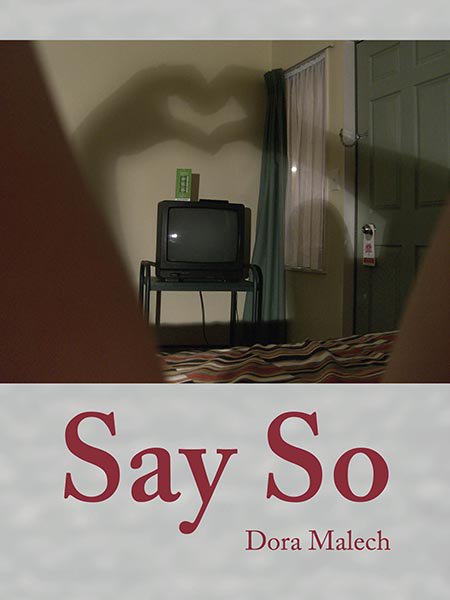
Review of Say So

Say So
by Dora Malech
Cleveland State University Poetry Center
November 2010
88 pages

Say So by Dora Malech is a tumble down the language rabbit hole.

It takes you into a world of wordplay that is more than mere playful language. These poems are serious business and will gather your senses until you are absorbed into their consciousness. When Malech titled her book, Say So, it was a signpost to her readers because that is exactly what she does in this, her second full-length collection of poetry.

Malech sets the obvious against the hidden and blends them into a musicality that peels away layers until the reader feels as exposed as the /images in her poems. The wordplay trickles in and around the words like a meandering tributary that opens up into a vast river of /images that rushes through to her readers.

Malech’s speech is straightforward and at times raw. She  begins her poems with a searing openness that both beckons the reader and grips like a vise. Some of the titles in this collection include:

“Oh Grow Up”
“Lying Down With Dogs”
“Note To So Sorry For Self”
“Them’s Fighting Words”
And, my personal favorite: “Goodbye I Love You.”

But these beckoning titles are only a part of the story. Malech takes everyday speech and weaves it into a rhythmic and melodic song. In “Love Poem” she  juxtapositions opposites until they tell an intimate story:

“Get over it, meaning, the moon.
Tell me you’ll dismember this night forever,
you my punch-drunking bag, tar to my feather.
More than the sum of our private parts, we are some
peekaboo, some peak and valley, some
bright equation (if and then but, if er than uh).
My fruit bat, my gewgew. You had me at no duh.” (5)

The combination of positives and negatives within the play of everyday words gives her readers an insight into the duality of love and relationships in a clever, tongue-in-cheek fashion.

But as one reads this collection, one sees through to the heart of this duality. There is something much stronger being expressed within these seemingly playful lines. This is evident in poems such as “Pop Quiz”:

“Twist of lime or twisted arm? Lent hand or footsie?
All the crossword puzzle nouns can’t help me now—“

This ominous beginning only deepens as the poem continues:

“Tactile error means wrong cheek to cheek.
I’m wetting my unicorn suit. Can’t blame this mess
On longwinded weather, cyst, or whiskey dick”

Until we come to the end and are left with a final line of strength and defiance:

“Throat closed for repairs, I gag a bit, allergic
to the peanut gallery: “Its your fucking heart, man.”
I pledge a lesion, draw a spine in the sand.” (47)

Malech’s poems have many voices in this collection: some are sad, some sarcastic, some are funny with a sneering backhand; but, no matter the subject, this collection will sing to you. It is definitely best when read over and over. Keep Say So on your bedside table for those sleepless nights when you need something to remind you that the world is indeed an amazing place filled with contradictions and beauty hiding in very strange places.


Joan Hanna was born and raised in Philadelphia. She has a BA in Writing Arts from Rowan University and is completing her MFA in Creative Writing, Poetry and Creative Nonfiction at Ashland University. Her poems have appeared in Common threads, Modicum, the premier issue of Glassworks and the 15th anniversary edition of Poetry Ink. Joan is a reader for River Teeth and writes reviews for Author Exposure and Poets’ Quarterly.

“Ashes” by Virginia Williams

Ashes
Illustration by Morgan Maurer, 2011

We brought Ben’s ashes home on a sweltering Thursday in July, six and a half months after his sudden death on a bleak midwinter’s day.

As with many days of that year, Simon and I were quiet on the drive to and from the funeral home, lost in grief for our stillborn child. The unspoken question between us—what now?—would remain unanswered for months, long after we placed Ben’s ashes in the room that would have been his, closed the door and tried to leave the pain inside.

The night he died we fought over a small, stupid thing that had been festering for months. I went to bed angry; Simon went to the basement to resolve the problem – a utility sink blocked up with accumulated household detritus. We woke up mad the next day, too proud to apologize or admit how silly we’d been. It was the day before New Year’s Eve, 2003.

Thirty-nine weeks and four days into pregnancy, I was tired, ready to bring my baby home and be done with aching hips and heartburn. I wanted to meet this new little wonder who was coming to change my life. Outside, it was cold and gray, mirroring my exhaustion; inside, Charlotte, our three-year-old, had an ear infection and fever, and, much as we wanted Ben, we were nervous about bringing a second child into our lives.

That last morning, I stewed in the doctor’s office, angry with Simon, annoyed by the doctor’s slight delay, wishing my regular OB weren’t on vacation. I didn’t notice that my boy wasn’t moving. Blind to everything but myself own self-righteous annoyance, I was confident Ben wasn’t going to arrive anytime soon.

When I finally got to the exam room and on the table, Dr. Todd, a doctor new to me and my pregnancy, rolls out the Doppler heartbeat monitor. He smears cold jelly on my stomach and places the microphone on my belly. Static. He tries again, and still, nothing. He asks where we usually hear the heartbeat, and I indicate the right side of my belly. He tries again. Nothing. My heart starts to beat a little faster.

Dr. Todd remains calm and tells me he thinks the Doppler machine has been dropped on the floor a few too many times, and runs off to retrieve another. We try again. We wait. And nothing.

But then, very faint, is a rapid heartbeat. Dr. Todd says he thinks it might be my heartbeat, and checks my pulse. It is, indeed, my heart racing with fear.

I look at him and say, “Please tell me not to panic.”

He says nothing.

Dr. Todd keeps trying with the Doppler, then says, “I’m going to send you over for an ultrasound to see what’s going on.”

I think that’s when I knew that Ben was dead. I don’t let myself believe it; I tell myself I’m going to have an emergency C-section after the ultrasound and start planning a phone call to Simon.

As I walk out of the office, the receptionist calls out, “Have a Happy New Year.” I think, “If you only knew.”

In the ultrasound room, I lie down yet again while a technologist puts gel on my belly and runs her wand over my protruding stomach. I hold my breath and stare at the ultrasound screen, at my perfect little boy, looking desperately for something, anything, to help me decipher what is happening.

Another doctor enters the room; Dr. Baird is young, with long brown hair, about my age. She briefly looks at the screen and reaches out to grasp my hand. “How are you feeling right now?” she asks.

“I’m feeling pretty scared.”

“I’m sorry to tell you,” she says softly, “but he’s gone.”

And this is when my world stopped.

~

Minutes later, someone leads me down the hall to a small room used for moments like this. There is a box of tissues on a coffee table, some pamphlets on grief, a sofa and two standard medical office armchairs, a side table and telephone. One window looks out onto a cloudy December day, traffic moving past, people bundled up against the cold waiting for the bus. I cannot fathom the world that is carrying on outside this place when I need to tell my husband Ben is dead.

I dial our phone number, wipe away my tears and tell Simon, calmly enough, that I have bad news.

But I don’t know how to tell him the next thing I must say. I gulp for air like a fish on dry land and gasp it out: “The baby died,” and burst into tears once more.

Normally unflappable Simon falters. “What should I do? What should I do?” I instruct him to phone our neighbor and ask her to watch Charlotte. I tell him where to find me in the hospital, begging him to get here soon.

Sobbing, collapsed on the floor, I phone my friend Patty. She’s not at work, but doesn’t answer at home. I phone my friend Sandy at her job. No answer. In desperation, I phone Patty again. Miraculously, she answers. She is home with her children and parents-in-law, and after I say hello, my voice breaks again.

“Patty, the baby died.”

And I cry. She insists on coming to me immediately, her composure a brief respite from the agony of unrelenting sorrow.

Unable to make more calls, I wonder why I didn’t know that Ben was dead. Dr. Todd and Dr. Baird come check on me, help me up from the floor and into an armchair. I ask them how I could not have known Ben was gone, but they have no answers. “I don’t care what you think you did or didn’t do,” says Dr. Baird, “Whether you missed a prenatal vitamin once or ate something you shouldn’t have: you did nothing wrong.” It doesn’t help. For now, I am too stunned to be rational; my heart is twisting itself into knots. It was my job to keep Ben safe, and I failed.

Shortly after Simon and Patty arrive, Dr. Baird returns to talk about what happens next. Our options are few: Doing a caesarean on a mother whose baby has died is too risky, she tells us. Labor can be induced, however, and she suggests we go home, get some rest and come back in the morning. There is no way I can go home and sleep while my baby lies dead in my belly, so we arrange to return that evening, after we’ve found someone to look after our daughter. Once our plan is set, we get up to leave.

Walking down the white hallway in the glare of fluorescent lights, in some bit of cosmic cruelty, all we hear are the heartbeats of other women’s babies. There are doors on either side of us, with other pregnant women, unknowing, unconcerned, bathed in the joy of their particular miracles. Patty and Simon, on either side of me, keep me from dropping to my knees and succumbing permanently to my grief.

~

Just before six o’clock that night, Patty drives us to the hospital. I remember strange and ordinary things from that night: I picture Patty in her winter hat and coat, hugging us goodbye, watching her minivan pull away. The night sky is beautiful, deep and dark. Before I turn to go inside, I catch a glimpse of stars and wonder if Ben is up there too.

~

On the building’s second floor we try to remember where to check in. A young resident sees our confusion and points us toward the Labor and Delivery doors. Thankfully, he doesn’t make any of the polite exchanges many might in this situation: “Good luck” or “Congratulations.” Maybe he sees the sadness on our faces, maybe he knows.

Once we are settled in our room, we are assured that we will be given as much privacy as possible for as long as we are there. A nurse asks me an extensive list of questions to help pinpoint why our baby died: do we have a cat, and did I clean out the litterbox while pregnant? Did I eat rare meat or raw seafood? Is there any family history of birth defects? The answer to all is no. We can think of no reason why our son is dead.

Later, the nurse takes twelve vials of blood from me, which will be tested for various disorders. I have an IV of Pitocin, an IV for fluids, an IV of antibiotics to treat a strep B infection. Another needle is inserted into my spine for an epidural, which helps the physical pain, but there is nothing to be done for my mental anguish. The epidural, however, doesn’t completely take, and they kindly give me another narcotic drug, one I would ordinarily have refused. It eases my fear and anxiety, but can’t cut the ache in my heart.

Throughout the night, Simon and I alternately sleep (another blessing of the epidural is that the numbing of the contractions allows me to rest), read, and cry. And I think, maybe, just maybe, Ben isn’t really dead.

Around 5 a.m., someone tells me it’s time to push. The doctor is called, the nurses return to hold my legs and Simon holds my hand. It is quiet in the delivery room, somber. Through the night I’ve heard other women down the hall, shouting as they push their babies into the world. I am scared of what we might find when Ben is born. Is he deformed? What will he look like? Why did he die?

Unlike a regular delivery, no one offers me a mirror to watch the baby arrive. They don’t ask me to hold my legs, nor do they have Simon help. I am positioned so that I cannot see whatever might emerge below. And I am grateful for that.

I push when I am told, and, at 6:01 a.m., Ben is – what? What should I call this process of birthing, his delivery into the world? There is no word for this. How, I will later wonder, can we be given a death certificate for someone never, officially, born?

Minutes after his birth, I push out the placenta and the doctor cries, “Look at that. There’s a knot in his umbilical cord.” Dr. Todd shows us a perfect knot, pulled tight. “He must have wriggled himself around, probably weeks ago, and then last night pulled on his cord and died.”

“Did it hurt him?” I ask.

“No,” he says. “He wouldn’t have felt a thing.”

I burst into tears, and wail out to the room, “I want my son. I want my son.”

Simon pulls me close, and we cry.

~

Sometimes it feels like Ben was just a dream, a shadow that passed across my life, like the shadow of an airplane over my backyard on a bright summer’s afternoon. But the effect of a shadow never lasts as long as the effect of this child in my world. I will spend the rest of my life longing to go back to him, to the day he was born.

My world turned to ash that day seven years ago; all I knew, all that I held on to, flaked away and crumbled into dust. I built that world up again, but the solid core has weakened, the edges are soft. Those ashes I hold in my hand and heart; my son’s ashes, in an urn, sit now in my living room. Neither is palpable, but they hover invisibly, like wisps of smoke after a candle has been extinguished.

My world has not ended, but I have learned how much can be lost, and how quickly. The question—what now?—no longer lingers in the air. The answer was in what we were doing all along: we just go on. Slowly, the pain recedes, changes us, and becomes forever part of who we are.


Virginia Williams’ essay “What No One Tells You” was published in the anthology They Were Still Born: Personal Stories About Stillbirth, in November 2010 by Rowman & Littlefield. She has worked as a columnist for ClubMom.com, an online community with over two million members, contributed articles to the Absolute Write e-newsletter, the web site WeddingChickie.com and worked as a Buzz Blogger for Prevention.com. Williams blogs about parenting after a loss at http://www.landofbrokenhearts.blogspot.com, and is currently at work on her first book.

Read our interview with Virginia here.

“In All Things, Absent” by Ru Freeman

suitcase
Illustration by Morgan Maurer, 2011

In an article titled ‘Estrangement,’ in a summer 2008 issue of AARP, the writer, Jamaica Kinkaid articulates her attempt to come to terms with the fact that she stopped speaking to her mother three years before her death.

Her effort, however, is not full of regret, but incomprehension that she misses her mother, incomprehension that she does not wish to be buried next to her and, also, does not know if she wishes that her own children be buried beside her someday. She ends with the words, “I do not know, I do not know.”

The loss of my mother fills my life with a similar unknowing. My mother was, as her favorite student described her during his heartfelt and perfect eulogy, difficult. And it was her difficulties that my brothers and I, as adults, responded to, not her ease. I learned to dismiss every concern she brought up, about my brothers, their wives, her grandchildren, me, my life, my father, and her health. Her own regrets and sorrow were so deep that I feared that I, too, would fall into that bottomless well and never come up for air, or that my affirmation of those sentiments might seal her forever in that tomb of despair. Had I been listening harder, perhaps, I might have heard the mothering behind what she said, might have assumed, rather, the role that she wanted of me, of a gentle and caring child, of the never-grown-up companion I had once been, of being again the girl whose goal in life had been to wear her clothes and do what she did for a living, teaching literature and Greek & Roman Civilization to armies of devoted boys.

Instead I was the opposite of her. I prided myself in taking no shit from anybody. I was flamboyant where she was conservative, boisterous where she was quiet, and forswore the undying affection of schoolboys and replaced it with the fickle attention of grown men. I frolicked in the man’s world that had circumscribed her life and I laughed when she spoke of devotion, consistency and simplicity, never letting on that in act though not in word, I was all those things. Whereas she had waited, as refined women of her time did, to have her appearance or clothes or work admired by other people, I paid myself compliments. I wrote about politics when all she cared about was the pride felt in seeing her children’s bylines. Somewhere during all those shenanigans I recall seeing both delight and fear in my mother’s eyes.

She seemed to both love the cloak of freedom that I had flung so seemingly easily around myself, and fear for my life. I was not a good woman, I was not a good wife. Somewhere down the line, my husband was bound to leave me. Somewhere down the line, I would need something besides flair and flourish and did I have those other, inner resources? I did, I do, but I was not going to let her see those aspects of myself that were so similar to the strengths she possessed. All I would say in response to her “he might leave you,” was, “and if he does I won’t spend my life running after some man who doesn’t want me.”

In more ways than one, I was trying to define for my mother a life that I wanted her to live. I wanted her to be more like the person I was playing for her. I wanted to rub away the timidity that overcame her whenever she boarded an airplane to America, the kind of thing that would lead airport officials to fling her bags around and deny her compensation for lost luggage and which I could secure on her behalf with no greater skill than a simple steady glare that would leave her full of awe at powers she believed I had; powers she was glad I had, in this strange, unfriendly, place, but whose acquisition she regretted for, as far as she could tell – and she did tell it! – they had exacted the price of tenderness. I wanted to nullify all of her regrets and fears, to drag her into the future where everything was impossibly hard and yet also possible and full of loveliness. I wanted to put make-up on her face, I wanted her to wear the beautiful clothes she owned but never put on, falling back constantly on her worn saris, the old skirt, the tattered nightdress.

But I held that tattered nightdress to my face when I returned home for her funeral, and breathed in not what it showed to the world – its faded, overused fabric – but the sweet perfume it had earned for itself and still held. My mother’s life was full of a doing with which mine could never compare. She had no time for the kind of self-creation with which I had become so adept; she was too busy making a living, staving off hopelessness and, more than everything else, helping the people who came looking for her in a ceaseless stream… People who did not care that she wore no make-up, that she traveled in buses and scooter-taxis in a country where such travel is perilous even for the young and healthy, that she sometimes opened the door to them with a smile, sometimes – quite often – with a scathing, unfiltered criticism, did not care that her home was an uncertain refuge where sometimes the gate was padlocked, and the phone unanswered and nobody could find her, or that she was awash in eccentricities that led her to scream for Brand’s Essence of Chicken as though it was a cure certified by the pantheon of multi-origin Gods whom she worshiped, drive her children out of her house “to go live anywhere,” or hang a sign on one of her precious plants with the following statement: “We are very poor and we have no money for your religious festivities. If you have any money to spare, please leave some here – Happy Vesak, Happy Christmas, Happy Ramazan, Happy Deevali!” That spirit perfumed her clothes, her hair, her life. It did not make everybody admire her, indeed many people – most specially her students – were terrified of incurring her wrath, but it made them love her unabashedly. It made them write to her and come and visit her carrying the cakes and sweets she was not supposed to eat, willing to forgive her moods. That spirit frayed her clothes, splashed them with mud, ripped at their seams.

Over the course of the two days before she died, my mother had hauled a chair to be mended (so the set could be given to my oldest brother), cleaned her house, given her sister money for an operation, called up all her friends, all her relatives, all her favorite students, and all of our friends, and, of course, secured for herself a bottle of Brand’s Essence of Chicken. She had given away much of her wardrobe of beautiful, unspoiled saris and dresses, and most of her vast collection of perfumes. Whatever precious jewelry had not already been given away had been robbed. On the day she died, unbeknownst to any of us, she was so weak she had to ask the woman who worked for her now and again, to boil water for her and bathe her. On that day, after that bath, she used whatever strength she had left to sit down with one of her students to help her with a college application, an application that has since secured a place for her at an Ivy League school. She climbed into a car carrying two saris she wanted to give to the servant of the friend who came to pick her up, and spent most of the journey laughing. She suffered a heart attack right as she was trying to field a telephone call from another student’s tennis coach. She left mid-thought, mid-act, mid-goodness.

I can tell myself a variety of things to stave off the grief that I feel. I can say my brothers were there, their wives were there, she was not alone. I can accept what other people say to me, that a mother does not remember the disappointments, but rather the good times. I can say that she knew, she knew, that though I did not write and did not call, my inner conversations were always with her, that every time I stood before a crowd, or walked down a street or performed some good work or signed a book, or sang to my daughters, what I felt was her presence, her glad acknowledgement that yes, heaven be praised, he had not left me yet, I was still the most beautiful person in the room, the smartest one, the best, in all things the best. In her absence I will never again be that “best” that she saw whenever she looked at me. In a crowd full of women, in my mother’s eyes, I was always more than any of them. On a shelf full of books, mine was better. My words were articulated more clearly, my clothing was more stylish, my deeds were greater, my husband was perfect, my children flawless. I can tell myself stories but they are as useless as my wearing the cardigan that I had bought for her during her last visit, as futile as my attempt to fill it up with her, to feel her around me.

What I remember now is not all the things that I did not affirm in my mother, all the things that I wished she hadn’t done or said, but the things she did do. What I remember is that she brought me music, theater, literature, language, a sense of humor, confidence, strength, joy, and a model of motherhood that runs in my veins as naturally as my blood.

I remember that she found it funny when I placed 38th in a class of 40 students and asked flippantly if I had failed math too, as we walked hand in hand away from the Convent I attended. What I remember is that when I was expelled from that convent for an array of irreverences but subsequently invited back, my mother – though she screamed at me in private and threatened to cut off my hair which, she said, was the source of all my problems – dismissed the offer from the nuns and enrolled me in a “school more suited to (her) daughter’s spirit, intelligence and interests.” What I remember is that she paid for piano lessons when we did not yet own a piano, swallowing her pride and letting us go next door to practice. I remember her voice pouring song after song into all of us, bringing Ireland, England and America to us through lyrics and melodies and that those songs still take the edge off the acts of governments that were also discussed in the house. I remember that she polished the floors of our house on her hands and knees with coconut refuse and kerosene and now and then with polish, that she planted every blade of grass in the garden and pruned her lawn and hedges with hand-held shears that left blisters on her piano-playing fingers and that out of the arid earth that surrounded our city home, she could make flowers bloom. I remember that she gave me a girl-only space in a house that held so many permanent and transient visitors, and that it contained a dressing table, a fan, an almirah, a bed, a table, a bookcase, and the silk bedspreads that had once been gifted to her, and that all of these things made my room magical in a time when magic rarely translated into concrete evidence. I remember that she listened to me read, that when I asked her if she was sleeping, the answer even when it took a while for her to say it was, always, a comforting “no, of course I’m not sleeping!” I remember that she encouraged me to wear my hair short and climb our roof and play French Cricket and run faster than the boys and, also, to steal guavas and skip school to attend cricket matches…

And I remember that she spent a teacher’s salary on buying bolts of fabric that she stored in a suitcase, beautiful cloth waiting to be turned into dresses by the best of seamstresses according to designs I sketched in ballpoint pen. I remember that except for there being no compromising on decency and modesty, she put no restrictions on the clothes I chose to put on, literally and metaphorically. She stood by and let me be everything that she was not. I wish I had done the same for her.

Not long ago, just before I left for a residency where I finished writing my second novel, completing it on the first anniversary of my mother’s death, I went to listen to Jamaica Kinkaid read and speak at Bryn Mawr College. She read from new work, from a story that is told from the perspective of two children who scorn their mother for writing and writing about her own mother, her country of birth. Her answers to the questions posed afterward continued to reflect that conflict. But when I went to introduce myself to her and mentioned that I had used her words to guide me through this new lifetime of grief, she reached out and held my hand. “Oh my dear,” she said, gazing deep into my eyes, “now you are truly an orphan. It doesn’t matter, it doesn’t matter that your father is here with you, when your mother is gone, you are orphaned.”

There are things for which we are never prepared. Childbirth is one of them. The loss of a mother is another. It has been said that, as human beings, there are only three or so significant decisions that we make: whom we marry, whether or not to have children, where we choose to work and live; each of these decisions narrows the world a little further, concentrating our attention on the work involved in succeeding at any of this. But the death of a mother, I have discovered, unravels those decisions and the accompanying work. It has set me adrift in a place where nothing at all makes sense, where there are no anchors or guarantees, where even the statement, “you are going to be taller than me,” uttered to a daughter at the bus stop this morning, comes with a shadow sentence which tells me, even if I don’t say it aloud, that I can make no promises: of the return of the bus, of the greeting at the door, of years in which she might grow into a height that exceeds my own. I can only promise that there will be regret and that the world will, one day, become dislocated for them as it has become for me. But it is a promise I cannot articulate; it waits for them as it did for me.


Ru Freeman was born into a family of writers and many boys in Colombo, Sri Lanka. After a year of informal study at Murdoch University in Perth, Western Australia, she arrived in the United States with a Parker ink pen and a box of Staedler pencils to attend Bates College in Maine. She completed her Masters in Labor Relations at the University of Colombo, and worked in the field of American and international humanitarian assistance and workers’ rights. Her creative work has appeared or is forthcoming in Guernica, Story Quarterly, Crab Orchard Review, Kaduwa, Pebble Lake Review and elsewhere. She has been awarded four consecutive writing scholarships to the Bread Loaf Writers’ Conference and been a fellow at Yaddo. She is a contributing editorial board member of the Asian American Literary Review. Her debut novel, A Disobedient Girl, is published by Atria Books/Simon & Schuster in the USA and Canada, by Viking/Penguin in the UK and territories, and has been translated into Dutch, Italian, Simplified and Complex Chinese, Portuguese, Turkish and Hebrew. She calls both Sri Lanka and America home and writes about the people and countries underneath her skin.

Read our interview with Ru here.