“The Pugilist” by Kevin Jones

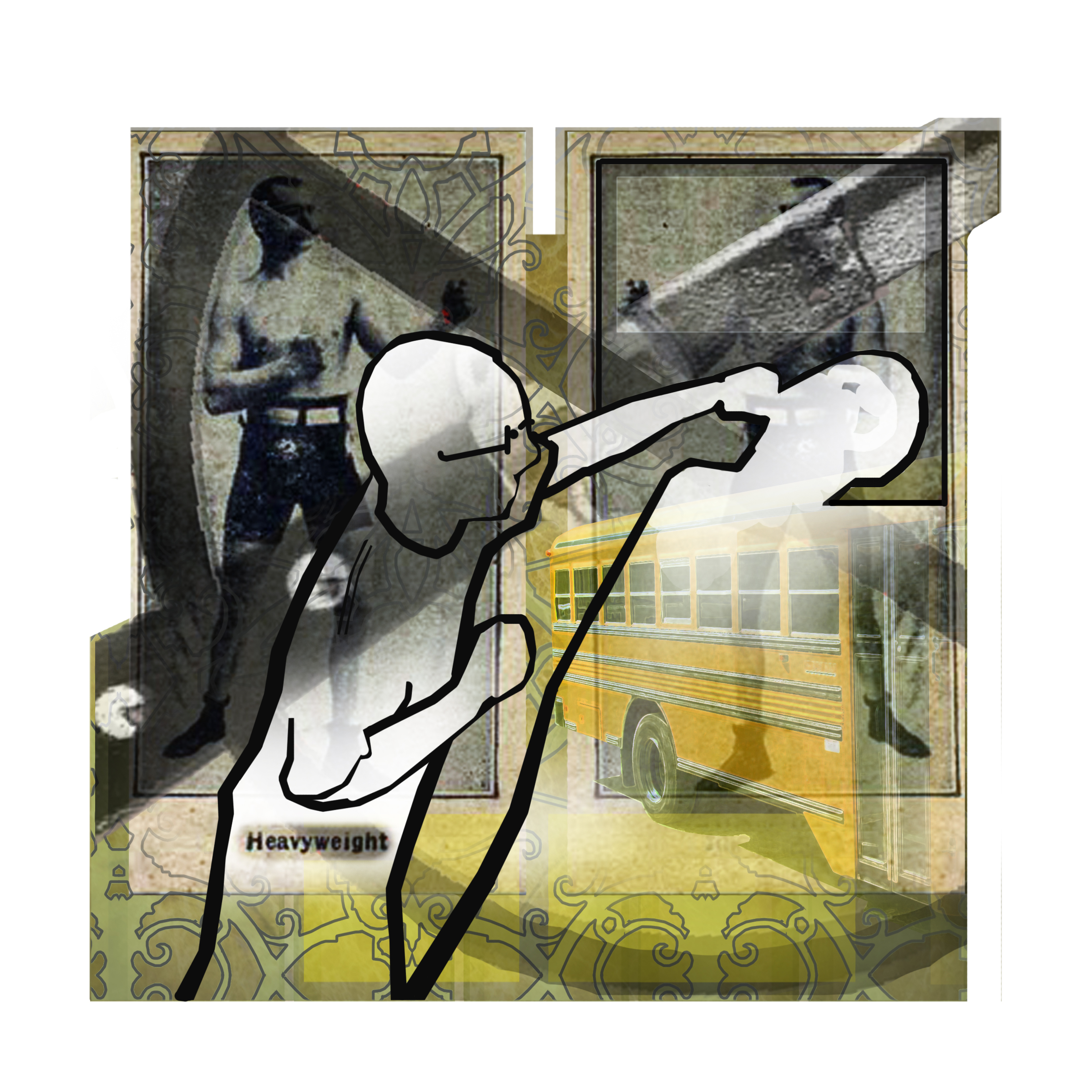
The Pugilist
Illustration by Morgan Maurer, 2011

The grass I’m lying on is wet and hasn’t been cut in several weeks judging by its length. There’s a small bug slowly crawling across one long, flat blade and I watch, fascinated by the fact that something could move so carefully, so unaware of the chaos all around it.

This insect lives contently in a universe of its own. I am vaguely aware of movement behind me. I sense, rather than hear, people shouting from above me. I pay no attention; I am happy to watch the bug make its way through its little world. Everything is quiet. Still. Like the world is holding its breath for one small moment.

Behind the bug the background is a blur; my glasses were knocked clean off of my face with the first hit Marco landed.  I can only focus a few feet in front of me. Now, lying on my stomach in the grass beside the bus stop, the morning dew seeping through my coat, I am content to lie here in this sudden and surprising silence for the rest of my life. No more teasing. No more going to the bus stop and waiting in fear to see if Marco is going to walk to school or ambush me near the oleander bushes at the intersection where the other kids wait for the bus. A small gallery of children that has become a loyal audience for my daily hazing.

Last week Marco was sick and didn’t come to school and the other kids were actually disappointed that I was left alone. I made a joke about it, the first step on a long journey toward a sarcastic and self-deprecating sense of humor. “Sorry guys,” I said. “No show today.” I smiled at them like we were all buddies.

Buddies.

These kids who had never once helped me out while I was pushed around the street like a rag doll. Never ran and got an adult from the neighborhood when this bully, this giant kid who was old enough to be a sophomore in high school but had failed so many grades he was still in middle school, pounded me day after day.

They are bored.

And I am the show.

And this is the way of my world.

And today I have had enough. Today, I am finally tired of sneaking back into my house without my mother seeing another black eye, split lip, or random abrasion that I try to explain away as a playground injury.

A particularly rough game of touch football at PE.

A bathroom door that swung open at an inopportune moment.

But never a bully.

My mother will not know what to do about a bully.

Her idea of how to handle things will be to report it to the school. To call the sheriff’s department and file a complaint. Worst of all, to go to the bully’s house and talk to his parents in an attempt to “sort things out.”

Things that will only make my life worse. My teasing more intense. The image of my mother holding my hand and standing next to me at the bus stop with the other kids, this image, it’s beyond horrible.

And she’ll do it too.

I secretly confided in my stepfather, a career military man who, although not a great thinker by any stretch of the imagination, had a certain masculine philosophy that seemed appropriate at a time like this.

“You’ve got to fight this asshole,” he told me one night after I admitted that my cut lip was not from getting hit in kickball.

I blinked in astonished surprise.

“Red,” I said (He was Red to everyone who knew him. I didn’t find out his real name for years. I’m not even sure my mother knew it when she married him). “This guy is huge. He’s fifteen or something.”

“Get a stick,” he said.

I just blinked again.

“Or a rock, or a brick, whatever,” he said. “What I’m saying is, get an equalizer. If the guy is bigger than you, get something to take away that size advantage. It doesn’t matter how big a guy is, if you bash his head in with a stick, he’s gonna go down.”

“Something like a knife?”

“No. Never ever use a knife.” He was adamant, and I remember thinking that this was odd. What could be a greater equalizer than a knife?

He went on. “And if he tries to use a knife, just tell him you’re going to take it away from him.”

The idea of me and my skinny body telling anyone that I was going to take a knife away from them seemed absolutely ludicrous, but I didn’t mention this to my stepfather.

“What I’m trying to tell you is, even if you get beat up, it’s better than being afraid to go to school. It’s better to fight your enemies than to run away. Don’t ever run away from trouble. Be a man and fight for yourself, or you’ll never be able to look yourself in the face.”

This was not only the longest piece of advice Red ever gave me, it was also one of the most profound.

It’s also how I ended up on my belly on the side of the road.

Another Northern California weekday. Forty degrees or so, light fog, and a pack of twelve year olds waiting for the bus in their Lacoste polo shirts and Levi’s Jeans. I arrived in a pair of blue, threadbare corduroy trousers (one of four I owned) with very visible hem marks from where my mother lowered them at the start of the school year. This was her way of saving money. Buy pants that were several inches too long for me and then just “let them out” as the year went on. As a child my body grew up, not out, and I was able to wear my clothes for as long as my mother was willing to patch up the knees and elbows of my middle school wardrobe.

I made my way to the bus stop each morning, the corduroy zip-zipping as I walked down the hill towards the intersection below my house. No one else wore pants like mine. The other kids had designer labels and shopped at the mall for their clothing, and they weren’t hesitant to let me know it.

Marco began picking on me at the beginning of the school year and I never found out why. I was a small, skinny kid, but that was hardly unusual at my school. I wore glasses, but this too was not unique. I was poor, but so was he. If I was going to psychoanalyze the situation I’d say that he was beating up on me in order to fit in with the other, more affluent kids in the neighborhood, only he wasn’t. Marco treated me like shit everyday he was there, but made no effort to talk to the other children at the bus stop.

Even at school, he hung out by himself. Occasionally, someone would report that he was “smoking weed” with some older kids from the high school out behind the large dirt circle that served as the school’s track and field course. But never was it apparent that his punishment of me led to any sort of social advancement.

Marco was huge for seventh grade. Not only had his parents started him late in an attempt to “make him bigger for sports” a not entirely uncommon event in my neighborhood, somewhere along the way he had seen fit to fail a grade or two. Thus, at fifteen years old he towered over the rest of the kids waiting for the bus like an ogre. He couldn’t have looked more intimidating if he tried. He was the perfect bully; straight from central casting. His hair was cut, if it could be called that, into a shaggy, jet black mullet that perpetually hung in his eyes. He wore an olive drab fatigue jacket year round, beat up and dirty with US Army tapes still above the pocket, blue jeans stained with motor oil, and black motorcycle boots that he stuffed his enormous feet into. He looked like a cross between a heavy-set Joey Ramone and a Mexican wrestler and he scared the shit out of me.

But today I have had enough.

Today, when Marco pushed me at the bus stop, I turned around and hit him in his eye as hard as I can. I had to stand on my toes to do it, or maybe I just jumped up when the time came, it’s not really clear anymore. I’m not sure what I thought would happen. In all of the movies that I’d seen, the bully went down like a stone when the victim finally stood up to him. I imagined Marco clutching his eye, collapsing on the ground in pain. Perhaps, in my more dramatic pugilistic fantasies (and there were, admittedly, several of these) blood spurted forth and my attacker permanently lost the use of his eye.

Of course, none of these things happened in real life.

In real life, Marco took a small step back and gave me a surprised look.

Then he threw me to the ground like a rag doll and began kicking the shit out of me.

Somewhere during the journey from standing erect to huddling in a fetal position on the ground my glasses had flown off. I could feel kicks hitting my ribs and shoulders as I lay there, but also something else.

Relief.

I had stood up to Marco, and now, in my seventh grade logic, he would see that I wasn’t going to take it anymore and leave me alone. He wouldn’t have any choice; bullies don’t pick on kids who stand up for themselves. This was the irrefutable law of every television After School Special.

Faintly, in the distance and between the kicks, I can hear a low rumbling noise.

Salvation.

Delivery from pain.

The School Bus, hallowed be thy name.

The one rule held amongst all suburban children, regardless of their social status, was that all mayhem stopped when grown-ups arrived. Especially teachers or other school employees. The bus was no exception.

The blows stop and I hesitantly get to my feet. I can see a big green Marco-blur moving towards the intersection where the other children are forming an orderly line. I can feel hot salty tears covering my face that I don’t remember crying. I am waiting for my face to swell up, my legs to give out. For someone to tell me that my nose is covered in blood.

None of this happens.

The show is over.

It’s time to go to school.

Someone touches my arm.

A girl that I’ve never seen before is handing me my glasses. They’re wet, and one of the arms is bent, but they are otherwise unharmed. I stammer out a thank you but when I look up she is gone. I carefully straighten them out and place the gold rimmed teardrop shaped lenses on my face. My mother suggested these frames when I started wearing glasses a year earlier because they “looked like something a motorcycle rider would wear.” My guy who lives across the street from me is a motorcycle rider. He spends all day working on his bike in the front yard, shirtless in faded jeans. Old, blurry blue-green tattoos cover his arms like a disease, their original shapes lost to time. Sometimes I wonder what they mean, and how this skinny, weather-beaten man ended up in our moderately safe suburban neighborhood of used American cars and weekend Nerf football games.

My stepfather says he’s a dirtbag.

I wipe water from my face and blink a few times to clear my eyes. My world is a bit clearer, my body starting to ache. My head still buzzes with what has just happened. The rest of the world moves on, but something in me has changed. Slight, imperceptible right now, but growing.

I walk over and stand behind Marco who is last in line for the bus. We shuffle forward, inching towards the open door of my savior, big yellow #31. I can hear the offbeat tic-tic sound of the windshield wipers, like an irregular heartbeat, as it starts to sprinkle. My jacket is already soaked from the damp ground where I was tossed. There is dirt on my sleeve, and my trusty blue cords have a rip in one knee.

In what seems like a dream, I grab Marco by the sleeve and lean in close so that only he can hear me. I don’t know why I do this, only that I have an intense need to confirm what I feel here, now, at this moment. That things have changed. Things are different. I can feel him tense up, but I know that he won’t do anything with the bus right here.

I say, “We’re done now.”

I say, “This is over.”

I have no idea where this is coming from, I only know that it’s true.

Marco turns and looks down at me, and I notice that his left eye is red where I hit him.

“Nothing’s over,” he says. He points a finger at his hurt eye. “If this turns black, I’m going to kill you.”

“We’re done Marco. It’s over.”

My body is shaking and I want to cry but I’m too young to understand that this is adrenaline and it’s normal. I’m twelve years old and I think that I’m weak because my voice is shaking so hard that it sounds like I’m freezing to death while I stand here.

Marco faces away from me and we get on the bus. I used to worry about him picking on me during the ride to school, but not anymore. My worst fear was getting into a fight with him, and now I have. I am concerned that his eye might turn black, and that he will get mad again, but part of me also hopes that it does. A kid can say that nothing happened at the bus stop, that he didn’t lose the fight, but every child knows that the kid with the black eye is the one who got his ass kicked. If people at school think that I kicked Marco’s ass, that won’t be such a bad thing.

I would like to say that all of the kids on the bus are looking at me differently now. I would like to say that they all have a new respect for me that wasn’t there before, but I can’t. I am still the poor kid who shops at Woolco for his school clothes and has patches on the knees of his corduroy pants. I am the one who wears polo shirts with a tiger on the pocket instead of an alligator or a man riding a horse. I am the one whose mother trims his bangs once a month and calls it a haircut.

I am the one who hit Marco in the face and gave him a (possible) black eye.

The bus driver (who also looks like he might be a motorcycle rider) gives Marco and me the once over and then shuts the door.

“You want to sit up front behind me kid?” he says.

There is a long moment where the only sound in the world is my breathing and the Steve Miller band singing “Abracadabra” from the driver’s radio bungee corded to the dashboard. Marco has already sat down and stares at me from a few rows back. He sits by himself, like he does everyday. He looks angry, but that’s the way he looks all the time, and I’m through being afraid every day.

I look back at the driver, slouched in his chair, smoothing out his whispy blonde moustache. I can see a pack of cigarettes poking out of the pocket on the olive drab fatigue shirt he is wearing. There are military unit insignia and name tapes on the shirt in all of their proper places. Army units. I wonder briefly if our driver was in Vietnam but he looks too young. I am only twelve and a boy and war is still something romantic and misunderstood to me, something I will later learn is fought by boys not much older than I am now.

“No thanks,” I say. “I’m okay.”

I make my way back to an open seat near the emergency exit, my ribs starting to throb and my glasses crooked, a stupid grin on my face.


Kevin Jones’ work has been featured in The New York Times, Ink Pot, and the anthologies Home of the Brave: Stories in Uniform and Boomtown: Explosive Writing from Ten  Years of the Queens University of Charlotte MFA Program. He lives on Florida’s Gulf Coast where he teaches writing and literature.

Read our interview with Kevin here.

“In the Basement” by Stefanie Freele

In the Basement
Illustration by Morgan Maurer, 2011

You do your thing, in the basement of the dorm, under the guise of doing laundry. It is but a ruse; the laundry pile consists of four shirts and a pair of pants, barely enough for a load. You’ve been invited to two parties on the eighth floor, but instead, you’re underground.

The elevator rarely sinks to the basement. The only people traveling to this depth are the janitors and the paltry few who don’t have weekly visits from prudent parents who arrive bearing neatly stacked piles of fresh clothes. Those would be the same parents who leave waving, whisking away bags of dirty laundry. Like your roommate’s parents, who are upstairs right now, writing your roommate another check while she complains of her struggles in Art History. You know the struggle has to do with the fact that the class is at eight am, far too early for her and her boyfriend to get out of the top bunk. The parents don’t know anything about the guy. She’s really a virgin. Sure.

Devouring caramel corn, you sit on a washer, suck down a vanilla milkshake, drinking as fast as possible, unafraid of the looming cold headache and try not to think of the girls at the upstairs parties. Other girls can have a few handfuls of corn, dress for the party, and enter the room laughing. Not you. You can’t stop now.

Underneath the dirty laundry, and inside the basket, juts out the yellow letter that arrived this morning: FALL 1985 MID-TERM GRADES, indicating “D” in three courses, an unopened box of mint cream cookies, the thick kind with a half inch of white soft yuck in the center, a bag of peanut butter chocolate squares, the cheap generic kind you buy by the pound, and a carton of sugar glazed donuts. A quart of milk sits exposed, atop the towels; no one gets weird over the presence of milk.

You pull out one item at a time, but not all at once. That would be giving yourself away, wouldn’t it? You imagine one of those lucky, skinny, and mind-boggling girls, who can eat a half a turkey sandwich and wrap up the rest for later, holding their tummy I’m so full. One of those girls might walk in to see you surrounded by food, shoving it into your face with both hands. But, you’re careful; anyone walking in will just see a package of whatever the current consumption item and a drink.

You stash the empty caramel corn bag behind the detergent and bring out the donuts. They’re softer and the stomach needs the softness to go with the rough of the nuts. Coming back up should be as smooth as possible; clumps stuck in the throat hurt and often make your eyes feel like bursting, like trying to vomit up a bowling ball.

You really should have drunk more liquid and chewed slower so this would be easier, but there is always this time element – an overwhelming need to become filled, quickly as possible. The high, if you call it a high, doesn’t start until the stomach feels like bursting. The cookies come next, and the milk is gone, so you snag a Pepsi from the vending machine and gulp it in four swallows with peanut butter squares. Not the best for downing; stickiness is hard to puke.

One has to heave everything, every drop, every pea size morsel; there cannot be anything left; the stomach must be absolutely empty when all is over.

In your haste to gulp the Pepsi, you fail to put away the boxes of cookies, both sit atop the washer, when a student walks in with an orange plastic crate of laundry. You swat the boxes right off into the garbage, instantly realizing it is a mistake, not to empty those boxes; now you’ll have to dig in the garbage to retrieve them when no one is around. The same garbage full of blue-gray wads of dryer lint. The girl smiles briefly, tosses her ponytail, and heads efficiently toward an empty machine.

Your stomach distends, but you can still stand up straight; there is room; not quite there yet. The student drops in her clothes and picks up a book. She doesn’t pay any attention, so you grab cookies out of the box in the garbage and high-tail it to the hallway, where just around the corner, you stuff your mouth. Why didn’t you buy ice cream? That always makes for the easiest purge.

On your way back in, she passes with that faint smile, the kind of smile that indicates she’s not really there, probably still in that book she was reading. She walks down and opens up the bathroom door. You need more liquid, but water isn’t gluttonous enough. You’re out of quarters for the machine.

But, there is a pile on the student’s dryer. You swipe one for a Mountain Dew  – too much Pepsi with chocolate makes for a foul tasting barf – dump it in the machine and swig.

She comes back to resume her studies, leaning over a washer and highlighting in a textbook, something you should be doing, but never ever do. You don’t even own a highlighter. Instead, you rely on common sense and a bit of natural smarts to get through college; lately your concentration level is minus zero.

With the student’s back to you, you resurrect the rest of the peanut butter squares and ditch back in the hallway again. This time you pace slightly as you eat, feeling the end coming. The burst of energy courses through your arms and you wish you could keep it- could take this energy to the gym. The surge won’t last.

At the water fountain, you swallow about a cup of water and stand up for it all to mix together into a mass for easy expellation.   If only the student doesn’t need to use the bathroom at the same time, doesn’t interrupt the big production, you’ll be safe. The best part about the bathroom in the basement – you know where every single toilet is on the college campus, which are the emptiest and least likely for interruption – is that it’s a single and it can be locked. No chance of disruption. Also, it’s down the corner, so the chances of someone hearing are slim. The empty hallway echoes as you unsteadily walk toward the bathroom. Your distended belly stretches painfully and you hold it up with your hand like a pregnant woman might do.

You lock the door and assume the hated position. Left hand holds the stomach and right hand is used for purging. Your pointer finger is cut up from rubbing on your teeth, it stands aside, healing. Middle finger for this one. At the sight of the toilet, you begin to cry and retch. How did I end up here again? It started ages ago on a quest for gorgeousness, for thinness. Tears blur the pieces of donut and caramel corn. The peanut butter squares catch as expected, too bad, they taste so good, so forbidden. As you choke on a hunk of peanut butter, the tears drain and you press against your stomach to help the vomit flow. Gagging, then a big hunk comes up, of course smaller than it felt in your throat. The roughness of it scratches the esophagus. Whisper and beg to stop. Please let it all come out, I’ll never do it again. You can’t keep any of the calories. More remains in the stomach. The shake and mint cookies. Your stomach feels as if someone punched you in the gut. Legs shiver as sweat dribbles down thighs.

The longer you do this activity, the harder it is. You don’t know if it gets easier for others, as you don’t know any, the habits are secretive; for you, it just gets harder and harder to vomit.

You lean your sweaty forehead on the back of the toilet, conscious of the fact that your face presses onto a toilet seat where who knows what kind of ass last sat. You rub the coolness of the toilet forward and back while whispering. Please stop me please stop me. The last of it comes up, complete with acid and bile. You slink against the door of the stall to quell dizziness. At the sink, you wash your hands over and over again with soap and scrub the outsides of a raw mouth. You rinse several times until the sharp taste is only at the back and then stop at the mirror to see red bloated eyes, and an ugly face.

You lift up your shirt and hold in your stomach to check the fatness. Disgusting. You creep into the hallway, as always prepared with a flu story, in case anyone heard. A dryer buzzes in the distance. You step weakly toward the water fountain, eager to put something in a tender stomach.

You don’t look at the garbage can as you fold the laundry, the remnants of the binge are right there, a few feet away, but you fold and then give up, dumping all the clothes into the basket and walk out. The cold sweats start – the shakes are but minutes away. The student is still highlighting, oblivious. She is highlighting.

The stairs would be fantastic for the thighs, but the legs are flimsy. Where is that previous energy? Your hands tremble toward the elevator button as a wisp of a voice says, “Excuse me.” It could only be one person, the student you’ve stolen from. The student who is about to confront. Quickly, you try to think of a story, when she says, “I’m diabetic. I’m sorry to trouble you, but I’m out of quarters and I noticed you have cookies. Could I have one?”

The cookies gone. Everything is gone. Her quarters are gone. “I think there are some left, but I threw them away.”

The girl rushes to the can and finds the carton. With her mouth full she grins, “Thanks, you are such a life saver.”

You hurry as much as possible for someone who is faint. In your room, you lie down on the bed, wishing for a couple of oranges and a salad, healthy non-binge items. You’re too powerless to get them, knowing that the depleted state will soon lead to an overwhelming urge to scarf down everything in sight.

Like it always does.

You curl toward the window, hugging the pillow and cry sideways, ignoring the roommate when she comes in to get her pass for dinner, pretending you’re asleep. She rustles around with papers, humming, and then leaves.

You roll over, stomach sucked-in and empty; if only you had the smarts to set yourself up with healthy food afterward and a big glass of water. You’re tired, but so hungry now that the stomach felt like its eating itself. You find your dinner pass, an extra sweater – you’re always cold lately – and stolen gum from the roommate, and head for the cafeteria where the all-you-can-eat buffet would be great if you could quit after one plate, if you could just have that salad, but you can’t. Impossible. You used to make promises to yourself to fill up only once, have four squares etc. Now you don’t even kid yourself. The buffet will be filled with starches, a table of desserts, an unlimited supply of ice cream.

So you walk slowly toward the door, down the hallway, ignoring energetic dorm-mates who laugh and bumble down the hallway, shouting after each other. With your head down and clutching the hot acidy stomach, you push the heavy door with a limp arm. A blast of cold air hits you and for just an instant, you’re glad, because you love windy winter weather.

If only someone would stand in the way, but no one notices as you pace toward the cafeteria. No one obstructs – you: the lifesaver. You: conscious of weary knees walking in the direction of more food.


Stefanie Freele was born and raised in Wisconsin. She is the author of the short story collection Feeding Strays (Lost Horse Press) and the Fiction Editor of the Los Angeles Review. She recently heard some superduper news: one of her stories has won the Glimmer Train Fiction Contest. Recent and forthcoming fiction can be found in The Florida Review, Word Riot, Glimmer Train, American Literary Review, Whitefish Review, and Night Train. She has an MFA from the Northwest Literary Arts – Whidbey Writers Workshop. www.stefaniefreele.com

Read our interview with Stefanie here.

“Bodies” by Matthew Vollmer

Bodies
Illustration by Morgan Maurer, 2011

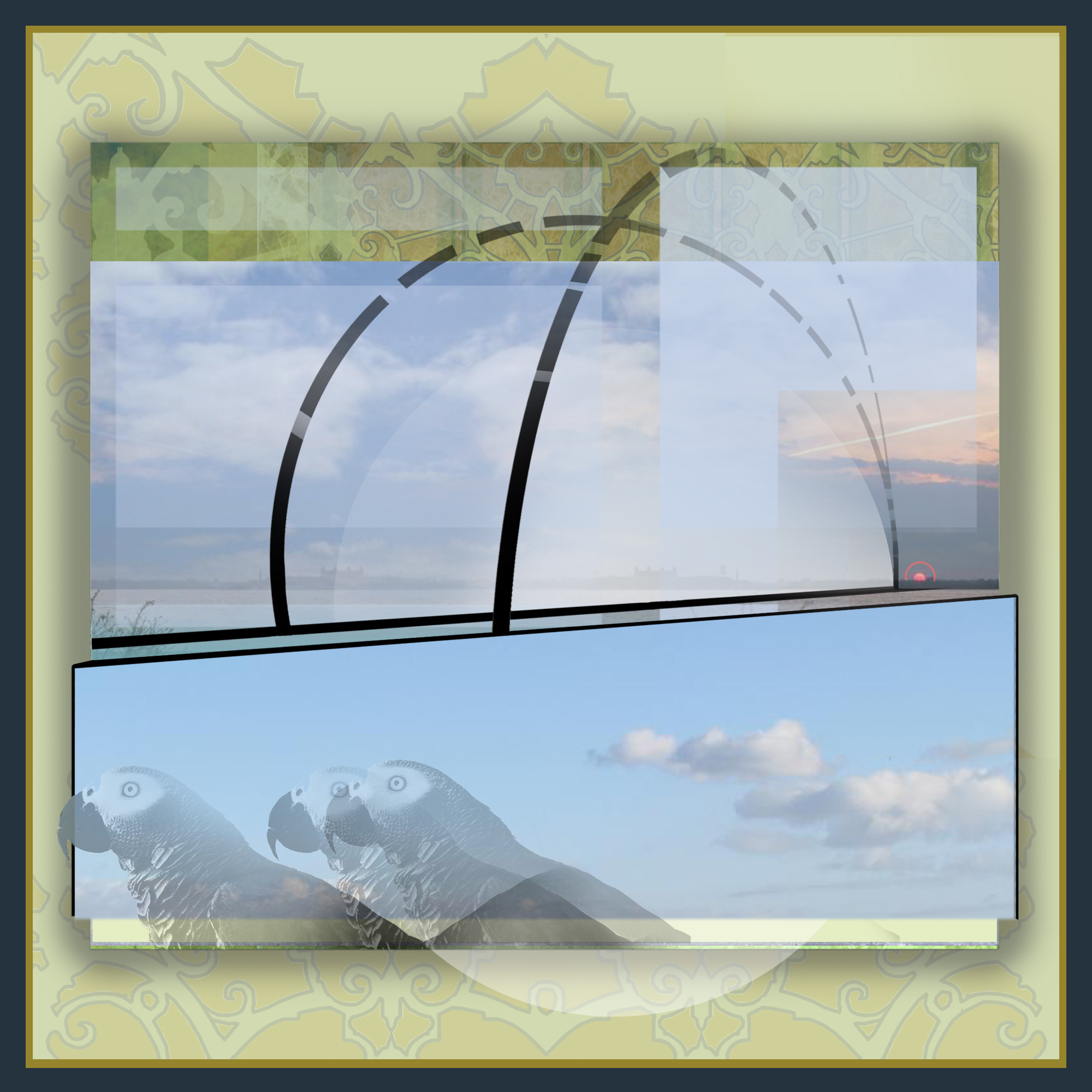
My first night on Pleasure Island, I whiskeyed myself up on the deck of a condo and watched waves pound the beach where the bodies of Confederate and Federal troops had been blown to smithereens.

I’d promised Copeland—my former brother-in-law, the man whose condo I’d commandeered—that under no conditions would I drink. It was a stupid thing to say, but I’d said it early in the morning, which meant it didn’t count. Most mornings, I’m aswarm with promises. No more this, no more that. Of course, the changed man bit lasts about half a day. I blame the sun. Post-zenith, it tends to slope downwards. This downslope takes everything it touches and makes it boozeworthy. As my daddy used to say: drink, drink, and drink some more, for tomorrow we die. But tomorrow, more often than not, we do not die. Tomorrow we wake with blood in our shorts and a toothache of the heart, to make promises that seem keepable, until the downslope awakens our indefatigable whims.

My bottle was empty. I flipped it into the dunes, where it shushed in the grass. I felt grandiose, famished. I would’ve spooned the contents of a mayonnaise jar into my face if there’d been any, but Copeland stocked only salt, pepper, sugar, and chamomile tea. So I shuffled three blocks to a shack reeking of grease, ordered a cheese sandwich and a Wild Turkey, neat.

That night, this bar’s Magnavox blazed with some self-congratulatory bullshit about sexual predators. A host with a face based loosely on the face of a human had made himself available over the internet. There, he’d claimed to be a thirteen-year-old girl who wanted to party; now he hosting of a sting operation. Guys streamed into a McMansion and Host confronted them, and they either prayed for mercy or claimed they’d brought condoms and beer to teach the girls a lesson. Afterward, the cops, wearing bulletproof vests, threw them to the ground, read them their rights. I told the bartender the only way I’d continue to watch this trash was if Host snipped off their cocks and crammed them down their throats. Easy, my neighbor said, some young buck with clippered hair and tatted arms, the usual bozo who thinks because he’s lifted some weights he can police whatever vicinity he finds himself in.

I knew from experience that guys like him were all mouth and flabby muscle. Problem was, they hadn’t spent much time in the ring; their jaws were champagne-flute glass. So what if you were an old sack of jellied gristle. If you’d survived a few bouts and owned a switchblade you’d been carrying since ’82, you had a better than average chance.

“Once upon a time,” I said, “a bastard hacked my daughter to pieces.”

“Sorry to hear that,” the young buck replied.

“That’s not the story,” I said. “The story is that ten years later, I watched that bastard die. And you know what? I liked it. In fact, when they flipped the switch and his body started flopping, I cheered. But it turned out cheering wasn’t the thing to do. My rejoicing carved out a nasty hollow. It taught me something. Take no pleasure in the harm you mean to have done.”

“Sir,” the young buck said. “Get out of my face.”

I flipped out the blade. The guy raised his hands.

“That’ll do,” the bartender said. He was all skin and bones, with a face that suggested he might’ve tasted a restroom floor. And at the end of his tanned, hairless arm, there was a polished .38.

I tossed a ten on the bar, said keep the change.

~

Like a true hot shot, I woke up in the sand, among broken seashells and cigarette butts and ice cream wrappers and those plastic discs you snap on the tops of soda cups. I dragged myself into a sitting position, smacked ants from my legs, and stared at the churning sea. It occurred to me that Primordial Man might’ve watched a similar sunrise bleed across this same froth. He had not, however, smelled doughnuts, and that was one of a few things I could think of that separated his world from mine.

On the boardwalk, House of Doughnuts had raised its garage door and was ready to serve. The woman manning the counter was a tall, haggard granny wearing a knee-brace, already sweating. On wobbly legs tattooed with Looney Tunes, she retrieved a sack of fried dough for the last guy that needed one, a fatso wearing a red Redskins sweatshirt with the sleeves ripped off, a man who nodded and smiled at me, making me feel shitty for having silently cursed his bovine physique.

“Need help?” Granny asked.

“I’m thinking,” I said. The menu couldn’t have been simpler. To eat: doughnuts, glazed. To drink: milk and coffee, small or large. They didn’t take American Express—only cash. I was about to ask for a sample, when a girl trotted in, maybe twelve, no more than thirteen. Blonde braids. Brown, calflike legs, unshaven, adorned with thousands of golden hairs. To say she was a duplicate of my daughter would be saying it wrong. She was my daughter. Which meant she’d either come back from the dead, or I was really bad off.

The girl ordered a dozen doughnuts. Looney Tunes Legs fetched them in no time. So. Not a ghost. I was bad off. Worse than I’d thought. She unwadded a few bills for the granny. I followed her out. I tried to stay at a safe distance, or maybe I didn’t, because I caught up to her, tapped her shoulder. She whirled around; a braid-tip brushed my outstretched hand. A harrowing sight I made for sure, a scorched lump, aglitter with sand. But she didn’t scream. Squinting, she waited for me to explain.

“I’m sorry,” I said. “For a minute I thought, maybe.”

“What?”

I knelt. The earth was tilting. The Lord, I figured, trying to knock me down. “I thought,” I wheezed. “You were somebody.”

“You okay?” She pulled a phone from her hoodie pocket. “I can call 911.”

I shook my head. “It’s just the downslope.”

She frowned.

“Forget it. I’m old,” I explained.

“Angela,” a voice said. A man stood at the other end of the alley.

“You don’t look that old,” she said.

“Angela Simmons!” the voice said again.

“I gotta go,” she whispered. She jogged toward the voice, which belonged to a dude laden with muscle, wearing a baseball hat, sunglasses and Croakies. He yanked her by the arm, a gesture she’d hold onto, to fuel some misplaced father-hate. She couldn’t understand how he needed to feel like he was in charge. Like he had the power to save her. It was a feeling no man could spoil. Unless one came along and did.

I pledged to stay away from the boardwalk. Half an hour later, I still hadn’t left. Slumped in the bucket seat of a race-car game, watching the monitor advertise itself, I was going nowhere, fast. I had yet to make my mark. Across the room, a toddler sporting fake fangs rode a mechanical, sombreroed donkey. The girl, the one from before, stood beside him. She looked bored. She wiggled a foot from one of her sandals, used it to scratch the back of her other leg. She caught me watching and raised her hand. I didn’t wave back. She approached.

“Are you feeling better?” she asked. This touched me. It angered me.

“You shouldn’t talk to people like me,” I said.

She blinked her blue eyes. Her tongue poked the inside of her cheek. My chest prickled, as though a fuse had been lit there. “What kind of person are you?”

“The kind to avoid.”

“Do you know Jesus?” she asked. She had a plastic spider ring on one of her fingers. Her lips gleamed with gloss.

“I’ve heard the name.”

“Well, you should know that He’s real and He loves you.” She opened a coin purse smothered with stickers of wild safari animals, retrieved two quarters and dropped them into my slot. “People should stop being afraid of each other,” she said.

On the screen, numbers counted down: three, two, one. A green light lit up, and all the cars but mine took off.  I stomped the gas. “It might seem okay to think that now,” I said, “but what if the unthinkable had a mind to descend?” She didn’t answer. I glanced behind me. She was gone. The little mechanical pony was still going, riderless. My car—a yellow Lamborghini—burst into flames.

At House of Doughnuts, a new waitress manned the helm. Buxom was the word for her, big in all the places where you want big to be, except for the eyes, which were about three sizes too large, and a chin that seemed embarrassed by its weakness. The eyes I could deal with, as long as I didn’t have to look into them. Her flesh was a luxurious brown, peppered with melanomas. Brown hair waterfalled to her ass, shivered when she walked.  I waited on a stool. She took care of the others, approached me.

“Where’d Looney Tunes go?” I asked.

“Looney Tunes?” she repeated, frowning and grinning.

“Tall granny? Had Bugs and Taz waltzing across her calves.”

“Mom?”

“Really?”

“That’s what we call her. I’m filling in. What can I get you?”

“One quart of whiskey.”

“How about a large milk?”

I gazed, unabashedly, at her bosom. “I haven’t got a dime,” I said.

Gloria winked. “How about we say this one’s on me.”

Gloria had an apartment two blocks from the beach. She’d refused to retire to my condo because it belonged to a man she didn’t know, who rented to people she didn’t know, particles of whom had likely been shed throughout, and she didn’t much care to breathe these particles, or converge with possible secretions. She’d seen a 20/20 where they hired a forensics team to dig around in a hotel room post maid-service. The team had discovered unfathomable particles and unspeakable secretions, and now it was difficult—impossible, even—for Gloria to inhabit private places where other people had lived.

The funny thing being this: she was a bird lady. I should’ve guessed by her dangly turquoise earrings she shared an apartment with such plumage-shedding, shit-producing creatures. The fecundity! I took a whiff before my eyes adjusted to the dark, and despite the tweets, thought pachyderm. The day before, Hurricane Season had officially begun, so Gloria whipped up some Category Fives—glorified Long Island Iced Teas. Gloria reheated a pot of vegetarian jambalaya; Michael, the African Grey parrot, perched on my shoulder and nibbled my ear. I was smitten. Okay, Gloria said, tell me your story, so I did, touching on my time at a boy’s school, how I’d pursued acting, made it as far as a toothpaste commercial, tried my hand as a stuntman, broke both my legs, met my ex-wife at a rodeo, tried real estate, made a fortune, went bankrupt. In short, I told her nearly everything. As a rule, I won’t bring up my daughter with people who don’t already know, unless I feel like wasting half a day circumnavigating their sympathies; it’s like letting someone else tear the scab off a wound that won’t heal. Instead, I told her what seemed as true as anything else: that my daughter was here on Pleasure Island, that it was a complicated story I might share someday, the most important part being that she’d been sent to live with another family, who’d insisted I never contact her again. Gloria pretended to believe me, inquired as to my condition, which I assured her was tolerable. We ate. We drank. We nuzzled. I was pleased to find Gloria’s massive legs were as muscular as they looked. I buried my face in her breast, which ponged of coconut. With her legs, she embraced me. I pumped like a drunken teenager; she acted like it was just the thing. Maybe it was. When the blubbering began, she didn’t inquire. She lapped at my tears, begged me not to stop.

Big surprise: swinging a metal detector feels too much like work, only less fruitful, especially if the battery’s dead. I’d found one in a closet at Copeland’s, figured it’d transform my pathetic beach-amble into something purposeful.

Also I’d filled the pouches of my shorts with airplane bottles of slightly impressive whiskey, charged to a credit card that was about forty dollars from maxed. I tinkled as I walked. Waves ate the beach. In fifty years, I predicted, all this would be gone. Then, I revised that figure to include the phrase “or less.”

The girl and her people lounged near the boardwalk, not too far from what appeared to be a family reunion of black folk, some of whom were playing volleyball without a net, while the less physically inclined—the swollen and possibly handicapped, wearing massive T-shirts—wallowed in the surf. The girl lay on a towel, next to a smaller boy who’d dug himself an impressive hole. Her parents, youngish and athletic, sat in the shade, wearing sunglasses with silver lenses. Their clothes rippled in the wind. Fifteen feet away, I swung my detector over a mound of incandescent seaweed, reading their lips. I didn’t catch much, except for when the father yelled at the kids, reminding them that if they wanted to see Bodyworks they had twenty minutes of beach time. I’d seen a flyer about this thing. People had died, science had claimed their bodies, stripped them of their flesh, snatched out their arteries and organs, shoved it all into the spotlight of a traveling freak show.

I approached the girl’s father. “Excuse me,” I said. “You believe in reincarnation?”

“Huh?”

“I didn’t believe in it, either, until recently.”

“Oh,” he said, raising his book.  “We’re not interested, thanks.”

“Your daughter,” I said. “I had one like her.”

“Excuse me?”

“Keep an eye out. Because you never know. The worst stuff you’ve never thought is out there. The worst doesn’t wait for an invite, either. If I were you, I wouldn’t sleep a wink.”

“Get the fuck away from my family,” he said. He rose from his chair. This guy, unlike the guy from the bar, could’ve put me in my place. Instead, he unsnapped his phone, and punched some numbers. “I’m reporting you,” he said.

“Good,” I said. Message delivered. Whether he listened or not was up to him. Only he could protect that angel from the hands of an animal who had nothing left to live for, except to hold another man’s daughter in his arms.

What I found, with the detector turned on: squat.

At Copeland’s, I opened a little book that’d been left, by his wife I presumed, for renters to record their flattery. Everyone loved the beach! And the house? The décor was fab! Michael’s seafood was awesome. House of Doughnuts rocked! Boy, were they were going to have to lose some weight after THIS vacation! I read every word of that shitstorm, a testament to the sweet oblivion of the unscathed, and spent the rest of the day trying to generate some compliment to pay Pleasure Island. I came up with one thing only, though my hand wouldn’t write it: I want you to sleep in my arms.

The next day, Gloria asked if I wanted to go see the bodies. Had I mentioned this to her? I had not. I took it as a sign and said yes. We drove her Cherokee to a convention center in Wilmington. Gloria looked alive and trashy in a way that commanded attention but caused people to ask: did that just happen? Bangles in her ears, a low cut top, shorts so short she had to keep tugging to keep her cheeks in check. I placed my hand on her lower back, to let everyone know whose side I was on.

A laminated card reminded viewers these bodies were not the bodies of executed Chinese prisoners, merely unclaimed Chinese. Every one lacked flesh. Their musculature had been stripped away, in some cases flayed. I remembered a dream where I died but the electricity stayed on in my brain. No body movements, eyes open, stared at what was in front of me. I imagined every body here cursed with a similar power. Bodies dead, brains alive, flickering with a lesser consciousness, a perpetual state of perplexedness.

“My God,” Gloria said, to the flesh of an obese cadaver, which had been sliced into three sections to illustrate how fat was stored.

A woman in front of us, wearing a fanny pack, pointed to the ceiling, where a fleshless, bug-eyed woman with outstretched arms levitated. With my eyes on her teats—two blind and withered globes—I nearly tripped over another of the skinless bastards. It took me a second to figure out he was kneeling in prayer. His held his heart—or maybe somebody else’s—in his hands. “Promise me something,” I said.

“Shoot,” Gloria replied.

“If I die in the next ten minutes, have me burned to a crisp. Fertilize your garden. Line your bird cages.”

“Please.”

“I suppose you’d prefer me to get all dolled up, stuff me into a box?”

“I’d prefer you to be eaten,” she said. She grabbed my hand, started gnawing an index finger.

“I don’t expect you’d like my taste.”

“Not by me, retardo,” she said. “Birds.”

“Yours?”

She shook her head. “Too finicky. Turkey vultures, though? Turkey vultures would get the job done.”

I took a break from the exhibit to conjure a vulture-beak. It scooped out one of Gloria’s eyeballs.

“You okay?”

I wasn’t sure. I felt like I had somewhere to get to, someplace I didn’t want to visit. I pointed to her purse. “You got any booze in that thing?”

“You want a Midol?”

“I’m not menstruating.”

She pressed the back of her hand to my forehead, pronounced it clammy.  “I could really use a drink.”

“Take deep breaths,” she said. “Close your eyes.”

I nodded.

“Think about something nice.”

My daughter appeared. She was a baby, maybe four. She was asking me how much I loved her. This was a game of ours. A pastime. She’d ask how much, I’d yell a gazillion! I’d ask her how much she loved me and she’d yell sixty! Wow, I’d say, sixty’s a lot.

“Is sixty a lot?” I ask.

“It depends.”

“Wrong,” I say. I swallow. The back of my throat tastes like snot. “Sixty’s not a lot. Sixty’s nothing. I’m ten years from sixty now. That’s six times the number of years my daughter breathed the air of this earth before she was slain.”

I hadn’t meant to include this part. But I’d been staring at the muscle-threads of a man carrying his own skin—like a coat—over his arm, and my mouth, as usual, had a mind of its own.

Halfway through the exhibit, Gloria and I found an oasis: a bamboo café. At the counter, an adolescent boy with a Mohawk dispensed coffee and offered us free chunks of nut-infested brownies. We sat at a wobbly table, its unwiped surface agleam with the residue of spilt beverages. I took one sip, and scalded my tongue. The story arrived like a deluge.

Once upon a time, a man and a woman made a child. The child wasn’t perfect. In fact, the child was, for the first two years of its life, a terror. Never satisfied, threw tantrums, the whole bit. Toddlerhood, however, transformed her. She learned how to speak. She didn’t lose the mean-spiritedness, which she’d inherited from her father, but she loved to talk, to tell her parents how much she loved them. She loved to love, loved to be loved. She’d don her Snow White mask, listen to the man’s heartbeat through a fake stethoscope, shake her head gravely, and say: you haven’t had enough kisses today.

One day, another man—a neighbor, no less—invited this child into his truck. Something had happened, he’d said, to her parents. But nothing had. What’d happened was he had dreamed of performing unspeakable acts upon the girl’s body, before her death, and after.  And that’s what he did. Six days went by. On the seventh, a fisherman found the girl’s hand bobbing in a river. Cops were summoned, parents were summoned, the body was identified, the predator nabbed, the funeral performed and forgotten.

In the years that followed, the woman was the one who proved herself. She wept often, but not always. She slept at night, got up in the morning. She found ways to go on, move on, get past, overcome. Meanwhile, the man lay in bed, grinding his teeth like he had a mouthful of glass. She’d tell him to go on, and he’d go on, out somewhere, into whatever building had its doors open and encouraged the worst habits money could buy. Eventually, the woman moved west with an aspiring soul-winner, sent postcards from the desert imploring her ex to get personal with the Lord. For a while, the man did get personal. He cussed the Lord like you would a family member. Then, one day, the Lord broke the news: a daughter who’d been hacked to pulp can’t be buried. You will carry the pulp with you.  That pulp was your heart. It would lend no hand with sympathy.

It wouldn’t let me die.

Gloria’s fingers—her talon-like nails shellacked with paint—fanned her eyes, as if casting a spell on her face. Her lips turned inward.

“Don’t,” I said, “You’re not pretty when you cry.”

“Baby,” she replied. “Don’t be mean.”

“I’d have to die first,” I said.

Gloria put her lips to my ear. “I want you inside me.”

“I’ll allow it,” I said, “on one condition.”

“Anything,” she said.

“No matter what transpires, you won’t shed a tear.”

She said she’d promise me nothing. I knew then she was mine.

~

We had a whole floor to get through—bodies playing poker but not, bodies running but not, bodies conducting an orchestra and posing like the Thinker and riding the flesh-stripped bodies of horses but not—and then, after the exit, the harsh light of a downsloping sun.  How much of us it would fail to reveal? Only time would tell. Right now we had bodies to view, some whole, some not, some torn down the middle. We had bloated hearts and charred lungs and shriveled peckers to size up. We had shudders to inhabit. We had conversations to overhear: my uncle had heart disease; epidermis is your largest organ; I knew someone with a hydrocephalic child; I happen to think we’d be beautiful without skin!

I looked for the girl I’d seen before, the one who looked like my daughter. I told Gloria what she looked like, told her to alert me should one like her make an appearance. Look out for braids, I said. Strawberry-colored barrettes. Baby fat. Brown limbs and crooked teeth. A propensity to rely on fingers when counting. An insatiable love for animals, especially those injured, made lame, or missing a leg or three.

I had no reason to dream. I had no business envisioning a new era, where everything vital would come back from the dead. But, I told myself, I was keeping my eyes open. Peeled, as they say.

But back at her apartment, Gloria wanted them shut. She had a present for me, and this present required a blindfold. I lay prostrate-side-up on her floor, like she asked. Also: my clothes were gone, removed by Gloria herself. I was a little afraid, and said so.

“Don’t be,” Gloria said. I heard bird-peeps, the squeak of cage doors flung open. “Relax,” she said.

“Impossible,” I replied.

“Then pretend. Pretend like you know how to relax.”

“Play dead?”

“Exactly.”

Soon, they were upon me. Their tiny bird-feet. Their claws. Their beaks, nibbling and nibbling. The little wings, feather-kissing my flesh.

“Move your hands,” Gloria said.

“I wish for that part of me to remain unpecked,” I said.

“Leave that to me,” she said. She climbed aboard.

The birds tweeted. One nipped at my ear, another at the cloth above my eyelid. Gloria rocked and rocked.

“Are we… too old… for babies?” I asked.

“Let me… get back to you…”

“Keep… getting… back.”

“Keep… inquiring.”

The air pulsed with bird wings. I hadn’t known she had so many. Maybe they weren’t all hers. Maybe they’d flown through the open windows, from all directions—from the land, from the trees, the sky, the sea. The screeches they made! A cacophonous song—one that, I suspected, was imploring their winged brethren to abandon the dead and rotting things of the world, so as to observe our fervent wallowing. We were, I was sure, a sight to behold: two withered creatures, laboring and laboring, blind with the belief we might make something new.


Matthew Vollmer is the author of FUTURE MISSIONARIES OF AMERICA, a story collection. He is the co-editor, with David Shields, of Fraudulent Artifacts: An Anthology of Pseudo-Interviews, Faux Lectures, Quasi-Letters, “Found” Texts, and Other Dubious Documents, forthcoming from W. W. Norton. Previous work has appeared in Paris Review, Epoch, Tin House, VQR, Colorado Review and elsewhere. He teaches creative writing at Virginia Tech and is at work on a novel. Read more of his work at http://www.matthewvollmer.com and visit his blog at http://matthewvollmer.tumblr.com.

Read our interview with Matthew here.

“The Darning Needles” by Diane Hoover Bechtler

Darning Needles
Illustration by Morgan Maurer, 2011

When a marriage fails, people eventually begin saying, “It’s time for you to move on.”

Why do they say that? A marriage is not a building to be vacated. I don’t want to move on. Why would I? Does Nessie want to leave his loch? Was Dorothy really happy when she returned to Kansas or in her sleep did she mumble, “There’s no place like Oz, there’s no place like Oz”?

~

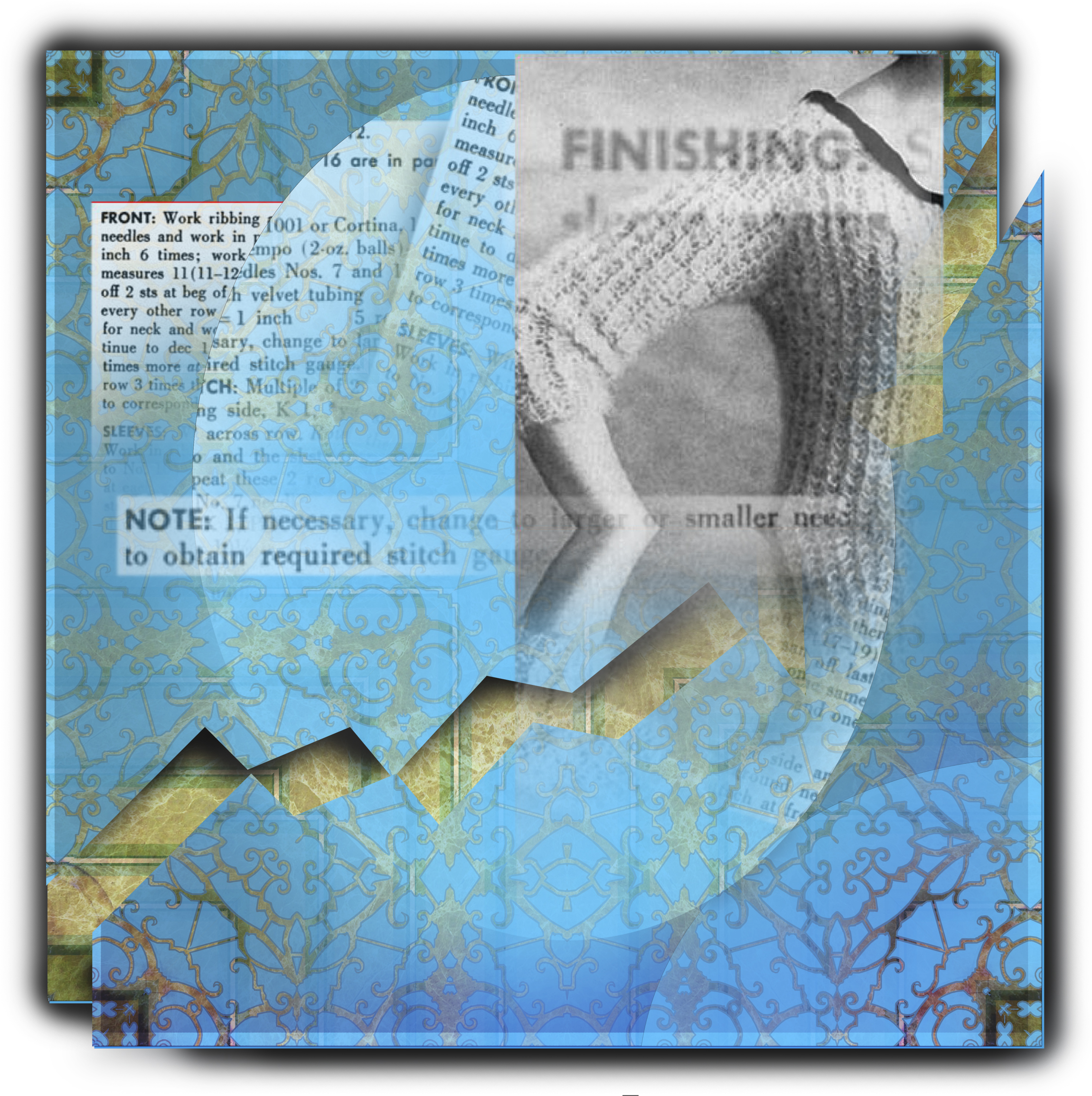
I don’t know how to mend things. A hole has appeared in my favorite cashmere sweater – the one he bought me from a boutique we discovered in Rome while we ambled through the warren of streets at the bottom of the Spanish steps. We were happily lost most of that day until we stumbled upon the familiar Trevi fountain.

We each made a wish and tossed coins into its water, thus assuring our return to Rome. I don’t know if the legend means we return together or apart. Perhaps the legend doesn’t know. I certainly don’t. After tossing the coins, we skipped away, laughing and holding our stuffed shopping bags, the sweater nestled in one.

I rummaged through a small sewing kit given to me years ago by a flight attendant–needles, some thread, and a couple of clear buttons. I didn’t remember sewing supplies in my condo. My subconscious must have packed it away. The job of mending the hole needed something more than a plain sewing needle. I thought of my vintage darning needles. I pulled them from the vitrine and tried to remember how to darn. I could not remember. I went back to my plain steel needle. I connected the ragged edges of the hole, but they didn’t fit neatly together. The result was an ugly knot.

A woman at the alteration shop clicked long blue fingernails on white speckled Formica and examined the garment.

She said, “Honey, that thing will have to be rewove. I imagine it will cost you a couple hundred bucks. Maybe more. If you don’t want it sewed like you got it, you best throw it away. Go buy a new one.”

I wanted to protest, “This is a piece of my history. It’s not from the local department store. It’s from Italy, a country I may never see again despite throwing coins in fountains.”

But I said nothing. I just left and took the sweater home, folded it sleeves-inward, wrapped it in tissue, and cradled it in the bag for Goodwill. Another woman may not care about the damage. For me the hole is so large that I fall through it into an alien and hostile world, where teapots break in poorly packed boxes, tiles drop from walls, and where I reach for a familiar cup and it isn’t there.

As we divided personal property, my last months with my husband blurred. Summer came and I signed papers giving him the New York apartment. Flowers faded. I sold my vintage Mercedes. Halloween happened. I gave him the airplane. Leaves turned red and gold. I gathered my personal things from the vacation house. Thanksgiving arrived. I shopped for condos. Christmas came. My husband ran off with the Ferrari and Tina. Isn’t there always a Tina or Dixie or Trixie? A snowstorm hit. I moved during it. I measured time by gas and frost. The act of packing my art collection has vanished from my mind. I can’t recall the first time I saw my new condo or picking out the counter tops and carpet. I talked to Mel, my therapist, because it was strange that I couldn’t remember the last weeks I spent with my husband, a man I adored.

Mel explained, “It’s called the ‘battered child syndrome.’ “A part of you knew whatever was coming was going to hurt really bad.” As he talked, his jaw clenched and he chewed his words. “For self-preservation, your mind went somewhere else. Your brain shut down.”

I shook my head, “But my brain shouldn’t have had to go away. He and I shouldn’t be apart.”

On the many trips between the house that now belonged to only my husband and the condo that belonged only to me, I passed the same woman.

She stood on a corner holding a cardboard sign that has become too common. In block letters, it said, homeless, hungry, need work, need food, have children. After a few days of passing time and time again, I stopped seeing her. She was just another landmark.

I remembered the sweater. I rolled down my window and handed her the sweater and a twenty.

The darning needles were from my grandmother and my childhood. She taught me how to darn, a skill that has fallen out of fashion. It is easier to throw things away and buy new ones.

I also have my grandmother’s pedal sewing machine. Because I could not mend the sweater I sewed a sackcloth robe to wear while I sit in ashes.


Diane Hoover Bechtler lives in Charlotte, North Carolina, with her husband, Michael Gross who is a poet with a day job and with their cat, Call Me IshMeow. As well as writing short work, she is working on a novel about a likable character who strives against great odds to achieve a worthwhile goal. She has an undergraduate degree in English from Queens University where she graduated summa cum laude and subsequently earned her MFA. She has had short work published in journals such as The Gettysburg Review, Thema Literary Journal, Everyday Fiction, and The Dead Mule School of Southern Literature.

Read an interview with Diane here.

“Dancing on the Rhythm Bus–One Night after Leaving The Pyramid Club, 1991” by Kyle Hemmings

Dancing
Illustration by Morgan Maurer, 2011

He keeps shining a pen light into my eyes, this big muscle dude with a green gown. I have a vague sense that I’m in the back of an ambulance.

He asks me my name. But he’s already called me Mickey. So I say, Mickey, Mickey the SuperFag, Mickey, the kickass club dancer. I mean the best, the best, the …Muscle dude says “Mickey, Were you trying to kill yourself?”

I close my eyes and imagine myself sucked through this endless internal vacuum, the same one that probably bore me without the need for a mother with womb and scar. I was born a whore. But Muscle Dude keeps shaking me, refusing to let me fall onto the safety net of endless falling. I tell him “Yes,” just to shut him up.

“Mickey,” he says, “What were you taking? Amyl nitrate?”

No, I tell him, just some barbs, yellow bees, and he called it a “Friday Night Special.” I start to fade out again.

Muscle Dude keeps shaking me.

“He called it a Friday Night Special?” he asks.

“Yeah, he called it that.”

“He…?

I fade away.

I wake up. He’s still shaking me.

“What’s a Friday Night Special?”

“Something to take if you never want to see Saturday.”

“I mean what’s in a Friday Night Special? Mickey, talk to me.”

“Everything. It’s got everything. Every night of the week.”

The boom of his voice fades, or maybe me dropping deeper and deeper. I only want to be swallowed by this slow blackness of endless sleep.

~

The next day I can’t recall at all, a waste, like the flash of twenty years of my life, faces that pass you like comets in some erogenous unnamed zone of night, but they got me in some isolation room with my wrists in leather restraints. I’m still so tired, only wanting to escape this broken shell of a body.

Just to think: Only two nights before I was a greased banshee with some serious moves. I scored some great tips.

The shrink is cool and all, smooth-toned with the ability to elicit button-down conversation. He starts by asking what happened before the ambulance arrived. I tell him I can’t remember everything. But this guy, I mean older, picked me up at The Pyramid, said he was in love, said his name was Mr. Stiff himself, and he stuffed my g-stings with some pictures of the true father of electricity.

At his place on Loisada, we took a shower, but he was too drunk to get hard or anything. Occasionally, one of his geisha boys came out to grab a grape soda, and behind closed doors I heard some giggling, some strange talk at the volume of moon walking.

In fact, Mr. Stiff referred to them as his Moonies. I said You mean Moonies as in Rev. Moon? No, he said, my Moonies, precious as twin butterflies. These butterflies only dance in moonlight.

Later, Mr. Stiff drowned me in heavy conversation that I could not put together, the bits and jagged glass edges, and he kept prodding me to take more pills from this flower bowl in front of us, its sides flaring out like so many lips, so many strangers I have hurt.

Eventually, Mr. Stiff broke down and said I reminded him of his son, that he had one somewhere, kept sending money to the mother until his mail got bounced back with a Return to Sender. And I was starting to get groggy, and Mr. Stiff kept saying, Don’t you remember the times we . . . or how I used to walk you home from . . . and before I passed out, I remember him saying to please call him daddy, that he didn’t mean for me to drown alone, and I can crash at his place as long as I like, he never wants me to leave.

And I remember saying something about how my mother became a virgin after she had me, which was a joke I sometimes told at the club to loosen up some jaded been-there-been-everywhere fool, and then right before I hit the carpet on my knees, two of the Moonies holding hands came out and said almost in unison, “Is he alright?”

The sound of their voices echoed in my head until it reached the pitch of a siren.

So I’m telling the shrink that it was all just a fluke, that it’s just one hazard of the line of work I’m in. You meet golden bulls who’ll lick your hand and sometimes you meet raging boars who try to trap you up in a tree. That’s all that happened. But I have to dance. I have to go back to the club. Dancing is what I am when I don’t look back. When I dance, nothing can catch me, turn me to stone. It’s when I’m still that life becomes a motherfucker.


Kyle Hemmings lives and works in New Jersey. He has upcoming work in Decomp and in Lonesome Fowl.

“Hopeless in St. Henry of Uppsala” by Mindela Ruby


Illustration by Morgan Maurer, 2011

At chicken o’clock I set off on foot, having quaffed Jolt all night so as not to oversleep right through the sex meeting. People who write me off as a hopeless, organ-grinding tramp should see me now, arriving early at St. Henry of Uppsala for 12 Step.

Not my peppiest or at all sure how to act, I stage my entrance into Community Room 2 with eyes cast low. The chair I pick is near the window. As others take their seats, I feel their attention bushwhack me. Who’s the new girl? The fatty ass punk in the thrift store hound’s tooth skirt –what’s her frailty?

Displaying a chink in the armor’s not my thing. Still, the longer I’m forced to wait for the program to start, the more violently my heart lub-dubs. As the chest contractions hit panic speed, I tell myself, Remember why you’re here: my employer (and well wisher) didn’t fire me, even after “stealing” her car. Instead, she says that if I get in the 12 Step pink, her old Nissan will be mine.

Gain back Sada’s trust and snag her ride? Blowing this sweet a deal would be a stupiculous move.

Besides, my sex life’s hit rock bottom. Of that I am damn sure. All I’m good at lately, other than getting stone cold rejected by heartless dudes, is going cruising for a bruising. The thrill of that’s long gone.

Will sexaholic meetings help? No guarantees. What is a safe bet is that these folks are gonna make me talk about myself. Blather seems to be what self-help is about. Like Sada’s grief workshop at this church, where they unload sagas of sorrow and cheer each other on. I lift my chin and suck hard at air, to not turn blue with fright.

Eight others are present so far. We all wear jackets in the unheated room and look like a pack of bears. I’m shivering and sweating.

For gratifactual distraction, I think of my music promoter kingpin pal (and secret object of desire). When I called Stoney yesterday, he told me our bass player’s dad is sick. She’s visiting her parents, this flounderous fish tale goes, and no one knows when she’ll get back, and Up the Wazoo’s not rehearsing. Or so Stoney and the girls in the band would have me think, if I’m gonna get paranoid about them, and maybe I’d better. Johnny Rotten once said it best: “Ever get the feeling you’ve been cheated?”

On a cue I’ve managed to miss, a man’s lisping voice across the room gets the proceedings underway. “God give uth grayth to akthept with therenity the thingz that can’t be changed.”

One chair over sits the runt who squeezed a rubber squeak-toy in the toilet stall when I accompanied Sada to this church. The toy squeezer isn’t acting like a hyped-up toddler today. She’s quietly pursing her lips during the prayer, but she’s definitely the chick from the can, ‘cause she’s wearing the exact same size-four gray shoes with matching laces. I stare at them as the prayer ends.

Amens erupt, a chorus of confidence, though, if you wanna know the truth, this room’s a far cry from inspiring. The floor is worn to ribbons. The paneling droops. The chairs have seen better days. The one grace note of the excursion struck on my way in, when the church biddies at the refreshment table offered me free coffee. While I tanked a couple of cups, they explained that they’re a Black ministry of Evangelical Lutherans, and St. Henry of Uppsala was a bishop in Finland who got canonized.

Overdosed on caffeine, I’m Too Far Uppsala to capiche whatever point they were making. At any rate, “introductions” have begun, and my glands sweat in hyperdrive as the participants state their names and the gist of why they’re here: “Tarik, Fred, Roxanne…internet sex, physical abuse, romantic escapism,” details that fly faster than bullets in a shoot-out.

“I’m Dales,” a guy in front of me says, “a sex addict who can’t get through a day without ten to twelve ejaculations.”

I grin and digest his sentiment effortlessly. A hush descends like a thought of death. Everyone stares at me. My turn? I’ve got zippo! No handle that neatly justifies my presence. The blood in my lower extremities defies gravity and whooshes up to my face. It’s all I can do to sputter, “Pass” to get everyone’s attention off me.

Someone laughs. I can’t see who. My engorged head hangs between my legs. Introductions end.  The topic “internet addiction” generates cross talk, but I hear only smatterings between heartbeats that in my head sound like, “Get out, get out, get out.” When I rise and follow these dictates to the exit, no one laughs or speaks or tries to stop me . Even the coffee peddlers in the hall ignore me shambling past.  I’m hopeless. Everyone at St. Henry’s knows it.


Mindela Ruby is a former punk radio deejay and current community college professor. Her fiction has appeared in The Binnacle, Emprise Review, Literary Mama, The Medulla Review and Boundoff audio journal. This piece is an excerpt from a completed novel.

Read our interview with Mindela here.

“Winter” by Donna Hunt

winter
Illustration by Morgan Maurer, 2011

I will not wake up today. I will not get out of bed. I will stay cocooned in sheets.

I will not eat, answer the phone, check email. I will spend the day watching soaps on channel 5 and imagining every piece of lint on my carpet is actually an insect. I will get up 27 times to check. It will never be an insect. I will be startled by the shadows my glasses make and decide that being able to see is not that important. I will nap. I will read Anne Carson. I will worry that I am turning into Emily Brontë. I will spend an hour prying underneath my fingernails. I will reconsider using the phone but will not want to talk to any of the 108 people in my phonebook. I will listen to Johnny Cash but for only 20 minutes because he will make me cry. I will spend another hour imagining how glamorous my life could be if I lived in Québec, or Nebraska. I will take a shower because I need an excuse to change my clothes. Then I will make tea because there will be nothing left to do. I’ll stare at the table. I’m not sure how long.


Donna Hunt is a Pushcart nominee, and her chapbook The Coastline of Antarctica is forthcoming this summer from Finishing Line Press.Her poems are under consideration for the Yale Younger Poets Anthology, and she was recently awarded a four-week full fellowship to the Vermont Studio Center.Her poems have appeared in Diagram, Prime Number Magazine, The Cleveland Review among others.She received her MFA at Queens University of Charlotte, and is currently teaching at CUNY.She has a poetry podcast available from itunes.

Read an interview with Donna here.

“Cold Weather” by Dora Malech

Cold Weather
Illustration by Morgan Maurer, 2011

Now scribbled letters from the ghosts I know the best—men built from bones of contention, women from hair matted against the drain, the horny linguist who eyes the tongue, sad starlet muttering stage directions, spectral ex-girlfriends wielding their housecats, hirsute ghosts of coaches past declaring you run until I’m tired. I don’t reply, can’t raise their spirits with this silly alphabet, A standing splay-legged, B in her padded bra. Instead, gnawed pen, gooseflesh and a mad dash to the photo booth, urge to verify my face, gray litany of grins and grimaces. Meanwhile, riddles—what is the sound of one hand pinned behind your back?

Yes, I’m scared the dead will make their problem mine, come pop my heart, that party favor fashioned from a length of red balloon. At night I pray for growth but not growths, that’s swell not that’s swollen, trains every hour on the hour, no lightning but fireworks, lit fuse and a lightening sky. Alone, I whisper encore, whisper anchor, flash familiar shadow puppets at the wall, same laughing dog again, again. Good luck, they say, with blood and breath and what the air scares out and what the earth beats from your body:  piss, bejeezus, stuffing, tar.


Dora Malech is the author of two collections of poems, Say So (Cleveland State University Poetry Center, 2011) and Shore Ordered Ocean (Waywiser Press, 2009). Her poems have appeared in numerous publications, including The New Yorker, Poetry, The Yale Review, Poetry London, American Letters & Commentary, and Best New Poets. She has been the recipient of a Ruth Lilly Poetry Fellowship, a Glenn Schaeffer Poetry Award, and a Writer’s Fellowship from the Civitella Ranieri Foundation. She has taught writing at the University of Iowa, Augustana College in Illinois, Victoria University in New Zealand, and Saint Mary’s College of California. She lives in Iowa City. “Cold Weather” was first published in Chelsea, and appears in the collection Say So (Cleveland State University Poetry Center, 2011).

Read a review of Say So here.

“Daylily” by Sarah M. Wells

Daylily
Illustration by Morgan Maurer, 2011

I tuck away my secrets
in my tepal until
it is time to trumpet
every petal and sepal,

calyx open, throat laughing.
I may be a common
daylily, but today
I will unfurl, wave

my stamen and declare
myself Hemerocallis—
it is mine, this day,
this beautiful day.


Sarah M. Wells is the author of the chapbook, Acquiesce, which won the 2008 Starting Gate Award from Finishing Line Press (March 2009).  Poems by Wells have appeared or are forthcoming in Poetry East, Measure, JAMA, Literary Mama, Ascent, Nimrod, Christianity & Literature, Poetry for the Masses, Rock & Sling, The Fourth River, The New Formalist and elsewhere.  She has received scholarships to attend the Key West Literary Seminar and the West Chester Poetry Conference.  Wells is the Administrative Director of the low-residency MFA Program at Ashland University, where she also serves as Managing Editor for both the Ashland Poetry Press and River Teeth: A Journal of Nonfiction Narrative.  She lives in Ashland, Ohio with her husband, Brandon, and their three young children, Lydia, Elvis, and the “bun in the oven,” Henry. Visit her blog for more information: http://driftwoodtumble.blogspot.com.

Read more about Sarah’s work here.

“Slow Hand Antigua” by Dennis Mahagin


Illustration by Morgan Maurer, 2011

It was after hearing your solo
in “Strange Brew” when everybody
started calling you God, and who
could argue? Later, the 80s brought
curlicue lines of killer powder
to an already full plate, conjuring
filigrees for a deadly wrought iron gate
like in the movie Omen II
before it impales
the priest… Styptic pencils, prying
open bloodshot eyes, vodka flasks
in toiletry kit, gig bag, soft leather
case, carrying it, carrying it.

After hiring Nathan East to play bass,
you cleaned up, and bought a plantation
in the West Indies for placing addicts
in anesthetic freeze to stem withdrawal
symptoms in lieu of deities and detritus,
until icicles formed at the anus cracks
of these addicts, long-cock stalactites
the color of faded amethyst. I remember
a December dawn, wracked by chills,
cramps and terror (the usual
withdrawal) — writing you a letter,
the gist of it not even much sincere,
asking if I might come to this new
clinic; God, I sent you

that pathetic note via post office
address in Antigua which I copied
from an article on your career appearing
in Creem Magazine. Sometimes I wonder
what became of that letter: Was it stuffed
in some duffel, packed off to a landfill,
or museum specializing in Pathos and
Cultural Oddities? It’s like something
out of Melville; or what Nietzsche
said about “the things that don’t
kill you.” Well, I lived through

the 90s, and into a new
millenium, and yet I’m not stronger…
Mr. Friedrich told a white lie when he laid
that one down, a platitude for deep thinker’s
decorum in a form letter, sent out to assuage
shame, guilt and doubt that might gnaw
through a man’s guts, or even
drive him nuts.

Still, if you could bottle
the kind of luck, that’s been visited
on me? Might call it recovery, or else
one soporific side-stitch analgesic
sponge for Christ’s cross-top
agony, time lapse for when it can’t
get any worse, then it does: Overkill
and Aftermath. Antigua in every city.
E.C., I forgive you the final fifty three
bars of Layla; how indulgent, simply
goes on, and on, and on and on …
reminds me nobody’s God.
Time is all; my letter
lives.


Dennis Mahagin is a poet from eastern Washington state. His work has appeared in many literary venues, including Exquisite Corpse, Stirring: A Literary Collection, Absinthe Literary Review, 42opus, 3AM, Slow Trains, Clean Sheets, Juked, PANK, Thieves Jargon, Keyhole, and Night Train. Dennis is also an editor of fiction and poetry at the online zine called FRiGG. A collection of Dennis’ poetry, entitled “Grand Mal,” is forthcoming in ’11 from Rebel Satori Press.Visit DM on the Web: http://fourhourhardon.blogspot.com

Read our interview with Dennis here.