Featuring the work of Thomas Sayers Ellis

Thomas Sayers Ellis


I first heard Thomas Sayers Ellis (Race Change Operation) read his work at the Bread Loaf Writers Conference. He is an animated reader who engages with his audiences in a way that few writers do when reading their work. In an attempt to help his listeners “see” the text, he unselfconsciously employed hand gestures to indicate the various forms of punctuation as he read. I was hooked then and have been a fan ever since.


Ellis’s poetry often plays with words and their sounds and rhythms in inventive ways. I hear his poetry as much as read it and there’s an underlying beat to many of his poems that makes its home in my head long after I’ve reached the final line. I’m sure I’m not expressing this in the approved language of poetry-critique-speak–I missed that class–but here’s one of my favorite poems of his that is an excellent example of what I’m clumsily attempting to express.


Or,

Or Oreo, or
worse. Or ordinary.
Or your choice
of category


or
Color


or any color
other than Colored
or Colored Only.
Or “Of Color”
or
Other


or theory or discourse
or oral territory.
Oregon or Georgia
or Florida Zora


or
Opportunity


or born poor
or Corporate. Or Moor.
Or a Noir Orpheus
or Senghor


or
Diaspora


or a horrendous
and tore-up journey.
Or performance. Or allegory’s armor
of ignorant comfort


or
Worship


or reform or a sore chorus.
Or Electoral Corruption
or important ports
of Yoruba or worry


or
Neighbor


or fear of . . .
of terror or border.
Or all organized
minorities.

His most recent book is the very fine collection Skin, Inc: Identity Repair Poems, which I highly recommend.


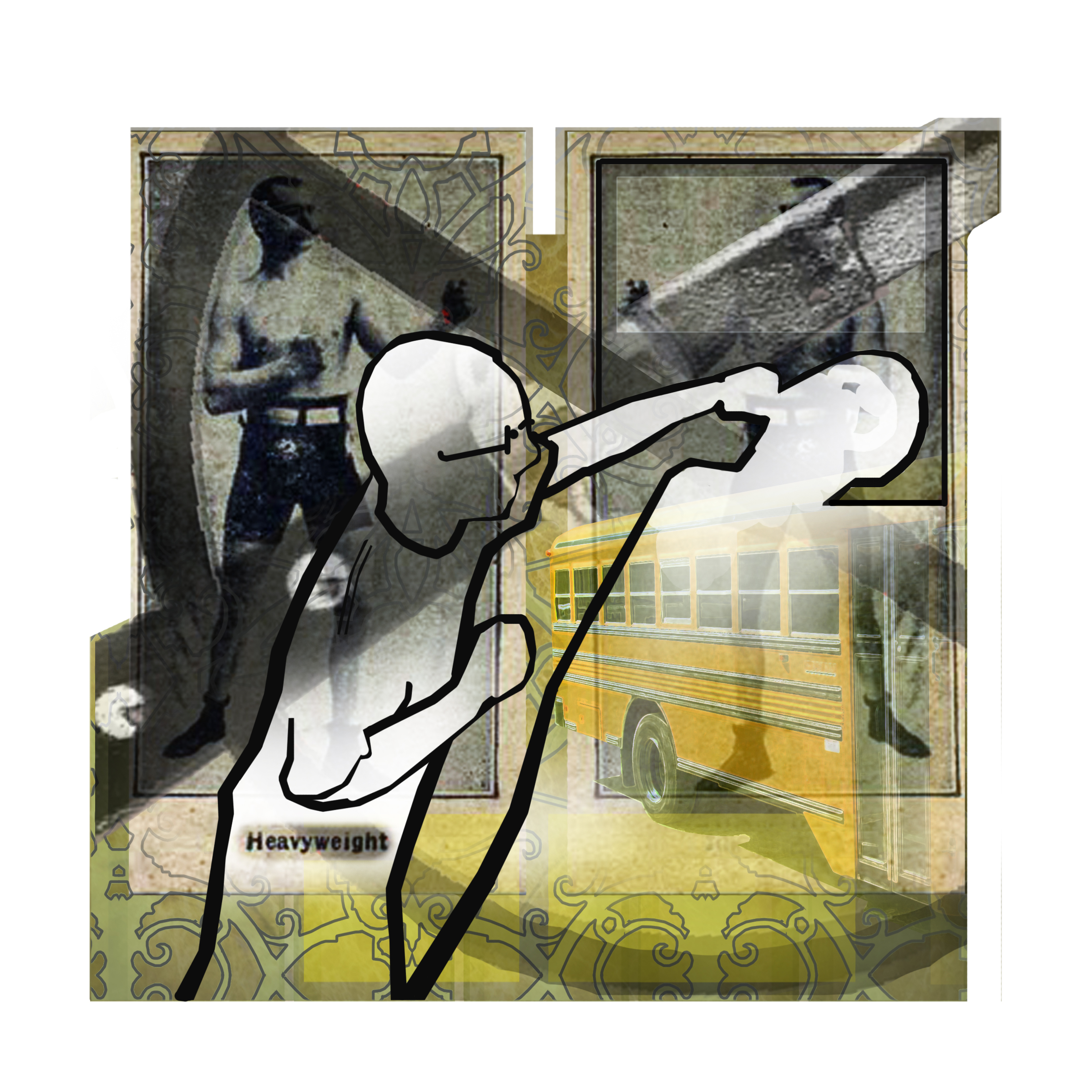
And in a purely personal and odd aside, I was reading the novel Her Fearful Symmetry today, which is set in Highgate Cemetery in London, and the author referenced Thomas Sayers, last of the bare-knuckle prize fighters, which seemed fitting, somehow. I think I will from this day forth think of the work of Thomas Sayers Ellis as bare-knuckle poems.


If you’d like to see the man in action, here are Youtube links to him reading two of his excellent poems:


All Their Stanzas Look Alike


and


Sticks

An Interview with Dennis Mahagin


Mary Akers: Hi, Dennis. Thanks for agreeing to talk with me today. Your poetry often references popular culture–also songs and/or musical artists, including the very fine Slow-Hand Antigua that you sent to us. Would you consider this work of yours to be ekphrastic poetry? And do you begin it as an homage, or does it spring naturally from the way you think about/approach the world?

Dennis Mahagin: In my work, it is not usually the case that I consciously shoot for ekphrasic tropes. In art, however, there exists a commingling of forms. A synergy. It’s in the air, or up for grabs, so to speak. Bukowski is a prime example. He used it all the time. But so does Thomas Lux, Stephen Dobyns, and August Kleinzahler. (Check out August’s poem, “Shoot The Freak,” which may or may not be an homage to Neil Diamond.) Good writers simply process pop culture much as any other wavelengths of reality. My head, in particular, is seriously hardwired to popular culture.

However, this could change! I’m actually hoping that it might. 😉


MA: I know that you also write fiction in flash and short story form. Do you choose the form before you begin to write or does it come as you write? Do you ever feel like you are consciously forcing yourself to switch genres? Do you feel like the various forms influence one another?

DM: The various forms certainly influence each other.

I use a lot of dialogue in my poems, which I learned by writing fiction, and watching movies. Similarly, a strong poetic sensibility can do wonders for the explicational side of fiction writing—in terms of compression, and transitional leaps. This is so true in the stories of Carver, and Denis Johnson. In fact, I read somewhere that the classic story, “Car Crash While Hitchhiking” was borne out of a poem that Denis Johnson had become bored with. Similarly, I tend to switch to the form I’m having most fun or facility with, in the moment.


MA: There has been a lot of discussion in the literary community about what makes something a prose poem or a flash fiction. How would you define them both?

DM: The terminology is most definitely interchangeable.

For me however, good flash fiction entails a narrative arc, albeit on a thin high wire.

I think of the best prose poems in terms of “Red Cross Language Care Baskets” dropped upon some war-besieged land from a fighter jet, piloted by James Tate, or Simic. Some similar ilk.

It’s all good. 😉


MA: I really enjoy your unusual titles. A few that come to mind are “Shortest Tale Of An Unrequited Crush Ever To Make An Amtrak Porter Blush,” and “Mr. And Mrs. Hughes Make Up And Wake The Dead.” Would you speak a little bit to titles and what role you think they play in a story or poem?

DM: Titles are a vital part of the compositional process, for me. I keep a massive Word file, full of plausibly trippy titles. They force me to focus on what I’m trying, or failing, to say. A really good title should always make a strange kind of sense.

postcard

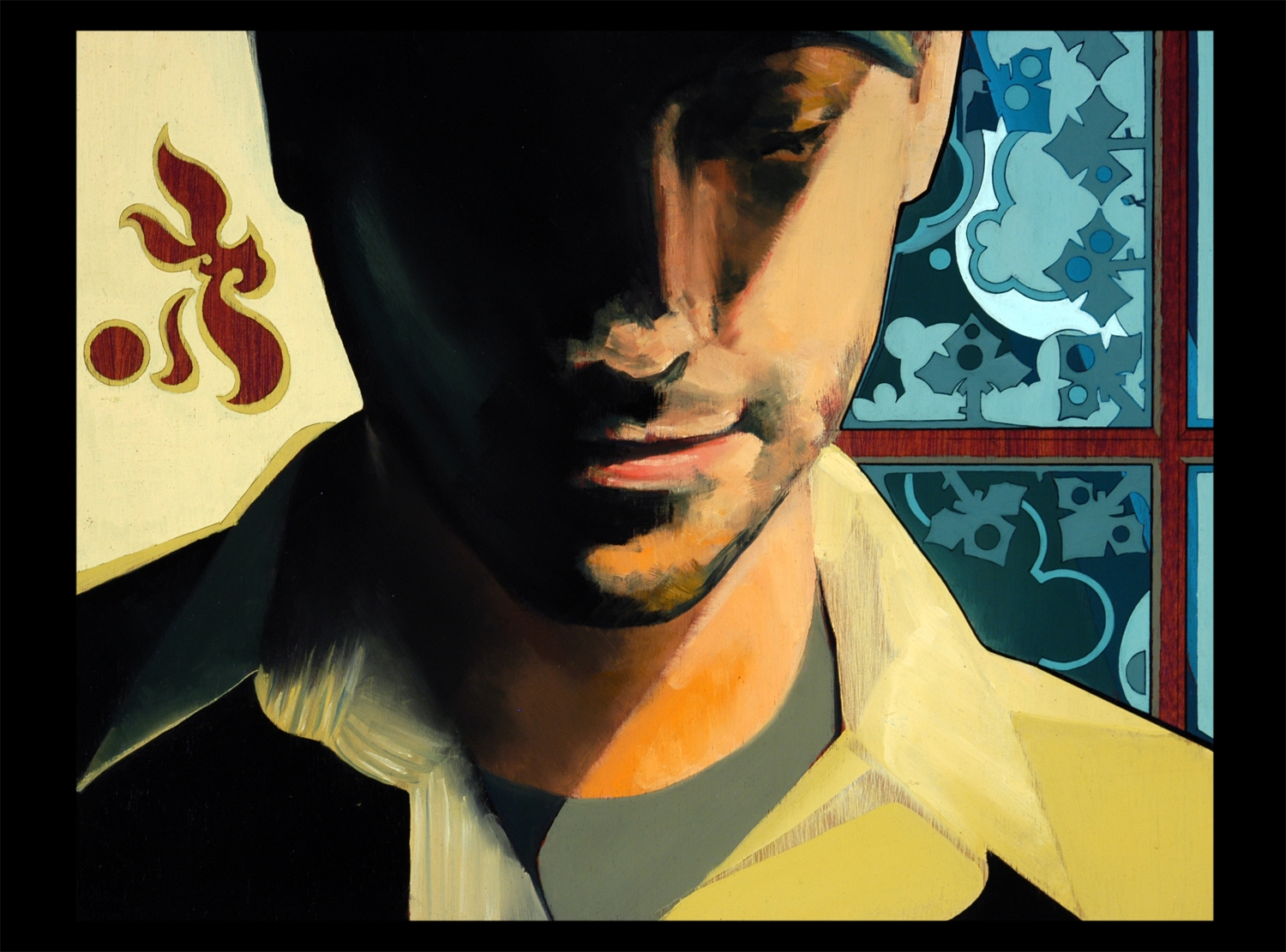
MA: What did you think of the illustration Morgan Maurer made for your piece? Did it have any special meaning for you?

DM: I am absolutely blown away by all of Morgan’s work. Check out his website! He is surely one hell of an amazing artist. A genius, frankly. The Clapton image, in particular, will always haunt me, as it astounds me.


MA: And finally, what does “recovery” mean to you? 

DM: Personification of insight, arrived at through a variety of scars, club cars, galleries, etc. Arrived at, through a trip around certain blocks you might have lived without. Or not. It is Humble Pie and Trail Mix a healthy spirit can theoretically dine on, for the eons.


MA: Thank you, Dennis. I’ve really enjoyed your answers. And for our readers, here are some links to more of Dennis’ edgy and exciting work:

Divertimento


An Interview with Anne Elliott

Mary Akers:Thanks for agreeing to talk with me today, Anne. I’ve been looking forward to our discussion.

I loved your short piece “The Lemon Method.” It was one of those that I read and instantly knew that I wanted–before any other journal had a chance to snap it up. (Yes, editors can get greedy over the good stuff.) One of the strengths for me was the use of sensory details. They bring it to life. My mouth salivates when the text talks about salivating. I smell the disgusting lunch, feel the feet under the table, hear the troubadour, pucker over the idea of the lemon. How important are sensory details for you when you write and how do you work to incorporate them?

Anne Elliott: Thanks so much for your kind words.

I think sensory detail is the main universal trick of fiction writing. The easiest way to convey a mood is through description. So it becomes almost a habit to just inventory stuff. Sometimes it gets list-y. Then the problem becomes deciding how many items to put in the list. You never have to name an emotion if there is stuff around for the character to perceive.

As for the specific mood of this story, I really wanted to convey irritation. There’s something so taboo about being irritated over Doritos and loud chewing after people have lost their lives. The real-life moments on which the story is based were not irritating, not exactly–the Russian gals in the conference room were excellent company, and our long hours swung from extreme sorrow to extreme mirth. But those extremes of feeling have been so deeply explored (by myself and others) that I wanted to play around with something more quotidian. The impatience of the everyday.


MA: “The impatience of the everday.” I like that.

Lately, I’ve been very interested in things that blur the genres of creative work and artists who work in various forms either before writing or concurrently. I know that you have been a visual artist as well as a written-and-spoken word artist and I have a background in the visual arts as well. Would you like to speak a little bit about the idea of creative crossover? Do your different genres and art forms inform one another?

AE: This is a tough question for me because most of my creative life has been practically accidental. I’m a workaholic, to be sure, but I never, until very recently, felt the kind of focus one needs to get anywhere in a given art form. (And by “get anywhere,” I mean grow artistically. The public life is secondary to me.) I have, in the past, had trouble choosing a path. Fear of failure is a big part of it. Setting up a plan B is part of it. But now I call myself a writer. It’s official–I’m saying it here. I don’t call myself a visual artist any more. But I’m proud of the art I have done, if only for the experience of hands and mind.

My visual art (sculpture, primarily) was always pretty narrative anyway. I was a conceptualist. I spent years in my twenties covering stuff with a skin of writing. Walls, floors, furniture, mirrors, books. I would whitewash everything, then write in black china marker. A stream of memoir, no punctuation, all caps. It looked like wallpaper. Walking into an installation was like walking into an internal monologue. Often, I would wear a white lab coat (written-on) and do stuff like stand on a bathroom scale (written-on) and read aloud from a romance novel I had painted over and rewritten. I should digitize the video. Some of it is hilarious (both intentionally and accidentally). There are things I miss about the eighties. We were so serious with our ideas! Or, was that just a marker of the age I happened to be?

Anyway, this reading-aloud thing evolved, and I fashioned myself into a writer. When I moved to New York in the early nineties, I got into spoken word because there was simply no room in a Manhattan apartment to be a sculptor. I learned to love writing and performing. It got me plugged into a warm community and pulled me out of my comfort zone. I did drawings on the side, but they were primarily a supplement to my writing. Illustrations for my poetry. And then I started publishing hand-sewn chapbooks, for which I designed linoleum print covers. Had to do something with my hands.

It dawned on me recently that I did one group of drawings concurrently with the composition of their accompanying text, and that the drawings might have informed the text as much as the text informed the drawings. I wonder if drawing, for me, is a way of exploring motif. Working nonverbally–the bodily aspect of it, the pen moving across the page, repetitive and non-repetitive movements–can bring language into clearer focus. Maybe that’s how the brain works. So maybe drawing helps my writer self with motif, the way walking helps me with cadence, or listening to music helps me with syntax.


MA: That sounds brilliant. I would love to see that video! (I’m a product of eighties art school, too. I do remember those performance pieces the most.)

I understand you are also a knitter. Margaret Atwood knits. I consider that good creative company. Would you like to say something profound about the similarity of process? About the stringing together, the knitting of words into a story?

AE: Good company indeed!

I knit and crochet improvisationally. I have no plan. Halfway into the project I decide what I’m making. I do elaborate technical experiments, then end up unraveling them or sticking them in the drawer. I chastise myself for my own ambition. Half the garments I make end up unworn. I rarely finish something big, like an afghan. I have trouble getting around to putting buttons on a sweater. Sometimes I quit altogether for months at a time. Then I pick it up again and it’s like an old friend.  In all these ways it is just like my writing.
The Lemon Method

MA: You reacted strongly to the image that Morgan Maurer made for your piece. I really liked it a lot, too. Could you tell us a little bit about your reaction to his work and how it affected you?

AE: Well, I’m predisposed to like his work because he went to my husband’s alma mater.

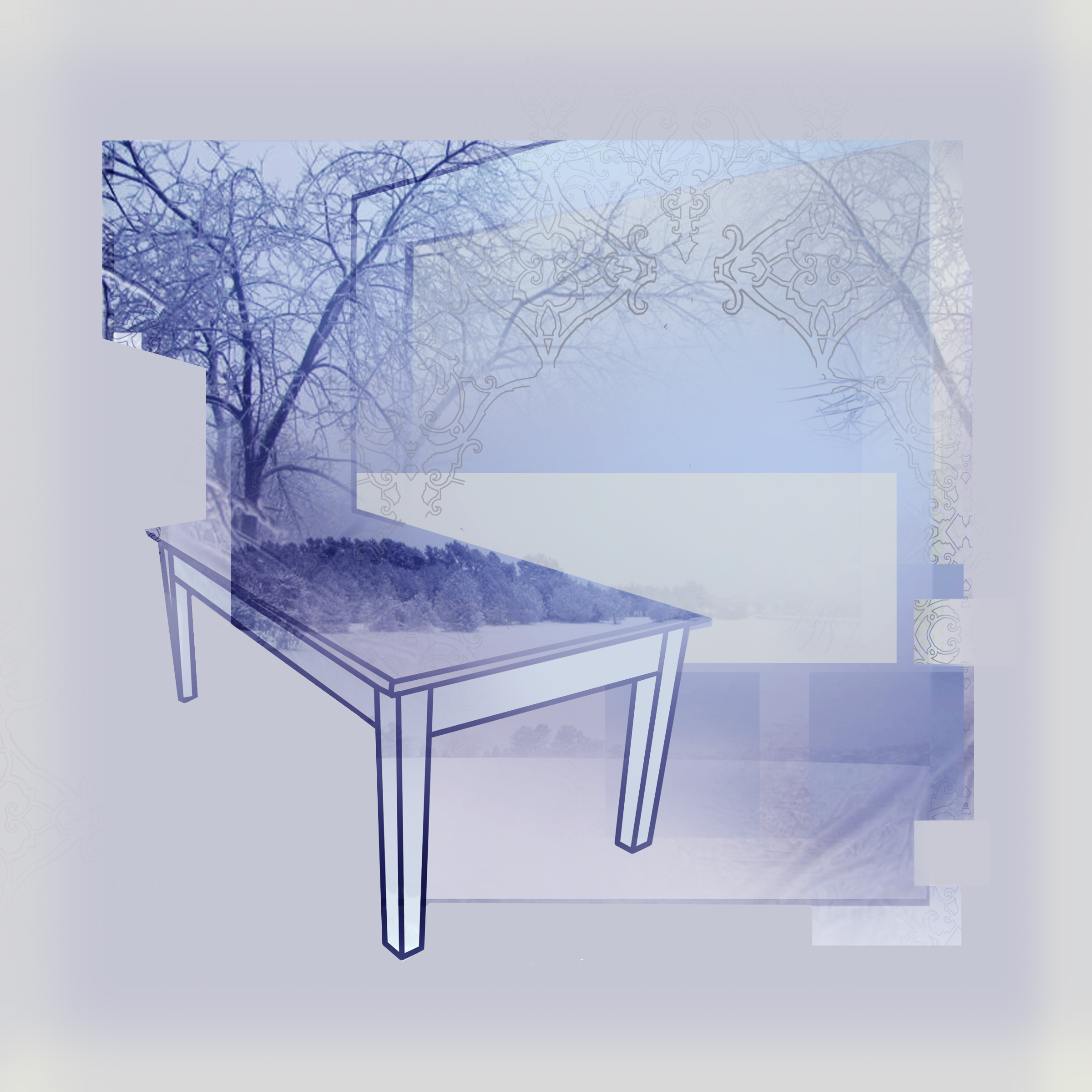
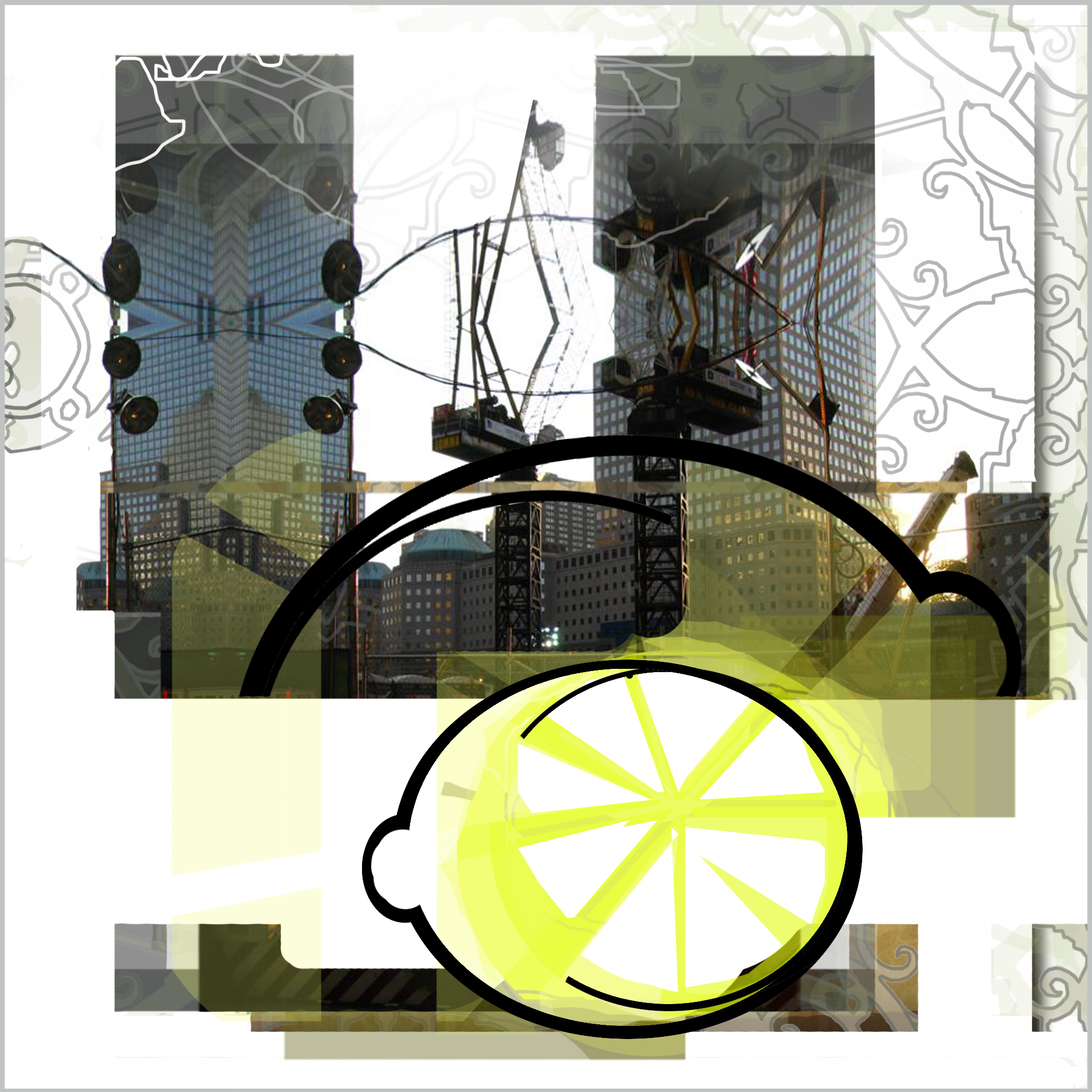
But beyond that– I love what he did with the ornate pattern overlay in all the illustrations.  It reinforces the flatness of the picture but also gives us a sense of layering.  The way stories are layered.  As for the one he did for my story, I just hand it to him for tackling the subject matter head on.  The World Trade Center can be such a visual cliche, and he managed to avoid that trap, by making the “towers” into abstract stripes running through the picture.  The yellow sunburst is like an explosion but also a lemon.  And there’s a haze to the picture that conveys a mood.


MA: Yes, a sunburst and a lemon. Brilliant.

And here comes my old standby question. What does “recovery” mean to you?

AE: I love the 12-step notion of acceptance, where you have to work to recognize your own part in the drama. There’s a loss of innocence that happens when you look at the way things really are. It’s heartbreaking. It’s angering. Sometimes you break your own heart. Sometimes fate does the job. You have to figure out what to do with the heartbreak and anger. But the recovery piece of it involves the cultivation of a new kind of innocence. Being open to the possibility of beauty or humor or warmth, in the midst of learning to accept the unacceptable about yourself and the world.

It takes practice, to be open and base that openness on reality, not delusion. That’s what I mean by innocence. There’s the innocence you’re born with, but also the innocence you learn. The first one is dangerous. The second one is not.

This might be one reason I’m so drawn to realism in fiction. Emotional realism, I mean, not necessarily literal realism. Taking a hard look, losing and finding innocence, changing one’s judgments–reading and writing fiction facilitates all these endeavors.


MA: Wonderful. Thanks so much for talking with me today, Anne. I just knew it would be a fascinating conversation. And if you get that video digitized, I promise to link to it here. 🙂

Interview with Morgan Maurer

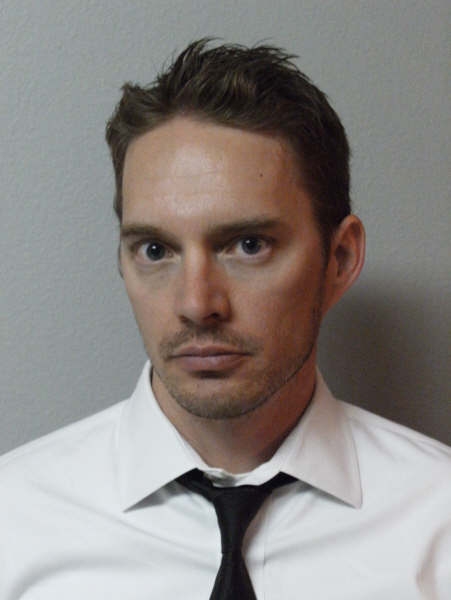
Morgan Maurer


Mary Akers: Today I’m speaking with our guest illustrator, Morgan Maurer.


Thank you for agreeing to be interviewed, Morgan. We are so honored to have your fine work illustrating the April issue of r.kv.r.y.. In particular, I know some of the authors were really moved by your work. (Check out Dennis Mahagin’s interview, in which he refers to you as a genius.) Were you surprised at the intensity of the reactions? What was your favorite reaction?

Morgan Maurer: I have to say that the successes I had visually rest primarily on the shoulders of each author. As a piece of writing would progress the imagery would pop out and just hang there for me to grasp. So much of my personal process comes from a place of emptiness that with so much information available I was the best kind of overwhelmed as I created these pieces. In that light, I feel a little sheepish for such high praise.

Anne Elliott’s response was an important one for me because, as she pointed out, the potency of that day is and will always be so raw. What grabbed me in “The Lemon Method” was what I perceived as a battle between spectacle and intimacy when a loss is shared by so many people. As the author she also never said “9/11” explicitly so I was nervous that such a seemingly literal translation might not have been well-received. But it was important for me to build that unforgettable dual silhouette, and to do it out of the empty space and surrounding buildings and cranes at Ground Zero itself, because I cannot help but go through that very act of reconstruction every time I think about those events.


The Lemon Method

MA: Along those same lines, do you think that people find meaning in art that they want or need to find? When you have not consciously put those associations in there, how does it make you feel to be interpreted in a different way than you intended?

MM: That question gets to the heart of what excites me about creativity and perception. I always enjoy hearing what people have to say when they see my work because I think that a strong response to a work of art is very similar to the scientific definition of resonance. The lives that we have all lived and the experiences we have accrued directly affect what we seek out to enjoy and how we interpret what we see. In a single choice one makes, from what type of music to hear or film to watch, the hierarchy of filters it has sifted through is quite impressive. Equally impressive is our ability to superimpose ourselves into the things we are perceiving, like books or paintings. So in a way we are constantly making comparisons to ourselves with the things around us and finding how our wavelengths interact. The associations some people have made in my work to aspects of their lives or to things they have seen have been so interesting, and at times so elaborately personal that their descriptions were honestly better than the work.

MA: Brilliant. You expressed that so well I want to write it down and frame it. It sounds like you see art as a conversation. (I do!) It definitely takes two to be fulfilled–the creator AND the viewer. Do you feel like you are engaging in a dialogue with the world when you create?

MM: Mmmm, I will answer that one on two fronts: first I feel deeply attached to the tradition of Painting. I love how a universal and simple human impulse to make marks or create illusions on a surface has over time manifested itself into a rather awesome history of intellectual pursuit. It is pure pleasure sifting through that stuff and then throwing up my own ideas or revisions. In that aspect, painting is very much like a dialogue with other painters, both friends and peers as well as painters from history.

Second, I also definitely maintain a conversation with the viewer. However, it is a far more adversarial back-and-forth than any I have ever really had, so I guess it is more accurate to say that it is like being in a critique with someone who sure did their homework before class. That voice forces me to try and get things ‘just right’ so I am glad it is hard on me.


MA: What do you think about art as a form of immortality? Does that concept have anything to do with your desire to create? And if not a desire for conversation or a stab at immortality, why do you think we create art?

MM: I strongly agree with the idea that art is a form of immortality. Unless I made a grave miscalculation somewhere at least one of my pieces will outlive me and I have always regarded that as pretty cool. Further–and getting back to the idea of tradition–to stand in front of a Sculpture or within an well-composed building is to feel participation: a personal immortality attained through the appreciation of our combined efforts. But I think we create art not only for personal recognition and perhaps fame everlasting, but for many people it is mostly about communication. Observing the overlapping and conflicting forces in one’s life and finding an interesting way to express it to others.


MA: Did you have a favorite piece of written work in this issue? Did one of your illustrations emerge as a favorite? Were these one and the same?

MM: Oh gosh, they are all inspiring, but “In The Basement” by Stephanie Freele is the most notable piece for me. It is the farthest from my personal context and still the one I responded to most completely. It was hard for me to read and I really felt the pain that was being expressed. That fact alone didn’t surprise me so much as its intensity. I had to confront the hard issues raised by this piece in order to compose an illustration, and trying to figure out the whats and the whys in visual terms was difficult. How do I, as a young man, give proper visualization to these words? It was a bit of a struggle and it pushed me to ask questions I would not normally find cause to ask.


MA: I loved that piece of Stefanie’s, too. And speaking of visualizing work, I’ve recently been struggling with bringing to life something that is very clear in my head, but that I can’t seem to get onto the page. Do you also have that problem of the work not achieving the vision? In your experience, do the most exciting and inspiring ideas always translate into the best completed work?

MM: The worst is when the vision that was so elegant and incredible last night dries up into a stale cracker the moment you see it the next morning. No, I often do just jump right onto a panel with an idea and try to work it out as I go. Usually it all works out. Sometimes it results in some sandpaper and a new start. Sketching and doing studies are a great way to transition an idea into a project and to maintain the initial inspiration. But even then, damn isn’t it horrible when you realize you may need to jump ship? But even the failures are lessons: even bad color combinations and improper proportions help to inform the next idea.


MA: For me, making art is like serially monogamy. I have to “move on” and forget the earlier project in order to fall in love with the current project and give it my all. Do you find this true in your own work?

MM: …And I get a little hurt when my current work isn’t everyone else’s favorite either. I fall in love with all of my leading ladies.


MA: Ha, definitely. And finally, the really big question: Is a piece of art ever finished?

MM: 99% of the time that answer is an unequivocal yes. I am a harsh self-critic as I have said, and there is nearly always a moment where the !DING! is heard. But I never want to see that other 1% ever again. Those paintings started out hard and wrestled with me the whole time until we came to an exhausted truce. Good riddance.


MA: Wow. This has been an excellent and enlightening conversation, Morgan. Thank you so much for participating. I feel like we should head to a pub somewhere now, to finish the discussion–and invite everyone to join us.


MM: Thank you for inviting me to be a guest illustrator, Mary. Also, a hearty thanks to each writer for their contributions as well. The project was both challenging and very fun!

Interview with Kevin Jones

Mary Akers: Hi, Kevin. Thanks for participating. First let me say that I loved your essay “The Pugilist” and it struck me as I read that you began it in the first-person present tense, then shifted into past tense and even used the future tense in some spots. I think this speaks to the slipperiness of memories and it helps to give a feeling of immediacy to the essay. How often you write about experiences from your childhood? Do you often employ several tenses to tell a story? Can you say a little something about the tenses and how you used them here?

Kevin Jones: I often use past experiences as a template for my fiction, as many writers do, but this is the first essay I’ve directly written about an incident from my childhood. I used to think of things that happened to me as “typical” but, as the distance between those events and the present grows (a fancy way of saying “as I get older”), I find that people are often drawn to their commonalities. It lets people say “Hey, that happened to me, too” and I think that resonance can be a powerful thing.

I like to experiment with tense. When I discovered first-person present tense a few years ago, it was a revelation because it made events more immediate than the traditional past tense. Recently, however, it seems that present tense has been overdone, and I’ve found that editors and potential publishers don’t like it. First person present, especially, gets increasingly labeled as the “MFA workshop” tense, with all that that entails, good and bad. That said, I think writers have to write the way they do. In other words, trying to write in a way that you hope will get you published, instead of using your own, authentic voice, is a terrible idea, and doesn’t produce honest work. I like future tense when it’s appropriate, and think it can be a great tool for taking the reader into the future. When I first read Denis Johnson’s “Emergency” from Jesus’ Son, I was struck by not only the unreliability of his narrator, but the way he shifted tense in such a fluid manner. It made me realize that you don’t have to be stuck in a particular moment in time when you’re telling a story, and I found that very freeing. The tense shifts here let the reader be in the moment with the protagonist as he recovers from the fight, then flashback to the fight that happened only moments earlier, then further back into how this bully has been an ongoing problem, and the ultimate ineffectualness of parents in situations like this, back to the “present” and then, finally, with a future tense that makes the reader realize that somewhere this kid is looking back from the future, remembering how naïve he was back then, and hinting at some sort of future military service. In some ways, I think that all boys are training to become soldiers, whether they realize it or not.

MA: Yes, perhaps. I imagine there is something simultaneously freeing and constraining about signing over your life to become part of a unit, a greater whole. One of the reasons your essay spoke to me is because it’s very timely, with the recent spate of bullying and the sad consequences that often result from that. I know you are a parent yourself. What advice have you or do you plan to someday give your children about bullying? Would you use your own experience as a guide?

KJ: All of my children are girls (I have three), so bullying takes a different form for them. In most cases, girls bully psychologically, rather than physically, and this is better and worse. For most boys, and certainly in my case, the bullying ends with physical confrontation. That is, boys get into a fight, and then the issue is over. Obviously this isn’t always the case, and I’m not for a moment trying to minimize the effect of being bullied, but some of the more extreme cases of bullying lately tend to be psychological, sometimes to the point of the victim attempting or committing suicide. What I’ve tried to do is raise strong, intelligent girls who understand how smart and important they are; self-esteem is a powerful tool against bullying.


MA: Yes. Self-esteem is a powerful tool for many of life’s problems. Your daughters are fortunate that you have taught them to value themselves.

I especially enjoyed the way you invoke the “rules” of childhood in this piece. In particular, I’m thinking of this passage: “I had stood up to Marco, and now, in my seventh grade logic, he would see that I wasn’t going to take it anymore and leave me alone. He wouldn’t have any choice; bullies don’t pick on kids who stand up for themselves. This was the irrefutable law of every television After School Special.” I love that. I guess I don’t really have a question, but would you like to comment on the rules of childhood?

KJ: The “rules” are things we all absorb as kids, whether through books, television, movies, parents, friends, or anywhere else. Some of these stick with us into adulthood, like “Never rat on your friends” or “Don’t tell the teacher” (or boss). Much of our childhoods are lived out in groups (sports teams, classrooms, schools), and groups have rules and social conventions. One of the challenges of leaving childhood and becoming an adult is to stop labeling people (you’re a jock/stoner/goth/hippie/prep) and learning to look at people as individuals. Of course, not everyone does this, and some just change the labels (you’re a liberal/conservative/Southerner/hippie).


MA: I am? Why yes, I am, actually. All of those things. 🙂

I also had the pleasure of reading your excellent story “Samsara” in the anthology Home of the Brave when it first came out. I loved it. I’m a big fan of second person, but I know a lot of readers and fellow writers don’t care for it. What made you decide to use second person in that story and what do you think the advantages of that point of view are?

KJ: -I used second person in that story because I liked what it did for the narrative. Second person is great for unreliable narrators (in the case of “Samsara” the protagonist is on drugs for almost the entire story) and the present tense propelled the reader along headfirst into the story. I’ve actually written several stories in second person (I’m as guilty as any writer of taking a storytelling method and beating it to death), but I’ve found, like you, that many (if not all) editors/publishers/agents can’t stand it. That doesn’t mean I don’t write any more second person stories, but I try to make sure that the POV fits the story, not just because it’s fun to write.


MA: And finally, what does “recovery” mean to you?

KJ: Recovery means that we can overcome what has happened to us before: we are not prisoners of our past.


MA: Excellent. Thanks so much for speaking with me today, Kevin. I really appreciate it.

Interview with Virginia Williams


Joan Hanna: We were so happy to have “Ashes” as part of our April issue. This was an intensely personal story about your son, Ben, who was stillborn. Can you share with our readers how you deal with the emotions that rise up when writing about highly personal and emotional experiences?

Virginia Williams: Writing the story of Ben’s life and death has happened in many different forms for me; a few weeks after his death, dear friends of mine, part of a mother’s group I belonged to, gave me a journal in which they had written brief notes of love and sorrow for our loss. They expressed the hope that I could write in that journal as a way to begin my own healing process. It took me perhaps another month after that to begin writing, and many of my entries were in the form of letters to Ben.

Those entries gave me the space to put into words some of the worst things I was feeling: the anger, the pain, the incomprehensibility of it all. On days when I felt too numb to cry, I could simply write, “How can I feel so numb?” and not worry about if the feelings made sense to anyone who might ask me how I was doing. Writing the essay “Ashes,” however, took me many more years to even begin. Once I began writing it, along with a full-length memoir manuscript about Ben’s death, I’d been through the worst of the emotions and overcome the disbelief of his loss, but many times the grief returned as I wrote.

Learning to keep writing anyway, despite the sorrow, was a constant balancing act. If things started to hurt too much, I pulled back and focused on something else, perhaps
jotting down a scene or a memory that wasn’t as intense but still relevant to the story. But because I was reliving the memories and the pain, I had to take my time with the writing so it wouldn’t overwhelm me.


JH: Journaling is a theme that so many writers share when dealing with emotionally charged issues and blogs seem to be another way to open a dialogue. I visited your blog, In The Land of Broken Hearts, which deals with these same issues but on a much larger scale. Can you give us a glimpse of what our readers can find there and how you have used your blog to help others going through similar experiences?

VW: I started blogging so that other parents like me could find some of the “truth” about life after losing a child to stillbirth. When Ben died, I wanted true-to-life accounts of living after loss and had difficulty finding any that were very satisfying. There were books with studies and statistics, but few accounts to tell me if it was possible to survive a loss that devastated everything my husband and I felt and believed about our lives.

I write my blog posts with what I hope is a perspective on what was—that is, the early days of loss and how I felt—as well as with a perspective from my current life. I want my readers to know that it still hurts, even seven years on, but it’s different. It’s not as painful, it doesn’t hurt every day. I want my readers to see what I needed to see seven years ago, that life without your child can still be worth living. It’s incredibly hard to recover from losing a child, but it is survivable. I hope that anyone reading my blog who has lost a child will see reflected some of what they are experiencing and know that they aren’t losing their minds—which is something I felt almost daily in the year after Ben’s death. Grief does strange things to one’s thoughts and I would often find myself thinking something extraordinarily untrue and, in my mind, perhaps even bordering on crazy. I want parents to know that those wild thoughts are normal and that there are others of us right there with them.

I’ve received such validation and understanding from my readers about what I write. I can put up a post saying that sometimes I need a safe space to say “I miss you” to my son without anyone thinking that I am dwelling in my loss or holding on to Ben too hard. And stillbirth parents get that and are right there with me. There’s great relief found in the companionship of loss.

JH: Aside from the personal validation in sharing your own story, you share many helpful and interesting links and information on your blog. Can you also share other resources or groups available for anyone who may need additional help or information?

VW: The book They Were Still Born: Personal Stories about Stillbirth (Rowman & Littlefield, November 2010) is a wonderful resource for families (full disclosure: I wrote the first chapter, “What No One Tells You”). There are chapters written by mothers, fathers, and even a grandparent, along with a very helpful resource section. There are a multitude of online resources, but to start learning more about stillbirth and gain immediate, professional support, I like Share Pregnancy and Infant Loss Support and First Candle. Both sites provide helpful information and support and are a terrific starting point.

I also recommend the blog Glow in the Woods. A group of bereaved parents runs this site, and every post is an essay on some aspect of loss. The writing is exceptional and the writers, and readers, share every facet of loving and losing and finding your way back to life. It’s a powerful place.


JH: It’s a lovely thing that you are reaching out to so many people that might not know about these resources. But on a more personal note, deeply emotional experiences have a tendency to change us as women and as writers. The death of your son, Ben, has obviously had an effect on how you approach your writing. Can you explain how this has changed you as a writer?

VW: I find that I’m very direct these days. My writing has always been on the spare side—I’ve never believed in using more when less would do (there are, of course, always exceptions!). I’m far more honest with what I’m trying to express and much more careful in considering how best to approach a piece of writing. I’ve become a better writer through trying to get to the truth about loss. It’s not something I’d thought about before Ben died, but since his death I’ve realized how unwilling we are, as a society, to talk about death and I really believe it’s important to start the conversation, as uncomfortable as that might be. With my writing, I hope to help people begin to talk truthfully about grief by lessening some of the fear attached to sorrow.


JH: This is a wonderful realization–that we can find the strength to talk about our grief by lessening the fear attached to sorrow. I think this begins to speak about finding
the way to recovery. We thank you so much for sharing this highly personal story. Just one final question, can you share with us what recovery means to you?

VW: Thank you for the opportunity–you saved the hardest question for last! Recovery, for me, means incorporating Ben’s death into my life, which sounds like such an easy answer, when really it took years of working through the sorrow and anger I was left with after he died. Someone told me, early on, that one day the fact of my son’s death would be much the same as the fact that I have blue eyes, and she was right. Losing my son is part of who I am now and his loss is reflected in how I approach the world. It’s an invisible scar I’m always aware of, but no longer an open wound.

If I’ve learned anything, it’s that I needn’t be afraid of grieving my son; he is still a part of me and I miss him every day. I’ve learned that grief has no fixed end point; it ebbs and flows like the tide. When I was able to accept that flow of grief in my life, I was able to feel as “recovered” as I will ever be.

An Interview with Donna Hunt


Donna Hunt’s prose poem Winter appears in the April 2011 issue.

Joan Albarella: I see from your bio that your MFA is from Queens University of Charlotte. I am assuming that since you are originally from up north and spent time down south, that place plays an important part in your poetry. Have your migrations affected your writing?

Donna Hunt: I’ve moved 5 times in the past 7 years, and I’m someone who wants to put down roots—so I tend to soak up as much as I can from every place I live.  I think the idea of place is important in each of my poems, and I think the idea of home is something that I’m obsessed with personally, and therefore invades my poetry often.

The contrast of growing up in a northern industrial city and then moving to a small town in the south (I lived in Virginia while completing my MFA), was shocking.  The sense of being alien in my own country definitely permeates my poems from that time—of which “Winter,” and most of the poems in my chapbook The Coastline of Antarctica, are a part. My feelings of isolation, and feeling like the “other” for the first time were definite themes in my head, and therefore, became the themes of my poems.

And I’m definitely interested in what makes places different from other places, especially as most cities in America become more homogenized, and we can find a McDonald’s and a Wal-mart everywhere.  We have to look closely, and notice architecture, or types of birds, or how dogwoods blossom differently in Martinsville, Virginia than they do in Cleveland, Ohio.  But of course, most of the differences are in the people.  How we interact, how we respond, and then all the things we have in common despite everything.

JA: Your piece, Winter, seems to take the form of a poetic prose piece but your poem Water Everywhere: A Song for Cleveland in Eight Parts is written in a more traditional style. Which style do you prefer? Does the particular topic or inspiration seem to dictate the form? Which leads me to ask, “Do you direct your poem or does it direct you?”

DH: I do consider “Winter” to be a prose poem, and “Water, Everywhere” more lyric narrative.  Meanwhile, a poem like “The Coastline of Antarctica” is different from either of those.  The thing I’m always trying to achieve in my poems is to capture what happens in the mind on the page, so form and style are dictated by that, really.  Which is to say, I think, that it is the mind that dictates the poem that dictates the style.

The poems I like best are the ones that I feel do that most accurately: poems that mimic the activity in the brain.  I really feel that “Winter” captures the feeling of someone struggling with that Vitamin D deficiency in late winter while also recovering from some emotional trauma.  I’ve had quite a few people tell me how they relate to that poem, or how they’ve had days like that, and while I already felt it was successful on the page, it’s always great to hear feedback like that.


JA: What led you to write poetry?

DH: I was a super-reader as a kid.  I once read more books than anyone else in the district and got to be part of a dinner with former Cleveland Browns player Doug Dieken—and I started making books for people when I was 6.  Some of them were covered in honey.  My favorite books were about kids who wanted to be writers (Anne of Green Gables, Little House on the Prairie), and that helped me consider myself one, too.

I believe that poetry tries to capture the unsayable, and I’m fascinated by unsayable things (complex emotions, subtle turning points, ideas of faith, undefined scientific concepts), and I struggle to express unsayable things every day… so poetry seems the natural outlet for that.

I also think that poetry captures moments, versus fiction, which engages the reader over time, through a conflict and some sort of change, generally speaking.  To me, life is a series of moments, as opposed to a constantly developing arc.  Recently, I’ve started thinking that maybe that’s just especially true of my life—the plotline may not be interesting, but, I have had some exceptional moments.  Like riding the greyhound bus with a mariachi band, or waking up with a moose outside my tent (and living to tell the tale).


JA: Are you working on any new writing projects?

DH: Always.  I tend to work on large projects.  I just finished (I think), a long sequence based on string theory (Dimension 2), and I’ve been working on a sonnet sequence from Ophelia’s point of view, paired with a possible modernization of Hamlet—also from Ophelia’s point of view.  I’m also writing a group of poems based on my relationship with my mother, and how it colors and clouds how I perceive things and respond to the world.


JA: Wonderful, Donna. Thanks so much for speaking with us today.

Featuring Sarah Wells

Sarah Wells (Daylily) is our featured poet this week. She is very close to delivering her third child, and with “nesting” in high gear, we are doing a feature, rather than an interview. Good luck, Sarah!

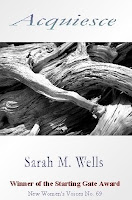
Sarah is the author of the beautiful poetry chapbook, Acquiesce, which won the 2008 Starting Gate Award from Finishing Line Press (March 2009).

Her work is influenced primarily by faith, by family, and by nature. She was raised in Auburn Township, Ohio, surrounded by familial cornfields. Her poetry has appeared or is forthcoming in Poetry East, Measure, Literary Mama, Nimrod, Christianity & Literature, Poetry for the Masses, Rock & Sling, JAMA, Ascent, The New Formalist, and elsewhere. She has received scholarships to attend the Key West Literary Seminar and the West Chester Poetry Conference.

Daylily

Sarah is the Administrative Director of the low-residency MFA Program at Ashland University, where she also serves as Managing Editor for both the Ashland Poetry Press and River Teeth: A Journal of Nonfiction Narrative.  She lives in Ashland, Ohio with her husband, Brandon, and their three young children, Lydia, Elvis, and the “bun in the oven,” Henry. For more about Sarah, and a chance to read some of the fine work she has been writing during National Poetry Month, visit her blog at: http://driftwoodtumble.blogspot.com.

You can also listen to an excellent radio interview with Sarah here.

And watch a video of her reading at Ashland University here.

Enjoy!

An Interview with Mindela Ruby

Mary Akers: I love your Shorts On Survival piece “Hopeless in St. Henry of Uppsala.” The title alone makes me want to read it. Titles are so important and something I struggle with. How do you find titles for the pieces you write (do they come first? after? in the middle of writing?) and do you enjoy the search?

Mindela Ruby: Thanks for the kind words about the piece and its title. Titles come to me late in the drafting process and not especially easily. I usually get a project going with a place holder title until a catchier alternative occurs to me. This story started out titled “Hopeless.” It takes place in the community room of a church that I rather blandly identified in early versions as St. Peter’s. Eventually I researched lesser known saints and changed the church name to St. Henry of Uppsala. To answer your question about the search, I enjoy discovering a phrase lurking in one of my paragraphs that I can copy to the title space and with luck capture the essence of the piece—or at least someone’s notice.


MA: The narrative voice you employ in “Hopeless” is wonderful. She’s got a tough veneer, this young woman, but I think there’s something softer inside. Makes me think of Abby on NCIS. How does that sit with you? (Me likening your character to a TV character?) It’s okay if it bugs you. I’m interested in exploring how authors are able to or unable to “let go” once they create a character who becomes real to the reader.

MR: Yes, you totally get the personality of my protagonist. Characters who put up a protective shield of bravado to hide vulnerability and need tend to appeal to me. They don’t do a great job of hiding their tender core, and those chinks in the armor can be telling and endearing.

Much as I’d love to agree that the voice in my story is reminiscent of Abby from NCIS, I have never seen that show, despite being addicted to TV. It doesn’t bug me to have my protagonist likened to a TV character. In fact, my piece in r.kv.r.y. comes from my novel, in which the main character’s TV viewing favorites get documented—akin to Facebook TV preferences, though my novel’s time frame predates Facebook by a few years. If this personality I’ve conjured comes off as real enough to warrant comparisons to memorable characters from any of the arts, that’s satisfying and worth letting go for.


MA: I also enjoy the inventive wordplay in your piece: “At chicken o’clock” and “For gratifactual distraction” and “this flounderous fish tale” are just a few examples. Does this sort of wordplay come naturally to you? Or is it something you worked on specifically for this character?

MR: Language intrigues me, and the narrator in this piece allows me to indulge in delicious verbal waggery. A friend pointed out that my technique here is similar to skaz, a traditional Russian narrative style that captures a slangy oral idiom in fiction. Street lingo, neologisms, buzz terms, foreign words and other vernacular and metaphoric diction work their way into Boop’s voice. Does this come naturally to me, the writer? Yes and no. Some of the wordplay is spontaneous inspiration, some the result of slang research, and much wrought from the sheer labor of painstaking layering of appropriate “bon mots” and excising of what doesn’t sound true. Someone at a writers conference pegged Boop as a person whose linguistic inventiveness is entertainment and solace for her. The voice in her head keeps her company when she’s lonely or alienated. In this way, she’s a lot like a writer.


MA: I understand you were a punk rock deejay in another life. How does that affect and inform your writing?

MR: Punk plays a big role in the subject matter of my novel. The protagonist manages a garage girl band, and punk clubs and practice spaces form part of the backdrop. Punk’s anti-mainstream ethic and unintimidated ballsiness are reflected in the style and tone.  Chapters (and stories I’ve excerpted for journal publication) are short and gutsy, like punk songs, and my goal was to not shy from taboos. Also, there’s a theatricality and gamboling-jester quality to the punk music scene that I wanted to capture. Other stories I’ve composed are not so obviously tied to a punk sensibility, yet my core rebelliousness, that I partially trace back to The Misfits, Sex Pistols, Minor Threat, etc., always manages to come sneaking, willy nilly, into my writing.


MA: Your bio says you have a completed novel. Would you like to say a little something about that? Do you have a 30-second “elevator pitch” for it?

MR: Well, I’ve already expounded quite a bit about the novel, which is titled Mosh. I’m in the process of shopping it now. Here’s a short pitch: It’s 1999, and Boop, self-professed “love junkie” and punk “riot grrrl,” grudgingly admits her dangerous sexcapade-fueled lifestyle is, like the millennium, fading fast. With the help of the most unlikely friends, she escapes the throes of addiction and reclaims her soul.


MA: And finally, what does “recovery” mean to you?

MR: Recovery is clawing your way back from disorder to equilibrium. Gosh, put this way, it sounds like physics. As every fan of your literary journal knows, recovery really means something much more emotionally fraught.

An Interview with Dora Malech

Joan Hanna: I so enjoyed both poetry selections, “God Bless Our Mess” and “Cold Weather” in our current issue of r.kv.r.y. “Cold Weather” was more of a prose poem while “GodBless this Mess” used a more traditional poetic line break. Can you tell us a little about how you choose form in your poetry?

Dora Malech:
I’m glad that you liked those poems. I suppose the short answer is that the form chooses the poem. The longer answer is as follows: when I think about “form” and “content” in my poetry and in the poetry that means the most to me as a reader and writer, I can’t help but put quotation marks around those terms because (and I’m certainly not the first nor the last to take this approach) I find it most fruitful to think of them as inseparable, symbiotic elements that create the thing we call the poem. I think that whatever anxieties, confusions, obsessions, and so forth necessitate a poem in the first place also necessitate its formal shape and movements. I like to think of form as a poem’s vital structure, its very body, not the outfit it wears, a decorative afterthought. As such, there’s a lot of give and take between what the poem “is” in my mind and what it “does” on the page and in my mouth and ears and heart throughout my writing process.

There’s a wonderful essay by the poet Kathleen Jamie (“Holding Fast – Truth and Change in Poetry”) in which she talks about the shape-shifting that happens as a poet looks and listens and attempts to let the poem find its “true” form. I love that writing a poem feels like a conversation with the poem itself. With a bit of distance from the poem “Cold Weather,” I can say that perhaps the prose form works for “Cold Weather” because the poem’s materials are so strange and dream-like that a more “out there” form might spiral the poem into a kind of three-ring circus, and perhaps the couplets and long lines of “God Bless Our Mess” reinforce the sense of a routine in which one moves forward but gets nowhere. These comments are, however, as much the comments of a reader as “the writer,” since in the act of writing the poem I move more intuitively. I suppose it’s like dancing or a sport; you learn the moves and practice the moves so that they can be a kind of second nature when you need them.


JH: One of the techniques that really jumps out in your poetry is a delightful use of wordplay. Can you share with us a little about how these word and image connections
make their way into your poetry?

DM: My poems often “accumulate” in my notebook as a jumble of observations, linguistic fragments, and so forth. As the poem starts to find an intuitive kind of shape, those pieces begin to cohere, and the cohesion is initially as much about “senses” (feeling and hearing) as about “sense” (enforcing a meaning). I think that this element of play frees my critical mind somewhat; without it, I would probably browbeat myself out of the poem before it even had a chance to get going. Once a poem gets going, however, it’s really important to me to put pressure on it and make sure that the play isn’t “just” play. I do worry that my own love of language and sound will carry me away, and I’ll end up with a poem that’s falling-down-drunk and can’t form a coherent thought. I think this is why that “sober” revision process is important to me. I kind of have to write on instinct and then step back and let my conscious and critical mind have a go at the poem and then perhaps re-immerse myself. And so on.

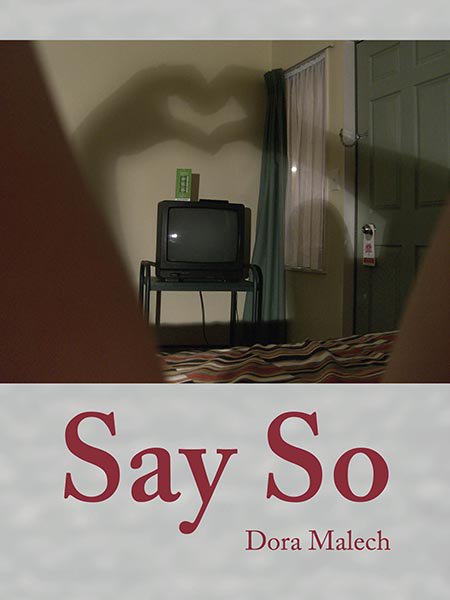
JH: I was so excited to review your poetry collection, Say So published by Cleveland State University Poetry Center, for our current issue. Can you tell us how this book came together? And along a similar line, can you tell us how this differed from your first collection, Shore Ordered Ocean, published by Waywiser Press in 2009?

DM: Your review was an honor. Thank you. Say So and my first collection, Shore Ordered Ocean, are kind of like fraternal twins, in the sense that they’re books with quite different personalities and interests that gestated together. I kept trying to work poems from Say So into earlier drafts of Shore Ordered Ocean, but they wouldn’t play well with the Shore Ordered Ocean poems. They felt more irreverent and playful, more fidgety and wild. At a certain point, I realized I was writing two books. Shore Ordered Ocean was more outward-looking, concerned more with politics and distance of all kinds, whereas Say So was more inward-looking, concerned with language, the mind, the heart, the body, origins, and relationships. These differing thematic concerns naturally manifested in different formal concerns as well. Say So is pretty obsessed with form and a relationship with “the tradition,” but it’s also obsessed with axiom and cliché, the kind of “pre-packaged” language with which we’re bombarded daily. These two push up against each other in Say So, the friction sparking.


JH: Thank you so much for sharing your poetry and giving us a chance to review your book for our readers. Can you share with us what recovery means to you?

DM: I know that my definition of or relationship with any word, let alone a word as packed with cultural significance as “recovery,” will change as my life changes. It will probably change from day to day, even. At this point in history, I hear the word and immediately think of the “economic recovery” we’re in, and the irony of how this “recovery” seems to be shifting into a willful forgetting of lessons learned. It makes the word start to come loose in my mind, as if perhaps this vicious cycle is hidden in plain view in the word itself, contradicting itself: as we “recover” (get better) we “re-cover,” (cover over whatever truths on which we shone some light along the way). Perhaps this is part of why one must call oneself a “recovering” addict, not “recovered.” We must never have the blind hubris to display the “Mission Accomplished” banner on the deck of the aircraft carrier, so to speak. I suppose we are always doing, never done.

To learn more about Dora Malech and her exquisite poetry, visit the following links:

An excellent video of Dora reading at Prarie Lights.

Purchase her book Say So.

Visit her website.

PBS Art Beat

And read a brand new poem here.