“Sometimes It’s That Simple” by April Ford

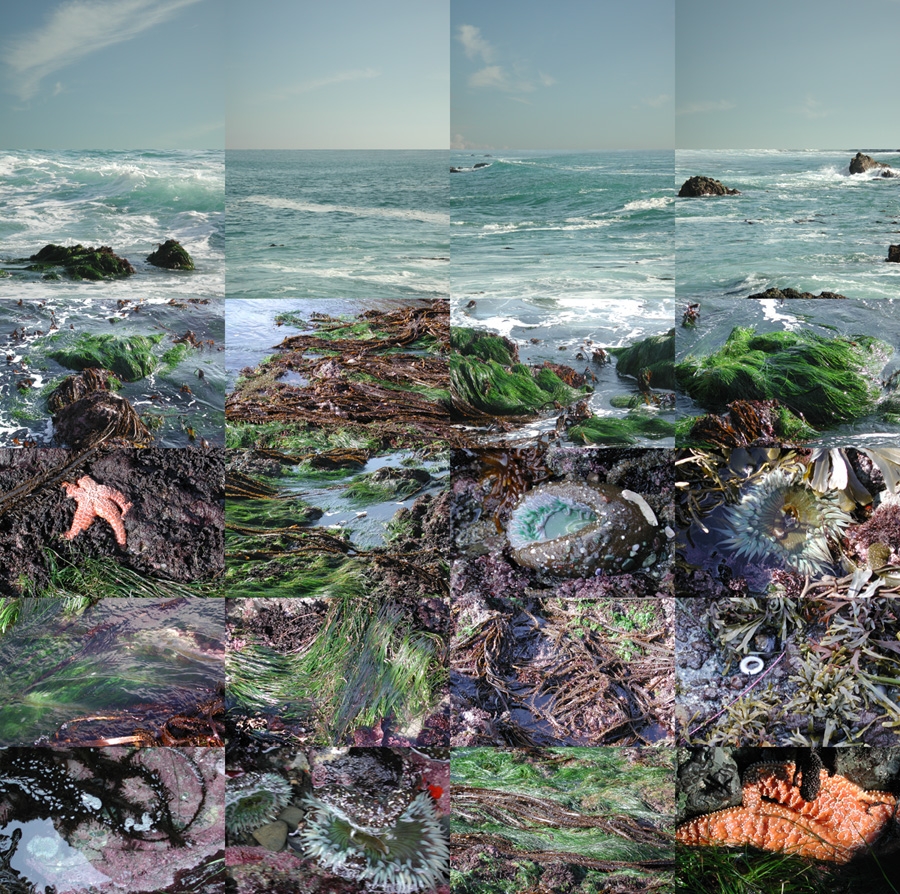
Pfeiffer Beach, California
North of Pfeiffer Beach, Big Sur, California, 2001 by Matthew Chase-Daniel

“Has your husband licked your anus recently?”

“Excuse me?” Olivia withdraws her feet from the stirrups and sits up. The paper sheet covering her from the abdomen down flutters to the floor and exposes any mystery about her Dr. Rattray might have speculated from his previously limited view.

“There’s a fungal growth irritating your hemorrhoids, a type of yeast commonly seen in oral thrush—that’s in the mouth.”

She can’t decide which is most devastating: the frankness with which this unfamiliar male doctor just asked an amazingly personal question, the way he blithely informed her she has hemorrhoids without telling her directly, or that his hand is still touching her backside, which is coated with lubricant and burning something awful. Deducing that matters can’t get worse, she presses her forearms against the examining table, politely lifts her rear off the doctor’s hand, and slides to the floor in immediate pursuit of her underwear and jeans.

Dr. Rattray goes to the sink to wash his hands and says he’ll return in a few minutes to review some details. Seeing she is safely away from public view, he opens the door to leave but then closes it and goes to the cabinet above the sink, where he retrieves a sanitary wipe and drying cloth.

“You might want to use these before you put everything back on,” he says, winking.

Olivia smiles from behind the protective covering of a chair; she can’t access her clothes without crossing to the other side of the room, and she’s exposed herself enough for one day. At work this morning when she confessed to her boss she had exaggerated on her CV about experience with social networking platforms, at lunch when her friend Molly asked why she hadn’t RSVP’d to the baby shower invitation yet, and now, the annual. If only she had waited until her regular doctor returned from vacation. No rush—although the burning and itching have become unbearable, to the point she can hardly sit through a movie at the cinema. Trenton, whose job if not life revolves around the cinema, has found this most worrying, explaining to Olivia how bad it looks when his own wife can’t sit through a screening of his film.

Yeah, well you see how it feels to have inflamed veins in your ass.

Nobody gets hemorrhoids at 34. That’s a disease for the middle-aged, and she has at least six more years to go. She’s entitled to those years and will not have some substitute doctor use words like “anus” on her. Olivia silently prepares a lecture while she dresses, but Doctor Rattray knocks on the door before she can come up with a civilized term for her anatomy.

“I apologize for the wait. Network’s all clogged up.”

“I’m sorry?”

“I phoned your prescription to the pharmacy. It will be ready tomorrow.”

“Prescription?”

Dr. Rattray holds his clipboard in the air and waves for her to sit with him at his desk. He plucks a pen from behind his ear and points it at her. “You, Mrs. Goodman, are to follow my orders for the next two weeks and then check in with your regular doctor.”

Who is this man Dr. Wein has allowed as a replacement? Olivia isn’t especially fond of Dr. Wein, but at least he never shocked her with information about her health or talked about it in such an offhand and vulgar way.

“What, exactly, is the problem, Dr. Rattray?”

As though he has been waiting all day for such a question, an opportunity not only to show off his knowledge of the medical world’s underbelly but also to showcase a hidden talent for exciting conversation, he claps his hands once and plunges into a monologue that passes right over Olivia.

“So it’s not your fault, Mrs. Goodman, and you will be able to resume all normal activities once it’s treated. In theory it has nothing to do with whether or not your husband licks your anus. But in practice, moisture makes yeast a very productive little fungus.” The doctor wags his index finger.

“Have you checked your husband for oral thrush? It’s quite easy to identify, usually a white patch on the top of the tongue that looks like hair—”

“Please, just tell me how to get rid of it. I’ll be happy to follow your instructions.”

“Get rid of it?”

“Yes, this…problem I seem to have developed.”

“Oh there’s no getting rid of hemorrhoids, Mrs. Goodman. They’re constricted veins that require treatment, sometimes even surgery, but I assure you they’re manageable. Did you know fifty-percent of people over the age of forty develop hemorrhoids?”

Olivia stares harder at the ground each time the doctor says the offensive word. It sounds like something German lovers might yell at each other during quarrels.

An hour after leaving the doctor’s office, she is stuck in traffic. According to the radio announcer, a five-car pile-up has narrowed the highway from three lanes to one. The occasional car zooms along the soft-shoulder only to encounter a roadblock of pylons up ahead, where a police officer gleefully tickets the deviant motorists and holds his hand up to assist them back into the nonexistent flow.

Summer traffic jams in Boston are unbearable; the normal level of driver aggression is amplified by the wasted time and dense humidity, and anybody who has been in this situation before knows to be on guard for cars to rev and force into the first available opening.

“Is it ever hot on this late July afternoon! If you haven’t gone to the new Toscanini’s in Cambridge yet, this is your chance. My personal favorite new flavor is Cherry Chocolate Chunk.  Think about that while you’re stuck in the throbbing heat for the next twenty minutes, and then meet me at Toscanini’s at seven pm and sign up to win a prize. That’s right, I said prize!”

Olivia leans forward in her seat and scoots her lower body back. Her legs are stiff and her rump is on fire. It’s really happening: Her body is beginning to malfunction. How utterly embarrassing. She doesn’t know if she can tell Trenton. But she has to. Apparently he might have oral thrush, although how she contracted that in her … it doesn’t make sense.

A car horn blares behind Olivia’s tree frog green hatchback and a gravelly Irish voice accuses her of holding everyone up. Sure enough, she has fallen four lengths behind the car in front.

A news helicopter circles overhead and Olivia wonders what the traffic jam looks like from an aerial perspective. Maybe it looks like a big swollen vein.

Trenton has set the dinner table and placed a single bird of paradise in a translucent red vase at the center. Small bowls of tapas fan out around the vase.

“You’re a darling for making diner,” she says, scooping a handful of tortilla chips before leaning toward Trenton for a kiss. She stops mid-lean, stuffs her mouth with chips, looks at the table again. “And my favorite wine, too!”

Trenton appears oblivious to the fact that his wife just dodged a kiss, and proceeds to explain the various tapas he spent the afternoon preparing.

“These little guys,” he says, pointing to thick finger-sized sausages marinated in a burgundy sauce, “are called ojales—or, buttonholes.”

“These,” he says, lifting a bowl of black olives in a cilantro paste, “are perdigones, or buckshots. Don’t they smell divine?”

He explains the other five dishes, but the whole time Olivia can focus on one thing only: his mouth. She’s never noticed until now that it barely moves when he speaks. In fact Trenton mumbles a lot of his words, streams them together and occasionally lisps. She remembers, vaguely, noticing the lisp when they met nine years go, but she was too polite to say anything so probably she’s just gotten used to it by now.

When his tongue finally does expose itself, Trenton covers it with the back of his hand to staunch a yawn. “Everything okay, Liv? Is the food grossing you out?”

Olivia sucks back her glass of wine. She needs courage to ask him about his oral thrush. “Do you—have you ever—did you know that….”

“What’s wrong? Tell me what’s wrong.” Trenton pushes the tapas aside and reaches across the table. “Sweetheart?”

She drops her head and stares at the tops of her thighs. “Just give me a minute.”

He stands and walks around to his wife. He hugs her against his stomach and rubs her shoulder blades. “Are you anxious about the screening tonight? You don’t have to come. I know it’s hard for you to stay awake after working all day.”

She whimpers into his stomach, his pleasantly soft yet flat stomach, and wonders if this will be the next thing on her to go. Maybe she’ll wake up tomorrow morning with a pouch that can’t be tucked behind the waist of her jeans no matter what she does. Or worse, a muffin top. She pats her stomach to check if this isn’t already the case.

Trenton pounces on the gesture. “You’re pregnant? Are you really? That’s wonderful news, Liv! Oh my God, I’m so happy I could—”

“I have hemorrhoids!”

When he releases her and steps back, she wonders if he’ll ever look at her the same again. Of all the vile things she’s ever said to her husband, this wins the blue ribbon.

She pours herself another glass of wine. “I’m sorry, I didn’t mean to yell. The doctor gave me a pamphlet, if you care to know more.”

A smile spreads across his face like a contagion—into his eyes, along the lines of his forehead, even the tips of his ears. He hugs Olivia to him once again and says, “Welcome to the club, darling.”

~

The next day Olivia leaves work early. After extensive research on the items Dr. Rattray prescribed for her, she has decided they are non-hazardous and easy to hide from Trenton. He must hide his products, after all, since she’s never seen any around the bathroom. Maybe he’s embarrassed, too. Her research has also taught her a coded vocabulary she can use with the pharmacist. Surely she isn’t the first person to fill a prescription of this nature, but she can’t risk exposing her horrifying secret.

After skillfully maneuvering her hatchback between two king cab pickup trucks with muddy off-road tires, she reaches into her purse for the CD she made during lunch break: A Free Guided Meditation for the Overburdened. She inserts the CD, presses “play,” and listens as a waterfall and gentle wind fill the car. This is kind of nice, she thinks.

A soothing male voice eventually fades in and encourages her to close her eyes and relax. “You are preparing for your spiritual enema,” the voice says.

She ejects the CD and snaps it in two.

The pharmacist tells her it will take ten minutes to prepare her order, so she walks up and down the store aisles in search of the non-prescription items she learned about online: witch hazel, fiber supplement, and stool softener. According to her research, these aides can help keep both her exterior and interior happy. She also visits the cosmetics section—her first time since adolescence, when wearing makeup had everything to do with fitting in and nothing to do with aesthetics. Other than a light sweep of clear lip-gloss, she presents herself to the world the way nature made her. And why shouldn’t she? Her skin is clear, her features are symmetrical, and she’s in her prime. Or was. She picks up a tester tube of Cover Girl lipstick and rubs the nub of dark pink onto her index finger. Next, she rubs her index finger across her lips and puckers them in front of the wall mirror. She moves down the aisle to the eye shadows and liners, then concealers, then blushes, and by the time she’s called to the prescription counter she looks like a mom whose little girl has played beauty shop on her.

The pharmacist smiles too generously as he rings up her purchases. “Tucks is on sale this week, if you’d prefer.”

“Tucks?”

“Generic witch hazel’s fine, but you’ll get more medicated pads for your money if you buy Tucks.”

She ignores the suggestion and promptly exchanges 20 dollars for her products.

Outside the store, she takes a moment to ensure she hasn’t left anything behind like her wallet or car keys. Two teenage boys lean against the brick exterior, smoking sloppily rolled cigarettes.  They are overdressed for such a blistering summer day, sweating yellow through their long soccer jerseys. With Olivia as their audience, they become animated and talk loudly at each other.  One of the boys produces a matchbook from his back pocket. He tears a match free and strikes it against the flint strip across the small square of cardboard, then holds up the lit match like he’s just performed a magic trick. The other boy sticks his thumb and index finger into his mouth and then presses his fingers around the flame. He grins at Olivia, but she is already halfway to her car.

Tonight she will ask Trenton to show her his tongue. As soon as he gets home, before he has removed his loafers, Olivia will know the secrets of his mouth. This is ridiculous! Why is she afraid to ask? They’ve shared so many things over the years, and he knows she now has hemorrhoids and a yeast infection. She just needs to take it one step further and alert him to the possibility he might have contributed to the second part of her ailment. Oral thrush can be caused by a variety of culprits—food-born bacteria, a tooth infection, aging—so this is a mystery to solve together.

Since Trenton isn’t due home for another hour, Olivia decides to familiarize herself with her cornucopia of treatments. As she lays the products out on the bathroom counter, however, she realizes she doesn’t know which to use first—the witch hazel pads or the anti-fungal cream. And how, exactly, does one “apply” anti-fungal cream? Had she not been in a rush to leave the pharmacy, she could have received a free consultation. The third product, psyllium caplets, is straightforward, so she starts here: Take one caplet with a glass of water. Next, she reads the directions on the stool softener bottle: Take one to two softgels at the first sign of hard stool. Ew. Finally, there is no getting around it; she’s left with the witch hazel pads and the anti-fungal cream. The products sit side by side on the counter like a pair of schoolyard bullies. She decides to apply the cream first, since witch hazel is merely a soothing agent. The anti-fungal leaflet instructs her to:

“Make sure infected area and hands are clean. Insert plastic applicator into tube and fill with cream until dotted line. From a standing position, bend forward at waist. Use one hand to stretch skin around anus. Use other hand to guide applicator to anus and gently insert tip. Do not force. With index finger, push down on top of applicator until all cream has been dispensed. Gently remove and rinse in warm water for reuse. Store in cool, dry place. See numbered illustration on back.”

 Olivia tosses the cream into the wastebasket beside the sink, sits on the edge of the bathtub, and cries. She weeps until Trenton comes home, blaming him for everything—the hemorrhoids, the yeast infection, the muffin top she will one day have, her indecision about what to do with her life, her stupid, aging body. By the time he comes to her, she has concluded their marriage is failing.

“What do you mean, Liv?” He appears to be suppressing a laugh—an actual laugh!

She wipes her face dry with a hand towel and confronts her husband. “You lied to me. That’s why. And you gave me a yeast infection in my ass! How is that even possible? Do you have any idea how degraded I feel?”

Trenton swishes his mouth from side to side for a moment and then says, “I have never lied to you. You’re acting a little mad right now.”

“Why didn’t you tell me about your hemorrhoids?”

“I didn’t think it was something you’d favor knowing.”

“What about your oral thrush?”

“My what?”

She squeezes her hand around Trenton’s chin. “Open.”

“Wawt?” He tries to wriggle free but she has him locked in place.

“Open your mouth and show me your tongue.” She feels an unexpected rush of bravery—a psychic liberation at having issued a command with such certainty.

Trenton’s nostrils flare with confusion, but he does as he is told. She peers into his mouth, maneuvers his head from one side to the other, shines a mini flashlight inside, releases her grip.

“You don’t have a hairy tongue,” she says.

“A hairy what?”

“A hairy tongue. Oral thrush. The reason I have an infection.”

He looks around the bathroom with intent, and then lifts his hand above his head as though to touch the light bulb that has just flashed in his mind. He turns this way and that, gathering her scented bath beads, shower gels, and beauty bars in his arms. She almost shrieks when he drops everything into the wastebasket.

“What did you do that for?”

“All those fake chemicals,” he says, hugging her to him and kissing the top of her head, “are hemorrhoid irritants. Sometimes it’s that simple. Besides, only teenage girls walk around smelling like flowers all the time.”

She slips a hand between herself and Trenton and touches her belly, which, thank God, is still neatly behind the waist of her jeans.


April L. Ford is a Montréal, Québec native. She is in her third semester at Queens University of Charlotte, and she is happily employed as a French lecturer at State University of New York, Oneonta. Her short story “Layla” appeared in the spring 2010 issue of Short Story magazine, and “Isabelle’s Haunting” will appear in the upcoming issue of The Battered Suitcase.

Read our interview with April here.
 

“Vibrant Waters” by Patrick VendenBussche

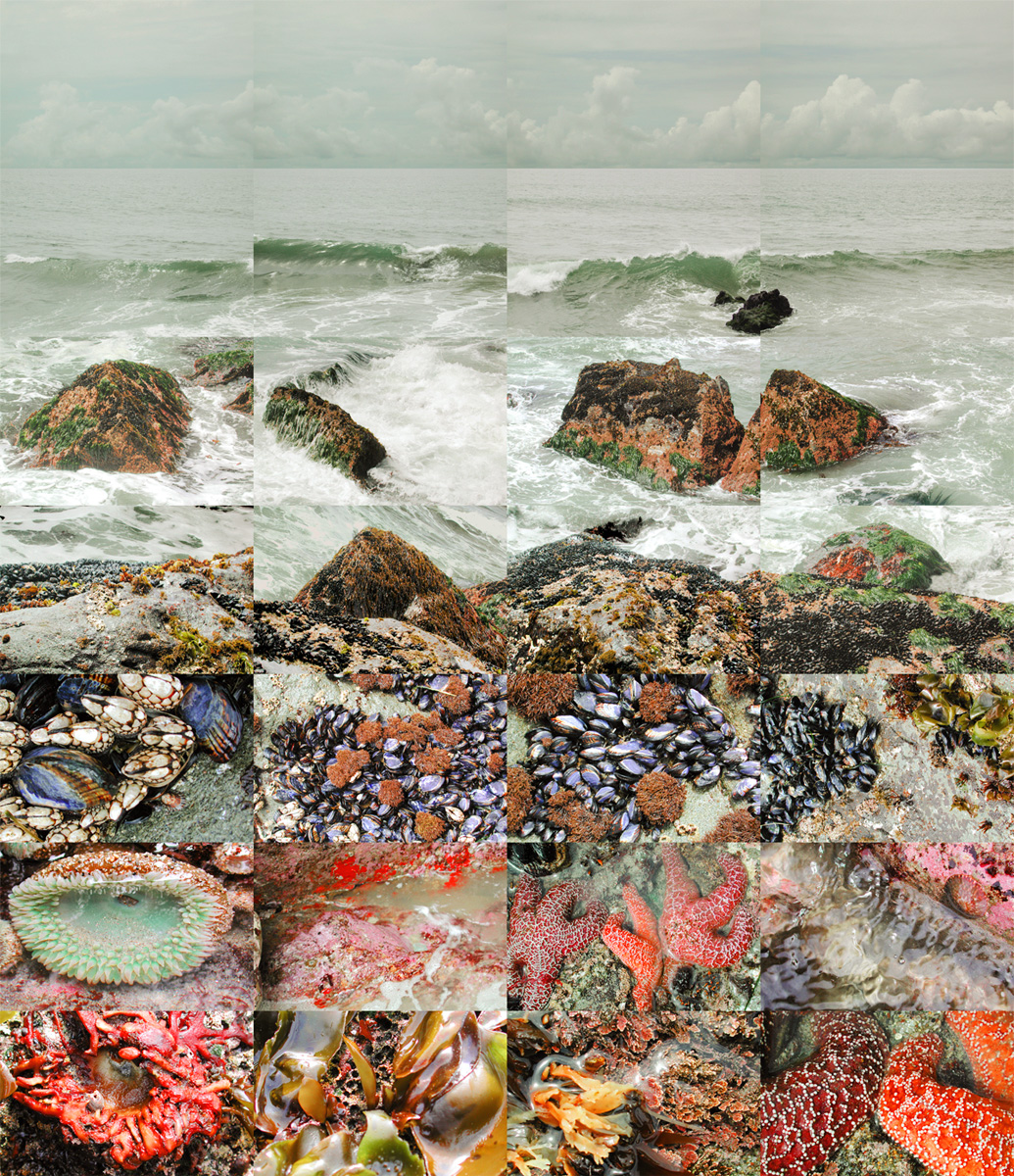
waves
Image by Matthew Chase-Daniel

Friday, April 26th 1996

It is here, in this populated lagoon nicknamed ‘Vibrant Waters’ by the public, where I have decided to stay and conduct my observations.

 Though a continual flow of boat traffic skims the surface and crowds of pedestrians surround the shores, the abundance and diversity of life under the calm, clear water makes this an ideal place to settle and conduct research.

 Right off, I note two mysteries about this area: The diversity of life in such a shallow lagoon, and the night divers.

 The night divers are men I have yet to physically approach. I see them appear on the far end of the lagoon as the sky grows dark. When the visitors have left, the divers slip into the lagoon and disappear into darkness.

 Watching them triggers a deep pull in my heart, for due to an irregular imperfection that has formed in my lungs in these later years, I am land-bound and unable to go diving.

 These divers seem to have no effect on the life down within Vibrant Waters. And what life there is! Fish of all types: Tangs, Angels, Damselfish, Anthias… and the corals… Acropora, Brain, and Polyps…  The numbers are too much to list. And there are sharks, squid, anemones… If only I could observe them closer. I look to these glimpses of life through the plate glass at the bottom of a boat as if I am watching a television. Why is there so much life in such a small closed off lagoon? The evolutionary diversity of this single lagoon is confounding. And what do these men of the night do when they slip into those waters and leave in the morning? Like any man of science, curiosity grips me harder than any love could.

 ~Dr. Henry Handler

*

Monday, April 29th 1998

Today there is a new arrival in the lagoon. A pair of dolphins: a mother and her calf. I never had much interest in dolphins, but it is good to see new life in the lagoon. Though the amounts of species are vast, I have also found them stale and unchanging. Each species I have noted has an incredibly low density. The dolphins don’t seem frightened by the boats (nor does much of the life out here) as they leap from the waves to say hello. They are more rigid in their swimming pattern then the dolphins I remember in my past. The ones I would see sailing on the Gulf, with the wind ripping through my hair and my fate bent on the sail. Nevertheless, it is good to see them.

~Dr. Henry Handler

 *

Tuesday, June 17th 1998

I was passively observing a school of Tangs from the boat when I made the most remarkable discovery. Keep in mind, I write this next passage as a man with a solid scientific mind. I write it as a man who has spent most of his life on or below the water… in all my years… I can barely write this! It was only a flash in the corner of my eye. What I glimpsed was… how can a man of science write this… or make claim to this? It was from what I could see… a mermaid. The myth of sailors and legends! I had seen her zoom from my sight, her hair trailing behind, pulsing in the surge. It was only a second, but I swear it was a mermaid!

 There is nothing to do now but keep watch. Keep watch and hope I am not going crazy.

~Dr. Henry Handler

*

Saturday, June 29th 1998

I yearn to go back into the water with SCUBA gear. The depressurization would be hard on my old body. The nitrogen narcosis would come on fast even in shallow waters. The gear would be too heavy and with my irregular lung passage it is too risky. But I am happy to be out near where the sea life is mostly familiar, even if its reasoning is so different. There are species of crab and lobster I never thought would be living in the same reefs and fish I believed only lived in other areas of the world.

 I contemplate my findings as I wander around this island paradise. The locals have plenty of food stands and markets. There is a hospital and a quaint downtown which reminds me much of the small old-fashioned streets where I grew up. I find that this place is one of the happiest places on earth, though during the summer months it can get quite crowded. It is during these months when I spend most of my time indoors or on the river, cruising to nowhere on a boat.

~Dr. Henry Handler

*

Wednesday, July 3rd 1998

There’s a mansion on the hill. They say it’s been haunted for years. I dare not venture there, for ghosts frighten me, though it seems to be a great attraction to many people and as of late (a lot more of an attraction then the lagoon). Boat traffic has slowed immensely. This makes me happy. For me, I would rather explore what is alive then what was. But we all have our interests I suppose.

 This is why I have decided that leaving isn’t on my agenda.

 I find that I miss my daughter, but there is too much work to be done in this lagoon. With this ‘mermaid’ I feel nearly chosen. As if her waving hair was beckoning me to her with a seductive motion. Of course, I am too old and too studied to believe she is real. I am certain it must have been a tuft of Maiden’s Hair algae adrift in the waters. Regardless, the small feeling of mystery I once felt in those days of discovery, before men had dropped down to the reefs in anything but a lead suit and began the use of the Aqua Lung… those unknown days which filled me with shocking warmth even in the cold Pacific… I feel it again. Even if it is a false emotion, I will hold onto it.

~Dr. Henry Handler

*

Friday, July 26th 1998

I glimpsed it again. I am certain it was a mermaid. Certain. There is no going back now. The spirit of adventure and exploration is alive. A myth is real. If men can believe in ghosts, why not a mermaid?

~Dr. Henry Handler

 *

Wednesday, August 7th 1998

The night divers came back last night. They continue to mystify me, but I will watch, always, over this lagoon that I have grown too fond of.

~Dr. Henry Handler

*

Tuesday, October 22nd 1998

I have spent more time looking for the mermaid than writing in my journal. She has not appeared again, yet the divers come every night. The dolphins have stopped surfacing. Fish are disappearing.

 I want to approach these mysterious divers, dressed in black wetsuits and carrying bags of tools and other bulky equipment. I want to stop them, but I am a feeble, old man, and I know men like these are dangerous. They slip in after sunset and leave before morning. They are doing something. Poaching, or killing, or building, but I haven’t been able to discern what even after my months of staying here.

 I will keep watch, always.

~Dr. Henry Handler

*

Wednesday, November 13th 1998

I apologize for my terrible handwriting. I am writing with a broken wrist, which is now bound in gauze and a splint. It was two nights ago. I was standing watch, as always, over the lagoon. I’d had a cup of coffee to stave off my early afternoon drowsiness, but the pot was more potent then I believed and it had kept me up all night.

 I watched the divers enter the waters after sunset as they always do. I attempted sleep, but it didn’t come. I went outside and spent my time between reading an old copy of The Great Gatsby (a personal favorite) and keeping an eye on the lagoon. When the sun broke in the morning, I found the divers coming forth from the water. This time dragging something…

 Pulling her from the water, roughly, yanking her by her hair… It was the mermaid.

 Of course, like the old fool I am, it was then I realized what they were after all this time.

 I am an old man, but I still felt the bite. The bite that a conservationist feels whenever they look at a rich forest of emerald green and know it is doomed for demolition. So I went after them.

 There was no plan. Looking back I should have grabbed something, anything, even a pan or a rolling pin. But I was in a rage. I ran at them, bellowing a roar I never knew I had inside of me. They saw my approach, barely moved. When I reached them (the mermaid, now on the ground, lying lifelessly on the grainy shore, without a twitch) it was only a matter of seconds before they strong-armed me into submission.

 I swung, I fought, I kicked, I bit. And then I was thrown to the ground where I landed on my hand. I heard the crunch of bone, and felt the fire of breaking ligaments.

 They loaded the mermaid onto the truck and drove away. One stayed to observe me until the island doctors arrived. We exchanged no eye contact and no conversation.

 I spent the last two days asleep. I will sleep for one more full day.

~Dr. Henry Handler

*

Monday, December 23rd 1998

Christmas doesn’t deter the tourists here. In fact, when the islanders decorate, the place is vivid, like a snow kingdom in the middle of a warm paradise.

 No mermaids have come back, and though I study the waters less and less, I find peace looking out across the lagoon. The cheers and squeals of children echoing as they see passing schools of Chromis, the parents in awe of the stranger creatures like cephalopods and nudibranches.

 But I am fine on my porch. Relaxed. Happy to see the sun rise and fall. Though I still think of the mermaid. In the darkest dreams I see her body lifeless on the cement, her face turned down. Only in the brightest moments do I see her in the water, a living myth only a few men could possibly have ever seen.

~Dr. Henry Handler

*

January 18th, 1999

The Office of the President – Imagic-Nation
Paradise Ave, Orange Valley, CA

Dear Dr. Judith Handler,

I am writing to offer my condolences regarding the recent passing of your father, Dr. Henry Handler. Like most boys growing up, your father’s books and the films of astounding underwater worlds that he studied during his lifetime enamored me. Without your father, a true pioneer, the underwater world would still be mostly a mystery. I credit your father for giving me the inspiration for building my park. Even many of the films I produced were tributes to Dr. Handler.

 In recent years, as you know, your father’s senility became quite severe. His delusions were extreme, and even that would be an understatement. To watch a mind and soul of such great intelligence and adventure wither to foolishness, I beseeched my heart not to break! To think of Dr. Handler spending his days in a home, in such a confined space compared to that vastness of dynamic life within the ocean… just the prospect made me sad. Which is why when your father visited the “Vibrant Underwater Kingdom Ride” in his elder days (you know this ride, we took you on it when you visited as a small girl – it is a horrid, little attraction where a series of glass bottom boats travel on a track around a lagoon full of plastic fish, killer squids, and a mermaid, even though she was removed in the later years due to constant breakdowns and a shoddy design) he would often forget he was looking at plastic marine life. Or perhaps he just had been starved so long of seeing it in the wild that he only wished it to be real.

When the lawsuits from the university and the mismanagement of your father’s properties came about, both his bank account and mind were deteriorating at a rapid rate. Too senile to handle a book deal or a TV show that could save his pocketbook, he was destined to be led to a small retirement apartment, a shoebox on the 32nd floor of a crumbling building downtown. That was when I built a small cabin on the lagoon of Vibrant Underwater Kingdom. He took up residency there with complacency. He would often watch the ‘animals’ and though I never quite knew what he was up to, he seemed like his normal self: as if he were back in the sparkling waters of Fiji and Bali or offshore of the Tonga in his boat the Yemaja exploring the unknown. When we removed his belongings from the cabin (we always told the guests it was a pump house, your father the pump house operator…you see, most people knew your father’s name, but his face was always hidden by one of those archaic two-hosed re-breathers) we found a journal he had been writing since he took up residency.

 Though I am sad to see him go, I know my diving repair engineers (who often butted head with your father for reasons I am sure you will see) are happy to be free of the old ‘pump house operator’, though I know deep in their hearts they feel the ache, as their night shift has become a lot less interesting.

 I think you will find this journal an interesting slice of your father’s life and mine.  I know you yourself are somewhere out in the Pacific, continuing where he left off, going even deeper then he could imagine. But I want you to know, even in his final days—his existence a small, pathetic, faux slice of his former reality—he was a happy man.

Yours Truly,

Rodney Mabel
President of Imagic-nation and Imagic-nation Theme Park


Patrick VendenBussche spends most of his time out on the Pacific and under the waves. An avid SCUBA diver, he volunteers most his time for coastal restoration efforts and aquarium diving for education. Between the water and his other volunteer work with therapeutic horseback riding, he is currently working on feature length scripts and more short fiction. Far from his homeland of northern Michigan, he now resides in West Hollywood, California.

Read an interview with Patrick here.


“The Keeper of the Truth” by Anne Leigh Parrish

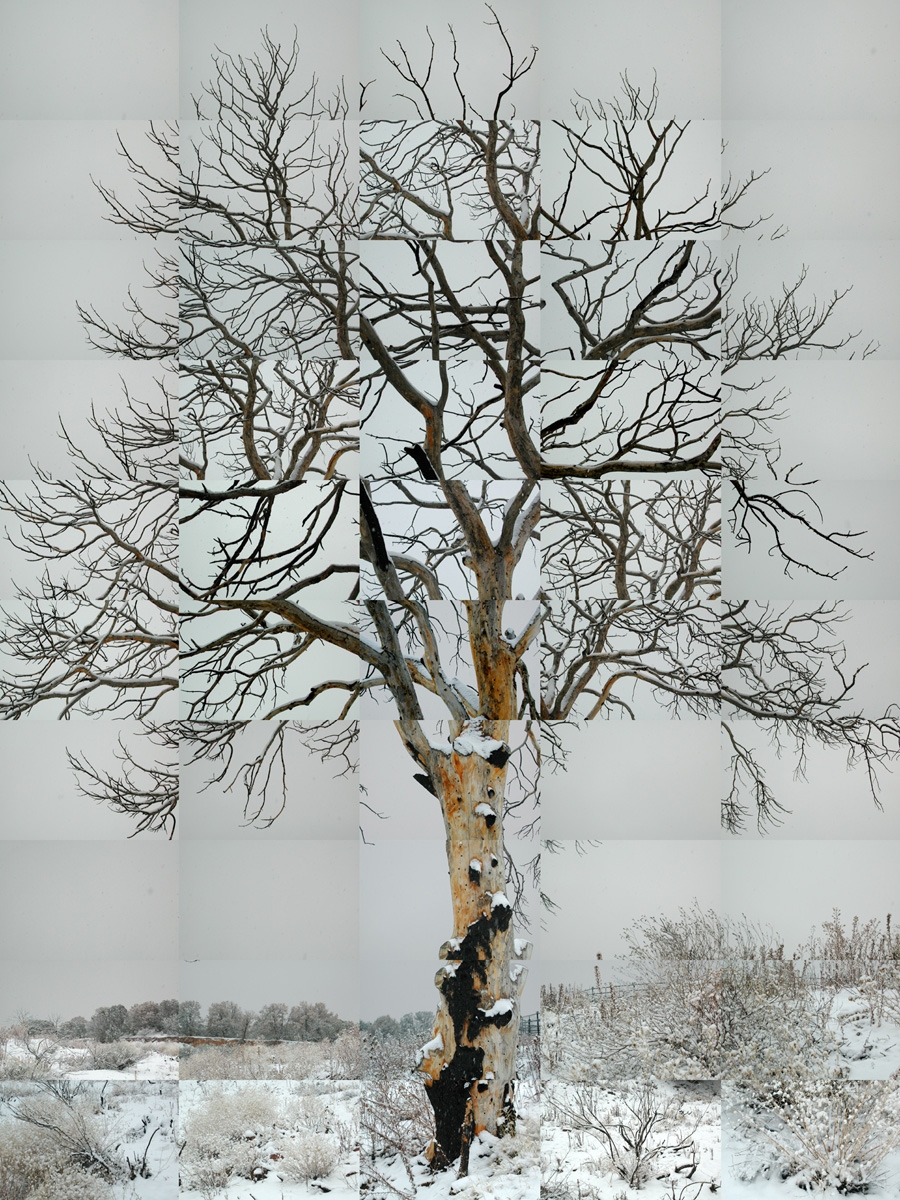
Tree in winter
Pinon, Santa Fe, New Mexico, 2004

The crystals in the window would have thrown a rainbow in the sun. The sun wasn’t out, though. It was winter, and the world was gray.

The woman was gray, too, not just her hair, but her suit, whose only decoration was a small pin in the shape of a seahorse angled on her right lapel. She didn’t go by Madame Zolara or any sort of exotic name that conjured an intimacy with the spirits, but by Gwen. Psychic Gwen. Painted in gold loopy letters across the dusty glass door.

Emily was there for research. She was writing a book on soothsayers, visionaries, and fortunetellers, women with gifts, women beyond the mainstream, and how they had been perceived – and treated – over time. She’d done enough reading, and needed a primary source, so had driven up South Hill in the snow, struggling to find the right address among the storefronts whose numbers had faded or disappeared.

Psychic Gwen gestured to a folding metal chair by a small, round table. Emily sat down, and Psychic Gwen took the chair opposite her. She didn’t know what to do next. The last time she had interviewed anyone was back in high school, when she’d worked for her local newspaper as an intern. The person they matched her up with was a local politician, a Second Ward alderman, a crusty old Irish Catholic who talked about “bad elements” moving to Dunston, and then offered her a cigarette.

Psychic Gwen held Emily’s gaze in a way that made her uneasy.

She said, “There are some things I’d like to ask you.” It was a short list: When did you first suspect that you were psychic? Did you tell anyone? If so, what was the reaction?

Psychic Gwen reached across the red velvet tablecloth and took Emily’s hand. She gazed into the palm, which had suddenly dampened with sweat, then turned it a little towards the only source of light in the room, a small lamp on top of a large and very dusty roll-top desk.

“You will live a long life,” Psychic Gwen said. “Much of it alone, but not all.” She peered more closely. “You will not have children, yet there was a child once.”

At twenty-two Emily had had an abortion. Her boyfriend was in love with someone else, needing Emily for comfort until his true love opened her heart. She never told him about the baby. She never told anyone.

She reclaimed her hand. “Please. There are things I must ask.”

Psychic Gwen took out a deck of Tarot cards from a drawer on her side of the table. She spread them out, face down, with the skill of Las Vegas dealer.

“The cards hold all your answers. Point to one.”

Emily sighed. This was a bad idea. She pointed to a card.

“The Chariot,” Psychic Gwen said. “This means you desire to exert control and find it difficult to do so. Choose again.”

She pointed to a second card.

“The Hanged Man. You want to let something go, change direction, reverse your fortune. These cards are in opposition, as are you, torn between two objectives, unsure of the outcome. The third card will decide your fate.”

Emily’s third choice was the Ten of Swords. “You feel like a victim, on the receiving end of another’s folly. You have put this person’s welfare above your own.”

Psychic Gwen put the cards back in the drawer, and told Emily she had a stain on her soul. “You have carried it there a long time. Yet one day, you may wash it clean.”

She gave up on the questions she’d prepared, handed Gwen the twenty-dollar bill she’d agreed to pay when she made the appointment on the phone, refused a receipt, and rose to go.

“I will see you again,” Psychic Gwen said. At those rates, Emily didn’t think that likely.

The snow fell harder. What had taken over thirty minutes on the way to Psychic Gwen’s became over an hour on the return home – to the house she had taken possession of from her mother and father when they moved to Arizona. They hoped to put it on the market within the year, and counted on Emily to supervise the sale. She lived there rent-free, because at the time the arrangement was made she was in school, plugging away on her doctoral thesis. Her parents assumed she still was. Emily had withdrawn from the university the previous autumn after the man she was having an affair with went back to his wife. At that point, school became too much.

She kept on with the project though, the book. Several weeks after seeing Gwen, she changed tack. Psychics were interesting (and unnerving, she had learned) but she wanted a wider subject, to emphasize current thinking about aberrant behavior, and then say how society had changed its mind over time about why people did what they did. Witches were just people who didn’t fit in, didn’t do what the world expected of them, had trouble following the rules. Today those witches would be labeled with low self-esteem, attention deficit or obsessive-compulsive disorder, addictive personality, or repressed memories only the most skilled therapist could uncover. People weren’t evil anymore, they were afflicted; given the right tools, the right environment, a guiding hand, they could be cured.

Emily explained this to her friend Lisa over a shared six-pack of beer, imprudently consumed on an empty stomach.

“You know why you’re so into this, right?” Lisa asked.

“Because I want to know about the human psyche. The soul.”

“No one knows anything about the soul. Except when it hurts.”

“Or has a stain.”

Lisa stared at Emily, then burped with the gusto of a seasoned drinker.

“The psychic told me my soul has a stain,” Emily said.

“Yeah, and its name is Melissa.”

Her sister wasn’t exactly a stain, she thought, though she’d definitely left her mark on the members of her family.

~

Two days after that conversation, Melissa showed up in the middle of the night from Boston, carrying all her possessions in one large backpack. Things had dried up on her there. Her contacts had moved on, and with an arrest for possession four years before, she didn’t want to chance some zealous undercover cop, maybe out to climb the departmental ladder. So she came home. She hadn’t been back two days when the calls started. Old friends, deadbeats wanting to hook up and get high, people she hadn’t seen in years showed up at all hours, woozy and smiling, or sullen, strung out, wanting to sleep on the couch.

Emily stayed out of their way. She was raised on tiptoeing around. Also on the theory of redemption. One morning, when Melissa got up before noon, Emily asked “What about What’s-his-name? Tom? Why don’t you give him a call?”

“No fucking way.”

Tom was someone Melissa had slept with on and off for years. He’d already offered her a bed at his place, but Melissa knew better. He had a bad habit of trying to rehabilitate her. He didn’t give her money, because he’d done that before, money for food and some classes at the community college that she put up her nose. Staying with him meant a lecture on free will and right choices, all the bullshit she’d heard forever.

As if sensing Melissa’s return, their parents called one night. She was out again, and Emily was free to fill them in. They made nice noises. That must be hard for you, and you’re so good to help out. The baton had been passed. Melissa couldn’t be abandoned. They just couldn’t turn their backs. A hand had always been extended, and would be again. They sent money. Emily took her share above living expenses. She was building a little bank account. As for the rest, Melissa would need new clothes – nothing expensive, just basic, practical. Jeans, shoes, underwear. Their mother was keen on new underwear. Emily would do the buying. Melissa was not to be trusted with cash. Or valuables, either, for that matter.

Two years before, Melissa had pawned their grandmother’s diamond brooch. The five thousand dollars kept her and her most recent boyfriend in pot and booze for two weeks in a Vegas hotel suite. Their mother’s face stayed hard for a month. Their father retreated behind the closed door of his study. The time for threats and rebukes had ended years earlier, after Melissa’s second arrest for drunken driving. The judge assigned her to substance abuse counseling. The sessions often involved a group. Melissa made friends easily with anyone who bought her a drink afterwards.  Her parents put her in therapy, first with an older woman who lived on a farm and raised goats and felt Melissa was responding to an unspecified childhood trauma. Then they sent her to a younger man who wore sweaters and pressed pants. Melissa tried to pull his heartstring. She wept through several sessions. He prescribed anti-depressants. She said she’d prefer Vicodin. He refused. She offered him oral sex. Again, he refused. She threatened to say he was the one who’d propositioned her. He gave her the prescription, and told her never to come back. After that, the help of outsiders was no longer sought.

~

On a gray, freezing Tuesday, Emily awoke with a taste of doom. The silence of the world was final and fatal. Her mind’s eye gave a scene of total destruction. She’d had these dreams before. The lone survivor. The keeper of the truth.

And there he was on the couch, snoring. A man she didn’t know. Her gentle nudge didn’t rouse him. Her hard slap did.

“What the fuck?” he said. He’d brought his dog, a leggy mutt with a bald patch who’d shit everywhere, then dug up her rubber tree plant.

“Out,” Emily said.

“She said she lived alone. Who the fuck are you?”

“Her mother.”

He sat up. His eyes came into focus. “Yeah, right.”

She raised her hand once more.

“Jesus. You got any coffee?”

Emily gave him five dollars from her purse, took his backpack, and tossed it out the front door. The dog ran after it, and peed liberally on the first bush it came to.

Afterwards she banged on Melissa’s door until she answered.  Her face was puffy, and her breath stank. She looked at the mess and nodded. Emily dressed and escaped.

She thought of walking by the lake, but the wind was bitter. She went to a coffee shop and sat for a long time. Melissa wasn’t bad. She was just weak. As a child, she could never resist temptation. She opened Christmas gifts early. She ate treats saved for guests. Emily, two years older, tried to correct her. They often fought. One time was particularly harsh. Their grandmother died suddenly when Melissa was six and Emily eight. Melissa said she knew it had happened when the phone call came. The grandmother was healthy and strong. They’d seen her only a week before. Her death shocked them. But not Melissa, who swore she sensed it as her grandmother kissed her good-bye and went down the walk to her car. Emily said Melissa didn’t know anything, that she invented the whole thing.

She went home. The house was clean. There was a vase of white carnations on the kitchen table, her favorite winter flower, and a card with a picture of a kitten and Melissa’s words, To new beginnings.

~

Melissa came home late, drunk, eyes dilated, stinking of cigarette smoke and sex. Her attempt to move silently through the house was foiled by breaking a glass in the kitchen. Since she had removed her shoes, the shards cut the bottom of one foot, right through the thin socks she wore. Emily found her sitting on the floor, looking at her bloody sole, sobbing.

She helped her to bed. The scope of her research had to include normal people affected by the spiritually lost. We are the light they fly to, she wrote in her notebook, then crossed it out.

Two days later, Melissa forgot her key and banged on the door well after midnight. Emily was still up, trying to organize her thoughts. She’d resurrected the light idea. We are the beacon that guides them home. When Emily didn’t answer, Melissa stood in the yard and shouted. Then she threw small pebbles at Emily’s bedroom window. Emily peered through the crack in the curtains. Melissa had no coat.

She sat another minute. She’d have to confirm if her theory were historically accurate. Had the visionaries had stable companions around them, people who helped them along? The idea of more research was thrilling and tiresome. She was a good researcher, though. Of that she was sure.

When she opened the front door, Melissa said, “You hate me.”

“Only the things you do.”

Melissa went to bed. Emily realized that her book still lacked the proper focus, and would never grab anyone’s attention. The next day, she put it in a drawer and left it there.

Spring came. The trees filled the blank spaces of winter sky with tiny soft buds and the air, still cool, was lovely and fresh. Melissa went to Florida with a college student she’d met in a bar and Emily had the place to herself.

Her parents called again. They said there was no point in doing anything with the house while Melissa was still there. Emily was relieved. They asked how her work was going. She said it was coming along nicely.

Melissa returned. She was tanned and sober. She had new clothes. The college student seemed to have a little money. She didn’t mention him, or say much about her time away. She wanted to make dinner for Emily. Emily didn’t like the idea, but she consented. Melissa was a decent cook, when she put her mind to it. She’d once talked of attending cooking school, even having her own restaurant one day. She asked Emily for thirty dollars to buy groceries. Emily said she should make a list, and she’d shop, herself. Melissa said she didn’t know what she was going to make, yet. She’d take her inspiration from what looked good at the store. Emily hesitated. Melissa got upset.

“You don’t trust me,” she said.

“No, it’s not that, it’s just . . . ”

“I know, I know. Can’t you see I’ve changed, though?”

She did look different. She was clean and neat. Even her nails were free of dirt.

At seven-thirty that evening, Emily sat alone with a glass of wine. Melissa had been gone for hours. She hadn’t called. Emily hated herself for believing that she would.

The next morning Melissa returned. She wasn’t clean or neat. Her jacket was stained with mud, and her hair, tidy and clipped the day before, hung in her face. She’d been crying.

Emily sat her down and gave her a cup of coffee.

“He threw me out.”

“The college kid?”

Melissa nodded. “He said his parents were coming up from the city, and I couldn’t be there. He didn’t want them to meet me.”

“Did you want to?”

She shrugged.

“It’s just the principal of the thing, right?”

Again, Melissa shrugged, but Emily knew she’d hit a nerve. Even Melissa, with all the harm she did to others, didn’t want to feel like a lowlife who wasn’t good enough to meet the family.

“You can’t expect people to treat you better than you act,” said Emily.

“What the fuck is that supposed to mean?”

“You make bad choices. People get tired of it, and they move on.”

“Yeah? Well, fuck them.”

“Easy to say.”

Melissa hung her head. She was still drunk, Emily could tell.

She looked around the dining room where they were sitting. The wallpaper had a pattern of daisies and bluebells. It was old, outdated, and ugly.

Melissa sneezed. “I think I’m getting sick.”

Emily put her hand on her forehead. “You feel warm. Go take a shower and get into bed.”

“Is there any wine in the house?”

“It’s ten-thirty in the morning.”

“Tell my head that.”

Emily got her a glass of wine. Melissa’s mood got better. She became expansive. She made fun of the college boy, said he was pudgy, and too fast in bed. Emily laughed. Melissa’s charm had always been like a crystal, throwing light here and there. Sometimes it fell on you, and made you a little brighter, too.

Melissa showered, got into her pajamas, and let Emily tuck her in. She was soon asleep. Emily took the manuscript she’d hidden in her desk drawer, tossed it into the fireplace and lit it. A lot of her life turned to ash as she sat and watched. Maybe that’s what she was best at – sitting and watching. It didn’t really matter. There were no visionaries, or special spirits, or gifted hearts. Only people who broke the rules. And others who covered their nakedness, kept them safe, and loved them so blindly that they never grew up or improved in any way.


Anne Leigh Parrish is the author of the story collection All The Roads That Lead From Home (Press 53, September 2011). Her work can be found in The Virginia Quarterly Review, Clackamas Literary Review, Carve Magazine, Storyglossia, The Pinch, Prime Number Magazine, Eclectica Magazine, Amarillo Bay, Knee-Jerk Magazine, Chamber Four, PANK, Bluestem, and American Short Fiction, among other publications. To learn more, visit her website.

Read an interview with Anne Leigh Parrish here.


“Million Dollar Find” by Walter Giersbach

crocuses
Image by Jenn Rhubright

Archie Mezinis was a walker — a boardwalk stroller, a country road rambler, a city street seeker.

Sometimes he drove all the way to Philadelphia so he could meander up Race Street and down Market before getting in his car and driving back to New Egypt.  Saturdays, Archie took his daughter-in-law to the flea market in Englishtown, driving her up from the New Jersey Pine Barrens in his 1965 Plymouth Duster so she could open her T-shirt and sweat shirt business at 6 a.m.  While Elisa unloaded boxes of shirts and the press to imprint logos of rock bands, he unfolded tables and set up the blue sunshade tarp.

Her customers came to Englishtown from as far away as Manhattan and Brooklyn.  If no treasures caught their eye, there were always cosmetics, a baseball cap or one of Elisa’s T-shirts.

He anticipated Saturdays, not because he was close to Elisa or because the assignment gave him a purpose for living out his retirement.  His compulsion lay in taking an hour to file up and down the lanes between the tables, looking for what dealers called “smalls,” little items that moved quickly off the tables.  His practiced eye could spot a three-inch Meissen figurine and know it really was Japanese, or a Murano cigarette tin worth twice the asking price now that smoking was socially hazardous.  He didn’t re-sell the finds.  Instead, they went into a footlocker.  A single item in his pocket could validate his whole existence for the next week, reinforcing an existential question as to whether he was truly alive.

Once or twice he’d stop, hold up an item and say, “How much you asking?”  He was a buyer, not a pain-in-the-ass negotiator.  If the item was two bucks, he paid two bucks.  The urban hagglers were contemptible, city folk who came down to Englishtown and returned proud if they knocked fifty cents off the locals.  They were bennies, come to suck in the benefits of a day in New Jersey.  Benny also referred to Brooklyn, Elizabeth, Newark, and New York, their points of origin.

He made a point to walk by the dealer with two tables on Connecticut Avenue because she had the most interesting finds.  Her business card said she was Maureen Sweeney.  She looked to be in her 50s, and even during the heat of the afternoon when he returned to pick up Elisa, she nodded if their eyes happened to meet.  When she smiled her teeth were miniature mah-jongg ivories.  He imagined the bandanna holding her hair was a souvenir of some African adventure, and enjoyed the way her first and last names almost rhymed.

“How much you asking?”  He showed her an angled wire ending in a flat piece of gold-toned metal with a glass jewel.

Maureen shrugged.  “A buck.  Don’t know what it is, but you can have it for a buck.”

“It’s a toogle.  Thought you’d know that.  Your mother probably had one.”

She blinked and laughed.  “Toogle?”

“It’s for a woman to use, to hook onto the table and then hang her purse when she sat down in a restaurant.  Kept your purse off the floor and out of sight.  See how it balances?”

“A toogle.  You’re kidding?”  Maureen’s face was flushed in the heat as she brushed brown hair back under the bandanna.

He shook his head and smiled back.  Smiles could be infectious, like yawns and sneezes — cathartic, too.  “I have maybe two dozen at home.”

“Jeez, you collect them?”

“Well, not collect exactly.  They’re just part of the past that’s disappearing.  Like those pencils with a ball on the end, little thingies that women used to dial the telephone so they didn’t break their fingernails.  Guess I have twenty or thirty.  They advertised banks and hardware stores—before refrigerator magnets were invented and celluloid mirrors went out of style.”

“Doesn’t your wife or whatever get kind of crazy with all this stuff?”

“You’re a dealer,” he said.  “You know it’s not about collecting.  It’s about something else.  Connecting with the world.”

“I know.  Hey, I see you all the time.  My name’s Maureen.”  She reached out a hand, something that had never happened to Archie at Englishtown.  Her palm had a firm, no-nonsense feel, the kind of hand that could heft an object and appraise its intrinsic value.  He held it a second longer than he meant to.

“Maureen, I know.  I’m Archie, and no, there’s no wife now.”  Instead, there was an emptiness he tried to fill with insignificant treasures.

“Sorry.”  She dipped her head in an unconscious benediction.

“Don’t be,” he said.  Too many people said sorry, then redirected the conversation.  His loss was an embarrassment to friends who had known them.  He’d had two purposes in his life: installing and maintaining oil heaters and loving his wife of thirty-seven years.  One employer and one wife, and now both were gone.

“I just said that ’cause I know the feeling.  There’s no Mr. Sweeney either.”

“I drop my daughter-in-law off at her shirt concession, then scout the place every Saturday.”

“Me too.  I mean, I’m here because I like all the people.  What a parade!  It beats sitting behind a counter.”

“Never know,” Archie said, “I might find that million-dollar item, like the guy who found a Declaration of Independence behind a bad painting.  He wanted the frame, and lo and behold….”

“I heard that.  Million-dollar treasure in a flea market.  Happens all the time.”

“I’ll take the toogle, Maureen.”  He reached for his billfold.

She waved her hand.  “Take it, Archie.”

“You sure?”

She nodded, and the smile lit up her face again.  “Come see me.  I have a shop in Red Bank.  Might have some more toogles or telephone dialers tucked away.”

“I might do that.  I could do that on Monday.  What about Monday?”

“Monday sounds great.  Hey, if I find something worth a million, I’ll split it with you.”

“You never know what you’re going to find,” he said.  “Never know in life.”

Archie walked down Connecticut Avenue with a new feeling lodged somewhere in his mind, a connectedness, something bigger than the pocketbook hook in his pocket.  When he picked Elisa up later she’d probably ask if he was successful in finding any treasures.  He could answer, “Maybe.”


Walter Giersbach’s fiction has appeared Bewildering Stories, Big Pulp, Corner Club Press, Every Day Fiction, Everyday Weirdness, Gumshoe Review, Lunch Hour Stories, Mouth Full of Bullets, Mystery Authors, OG Short Fiction, Northwoods Journal, Paradigm Journal, Pif Magazine, Short Fiction World, Southern Fried Weirdness, The Short Humour Site and Written Word. In October, 2010, he was 6th place winner of the Writer’s Digest writing competition.Two volumes of short stories, Cruising the Green of Second Avenue, have been published by Wild Child.

Read an interview with Walter here.


“Shakespeare’s Garden” by Jen McConnell

garden of flowers
Image by Jenn Rhubright

Sunday evening in the garden, as she reaches into the rosebush, Evelyn feels a twinge in her left knee.

Shifting her weight on the gardening pad doesn’t make a difference. Evelyn sighs, stands up, and tucks the clippers into her cardigan pocket. She is done for now. Shakespeare, presiding over the patch of heather in the corner, says to her, “Go.” Evelyn has been waiting for this sign. The chimes on the back porch chorus in the dusk. The moon casts a soft light across the roses standing tall under Shakespeare’s gaze. Evelyn listens but the sound of his voice has faded and she is alone again. She rubs one hand with the other and looks at the pile of pruned branches. There is so much to do if she is going to go.

With aching knees, Evelyn walks along the stone pathway. Shakespeare’s eyes and unsmiling lips have not moved but the word echoes around her. She rests her hand on his cold head, the band of her wedding ring clinking against the concrete. His head is damp, as if water is seeping from the inside. By this she knows it will rain tomorrow. Evelyn looks forward to the clouds and rain. It will feel, for a few days at least, like the garden she visits in her dreams.

With the sleeve of her sweater, Evelyn rubs the moisture off the base of Shakespeare’s bust. When she is sure he has no more words for her, Evelyn walks inside to the kitchen. A stack of bills sit on the countertop. Dirty dishes wait in the sink. It is no one’s fault, she thinks, rubbing her face. The sounds of the Trailblazers’ game drift from the living room. As Richard dozes on the couch, the cat curled next to him, Evelyn calls Maggie.

“What did Richard say?” Maggie asks.

“Just book the ticket, please,” Evelyn whispers.  “I can’t wait any longer.”

Next, Evelyn calls Janey, her daughter, who worries about Richard being alone. That’s why she is calling, Evelyn explains. They are on the phone only a few minutes. Evelyn can hear the cadence of Richard’s breath, his hiccup when the volume on the television grows louder during the commercials. In thirty-eight years, they’ve never been apart for more than a day.

~

Janey was six when they moved into the house. Evelyn claimed the kitchen and backyard as her own and Richard set up the front porch with two wicker chairs, a table and transistor radio. He sat there in the evenings listening to baseball games and playing chess with Janey. On Sunday afternoons, he worked the crossword puzzle and talked to their neighbor, Mr. Keegan.

Evelyn preferred the shelter of the backyard, though her first attempts at a vegetable garden yielded a meager bounty. Janey drifted between them—bringing a tomato or squash to Evelyn then playing chess with Richard until bedtime.

One day, when Janey was twelve, she saw a poster about Portland’s Shakespeare Garden and begged to go.  In the middle of an April rainstorm, Evelyn and Janey found Shakespeare’s alcove tucked behind a row of cypress trees in the Rose Garden. Evelyn stood under an umbrella while Janey wandered through the budding bushes writing their names in a notebook.

Each rose bush and flower had a sign bearing the plant name and its origin. Prospero from The Tempest was a tall, spiky bush that in the summer would offer enormous red roses. Fair Bianca from The Taming of the Shrew was a small bush showing just a wisp of the white paper-thin roses to come. A few names sounded familiar to Evelyn—Ophelia, Tatiana—but she couldn’t place them. She hadn’t read much Shakespeare.

Strawberry plants bearing tiny fruit were nestled in the ground between the roses. Janey ate one before Evelyn could stop her. Etched into the sidewalk below a statue of William Shakespeare was the phrase, Of all flowers, methinks a rose is best.

“I don’t want just roses,” Janey declared.

For days, Janey looked for references to flowers and herbs in a library edition of Shakespeare’s Complete Plays and Sonnets while Evelyn dug through a weathered copy of Hooper’s Guide to Gardening to learn what woodbine (honeysuckle), oxlips (primrose) and dewberries (blackberries) were. Next Evelyn sketched a diagram of grass, flowerbeds, bench, statue and vegetable garden.

With guidance from the local nursery, she and Richard built flowerbeds around the perimeter of the yard. The new vegetable garden, wrapping around the edge of the garage, would be twice as big as the original. Next came a three-tiered bed that sloped down the southern wall. At the top, they planted honeysuckle and jasmine. In the middle, primrose. At the bottom would be the herb garden. The back wall didn’t need much work. The cypress trees, like the ones in the Portland garden, were a natural backdrop to the full-grown rose bushes they planted—vintage, antique, crossbreeds and thoroughbreds. Janey drew handmade signs for each bush, which were replaced six months later by embossed metal ones that Evelyn had ordered.

In the fall, Evelyn and Janey buried bulbs in the soil next to the back porch steps and planted purplish-pink and yellow-blue pansies (‘love-in-idleness,’ Shakespeare called them) as groundcover. In the spring, the tulips and daffodils would burst into a ribbon of color.

A year after they began, they installed the final touch: Shakespeare’s corner. Richard cleared the ground and lifted the bust onto the concrete stand he had poured. Around Shakespeare, the heather bloomed into brilliant pink flowers from July to September. Next to him, they placed a wooden bench with iron scrollwork.

At first, Evelyn sat on the bench only to rest while Janey watered the roses or weeded the vegetables. When the days grew longer, Evelyn sat outside after dinner and tried to read Shakespeare’s plays. It was so laborious, one finger on the line of text, another on the footnotes, that Evelyn could read only a few pages each night. Gradually, though, the words began to fall into her.  Evelyn found herself retreating to the garden at odd times of the day and night. When no one was looking, Evelyn would rest her hand on Shakespeare’s head, feeling a connection to him, as if he were trying to tell her something. It wasn’t until later that she associated the temperature of his head with the coming weather.

Janey and Evelyn spent hours in the garden on weekends, planting and pruning, cleaning up or planning for the next season. But when Janey began her junior year in high school, she abandoned the garden. After college, she roamed through Europe and Asia, coming home only long enough to save up for her next trip. Now, in her late thirties, she was living in Paris. Occasionally, Evelyn sent her seed packets.

“How’s your garden?” Evelyn asked now and then.

“It’s coming along,” was all Janey would ever say.

~

The morning after Shakespeare spoke, rain drips off the broken gutter and wakes Evelyn.  She should have replaced the gutter when she felt Shakespeare’s head but she hates those kind of chores.  There is also a broken doorknob to fix and two light bulbs to replace.  Those used to be Richard’s responsibilities.

At seven, the clock chimes in the living room and Richard begins to stir. His hot body is too close; Evelyn throws off the covers. Using his right arm, Richard lifts his left leg, shifts closer to Evelyn and rests again.

The stroke happened more than a year ago, just after Richard retired. They were in the kitchen one Sunday when he dropped the cereal bowl he was carrying to the table.  Evelyn reached for a dishtowel without looking up from the newspaper until Richard groaned, crumpling into her as she rose from the table.

Of those first six months, Evelyn remembers only the phone ringing and the roses looking restless. She went into the garden just once a day, too nervous to leave Richard’s side for long. His speech gradually improved and Evelyn helped him learn to dress, eat and speak again, almost, but not quite, like he used to. His face had changed, too. The left side drooped slightly lower than the right; the corner of his mouth permanently tugged into a faint grimace. The stroke itself hadn’t hurt, he told Evelyn once. Only living with it was painful.

Through it all, Evelyn woke up each morning and looked out the bedroom window at the garden below. Despite her meager care, it did not wither.  But Richard grew tired of struggling up the stairs, so they moved from the bedroom with its handmade bed and view of the garden into the room behind the kitchen, which looked onto the driveway. They crammed into a narrower bed, touching hip to toe all night long. Evelyn had not slept well since.

Janey came home only once since Richard’s stroke, a languid weekend where she acted as if nothing had happened. During the day, she sat with Richard on the porch playing chess and once took him to a Trailblazers’ game. In the evenings, she helped Evelyn trim the honeysuckle but Evelyn saw that her thoughts were elsewhere. Janey chatted about life in Paris, hardly paying attention to the shears in her hand or the smell of winter around them. Evelyn waited patiently, breathing in the aroma of pine needles and fireplaces, but in four days Janey never once asked Evelyn how she was doing.

~

When the clock strikes eight, Evelyn sits up in bed.

“Are you going to go?” Richard whispers.

Evelyn hesitates, surprised that his voice is so clear, almost like before.

“Yes,” she says. “Janey is coming to stay with you. You’ll be fine.”

“Janey’s coming today?”

“No.”  It all comes out in a rush. “When I go to London. I was able to get the package for his birthday celebration. The royal garden will be in full bloom.”

“Oh…you’re going to go.”

“That’s what you asked, isn’t it?”

He is quiet for a few seconds and then pulls himself up on one side. His cheek is creased from the pillowcase. His green eyes search her face. “I meant going to the store…for the gutter,” he says. “I didn’t know you made up your mind. We were supposed to talk about it.” He collapses, breathless, back against the pillows.

“I need to go…I’m going.” Evelyn tries to slow her own speech.

“If you just wait a few more months,” he says, “maybe I can go with you.”

“His birthday’s in April.” Evelyn speaks softly, edging out of the bed. She wonders if Janey really could take care of the roses.

“It’s that important to you?” Richard’s voice cracks. “You want to go without me?”

“It’s only once a year.”

“Maybe I’ll come. Why not? I’ll try…” He hoists himself up and swings his legs over the side of the bed. “I’ll fix the gutter.”

“Don’t be ridiculous, sweetheart. You never wanted to go before.” She touches his shoulder. “I’ll do it this afternoon,” she says. “I promised, right?”

“Remember when you tried to fix the screen door and nailed it shut instead? I’ll take care of it. All of it.”

“It’ll just be a couple weeks.  Ten days.”

“We’ll see.  Okay.  Just…we’ll see.”

Evelyn crosses the room to the window and parts the curtain. The car sits in the driveway, its fender dented from an accident two years ago. She hears Richard behind her pulling on his robe with great effort. She is used to his gruff, throaty sounds as he struggles with what used to be a simple task. She doesn’t move to help him.

~

At eleven-thirty, there is a break in the rain. It is already the middle of March, almost too late to plant for spring, so Evelyn must hurry. She needs to finish the roses and plant something in the bottom herb bed. She doesn’t want Janey to do anything but water.

In the garden, Evelyn stands before Shakespeare, wondering whether to plant rosemary or wild thyme. Rosemary, the footnotes tell her, is a symbol of remembrance at weddings and funerals. It would hold up best under the cool weather but is prone to grow wildly, leaving its prickly stalks rough and useless. Thyme is more appealing but delicate and won’t last more than a few weeks. Evelyn can’t resist feeling rosemary is too serious for spring. Because of Ophelia, Evelyn associates it with winter and endings. She settles on the thyme as Shakespeare says quietly, “Yes.” Evelyn turns away from his voice.

In front of the rose bushes, Evelyn rakes the pruning into a pile. This takes longer than expected and she doesn’t leave for the hardware store until after lunch, having convinced Richard, she thinks, to rest on the couch. Evelyn watches him for a few minutes before she leaves. His eyes are closed and his body moves slightly under the blanket.

On the slick roads, Evelyn drives cautiously, thinking of Shakespeare’s voice. It was low and melodious, and now blurs into her own voice as she repeats “yes” to herself while she drives. The man at the hardware store helps her choose a replacement gutter. With all her questions about how to install it, she is gone for more than an hour. Finally she is back in the car and thinking of A Midsummer’s Night’s Dream, which she is reading again. More than once she has fallen asleep thinking of the flowers in the book and the flowers in her garden. How she has brought them to life. Sometimes, just as she is drifting off, Evelyn hears Shakespeare call out her name in a sharp voice, like fingers snapping.

As Evelyn pulls into the driveway, she sees Richard lying on the porch. He is on his back, his arms reaching out as if swimming backstroke. The front door stands open, stopped by one of his flimsy slippers. A ladder hangs halfway off the porch crushing the hydrangeas below. Evelyn screams and runs past the ladder, up the stairs. She kneels next to Richard, pressing her face to his. She tries to feel his breath but knows she is too late.

“I said I would take care of it,” she says. She repeats this louder, again and again, until she is screaming. “If you’d just waited,” she weeps into his hair.

She collapses on Richard’s chest, his red flannel shirt soft on her face.  He loves to be warm, she thinks, always in a flannel shirt or sweatpants. She wants to get a blanket, something, but can’t leave him. The wind has picked up, blowing the rain sideways. A small lake has formed on the walkway where it dips slightly. One of those things Richard had planned to fix.

The car door is still open, the sensor beeping into the gray day. Mr. Keegan is next to her.  Evelyn gazes at Richard’s face. The muscles have gone slack and she is overcome with relief that the two sides of his face are symmetrical again.

When she returns from the hospital, Evelyn wanders alone through the house. The lunch dishes are washed and put away. The magazines, playing cards, and lidless pens are gone from the kitchen counter and a faint smell of ammonia hangs in the air. Richard had done it all.  Even the tumbleweeds of dust on the floors are gone.  Clean laundry is folded in a basket on the couch. Evelyn moves the basket to the floor and lies down. Rain drips off the gutter, the phone rings and Shakespeare calls to her from the garden. Evelyn pulls a cushion over her ears.

~

Three weeks after the funeral, Evelyn goes back into the garden. Underfoot, the grass needs to be cut; the dewy blades tickle through her thin sandals. The empty herb bed nags at her (rosemary or thyme?). The heather, bold and incessant, has taken over Shakespeare’s corner.  Evelyn hesitates, suddenly weary, when she sees the stone bust.

Janey has come and gone. She arrived the day before the funeral and busied herself around the house, rummaging through Richard’s desk and bureau drawers. Organizing, sorting, boxing up, filling the house with activity. She hired men to fixed the gutter and smooth out the walkway.  More than once, she tried to coax Evelyn into the garden.

“The roses need you,” she said.

Evelyn could only sit on the couch with a Travel and Leisure open in her lap, listening for Richard.

Maggie came too, bringing a new ticket for London.

“You missed his birthday,” she said, “but you should still go.  It’ll be good for you.”

Evelyn relented.  Only the garden was holding her back.

Now kneeling in front of the roses as the sun disappears, Evelyn dips a toothbrush into the bucket of soapy water and begins to clean the signs: Pretty Jessica, Wise Portia, Lordly Oberon. She has ignored them for so long they are almost illegible. While cleaning Tragic Juliet, a tall bush with pale yellow roses and thumbnail-sized thorns, Evelyn feels sudden distaste.

It is so much work, every year, the same weeding and planting. There has never been a moment where Evelyn could say, “It is finished.” And it will always be this way. She sits back and lets her gaze unfocus across the flowers so that the colors blur together.

When she has finished cleaning the signs, the clouds have parted to reveal a full moon. Evelyn rests on the bench, kneading the knots from her fingers. She opens her notebook and begins to write instructions. “For whom?” Shakespeare asks but Evelyn ignores him. She charts what grows best where, how often to water and when to prune, surprised at how much she knows from memory.

As the cool night creeps up her legs, she puts down the notebook and tries to imagine London—the museums, the gardens, anything—but cannot turn that corner in her mind.


Jen McConnell is a native of Southern California who later moved to San Francisco where she began her writing life. She received her MFA in Creative Writing from Goddard College. She has published stories in Bacopa Literary Magazine, SNReview, Clackamas Literary Review, WordRiot, UC Santa Barbara’s Spectrum, and the forthcoming Sports Anthology from MainStreetRag. After living on both coasts for most of her life, she currently makes her home on the Lake Erie shoreline. She supports her writing habit by working in non-profit marketing and communications. www.jenmcconnell.com

Read an interview with Jen here.

“Rose” by Dylan Landis

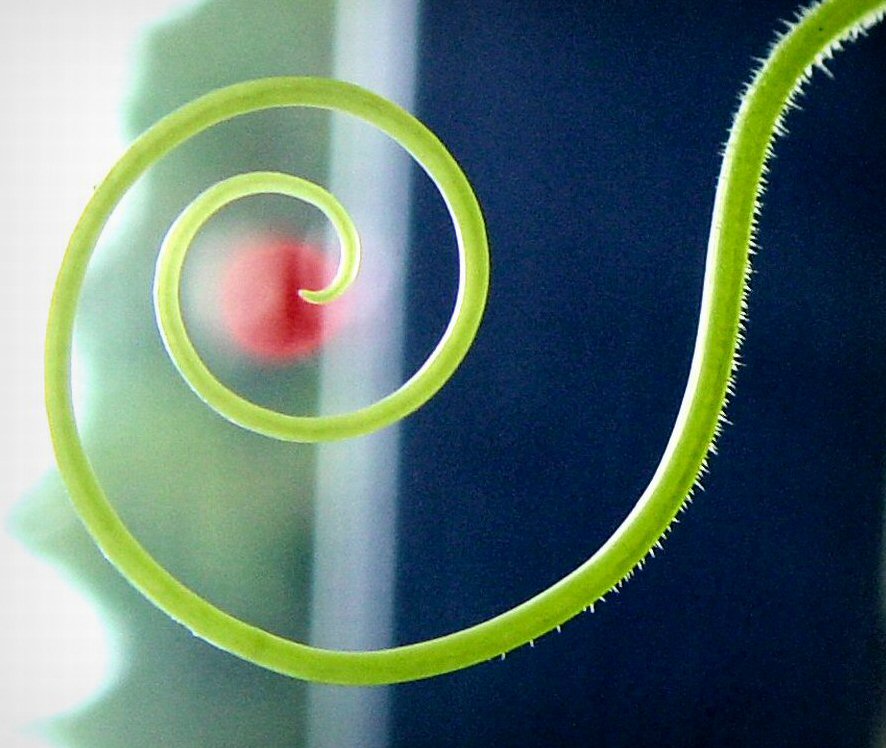
squash curl
“Squash Tendril” by Jenn Rhubright.
(See also “Convalescence” by Billie Tadros.)

Leah’s grandmother washed and dried her dinner plates, stacked them in the oven and set it on broil. She hid her pearls in the toilet tank, where they coiled under a rubber flap and created a perpetual flush.

“Nine is green,” said Grandma Rose. “Four is red. Mint tastes like flashes of light.”

Leah’s parents decided it was time. They said Leah could stay with any friend she wanted. Oleander, said Leah. Helen and Leo were so busy gabbing on the phone to the social worker in Pottsdam and the Hertz people on 77th Street, they didn’t say no.

“I don’t see why you have to put her away,” said Leah, watching Helen fold tissue paper into her clothes—a winter-white sweater, because fall came early upstate, and a herringbone silk scarf. Helen hated wind in her hair.

“Leah, this is painful for me,” said Leo. He was tethered to the phone in the hall. “But it’s better than letting her die in a fire. And she can’t communicate her needs. Her mind is deteriorating.”

Grandma Rose’s mind looked like her bedroom, Leah decided. It was a wonderful room. Hair pins napped in the rumpled bed. Dark hairs from her wiglet drifted into the cold cream. Tubes of Bain du Soleil lost their caps and slid into open drawers, releasing the oily fragrance of summer into white nylon bloomers. Nor did Rose seem to register, when Leah was allowed to stay with her, that Leah smoked in the basement, riffled through her grandmother’s pocketbook and skimmed every paperback with a passionate couple on its cover.

“Why do they mix up the colors?” Grandma Rose said, peering over Leah’s shoulder at a title. “O isn’t red.” The word was “romance.”

“Red like a heart?” said Leah.

“My shayna maideleh,” her grandmother said gently. “O is as white as an onion.”

“She’ll burn down the house if she keeps baking the plates,” said Leo, gently.

“Maybe that’s how she wants to go,” said Leah. “Maybe the flames will talk to her.”

Her father took his palm off the receiver and said, “Do we need a lawyer for that?”

“I wish I heard colors,” Leah said. “I bet purple sounds like Joan Baez.” She tapped the suitcase, three left and three right. But her parents kept getting ready to drive off and kidnap her grandmother. Oleander, when Leah telephoned, said sure.

“Don’t you have to ask your mom?”

“Ask what?” said Oly. “Just bring your stuff. You won’t believe what’s going on here.”


The night roof was alive. It ticked and crackled. Ventilation fans flashed in their cages.

“This is where we’re gonna do it,” said Pansy. She hugged a damp Sloan’s grocery bag containing a towel, two joints, and a rubber stolen from their father’s room.

Ten stories below the night roof, the brakes of buses sang. Leah wondered if she could make herself jump off a parapet. Then she couldn’t stop wondering. Fly or die, fly or die. It was like standing in the bathtub and wondering should she touch the switch. Some thoughts she couldn’t control when they cycled through her brain. Mrs. Prideau, who was Pansy and Oly’s mother, did not have this problem. When they left the apartment Mrs. Prideau was standing in the kitchen, spooning ice cream out of the Schraft’s box and writing on some typed papers in red pencil and ignoring the most amazing things. She ignored the leak under the sink that was wetting the grocery bags. She ignored the paint hanging from the ceiling like notepaper. She ignored that Oly and Leah threw eggs from the windows sometimes, or that Mr. Prideau slept by himself in the second bedroom because it was cheaper than divorce.

“Going to howl at the moon?” she said. “Don’t fall off.” God, Leah loved Mrs. Prideau.


Standing pipes, tall as people, stuck straight up from the tarpaper. Leah tried to act casual in the face of the enemy. She edged closer to Oleander. “I bet those pipes move when we’re not looking,” she said, knowing it sounded crazy. “I bet they’re like the roof police.” She was tapping like crazy, fingers jammed in her pockets so no one could see.

Oleander fixed it. She touched each pipe, calling PLP— Public Leaning Post. Meanwhile, Pansy started up the ladder to the water tower, which stuck up high above the roof. This was worse than the roof police. The water tower had no windows. It had no mercy. Leah imagined falling in, grasping at walls all slimy below the waterline.

Fly or die, fly or die, she whispered, while Pansy Prideau crammed the Sloan’s bag between the ladder and the curving base of the tower.

Pansy climbed down again, flipping her hair. “No one’s gonna notice that,” she said.

Leah, enraptured, remembered how Pansy slept on her stomach because she rolled her hair around Minute Maid cans. She watched Pansy look down over a parapet at the singing buses. A plane blinked through the black sky toward her ear. It disappeared into her head, then eased out the other side, propelling through waves of her Minute Maid hair.

That’s when Leah inhaled—worshiped the night roof, remembered to breathe.


Saturday morning the milk smelled bad, so they got to eat Trix from the box. Then they went stealing. Leah palmed a Chunky at Manny’s Fountain on Broadway just to feel it nest in her hand, silvery and square. At Ahmed’s Candy & Cigarette, Oleander slid a comic down the back of her jeans. Then she trashed it down the block. “No one reads Archie,” she said. Leah kept her hands out of the garbage. She liked to admire Veronica’s bust, but she knew not to say it.

Leah and Oly, they were magnetic. Sweet things clung to them. When they stole, they had secrets, and when they had secrets, they shone.

They ducked under the turnstiles on 86th and changed subways twice and did Lord & Taylor’s, where they tried on five brassieres each. Leah put back four and Oleander put back three. Then back down the clacky wood escalators to the main floor, where Oly stole the White Shoulders eau de toilette tester without even smelling it, just vacuumed it into her purse.

“You ditz,” said Leah. “My grandmother wears that.” Then she browsed at Christian Dior, smiled at the lady and stole the Diorissimo tester. She didn’t smell it first because she knew it from the heartbeat of her mother’s wrist.

Leah’s mother knew all about department stores. She dispensed strange and dangerous facts. She said department stores had lady guards who pretended to shop. They lingered over gloves or garters, but were actually spies. “They watch your hands, and they look for women who glance around,” Helen said. “At night they check the ladies’ rooms, so no one sleeps over on those lovely chaises longues.” Helen was eating again, twelve hundred calories a day, and she worked for a decorator, ordering fabrics and sketching drapes. At night she studied pictures of French chairs.

“Don’t glance,” Leah warned. Oly had stopped at wallets.

But Oly couldn’t help it. What Leah did was, she listened with her skin. Leah’s skin was electric and it knew when she was invisible, and that’s when she made things disappear. Then she tapped on the counter or in her pockets or even on the floor, as if she’d dropped a safety pin. Three left, three right. It made her safe, plus it was some- thing she had to do.

The girls burst out of the same glass slot in the Lord & Taylor’s revolving door. They walked fast with our heads down, except Oly kept glancing back.

“Holy Mary mother of God pray for us sinners now and at the hour of our death Amen,” she said. Her eyes were like penlights.

“When can I throw up?” said Leah. Because that’s what stealing made her want to do, after.

“In the park,” said Oleander fiercely. “Puke in the park.”

In Central Park Leah threw up behind a bush and spit nine times, three times three, to clean her mouth. They bought Creamsicles and walked to Oly’s apartment, except on the way they did the Grab Bag on Broadway, where the clothes were all burlap and ribbon and lace— artistic, Helen said. Under glass, silver earrings lay on black velvet and tarnished in their sleep. On the counter, beaded earrings dangled from a rack; you could strum them with a finger.

“Steal me,” they whispered.

Things spoke to Leah often. She did what they said.

Saturday evening no one said a word about dinner. Mrs. Prideau sat on her bed and turned her manuscript pages and watched Pansy get ready, as if this was what daughters were supposed to do, go out with boys. Sometimes all Mrs. Prideau said about dinner was “Oh, just forage,” and Leah hoped she would say this soon so they could eat more Trix.

Pansy leaned over the bathroom sink, dabbed blue shadow on each eyelid and stared at herself in the mirror. She had a face like a Madame Alexander doll, the expensive kind in glass cabinets at FAO Schwartz. She looked like a cross between seven and seventeen. Leah watched her from the doorway, hoping to learn something. What she learned was how to put on blush. First you grin. Then you rub lipstick on the part of your cheek that sticks out like a cherry tomato.

Oleander opened bureau drawers and slammed them, pulling out tops and shoving them back in. No one at Oly’s had private drawers or private shirts or even private beds, because Mrs. Prideau and Oly and Pansy shared two beds in the one big bedroom and didn’t have space for private anything. Sometimes this made Leah so jealous she could die and sometimes it made her want to go home and straighten her desk. A bandanna halter came out with a froth of socks and Oly put it on and went in the bathroom and sprayed a cloud of Right Guard around her armpits.

“Oh, good, deodorize the toothbrushes,” said Pansy, fanning at the cloud.

“Any toothbrush of yours it’s automatic B.O.,” said Oleander, and sat the can on the sink, where Leah knew it would mark the porcelain with a ring of rust.

“Any toothbrush of yours it’s automatic pus,” said Pansy.

“Oh, shit, here they go,” said Mrs. Prideau, and looked at Leah like they might actually share some sliver of understanding. She lit a clean cigarette with the old one and jabbed the old one out. The butts in her ashtray were all kissed red at one end and bent jagged at the other.

“Your parents go anyplace fun?”

“Upstate,” said Leah. “They’re kidnapping my grandmother.”

Mrs. Prideau’s eyebrows lifted into question marks, thin and elegant. “Are they taking her anyplace fun?”

“Old folks’ home,” said Leah. “Her mind is deteriorating.”

“Really.” Mrs. Prideau looked at Leah like she was trying to figure out where to insert a key. “How can they tell?”

Leah shrugged, but Mrs. Prideau kept waiting. “She sticks plates in the oven and they melt. She’s going to burn down the house.”

“She might,” said Mrs. Prideau. “If she has dementia, your parents are probably doing the right thing.”

“Plus,” said Leah, “she sees things. She says nine is green, vowels are white, stuff like that.” She hated the way she sounded, as if Rose were someone else’s crazy grandmother.

Mrs. Prideau sat straight up and looked at Leah. “Well,” she said, “I don’t know about the vowels. A is light pink and E is almost scarlet. But nine is definitely green.”

Mrs. Prideau was not beautiful like Helen. She had short spiky hair and she wore black turtlenecks and jeans. She had ink on her hands instead of nail polish. But there was some kind of light that went on inside her, and at that moment Leah thought if she stood very still, the light might shine on something she needed to see.

“Not all vowels,” Leah said carefully. “She said O and I were white like an onion. I thought it was because they’re in the word onion.”

“No, it’s because they’re white,” said Mrs. Prideau. “I also see Q and X as white, but you don’t run into that as often.”

Leah didn’t move. Tap now, her brain instructed, but for the first time in her life she disobeyed.

“It’s called synesthesia,” said Mrs. Prideau. “It runs in families, but it missed my daughters. You too?”

Leah shut her eyes and concentrated. She wanted Mrs. Prideau’s voice to reveal a shape, a scent. She thought it might smell like Diorissimo, or float like a string of pearls.

“It missed me,” she said.

Pansy walked out of the bathroom with frosted white lips. She looked perfect. Leah wanted to lay her down flat to see if her eyelids would glide shut. “Tell her what her name tastes like, Mom,” she said. “Mine tastes like tea biscuits.”

“Very thin biscuits,” said Mrs. Prideau. “Leah tastes like cucumber.”

“It could be worse,” Pansy said. She spotted Leah’s shoplifted earrings on the bureau, threaded one into her ear. “We had a babysitter once named Renee whose name tasted like pennies.”

“Syn, together, aisthesis, perception,” said Mrs. Prideau, not even flicking her eyes toward Pansy, who was taking one of her cigarettes. “It means the senses work in pairs. It’s a gift. Synesthetes are often artists,” she said. “Scriabin had it. Kandinsky, though he may have been faking. Nabokov. Is your grandmother creative?

“No,” said Leah, who had no idea what she was talking about.

“I bet she is,” said Mrs. Prideau. “Kandinsky said synesthetes are like fine violins that vibrated in all their parts when the bow touched them.”

The doorbuzzer made its jagged rasp. “Oh my God,” said Pansy, “it’s Robbie,” and she left the cigarette burning on the bureau, a fringe of ash hanging over the edge. Oleander glanced at her mother, whose lap was spread with red-penciled pages, picked the cigarette up and brought it to her lips. Leah couldn’t believe what she was seeing. Her parents would have a coronary.

“We are the bows from which our children as living arrows are sent forth,’“ said Mrs. Prideau. She looked at her younger daughter with the cigarette and closed her eyes, as if she were searching for something deeply internal.

“Kahlil Gibran,” she said, opening her eyes and, as Leah wondered if she would ever understand, “Don’t be discouraged, Leah. We never know what we inherit.”


They watched her.

They hid behind the elevator shed and watched her on the roof.

He did everything exactly in order, first base, second base, third base, home. Leah liked it, liked the way his hands traveled on Pansy and the way Pansy let her body be a highway for them. He pulled her jeans off. There wasn’t any underwear. This was a revelation, that a person could not wear underwear. They saw his hands move where his fly was and then he pushed onto her and Pansy made a sound like she had stepped on a piece of glass, and he put his hand over her mouth. When he took it away he kissed her. Then he pushed some more. This got boring, but Oleander kept saying “Jesus” under her breath, so Leah just hung back a few minutes and didn’t look, and thought about what it was that they might have inherited, she and Oleander and even Pansy, who was fifteen and barely spoke to them.

The boy pulled up his jeans. He lit a joint and Pansy took it from him. The roof police didn’t do a damn thing. They just stood there.

They were just pipes.

“Was that home?” said Leah.

“Yeah,” said Oleander, “Jesus,” and they were breathing words more than talking them. They carried their sandals so they wouldn’t scuff and moved toward the stairwell cautiously, as if stepping over puddles.

“It hurts,” said Leah, amazed.

“Only when you lose it,” said Oleander, and Leah felt a rose open in her body, felt a release as its petals fell open and flew apart, and she wondered what she had lost, and why it did not hurt.


Dylan Landis is the author of Normal People Don’t Live Like This, a novel-in-stories that made Newsday‘s Ten Best Books of 2009. She has received fellowships from the National Endowment for the Arts, the Norman Mailer Center, the Sewanee Writers’ Conference and the Virginia Center for the Creative Arts. She is working on a novel.

Read our interview with Dylan Landis here.

“Rose” by Dylan Landis, excerpted from Normal People Don’t Live Like This, copyright (c) 2009 by Dylan Landis, reprinted here by permission of the publisher, Persea Books, Inc., New York. All rights are reserved.


“In the Basement” by Stefanie Freele

In the Basement
Illustration by Morgan Maurer, 2011

You do your thing, in the basement of the dorm, under the guise of doing laundry. It is but a ruse; the laundry pile consists of four shirts and a pair of pants, barely enough for a load. You’ve been invited to two parties on the eighth floor, but instead, you’re underground.

The elevator rarely sinks to the basement. The only people traveling to this depth are the janitors and the paltry few who don’t have weekly visits from prudent parents who arrive bearing neatly stacked piles of fresh clothes. Those would be the same parents who leave waving, whisking away bags of dirty laundry. Like your roommate’s parents, who are upstairs right now, writing your roommate another check while she complains of her struggles in Art History. You know the struggle has to do with the fact that the class is at eight am, far too early for her and her boyfriend to get out of the top bunk. The parents don’t know anything about the guy. She’s really a virgin. Sure.

Devouring caramel corn, you sit on a washer, suck down a vanilla milkshake, drinking as fast as possible, unafraid of the looming cold headache and try not to think of the girls at the upstairs parties. Other girls can have a few handfuls of corn, dress for the party, and enter the room laughing. Not you. You can’t stop now.

Underneath the dirty laundry, and inside the basket, juts out the yellow letter that arrived this morning: FALL 1985 MID-TERM GRADES, indicating “D” in three courses, an unopened box of mint cream cookies, the thick kind with a half inch of white soft yuck in the center, a bag of peanut butter chocolate squares, the cheap generic kind you buy by the pound, and a carton of sugar glazed donuts. A quart of milk sits exposed, atop the towels; no one gets weird over the presence of milk.

You pull out one item at a time, but not all at once. That would be giving yourself away, wouldn’t it? You imagine one of those lucky, skinny, and mind-boggling girls, who can eat a half a turkey sandwich and wrap up the rest for later, holding their tummy I’m so full. One of those girls might walk in to see you surrounded by food, shoving it into your face with both hands. But, you’re careful; anyone walking in will just see a package of whatever the current consumption item and a drink.

You stash the empty caramel corn bag behind the detergent and bring out the donuts. They’re softer and the stomach needs the softness to go with the rough of the nuts. Coming back up should be as smooth as possible; clumps stuck in the throat hurt and often make your eyes feel like bursting, like trying to vomit up a bowling ball.

You really should have drunk more liquid and chewed slower so this would be easier, but there is always this time element – an overwhelming need to become filled, quickly as possible. The high, if you call it a high, doesn’t start until the stomach feels like bursting. The cookies come next, and the milk is gone, so you snag a Pepsi from the vending machine and gulp it in four swallows with peanut butter squares. Not the best for downing; stickiness is hard to puke.

One has to heave everything, every drop, every pea size morsel; there cannot be anything left; the stomach must be absolutely empty when all is over.

In your haste to gulp the Pepsi, you fail to put away the boxes of cookies, both sit atop the washer, when a student walks in with an orange plastic crate of laundry. You swat the boxes right off into the garbage, instantly realizing it is a mistake, not to empty those boxes; now you’ll have to dig in the garbage to retrieve them when no one is around. The same garbage full of blue-gray wads of dryer lint. The girl smiles briefly, tosses her ponytail, and heads efficiently toward an empty machine.

Your stomach distends, but you can still stand up straight; there is room; not quite there yet. The student drops in her clothes and picks up a book. She doesn’t pay any attention, so you grab cookies out of the box in the garbage and high-tail it to the hallway, where just around the corner, you stuff your mouth. Why didn’t you buy ice cream? That always makes for the easiest purge.

On your way back in, she passes with that faint smile, the kind of smile that indicates she’s not really there, probably still in that book she was reading. She walks down and opens up the bathroom door. You need more liquid, but water isn’t gluttonous enough. You’re out of quarters for the machine.

But, there is a pile on the student’s dryer. You swipe one for a Mountain Dew  – too much Pepsi with chocolate makes for a foul tasting barf – dump it in the machine and swig.

She comes back to resume her studies, leaning over a washer and highlighting in a textbook, something you should be doing, but never ever do. You don’t even own a highlighter. Instead, you rely on common sense and a bit of natural smarts to get through college; lately your concentration level is minus zero.

With the student’s back to you, you resurrect the rest of the peanut butter squares and ditch back in the hallway again. This time you pace slightly as you eat, feeling the end coming. The burst of energy courses through your arms and you wish you could keep it- could take this energy to the gym. The surge won’t last.

At the water fountain, you swallow about a cup of water and stand up for it all to mix together into a mass for easy expellation.   If only the student doesn’t need to use the bathroom at the same time, doesn’t interrupt the big production, you’ll be safe. The best part about the bathroom in the basement – you know where every single toilet is on the college campus, which are the emptiest and least likely for interruption – is that it’s a single and it can be locked. No chance of disruption. Also, it’s down the corner, so the chances of someone hearing are slim. The empty hallway echoes as you unsteadily walk toward the bathroom. Your distended belly stretches painfully and you hold it up with your hand like a pregnant woman might do.

You lock the door and assume the hated position. Left hand holds the stomach and right hand is used for purging. Your pointer finger is cut up from rubbing on your teeth, it stands aside, healing. Middle finger for this one. At the sight of the toilet, you begin to cry and retch. How did I end up here again? It started ages ago on a quest for gorgeousness, for thinness. Tears blur the pieces of donut and caramel corn. The peanut butter squares catch as expected, too bad, they taste so good, so forbidden. As you choke on a hunk of peanut butter, the tears drain and you press against your stomach to help the vomit flow. Gagging, then a big hunk comes up, of course smaller than it felt in your throat. The roughness of it scratches the esophagus. Whisper and beg to stop. Please let it all come out, I’ll never do it again. You can’t keep any of the calories. More remains in the stomach. The shake and mint cookies. Your stomach feels as if someone punched you in the gut. Legs shiver as sweat dribbles down thighs.

The longer you do this activity, the harder it is. You don’t know if it gets easier for others, as you don’t know any, the habits are secretive; for you, it just gets harder and harder to vomit.

You lean your sweaty forehead on the back of the toilet, conscious of the fact that your face presses onto a toilet seat where who knows what kind of ass last sat. You rub the coolness of the toilet forward and back while whispering. Please stop me please stop me. The last of it comes up, complete with acid and bile. You slink against the door of the stall to quell dizziness. At the sink, you wash your hands over and over again with soap and scrub the outsides of a raw mouth. You rinse several times until the sharp taste is only at the back and then stop at the mirror to see red bloated eyes, and an ugly face.

You lift up your shirt and hold in your stomach to check the fatness. Disgusting. You creep into the hallway, as always prepared with a flu story, in case anyone heard. A dryer buzzes in the distance. You step weakly toward the water fountain, eager to put something in a tender stomach.

You don’t look at the garbage can as you fold the laundry, the remnants of the binge are right there, a few feet away, but you fold and then give up, dumping all the clothes into the basket and walk out. The cold sweats start – the shakes are but minutes away. The student is still highlighting, oblivious. She is highlighting.

The stairs would be fantastic for the thighs, but the legs are flimsy. Where is that previous energy? Your hands tremble toward the elevator button as a wisp of a voice says, “Excuse me.” It could only be one person, the student you’ve stolen from. The student who is about to confront. Quickly, you try to think of a story, when she says, “I’m diabetic. I’m sorry to trouble you, but I’m out of quarters and I noticed you have cookies. Could I have one?”

The cookies gone. Everything is gone. Her quarters are gone. “I think there are some left, but I threw them away.”

The girl rushes to the can and finds the carton. With her mouth full she grins, “Thanks, you are such a life saver.”

You hurry as much as possible for someone who is faint. In your room, you lie down on the bed, wishing for a couple of oranges and a salad, healthy non-binge items. You’re too powerless to get them, knowing that the depleted state will soon lead to an overwhelming urge to scarf down everything in sight.

Like it always does.

You curl toward the window, hugging the pillow and cry sideways, ignoring the roommate when she comes in to get her pass for dinner, pretending you’re asleep. She rustles around with papers, humming, and then leaves.

You roll over, stomach sucked-in and empty; if only you had the smarts to set yourself up with healthy food afterward and a big glass of water. You’re tired, but so hungry now that the stomach felt like its eating itself. You find your dinner pass, an extra sweater – you’re always cold lately – and stolen gum from the roommate, and head for the cafeteria where the all-you-can-eat buffet would be great if you could quit after one plate, if you could just have that salad, but you can’t. Impossible. You used to make promises to yourself to fill up only once, have four squares etc. Now you don’t even kid yourself. The buffet will be filled with starches, a table of desserts, an unlimited supply of ice cream.

So you walk slowly toward the door, down the hallway, ignoring energetic dorm-mates who laugh and bumble down the hallway, shouting after each other. With your head down and clutching the hot acidy stomach, you push the heavy door with a limp arm. A blast of cold air hits you and for just an instant, you’re glad, because you love windy winter weather.

If only someone would stand in the way, but no one notices as you pace toward the cafeteria. No one obstructs – you: the lifesaver. You: conscious of weary knees walking in the direction of more food.


Stefanie Freele was born and raised in Wisconsin. She is the author of the short story collection Feeding Strays (Lost Horse Press) and the Fiction Editor of the Los Angeles Review. She recently heard some superduper news: one of her stories has won the Glimmer Train Fiction Contest. Recent and forthcoming fiction can be found in The Florida Review, Word Riot, Glimmer Train, American Literary Review, Whitefish Review, and Night Train. She has an MFA from the Northwest Literary Arts – Whidbey Writers Workshop. www.stefaniefreele.com

Read our interview with Stefanie here.

“Bodies” by Matthew Vollmer

Bodies
Illustration by Morgan Maurer, 2011

My first night on Pleasure Island, I whiskeyed myself up on the deck of a condo and watched waves pound the beach where the bodies of Confederate and Federal troops had been blown to smithereens.

I’d promised Copeland—my former brother-in-law, the man whose condo I’d commandeered—that under no conditions would I drink. It was a stupid thing to say, but I’d said it early in the morning, which meant it didn’t count. Most mornings, I’m aswarm with promises. No more this, no more that. Of course, the changed man bit lasts about half a day. I blame the sun. Post-zenith, it tends to slope downwards. This downslope takes everything it touches and makes it boozeworthy. As my daddy used to say: drink, drink, and drink some more, for tomorrow we die. But tomorrow, more often than not, we do not die. Tomorrow we wake with blood in our shorts and a toothache of the heart, to make promises that seem keepable, until the downslope awakens our indefatigable whims.

My bottle was empty. I flipped it into the dunes, where it shushed in the grass. I felt grandiose, famished. I would’ve spooned the contents of a mayonnaise jar into my face if there’d been any, but Copeland stocked only salt, pepper, sugar, and chamomile tea. So I shuffled three blocks to a shack reeking of grease, ordered a cheese sandwich and a Wild Turkey, neat.

That night, this bar’s Magnavox blazed with some self-congratulatory bullshit about sexual predators. A host with a face based loosely on the face of a human had made himself available over the internet. There, he’d claimed to be a thirteen-year-old girl who wanted to party; now he hosting of a sting operation. Guys streamed into a McMansion and Host confronted them, and they either prayed for mercy or claimed they’d brought condoms and beer to teach the girls a lesson. Afterward, the cops, wearing bulletproof vests, threw them to the ground, read them their rights. I told the bartender the only way I’d continue to watch this trash was if Host snipped off their cocks and crammed them down their throats. Easy, my neighbor said, some young buck with clippered hair and tatted arms, the usual bozo who thinks because he’s lifted some weights he can police whatever vicinity he finds himself in.

I knew from experience that guys like him were all mouth and flabby muscle. Problem was, they hadn’t spent much time in the ring; their jaws were champagne-flute glass. So what if you were an old sack of jellied gristle. If you’d survived a few bouts and owned a switchblade you’d been carrying since ’82, you had a better than average chance.

“Once upon a time,” I said, “a bastard hacked my daughter to pieces.”

“Sorry to hear that,” the young buck replied.

“That’s not the story,” I said. “The story is that ten years later, I watched that bastard die. And you know what? I liked it. In fact, when they flipped the switch and his body started flopping, I cheered. But it turned out cheering wasn’t the thing to do. My rejoicing carved out a nasty hollow. It taught me something. Take no pleasure in the harm you mean to have done.”

“Sir,” the young buck said. “Get out of my face.”

I flipped out the blade. The guy raised his hands.

“That’ll do,” the bartender said. He was all skin and bones, with a face that suggested he might’ve tasted a restroom floor. And at the end of his tanned, hairless arm, there was a polished .38.

I tossed a ten on the bar, said keep the change.

~

Like a true hot shot, I woke up in the sand, among broken seashells and cigarette butts and ice cream wrappers and those plastic discs you snap on the tops of soda cups. I dragged myself into a sitting position, smacked ants from my legs, and stared at the churning sea. It occurred to me that Primordial Man might’ve watched a similar sunrise bleed across this same froth. He had not, however, smelled doughnuts, and that was one of a few things I could think of that separated his world from mine.

On the boardwalk, House of Doughnuts had raised its garage door and was ready to serve. The woman manning the counter was a tall, haggard granny wearing a knee-brace, already sweating. On wobbly legs tattooed with Looney Tunes, she retrieved a sack of fried dough for the last guy that needed one, a fatso wearing a red Redskins sweatshirt with the sleeves ripped off, a man who nodded and smiled at me, making me feel shitty for having silently cursed his bovine physique.

“Need help?” Granny asked.

“I’m thinking,” I said. The menu couldn’t have been simpler. To eat: doughnuts, glazed. To drink: milk and coffee, small or large. They didn’t take American Express—only cash. I was about to ask for a sample, when a girl trotted in, maybe twelve, no more than thirteen. Blonde braids. Brown, calflike legs, unshaven, adorned with thousands of golden hairs. To say she was a duplicate of my daughter would be saying it wrong. She was my daughter. Which meant she’d either come back from the dead, or I was really bad off.

The girl ordered a dozen doughnuts. Looney Tunes Legs fetched them in no time. So. Not a ghost. I was bad off. Worse than I’d thought. She unwadded a few bills for the granny. I followed her out. I tried to stay at a safe distance, or maybe I didn’t, because I caught up to her, tapped her shoulder. She whirled around; a braid-tip brushed my outstretched hand. A harrowing sight I made for sure, a scorched lump, aglitter with sand. But she didn’t scream. Squinting, she waited for me to explain.

“I’m sorry,” I said. “For a minute I thought, maybe.”

“What?”

I knelt. The earth was tilting. The Lord, I figured, trying to knock me down. “I thought,” I wheezed. “You were somebody.”

“You okay?” She pulled a phone from her hoodie pocket. “I can call 911.”

I shook my head. “It’s just the downslope.”

She frowned.

“Forget it. I’m old,” I explained.

“Angela,” a voice said. A man stood at the other end of the alley.

“You don’t look that old,” she said.

“Angela Simmons!” the voice said again.

“I gotta go,” she whispered. She jogged toward the voice, which belonged to a dude laden with muscle, wearing a baseball hat, sunglasses and Croakies. He yanked her by the arm, a gesture she’d hold onto, to fuel some misplaced father-hate. She couldn’t understand how he needed to feel like he was in charge. Like he had the power to save her. It was a feeling no man could spoil. Unless one came along and did.

I pledged to stay away from the boardwalk. Half an hour later, I still hadn’t left. Slumped in the bucket seat of a race-car game, watching the monitor advertise itself, I was going nowhere, fast. I had yet to make my mark. Across the room, a toddler sporting fake fangs rode a mechanical, sombreroed donkey. The girl, the one from before, stood beside him. She looked bored. She wiggled a foot from one of her sandals, used it to scratch the back of her other leg. She caught me watching and raised her hand. I didn’t wave back. She approached.

“Are you feeling better?” she asked. This touched me. It angered me.

“You shouldn’t talk to people like me,” I said.

She blinked her blue eyes. Her tongue poked the inside of her cheek. My chest prickled, as though a fuse had been lit there. “What kind of person are you?”

“The kind to avoid.”

“Do you know Jesus?” she asked. She had a plastic spider ring on one of her fingers. Her lips gleamed with gloss.

“I’ve heard the name.”

“Well, you should know that He’s real and He loves you.” She opened a coin purse smothered with stickers of wild safari animals, retrieved two quarters and dropped them into my slot. “People should stop being afraid of each other,” she said.

On the screen, numbers counted down: three, two, one. A green light lit up, and all the cars but mine took off.  I stomped the gas. “It might seem okay to think that now,” I said, “but what if the unthinkable had a mind to descend?” She didn’t answer. I glanced behind me. She was gone. The little mechanical pony was still going, riderless. My car—a yellow Lamborghini—burst into flames.

At House of Doughnuts, a new waitress manned the helm. Buxom was the word for her, big in all the places where you want big to be, except for the eyes, which were about three sizes too large, and a chin that seemed embarrassed by its weakness. The eyes I could deal with, as long as I didn’t have to look into them. Her flesh was a luxurious brown, peppered with melanomas. Brown hair waterfalled to her ass, shivered when she walked.  I waited on a stool. She took care of the others, approached me.

“Where’d Looney Tunes go?” I asked.

“Looney Tunes?” she repeated, frowning and grinning.

“Tall granny? Had Bugs and Taz waltzing across her calves.”

“Mom?”

“Really?”

“That’s what we call her. I’m filling in. What can I get you?”

“One quart of whiskey.”

“How about a large milk?”

I gazed, unabashedly, at her bosom. “I haven’t got a dime,” I said.

Gloria winked. “How about we say this one’s on me.”

Gloria had an apartment two blocks from the beach. She’d refused to retire to my condo because it belonged to a man she didn’t know, who rented to people she didn’t know, particles of whom had likely been shed throughout, and she didn’t much care to breathe these particles, or converge with possible secretions. She’d seen a 20/20 where they hired a forensics team to dig around in a hotel room post maid-service. The team had discovered unfathomable particles and unspeakable secretions, and now it was difficult—impossible, even—for Gloria to inhabit private places where other people had lived.

The funny thing being this: she was a bird lady. I should’ve guessed by her dangly turquoise earrings she shared an apartment with such plumage-shedding, shit-producing creatures. The fecundity! I took a whiff before my eyes adjusted to the dark, and despite the tweets, thought pachyderm. The day before, Hurricane Season had officially begun, so Gloria whipped up some Category Fives—glorified Long Island Iced Teas. Gloria reheated a pot of vegetarian jambalaya; Michael, the African Grey parrot, perched on my shoulder and nibbled my ear. I was smitten. Okay, Gloria said, tell me your story, so I did, touching on my time at a boy’s school, how I’d pursued acting, made it as far as a toothpaste commercial, tried my hand as a stuntman, broke both my legs, met my ex-wife at a rodeo, tried real estate, made a fortune, went bankrupt. In short, I told her nearly everything. As a rule, I won’t bring up my daughter with people who don’t already know, unless I feel like wasting half a day circumnavigating their sympathies; it’s like letting someone else tear the scab off a wound that won’t heal. Instead, I told her what seemed as true as anything else: that my daughter was here on Pleasure Island, that it was a complicated story I might share someday, the most important part being that she’d been sent to live with another family, who’d insisted I never contact her again. Gloria pretended to believe me, inquired as to my condition, which I assured her was tolerable. We ate. We drank. We nuzzled. I was pleased to find Gloria’s massive legs were as muscular as they looked. I buried my face in her breast, which ponged of coconut. With her legs, she embraced me. I pumped like a drunken teenager; she acted like it was just the thing. Maybe it was. When the blubbering began, she didn’t inquire. She lapped at my tears, begged me not to stop.

Big surprise: swinging a metal detector feels too much like work, only less fruitful, especially if the battery’s dead. I’d found one in a closet at Copeland’s, figured it’d transform my pathetic beach-amble into something purposeful.

Also I’d filled the pouches of my shorts with airplane bottles of slightly impressive whiskey, charged to a credit card that was about forty dollars from maxed. I tinkled as I walked. Waves ate the beach. In fifty years, I predicted, all this would be gone. Then, I revised that figure to include the phrase “or less.”

The girl and her people lounged near the boardwalk, not too far from what appeared to be a family reunion of black folk, some of whom were playing volleyball without a net, while the less physically inclined—the swollen and possibly handicapped, wearing massive T-shirts—wallowed in the surf. The girl lay on a towel, next to a smaller boy who’d dug himself an impressive hole. Her parents, youngish and athletic, sat in the shade, wearing sunglasses with silver lenses. Their clothes rippled in the wind. Fifteen feet away, I swung my detector over a mound of incandescent seaweed, reading their lips. I didn’t catch much, except for when the father yelled at the kids, reminding them that if they wanted to see Bodyworks they had twenty minutes of beach time. I’d seen a flyer about this thing. People had died, science had claimed their bodies, stripped them of their flesh, snatched out their arteries and organs, shoved it all into the spotlight of a traveling freak show.

I approached the girl’s father. “Excuse me,” I said. “You believe in reincarnation?”

“Huh?”

“I didn’t believe in it, either, until recently.”

“Oh,” he said, raising his book.  “We’re not interested, thanks.”

“Your daughter,” I said. “I had one like her.”

“Excuse me?”

“Keep an eye out. Because you never know. The worst stuff you’ve never thought is out there. The worst doesn’t wait for an invite, either. If I were you, I wouldn’t sleep a wink.”

“Get the fuck away from my family,” he said. He rose from his chair. This guy, unlike the guy from the bar, could’ve put me in my place. Instead, he unsnapped his phone, and punched some numbers. “I’m reporting you,” he said.

“Good,” I said. Message delivered. Whether he listened or not was up to him. Only he could protect that angel from the hands of an animal who had nothing left to live for, except to hold another man’s daughter in his arms.

What I found, with the detector turned on: squat.

At Copeland’s, I opened a little book that’d been left, by his wife I presumed, for renters to record their flattery. Everyone loved the beach! And the house? The décor was fab! Michael’s seafood was awesome. House of Doughnuts rocked! Boy, were they were going to have to lose some weight after THIS vacation! I read every word of that shitstorm, a testament to the sweet oblivion of the unscathed, and spent the rest of the day trying to generate some compliment to pay Pleasure Island. I came up with one thing only, though my hand wouldn’t write it: I want you to sleep in my arms.

The next day, Gloria asked if I wanted to go see the bodies. Had I mentioned this to her? I had not. I took it as a sign and said yes. We drove her Cherokee to a convention center in Wilmington. Gloria looked alive and trashy in a way that commanded attention but caused people to ask: did that just happen? Bangles in her ears, a low cut top, shorts so short she had to keep tugging to keep her cheeks in check. I placed my hand on her lower back, to let everyone know whose side I was on.

A laminated card reminded viewers these bodies were not the bodies of executed Chinese prisoners, merely unclaimed Chinese. Every one lacked flesh. Their musculature had been stripped away, in some cases flayed. I remembered a dream where I died but the electricity stayed on in my brain. No body movements, eyes open, stared at what was in front of me. I imagined every body here cursed with a similar power. Bodies dead, brains alive, flickering with a lesser consciousness, a perpetual state of perplexedness.

“My God,” Gloria said, to the flesh of an obese cadaver, which had been sliced into three sections to illustrate how fat was stored.

A woman in front of us, wearing a fanny pack, pointed to the ceiling, where a fleshless, bug-eyed woman with outstretched arms levitated. With my eyes on her teats—two blind and withered globes—I nearly tripped over another of the skinless bastards. It took me a second to figure out he was kneeling in prayer. His held his heart—or maybe somebody else’s—in his hands. “Promise me something,” I said.

“Shoot,” Gloria replied.

“If I die in the next ten minutes, have me burned to a crisp. Fertilize your garden. Line your bird cages.”

“Please.”

“I suppose you’d prefer me to get all dolled up, stuff me into a box?”

“I’d prefer you to be eaten,” she said. She grabbed my hand, started gnawing an index finger.

“I don’t expect you’d like my taste.”

“Not by me, retardo,” she said. “Birds.”

“Yours?”

She shook her head. “Too finicky. Turkey vultures, though? Turkey vultures would get the job done.”

I took a break from the exhibit to conjure a vulture-beak. It scooped out one of Gloria’s eyeballs.

“You okay?”

I wasn’t sure. I felt like I had somewhere to get to, someplace I didn’t want to visit. I pointed to her purse. “You got any booze in that thing?”

“You want a Midol?”

“I’m not menstruating.”

She pressed the back of her hand to my forehead, pronounced it clammy.  “I could really use a drink.”

“Take deep breaths,” she said. “Close your eyes.”

I nodded.

“Think about something nice.”

My daughter appeared. She was a baby, maybe four. She was asking me how much I loved her. This was a game of ours. A pastime. She’d ask how much, I’d yell a gazillion! I’d ask her how much she loved me and she’d yell sixty! Wow, I’d say, sixty’s a lot.

“Is sixty a lot?” I ask.

“It depends.”

“Wrong,” I say. I swallow. The back of my throat tastes like snot. “Sixty’s not a lot. Sixty’s nothing. I’m ten years from sixty now. That’s six times the number of years my daughter breathed the air of this earth before she was slain.”

I hadn’t meant to include this part. But I’d been staring at the muscle-threads of a man carrying his own skin—like a coat—over his arm, and my mouth, as usual, had a mind of its own.

Halfway through the exhibit, Gloria and I found an oasis: a bamboo café. At the counter, an adolescent boy with a Mohawk dispensed coffee and offered us free chunks of nut-infested brownies. We sat at a wobbly table, its unwiped surface agleam with the residue of spilt beverages. I took one sip, and scalded my tongue. The story arrived like a deluge.

Once upon a time, a man and a woman made a child. The child wasn’t perfect. In fact, the child was, for the first two years of its life, a terror. Never satisfied, threw tantrums, the whole bit. Toddlerhood, however, transformed her. She learned how to speak. She didn’t lose the mean-spiritedness, which she’d inherited from her father, but she loved to talk, to tell her parents how much she loved them. She loved to love, loved to be loved. She’d don her Snow White mask, listen to the man’s heartbeat through a fake stethoscope, shake her head gravely, and say: you haven’t had enough kisses today.

One day, another man—a neighbor, no less—invited this child into his truck. Something had happened, he’d said, to her parents. But nothing had. What’d happened was he had dreamed of performing unspeakable acts upon the girl’s body, before her death, and after.  And that’s what he did. Six days went by. On the seventh, a fisherman found the girl’s hand bobbing in a river. Cops were summoned, parents were summoned, the body was identified, the predator nabbed, the funeral performed and forgotten.

In the years that followed, the woman was the one who proved herself. She wept often, but not always. She slept at night, got up in the morning. She found ways to go on, move on, get past, overcome. Meanwhile, the man lay in bed, grinding his teeth like he had a mouthful of glass. She’d tell him to go on, and he’d go on, out somewhere, into whatever building had its doors open and encouraged the worst habits money could buy. Eventually, the woman moved west with an aspiring soul-winner, sent postcards from the desert imploring her ex to get personal with the Lord. For a while, the man did get personal. He cussed the Lord like you would a family member. Then, one day, the Lord broke the news: a daughter who’d been hacked to pulp can’t be buried. You will carry the pulp with you.  That pulp was your heart. It would lend no hand with sympathy.

It wouldn’t let me die.

Gloria’s fingers—her talon-like nails shellacked with paint—fanned her eyes, as if casting a spell on her face. Her lips turned inward.

“Don’t,” I said, “You’re not pretty when you cry.”

“Baby,” she replied. “Don’t be mean.”

“I’d have to die first,” I said.

Gloria put her lips to my ear. “I want you inside me.”

“I’ll allow it,” I said, “on one condition.”

“Anything,” she said.

“No matter what transpires, you won’t shed a tear.”

She said she’d promise me nothing. I knew then she was mine.

~

We had a whole floor to get through—bodies playing poker but not, bodies running but not, bodies conducting an orchestra and posing like the Thinker and riding the flesh-stripped bodies of horses but not—and then, after the exit, the harsh light of a downsloping sun.  How much of us it would fail to reveal? Only time would tell. Right now we had bodies to view, some whole, some not, some torn down the middle. We had bloated hearts and charred lungs and shriveled peckers to size up. We had shudders to inhabit. We had conversations to overhear: my uncle had heart disease; epidermis is your largest organ; I knew someone with a hydrocephalic child; I happen to think we’d be beautiful without skin!

I looked for the girl I’d seen before, the one who looked like my daughter. I told Gloria what she looked like, told her to alert me should one like her make an appearance. Look out for braids, I said. Strawberry-colored barrettes. Baby fat. Brown limbs and crooked teeth. A propensity to rely on fingers when counting. An insatiable love for animals, especially those injured, made lame, or missing a leg or three.

I had no reason to dream. I had no business envisioning a new era, where everything vital would come back from the dead. But, I told myself, I was keeping my eyes open. Peeled, as they say.

But back at her apartment, Gloria wanted them shut. She had a present for me, and this present required a blindfold. I lay prostrate-side-up on her floor, like she asked. Also: my clothes were gone, removed by Gloria herself. I was a little afraid, and said so.

“Don’t be,” Gloria said. I heard bird-peeps, the squeak of cage doors flung open. “Relax,” she said.

“Impossible,” I replied.

“Then pretend. Pretend like you know how to relax.”

“Play dead?”

“Exactly.”

Soon, they were upon me. Their tiny bird-feet. Their claws. Their beaks, nibbling and nibbling. The little wings, feather-kissing my flesh.

“Move your hands,” Gloria said.

“I wish for that part of me to remain unpecked,” I said.

“Leave that to me,” she said. She climbed aboard.

The birds tweeted. One nipped at my ear, another at the cloth above my eyelid. Gloria rocked and rocked.

“Are we… too old… for babies?” I asked.

“Let me… get back to you…”

“Keep… getting… back.”

“Keep… inquiring.”

The air pulsed with bird wings. I hadn’t known she had so many. Maybe they weren’t all hers. Maybe they’d flown through the open windows, from all directions—from the land, from the trees, the sky, the sea. The screeches they made! A cacophonous song—one that, I suspected, was imploring their winged brethren to abandon the dead and rotting things of the world, so as to observe our fervent wallowing. We were, I was sure, a sight to behold: two withered creatures, laboring and laboring, blind with the belief we might make something new.


Matthew Vollmer is the author of FUTURE MISSIONARIES OF AMERICA, a story collection. He is the co-editor, with David Shields, of Fraudulent Artifacts: An Anthology of Pseudo-Interviews, Faux Lectures, Quasi-Letters, “Found” Texts, and Other Dubious Documents, forthcoming from W. W. Norton. Previous work has appeared in Paris Review, Epoch, Tin House, VQR, Colorado Review and elsewhere. He teaches creative writing at Virginia Tech and is at work on a novel. Read more of his work at http://www.matthewvollmer.com and visit his blog at http://matthewvollmer.tumblr.com.

Read our interview with Matthew here.

“The Athlete” by Ed Falco

The Athlete
Illustration by Morgan Maurer, 2011

It had been years since El played a game of chess on an actual chess board with actual pieces, and even longer since he had chatted easily with a woman, and yet there he was, in the ornate living room of an old Victorian home in Lexington, Kentucky, seated in an overstuffed chair across from Tess, a tall-ish, athletic-looking woman of about his age, mid- to late-fifties, though he’d have guessed when he first met her that she was younger.

She sat across from him in another overstuffed chair, looking down to the slate table between them at a handsome antique chessboard and pieces. She wore faded blue jeans and a thin pale-yellow turtle-neck sweater that hid the loose folds of her neck, where, he had noticed the night before, her age did show. In her eyes he found a mix of intelligence and weariness he associated with successful women. He’d just explained that all the chess playing he’d done lately had been on a computer screen, with anonymous opponents from all over the world, and she’d said huh, as if it amazed her anyone would want to spend his time playing chess with someone he couldn’t see. They’d been talking like this, sharing little bits and pieces of their lives, for the past day and a half, since they’d been seat-mates on a flight out of New York to Roanoke, Virginia––a flight that had been diverted because of fog. They’d wound up in the Lexington airport late in the evening, and when flights there were grounded because of snow, they wound up sharing a cab to the same Bed and Breakfast a few miles from the airport, where they wound up sharing nightcaps in Tess’s room, followed by more easy conversation that lasted for hours and ended with them making love and falling asleep in each other’s arms.

In the morning, to El’s surprise, there was very little awkwardness. They’d risen, showered, dressed, and then gone down to breakfast chattering away, talking about everything in the world, from their histories and their lives to politics and science. It was as if neither of them could talk fast enough. Turned out, they both lived in TriBeca, relatively close to each other: El on North Moore Street, Tess on Leonard. They were both divorced, El for the six years, Tess for ten. El had been married for a dozen years before the divorce, Tess for more than twenty. They both had grown children: Tess, two girls and a boy; El, a son and a daughter. Tess worked in fundraising, El was in sales.

After breakfast, they’d retired to the living room and spent most of the rest of the day in front of an open fireplace, and every hour or so one or other of them took a chunk of wood from a stack on the red brick outer hearth and tossed it into the flames. Late in the afternoon, when it was clear there would be no flights out of Lexington until sometime the next day, the woman who ran the B&B, a grandmotherly figure with a balding head of gray hair and a belly that made her look impossibly pregnant, asked if they’d mind if she left them alone for awhile while she went to look after an elderly friend. Now it was late afternoon, the light outside gray and solemn, and they were alone in the house, midway through a chess game neither of them cared much about, a game that was meant only to provide an occasional diversion from their ongoing conversation.

Tess looked up from the chessboard, out a bay window overlooking a sloping hill and a trail that disappeared into a line of snow-covered trees. “Let’s go for a walk,” she said, “before it gets dark.”

“Seriously?” El looked out the window again, as if he might have been missing something. The snow was still coming down, though lightly, and there looked to be a foot or so on the ground. The scene was peaceful if dark––gently falling snow over fields and woods––until a gust of wind sent furious white swirls spinning into the trees.

“You’re a big guy,” Tess said. “You can take it.”

El said, “Looks awfully cold out there,” and then opened his arms and gazed down at himself, at the thin, dressy slacks and black shoes, at the white cotton shirt with fine blue stripes, more appropriate for a board meeting than a hike in the snow.

“She’s got everything,” Tess said. She jumped up from her chair, as if officially announcing the game of chess was over, and she motioned for El to follow her. “Look at this.” She opened a door off the foyer to reveal a closet stuffed full of winter gear in a variety of sizes: coats, scarves, boots, hats, gloves, multiples of everything. “Elwood,” she said, using his full name, teasing a little. “They have actual real woods here in Kentucky. Right out there, in fact.” She pointed out the bay window.

El wrapped a long green scarf around his neck and foraged through a line of winter coats, looking for something that might fit him. He was six-one and bulky, with thick legs and heavy thighs. “Did I tell you I played point guard in college?” he asked as he tried on the only coat he could find that would reach down to his waist.

“Really?” Tess said. “I love basketball. Were you good?” Then she added, quickly, “I mean, you must have been good––”

El laughed and said, “That’s all right.” He was struggling to get the coat zipper up over his belly. “I was too small to get much playing time, but when they let me on the court, I usually did pretty well.”

“Did you like playing?”

“Loved it,” El said, and left it at that. He took a step back and opened his arms. The coat was too small for him, but he’d managed to get it zipped up and buttoned.

“You need to put a second pair of pants on over those,” she said. “Do you have anything a little sturdier?”

“Pants?” He shook his head. “I’ve got another pair of dress slacks.”

“Better go get them,” she said. “The wind will whip right through those; might as well be naked.”

El said, “Fine. I’ll be a well-dressed woodsman,” and he went back up to the bedroom, where he found a heavier pair of socks and put them on over the first pair, and then struggled into a second pair of pants.

Before leaving the room, he looked at himself in a free-standing, full-length mirror. As he expected, he looked ridiculous: a big guy with a round face framed by a full head of gray hair, wearing a too-tight winter coat and a long green scarf with gray dress slacks, two pair. He smiled, amused at the figure he cut––and then his thoughts took a quick turn back to basketball. He had been modest with Tess. He hadn’t told her that in high school he’d been the team’s leading scorer sophomore through senior year, and that one college scout who watched him play said he had the sweetest three-point shot in the region. Still, he had no offers from Division I schools. Too small. He’d heard it over and over, through high school and college. Too small. After high school, he traveled halfway across the country to play for Oklahoma Wesleyan, a good Division 2 basketball school––only to get limited playing time, because, of course, he was too small to compete against the bigger, stronger players in the league.

Too small. The words were lodged somewhere deep inside him like slivers of heat. He told Tess he loved basketball, but his feeling for the game, back then at least, was something more than that. His whole life was immersed in basketball. When he wasn’t playing, he was practicing. When he wasn’t practicing the game, he was thinking about it. He did only what he had to do to get through the academics in high school, and the same in college. He was a good basketball player, and he believed that would be his future. In high school, he believed he’d be recruited by a division 1 team and go on to play in the pros. When that didn’t happen and he went on to a division 2 school, he believed he’d be noticed there and go on to play in the pros. When that didn’t happen, when he finished college having spent infinitely more time on the bench than on the court, he found himself ill-prepared for the work world. He wound up in sales by default, and he’d been in sales ever since. When he thought of basketball now, it was often with anger. His coaches and team mates, his parents and his friends, they’d all tried to tell him. He was too small for the pros. It wasn’t going to happen. He’d never forgiven them for being right, nor himself for not proving them wrong. His memories of basketball were buried in him like flames, like a roiling circle of heat.

Downstairs, he found Tess in front of the bay window, bundled up in a red quilted ski jacket, a white knit cap with ear muffs, and a long green scarf identical to the one he was wearing. “You look like a Christmas tree,” he said, and then laughed at his own joke.

“I put out some boots,” Tess said, “that look like they’ll fit you.” She pointed to the closet.

El said, “perfect,” as he slid his foot into a boot. A moment later he’d donned a knit cap and gloves and was heading out the front door with Tess behind him.

“Cold,” Tess said, announcing the obvious. She pulled her hat down over her forehead and wrapped her scarf over her face so only her eyes were exposed.

They waited together for a moment on the front steps of the house, looking across a snow-covered lawn that descended to a blacktop road. A plow had gone by less than an hour earlier, and the road was slushy with patches of ice and snow. Beyond the road was an open field surrounded by trees.

El said, “Sure you want to do this?”

Tess said, “I bet you it’ll be warmer when we get into the trees and out of the wind,” and then she lurched forward, down a pair of steps and toward the driveway.

“That’s a theory,” El said, following her, “but I wouldn’t bet on it.”

On the other side of the house, as they trekked over snow toward the tree line, a gust of wind kicked up and seemed to cut right through El. He stopped to tuck his pant legs into his boots, and when he looked up Tess had turned her back to the trees and was waiting for him. She pulled the scarf away from her face to reveal a smile. “Hey!” she called. “It’s gorgeous, isn’t it?”

El gave himself a moment to take in the white expanse of field enclosed by towering green-and-white speckled trees, their branches loaded with powdery snow. He jogged to catch up with Tess. When he reached her, he put his arm over her shoulder and pulled her close. She felt solid in his grasp, her body slim but muscular, and they continued trekking together through the snow toward the trees.

El’s marriage was largely a disaster, but as he walked through the cold and wind with his arm around Tess, his thoughts returned a moment to the good early days, when he had been in love with his wife, when they used to take long walks and talk about their future. El hadn’t had a loving thought about his wife in so long the memory left him feeling first disoriented and then sad. She had turned both his children against him. She had cost him a fortune in lawyer’s fees. She’d wound up with the house and most of his retirement fund, so that now he’d never be able to retire comfortably. He was distant from his children, money was tight, and he’d be working in sales until he got too old to do it anymore. After that, he didn’t know what would happen to him.

“Look,” Tess said. She pointed to a gap in the trees.

“Trail head.” El squeezed Tess’s shoulder and then let her loose. In the last several years, he had trained himself, with the help of a therapist, not to think much about his wife. There had been a point, before he started seeing a counselor, when he’d been so eaten up with bitterness he’d found himself thinking about murder and suicide, about killing his wife and his children and then himself. That he could even entertain such thoughts had frightened him into counseling. His therapist put him on medication for a couple of years, and that had helped––and now he lived an essentially solitary life that revolved around work. When he met people, it was through work. When he did anything social, it was through work. He had a distant, formal relationship with his children, and though he would have loved something more intimate, he didn’t know how to make it happen. He hadn’t spoken to his ex since the last time they’d met in a lawyer’s office, six years ago.

Once they were in the woods and out of the wind, it turned out Tess was right, and it was noticeably warmer. Tess leaned back against a boulder and undid her scarf, which she had wound around her neck and face. “Isn’t it great to be out in this?” she said. “I love Manhattan, but, wow . . .” She gestured to the snow-covered trees and the scattering of rocks and boulders all around them. “I’d forgotten how beautiful.”

El crouched in front of her and wrapped his arms around his knees. “But it’s still cold,” he said, “really cold.”

“This world . . .” Tess said, and she turned to look out through the trees, toward what appeared to be a meadow, some forty, fifty feet in front of them, at the bottom of a hill.

El pulled himself upright, embraced Tess, and kissed her. Tess seemed surprised at first, but then she put her arms around him and kissed him back.

“This is crazy,” El said. “Don’t you think?”

“What is?”

“Us,” El said. “This.” When Tess didn’t answer, he said, “Is it just me?”

Tess watched El for a moment, her eyes on his eyes, and then she kissed him again. “It’s all crazy,” she said. She reached for his hand and pulled him along.

El followed Tess on the trail, which curved around one boulder that was several feet high, and then between a pair of boulders that formed a narrow corridor and opened onto a steep downhill slope to the meadow. When the wind stopped for a moment, the woods grew suddenly quiet. El let go of Tess’s hand, possessed suddenly of an urge to touch the ragged surface of one of the boulders. As Tess continued down the hill, he took off one glove and pressed the palm of his hand to the rock. It was cold and solid. What else did he expect? Still, he held his hand against the stone and pushed his fingertips into the gritty surface. How long, he wondered, had this boulder been here, unmoved and unmoving? A few hundred thousand years? Millions? He rummaged around in his memory of geography classes and came up with an image of mountainous glaciers slowly retreating, gouging holes in the earth and leaving huge boulders scattered like pebbles.

Tess waved from the bottom of the hill. “Come look at this,” she called. “It’s lovely.”

Before El reached Tess, midway down the hill, it occurred to him the meadow wasn’t a meadow. It was too big, and there was something about the way the trees on the far side, now that he could see across . . . the trees all descended to the open space. It reminded him of his visits to the ocean in Oregon, the way the mountains descended to the sea. There was a space of perhaps two or three seconds between the moment it first dawned on him there was something odd about this meadow and the moment he realized it wasn’t a meadow at all, but a pond, a large pond surrounded by woods––and in those two or three seconds, Tess stepped out onto the ice and her feet slid out from under her.

El yelled “Wait!” and started to jog down the hill. He had only taken a couple of steps when he tripped on something, a rock or an exposed root. To keep his balance, he reached for a tree and slammed sideways into it, and then lost his balance anyway and tumbled and rolled for several feet before finally coming to a stop. Through all this, he was keenly aware of the bulk of his body: it felt like a great weight, utterly beyond his control, radically different from the body of his youth, the one he could hurl about on the basketball court so athletically. He didn’t know what shocked him more, the fall or that sense of his body as lumbering, uncontrollable bulk.

“It’s all ice,” Tess said. She had pulled herself to her feet and was looking up the hill. “Are you okay?” she asked. “You’re bleeding.”

“It’s a pond,” El called back to her. He wiped blood from the side of his face. First he thought he must have gotten scraped up when he hit the tree; then he realized there was too much blood, and he had gashed himself somewhere.

“You think?” Tess said. She was crouched and looking at the ice under her feet, her arms spread for balance. “Guess so,” she said.

A gust of wind came up and sent a spiral of snow across the pond as Tess took a careful step toward the shore and most of her body disappeared under the ice. El didn’t hear anything crack. There was no sound at all. One moment Tess was upright on the ice and the next she was submerged to her shoulders.

Tess said “Oh,” and then “Lord,” and looked up at El as if she were embarrassed.

At the bottom of the hill, El got down on his knees and worked to extricate a long branch from a pile of icy brush. The gloves were interfering with his grip and so he pulled them off and tossed them onto the ice. Tess had said only those two words—“Oh,” and “Lord”––and then she had gone silent as she struggled to pull herself out of the water, pushing her body forward. She appeared to be trying to walk, and slipping with each step. Her body lurched upright and then fell forward three times in quick succession, and then she stopped, her eyes open in a frightened glare, staring up the hill. She seemed to be conscious and aware. She was breathing hard, but she wasn’t moving or speaking.

When El, at last, was able to pull the branch free, he lay down on his belly and extended it to Tess. The ice was cracked and shattered now all the way to the shoreline, and he could see that the drop off was steep. Tess was only ten feet in front of him and the water was up to her breasts. “Take it,” he yelled. Tess clutched her heart with one hand and looked at the branch as if she couldn’t quite make out what it was or what to do with it. Her free arm rested easily on a heavy chunk of ice pressed up against her chest. “Take it,” El repeated. “I’ll pull you out. Grab hold of it.”

Tess looked at El and then at the shore, and then she lunged at the branch, reaching for it with both hands. For a second she managed to grab hold of it. One moment her arms were wrapped around the branch, her whole body leaning over it––and the next moment she was gone, disappeared under the water.

El shouted her name and rose to his knees. An instant passed then that felt more like several minutes. First, he explored his options. He could try to run and get help––but that would be the equivalent of leaving her to die. He might try lying to himself, he might try rationalizing––but he knew if he left her there, the only point in returning would be to retrieve her body. Or he could go in after her. He’d have to submerge himself in the water, pull her out, and then carry her up the steep hill, across the long field, and back to the house. He figured the chances of succeeding were exceedingly small. But maybe. Maybe he could do it. There was at least a chance.

Still, kneeling at the edge of the water he hesitated. His thoughts flew in a heartbeat first to his ex-wife, whom he saw in his mind for a moment vividly, her expression tender and concerned, and then to his children––and in a flash of memory he recalled his daughter falling from her bike, her legs and face scraped and bleeding, and how desperately she’d wrapped her arms around his neck as he carried her home. Both these /images came to him in the instant’s hesitation before he stepped into the freezing water.

The shock was stunning. It hit him like a body blow, as if he’d been slammed into a wall. After his first step he was in up to his waist, and the next step he was under water, struggling to make his brain work, commanding his feet to feel for the ground, his arms to search for Tess. Then, a heartbeat later, there was no thought at all, only a panicked, urgent thrashing until he found Tess and pulled her to the surface choking and spitting. Her body seemed impossibly heavy, as did his own, the two of them weighed down by thick layers of soaked clothes. They were surrounded by chunks of ice and slushy water, and El had come up facing the opposite shore, so that what he saw in front of him was a wide expanse of pristine snow surrounded by trees. He leaned back, his arms around Tess’s waist, and slipped and fell with his first attempt to take a backward step toward the shore. As he went under, his hip smacked into something hard and unmoving, and the impact was dull and sharp simultaneously––a dull thud and a sharp shock of heat shooting up his spine. When he found footing again and came up out of the water, he was facing the shore, his arms still fast around Tess’s waist.

They were close to solid ground now, only a few steps, only a few more feet––and El wasn’t at all sure he could do it. His arms and legs felt stuck, unmovable, his arms wrapped around Tess as she continued to cough and spit while laboring to breathe, his legs planted under the water. With a grunt he gathered all his strength and surged forward, pushing Tess out in front of him, heaving her toward land, and then he was under the water again, his feet slipping out from under him, and when he broke the surface for the second time, he saw Tess clawing her way out of the pond, pulling herself to the shore. With what strength he had remaining, he flung his body toward her, pushing through chunks of ice that pummeled his chest and legs, until he was finally beside her, and he managed to pull both himself and Tess all the way out of the water before collapsing onto his back and breathing hard while he waited for his heart to quit its terrible pounding, to slow down enough that he could manage something more than his own hard breathing.

Though his body felt exhausted beyond functioning, his mind apparently was still working methodically. He entertained a dim hope that someone might have seen them struggling in the water. They were, after all, nearby a small American city: they weren’t in the middle of the wilderness somewhere. Perhaps someone in a house on the other side of the pond, some kids out playing in the snow––perhaps someone saw them and was at that moment on the phone, dialing 911. Then, if they could hold on, others soon would be hurrying down the hill to take them away in ambulances––and all would be well. Maybe. El entertained these comforting thoughts until his heart stopped raging in his chest and he was able to turn over onto his side, where he found Tess, still on her back, breathing a little easier, looking up into the trees as if she saw something interesting there.

“Tess,” he said, his voice raw. “Tess. Can you hear me?”

Tess nodded and turned her head to look at him. “I can’t move,” she whispered. She added, almost inaudibly, “I can’t move my body.” Then her lips moved again, as if she might have thought she was speaking, but all that came out was a whisper of breath.

“Our clothes,” he said. “They’re weighing us down.”

Tess looked back at him, but made no effort to speak.

“Okay,” El said, with no idea what he meant. He struggled and managed to get himself sitting upright. His arms and legs felt as though they weighed tons, and it took him forever, fumbling with numb fingers, to get the zipper of his jacket down. By the time he had managed to get out of his coat and unwrap his tangled scarf from around his neck, he was exhausted again. He waited a moment and listened, his sodden jacket and scarf already beginning to freeze where they lay beside him in the snow. He had hoped to hear the sound of an engine in the distance, or the sound of boots trudging through the snow, or, best of all, maybe voices, voices calling for them.

But he heard nothing of the kind. Snow had started to come down harder and the wind blew constantly at about the force of a light breeze––and what he heard was the soft whisper of snowfall in the woods, and wind soughing through trees.

His first plan had been to carry Tess up the hill and back to the house––but that was impossible, and he understood that now with certainty. He could barely move himself, let alone carry Tess. He considered trying to get Tess out of her wet clothes, which he could see were already stiffening as ice crystals formed on the outer layers near her neck and wrists. He couldn’t figure which would be better for her, to leave her packed inside of wet, icy clothes, or to leave her further exposed to the wind and cold with them off. While he tried to consider that question, he noticed his thoughts had started to move sluggishly, and that in turn frightened him into moving.

“I’m going,” he said, meaning he was going to get help. He pulled himself to his feet and looked up the hill, which seemed to him now mountainously steep. He turned back one more time to Tess, stretched out on her back in a bright red jacket and green scarf, her hair stiff with ice, a light layer of bright new snow untouched around her. He thought to shout something reassuring to her, but he couldn’t come up with words, and he realized he was at least a little dazed now and his mind wasn’t functioning entirely right––and again that realization provided the surge of energy he needed to push himself forward and up the hill.

His exhaustion was overwhelming, like nothing he’d ever felt before. Even in his days playing basketball, when he’d sprint from one end of the court to the other at full speed until his legs finally gave out, when he’d fly up and down the stadium stairs, or work the weight machines until his arms were rubbery––none of it was anything like the exhaustion he felt climbing that hill. Each step required all his remaining will. Every time he fell, he tried to fall forward, so that when he got up again, which he did, over and over, he’d made a little progress, moving himself farther along––and in that manner he made it to the top of the hill, where he could see through the trees to the open field behind their B&B. In another fifty feet, he’d be out of the woods––and even if he couldn’t make it all the way across the field, he still might be seen by someone, by the old woman who owned the house, by kids out playing, by a car passing on the road. If he could make it out of the woods, he told himself, his chances were better, and if he could make it all the way to the house, he might yet still save himself and maybe Tess, maybe Tess also could be saved.

With those thoughts rattling around in his head, he stumbled forward, pushing himself one step at a time, and not until he reached the pair of boulders that formed a narrow corridor, did he allow himself to fall to his knees and rest a moment . . . just a moment, out of the stabbing wind, within the protection of the two ancient rocks, the one he had touched with wonder a million years ago, when the earth was still young and much was possible; when Tess, a woman who had appeared out of nowhere in his life and with whom he had been peacefully cuddled in the warmth of a down comforter the night before; when Tess, who was beautiful and smart and funny; when Tess was a dozen feet in front of him and ambling down a hill toward the pond that they both thought then was a meadow. He was at ease there, between those rocks, and suddenly, overpoweringly sleepy. When he thought about the intense desire to sleep that was overcoming him, and when he realized at the same moment he was no longer kneeling, but rather he was stretched out on his belly between the boulders, he had another, brief, panicky moment. He knew he had to pull himself up to his feet, he had to get up and keep moving, and he pushed his mind back to the /images that had come to him in the moment before he stepped into the water, in that moment when he made his choice to go in after Tess. He remembered his children and his wife, and his daughter’s arms around his neck as he carried her home.

One more time, then, he struggled to pull himself to his feet, and when his body wouldn’t move, he struggled harder, he struggled with all he had in him; and at the moment when he was about to give up, when he was on the verge of resigning himself to sleep, at that moment, suddenly, miraculously, he was fine. He was saved, both he and Tess. Together they walked away from the cold, out of the woods and over the surface of the pond. All around them, pristine snow gathered. When the wind blew, it danced in circles and sailed off into the stands of surrounding trees. They had both taken off their clothes to free themselves of the sopping, burdensome weight, and they walked easily over the ice, sure-footedly, side by side, leaving a trail of mist behind them, falling off them like smoke. The mist coming off Tess was white and wispy, while the mist off El was thick and swirling and tinted red. He saw himself then as if from above, a big man, bulky, walking beside Tess on the pond, leaving a cloud of red mist behind him, as if his body were casting off heat and leaving behind a trail of flame. He continued watching calmly, the bodies beneath him on the ice growing smaller and smaller as he rose higher, until they were merely points of light, and then they were nothing at all.


Ed Falco‘s most recent book is the short story collection, Burning Man, from SMU Press, in which “The Athlete” first appeared. Other recent books are the novel, Saint John of the Five Boroughs, and the short story collection, Sabbath Night in the Church of the Piranha, both from Unbridled Books. His stories have appeared in The Atlantic Monthly, Playboy, TriQuarterly, Best American Short Stories, and the Pushcart Prize anthology, among others. As an award-winning playwright, Falco is the author of Home Delivery, Sabbath Night in the Church of the Piranha and Radon.  In the summer of 2001, Falco worked with artists and actors from the United States, England, Greece, Bosnia, and Germany in an international theatre project meant to explore the healing power of drama. Ed lives in Blacksburg, Virginia, where he directs the Virginia Tech’s MFA program, and edits The New River, an online journal of digital writing. You can read more about Ed and his work here.

Read our interview with Ed here.


“The Last Man to Ever Let You Down” by Hobie Anthony

bus stop
Image by Kristin Beeler

Jefferson pulled the lever and the backhoe creaked and bucked, fighting soil hard-baked by months of record heat.

These Yankees liked the holes six feet deep by ten feet wide, just like in Georgia, but today the hole was one hundred and sixty feet long.  He filled the bucket and then dumped the dry earth to the side.

Jefferson sopped sweat from his brow. He looked down from his perch and saw two priests and a small crowd of official-looking types. No one was in mourning clothes; no one was crying. He was digging the hole on account of those who died in that terrible 1995 summer. He looked at the line of pine boxes. Old folks who’d died in their apartments listening to the weather on transistor radios, afraid to turn on a fan for the expense on their bill, fearful to open a door or window in neighborhoods rife with crime. They were Chicagoans, accustomed to deep cold, but not to hundred and twenty degree heat. No names marked their grave, not even why they died. They were all as one, buried side-by-side in solidarity; they lived alone and apart in life, now trench-mates for eternity.

“Hot enough for ya, Georgia?” Rylowicz said. He was the boss over the county’s graveyards. He had a nickname for everyone, a different one every week.

“Name’s Jefferson, or Jeff.”

“Yeah, sure. It gets hot here in Illinois, too,” Rylowicz said. “Got that cracker?”

“Yes sir.”

“So, go get your drink of water and get back to digging that trench. These muckety-mucks all think these bodies are important,” Rylowicz said. “Bunch a bums getting a free hole, if you ask me.”

“Yes sir.”

“I want boxes in the ground in two hours, you got that, Georgia?” Rylowicz said. “It’s too friggin’ hot for this crap.”

All the boxes were lined up and unmarked. The wood of some had split, some were warped, others nailed wrong. Jefferson was sure no body was dressed in funeral best; there were no open caskets today. No family here no way. He made extra sure to scrape the edges of the trench, to square the corners just right. He could do that much for the departed. Someone should do as much for him when his time came. After digging all these holes, he was damn sure due a nice one of his own.

In Atlanta, he’d been restless and wanted a change, so he hopped a bus in the middle of the day after cashing his final paycheck from Oakland Cemetery. He had no wife, no dog, nothing to keep him hanging around. Jefferson meant to escape his past, and his mistakes. He’d close the door on all of it. A fresh change might help him get his family back, or at least they’d be farther away so it’d hurt less without them. All Chicago offered so far was flatland smart-alecks, and more heat. At least he arrived after the most brutal weather had passed.

Several day laborers were on hand to help him out, Mexicans who didn’t speak much English. They all agreed in a common language of nod and gesture to place the bodies in the ground with care. Ropes and spare lumber eased the caskets to rest.

A reporter showed up with a pad of paper and asked questions.  “What are the dimensions of the hole?”  She adjusted her glasses and spoke with efficiency. Jefferson noted her new clothes, her heels wobbling in the loose dirt. He answered, then returned to work. He didn’t want to talk too much, knew these people were just like him. To the reporter, they were a novelty, newsworthy fodder for a fish wrapper. Jefferson knew they were as close to family as he had in that moment. The reporter was an alien in this world.

They picked up the pace and each of the six hundred bodies was placed in the hole. Jefferson waited in his rig while the Reverends recited the Lord’s Prayer and sprinkled holy water.  After the priests, officials, and the reporter left, he covered the dead, using the back of the scoop to tamp the dirt with care.

“We got ’em all in the ground, boss,” Jefferson said.

“What’s with this ‘boss’ crap?” Rylowicz said.

“Just something to say, I reckon.”

“Yeah, well, I guess you want to go home or something like that.”

“Not if there’s more work to do,” Jefferson said.

“Get out. Be back tomorrow at six a.m. in the morning,” Rylowicz said. “There’s five regular holes to dig and some yard work, too.”

Jefferson stopped by the mass grave on his way to the bus stop. He pressed the dirt under his boot and spit. His head hung a bit and the world took a step back from him. He wandered to the bus, dazed, lost in thought, detached. He paid the fare, collected his transfer, yet was surprised to find himself several stops down the road. He was in a bubble, removed, bouncing down pothole avenues, a million miles from the thugs, drunks, and prostitutes who were with him on the bus. All six hundred lost and alone, he thought. No family, no friends, no money for a proper burial and a headstone to show that they lived, that they mattered on this earth.

He didn’t feel right and couldn’t sit still. He wanted to be numb, wasn’t even sure why, but he didn’t want to feel. He thought back over the hole, examining each move of the shovel in the eye of his memory. A wine smell from the seat behind him stung his nose; it reeked of sweet. His mouth watered. The aroma crawled through his mind, through memories of smooth afternoons and riotous evenings. Jefferson watched an elderly woman roll a fully loaded cart of wilting groceries down the steps of the bus, one at a time. Thump, step-step; thump, step-step; thump, step-step.

He could picture the label on the wine. He’d woken up next to it enough times; the smell was stronger in his memory than his mama’s biscuits. It had caused him so much pain and sickness, that was what he needed to remember, the loss. The wino made a joke to the woman next to him and it was funny. Jefferson felt a little easy, he found himself laughing, and the man’s laughter wafted a haze of wine-breath. He felt his back loosen as he chuckled; he felt better already.

“Whaddya want?” The bartender was Chicago-quick and to the point.

“I want me a Darth Vader tattoo just like that,” Jefferson said.

“Only me and one other guy got one,” the bartender said. “Lemme tell ya what – he ain’t you, pal.”

“Beer and a shot of whisky,” Jefferson said. “Tall beer, short whiskey. Haha.”

“Never seen you here, bud,” the bartender said. “You new to the neighborhood?”

“Been here a few weeks.”

“Well, welcome, pal.” The bartender picked a white chit from under the bar top. Diggers Pub was printed around the outside of the thin disc. “You use that whenever you need it, it’s good for one drink only.”

Jefferson laughed and pulled a bronze coin from his pocket. IX was engraved on the medallion, along with AA slogans and symbols. “I tell ya what, I’ll trade you even.”

The bartender took the coin and held it at a distance, then grabbed his reading glasses to inspect it. Jefferson eyed the coin in the other man’s hands and it looked insignificant, a cheap piece of brass with words printed on it. Not worth a damn.

“Tell ya what, and you think about this,” the bartender said. “You wanna leave those drinks on the bar, we switch coins and I don’t charge ya.”

“Or?”

“Or, you drink what you have and I continue to serve you all night,” he said. “You can only leave that stool to piss or play pool until I clean up after closing. Only then can you leave. But, you have to put down everything I pour for you. Still, no charge.” The bartender crossed his arms. “Your choice.”

“I only wanted one drink.”

“Why’d you already order two?”

“Fuck it,” Jefferson said. “I can put down whatever you set up, man.”

Jefferson looked hard into the bartender’s eyes, picked up the shot glass and took the first drink. The whiskey burned all the way down.  His eyes watered and his head buzzed a bit. He felt familiar to himself, free from care. The beer was cold and soothed the burn. He pulled a cigarette from a fresh pack and lit it. He coughed.

“How long since you quit smoking?”

“What’s your name, anyways?”

“Harold, you?”

“Jefferson.”


“Where did you get that cute Southern accent?”

Francie’s perfume was strong enough to cut the cigarette fog, and it helped Jefferson keep his concentration. He hadn’t had a drink in almost ten years and his low tolerance was showing. But he still wanted more and Harold obliged. Her lips were shiny and red. She was talking about her boss or her ex-husband. Jefferson wasn’t quite sure.

“I’m from Georgia,” he said. “North Georgia.”

“Oh, it’s nice down there, warm,” she said. “I been to Florida, to visit my sister and her kids. Orlando.”

“Hot enough up here to kill damn near six-hundred people.” Jefferson adjusted himself on the stool. Harold poured two shots of vodka.

“Oh, them,” she said. “Them people just didn’t know enough to turn on a fan or nothing.”

Jefferson offered her the extra drink and she gladly took it. “Nobody even came to their funerals. Just some goddamn priests and a reporter.”

They clinked their glasses and drank, a slice of lemon crusted with sugar chased the liquor. Jefferson didn’t recall bars doing fancy tricks like that back in Georgia.

“Yeah, well,” Francie said. “Why did ya come up here to this hellhole? You know it snows like a bastard. What do they say, Harry? Two seasons in Chicago? Winter and road construction! Ha!”

“Why not? I wanted to see something different,” Jefferson said. “Besides, I thought it wouldn’t be so damn hot up here.”

“Don’t nobody miss ya back there?” Francie said, “Kids? Wife?”

“Not no more, I don’t reckon,” Jefferson said. “No dog, neither, but I’m looking for a dog.”


Jefferson woke up on the floor of his hotel room at ten o’clock the next morning; he lay in a crusty puddle of vomit. His brain pounded, he had a black eye, and his shoulder was blazing with fire. He couldn’t recall how he’d gotten back home, nor could he recall much after leaving work. But he knew he’d been drinking, that almost ten years of patience and hard work was lost in one single evening. He figured that if no one important knew, then maybe it didn’t really happen at all. There really was no one, anyways, he figured. He was free. Fuck it, he thought. Fuck it all to hell.

Someone pounded on the door, so he opened it.

“Yeah?”

“Mr. Williams, you got to go,” Mr. Novak, the hotel manager, was standing there with his arms crossed. Novak was backed by a larger, taller man who also held his arms crossed, accentuating superhuman chest muscles and the neck of an oak tree. “We heard about last night, goddamn Mikey’s gonna lose some of his teeth. I don’t care who started it, either. You gotta go.”

“I can explain.”

“If you can do it while you pack, then fine.”

Jefferson shoved clothes into his duffel bag. He’d just begun to use the dresser that came with the room and he took the neatly folded and stacked clothes and shoved them into his old army sack. On top, he placed his two books, a Bible and his first and only copy of Alcoholics Anonymous. He’d carried that book with him ever since a man gave it to him at the shelter back in Atlanta. Every page was marked with notes, definitions and guides for helping others to understand the book and find redemption. It just wasn’t right to throw it away. Not yet.

He had one framed photograph of his children. Their mother had sent it once he’d found a halfway house. He’d begged her for it in between shouting matches. The note that came with the photo used the word “disappointment” five different times. He counted the important words in her letter just like he’d counted words in his Big Book. Each one meant more than the last.

“Hey, if you need to call someone,” Novak said. “Like you need a ride or something, you can make some local calls in the office.”

Jefferson showed him the photograph, “None of ’em would answer, even if they was local.”

He walked down filthy streets, aimless, patches of broken glass dotted the sidewalk like little welcome mats to hell. The sun burned on his balding head.  There were young kids scattered up and down the sidewalk on either side and Jefferson recognized the set-up for an open-air drug market. Whispered offers slithered from shaded mouths.

“Straight or looking?”

“Lookin’ for work?”

“Got the rocks, got the rocks…”

He shuffled past the muffled, shadowy questions. He wasn’t looking to get high, yet. He wanted to vomit from the heat. His eyes felt like they were hanging in wet sacks, floating around his head. He turned down an alley to piss.

He hid himself behind a dumpster to relieve himself. He must not have pissed the whole night before, from the feel of things. He heard a rustle in the dumpster, possibly a rat. The pee kept flowing. Another rustle and a noise, but not a rat noise. He lifted the lid, too curious to wait for his bladder. He pissed on his shoe. He craned his neck to see into the bin and saw a man’s hand. When it jerked, he pissed on his foot again.

His body emptied, he stood on a brick to peer over into the garbage. A man rolled around, bewildered. Jefferson extended his hand and the man grabbed at it, but missed. He leaned in, grabbed the man by the coat, and pulled him out of the dumpster.

“What you doing in the garbage, mister?”

“Don’t know,” the man said. “Kids must’ve done it.”

The man smelled of urine, feces, body odor, and garbage. Jefferson pretended not to notice and swallowed hard. The man’s face, once white, was ashen. His eyes swam in bloody, bloodshot goo.

Jefferson knew this man, or thousands like him, thousands now dead or who would be better off dead. He’d seen them take their first showers and rejoice to the preachers, then return to the streets and live like rats. One out of them could come back to life and learn to comb his hair, dress himself proper, hold a job. Jefferson was one man who no longer needed to wake up in filth and squalor. Maybe there could be two.

“You live out here, huh?”

“You got a dollar?”

Jefferson gave the man a dollar. He turned, shuffled away, hobbled. Jefferson watched him, felt the lame leg, knew the search for survival.

“Hey, buddy, your leg okay? You need help?”

The man waved him off, dropped his head a bit more and continued down the alley, checking the other dumpsters for food scraps, soda cans with a sip, or shiny objects to hold. Jefferson offered help once, twice more. The man kept moving away. Jefferson turned around and walked back out to the sun-scorched sidewalk.


“Mr. Rylowicz?”

“Who’s this?” Rylowicz said. “This goddamn Georgia?”

“Yes sir.”

“Where the hell are ya?” Rylowicz said. “You was supposed to be here at 6 a.m. in the goddamn morning.”

“I’m sorry sir, I, I got sick.”

“Drunk, you sound like you got drunk.”

“That is the truth, sir.”

“You be back here tomorrow?”

“Yes sir.”

“Sober?”

“Forever, sir.”

“Last chance, jagoff,” Rylowicz said. “You’re lucky you dig a good hole, else I’d drop you like a bad habit.”

The air was thickened in the phone booth, Jefferson could hardly breathe and he couldn’t turn around. He looked out across the street where a liquor store stood with the door wide open. A shopping cart loaded with cans sat outside on the sidewalk.

“Yes boss, I won’t let ya down.”


Hobie Anthony is a Portland, Oregon writer who lives under the radar, behind the hedges, and at your backdoor. He holds an M.F.A. from Queens University of Charlotte and has been published or is forthcoming in such journals as Jersey Devil Press, Wigleaf, Rose and Thorn, Gloom Cupboard, and The Los Angeles Review, among others. He is currently at work on a novel and more short stories.