“Temerity” by Sue Bernardi

Even though it’s summer, the air is cold at two in the morning. “Dammit,” I say through chattering teeth.

Even worse than insomnia, I hate being cold in the summer.

I try to remember helpful hints from old magazine articles, “How to Quiet the Mind”, very Mother Earth, very now, very convenient for wishy-washy naysayers like myself.

I throw on an old Harvard sweatshirt over my stained Hanes T-shirt, both of which I stole from a guy that lived upstairs from me.  I can never remember his name, something like Brian or Jeff. He would always wash his car on Thursday afternoons, and I would drink Rolling Rock from his fridge. I slide into my gray flip flops and go for a walk.

I avoid cracks in the sidewalk and dog shit. I half whistle and wonder if I’ll ever remember what sleep feels like. I notice a guy walking cat; I rub my eyes in disbelief. Maybe sleep deprivation has given way to visual hallucinations.

He sees me and does a half-shrug head-nod frat boy greeting. “This is Selma,” he says in a whiskey voice.

“I didn’t know you could walk a cat.”

He digs his free hand in his front jeans pocket and smirks, “I bet there are lots of things you don’t know.”

I grind my teeth. “You know what? You’re absolutely right. And at the top of the list of things unknown to me is why I’m talking to you.” I go back to my apartment, and for the first time in months I feel exhausted. I sleep for 5 hours.

I have a terrible job at the county court house. Actually I work for an independent photocopying shop that needs me to work at the county court house faxing, mailing and, of course, photocopying bankruptcy documents. I have read 10 books this summer because of my shitty job.

The fax machine makes it slow grinding noise; I sigh and put down Slaughterhouse Five. I love fax paper; it has a slight waxy feeling to it and it curls under like a town crier’s bulletin.

“Hey check this out!

–Greg”

I look across the street with my binoculars to see Greg leaning against the counter listening to The Fall. Greg says he used to masturbate to Mark E. Smith when he was in high school. Knowing Greg, it’s probably true.

The New York Times has put out a list of the 100 greatest books of the 20th century. I put green asterisks next to the books I have fully read and orange asterisks next to the books I have partially read.

I pick up the binoculars again and study the busy people on the street below. I gasp; it’s the cat walker from last night. I rush down the marble stair case just in time. The cat walker has a toothpick in his mouth and is much more attractive than I remembered.

“No cat today,” I say smiling. I’ve been told I have a beautiful smile.

Maybe this time I’ll be lucky, he has an aura of optimism around him. I feel like the 13 year old version of myself. I adore having a crush.

“Knowledge is power,” he says.

I blush and stammer something about loving School House rock.

“Do you also love happy hour?”

“Where can I meet you?”

He takes my hand and walks me to the corner. We stare at each other and he sighs and shakes his head. He leans in close; it feels like we are going to kiss.

He whispers and I swallow hard, “5:30, ‘Palais Royale’.” I stare at his face; he has sleep dirt stuck in the corner of his soft green eyes.

I wander back to work as if in a fugue state. I stare at the clock until it says 4.

I bustle back across the street, bursting to tell Greg about my good luck.  Greg stares at his navy blue Chuck Taylor low rise sneakers while I’m babbling about my beautiful new crush.

“Did you see that new X Files movie yet?” Greg asks, unimpressed with my news.

I go in the back and sit with Mamie. If I didn’t know Mamie I would hate her, impossibly thin, impossibly blonde and ageless. When she told me she was 31, I choked on my Nutella and banana sandwich. Mamie knows the Heimlich maneuver too.

Mamie is doing date entry and listening to obscure Brit pop, music is the only thing we have in common.

“Mamie, would you consider a man that walks a cat?

“Oh I know that guy.”

“You’ve dated a man that walked a cat.”

“No, I mean I saw were talking to Hesh on the corner. I spent a weekend with him in the city. Paid for everything and I never called him again.”

I feel sick; a cast off of Mamie’s, no good can come from this.

“Aww don’t worry. I’m sure you’ll be a much better fit for him,” Mamie has slight underbite that makes her seem even more adorable.

“Did you say his name is Hesh?” I ask with a forced breeziness.

Mamie smiles as if she were in a dream. “His real name is Helmut. Hesh’s mother came from Stuttgart. Hesh is short for Hessian, you know like those paid German mercenaries from the Revolutionary War. I think it was rather creative of me.”

The Palais Royale is the type of bar that William S. Burroughs would go to if he had been kicked out of everyplace in all five boroughs of New York and couldn’t score any heroin. It attracts wannabe writers and casual hangers-on. I went there once with a guy that said my eyes looked too hard for someone my age.

Then he left with a girl that had buzz cut.

He is sitting right in the middle of the bar, sipping a beer with a lemon wedge floating in it. I get nervous, what if I start belching or I chip my teeth against the beer bottle.

“I’ll have a whiskey sour, please,” I say blushing.

“My nana likes to drink whiskey sours,” he laughs and shakes his head.

I pretend not to care and stare at his hands. He has dirty fingernails and hairy knuckles.

“I was painting all morning,” he says and picks at his fingernails.

“Houses?”

“No, I’m working on a black and white series.”

I feel stupid and wonder why this guy is interested in me.

The bartender hands me my drink, making the glass smudgy with her greasy fingertips.  I take a sip and sigh.  The bartender slaps her gnarled hands down on the bar and squeezes.

“Cockroach,” she says in an unapologetic voice.

He brings me tea and toast, neither of which I enjoy but accept with a sheepish smile. He brings his hand to the side of my face and he stares at me with a bemused look on face.  As if he couldn’t believe he was going to end up in bed with someone like me. I set the teacup on the floor; we hold each other for a brief moment. I spy a plaid tuxedo in his closet.

We’ve hardly said two words to each other all night. I feel like I’m having drinks with my boss.

“I have to pee,” I say after an age of silence. Hesh nods.

I go to the cruddy bathroom and step over puddles of what I hope is water.  I stare in the mirror.  When did I start to look so old?  I rub my eyes hard and see red splotches.

Hesh is not at our table. I spy him at the bar talking to an ultra cool brunette with a sinister smile.  My legs are made of spaghetti as I amble my way over to the happy couple.

The brunette is laughing and tugging on Hesh’s sleeve while he is tearing a paper napkin in half. He’s pretending to be the weakest strong man alive, that’s our private joke.

“You moved,” I say lamely.

“Huh? Oh, yeah. Well Leila was all the way over here so, you know,” he mumbles, not really looking at me.

Leila smirks at me. I can read her mind, ‘I’m next, Bitch’.

“Well are you gonna sit down at least or are you going to continue to act like a jealous wife?”

I have vomit in my mouth and I can feel the tears well up. I slink out like I wish I had never been born.

I sit on cheap plastic lawn chair that I have in my living room/bedroom. I fished out of someone’s road side trash one drunken night.

It’s two in the morning, no phone call. My eyes burn but I have not shed one single tear.  I go for a walk, back to the scene of the crime. Like magic he appears, like a nightmare he is kissing Leila.  I feel like I’ve been sucked through a black hole. I stumble home and pretend to sleep.

I put all of Hesh’s things in a pile in the middle of my unmade bed. Every time I fold his shirts, I stop and breathe in deep.  I cry at the scent of paint, sweat and that special Hesh smell. I have run out of tissue and I dry my tears with toilet paper.

I have seven or eight sketches of me Hesh did when he thought I was sleeping, usually after we had sex.  I open up the bedroom window and liberate Hesh’s art.  Lucky me it rained last night and they all land in a dirty puddle of water.  I stare out the window all afternoon and smile every time someone walks by and stomps on the delicate pencil drawings of a contented me.

“Can’t we talk about this like adults?” Hesh asks in a hurt voice.

I am seething; I clench my jaw and try to form words. “Oh no, the onus is on you. Go fuck your hipster friend. Oh wait you can’t. She knows you’re a fucking scumbag.” So much for grace under pressure.

“I’m an artist, I’m unreliable. You knew what I was like when we started this thing,” he looks smug, as if he could burst into the “I told you so” song and dance.

“Don’t put your shortcomings on me!” I sound like a shrieky witch, like the kind of woman that will pick a fight with her husband at the supermarket for no real reason other than to make everyone else feel as bad as she does, the kind of woman that I hate, that I have somehow evolved into.

“I don’t want to argue with you anymore,” I say in a softer voice.

“Then just stop.” He folds me into his arms and I close my eyes.

I am knitting a pair of socks and drinking a brandy Alexander. Greg sits primly on my Naugahyde green recliner.

“What are you doing,” he asks.

“A garter stitch,” I say listlessly.

Hesh has not called in a few days, when I phone him I get his cool, detached voice mail. I feel needy and small.

“That’s it, Anne Frank. We are going out.”

“Can I wear my pajamas?”

Greg smirks at me and pats my head.

“Temerity,” I say out loud and blush. I hadn’t meant to say anything at all; the words crept out of my mouth of their own volition.

“Do even know what temerity means?” he asks, eyebrows twisted up in a mocking knot.

I ignore the line of questioning and concentrate one the bedroom walls. A wave of ambivalence washes over me. I can’t remember why I thought stop sign red would be a choice in wall color. I feel claustrophobic.

“I don’t know how I feel about red,” he says with a frown.

Though I can barely catch my breath, I argue. “Well I love it,” I say, my arms folded around my torso like a frustrated contortionist.

He smiles and squeezes my shoulders, “I have take out in the kitchen and a surprise.”

As if not speaking to each other for two weeks wasn’t surprising enough, I am pretty astounded by the thoughtfulness of a gift.

I rush into my kitchen which now seems gray and flat compared to the bordello like walls in my bedroom.  Gerber daises lay in a heap on the table.  I paw through my recycling and find six empty Orgina bottles.

“Why do you always do that?” he asks, “Did it ever occur to you to buy vases?”

I fight back hurtful words and line my flowers in the windows of my kitchen.

He eats and I continue to paint until I feel dizzy from the delicious smell.

“Can’t paint fumes cause brain tumors?”

“At least I’ll die happy,” I say sharply.

He pulls me down on the bare mattress and spoons me with a rough gentleness, a trait all of his own, a trait I can help but succumb to. I pick at the red flecks on my legs.

“It looks like I have the plague,” I say.

He is fast asleep.


Sue Bernardi is an almost 34 y/o well fed starving artist.  She’s been making a meager living in the world of non-profit whilst dreaming of becoming a professional writer.


“The Things We Never Say” by Joseph S. Pfister

The snow comes down in fluffy chunks, making it impossible to see out the windshield.

“For God sake, would you slow down already?” Rebecca says for the third time.

I am only driving thirty, if that. “Can you do something besides critiquing my driving?” I ask, peering over the steering wheel. “Like maybe put on something we haven’t listened to five times already?”

She snatches up the iPod, which has been on the same playlist—Spring Break ‘08—since Indiana. “What do you want to listen to?” she snaps.

“How about something that doesn’t suck?” I suggest fictitiously.

We have been driving for five hours straight. Somewhere around Chicago the gray and blue skies opened, and the storm weather.com had been predicting dumped on us with all its late-spring fury. We’ve gone maybe twenty miles in the last hour, and from seventy-degree temps to thirty all in a day. But mostly, we’re sick of the cramped front seat of the teal-green Mazda we’re driving back from Georgia as a favor to my parents.

“Well, that rules out just about all of your music,” Rebecca says. Brake lights up ahead shine through the flurry of white that hides the Illinois landscape.

“If I hear Miley Cyrus one more time, I’m gonna puke.”

“Shut up. I like like one song,” says Rebecca, sinking back in her seat and putting her feet up on the dashboard, a remarkable feat considering how small the car feels at the moment.

“I was supposed to be in Milwaukee tonight,” she says, bringing up a topic we’ve already been over a dozen times and agreed is not worth discussing again. When we were in Georgia, Rebecca’s father called to warn us about the storm, but we simply crossed our fingers and hoped for the best. So far, the best hadn’t happened yet.

Massaging the bone between my eyes, I guide the car with my other hand as it slices through the slush coating the interstate. Welcome back to the Midwest, I think.

Rebecca puts down the iPod. “I just wanna sleep in my own bed tonight.”

The heater between us—not used to being used in Georgia—is working overtime, and the ice-covered wipers squeak loudly as they cross the windshield. We haven’t shared a laugh since yesterday morning, and I’m beginning to think that spending spring break with my girlfriend instead of drinking beers at the cabin with my buddies was a poor decision.

“Where are we staying tonight?” Rebecca asks, her voice tired and hard. She is looking out her window, though I know she can’t see anything. I certainly can’t.

“A hotel probably. I hadn’t really thought about it.”

“A hotel where?”

“I don’t know. Somewhere. Once we get tired of driving.”

“And when will that be? I’m already tired of driving.”

“I don’t know,” I say, picking up the iPod.

Rebecca gives me a threatening look. “Don’t you dare put on any of that screamo shit.”

Snorting, I settle on the first loud band I can find. I don’t know if it’s because I really feel like listening to it, or if it’s just because she doesn’t.

Rebecca lunges forward and fiddles with the heat, trying hard to disguise the fact that she can’t stand me at the moment.

She doesn’t say anything for a long time, and neither do I.


It is Well after one when we decide to pull off for the night, finding a small motel off I-90, north of Chicago. The first motel we try—a Ramada Inn—has no vacancies, and after a few choice words from Rebecca, we find a motel on the other side of the highway.

The trail of lights from the interstate ignite the dark sky behind us, and the parking lot encircling the low-stretching building is littered with snow-covered cars. Pulling up to the front entrance, Rebecca gets out, slamming the door behind her. I leave the car running and start pulling out our luggage, even though I don’t know if there are any rooms available. Based on the look of the parking lot, though, my guess is there are.

Shit, it is freezing. I have to jog in place just to keep warm. I know getting back in the car seems like the logical choice, but my thighs are stiff from the long drive and I don’t feel like sitting anymore. In fact, I don’t feel like doing anything but sleeping. The never-ending, disorienting swirl of snow continues to fall around me, illuminated in the glow of the humming Comfort Inn sign. The whole scene would probably look beautiful if it weren’t the middle of March.

It was during finals week right before Christmas when Rebecca appeared in my doorway and yanked me from my desk, demanding I follow her.

Where are we going? I asked. Outside, she replied. Should we grab our coats? It was snowing, giant flakes outside gliding past my window. No, she said, leading me out the door. Once we were outside, she broke into a run, disappearing into the wall of falling snow. What’re we doing? I called, trying to keep up. Just trust me, she said. The sudden cold made my eyes sting, and finding it hard to breathe, my jog turned to a half-hearted amble. Rebecca waited for me up ahead in her red sweater at the foot of a large snow bank formed by the parking lot and a rarely traversed path. I wanted to make snow angels, she said, grinning. So we made snow angels right there, in a T-shirt and red sweater in the falling snow. Rebecca liked to do random things. They made her feel alive, she said.

We’ve been dating for almost a year, and it’s getting to that point where I have to ask where this relationship is going. I love Rebecca—and I’m pretty sure she loves me too—but I’m graduating next year and the future isn’t so clear. I try and imagine myself without her sometimes, but I can’t. I don’t know where I am going to live or if I am going to have a career. Rebecca still has another year left of school, and she’s from New York. She loves it there. I visited once, but I didn’t think it was anything special. Every day with her is an adventure. When I think about it, I realize that’s why I love being around her so much—her spontaneity. But tonight that liveliness isn’t there. We both just want sleep.

The car is still running. I want to sleep in my own bed tonight as well, but there’s nothing I can do about it. Traffic is at a standstill, and it’s probably better just to wait out the storm until morning. At least, that’s what I tell myself.

Where the hell is that woman? I’m freezing my ass off here in this parking lot that looks like it could be used in a made-for-TV holiday murder mystery. Go in, ask for a room, come out. That’s it. I’m about to stick my head around the corner and look inside when Rebecca’s petite frame appears in the glass doorway. Flinging a key card in my direction, she turns around and goes back inside.

Sure, I’ll just park the car and bring in the luggage while I’m at it. No problem.


“Which room are we in?” I mutter, meeting Rebecca outside the lobby elevator, a fresh dusting of snow in my hair. She has put her hair back in a sloppy ponytail and looks as tired as I feel. We both just want to sleep.

“Two-twelve,” she says, as if she can’t believe I am actually asking.

The desk clerk—a middle-aged Pakistani with a craggy face and a moustache—observes us quietly from behind his computer. I feel like a valet standing there with my bag slung over my shoulder and Rebecca’s suitcase in tow. She avoids my gaze, arching her head back and watching the numbers slowly unwind as the elevator approaches. The door dings open, and I follow her in with our bags, saluting the desk clerk who watches us as the doors slide closed, smiling. Glancing at Rebecca, I realize she is smiling, too.

The short ride to the second floor is a quiet one, and we’re too tired to argue. There’s nothing that hasn’t been said in the last eight hours, and Rebecca seems perfectly content to stand silently on her side of the elevator, which is fine with me.

Rebecca had said she wanted to see animals on spring break, so we did. We took my uncle’s car and drove forty minutes south to Wild Animal Safari. She fell asleep on the drive, though I wasn’t surprised. We had to rent a minivan fitted with metal bars once we got there, and we saw animals from every continent—camels, sheep, reindeer, pigs, tigers. Rebecca giggled when a zebra came up to the window and ate out of her hand. She said its breath was warm on her arm and gave her the shivers. Later, she shrieked and cowered against me when two long, sticky buffalo tongues swabbed the inside of the van like strange, hungry eels searching for food. She spent all afternoon tossing pellets to the smaller animals that kept their distance from the van. Her favorite animal was the giraffe.

When the elevator stops, I stumble out, tripping over Rebecca’s rolling suitcase as she leads the way down the narrow, poorly lit hallway.

Looking up and down the corridor, I get the feeling again that I’m in a Stephen King novel or a bad horror movie, and am secretly relieved to see Rebecca stop at two-twelve and slip the key card into the door.

“Son of a bitch,” she moans a moment later, standing in the open doorway without going inside.

“What?” I ask, joining her.

“They didn’t clean the room.”

She is right. A bed with what looks like day-old vomit on the sheets and a rollaway spilling its blankets like guts sits parked in the middle of the pastel-colored room, facing the TV, which is still on. The walls are decorated with tasteless, framed prints of mountain peaks covered in snow.

Dropping my bag, I say, “I’ll go see about another room.”

With an irritated look, Rebecca hands me her key card. “I’ll just wait here.”


The front desk is abandoned, and the square clock on the wall behind it reads quarter to two. Ringing the service bell, I hear shuffling from the back. The smiling middle-aged desk clerk from before appears, though he is no longer smiling and looks as if I have roused him from a peaceful night’s sleep.

“Can I help you?” he asks. He has a thick, foreign accent. All I want is a clean room to pass out in.

“Our room hasn’t been cleaned.”

The clerk looks surprised and gives me a worried frown, as if somehow I can’t be telling the truth. “Which room?”

“Two-twelve.”

He looks up something on the computer that I can’t see. “You said it hasn’t been cleaned?”

“Right,” I say, trying to mask my irritation.

“Okay, well,” he says, looking slightly flustered, “how about two-fourteen?”

“That’s fine,” I say. Exchanging keys, the desk clerk mutters an apology and then disappears, leaving me alone in the empty motel lobby, waiting for the elevator.


The first time I stayed with Rebecca and her parents, I almost killed their dog. It was an accident, though I’m still not entirely sure she’s convinced or has completely forgiven me yet. Rocco. The damn dog’s name is Rocco. I don’t even know what kind of name that is. Sure, Rebecca told me when I arrived at her parent’s place, don’t leave any food out because Rocco will get into it. And, sure enough, he did. We were in the living room watching “Seinfeld” when Rebecca realized that she hadn’t heard Rocco in a while—usually a sure sign that he was into something he shouldn’t be. That something was my gum on the end table in the family room where I was sleeping. Apparently, there is some type of chemical in gum that when ingested in large amounts—like say an entire pack—can be toxic to pets. Xylitol, or something like that. Needless to say, an emergency trip to the vet with a vomiting dog and Rebecca’s parents wasn’t on the itinerary. And what made it that much worse is that that dog is like the son Rebecca’s mother never had. A furry, pain-in-the-ass son who gets into gum instead of the liquor cabinet.

If possible, Rebecca looks more infuriated than she was when I left, and doesn’t say anything upon my return. She hasn’t moved from the spot where I left her and doesn’t appear to care if she does. Scooping up my bag, I nod down the hall. Lugging her suitcase with two hands, she reluctantly falls in line behind me as I lead the way to two-fourteen.

Inserting my key card and giving Rebecca a look, I shove open the door. Holding my breath, I flip on the lights.

The room is—clean.

Plowing inside, the unmistakable stench of cigarettes stops us before we can even close the door.

I drop my bag with a sigh. “You’ve gotta be kidding me.”

“Gross,” says Rebecca, shooting me a savage look, as if all of this is my fault—the weather, spring break, the motel, all of it. The reek of cigarettes from the last guest still hangs in the air, attaching itself to the drapes and walls like mold.

“At least the room’s clean,” I say.

“I don’t know if that’s the right word for it,” she says darkly, dragging her suitcase onto the queen-size bed at the center of the room. Extracting a small perfume bottle, she moves around the room, filling the air with a Burberry London mist. After a good dozen squirts, the room smells like an Abercrombie & Fitch store that has just recently allowed smoking.

Grimacing, I empty my jean pockets of spare change, watching out of the corner of my eye as Rebecca pulls out her pajamas and starts to undress. Once she realizes I’m watching, she turns and heads into the bathroom.

I finish changing, and plugging in my cell phone to charge overnight, I whip back the sheets and fall into bed. The sheets are stiff, but I don’t complain. I have a bed, finally.

Peninsula State Park, Rebecca said, is something everyone should see, especially in the fall. We went up to Door County with my family, and the morning we decided to climb the observatory tower it was cold—the kind of cold you feel in your bones and makes you wish it was still summer. The 75-foot observatory tower soared above the trees in their autumn suits. Every inch of the painted, mud-brown tower was covered with names encircled with hearts, or couples with FOREVER carved beneath them. We added our names. When we reached the top, we could see for miles. The sea of trees below us roared in flames of red, yellow and orange, and we pointed out which islands on Lake Michigan we’d build mansions on someday. As breathtaking as the view and jagged coast looked in the late morning sun, we didn’t stay long.

Rebecca reappears from the bathroom in an old T-shirt and sleeping pants a moment later. She has let her hair back down, and reluctantly lies down on the bed beside me.

“The sheets smell like cigarettes,” she says.

I nod, my face still buried in a pillow, facing away from her. “I don’t wanna think about what else they smell like.”

The fatigue from the day has finally hit us full-force, and even the silence feels exhausting. Turning off the lamp on the nightstand, we lay in silence, listening to the heater on the wall sputter. Rolling over, I can see that she is lying, arms folded on her stomach, staring up at the ceiling.

It’s not often you get a perfect day, she said, but this was close enough. It was our last day in Savannah—part of our mini-vacation while on vacation—before heading back to my uncle’s. We had the day to do whatever we wanted, and Rebecca was happy just to sit in one of the squares. Savannah, she said, was the most beautiful place in the world. That’s why we went there in the first place—because she wanted me to see it for myself. We sat in the green grass beneath the sprawling oak trees coated in Spanish moss and old-fashioned lampposts, listening to the life around us. The mood to draw struck Rebecca, so she pulled out her drawing pad and pencils and started sketching away. I didn’t learn until a truck stop in Indiana that with all that beauty surrounding us, she had chosen to draw me instead.

“We’re never staying at a Comfort Inn again,” says Rebecca.

I nod in the dark of the room, a smile I can’t help spreading across my face. It begins as a chuckle, but soon we are both shaking with laughter.

In the morning, the sunlight on the snow outside our window is blinding. We dress quietly and check out before ten, the night before feeling like the remnants from a night of heavy drinking where bad decisions were made and have to be faced. We say nothing to who we assume is the desk clerk’s wife, and after loading our luggage into the Mazda, we drive across the street to the BP we somehow didn’t see the night before. We get breakfast—Pop-Tarts and Mountain Dew and a copy of The National Enquirer that Rebecca grabs—and as we pull out, destined for the barren vein of interstate that cuts the snow-covered landscape, Rebecca reaches over and clutches my hand. She is reading about cyber-hookers, and that is when I realize she is probably the best thing that will ever happen to me.


Joseph S. Pfister is a senior majoring in Creative Writing at the University of Wisconsin-Madison and is a member of The Madison Review Literary Magazine.


“The 9:05 out of Detroit” by Timothy A. Boling

Image result for train tracks

It’s 9 pm now and the light makes its first appearance on the distant horizon. I breathe a sigh of relief and take a pull from Jim Beam, feeling it burn its way to my stomach.

This railroad bridge spanning the Rouge River on the edge of Detroit is where I go to pretend all is well with my life. The scaffolding of steel girders painted light blue that stretch out over and beside me is my sanctuary from all that hates me in this world.

Most nights I sit on the rocks next to the tracks under the train bridge, leaning against a support beam. I listen to the trash barges as they passed beneath me, monitoring their way toward the Detroit River, and wait for the water to lap the bank in their wake. I sip Jim Beam and breathe in the intoxicating smells of diesel fumes, sewer water, and dead fish. I close my eyes and wait for the 9:05 out of Detroit.

I always hear it first. The faint, lonely moaning of the train whistle is barely audible over the waves beneath me. I open my eyes to the spectre of distant light hovering above the gleaming steel rails four miles away. Sometimes I lean over and put my ear to the tracks to listen for its approach, but I never hear anything.

I watch as the light materializes into the vague shape of a massive Dash-9 freight engine climbing its way down the city. Its single headlight glows to blinding proportions as it reaches the other end of the bridge. I take two pulls from the whiskey bottle, then a third as the 9:05 out of Detroit  rockets past me at sixty miles an hour two feet from where I sit. For several minutes I hear nothing but the wind rushing past my ears and the squeaks and clicks of the train. I see distant city lights blinking between boxcars and flashing across support beams.

And just as quickly, it is gone. Left behind in its wake an eerie, lifeless silence. That exhilarating head rush fades, and one at a time the sounds of the industrial inevitably return and the melancholy shadow that follows me through life comes back full force. I stand from my perch, launch the empty whiskey bottle into the river, and leave my happy place.

But not tonight. Tonight, when the 9:05 out of Detroit passes through, there will be no coming down from the cloud; no sadness and disappointment in its wake. Tonight when it passes through, I’m going with it.

I look down at the rails on either side as I walk toward the growing light. I know there will be no time for pain and fear; regret, or sadness — only a slight bump into peaceful serenity.

The horn erupts, much louder and I look up. The 9:05 out of Detroit is slower than usual, but I don’t worry about that. I stop, lean my head back and close my eyes. I spread my arms wide as if to greet the raging locomotive. Only seconds left.

The bridge supports creak in protest of the Dash-9’s weight and the ground vibrates beneath me. The bright light pierces my eyelids. It’s too late now for second thoughts.

I don’t feel the crushing impact in the lower half of my body; nor do I remember the great force that pulls me under. Only the endless tumbling end-over-end between the tracks and what feels like water splashing my face.

City lights flicker past the train wheels. For one brief moment I see the stump where my left hand used to be; the spongy tissue white and pale, the blood having not had time to flow.

The full weight of reality hits me: I’m dying. This time it’s not just in my mind, dreams and fantasies. This time it’s real, and it’s nothing like I used to imagine it. I imagined peace and serenity, not seeing my own severed appendages. This is cold and clinical; uncaring and destructive.

Then an image enters my mind: my funeral. The casket is closed. Mom stands there, running a hand across the waxed surface of the coffin. And I hear her thoughts: If only I could see my baby one last time.

The tumbling continues after the last box car passes. The ground and sky blend as one in my new sickly spinning world. I finally come to rest with my head propped on the track, left ear against the cold steel. I have a nice view of the gore strewn down the tracks that used to be me. An arm rolls to a stop a few yards away. My lower torso lies further down the tracks, legs missing from the knee down and intestines trailing off into the distance. The light-blue train bridge is five hundred feet away.

I try to move, but there’s nothing left of me. I’ve reached the end. Was it all worth it? Was my life really so bad that this was my only way out?

Darkness creeps in at the edges of my eyes. I feel cold. Very cold. I try to draw my last breath, but my lungs don’t work. I think of Mom, my closed casket, my so-called problems and all the mistakes I’ve ever made. But none will ever compare to this one,  because the worst mistakes we make in life are ones we can never change.


Timothy A. Boling was a prisoner at Allenwood when he wrote this story. During his incarceration, he authored five novels and has had excerpts and short stories published in several literary journals. Though unpublished, his novels have been well-read and enjoyed, and hand-bound copies have found a home in his prison library. He was working on a sixth novel at the time of his release in January of 2009.

“To the Heart of the Matter” by Scott Kauffman

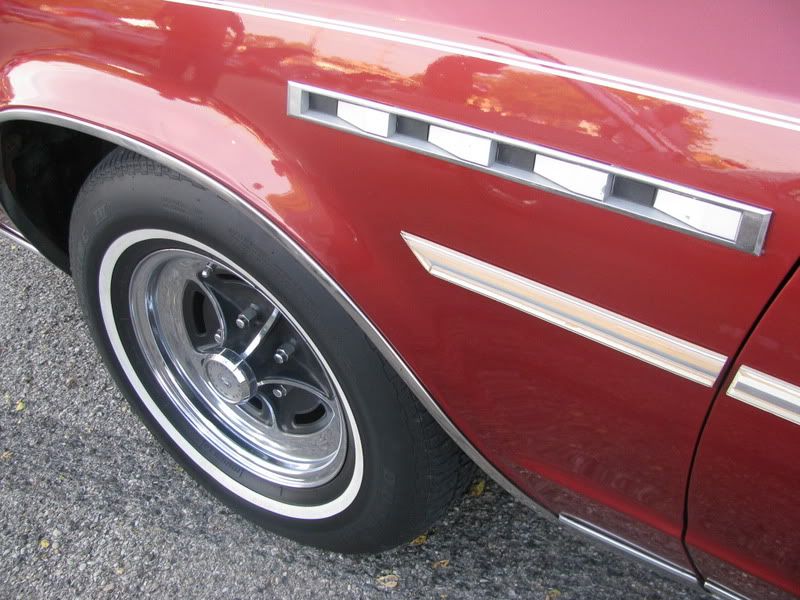
Image result for Buick fender

How will I know how you loved me?
I have left you, that is how you will know.
–Carolyn Creedon, Litany

Jude pulled the fender-rusted Buick into his driveway and braked it to a sliding
stop, the tires skidding on the gravel and off into the ankle-high grass. He cut the
engine and just sat, wet under his suit. Wet under his socks. When he got out, he
reached behind the seat for the fifth of Seagram’s and broke the seal and chugged a
long, throat-burning swallow and started for the backdoor. Across the street, near-
sighted Mrs. Roberts throttled back her mower and waved. Jude raised his free hand
and walked all the faster.

“Better get your windows up, Mr. Hardy.”

He turned to where she pointed. Clouds black as singed dogs ran along the
horizon.

“Fixin’ to storm.”

Jude, his back to the old woman, raised the bottle.

“Fixin’ to be a bucketdropper.

He wiped his lips on his shirt cuff and nodded. “Looks like, doesn’t it?”

“We get those this time of year. Common with the change of seasons and all.”

Jude started again for the backdoor. “I better get our windows down. Christine
will be giving me hell from here to Sunday.”

His neighbor frowned. “You shouldn’t speak like that, Mr. Hardy. Your wife’s a
saint. So sweet, always asking after me since my mister passed. She works so hard.
I always hear her coming home at I don’t know what hour.”

Jude did not answer.

He went into the kitchen where he fished out a tumbler from beneath a stack of
dishes greening with pizza sauce and filled it to the rim. He sipped down the whiskey
and looked out into the living room. Through the picture window, shafts of blue-gray
light dancing with motes fell through the panes slant upon the raw cords in the worn
carpet.

He emptied his glass and filled it and walked out onto the front porch and
slumped into their one wicker chair. Across the street, a dozen ducks sheltered
under a tangle of willow branches bowing into the pond. He watched the ducks,
watched the sky darken, the ozone-charged air growing sharp as angel hair. From
the driveway, a rumble like distant thunder from the headers on her Camaro. The
back door screeched. “Jude!”

He started to rise and sat again. He sipped the whiskey.

She walked back to their bedroom calling him, past the towel-strewn bathroom
and through the living room to just inside the porch door, its screen breaking her
face into squares of light. Jude twisted his glass in half circles inside the palm of his
hand.

“Are your ears petering out too? Did you not hear me?”

Beyond the pond, thunderheads knifed into the sky. A downdraft caught a
stray duck as it swooped low, the dark liquid beating of its wings fluid against the
pewter water. Jude jutted his chin. “Too much wind.”

“Too much booze.”

Jude shrugged. He drank.

“So did you hear the news?”

“Did I hear what news?”

Blackness leached into the woman’s eyes. “Don’t start out by copping an
attitude with me, Mr. Lawyer. I’ve had a hard one today too.”

“No doubt.”

He reached with his free hand and loosened his tie and undid the collar button.
“Sorry. I’ve a lot on my mind.”

“So what else is new? You think the whole world revolves around you and your
all so important problems.”

“Did something happen?”

“Yes, it did. Thank you for expressing an interest in something I said.”

“Of course.”

“Betty’s husband called before I left the office.”

“And?”

Dr. Sullivan died.”

Jude nodded. A clammy breeze fingered his hair. “Yes, I heard.”

“Her husband hadn’t heard the juice. Only that Dr. Sullivan was found dead.”

Lightning veined the bruise colored sky, filling the air with a frail afterscent like
burnt iron.

“He killed himself.”

A roll of thunder swallowed Christine’s words. “Jude? I asked you how.”

Jude reached to his breast pocket for his Salems. “He . . .”

The telephone rang. Jude struck a match and flicked it out into the brown lawn.
The telephone rang again. Christine still stood behind the door.

“You know he’s not calling to ask me to meet him somewhere.”

Christine looked over her shoulder to where the telephone sat in their living
room, not on an end table because Jude had smashed the one they had, but on the
carpet beside a stained sofa that smelled of vomit where he had passed out. The
telephone rang again.

“You better pick it up,” Jude said. “If I do, he’ll only hang up, and you don’t
want to spend another evening with me. We can’t afford to lose the furniture.”

Christine pirouetted on one foot. “Be my guest. Prove to me that you have
some machismo and don’t worry. We have no furniture left worth losing.”

The bedroom door slammed, the squares of glass in the living room window
rattled in their panes.

Jude sat, watched the sway of poplars bordering the pond, their quicksilver
clash of leaves. He unfastened the cufflinks she had given him on his last birthday,
the hand-tooled ones she had her old man buy for her on his monthly run into
Tijuana where he traded meth for the chemicals he used to run his lab secreted in a
Mohave arroyo. Jude rolled his shirtsleeves halfway to his elbows and leaned back in
his chair and watched the blackness close in, listened to the murmur of Christine’s
voice drift from the bedroom window she had cracked open. He could not make out
her words, but he recognized the ache in their tenor from long ago, only now she
spoke her words for Tommy Grazioso.

He never saw the two of them together, but he no need to consult Madam Zola
to read him the signs. Like phone calls she took in another room. Late work nights
when she did not crawl into bed until near dawn, sweetly smiling in the moonlight,
smelling of Tequila and expensive perfume and hours-old lovemaking. Never any
purchases by her on their Visa statement, the full amount of her salary deposited
into their bank account, checks going where they always went, but Gucci blouses
and Armani dresses, their snipped tags in the bathroom wastebasket he puzzled
together late at night while he listened for her car.

Tommy worked for Nicolo Dominic, the boss of her firm’s biggest accounting
client. A narc who Jude once partnered with on a case had seen them a month
before at one of Tommy’s bars up on Youngstown’s north side, snuggling in a back
booth, she on his lap, a diamond bracelet dangling from her wrist. Three times in
four years The Vindicator had plastered Tommy’s face on its front page after the
grand jury indicted him, once for pushing numbers, once for running a call-girl ring,
the charges dismissed after Nicolo made his amends with the Democratic chairman
who ran the county. The third time it got serious when the State Police unsealed a
woman from a fifty-gallon drum some kids on a raft found floating down the
Mahoning River after the chain holding it to its concrete anchor snapped. The
woman, pregnant and Catholic, was seen on Tommy’s arm only a week before she
disappeared. Jude never heard what it cost, but he guessed fixing it cost Nicolo
plenty, fixed the election of Larry, Curly, and Moe to the Court of Appeals.

The bedroom window thudded shut. The skew of light thrown by the door
screen darkened across the floorboards. “So how did you hear about Dr. Sullivan?”

Jude stubbed his cigarette into the sole of his shoe. “When I came back from
court this afternoon, his widow was sitting in my waiting room.”

“You never told me they were clients of yours.”

“They’re not.”

“Then what was she doing hanging out in your office?”

“She dated George some in high school.”

“Oh?” Christine rasped a fingernail across the wire mesh. “That seems odd.”

“Does it?”

“Dr. Sullivan must be thirty years older than your brother.”

“I would say.”

“So.” She tilted her head. She smiled. “Younger wife. Older husband. Who’s a
doctor. My, my.”

A skein of lightning spiderwebbed the sky. Christine looked at her watch. “I’ve got to get ready.” She crossed half the living room and came back. “Wasn’t there a rumor making its rounds about his wife seeing someone?”

Jude tapped his wedding band on the rim of his glass.

“Judy, wasn’t there?”


Judy had been her term of endearment for him since college, and when she wanted something she still cooed it to him. They had met at Ohio State, he in law school, she an accounting major. When she teased him then, she sometimes called him Judy and sometimes Judas because Jude she had only heard in the Beatles’ song her mother sang along with when it played on her oldies station on those afternoons when she had not passed out.

Don’t tell me you can’t afford it, Judy Judas, she said if he pled student poverty, groping deep into both his pockets. I know you’ve got at least thirty pieces of silver, and I’ll find every last one of them after I get your dick out of the way.

He fell for her at 8:55 on a July morning, the elevator door opening, his shoes cemented to the marble foyer, the door closing, a giggle echoing down the elevator shaft. Fell for her Hispanic-Indian beauty, her obsidian eyes overflowing with pools of promise, deep and dark as midnight, fearless as she passed through life save for being overlooked, alone, forsaken by God.

Tina, as she was called then, had fled to the Midwest from Fontana, California, a
smoggy town of working-class houses, each painted a differing shade of greasy dogs’
teeth, birthplace of the Hell’s Angels, of which her father remained a redwing member.
Yet despite a childhood where more than one doper dropped dead in their kitchen after
sampling her old man’s product, Tina’s juvenile sheet consisted of a single shoplifting
offense where she had not even been the one performing the pinch, but had her back
to Sonia, picking out a wardrobe in Vogue, as the other girl palmed a pack of Winstons.

Because of her honor-roll grades, the judge gave the girl unsupervised probation, and Tina was thereafter scrupulous with whom she hung out. She had plans. Plans to be gone from a mother who downed a fifth of vodka before noon, gone from a meth mouthed father who snorted as much as he sold. A month after her probation ended, Tina’s guidance counselor called her into his office and handed her a fat envelope, postmarked Columbus, Ohio. Before she finished the first paragraph, tears were rolling down her cheeks, which she could recall happening only once without her having forced them after a customer squished a sleeping Felix in their driveway under his truck tires.

She never would have applied to Ohio State had her old man not been watching the Big-Ten playoffs on a Saturday too rainy to be out on his Harley, sitting on the sofa as he sealed a dime’s worth into Glad baggies, she puzzling her way through Monday’s trig problems, scratching on a tablet at the kitchen table. She took a stretch break at halftime and went in to watch the cheerleader routines when the announcer instead gave a photo tour of the campuses. She sat, a foot away from the screen. The green foliage and blue skies differed as much from the brown sand and browner air of Fontana as did Oz from Kansas. After the second half kickoff, she went up to her room and dug out the Rand-McNally. Columbus was 2500 miles away.

She applied for a scholarship too, but Student Aid regretfully turned her away. She had sent them no financial information. There was none to send. The three of them lived off whatever wad rode in her old man’s money clip. Her parents had never deposited a nickel into a bank account, nor had they ever filed a tax return. Her old man had no social security number, and her mother could never remember hers. The time her father needed one to post bond for a cousin, he rode up to Folsom and with two cartons of cigarettes bought it from a riding buddy pulling consecutive life stretches. He paid cash for their house and as a joke deeded it into the name of an old beau of her mother’s who disappeared at the end of their courtship, his identifiable parts dispersed over noncontiguous counties, no death certificate issued.

So Tina spent her graduation summer muling for her old man, dodging rip-off artists of limited talent and narcs with less, earning enough from the dopers she shorted to pay for her first year’s tuition and a Neiman Marcus wardrobe after she got to Columbus. She left their house on Garcia Street on a Sunday morning in September wearing a red frock that showed off her brown legs and carrying a backpack that held a change of underwear and her summer earnings and walked down to the corner Seven-Eleven. From a payphone she called a cab that carried her to the Ontario International Airport where with white-lined bills she purchased a one-way ticket.

“Christine,” she said, when the ticket seller asked her name.

She excelled in her classes. She paid for her sophomore year by interning at Arthur Andersen, one floor above the law firm where Jude clerked. They spoke for the first time a week after the elevator door shut in his face, eating their Wendy’s lunches as they sat on a shaded bench beside the fountain facing High Street. She could not look away from him. She adored his dark good looks, his wicked, unprofaned humor, his being almost an attorney, the respect he showed her, so unlike the pump-and-dump-undergraduates always putting their elbows to her chest when they bumped into her at bars. Each noon she watched out her window until she spotted him sitting on the bench, their bench. Once she saw him sitting there, rippling in the haze of summer heat, his eyes not then watery from drink, smiling up at her window though she had yet to point it out, and she took it as a contract with her world to come. How could she know it was possible to rush toward disaster the way dreamers rush toward desire?

They married the weekend after Jude passed the bar. The next day they packed all they owned into a four-foot U-Haul and drove the five hours up to Hanna, the town where Jude had grown up. He began his legal career as a prosecutor in juvenile court, and she found a job with an accounting firm whose major client was the Dominic Company, a construction company deep into developing strip malls funded by Teamster dollars.

Prosecuting mental defectives abused since infancy and often dragged crying from the courtroom left an acrid taste on Jude’s tongue that Seagram’s could not wash away. He acquired a few years experience and quit. When Jude opened an office above
the Hanna Bank & Trust, he told Christine it would take time to build a practice. The past April, he showed her their tax return before she had him sign her name to it and pointed out their progress. She saw the numbers but not the progress. Not the way her old man’s wad bulged in his hip pocket. She and Jude both worked, yet they could not buy a home. While they lived across the street from Hanna Park, it was a one-bedroom clapboard, painted white so long ago it had faded to the color of parking-lot snow. They could not start a family, not that she wanted one. She resented life in a do-nothing-but-go-to-church-on-Sunday-town. While she did not miss the destructive hedonism she had left behind, she did the excitement that came with it where a night’s action downstairs was juicier than a season of Dragnet. How many Hanna housewives, their hair rolled in curlers as they sauntered the aisles of Drotleff’s A & P, searching for pistachio ice cream, had, on the way to the refrigerator for her school lunch, skipped over a corpse spread eagle across the floor and head off to catch her bus, stopping only to turn out the stiff’s pockets and pinch his nose pin if its diamond stud complimented her earrings?

Jude’s working late, his attending Knights of Columbus meetings to cultivate clients, made Christine certain he had a woman stashed aside sucking up their money, notwithstanding the nights she had parked outside his office and saw him at his desk, his forefinger to his temple. She trusted few women and fewer men. It had been common when she came home from school to see strangers coming out of her parents’ bedroom. Once she found a man standing on his head in the middle of their kitchen,
naked save his mismatched socks.

“Hi there, sweetie,” he said.

“Hi there, yourself.”

“My name is Cosmo, and I’m a free spirit.”

“You don’t say?”

A dozen times her old man had thrown she and her mother out, and until he exhausted his supply, they passed from the house of one club crony to another.Don’t you be letting no sonofabitchinman pin your neck into the dirt, was her mother’s advice. You always keep a stick at hand, one with rusty-lockjaw-inflicting-spikes asticking out of it – one that’ll keep him on his knees, begging from you like the dog God made him to be.

It was advice her mother ignored. If within a week of throwing them out he failed to sober up, she would step out to Hendron’s or J&R’s or Fibber McGee’s. It took her no more than an evening in the back seat with a car full of the boys before her old man would be knocking on their door, clear eyed and holding two bags of groceries and a bottle of Smirnoff under his arms, smiling a toothless grin as sweet as candy a week after Easter. She always went back, tears glistening her eyes, no matter his strewing their clothes across the yard, no matter her cauliflowered nose. No matter. Until one of the two overdosed, he was all the security her mother would know.

Christine took to heart her mother’s advice, and at the office party last December,  she found her stick. While she waited for Jude to retrieve their coats, Tommy came up  behind and patted her bottom. For once she gave him the time of day. Maybe we should  discuss it over my lunch hour, she said, and smiled when he whispered that what he  had in mind would take more than an hour. Tommy nodded at Jude when he came back  into the room. I ain’t no jackrabbit, honey.

A week after New Year’s when he asked her if she wanted to meet him for drinks,  she asked him where.

“Do you think that’s why Dr. Sullivan killed himself?” Christine said. “Because she  was seeing someone?”

Jude looked out into the darkness. “I don’t know.

She studied him a moment, fixed him with her black eyes. “I supposed you want  me to believe she told you nothing?”

Jude shook his head.

“Like hell she didn’t.”

“You want me to get it?”

“You stopped answering, remember?”

She walked away and picked up the telephone in the living room, her back to  her husband, her voice low, cooing.

Before retiring to Florida, Tommy’s father worked as a bill collector for the  Dominics, looking so clean and bland when he appeared on a doorstep some debtors  mistook him for a Mormon missionary. His street name was “Thomas and his Singing Hammer,” but the homicide detectives called him Saint Thomas the Philosopher  because in his work he liked to quote the Montaigne the sisters had taught him at  convent school.

The utility of living consists not in the length of days, he recited when he swung his ham-thick arm behind his head as the sisters had their rulers, but in the use of time.

Jude was in the third grade when a hardware store that was part of a discount chain opened up across the street from the one owned by the father of his best friend. His friend’s father matched their prices and tried to keep his store open by sitting in on Thomas’ poker table. In a fortnight he ran up a ten-thousand-dollar chit. Jude’s friend began staying over so often at the Hardy house that he kept two pairs of pajamas in Jude’s room. On the afternoon of the last day of classes at the start of the Christmas holidays, his friend’s mother came home from her job as a biology teacher at the high school, opened the garage door, and found her husband sitting on the floor, his gelatinous eyes open, slivers of brain sliming down the wall, in his hand a .32 revolver with its serial numbers filed off she told the police could not be his.

He never even got drafted on account of he had flat feet. What would he be doing with a pistol?

The police labeled it a suicide, notwithstanding the revolver was clean of even the deceased’s fingerprints, notwithstanding every bone in his right hand had been pulverized to rice grain bits and pounded into the worktable. To the left of the bits of bone fingernailed grooves gouged the soft pinewood. Near the revolver lay a strip of masking tape with facial hair on its sticky side, the deceased looking like he had shaved a square around his mouth into which was stuffed a card hand of aces and
eights, all spades.

Christine hung up the telephone and came back to the door.

“So?” Jude said.

“So I think even if she was seeing someone, it was silly of the doctor to check himself out.”

A raindrop thudded on the porch roof, solitary as a church bell.

“Why?”

“He was a doctor, for Christ’s sake.”

“A doctor can’t have his heart filleted out?”

“What’s it matter?” Christine said. “He should’ve paid her some humongous alimony – that would take him maybe a week to earn if he didn’t pay the taxes on it like you would – and moved on to wife number two.”

“Wife number three.”

“What?”

“She was number two.”

Christine rolled her eyes. “Well, you certainly learned a lot about his married life in just one afternoon.”

Jude did not answer. Black clouds crossed the horizon, their dark tendrils following.

“Or was it only one?”

An hour before, Jude had walked the doctor’s widow to the parking lot in the alley behind his law office. She wore no makeup and none of her jewelry except a wedding ring she fidgeted off and on her finger. At the door to her pink Jaguar, she put her arms around Jude’s neck and kissed him on the cheek, and as she drove away she watched him in the rearview mirror until he had shrunk to a flyspeck.She and Dr. Sullivan had celebrated their anniversary ten days earlier with her going on vacation to Nassau without him. They had met the year before when Christine was working as the seating hostess out at the Oak Tree. Their marriage three months later gave excuse for some snickers in town, but most respected the girl for her moxie and said good for her that she could snare a doctor after all she had gone through.

Her parents had died in a car crash minutes after dropping off her and a sister with an elderly uncle and aunt, the account of their deaths retold on endless evenings as their aunt tucked the girls in after returning from her prayer meeting and tipping back the gin bottle a second time. She swore to them she had heard the scrunch of steel, the screams in the gasoline fire and had turned away from her front window where a mile away a pillar of black smoke snaked heavenward and looked at the girls as they sat in their flannel nighties, drinking hot chocolate and watching the Lennon sisters sing on The Lawrence Welk Show and knew they were now hers.

Taking the girls in proved no small hardship for an uncle and aunt who struggled to get by on the miniscule pension Youngstown Sheet & Tube paid for a forty-foot fall their uncle took where he missed by inches dropping into the bucket
that fed the blast furnace. Yet, while there was much the girls would have liked, prettier clothes, a fancier car to be seen in, they never suffered want. Though they were popular, the worst said about them at the time was that for Baptists they knew
how to have fun. Save for his brother who dated Denise when they were seniors. He told Jude he now found his memories sullied after he learned at a class reunion that on those nights when he had stayed home to study, Denise found her way into
more than one backseat.

The week before George left for college, he and Jude drove out to take Denise and her sister on a farewell picnic. Behind the tar-papered farmhouse, their uncle had already laid in a seven-foot pile of coal for a furnace he had not cleaned since his fall.
The next February the house burned down to its sandstone foundation. A son took in the uncle and aunt, but his wife sniffed something of herself about the girls. They were much too pretty she said for her to be worrying whether she had married a
man who could resist anything except temptation. If he did not bed one, he would with the other, no doubt seriatim, and after her hysterectomy she could not again go out and trap a new one into marriage. She doubted anyway if God made men beyond forty that randy and stupid.

The girls rented a one bedroom in town. Denise’s sister took a job clerking at the discount hardware store, and she found employment at the Oak Tree, first washing dishes, then waiting tables. Once outside the kitchen, Denise raised her hemline, catching the attention of the owner’s son who suggested to his father that she was a natural to seat the upscale dinner crowd they wanted to attract. His father, eyeing her from behind, voiced no demur. A week later when the son and Denise stepped into the alley to share a cigarette, he laid a hundred dollar bill atop a stack of liquor boxes and ran along it from a prescription bottle a needle line of cocaine. A line on Saturday nights became a line a day. Some afternoons she did a line so she could roll out of bed before her sister came home and began questioning her about when she was going to come up with her share of the rent for the last two months.

When his wife moved out with their children, Dr. Sullivan started coming into the Oak Tree. He had never learned to cook anything more exotic than an egg sandwich, and he hated going home to a house without children even if he saw them as seldom as he did his wife. He came in early, having quit surgery because he said his focus had deserted him with his family. Denise often sat at his table until customers began to come in, and the two would share a glass of wine from the bottle she had picked out. As they drank, she liked to kick off her heels and watch his face blush when she ran a silk-stockinged foot up his trouser leg past his knee.

The first weekend after his divorce, she pressed him into their taking a flight to Vegas where for a hundred dollars he hired an Elvis-look-alike off a Strip corner to act as his best man. He hung in his office a picture of the three of them on the steps of the Love-Me-Tender chapel, he and Denise shoulder to shoulder, Elvis’s arm behind her, angling down from her waist, he winking into the camera, her eyes darting to him, smiling. When a month later The Hanna Bank & Trust called to ask about the checks a dozen bars had cashed on his wife’s endorsement, Dr. Sullivan closed the account and moved it up to Youngstown.

He soon had to return to surgery, and as he worked late, Denise killed the hours trying to make friends with the other doctors’ wives. When one after another failed to return her calls, she caught up with her old ones. She sometimes telephoned George, who worked the police beat for the Columbus Dispatch, complaining that marrying skinny-legged-Old-Man-Sulkivan was like caring again for her invalid uncle and aunt. She questioned him once if he had ever blown coke. When she asked if he was still there, he told her that every corner hooker he had ever bought a cup of coffee for seemed always to have gotten there by blowing coke.

So Denise returned to the Oak Tree in the evenings. She put on her midnight blue gown cut in the back almost to her sacrum and sat at the bar, wearing her Las Vegas jewelry and drinking champagne cocktails, chatted with Sammie, who, besides tending bar, earned her extra tips as the go-between with Denise’s dealer. One night Jude wandered in after finishing a drunk driving trial that ran late when the jury hung and Judge Biltmore refused to send them home, a night whited out by a blizzard on which Jude dreaded going home to a cold house.

“Or,” Christine said, laughing, “he could have gotten a little chicky on the side. Saved on the alimony. What do you think, hon?”

Jude swiveled the whiskey at the bottom of his glass, considered the storm-darkened night. “So a man discovering his wife is seeing another isn’t sufficient reason to check himself out?”

Christine’s laugh stilled. She studied the silhouetted figure before her for a long minute, and when she answered she spoke in a whispery voice out of their past. “No, of course not.”

Jude shook his head. The storm had broken, and white sheets of rain harried down the street. Phantoms unloosed. “If on the night they first sat together, clinked their wine glasses and smiled into one another’s eyes, she had seen in them the corpse she would one afternoon give her breath, would any of it had differed?”

The wind rose and rippled the pond. Jude sat, his forefinger at his temple. Christine studied him. “What did she say to you?”

He raised his glass as if to drink, but lowered it again. A black Cadillac had turned at the corner. It cruised by and slowed for a moment in front then continued on. It pulled into the last driveway at the end of the street and dimmed its lights. No one got out.

“Jude?”

“Yes?”

“What did she say?”

Jude pulled at a loose thread hanging from his tie. Its seam slowly unraveled.

“An easy chair in their bedroom was turned to the window, looking out over
the corral where they kept the blooded Arabians he had bought for her last birthday.
On the nightstand stood a bottle of Jack Daniels. One, maybe two shots gone. Next
to it, a notepad with her flight number. Her arrival time. The coroner reckons he killed
himself a few minutes before she found him. Maybe as he watched her car coming
down the road.”

“Did he leave a note?”

“Oh, yes.”

“What did it say?”

He shook his head.

“Jude?”

“No.”

Christine let go a breath. “Well, as this conversation, like so many others, is
going nowhere, I might as well shower. Girls’ night out.”

“Wasn’t that last week.”

“No, you weren’t listening. Last week was some of us celebrating Kathy’s
divorce from her sonofabitchphilandering husband. Not that there is any other
species inhabiting the planet.”

“Oh.”

She disappeared into the darkness of the house. Jude rose and refilled his
glass and came back and watched the rain. Thirty minutes later she returned, doxy
eyed and smelling of the perfume she wore when she came to bed near dawn. She
had on a too-tight skirt and an orange and green sweater that showed off her
breasts. She again had left her wedding ring by his toothbrush. When she leaned
down to peck him on the cheek, she covered with her hand a diamond pendant
pinned above her heart he recognized from a catalog she had dog-eared and left on
the sofa last Christmas, and he had thrown out with the newspaper.

“I won’t be late,” she said. “But don’t wait up.”

She turned on her stiletto heals and went inside. At the door, she looked back,
holding the door open the thinnest of cracks, studied the man at blackness’s edge.

“You going to be ok tonight, Judy?”

“Oh, sure. I think there’s still some pizza in the frig.”

She tapped a plum-shaded fingernail on the screen. “Maybe I should pass on
going out tonight.”

The Cadillac had backed out of the driveway and was driving by their house
again, its headlights out.

“I can if you want me to,” she said softly.

The car stopped at the corner. A cigarette in the back seat reddened and faded.
“Judy?”

He shook his head. “No, that’s ok. You go.”

“You sure? I can, you know. Stay home with you.”

“You need time with your friends.”

“I can have time with them some other night.”

Jude shook his head. “Please leave.”

The nacre paring of a dying moon shown through the clouds. Thinly. Briefly.
“What is it, Judy?”

The air had cooled, and with his words Jude’s breath rose in a gray bouquet.

“He stabbed himself. Standing at the window, he watched her coming up the
road, and with his scalpel he stabbed himself. Dead center in the heart.”

They listened a long time to the hiss of rain.

“When I was a girl, I thought of the past as a thing I could repair. A thing that
existed and the wrongs within it awaited my righting. But what righting is there for a
thing no more? What righting carries a price we are willing to pay?”

Jude said nothing. The windowpanes behind him refracted the staccato
lightning.

“Why did you marry me?” Christine asked. “Why haven’t you left?”

Rainy light from the street lamp fell on Jude’s face. “Because you’re the woman
who loved me. With all your heart. No one will again. Like Doctor Sullivan, I have only
one answer.”

Christine pushed on the screen door as if to come out. The Cadillac headlights
came on, illuminating within their beams the pencil drizzle of rain. She let go the
door. Jude stood. He looked at the glass in his hand and cursed and threw it out
into the night, shattering beside the Cadillac. The driver and rear doors opened. He
went inside as Christine was going out. He waited to hear the deadbolt click home,
and when it did not, he walked back. As he reached for the bolt, the doorknob
turned, slowly, first one way, then the other. Once, twice. Three times.


Scott Kauffman tried dozens of criminal cases, first as an assistant state prosecutor and then as an assistant public defender in a rural Ohio community, which provides much of the background for his first novel, In Deepest Consequences. Scott now resides in Newport Beach, California. He maintains an active law practice, which includes the representation of those charged with white-collar crimes. He is currently at work on a second novel and a collection of short stories. When not working or writing, Scott gardens, reads, and listens to baroque music.

“Duckblind” by David Willis


I was doing my weekly duty with Dad by taking him the park on Saturday.  As usual, I picked him up at the assisted living place (I guess that’s what they call nursing homes now), and I bought us some sodas and sandwiches on the way.  It was the middle of May and we sat on a park bench near the small pond.  He was feeding the ducks and I was sucking on a soda can trying to get the last drops out from the bottom.  I had an amnesia of sorts, sucking on the can repeatedly expecting there to be something in the far reaches.  Definition of insanity, I guess.

It was a nice day at the park and I wasn’t sweating as much as I usually do this time of year.  There was a tiny breeze that occasionally worked its way through the dense oak trees near the lake.  Dad insisted on this bench near the water; the only one without much shade.  If someone was sitting on “his” bench, he would sit down next to them and stare at them until they left.  The small pond had a large, man-made rock formation in the middle where, I’m told, they originally wanted to put in a fountain but the city ran out of money.  Now it was so covered in duck and goose feces that it looked like a giant ice cream sundae floating in the middle of murky water.

“I poisoned a duck once,” my father said out of nowhere.  He paused from throwing the ducks puffs of stale white bread and relit his cigar.  Ashes tumbled off the tip and rolled down his thighs like rain over a windshield.  “I left a marble rye on the counter too long and I guess it went bad.”

“Okay,” I said.  What, exactly, does one say to that?  It’s not like Dad ever cooked and he’d had his share of nights hugging the toilet from misreading the expiration date.  For him, fine dining now was buying an extra biscuit at the fast food place where he got his coffee in the morning.  I crushed my soda can on the ground with the heel of my boot and waited for him to speak.   He concentrated on the ducks as if he was willing them to the bread, and the deep creases on his receding hairline cut deeper the harder he focused.  The scar on the middle of his pate where the melanoma was removed over the winter was still pink.

“Dad, you really should wear a hat,” I said.

“Did you know that they hanged a dog at the Salem witch trials?” He said and flipped a round piece of bread in the air, giving it backspin.

“Sorry?” I said.  A white duck with a streak of grey on its right wing leapt out of the water and jumped between three others near my father’s feet.  The three meek ducks scattered.

“Salem.  You know, that thing in Massachusetts during the colonial days?”  The bully duck was cleaning up what the other ducks had not gotten to yet.  Three white ducks quacked under their breath, if a duck can do such a thing, and started nudging back to where Dad mindlessly tossed the bread.  “They say those girls went crazy because they ate some moldy rye bread.  LSD or something-or-other.”

“I guess the history channel is showing something besides Hilter these days?”  I said, trying to joke.  Dad kept a piece of bread in his hand with an arm outstretched.  He turned his head at me and half-smiled.  The bullied ducks were getting more courageous.  The glutton was begging Dad loudly for the piece he kept in his hand.

“Pink elephants, right?  Isn’t that what they used to say about stuff like that?” Dad said.

“My friends in college said ‘freaking out’ usually,” I said.  I almost said I used to say freaking out.  Regardless of what Dad suspected, there was no use confirming that now.

“Hmph,” Dad said.

He held the piece of bread in front of his face and turned it from one side to the next.  With just slightly bigger glasses on his head he could have been looking at a diamond.  He threw the piece high in the air, and in a cloud of feathers and bills, all of the ducks converged on the bread at once.  The bully flapped his wings and retreated.  The might made right.

“Isn’t that something,” Dad said and broke off another chunk from his loaf and handed it to me.  “Did you see that?”

I don’t think I ever had.


David Willis is a graduate of the Center for Writers at the University of Southern Mississippi and received his Masters’ Degree from CSU, Chico. He lives in the Florida panhandle with his wife and two sons. Dr. Willis teaches English at Jefferson Davis Community College in Brewton, Alabama.


“Atlantic Retreat” by Stephen Busby


To get to a place of salvation takes three ferries in foul weather. In the first, I cling with gritted teeth and churning stomach to the steering wheel of my car alongside other drivers whom I glimpse as ghosts through their misted windows. At the harbor-side to the second ferry I meet a man wrapped in several layers of black tarpaulin who sells me a damp ticket – a single, for they do not sell return trips he tells me, and I do not respond to his smile. I drive aboard, caress the buttons on my cell-phone – it has long lost its signal – and wonder why I do not turn back. I don’t turn back because there is nowhere to go. My life has become too awful and will not allow it. The idea of retreating to a small island in the Atlantic for a week in winter compares well to the courage it would require of me to continue in the old ways.

In the second ferry I am almost alone, the rain falls harder and faster and the reassuring voice of the radio does not stretch this far. Instead there is a scattering of recognizable words in the midst of what might be Gaelic I guess. My destination is a few square miles or so of rock well-known as a place of seekers and sheep and – in the summer – the hub of a lively tourist trade which has made much of the island’s historic and mystical inheritance. I sneer to myself at the thought of all tourists as a lesser species: people intent upon keeping their feet safely in both camps, consumers of second-hand experience. At this comforting thought there is a sudden parting in the cloud-cover to reveal the sun and I drive more contentedly from the ferry and speed off, unencumbered by traffic down a winding single-track road toward the last boat and the thought of hot tea if I can find it.

My sense of elation is short-lived. I begin to shed small probably important pieces of my car in the potholes strewn across the road; I am increasingly hampered by sheep which, just at the last possible moment as I am passing, hurtle across the road in a bid to test my brakes; and the weather soon shrugs off this stranger the sun in order to return the world to greyness. Light rain is followed by an intense downpour: driving horizontal winds and water are thrown against the car windows in sheets and my windshield wipers cannot cope. I do my best to park on what I hope is solid ground. While the weather does its worst I fall asleep.

My dream is of my parents sitting in their kitchen which has become a vast cave; there are bats and other insects hanging from the ceiling. Conversation between them is a dialogue of the deaf: in the dream their mouths open soundlessly and I know that they are trying to say grace before the meal but somehow cannot; instead I hear from somewhere the one word which they both most frequently pronounce in daily life which is “pardon”, as neither can entirely hear the other. This pardon ricochets around the walls of the kitchen-cum-cave and I see that the back of it opens out onto a vast rocky landscape. I look down to find that the ground I’m standing on has become marshland and that I ought to be sinking into this, but haven’t yet. I bend down to look closer as the ground flies up towards me: I’m no longer clear whether I’m beneath it or still standing, or floating along in its porridge-like consistency. There is only the receding sound of a pardon and a kind of rubbery-rail which I cling to but which appears quite unattached, then a chanting sound and lightness in the air and inside me. I feel carried and graceful and unconcerned and wake up with a jolt to find that I am gripping the steering wheel again and although, now, there is absolute silence all around me – for the storm and the wind have subsided – the feel or quality of the eerie chanting I had heard is still there, inside.

………………………………..


Outside there is an extraordinary landscape: grey-green mountains squat immediately in front of me and the little road winds between them while over to my right is the coast and the sea which is shining. Everything appears to be shining I see, as the quality of the light grows more fantastic. Where before all was gloomy and grey, now – after the storm – it is as if sunlight were penetrating upwards through the rocks and the land: it is all luminous in vivid greens, amber-browns and glowing greys, and as I drive off slowly I grow drunk on these colors and on the sheen of the sea, on the sheer craziness and beauty of the rocks and boulders strewn around me and on the mountains as I drive, dwarfed, between them. There are tiny white cottages here and there with bright-red roofs and dry-stone garden walls; even the sheep are content to let me pass by in a spirit of goodwill and benevolence.

By the time I pull up at the last harbor of the day I’m high on the idea of my changed life and endless possibilities and am heartened, too, to see a few other cars parked and – in the waiting room next to the final ticket office – even a small crowd of people sitting, and so I will not be alone. I have an hour to wait. In that time the winds pick up again and to my dismay a small bus arrives and takes everyone else away: they were leaving the island and not, like me, about to arrive. I sit on a bench in the little room with its snack counter and a young woman sitting reading behind it. She is pretty and will not look in my direction. I listen to the wind and rain outside as the time of the ferry’s departure approaches but there is no one and no ferry and only the old angst in me which I know is archaic: shall I be safe and looked after, will life not then go according to plan, and how has it slipped again from my control?

Outside I find the ticket office has closed. I knock at its door, standing in the rain. On the third knock there is a grunt, the kind made upon waking. The door opens and a man dressed inevitably in a sheet of tarpaulin nods in the direction of the sea, just visible in the mist which has come down. Yes – there is a boat out there, a very small one I see, and one which the tarpaulin tells me has anchored, the sea being too rough for it to come in at the moment. “We might get one last one of the day” he says, “or we might not”. Head down into the wind, I make for the public phone box on the quay-side to call Mr. P, my host on the island. I will ask him to keep my room for me in case I have to sleep in the car or have to swim from the ship. He sounds nonchalant and cheerful: an attitude which is infectious and improves my mood. He can see when the ferry comes, he says, from his front room, so will come down then to the harbor to collect me as it docks. There is nothing but waiting to be done and patience to be gained and, back in the waiting-room-of-life, a local man clad in tarpaulin has arrived and is leaning across the snack-counter towards the young woman in order to unleash his charm upon her as I look on from my seat in the stalls. For the next hour he focuses his whole being upon her while she, amused, easily contains him: teasing and drawing him on, in, deeper into the story he’s telling her of his day, his life, all his soul’s longings, with a confidence that I envy and resent. She sits there tranquil in her power on the chair while I eat my last hard-boiled egg.

There is a loud honking which comes from the ferry and I realize that I am not ready for the ordeal of the crossing to come. I dash out to the car to pull together my bags and am drenched within seconds. There will be too much to carry I see, for this ferry is for foot passengers only: no cars are allowed on the island unless they belong to the locals. I decide to abandon my shoes for my boots – ridiculous to imagine anything being worn out here except boots and tarpaulin – and pile everything up by the side of the car where it is instantly soaked through: my suitcase was never made for weather like this. How ill-equipped I am – for the Atlantic, for life. I’ve no tarpaulins and had no idea they could be worn as opposed to being stood on, and my coat won’t stand for the kind of rain being hurled from clouds which have absorbed half the Atlantic before they hit me. My woolen hat is ridiculous and is keeping my head wetter and my hands are so damp and cold that I cannot even get them dry and smooth enough to be able to pull on my gloves. I run head down into the wind towards the little ferry which has now parked and opened its jaws ready to receive me but it hasn’t docked far enough up the concrete ramp to cover the waves which are washing up around it and which I will have to splash through; there would be no way to get any wetter. I find myself running alongside one other dark hurtling figure who has burst from a nearby truck and whom I’m delighted to see as I haul my suitcase up onto the metal tongue of the boat – run through its mouth and into the stomach of the ship, leaving more of the known world behind me.

My companion as I run inside the ship turns out to be a local farmer who has plenty to say to no one in particular. He speaks to the gods, to the empty air, to whoever might be listening and it is all one long litany of complaint: the weather, the ferries, the tides, the rising price of sheep-feed and so on. I feel easy with him, with his great tousled head of hair now released from the tarpaulin and the earnest mad look in his mild blue eyes. It is as if we cross some kind of threshold in each other’s company as the boat bucks and heaves on each trough and crest, and although my stomach is lurching a kind of peace settles upon me. He seems to calm too and turns to muttering and relaxes into himself as we sit, dripping, together: two men moving wordlessly with the waves.

We manage to dock at last at the side of the island, the floor scrapes under our feet and the steel jaw opens to reveal a misty and windswept little harbor, a row of cottages and a small man in front of a van who holds up his hand in my direction. The ship’s few crew-members have gathered to watch our departure, which is kind, until I realize that they are there for the entertainment: to see how well I will time my leap from the ferry’s lip onto the concrete as the waves wash around us. I look around intending to follow the farmer but he has already abandoned me and so, assuming the mantle of a man whom I am not, I stride confidently off the ramp – into a huge wave which breaks up to my knees and all but blows the poor sodden suitcase out of my hand. The crew have been well entertained and are cheering and I am ashore: I am here, have crossed the country and now claim my space upon this storm-swept rock. It is a Tuesday; I am soaked through and feel ecstatic at the direction my life’s taking – into Mr. P’s van, filled with the rich perfume of wet sheep. Together we grind off around the island through the potholes and the weather, to a small white cottage on a headland at the edge of the inhabited world.

Mr P grunts at my attempt to engage him in conversation and will say nothing until he throws open the door to my new home and holds up a small plastic bag of coins which, he makes clear, I will be needing for the meter and must now buy from him. He drops a couple of coins for me in a metal box behind the door and is gone: offering nothing more than that he and his wife occupy the big house up the road should I ever need them. I am suddenly alone.

Being alone is a great boon, especially for the first half hour when there is plenty to do. I discover that my domain comprises a couple of barely furnished rooms, a kitchen corner, some cupboards of blankets and several large old-style and hungry-looking electric-bar radiators. Feeding the magic box behind the door with coins brings these radiators to life, soon has my wet clothes steaming, and produces an alarmingly loud and frequent thudding noise which is the sound of my hard-earned savings buying me heat, light and life, and there is a nagging suspicion that Mr and Mrs P are complicit with the electricity company because there is no way that merely staying alive – breathing and steaming – could consume this much money so often out of the plastic bag. What’s more, I discover that the thuds increase in frequency in direct proportion to how much I like to stay alive: if I wish to eat anything other than driftwood then I must turn on the stove which has the metal box thudding faster than my pulse-rate or, I calculate, my ability to earn that much per minute. And if I switch on a second antique-looking radiator then the box goes into such a frenzy of thudding that I decide I will live sleep eat and shit in front of only the one main heater; in fact I shall embrace, kneel down and make offerings to the holy warmth emanating from its bars. Once the little bed has been moved closer to my new god-of-heat I put on as much dry underwear as I can find and slip easily into sleep, accompanied by a steady and now slower rhythmical thud, and picture Mr and Mrs P nearby in their bed too, no doubt lulled by this lucrative sound coming from my cottage.

In the night I revisit a version of my recent life with my wife, based on memories of togetherness and sex. There is the little house in the mountains where we once stayed, the kitchen table – though much larger than I remembered it – and she is splayed on top of it as I pull her long legs towards me and then that moment of truth or strangeness which flashed between us when – wordlessly – we were somehow more uncaring and primeval in that foreign place, when we both knew this and held each other differently and I felt the beat and flutter in her chest. But in the dream we cannot find a way down off this table because it fills the whole room and she would climb out of the window except that it is covered with tarpaulin and I prevent her from tearing it down – I know that there is an army outside or something which mustn’t be confronted whereas here on the table we are safe. But she becomes ill and desperate, wants to leave and I cannot save her; the house begins to burn and the table starts to curl and blacken at the edges; there’s a great roaring and rhythmical beating and in the distance some murmuring or chanting sounds coming closer, and everything is burning as I tear at my clothes and then wake, sweating in the cool room, to the beat coming from the box in the corner and an absolute sudden stillness. I lie listening to the rain being driven against the windows and can still hear the echo of the same quiet insistent chant without making out the words.

………………………………..

In the morning and after I have twice rearranged my groceries on the little shelf, there seems to be alarmingly little to do. I decide to walk back towards the harbor, calling in at the little church on the way and which is apparently the reason why so many pilgrims are drawn here in the more reasonable summer months.

Outside, a mountain sits squat at the center of the island which slopes off to white beaches at the north. Apart from the squealing gulls I am alone as I walk; the skies have cleared, the sheep look up as I pass and there are worse ways I realize to spend a Wednesday. There is also the welcome opportunity for a little retail therapy: in the gift shop which hasn’t yet closed at the end of the season and which sits at the side of the church. Inside a kind elderly man introduces me to their range of table mats, pottery and souvenir spoons – all of which feature the name of the local saint: he whose church I’m about to visit and who has done so much generally for the economy of the island and for the local Tourist Authority in particular.

I wander outside, sit on a bench in the sun which has appeared and ponder the little church. It is built in friendly red sandstone and features a large ancient looking cross in its churchyard. I close my eyes and find my mind traveling back to a monastery once visited in France. I had been drawn to its cloisters and, as I sat there in their shade, saw that after one of the services some of the Brothers filed out of the church and came to sit along one side of its old walls, one monk in a white habit on each bench. People came out of the church: the young and the old, the feeble, the strong and the pretty, to sit next to the Brothers, apparently to talk. One youngish man in particular struck me: he’d chosen an older monk who listened to what he had to say attentively, seemed at the end to offer a few words of comfort or advice and then lifted and placed his hands up on the young man’s head. I see this now again in slow-motion as I sit here: the monk’s white sleeves and old hands lifting and falling gently down onto the top of the man’s head. Watching this and to my astonishment I began to shudder and to sob: great heaving sobs broke out of me in that place and they were all the more shocking because they felt so foreign and somehow familiar and a relief.

Inside this church it is cool, dark, surprisingly empty. Very few chairs, lots of space, simple stained-glass windows which cast a glow across the old stone floor, and the smell of something damp and polished. It is also very quiet. Walking around I find, at the far side behind one of the old columns, a dark space called ‘The Quiet Corner’ where visitors are invited to light a candle. Here the glass in the window is unstained, only pale light penetrates in across the floor and someone has placed a jam-jar of wild flowers on the stone windowsill, next to some round pebbles, probably from the beach. Next to it are two stripped old branches of a tree fixed together as a cross leaning against the wall. On these branches are pinned several shreds of white paper which I can just about read in the available light. They are written for Uncle John so that he may get better; for Charlotte in her grief; for Mary, Donald, Keith and Wendy, who were all killed and who are in Heaven; for Roger, may he find peace; for Smokey (in a child’s hand); and for Mummy who is with Jesus. Some of them are long letters, some are decorated, others are plain – just one word or two, which sometimes is: ‘Peace’, and ‘Love is the Answer’, and one barely legible – perhaps an elderly or an infant hand, which reads: ‘Help me please’. I see the little stack of papers and pins on the windowsill, take one of each, write my word: the name I shall leave here and which I suppose now is part of the reason I have come, and pin it to one of the branches.

Then I turn and leave the church and go out into the sun. I walk a long way it seems to me, without noticing or seeing very much, back to the cottage where I lie down and sleep. It is a name that nobody knows but me: a name I had whispered to myself privately without ever sharing it with my wife because she did not want to know whether we would need the name of a boy or of a girl, or perhaps because I didn’t trust her enough to imagine that we might be able to name someone together. The name lies, still-born, inside me, as I suppose does whatever name she had chosen, wherever she is now.

………………………………..

Three long days later I wake feeling wretched, useless and short of breath whenever I contemplate a return to the city. From outside comes the sound of rain again; above me the window is a dull shade of grey, inside me it is the same. In the corner the pile of dirty dishes has begun faintly to smell. I’ve almost no coins left to feed the thudding meter and there is nothing to do. I decide to go and see Mr P: I shall escape from my prison a day early in order to move again amongst people who lead their distracted lives in a fashion appropriate to the twenty-first century rather than so meanly as if in the medieval age. But Mr. P is unenthusiastic about this plan as we stand in the mud and driving rain in front of his farm. I ask him again if he will take me to the ferry. There is a long silence as he looks over at the mountain which rises up behind the farm, just discernible through the mist. He reminds me that tomorrow is my due date, turns his tarpaulined head in the direction of the mountain and suggests that I go climb it for the day. He looks directly at me as I am about to protest and tells me that the wind may be dropping soon, that it could be a fine day.

“How do I get up there then?” I hear myself saying, incredulous. He nods his head again in the direction of the southerly side. As he does so there is a slight clearing in the cloud-cover over there, so – the promise of some sun, and I see myself striding resolutely up the side of the rock, surveying the island from the top: it will not have defeated me; I will have met all the necessary challenges in coming here; nothing has been or will be too much to bear. Moreover I will be proud of my adventure and achievement in coming here.

The walk begins well and the cloud has cleared. I negotiate the fields behind the farm and discover a small sign posted beside a track which reads “To the Hermit’s Cell”. So I shall emulate the local saint and follow his tracks upwards, for in all likelihood he will have considered the tourists and chosen somewhere with a view. The going is not good though: the lower slopes become increasingly boggy and I lose sight of the path. Soon the reassuring tufts of grass which were my stepping-stones over the marshy ground give way and I’m sinking into the black goo underneath. It will be hard to clean off my boots but I persevere nevertheless, plopping and slurping my way ever upwards. Then one green tuft gives way completely – they have begun to fool me by floating on top of what is essentially black water – and my whole foot goes in, and under. I will have to turn back I decide, before the mud and the marsh claim me. On the other hand I see in front of me that the ground will soon rise more steeply and, anyway, once one’s footwear has been filled up with mud there’s little left to lose. Soon both boots are filled and I falter. The lower slopes seem no nearer and some of Mr. P’s sheep have wandered across the field in order to follow my progress more closely: they observe me cruelly from a distance with their little black eyes. I struggle on across the bog, sit down on comparatively dry land and contemplate my black hooves. There is really nothing in nature that is of any practical use, it seems to me, although the natural world does undeniably have a certain aesthetic value, especially when admired from the window of a very fast car.

Either I’m not equipped to deal with nature, I decide, as I get up and begin to make my way upwards, or I am not much equipped for anything at all. I picture a composite version of all the teachers whose classrooms I’ve sat and suffered in: ‘What actually are you equipped to do in life?’ they all seem to be saying, while knowing already the answer to this, and then my father joins in: ‘Stand up straighter, don’t look so nervous all the time. How old are you now? What are you going to do…?” and so on, and on.

‘What are you going to do’ becomes a mantra that accompanies me as I climb on upwards, and ‘How old are you?’ as I maneuver around the rocks and boulders that are becoming more frequent, ‘…going to do… What are you…?’ What, where, why, and who – who are you, why are you here on the side of a mountain at all? Who are you, as I slip on the rocks and the rubble, and have to stop for breath: I haven’t climbed very far. I look up: the clouds are gathering, thick and dark overhead but the bog is well behind me now and would be impassable in a storm. I clamber up a bit more, there’s no semblance of a path although there is a kind of cleared way through the boulders. But now the storm breaks: little patches of wetness grow larger on the green and yellow-brown lichen-covered rocks and then very soon everything is wet; the rain is dropping and plopping all around me; my thin coat is wetted again, and my hands – cold and gloveless – find it harder to hold on to the rocks on either side of me and to lever myself upwards. I’m slipping more on the steep rubble-ground but won’t stop now – what are you equipped for – what are you going to do – I go on hauling myself upwards: this is what I do, there is only this, as I slip and slide and grip onto rocks and pull and pant and go on climbing; how old are you now – I’m 42; who are you – I don’t know; where are you – I’m climbing this mountain; I’m climbing, and the storm is certainly worse: the wind has gotten up and I probably shouldn’t go much higher; it’s colder now – I go higher: I pull myself up, something in me hauls myself up over and around and through the slippery rocks, over the rubble, through the driving rain and the wind whipping my face: I’m all wet, everything’s wet and I’m part of it and there’s a kind of new strength which comes into my feet, for there’s nothing which is dry to defend anymore – only the climb, the next handhold to find and the feet to move again, ever on and upwards. Suddenly there’s a break – a clearing in the rocks and nothing to hold on to anymore: I’ve broken through and past the rocky slopes and seem to have reached a bit of clearer less-encumbered ground. It’s still steep though and so I stand there a minute, heaving and breathing, but the wind is even wilder here: it whips and shoves at me so that I sway, have to spread my legs and brace myself against the ground, and for the first time I wonder at the threat of the weather or of something much larger than me. I’m too exposed and so I stand up straight again, ready to head off for the rocks. But there’s a loud crack of thunder not far away as the storm gathers itself for more and something bright flashes nearby. I look around blinking: the slopes and the land below me are barely discernible now through the curtain of rain, and neither can I make out much of what lies ahead: a patch of rocks and beyond that a cluster of huge-looking boulders, perhaps the promise of some shelter. I prepare to move on out of the worst of the wind.

Suddenly I feel both feet lifting slightly from the ground: it is momentary but might as well have lasted hours and a terrifying exhilaration comes through me then. I turn – too quickly – to make off towards the boulders and I slip on the rubble floor; I fall heavily – hands splayed out and scraped heavy against the splintery ground; something in my leg twists as I fall, there’s a sudden dark streak of pain but it’s the shock of it which winds me more and I sit there too stunned to move. I have to get up: I can’t get up, I cannot stand; I have to move – I move: I scrape and pull myself along the ground, scrape and pull and have my leg follow me, there isn’t any sensation – just the howl of the storm and the wind and the rain all over and inside me and the pulling and the scraping: Where are you going – I’m going to those boulders; Who are you then – I’m here, crawling up the mountain; How old are you now – don’t know; Who are – don’t know. I don’t know, and I don’t know but I go on, I think, something happens, nothing happens, nothing changes, I don’t remember: I’m pulling and heaving and scraping along and there’s another lightening flash somewhere near me or another light or nothing at all; yes nothing at all – only blackness and an instant and near-absolute absence of sound: only that faint chanting again which fades towards black silence and into which I slip gladly, how welcome and wonderful because there is nothing more now that needs to be done.

………………………………..

When I open my eyes there are green and yellow-grey shapes in front of me. The air feels cool and the ground is hard underneath and everything is quiet except for some birdsong nearby. The colored shapes turn out to be lichen on the rocks, near my head. I turn slightly: there’s rock overhead too. I am lying at the entrance of a kind of small cave formed by boulders and outside there’s a clear blue sky from where the birdsong is coming. I lift myself up, look around: there’s nothing in the small cave, it’s really just some large rocks lodged together. I move my leg – it moves, aches a little. I get up and walk outside.

There is a light breeze; the sun beats overhead and everything is shining, just as it was when I drove off the ferry I remember: sunlight reflects off the ground and the rocks and the patches of so-green grass; it is all so light and intense that I have to shield my eyes. Down below I can see my small cottage on the headland, Mr. P’s farm, and way beyond that the church and gift shop and – beyond that – moving along like a slow animal in the water is the little ferry, flashing in the bright sun. I turn around: the western flank of the island stretches before me: an expanse of glowing green and grey rock which leads in the distance to the unimaginable expanse of the Atlantic, heaving gently under the wind. I must be standing near the highest point on the island. Can there be many better sensations than this? I notice a small plaque, incongruous, on a carved stone nearby. It tells me that these boulders are the remains of the Hermit’s Cell. Somebody once lived a life of unimaginable devotion and sacrifice here – and here am I, meanwhile – shot through suddenly with a kind of fire and lightness which seems to be coming up from the mountain itself under my boots. Over the aeons here people have offered something of themselves and lived in awe. Perhaps they’ve anchored something more-than-mortal here, and which didn’t die with them.

Clouds rush across the sky. I decide to climb on a little higher. My leg is stiff but quite bearable. Here the lichen is splashed across the rocks in an evermore dazzling combination of colour. I go on up and over the peak and see now – not so far away – the northern shore: its white beaches glittering in the sun. I walk, scramble, even – in places – scamper down the mountain towards the shore. Eventually I’m alone on the beaches, quite alone. No footprints, litter or noise other than the soft regular swish of the sea. This is all that the saint and his followers had for recreation and it hasn’t changed much since. The waves are full of white icing against the sheer blue cloudless sky; the clear white sand is studded with rocks reflecting the sun while others sit half-submerged in the swaying steely-blue sea. I find some quiet little rock coves with their own sheltered pools and peer, astonished, downwards – through the clear water. I see the pools are heaving with life. There are tiny round shells, small fine-frilled creatures crawling along the bottom and, when I lift up one of the stones in the water a beetle scuttles away and a crab stands its ground. As I look down I realize that the wind has almost entirely died away: it is so quiet that for the first time in years the persistent ringing in my ears has disappeared. Where – who – am I really? I’ve a sudden urge to go and kneel down somewhere in silence, to offer myself up to some great cause, to pour out all the words which have always escaped me. It would be a simple thing here to go prostrate myself before an altar, to live alone in a cell, to live each day and night punctuated by prayer, to forgo all the luxuries of life which seem, in this moment, superfluous. I kneel by the pool.

………………………………..

The next day when Mr. P comes to the cottage to collect me and drive me to the ferry we speak more easily – about the unpredictability of the tourist trade and the politics behind the government subsidies which finance the ferries and local services upon which all the farmers depend. I shake his hand and tell him that I shall be back then turn and walk onto the boat.

Back in my car I’m surprised to find so much that is familiar again. The act of driving, so strange: the curve of the car seat, the feel of the old shoes again on my feet: comfortable, reassuring and somehow illusory, I realize, as I move off: this measure of control that I seem to be exerting over my environment, over my life.


Stephen Busby is a traveler and writer based in the Findhorn Community, northern Scotland.  His prose and poetry have appeared in Cezanne’s Carrot, r.kv.r.y. (visiting hugh and love ends), Visionary Tongue, The Battered Suitcase, Santa Fe Writers Project, and Secret Attic.  Stephen also works in the corporate and not-for-profit sectors, running transformative learning events there. His website is here.

“Love Ends” by Stephen Busby


Love ends when the man says so to the woman, one blustery afternoon on the
far northern coastline the day after they have arrived there. It’s the end, he says
to her as they sit on a bench at the deserted seafront so that at first she thinks
that he means he won’t walk any further. She looks at him again: at the side of
his face which is set hard, determination writ large there along with the fear. He
won’t look at her. He says the same thing again and she sees that he’s never said
it before in the same way; there’s no question in it anymore.

She sees herself sitting alone in some bustling café, ordering her own food, her
own life, sees her own slide towards old age clearly, without pity: it’s feasible, not
inconceivable at all. Here it is, emerging from the fog of mutual recrimination and
unbidden silences which have killed off their two years together. It stands
revealed and she sees that she can cradle it and that she has no choice now but
to do this, that it will have to be held and that perhaps she will even be helped. All
this she sees in an instant as she looks out at the waves crashing against the sea
barrier and a pigeon stands there observing her, its head cocked, waiting. Now
she need not wait any more. She turns back to look at him with a new kind of
curiosity: he’s holding his face in his hands, he who was hers, whatever that has
meant.

The man has discovered that some emotion has come. It begins down inside,
wells up in his chest and throat and shudders out, the first of several long
wrenching sobs. So it wasn’t so far away in him, it was just waiting – for the
words and once they’d been uttered they were not so unthinkable after all. He
holds his head in his hands and shakes with it as each new surprise shudders out
of him. There’s nothing he need do, nothing he need hang on to; his body’s
doing it despite him, despite his determination to stay collected on top of
whatever was there. The sobbing subsides a little then – as if nervous that it will
die before it has really gotten going – then begins again with more vigour; the
sobs are being torn out of him: up through his chest; wretched, marvellous,
humiliating and alright, everything alright, all at the same time.

The woman watches him sobbing with this new-found abandon. She’s become an
observer and she has nothing to say to him anymore. She’s pleased for him and
it doesn’t matter very much. She gets up and walks to the edge of the sea-wall.
The pigeon removes itself to a safe distance; the waves continue to crash against
the new-found calm and settled waters right at the centre of her, and some
distance away a small boat struggles to make its way forward amid the heaving
seas, its progress is slow and determined.

Love ends then as soon as a decision’s been reached, as soon as he’s decreed it.
But they’ve just arrived at the coast; they’re at the beginning of the week in the
rented cottage that he’s found: the place where life and love were going to sort
themselves out. There are plane tickets, logistics, monies paid, keys procured,
foodstuffs and deliveries arranged; there’s life: planned, timed and anticipated,
there was a map spread out in front of them, holiday time taken, someone whom
the man knew who’d already been to the cottage by the coast and then there was
the going ahead and making all the arrangements while she looked on, knowing
they were talking about all the wrong things, this life: by turns loving, hellish,
reconciled, cautious and abandoned, split with longing, with ‘unmet needs’ as the
books put it and a great all-consuming fear that each is not being loved enough,
that a life is not contained within a timetable and that now they’re here, yes here:
sitting opposite each other at the table in the little kitchen in the cottage, the old
heating has been made to work, the candles have been lit so as to make the place
homey, she thought, and the week stretches long before them.

He has a sense of foreboding: what has he done? Not the wrong thing in
speaking – no, not that but the wrong thing he thinks in doing it at the beginning
of the week. The words hadn’t been his however: they’d spoken themselves out
and now they sit here heavily upon the table between them. Well, we have a
week, he says, a week in which to separate. She nods; they’ve become business-
like again. They’ve done the workshops, watched complete strangers expose the
intimate detail of their lives, wondered about self-awareness and learned that
maturity must be earned, that it isn’t some god-given thing. Now a call to
maturity or something like it has been served up on the table and it is not the
most appetising thing. Looking at him, she argues aloud that there’s a gift in it:
this time for talking, understanding, forgiveness, healing even. She’s surprised at
the sounds as she speaks them. Not looking at her, he fears she means a time
for reconciliation, renewal, hope and the birth of something new and he knows he
won’t have it, he must be stronger than he’s been before: he must honour the
impulse which this thing in him knows to be right: to end the constant torment of
togetherness. She knows this is what he fears: that because he’s the one who’s
leaving and not her, that she’ll resort to anything which might mend them, for
she has nothing to lose. He knows that she knows he fears this, they know each
other: they’ve fucked, cried, thrown things across the room and held each other’s
souls in their arms. Suddenly they can smile at this: something’s been shared and
they eat, talk even, cautiously, about everyday things; they see with relief that
they can be ordinary, that there’s washing-up to be done, cupboards to be
opened, drawers explored, an internet to be tested and a bed to be made. That
the end doesn’t have to hang over them like a sword every instant of the day,
that yes they’ll have time together this week to talk, bring understanding to what
has happened and time too to be apart: the coastline is long, it can contain them,
separately, as they separate, slowly as adults, and it isn’t the end of the known
world: there’s dessert to come which they’ve brought with them and the night
doesn’t yet need to be thought about, what’s a week after all – – it’ll be short;
they’ll savour it they say.

Love ends again as they lie in the bed later, listening to the wind, so ferocious and
to the silence between them. Like the shoe moulded through long use to the
shape of your foot they’ve fallen together into the centre of the bed and, as with
every night, are held hugging. This is what happens before sleeping: a way to end
the day, putting little disagreements behind them, feeling the familiarity, accepting
this embrace, their shared defence against the world. He’s lying on his back and
she’s laid her head against his chest while holding him. He has his arms around
her so that she’s pulled against him while lying on her side, one of her legs is laid
over his and she listens to his breathing. With his hand he strokes her back
because she likes this and she shifts her leg slightly against his thigh. He feels an
erection stirring unbidden as it is bound to do, thickening in anticipation and she
feels it too, warm and hardening, how could she not: she knows it, they both
know how it starts, but not, this time, how it stops. He could go there easily he
says to himself: he could shift his leg slightly so that his cock would come more
into contact with her, touch engendering desire which will seek its own satisfaction
in touching while he brings her with his arms closer to him or she presses herself
harder to him (the effect is the same). But something else is hard in him: the
memory of those moments this morning when the end came, sounding so
resolute, so much a surprise.

He feels the cost of it since the beginning: the constant warfare, the
reconciliations and resignation; it’s always been harder to stop than to go on. But
the lovemaking’s almost always been beautiful: in sex they’ve found each other;
there’s been abandonment, an offering-up and a release unknown in any other
tight corner of their togetherness and so they’ve sheltered there, been nurtured
there yes surely, but, he thinks, they’ve escaped there – he knows that he has.
He thinks he knows that she won’t admit this, can’t perhaps and then somewhere
in there, so far away, so tight and concealed in a little primeval masculine place, is
an old fear: that when she makes love it’s not really with him but is rather – in
that womanly-way – so abandoned and so free that she’s no longer there for
him; she’s gone, slipped away somewhere; how hard it is to explain it: like an
absence, as if he doesn’t count (and he needs to), as if he’s a way for her to
reach somewhere private inside: somewhere closed to him, as if it could be him or
any other man which procures this for her, as if he were no more than her means
to an end, that it isn’t him whom she loves but what he gives her and giving her
something is all he knows how to do.

He doesn’t squeeze her more tightly to him and his stroking of her back has
slowed down, his erection’s subsided and he lies still on his back in the bed. All
these are the signs, they both know, which signify sleeping. Soon they’ll extricate
themselves from each other’s embrace and he’ll turn on his side, his back to her,
for he can’t sleep any other way than really alone. And she’ll lie there, equally
alone if not more so, and wide suddenly to the knowledge of separation as the
fact, real and wide open and exposed to it now because it is here – not in some
future celibate life, not in resigned spinsterhood, not in resignation at all: it’s here
in the bed with her and it is presence – for he who’s loved me is still here she tells
herself – and it is absence at the same time; it’s the fathomless pit that lies
underneath all that she’s ever done for company, to occupy and distract herself,
to persuade herself that it – that which was born in her and which she’s never
shaken off – is threatening, finally, to catch up with her and to lay its hand over
her mouth. It’s not solitude really, she knows, it’s not even being alone – for she
is happy there sometimes, so what is it? It’s all and everything which she’s always
longed and yearned for and which has escaped her, everything that was ever
withheld from her and it doesn’t have a name because words came after it, and it
doesn’t have a home – it will never be still, will never let her go. It stabs at her
then: a spear straight into the heart so that she cries out despite herself. The
man stirs suddenly but he doesn’t turn round – so he’s decided then: will he
never turn around to her again, will she never be held, won’t the tears streaming
from her ever be witnessed, won’t there be a sharing of anything again?

Love ends again the next evening when the man shrugs, puts on his coat and
walks away from the cottage towards the sea-front. He’s going out for some air
he says in a way that means he will do it alone. He reaches the public telephone
box down a side-street: love ends a little more when he gets through to the
person at the other end of the line and says that he’s done it: he’s left her, he
says, or he is leaving her, or he will leave her – one of these three, and he says it
with urgency and some exhilaration; he’s jubilant and yet solemn for he knows he
must make it seem and sound a big thing. He feels release when he says this –
just to be able to talk like this – openly again, without reserve, after the two
hellish days in the cottage where he can’t afford to allow himself feeling, he has
only a few more days to get through he says and then he’s free (yes he does use
that word). He’s waited to share this with the person who has now gone very
quiet on the other end of the phone-line, what’s going on, he thinks – has
something gone wrong? Listen, I can’t talk now, the voice says to him, but I’m
really pleased for you, then after a few more moments’ silence: it says again:
really pleased. He can hear the restraint in the voice and with a stab of sudden
fear he says: But aren’t you pleased for us – for us? Then the silence is broken
again: No, the voice tells him, and it sounds suddenly harder: I’m pleased for you.
Just for you.

Love ends on a windswept beach where two people are running along the water’s
edge, where the little waves are lapping at their legs. Are they running together or
separately, it’s hard to tell because the woman goes on running for a long while
after the man’s stopped, standing with his hands on his hips, breathing hard. He
looks at the diminishing figure of the woman who has reached the end of the
beach now, where the rock-face suddenly rises up out of the sand and where she
has begun to climb – where there are foot and hand-holds carved into the rock,
and up she goes: higher, quick and confident. She climbs way up to the grassy
ridge above and sits there, looking out at the sea and grey sky; she doesn’t look
over towards him. The man sighs and walks to the rock-face, climbs up and joins
her, taking care to sit slightly apart. Do you remember… she says as she looks
out to sea, and she does then remember: other beaches, walks and holidays they’
ve had. She begins to remember it all and to speak it, as much as she can, from
first meetings through hands that touched, shared secrets, terrible wrenching yet
temporary separations, through lovemaking in new places – those woods high up
in the hills, where you got stung by those nettles and I kissed you better, that
awful restaurant, that retreat we both signed up for and where it was so hard to
sleep apart?

Slowly he begins too: he remembers and finds that gradually he’s freed by it, that
despite his caution there are no taboos to what can be remembered, whether or
not it all happened in exactly that way. He begins more cautiously – with primary
facts, dates and places as if afraid to wander too close to some edge with her:
the edge that is his experience of all these things and how they were felt, because
the gulf between his experience and hers has been so risky before. How did they
each live all these things then? This they’ve never discussed before – they’ve
never needed to because back then they were there inside it but some of it
festered there and infected them, he sees this now, and it ought to have been
shared. Now it begins to be spoken and he sees that there’s dignity in this, there
in the wind overlooking the northern sea: this speaking out of their time and their
life and their love. I remember the hotel in Sweden, he says, the wallpaper we
laughed about and that awful bed, we couldn’t sleep. She looks at him and smiles.
And I remember the shower, he goes on, where we made love (he’s looking out
over the sea now as he speaks this) and where you sang afterwards, after I came
out and I was in the corridor and I could hear every note, the whole hotel must
have heard us. And everyone at breakfast watching us when we came in. The
wind takes their words and carries them off out to sea as if to say: yes this, and
this, and this too – it all goes back into the waters and it wasn’t as important as
you thought, it was just experience: hard-won and bitter – yes sure but how
easily it is all shed now and given to the sea.

The man looks at the woman as they’re speaking. He’s constantly surprised by
her poise and her calm acceptance these days, now that they’re at the end of
their week. Has she really accepted it then? She no longer tries to approach him,
seems to have broken through something and – even now – is reciting what she
remembers without much emotion at all. He’s always known the many ways she’s
stronger than he, perhaps they all are: this supposedly gentler sex, and that
most of his problem may be the awe in which he holds them, he cannot see this
clearly somehow – it feels foggy when he goes there but there’s something in his
attitude isn’t there, something which means that in elevating her he’s
subordinating his own specialness and this isn’t right. But it’s hard to celebrate
who he is with her because there’s something there in her which would constantly
pull him over closer to where she sits, to her terrible emotionality, to the style of
sharing oneself which isn’t his but to which he’s always deferred. Now he watches
her profiled against the sky, the wind blowing hard and some gulls dipping and
floating in the breeze behind her. She isn’t proud, she isn’t hardened or resigned,
nor is she begging for anything anymore. She’s someone whom he once loved
fiercely with as much of himself as he could muster and whom he could still reach
out to, but he won’t.

Love ends on their last night in the bedroom when he, exhausted with it all, with
the week now almost behind them, with the constant see-saw of his thoughts
and half-decisions and regrets all so wearing, when he would simply retreat into
sleep. But this time, this last time, she won’t take his body’s refusal as final. She
moves more purposefully against him, she knows how to arouse, how to touch,
where to caress. She turns back the covers and moves slowly all over him with
her hands and her mouth and her hair and she’s whispering – it’s hard to say
whether to herself or to him – that she realises now how she’s never fully
appreciated his body before, that she sees how beautiful he is and she touches
and rubs and strokes him again. Then she sits up on her knees over him so that
he can see her full beauty: her full, brown and rounded body and she pleasures
herself. They’re both smiling but he with more sadness and his erection is hard to
sustain. Can desire come coupled with sadness, should he force himself toward
hardness, should he love her one last time, and how much might sex be removed
or removable from the rest? She won’t leave the decision to him and lowers
herself down onto his hardness for he is hard and it’s sufficient, and there is
wanting now in both of them, and when he’s slipped inside her – up so that they
are touching each other as fully as they can go – something else responds in him
and he’s there, more there than ever, as is she, and they’re looking into each
other and moving with a gentle pushing acceptance and sometimes a stillness in
which to savour, and a constant caress – of her back and buttocks, and she
sometimes of his hair and his face and his mouth which she leans forward to kiss.

Love ends finally in the train after their flight or on the station platform where
they’re standing, silent now, opposite each other. It ends in the cold climate which
separates them for they’ve not known how to experience these last hours
together – so unlike other journeys, other goodbyes. And how do you say
goodbye to someone whom you love – whom you always will (does love like this
ever die)? They stand there on the platform, their destinations very different,
minutes before the next train – his train – must take him away. She feels only
numb and – and this surprises her – a little bored: with him, with the situation,
with herself; now there’s just the longing to be alone, in bed at home, somewhere
safe, to move on to whatever’s waiting to be begun. The absence is all around
them as they stand there: it’s in all the people milling by, in the public
announcements filling the smelly station air. The absence was always there, I think
it was – and the constant covering-over of it lest its presence become too
palpable, probably it was this that won out, at the end of the day. We never said
goodbye on that platform, neither of us spoke. We kissed then I turned and
walked slowly away.

Love ends like this. It just walks away.


Stephen Busby is a traveler, writer and photographer based in the Findhorn Community, northern Scotland. His recent prose has also appeared in Cezanne’s Carrot. He also runs workshops and events on transformational themes in various countries.


“Dolls” by Nick Sansone

Middle of the shift the security-sensor beeps as the frosted-glass door swings open, and, preceded by a humid blast of wind, a customer-bald, middle-aged, no point to card-enters the shop, regards the display carousel of weighted testicle parachutes by NassToys ($14.99 each plus tax), and then churns on past the checkout counter.

“Welcome to Fantasy Adult,” I say.

The customer looks back and nods, then disappears behind the tall shelves of DVDs in the She-Male section. When the sensor chimes again a few minutes later, this time a regular comes in:  Greg D. Davis, Rental Account 13227, a man who, since I have known him to frequent Fantasy, has tallied an impressive list of felonies and misdemeanors against the store. He once came in, drunk off his ass, ranting about the lack of BDSM titles.

“Four f-ing racks of pegging and splosh, but only one rack of bondage. Demand drives the market, for fuck’s sake, and I am demanding,” he said. Had he not been using an axe as a walking stick, steadying his uneasy balance by gripping the blunt top of the blade, I may have wondered (as I did later), why he bothered to censor himself, only to then use at the next opportunity the same word he found too obscene to utter a second before. But the situation what it was, I only wondered how long until the cops
responded to the silent alarm.

Another time, though I wasn’t there to see it, so don’t quote me or anything, Mr. Davis came into the store drunk–a persistent theme–and gave the new girl Amy a roll of red duct tape, on which he had inscribed in black permanent marker several times around the spool, this love note: RAPE TAPE. (Amy had made the error of telling Mr. Davis a vulgar joke, I won’t repeat it, and he mistook her jocularity as a sign of encouragement. She quit the following Monday.)

Most troublesome for me, however, is four days ago Mr. Davis gave my girlfriend a lace bra stuffed inside a cigar box. “Why would you take that?” I asked once Sarah told me where she got her new bra, and why her breasts smelled like a bar. “You can’t accept gifts from that psychopath. Give him a week and he’ll be bringing you severed fingers in glass cases or some such shit.”

Management, the immaculate assigner of days off, the all-knowing dispenser of paychecks, has barred people from Fantasy for less serious offenses. For instance, people who get belligerent about our policy of no returns, incredulous we won’t take back their defective (read: used) vibrator. But because Mr. Davis drops an inordinate sum of cash each week, buying a Melinda Muse replica blow-up doll by Doc Johnson ($199.99 each plus tax), as well as any new title in which the starlet has appeared, when Mr. Davis misbehaves Management only whaps him on the nose with a rolled up magazine, says NO!, then forgives, such is his magnanimity.

“How’s it going tonight?” I ask Mr. Davis as he approaches the counter.

He bends the brim of his hat, a floppy, worn ball cap with the faded logo of a basketball team embroidered on the front. “Feeling fine as frog’s hair,” he says. He isn’t an elderly man, fifty-four according to the birth date listed on his account, but the wrinkles enclosing his lips like an unsolved equation give him the appearance of a longer life. Or perhaps just a harder life. My thoughts derail. In the context of my hyper-sexualized environment, I make disturbing leaps with the word harder, and like an Etch-a-Sketch I have to shake my head to erase the carnal /images of Mr. Davis. My mind, ever the survivalist, focuses on some diversionary stimuli: the magazine racks. A lanky man with gray hair and a slightly ridiculous ponytail thumbs copies of Gallery and Swank. He knocks one onto the ground, checks to see if he was spotted, then slinks away from the mess without picking it up. Jerk.

“Is Sarah here tonight?” asks Mr. Davis.

“Nope.”

“When she work next?”

I shrug.

“All right. I guess I’ll just give her this next time I see her.” He pats his pant leg, and I snap to attention, but I say nothing. Anything beyond the standard greeting, and I risk being drawn into a conversation. I want nothing more than for the weirdo to be gone. “Onto other business… I’ve got a quick question for you.” He takes a while to ask, his breathing short and ragged.  Years of smoking, I figure. The rectangular outline of a pack of cigs bulges in his shirt pocket. “Did you get in any new Melinda Muse movies?” Melinda Muse’s fan-base has grown considerably ever since she won Best New Starlet of 2006, and Adult Video News described her as their favorite gap-toothed whore. But to Mr. Davis’s credit, he has obsessed over her long before she became popular, boring me on multiple occasions with recitations of her features: her luxurious, whiskey-colored hair, her radiant, gleaming eyes, her big gorgeous, grin. I swear I thought he was going to break into poetry. Over a porn floozy.

“Yeah. We got a few. In New Release.”

“I know, but which ones?”

With a few keystrokes, the motions made unconscious through countless repetitions, I search the database, pull up her new titles and read him the list: “Invocation, CumCocktails 12, Cock Caroling Cunts, Pacific Rimmed, and You Do Me So Hard. Pacific Rimmed is checked out though.”

“Damn,” he says. “That’s the one I really wanted, too.”

Of course it is. Had I named any other title, then that would’ve been the one he really wanted. What is unobtainable is always more desirable.

“It’s due back in a couple days. I can put it on hold.”

“I’d appreciate it.”

“Yeah, no prob.” I grab a pen and pad of Post-Its from beneath the counter and jot a note to hold the movie for Mr. Davis when it is returned.  Leaning forward to write, I see soldierly rows of Eros and Wet Glide and I.D. lubricants stocking the guts of the display case. “It’ll be set aside for you when it comes back.”

Mr. Davis, the deranged bastard, pivots on his heels and totters off without saying thank you-but then again he never does-hustling towards the New Release DVDs, humming or wheezing, I can’t be positive which.

This is technically my day off. But earlier Management ambushed me with a call at 7:45 in the morning. Still drugged with sleep, I rolled over and pounded on the alarm clock until I realized it was the phone ringing. “Huh?” I answered. I knew it was a mistake before I identified the voice. No one ever called this early unless someone died.

I drifted in and out of consciousness, catching only snippets of what was said. “Hey…we…thief…,” the voice rumbled through the receiver.

“Guh?”

Louder this time, the voice repeated, “Hey…we…thief…”

“Muh?”

“Wake up!” Distilled into a whip-cracking imperative, I finally recognized the voice as the fascist bark of Management. I rolled over onto my back, elbowing Sarah in the face; she stirred, then continued lightly snoring.

“Puh.”

“Hey, it’s me. We caught the thief. Or thieves to be more accurate.  Dorsey and Derrick are no longer with us.” Management spoke of them as if they were dead. And to Management they were. He would mail them their final checks as though sending flowers to a funeral. “Look, I know this is short notice, but I called last night and couldn’t get hold of you”-last night when I was cognizant enough to read the caller ID before answering-“Can you come into today?”

“Yuh.”

“Great. See you at nine.”

“Buh.”

“Oh,” he added, just before hanging up, “I need you to work a double.”

The receiver clicked. For awhile I lay in bed, phone at my side, watching little white spots float in front of my eyes, translucent comet tails trailing them, until the busy signal began pulsing loudly enough that Sarah protested and shifted beneath the blanket. I put down the phone and slipped out of bed.

“Where you going?” Sarah asked.  “What time is it?”

“Good morning, doll-baby.” I stretched across the bed and planted several kisses on her forehead, cheek, lips and nose. “Got called in.”

“What? You should’ve said no. We’re supposed to get groceries.”

“Yeah, I know. Management fired half the staff, though, and he needs warm bodies.” Grabbing a folded pair of khaki slacks off the chair in the corner of the room, I say, “Which reminds me: don’t pick up your cell. They’ll be calling you next.” Sarah’s phone vibrated on the nightstand. “See.”

Since we began dating, I have been protective of her. In the little ways as well as the large. Sarah was a friend of my last girlfriend, Monica Kidd. She roomed with Monica for a while once she moved to Orlando from Riverside, CA. I had only met her a couple times before Monica drowned, swept from shore by a riptide at Daytona Beach. Sarah carpooled with me to both the wake and the funeral, drawn to one another by our mutual loss. “I need to find a new apartment,” Sarah had said as we drove back from the service. “I need to find a new apartment and a job.”

“Fantasy’s hiring,” I said.

“No offense, but I don’t want to sell porn.”

“It’ll pay the bills until you find something better.”

“I guess.  But so will flipping burgers.”

“We don’t make you wear hats. Come in and fill out an app. And you can crash at my place until you get set up with a place of your own.”

“Thanks,” she said, and Sarah laid her head on my shoulder, a cruelly tender gesture. As roommates, Monica and Sarah shared a bathroom, and the scent of her hair, a strong whiff of mango-kiwi identical to the scent of Monica’s shampoo, wounded my heart. I pulled over and cried.

Management lectures me. “I’m going to need you to come in tomorrow, too. If you can. I haven’t gotten hold of Sarah yet, but she’s scheduled for tomorrow morning, so it’ll be you and her and me. One of you is going to need to pull a double with me.” Management reads my face for a reaction. I betray none. “Anyways, I went through some of the old apps and made some calls, left some messages, so hopefully we can get some fresh people in. Welcome to Fantasy Adult,” Management says, a conditioned response to the sound of the security-sensor, and it stops the conversation dead. A youngish-looking woman scampers in with her boyfriend or husband or cousin (who can tell?) lagging several steps behind. “IDs?” Management asks. The couple reaches into their wallets, presents their licenses, and Management, the grand centurion of smut, allows them to pass.  “Let me know if I can help you find anything,” he says as they head off towards the novelties, brushing past a few other customers, including Mr. Davis, who is still loitering in the New Release section.

“Now what was I saying?” asks Management.

“I have no weekend.”

“No need to be so dour, this is OT. And I really appreciate your help. So thank you.” An immature giggle erupts from somewhere in the region of the anal beads and butt plugs. “If there’s anything I can do to help you out, you know, let me know.”

“How about a raise?”

Management chortles.

“Ban Mr. Davis. That guy is a freak, and he’s been hitting on Sarah.”

“No,” Management says, and the finality with which he says it stuns me. “You’ve only been working here, what, two, two and a half years? I’ve been here for eight.  And Mr. Davis has been coming here even longer. You don’t know him. He’s a good customer. And a good person.”

“He gave that one girl rape tape.”

“An ugly rumor.”

“Fine. Whatever. But he gave Sarah a bra, and that is a fact.”

Management shakes his head and closes his eyes. “I’m going to have a smoke. I’m telling you to let it go.”

It is 9:47 p.m., two hours since he arrived, when Mr. Davis, the creepy old sleaze, finally comes to the register to checkout. He palms a stack of four DVDs in one hand and carries a Melinda Muse blow-up doll with his other. Winded from the weight of the doll, he plops the items on the countertop. “Find everything you need?” I ask.

“This ought to do it.”

I grab his movies and scan their barcodes with the pricing wand. The titles pop up on the monitor accompanied with a perky boop.

Mr. Davis cracks open his wallet. “I’m disappointed Sarah wasn’t here tonight. I brought this for her.” He removes a folded slip of paper and slides it across the counter. “Take a look.” I had planned to let it go.  Management said to let it go, and he was right. Mr. Davis isn’t going to steal Sarah away from me; she’s mine. But, no, this is too far. Enough.

I push the paper back at him, and I unleash: “I don’t know what this is, and I don’t really care, but I’m damn sick of you screwing around with my girlfriend. I know Sarah took that bra from you, but only to be polite. That’s just really weird.  And for the record, she threw that thing away once she got home.” Mr. Davis winces. I neglect to mention that Sarah trashed the undergarment at my insistence. She needed the bra she said. It was nice, had good support, good for her back, and did I know how impossible it was for her to find a bra in her cup-size? I won’t go anywhere near you if you wear that thing around me, I said.
So don’t even bother. “And I’m not about to let you pass her notes like you’re in middle school. I won’t.” I pull the blow-up doll over to the pricing wand and ask, “And what’s with these dolls? That’s just really weird, too.” I finalize the invoice. “Total’s going to be $314.29, sir.”

Through my whole reproof, Mr. Davis stood there, staring at me, motioning to speak, but I kept stomping on his protests. It had to be said.

He picks up the paper from the counter and tucks it back into his wallet. “I didn’t know she was your girlfriend. I didn’t mean anything by it. I just like her is all. She reminds me of my wife.”

“You’re married? And you’re flirting with my girlfriend? What the hell?”

“My wife is dead.”

The words pin me in place, like a note to a corkboard.

Mr. Davis removes three hundred dollar bills and a twenty. He lays them on the counter individually, as though he were dealing a hand of cards. “She was murdered,” he says, placing the final bill in front of me. “Six years ago a man named Richard Marketis broke into our house and killed her.” He seems reluctant to continue, his words mouthing air like a goldfish in a tank, but when he speaks again the story spills from him with the scripted familiarity of song lyrics. “I was at a Magic game,” he says. “I had season tickets. Never missed a game. Marketis, that evil son of a bitch, broke into our house sometime during the fourth quarter. Bethany was sleeping on the couch. She never slept in our bed without me. Said it was too lonely. I know what she means.” He scratches at his face trying to dab away moisture covertly. “She was asleep on the couch and this miserable fuck woke her up while he was digging through our drawers. ‘Greggy’ she called him. That’s what the bastard said at the trial. The last word my wife spoke was my name, and I wasn’t there to answer her. I was at a goddamn game.” He sniffles and swallows and shifts his weight from one foot to the next. “He panicked and he strangled her.” Mr. Davis is no longer looking at me, seems to have forgotten I am here, because when I say I’m sorry, he says, “What?” as if he were rousted from a daydream, as if he were back home watching, unable to defend his wife as her murderer forced out her last breath.

In the months after Monica died, I often found myself standing on the shore of Daytona Beach, the hoots and taunts of children at play mixing in my ears with the faint scream sailing from a fleck offshore, only to have someone speak and find myself holding up the checkout line at the grocery store, or parked at a green light.

“I’m sorry,” I repeat. “I didn’t know.”

“I know.”

I peel $5.71 from the register and give him his change.

“Keep it,” he says.

The gesture nearly cripples me. “Thank you,” I say, taking his money, knowing guilt will only prevent me from spending it until I’m low on beer. I want to apologize more, but felt a third would be insulting and gratuitous. I detested the meaningless condolences from friends and relatives who had never met Monica, but felt bad for me, because that’s all they gave me: the obligatory sympathy, and then they left for the spread of free food, unwilling to let me share why I cared for Monica.  “Do you have any pictures with you?” I ask Mr. Davis.

“Of course,” he says, brightening. He reopens his wallet, pulls out a photograph with furry, worn edges, and passes it to me. In the photo, Bethany sits on a red porch swing in front of a flower box filled with azaleas outside a big window with wooden shutters, a crape myrtle in bloom behind her. “I took this picture when she wasn’t expecting it. I never could catch a genuine smile any other way.” Bethany stares at something out of frame, resting her slender arm across the back of the porch swing, baring a large smile that displays her crooked teeth, and the rings with familiarity. I know that snaggle-toothed grin: Melinda
Muse.

“She’s beautiful,” I say.

“She was.”

As I return the photo and bag his items-the doll, the skin flicks-I tell Mr. Davis, “I made Sarah throw the bra away. She wanted to keep it.”

“Thanks,” he says.

I slip the receipt inside one of his bags. “Have a good evening,” I say, though I know he won’t. With a grunt, he shoulders the burden of the doll and pushes open the door. The security sensor beeps so long I think he’s just flat-lined. And I watch as the night claims him.


Nick Sansone is an MFA student at Emerson College.  This is his first published short story.  His poetry has previously been publish The Wilmington Blues, The Phoenix, Mi-Po, and the Orlando Sentinel.

“Whitney” by Louis J. Gallo


Image result for stone fireplace

We’re gathered in the big room with its hefty stone fireplace trying to keep warm. It’s a long time ago. We’re all young and hormonal and insufferable. Upstate New York, atop a mountain called Claymoor or something pretentious that ends in moor. Lots of them around, uppity mountains I call them, each pinnacled by a gargantuan fortress. Mansion is the word – this one has about fifteen bedrooms, the whole thing constructed of heavy stone dragged up from the river. Who did the dragging? Sammy says in the past they were financed and lived in by robber barons and tycoons. Sammy owns it now after his father dropped dead at forty-two.

Impressive as hell. Nobody believed Sammy’s boasts back at school when we were undergrads at Tulane. But it’s cold and drafty and we’re all constantly carrying in new logs, stoking the kindling, adding sweaters, bunched together on the three sofas arranged in a semi-circle around the flames. You can literally walk into the fireplace – it’s that spacious. The old 1920s radiators in each room stay icy to the touch even when set at full blast.

We’re still in college or just recently out. One of us is edging through law school now, Rick. He’s here with a girlfriend he will marry in a few months. Sammy, our host, bides his time. With money you can do that. Rick used to be my best friend, way back before college, before I’d even met Sammy. We three belonged to the same fraternity, though I couldn’t stand it and dropped out after the first year. It’s law school that killed me and Rick. His first year and he’s talking about how much power he will have.

Sammy’s father sold historical calendars to the big breweries as premium giveaways.  Just think up some catchy theme – like relating each day of the year to, say, a milestone in women’s liberation – do a calendar, make millions. He should have known better than to fiddle with time.

Some others here too, like my current girlfriend, Rachel, who will fly home next day or so while I spend a few more days with Sammy. It’s an off-on deal with some minor violence thrown in like bitter salad spices. I keep my eyes open. Then the jerk of a law professor, one of Rick’s teachers, trying to stay hip with long, sandy hair, caved-in cheeks, wire glasses and endless plastic sandwich bags full of marijuana. Very good weed, though I regret giving him any credit at all. His wife, Vera, I think that’s her name. Another law professor. Same stringy hair and glasses, long hair, thin sallow face. The two look like male-female clones of each other. Hands-on, hungry, sarcastic jaws working their way up the rungs. He’s debating over teaching versus private practice in D.C, where he says he’ll make a lot more dough.

There are others too, friends of the lawyers, but I can’t remember them. No interesting women except maybe this one called Whitney, a grad student somewhere up here in the Catskills. This is not my territory. I’m deep south, tropical, in grad school myself on a fellowship. Living month to month on the paycheck. The hand I was dealt, so I don’t think about it much aside from occasional spasms of envy and regret.

Sammy, always the mover, likes gathering people together.  He stands
back and watches the intermingling and secretly, I think, enjoys a good
personality clash here and there.  Or maybe he sincerely hopes to nurture us,
bring us all together as some loving, happy family.  He’s the common
denominator, a behind-the-scenes auteur.   And a natural host, providing top-
notch booze and food – lots of caviar, pate, deli sandwiches, egg nog, ham
and turkey roasts.  He drives down to the market every day for supplies.  And
let me tell you, the road is treacherous, what with snow blanketing the earth.
It’s the Christmas holidays after all.  Sammy’s battered old station wagon
slides all over the place.  The other day he wound up in a ditch with a cracked
axle and had to call towers down in the valley.

The truth is there’s not much to do around here.  Can’t get back to
Manhattan,  only a two-hour drive usually; can’t spend much time outdoors
because of below zero wind chill; can’t roam the house because you’ll freeze
to death inside; can’t watch television because Rick doesn’t believe in them
and there’s only a tiny set in one of the bedrooms, an old ten-inch black-and-
white with no reception.  So we all spend a lot of time reading and trying to
make small talk.  The first few days or so we got into serious discussions
about the big issues, clashed, learned to distrust and steer clear of each
other.  It’s as if war is about to erupt.

The one thing we wind up doing a lot is cards, mostly poker, because,
well, what else is there?  I never play cards, shudder at the very idea of table
“games,” haven’t handled a deck since I was a kid.  But my old grandpa
taught me a thing or two about poker.  Back then I had no idea it would ever
come in handy.  The lawyer and his wife must have memorized Hoyle’s
because they know all these fancy, weird gambling games and want to show
off.  But the rest of us protest and finally prevail because without us, it’s
Solitaire, not poker. We wind up with five card draw or  seven stud,  easy no-
brainers.  The lawyers and Rick, of course, have lots of money to bet.  The
rest of us don’t.  I can’t afford to lose one penny.

So I decide to make a little spare change.

The lawyer, Dave, had taken instant aversion to me and vice-versa.  I don’
t like his snotty arrogance and wire glasses.  He hates me because I don’t
want to fuck his wife.  He’s one of those guys – there are lots of them around –
who wants all other men to want to fuck his wife.  It must make them feel
macho and giant balled.  He doesn’t really want anyone fucking her, he just
likes it when they yearn to.  And I’ve made it pretty clear that I have no interest
whatever.  Guys can always tell when other guys are sniffing.  It’s all in the
eyes, the joshing, the feeble compliments and enthusiasm.  In effect, I’m
telling Dave that his taste in women sucks.  Thus he’s peeved and seeks
revenge.

Or maybe I’m distorting the issue altogether.  I am, after all, telling the
tale.  Dave is long gone on one of the byroads of history, and so is his wife –
though I heard later that they divorced.  Maybe Dave can’t even remember my
name.

Mostly it’s Rick, Sammy, Whitney, Dave, Trudy (his wife), this guy Mark
and I shuffling the cards..  Rachel and I aren’t getting along.   I’m feeling pretty
low.  We’d replaced one of sofa’s end tables with a proper game table near
the fire.  The other guests  join in every now and then, but their hearts aren’t
in it.  Mine isn’t either, but I want to make some money and I’m pretty sure I
can.  Anyway, the games become serious after a day or so and now often last
until dawn.

Whitney makes a point of letting us know that she’s one of those
embittered feminists who hold men responsible for all evil.  She presents
herself as such but I can’t decide if she’s genuine or a party-liner.  Anyway,
during the games, the conversation drifts to the difference between men and
women, and, bingo!, every time I say a word she jumps all over me.  As if
there aren’t any differences!   But that’s exactly her position: society alone,
male-dominated of course, creates the differences..  Otherwise, we’re all be
the same.

“That’s preposterous,” I declare.

So we get into hormones, anatomy, the extra Y chromosome . . . all of
it.  But we’re antler-locked because nobody’s willing to yield an iota.
Meanwhile, Dave baits me at every turn with trivia questions.  He must spend
his nights memorizing them for occasions such as this. Historical stuff like,
What’s Herbert Hoover’s middle name?  He thinks I’m a smart ass and wants
to outsmart me.  He’s paying only minimal attention to the Whitney situation,
though Trudy chimes in often enough on Whitney’s side.   Rick and Sammy
won’t help me out.  They hardly say a word but every now and then exchange
glances.   I could use an ally.

The more I drink and toke the better Whitney looks, but she’s fierce,
hostile, poisonous.  I wish she’d take off the wire rims.  Blue eyes, long blond
hair almost to her waist, she’s wrapped in layers of wool.  But there’s a
disconnect between the sweet Heidi looks and all that rage, so I pull the switch
and withdraw from the games – not the poker, just everything else that’s going
on.  Dave keeps passing joints around and I’m feeling all right, comfortable
but withdrawn.  Herbert Hoover, every second word from his mouth.  I just sail
into a sea all my own, with special background music: Herbert Hoover to the
tune of the Hallelujah Chorus.

I’ve won practically every hand.  After a while, when he’s lost another
twenty-five bucks, Dave looks me in the eye and says flatly, “You’re good.”

Not good, Dave, just severe..  The simple, dumb secret of poker is
bluffing.   Bet high and reckless and keep raising the stakes even if all you
have is a pair of deuces.  Keep a straight face.  And never show your cards
even after the game’s over.  Nobody can stand a straight face, and most drop
out after a few rounds and you’re left with one die-hard who thinks he’ll
clobber you with his mighty ace of spades.  That die-hard is always Dave.
Whitney’s one of the first to fold every time.  Then Trudy and the rest of
them.

Maybe the simple, dumb secret of life itself is bluffing.

It’s late Christmas Day and Dave, Trudy and their troupe are leaving in
the morning.   They’re upstairs packing, making a lot of noise and endless
phone calls.  Rick and his fiancee have already left.   So has Rachel.  Sammy’
s down in the valley getting more food and supplies.  I’m sitting alone by the
fire, about seven hundred dollars richer.   But I feel a little hollow and groggy
and decide to take a walk outside.  Behind the house there’s a gentle slope
full of white birches, one of my favorite trees.   Much of the snow has melted
and you can trudge through the stuff without chunks of it sliding between the
boots and socks.   And it’s a little warmer than usual.

So I’m just hiking a bit with a long branch to keep my balance.  I stop a
moment to take in the beauty surrounding me, breath in the cold, crisp air.
From here you can’t see any houses or signs of civilization or people.  Kind of
nice.   I figure it’s all over between Rachel and me finally — and that’s ok too.
We were lonely and sad with each other.   How stupid is that?

I hear a swoosh from one of the white capped burning bushes and out
flies the reddest cardinal I’ve ever seen.  Crystals of snow explode into mist as
the stems fall back into place and silence resumes.  The cardinal
disappears..   Everything is white and cloudy.  I’m surrounded by white birch
and burning bushes.   It’s so peaceful and spectacular that for the first time
since arriving I’m glad to be here.  Delight, that’s what I feel.  I figure that the
only people who know much delight these days are little kids.

But my toes start to freeze with numbness and I’m hungry, so I start back
for the house.  The wood smoke smells good.  Sammy uses only hickory.
Hungry too for some of that leftover ham and pineapple.   Just as I ram the
staff into a soft spot of ground for bearing,  I’m suddenly knocked face down
flat into the snow as if stuck from behind with a hundred or more pounds of
dead weight.  At first I think maybe it’s a falling branch, but no, it’s got arms
and legs that clutch my body like adamant vices.   I’m on the ground, spitting
out snow, cursing, crying out.  The arms and legs ease a bit and I manage to
twist around for a glimpse of what’s assailed me.  Whitney!  She’s wearing a
heavy military looking surplus jacket and thick wool cap.  She just stares at
me, specks of snow dotting her cheeks.  For the first time I notice she has
freckles.

“Jesus!” I cry.  “What the hell are you doing?  Were you following me?”

She doesn’t say a word,  just keeps staring with what I take as pure
hatred.  No expression on her face at all.  She looks like the snow.

I wriggle loose from her body and stand up and brush myself off.   She
now squats on the ground gazing at me.

“What is wrong with you?” I roar.  “You could have broken a bone!”

My face is scratched from scraping against some twigs as I went down.
There’s a little blood.

Whitney squats, saying nothing, like some animal on the hunt.

“You’re crazy,” I say.  I snatch up my staff and thrust it back into the mud,
limp away fast.  The fall twisted something in my left ankle.  All I’m thinking as I
ascend the slope is, “Hell, this is going to hurt.”  I spot the woodpile and
Sammy’s station wagon.  He’s back with more food.  I don’t even look back to
check on Whitney.  She can crouch out there forever for all I care.

And that’s the last I saw of her.  She never returned to the Sammy’s, not
even for her bags and luggage.   For a while we thought maybe she had
wandered off and frozen to death.  Sammy and I searched some, then called
the police.  But later Dave phoned to say she’d hitched a ride with them to the
airport.  So at least she didn’t die.

It’s many years later and sometimes I still think of Whitney.  Mostly she’s a
blur except for the freckles.  I see them clearly, like tiny, scintillant specks of
time.  She’s just some random woman I happened to encounter back in the
days.  I’ve tried to figure out why she attacked me, but every time I think I’ve
nailed it one way or the other, I change my mind..  None of the options are
good.  I have no idea why she attacked.  She didn’t lose that much money.
An odd sexual game maybe, but not the kind of approach that kindled my fire.
I saw no ardor or interest in her eyes.  Only blank ferocity.

A few days later I too flew home to face varied strains of music and
Sammy returned to the city.  I left him a hundred bucks to help with the
expenses, stuffed it between two books on the mantle above the fire, one of
them Freud’s The Psychopathology of Everyday Life.   I don’t believe anyone
else left a dime of gratitude.  But surely the rich have learned by now that it’s
better to give than receive.


Louis J. Gallo’s work has appeared in American Literary Review, Glimmer Train, New Orleans Review, Missouri Review, Texas Review, Baltimore Review, Portland Review, Berkeley Fiction Review, Rosebud, Amazon Shorts, storySouth, Paradigm, Clapboard House, Raving Dove, Flash, Rattle, Babel Fruit, Oregon Literary Review and many others.


“Chimney Fire” by Mary Lewis

Chimney_Fire_0001

Clara pushed herself off the plywood floor and looked down at where her face had been.  No blood this time, but the skin around her left eye was puffy and tender to the touch. Earlier in the year she would have found some snow to put on it, but March had turned it all to mud and she’d forgotten to fill the ice trays in the freezer. Last time he was upset because she overcooked his eggs again, but this time he found a bank statement for a checking account she had just opened in her name. She should have told Eunice at the bank not to send them, but she was in a hurry to fill out the forms before anyone knew so she forgot that detail. Her first deposit was part of her last paycheck from the turkey plant, split so that most of it still went to the joint account, so Stan wouldn’t notice. Of course now he knew everything, but he only had time to rough her up a little before going off to work in the lumber yard. Later he’d make up for that.

Slowly she stood and walked to the stove in the corner of the old log cabin. Only a few sticks to feed the dying embers, she’d have to go to the outdoor pile to get more.  Then she looked at the stack of broken down cardboard boxes behind a chair, waiting to be recycled. A bit of that would get the fire blazing again while she got more wood. She folded a piece in two and thrust it in. She put in another. As it took, the draft pulled strongly and heat radiated into her chilled arms. Then she heard a small crackling coming from the stovepipe itself. In one spot a circle of red grew larger on the surface of the black metal.  A chimney fire. Creosote had been building up there for years, from low fires out of soft wood, and now it was on fire in the chimney. Hadn’t been able to get much besides box elder lately, and that was great for making creosote. Clara knew what to do, damp down the fire and stop feeding it. She reached for the damper handle above the stove, but her hand went to her eye instead and she stared into the red spot that seemed to grow large enough for her to dive in.

Her hand fell to her side and a tear welled up, stinging the tender swelling on her face as it made a trail down her cheek. She hugged herself and bent forward to ease the empty feeling in her belly, and let the lump in her throat grow large, but she did not sit down. Instead she paced the few steps it took to span the small kitchen, to the window overlooking the wooded ravine, then to the opposite wall where a small window in the door looked out on the muddy path that led to the field road. She paced to ease the tightness in her neck and the indecision in her heart. An image came to her from her childhood, of a tiger who traced the same monotonous track over and over in a tiny cage in the old Como Park Zoo in St. Paul, and looked at her with vacant eyes, as though knowing he could get no help from her.

She paused by the stove, listening to the crackling that was always a fire alarm in the past, but now pulled her down a path she dimly realized she was already treading. Some harsh bit of that knowledge welled up from inside like a sudden release of steam that propelled the hand that knew it should turn the damper down, to do an opposing action. It grasped the chair and threw it aside to get to the cardboard. She stuffed all that she could into the firebox and then flew up the stairs to the loft. The stovepipe glared red-hot in two places on its way to the ceiling. She dragged a cardboard box full of old newspapers next to the chimney and it began to smolder. She pulled the old dresser as close as she could and soon mushroom clouds of smoke grew to engulf it. Clara raced downstairs and threw on her chore jacket. She pulled on her mud boots and charged through the door. Her eyes fastened on the path so she could avoid the muddiest puddles. That’s why she didn’t notice the figure on the path until she bumped into him.

“What the…?” said the figure, a man of rugged build, in coveralls and a denim jacket.

Clara stopped in her tracks and looked him full in the face. The veins at his temple were about to burst.

“Go to Marsden’s and call for help,” said Clara. Why had he come back so soon? Maybe the truck had gotten stuck in the mud.

“You didn’t call yourself?” Stan pushed her aside to get past her on the narrow path.

He ran to the house and opened the door. Smoke poured out.

“Too late, the phone wouldn’t work,” said Clara, picking herself up off the ground.

“We’ll just see about that,” said Stan as he disappeared into the smoke-filled room.

Clara considered her options. Continue down the path to the truck, but it was probably stuck, and she didn’t have the keys anyway. She could race out along the driveway to the county road, but that was half a mile over open fields, no place to hide. Better to head to the woods, he’d have a harder time following her there. She started running along the wooded path that led down the ravine. In a moment she heard Stan screaming, “You bitch, you started it! You torched my house. Son of a bitch! Damn, you can’t run away from this!”

Stan was still in good shape, from farm work and work at the lumber yard, so Clara had to escape with something other than speed. At least she had a head start. The trail twisted down at a steep grade. She had to slow down here to keep from toppling forward.

Gooseberry thorns ripped at her pants. Her feet struggled to regain balance over a muddy spot. Down the ravine, she knew she’d have to cross the creek, and hoped it wasn’t so high as to submerge the stepping stones. No such luck, she splashed through the brown water up to her knees. Nowhere to hide, the underbrush was still bare of leaves this early in the spring. Clara glanced over her shoulder, just long enough to see Stan racing down the slope. She left the trail along the creek and took off uphill climbing to the cliff edge above her. No longer able to run because it was so steep, she planted her feet into the moist earth, one after another.  A wave of dizziness swept over her but she put her head down to fend it off and forced her lungs to gulp more air. Behind her she heard Stan plunge through the creek, cursing as he hit the water.

Just under the limestone ledge Clara followed a raccoon trail that traced the contour of the cliff. It ran into a break in the cliff, a grassy slope between two rocky faces. She pulled herself up the steep slope by grabbing on to scraggly branches of juniper. Her hands went instinctively to the live branches, which looked a lot like the dead ones. Only way to know with juniper was practice. Too bad Stan knew how too.

Now on flatter ground above the cliffs that lined the ravine, she thought ahead. The Torkelson’s had left a bit of their cornfield standing last fall, because it was too wet to get the combine in. She picked up speed again, leaping over fallen trees, skirting tangles of brush. There was a place in the barbed wire fence last fall where the top wire was down.

She angled to the right to find it. Yes, still there. She could straddle it there without having to step on the lower wire. The barbs tore into her pants and bit into the skin of her inner thigh, but did not slow her down. She dove into the corn and loped down a row, ignoring the sharp edges of dried corn stalks that scratched her face. Just a few yards in, there was no way to see her from the outside. She could be anywhere in that patch, maybe a half acre of standing corn. But she had to find a spot and hold still. Any movement would give her position away in the still air. Good thing Stan hadn’t brought Truman. That hound would have no trouble sniffing her out.

It was easier to be still when sitting, so she found a place to settle, where some stalks had fallen over. She willed herself to breathe deeply and slowly so she could listen for Stan, but her heart was still too loud. In a few more heartbeats she heard him rustling at the edge of the corn. He cursed quietly now, hoping not to warn her she supposed. Clara saw without seeing the curve of his back as he plunged into the cornfield. He had a way of sliding his shoulders up and forward that gave his back a hunch when he was angry. It was a warning to her, like the fur raised on Truman’s’ neck when he caught the scent of a coon. Stan was too good a hunter to think he could find her this way. He’d have to flush her out or wait her out. Maybe he’d go back and get Truman. Nope, then she’d get out of there. He could wait all day in a deer stand, barely moving. But he wasn’t angry at the whitetails. He wouldn’t last two minutes in this hunt. Clara could keep still. She’d had practice. When a drunken fog gripped him it was best to get out of his way. In their little cabin, the only way to do that was to be still. She’d sit in her red rocker by the kitchen window looking out while he swore at the TV and the government and Maynard, his boss at the lumber yard. He’d forget all about her at such times, unless she got up to get a cup of coffee. Then she’d be the focus of his curses, and the blows would not be far behind.

He was closer now. She could hear the dry cornstalks scratching out of the way.

Suddenly the rattling stopped. Clara turned her head way to the right to see the spot.

Maybe six rows over, a black boot smeared with mud. That was all she could see because near the ground the corn forest was thin with only stalks. The canopy of pale brown leaves concealed the rest of his body. At his eye level there were so many leaves in the way you couldn’t see more than the next row. All he’d have to do was to crouch down and he’d see her. But would he think of this? Clara held still but her heart would not stop beating. The brown fabric of his chore pants stretched over a bent knee, and a hand reached to the ground. His back carved a hunch in profile. He looked ahead, then to the left. When he looked right he’d see her.

She didn’t give him that chance. Like a ruffed grouse she sprang up with a yelp. No matter how many times she’d had one fly up in front of her, it always startled her and made her stop in her tracks. She hoped it would do the same to Stan now. She sprang straight forward in the direction she was facing, the woods. He wouldn’t expect her to go back. Clara scaled the fence at the same place she’d just crossed it in the other direction. Stan crashed through row on row to get to hers and he was fast, but he’d taken a moment to start his pursuit and change directions. The grouse impersonation had worked.

“Damn, you think you can scare me you bitch! This is it Clara, you’re not getting away this time.”

He’d kill her, she knew it. She started back in the same direction she’d come, looking for ways around brush and over fallen trees. Her path angled downstream along the cliff edge to a break she’d climbed up many times before. The slope was so steep and rocky she had to use branches again. Like aerial stepping stones she reached for one, then the next, twisting to go backwards down the draw. They might not support Stan. When she reached the creek she heard Stan starting his descent. A branch cracked under his weight and she heard his boots scuffle. His curses changed from anger to fear for a few moments. But he regained his feet well down the slope.

Clara plunged back across the muddy water and headed along the creek edge to the path that she’d come down from the house. Fastest trail out of the ravine. Too tired to think of strategy. Smoke settled into the ravine, burning her eyes. At a turn in the path she glanced over her shoulder. Stan had gained on her. If she stumbled he would be on top of her. She’d get to the house and put it between them. Close now, she made her legs struggle on though her lungs screamed and spots of dizziness passed in front of her eyes. Another few steps and she was out of the ravine and on flatter land again, twenty yards from the house. Clara raced to get to the other side of it where the smoke was thickest, and ran into something, someone.

“Clara, we came as soon as we saw the smoke,” said Frank, their nearest neighbor.

“Tried to call you, but got a busy, so I called the fire department. Don’t know if they can even get in through the mud.”

Clara could barely speak through her heaving lungs. “Frank, what a savior you are.”

She pulled back from him and let her heart beat twice before saying, “We were checking the woods fence when we smelled smoke.” A little ways back Frank’s grown son, Mike, peered into the windows of the smoke filled house, an ax in his hands.

“Think you can hide from me!” Now it was Stan’s voice disembodied in the smoke.

Then he burst through the screen of smoke, still running. Stan braked when he saw Clara and Frank, but it took several yards for him to come to a complete stop, so close Clara’s feet bit into the soft earth, ready to run again. But she stood her ground when Stan grabbed her arms and shook her hard. “She started this fire, and I’m not going to let her get away with it.”

“Mike get over here!,” yelled Frank, and they struggled to pin back Stan’s arms to release Clara from his grip. “Just calm down Stan, let her be.”

“The Hell I will, she’s trying to destroy everything I worked for, the bitch!” He broke one arm free of Mike, who had to grab it again.

Clara looked at the three of them, framed by the cloud of smoke engulfing the house.

“It was nothing but a cage and you can’t keep me in it anymore!” She took deep breaths to stop her heart from crashing into the walls of her chest.

Frank said “Clara, take my truck, the keys are in the ignition. Amy’s home.”

Stan struggled against his captors like some overgrown beetle in a horror movie, his human guise now shed. That was what she’d lived with all these years. He bent forward in half to lunge against his restraints, so his eyes raged upward from beneath his heavy brow to look a her.

Clara planted her feet to draw strength from the earth and looked down at him. “I’m leaving you Stan.” She took her time to turn away from him, as though she was in a video in slow motion. Her breathing slowed with each step down the path. It was good to be done with running, but it would take a long time to get the smell of smoke out of her hair.


Mary Lewis has published many works of short fiction and has a story in the collection Frank Walsh’s Kitchen and Other Stories. She contributes articles on environmental issues to her local paper and teaches biology at Luther College in Decorah, IA.  Before that,  Lewis worked on a research farm for sustainable agriculture that she co-founded.  Lewis taught piano and dance for a number of years and has a weakness for Beethoven and Chopin.  Skating is another passion, both ice and roller, but wheels work best in parades.