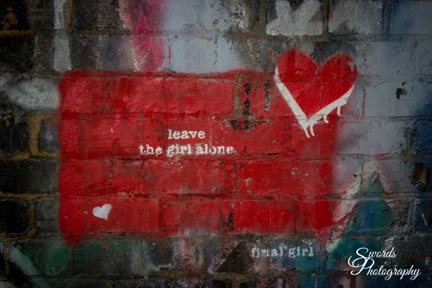
“Funk Island” by William Woolfitt

(Argument with Myself) Big Fish
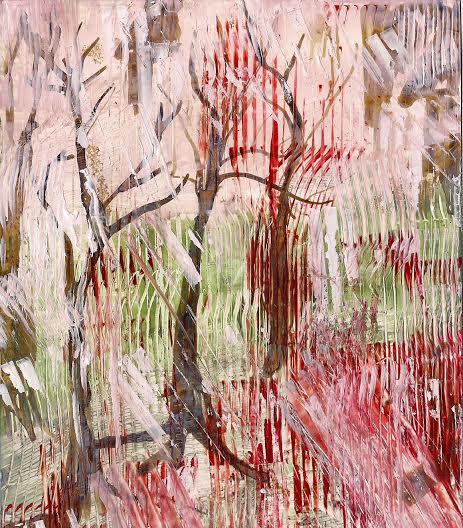
“Big Fish” by Laura Didyk, Sharpie on paper, 2015.

You secure a research grant, you rent a dory at Seldom-Come-By, you want data about the extinction of great auks on Funk Island. You ramble about their plumage and diet and social habits, the sea is smooth glass and you call it a good omen, you are animated and gleeful until we step ashore. I feel the sinking in you, the crumbling, the let-down, as we stand on the bare flat rock that seafarers called the Funks. Everywhere, the cacophony of birds, a continuous and grating squabble, the whirr of wings, and when we breathe, the reek of excrement and decayed fish. Your shoulders droop, your eyes look tired, your face loses color. Murres still nest here, covering the ground like great patches of snow, and black-legged kittiwakes who chatter to their eggs, and a mercy of puffins. You drive tent stakes into the lumpy turf while I light the camp-stove; you strike something solid, tiny, pale, one something, then several, then your hands are full, too many to count. Gizzard stones, I say; maybe the Beothuk tribe feasted here, used the stones for a game. You scold me for my sunny outlook. Sleeping on a massacre site, you say. At times like this, you are mercurial, prickly, superstitious, swinging between highs and bottoms, dreamy anticipation and sour disillusionment, back to soaring dream. I know from my study of you. You have two moods, high and low, and if I favor one, you go scrambling after the other, and that means you also scramble away from me.

Two centuries ago, the Beothuk paddled their birch bark canoes here, killed the great auks for meat, dried the yolks of their eggs, made puddings and cakes from the egg-powder. We are surveying the island, lowering ourselves into a gulch. I provoke you so that you will counter me, forget to mope. I say, some might argue that the Beothuk were as ruthless and inhumane as the Europeans. You look over your shoulder, frown at me. Think about the colonists and sealers, you say. Stopped here when their provisions were low, butchered and barreled the fatty auk-meat with salt. And the cod-fishermen who stoned the great auks. And chopped them up or snatched auk chicks for hook-bait. And the eggers of Labrador who tramped through the auks’ nesting grounds, and ensured the freshness of their product by crushing all the eggs beneath their heels, and then returned a week later to gather whatever eggs were newly laid. And the feather hunters who ripped feathers from living auks and let them bleed to death, or clubbed the auks and drove them into stone corrals. Boiled them in kettles to loosen their feathers. Used their oil-rich carcasses to fuel the kettle-fires. Gathered their feathers for mattresses. That was cruelest, I say. Flightlessness cost the auks dearly, you say. And trust in humans.

In the dome tent, both of us cocooned, poured out, limbs around trunk, haunch against shank, curled together like snowberry creepers, like blood-vines. You are cheery when I wake, energetic, whistling, you offer me French press coffee and oatmeal and half a tangerine, you tell me that your auk data will help you brainstorm strategies for the survival of the animal kingdom. Many or most species, you say. Even our kind. At the dig, I set out brushes, scrapers, and picks; you mark a square foot, bite your lower lip, take a trowel, gently run the long edge over the packed earth, the lightest of pressures, loosening a few granules and bits, a few more, and I feel the tender in you. The bright angle in you, the stony road. If you come up empty-handed, I will tell you that there’s a flyaway chance, light as sweater fuzz or stray hairs, for creatures to come here and hope. The vagrant black goose, for one, and the naturalists who came, bringing kegs, clam-hoes, arsenic soap, labels, and gauze. We both call out when you find our jackpot, sunken in the guano and ash, bones, more bones, thousands of bones.


William Woolfitt teaches at Lee University in Cleveland, Tennessee. He is the author of two books of poetry, Beauty Strip (Texas Review Press, 2014) and Charles of the Desert (Paraclete Press, forthcoming). He is also the author of a fiction chapbook, The Boy with Fire in His Mouth (2014). His poems and stories have appeared in Shenandoah, Michigan Quarterly Review, Threepenny Review, Tin House online, and elsewhere.

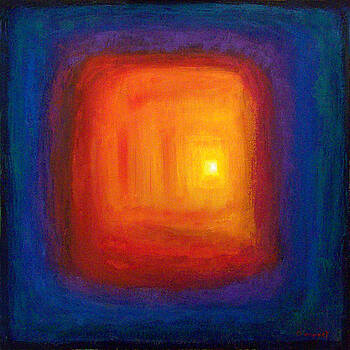
“Flame” by Chloe Ackerman

Flame
“Black Fish” by Laura Didyk, Sharpie on paper, 2015

Mouse leans against the wall, close to the door. “This doesn’t look like a doctor’s office,” she says. The room is warm, dark, and messy. There are puzzles and trucks scattered on the floor, books thrown haphazardly on shelves, and stuffed animals littering the couch.

An old woman with gray hair in a bun sits on a rolling chair. “That’s because it isn’t.”

Mouse can’t see what’s on the chart in the woman’s lap, but she’s pretty sure it’s about her. “I thought you were a doctor.”

“I’m Dr. Hernandez. A psychologist. Sit down where you like.”

“I don’t want to sit down. And I don’t need a psychologist.” Mouse crosses her arms and stares at the woman, who doesn’t look up.

“Your case worker says you do.”

“What are you going to do to me?” She digs her nails into her palms.

Dr. Hernandez looks up. “I’m not going to do anything to you.” She crosses her legs under her skirt and considers Mouse. “You don’t look like a mouse.”

“Yeah, well, that’s my name.”

“It says here you’re Mary Palmer.”

“My name is Mouse.”

“Does it mean anything? Like you’re small and quick, or good at hiding?”

“I don’t hide.”

“Who calls you Mouse?”

Mouse is tired of questions but she knows that anger is what got her here in the first place. She says, “Are you a pedophile or something?”

“No, why do you ask?” Dr. Hernandez doesn’t seem offended.

“You bring little girls into your office? Ask questions about their life and shit? It’s weird.”

“You can leave if you’d like. But you’ll have to come back next week.”

Mouse glares.

“If you sit down, I won’t ask you any more questions about your life today. I promise.”

A minute passes. A minute and a half. Mouse throws herself on the couch, hood shadowing her face.

“Sometimes when I first meet people,” Dr. Hernandez says, “I don’t like to talk. I’m shy, or I don’t trust them. I’m afraid they’ll use things I say against me.” Mouse jerks her head up, more like a hawk than a rodent. “Sometimes, when I first meet people, listening feels safer.” She stops, considering, then says, “I know a story you might like—”

“You don’t know anything about me.”

Dr. Hernandez nods. “You’re right, but I think you would like this story. I could tell it over the next few weeks and when the story is over, you can think about talking.”

Mouse narrows her eyes. “I’m twelve. Too old for kids’ books.”

“This isn’t a story for children.”

Mouse glares, crosses her arms. “Are you going to tell the story or not?”

Dr. Hernandez smiles, settles in, and begins. “Once upon a time, in a land far away, there was a place where people were happy. This place had showers and sunshine, brooks with bridges and gardens with lovely flowers. In this place lived a little girl named Fiametta. Fiametta had a mother and father, the kind who tucked her into bed at night after making sure she brushed her teeth. They played hide-and-seek with her, took her to fairs and the park, gave her birthday parties and bear hugs.

“Fiametta loved her parents, and they loved her, but most of all they loved each other, and that made Fiametta feel happier and safer than anything in the world. Even if she had a bad dream or got lost at the zoo, she knew her parents would save her, and she would always have a happy ending.

“But then one day something horrible happened. It was after Christmas, and everything was snow and crackling fires and eggnog. There was an accident, and Fiametta’s mother went somewhere Fiametta could not go, and her father told her she wouldn’t see her mother again.”

“She died?” Mouse’s hood has fallen down, and her face is visible – light skin, dark hair, green eyes and freckles. Deep circles sink under her eyes; a scar traces her chin. She looks hollow and small.

When Dr. Hernandez nods, she looks sad, too. “Yes, her mother died.”

“But…what happened to Fiametta?”

“I’m afraid our time is up,” Dr. Hernandez says, as though she’s apologizing. “I’ll tell you more in a week.”

On the way back to the foster home, the case worker chatters on and Mouse thinks she sees Fiametta on the street in a blue dress, holding her parents’ hands. The case worker wants to know what Mouse and the psychologist talked about but knows she shouldn’t ask, and Mouse isn’t just going to tell her. She counts on her fingers how many days until she goes back. Six.

~

Dr. Hernandez wears a dark red and navy skirt this week, and Mouse briefly longs to own a skirt like that. She would twirl and dance all day.

“How are you today, Mouse?”

Mouse shrugs. “What did you do?”

“Nothing.”

“Do you want to hear more about Fiametta?”

Mouse shifts her gaze to her shoes. She knows how it works when someone has something you really want, so she doesn’t respond.

“Mouse? Do you?” She settles on a minuscule shrug and Dr. Hernandez clears her throat.

“Fiametta had just lost her mother, remember? And Fiametta’s world became cold and damp and nothing grew because there was no sun. One by one, Fiametta’s treasures disappeared, until all that remained was the dark. She forgot her dolls and how to play imaginary games and how to read storybooks, and instead drifted through the house humming old songs. Her father, instead of taking her to the beach or museum, wandered by himself at night, so when Fiametta had nightmares she woke crying for her mother, but found the house empty, her father roaming in the dark.

“Fiametta’s clothes were gray, her father’s hair was gray, and the sky was always gray. But she was not. She was clear, like she could walk through walls or stand very still in a room and disappear. Her father felt the same way, she thought, because sometimes he would just stop in the middle of a room and stare at the walls. Then Fiametta would take him by the hand and help him take off his cardigan and slippers and tuck him in to bed, where he could fall asleep and forget. Fiametta would sit in the dark and watch him frown in sleep because there was no one to put her to bed.

“She was scared of the dark. Darkness carried her mother away to a place she could not follow, a place her father searched for as he wandered shadowed streets, calling his dead wife’s name.

“And so Fiametta began to steal candles, slipping them into her pockets when no one was looking. She gathered one hundred of them, arranged them in her room, and lit them one-by-one in the same order every night before she tucked herself into bed. Those nights her room flickered with yellows and oranges, with color, warm like summer, with a smell like winter fireplaces. This way Fiametta could dream and not wake.”

Mouse is silent, even though Dr. Hernandez has been watching her. Mouse knows she will cry if she moves.

“I’m not going to tell you anymore today.” Dr. Hernandez speaks gently, like breaking bad news. Mouse nods. “What do you think of the story so far?”

“It’s sad.”

“Yes. Do you want to hear the rest?”

Mouse hesitates, measuring, then says, “Yes.”

“Even though it’s sad?”

Mouse thinks hard. The story doesn’t make her feel good. “I need to know what happens to Fiametta.” She bites the inside of her cheek.

“I want you to do something for me this week,” Dr. Hernandez says. “I want you to make me a picture every day, anything you like. It can be big or small, made with paint or crayons or glue and dirt, whatever you want. Can you do that for me, and bring them with you next week?”

Mouse nods. She can do that.

~

Each night, Mouse sits at the kitchen table with a piece of paper. Her foster brothers and sisters pass through, her foster mother makes dinner and everyone eats, then they come back into the kitchen to clean up. They don’t ask what Mouse is doing because they know therapists ask people to do weird things and if someone told Mouse to stare at a blank paper every night for three hours, they’re not going to comment. Mouse has already fought three of them since she moved in. No one wants to be the fourth.

And then, with the TV blaring in the living room and loud music coming from upstairs and the streetlights turning everything orange and forlorn, Mouse lights a candle and begins tracing the shadows that fall across her paper: bits of furniture, dishes, even her own hand, and then she colors them in. At the end of each night, Mouse has a piece of white paper covered in shadows.

~

Dr. Hernandez’s skirt is black this week; the color folds sorrow into Mouse’s belly. She clutches her seven sheets of paper but her hood is down and her eyes are on Dr. Hernandez.

“How was your week?”

Mouse shrugs.

“Did you do what I asked?”

She nods and clutches her pages, soft from her sweaty palms. “You aren’t going to take them?”

“Only if you want me to.”

Mouse looks at the one on top, and all she sees are stupid lines. They aren’t drawings at all. She’s done it wrong. “No.”

Dr. Hernandez nods. “Okay.” And that’s it. No argument, no pushing. “Are you ready to hear about Fiametta?” Mouse nods hard.

“Fiametta lit candles every night, remember? So she could sleep alone in the dark. And Fiametta lived like this for many years, slipping candles into her pockets as she wandered through stores when she was supposed to be in school. Every night, she lit them when the sun dipped beneath the horizon, until her room was ablaze and she could sleep.

“And then one night, as she lit her hundred candles, one tipped over, knocking over two more, and soon the room was hot and dark and Fiametta fled through the window as her room went up in flames.”

“Oh no…” Mouse whispers.

Dr. Hernandez’s eyes are sad, her voice low. “Fiametta ran and ran until she came to a river. She took off her clothes that smelled like ash and threw them in the black water, then jumped in herself, scratching the soot off her skin and out of her hair.

“In the morning, people found her shivering, naked and blue on the rocky bank, and they told her that her father had been in the house, that he had been burned up, and that they would take care of her. Then they washed her and gave her cast-off clothes that didn’t fit, then told her she would be sent away.”

Several seconds pass before Mouse realizes Dr. Hernandez has stopped. “Where is she sent?” she asks, too urgently, but she doesn’t care anymore.

Dr. Hernandez shakes her head. “That’s all for this week.”

“But…I have to know what happens next.”

“You will. I promise. Will you show me your pictures now?”

Mouse stretches out her hand. The pages are wrinkled, the pencil smudged. Dr. Hernandez examines each one. Mouse tries not to squirm.

“Will you tell me why you drew these?”

“That’s what grownups say when the drawing’s too bad to figure out.”

Dr. Hernandez raises an eyebrow. “You’re very perceptive. But I know what these are. It’s a clever idea. I never would have thought of it.”

“Really?”

“Yes, really. I’m interested in why you chose to draw shadows.”

Mouse shrugs. “That’s what was on the page.”

“What were you thinking about when you drew them?”

Mouse chews on the inside of her cheek. “I was thinking…about shadows.” Her words fall lamely between them. It was a stupid idea.

“What do shadows mean to you?”

“Darkness. And…and hiding.”

“Safety?”

Mouse squeezes her eyes shut. “No. Because there’s still light. I can still be found.”

“…and you’re still afraid.”

Mouse’s eyes snap open. “I’m not afraid of anything.”

“It’s not wrong to be afraid.” Dr. Hernandez’s voice is gentle. “Fear makes us protect ourselves or run away.”

“I don’t run away.”

“I know. But it’s okay if you do.”

“I didn’t run away.” Mouse’s fury is ebbing, her chin quivers. She will not cry.

“But it’s okay,” Dr. Hernandez says again, “if you do.”

That night, Mouse sits at the kitchen table with a pencil, a piece of paper, and a candle. A path of shadows falls across the paper. She draws it, then gets another piece of paper and draws more path, darker path, and on the next a smaller and more etched path of shadows, until the candle drowns in its own wax and she has to go to bed. She dreams her house is burning and everything is light, and she is safe.

~

“You brought me something.” Dr. Hernandez accepts the papers from Mouse’s clenched hands. She flips through them. “Let’s lay them on the floor.”

Mouse kneels and together they organize the papers into a long trail. The old woman surveys them, chin resting in her hand. Her red skirt fans around her, and Mouse only just resists the urge to rub the crinkled cloth between her fingers.

“Shadows,” she finally pronounces. “But I don’t know what they make.”

“It’s a path. To here.”

“To this room?”

Mouse nods.

“Because it’s safe here?”

Mouse pauses, then nods again.

“Will you tell me where it starts sometime?”

Mouse rests in that sometime. She nods.

“Okay. Fiametta’s house burned down, remember? Her father died, and she was being sent away.”

Mouse moves to the couch, Dr. Hernandez to her chair. Shadows stretch between them.

“’Sent away’ meant boarding school. Old musty smells and scratchy blankets and loneliness. In boarding school, Fiametta learned modest fashion and penmanship and manners. She learned to cook and type and balance a checkbook. She also learned to sneak out and smoke and sweet-talk strangers on corners at night and be back under scratchy sheets by the six o’ clock wake-up call.

“Fiametta didn’t burn candles anymore. The dormitory didn’t allow it, and the other girls made fun of her for being afraid of the dark. Instead, Fiametta took her solace from the simmering glow of cigarettes in the dark, from the flare and sizzle when she sucked in, and she held that image close as she tried to fall asleep, plagued by memories of happiness she no longer believed in.

“In the cold nights Fiametta leaned on door frames in bars and smiled at men who reminded her of her father, men with sad eyes and limp wrists and sloping shoulders, who stared at the mirror behind the bar waiting for someone they missed to walk up behind them. And so Fiametta would. She would call the man Joe and touch him like she’d known him a long time, and she would leave him sleeping with a smile on his face, the hollow shadows on his cheeks diminished.

“But each morning Fiametta felt as though the hollowness she’d taken from him had nestled behind her ribs, and she felt a hook there, pulling her out again each night to find another lonely man and offer him her name to call as he wandered empty streets.

“It didn’t help. The cigarette’s flame was not bright enough, the man never warm enough, and Fiametta shivered until her teachers thought she was ill, and she hoped she was dying. They gave her pills to stop the blue in her lips from spreading, and the pills were warm. Dissolved in gin, they were warmer, and injected warmer still.

“Slowly Fiametta forgot about the wakeup call. She forgot about the boarding school, and met in alleyways with other shivering junkies to hover around flaming barrels until they could score enough cash for a fix.

“Fiametta called herself Flame now and belonged to a man named Joe. She was sixteen years old, half-starved, half-dead, lonely and lost.”

~

“Mouse?” Dr. Hernandez whispers. She kneels by the couch and peers at the girl.

Mouse shakes her head from beneath her hood. She’s folded in, hiding in her baggy clothes. “Mouse. Will you tell me what you’re feeling?”

Mouse stifles a sob. “It’s not right.”

“What isn’t?”

“Fiametta didn’t do anything wrong. But everything went wrong anyway and she couldn’t stop it and no one helped her. No one even cared.” Mouse is now sobbing uncontrollably, barely managing words, barely managing breath.

“I know. I know. It wasn’t her fault.”

“Her parents left her!” Mouse roars. “They were supposed to keep her safe and they left her!” She pounds on the arm of the couch with tiny clenched fists.

“Is it? Could her mother have kept from dying? Could her father have stopped being sad?”

“They should have! If they loved me, they would have done anything!”

“Oh, Mouse,” Dr. Hernandez whispers. “Oh, my dear Mouse.” She places a hand on the girl’s shoulder.

They sit there for a long time, the woman with her hand on Mouse’s shoulder, Mouse curled up and crying until her head hurts and she can’t breathe through her nose. She sits up and wipes her face on her sleeve. “You have to finish the story.”

“Are you sure?”

Her nod is resolute, her face firm. Dr. Hernandez sits beside her. “What do you think happens to Fiametta?”

“She runs. She runs as fast as she can. Until she sees a policeman.”

“Are policemen safe?”

“No one is as bad as Joe.” Mouse shakes her head, clenches her fists. “But the policeman won’t help. She’s got crack on her, so she turns herself in. He takes her to jail. She’s safe there.”

“And then?”

Mouse falters.

Dr. Hernandez waits a moment. “Mouse, where does the path lead?”

“To the end of the story.” She fidgets. “Here.”

“What is the end of the story?”

“I don’t know.” Such a small voice.

“You know, Mouse. What happens?”

Silence. That inward folding.

“Mouse? Are you ready to tell me what happened?”

“…yes.”


Chloe Ackerman hails from the Land of Enchantment but currently resides with her dog in the much rainier (but no less enchanted) Pacific Northwest, where she recently completed a doctorate in clinical psychology. She has edited or contributed to a small number of literary magazines and anthologies and has been published in Mirror Dance. She hopes to one day be both a famous author and a renowned psychologist because she believes in having it all, but she would also be happy with a supply of tea and a tiny house in a forest.

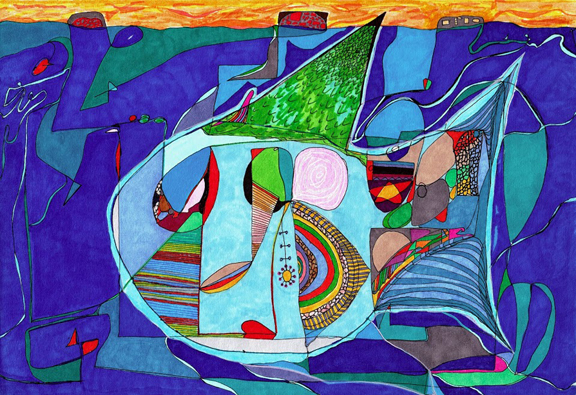
“Europa Hides an Ocean” by Jennifer Williams

Europa Hides an Ocean cropped
“Rainfall” by Mia Avramut, wax on paper, 5.8 x 8.2 in.

The creek that runs through the fifteen-mile canyon north of Sedona is lined with box elder and ash trees. Their campground, terraced into a wooded slope, overlooks a rocky bend, and towering limestone hugs the opposite bank. The girl sits on the largest boulder, midstream. She wears checkered flannel, her last clean pair of jeans. Her shoes are good for slippery stones. She waited all morning for the light to hit the water. Now, she closes her eyes and lifts her face.

A rustling noise makes her jump. She hasn’t forgotten the host’s warning. “Rattlers,” he’d said, poking through dark vegetation. All weekend, he carried around a bucket and pronged pole. Now, she scans the bank grasses and bower vines. But all she sees moving are some white butterflies and the shifting leaf shadows on the graveled shore.

Her new walking stick lies within those shadows. It’s smooth and dove gray, with purple-rose shading along its textured lines. She wants to take it with her. She looks up at her mother wrapping the breakfast mugs in towels. Their tent is gone, stuffed into the duffle to be hauled to the car. They’ll cart things out this way—in bundled loads up the concrete steps. From where she sits, the stages are clear: bank rise, then campsites, then cars. Her gaze slips across the narrow parking lot and up the steep ramp that cuts to the road. Through the mingled canopy of pines and creek trees, the girl makes out a red car flashing around the highway curve like an apple on the move: there, then there! then gone.

When they’d arrived, someone was parked in their spot. It was late Friday, and three tents were already clustered on the site next to theirs, the largest glowing from a lamp inside. The two smaller tents were the low-slung type meant just for sleeping. They glowed, too, though more softly, and only on the side that faced in.

Her mother had dimmed the headlights coming down the ramp, and now they idled by the other car, staring through the darkness at the tents, until the host brought his face to their window. “One campground, one car,” he said, marking his clipboard. “I’ll have them move.”

The girl slides down the big rock and tests a few stones for balance. If she wanted to, she could make it to the opposite bank. But there’s not much shore, and the wall of rock goes straight up, higher than any building she’s seen. Besides, she’s already tried what she could to engage it: on their first morning, she crouched with both palms against it and pushed.

Now she balances on two flat stones and squats down, eyeing a shallow pool for the flicker of trout. She’s quiet, patient, but only something minnow-sized glides through. When she twists up she sees her mother again, closer, standing with her hands on her hips. Just above the crest, the girl can make out the tops of her mother’s boots, but the splashing of the creek makes her still seem far away. The girl frowns when her mother points towards those boots, towards the ground where she’s standing.

It takes both hands to climb up the bank. She leaves her walking stick propped at the base of a tree and uses roots and vines to pull herself up. Near the top, a wolf spider darts across her thumb. It vanishes under leaves before she even registers what it was.

“I called you three times,” her mother says, pulling a white scarf over her dark hair. The scarf reminds the girl of her old pirate costume, and she wants to make a joke—after all, this weekend was different. They’d played cribbage and cards, plowing through every two-person game they knew. Her mother didn’t try to let her win, and she won anyway.

Instead, the girl looks up. A fat squirrel sits above their heads. Flakes of what it nibbles float down, and a piece lands on the scarf, then another one. The girl is getting taller. She can see the little pieces like pepper on a tablecloth.

They start hauling bags to the car. The biggest they carry up together, with the girl pulling, stepping backwards at the top. The neighbors are cooking bacon, even though it’s lunchtime, and it smells like the pancake restaurant near their house.

“If you lived on another planet,” the girl says, stealing glances towards the campfire, “how many moons would you want?”

Her mother arms her forehead, but doesn’t stop. “How many can I have?”

“Neptune has thirteen.”

“Too bright! I’d never sleep.” They drop the bag near the trunk. “I don’t know,” her mother says, slowly thumbing a knuckle, “maybe last night’s moon was enough.”

They fill the trunk, the passenger seat, and all the space behind the driver. It’s not the best arrangement: the cooler only opens partway, and on sharp turns the aluminum chair slides off the bedrolls, smacking the girl’s shoulder. She wishes aloud that they still had the truck. Her mother is bent away from her, leaning into the stacks to make everything fit. Without looking back she answers, “I know, baby. I know.”

The girl has the same hair as her mother, dark and wavy. They used to wear it in similar braids, and it pleased the girl when people joked they were twins. But her mother recently had hers cut. “Chopped,” was her word, and she had tried to explain about fresh starts. The girl still likes her braid, but she knows the only way to match her mother again is to cut hers, too. She reaches back now, considering this, and hooks the braid forward to suck on the end.

Side-by-side, they survey the empty site. They hear less of the creek where they are now, and more small noises from the trees and other campers. Nobody talks too loudly, but they hear a few tent zippers and a short beckoning whistle that echoes. Even after the sound dies, the girl lets the fragment pulse in her memory. Her mother says the canyon is like a church.

Everything’s loaded, but they don’t leave. On previous trips, they would have been gone right after breakfast. There would have been concerns about traffic. This time, she and her mother are continuing north, passing over mountains and through national parks.

A great deal has been explained to the girl: the trip will take all summer; they are not in a hurry; they will zigzag and sleep in the tent or a cabin, every so often a motel; some of the mountain roads pass above 10,000 feet. They’ll visit old mines and swimming pools, and eat ice cream cones in every town. Everything her mother can promise has been promised.

The girl thinks she sees a Painted Redstart and whispers to her mother. They crisscross the parking lot, trying to spot it again. It becomes a race and they split up, creeping around different cars. Her mother almost laughs when they bump into each other, both of them backing up, scanning opposite trees.

Back at their own car, they spot three boys climbing single-file over the rocks down by the water. The girl recognizes them from next door, and the first boy carries her stick. “That’s mine,” she says, but her voice is quiet. He’s older, and in any case, she is never allowed to take things out of nature. Sticks, rocks, even wishbone wands: everything stays. It’s still a family rule.

The night before, the boys set up cots to sleep under the stars. The girl fell asleep thinking about whether she’d like to do the same, and in the morning, she poked her head out. Two boys had disappeared into their sleeping bags. But the one with her stick now had his face turned towards her. After a second, he pulled his arm from the warmth of his bag and gave a small wave.

The girl watches the boys reach the tree where she’d found egg-shaped stones in the space between two roots. She doesn’t protest about the stick again. She’s already pushing the want away, packing it up, taping it closed like all the boxes: winter clothes; Mom bath; tournament albums, SAVE.

Her mother looks over at the clustered tents. The adults are eating at the picnic table. Suddenly, the girl is glad about the family rule because she wouldn’t want her mother going over there, explaining. But when she looks back her mother is already hopping down the steps, striding across their campsite—not towards the adults, but towards the water. The tall boy stiffens and glances at the girl. She wants to drag her mother back. But it’s too late, her mother has dropped over the bank and is at the water’s edge, extending her hand. The girl has never seen her mother do this to a kid. The boy takes the hand slowly and shakes it.

He quickly relinquishes the stick, but her mother stays down there. She reaches out and because of whatever she is saying, they all look in the direction of the towering rock. While the girl waits, she kicks at the old retaining wall edging the lot. She looks around the treetops, the parked cars, then over at the neighbors, who don’t seem to notice her mother at all. The girl hears one of the boys laugh as she toes the crumbling mortar.

In September, she’ll start a new school. They’ll live in Spokane, first with her grandmother, then, when the boxes arrive, in an apartment. Her mother doesn’t know if the school has many stories, a lot of kids, or even if the playground has swings. The girl is almost too old for swings, but she’d like them to be there anyway.

When she spots her mother again it’s her hands that show up first, over the edge of the bank. Then come the scarf and new haircut. But the girl quickly forgets both these things because her mother’s got the stick between her teeth like a dog. At the top, her mother steadies herself and looks up. Even with the stick, the girl can tell she’s grinning. She spits it out and stands there with her hands on her hips, panting in an exaggerated way. The boys are laughing. Her mother laughs, too. But the girl covers her mouth: she’s too happy to make a sound.

Her mother starts the car, cracks the windows. Sunlight strikes their knees. “Those boys just saw a snake,” her mother says. “In the rocks where they were standing. Can you believe it?” She turns in her seat, but she doesn’t look scared, or even relieved. Just happy.

The girl smiles back. “I wish we’d seen it, too.”

Their little car crawls up the steep drive. The girl rolls her window down the rest of the way and the boys wave from the abandoned site. “Say, Bon Voyage,” the girl yells to them. At the top of the ramp, she’s surprised to realize she can still hear the water. She closes her eyes to capture the sound.

When they’re past the first big turn, the girl pats her stick propped against the stack to her left, holding back the bedrolls and aluminum chair. She feels the coziness of the car, the gentle strobe of sunlight as they skirt high walls and break away past the trees. “Jupiter has sixty-three moons,” she says, resting her feet up against the seat in front of her.

“Why so many?”

The girl shrugs. “And some of those moons are huge, with names from Greek mythology.” She pulls her braid forward, flicks the end. “They’re practically planets, too.”


Jennifer Williams is a graduate of Pacific University’s MFA Program. Prior to writing, she worked as an engineer in Phoenix. Her short story “Gore Junkies” appeared in the Oregon anthology, The Night, and the Rain, and the River and she lives in Portland, Oregon.

Read an interview with Jennifer here.

“Fulfillment” by Avital Gad-Cykman

Fulfilled
“Womb” by Mia Avramut, wax on paper, 5.8 x 8.2 in.
(See also “Indian Remedies for Tereusitis” by Sabyasachi Nag.)

The magazine “This World” proclaimed Cassit Café an upscale Bohemia where poets and journalists drank together, and writers and singers shared stories. The article was embellished with photographs of models and air-hostesses, however, it must have been a crock.

All she saw was a half-empty darkened place with an intimidating aged waiter in black and white, standing at the entrance and staring at her until she dropped her eyes and withdrew toward the edge of the sidewalk. She didn’t want to enter anyway. A two-hour bus drive away from home, and the pavement almost danced under her feet.

Instead she was determined to find another restaurant where people ate chicken and French fries with their hands, no table manners or polite conversation, only a full mouth and oily fingers. She’d find that perfect place.

Walking tentatively toward the north, she stopped when a masculine voice called, “Hey, hello, want me to read your palm?” As expected, the man, unkempt and in his thirties, wearing an oversized jacket, leaning against a rare robust tree, was looking at her. People always thought she was easy prey. She shook her head, able to sense the rough surface of his blackened hand rubbing against the palm of her hand, and what good future could come out of that?

Despite the electric pleasure of the city, it became harder to speak with people as the hours advanced. She coughed, to hear her own voice without appearing to be crazy. She didn’t have to talk with anyone, anyway. Being a stranger made her an explorer, a magician, anything except just a girl. Back in her home town everybody knew whose daughter she was, whose friend, where she lived, where she studied, her grades, her hobbies, and who had left her for another. She really wanted French fries. The chicken must be pretty special too. Everyone assumed the other girl had something she didn’t, which was probably true. The chickens, she hoped, did not go through a slaughterhouse, like the one oddly located not far from the city center, back at home. She went there, once, out of curiosity, and despite the jutting blood she didn’t become a vegetarian, because, as her boyfriend used to say, “that’s life.” If you didn’t have what it took to survive, you didn’t.

She had thought she was pregnant, and wondered if she’d still grow up to be an air-hostess, or, if nothing else worked, a poet. She could never tell what she was or what she might be the way others could. She believed she was pregnant, though babies should happen with maturity, and not because you see a bleeding featherless chicken. Either way, he would never take her back with a baby. She was so certain, she stole money from his wallet and her father’s, and also from her mother’s purse, and though she wasn’t sure how much she needed, she assumed she had enough.

Above all, she believed it would be easier to find a doctor in the city. But now, walking down Dizengof Street, she knew that her growing belly didn’t house a baby, just the way the café didn’t house poets and writers and air-hostesses, despite its potential. She simply needed a lot to eat because nothing filled her up.

The busy street with its food stalls, clothing stores, graying three-story buildings and a ramp with a tub aspiring to be a fountain stood on the verge of greatness, like a superhero still wearing an office suit. She recognized the restaurant thanks to the large sign announcing liberation from silverware. The young waiter in a red t-shirt offered a bib and rubber gloves, which she declined. He smiled at her, he did, and as she chose a stool at the counter, he served her a large metal plate full of French fries and half a chicken.

Her face shimmered, and her eyes released dragonflies to the air. She sighed in relief and ripped the food with her bare hands.


Avital Gad-Cykman‘s book, the flash collection LIFE IN, LIFE OUT was published by Matter Press in 2014. Her stories have been published in The Literary Review, CALYX Journal, Glimmer Train, McSweeney’s, Prism International, Michigan Quarterly Review and elsewhere. They have also been featured in anthologies such as W.W. Norton’s International Flash Anthology, Sex for America, Politically Inspired Fiction, Stumbling and Raging, Politically Inspired Fiction Anthology, The Flash, and The Best of Gigantic. She won the Margaret Atwood Society Magazine Prize, placed first in The Hawthorne Citation Short Story Contest, and was a finalist for the Iowa Fiction Award for story collections. She lives in Brazil.

Read an interview with Avital here.

“Gong Bath” by Kristin Walters


“In” by Allen Forrest, oil on canvas

Tina listened to the hostess list the potential side effects of the gong bath: anxiety, nausea, flushing, feelings of cold. “Muscle paralysis,” said the woman, folding the pinky and fourth finger of her right hand spasmodically to her palm. She was lit in an orange glow, the votive candles at her feet reflecting off the gong and casting the yoga studio and its forty or fifty occupants in a soft coat of gold. “Just a mild paralysis,” she continued and slipped off her shoes, settling cross-legged next to the gong in front of a half circle of singing bowls. “But these things aren’t certain to happen,” she assured them.

Except Tina was pretty certain they would happen to her. She immediately regretted not wearing socks, a chill across both feet already blooming in soft little bites. The woman continued to talk, introducing herself as Shoshanna, and her silent, bearded husband, as Richie. They were percussionists trained in reiki, all kinds of yoga, massage and voice. Shoshanna mentioned something about Tibet, but Tina zoned out for a second, transfixed on the giant gong, and the way the candlelight danced across its five-foot diameter, turning the hammered metal into a golden, rippling sea. It was tuned to the Cosmic Octave, the frequency of the earth’s rotation around the sun, and its vibrations were supposed to be healing. After seeing the event advertised outside the yoga studio near her work, Tina had mentioned the sound bath offhand to her husband over dinner the week before. “You should do it,” he said, his mouth still full of her pasta carbonara. Tina laughed, knowing how embarrassed she and her husband felt for the people who believed in those things. It was silly, she thought and looked at her husband, for a sign that he was joking. After a minute of silence he placed his silverware across his half finished plate, walked to the computer in the living room and registered her for the event online.

The room would have to warm up with all these people and candles, Tina thought, rubbing her icy feet together, eying everyone else kneeling on their mats, looking temperately excited and expectant. She admired this about the new-agey yogi types, all so eager and calm about being vulnerable. She wanted to be more like them. She did. She did or she wouldn’t be here.

Shoshanna instructed them to lie on their mats, heads towards the gong. She asked them to close their eyes and choose an intention, one word or idea for them to focus their energy on. Acceptance, Tina thought immediately and she felt for a second that coming to the bath was the right decision. For two months now her husband had been trying to get her to accept that “these things just happen”. Which she knew. She did. It happened all the time. But still, everything just happens all the time to everyone until it happens to you. And then it doesn’t just happen all the time, it happens once and that once is real and haunting and infects you not once, but all the time.

“Illumination,” said Shoshanna, giving intention suggestions for the less prepared people in the room. Either Shoshanna or Richie started playing the singing bowls, rounds of dings like small bells, their notes expanding and floating over Tina’s head like a silk scarf. Even as one thread of the song went silent, it didn’t seem to Tina to die out, it seemed to simply drift away, en route to another ear, another room of supine yuppies that needed their toxins nudged from their blood. This gave her momentary comfort until another chill ran through her. “Peace,” whispered Shoshanna and the rolling notes of the singing bowls meshed with the sweet pitch of her voice and resonated right through Tina, her jaw and calf muscles relaxing, reminding her to try to relax the rest of her body. Tina stretched her legs and brought her shoulder blades together towards the center of the mat so that her neck tilted slightly upward. “Love.” Too obvious, thought Tina, tension releasing from the skin of her forehead. “Hope,” said Shoshanna and Tina dismissed this as a rather audacious suggestion. The room was getting warmer and the woman next to Tina audibly exhaled.   Finally Tina relaxed her fingers and let them take their natural furl. “Clarity,” said Shoshanna and Tina didn’t know why but the word sounded so incredibly beautiful in that moment. Clarity, Tina thought, Clarity. It sounded so much bigger than her, but maybe not impossible to get. And like that, she switched her intention.

“One more thing,” said Shoshanna. “The flash near the end. It’s going to be loud.”

The surge of the singing bowls swelled and then a drumbeat began behind it. A bead of sweat formed at Tina’s temple. “Now imagine a light in your heart,” said Shoshanna. “A little light in your heart.” And there it was. It surprised Tina that she found it so quickly—a tiny circle of yellow floating in that dark pump in her chest. Oh there you are, Tina thought, delighted. The light didn’t radiate—it looked more like a hole leading outwards, a pin-prick pathway to a field of light, and it undulated in the waves of her now drumbeat paced heart. Then Tina became concerned. So easily had she found this light that she was afraid it had always been there and she had been overlooking it. She felt bad about how that tended to happen to things, small things. Like her husband not caring enough about their baby just because it had been only the size of a kiwi fruit.

Tina named the light Dierdre, Deedee for short.

The gong started as a slow rolling. Each of the sounds—the singing bowls, the drum beat, and the gong—seemed to orbit one another, each one asserting itself individually and then being pulled into the others’ gravity. Tina thought about the sun even though it was dark now. She imagined the space between the earth and the sun, the space the cosmic octave was resonating through at this very moment and it looked like such a short distance from her perspective, especially as the vibrations of it pulsed through her own blood. She imagined herself floating in that black space, just as Deedee floated in her own heart. Tina felt the freeze of the darkness and the warm warm warmth of the sun, and the sound surrounded her like twinkling stardust and her breathing began to quicken. Did she feel nauseous? A bit. Dizzy was more like it. She might be sick. She might definitely be sick. But she didn’t want to make a scene. She didn’t want attention, any attention. Instead she focused on Deedee in the toxin-tainted blackness of her heart. Deedee flickered happily, like the dance of a bright star, and Tina’s fatigue overtook her. As Tina fell asleep, she felt at peace drifting through the dark dark universe.

Tina’s attention returned to the room when the paralysis started. Her right pinky and forth finger twitched towards her palm and her smallest toes curled. The gong sound was swirling, like an agitated sea, and it felt like Tina’s lungs were shrinking. She couldn’t hear her breath in the gong’s great roar. Tina found Deedee again, having lost her in her short sleep and in the panic of her paralysis. Her fingers and toes still cramped and immobile, Tina willed them to move, jerking her arm accidentally onto her neighbor’s. She recoiled quickly and apologized wordlessly in her head. The muscles unknotted and she placed her arm carefully back on the ground, opening her eyes to make sure she didn’t again graze the woman next to her. Though it was odd, wasn’t it? That they were all pulsing at the octave of the universe, contributors to one giant cosmic current, and no one was even touching.

She felt a twinge of guilt. “We’re wasting body,” her husband had said to her the night before. She had curled away from his erection that had been poking insistently against the small of her back as they spooned. “We have to do it sometime,” he had said, rolling away from her and leaving his arm heavy on the comforter between them. “It’s too soon,” Tina had said. “Doctor Feinburg said it’s not too soon.” “Too soon,” she had said again, thinking that her husband could not possibly understand that it was always too soon to learn that she might be a graveyard. After a few minutes, he rolled towards her once more. “We could use a condom,” he said, tracing the arc of her earlobe. Tina pretended to have fallen asleep; she was busy listening to a ghost.

The gong’s cries intensified even more. This must be the flash, Tina thought. It was loud. It was really fucking loud and it would have been of no use to cover her ears. It was like a plane flying right overhead but made of no metal, just light. Tina looked inward to Deedee who was starting to expand, now the size of a quarter and quivering. Tina closed her eyes again to watch her grow. Deedee was bright. She was bright. She was getting too bright, too big, and had now swallowed Tina’s heart whole and Tina had to turn away. She pictured herself again in orbit, another moon between earth and sun, and she considered the sun, considered its distance and its too-loud song, the gong now blaring.

Tina felt Deedee tug at her, but Tina wouldn’t look. She gasped for breath and looked out into the galaxy, at the tiny lights twinkling far away. She loved the stars, the company of their light. She thought about what she knew of them: that they were all dead. She wanted to watch their calm, sad glimmer a little longer, but the sun bore down and Deedee’s yellow light pleaded and Tina felt the gong prodding at her bloods’ toxins’ firm grip. Tina’s cells were rattling at the frequency of the universe and she unhinged. Everything unhinged, the earth unhinging and hurtling towards the sun. Tina wanted to scream, jump up from her mat and knock over the gong that was shrieking. But she didn’t. She took one long breath, recalled her intention, and then let in all that light.


Kristin Walters is a yoga and writing instructor in Champaign-Urbana. She will finish her MFA from the University of Illinois in May 2016. Her guilty pleasures are watching movie trailers, eating all the strawberries and wearing flip-flops in the rain. She is learning and teaching how to live a mindful, memorable and expressive life.

“Special Forces” by D Ferrara

seattle-post-alley-Special Forces
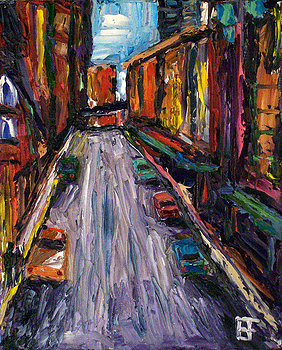
“Seattle Post Alley” by Allen Forrest, Oil on canvas

It was almost the New Millennium and he couldn’t sleep. The hospital room wasn’t dark, and the soft blips of the various monitors were punctuated irregularly by voices, doors closing, objects dropping. Considering the places in which he’d slept, he found this amusing.

Out of long practice, he passed the time identifying hallway noises and falling objects by sound, as he had been trained. How many footsteps, how fast, how frightened or angry, how far had they traveled. For objects: Focus on that which was not obvious. Metal or plastic was easy enough. Size, shape; density, a little harder. Full or empty. One or more. He could tell a lot from a single crash.

He was a soldier—with a battlefield commission, as his mother had bragged so many years ago. He didn’t tell her that such things meant he was not quite as good as the other kind.

War justifies the existence of the military, but wars (on the whole) do not last long enough to justify military careers. Especially for true soldiers, not uniformed civilians who typed or filed or drew blood or drove trucks.

With effort, true soldiers could survive even in peacetime: he had found his place eventually. He had excelled through perseverance, not inclination or aptitude, his superiors said, implying a lesser accomplishment than surviving a military academy. Without war, official or otherwise, there would have been no advancement at all, so he volunteered for every clandestine skirmish, removing his rank insignia and dog tags so often that he joked he might be a general by now and not even realize.

He had spent years (broken into months and weeks) in places that never made the news. Geography was a matter of mud and sand, mountain or ravine, exposure or cover. Politics reduced to orders. Friend or foe were concepts without emotional content or complications, which suited him fine. He liked his life, when he thought about it, and it, too, suited him. Though no longer a kid, he swung a full pack as easily at forty-nine as at twenty.

Compared to the new hard bodies, his was aging, though not badly. Before this Thing, anyway. In a sense, the Thing was an unjust surprise. For almost thirty years he had been primed to eat a bullet, lose a ’chute, take a knife through the spinal cord, to join many companions and a few friends as a broken corpse. He would live—immortal until his time came, just as they had been.

It was the civilian side of life that set his teeth on edge. Feeling pressured to wear something other than olive drab and khaki. Rent checks and bills. Shopping for food. Cars.

Cars. Accustomed to making his way on foot, his car gathered more dust than miles. His wife had driven it, and he’d never seen the need for anything newer, fancier, bigger. She had complained lightly about the hard manual shift, stiff ride and steering, but never asked for another. After the divorce, she had bought a Lexus or Infinity or some such Jap box, in unspoken rebuke.

Maybe if he had told her that he needed a car he could understand and fix, she would have understood. It was too late now. The New Millennium and already too late.

The blips of the machine quickened, drawing his heart rate with it. The toxins dripped into his bloodstream.

Once, a slant interrogator had rammed a pitted needle into his arm, a mixture of sodium pentothal and poison, designed to sicken the target, terrify it into revealing—what? He could no longer remember. Maybe he had never known. When they had released him (a surprise as big as the antidote), he had laughed. They threatened him with the one thing that did not scare him—a painless death. What did they expect to get for that?

Down the hall, a woman laughed. He wasn’t good with that sound: was she young, thin, fat, old? There had been a Pashtun boy who could tell almost everything about a person from a few syllables or sounds. The language did not matter. An amazing gift; the boy had been killed by a Russian bomb with no appreciation of his skill.

Shrapnel from that same explosion had carved a fist-size chunk from his right thigh. The wound healed, leaving the leg ugly but functional, strong as before.

Of twelve on his team, only he had survived. He never knew who had risked carrying him on the long trip to the UN hospital. When he finally came to, he lay in a curtained section of the ward, feeling oddly important.

The doctors were Swedes, the nurses German, and they wanted to save his leg and his life, even knowing that such efforts were a poor allocation of resources. An American soldier (his fluent German and lack of identification fooled no one) with so grievous a wound should not take the antibiotics, plasma, bedsheets that by rights belonged to children or their mothers. His injury challenged them, however. As professionals, the staff craved what he represented: an achievement rendered monumental by the steady diet of failure in such places. They kept him alive to be airlifted to Germany.

Idly, he ran his fingers along the crater in his thigh. The skin grafts had been a disaster, both at the source and the wound, the American doctor in Stuttgart later declared. Patient would have been better off with Saran Wrap and duct tape, the white coat had sniffed to a tape recorder as if the patient were profoundly deaf or catatonic.

Saran Wrap and duct tape were harder to forage than a few snips off a soldier’s ass, he had thought, though that yahoo medic wouldn’t have known that. The doc’s idea of hardship was a time delay on TV baseball.

After the leg, there had been fewer, minor physical trauma, as if some checklist had been ticked. Disease, injury, torture, PTSD—now only death remained. The body, after all, could take so much and no more. The head generally failed sooner.

When they had first diagnosed this Thing, he was sure they were wrong. He felt well enough, had just completed a mission, garnered another small commendation, the large promotion.

It’s a mistake, he had thought: wasn’t he now—finally—receiving the recognition he had earned? In his world, timing was more than key, it defined the mission. This timing was beyond bad.

The discovery had been an accident. A high-clearance, silent pair of hands, presumably a doctor’s, with no face or name examined him after every mission. Other strangers probed his head with questions. It was the drill and he had no expectation of privacy. He assumed every wart report went up the chain of command, though he doubted any of it interested the brass.

He had been wrong. Within a few days of his last debrief, he had been summoned to receive the news. His CO delivered it. Another star silently twinkled.

At first, he hardly understood what they were saying. Unexpected disease was a hazard of the duty: he’d been given casual news of malaria, dysentery, even a skull fracture at the end of debriefs. This time, they barely mentioned the mission. They talked about the Thing.

“Metastasized.”

“Baseball.”

“Liver.”

What did these things have to do with pallets of supplies delivered in a jungle? With sudden storms and firefights and getting out in one piece? Packets of paper, computer disks, maps, and money pressed into the right hands, observations made and recorded, could be worth a man’s life. These things mattered. The Thing did not.

They did not order him to treatment. They arranged it on the correct assumption that he would report. The VA facility was enormous, and he waited endlessly for admission, amused by the bluster of stars and clusters trying to get better treatment based on rank. Did they wear rank insignia on their hospital gowns, asses exposed but brass polished? Would the scalpel be sharper or cleaner, the pain less intense, because that second star had come through?

In their fear, they wanted Obedience. In the field, he gave orders with a look, a gesture, a nudge, and his men obeyed. He owned their obedience and their lives. He spent them carefully. Those he could not trust to obey were left with the paper pushers. Like him, his best men wanted the mission to define them. Focus on the mission quelled the incoherent panic and pounding fear that defeats discipline and training. Fear did not earn Obedience.

Sudden nausea overwhelmed him. Leaning over the bed rail, he barely grabbed the basin before vomiting acid. Ruefully, he imagined his lungs in a corrosive puddle, eating through the plastic basin as the Thing ate through his body.

The night after the first treatment, all the short gray hair on his head had fallen out. His eyebrows thinned to invisibility. He had been prepared for hair loss, though finding a matted clump in his shorts had startled him. No one had mentioned that the toxins would not distinguish among follicles.

Lying back, he thought of his wife, lying in bed next to him. She slept soundly—more so than he did, though he remained as motionless as she did not.

When it was time for her to stop sleeping, but while she was still reluctant to be awake, she would move closer to him, backing into his still body, her nightgown pushed aside. He would reach for her or remain as he had been, and she would take her cue from that, sensing when to move, pressing her silky butt against his thigh or stomach. She would unfold, unwind, bloom like a flower in time-lapse photography, moving from sleep to sex seamlessly.

When he responded, she adapted to him, his motion, his lust, sensing his passion, his aggression, even his exhausted fear locked in places he never mentioned.

It was strange, he thought, there in the hospital, that they never spoke of those moments, not even when the moments stopped.

He knew he should not think of his wife. To think of things gave them power. But some things did not relinquish their power, even if you pushed them out of your mind.

The Pashtun boy.

The chain of command.

The Thing as it grew.

The softness of his wife against his cratered thigh.

He decided that the Thing was all he could fight.

Reluctantly, he thought about the Thing. The doctors did not say it, but they believed that the Thing would kill him. That is, if the treatment did not kill him first.

He had researched It carefully, delving into its minutiae as he had reviewed the science of armaments, iconography of maps, the saving power of machines. He evaluated the lines of engagement, Thing and poison at once covert and fully engaged.

And had come away no wiser. According to his intelligence, the therapy worked or didn’t on an almost random basis. To achieve full effectiveness against the Thing necessitated a level of collateral damage that would almost certainly kill the patient.

So they skirmished inconclusively—poison, doctors, healthy cells, and the Thing.

Like Phoenix, he snorted silently. Or Fire Brew—missions where the enemy was vague and politics worked against objectives. Success was measured in increments so tiny that only his superiors could discern it at all.

Desk jockeys knew that success was a matter of how the report was written. A mission blown to hell by bad intelligence transformed itself into victory through fingers on a keyboard. Through a process as erratic as sandstorms, a fucked-up extraction in Somalia became Hollywood heroics.

The opposite was true as well. “All as planned”—his measure of success—might sour into disaster. He had read newspaper accounts of engagements in which he himself had figured (though namelessly) and found no common ground with his own experience.

He was spared this for the most part, as little of what he did warranted public disclosure. He accepted that his view from a rice paddy was not the same as from an office in Washington or a breakfast table in Des Moines.

Paper victory, though, would not be enough against the Thing. Incremental damage to its position needed cumulative impact. He tried to imagine It munching through his liver, targeting his bones. Unlike a strategic force, It did not weaken by acquiring multiple objectives. Instead, It grew stronger.

He and the poison could not mount a frontal assault. Still, he had witnessed rebels, little more than kids and old men, eliminate superior forces, fueled by ideas like “Freedom” or “God” or “Family.” At the time, he had found their deaths pathetic: bodies of children thrown down as bridges so that other children could cross to their deaths.

Now he thought he might understand. His life once more had been reduced down to mission objectives. Go there. Achieve X. Return with as many men as he could. From his first mission, everything was finite. Today he squatted over a hole to take a dump. Next week, he’d be drinking beer, evaluating his chances of screwing the blond waitress.

He had learned slowly that invaders were never victorious. The rebels were in for the long haul. There was no end, no escape. Their entire life was defined by the mission; it would not end with extraction. In complete contradiction of sound tactics, they rushed from positions of relative safety into firefights. They held nothing back.

He imagined the Pashtun kid, howling with primeval rage at Russian tanks. Costa Rican peasants, Tutsi farmers, Cambodians, Montagnards, serene or terrified, willing themselves to rush headlong toward a massive black Thing of incomprehensible power and brutality. Exploding bits of bone and brain matter, torrents of blood, talent, skill, love, anger reduced to body parts: efforts grotesquely beautiful in their futility.

Could his body launch such an insurgency against the Thing?

He could not catch his breath. The machine blipped impatiently. A predawn gray chill improbably spread from the sealed windows. Voices in the hall signaled shift change. Nurses and orderlies would go home to their beds and beers, extracted to safety.

How much longer? Usually, he estimated the amount in the bag, noted how long each drip took, determined the length of time he had to wait. But he had lost count.

His mind was quick with figures, with the calculus of war and deployment. Not just the easy ones, miles to klicks, ounces to liters, but the harder, more attenuated—piles of equipment to backs and backpacks, bullets to avenues of escape.

Yet he had been stymied by simple arithmetic: a boy of eighteen signs up plus his years in uniform equals a life gone by.

The resident appeared and noticed he was awake. With a tight smile, she compared his chart to the readout on the machine, writing in medical hieroglyphics. She hesitated and despite himself, he felt his heart leap.

Did she notice something? Had the Thing retreated? He knew the machines were calibrated only to measure heartbeats, blood pressure, toxicity levels, the rate of poison dripping into his blood, yet perhaps she sensed—no, she knew that the battle had taken a different tack.

Good soldier that she was, the resident betrayed nothing. A tight smile accompanied her soft words. They would keep him for observation, she said. Twenty-four hours at least. Too bad about New Year’s Eve.

A few more tasks, then she was gone.

As in the field, dawn energized him, releasing cramped muscles and sending new blood into his wits. A nurse arrived, removed the IV, chattered with detachment, left.

As his head cleared, he planned his mission.


D Ferrara has been an active writer and ghost writer for more years than she cares to admit. Articles, essays and short stories are her continuing obsession – several publications, including The Main Street Anthology – Crossing Lines, East Meets West American Writers Review: 2014 Holiday Edition, The Broadkill Review, MacGuffin Press, Crack the Spine, Green Prints, Amarillo Bay, The Penmen Review, The Law Studies Forum, and RIMS Magazine have fed this mania by including them. Her short story, “Then and Now” was long listed in the Able Muse Write Prize for Fiction. “Arvin Lindemeyer Takes Canarsie” was a Top Finalist in the ASU Screenwriting Contest. Her play “Favor” won the New Jersey ACT award for Outstanding Production of an Original Play, while “Sister Edith’s Mission” and “Business Class” were produced at the Malibu Repertory Company’s One Act Play Festival. Three of her full-length film scripts have been optioned. She recently received her M.A. in Creative Writing, where it joined her J.D., L.l.M. and B.A, amid the clutter of her office.

Read an interview with D Ferrara here.


“Moonlight Sonata” by Tessa Yang

piano-Moonlight Sonata
“Piano” by Allen Forrest, oil on canvas

My roommate and I are insomniacs. We are not aware of this shared affliction on move-in day. Within the cement confines of our undecorated dorm room, we survey one another coolly. I am small, wiry, frequently mistaken for athletic; she is wide and puffy, with hair the unflattering shade between yellow and gray, except for a single strand dyed moss green. It dangles, looking vaguely vegetative, beside her left cheek.

She extends a hand. “Grace,” she says. It comes out like an order. Bow before me. Say Grace.

“Lola,” I say. It comes out as it has my whole life: two mocking, singsong syllables that recollect ukuleles and piña coladas and my aging parents on the night they accidentally conceived me at the Alana Moana Hotel.

I expect Grace’s handshake to hurt. Instead, it’s floppy and indifferent. We are two transfer students arbitrarily stashed in a residence hall with defective windows and penis graffiti carved into the desks, the handshake seems to say. Let’s not make more of this than it is.

I begin layering up for my second trip to the car. My first college sat in the humid North Carolina subtropics to which my parents relocated about ten minutes after my father’s retirement. But I welcome the return to the sub-zero temperatures of my childhood. I relish the burning numbness in my cheeks. When you are an insomniac, you are always numb.

At the doorway, I zip up my coat and turn back to Grace. “By the way, which bed—?”

She is already wrestling faded blue sheets onto the nearer mattress.

~

They give me the adviser dedicated specifically to “undeclared transfers.” It actually says that on a plaque on her desk—“Adviser of Undeclared Transfers”—and I think how clinical it sounds, like a hopeless diagnosis.

Lo-la,” she pronounces, flipping the word off her tongue. She’s only a few years older than me and laughs at everything and lapses inexplicably into an English accent when explaining graduation requirements. Because I have signed up for genetics and human physiology, she mistakenly assumes I’m pre-med, but I just like the smallness of science. People are more comprehensible when broken down into curly chromosomes and fiery little neurons.

At night, I lie in bed. This is what you do when you’re an insomniac. Just lie there and stare at the ceiling. I have always been a finicky sleeper. As a child, I would stay up late and wake early to the sounds of my parents starting their day. This eavesdropping on their adult morning routine, the scuff of slippers, the running of water, always sent me spiraling into panic. These were not noises I should hear. This was not a world I should know.

Imagine my surprise when I got to college and encountered just the reverse: the elite nocturnal world awaiting those bold enough to seek it. In college, sleeping is weakness. To sleep is to miss out. And so I stayed up, night after night, wandering, witnessing, until a crisp white eviction notice from the Dean’s office arrived in my campus mailbox, with a second copy sent home. My parents were baffled. Of their four daughters, I had traditionally caused them the least distress. They blamed the environment. I would do better somewhere smaller, some place I could get the attention I needed. I would find my niche. They had faith in me.

The ceiling in my new dorm shows a single pair of smudged footprints directly above my lofted bed. I close my eyes and enter the misty corridors of pre-sleep. Most people aren’t aware of what happens in these halls. They’re in them so briefly. They just barely have the chance to get their bearings before sliding off to true slumber.

But I’m an expert.

Like a tour guide, I could lead you down these shadowed passages, pointing out the day’s residue curled in every corner. Here are my sisters, three heads sprouting from the same bulging body. Here are my parents waving too many arms. They mark my path of descent like scarecrows on the side of the road, not real, and not yet dreams.

I’m still aware of what goes on around me in this state. I can still hear the radiator, still smell the pot smoke seeping through the walls from the room next door. I’m certain I would hear Grace fumbling with her key in the lock, but she never returns.

~

When you are an insomniac, you awake in strange places. Sleep sneaks up on you suddenly, like a thief, and you have no way to ward it off. Professors take offense. They’re not interested in feeble excuses. The next time I mistake Dr. Chair of the Biology Department’s lecture for a lullaby, he suggests I leave and never come back. My Spanish professor takes a kinder approach, shaking me awake at the end of class and urging me to “cuidate, niña.” Take care of yourself.

Is this what I’m doing when I accept the little orange Adderall from the redheaded kid at the library? Taking care of myself?

His name is Seth. “Like Cain and Abel’s little bro,” he explains. “The one nobody remembers.” He introduces me to his friends, a mismatched group of burn-outs and hyper-academics in search of the next high. Over this band of misfits, he reigns as king, dispensing little capsules into sweaty palms at his apartment each weekend.

“Insomnia,” he says, waving his hand dismissively. “I’ve had that.”

If he can be believed, Seth has suffered a little bit of everything over his twenty-one years: depression and migraines, shingles and swine flu. “Nothing a little medication can’t fix,” he laughs, shaking a couple of bottles like maracas. His apartment is crowded and overheated. People sprawl languidly over leather furniture, almost invisible in the dim lighting.

“My mom tells me to drink chamomile tea when I can’t sleep,” I say. “She and Dad don’t really believe in medication.”

“Heretics!” Seth cries. “Heathens! Nonbelievers! Why—it’s pure sacrilege, is what it is.”

He folds two large pink capsules into my hand with a wink.

“Take with a full glass of water. It’ll be the best night’s sleep you ever had.”

~

Back in my room, I wedge the pills carefully into the bottom compartment of my jewelry box. My nonconformist parents made as effective an excuse as any, but the truth is I have become such a master of sleeplessness that caving now would feel like defeat. Insomnia incapacitates some people, but it surrounds me like armor. I am invincible in the state of semi-consciousness that dictates my days. Thick and unassailable. A brick wall.

I must sleep, because the next thing I know, I awake twisted like a contortionist in a nest of hot sheets, blinking in the glare of fluorescent light. The radiator burbles and clangs, and beneath that, a different sound—like pincers snapping shut. Directly opposite, Grace sits up in bed in leopard print pajamas, one leg extended in an awkward yoga pose as she cuts her toenails with a silver clipper. The shavings drop one by one into the blankets.

“That’s disgusting,” I say.

“This your bed?” she asks.

I rub my eyes and glance at the clock. Almost 4. Grace runs a thumb over her newly shortened toenails and, apparently satisfied, begins to examine her fingers.

It occurs to me that this is the first time we’ve been in the same room together in almost a week.

“Where do you go at night?” I ask.

“To work.”

“What work?”

Grace clips a fingernail and blows the green strand of hair out of her eyes. “My work.”

I imagine her planted on a scummy street corner in those leopard pajamas. Or maybe peddling stolen prescriptions for Seth. What other kind of work could possibly occupy you into the small hours of morning?

The better part of a month passes before I find out. By that time, I have become a regular at Seth’s apartment. Still boycotting the sedatives, I discover a paradise awaiting me in other regions of the medicine cabinet. A parade of Dextros marches through my system—Dextromethorphan, Dextroamphetamine. I am encouraged to maintain the use of these scientific names.

“No sizzurp or purple drank here,” says Seth importantly. “We’re professionals.”

And with time, it does become possible to think of the wealthy, well-dressed crowd in the living room as the staff at a hospital, and yes—to think of Seth, with his smooth voice and bottomless containers of pills, as their charismatic leader. I wonder what it would feel like to run my fingers through that curly hair. I begin staying later, lingering in doorways. One night, charged up on stimulants, I lose my head completely and drag him down for a kiss. He laughs and returns it, and I am floating, rapturous, radiating from my toes to the ends of my hair. Then he kindly but firmly pushes me away.

“Don’t sweat it,” his friend Mallory reassures me afterward. “That’s just the way Seth is. Doesn’t like to mix business with pleasure.”

So I do the only thing that makes sense: I buy more pills. I deplete my savings account, extinguishing all my earnings from two lousy summers waiting tables. I call home for more money, armed with the excuse of a stolen textbook, but my parents don’t even ask for a rationale. They wire it to me freely, their only stipulation that I am not, under any circumstances, to think of paying them back.

~

One night I awake in a place I can’t identify. High ceilings. Red carpets. A window overlooking shadowy, snow-laden trees. Only after spotting an ugly abstract statue in the corner do I realize I’m in the arts building, and what has woken me is the faint thread of music.

The song, a low, slow piano melody, draws me to a door propped open with a folding chair. I press my eye to the gap. Music stands and crates clutter the wooden floorboards. Against one wall, a row of tall cages houses various instruments, locked away for the night. Grace hunches over the piano in the corner. I can spy the seaweed strand of hair swinging back and forth, her round shoulders heaving fiercely, as though she is trying to expel something from her chest and onto the keys.

I can’t say whether she is technically good, whether her lurching and heaving over the piano is the sign of a master’s passion or an amateur’s poor technique. I only know that the music settles somewhere near my sternum, inflating me with a buoyancy altogether different from the giddiness of a high.

~

After that, it becomes a habit: On my way back from Seth’s apartment in the evening, I cut through the arts building and listen to Grace play. Her performance is so visceral, it’s almost like listening in on someone being violently ill, but I can’t force myself to leave.

When I finally get up the courage to venture into the room, Grace doesn’t acknowledge me. Her eyes are closed. There is no sheet music. I pace across the floor, feeling jittery, peering at the horns in their cages. When the song finishes, I turn around. Grace stares at me without surprise. It’s difficult to alarm an insomniac. Lack of sleep makes you curiously uncurious about everything.

“You sound good,” I say. “Is that what you do here? You’re a music major? I didn’t even know we had a program.”

She continues to stare. I know how I must appear: eyes bloodshot, lips cracked, hair that hasn’t seen a comb in days. Seth is a smart guy—you won’t find a mirror in his apartment. The glass pieces have been pried away from the medicine cabinet, baring plastic doors the sterile white of hospitals, the white of professionalism, the white of white lies—those small daily courtesies you grant yourself to continue placing one foot in front of the other.

“Sorry to bug you,” I add. “I was just passing through on my way back.”

Still she says nothing. She lowers her eyes to the piano and places her fingers carefully on the keys. A few stray notes jingle lightly through the air, struggling to take form. Abruptly, she looks up.

“If you’re going to stay, then sit down. All that goddamn pacing is making me nervous.”

~

Insomnia is a lonely business, a nocturnal transaction between you and the glowing numbers on your alarm clock. Like a relentless metronome, you keep count of minutes and hours; the rest of the world sleeps, their breaths creating a perfect harmony in which you have no part. Sleeplessness makes you special in the worst way possible. It reignites old anxieties and kindles strange new compulsions. You become, like the superstitious baseball player, convinced by the power of certain socks, certain ear plugs. Mere happenstance elevates into the refined workings of fate: If the distant clamor of a car alarm precedes a good night’s sleep, you will pray for that same obnoxious siren to sound the next night, and you will fixate upon and micromanage each detail of your pre-bedtime routine until just the thought of all the preparation exhausts you and you finally resign yourself to your lonely, baggy-eyed existence. In your darkest moments, you might even think you asked for this to happen.

Does Grace know all this? Can she possibly guess, then, what it means for me to have a place in her nighttime routine? She plays, and I sit in one of the fold-up chairs, reading a book or just looking around at all the instruments. We’re not best friends, and I couldn’t answer the most basic questions about her. But listening to her music, watching her roll and toss like a wave over the keys, I think that I’m beginning to know her.

I start to cut back on the pills, both because of the cost and the odd embarrassment I feel showing up stoned to Grace’s midnight recitals, but I still find myself in Seth’s apartment several nights a week. It’s the habit of his company that I can’t kick. For a while, I entertain the delusion that I can remain part of this elite group while boycotting the products that bring them together. For a while, it seems to be okay. Then the offers start to slide in. Half off. Free samples. It’s perfectly all right if I’d like to cut back—hell, Seth’s always been a big fan of moderation, it’s his middle name!—but wouldn’t I be interested in sampling this new product? He got access to it only recently, he got access to it just for me, he knows this is just what I want…

“Don’t tell me what I want,” I snap. Only it comes out far louder than I’d intended, loud enough to override the Bluetooth speakers softly cooing jazz and turn every head in our direction.

“Easy, Lola,” Seth laughs, throwing up his hands in mock surrender. “No pressure. You’ll do whatever you want, of course. I’m just here to help, all right?”

I nod, shaken by my own outburst, and permit him to wrap me in a brotherly hug. Then he strides off, whistling, and I return to my place on the sofa beside Mallory, trying to show interest in the muted sports recap on the TV. It’s no use. Something inside me has broken. Some room has been sealed off, and I will never walk into it again. I grab my backpack and head for the door, stepping over several pairs of legs stretched out across the coffee table. A few faces look up at me. They wear the bleary, slightly irritated expressions of people woken from sleep.

~

I cannot pretend that this confrontation cured me, that my story folds into a neat little victory. There remain sleepless nights. There remain eight weeks of atrocious academic performance for which to make up. The Adviser of Undeclared Transfers shakes her head in disappointment. “Lo-la, Lo-la.” The singsong syllables are embedded in a wistful sigh. “What are we going to do with you?”

Miraculously, the administration determines not to throw me out, provided I can get my act together for the second half of the semester and pass my finals. Now I spend my evenings in the library, thumbing through books and articles, silently mouthing Spanish vocabulary. When I go back to the dorm, usually around one or two, I do sleep. Not particularly well, not nearly long enough, but when you’re an insomniac, you take what you can get.

One night, Grace comes back to the room while I’m still awake, reading in bed. She looks terrible, deflated and unwashed, gray rings carved under her eyes. On the square of rug beneath my bed, she pauses. “I have a concert tomorrow afternoon, with the student orchestra. They gave me a solo. A big one.”

“Congratulations.” It seems like the proper response, but she continues to scowl at me, arms crossed, as if waiting for more. “That’s really great, Grace,” I try again. “Do you want—I mean—should I come?”

“I guess, if you feel like it.”

She doesn’t sound particularly happy, but I must have said the right thing, because she lumbers off to her desk without further reply. I watch her open her laptop. The bluish glow saps the color from her skin and darkens the circles beneath her eyes. Has she always looked so sick? I think maybe she has, only I never bothered to care. When you are an insomniac, it’s as if you’re looking at the world through the wrong end of a telescope. Other people’s suffering is so small.

I climb down from my bed. The pink pills are bigger than I remember. They skid a little across the wood when I toss them onto Grace’s desk.

“Take these with a full glass of water,” I say. “It’ll be the best night’s sleep you ever had.”


Tessa Yang is a recent graduate of St. Lawrence University, where she majored in English. “Moonlight Sonata” was inspired by several sleepless nights in a dorm room with a very noisy radiator; the story eventually became part of her senior year honors project. Starting in August, Tessa will be attending the MFA program in fiction writing at Indiana University.

Read an interview with Tessa here.

“Prison-Orange Bandolinos” by Mitzi McMahon

Final Girl (Prison Orange)

Miranda figured she had twelve hours until her world imploded.

She crept along, on her way home from work, the car ahead moving at a snail’s pace on the rain-slicked road. The ever-earlier darkness strained her fatigued eyes. She slipped by bus stops and gas stations and houses she’d passed a thousand times before while her mind darted into corners, seeking a solution on how to return the fifty thousand dollars she’d borrowed from work. It had seemed so simple: use the unauthorized check to stave off imminent foreclosure on home equity loans, then quietly put the money back.

Sweat pricked her hairline as she negotiated a hairpin bend in the two-lane road. Holiday lights in her periphery triggered a reminder of the costume waiting to be assembled for her daughter’s upcoming school play. She should have taken care of the costume last week instead of spending her evenings hunting the daily flash deals at MyHabit. She tamped down the self-reproach and concentrated, instead, on the crisis at hand, willing a resolution to emerge from the surrounding shadows. There had to be a way to fix this. Twinkling reindeer lights pulled at her, promising distraction, and before she could muster a defense, her mind escaped into the bright lights of the high-end department stores and their endless offerings. Silk pajamas, cashmere sweaters, 1000-thread-count bedding: textiles for every mood, every occasion. Last month’s lowest-prices-of-the-season shopping frenzy had been delicious. She’d emptied her daughter’s college account to fund the excursion, and the acknowledgement dimmed her momentary joy.

Miranda refocused on the road, her fingers locked around the steering wheel. She drove for several miles this way—past the Dollar Store, past the red-bricked bank that quietly denied her request for a personal loan last week—while mentally searching for a miracle. She dismissed the drained emergency-home-repair account, the nine maxed out credit cards, and paused at the fake surgery option, but quickly rejected it. How many bone spur removals, frozen shoulder repairs, and wisdom teeth extractions could she expect her mother to buy? With her shoulders bunched at her ears, she accelerated through the intersection at Virginia Street and reiterated her mantra: calm and focused gets the job done.

She was out of time. Tomorrow was a new month; the books would be reconciled, the missing money discovered. A finger of fear tapped on her spine. She drew a breath, deep and deeper still. The radio was on low but a snippet of melody caught her attention and, just like that, she was in a canoe with her husband. She breathed in the scene: sun warming her face, their shared laughter as they splashed each other with water, a picnic of grapes and cheese waiting on the beach. Looming red disks pierced the memory, and she hit the brakes, the car thudding to a stop. As her adrenalin slowed, irony bloomed. Soliciting her husband’s help wasn’t an option; the days of sun-drenched tenderness were long gone. In its place echoed his supplications to corral her mounds of in-progress cross-stitch projects, to purge her piles of clothes and books.

She reached across to the passenger seat and dug blindly through her purse, searching for chapstick. Her attempts were clumsy and ineffective, but she couldn’t take her eyes off the road for more than a few seconds at a time. She gave up, frustrated, and shoved the bag onto the floor, cursing the chapstick, the traffic, the gigantic mess before her. What she needed was a time out, like those she administered to her kids when they misbehaved. Hers would be welcomed, though, used to stop time so she could think. A little breathing room. If she could talk to someone, her boss, her boss’s boss, explain how she got here. She’d tell them about the itch for something new because it was the perfect color or precise shape, how the craving grew until it overtook her, the insistence pressing pressing, the anxiety that swelled to atomic proportions, the sweet release of holding the purchase in her hand.

Traffic moved again and Miranda pressed lightly on the accelerator. The distance between her and the car ahead lengthened as she drove, unseeing. A soundtrack looped in her head, her mother’s voice mixed with her husband’s: Can you follow through, please? Where’s your head? Why is everything always a mess? At Kentucky Street, she blinked and blew out a breath. She would prove herself worthy; she would fix this disaster, make a payment plan, get things back on track. She squared her shoulders, then checked the mirrors. The tail lights from passing cars left faint streaks along the wet pavement and the effect pulled her back to the nights when she’d scoured the cityscape learning nighttime photography. Staking out a vantage point on the I94 overpass, calculating moonrise over downtown skylines, light painting the Old Soldier statues marching through Monument Square. Life seemed simpler then. If she had her gear with her, she could leave this behind and escape into the world of long exposures.

As she approached Highway C, she switched lanes and got into line. Going northbound regularly required a long wait. She thought of her granddad Oscar—Oscar the grouch, they called him. He hadn’t always been surly. She remembered the times when she was young, back before every inch of space in his house became choked with stuff, they’d walked to A&W, the sun hot overhead and his stride slowed to match hers, how they’d sat on picnic tables and shared a root beer float.

The dash-embedded clock glowed orange-red against the darkened interior, and as the minutes crept onward, panic cinctured Miranda’s belly. She knew there was a solution, there always was. She needed only to relax and let it come. Flashes of her scheduled life intruded—her son’s soccer game on Saturday, the dinner party at her sister’s house afterward—but she refused them with a decisive shake of her head. She had to right this before her kids found out. She cracked the window, swallowed against the rising bile, and conjured up soothing images: skipping rocks across the lake, mashed potatoes and cornbread, the perfect sunrise photo. Would sunrise hold the answer? In those moments right before daybreak, when the world was asleep and the day’s congestion still at bay, everything was possible.

When her turn came, Miranda merged onto the highway with a quick glance in the rearview mirror to confirm she’d allowed enough room. She half expected to find flashing red lights chasing her down. Ahead, the sea of oncoming headlights sent pinpricks to the backs of her eyes. She traveled several blocks, then maneuvered into the median’s left-turn lane while her brain served up inventory for Saturday’s assigned dessert: chocolate chips, tapioca pudding, graham cracker crust, gummy bears.

She sat, warm and dry in a cocoon, while cars raced by in both directions. The road ahead curved upward in a gentle slope. Think, she demanded. She heard the honking horn as the metal bars of a jail cell clanking shut. When the sound morphed into an insistent bleating, she startled and refocused. With a mumbled apology at the rearview, she inched forward.

Eleven hours and counting. The finger tapping Miranda’s spine became a fist, pummeling her. Desperation clogged her throat and dampened her armpits, and when a primal urge to turn the car around and head to the mall gripped her, she nearly laughed out loud. Wouldn’t a new pair of Bandolino heels be the perfect answer? Even better: a pair in prison orange. She looked dully at the unbroken path of approaching cars, then flicked her eyes at the night sky, and for the briefest of seconds, she searched for a focal point, something to highlight the frame of stars.

She sat, her spine rigid, her breaths shallow as the minutes ticked by, relentless. How had she allowed this to happen? She swiped her bangs out of her eyes, then slammed the heel of her hand against the steering wheel. She expected her head to blow any minute, like a teakettle. The wave of oncoming cars appeared endless. Maybe, she thought, she should have listened when her husband suggested therapy.

Lulled by exhaustion and the hum of passing cars, she sank into a void, one where the weight on her shoulders vanished and her mind unfurled. She’d been here before; it was welcoming, comforting. She eyed the continuous lines of bright lights and thought: what if?

She eased her foot from the brake to the gas pedal and marveled at how something so powerful could feel so invisible beneath her shoe. She hovered there, between the known and the unknown. Images swirled like glossy snapshots: her daughter’s ribboned braids, heaps of past-due notices, family dinners, QVC delivery boxes, concrete cells. They all coalesced, building, building, and in that moment of white-hot pressure an understanding surfaced. She looked over her shoulder, seized an opening, and shot back out into the northbound traffic.

At Howell Avenue she turned east. The road was narrow and sparsely lit, and the space between houses gradually grew until there was nothing but empty fields on either side. When the entrance to the rock quarry materialized, she slowed and rolled onto the gravel drive. A half mile later, Miranda veered to the right, past giant bulldozers and mute dump trucks, following the curve of the canyon until she could drive no more. Swinging out, she angled the car, nose first, toward the chasm. A flick of a button lowered all the windows, and the silence, expectant and weighty, washed over her.

Miranda extinguished both interior and exterior lights and drank in the vast night sky, reveling in the fixed points of light, pure and bright, like her children. The view intoxicated her. The pinpoints seemed to expand, a deliberate odyssey, drawing her in. She wished for her camera in order to capture the ethereal beauty, wished she could showcase how the fixed points weren’t fixed at all, rather, they blazed a trail home.

She sat this way, in the glow, for several beats while the stillness pulsed in her ears. She inhaled, a deep-through-the-belly intake, then placed her palm on the gear shaft. Acceptance trickled through her, warm, certain, and she closed her eyes. She imagined the thrill of the stars rushing toward her, enveloping her, imagined their effulgent tips bending and smearing as she dragged her fingers through them, the silky sky a panorama of bleeding white.


Mitzi McMahon lives in Wisconsin, near Lake Michigan, where she writes fiction and chases the light, camera in hand. Her fiction has appeared in over two dozen publications, including The Bitter Oleander, The Summerset Review, The Santa Fe Literary Review, and The Evansville Review. Her photographic work has appeared or is forthcoming in Marathon Literary Review and Apeiron Review. She holds a BA in Business.

“God of Thunder” by Brian Kamsoke


Illustration by FINAL GIRL, anonymous street artist

Damn kids! That’s what Ed yells. I say, they’re just boys, but my voice fails to rise to an equal timbre. Boys making noise, he roars. I tell him, it’s music. That’s music! Stop being a fuddy-duddy. Do you want me to tell them? Fine, I’ll talk to them, I say.

Our son plays in a rock and roll band. Okay, not a real rock and roll band – a garage band, currently our garage, with two of his high school buddies. It’s ten to ten on a Saturday night. We live in suburbia. So maybe they should think about wrapping it up.

I stand for a moment on the back deck to settle my breathing. From here I see a corner of the open garage where a shaft of white light angles onto the driveway. Tim’s best friend plays guitar. Head down, dirty blond hair spills over his shoulders, hiding his face. He doesn’t shift his gaze from the concrete floor to make eye contact with the three girls huddled by the front bumper of our aging minivan– high school groupies crooning for my son and his band. I recognize two of the girls, not the third.

I move to the shadow of the willow tree where I can see now Tim in front of the drum kit strumming his bass. I recognize the Kiss cover tune. How could I not? It’s one of the few tunes they know. Tim practices the bass line relentlessly when he’s home. God of Thunder. Eventually, I picked up the lyrics. Tim sings:

“You’ve got some-thin’ a-bout you.

“You’ve got some-thin’ I need.”

Tim’s voice has not fully developed. He wants to sing with a deep basal tone, but the words come out sounding pinched. I stifle a smile, fold my arms, and admire my son’s thick, curly black hair. His hair – it explodes like a supernova. Hair any woman would envy. Tim sings:

“Daugh-ter of Aph-ro-di-te.

“Hear my words and take heed.”

The one girl – the girl I don’t know – I see her better now. I see how she watches my son. She appears more mature than the other girls. Physically, yes – her breasts are fully formed, accentuated by a white sweater. But there’s something else – the way she stands, confident. If I had to guess, I’d say she’s smart, one of the smartest kids in school. She already has her career planned, I’m sure. She knows what she wants out of life.

I don’t think Tim knows what he wants out of life, and I think it’s better that way. How can you possibly know what you want at that age? He enjoys playing rock and roll and eventually his voice will mature. If he wants to be a rock and roller, I’m okay with that, so long as he’s happy. He sings:

“God of thun-der ­– and rock and roll.

“The spell you’re un-der.

“Will slow-ly rob you of your vir-gin soul.”

A heavy bass line kicks in here as Tim’s voice fades away from the microphone, like he’s falling down a deep well. That line – rob you of your virgin soul – bothers me. I don’t know if my son is a virgin. I know Tim and his father have had that talk. I don’t know if his father knows. I don’t know if I want to know. But by the way Tim looks at the one girl, I think I can figure it myself.

They finish the song. The three girls applaud. Two of the girls squeal, but that third girl, she just claps quietly, her eyes lock on my son; she smiles with beautiful white teeth. In the moonlight, her straight brunette hair cascades over her shoulders like a dark waterfall. I smell lilacs, or maybe it’s her perfume.

I step out of the shadows onto the driveway, clapping and calling Tim’s name. Nobody seems startled by my presence, except for Tim’s best friend, the guitarist. Always shy, he waves, and says, “Hi Mrs. Miller.”

Tim leans his black bass against the garage. As he walks toward me, my heart flutters. His steps are like royalty. In the past year, he’s grown taller than me. “What’s up?” he says.

Words catch in my throat. He’s beautiful. My son. He is. A god. A rock and roll god. Smooth skin. Not even a trace of razor stubble. And all the kindness in the world buried in those soft, brown eyes. I want to throw my arms around his neck. Hold him against me. Kiss his cheek and never let him go.

“Who’s the girl?” I say.

“Jennifer?”

“The brunette?”

He glances back at her, smiles at me, and I know. “She’s a friend,” he says.

I want to touch him. I want to reach out and grab his hand and hold it between both of mine close to my heart. But I say, “It’s getting late.”

“That was our last song. Don’t want to keep Dad up.” He smirks. He knows. There are a lot of things he knows now. A lot of things I wish he didn’t know. He knows he and his father don’t see eye-to-eye. They seem more to tolerate each other. They’ve given up trying to form a bond. That realization makes me want to cry. But more, I think he knows his father and I have fallen out of love. That’s something I always wanted to shelter him from.

He tells me he and his friends are going out. I tell him to be home by midnight and ask where they’re going. He says to Jennifer’s house. Her parents have a finished basement with a pool table. We have a basement with a workshop and power tools. He tells me they’re walking two blocks to Jennifer’s house. New to the school, she just moved to the neighborhood. This fact both surprises and calms me, knowing that my son will be close.

Tim punches the code onto the keypad and the garage door rattles and begins to drop. As a group, they move down the sidewalk, passing beneath an amber streetlight before disappearing into darkness, my son and Jennifer lagging behind amongst the whisper of cicadas.

~

Inside, a dull quietness fills the house. The only light comes from a lamp beside the recliner in the living room. Beside the chair, an empty whiskey glass. I pour a glass of Merlot and return to the back deck to sit and listen to the cicadas – the remaining audience to my son’s rock and roll show.

At one time, I thought I knew what I wanted, just like Jennifer – eighteen, nine months before Tim would arrive on the scene, when his future father pulled into my parents’ driveway to pick me up in his dad’s Ford pickup truck. His dad had built a plywood camper into the truck bed, for hunting. If my parents had seen the vehicle, they probably wouldn’t have allowed me to go. All they knew is that we were going to see Journey in concert.

But what they didn’t know – we didn’t go directly to the show. We took a back road into the state land and parked. We crawled into that makeshift camper and made love on a thin mattress over a plywood bed. Everything smelled of freshly cut wood – even Tim’s father. We rolled around on that creaky plywood bed, taking turns on top of each other. At the time, that’s all I wanted. Him. Ed.

Afterwards, we left state land and found our way to the highway. Music blaring, I pressed myself against Ed, one arm around his shoulder, the other hand in his lap. We talked about I don’t know what. We laughed about stuff – I can’t remember what – and Tim’s father drove fast, with one hand on the wheel and the other rubbing my thigh, so roughly he rubbed my leg it later left a purple bruise. We followed our headlights down a black highway.

When we arrived in the parking lot and exited the truck, Ed stood dumbfounded staring at the empty truck bed. The plywood camper, we learned later, had never been properly secured. At high speeds on the highway, it must have blown off somewhere. We had never known. Never heard it rip from the back bed and crash onto the road.

I started to laugh, and then Ed laughed, and we hugged each other and kissed and laughed some more until we had tears in our eyes, because nothing really seemed to matter at that time, nothing seemed more important than the two of us.

~

I finish my glass of wine, and I’m nearly lulled to sleep by the relentless cicadas when the door to the deck slides open and Ed steps out. He wears powder blue pajama bottoms and a white tee shirt. His hair is disheveled and he needs a shave. He sits in the chair next to me. He’s barefoot. “What?” he says, noticing I’m staring.

“I was just coming to bed,” I say. “I was listening to the cicadas.”

He grunts, scratches his inner thigh, and peers at the half moon hung over the neighbor’s roof. His face, I notice it more now – heavier, more full, weightier, yes, but something else. His face, it seems, carries a quiet anger. “Tim in bed?”

“He’s with his girlfriend,” I say.

His expression doesn’t change. “He has a girlfriend?”

“I think,” I say. “Her name is Jennifer. She just moved to the neighborhood. That’s where they are – her basement playing pool with friends.”

“Oh.” He leans back and rests his palms on his thighs. Ed’s hands look too large for his body – big and beefy with fingers like sausage links. I know, I’m pretty sure, his work causes his hands to swell – the constant drilling, hammering, pounding. Ed’s a hard worker – that I’ve never doubted. He massages his right hand between the thumb and pointer finger. I catch him doing this more often, and this time, now, for the first time, I take his hand in mine and continue the gentle massage with my thumb. Ed turns toward me, appearing sleepier than surprised, then looks back at the moon.

“Remember that plywood camper of your dad’s?” I say.

Ed chortles, though it sounds more like a grunt. “Whatever made you think of that?”

I set Ed’s hand in my lap and cover it with my own. “I just was,” I say.

His hand stays motionless like a dumb, cold brick while I rub his knuckles with the tips of my fingers. Sometimes, I think I try too hard. Sometimes, I think I’m trying more for Tim than for myself. Then, he says, “A girlfriend, huh.”

I say, “Yep.”

“Hmm,” and I feel his fingers move in my lap, ever-so slightly, like life awakening.

The cicadas sing louder. The moon shines brighter behind a vapory veil. My heart, I feel it beating. I feel it beating so fast and heavy, I feel it breaking.

~

When Ed sleeps on his back, he snores. When he has one too many highballs, he snores, and after sex, he snores. Tonight, he’s got two of three going for him. As I ease out of bed, the digital clock on the nightstand reads 3:10. I pull on a pair of sweatpants and nightshirt, and carefully close the bedroom door behind me.

After using the toilet, I gingerly step down the carpeted hallway to peer into Tim’s room. Curled in the fetal position he looks suddenly small to me. Then, in the moonlight splashed across his bed, I see that’s not my son! A stranger sleeps in his bed. I take a step closer, holding my breath, and realize it’s Jennifer. But no Tim.

In the living room I find Tim sprawled on the couch. He sleeps on his stomach, one arm hanging over the side, his knuckles on the carpet. His bare back, I have to look closely to witness the gentle rise and fall of his quiet breathing. His bare back, it captivates me in the moonlight-filled room, its eloquent grace.

In the kitchen I turn on the light over the sink, take a cup from the cupboard, and as I’m rinsing out the inside I hear my name. “Hello, Mrs. Miller.” I spin quickly around and discover Jennifer standing in the doorway.

She wears the same clothes she wore earlier in the night. They look slept-in. The end of her hair frizzes with static electricity. She’s hugging herself, her arms crossed over her chest. “Sorry. Didn’t mean to scare you.”

“I just wasn’t expecting someone,” I say. Then to clarify, I say, “I wasn’t expecting to see you.”

Jennifer takes a seat at the kitchen table, and she appears to me now much less confident and self-assured as she appeared standing in my driveway watching my son’s rock and roll band. I stand by the table, cradling the empty cup in the palm of my hand. “What are you doing here?”

She hugs herself tighter. Looking first at the floor and then to me, she says, “My parents, they argue a lot.”

“Oh,” I say, because I don’t know what else to say.

“Tim said it would be okay for me to spend the night.”

“I guess that’s alright,” I say. “Would you like some hot cocoa? I was just going to make some.”

“That would be very nice. Thank you.”

I fill the cup with water and place it into the microwave to heat. I feel a strange sense of anticipation in this rather intimate opportunity to speak with and get to know this girl so smitten with my son. I stir cocoa into the hot water, and when I turn back, Tim stands in the doorway wearing only his checkered boxer shorts.

I must have gasped, for even Jennifer glanced my way before returning her gaze to Tim. My son. He is. Beautiful. He is. A god. He crosses the kitchen, and their eyes never part. He places his hand on the back of her neck. My son, he has a look of supremacy, but not arrogance. He shows mercy and great tenderness. Jennifer, she sits peering up at him like the supplicant servant.

I’m not sure how to decipher this scene. I’m overwhelmed with pride for my son, yet with Jennifer, I fear for her well being. Not that Tim would ever intentionally hurt her. But I’m wondering – is this love I’m seeing before me, or something else? And if it is love, are they ready for it?

I place the steaming cup of cocoa on the table in front of Jennifer and take a seat opposite her. As I begin talking, Tim remains standing by Jennifer’s side. I find this disconcerting, so I tell him to sit down, which he does. I ask Jennifer if her parents know where she is. She hesitates then shakes her head. I tell them I don’t want anybody staying overnight at my house without permission. I tell Jennifer she is to call her parents first thing in the morning. I tell her I want her home phone number, too. “What if they’ve called the police?” I say.

Jennifer shakes her head again, looks me directly in the eye. A sense of surrender surrounds her. “They won’t call the police,” she says.

Tim reaches across the table to hold Jennifer’s hand. I want to cry, but I’m able to maintain my composure. “You’re sleeping on the couch,” I say, and I realize my tone and inflection makes it sound more like a question than the command intended. Nonetheless, Tim nods.

We continue sitting and talking. Mostly, I ask questions. Jennifer shares a little about her parents. They don’t sound like bad people or bad parents. They sound like a married couple that argues from time to time. Jennifer and Tim – they’re at that age of hypersensitivity to the world around them. They don’t understand love. Love is not always a given, and it’s not always the Holy Grail. It’s not always constant in its intensity. That thought – love is not always constant in its intensity – makes me pause, and an awkward silence ensues.

Yes, of course.

As Jennifer finishes the last of her hot cocoa, I realize I never made a cup for myself. Strange, but I suddenly feel like the uninvited guest in my own kitchen. I remind Tim again about staying on the couch. I tell them both to get some sleep. I’m tired, too, but I know I won’t sleep. In another hour, dawn will break.

I exit the kitchen and then hesitate in the hallway leaving the two of them alone. But I have to trust them.

In the bedroom, Ed now sleeps on his side; a hollow wheezing has replaced the rancorous snoring. As I ease under the covers, the wheezing stops and I know I’ve woken him. My mind – it flits back to that wild ride from the state land to the concert, the highway mile markers appearing in the truck headlight beams then disappearing in the dark in endless succession. Our life seems to have been that way ever since. Non-stop. How I wish we could slow down. How I wish, at times, we could even turn around. Go back. I curl up behind Ed and press my nose against his neck. Ed reaches back and rests his hand on my knee. His thumb stirs the delicious scent of plywood.


Brian Kamsoke has fiction forthcoming in New Plains Review and Night Train. His other work has appeared in FICTION, Almost Five Quarterly, REAL: Regarding Arts & Letters, Reed Magazine, Pearl, and the Flint Hills Review. He received his MFA from Wichita State University where he was awarded the 2012-2013 Creative Writing Fellowship.  He’s currently putting the finishing touches on a travel memoir while continuing work on that damn novel. This is his second installment in r.kv.r.y. quarterly.

“Dance Champ” by Lori Eaton

Final Girl.leave the girl alone2

At first we all mugged for the cameras, even the guys. We thought it was what they wanted, even though Jan Janis kept telling us to just be ourselves. We were being ourselves, we told her. Angel was worse than me, flirting with the camera guys and the PAs until I wanted to slap her. Nina, the ballerina, actually did it, a hot one across the face that left fingerprints. But after the camera guy drifted away, Nina went and got Angel an ice pack from the triage room. Then the choreography got fierce and we forgot about the cameras, at least for a while.

I auditioned for Dance Champ because it’s the quickest way from the flyspeck of a town I grew up in to a college dance scholarship or even an L.A. audition. Dancing is all I ever wanted to do. When I’m dancing I’m calm, focused. It’s the times I’m not dancing that I start to lose it. When I was about five or six, I started begging my mom for dance lessons. She never really asked why. Maybe she knew explaining it meant we’d have to talk about her break downs, which is something we never did. Not ever.

When I was really little, she used to bring me into her bedroom with her when it happened. The older I got, the harder it was to stay in the room with her when she shut down like that. I couldn’t breathe in there with the curtains closed and the lights off. I couldn’t be her little hibernating bear cub like she wanted. By the time I was in kindergarten I was pretty self-sufficient. I could fix bowls of cereal and make a peanut butter and jelly sandwich. I knew when to leave for the bus in the morning and on days when my mom wasn’t waiting at the bus stop in the afternoon, I knew I was supposed to come inside and lock the door behind me.

On one of those days a thunderstorm was just starting to grumble as I got off the bus. I ran inside and turned on the TV to drown it out. I was looking for cartoons but landed on a show where people were dancing. There was fast music and colored lights. Their costumes were shiny and they smiled the whole time they were dancing. The next morning when my mom came out of her room, I begged her to let me take dance lessons.

Me and Angel were strictly dance friends then. We didn’t hang out together at school. I don’t really know why, different classes, different friends. But we were in the same classes at the same dance studio, the only dance studio in town and we carpooled to competitions. Mostly I rode with Angel and her parents because my mom hated driving anywhere further than her job at the insurance office or the grocery store. Angel’s parents drove us to the Dance Champ auditions down in the city and after we both made the cut to the New York City round, they came to my house to pick me up for the drive back down to the airport. My mom followed me out to the car and when Angel’s mom asked if she wanted to ride along with us, she surprised everyone by climbing into the minivan.

While we waited in line to check our luggage she kept fixing my collar and asking me if I had my boarding pass. She watched me so hard I could feel her worry weighing me down. It was so heavy that when the plane started to taxi down the runway I thought it might keep the plane from taking off.

When we got to New York, they corralled us in the hotel ballroom and paired us up. They put me with Claudio. He was this cocky, Latin dancer who Angel fell in love with on the spot. You could see why they put me and Claudio together though; we were built the same, tall and lanky, long fingers and sharp elbows. Even our hair was the same, dark, smooth, straight; later we found out he used a flat iron to get rid of the natural curl. Angel got Robert for a partner — short, blond and muscular. They say people always want what they can’t have.

The producers had a month to cut twenty pairs of dancers down to just five couples who would perform in front of a live audience. And the whole time that we were rehearsing, eating, sleeping, dancing for the judges and sabotaging each other’s dance gear, the red lights on the cameras blinked like a warning. They would shove a camera in your face when you first woke up or after a shitty rehearsal, trying to get a funny sound bite or a humiliating shot of you brushing your teeth that they could edit into the live show once they started airing episodes from Radio City.

By the end of the second week, they’d weeded out the kids who couldn’t keep up with the choreography. Now they started zeroing in on the photogenic, the ones with star personalities, and the kids with a story. According to Claudio, if you were good looking and had a made for reality TV story you were guaranteed a spot in the top ten. He claimed he’d survived a hurricane that swept through San Juan and gave Jan Janis a photo of himself with his arm in a sling.

It was easy enough to let Claudio be the one with the personality in our couple, like Angel was the personality between her and Robert. Then Jan Janis took an interest in me. She sat down with me like she did all the other kids and flipped through screens on her tablet looking at shots of me in rehearsal, childhood pictures I had to beg my mom to send, and the questionnaire I’d filled out. It asked basic stuff about your family and school and relationships and stuff.

“Says here it’s just you and your mom?” Her eyes were dark and hard to see into.

“Yeah.”

“No siblings?”

I shook my head.

“It says your mom never married, what about boyfriends? Was there anybody special in her life?”

“Not really.”

“What about grandparents? Aunts? Uncles?”

I couldn’t figure out where she was going with this. I mean I knew me and Mom were different. Other kids had grandparents who showed up for performances and cousins who came to their birthday parties. But the way Jan Janis was looking at me made our life seem freakish.

“What about your father?”

“I don’t know.”

“Well, what did your mom tell you about him? Did he leave? Is he dead?”

I shrugged and Jan Janis gave me a lecture about how on-camera shrugs make you look arrogant or stupid or both. I tried to give her something. “She didn’t have a relationship with my father.”

That wasn’t enough for Jan Janis.

“So you’re telling me you were an immaculate conception?”

“Didn’t you ever hear of artificial insemination?” I wanted to cut my tongue out as soon as I said it.

“And what did she tell you about that process?”

“She said she picked him out of a book. She didn’t want to wait around for Mr. Right and she really wanted a baby so she went to one of those fertility clinics.”

I have this thing where I can’t look right at the person I’m talking to, so when I finished the story about my mom I looked over at Jan Janis. Her mouth had gone all tight and she was tapping her screen like mad.

“She never told you anything about him?”

I always thought my mom was embarrassed about the way she had me, so I never asked. But Jan Janis was looking for more and I didn’t want to be the reason me and Claudio ended up on the next plane home, so I lied. “Sometimes she’d say, ‘your donor had curly hair,’ or ‘your donor was left-handed.’ Stuff like that.” It was all bullshit. My mom never said a word about him. Ever.

But that’s when Jan Janis finally smiled.

Claudio said that every season Jan Janis picked a dancer to be her pet project and her pet always made it to the final show and sometimes they were even Dance Champ. Claudio ticked them off on his fingers – Carly from season two, Jefferson from season five, Ariel from season eight, and Trey from last season.

After that interview, it did seem like Jan Janis started taking more of an interest in me. She sent her staffers over to stock the mini fridge in our room with protein shakes and power bars. She made sure I got the practice studio at a decent time instead of six in the morning or ten at night like before. Angel was happy because whatever Jan Janis got for me I shared with her and Claudio and Robert. Then I started worrying that all the extra attention was just a trick to sabotage me somehow. And all the time she kept asking me stuff about my dad.

“Didn’t you ever want to find him?”

“My mom said the clinic was strict about keeping donors anonymous.”

“But you’re curious, right?”

“I guess.”

“What if you could meet him?”

I shrugged and Jan Janis frowned.

My mom had stuck so tight to her sperm in a cup story all these years, that’s all he was to me. It wasn’t like he’d rejected me. He didn’t even know I existed.

After a while it was pretty clear that Jan Janis thought she was going to do some big reveal. She’d find my dad and stick us in the green room together until one of us started crying. They did that to a dancer from season three whose mom walked out on her when she was little.

Just to be sure there was nothing for Jan Janis to find, I asked my mom about it during our Sunday video chat session.

“They can’t do this,” she said.

Nobody looks good on video chat but all of a sudden my mom looked paler than usual, like she does when she’s been shut up in her room for a while.

“Do what?”

“I’ll sue them.” She was shouting so loud the vibration blurred the video feed.

“Jesus, Mom. Calm down.”

“It’s invasion of privacy. It’s libel or slander.”

“You always said the contract you signed at the fertility clinic was totally confidential. There’s no way for me to find my father or my father to find me.” I was trying to be reassuring but it didn’t calm her down much.

My whole life my mom had never been on a plane, but she caught an early flight the next morning and burst into the studio where I was rehearsing. There were six of us left in the competition by then: me, Claudio, Angel, Robert, Nina the ballerina and Nina’s partner. It was our third week dancing in front of the live Radio City audience. Two couples had been eliminated by viewers – death by cell phone – and everyone was edgy and secretly nursing an injury of some kind.

“Let’s go.” My mother grabbed my arm. “You’re coming home.”

Jan Janis was right there behind her. “You signed a contract with us, Mrs. Sanders.” Jan Janis whipped out her tablet and started poking at it with one finger.

“You’ve no business prying into our personal life.” My mother seemed different, armored.

“If you look at page eight of your contract.” Jan Janis started flipping pages and for the first time I noticed how bitten down her fingernails looked, the skin at the edges pink and angry looking.

Mom pulled me toward the door. “We’re going.”

Jan Janis blocked the way, shoving the tablet in my mom’s face. I ducked out from between them and turned off my music.

Then Jan Janis tried to buddy up to her.

“I respect the choices you made, Mrs. Sanders,” she said. “I’ve been thinking about the fertility clinic option myself. I mean, I’m not getting any younger and I don’t need some man to give me permission, right?”

That flipped a switch in my mom but not in the way I expected.

“It’s not for everyone,” she said. Then she dragged me away to my room where she started stuffing clothes into a duffle bag. Whatever she put in, I took out again.

“I should have said no right at the beginning,” she said. “But to be honest, I didn’t think you’d get this far.”

“Gee, thanks for believing in me.” There was no way in hell I was leaving.

“Honey, I’m sorry. I blame myself for this, not Jan Janis. She’s only doing her job. But I won’t let her violate us this way. Violate you this way.”

“It’s reality television. It’s what I signed up for. If it gets me a dance scholarship or a second look for a major audition it’s worth it.”

“Not like this, you have to trust me. You don’t want them to put our story out there.”

“Yes, I do.” My voice cracked. “If it means winning a Dance Champ scholarship, they can say whatever they want.”

“You have no idea what you’re opening us up for. I can’t allow it.”

Twelve seasons, one hundred and twenty episodes and in all those shows there was only one girl who vanished mid-season. Joelle. One episode she was there. The next she was gone. They said she ruptured her Achilles. But there had been other contestants with injuries, most caught on film and edited for maximum effect. And in those cases the dancer left smiling, waving a cast in a sling or hobbling gamely around on crutches, putting a good face on it. Usually the show promised to bring them back the next season. But not Joelle. Joelle just blinked out.

Jan Janis caught up with us then and she had security with her. I felt bad watching Mom walk away between those two lunks but I had a lot riding on this. She looked back at me from the doorway but I pretended not to see. Later, she told me that she took a room at the hotel, on a different floor, just to be near me. She wandered around the city during the day and ordered room service at night. I wish I’d known she was there.

I don’t think Jan Janis had my story figured out before my mom showed up, but something definitely clicked when she saw my mom in person. After that her attitude toward me shifted from pet project to something else, a product or a specimen or a walk up to the next level.

That week Nina and her partner were eliminated.

The finale was two shows back to back. The first night we would dance for votes and the next night we would find out the results. Up to now we’d danced with the same partner but now we would be dancing solo. On the night we danced for votes, they would flesh out the two-hour long episode with snippets from our Dance Champ “journey” and live interviews of each of us in the green room. A good interview could boost a dancer’s votes and a bad one could send you home. You just had to sit there and smile while Jan Janis dragged out every sad or embarrassing moment from your past to broadcast nationwide.

I was the last in the first rotation of dancers to perform. As soon as the lights went black the assistant stage manager walked me to the green room. I was still a little high from the performance so it was hard to focus on what Jan Janis was saying at first.

Then she flashed a photo on the giant flat screen monitor in the green room. It was of a man, tall and lanky, dark haired, holding a rifle like he was comfortable with it, like he was about to hoist it to his shoulder and take out a bad guy. Except that he was the bad guy. The photo was scanned from a newspaper so everything looked grey and parched, the color leeched out.

Jan Janis tapped her tablet and the photo disappeared, replaced by soundless video footage. A female TV reporter dressed in suit, heels and pearls stood in front of a brick ranch. The land around it looked withered and dry. There were no other houses, just a few out buildings – a cinderblock bunker with no windows and a metal shed with a beat up van parked next to it. Beyond the yellow crime scene tape, police and F.B.I. agents milled around, measuring, documenting. The reporter spoke urgently, quietly into the camera. She kept looking over her shoulder at the house as if the evil inside was oozing toward her like hot lava.

I was beginning to feel that way, too.

“The story was all over the papers back in ninety-four,” Jan Janis said. “That pervert picked her up when she was fourteen, grabbed her from a shopping mall and kept her hostage in that cinderblock bunker.”

As the video ran, an F.B.I. agent escorted a man from the house to an unmarked car. His hands were cuffed and his face hidden by a baseball cap but his shape was the same as the man with the gun she’d first showed me.

“Convicted on kidnapping, rape and a bunch of other things,” she said. “He’s doing a double life sentence in some prison in Oregon.”

“Am I supposed to know him? ‘Cause I don’t.”

That’s when she showed us the school picture of my mother. It wasn’t one I’d seen before; we only had a few from when she was a little kid. She was young, maybe a couple years younger than me now. Her hair was blond, her face was baby-fat round, and she looked lighter some how, golden instead of grey.

“It was her? He kidnapped her?” I wanted to curl into a ball and run all at the same time, so I didn’t do anything. I just sat there.

“It was a huge media orgy when she first disappeared. Her parents were suspects for a while and then they investigated an older neighbor. It took them eighteen months to find this guy.”

Jan Janis swiped again and there was a picture of my mother with an older couple and a younger boy and girl with their arms around each other. It must have been taken afterward because the grey was there, hovering around her like an aura. She wore a UCLA sweatshirt that was too big except for where her pregnant belly bulged against it. Though it was meant to be a family picture, she seemed to be holding herself apart, a thin sliver of air separating her from the others.

“You must recognize your grandparents, your aunt and uncle?”

I shook my head. There was no way I could open my mouth. All the words I knew dammed up at the back of my throat. I looked at the camera, recognized that the whole world was watching – my mother, this family I’d never met before, maybe even the man with the gun. I wanted my mother’s dark bedroom, I wanted to go in and lock the door and close the curtains.

The dominoes began tipping over in my head. That I had a father. That he was a sick pervert. That he turned my mother into a woman who ran away from her family and spent half her life in a dark bedroom.

It made sense now. Why my mother never went on dates and hated crowds. Why she always looked out the peephole before she opened the front door. Why she told me I was a test-tube baby. That creep, my father, was still out there. Locked up maybe, but alive.

“Your mother is a remarkable woman,” Jan Janis said.

“Stop.” I reached for the camera. There had to be a way to stop that blinking red light. I stood up but my legs shook so hard I had to sit down again. “Turn it off. Make it stop.” I was whispering now.

She shook her head, disappointed.

“He’s kept your mother in a prison of her own making all these years. Maybe it’s not a cinderblock bunker but it’s not a real life she’s been living. And you. You worked your ass off to get here. You’re good. You could actually win this if you want it bad enough. Are you gonna let him steal that from you?”

“I can’t.” The fist in my gut expanded, filling my lungs, suffocating me like the heavy darkness in my mother’s room.

“You can. You will. You have the power to set your mother free, to reunite her with her family. And all you have to do is go out there and dance.”

The producers cut to the stage. Robert began his final routine.

Somehow Jan Janis hustled me out of the green room and into the warm-up studio. On the monitor in the corner, Robert flew across the stage, legs thrusting, arms flung wide. I wanted to be him. Claudio rocked me in his arms until the PA came for him then left to take his mark on stage. Angel dragged me to a corner of the room out of camera shot.

“I can’t believe you never told me,” she hissed.

“I didn’t know.” I could barely unclench my jaw enough to get the words out.

“You can’t let him get you, too. You have to dance one more time. Get your shit together.”

“I can’t.”

“You have to. Your mom’s out there in the audience.”

That’s when I knew she stayed. That she’d seen where all this was headed, where Jan Janis would take it. She wasn’t in her bedroom with the curtains drawn and the lights off. She was out there, ready to catch me or watch me, whichever way this turned out.

And then the PA came for me.

If you watch the show you know how it ends. Angel won – she really was that good – and Claudio was runner up. But I did dance. I shut down the fear, blocked the evil and disappeared for a while. It wasn’t dancing that saved me, like I always thought it would, it was knowing my mom was out there, probably more scared than I’ll ever be. She saved me. She saved us both.


Lori Eaton lives, works and writes in Metro Detroit. Her first short story appeared in Sassy Magazine more than twenty years ago. More recently, her short fiction was published in the spring/summer 2014 edition of The MacGuffin. Several of her 10-minute plays have been produced in theatre festivals in Michigan and California. Her first one-act play will receive a staged reading this spring. When she isn’t crafting stories or plays, Lori writes grants and other content for local nonprofits.