“The Double Voice” by Margaret Atwood

the double voice1

Two voices
took turns using my eyes:
One had manners,
painted in watercolours
used hushed tones when speaking
of mountains or Niagara Falls,
composed uplifting verse
and expended sentiment upon the poor.

The other voice
had other knowledge:
that men sweat
always and drink often,
that pigs are pigs
but must be eaten
anyway, that unborn babies
fester like wounds in the body,
that there is nothing to be done
about mosquitoes;

One saw through my
bleared and gradually
bleaching eyes, red leaves,
the rituals of seasons and rivers

The other found a dead dog
jubilant with maggots
half-buried among the sweet peas.


Margaret Atwood is the author of more than thirty-five volumes of poetry, children’s literature, fiction, and non-fiction. She is perhaps best known for her novels, which include The Edible Woman (1970), The Handmaid’s Tale (1983), The Robber Bride (1994), Alias Grace (1996), and The Blind Assassin, which won the prestigious Booker Prize in 2000. Atwood’s dystopic novel, Oryx and Crake, was published in 2003. The Tent (mini-fictions) and Moral Disorder (short stories) both appeared in 2006. Her most recent volume of poetry, The Door, was published in 2007. Her non-fiction Payback: Debt and the Shadow Side of Wealth, part of the Massey Lecture series, appeared in 2008, and her most recent novel, The Year of the Flood, in the autumn of 2009. Ms. Atwood’s work has been published in more than forty languages, including Farsi, Japanese, Turkish, Finnish, Korean, Icelandic and Estonian. In 2004 she co-invented the Long Pen TM. She currently lives in Toronto with writer Graeme Gibson.

“The Double Voice” by Margaret Atwood, used by permission of the Author. Available in the following collections: In the United States, SELECTED POEMS I, 1965–1975, published by Houghton Mifflin, ©Margaret Atwood 1976; In Canada, SELECTED POEMS, 1966–1984, published by McClelland and Stewart, ©Margaret Atwood 1990; In the UK, EATING FIRE, published by Virago Books, ©Margaret Atwood 1998.

See also Showcasing the Work of Margaret Atwood.
“Cold Weather” by Dora Malech

Cold Weather
Illustration by Morgan Maurer, 2011

Now scribbled letters from the ghosts I know the best—men built from bones of contention, women from hair matted against the drain, the horny linguist who eyes the tongue, sad starlet muttering stage directions, spectral ex-girlfriends wielding their housecats, hirsute ghosts of coaches past declaring you run until I’m tired. I don’t reply, can’t raise their spirits with this silly alphabet, A standing splay-legged, B in her padded bra. Instead, gnawed pen, gooseflesh and a mad dash to the photo booth, urge to verify my face, gray litany of grins and grimaces. Meanwhile, riddles—what is the sound of one hand pinned behind your back?

Yes, I’m scared the dead will make their problem mine, come pop my heart, that party favor fashioned from a length of red balloon. At night I pray for growth but not growths, that’s swell not that’s swollen, trains every hour on the hour, no lightning but fireworks, lit fuse and a lightening sky. Alone, I whisper encore, whisper anchor, flash familiar shadow puppets at the wall, same laughing dog again, again. Good luck, they say, with blood and breath and what the air scares out and what the earth beats from your body:  piss, bejeezus, stuffing, tar.


Dora Malech is the author of two collections of poems, Say So (Cleveland State University Poetry Center, 2011) and Shore Ordered Ocean (Waywiser Press, 2009). Her poems have appeared in numerous publications, including The New Yorker, Poetry, The Yale Review, Poetry London, American Letters & Commentary, and Best New Poets. She has been the recipient of a Ruth Lilly Poetry Fellowship, a Glenn Schaeffer Poetry Award, and a Writer’s Fellowship from the Civitella Ranieri Foundation. She has taught writing at the University of Iowa, Augustana College in Illinois, Victoria University in New Zealand, and Saint Mary’s College of California. She lives in Iowa City. “Cold Weather” was first published in Chelsea, and appears in the collection Say So (Cleveland State University Poetry Center, 2011).

Read a review of Say So here.

“Daylily” by Sarah M. Wells

Daylily
Illustration by Morgan Maurer, 2011

I tuck away my secrets
in my tepal until
it is time to trumpet
every petal and sepal,

calyx open, throat laughing.
I may be a common
daylily, but today
I will unfurl, wave

my stamen and declare
myself Hemerocallis—
it is mine, this day,
this beautiful day.


Sarah M. Wells is the author of the chapbook, Acquiesce, which won the 2008 Starting Gate Award from Finishing Line Press (March 2009).  Poems by Wells have appeared or are forthcoming in Poetry East, Measure, JAMA, Literary Mama, Ascent, Nimrod, Christianity & Literature, Poetry for the Masses, Rock & Sling, The Fourth River, The New Formalist and elsewhere.  She has received scholarships to attend the Key West Literary Seminar and the West Chester Poetry Conference.  Wells is the Administrative Director of the low-residency MFA Program at Ashland University, where she also serves as Managing Editor for both the Ashland Poetry Press and River Teeth: A Journal of Nonfiction Narrative.  She lives in Ashland, Ohio with her husband, Brandon, and their three young children, Lydia, Elvis, and the “bun in the oven,” Henry. Visit her blog for more information: http://driftwoodtumble.blogspot.com.

Read more about Sarah’s work here.

“Slow Hand Antigua” by Dennis Mahagin


Illustration by Morgan Maurer, 2011

It was after hearing your solo
in “Strange Brew” when everybody
started calling you God, and who
could argue? Later, the 80s brought
curlicue lines of killer powder
to an already full plate, conjuring
filigrees for a deadly wrought iron gate
like in the movie Omen II
before it impales
the priest… Styptic pencils, prying
open bloodshot eyes, vodka flasks
in toiletry kit, gig bag, soft leather
case, carrying it, carrying it.

After hiring Nathan East to play bass,
you cleaned up, and bought a plantation
in the West Indies for placing addicts
in anesthetic freeze to stem withdrawal
symptoms in lieu of deities and detritus,
until icicles formed at the anus cracks
of these addicts, long-cock stalactites
the color of faded amethyst. I remember
a December dawn, wracked by chills,
cramps and terror (the usual
withdrawal) — writing you a letter,
the gist of it not even much sincere,
asking if I might come to this new
clinic; God, I sent you

that pathetic note via post office
address in Antigua which I copied
from an article on your career appearing
in Creem Magazine. Sometimes I wonder
what became of that letter: Was it stuffed
in some duffel, packed off to a landfill,
or museum specializing in Pathos and
Cultural Oddities? It’s like something
out of Melville; or what Nietzsche
said about “the things that don’t
kill you.” Well, I lived through

the 90s, and into a new
millenium, and yet I’m not stronger…
Mr. Friedrich told a white lie when he laid
that one down, a platitude for deep thinker’s
decorum in a form letter, sent out to assuage
shame, guilt and doubt that might gnaw
through a man’s guts, or even
drive him nuts.

Still, if you could bottle
the kind of luck, that’s been visited
on me? Might call it recovery, or else
one soporific side-stitch analgesic
sponge for Christ’s cross-top
agony, time lapse for when it can’t
get any worse, then it does: Overkill
and Aftermath. Antigua in every city.
E.C., I forgive you the final fifty three
bars of Layla; how indulgent, simply
goes on, and on, and on and on …
reminds me nobody’s God.
Time is all; my letter
lives.


Dennis Mahagin is a poet from eastern Washington state. His work has appeared in many literary venues, including Exquisite Corpse, Stirring: A Literary Collection, Absinthe Literary Review, 42opus, 3AM, Slow Trains, Clean Sheets, Juked, PANK, Thieves Jargon, Keyhole, and Night Train. Dennis is also an editor of fiction and poetry at the online zine called FRiGG. A collection of Dennis’ poetry, entitled “Grand Mal,” is forthcoming in ’11 from Rebel Satori Press.Visit DM on the Web: http://fourhourhardon.blogspot.com

Read our interview with Dennis here.

“Two-Headed Nightingale” by Shara Lessley

Two-Headed Nightingale
Illustration by Morgan Maurer, 2011

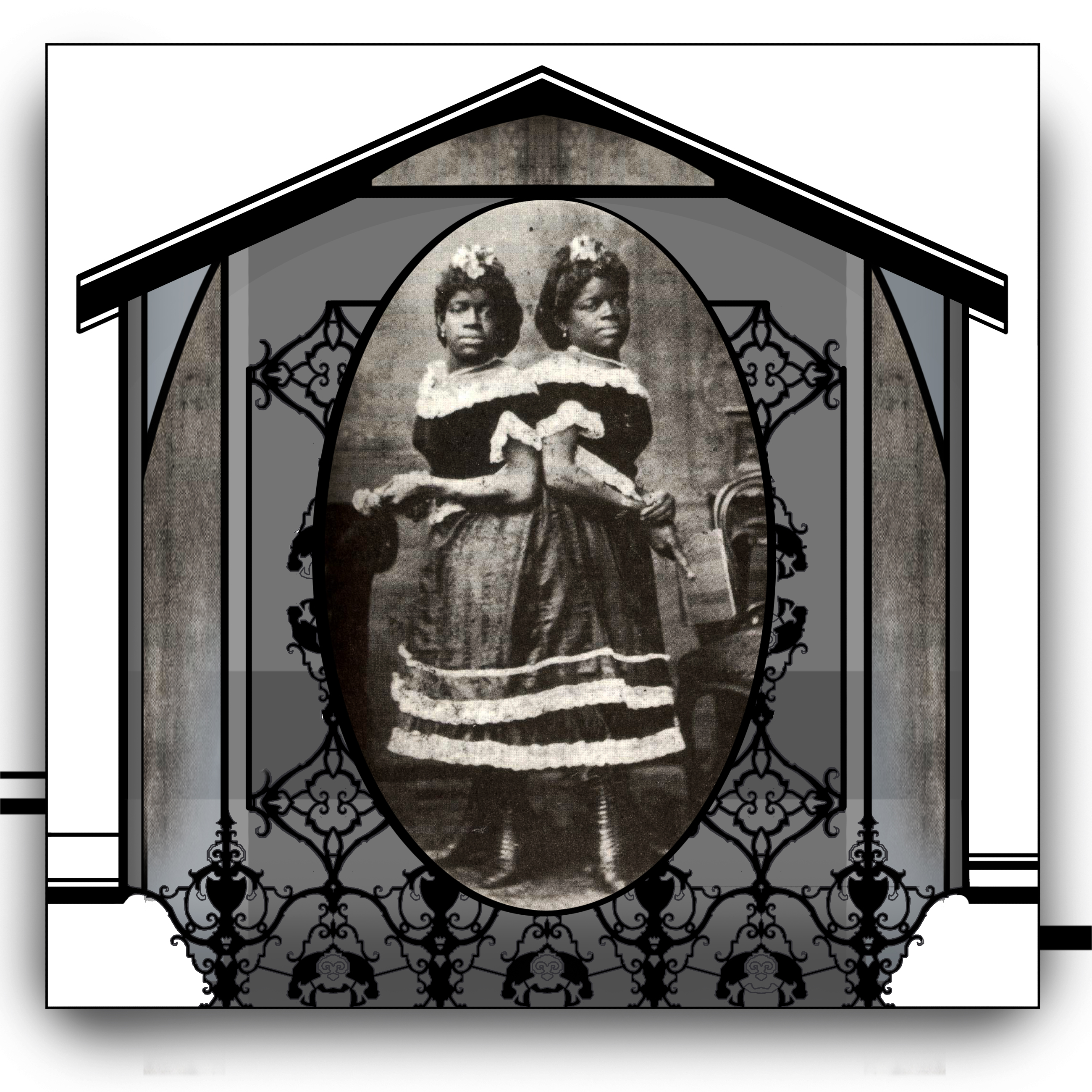
Christine & Millie McCoy, 1851-1912

tear open the breast                        and heart to tell
biological truth: no:                         the black, deformed
birth: yes: slavery                             of the interior

unlock the shackled                          spine to show
in sixty-one years monstrosity: yes:
she never left my side the fusion of vertebrae

the malformation                              of blood and bone
collision? no                                   our walk, a side-step
the backbone braided                        dance: a waltz

born 1851                                       as slaves: the body
twice betrayed: the sky                    held the sun: no, moon
“MOON AND SUN                              UNITED ON STAGE”

illusion? no: miracle:                           the sisters
merged, their voices                         layered like the nightingale’s
sheath of feathers,                            light hitting its wings

breaking up light –                            negress? no: they are
crimson blazing,                                their song quick and agile
as their hearts’ pumping:                      yes: one beat:

one pulse: one soul, two                   thoughts, from darkness,
a final note                                         dividing the air: the sudden outward
breath rushing to fill                            the other’s departure


Shara Lessley is a former Wallace Stegner Fellow in Poetry. Her awards include an O’Connor Fellowship from Colgate University, the Gilman School’s Tickner Fellowship, the Diane Middlebrook Poetry Fellowship from the Wisconsin Institute for Creative Writing, and a “Discovery”/The Nation Prize. Shara’s writing has appeared in Ploughshares, The Kenyon Review, Threepenny, Black Warrior Review, The Southern Review and Alaska Quarterly Review, among others. She was the recipient a 2009-2010 Artists’ Fellowship from the North Carolina Arts Council, and currently lives in Amman, Jordan. “Two-Headed Nightingale” first appeared in the journal Gulf Coast.

Read an interview with Shara here.


“God Bless Our Mess” by Dora Malech

God Bless Our Mess
Illustration by Morgan Maurer, 2011

Day by day, the days dissolved into the simplest of cross-stitched requests.
The sky let herself go—a fistful of sleet, a leftover moon.

Looking down became a hobby which payed off the morning when I found
an unmarked house key and a poorly molded plastic soldier.

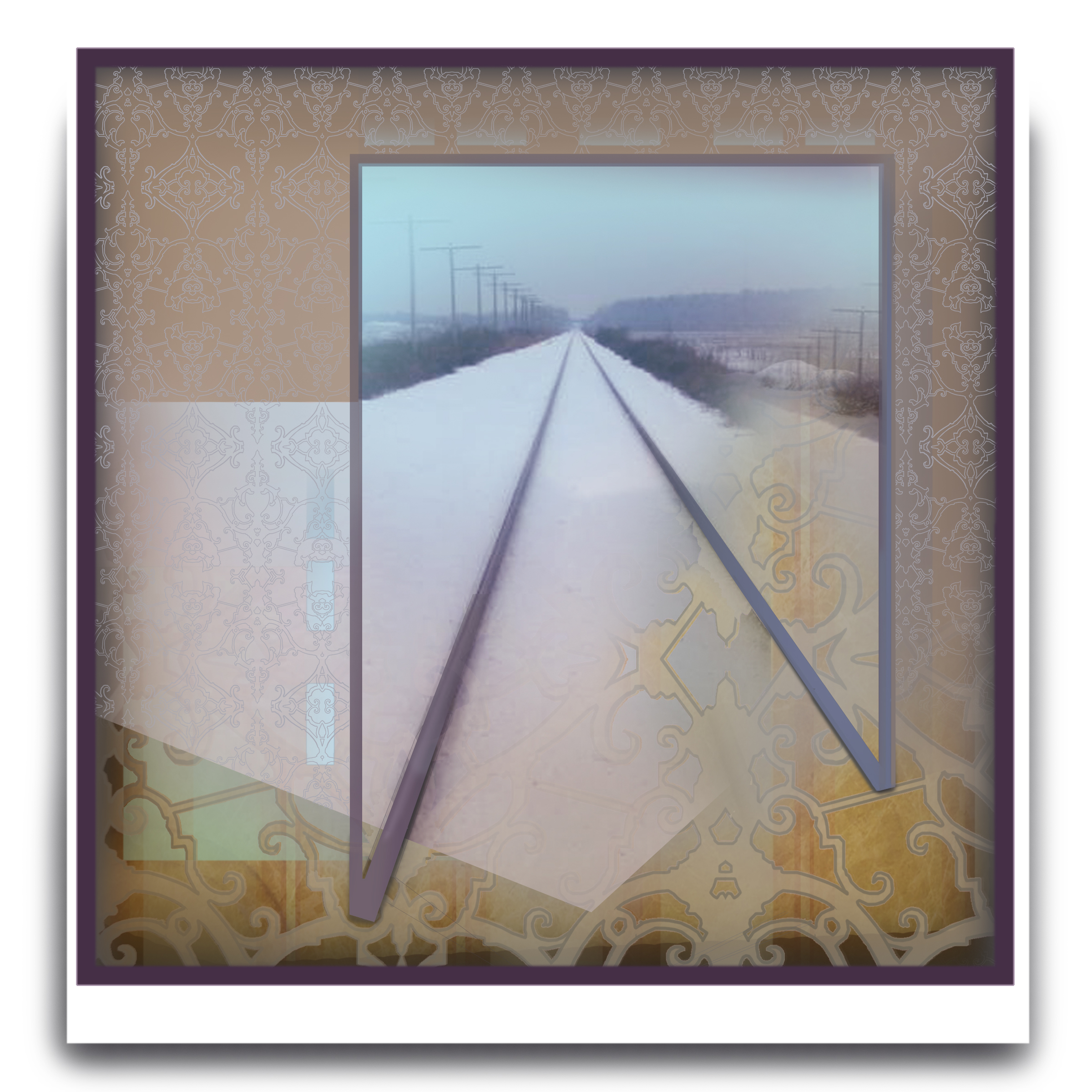
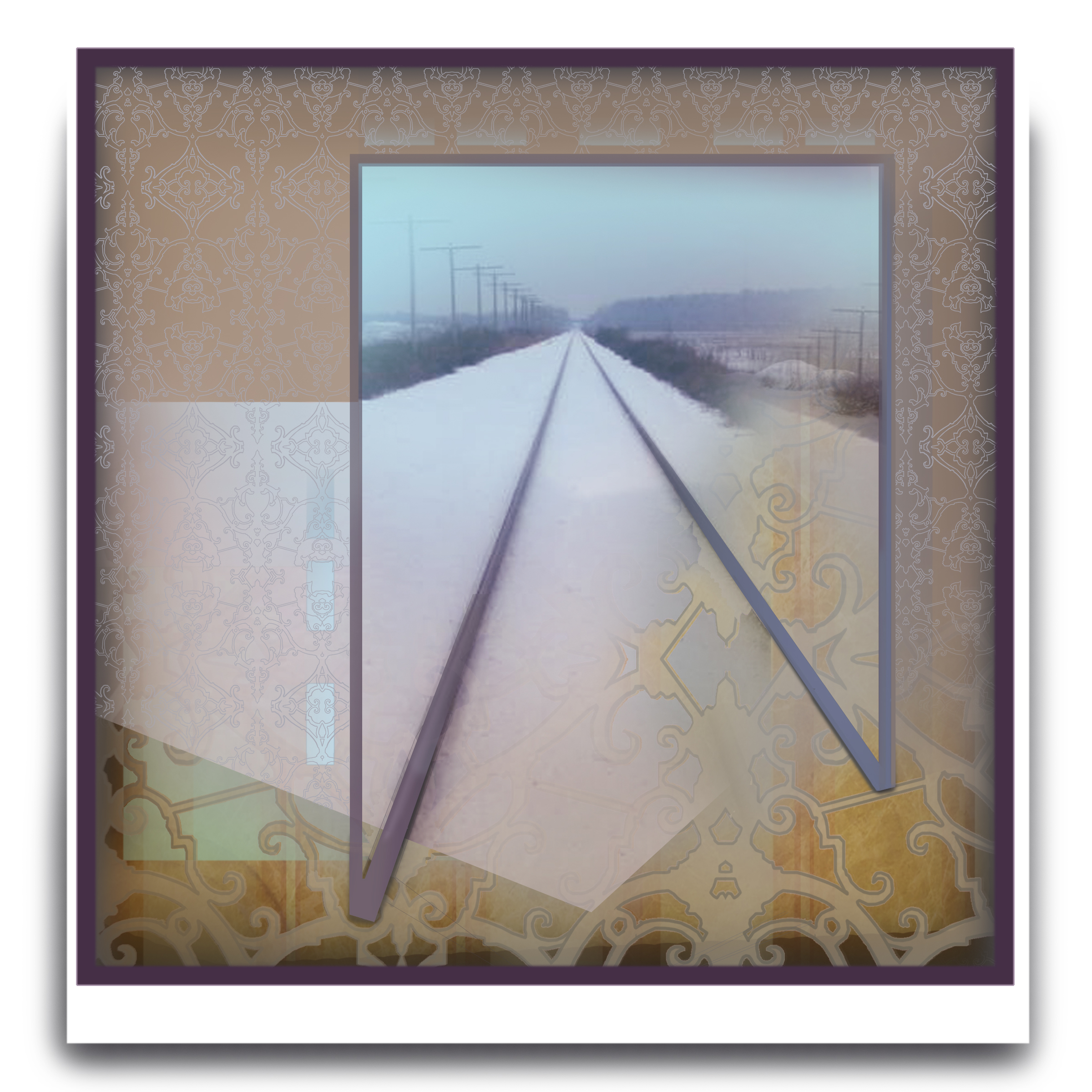
On the path by the train tracks, I taught myself to recognize the marks
made by a limp in snow, shuffle in snow, stagger through snow.

There were calls to field, long-distance. Also, catcalls from moving trucks.
Some days I drove by Every Bloomin’ Thing and was tempted to turn off

into the parking lot and march into the greenhouse, remove my scarf and gloves
and stand bare-chested, crying pothos, ficus until I grew moss or was dragged away.

Some days I reached for my turn signal but kept driving. Thus, the weeks looked
like this: Monday—small claims court, Tuesday—leaky vessel,

Wednesday—scratched laugh track, Thursday—ritual burial, Friday—
blank check, Saturday—strip mall, Sunday—closed concession stand.

Another refrain snagged in my mind like a hangnail on some sweater’s pilled knit—
lit from within lit from within it went as I watched other women emerge orange

into the winter night, the sky a contusion, the streets all slush and no action,
their backs to a borrowed summer, to the bright lights of Jamaica Me Tan.


Dora Malech is the author of two collections of poems, Say So (Cleveland State University Poetry Center, 2011) and Shore Ordered Ocean (Waywiser Press, 2009). Her poems have appeared in numerous publications, including The New Yorker, Poetry, The Yale Review, Poetry London, American Letters & Commentary, and Best New Poets. She has been the recipient of a Ruth Lilly Poetry Fellowship, a Glenn Schaeffer Poetry Award, and a Writer’s Fellowship from the Civitella Ranieri Foundation. She has taught writing at the University of Iowa, Augustana College in Illinois, Victoria University in New Zealand, and Saint Mary’s College of California. She lives in Iowa City. “God Bless Our Mess” was first published in Chelsea, and appears in the collection Say So (Cleveland State University Poetry Center, 2011).

Read an interview with Dora here.


“Two Voices: My Nurse and I” by Carolyn Kreiter-Foronda


Image by Kristin Beeler

After Frida Kahlo’s Mi Nana y Yo, 1937

You do not nourish me, though you offer your breasts,
A wet-nurse,

while my real mother gives birth to a sister.
I do my duty.  I sacrifice

Your milk bitter as oleander, I call you Nana.
a suckling infant at home,

I’d rather press my lips to clouds drizzling
shedding tears

over a maze of leaves, engorged veins
buoyant as breath.

feeding insects, giddy with song.   Newly born:
Wiggling, you turn from me,

a praying mantis, a monarch sucking fluid from stalks.
obsidian eyes, empty.

Estranged, I refuse to knead your chest,
Disheveled Universe,

releasing drops into my half-opened mouth.
crack open this shield.

Indian woman, why won’t you remove your mask?
Reorder this life

As moon candles the stars, cradle me
saturated with providence

so I can fold back time and dream my mother
among splashes of rain,

nurses me, her milk—consecrated by a kiss—
spilling from a holy font.


Carolyn Kreiter-Foronda has published five books of poetry and co-edited two poetry anthologies.  Her poems have appeared in numerous magazines, including Autumn Sky Poetry, Nimrod, Prairie Schooner, Mid-American Review, Best of Literary Journals, with work forthcoming in Poet Lore and An Endless Skyway, an anthology of poems by U.S. State Poets Laureate.  She has received five grants from the Virginia Commission for the Arts, a Council for Basic Education fellowship award, an Edgar Allan Poe first-place award, a Virginia Cultural Laureate Award, four Pushcart nominations, and many others. Carolyn also works as a visual artist.  She served as Poet Laureate of Virginia, 2006-2008.

Read our interview with Carolyn here.


“Young Dimas Rosas, Deceased at Age Three, 1937” by Carolyn Kreiter-Foronda

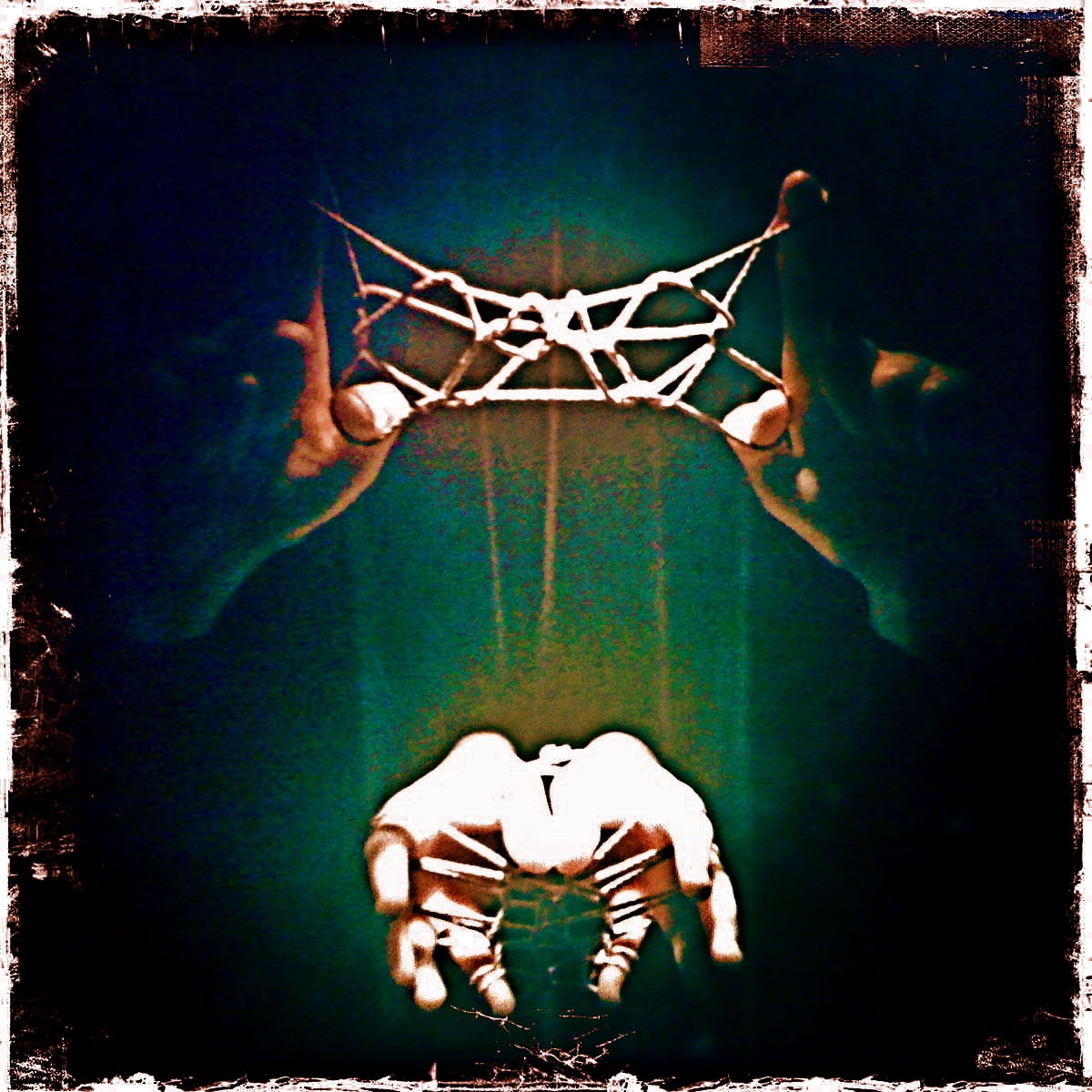
Hands with Jacob's ladder
Image by Kristin Beeler

“The death that moves me the most is the slow death of a young person—”
Frida Kahlo

I robe you for Paradise,
surround you with marigolds.
Sleeping child, saintly
in a mantle, brown feet
bared from birth to death:
O how you loved
delphiniums and baby’s breath
in the courtyard of my home,
your mother calling you
to her side as she swept
the walkway.  I crown you,
array you like a king
in plush gold, paint your eyes
slightly open as if still alive
with wonder.  The gladiolus:
spiritual blossoms in your hands
spread as apricot wings
to lift you: an angelito
into blue skies far from
the judgment hall of our elders.


Carolyn Kreiter-Foronda has published five books of poetry and co-edited two poetry anthologies.  Her poems have appeared in numerous magazines, including Autumn Sky Poetry, Nimrod, Prairie Schooner, Mid-American Review, Best of Literary Journals, with work forthcoming in Poet Lore and An Endless Skyway, an anthology of poems by U.S. State Poets Laureate.  She has received five grants from the Virginia Commission for the Arts, a Council for Basic Education fellowship award, an Edgar Allan Poe first-place award, a Virginia Cultural Laureate Award, four Pushcart nominations, and many others. Carolyn also works as a visual artist.  She served as Poet Laureate of Virginia, 2006-2008.

Read our interview with Carolyn here.

“Race Change Operation” by Thomas Sayers Ellis


Image by Kristin Beeler

When I awake I will be white, the color of law.
I will be new, clean, good; and as pure as snow.
I will remember “being black” the way one
experiences deja vu, as shadow-memory-feeling.
Race will return to its original association with running
and winning, though I will never have to do either
(ever again) to prove myself Olympic, human or equal.
My English, by fault of gaze (theirs), will upgrade.
I will call my Mama, Mother and my Bruh, Brother
and, as cultural-life-insurance, the gatekeepers will
amputate my verbal nouns and double-descriptives.
When I grow my hair long I will favor Walt Whitman
more than Wole Soyinka. My pale, red neck will scare me,
a frightening irony of freedom. The Literary Party in power
will adopt me, saying “TSE is proof of our commitment
to (verse) diversity….” I am. Narrative poets will use me
as long as they can trust me, and Elliptical women
will want me in their anthologies but not as a colleague.
What will I do with myself other than prove myself,
my whiteness, and that blackness is behind me?
The poetry in my walk will become prose.
I will be a white fiction full of black-ish progression,
the first human bestseller, a Jigga Book Spook.
It will be like having tenure, my value will be done.
This is crazy, this lose-a-world way to whiteness.
What happened to “smiling,” to “playing the game,”
to being one of their favorites, to interracial marriage?
As a black, I won a Mrs. Giles Whiting Writer’s Award,
so imagine what I will win when I become one of them.
I can see it now, my MacArthur. Jungle eyes, a Guggenheim.
This might be the most racist decision I’ve ever made
but these lines, unlike the color line, were written to break.
I am tired of lines, of waiting, of lies, my bio full of prizes.
I want my own whiteness, to own then free (someone like) me
even if it means reintegrating another sinking ship.
I’ll be that Shine, defiant and drowned, dream alive.


Thomas Sayers Ellis co-founded The Dark Room Collective (in Cambridge, Massachusetts); and received his M.F.A. from Brown University. He is the author of The Maverick Room (2005), which won the John C. Zacharis First Book Award, and a recipient of a Mrs. Giles Whiting Writers’ Award. His poems and photographs have appeared in numerous journals and anthologies, including Callaloo, Best American Poetry (1997, 2001 and 2010), Grand Street, The Baffler, Jubilat, Tin House, Poetry, and The Nation. He is also an Assistant Professor of Writing at Sarah Lawrence College, a faculty member of the Lesley University low-residency M.F.A Program and a Caven Canem faculty member. He lives in Brooklyn, NY and is currently working on The Go-Go Book: People in the Pocket in Washington, D.C. A new collection of poetry, Skin, Inc., has just appeared from Graywolf Press.


“Learning How to Pray” by Cathy Smith Bowers

ghostly flowers
Image by Kristin Beeler

When I heard my brother
was dying         youngest
of the six of us            our
lovely boy         I who in matters
of the spirit
had been always suspect
who even as a child
snubbed Mama’s mealtime ritual
began finally to
pray          and fearing
I would offend
or miss completely
the rightful target of my pleas
went knocking everywhere
the Buddha’s huge
and starry churning        Shiva
Vishnu       Isis    the worn
and ragged god of Ishmael
I bowed to the Druid reverence
of trees       to water     fire
and wind          prayed to weather
to carbon          that sole link
to all things
this and other worldly
our carbon who art in heaven
prayed to rake and plow
the sweet acid stench of dung
to fly        to the fly’s soiled
wing        and to the soil
I could not stop
myself               I like a nymphomaniac
the dark promiscuity
of my spirit       there
for the taking       whore
of my breaking heart     willing
to lie down       with anything.


Cathy Smith Bowers was born and reared, one of six children, in the small mill town of Lancaster, South Carolina. Her poems have appeared widely in publications such as The Atlantic Monthly, The Georgia Review, Poetry, The Southern Review, and The Kenyon Review. She served for many years as poet-in-residence at Queens University of Charlotte where she received the 2002 JB Fuqua Distinguished Educator Award. She now teaches in the Queens low-residency MFA program and at Wofford. She is the author of four collections of poetry: The Love That Ended Yesterday in Texas, Texas Tech University Press, 1992; Traveling in Time of Danger, Iris Press, 1999; A Book of Minutes, Iris Press, 2004; The Candle I Hold Up To See You, Iris Press, 2009. Smith Bowers is the current Poet Laureate of the state of North Carolina.

Read a review of Like Shining from Shook Foil here.