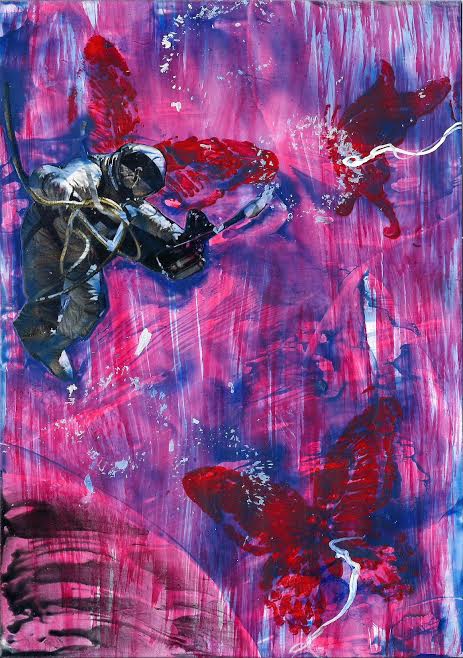
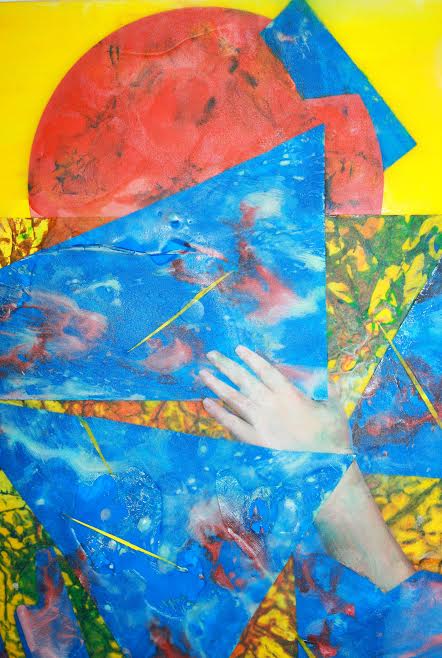
“Stick Figure Suicide” by Randall Brown

Cover image
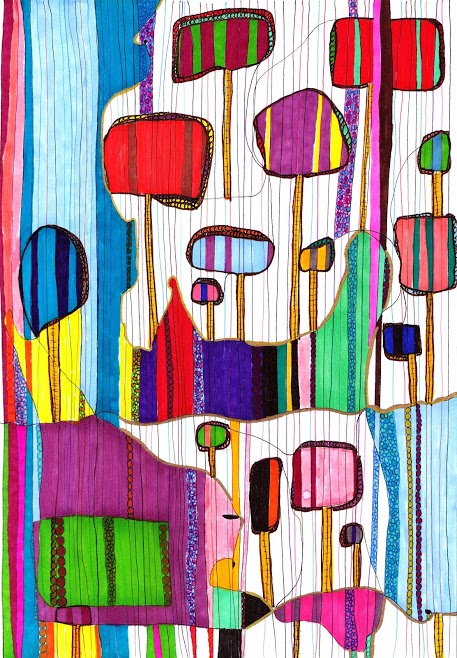
“Palm in the Wind” by Lori McNamara, oil on masonite.

As a splinter in her mind,
it begins, the right hand
brushing each finger
of her left hand, abrading
the dry tinder. Somewhere,

her family is traveling, staggering,
breathing through the day.

There’s an order to the rubbing:
thumb to index to pinky, never
touching the nail. She never fails,
never flags, never forgets.
If she does, of course they die.

That’s the only certainty.
She rubs harder, quicker,
first smoke, then flame.


Randall Brown is the author of the award-winning collection Mad to Live, his essay on (very) short fiction appears in The Rose Metal Press Field Guide to Writing Flash Fiction, and he appears in Best Small Fictions 2015 and The Norton Anthology of Hint Fiction. He blogs regularly at FlashFiction.Net and has been published and anthologized widely, both online and in print. He is also the founder and managing editor of Matter Press and its Journal of Compressed Creative Arts. He received his MFA in Fiction from Vermont College and is on the faculty of Rosemont College’s MFA in Creative Writing Program.

 

“The Water-Logged Heart” by Amber Weyland

Banksy painting
“New Orleans’ Girl” street art by Banksy.

(Or, Banksy’s New Orleans’ Girl)

If her dress were purple and her cheeks were pink, if
a smile curled the edges of her plump lips, if
she held a book or a violin or a baseball glove, if
her face wasn’t full of what she’d seen, if
she believed that the rain would stop, if
she was laughing or dancing or singing, if
she didn’t look half-drowned, all-wild, if
she were any other girl on any other building—
—she wouldn’t belong to us.


Amber Weyland teaches high school English in Roanoke, Virginia. She is an MFA candidate in Writing at Lindenwood University, and she holds a Master’s in English from Radford University and a Bachelor’s in English from Virginia Tech. She is currently in the midst of moving to New Orleans, Louisiana where she plans to continue writing and teaching English.


“The Talking Cure” by Sarah Fawn Montgomery

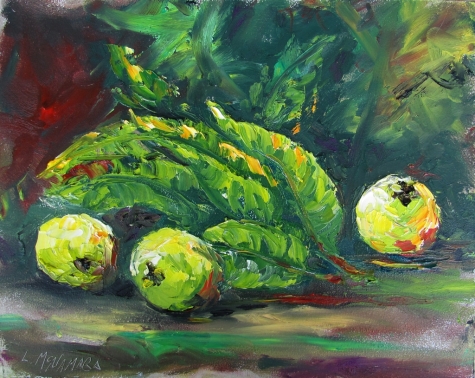
Golden Guavas (Talking Cure)
“Golden Guavas” by Lori McNamara, oil on masonite

–For Bertha Pappenheim (1859–1936)

 What did you uncover in that doctor—
the man who published your secrets with Freud—
as you reclined there on his sofa, throwing pillows
at twenty-one, pouting like a pretty thing
in your stiff corsets and lace?

He must have seemed relief
when he hypnotized you,
ragged memories made smooth
as he unlocked your mute tongue—
Profoundly melancholy fantasies,
the doctor said, characterized by poetic beauty.

The talking cure, you named it
when you felt free to associate,
to speak of your ill father
and old memories, his mouth quieting yours,
his fingers holding your child body rigid.

Is this why you envisioned yourself pregnant
with the doctor’s child,
swooning with morning nausea,
your empty belly grown round, firm like fruit?
At least that’s how legend goes—though who writes those?

He said he hoped you’d die to end your suffering
when he sentenced you to the sanitarium,
your story—even your name—changing.
Anna O, named by men who labeled you hysteric.
They did not write of you beyond their discovery,
your diagnosis, the empty promise of your catharsis.
Your noble quiet, the delicacy with which you worked,
each careful accomplishment credited to their care, their cure.

Speak now, Bertha—thrash and dance, leave mythmakers
wide-eyed at all you have done in spite of them.


Sarah Fawn Montgomery holds an MFA in creative nonfiction from California State University-Fresno and a PhD in creative writing from the University of Nebraska-Lincoln, where she teaches and works as Prairie Schooner’s Nonfiction Assistant Editor. She is the author of The Astronaut Checks His Watch (Finishing Line Press). Her work has been listed as notable several times in Best American Essays, and her poetry and prose have appeared in various magazines including Confrontation, Crab Orchard Review, DIAGRAM, Fugue, Georgetown Review, The Los Angeles Review, Natural Bridge, Nimrod, North Dakota Quarterly, The Pinch, Puerto del Sol, Southeast Review, Terrain, Zone 3 and others. 

Read an interview with Sarah Fawn here.


“As if these leaves” by Simon Perchik

Cio Che C'e.LOVE REDACTED
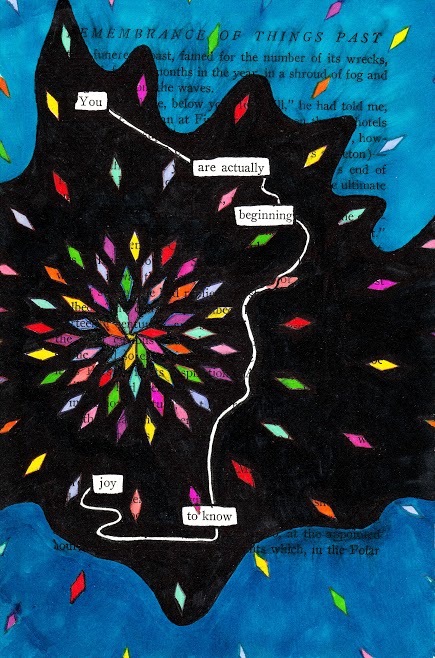
From the “Love Redacted” series by Laura Didyk, Sharpie on paper.

As if these leaves are no longer at home
this match is breaking away-–by itself
strikes against the wooden door

demands it open her eyes, already smells
from hair loosening around her shoulders
as smoke –you need more wind

and the sky to level out, clear this place
for the stones growing wild side by side
no longer feel your fingers kept warm

by gathering more and more leaves
to their death just to want to be held
as never before by the burning.


Simon Perchik is an attorney whose poems have appeared in Partisan Review, The Nation, Poetry, Osiris, The New Yorker, and elsewhere. His most recent collection is Almost Rain, published by River Otter Press (2013).  For more information, including free e-books, his essay titled “Magic, Illusion and Other Realities” please visit his website at www.simonperchik.com.

“At Old Oraibi” by Kathleen S. Burgess

At Old Oraibi_rules and signs
“Rules and Signs” by Laura Didyk, Sharpie on paper, 2015.

In winds that skirt the San Francisco Peaks, we
wait to understand the village silence with our own.
Signs warn, Do Not Enter. Buildings seem in ruins.

Other tourists come, go away. We hear murmurs,
wind, but no words until an elder of the Bear Clan—
the chief—materializes, beckons, unlocks the gate.

Her 10-year-old grandson Ray shines like his name,
a beam of light through banked clouds. He guides us
over Third Mesa to the ruins of a mission church

taken down three times by lightning and fire. Why?
we ask. Because it was Spanish? He answers, Yes.
Amid the debris of centuries, we reconsider history

of the Pueblo Uprising. Only the Hopi remained free.
Now women offer us crisp cornets of blue corn piki.
Ray swings a bull-roarer of lightning-struck pine,

a long, thin, turquoise leaf shape. One side painted
with a cloud, lightning bolts, two bear paws; the other,
with a bear kachina. Spinning on a string, it buzzes

like a tiny wing, whirrs the call for thunder and rain.
We buy this handmade toy to remember that Hopi
rituals mean to save the world. Without electricity,

or running water, the Hopi conjure corn from dust,
trusting fields to snowmelt, cloudburst, or water cans.
So leaves leap fresh that bear no witness to drought.


Kathleen S. Burgess, poet, editor, retired music teacher, union officer, statistical typist, server, factory solderer, videographer, and hitchhiker through North, Central, and South America, has poetry in North American Review, The Examined Life, Evening Street Review, Malpaís Review, Turtle Island Quarterly, Mudfish, other journals and anthologies. A chapbook Shaping What Was Left and the anthology she edited Reeds and Rushes—Pitch, Buzz, and Hum are Pudding House publications. Two new collections Hitchhiking to Peru and The Wonder Cupboard are forthcoming.

Read an interview with Kathleen here.

“Decaying” by Nicole Stanek

DECAYING_interior
“Interior” by Laura Didyk, Sharpie on paper, 2015.

this morning, I woke to

your heart
thrashing in the chambers

that have grown large and
echoing behind

my breasts. my lungs

bruised from
the hammering of thick

blood like congealed oil,
against them.

I pulled myself
from underneath
layers

of cold metal and stone
and
drove your heart

to my therapist, where
I hauled it from my

chest and

placed it in her hands.
“codependency is an
illness”, she said.

so, I took your
bloody heart back

from her dry, calloused hands
and brought it, again

to bed, where I cradled

it to sleep; the

hollow of my
chest, decaying without

a heart
of its own.


Nicole Stanek is a poet based out of Long Island. She is a graduate of Dowling College, where she studied Psychology and Media. She currently leads the Westhampton Poets Society, a writers group on the East End of Long Island.

Read an interview with Nicole here.


“Hot Bones” by Ashley Hutson

Hot Bones
Image by Laura Didyk, Sharpie on paper, 2015.

The morning my grandfather died
I dreamed we gathered at the kitchen
table and ate him. It was a joyful
feast. My sister and I carried him in
on a silver platter the size of a stretcher
and he looked exactly like a trussed-up
chicken, headless and at rest.
We plucked through the hot bones
that burnt our fingertips, searching out
the brightest cuts of meat. It was easy
to devour him. Each of us took
a portion and kept him in our belly,
the organ right under the organ
that hurt upon waking.

After the funeral we ate another feast,
this time to his memory. It was not
as satisfying, though. The green
beans and macaroni sat limp and
dull in my mouth. The chicken tasted
of nothing.

I should have known. A memory
is an off-brand imitation
never as savory
as the real thing.


Ashley Hutson lives in rural Western Maryland.  Her work has appeared or is forthcoming in McSweeney’s, SmokeLong Quarterly, The Journal of Compressed Creative Arts, The Conium Review, Threadcount, and elsewhere.  Find her at www.aahutson.com.

“Excavation: Mobile, Alabama, 1996” by Ting Gou

Excavation by Ting Gou
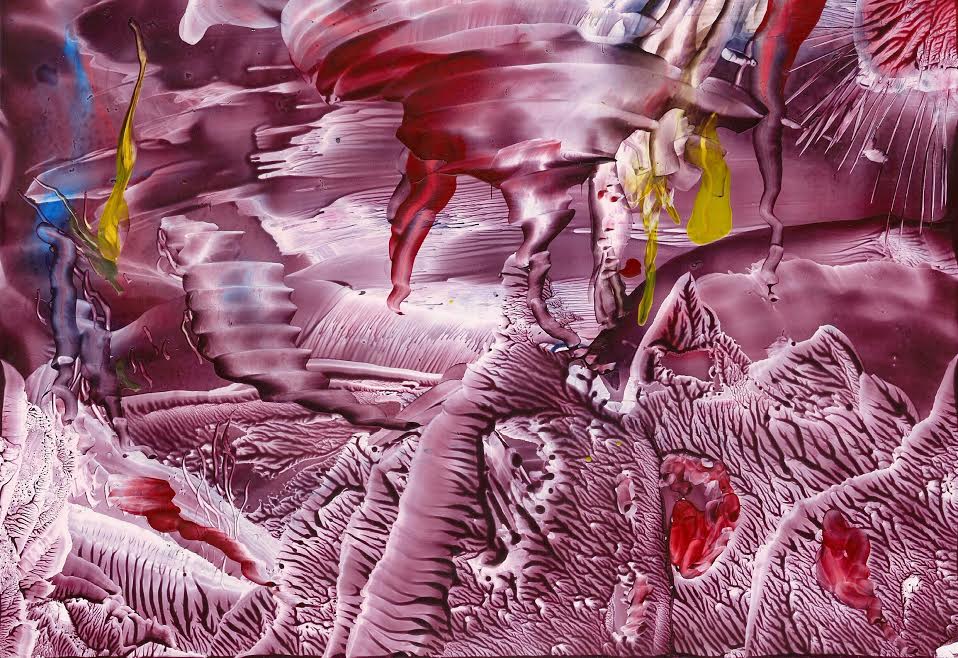
“Revelation” by Mia Avramut, wax on paper, 5.8 x 8.2 in.

What happens when you leave
a house? Its body begins to rot

for you and live on for another.
As much as you deny it,

there are always two houses,
two sets of furniture—

one with refrigerator doors
collecting grime between plastic lips,

new family, new broken-down car
killing the lawn.

Then, there’s the house
as you remember it,

swimming upstream
in your imagination, year

after year, consistent as salmon.
That summer, my mother

obtained a box of fish,
their bellies emptied

of caviar.
Leaning over the counter

by the sputtering garbage disposal,
she intended to make dinner

out of those eggless pouches.
No air conditioning, no job,

no images for our eyes
but burnt grass splayed out for miles

like dirty lace doilies,
houses set in the middle

like cheap teacups.
She deroofed the scales

from spiculated skin.
Her movements calculated,

her cuts deliberate,
her gasp sharp but short

when she saw the worms,
pink pencil cores of muscle

sheathed around bone,
pockets of activity in the otherwise

dead. How I’ve tried to bury it,
the sound of useless flesh

falling into a trash bag.
How I’ve been drawn to it,

as to a place where something
remarkable happened,

how I stand in that kitchen
and it’s me who’s opening

boxes and boxes of freshwater fish,
each more terrifying than the next,

looking for what was broken,
what is still alive.

All things rot, even houses,
but what happens afterwards?

And who will stumble
upon our remains and ID us,

will they know us from our bones
or the troughs left empty

in the dirt?
I tell her we will last.

Blessed be the calcified heart,
the mineralized shell

of life hardened in the sun.
The tar that keeps us together

long enough to be found,
documented, crushed into tea,

no ingredient too taboo
for a mother, a daughter.


Ting Gou lives and writes in Ann Arbor, where she is a student at the University of Michigan Medical School.  Her poems have appeared in the Bellevue Literary Review, Best of the Net 2014, Ghost Ocean Magazine, Midwestern Gothic, and elsewhere.

Read an interview with Ting here.


“Walking on the Effing Moon” by Roy Bentley

Life Saver
“We Are Butterflies” by Mia Avramut, encaustic collage, 5.8 x 8.2 in..

The summer night Mark Chapman sat in the parking lot
of the L & K in Heath, Ohio, Tom Kozlowski whispered
that it might be best to leave Mark alone in the car. We
were tripping and Mark had asked to be left in the car.
We nodded. Collected ourselves. Went into the L & K
and ordered coffee. A couple of cheeseburgers. Ate slow.
We were in the restaurant for about an hour. Maybe longer.
And now you need a word: englottogaster. It means to speak
from the belly or the gut. Like a ventriloquist. Why that word?
When Tom and I got back to the Ford and we opened the door:
Guess where the fuck I’ve been? No, not just in the car? I’ve
been to the moon—the fucking moon—and I walked around.
Even tripping, if you hear a friend mention the Earth’s single
satellite as a place he’s very recently visited sans rocketship,
as if the moon is much like late-summer dark, and no biggee,
then you tend to discount what you hear. However, if what
you hear doesn’t seem to be coming from the person you
know to be someone left in a blue Ford Fairlane in Ohio
because he was experiencing some difficulty keeping
himself in check—“maintaining” it was called then—
if the voice sounds disembodied or like it originates
from a blackness dissimilar to the one in the throat,
then you hup-two-three-four back and listen carefully.
Sure, you may recall that Neil Armstrong is from Ohio
and so an American left a set of footprints in that dust.
You don’t need a tab of Blue Microdot to hear assertions
as astonishing, or the voice in which they may be offered
as of unknown or exotic origin, but it helps. It can’t hurt.


Roy Bentley has received fellowships from the NEA, the Florida Division of Cultural Affairs, and the Ohio Arts Council. Poems have appeared in The Southern Review, Shenandoah, Pleiades, Blackbird, North American Review, Prairie Schooner and elsewhere. Books include Boy in a Boat (University of Alabama, 1986), Any One Man (Bottom Dog, 1992), The Trouble with a Short Horse in Montana (White Pine, 2006), and Starlight Taxi (Lynx House 2013). He has taught creative writing throughout the Midwest and south Florida. These days, he teaches at Georgian Court University and lives in Lakewood, New Jersey with his wife Gloria.


“at goodwill (radiation, day 32)” by B.J. Best

radiation day
“Pathways in the Sea” by Mia Avramut, encaustic and gouache on wood, 8.5 x 11.5 in.

we wield our squealing cart, ready to rifle
through the detritus of other people’s lives:
the fritzy stereo, the german bible,
baskets, scarves, puzzles, bent butter knives.

our son wants to visit the toys, buried
like a graveyard of childhood. broken parts,
electronics no longer batteried:
o birthday, o christmas, what callous heart

would want to be bereft of you? it is my wife
who finds the vintage cat pitcher made in japan.
we will take it home, let it purr in our life,
now a little brighter than when the day began.

thrift stores, like cancer, serve to remind:
you never know what’s hidden. what you’ll find.


B.J. Best is the author of three books of poetry: But Our Princess Is in Another Castle (Rose Metal Press, 2013), Birds of Wisconsin (New Rivers Press, 2010), and State Sonnets (sunnyoutside, 2009). I got off the train at Ash Lake, a verse novella, is forthcoming from sunnyoutside.  He lives in Wisconsin.

Read an interview with B.J. here.