We are LIVE!


Our Fall/Winter 2010 issue in now up and LIVE. We have chosen sixteen amazing works of poetry, fiction, and non-fiction for this issue.


Our illustrator is the fabulous artist Dawn Estriin, who personally read each selection and created a custom image to accompany each work. We’re so thrilled to have this fine lineup of writers grace our pages.


Each week I will highlight one of the works and say a little something about the author and my process of selecting it.


Enjoy!

Our October Issue

Bijou Graphique


We’re very excited to announce that the October issue of r.kv.r.y. will be illustrated by Dawn Estrin, a photographer and photo collage artist who also produces fine, handmade jewelry (with her partner George Wilson) through her business Bijou Graphique.


Dawn has pursued art since her teen years when she studied metalworking at the Cleveland Institute of Art. She holds a BFA in Fine Arts for painting and drawing. Later in life, she became interested in photography, a craft she taught herself and has practiced for 15 years. She draws on a vast collection of /images for her jewelry and photo collages.


Each issue we hope to highlight the work of a current artist, and collaborate with them to illustrate our fine poetry, fiction, and essays. Artists will be given the opportunity to read the accepted pieces in advance, and encouraged to select whatever /images (from their own work or the work of others) that they believe fits the writing in theme and tone. I can’t wait to see the excellent collaborations that result.


See you in October!

Exciting new changes at r.kv.r.y.

Faithful readers, thanks for hanging in with us as we undergo a changing of the guard here at r.kv.r.y.


Our vissionary founder (and tireless former editor-in-chief) Victoria Pynchon has decided that she needs to devote her energies to her fledgling book–you can listen to an excellent interview with her here, and she has passed the torch on to Mary Akers whose first issue will launch in October.


Stay tuned for more exciting news to come!

“All Roads Lead to God” by Barb North


(painting, Occulus by Joan Cox)

I was born Jewish and raised Catholic… which is a lot of guilt.  And different guilt. Catholic Guilt: Everything you enjoy is a sin.  Jewish Guilt:  Everything you enjoy will hurt your mother.

Actually, I was born Jewish, went to Catholic boarding school, baptized Lutheran and confirmed Episcopal.  One summer I was a Methodist.  That was all by the age of 15.

For my first six years, all I knew about was Jewish.  We wore Jewish Stars, lit candles and said chhh AND we got eight presents for Hanukkah, Chanukkah.  Then I found out some people were not Jewish.  Some were Shiksas.  I learned that when my widowed  Dad married one.  We stopped going to Hebrew school, stopped lighting candles and got a Christmas tree.  My relatives were not happy –so we stopped –seeing my relatives.

When I was eleven, the Shiksa was tired of kids so I was dropped at the front door of a convent.  Sister John Michael, the first nun I’d ever seen, introduces me to my new class.  “This is Barbara and she’s Jewish.”  I am welcomed with a warm GASP  I have no idea my people killed their savior.  Then Kathy Fleck, the other “Non-Catholic” identifies herself but points out she’s not Jewish… she’s Protestant.   Whatever that is.

Here’s how Catholic looked to an eleven year old Jewish kid:  The next morning we MARCH… over to the church.  The other girls have little white doilies on their heads.  As we’re going into the Church, I am accosted by a panicky nun who bobby pins a piece of Kleenex to my head.

Then there’s the “stand –sit- kneel” routine that is triggered by a repeat and answer sing-along led by a man in a pink satin dress.  Kathy Fleck calls him Father.  My Jewish Dad does not wear dresses… but apparently her dad does.

The song leader starts doing some hokus-pokus over a wine glass and everyone lines up in the front of the church.  They kneel, stick out their tongues and get a Necco Wafer.  When I get in line, another “nun panic” happens.  They do not want me getting that Necco wafer.  Later, I learn that the wafer is actually the body of the guy my people killed.  I guess they didn’t want us to eat him too.

Again everyone lines up— I guess for seconds…. so I stay kneeling.  But the nun who pinned my Kleenex pushes me into the line.  Yippee, I get a wafer now.   WRONG.  The Father guy in the dress is walking along the railing muttering something about Dominos and putting his black thumb print on everyone’s forehead.   It’s Ash Wednesday.  Apparently Jews qualify for ashes.

I spent four years in Catholic Boarding School, and I learned all the rules… especially the one that said I couldn’t go to Heaven ‘cause I wasn’t baptized.   Shit, I couldn’t even go to Purgatory and work my way out.  Straight to Hell, unless I could work the “Limbo loophole.”  Not the dance.  Limbo is where all the babies go who would have been baptized if they had only known.  I bought all of this.

The Catholic kids went to confession to clear away their sins.  The nuns made me go to confession, but I wasn’t allowed to confess because I had “Original sin”.  It blocks forgiveness.  I was supposed say “I’m a non-Catholic and I’ve come for your blessing.”  But once the priest found out I was Jewish, no more confession.  I was taking up too much of Father’s time.  I may not have been Catholic, but I felt Catholic guilt from that one… wasting a priest’s time.  Or maybe it was Jewish Guilt.

When I started High School, my dad divorced the Shiksa and married the daughter of a Lutheran Minister.  She was going to have a baby, and we would be a family.  I moved home.  No more convent.

My dad and his wife fought about the new baby being baptized. My dad lost. So they baptized all of us Lutheran.  I think they got a group discount.  I was happy. Finally I was getting rid of that Original Sin and I could start working on the Heaven thing with a fighting chance.  Not only was the Original Sin gone, so was all the other sin on my soul… fifteen years worth. No Guilt. Thank you Jesus. I had a clean slate. That fact kept me a virgin all through High School. I wanted that slate to stay clean.

Lutherans had better songs, like Amazing Grace and Onward Christian Soldiers.  No Necco wafers… bummer… pieces of matza. Isn’t that Jewish?

Just as I was getting that the Body of Christ was Matza,  my stepmother moved up socially and made us all Episcopal.  Episcopal was like Catholic in English with a married Reverend instead of a single Father who also wore a dress.  And they used bread and dipped it in wine… no wafers, no matza.

So what Am I now?  Well, I married a Jew, and I feel Jewish. It’s an ethnic thing. After all, if Hitler comes back, having been baptized would never save me. But I do believe in Jesus.  I can’t unring that bell.

I want to belong.  I’ve tried a bunch of Christian Churches but never found the “right fit.”  Some of them say things that are anti-Semitic, or anti gay or they tell me who to vote for.  And yes, I tried Jews for Jesus.  Toooo— Jewish for me. .  Mostly I go to Church for the music.  Sounds sort of like buying Playboy for the Articles, huh?

I just celebrate everything that honors a Creator. You can name it God or Jesus or Allah or Buddah or I Am or He or She, I don’t care.  My religious background has never been confusing to me.  They’re all so similar.  I can find God in any of God’s houses.  When Easter and Passover are the same week, we have an Easter/Passover Seder.  Our ceremony honors the common ground.

My daughter was raised to know she’s a Jew, exposed to church, and even attended an Episcopal schoolShe threw in some Eastern and Pagan beliefs to create her religion, which is different from mine. But like mine, it has no specific name.

She’s never been baptized. I feel  Jewish AND Catholic guilt for that one.  What kind of Mother doesn’t erase her kid’s Original Sin? But really… baptism should be her decision to make, not mine.

Religion can be such a great thing to uplift people, help them get through the uncertainty.  It’s so weird to me that people care which one you are. There is room in Heaven for everyone. Water doesn’t get you in. Neither does your choice for president.

I wear this Star of David with a cross inside.  I thought it embraced everything, but I discovered it just pisses everyone off.  People want to know what you are.

A Jewish cousin tells me I am not a Jew, even though my parents were Jewish and Israel would let me in, no questions asked. He refuses to come inside our house during December because we have a tree.  My father-in-law told me that he didn’t want to leave his money to my husband because I might get my hands it and contribute to the Nazis.   What?? I’m a Jew.

I guess I’m not accepted because I mixed things up. I’m not a purebred. To Christians I’m a Jew; to Jews, I’m a traitor.

But my Dad started the whole thing. And here’s his Karma. He died an Atheist, was buried in an Episcopal Churchyard, has a memorial stone in a Jewish cemetery and a plaque in a Catholic Church.

So what have I learned from all this? That God, in the end, has an amazing, awesome, incredible… sense… of humor.  And I know one thing for sure: my God is big enough to include everyone.


Barb North, is a mediator, conflict coach and negotiator.  She has also designed and delivered more than 2,500 trainings in such areas as Conflict Resolution, Mediation, Communications Skills, Acting, Couples Communication, Improvisational Theater, Speaker’s Skills and Stand-Up Comedy.   She has written and produced corporate training films, led seminars, retreats and facilitated group discussions.  A  keynote speaker and guest on such television shows as NBC’s The Other Half, Adelphia Cable’s Conflict Line, Barb is particularly skilled at working one-on-one with parties in conflict.

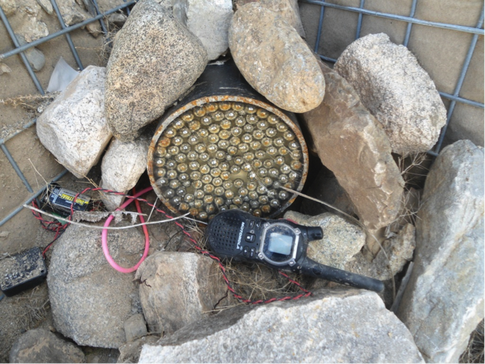
improvised explosives

stock photo2

The summer moon was full and I came bounding out the front door of my house, feeling no pain, in hot pursuit of a pack of cigarettes that I had left in my car.I didn’t see the jogger at first. He was passing the house as I was coming out, and I must have spooked him. He took a tumble on the sidewalk, and, naturally, I wanted to see if he was OK.

“That looked like it hurt,” I said. The young man made a grunting sound.

I gave him a hand to help him up and I noticed that he had blood running from his knee. “Your leg is bleeding,” I said.

“That’s a good sign,” said the jogger. “I’m more worried about the other leg.”

That’s when I noticed it – the other leg was made of stainless steel or something like stainless steel. It looked like something from The Terminator. The jogger was rubbing the little ball of his knee cap, which was perfectly round, checking it for scuff marks. Two slightly angled steel rods with a space of open air between them took the place of what would have been lower leg bones, and those rods met at a complex ankle joint engineered to disappear into a special New Balance running shoe.

I could see why he was so proud of the fake leg. He hopped up and down on it like a pogo stick and declared himself fit. Before he could go, I extended my hand again and introduced myself. “I’m Howard,” I said.

I didn’t remember seeing him around before, but he said his name was Matt and that he lived down the street not too far. He wasn’t very old, several years younger than me by the looks of his face.

“Do you mind telling me what happened to your leg?” I asked. I couldn’t help it; I didn’t want to let him go until I found out the story.

He gave me an odd look, as if trying to decide whether or not I was worth it.

“Most people are afraid to ask,” Matt said. “So I guess I can tell you.”

He shifted his weight onto his good leg and started talking, and he didn’t give me the short version either.

“I was going down the road with a guy who was maybe 19. While this kid was driving, he was telling me all about the sluts he’d done it with back home. Crude stuff. But here we were and we were laughing and joking. The kid had also been farting all morning. He thought that was so damn funny. Finally, I decided, what the hell? I might as well make a contribution…”

Matt put his weight back on the fake leg now, snorted, and looked down at the ground before continuing.

“And that’s when all hell broke loose. It was like I had ignited the atmosphere. I could feel my leg exploding and then everything was on fire, everything around me was red. I don’t remember anything else until the hospital. They must have pulled me out of there fast.”

He looked up. I nodded, and I guess he felt like it was OK to keep going some more.

“I woke up in some hospital, I don’t even know what country it was in. Everything was hazy, but I tried to sit up and look around. I was surrounded by all of these patients, you know, and I could already see that they were missing arms and legs. I wasn’t even thinking about my own leg at this point. I think I was probably crying or laughing like a mad man, waving my arms, trying to get the attention of a nurse. I had this overwhelming feeling that I had blown all of these guys up, you know, that it was all my fault.”

He studied my reaction now. “Crazy,” he said, as if that summed it all up. “No way,” I told Matt. “You’re probably the biggest hero I’ve ever met.”

I don’t know if he was buying it, but he looked relieved. I didn’t ask him what happened to the kid he’d been driving with.

“I’ve been back for a while,” Matt said, “but I’m just now trying to push this thing a little at night, you know, when not a lot of people are out. Walking works fine, but apparently I don’t have the running thing down just yet.”

He jumped up and down again. He didn’t really bounce that much, but his leg really did make a sound like a pogo stick makes.

“You like to fish, Matt?”

I don’t know why I asked him that. It was right out of left field. I just felt like he should definitely be able to get away and do the things guys like to do, that it was important. But, for all I knew, he already had buddies to go fishing with.

“I haven’t been fishing in a long time,” he said. “I used to know a few places to catch bass.”

“I know a pond,” I said. “You wanna go some time?”

“Tell you what,” Matt said. “Next time you see me, ask me again. I just might be in the mood to catch a few one of these days.”

I didn’t see Matt again for a month or so. To tell the truth, I had pretty much forgotten about meeting him. The Fourth of July came and went, and then I saw him again. I was on my way to the store to pick up a 12-pack one night when I saw him jogging in the neighborhood.

I pulled up right beside him but didn’t spook him too bad. He was trying to figure out who I was.

I had the windows down. “It’s Howard,” I said. “Remember, you had a fall in front of my house.”

“Oh, yeah,” he said.

“So when do you want to go fishing?”

He moved closer to the car. “OK, then,” he said. “When do you want to go?”

He told me where his house was and we decided to go the next day.

It rained the next morning, but by late afternoon there wasn’t a cloud in the sky. I loaded the poles carefully into the car and put my tackle box and a cooler of beer in the trunk. I put on my fishing hat and felt good about things. Then I got back into the trunk to get a few beers for the drive.

I don’t know what Matt’s story at home was, whether he was living with his parents, or if he had a girlfriend or a wife, maybe even kids. He came out the front door before I had a chance to honk.

We headed south out of town a few miles. A guy I used to work with had a nice pond that was full of small-to-medium-sized largemouths. They liked to take purple plastic worms, and I had rigged up both poles.

We drank a beer on the way out there. “I can’t say much for your taste in beer,” said Matt, looking at his can of Old Milwaukee. “This stuff will probably give me the shits, but it sure does taste good right about now.”

We parked on the side of a gravel road by the pond and then unloaded the stuff. I could have kicked myself for not bringing the folding chairs, just in case. “We’ll just fish for a while,” I said. “It shouldn’t take long for us to catch about a dozen.”

We drank another beer beside the car and then hit the pond. The bank was muddy from the morning rain, but we were able to find a spot where the mud gave way to some harder dirt and grassy weeds. You could practically cast from one end of the pond to the other, so positioning ourselves close wasn’t a big deal.

“Just bring it in real slow,” I told Matt after he made his first cast. “They like to tap it first.”

Before I could get my line in the water, Matt was already reeling in a nice one. He had the biggest grin on his face. “Hot damn,” he said.

By the time the sun was starting to set, we had lost count of how many bass we’d caught and released. We lipped all but one. Matt threw it into a mess of cattails on the side of the pond. Set the hook a little late on that one,” he confessed. “Oh well. A little something for the turtles to eat.”

This is where it gets kind of weird, and I’m almost ashamed to tell it. But, as we were making our final casts of the evening, I got the urge to break wind out loud. I thought it would be funny – you know, guy stuff. But as soon as I farted, and it was a big one, Matt jumped forward and went down like his hair was on fire.

He was crouching by the water, covering his head. Things had been going so well, and now this. I walked over and tried to give him a hand. He looked up, disoriented, embarrassed, and maybe a little disgusted. “I’ll manage,” he said.

But when he tried to stand up, he was stuck in the mud. The New Balance running shoe attached to his fake leg was really planted. He pulled hard on the leg with both hands. He finally got himself free, but the shoe was still stuck.

It took us a few minutes to dig the special running shoe out with our hands. Matt tried to laugh once and even said he was sorry for freaking out, but he didn’t say much of anything else. The foot on his fake leg was like a little clamp. Without the special shoe attached, everything was difficult. He had to hop on his real leg until we got completely away from any mud and he was able to put some weight on the nubby device at the end of his other leg.

In the car, Matt just stared at the muddy shoe in his hands. I don’t know if the clamp was broken or what, but he didn’t try to reattach the shoe.

“I guess I wasn’t ready to go fishing yet,” he finally said as we pulled into his driveway.

“It’s my fault,” I said, feeling horrible about what had happened back at the pond.

Matt hobbled out of the car, holding his shoe. He started to head for the house, but he stopped and glared back at me.

“Don’t apologize,” he said. “You were never even there.”

I thought he was going to leave it at that, but then he said something else.

“Couldn’t they have thought about it a littler harder before they put us in this position?” he asked.

He didn’t wait for an answer, but it wasn’t hard to imagine what he was getting at.

I still had five or six beers left by the time I got home. I put on a Nirvana disc and felt stupid and contagious. Then I tried like hell to scrub the fish smell off my hands. I used half a bar of Lava, but, no matter how hard I tried, it wouldn’t go away.


Lance Feyh still lives in the Ozarks where he continues to enjoy indoor plumbing. He has published short stories in Community Slop and Third Wednesday.

“Conditional” by Paul Hostovsky


(photograph by cole rise)

What if
this well-dressed man
exiting that magnificent
glass building
and walking toward that expensive
car with the livery plates
waiting for him at the curb
suddenly began
urinating
on the sidewalk
in the middle of
everything,
his excellent
tie flapping in the breeze,
his face and posture
betraying a powerlessness
over this mournful
necessary stream
as it dies in a dribble
at his feet…
You might think
it was a bladder condition,
or a prostate condition,
or a moral condition—
but you would never guess
that it’s a fairy tale
condition:
glass buildings,
expensive cars,
excellent grammars
and legal instruments
notwithstanding,
this well-dressed man,
not bothering
to shake himself dry
in the middle
of everything,
ducks into his pumpkin coach
and goes speeding off down
Wall Street,
transmogrifying
into his own
body.


Paul Hostovsky has long and generously contributed poetry to r.kv.r.y. His poems have been featured on Poetry Daily, Verse Daily, and The Writer’s Almanac; and published in Carolina Quarterly, Shenandoah, New Delta Review, Atlanta Review, Poetry East, and many other journals and anthologies. He won the Comstock Review‘s Muriel Craft Bailey Award in 2001, as well as chapbook contests from Grayson Books, Riverstone Press, Frank Cat Press, and Split Oak Press. He has two full-length poetry collections, Bending the Notes (2008), and Dear Truth (2009), both from Main Street Rag. Paul’s poems have been nominated for a Pushcart Prize 13 times, and won one once. He makes his living in Boston as an interpreter at the Massachusetts Commission for the Deaf and Hard of Hearing where he specializes in working with the deaf-blind.

all you got to look forward to


(photographs by Cole Rise)

I can’t with any accuracy pinpoint the moment I stopped harming myself, but the process began on a warm summer morning in Spanish Harlem, the air still mild and somehow hopeful.

A brass section wailed from an upstairs window, as though today, like all others in Latino neighborhoods, were meant for celebration. I was still at street level, bringing up the rear of a line that wound five flights to a nickel dope and coke spot on the top landing manned by two Latino teens, neither old enough to have finished high school.

I was neither ill nor well. I’d kicked a habit three weeks earlier in a Bronx hospital but had refused the recommendation for further treatment. I’d been getting high every day since, not caring that soon I’d be back where I’d started. I had nothing else.

Before me stood a woman, older, oddly plump for a drug addict, shifting her achy weight from one foot to the next.

As always, my hands were moist and my stomach danced nervously. Though I’d been hitting this same spot for weeks, lining up with fifty or so other fiends waiting to buy drugs made me uneasy. These were not the desolate, bombed out blocks of East Baltimore where I got my start. People lived in these buildings: children played in the hallways while parents eyed us with part fear and part disgust.

The woman in front of me wiped a screen of sweat from her neck and stepped forward. “Gimme four and two.” She paid one boy, took her bags from the other, and then bounced away clutching her purchase in a tight fist. I slid into her place, vaguely queasy with the promise of a blast. I could practically taste it washing across my tongue already, feel it crawling up my back, cresting in my cheeks. But before I could say what I wanted, one of the boys, wearing sunglasses and an intentionally askew Yankees hat, stood at the edge of the top step and announced, “All right, listen up, y’all. That’s it. We out for now. Shop closed. We’ll be back on in forty-five.”

I deflated. “Out? What do you mean out? I just waited—”

“Sorry, blanquito,” he said. “Come back in a while and we’ll be on again.”

I started to say something else, a plea, but before I could form the words, the two boys had disappeared into one of the apartments, leaving me and the rest of the line moaning and cursing under our breath. I lingered, considering my options. I could wait. I could see if anyone downstairs might want to split theirs with me. I could try the other spots on 110th and 116th. But no one else had those big nickels, the ones I sometimes sold downtown as dimes, and the thought of walking another ten or more blocks uptown on my blistered feet was excruciating. There was nothing else to do but wait it out, go bum and smoke and sit somewhere until they reopened.

More annoyed and bored than the usual sickness and desperation, I bounced back down. It wasn’t until I’d hit the last set of steps that I heard voices, an argument, some kind of commotion echoing from the courtyard, but I thought little of it, too preoccupied with how I was going to kill off the next hour and turned the corner just as someone grabbed me from behind and put me against the wall. To my left were five uniformed officers behind eight or nine junkies form the line, now spread-eagle against the bricks, their bags, vials, cookers, and hypes littering the ground like a spilled bag of candy.

My throat closed, and a few cold sweat beads crept along my ribcage.

But wait! I thought. I’m clean. For once in my life my pockets were completely empty. I didn’t even have an old syringe.

“Where you coming from?” the cop asked, patting my sides and legs, his fingers inside the waistband of my underwear. He went along my socks but ignored that small space between my ankle and Achilles tendon where normally I hid my bags.

“Friend’s house,” I lied.

“What friend, guy? And which apartment?”

“Um, Alex. He lives up on the third floor. Three-C, I think.”

The cop laughed. “Alex, huh? You really expect me to believe that? I look like an idiot to you?”

I couldn’t see him, but I said, “No, not at all, sir.”

“So what are you doing here then?” He sounded slightly less angry now; in fact, he seemed more irritated than angry. Perhaps like the rest of us, he too understood the futility of this war.

Which might explain why I decided to tell him the truth. “OK, fine. I was trying to cop something. But they closed up shop before it was my turn. I didn’t get anything. I’m clean, sir, I swear.”

But then something else hit me, and the force of it was like a swift kick to the stomach: clean or not, if they ran my name, I was finished, back to Rikers to serve out my full sentence of three and half years, plus additional time for violating probation. Part of my sentence for a purse-snatching charge eight months earlier was to complete a mandatory residential rehab program, a probation stipulation I’d violated when I left a facility back in March. A wave of nausea took hold, and my head pounded in time to my heart, thudding in my temples and behind my eyeballs.

I saw it all so clearly: the bridge connecting to that low sprawling island city and the miles of fences with their curled razor wire tops. The armed guards with their hard stares and set chins. The intake strip downs, body searches, and communal showers. The ubiquitous echo of angry men. The flash fire of an inmate stabbing another. The rush of officers in riot gear. The puddles of blood left on the floor. I swore last time that I’d do myself in before I let them send me back there.

“Clean, huh? So what the hell are these?” I followed the trajectory of his finger to the ground, to the two still-sealed bags of heroin at my feet. “Damn, you almost had me going there, guy. I was starting to believe you.”

“Those aren’t mine, sir. I swear. I didn’t get anything—”

He pinned me against the bricks with his forearm. “Only thing I hate worse than a junkie is a liar.”

“I’m not lying. Look, I still have money in my pocket,” I said, hoping he’d follow my line of reasoning. It was weak, but it was all I had.

The cuffs bit into my flesh and rubbed against bone. “I swear,” I said again, but it didn’t matter. He wasn’t listening anymore.

I grew cold and shivered as I thought of Rikers. On my first day there an inmate took my jacket. I could still smell the bologna on his breath, his words hot against my ear. “That’s a nice Carhartt, son. How ‘bout you take it off and let me try it on?” I could still feel all those eyes on me, waiting for my response, the dull pressure of a blade against my neck when I refused—“Think I give a fuck, whiteboy? Got two bodies on me already. What’s one more?”—and, worse, the shame of acquiescing in front of everyone, of crying while I did it.

“Please, you have to believe me,” I begged. But it was no use. I was done, and there wasn’t a single person left in the world who’d come to my rescue now. Not even Mom.

But then another officer, one who’d been standing at my side the whole time, said, “Hold up a sec with that one.

He’s telling the truth. They aren’t his. They came off her.” He pointed at the woman I’d stood behind, the same one I’d just cursed for buying up the last bags. Our eyes met, hers imploring me to do or say something, to take the blame perhaps, but I looked away quickly.

“Sure about that?” my officer asked.

“I seen them fall out when I was searching her.”

My officer turned me around. “Looks like it’s your lucky day, kid,” he said.

Unaware that I’d been holding my breath, I exhaled and nearly collapsed at his feet.

“Technically, you know, I could still bring you in just for being here.”

“Yes, sir,” I said.

“But I ain’t gonna.”

“Thank you, sir.” I gnawed on my cheek to hide any emotion, good or otherwise.

Taking my arm, he led me to the street, away from the rest of the haggard line-up. “Listen, you want some advice, kid. Stay the fuck away from here. Go get yourself some help. You don’t belong out here. Look around,” he said, waving a hand. “You still got a chance. Not like some of these other people. But this is all you got to look forward to. And getting locked up. It’s only a matter of time before you’re getting processed down Central Booking, or worse, out on the Island.” He looked me over. “And that place’ll eat you alive.”

Oddly, some part of me wanted him to know that I’d already been there and survived. I wasn’t just some wet-behind-the-ears white kid. But the last thing I wanted to do was alert him to the fact that I might have a warrant. “Yes, sir. I know. I’ve been trying. In fact, I’m scheduled to go into a program tomorrow afternoon,” I lied.

“Good. Be sure you make it there.” He released the cuffs and told me if he ever saw me anywhere near that building again he’d arrest me whether I was clean or not.

I swore he never would. Ever.

An hour later I was back, same building, same stairs, looking over my shoulder every few seconds for that same cop. Luckily, he never showed; I scored my bags, got straight in an overgrown lot on the next block, and made tracks for downtown.

Only something was off. That cop had shaken me. You don’t belong here. You still got a chance. This is all you got to look forward to. I knew these things, had known them for years; yet there I was, still trying to make it work. I’d reached an impasse: I wanted to get clean, and I didn’t want to get clean.

After three months in Rikers, the courts had released and mandated me to a therapeutic community, whose approach to treating addiction consisted of shame-based behavior modification and tough-love-type confrontations, all of which was uncomfortably similar to my father’s Marine Corps-based methods of child rearing. Nevertheless, terrified of going back to jail, I stuck it out for five months, a record for me, until, after twenty-two separate eight-flight trips up and down the old tenement building stairs, carrying single cans of peanut butter from the basement to the roof, a “reflection experience,” I said “Fuck this” and walked back out into the cold, willing to take my chances.

If winter in New York and the threat of returning to Rikers Island weren’t enough to keep me inside, I didn’t know what was.

A few days before, Oliver, a gentle and soft-spoken caseworker at an outreach program I’d been frequenting—a drop-in center for street kids where I got clean works, subway tokens, and McDonald’s gift certificates that I could always trade for cash—said he could get me into a place in midtown, a shelter for runaway teens that also had a residential drug program on site for males up to twenty-three. “I know someone on the unit I could call if you think you might be interested.”

“Maybe,” I’d said with a shrug. I had to think on it before making such a big decision about my life. We were talking two whole years here, a lifetime to a twenty-one-year-old.

But hadn’t I already spent a lifetime out there? And what was really left but more of the same? At the very least, I decided I needed to get off the streets. I knew from experience that it was only a matter of time before things went south again. Situations for addicts rarely ever get better—we get sick, beaten up, arrested; we lose teeth, we gain diseases, we die. Granted, what I was doing was a form of slow suicide, but I wasn’t ready to die just yet.

With a half-nickel of coke and a full bag of dope tucked safely into my sock for later, I trudged the sixty-some blocks back to Streetworks and told Oliver I thought I was ready.

“They can take you at five,” he said.

“Today?”

“Today.”

I hadn’t expected things to happen so quickly; they rarely do when it comes to drug treatment.

The place was a dull white building just west of Port Authority, a strangely desolate block comprised of abandoned buildings, warehouses, a vacant lot, and a soup kitchen, all situated under a tangle of crisscrossing ramps bending toward the Lincoln Tunnel.

At 4:45 I did the last of my stuff in the lobby bathroom. The rush was decent, but I could hardly enjoy it. Then, at the reception desk, I stated my name and told a large, friendly-looking woman I was ready.

“Ready? Ready for what, baby?” she asked.

“To get clean.”

She removed her glasses and looked at me quizzically. Then it hit her: “Oh, you must be the new intake. Go have a seat and I’ll call upstairs for a counselor. Might be a while before they come down, sweetie, so make yourself comfortable.”

Comfortable would have been nestling into her ample bosom and letting her pat my head until I fell asleep. Instead, I found a set of dingy couches on the other side of the vast room and sat staring out a wall of windows. The sun was still burning high and bright over Manhattan. It was finally warm, mild enough to sleep outside almost comfortably. And here I was about to check myself into another rehab, ready to throw in the towel for the eighth or ninth time in less than two years. But I assured myself it was only temporary, a few weeks tops, enough time to rest, put on some weight, and “blow off the stink,” as my mother used to say. I’d be back out in no time, refreshed and ready for more.

Some hours later I woke from a strange half-sleep. I was curled into the fetal position on the couch, chilled by a cold film of sweat. The sky had morphed into a dark blue melancholy dusk, and before me stood an attractive young woman, clear and clean, a file folder pressed to her chest. “Hello. I’m Helen from 6A. Are you William?”

Briefly I considered saying no and strolling back out into the evening. My eyes even darted from the woman to the doors. But then I felt the hot swelling in my boots and imagined those blisters slapping the concrete all the way back uptown. I thought of the cop, and then the sweating woman, who was probably right then still waiting for processing downtown. And there was still money to get, spots and dealers to negotiate. I could get burned. I could get arrested. Then what about tomorrow, the next day, the one after?

I nodded, said, “I am.”

“Oh, good. Sorry to have kept you waiting down here all that time. Are you OK?”

“Fine. Just tired.”

I followed her to the elevators, inside of which I grew self-conscious about my clothes and smell. I hadn’t showered in days, maybe a week, and I couldn’t recall the last time I’d changed.

“Oliver from Streetworks said you’d been through a detox.”

“I was at Montefiore for a week,” I said, omitting the fact that that had been a month prior and that I’d been getting high every day since. I wasn’t worried, though; a month-long chippy was nothing I couldn’t handle on my own.

“So you should be fine with the withdrawal stuff then? We don’t get a lot of heroin addicts on the unit, and we’re not equipped to do detoxes. So if you think you need it, we’ll have to send you out.”

“I’ll be fine,” I said, feeling small and puerile as I caught a warped reflection of myself in the elevator walls. In it I saw my father and mother. Dad’s thick arms folded across his chest, mouth set, his hard glare telling me it was time to get my act together, to shape up, to face this thing like a man. Mom, skeptical, but trying to believe I’m serious and wondering how long it’ll be this time until the next phone call for bail or fix money.

The elevator doors parted with a thump and we stepped onto the floor. A wall of smoky gray glass separated the hallway from the living room area, where five or six young men on a massive horseshoe-shaped sectional sofa were watching the news. I followed Helen into a brightly-lit office, with two desks and a wall of glass looking out toward the living room and dining room, reminiscent of the of the Plexiglas-encased staff offices in Rikers, referred to by inmates and guards alike as “the bubble.”

Helen asked me the usual intake questions—where I’m from, how long I’ve been at this, how many times I’ve tried to stop. But it felt different than previous intakes: strangely, she seemed interested in my story, in me, as though we were simply chatting, getting to know each other over a cup of coffee. It was as though I were talking to a friend instead of a counselor. More than just a vague attraction to Helen, though, I had the sense that this program was unlike the last one I’d been in: there’d be no scrubbing mortar with a toothbrush for hours on end, no sitting in a swivel chair while other residents and staff took turns yelling at me, no signs around my neck informing the world that I didn’t know how to follow directions. Here, I thought, was a kinder, gentler approach to recovery. Or so it appeared that first night.

After phoning my mother to tell her I was still alive and back in a locked facility, Helen showed me to a single room just beyond the office. “Tomorrow we’ll put you with a roommate. This is only temporary,” she said.It took me a moment to realize that she was referring to my room and not my stay.

Exhausted and wanting only to sleep before the ache of withdrawal returned to my back and ribs, I took a long hot shower, changed into a clean but too small t-shirt and a snug pair of women’s Guess jeans from the free clothing box, and fell into a deep and dreamless slumber.


Author Unknown. If you are the author of this piece or know who is, please let us know at r.kv.r.y.editor(at)gmail(dot)com. We lost records when the old website imploded, and would like to fully credit all authors who have generously shared their work with us. Thank you.

“the dollar in the wishing well” by Paul Hostovsky

Expensive delicate boat
with a hundred chances on board
floating above the drowned brown
pennies with their one chance each
piled on top of each other
on the abject bottom

shivers, wavers, turns
over, capsizes and the green
president goes under and in
god we trust and all that fancy
acanthus leaf
amounting to a wish
that was taken for granted
yet is not granted

(drawing, Mathemetician by Jody Stadler)


Paul Hostovsky, has long and generously contributed poetry to r.kv.r.y.  His poems have been featured on Poetry Daily, Verse Daily, and The Writer’s Almanac; and published in Carolina Quarterly, Shenandoah, New Delta Review, Atlanta Review, Poetry East, and many other journals and anthologies. He won the Comstock Review‘s Muriel Craft Bailey Award in 2001, as well as chapbook contests from Grayson Books, Riverstone Press, Frank Cat Press, and Split Oak Press. He has two full-length poetry collections, Bending the Notes (2008), and Dear Truth (2009), both from Main Street Rag. Paul’s poems have been nominated for a Pushcart Prize 13 times, and won one once. He makes his living in Boston as an interpreter at the Massachusetts Commission for the Deaf and Hard of Hearing where he specializes in working with the deaf-blind.

“price check” by Paul Hostovsky

I think the price of sugar should go up
to reflect the irreplaceable
place of sweetness in the dark
world. I mean look
around. The ice is melting into everything and the levels
of pain are rising worldwide with alarming
silence seeping into everything
and it has a vaguely metal taste we seem
to recognize though we never
tasted it till now. I’m telling you
a pound of premium pure cane
granulated sugar in a box
is holy,
yet it’s only $1.89. I mean shame
on you who know in your heart
and soul, in your kidneys and on
your tongue you would give anything,
do anything, pay any price for a little more
of this ore, this wealth spreading like
love all around the bowl of
oatmeal of the world.

 
Paul Hostovsky, has long and generously contributed poetry to r.kv.r.y.  His poems have been featured on Poetry Daily, Verse Daily, and The Writer’s Almanac; and published in Carolina Quarterly, Shenandoah, New Delta Review, Atlanta Review, Poetry East, and many other journals and anthologies. He won the Comstock Review‘s Muriel Craft Bailey Award in 2001, as well as chapbook contests from Grayson Books, Riverstone Press, Frank Cat Press, and Split Oak Press. He has two full-length poetry collections, Bending the Notes (2008), and Dear Truth (2009), both from Main Street Rag. Paul’s poems have been nominated for a Pushcart Prize 13 times, and won one once. He makes his living in Boston as an interpreter at the Massachusetts Commission for the Deaf and Hard of Hearing where he specializes in working with the deaf-blind.

“Stents” by Deanna Wulff

He’d seen her wheeled in just last Friday, mid-heart attack, curly brown hair floating past on the gurney, doctors in a rush around her.

He didn’t think much of her, if at all.  She was just another patient in his temporary white-walled prison, another person crowding the tight rooms, grumbling. He was counting the days, the hours, the minutes, until his release, and he kept marching through the halls, searching for something to do, something to focus on besides himself. He stumbled upon her in the hospital library the next day. She was fluttering through the books, smiling and commenting, and tossing them into a great pile in the center of the library table. She was animated, talking to herself, occasionally laughing and gesturing at the texts.

He came in silently, pausing at the door for a brief look around. The room was pleasant by hospital standards; it had deep mahogany furniture, green and brass library lamps, and stacks and stacks of books. Unfortunately, the books were mainly the donated variety: the middle English version of Chaucer’s Canterbury Tales, at least 20 Louis L’Amour novels, several awful Danielle Steele romance novels with the sex scenes dog-eared, and the occasional self-help book, How To Love Yourself with 100 Words A Day.

He noticed those books discarded in a growing mass and chortled, “Don’t care for fiction, do you?”

She turned, startled, resting her eyes on him, “I’m looking for something a bit more inspiring, something to let my mind soar for a minute or two.”

Not bad looking for 60-year-old just after a heart attack, he thought. Her skin was glowing and taught, and her eyes were bright and clear.

“What did you find in the mish-mash, any gold?”

“Oh, only an American anthology, probably left by a college student,” she said, pulling up a chair, her small frame easily sliding next to the table. “Maybe some Emerson is hidden in here.”

He sighed, exasperated. But for a brief moment, he was intrigued; he was finally going to have a genuine conversation in this horrible place. And of all people, here was a transcendentalist! He hated transcendentalists.

They were just a bunch of overblown vagabonds with too much time spent outside, coddled from civilization and reality. Of course, when no one is talking to you, you can make the rules and be as happy as you want – but it’s a lie. We are not wood nymphs, he thought as he grasped the table edge. We need something much more than parks and ponds. We need something linear, logical, human.

He looked at her, his face flushing. How could she smile at him? This woman had just suffered a heart attack.

Clearly, Walden Pond hadn’t saved her. She should know better.

He placed his personal paperback copy of Atlas Shrugged on the table, and nudged it towards her.

“Why not try a little Ayn Rand? I’ll lend you my copy. That’ll toughen you up.”

Her eyes flashed, and she threw a haphazard barb, “Aren’t you a bit old for that ridiculous idealism?”

His face reddened—apparently, transcendentalists with single stents in their hearts didn’t soften their blows. He rubbed his bandages, a scar was forming from his recent surgery, expanding and contracting with each breath. He sat down. “Are you saying that with age comes the loss of ideals? Have you given up so soon?”

She carefully closed her book and took a solid look at him, brushing her curls back. “Clearly, you’ve never read Emerson. He has plenty of ideals, and he speaks from the heart.”

She looked at his bandages and then looked into his eyes.

He avoided her gaze, and instead, picked up his book. “Are you saying that Rand doesn’t have heart?” He wielded his book like a sword, waving it in the air.

“May I?” She held her hand out, and he placed the book carefully in her palm. It was brown, worn, and passages had been circled with a ball point pen. “Let me see what I can find in here.”

He watched her pore over the book. She raised her eyebrows, sighed, muttered a few words, smiled again. “Oh that’s a good one,” she paged through for a few minutes and then straightened up. “Here, here we go. Let me quote her. Until and unless you discover that money is the root of all good, you ask for your own destruction.”

She looked up at him and raised her eyebrows, “What are we supposed to do with that statement?”

“It’s the truth. Take it in,” he nodded at her, keeping his eyes averted and his face to the door. “Money makes the world go round.”

She inhaled and exhaled, sharply, “How can you say that? Rand is so incredibly narrow.” She shook her head and thumbed through the book again. “The best moments can’t be found in a bank statement. When I keel over, I hope that I’ll be considering the joys that I’ve experienced in my life.”

“Brought to you by the dollar,” he said, tapping the table. “Your free time, your vacations and your hospital stays have a price tag.”

“I’m not against the dollar,” she said, and then paused, waiting for him to look at her. He brushed his hand through his silver hair and threw her a short glance.

“I just don’t think the dollar is everything, and Emerson doesn’t even really mention the ‘economy.’ Have you actually read him?”

“I…” he paused, looking down, thinking. The books in his library only covered economic theory and particle physics, all part of his 30 years at the DOE. He felt his temples throbbing again, and he sighed. He was too exhausted to lie.

“I have read Thoreau, some Hawthorne, but no. No Emerson.”

She leaned back. “Oh, well, of course, then. That explains it. Why don’t you give it a try? Twenty minutes of reading, maybe an hour will get you through all of Self Reliance, one of his best.” She put his book down, and then reached back to the anthology, paging through eagerly.

He drifted off, idly flipping through L’Amour’s Riding for the Brand. And then he stared straight ahead, almost frozen, with only his green eyes clouding up. He was considering his relationship with his late wife. He had been missing her and alternatively cursing her all day. She had argued with him on the very same subjects, but bitterly, in angry 10 minute tirades, and he never had a moment to get a word in edgewise. He had learned to tune out.

Anna stopped reading and watched his eyes and face—bitterness crossed his brow, then resignation, then abrupt sadness. “You don’t have to like Emerson,” she said, quietly. “I’m just suggesting you try something new.  I didn’t read him until well out of college, not until my forties. And it was in my weaker moments that somehow, I could find some strength in his words.”

“Are you a teacher?” he asked, crossing his arms.

She laughed, “No, not really. Well, I do occasionally teach watercolor classes. That’s my passion, but mainly I’m a mother. I’m a new grandmother, too. And I love to read.” She laughed again. “That’s plenty.”

Her light and easy laugh put him at ease, and he leaned back in his chair. “Why is that funny?”

“I don’t know. Just so many changes.” She glanced down at her chest, her smile growing faint.

“Yes. I understand,” he twirled his mustache. “It’s hard to know what to expect. You think you’ve finally got a handle on it, and then, well, then you have a heart attack.” He looked at her now, and they exchanged a long glance.

“That’s it exactly,” she said, touching her cheeks.  “Sometimes, a good book can carry me past all the confusion and hurt. Emerson just reminds me of what I’ve forgotten. I need a reminder now and then.”

“That’s how I feel about Ayn Rand.”

Anna picked up his book, “You know, I’ve read all her books. I have liked her at times. Just not so much over the years.”

“She speaks for the individual,” he nodded at her. “You can have that copy, if you like.”

“Oh, I couldn’t. It looks like this book has been your friend for a while, and I’ve read it twice already. Anyway, why do you dislike authors whom you haven’t read? That’s hardly fair, you know?” She patted the anthology. “We have to give people a chance.”

He began to answer. But the door, which was half open, swung wide and slammed against the metal garbage can with a loud clang. Only a tiny hand emerged, belonging to a golden haired boy. His thirty-something year old mother followed, her flaxen hair forming delicate wisps around her flushed face.

The woman hurried in. “Oh Mom, I knew you would be hiding in the library.  Aren’t you supposed to be in your room? Isn’t someone supposed to be monitoring you?”

“You know how I like to sneak off,” Anna said. They embraced for a long time.

“Sarah, this is my new friend, Mr.—” she paused. “I don’t believe you gave me your name.”

“It’s John,” he smiled and extended his hand. “We were just discussing books,” he added.

“Oh, I see Mom is rambling on her favorite topic again. And you’ve endured it!” she shook his hand. He felt the warmth spread up his arm.

“It really hasn’t been all that bad, honest,” he said, with tacit sincerity.

“Yes, it’s not that bad, not at all,” Sarah said. Her eyes were bright, but the edges were about to brim over.

Anna put her arm around her, “Let’s get some lunch. They have a really awful salad here, I’m told. Would you care to join us, John?” They waited by the door.

He paused. “Oh no, you enjoy your family. I’m just going to peruse through the library here a bit longer. I’m in room 57. Perhaps we can discuss books later, if you care to stop by.”

“Sure,” she said. “I will.”

The curly-haired group bustled down the hall, and he watched them go, carefully closing the door. His only visitor that morning was his sister, who had come and gone in a rush, and he had another unfortunate day of rest and monitoring after his surgery. There was nothing else to do but to consider his life and his past, and he’d had just about enough of himself that day.

Anna had left the thick 1000-page American anthology closed on the table. Thumbing through it, he found Thoreau and scoffed to himself, “What an idiot!” and then there was that essay by Emerson, the one she had mentioned, Self-Reliance. He paused.

It was a warm spring day, and there was a nice bench under a maple that he had been eyeing. Anything was better than that dull white hospital room, the soap opera blaring and his neighbor alternately snoring and complaining. He stood up and collected the book in his arms and then wandered down the hall.

He didn’t even notice that his step was light.


Deanna Wulff has been a ranger, a river guide, and a dance instructor. She began her writing career as a news reporter, then shifted into technical writing and editing and has now arrived at fiction and creative non-fiction.