“Hungry” by Jessica Handler

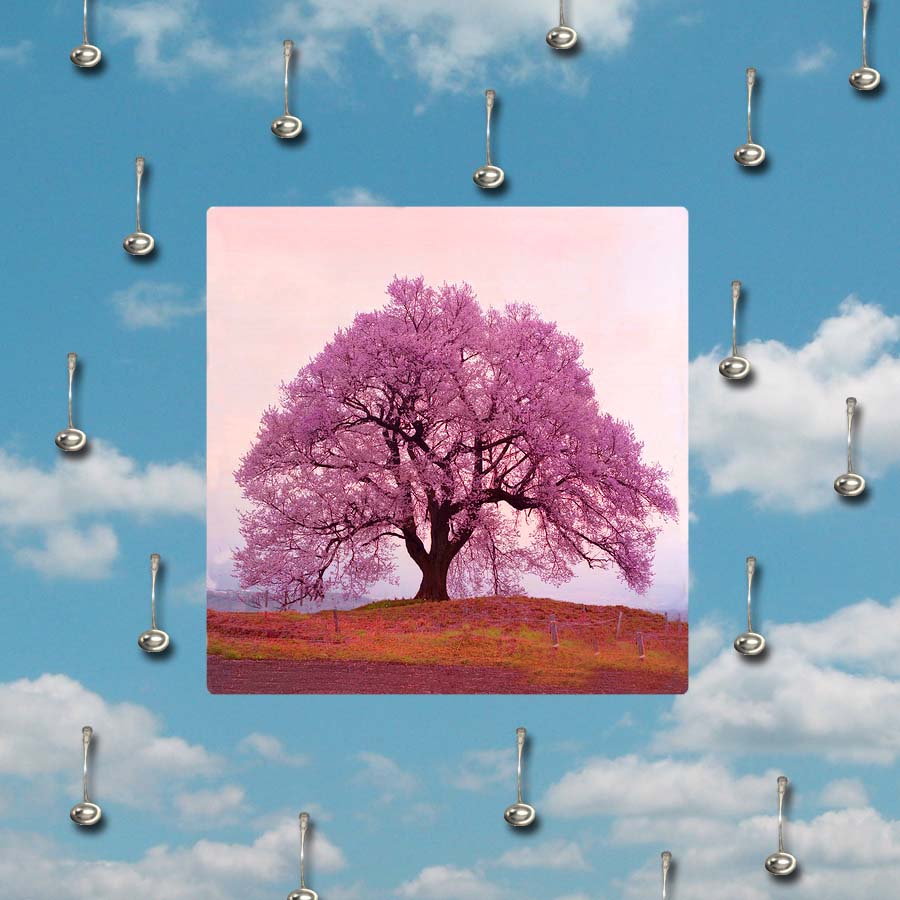
ladles and cherry tree
Image by Dawn Estrin

There are sleepwalkers who tread the dark rooms of their homes, speaking the dialogue of their dreams, moving through two worlds at once.

My father was one. His heavy footfalls in the hallway woke me before dawn. Eyes closed, I waited for the suction pop and creak of the refrigerator door, the signal that he’d reached his destination. While I drifted back to sleep, Dad ate in his sleep, mining yogurt cups and scooping out curls of sour, slippery white foam. He ate handfuls of sliced hard salami from the meat drawer, a cluster of celery from the hydrator. Dreaming, he drank orange juice, Hi-C, and iced tea from their containers, leaving sticky crayon-colored splashes on the linoleum.

In the morning, I scowled into my yogurt cup. A furrow had been dug across the top, my breakfast violated. I was thirteen. Nothing was ever right.

“How can you eat that stuff?” Dad complained. “It has no flavor.”

“You’re supposed to stick your spoon down into it,” I told him. Somnambulist, he didn’t see the promise of apricot or strawberry.

Only once in his sleep-eating years did my father not return to bed. He lay down instead on the cold floor in front of the open refrigerator. In the morning, Mom almost tripped over him there, curled on his side in the dark, surrounded by carrot tops and Roman Meal bread bags. She poked him with her toe. She was disappointed when he roused.

“I thought he’d had a heart attack,” she told me when I was grown.

I WROTE MY FATHER’S EULOGY on an airplane, my notepad on the tray table. The words came easily, although I’d never written a eulogy, had never imagined writing one. Even though my father had been actively dying for several years, this concluding task had suddenly, surprisingly, fallen to me.

In the years I was small, my father wanted out, to eat a hole to the door, to dig to China with a spoon. When I was nineteen, he got his chance. A job overseas, and a year later, a move to Los Angeles. My mother divorced him. He landed in rural Massachusetts, where he settled into a new life, on a country road with an old car and a new wife. My father lost half a dozen jobs and his first marriage during my teens and twenties. He lost his two youngest children to cancer. He lost me to a truculence that equally matched his.

HIS EULOGY BEGAN LIKE THIS. Good afternoon. Some of you know me; I’m Jack’s daughter, Jessica. The fact that we are today only a few weeks from Father’s Day does not escape me. I rarely sent my father cards on Father’s Day – we had a ‘hit or miss’ relationship for much of our lives.

“I want to hold your gla-a-a-a-ands,” Dad sang along with the Beatles’ first album. That they wanted to hold my hand was clear, but my father, a rock-and-roll fan, seemed to think that they wanted to hold something else, something less sunny and cheerful that I, a first-grader, couldn’t put my finger on.

In fourth grade, I fell for his other favorite joke.

“I’m going to Panama City to speak at a conference about hemorrhoids,” Dad said over dinner. “Want to come along?”

Eager to be his companion, I said yes, not questioning why a lawyer would give a speech about medicine.

“That’s great,” Dad said, “because I will need to show those guys an example of one perfect asshole.”

My mother said, “For Christ’s sake, Jack.” She leaned over to my sister Sarah and helped her cut her food. Sarah was four. Our sister Susie, who would have been nine, had been dead a year.

Eager to perform, seeking the spotlight like a moth seeks flame, Dad heard only his joke, not my silence.

MY FATHER’S LUNG CANCER had been eating at him longer than he knew. It’s likely he suspected cancer growing in him, and kept his eyes closed. Maybe he thought he was willing to die. Dad liked jokes, but he loved drama.

For more than a year, specks the color of dried chili flakes had dotted the corners of his mouth. Red-streaked handkerchiefs dried in the pockets of his khakis. He had been a four-pack-a-day smoker since his teens. Lori, his second wife, saw the omens, heard his lungs groan like a harmonium. Maybe she kept her mouth closed, making cup after cup of chamomile tea for him, making soup, and fudge cookies. Or she urged him to go to the doctor, insisting for months until he made the appointment. He left the house cursing, I’m certain, gunning the engine of his battered black Oldsmobile. I imagine that sparks skittered from the slack tail pipe as he backed over the curb.

My father lived for two years after he learned he would die.

“People die,” my mother said, when I phoned to tell her he had inoperable cancer. She hadn’t known he was sick, and I knew she wouldn’t care. They hadn’t spoken for a decade, and then only terse exchanges at my wedding, an event for which she broke her long silence toward him to write him, call him, cajole him to come and celebrate. “This is not,” she reminded him, “about you.”

In the months before he died, I dug through boxes of family memorabilia looking for items that would entertain him. Among the detritus of other lost parts of life, I found my little lock and key child’s diary.

STANDING SOLO AT THE PODIUM, I watch my father’s friends. Row after row of metal folding chairs, each cradling a respectful, sorrowful, aging adult. I don’t know most of them. A few small children cling to parents or run to play on the lawn. Early summer in Massachusetts smells green, like fresh cut grass and cool breeze. Something hot and oily bullies through: the hint of a cookout down the street. Here, beside my father’s house in the shadow of October Mountain, the words I pieced together on the plane flow easily.

Giving speeches was my father’s skill before it was mine. When I was nine, he expected me to hold up my half of conversations that were part parry, part dazzle, and all lush, labyrinthine language. Dad introduced me to people well known in the news. I curtsied to the widow of a martyred Civil Rights leader, unsure how to greet her. Black netting hung from her hat. The fact that I could not see her face made me want to look away.

A gaping hole spreads between there and here, this stage from which I have been asked to explain my father, to love my father publicly.

MY FATHER DIED AT HOME, in the minutes when Lori left his side for what she thought would be an insignificant errand. The living room, with its rented hospital bed and oxygen tank, had become his dying room. Lori went to press the repeat button on the CD player, which my father called the hi-fi. Jessye Norman singing Amazing Grace lifted my father into the next world.

That autumn, Dad had announced that he wanted to be cremated. So much more efficient than a plain pine coffin, he said.

“Dad, we’re Jewish,” I said. “Can you even do that?”

We were not even slightly observant Jews. Every Passover, my father intoned “they tried to kill us, we won, let’s eat,” before passing loaded dinner plates to my mother, my sisters, and me.

The funeral home carried my father’s body out of his front door in the dead of winter.

Days later, they delivered his body to the cemetery in a brown cardboard box. Lori and I trailed behind in my father’s car. We made small talk—good thing the snow was gone, because she had never gotten around to having chains put on the tires. Glad that Dad had a chance to see this friend or that before, well, you know. She parked at the cemetery and got out. She sat on the hood. I felt crazy-brave, the kind where you’ll do almost anything because for that moment, all the rules are suspended. We were in the country, not far from where my father and I had once pulled over to watch a red fox lope across a field.

Look and see, I told myself.

I peered into the tinted window of the van.

Human Remains, the box read, stamped in black type. This End Up.

My father had been six foot one: the box was narrow and long.

Cardboard boxes that ride a conveyor belt into a fire resemble the cardboard boxes used for shipping refrigerators.

In my diary were breathless comments like ‘Dad chased me with a water gun!’ In these notes is a Dad I had forgotten, who made up bedtime stories, taught me poems, and watched the Beatles at Shea with me on television when I was six.

While I speak, I remember not cardboard, but wood. I had gotten a splinter during one of my visits to my dying father. Seeing me gnaw at my fingertip, Dad asked what was wrong. “Splinter,” I told him, picking at the spot. “Let me try,” he said. My father’s hands shook, from medication or anxiety I didn’t know. I doubted his ability to extract the wood fragment, but I held out my hand. I couldn’t remember the last time my father had held my hand, and the pain in that thought made me look away. I stared at a potted plant while Dad dug at my finger with a tweezers, delivering a thin, dark shred of foreign matter. A spot of blood rose from the tiny hole in my skin.

LORI CALLED Dad’s memorial service a “planting party.” She planted a weeping cherry tree outside her dining room window, and left an open furrow around the roots to receive my father’s ashes. Dad had been delivered back to her in a clear plastic bag, the kind that might have held half a dozen oranges at the Price Chopper market. Lori put the bag away, and waited until spring for the ground to thaw.

On the morning of the planting party, I slipped into the hallway outside the living room. The rented bed was long gone, but the shelves still sagged under my father’s books and music. Lori had put his ashes inside a clay tureen.

I lifted the tureen’s lid.It formed a shape like a gaping mouth.

The voice of Señor Wences and his hand-shaped puppet Pedro emerged from the memory of the black and white television screen of my youth. The tureen’s interior was dark and smooth, the plastic bag stuffed inside, along with, inexplicably, a partially used box of Chanukah candles.

“T’saright?” I thought.

“T’saright,” I heard my father agree.

I unrolled the black twist-tie and pressed the pads of my fingers against the basest form of my father, powder gray as cigarette ash. I bent my fingertips against what had been his bones. They felt gritty, studded with hard, star-shaped flecks. My father’s bones looked like the calcified shards I had picked out of sand dollars at Panama City Beach in the fourth grade.

With fragments of my father under my fingernails, I said the Sh’ma for him, the most basic prayer in Judaism, the only one I knew by heart.

Sh’ma Israel, Adonai Elohaynu, Adonai Echad.

“Hear, O Israel, the Lord is God, the Lord is one.”

My father believed that all Jews know the sh’ma, even those who were never formally taught the prayer.

There is a concept in Judaism called l’dor v’dor, meaning “from one generation to the next.” I am not religious. When I spoke the word “one,” my fingers rubbing something like sand, what I thought of was my father, my sisters, my mother, and myself.

WOMEN WEARING EMBROIDERED BLOUSES carried pots of flowers to the planting party, setting them on picnic tables before taking seats under the tent. They brought chili, lasagna, homemade three-bean salad. Men with hair like squirrel tails brought poetry and cookies. After the planting, we would eat and make toasts to my father. We would sing “We Shall Overcome” and “When I’m Sixty-Four.” A videotape of Dad’s last birthday before he got sick would roll along in the VCR.

Lori emerged from the kitchen, cradling the tureen. My father’s black dog ran behind her. The screen door banged. Lori drifted barefoot across the lawn. Arriving at the tree, she ladled a scoop of ashes over the upturned earth.

The tureen and ladle made their way around the circle of Dad’s friends. A warm breeze puffed the hem of my dress. A bird flew over. A motorcycle thrummed past on the road. When my turn came, I did what the others had done; dipped the ladle into the gritty ash and upended the contents over the roots. I was embarrassed. This felt like a made-up ceremony from summer camp, not a real funeral.

What I left out of Dad’s eulogy were the three funerals in my life before his. The first was my sister Susie’s, she eight to my ten, on a brittle cold day after her blindingly fast spin with cancer. The second, less shocking only because he was not a child, was the funeral of our father’s father. It was my hand that sprinkled the dirt over his casket. Dad was away, couldn’t be reached, did not come. My father’s ritual task fell to me. And the last funeral, my youngest sister Sarah, dead after twenty-seven years with an unconquerable illness, the lights from the medical examiner’s car and the ambulance spilling into her driveway.

This was our story, the father made empty.

WHEN THE LADLE TRAVELED full circle, we returned to the house to eat. Dad’s friends chuckled at the videotape, filled plates with food, and piled beer bottles on top of the TV set. They were comfortable in this house I couldn’t look at closely, where the ceilings were spotted tobacco-brown from leaking pipes, and chairs were piled deep with unopened mail and unwashed clothes.

In the kitchen, I took a beer from the picnic cooler. The kitchen was empty – just the drip of the faucet, the clunk and whine of the greasy yellow refrigerator, and a long view of the empty road outside.

I wanted that silence, and I wanted something to eat. I picked a wedge of tomato from a puddle of salad oil in the bottom of a wooden bowl. A heel of homemade bread sopped up the oil. I lifted the ladle from a pot of chili.

I knew what I saw. I wanted to look away.

The ladle was familiar, the kind of memory you feel in your muscles before your mind can identify why. This ladle had dispensed my father’s ashes into the earth.

I held it toward the daylight coming from the window. Chili streaked the spoon and the handle. A gray, grainy crust outlined the sauce along the dull metal shoulders of the spoon. The ladle that had served my father’s ashes to the earth had served the chili.

The things my father believed in life—justice, human rights, marvelous language—he gave to me. And the last earthly sign of my father I have is a streak of his ashes on a serving spoon. I remember my mother’s mornings, wondering if she would have to sweep him up from our kitchen floor. You are not, I thought, going to believe what I’m left to clean up now.

A BURST OF LAUGHTER flared from the other room. The phone rang somewhere in the house. I was alone in the kitchen with remnants of my father—he and I, and our horrible secret. I considered throwing the spoon on the counter and running out to my rental car, hitting the door-lock button and rolling up the windows: damsel in a horror movie. Then I imagined holding the spoon close and pressing it to my chest in a belated embrace for my father.

I watched the spoon as if it were an oracle. Do I wash it and return the ladle, clean and dry, to the drawer? Should I stuff it into the trashcan by the back door? That seemed wrong: I would be throwing my father in the garbage. Should I stick the ladle back in the bowl, return to the party, and avert my eyes from every plate? My father has returned from the dead stuck to a spoon.

Dad would laugh. I heard him in my memory, loud and jittery. He would relish the idea that his friends were at that moment pressing specks of him against their palates, assuming, perhaps, that the grit they felt in their mouths was merely roadside gravel, blown into their chili by the wind.

Sounds from the party grew louder; the chipmunk squeaks of the videotape rewinding, the swell and fall of conversation, some Bob Dylan or the Beatles from the hi-fi. These were the sounds of the parties my parents gave when I was a child, when I hung back from the crowd and picked black olives from the hors d’oeuvres tray. The pitted olives fit neatly on my fingertips. My habit was to take one for each finger. Nibbling ten olives, I watched and hungered to be an adult.

What do children believe adults can see that they cannot? Can adults see where the edge lies, the horizon starts, where the answers are found? What fills the holes in their hearts? Children believe that adults know what happens next.  Adults know that they can’t.

I am here to respect my father. Go ahead and look.

I set the ladle in the sink beside coffee cups and a wine cork. The grit of my father circled in eddies of water, finally settling in the dark.


Jessica Handler’s first book, Invisible Sisters: A Memoir (Public Affairs, 2009) is one of the Atlanta Journal-Constitution’s “Eight Great Southern Books in 2009” and Atlanta Magazine’s “Best Memoir of 2009,” as well as one of the “Twenty Five Books All Georgians Should Read” for 2010. Her nonfiction has appeared in Tin House, Brevity, More Magazine, Southern Arts Journal, and Ars Medica, and is forthcoming in New South and Defunct Magazine. She received the 2009 Peter Taylor Nonfiction Fellowship for the Kenyon Review Writers’ Workshop, and a special mention for a 2008 Pushcart Prize. Handler teaches creative writing in Atlanta, Georgia.
“I, Suicide” by Andrew Tibbetts

suicides
Image by Dawn Estrin

I consider myself a suicide even though I’m, obviously, alive and, actually, not someone who has ever made a serious attempt.

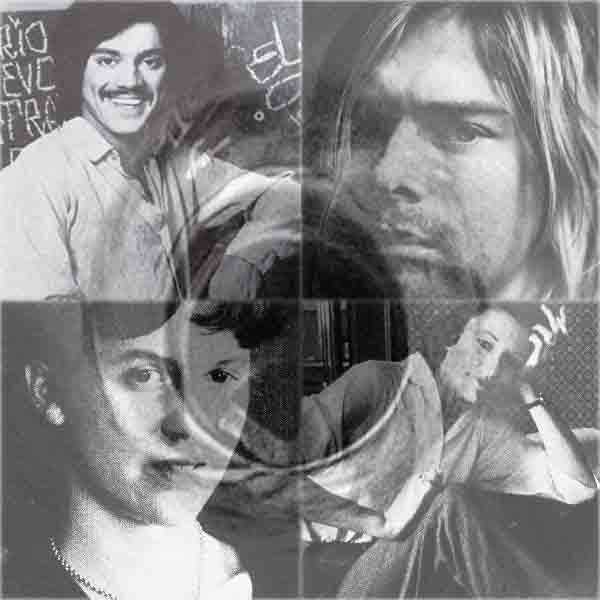
Since I first read Sylvia Plath, probably, and thought along with her how the tulips were stealing my air and the sea poured bean green over blue, I have been one. Since I first read Anne Sexton, definitely, and realized that I never asked of the do-it-yourself dead, “why build?” only “which tools?” I have been her kind. Or most likely since Freddie Prinze, who must have been my first suicide.

Do you remember him? Senior, not junior. He was the Puerto Rican actor and comedian who was such a huge hit in the ’70s. “Chico and the Man!” He made everyone laugh until he shot himself in the head. I loved him and it hurt that he died.

And Kurt Cobain, of course, our great complainer. His death ended my adolescence, which had probably been hanging around too long anyway. I stopped playing in a rock band. It was hard to get excited about anything. I became serious and dull. Adult. I began making contributions to a pension plan. Thankfully, it didn’t take.

I’m hurt every time I hear of it, but I’m never surprised by suicide. That people are happy, that’s what confuses me. I don’t get it. I like it, happiness; I wish I were a fountain of the stuff. I cultivate it in others and even in myself sometimes. But it’s strange alien stuff. What I am made of, is the dark familiar.

Last summer gay man after gay man jumped from his high-rise apartment in the gaybourhood and I walked to work down Church Street nodding. How many of my own clients have I held back from the edges of permanent solutions to temporary problems? Hundreds, by this point in my career. But that doesn’t change what I am made of.

I’ve always thought I would die by my own hand since I heard of the idea. My mind is made of self-destruction. Even when I’m trying hard to think positively about life, a snarl of it leaps up between the cracks in my happy. An image—stabbing myself in the neck with scissors—makes me step back from a colleague’s desk on an ordinary work day.

If death takes me with its own devices, and it may—I’m getting old—I don’t wish to be wiped from the register of suicides, parted from my beloveds—Virginia Woolf with her pockets full of rocks, Shaquille Wisdom the black teenager from Ajax who was thrown in the trash can for being gay last year and who then hung himself after school, Christian Fox the straight actor who starred in gay porn through the 80’s all the while being so deeply attractive and unhappy, Martin Kruze the man who was among the boy sex abuse victims of the Maple Leaf Gardens and who made the scandal public and then threw himself from the Bloor Viaduct—I won’t be parted from them. These are my people.

If death takes me with its own devices, and it may—I have high blood pressure and brain abnormalities and the propensity to wander into accidents—don’t ever let them say, “He was no suicide.” Every day of my life I was a suicide.

Surely a random death won’t trump my essential self-annihilation. Being hit by a truck and killed on the way to the restaurant doesn’t mean that you weren’t hungry. Count me among the death-starved. Cover me with the luminous veil from the Bloor Viaduct. Float me out into the Thames with flowers in my hair. Yes, that is a smile on my bluing lips. Know that I am free and would have freed myself but for circumstance.


Andrew Tibbetts is a psychotherapist and writer living in Toronto. His work has appeared in The New Quarterly, This Magazine, The Fiddlehead, Descant, The Malahat Review and Moods Magazine. Twice nominated and once winner of the gold prize for fiction at the National Magazine Awards, Mr. Tibbetts is open to be your friend on Facebook. This piece is part of his ongoing magnum opus, the multi-volume auto-fictional essay, The Phenomenology of Loneliness.

“You Will Never Be” by Claudine Guertin

wedding
Image by Dawn Estrin

You will never be the one with the overweight wife, whose hips jiggle as she walks down the aisle of your granddaughter’s christening – your out-of-wedlock granddaughter – unashamed because at that size, what other choice does she have in her tented paisley dress.

You will never be the one whose hairline rolls slowly back like an eyelid opening onto God from the underskin of your scalp. Yet, somehow, you are that one you swore you’d never be.

She, fat. You, bald. What do you have to show for yourself? An also-bald grandbaby from the too-young mother who still has temper tantrums at home and dates a clerk from the 7-11, not the baby’s father, and she won’t even tell you who that is for fear you’ll take the twelve-gauge to his house. And the girl might be right about that, so you can’t say she’s totally brainless. She knows her father. You. Bald, sort of. Not fat, really, but with a few love handles that were merely a God-forbid image ten years ago, hell, not even five, and you wonder what the exact day was when you turned, the day you got old, the day your life ran away from you. There you have it. This is the thing. This life you’re living is not yours at all, but here you are, sucker. Tough shit, tough guy, this is your life. What other choice do you have?

And what choice does she have, worrying every weekday about a layoff, her vindictive boss, her ailing parents, sitting still for ten-hour shifts at her call-center monitor, fielding unhappy customers while a line of coffeecakes calls to her from the grey counter in the break room? Oh, you’d like to blame her for it, but those voices must sound pretty good during a shitty day, loving, comforting, especially when you’re the jerk who can’t always get it up in the evenings. And the worst part is that now it sometimes doesn’t even bother you that you can’t get it up. Oh well, you think. Sorry babe, you say. Guess I’ll go clean the garage, you think. And this is your life. Bury yourself now or suck up and live with it.

You understand her. You know those thighs, the ribbed lip of her C-section scar, those swollen breasts that hurt like hell, that you rubbed Palmer’s cocoa lotion into when she was nursing your slut of a daughter, back before the girl could even utter the word sex. Back when she could only suck her mother for milk. Innocence. Man, weren’t you all innocent back then?

Back then, you didn’t know how hard it would be, and you’re glad nobody ever told you, or you might’ve cashed in your chips early and checked out. Back then you had the luxury of dreams, the dreams your daughter is giving up far earlier than you and her mother had to give them up. Maybe it doesn’t matter anyway. Those dreams are not your life. This is your life.

She hurries up the aisle, her paisleys swishing across her hips like flags, having forgotten her purse in the ladies’ room with the ceremony about to start. You look at her face. She’s smiling at you. She sails toward you like some sturdy ship, her eyes and everything in her smiling, as if you aren’t the man with love handles, as if your head is not staring up at the sky like a slowly opening eye. She smiles like that day never came, the one where you must have lost it all. In her, you are yesterday and today. You are less scared about tomorrow. She smiles at you like you are the man you always secretly wanted to be, but feared you never were.


Claudine Guertin lives and writes in Chicago. She earned her M.F.A. at Queens University in Charlotte. Her writing has appeared in Chicago Social, Capper’s, Permission and other journals and has received an editorial nomination for storySouth’s Million Writers Award. She recently completed her first novel, entitled Lakers.

The ABCs of Conflict Resolution


Our fabulous former editor, Victoria Pynchon, has written a book! And, lucky you, it’s coming out in just a few weeks.


The ABCs of Conflict Resolution is a primer on the resolution of disputes that range from the neighbor’s barking dog to the man with a bomb in his shoe.  Whether we’re trying to understand the most recent outbreak of violence in the Middle East or negotiate our way out of a cell-phone contract, the principles and practices used by international diplomats, school principals, Wall Street executives, corporate lawyers, and, yes, used car salesmen, to close the deal reach or settle the case  are the same –- one in which my gain does not equal your loss and your loss does not cause my gain.


The ABCs of Conflict Resolution


You can join the book’s Facebook fan page here.


Congratulations, Victoria!!

Showcasing the work of Jericho Brown

Jericho Brown


I first became a fan of Jericho Brown when I heard him read at the Bread Loaf Writers Conference in the Green Mountains of Vermont. I often cringe when someone describes a writer as “brave” but that’s the word that comes to mind when I read Jericho’s work. Or, perhaps “fearless” works just as well with less tincture of condescention. For surely, Jericho fearlessly opens us up to the creative life of a man both black and gay, and he does this with a rare, unflinching honesty and closeness. He owns this voice and yet, at the same time, he isn’t afraid to employ the voice of other narrators: Diana Ross, for example, or the lion from the Wizard of Oz, Marvin Gaye, Janis Joplin. And each one has something special to tell us about their world, about the author’s world.


Jericho’s book, Please, is filled with stunning poems, each expressing a special sort of longing, of burning. From the book’s description: “Please explores the points in our lives at which love and violence intersect. Drunk on its own rhythms and full of imaginative and often frightening imagery, Please is the album playing in the background of the history and culture that surround African American/male identity and sexuality. Just as radio favorites like Marvin Gaye, Donny Hathaway, and Pink Floyd characterize loss, loneliness, addiction, and denial with their voices, these poems’ chorus of speakers transform moments of intimacy and humor into spontaneous music.”


Mark Doty reviewed Please here.


You can read more of Jericho’s work by following the links below, or by visiting his website.


An interview at New American Poets


Verse Daily


Another interview


And a very special treat that I highly recommend: visit From the Fishhouse and listen to Jericho recite his excellent poetry just for you.

“Big Trouble” by Clinton B. Campbell

Big Trouble
Image by Dawn Estrin

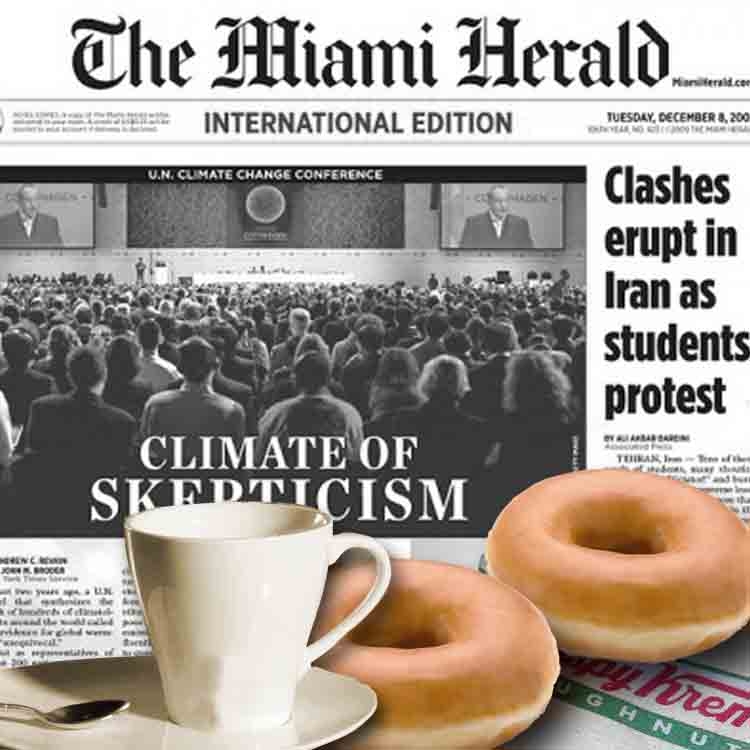
While I was out-to-lunch,
my wife answered the phone.
It was Dave Barry calling me.

I had been warned she might
run off with a prose writer.
I am a poet with no future.

He promised her
a Stephen King first edition
and a night job at Krispy Kreme.

Now she is living in Miami.
I recognize her in Dave’s new novel,
she’s Pixie, the porno queen.

“A little to the left,”
her one and only line.
I know she wants to come back,

but I canceled my subscription
to the Miami Herald.
It’s as good as a Mexican divorce.


Clinton B. Campbell says: “‘The first books they burn are poetry books; the first people they put in jail are poets.’ This quote is historically true. Why are the lowly poets so important to be imprisoned, as was the case in South America, Russia and most other imperialist nations over the history of writing? I believe it is because poets are the keepers of the truth, and ‘they’ don’t want the truth to be known. As a poet or any writer, it is our responsibility to keep telling the truth knowing the truth has little to do with the facts and little to do with recorded history.” Clint is currently re-reading Nineteen Eighty Four. Even though he is widely published, Clint is probably best known as house-husband for photographer/poet Karen M. Peluso. They live in Beaufort, SC.

Best of the Web 2011 nominations

p>


Well, I have finally made my editorial decision as to which three pieces I would nominate for Dzanc’s Best of the Web 2011. It was difficult, and many of the pieces didn’t qualify because they were not web-exclusive. There were so many I would have loved to nominate, but I also tried to take into consideration which ones I thought had the best chance of being selected, given what I know of Dzanc’s previous choices. Ultimately, if I was on the fence about several pieces, that was the deciding factor (I believed it had a greater chance of being selected). I only wish I could have nominated them all. But r.kv.r.y.’s three nominations are (drumroll):


Hungry by Jessica Handler (essay)


Weight of the Moment by Jeffery Hess (fiction)


and


What I Can Tell You Now by Tracy Crow (essay).


Thank you to all the fine r.kv.r.y. contributors and good luck to Jessica, Jeff, and Tracy!

Do You Care?


How do you feel afterward? More powerful? Smarter? Virtuous? More
handsome? Vindicated? Why did you do it? You violated his privacy in
cyberspace. Others of your ilk beat, physically torture and even kill their
victims. Does it matter? Is cyberspace preferable to physical abuse? To
the victim, I imagine that your means is unimportant. To him, whatever way
you do it is equally crushing. All he wants is to live his own life: work, eat,
love, laugh, have friends, enjoy freedom, be left alone.

Despite what you believe, he did not choose his life as a homosexual any
more than you chose your brown eyes. Do his actions bother you? Does
his life bother you? Are you such a superior being that you can condemn
the actions of others?

I could never serve on your jury. Whether you drove another to suicide,
beat him or physically tortured him, I could not judge you in court. I’ve
already judged you and found you to be beneath contempt. No one would
let someone who feels as I do be on your jury. Would the lawyers be able
to find anyone to serve? There are those who agree with you, who think
“those weirdos” choose their feelings and their lifestyles. There are those
who agree with me, who think that people should be left alone.

Is there anyone in the middle? Open minded, non-judgmental? Our
country appears to be so polarized that each side claims its superiority The
great middle, the common denominator, seems to have been permanently
silenced. I’m as much at fault as anyone.

Even our little ones seem to feel the need to assert themselves by bullying
other children: for being “different” or “just because.”

By your example, you’re teaching the young ones well, indeed. Perhaps as
they get older, they can go on to hound, beat, torture their contemporaries
to death. Congratulations!


Hallie Block lives and writes in Buffalo, New York.

Six Questions for Editors

Six ?


Jim Harrington has a great blog for writers. Each week he features a different editor answering six questions about what they are looking for in submissions. This week I’m up, answering questions about selections for r.kv.r.y..


SQF: What are the top three things you look for in a story and why?

MA:

  1. I look for a story to tell me something universal about the human condition. And by the way, just because we have our theme as “recovery” doesn’t mean all of our stories are about characters who are successfully recovering. Often it’s not the recovery story that says the most about the process of recovering. I like to read stories that show heart and depth of character. Writers should love their characters; even if they don’t give them happy lives, they need to respect them or the story won’t work for me.
  2. I look for interesting language. Word plays, lyricism, music, these are all very important to me. And bear in mind that when I say “music,” that doesn’t mean only classical. Rock and roll, punk, hip-hop–these are music, too. A story can be hard-hitting and gritty and still have music to the words.
  3. I look for strong sensory descriptions. Take me there. Let me see, smell, taste, hear the world, the experiences of your characters. Give me something I can relate to with my body.

SQF: . What are the top three reasons a story is rejected, other than not fitting into your answers to the above question and why?

MA:

  1. Because it is too long. We only accept stories and essays that are 3,000 words or fewer,
  2. Because it doesn’t fit our clearly stated theme of recovery, and
  3. Because although it may speak to our theme, it does so in a way that doesn’t take into account the larger world.

SQF: What other common mistakes do you encounter that turn you off to a story?

MA: Typos and grammatical errors bug me but aren’t deal breakers if the writing is otherwise sharp and exciting. Poor-pitiful-me stories are usually cathartic to write but not much fun to read and we do receive a lot of those, as you can imagine. I’m not big on navel gazing stories. I like for things to happen, for conventional ideas to be challenged, big concepts explored.

SQF: Do you provide comments when you reject a story?

MA: Yes. Sometimes generic ones, sometimes more detailed ones. The farther the story gets in the editorial process the more likely I am to comment personally.

SQF: Based on your experience as an editor, what have you learned about writing?

MA: I’ve learned how important it is to start strong, to grab the reader right away. In my writer’s heart, I wish there was more time for exposition and thoughtful asides, but in reality–at least in the world of on-line publishing–there isn’t. You’ve got to get into the meat of things right away.


SQF: What one question on this topic do you wish I’d asked that I didn’t? And how would you answer it?

MA: I wish you had asked what sort of stories I would like to see that I’m not seeing. I’d like to see more humor. The fastest road to recovery involves humor and if we can’t laugh at ourselves, or see our foibles in a fictional character and laugh at them, then we won’t get very far down Recovery Road. I’d like to see some stories that address the military aspect of recovery. Recovery from war, for example, either as the service member or the civilian affected by war. I’d really like to see more stories about environmental recovery or lack thereof. Mountaintop removal, ocean degradation, oil spills–these issues are vitally important to me and should be to anyone who, you know, drinks water or breathes air. And yet they are not often addressed in the world of fiction. We should never underestimate the power of stories to change thinking and thereby change the world.

“Semantics of Rape” by Kirsten Hemmy

book and knife
Image by Dawn Estrin

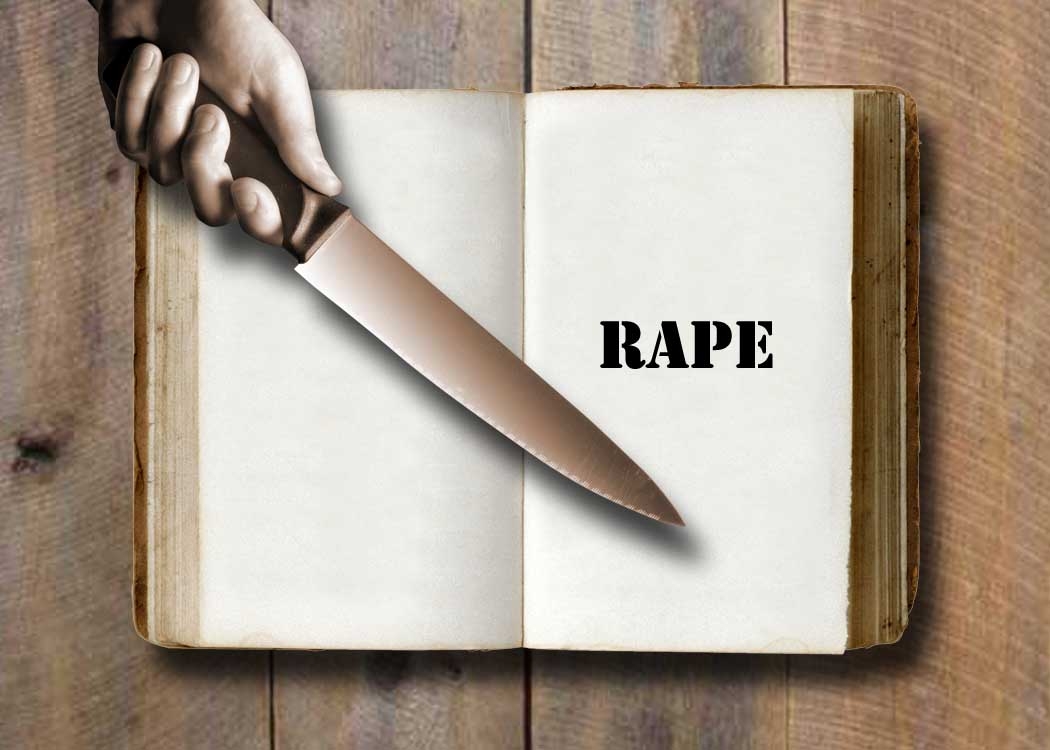
I think I get stuck
on almost, its taste sharp & sticking

in my throat, the same as knife, as is.
It is true after all, that you change

your words & form follows. Memory is
a frightening thing, so same as real, & it is

what gets people lost & found: I wake
some nights, my mouth a perfect circle, choking

on you, the fear as real as taste, as fighting
the impulse to either kill you or give in.


Kirsten Hemmy is an artist in Charlotte, NC. She is the founder of Mosaic Literary Center, an organization committed to providing art and writing opportunities to underserved communities. Her work has been the recipient of the Linda Flowers Literary Award and the Academy of American Poets Award. She is an assistant professor of English and the Chair of the Department of Interdisciplinary Studies, Philosophy and Religion at Johnson C. Smith University.