haiku and lawyers

I am so excited for myself and our attorney-readers and -contributors (of which we have many) to have found David Giacalone’s “Haiku and Lawyers,” which I excerpt below.  My own paean to poetry as a cure for modern life and its discontents is here.


Thanks, David!


I wish I had found haiku when I was a busy, driven lawyer-mediator. Like many other attorneys, I rarely found time between career, family and civic activities, to enjoy art or literature, and couldn’t even conceive of creating anything artistic. But, haiku is perfect for the hectic professional, or any other overwhelmed member of our hyperactive society. And, it is especially perfect for the busy lawyer:

  1. brevity removes the not-enough-time excuse — open a good haiku book or web page and in a few moments you can have a worthwhile artistic experience (insight, joy, humor, serenity, etc.);
  2. lawyers love words — especially words that have layers of meaning, connotation, and denotation, where distilling an image to its essence is crucial, but a little misdirection is allowed (and even encouraged);
  3. and rules: not only are there lots of rules, but they are in dispute, constantly evolving, often misapplied, and frequently defended or attacked beyond all reason.
  4. creation: lawyers often feel (and are often told) that they don’t make or create anything (besides controversy and money). The haiku concept is complex enough to be a challenge but manageable enough to be mastered by anyone who gives it a little quality time. Every lawyer may not have a great novel inside her or him, but every lawyer can create some very passable haiku, and maybe even some great haiku.
  5. balance: haiku can help lawyers achieve the balanced lifestyle prescribed by Professor Patrick J. Schiltz, in his landmark article, On Being a Happy, Healthy, and Ethical Member of an Unhappy, Unhealthy, and Unethical Profession, 52 Vand. L. Rev. 871, which we discussed here last September. ”

conflict revolution: mediating evil, war, terrorism and injustice

I have written a review of this brilliant, challenging and eloquent book which I’ll add to the journal in the near future.  In the meantime, here’s the Power Point Presentation on how you and I can save the planet based on Ken Cloke’s brilliant and visionary book, Conflict Revolution, Mediating Evil, War, Injustice and Terrorism or How Mediators Can Help Save the Planet (after the jump).


View more presentations from Victoria Pynchon.

Let me add that although narrative is not directly discussed here, prejudice reduction occurs every time we reveal by way of artistic expression our subjective experience of the world.  Over a lifetime of participation in political, social and cultural “revolutions” on a small’ish scale (civil rights; feminism, anti-war and the like) I have come to trust only art even though I continue to respect and sometimes follow those who would more directly change the inequitable circumstances in which we live.

lawyers write and sometimes leave the law

We have among our authors many lawyers.  That’s in part because lawyers are liberal arts majors with no clear career path until someone begins to whisper in our ears, rather insistently, law school, law school, law school.  And that’s three full years so at least we won’t be (pick one) waiting on tables; doing clerical work; or, driving a cab for awhile.


We lawyers are readers and writers, of course, because the common law – which we inherited from the Brits – is all about narrative.  For those r.kv.r.y. readers who aren’t lawyers, this is what law school is about.  You read one little story about, say, how Mrs. Palsgraf was hit by a scale on a Long Island Railroad platform when a passenger’s box of fire-crackers exploded, causing the crowd to flee and . . . knock over the scale.  You apply a rule of law to that like, for instance, a chain of events flowing from a careless act must be reasonably foreseeable to the actor if he is to be held responsible for the injury.  That’s the law of Torts, pretty much.  And we spend one full year learning that. 


So you read Mrs. Palsgraf’s story and then you look at the next narrative.  Let’s say the next tale is  one about police officers allowing a drunk driver to continue driving after which he tries to pass a truck and runs head-on into a family of five, killing everyone but the father.  (this is my case – Harris v. Smith and I may be foggy now on the exact details). How is that story like Mrs. Palsgraf’s story?  Is it similar enough to reach the same conclusion based upon the rule of foreseeability?  Are there public policy issues to consider that should prevent us from applying that rule in this instance, where the drunk driver also died and the police officers are the defendants?  Does it matter that the police work for the County of Placerville (a sovereign with at least partial immunity)?  Does it matter that the drunk driving is a crime and not simple carelessness?


Anyway.  That’s the law.  And law schools are full of writers, actors, musicians and champion baton twirlers; anthropology, sociology, philosophy, psychology and literature majors.  Therefore, it’s not at all surprising when we learn that yet another attorney has published his first novel and finally, finally, has a better alternative than cab driving to the practice of law.  See who he is and what he’s written after the jump.


(thanks to @reiserlaw in my twitter network for the head’s up on this story)

During the nine years Doug Dorst struggled over his first novel, he became a contestant on the “Jeopardy!” game show to pay the rent.


“Alive in Necropolis,” about a rookie cop who talks to ghosts to solve crimes in Colma cemeteries, is loosely based on how Dorst felt while writing it – unsure of his decision to turn his back on a law career and disconnected from his circle of high-achiever friends. Dorst won $70,000 on the game show and whittled his 800-page manuscript in half. This year, San Francisco city officials chose his debut work for its citywide book club: One City One Book. He has moved to Texas, where he teaches creative writing at St. Edward’s University. What a difference a decade makes.


Read more: http://www.sfgate.com/cgi-bin/article.cgi?f=/c/a/2009/11/05/DDGK1A0FHD.DTL#ixzz0VztbRhR2 


For other poet- and writer-lawyers, a quote from one-time law student and author Gustav Flaubert — “inside every lawyer is the wreckage of a poet.”  Don’t let that be true for you!  Send your poems, short stories and literary non-fiction to the r.kv.r.y quarterly.


“Last Call for a Loner” by Tom Sheehan

He had never belonged anyplace, and that realization was slowly dawning on him. Of all the places he had been in this whole land, East Coast to West Coast, border to border, foothills or river’s edge, none came charging up in his memory rugged with warmth, none touched longingly at him; no village, no harbor, no vast plain running off to the far horizon, no collection of people near such places.

This time out of the barn he had been moving for close to two months, hitching rides generally north, new stars and the wash of pine trees in April’s breath calling him on. The contradiction came at him again as harsh as a fist: of all the places he had been, he had been no place. His mind kept telling him the same thing the way a canyon echo sounds, distant, muted, out of a deep solace, hollow, near metallic. It was, he was ready to say, as if he had never stopped long enough to listen.

Now, near the foot of this day, the tidal flats wide and enormous, the sun at odds with itself on Earth edges, he could hear something. It was universal. It bore intelligence. It caught at his attention.

As usual he was alone and swore he was the only one attentive to that thing and seeing all this around him, the late sun splattering gold on every surface, moving or still, for as far as his eyes could see. Though he was not unkempt, he was not headed for the boardroom either. A worn but decent dark blue jacket hung on his slight frame, over a red plaid lumberjack shirt buttoned at the collar. The pants were brown corduroy and shiny at the knees and at the thighs. Brown ankle-high boots dipped up under his pant legs. A roadman he obviously was, a hitchhiker, but one apparently who spent his nights abed under cover, his clothes not covered with strange bed residue. This day a shave had been accomplished at some place back down the line. Under his arm he carried his baggy Matilda of sorts, and a vast marshy area spread before him, just a few miles up-river from the ocean. The sea salt and reed grass of the brackish land were stiff as knuckles at his nostrils.

Where he had paused, at the side of Route 107, along the mile-wide marshes, a sign stood its ground as heavy metal. Cast iron most likely, he was thinking as the last of the sun flung itself in reflection. It had a gray field and black letters about two inches high that simply said, “Saugus,” and some part of its beating called upon him. An Indian name, he was convinced in his own reflections, thinking some names have importance, some do not. His name, for that matter, was Chug and he was a loner, acknowledged, as he often said, as the loneliest feeling a man could have. For him there were no roots, no wispy grasp at footholds, no family beachheads he could remember. A loner. It might have been that he had not been long enough in one place, or had never let his past catch up to him. No such determination as yet had fully surfaced on that account.

But now, in the late afternoon, the name Saugus drew him on. It stuck in his mouth. What else was there? Where else? What place could he belong? A trucker‘s horn suddenly startled him. “How far you going, pal?” The rig was a Diamond-T, a monstrous breed of new redness and shiny chrome sitting beside him on the marsh road, and a hum under that giant hood as deep as a cement mixer. The driver, leaning at him from behind the wheel, half filling the cab, presented red hair and big eyes with shaggy brows and a smile as wide as the window. Chug looked again at the cast iron sign. “Saugus,” he said, quixotically, and then with serious conviction added, “To the middle of Saugus, wherever that is.”

“What’s your tag?” the trucker said, re-adjusting the sun visor, shifting gears from the dead start, clutching, gassing, leaning back in his seat. Artistic, thought Chug. “Mine’s O’Malley Fighorn, and ain’t that some moniker,” he laughed. “My mother sure as hell wasn’t letting go her last bit of Irish. My brother’s name is Sullivan, Sullivan Fighorn, Mal and Sully, that’s us.” Deep from his chest rose a laugh as though he was remembering something special, someplace special.

Chug said, “Chug,” like it was a simple flake of rock falling off a cliff face. “Chug it’s been forever. Plain Chug.”

“What’s your real tag?” Mal Fighorn bowed his head and looked at Chug as if something else special was waiting on him. Crows’ feet almost crinkled with sound at his eyes. A bump sat prominently on his nose, proud badge of badges. Looking ahead at the stoplight now green in the distance, he downshifted the rig, then looked again at his rider. He had shared his name and expected, it seemed, his rider to do the same thing for him.

“Tylen,” Chug said, caught by that charge, the depth in the driver’s eyes, the fan of crinkles friendly in its marking. Then he added, his breath coming out of his chest like it had been saved up for a long time, “Tylen Brackus.”

The two grown men looked into each other’s eyes and began to laugh. They laughed all the way up to the red light with an arrow saying “Saugus” beside it. The arrow pointed north. The tears rolled south on Mal Fighorn’s cheeks, and on the cheeks of Chug Brackus.

“Ain’t we the friggin’ pair!” Mal Fighorn said, as he swung the rig into the northbound road, a huge hand pawing the shift lever with adroitness, his feet tap dancing on clutch pedal and gas pedal. “Tylen Chug Brackus, you and me, pal, are having dinner with my dad. Lives here in Saugus, loves his company.  And get this,” he added uproariously, shifting again, tap dancing again, his brows heavy over bright eyes, “his name is Montcalm Fighorn. He’s friendly, he likes his beer and wears twenty years of beard.”

They laughed all the way into the Fighorn driveway on the far edge of town, near the Lynnfield line. Laughter had taken them right through Saugus Center, past a veterans’ monument at a green rotary, past a stately old Town Hall bearing late traffic, past a handful of quiet churches.

Tylen Chug Brackus, loner, felt again that unknown sweep of energy come across his chest or across his mind. He could not be sure which avenue, but it swept at him and by him in the long driveway, making him think he was in a kind of wind tunnel. Once, long ago, someplace in his travels, that sweeping might have been known. He could not remember where. Out back of the house was a barn and another truck, looking like its last mile had been run, sat beside the barn. Painted sign letters on the body of the truck had faded to an unreadable point, pale as old scars. Its tires were flat. Chug thought about old elephants going off alone to die. His mind, he thought, could never compute how many miles of service the truck must have delivered. Now it did not seem so important; it was just rusting away as much as the barn was decaying, though not seen the same way.

A bit later a delicate spring evening hovered around them as they sat on the porch, long and screened-in with at least a dozen chairs scattered its length. He’d bet that some evenings every chair was occupied, it was that kind of house and that kind of porch. In the distance clusters of fireflies dominated the dark landscape. Across the road and up a steep hill, in the growing darkness, an owl called out. Chug thought it to be a place called home.

“So you got a name thing, too,” Montcalm Fighorn said, pouring beer from a quart bottle into three frosted mugs still wearing shadowy clouds. “They’ve been calling me Monty since I can remember. Never by my real name. Hell, I never called this boy by his real name. Enda, my good Enda, never called him anything but O’Malley. And Sully had it the same way.” Toward a bit of darkness off the side of the porch, adroitly, in modest ceremony, he tipped his drink, and the tipping was understood by those who saw it done.

Chug drank slowly and deliberately, and the bearded Monty Fighorn watched his guest drink with dainty sips after the healthy meal. “Don’t be bashful, Chug. End of the day’s the time for a good swallow. Have at it.” He raised his mug and drained off the contents. “Best damn part of the day,” he vouched with certainty, poured another full round, and then raised his eyebrows at his son who went to the small icebox at the end of the porch and brought back another imperial quart.  “I’m not the real curious type, Chug, but wonder where you’ve been, what you’ve seen. Mal says you spend the winter in Florida. That so?”

“Two or three places down there. Sometimes they put up with me and sometimes they don’t. I have a special delivery box and they hold all my mail. Usually it’s just a few retirement checks from Uncle I use to try to get through the winter.”

“You in the service, Chug?” Even as he asked the question, Monty knew the answer. The signs were there. Besides the bracelet Chug wore, it was written on the man. His clothes might have been second-line, but he was shaved that very day, and his hairline cut half moons high over the ears. The boots, beat up as they were by the road, were not long from a spit shine. He’d bet there was a pair of dry socks in his small bag if not pinned to the inside of his jacket.

“Twenty-six years in the Army.”

“I got me one of those,” Monty said, pointing at the bracelet on Chug’s wrist. “Where’d you get yours?” The wreathed Combat Infantryman’s Badge, its blue field long since faded, curved loosely on Chug’s wrist. A small chain kept it in place. A circular stain was on his wrist.

“Couple of places were good enough. But first with the 31st in Viet Nam. Then in the desert in the Eighties. You?”

“Nam, too. Four oh first. Caught a bit of hell and was rolled out of there in a hurry. Think I was pinned down for two months then on my way home, on evac. Had one friend, talking about nicknames, who was transferred to first battalion of your outfit. We called him Grunt before we had grunts.”

Perhaps from the dark hill or out of a field now gone into the night, the sweeping energy came on Chug again. Almost electricity, it ran right over the porch as if the fireflies had let everything go. Chug knew a rustling at the screening, a possession of sorts, at the very spot Monty had tipped his mug. “Talking about names, his wasn’t Billy Pigg, was it?” He could not bring back a face, but a piece of it, a nose.

The energy, the sweeping, told him the answer even before Monty Fighorn came up out of his chair. “Damn it, guy, don’t tell me you knew Billy Pigg! Hot damn! Thought about him a thousand times. Old Kentucky Billy Pigg. Great boy he was. Marksman of all marksmen, I tell you. Often wondered about him. Often.” The plea was in his voice and he nodded again at his son sitting there, the son’s mouth agape, his eyes wide in the darkness, wondering what the hell had made him stop and pick up a hitchhiker off the marsh road, the end of the world itself. From the corner of the porch Mal brought back two more imperial quarts of beer and poured the round himself.

“Hate to tell you, Monty,” Chug said, setting down his mug, as if his right to drink had been suddenly halted, perhaps his welcome stopped in place. “Died in my arms, not quick, not slow, but long enough to ask me to bless him with water. I did, from a canteen, and him leaking badly, one of them old sucking chest wounds that’ll never let go. Said his daddy picked him up one day, about to walk into the river with him and do it up proper, when his daddy keeled over from a heart attack and never got him wet. All that time, it seems, it was all he could remember, being on the grass and not wet. But I got it done for him. Boy had a nose been smashed all to hell before he even got in the army. That your Billy Pigg, Monty? That the one you knew as Grunt, nose broke up all to hell?”

Chug was aware again of the spot Monty had tipped his mug to. The unknown sweeping was coming through the same place, the rustling, the net of screen separating sounds and energies, paying them due respects. And he and Monty Fighorn, old soldiers at the pair, had a sharing of lasting memories coming at them in pieces.

Chug said, “Tell me about that old truck out back. Looks like an old soldier in the Old Soldiers’ Home, just waiting to go the last mile. Serve you that good, did it, not letting it go?”

“You’re right on that account, Tylen Brackus,” Monty said, and laughed loudly, his laugh ranging the porch and out into the night. “Was a hell of a rig in its day. Brought us a little freedom, worked so long and good. It ain’t going no place before me, and that’s a given.” Turning to Mal, he said, “Tell him that’s so, son.”

“It’ll turn to rust in that spot long as I’m around. Bet on it.” He tipped his mug, but it was not at the dark space just off the porch. It was more at an idea.

All of it, Chug thought, was measurable.

Monty swung around in his dark red Adirondack chair. Chug heard it creak. “I got an idea I want to run by you, Chug,” Monty said. “No strings attached, as they say. Got lots of room here, most of it going to waste.

Boys here got business I don’t want to get into. They do their thing and I do mine. I’m willing to let you have a room for the summer, go and come as you please, go off as you like when you like, doing your road thing if you have to, and head back down to see your friends come fall or late summer. It’s no charity farm nor the Old Soldiers’ Home. You cut some grass, you do some dishes, make your own bed and do your own laundry, and you got a place to drop your head come of a night. And you don’t plan to drink all my beer. Can’t lose anything from where I sit.” The chair creaked again as he stood up and said, “Want to show you something.” He went into the house and toward the back of the house.

Mal said, “He’s going to show you his,” pointing to Chug’s bracelet. “We had it mounted on a piece of cherry wood a lot of years ago. Sets some store by it, he does. Makes me think you should think real serious about his offer. Doesn’t do something like that very often.”

“I’m just a guy barely out of the tank, Mal. Doesn’t know me from a hole in the wall. Why make me out so special?”

“He knows you a lot better than you think, Chug. You and him, you’re like blood brothers maybe. I’m sure you share something I might never know, though it might be like Sully and me. He’s a good man and he finds stock in you. Hell, man, there must be some of that in me, too. I picked you off the side of the road, could have gone right by. Usually do, these days. I have no idea why I stopped. Something in the air, I guess. Would you believe it?”

Only Chug Brackus heard the rustle at the screen, the promise of sound in a small shrub, with a host of fireflies coming closer to the porch.

And so it was, practically for the first time in his life off a post or station, for more than four months of belonging, Tylen Chug Brackus sat on the porch at night with Monty Fighorn. They listened to the fireflies almost, to the owls on the hill, to the old truck turning to honored rust, and every now and then, from a distance, like down a one-way street, to the limitless, endless charge of energy finding its way to a couple of old souls.

In the dread heat of late August, the heavens at rampage, electricity beating about the skies like a thousand cannons at battle, one bolt of lightning followed another bolt through two aged hearts.

Mal told Sully over the phone, “Damned won’t believe it, Sull. Neither one of them spilled a drop of their beer. It just sat there beside them, waiting to get sipped up like it was last call.”


Tom Sheehan is the author of Brief Cases, Short Spans, a short story collection, from Press 53, 2008, and From the Quickening, another collection, from Pocol Press, 2009. Epic Cures, short stories from Press 53 earned a 2006 IPPY Award. A Collection of Friends, memoirs, Pocol Press, 2004, was nominated for Albrend Memoir Award. He has nominations for ten Pushcart Prizes, three Million Writers nominations, and Noted Story nominations for 2007 and 2008, received the Georges Simenon Award for Fiction from New Works Review, a Silver Rose Award for Excellence in fiction from ART, is included in the Dzanc Best of the Web Anthology, 2009 and nominated for Best of the Web 2010. He appears in the new anthologies from Press 53, Home of the Brave: Stories in Uniform (sharing space with Jim Salter, Tobias Wolfe, Tim O’Brien, Kurt Vonnegut and others) and in Milspeak: Warriors, Veterans, Family and Friends Writing the Military Experience. He served in Korea, 1951-52, and has published 13 books.

“New Year’s Eve” by Cheri Byard


“What do you want to burn?” Tara asked as she handed Jack strips of white paper.

He placed them on the kitchen table and said, “I don’t know. I feel stupid doing this.”

“Jack, the idea is to write all the bad things that have happened to us – all the things we want to put behind us – and burn them.” She smiled at him, lightly touching his shoulder.

“Hell, it’s not like it’s gonna change my luck.” Jack said. He waved his hands toward the ceiling, causing the paper to scatter.

“Sweetie, just give it a try for me – for us.” She said as she bent over to pick up the pieces of paper. “It’s symbolic. I think it will help give us a fresh start for next year. A positive state of mind might bring positive results.” Tara’s stomach quivered as she saw Jack pour a glass of Crown Royal over ice.

“Sure. Why the hell not. Guess it can’t hurt. You write ‘em down and let me know when you’re ready to blaze ‘em. I’m gonna relax and watch the game.”

Tara was beginning to regret not accepting an invitation to a New Year’s Eve party at the Eldridge Hotel, an annual event that she attended pre-Jack. She missed those times and wondered why she ever let that tradition slip away.

Well, it’s too late to go now. Just stick with your plan, girlfriend. Everything will be better next year. It’s got to be better than this year! Suck it up and follow through.

It wasn’t just the symbolism of this act that moved Tara. She had convinced herself that she could alter their karma by physically burning the bad events they had experienced, welcoming only good.

Tara walked into the living room and sat next to Jack. “Well, what do you want to purge? If you could eliminate anything that has happened to us, what would that be?”

Jack was flipping the channels, looking at the television. Without turning his gaze, his hand felt for Tara’s knee and patted it, “Whatever you want, babe. I trust you. Write whatever you want.”

Tara sighed and returned to the kitchen. She poured herself a glass of red wine from a box in the refrigerator and sat at the table, staring out the window. She gazed at the sleet illuminated by the alley floodlight.

It’s probably just as well we didn’t get out in this weather. I didn’t really want to go out anyway. Surely Jack will stay awake for the whole game. I just need to keep him up until midnight so we can do this.

Jack poured himself another glass of whiskey and sat beside her.

“Hey, I didn’t mean to blow you off. You know I’m not good at this kind of thing. I trust you to write it down for both of us.

You know what I’d want to write.” Jack hugged her. She could already smell the alcohol on his breath.

“Grab your wine and the papers and come watch the game with me,” Jack said.

Jack knew she couldn’t sit still watching a football game on television, but she was certain that she needed to stick close to him tonight if she wanted him to join her at midnight.

Tara and Jack rarely cuddled on the couch any more. Tonight, however, she thought she would give it a try.  After all, it was New Year’s Eve. Most couples were out celebrating together, kissing at midnight, bringing in hopes and dreams for a new year.

She sat close to Jack with her left side touching his right. She consciously sat on that side, knowing he would be using his left hand to control the remote. Jack did not put his arm around her or his hand on her knee, as he had just moments before. She remembered how he used to wrap his arm around her shoulder or weave his fingers into hers. Not tonight. She wondered if they would ever have that tenderness again.

She cocked her head to look at Jack, “Honey…do you want to cuddle like we used to?”

“No, you go ahead and write down your purgings or whatever you called ‘em. I’m good.”

Well, there’s your answer. Dammit. Why do I even try? Tara pulled her body slightly away from Jack’s.

She picked up the pieces of paper and wrote down every awful thing she could think of that had happened to them; not just this year, but in all the years they had been together.  Jack’s accident. Infertility. Cloe’s death. She tore two additional pieces of paper to add the rest. Tara covered everything she could think of except for one. Could she sneak that one in without Jack seeing?  She shuddered when she imagined him finding it.

No, I can’t do it. Not yet. I want a baby. Besides, if we can adopt, I just know it will change him.

Tara picked up her book, The Bridges of Madison County, and read.  Jack had several more drinks and passed out by 10:30.  Tara left him to sleep on the couch while she gave herself a facial, took a bubble bath, and drank another glass of wine.  After putting on some sweats and a heavy tee-shirt, she sat in bed and recorded all the words she had written on tiny slips of paper earlier in the evening, adding the one she had omitted.

At 11:45 she quietly walked downstairs. The familiar patterns returned. Wet underarms.  Dry mouth. Erratic breathing. Quaking stomach. Her pulse beat faster. She could easily turn around and return to bed.

You are such a chicken shit! Go on. Wake him up. You NEED to do this for both of you!  Think of the baby we could adopt.

She closed her eyes, took a deep breath and gently shook Jack’s shoulder. “Jack, honey, it’s almost midnight. I’ve got everything ready for us to burn our bad karma.”

Jack snorted and his body jerked toward the back of the couch. She shook him again, with a little more force. “Jack, it’s time. We need to do this, honey. Please get up.”

Each time she moved him, his snoring increased. He was out for the night. Tara knew if she wanted to do this, she was on her own.

Tears in her eyes, Tara grabbed her coat and put the strips of paper and a lighter in her pocket. She picked up an empty coffee can from the kitchen table before going out.  As she opened the back door to the deck, she raised her head; eyes fixed on the sky, and smiled. Despite the freezing temperatures, she was warm inside. God had blessed her.  There were stars in the sky and the moon was bright enough she did not even notice the floodlight. With a new resolve, Tara pulled one scrap of paper at a time from her jacket pocket. She read each entry out loud before putting a flame to it, and dropped them one at a time in the coffee tin, allowing one to die out before adding another. After the final piece had burned, she set the can on the ground, looked up at the sky and yelled ALCOHOLISM!


Cheri Byard has been an elementary school special education teacher for over 20 years.  A painter, writer and poet, Cheri’s poems and essays have appeared in various publications including Awareness Magazine, Words-Myth Literary Journal, and the anthology Mentor’s Bouquet. She is currently at work on her first novel, from which “New Year’s Eve” is excerpted. Cheri resides in Kansas with her husband and young daughter.

“Invisible Conversation” by Lavonne J. Adams

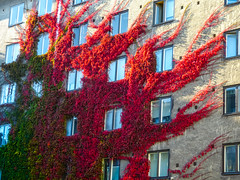
Foliage
Photo by David Navarro

I didn’t understand the indelible nature of lust, how decades later it would mark me like a drunken tattoo—high on grapefruit vodka, the violet lure of the neon sign, the buzzing of the needle before it seared skin. Sometimes, in the hours of night made bleak by solitude, I pull back blinds and imagine—in the empty Adirondack on my deck—a former lover, one of several in the years I’ve been single. Not the most important, just the most recent. Tonight, I will sit with that ghost. Small talk will be irrelevant. I’ll listen for nothing but my own breath: each exhalation a question, each inhalation a precise and unalterable answer. From a distance, the deck will look like a raft on a calm sea. But the solitary bulb will cast shadows like abstract art—intuitive and indecipherable—and the heavens will remain shrouded by clouds. How impossible to navigate without a single star.


Lavonne J. Adams lives in the coastal community of Wilmington, North Carolina, where she teaches as she writes. She received the 2007 Pearl Poetry Prize for Through the Glorieta Pass, “documentary poetry” based on women who travelled the Santa Fe Trail in the mid-1800’s. Her life is a little less adventurous, though she has spiced it up a bit with residencies at the Harwood Museum of Art and the Helene Wurlitzer Foundation, Taos, as well as the Vermont Studio Center. Journal publications include Sojourn, New South, and Missouri Review.


“The Pink Cloud” by Robbie Gamble

you can hear
on the phone
his forced euphoria

the spit flecks
in his inflection
“It’s all good”

just one week
removed from rehab
the prodigal son

set back up
in the home
less home, more

like a fishbowl
the family eyeballing
his every twitch

no job leads
girlfriend gone, no
prospects for escape

just a day
reeling out ahead
real and dull

still, he tries
hard to please
“I’m so grateful

for these tools,
to be working
on the program”

it settles, overcast
thickens into dark
no evening star

tonight


Robbie Gamble


“Clear As Snow” by Joseph Mockus


As clear as now it is I always
Remember this place in mist
You and I awake inside a dream—
No stars, no moon, only sand
On the deserted beach
What is the memory of what we thought
Was love but love itself


Joseph Mockus is a writer, poet, criminal defense attorney, dad, husband, and rock ‘n roll drummer.  Joe has published in the small university press, but generally only when his friends submit his work, which is never rejected.  It is only because Joe taught your editor-in-chief how to really read literature (standing in front of a dart-board on Turquoise Street in Pacific Beach sometime in 1975 or 1976) that we have the r.kv.r.y. quarterly literary journal at all.

“Temerity” by Sue Bernardi

Even though it’s summer, the air is cold at two in the morning. “Dammit,” I say through chattering teeth.

Even worse than insomnia, I hate being cold in the summer.

I try to remember helpful hints from old magazine articles, “How to Quiet the Mind”, very Mother Earth, very now, very convenient for wishy-washy naysayers like myself.

I throw on an old Harvard sweatshirt over my stained Hanes T-shirt, both of which I stole from a guy that lived upstairs from me.  I can never remember his name, something like Brian or Jeff. He would always wash his car on Thursday afternoons, and I would drink Rolling Rock from his fridge. I slide into my gray flip flops and go for a walk.

I avoid cracks in the sidewalk and dog shit. I half whistle and wonder if I’ll ever remember what sleep feels like. I notice a guy walking cat; I rub my eyes in disbelief. Maybe sleep deprivation has given way to visual hallucinations.

He sees me and does a half-shrug head-nod frat boy greeting. “This is Selma,” he says in a whiskey voice.

“I didn’t know you could walk a cat.”

He digs his free hand in his front jeans pocket and smirks, “I bet there are lots of things you don’t know.”

I grind my teeth. “You know what? You’re absolutely right. And at the top of the list of things unknown to me is why I’m talking to you.” I go back to my apartment, and for the first time in months I feel exhausted. I sleep for 5 hours.

I have a terrible job at the county court house. Actually I work for an independent photocopying shop that needs me to work at the county court house faxing, mailing and, of course, photocopying bankruptcy documents. I have read 10 books this summer because of my shitty job.

The fax machine makes it slow grinding noise; I sigh and put down Slaughterhouse Five. I love fax paper; it has a slight waxy feeling to it and it curls under like a town crier’s bulletin.

“Hey check this out!

–Greg”

I look across the street with my binoculars to see Greg leaning against the counter listening to The Fall. Greg says he used to masturbate to Mark E. Smith when he was in high school. Knowing Greg, it’s probably true.

The New York Times has put out a list of the 100 greatest books of the 20th century. I put green asterisks next to the books I have fully read and orange asterisks next to the books I have partially read.

I pick up the binoculars again and study the busy people on the street below. I gasp; it’s the cat walker from last night. I rush down the marble stair case just in time. The cat walker has a toothpick in his mouth and is much more attractive than I remembered.

“No cat today,” I say smiling. I’ve been told I have a beautiful smile.

Maybe this time I’ll be lucky, he has an aura of optimism around him. I feel like the 13 year old version of myself. I adore having a crush.

“Knowledge is power,” he says.

I blush and stammer something about loving School House rock.

“Do you also love happy hour?”

“Where can I meet you?”

He takes my hand and walks me to the corner. We stare at each other and he sighs and shakes his head. He leans in close; it feels like we are going to kiss.

He whispers and I swallow hard, “5:30, ‘Palais Royale’.” I stare at his face; he has sleep dirt stuck in the corner of his soft green eyes.

I wander back to work as if in a fugue state. I stare at the clock until it says 4.

I bustle back across the street, bursting to tell Greg about my good luck.  Greg stares at his navy blue Chuck Taylor low rise sneakers while I’m babbling about my beautiful new crush.

“Did you see that new X Files movie yet?” Greg asks, unimpressed with my news.

I go in the back and sit with Mamie. If I didn’t know Mamie I would hate her, impossibly thin, impossibly blonde and ageless. When she told me she was 31, I choked on my Nutella and banana sandwich. Mamie knows the Heimlich maneuver too.

Mamie is doing date entry and listening to obscure Brit pop, music is the only thing we have in common.

“Mamie, would you consider a man that walks a cat?

“Oh I know that guy.”

“You’ve dated a man that walked a cat.”

“No, I mean I saw were talking to Hesh on the corner. I spent a weekend with him in the city. Paid for everything and I never called him again.”

I feel sick; a cast off of Mamie’s, no good can come from this.

“Aww don’t worry. I’m sure you’ll be a much better fit for him,” Mamie has slight underbite that makes her seem even more adorable.

“Did you say his name is Hesh?” I ask with a forced breeziness.

Mamie smiles as if she were in a dream. “His real name is Helmut. Hesh’s mother came from Stuttgart. Hesh is short for Hessian, you know like those paid German mercenaries from the Revolutionary War. I think it was rather creative of me.”

The Palais Royale is the type of bar that William S. Burroughs would go to if he had been kicked out of everyplace in all five boroughs of New York and couldn’t score any heroin. It attracts wannabe writers and casual hangers-on. I went there once with a guy that said my eyes looked too hard for someone my age.

Then he left with a girl that had buzz cut.

He is sitting right in the middle of the bar, sipping a beer with a lemon wedge floating in it. I get nervous, what if I start belching or I chip my teeth against the beer bottle.

“I’ll have a whiskey sour, please,” I say blushing.

“My nana likes to drink whiskey sours,” he laughs and shakes his head.

I pretend not to care and stare at his hands. He has dirty fingernails and hairy knuckles.

“I was painting all morning,” he says and picks at his fingernails.

“Houses?”

“No, I’m working on a black and white series.”

I feel stupid and wonder why this guy is interested in me.

The bartender hands me my drink, making the glass smudgy with her greasy fingertips.  I take a sip and sigh.  The bartender slaps her gnarled hands down on the bar and squeezes.

“Cockroach,” she says in an unapologetic voice.

He brings me tea and toast, neither of which I enjoy but accept with a sheepish smile. He brings his hand to the side of my face and he stares at me with a bemused look on face.  As if he couldn’t believe he was going to end up in bed with someone like me. I set the teacup on the floor; we hold each other for a brief moment. I spy a plaid tuxedo in his closet.

We’ve hardly said two words to each other all night. I feel like I’m having drinks with my boss.

“I have to pee,” I say after an age of silence. Hesh nods.

I go to the cruddy bathroom and step over puddles of what I hope is water.  I stare in the mirror.  When did I start to look so old?  I rub my eyes hard and see red splotches.

Hesh is not at our table. I spy him at the bar talking to an ultra cool brunette with a sinister smile.  My legs are made of spaghetti as I amble my way over to the happy couple.

The brunette is laughing and tugging on Hesh’s sleeve while he is tearing a paper napkin in half. He’s pretending to be the weakest strong man alive, that’s our private joke.

“You moved,” I say lamely.

“Huh? Oh, yeah. Well Leila was all the way over here so, you know,” he mumbles, not really looking at me.

Leila smirks at me. I can read her mind, ‘I’m next, Bitch’.

“Well are you gonna sit down at least or are you going to continue to act like a jealous wife?”

I have vomit in my mouth and I can feel the tears well up. I slink out like I wish I had never been born.

I sit on cheap plastic lawn chair that I have in my living room/bedroom. I fished out of someone’s road side trash one drunken night.

It’s two in the morning, no phone call. My eyes burn but I have not shed one single tear.  I go for a walk, back to the scene of the crime. Like magic he appears, like a nightmare he is kissing Leila.  I feel like I’ve been sucked through a black hole. I stumble home and pretend to sleep.

I put all of Hesh’s things in a pile in the middle of my unmade bed. Every time I fold his shirts, I stop and breathe in deep.  I cry at the scent of paint, sweat and that special Hesh smell. I have run out of tissue and I dry my tears with toilet paper.

I have seven or eight sketches of me Hesh did when he thought I was sleeping, usually after we had sex.  I open up the bedroom window and liberate Hesh’s art.  Lucky me it rained last night and they all land in a dirty puddle of water.  I stare out the window all afternoon and smile every time someone walks by and stomps on the delicate pencil drawings of a contented me.

“Can’t we talk about this like adults?” Hesh asks in a hurt voice.

I am seething; I clench my jaw and try to form words. “Oh no, the onus is on you. Go fuck your hipster friend. Oh wait you can’t. She knows you’re a fucking scumbag.” So much for grace under pressure.

“I’m an artist, I’m unreliable. You knew what I was like when we started this thing,” he looks smug, as if he could burst into the “I told you so” song and dance.

“Don’t put your shortcomings on me!” I sound like a shrieky witch, like the kind of woman that will pick a fight with her husband at the supermarket for no real reason other than to make everyone else feel as bad as she does, the kind of woman that I hate, that I have somehow evolved into.

“I don’t want to argue with you anymore,” I say in a softer voice.

“Then just stop.” He folds me into his arms and I close my eyes.

I am knitting a pair of socks and drinking a brandy Alexander. Greg sits primly on my Naugahyde green recliner.

“What are you doing,” he asks.

“A garter stitch,” I say listlessly.

Hesh has not called in a few days, when I phone him I get his cool, detached voice mail. I feel needy and small.

“That’s it, Anne Frank. We are going out.”

“Can I wear my pajamas?”

Greg smirks at me and pats my head.

“Temerity,” I say out loud and blush. I hadn’t meant to say anything at all; the words crept out of my mouth of their own volition.

“Do even know what temerity means?” he asks, eyebrows twisted up in a mocking knot.

I ignore the line of questioning and concentrate one the bedroom walls. A wave of ambivalence washes over me. I can’t remember why I thought stop sign red would be a choice in wall color. I feel claustrophobic.

“I don’t know how I feel about red,” he says with a frown.

Though I can barely catch my breath, I argue. “Well I love it,” I say, my arms folded around my torso like a frustrated contortionist.

He smiles and squeezes my shoulders, “I have take out in the kitchen and a surprise.”

As if not speaking to each other for two weeks wasn’t surprising enough, I am pretty astounded by the thoughtfulness of a gift.

I rush into my kitchen which now seems gray and flat compared to the bordello like walls in my bedroom.  Gerber daises lay in a heap on the table.  I paw through my recycling and find six empty Orgina bottles.

“Why do you always do that?” he asks, “Did it ever occur to you to buy vases?”

I fight back hurtful words and line my flowers in the windows of my kitchen.

He eats and I continue to paint until I feel dizzy from the delicious smell.

“Can’t paint fumes cause brain tumors?”

“At least I’ll die happy,” I say sharply.

He pulls me down on the bare mattress and spoons me with a rough gentleness, a trait all of his own, a trait I can help but succumb to. I pick at the red flecks on my legs.

“It looks like I have the plague,” I say.

He is fast asleep.


Sue Bernardi is an almost 34 y/o well fed starving artist.  She’s been making a meager living in the world of non-profit whilst dreaming of becoming a professional writer.