summer night

Summer night but that’s no excuse I could
Whisper what I think until dawn and still
The misheard words, a distraction, then lost.
Decades on this same beach, but not
Like this, the way it is.  After you
Are gone, after dark and then later I
Drop to my knees in the sand and ask
The sand to remember when we were
Here and each wave pronounced our names.


Joseph Mockus is a writer, poet, criminal defense attorney, dad, husband, and rock ‘n roll drummer.  Joe has published in the small university press, but generally only when his friends submit his work, which is never rejected.  It is only because Joe taught your editor-in-chief how to really read literature (standing in front of a dart-board on Turquoise Street in Pacific Beach sometime in 1975 or 1976) that we have the r.kv.r.y. quarterly literary journal at all.

“Keeping Time” by Erik Svehaug

When Diskus hoisted his case and stepped outside, he felt late.  And Green Bay was out of Super Bowl contention already. Shake it off.

Nancy probably wouldn’t talk to him for a week. Shake that off, too. His sobriety? He’d already shaken that off. The street was filled with black grit and slush. Snow lay like old manna on strips and patches of grass. Up the street, pitch and run. Sell. Tune in. Make it.

“Look, just bear with me a minute,” he told the short, shiny man, wiping the snow from a parked car. “How many ways do you know to boil an egg? One. How many ways to chew it? One. You sleep, you wake up, you chew your eggs the same way every time.”

The little man was listening. He was buying, Diskus knew.

“Break your wife out of the ordinary. Surprise her. No occasion. It’ll mean a lot to her. The gold chain is worth $15.00 by itself.” Diskus proffered a delicate pendant set.

The man’s twenty bucks made almost half of seventy, his goal for this morning. Diskus pocketed his money and headed down the street. He fished for rhythm, pitch, swagger.  He imagined himself at the next door.

You sing when you’re by yourself, lady? You used to. What’s it going to take to get that back? Time’s eating you up. Look at yourself. Maybe you don’t feel the teeth yet. Sing or you die like a bug. You used to sing all the goddam time. Couldn’t shut you up.

Nancy had sung a lot.  Before they were married, they’d sung together.  Mamas and Papas.  Yardbirds.  Belafonte.  All kinds of things.  She even knew some Sinatra and Patsy Cline.  But she’d closed up as his luck turned; when he lost his shirt and then the storefront on Wabash.

He picked the next door because of the curtains in it, the newish Beamer out front, the frosty but manicured garden.  He knew, as he knocked, that he was stuck in his head; he should have waited; should have gotten his pitch back first.

When the door opened, he said:  “If you have a moment, ma’am, I want to say change is the main thing.

Quick change.  Newness and speed.  Absolutely central in a livable life.  Curiosity, surprise, variety, excitement, discovery.  You’ve got to keep the human eye moving or it won’t last a week.”

His audience was a fragrant woman of about forty.  Either a young grandmother or an old mom, he thought, after glimpsing a basket of Legos through the door.

“What’s that?”  she said.  “I’m sorry, keep going,” she said, with a small smile.

A radio in the background said:  “In high school hoops, Independence High meets Roosevelt tonight, it’s Madison at Winona.”

“I mean that Hollywood and television and newspapers don’t just help pass the time.  They are time.  If it weren’t for them, every minute would be just like every other minute and time would stop.  Aging wouldn’t be a problem; people would be too bored to notice.  You’d die as old as you were born, for all you’d care or know. Fashions, advertising, reporters; they’re all beating their brains out to keep you alive.”

“I don’t think I quite get it.”  She said.  Her smile was tentative.  She had wrinkles around her eyes, freckles in the usual places.  Her eyebrows crowded down.  “Really, what do you want?  I’m freezing with this door open.”

He took her money.  She went for hoop earrings.  Ten bucks was ten bucks.

Sure, he was attracted to her.  But he had seen himself in the mirror this morning.  Guts in a sack.  Sloping shoulders.  He had a white sickle-shaped scar on his ribs from a Korean bayonet and hard gravel lumps of tissue from sloppy shrapnel repair.  Does anyone even know what a sickle is anymore?  Shake that off, too.

He and Nancy had an arrangement. He would try to be gone by 7:30 A.M.  After that, she’d get made up for her day at her beauty salon, four chairs, with nails.  Before last night, he’d been on the wagon for thirteen months. She used to say things to him occasionally when he walked through the bedroom.

He’d gotten married seventeen years ago, at fifty, when he was still skinny and strong, like a wise-but-wired, stud-looking paperboy.  So what’s seventeen years in dog years?  An eternity.  Nancy had her friends and the shop.  He ate his own cooking, washed his own dishes, bought his own toothpaste.  And he almost used to drink.

He had his case by its big double handles.  Shake it off, he told himself.  Pick it up.  Tune in, here and now.  He headed south.

His feet slapped pavement and he hummed a razzy tune.  Big flappy feet and the tune was 20’s, 20’s, 20’s, no, by God, 1931.  Green and pink tweed jacket, rubble nose, baggy pants and humming 1931.  He stopped at the tail of his dirty green Rambler wagon.  “So there you are,” he said to the car.

He had drunk hard last night.  He had nursed a cranberry and soda and swapped a few stories at the Vets’ Hall, until the TV 4 News Anchor said:  “Seventy-one year-old Korean War veteran Frank Cole died today.  He was one of only a handful of remaining GI’s who were captured at the fall of Taejeon, almost fifty years ago.”

Diskus hadn’t known the soldier’s name, but he and some of the others knew some guys in the 24th Infantry and Diskus had seen nearby Osan go down, himself.  That is, at seventeen years old, he had been trucked out on his back, bleeding, as it fell.  The white office buildings, homes and warehouses billowed black smoke into the sky in the distance.  He remembered the grenade blast that got him.  No idea about the bayonet though.

That must have come after.

They shared a round for Frank Cole and, then, another for other fallen brothers.  As the rounds came and went, his head filled with the whiskey fog.  Somehow, he knew that the Timberwolves lost to the Panthers 98 to 108.  Before long, he cupped his heavy chin in one hand and propped it on the bar.  Bright thoughts gleamed and rolled by him, like pinballs out of reach of the flippers.

Determined to leave, his bar-world whirling, Diskus heaved himself to his feet, hands flat on the counter.  He reminded himself to try to remember in the morning to think about where he’d left the station wagon.

“Spring Training is only 58 days away,” said the Ten O’clock News.

Somehow, he had made it home on foot.

From under the front seat of the Rambler, he pulled yesterday’s dented steel thermos of coffee, poured the contents into the shiny top.  All the time, pitch and run.  He opened the passenger door and sat down.  Better get out there.  Two cold swallows of coffee.  The sun was working its way up and light covered his lap and made him sad.  Tired of being an odd-looking joke.  From under his feet, he pulled a blanket onto his lap.

To them, I’m always just a peddler.  He was already drowsy.  He scrunched so his ear was down onto the soft, worn backrest.

Selling jewelry was relaxing at first.  But now even the cheap plated junk was getting to him.

Before that, he’d sold Bibles energetically, but he quit when the verses, the heavy scary lines, had started lacing his dreams.  God’s angry voice began to voice-over his private life.  He felt like a punk teenager getting chewed out by a grownup.  Anger, disapproval, guilt.

He decided faith wasn’t slack thinking.  It was a grab at hope, set against the pain-hot real impossibility of being loved.  That was Hell.  Buy my Bible, baby.

He used to drink part-time to keep any sales pitch from taking over his mind full-time.

God, for some whiskey to steady him.  He longed to be solid and happy, slow dancing in place with his hands on the hips of some straight, thick tree.  Some room above the street, away from everybody, watching night traffic; slowly breathing booze.

He snarled now, asleep.  He watched himself, a boy, watching back.  Not a care.  The blue sky spread out above thirteen year-old summertime him.  The farm and the smell of cows and weeds and wheat dust and the caws of crows.  As a boy, he had hunted crows, their calls fresh in the air.  Boom!  The signal from the house that they had company.  Ten minutes later, he had a visitor, a family friend: a girl.  He showed her how to hunt. They sat on the edge of the field, under the trees, to wait and whittle and watch.  They held hands then and kissed; small tight little mouths.  He let her hold the shotgun.  They would swim for a little.  Through the trees, along the stream, in mushing sod, onto the cracking dry logs at the edge of the pond.  A pile of clothes by the tree.  He swam in his skivvies.  She quietly pulled over her shirt.  Forever in a day.

Diskus sat up slowly, looked at the Texaco station across the street, rusty pumps, a heap of scuffed bald tires. 

Where am I going?  How long have I got?  The sun had disappeared and rain spattered the windshield.

Windshield wipers clacking, the road shining and splashing, he drove the Business route down between the warehouses.  A lighted reader board said:  07-03.  Which inning?  Had the White Sox won?  The Business Route crossed the Burns Bridge toward the liquor store and its shopping center.

On the sidewalk, near the middle of the windy bridge, a woman in a black-and-white cape and wide brim hat stooped over two dress boxes, snatched them up, threw them over the side toward the river.  Then, both hands on the railing, she sank to her knees.

It was still raining.  He stopped.  The woman looked up angrily, swiped him away with her hand.  He got out and sat on the hood, ignoring the splash of the raindrops, felt the engine idling under his wet seat.

“I’ve got plenty of room, if you’d care to ride, Miss,” he said.

She looked away through the railing.  “Go away.”

He sat for a moment, then got back in his car.  His butt was cold and wet and tried to stick to the seat, as he slid in.  He drove the rest of the bridge and parked on a side street.  He dug a dirty white Bible out from under the back seat.  He wiped it on his sleeve as he walked back.

The woman hadn’t moved.  He watched her as he approached.  Her hands and cheeks and chin and arms were puffy with fat.  But she did have a good-natured comely look.

“I want you to have this,” he said, holding out the Bible.  “It’s dirty, but it is vinyl covered, so it should clean up.  It’s got a concordance and finger-tabbing, a zipper, a place in the middle for a family history…” He paused for her to comment.

She didn’t.

“They say it contains words of strength for those who contemplate the river,” he said.  “Not that I’ve read it,” he added.  He just held out the Bible and smiled.

“Don’t smile at me like that, you old clown, patting yourself on the back.  I’ve got business here, so shove off and take your sermons with you.”

“Alright,” he said.  He dropped the Bible over the edge of the bridge like he was tossing it onto a shelf.  She jumped up and yelled and leaned over the railing and together they watched it fall for a long time and make a tiny splash.

“You’re a fool,” she said, but she grinned.  “Why are you trying to do me this big favor?” she asked.

He kept trying to face her now, but like a gyroscope, his head kept turning away, his eyes to the river.

“Beats working,” he said.  They both gave a short laugh, sobered and were silent.  Somehow she’d bought it. 

Bought what? he thought.  They started walking.  He maneuvered to be by the railing.

He liked her strutting, overweight walk.  They kept the same pace.  She was taller than he was, her shoulder swayed level with his ear.  She looked morose.  He felt the tension in her. Her eyes were steady.  The safest people he knew had mobile eyes.

“What’s your name?” she asked.

“Diskus,” he said.

“First or last?”

“Last.  It’s what I go by.”

“I’m Ruth.”  She paused.  “My husband ran off.”

My god, he thought, is that all?

“He lost his job two months ago.  He just waited until we ran up our line of credit and then took off.  And what are we supposed to do for food?”  She only half looked at him. 

“I’m step mom to his three kids.  Three!  And I don’t want any of them, by myself!  Before you came, I was up on the rail.  Couldn’t say goodbye, somehow.  I don’t know.  I’m so stupid.  I just came from buying more dresses on another store account!  Every other night a guy calls from the bank and tries to give me lip.  I was going to jump with those dresses, but I pictured myself hugging them and falling and saw everything soaking in the water and I hated them for meaning so much to me.  So I threw them over the side.  And then I hated myself for being so touchy and stupid and wasteful.”  She glared at him and took his arm like it was a rope. 

“At least you’re going to treat us to a meal before you disappear.”

And he followed.  “I know a good little Samaritan restaurant…”

She smiled at him and held a twenty-dollar bill at arm’s length in front of his face.  He grabbed into his front pocket, but the twenty was gone.  “That’s pretty lousy,” he said,  “and it was already a lousy day.”

“Look, sweetie, you can leave when you want, but I’m keeping your money.  I’m lucky to see this much in a week anymore.  Eat with us if you want.”

He stopped outside Jerry’s tavern.

She looked at the tavern door, surprised, then smiled and nodded.

He held the door from well inside.

The TV at the bar was talking Sports:  “the San Jose Sharks are in town tonight to take on the …”

He let her lead the way to a small plywood booth in the dark of the back.

He ordered a pitcher and they talked, mostly about her husband.  After the second pitcher came, he took her hands, fat with short fingers, in his leathery, baggy-skinned hands.  They would both soar into speech at times.  She talked about being twenty-one and only 12 pounds too heavy to be a flight attendant and reading biographies of jockeys for weight-loss tips.  She told him about the weed she had dreamed she was, that lived in a path and thrived on the crush of hooves and heels and wheels.  And he amazed himself by telling her of his dead marriage and his loneliness, of almost dying in Korea and never being sure of the next dollar.

Diskus’ veins pumped with a new pudding.

He blushed in the dark for being of all things out of words.  She would look down seeming unable to look at him.  He talked about his doll collection. She sought his eyes then, to see if he was serious.  He laughed at her.  She laughed back and hugged him to his feet.

He held out his hand.  They got two pizzas, the largest at the bar, and a carton of Coke and left.  One block and across the street, they went up to a cluster of apartments, up worn wooden stairs.

The kids were famished and got both pizzas if they ate in front of the TV in the common room down the hall.

Slumped in front of the apartment’s main window, behind the sofa, they watched first, then clutched arms, then kissed big, old, fat, sloppy lips and wet and strained.  Then sideways on the floor in a snarl of legs and an open dress and he eased her breasts out.  Her fingers undid his shirt and found the sickle shape on his ribs and followed it gently.

Such breasts she had; they were fat and white and heavy.

Yet he stroked her and she liked him and they were beautiful.

He kissed each one tenderly.

She sensed him pulling back into himself a bit and said:  What’s the matter?  The kids?”

“No; I was just thinking we should slow down, that’s all.”

“That usually means ‘Goodbye.’  Are you getting ready to leave?”

“You know, you are not the failure here; he is.” He said.  “He is.”

She leaned back against the couch and closed her eyes. “Don’t go there,” she said.

“I know him.  I am him,” Diskus said.  “Impatient.  Full of expectations.  Waiting for the next burst of feeling. 

Lots of disappointments that take even more activity to avoid.  A workaholic to fill the spaces between bursts of extra intensity.  Always some crisis at work.  Crises that are good for his adrenaline.    And then he lost his job.  He’s spinning now.  Add on desertion and theft.”  Diskus paused.  “I’ll bet he’s a baseball fan.”

“The Reds,” she said dully.

“With me it’s the White Sox.  To this very minute.”  He was excited now.  “Look: when you’re dying inside, time is agony.  Like dog whistle pain torture that won’t stop.  You try to blot it out.  You focus on things that don’t hurt as much.”

She had opened her eyes and was watching his face.

“Take the White Sox. Every game, every score, is like the rung of a ladder.  After a while, every trade, every mention on a talk show was another rung of my ladder that led me through time, passed the time.  It’s a Pass Time!”  He almost shouted.  “That’s it!”  He was really pleased and smiled at her.

She couldn’t help smiling.  “Like shopping?” she asked.

“Probably,” he said.  “And it’s exhausting, trying to climb every minute of the day and night.  So some people jump.”

They were both quiet a minute.

“I think I do have to go,” he said.

“It’s past time,” she said.

He missed her joke until he was behind the wheel of the Rambler again.  He snorted appreciation.

He got to the Salon, “Nancy’s”, as the streetlights still flickered on.  The shop had closed twenty minutes ago, so there was parking in front.

As he pulled up, a radio announcer introduced a panel of experts.  The British anticipated a scaled-back Olympics with small crowds and big debts.  An American caller challenged them.  “The sports public is counting on the international diversity and suspense of the games…”

He snapped off the radio. “I’ve got a life,” he said.

He let himself in with his key, rather than pull Nancy away from whatever she was doing.

There was music.  Kenny G.?

She was cleaning the mirror at her own station, up on a short stool.  She stopped with her rag arm on the glass above her head.  “Hello, John,” She pretended a lack of surprise.

“It looks real nice in here, Nance.  Feels comfortable,” he said.

“Everybody keeps it up,” she said.  “It’s easy with a little teamwork.”

“How’s business?  I mean,” he waited because he felt that had come out too cold and too abrupt.  “Does it still make you happy?”

She finished spraying and wiping the mirror and got down.  She faced him.

“Yes, still.  I guess I’d like helping people look good whether they paid me or not.  And we’ve got 20-30 regulars.”

She waited for him now.  He had come to her.

“Why didn’t you ever leave me?”  Diskus asked, suddenly.  “I was a beached whale.  I wasn’t going anywhere.  I had nothing.  But you…”

“John.”  She said.  “When I make a choice, I stick with it.  Better or worse.”

He just hung there.  Like a watched pot, the next moment just wouldn’t boil.  Slowly, he reached an arm out around her shoulder and she shifted gently into his embrace.  They hugged for some time.

He had time.  For once, he didn’t need to be anywhere else.


Erik Svehaug lives and writes in Santa Cruz, California, a vacation town he created as a child. He has been in Static Movement, Bartleby-Snopes, Linnet’s Wing, and Meta-Zen. His story, Tempeche, is in the Outlaws Chapbook at Bannock Street Books. He will be in the next issue of Ampersand. Flashes he wrote were mentioned honorably in Binnacle UltraShorts competitions in 2008 and 2009.

 

“The Things We Never Say” by Joseph S. Pfister

The snow comes down in fluffy chunks, making it impossible to see out the windshield.

“For God sake, would you slow down already?” Rebecca says for the third time.

I am only driving thirty, if that. “Can you do something besides critiquing my driving?” I ask, peering over the steering wheel. “Like maybe put on something we haven’t listened to five times already?”

She snatches up the iPod, which has been on the same playlist—Spring Break ‘08—since Indiana. “What do you want to listen to?” she snaps.

“How about something that doesn’t suck?” I suggest fictitiously.

We have been driving for five hours straight. Somewhere around Chicago the gray and blue skies opened, and the storm weather.com had been predicting dumped on us with all its late-spring fury. We’ve gone maybe twenty miles in the last hour, and from seventy-degree temps to thirty all in a day. But mostly, we’re sick of the cramped front seat of the teal-green Mazda we’re driving back from Georgia as a favor to my parents.

“Well, that rules out just about all of your music,” Rebecca says. Brake lights up ahead shine through the flurry of white that hides the Illinois landscape.

“If I hear Miley Cyrus one more time, I’m gonna puke.”

“Shut up. I like like one song,” says Rebecca, sinking back in her seat and putting her feet up on the dashboard, a remarkable feat considering how small the car feels at the moment.

“I was supposed to be in Milwaukee tonight,” she says, bringing up a topic we’ve already been over a dozen times and agreed is not worth discussing again. When we were in Georgia, Rebecca’s father called to warn us about the storm, but we simply crossed our fingers and hoped for the best. So far, the best hadn’t happened yet.

Massaging the bone between my eyes, I guide the car with my other hand as it slices through the slush coating the interstate. Welcome back to the Midwest, I think.

Rebecca puts down the iPod. “I just wanna sleep in my own bed tonight.”

The heater between us—not used to being used in Georgia—is working overtime, and the ice-covered wipers squeak loudly as they cross the windshield. We haven’t shared a laugh since yesterday morning, and I’m beginning to think that spending spring break with my girlfriend instead of drinking beers at the cabin with my buddies was a poor decision.

“Where are we staying tonight?” Rebecca asks, her voice tired and hard. She is looking out her window, though I know she can’t see anything. I certainly can’t.

“A hotel probably. I hadn’t really thought about it.”

“A hotel where?”

“I don’t know. Somewhere. Once we get tired of driving.”

“And when will that be? I’m already tired of driving.”

“I don’t know,” I say, picking up the iPod.

Rebecca gives me a threatening look. “Don’t you dare put on any of that screamo shit.”

Snorting, I settle on the first loud band I can find. I don’t know if it’s because I really feel like listening to it, or if it’s just because she doesn’t.

Rebecca lunges forward and fiddles with the heat, trying hard to disguise the fact that she can’t stand me at the moment.

She doesn’t say anything for a long time, and neither do I.


It is Well after one when we decide to pull off for the night, finding a small motel off I-90, north of Chicago. The first motel we try—a Ramada Inn—has no vacancies, and after a few choice words from Rebecca, we find a motel on the other side of the highway.

The trail of lights from the interstate ignite the dark sky behind us, and the parking lot encircling the low-stretching building is littered with snow-covered cars. Pulling up to the front entrance, Rebecca gets out, slamming the door behind her. I leave the car running and start pulling out our luggage, even though I don’t know if there are any rooms available. Based on the look of the parking lot, though, my guess is there are.

Shit, it is freezing. I have to jog in place just to keep warm. I know getting back in the car seems like the logical choice, but my thighs are stiff from the long drive and I don’t feel like sitting anymore. In fact, I don’t feel like doing anything but sleeping. The never-ending, disorienting swirl of snow continues to fall around me, illuminated in the glow of the humming Comfort Inn sign. The whole scene would probably look beautiful if it weren’t the middle of March.

It was during finals week right before Christmas when Rebecca appeared in my doorway and yanked me from my desk, demanding I follow her.

Where are we going? I asked. Outside, she replied. Should we grab our coats? It was snowing, giant flakes outside gliding past my window. No, she said, leading me out the door. Once we were outside, she broke into a run, disappearing into the wall of falling snow. What’re we doing? I called, trying to keep up. Just trust me, she said. The sudden cold made my eyes sting, and finding it hard to breathe, my jog turned to a half-hearted amble. Rebecca waited for me up ahead in her red sweater at the foot of a large snow bank formed by the parking lot and a rarely traversed path. I wanted to make snow angels, she said, grinning. So we made snow angels right there, in a T-shirt and red sweater in the falling snow. Rebecca liked to do random things. They made her feel alive, she said.

We’ve been dating for almost a year, and it’s getting to that point where I have to ask where this relationship is going. I love Rebecca—and I’m pretty sure she loves me too—but I’m graduating next year and the future isn’t so clear. I try and imagine myself without her sometimes, but I can’t. I don’t know where I am going to live or if I am going to have a career. Rebecca still has another year left of school, and she’s from New York. She loves it there. I visited once, but I didn’t think it was anything special. Every day with her is an adventure. When I think about it, I realize that’s why I love being around her so much—her spontaneity. But tonight that liveliness isn’t there. We both just want sleep.

The car is still running. I want to sleep in my own bed tonight as well, but there’s nothing I can do about it. Traffic is at a standstill, and it’s probably better just to wait out the storm until morning. At least, that’s what I tell myself.

Where the hell is that woman? I’m freezing my ass off here in this parking lot that looks like it could be used in a made-for-TV holiday murder mystery. Go in, ask for a room, come out. That’s it. I’m about to stick my head around the corner and look inside when Rebecca’s petite frame appears in the glass doorway. Flinging a key card in my direction, she turns around and goes back inside.

Sure, I’ll just park the car and bring in the luggage while I’m at it. No problem.


“Which room are we in?” I mutter, meeting Rebecca outside the lobby elevator, a fresh dusting of snow in my hair. She has put her hair back in a sloppy ponytail and looks as tired as I feel. We both just want to sleep.

“Two-twelve,” she says, as if she can’t believe I am actually asking.

The desk clerk—a middle-aged Pakistani with a craggy face and a moustache—observes us quietly from behind his computer. I feel like a valet standing there with my bag slung over my shoulder and Rebecca’s suitcase in tow. She avoids my gaze, arching her head back and watching the numbers slowly unwind as the elevator approaches. The door dings open, and I follow her in with our bags, saluting the desk clerk who watches us as the doors slide closed, smiling. Glancing at Rebecca, I realize she is smiling, too.

The short ride to the second floor is a quiet one, and we’re too tired to argue. There’s nothing that hasn’t been said in the last eight hours, and Rebecca seems perfectly content to stand silently on her side of the elevator, which is fine with me.

Rebecca had said she wanted to see animals on spring break, so we did. We took my uncle’s car and drove forty minutes south to Wild Animal Safari. She fell asleep on the drive, though I wasn’t surprised. We had to rent a minivan fitted with metal bars once we got there, and we saw animals from every continent—camels, sheep, reindeer, pigs, tigers. Rebecca giggled when a zebra came up to the window and ate out of her hand. She said its breath was warm on her arm and gave her the shivers. Later, she shrieked and cowered against me when two long, sticky buffalo tongues swabbed the inside of the van like strange, hungry eels searching for food. She spent all afternoon tossing pellets to the smaller animals that kept their distance from the van. Her favorite animal was the giraffe.

When the elevator stops, I stumble out, tripping over Rebecca’s rolling suitcase as she leads the way down the narrow, poorly lit hallway.

Looking up and down the corridor, I get the feeling again that I’m in a Stephen King novel or a bad horror movie, and am secretly relieved to see Rebecca stop at two-twelve and slip the key card into the door.

“Son of a bitch,” she moans a moment later, standing in the open doorway without going inside.

“What?” I ask, joining her.

“They didn’t clean the room.”

She is right. A bed with what looks like day-old vomit on the sheets and a rollaway spilling its blankets like guts sits parked in the middle of the pastel-colored room, facing the TV, which is still on. The walls are decorated with tasteless, framed prints of mountain peaks covered in snow.

Dropping my bag, I say, “I’ll go see about another room.”

With an irritated look, Rebecca hands me her key card. “I’ll just wait here.”


The front desk is abandoned, and the square clock on the wall behind it reads quarter to two. Ringing the service bell, I hear shuffling from the back. The smiling middle-aged desk clerk from before appears, though he is no longer smiling and looks as if I have roused him from a peaceful night’s sleep.

“Can I help you?” he asks. He has a thick, foreign accent. All I want is a clean room to pass out in.

“Our room hasn’t been cleaned.”

The clerk looks surprised and gives me a worried frown, as if somehow I can’t be telling the truth. “Which room?”

“Two-twelve.”

He looks up something on the computer that I can’t see. “You said it hasn’t been cleaned?”

“Right,” I say, trying to mask my irritation.

“Okay, well,” he says, looking slightly flustered, “how about two-fourteen?”

“That’s fine,” I say. Exchanging keys, the desk clerk mutters an apology and then disappears, leaving me alone in the empty motel lobby, waiting for the elevator.


The first time I stayed with Rebecca and her parents, I almost killed their dog. It was an accident, though I’m still not entirely sure she’s convinced or has completely forgiven me yet. Rocco. The damn dog’s name is Rocco. I don’t even know what kind of name that is. Sure, Rebecca told me when I arrived at her parent’s place, don’t leave any food out because Rocco will get into it. And, sure enough, he did. We were in the living room watching “Seinfeld” when Rebecca realized that she hadn’t heard Rocco in a while—usually a sure sign that he was into something he shouldn’t be. That something was my gum on the end table in the family room where I was sleeping. Apparently, there is some type of chemical in gum that when ingested in large amounts—like say an entire pack—can be toxic to pets. Xylitol, or something like that. Needless to say, an emergency trip to the vet with a vomiting dog and Rebecca’s parents wasn’t on the itinerary. And what made it that much worse is that that dog is like the son Rebecca’s mother never had. A furry, pain-in-the-ass son who gets into gum instead of the liquor cabinet.

If possible, Rebecca looks more infuriated than she was when I left, and doesn’t say anything upon my return. She hasn’t moved from the spot where I left her and doesn’t appear to care if she does. Scooping up my bag, I nod down the hall. Lugging her suitcase with two hands, she reluctantly falls in line behind me as I lead the way to two-fourteen.

Inserting my key card and giving Rebecca a look, I shove open the door. Holding my breath, I flip on the lights.

The room is—clean.

Plowing inside, the unmistakable stench of cigarettes stops us before we can even close the door.

I drop my bag with a sigh. “You’ve gotta be kidding me.”

“Gross,” says Rebecca, shooting me a savage look, as if all of this is my fault—the weather, spring break, the motel, all of it. The reek of cigarettes from the last guest still hangs in the air, attaching itself to the drapes and walls like mold.

“At least the room’s clean,” I say.

“I don’t know if that’s the right word for it,” she says darkly, dragging her suitcase onto the queen-size bed at the center of the room. Extracting a small perfume bottle, she moves around the room, filling the air with a Burberry London mist. After a good dozen squirts, the room smells like an Abercrombie & Fitch store that has just recently allowed smoking.

Grimacing, I empty my jean pockets of spare change, watching out of the corner of my eye as Rebecca pulls out her pajamas and starts to undress. Once she realizes I’m watching, she turns and heads into the bathroom.

I finish changing, and plugging in my cell phone to charge overnight, I whip back the sheets and fall into bed. The sheets are stiff, but I don’t complain. I have a bed, finally.

Peninsula State Park, Rebecca said, is something everyone should see, especially in the fall. We went up to Door County with my family, and the morning we decided to climb the observatory tower it was cold—the kind of cold you feel in your bones and makes you wish it was still summer. The 75-foot observatory tower soared above the trees in their autumn suits. Every inch of the painted, mud-brown tower was covered with names encircled with hearts, or couples with FOREVER carved beneath them. We added our names. When we reached the top, we could see for miles. The sea of trees below us roared in flames of red, yellow and orange, and we pointed out which islands on Lake Michigan we’d build mansions on someday. As breathtaking as the view and jagged coast looked in the late morning sun, we didn’t stay long.

Rebecca reappears from the bathroom in an old T-shirt and sleeping pants a moment later. She has let her hair back down, and reluctantly lies down on the bed beside me.

“The sheets smell like cigarettes,” she says.

I nod, my face still buried in a pillow, facing away from her. “I don’t wanna think about what else they smell like.”

The fatigue from the day has finally hit us full-force, and even the silence feels exhausting. Turning off the lamp on the nightstand, we lay in silence, listening to the heater on the wall sputter. Rolling over, I can see that she is lying, arms folded on her stomach, staring up at the ceiling.

It’s not often you get a perfect day, she said, but this was close enough. It was our last day in Savannah—part of our mini-vacation while on vacation—before heading back to my uncle’s. We had the day to do whatever we wanted, and Rebecca was happy just to sit in one of the squares. Savannah, she said, was the most beautiful place in the world. That’s why we went there in the first place—because she wanted me to see it for myself. We sat in the green grass beneath the sprawling oak trees coated in Spanish moss and old-fashioned lampposts, listening to the life around us. The mood to draw struck Rebecca, so she pulled out her drawing pad and pencils and started sketching away. I didn’t learn until a truck stop in Indiana that with all that beauty surrounding us, she had chosen to draw me instead.

“We’re never staying at a Comfort Inn again,” says Rebecca.

I nod in the dark of the room, a smile I can’t help spreading across my face. It begins as a chuckle, but soon we are both shaking with laughter.

In the morning, the sunlight on the snow outside our window is blinding. We dress quietly and check out before ten, the night before feeling like the remnants from a night of heavy drinking where bad decisions were made and have to be faced. We say nothing to who we assume is the desk clerk’s wife, and after loading our luggage into the Mazda, we drive across the street to the BP we somehow didn’t see the night before. We get breakfast—Pop-Tarts and Mountain Dew and a copy of The National Enquirer that Rebecca grabs—and as we pull out, destined for the barren vein of interstate that cuts the snow-covered landscape, Rebecca reaches over and clutches my hand. She is reading about cyber-hookers, and that is when I realize she is probably the best thing that will ever happen to me.


Joseph S. Pfister is a senior majoring in Creative Writing at the University of Wisconsin-Madison and is a member of The Madison Review Literary Magazine.


“Bedside Manner” by Scott Owens

I had forgotten the slow ways of death,
interminable days of quiet uncertainty,
punctuated by necessary offices and awkward
visits. Years ago, a great aunt’s
always darkened house, wood stove
over-heated, smell of Vicks and perfume,
constant breathing of machines, drone
of white gospel the only other sound,
as if we all wanted to slow things down,
keep them as they were, let nothing go,
and even the slightest unnecessary noise
might startle time awake.
Now, it all comes back again.


Scott Owens is the 2008 Visiting Writer at Catawba Valley Community College. His first full-length collection of poetry, The Fractured World, was published by Main Street Rag. He is also author of three chapbooks: The Persistence of Faith, Deceptively Like a Sound, and The Book of Days.


“For Dad, A Year After His Death” by Cathy Gilbert


Today I remembered you
teaching me to ride my bike without training wheels.
I held tight to the pink handle grips
as you held me steady, your piano hands stretching
beyond the full octave to guide me
by the back of the polka dotted seat.

I felt the comfort of you next to me.
As we started out, my feet pedaled,
and you huffed alongside, keeping me balanced.

The wind in my face grew stronger,
my feet more impatient, and those two wheels
carried me faster and farther than ever before.

I stopped, a thrilled laugh exploding,
placed my feet on the ground
and turned to you
but you weren’t there.

I’d left you long ago, and I squinted
to see you small in the distance
of the street length between us.
I wanted to see you smiling,
but the sun burned my eyes
and silhouetted you into shadow.

And then I put my foot back to the pedal
and set off on my own, feeling
the ghost of your presence still at my side.


Cathy Gilbert is an Instructor of English at Heartland Community College in Normal, IL. She currently teaches many levels of composition, but will soon add creative writing to her repertoire. Her poems have appeared in the Madison Review, Main Channel Voices, and PANK. When she’s not teaching, grading, or writing, Cathy attends as many jazz and rock shows as her sleeping schedule allows.


“Happy Hour” by Cherise Wyneken


Image result for happy hour

“You look kinda pale, Sugar,” Mr. Bailey said on his way out of the office. “What the heck … soon’s you finish sending out those orders go on home. And that’s an order.”

“I hate going home to an empty house in the middle of the day,” said Luci. “No husband – no kid.”

“If it’s a kid you want, Sugar, there’s plenty guys out there willing to oblige.”

When he had closed the door Luci folded her arms across the desk and put her head down. Am I really all that desperate? She had given up trying to meet a decent husband type man and started thinking about adopting as a single parent or getting pregnant by some guy – like Mr. Bailey said. She raised her head and searched around the desk for the orders. I’ll do these up … then go to the park for a walk and think.

She was so preoccupied when she got to the walking course that she headed in the opposite direction from the arrow. It didn’t matter since at that late morning hour there weren’t many walkers. It was too hot for the retired folks and most of the younger ones were at work or school.

The blue sky was spattered here and there with splats of clouds like the white paint on the black T-shirt she wore when cleaning. The noonday sun was directly overhead, ringing the clouds like neon lights on a movie house marquee. Sunlight filtered through a spreading fichus tree, painting its trunk starlight yellow. Splotches of it dropped onto the grass below and turned it chartreuse green. A fallen, wounded air plant lay on a pile of mulch, gasping for air. From the distant west, thunder grumbled faintly. Luci looked up and noticed a big black cloud peering over the horizon.

I hear you, Cloud. I feel the same way.

Luci had come to the park to think, but she could not get beyond fantasizing how nice it would be to have a husband and family.

Engrossed in her thoughts, she rounded a sharp hairpin curve and bumped smack into a walker coming from the other direction.

“Excuse me,” she said without looking.

“I am happy to see you again,” said Becka – the Caribbean girl she’d met here before.  “As you say in this country, ‘I am glad I bumped into you.’”

“Becka! I didn’t even notice it was you.”

“You looked like those people who walk with earphones – listening to something deep inside.  It’s not your usual time to walk. I hope nothing bad has happened.”

“Not yet. I was trying to figure out how to avoid it. You know – how to meet a decent guy.”

“Some of my classmates have invited me to go with them to a Happy Hour tonight.  Why don’t you join us? Perhaps you will meet someone suitable.”

“Happy Hour? Where?”

“The Bimini Boat Yard. They say it is a good place to meet people. And they have a lovely free buffet.”

“I’m not too good at handling alcohol.”

“I’m sure they serve soft drinks, too.”

“I hate going places alone … but if you’re going … maybe I will come, too. What time?”

“Around five o’clock.” Becka looked at her watch. “I have to go now. I have a class at two. I do hope you will join us.”

Luci finished her walk and went home for a little rest. I might as well meet Becka and have some fun for a change, she thought as the time approached. It had been so long since she’d gone out anywhere, she didn’t have the slightest idea what to wear to a Happy Hour.  In the end she chose a simple pair of tight black pants with a loose black top that hid her stomach roll.  She scrounged through her dresser drawer looking for a piece of jewelry to go with it and found that old gold cross of her mother’s. It wasn’t the usual shape, but had stubby bars surrounded by a circle. It looked like a museum piece to Luci.

She looked at herself in the mirror and laughed. “That’s me. A thirty-year-old museum piece. Past my prime.”

The parking lot was jammed by the time she arrived, so she followed a white-haired couple to their car and waited until they backed out. Early Birds. She waved and gave a little toot of thanks as she pulled into the empty spot. By now Luci was wishing that she never came. What if I can’t find Becka?

Loud strains of some unfamiliar tune met her as she neared the entrance. I’m so out of it, I don’t even recognize the music. Much to her relief she spotted Becka sitting on a bench outside the door. “Luci,” she cried. “I’m so glad you came.”

Luci gave her a hug in greeting. “I almost didn’t.  I’ve been feeling kind of rotten lately.”

“A night out is just what the doctor ordered. The others are inside. Come on. They have a table in the patio.”

Luci followed Becka through the thick crowd. Guys were lined along the wall, each holding a glass in their hands and the passing women with their eyes. Every seat was taken at both bars, with people standing three deep behind. A crowd was circling the free snack bar – as intent on gleaning a meal as hyenas circling a lion’s kill. Small groups idled in the passageways, forcing Becka and Luci to dodge in and out.

“Sorry,” Luci said to a fellow she bumped into.

He raised his thick red eyebrows. “What’s your hurry, Honey?”

Luci took a deeper look at him and realized he was just her height.

Kind of short, went through her mind at the same time she replied, “Meeting some friends outside.”

“Are you going to be nice and share them with me?”

“It never hurts to try.”

He tipped his glass at Luci.  “See you around.”

Becka led the way to a high table surrounded by five high stools. Three of them were occupied by young women.

“Thought you’d never get here. We’re one ahead of you already,” one said, indicating a tall glass filled with an exotic looking pink drink. The waitress placed paper coasters in front of the two latecomers.

“Coca~Cola, please,” Becka said.

Luci couldn’t get her eyes off that tall pink drink. “What do you call that?”

“It’s a Chambord Pina Colada,” the girl replied. “Try it.  It’ll make you forget your troubles.”

“Why not?” Luci said. “Bring me one of those things, too.”

Becka made the introductions, then her face lit into a smile. “Luci here is a fast worker. She already has a fellow after her.”

“Hey, Luci. Tell us your secret formula,” one of the girls said.

“I think he likes ‘em short … like himself. But he has gorgeous red hair. I’ve always liked red hair. I was thinking of dying mine that color.”

“I bet you’d look cute with red hair. What say? Is that him coming over?”

Luci looked in the direction the girl had indicated.

“Oh, no!  It’s him. You’ve got to help me, Becka. You got me into this.” The fellow came right up to Luci.

“So we meet again. And I don’t even know your name.” Becka took control and introduced him around.

“Very glad to meet you all,” he said, extending his hand to Luci.

“Brian, here. Brian Mackey.”

“Would you care to join us?” Becka asked.

“Thought you’d never ask.”

He looked around for an empty stool and brought it to the table. The waitress brought the drinks and took second orders. With each swallow conversation quickened. Quips and smart remarks about people in the passing scene were bantered back and forth.

Luci pointed to a man standing in an empty space in the center of the patio, talking into his beeper phone. “Who’s he trying to impress?”

“Probably his own answering machine,” one of the girls replied.

“Get a load of those two.” Brian pointed to two gals heading for the outside bar. One, dressed in a tight short dress with red polka dots, was tripping along on white high heel pumps. Her partner was decked out in a white tie-died shirt.

“Transvestites.”

Luci took a second look. “How can you tell?”

“Simple. Protruding Adam’s apple. Gives them away every time. Women don’t have them.”

“I thought they looked kind of sexy,” Luci said.

“I wouldn’t touch ‘em,” Brian said. “Even if they were women. They look too much like … you know what.”

Luci glanced down at her cross and black outfit. I guess I did all right. After another round of drinks, she looked at her watch.

“Time to eat?” Brian asked. “I know a quieter place nearby. Want to meet me there?” The girls all stopped talking and looked at Luci.

“Why don’t you go,” Becka said. “Tomorrow is Saturday. You can sleep in.”

“If I can get there,” Luci said as she arose and tottered off balance.

“Those drinks were pretty powerful.”

Brian took her arm. “You’ll do fine.” He walked her to her pick-up and explained where to meet him. “That’s my car over there. The grey Honda. You can follow me.”

The L & N Seafood Restaurant was indeed quieter than the Bimini Boat Yard. Luci refused any more fancy drinks, but succumbed to a glass of wine. After the second glass she found it hard to focus her eyes.

When they rose to leave, she felt the room begin to spin. She held onto the table trying to get her balance.

“You all right?” Brian asked.

“I’m not used to drinking. I don’t know if I can make it home.”

“Just drive slow. I’ll follow you and make sure you get there safe.”

When they arrived at Luci’s place, Brian pulled into the empty parking spot beside hers and got out of his car. “How are you with coffee? I think we both could use some.”

Luci hesitated. Remembering how hard it had been for her to drive in her condition, she relented. “I used to work at Jack’s Café. I know all there is to know about coffee. Come on in.”

She led the way into her apartment, stopping to put a CD into the machine before going into the kitchen.

“What you got there?” Brian asked.

“Just some oldies I copied from Pop’s LP’s before I moved here.”

Brian sat at the kitchen counter while Luci prepared the coffee. She measured some whole coffee beans and put them in the grinder. “If you’re going to have coffee … it’s got to be fresh.”

“Fresh. That’s what you are,” said Brian. “You’re not like other women I now.” Luci looked at him and blushed. “See what I mean? Gals today don’t even know the meaning of the word blush.”

Strains of, “The Great Pretender,” by the Platters drifted through the silence that ensued.

“That’s me,” Brian said. “A great pretender. I come on all sure of myself, but inside I’m a powder puff. Like now. I’m scared to death to ask you if you’d like to dance.”

“Why? Think I’ll fall?”

“Come on. I’ll hold you up.” He took her by the arm and led her to the living room. Then he held her close, moving in synchrony with the slow, half-mournful tune until the song was over.

“I can’t pretend any longer,” Brian said. “I’d like to make love to you.”

Luci stiffened and pulled back from his embrace.

“Come on, Luci.”  He brought her close again and kissed her hard on her lips. “You want it just as much as me.”

Luci tried to release herself. “Cool it,” she said, pushing him away.

They tumbled back and forth – ending in a heap on the floor. Luci extracted herself from their crumpled pile. “I think you’d better leave.”

Brian got up and smoothed his messed up hair. Staring hard at Luci, he tucked his shirt back into his pants. “Yeah. I guess I better.” He headed toward the doorway, then turned. His cheeks were the color of his hair and a wet spot had appeared in the front of his pants. “I’ll see you around.” Then he closed the door and was gone.

Luci plopped into her pushback chair and stared straight ahead. She sat in silence for a while in a daze. Did I really think I could have a fling … just to get pregnant? What kind of monster would come out of that? Another try … down the drain. Nothing but a happy hour.


Cherise Wyneken is a freelance writer of prose and poetry. Selections of her work have appeared in a variety of publications, as well as in two books of poetry, two chapbooks, a memoir, and a novel. She lives with her husband in Albany, CA where she participates in readings at various venues in the San Francisco East Bay Area.

“Runner” by Justin Carroll

On the Television, an infomercial audience is clapping. That must have been what woke you.  No.  There is knocking, so you walk to the door. It’s Emily. She’s giving you a ride to the airport so you can visit your parents for Christmas.  There’s no telling how long she’s been standing on the front step, but judging from the knocking it’s been a while.  She’s mad, furious, standing out in the frigid December morning as the wind nips up her shirt and gives her flabby stomach goose bumps.  These are your last moments in Montana.

“Your cell phone’s turned off again,” she says as she brushes the cold off and heads for the furnace.  “Jesus, you’re twenty-three.”

“Oh?” you say.  It’s probably for the best, you decide.

Theodore, the twenty-five-year-old with braces and a nine millimeter, has been leaving threatening voicemails for a week.

“Are you packed yet?”

“No.”

“Shit, Gerard, you’re going to miss your flight.” She rushes to your bedroom, grabs your suitcase from the corner, and starts picking up clothes that lay scattered on the floor. She stuffs them into the bag without folding. This pisses you off, but you don’t say anything. As she packs, you look at the room you’ve been living in for three years. There is a leaning tower of boxes, a musty towel, and a nest of blankets lying in the corner by your pillow. There is no bed, no chair, no dresser, and no exercise bike.

When Emily is finished, you go to the bathroom and get on your knees. You pray that you don’t drink or get high.

You walk with her to the car. It smells worse than usual. You scoot over a heap of crumpled fast food fry cartons and sit. The cold, cracked vinyl of the seat touches your skin between your jacket and jeans. You shiver. Her heater doesn’t work. It’s going to be a cold twenty minutes to the airport.

The sun rises in an orange blast on Emily’s side. Instead of noticing the miracle of it all, or marveling at the horses prancing in the field blowing clouds from their nostrils like dragons, you focus on how you fat she looks. She’s gained twenty pounds since dumping you for the eighteen-year-old bass player in the noise punk band. You hate her face, the way her eyes scrunch up in defense from dawn. You love what she used to be, and what you used to be. She lights a joint, hits it, and you accept it.

“Have a good trip,” she says as she pulls up to the loading zone.

You take a step towards her, which makes her look away. When she looks your way again, you kiss her on the lips. They are cold and still.

“I love you,” you say.

“Take care of yourself,” she says and without another look she gets into the car and pulls out.

After you check in your bag, you look in your wallet. Two dollars. In searching for more cash you find a baggie that once held half a gram of cocaine. You head to the bathroom and, once there, lick it until your teeth feel vaguely numb. Bags hang your eyes. A patchy beard has sprouted on your chin. You still have a cut on your neck from when the mill worker put your head through the pawn shop window next to Al and Vic’s. You head to the bookstore and steal a Rolling Stone. On the plane, you start to read an article about Iris DeMent. She’s your mother’s favorite singer. Two lines in, you fall asleep. You’re out until Little Rock.

You spot your father standing by the gift shop. He’s giving his patented smile, not showing any teeth. With each step closer, his smile fades. By the time you’re shaking his hand, his brow is knit in a frown. He sticks a hundred dollar bill in your pocket.

“Good to see you, son.”

“You, too,” you say. You mean it. Walking to the baggage claim, he puts his arm around you, and you put your head on his shoulder. His arm stays on your shoulder as you go to the car. Stella is in it. Her face seems gray, but she’s wagging her tail the way she did the day Mom brought her home from the breeder’s ten years ago.

“Stella looks good,” you say.

“Her health’s not too hot,” he says, reaching over and scratching her ears. “We’re not sure how much longer she has.” You both sit in silence, and you can sense your father is working on the right way to go about saying something. He clears his throat.

“You drinking again?” Dad asks.

“A little,” you say. He pats you on the knee and Stella licks your face.

When you get to your parents’ house, you walk to the guest bedroom and lie down. It’s dark when you open your eyes again. There is a note hanging on the microwave written in your mother’s loving hand.

Went to a dinner party at the Finleys.
There’s salmon in the fridge.
Glad you’re home.

Love,
Mom

You ignore the salmon and look for wine, but there isn’t any. You fish your phone out of your back pocket. When you turn it on, you have twenty new voice mails. The first eighteen are from Theodore, and you delete them without listening.

Then there is Jared:

“Dude, twelve assholes just came to the house lookin’ for you! You stole money from them or something?” He sighs. “I don’t know, man, Sarah is freaked. Call me when you get this.”

The last one is from Emily:

“So, I turned your phone on. This is the last time. Hope you’re having fun. It was nice to see you.”

You call her back and it rings once and goes to voicemail. You don’t leave a message. You turn on the TV and turn it off immediately. You check your pants for another baggie. There isn’t one. You check the pants Emily packed. Nada. You check the bookshelf, where two summers before you stashed your weed. There is nothing to smoke and nothing to drink. You decide to take your father’s station wagon for a drive.

There are no stores in the gated village your parents retired early to. You drive ten miles to get out the gates. A man in a brown uniform gives you a salute as you pass. You suppress the urge to give him the finger. You pass two supermarkets and a few gas stations. Then you spot a liquor store. Your stomach feels queasy as you lay eyes on the endless ocean of bottles. You get Jack Daniels and smile at the clerk.

At your parents house you crack the bottle and get ready to chug. When you smell it, though, you get sick. Your hands shake. Your gorge rises. You cannot take a drink. You pour a shot, but cannot drink this either. You take the shot glass to the back door and throw it as hard as you can into the woods, and go back to TV.

When your parents get home you are still sober. You’ve hidden the liquor, but can’t stop thinking about it. Your mother rubs your beard and kisses the top of your head like she’s done since you can remember, then heads to the kitchen to heat the salmon. Her eyebrows are thinner, but her rosy cheeks are the same as when she used to pick you up from soccer practice. Her graying brown hair is cut the same way, too.

“Are you still working at the independent paper?” she asks.

“No.”

“Oh, that’s too bad. Why not?”

“I missed an interview with Iris DeMent,” you say. The real reason was a woman accused you of being drunk during Family Day at the Clark Fork Park.

You’re sure Mom knows that’s a lie, but she doesn’t say so.

“Have you looked for another one yet?” she asks.

“No.”

Since the paper fired you two months ago, you worked as a sushi roller for three weeks and at Burlington Coat Factory for two. Without thinking about it, you go to the grandfather clock and pull out the whiskey bottle. You bring it to the sink, open the bottle, and pour it down the drain. Your mother silently watches.

“Have you been drinking again?” she asks.

“A little,” you reply.

The next night you allow your mother to drive you to a church. In the basement there is a cluster of smiling faces. The people shake your hand and tell you they’re glad you could make it. For an hour they drink coffee and talk about how they haven’t drunk booze in a while. You’ve been to places like this before, once when you were eighteen and once three years ago when you were twenty. After the hour you help stack chairs. A woman with white hair and yellow teeth rubs your back.

“Hope to see you again,” she says.

“I think you will,” you say.

A week later you still haven’t taken a drink. You’ve been going to those gatherings every day, back at that church a few times and in a trailer outside the village gates. You went to a gathering in an abandoned school house behind the horse track in a town twenty minutes away, too. You had Christmas with your family. Stella had to be put to sleep the day after. You dug a hole in the garden like your father asked and you held Mom’s hand as she cried. It was the first time since before high school you felt like a part of the family.

Jared continues to call, as does Theodore. You only pick up calls from Emily, and she’s called just twice.

On Sunday, you go for a walk with your father. It’s brisk outside, but it seems tropical compared to the cruel mornings of Montana. You walk by the golf course.

“Have you been looking for a new reporting job?” Dad asks.

“Not since I’ve been here, no,” you say.

“You can look for jobs online, you know, and you better be aggressive.  The newspaper industry is dying, so it’ll be hard to get another gig.”

“I know.”

In your head, you try to count the reasons for going back to Montana.  Emily is the only one you can think of.

“I may not go back, if that’s all right with you,” you say while walking up the driveway.

“Your mother and I would love that.”

Jared is rude when you tell him you’re not coming back.

“Rent is due in five days!” he shouts over the phone.

“I’m sorry. I’ll send you next month’s rent ASAP.”

“You still owe for this month.”

You hang up the phone. You write your dad an email, asking if you can borrow the money for rent.  In the morning, there is a blank check sitting on top of your wallet on the night stand.

Ten days into your new life, you get a job at a café. It’s in the golf course, and pays six dollars an hour, plus a cut of the tip jar. One woman works with you. She is a big, dark-haired woman named Cleo.

“Where you from, boo?” she asks on your first day. When you tell her, she makes a high pitched sound and pretends to shiver.  “Way too cold up there for me.”

“And you?” you ask.

“I’m from the mud of Louisiana, where it don’t dip below seventy in the middle of winter and races past a hundred in August,” she says.

The day after your first shift is New Year’s Eve. You talk to Dan, a friend from Montana.

“You’re missing the big bash at Al’s and Vic’s. It’s an eighties party. Should be pretty sweet,” he says.

It sucked last year,” you reply.

You want to go. Emily calls and wishes you a happy New Year. When you tell her you’re not coming back, she starts to cry.

“I’m gonna miss you,” she weeps, “I wish things hadn’t gotten so screwed up.”

This makes you want to drink more than anything. You go to the schoolhouse behind the track.  You don’t listen to what people are sharing.  Instead, you imagine yourself dressed up as Tom Cruise from Risky Business. You see yourself nodding at Jared, Theodore, and all the others that you usually had to duck away from. You see yourself handling your drinks like a gentleman, like a champion even. There would be no more fights. You wouldn’t puke on the pool table like at last New Year’s party. This time would be different, you say.

After the meeting there is a dance. A man with a very long soul patch backs his Honda hatchback up to the front door and cranks up his stereo. Guns N Roses are playing. Two women start dancing with each other. As you leave, you avoid the man in red extending for a handshake.

You’re going to get drunk, end of story. Your mind says to kill yourself instead, but that’s way too drastic. All the liquor stores look dark. The usually glowing martini glasses are silhouettes, only visible from the fluorescent glow of the beer coolers. You decide to hit the Wal-Mart by your parents’ house.

There is an agonizingly long line. You stand behind a man in a ball cap and listen to his side of a phone conversation.

“I got ’em, honey, don’t worry,” he says. You imagine he’s talking to his wife, probably some beer-chugging, NASCAR fan. Still, though, you feel envious.

“I know, I know, I can’t wait to see you too, baby. I love you.”

Darlene is the name of the woman at the register. She has a smiley face button on her apron, but isn’t smiling. Her neck hangs loosely like a hound dog.  When you put your beer down on the counter, she looks confused.

“You can’t buy this today, sir,” she says impatiently. Two women behind you in line stop their conversation about Allan Jackson.

“What? Why not?” Your voice is panicky.

She sighs. “It’s Sunday, sir.” The women behind are whispering now, and you can feel heat in your cheeks.

“Christ, what’s that supposed to mean?” you yell. The store goes silent. A man behind you somewhere clears his throat.

“Hey, take it easy, buddy,” he says. You ignore him and turn your attention back to a very nervous Darlene.

“It’s against the law to buy or sell alcohol in Arkansas on Sunday.”

Tears are rolling down your cheeks before you make it out the store. You punch the steering wheel of your father’s car. This isn’t fair, you think. Life drunk is miserable, and life without booze is hell. You think about last summer, when you and Emily saw The Decemberists at the Wilma. You drank like a gentleman that night, like a champion. When you interviewed the band for the paper, they laughed at all of your jokes and invited you to the after party. During their set, they dedicated a song to you. When you declined to go to the after party so you could walk Emily home, she told you she would love you forever.

Another memory comes to mind, this one not that long ago. It was just a week before you came to Arkansas. You stay up all night drinking, trying to figure out a way to pay the rent. Finally, you drive your car to Theodore’s, but you have to stop at a gas station and fill up your front tire. When you get to Theodore’s house, you make sure he’s at work. When this has been established, you kick in his back door. Under his mattress, you find twelve hundred in cash. Under his bed, you find half an ounce of weed. You look for cocaine, but find none. You sell the weed to a kid with a nose ring. You decide before you pay the rent, you’re going to celebrate. You call up Darnell, the third string fullback for the Montana Grizzlies and your second string coke hook up. He comes through, and two days later you’re broke without paying the rent.

Then, like a punch in the stomach you’re hit with a sane thought: I don’t want to drink, and I don’t want to die.

It strikes you as the first rational idea you’ve had in a long time. You drive back to your parent’s house.Your mother is asleep and leaning against your father. He is watching The Grand Ol’ Opry.

“How was the meeting?” he asks.

“Great,” you say.

The day you are supposed to head back to Montana, you are cleaning the fryer at the golf course. After you drain the machine, scrub the sides, and fill it with fresh oil, you take the old stuff to the receptacle behind the ninth hole. You take your phone out. The only person who has called you in the past two days is Theodore. You dump the grease. The sides of the container look like a thousand candles were melted in it. You drop your phone in.

Walking back through the course to the parking area, you pass a pond. Steam is rolling off it. The ground is wet, and two Canadian geese have their wings up. They’re honking and circling each other. It looks to you like some sort of dance, something ballerinas in New York would imitate. It’s beautiful.


~Justin Carroll

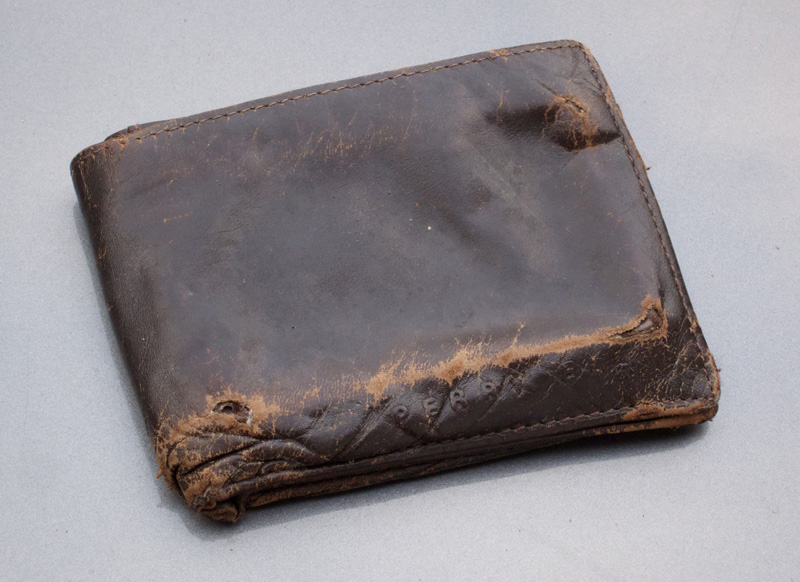
“Lucky” by David Feela

Image result for old wallet

I woke to a banging at the door, a hammering really, the sound a SWAT team might generate preparing to serve a warrant.  When I got to the door it was only Lyle, from two farms down who raises cows for a living.

“You look terrible,” I told him, “you better come in and sit down.”

“I had a wreck with my truck,” Lyle said.

“Are you hurt?” It was all I could think to ask, but he didn’t have a scratch and he was wearing his best bib overalls.

“Nah,” he said, stuffing his hands into his pockets, staring intently at the floor.

“Then you were lucky.”

“I guess so.”

“Did you total your truck?” I asked.

“Nah, nothing, not a scratch” he said.

“Then what seems to be the problem?”

“My wife, my mother-in-law, both my kids, my insurance agent, and the dog, they’re all dead” Lyle said.

“Oh my God! How in the world did that happen?”

“I told you, I had a wreck” Lyle said.  I glanced out the window and saw Lyle’s truck parked and idling in my driveway.  I
could see a stack of bodies in the bed of the truck, one bloody arm dangling over the tailgate.

“Do you want me to call 911?”

“Nah” Lyle said, “I’ll drive them into town just as soon as I feel calm.  A wreck can sure shake a person up.”

“You sure were lucky,” I said again, “to have survived such devastation.”

“I guess so,” was all Lyle could say, never taking his eyes off the floor. I could tell he was upset, so I left him alone for a minute and stepped out to the porch.  Two of the accident victims at the top of the heap had distinct bullet holes in their foreheads and I could see a rope still tied around the dog’s neck. The insurance agent’s briefcase must have sprung open during impact; a few forms were scattered on the lawn. I went back inside. Lyle hadn’t budged an inch.

“Are you sure you hit something with your truck, or was this some kind of psychological wreck?” I asked.

Lyle finally looked up at me.  “I’ve got full coverage – collision and liability.” He reached for his wallet to produce his driver’s license and registration and handed them to me.

“Yes” I said, “I can see your expiration date is still a ways off and everything is in order. I guess I can let you off with just a warning this time, but you’ll have to be more careful in the future, especially when it comes to pounding on neighbors’ doors.”

Lyle smiled for the first time.  “I’m sorry about that” Lyle said, “the wreck and all, you know.”

I listened to him gun the engine and back down the driveway as I climbed back into bed. Lyle was usually a careful driver. I hoped he’d learned his lesson.


David Feela, a retired teacher, is a poet, free-lance writer, and workshop instructor. His writing has appeared in hundreds of regional and national publications since 1974, including High Country News, Mountain Gazette, Denver Post, Utne Reader, Yankee, Third Wednesday, and Pennsylvania Review, as well as in over a dozen anthologies. For eleven years he served as a contributing editor and columnist for the recently deceased Inside/Outside Southwest.  Currently, he writes a monthly column for the Four Corners Free Press. A chapbook of poetry, Thought Experiments (Maverick Press), won the Southwest Poet Series. His first full length poetry collection, The Home Atlas (WordTech Editions, 2009), is currently available through the publisher and online.


“The 9:05 out of Detroit” by Timothy A. Boling

Image result for train tracks

It’s 9 pm now and the light makes its first appearance on the distant horizon. I breathe a sigh of relief and take a pull from Jim Beam, feeling it burn its way to my stomach.

This railroad bridge spanning the Rouge River on the edge of Detroit is where I go to pretend all is well with my life. The scaffolding of steel girders painted light blue that stretch out over and beside me is my sanctuary from all that hates me in this world.

Most nights I sit on the rocks next to the tracks under the train bridge, leaning against a support beam. I listen to the trash barges as they passed beneath me, monitoring their way toward the Detroit River, and wait for the water to lap the bank in their wake. I sip Jim Beam and breathe in the intoxicating smells of diesel fumes, sewer water, and dead fish. I close my eyes and wait for the 9:05 out of Detroit.

I always hear it first. The faint, lonely moaning of the train whistle is barely audible over the waves beneath me. I open my eyes to the spectre of distant light hovering above the gleaming steel rails four miles away. Sometimes I lean over and put my ear to the tracks to listen for its approach, but I never hear anything.

I watch as the light materializes into the vague shape of a massive Dash-9 freight engine climbing its way down the city. Its single headlight glows to blinding proportions as it reaches the other end of the bridge. I take two pulls from the whiskey bottle, then a third as the 9:05 out of Detroit  rockets past me at sixty miles an hour two feet from where I sit. For several minutes I hear nothing but the wind rushing past my ears and the squeaks and clicks of the train. I see distant city lights blinking between boxcars and flashing across support beams.

And just as quickly, it is gone. Left behind in its wake an eerie, lifeless silence. That exhilarating head rush fades, and one at a time the sounds of the industrial inevitably return and the melancholy shadow that follows me through life comes back full force. I stand from my perch, launch the empty whiskey bottle into the river, and leave my happy place.

But not tonight. Tonight, when the 9:05 out of Detroit passes through, there will be no coming down from the cloud; no sadness and disappointment in its wake. Tonight when it passes through, I’m going with it.

I look down at the rails on either side as I walk toward the growing light. I know there will be no time for pain and fear; regret, or sadness — only a slight bump into peaceful serenity.

The horn erupts, much louder and I look up. The 9:05 out of Detroit is slower than usual, but I don’t worry about that. I stop, lean my head back and close my eyes. I spread my arms wide as if to greet the raging locomotive. Only seconds left.

The bridge supports creak in protest of the Dash-9’s weight and the ground vibrates beneath me. The bright light pierces my eyelids. It’s too late now for second thoughts.

I don’t feel the crushing impact in the lower half of my body; nor do I remember the great force that pulls me under. Only the endless tumbling end-over-end between the tracks and what feels like water splashing my face.

City lights flicker past the train wheels. For one brief moment I see the stump where my left hand used to be; the spongy tissue white and pale, the blood having not had time to flow.

The full weight of reality hits me: I’m dying. This time it’s not just in my mind, dreams and fantasies. This time it’s real, and it’s nothing like I used to imagine it. I imagined peace and serenity, not seeing my own severed appendages. This is cold and clinical; uncaring and destructive.

Then an image enters my mind: my funeral. The casket is closed. Mom stands there, running a hand across the waxed surface of the coffin. And I hear her thoughts: If only I could see my baby one last time.

The tumbling continues after the last box car passes. The ground and sky blend as one in my new sickly spinning world. I finally come to rest with my head propped on the track, left ear against the cold steel. I have a nice view of the gore strewn down the tracks that used to be me. An arm rolls to a stop a few yards away. My lower torso lies further down the tracks, legs missing from the knee down and intestines trailing off into the distance. The light-blue train bridge is five hundred feet away.

I try to move, but there’s nothing left of me. I’ve reached the end. Was it all worth it? Was my life really so bad that this was my only way out?

Darkness creeps in at the edges of my eyes. I feel cold. Very cold. I try to draw my last breath, but my lungs don’t work. I think of Mom, my closed casket, my so-called problems and all the mistakes I’ve ever made. But none will ever compare to this one,  because the worst mistakes we make in life are ones we can never change.


Timothy A. Boling was a prisoner at Allenwood when he wrote this story. During his incarceration, he authored five novels and has had excerpts and short stories published in several literary journals. Though unpublished, his novels have been well-read and enjoyed, and hand-bound copies have found a home in his prison library. He was working on a sixth novel at the time of his release in January of 2009.

“Reflection” (Author Unknown)

Image result for loon

the sun rises over the lake and he sits
on a wooden dock, careful of splinters
a loose board pinches

his last beer
after a long night
is his breakfast

a loon calls its mate
calm dark water reflects
the orange slice of rising sun

lying on his back, his head
hanging limply over the edge
he cannot tell which sunrise          is real

a splash as the loon dives
looking into the lake
he is not sure
which face
is his


Author Unknown. If you are the author of this piece or know who is, please let us know at r.kv.r.y.editor(at)gmail(dot)com. We lost records when the old website imploded, and would like to fully credit all authors who have generously shared their work with us. Thank you.