“Atlantic Retreat” by Stephen Busby


To get to a place of salvation takes three ferries in foul weather. In the first, I cling with gritted teeth and churning stomach to the steering wheel of my car alongside other drivers whom I glimpse as ghosts through their misted windows. At the harbor-side to the second ferry I meet a man wrapped in several layers of black tarpaulin who sells me a damp ticket – a single, for they do not sell return trips he tells me, and I do not respond to his smile. I drive aboard, caress the buttons on my cell-phone – it has long lost its signal – and wonder why I do not turn back. I don’t turn back because there is nowhere to go. My life has become too awful and will not allow it. The idea of retreating to a small island in the Atlantic for a week in winter compares well to the courage it would require of me to continue in the old ways.

In the second ferry I am almost alone, the rain falls harder and faster and the reassuring voice of the radio does not stretch this far. Instead there is a scattering of recognizable words in the midst of what might be Gaelic I guess. My destination is a few square miles or so of rock well-known as a place of seekers and sheep and – in the summer – the hub of a lively tourist trade which has made much of the island’s historic and mystical inheritance. I sneer to myself at the thought of all tourists as a lesser species: people intent upon keeping their feet safely in both camps, consumers of second-hand experience. At this comforting thought there is a sudden parting in the cloud-cover to reveal the sun and I drive more contentedly from the ferry and speed off, unencumbered by traffic down a winding single-track road toward the last boat and the thought of hot tea if I can find it.

My sense of elation is short-lived. I begin to shed small probably important pieces of my car in the potholes strewn across the road; I am increasingly hampered by sheep which, just at the last possible moment as I am passing, hurtle across the road in a bid to test my brakes; and the weather soon shrugs off this stranger the sun in order to return the world to greyness. Light rain is followed by an intense downpour: driving horizontal winds and water are thrown against the car windows in sheets and my windshield wipers cannot cope. I do my best to park on what I hope is solid ground. While the weather does its worst I fall asleep.

My dream is of my parents sitting in their kitchen which has become a vast cave; there are bats and other insects hanging from the ceiling. Conversation between them is a dialogue of the deaf: in the dream their mouths open soundlessly and I know that they are trying to say grace before the meal but somehow cannot; instead I hear from somewhere the one word which they both most frequently pronounce in daily life which is “pardon”, as neither can entirely hear the other. This pardon ricochets around the walls of the kitchen-cum-cave and I see that the back of it opens out onto a vast rocky landscape. I look down to find that the ground I’m standing on has become marshland and that I ought to be sinking into this, but haven’t yet. I bend down to look closer as the ground flies up towards me: I’m no longer clear whether I’m beneath it or still standing, or floating along in its porridge-like consistency. There is only the receding sound of a pardon and a kind of rubbery-rail which I cling to but which appears quite unattached, then a chanting sound and lightness in the air and inside me. I feel carried and graceful and unconcerned and wake up with a jolt to find that I am gripping the steering wheel again and although, now, there is absolute silence all around me – for the storm and the wind have subsided – the feel or quality of the eerie chanting I had heard is still there, inside.

………………………………..


Outside there is an extraordinary landscape: grey-green mountains squat immediately in front of me and the little road winds between them while over to my right is the coast and the sea which is shining. Everything appears to be shining I see, as the quality of the light grows more fantastic. Where before all was gloomy and grey, now – after the storm – it is as if sunlight were penetrating upwards through the rocks and the land: it is all luminous in vivid greens, amber-browns and glowing greys, and as I drive off slowly I grow drunk on these colors and on the sheen of the sea, on the sheer craziness and beauty of the rocks and boulders strewn around me and on the mountains as I drive, dwarfed, between them. There are tiny white cottages here and there with bright-red roofs and dry-stone garden walls; even the sheep are content to let me pass by in a spirit of goodwill and benevolence.

By the time I pull up at the last harbor of the day I’m high on the idea of my changed life and endless possibilities and am heartened, too, to see a few other cars parked and – in the waiting room next to the final ticket office – even a small crowd of people sitting, and so I will not be alone. I have an hour to wait. In that time the winds pick up again and to my dismay a small bus arrives and takes everyone else away: they were leaving the island and not, like me, about to arrive. I sit on a bench in the little room with its snack counter and a young woman sitting reading behind it. She is pretty and will not look in my direction. I listen to the wind and rain outside as the time of the ferry’s departure approaches but there is no one and no ferry and only the old angst in me which I know is archaic: shall I be safe and looked after, will life not then go according to plan, and how has it slipped again from my control?

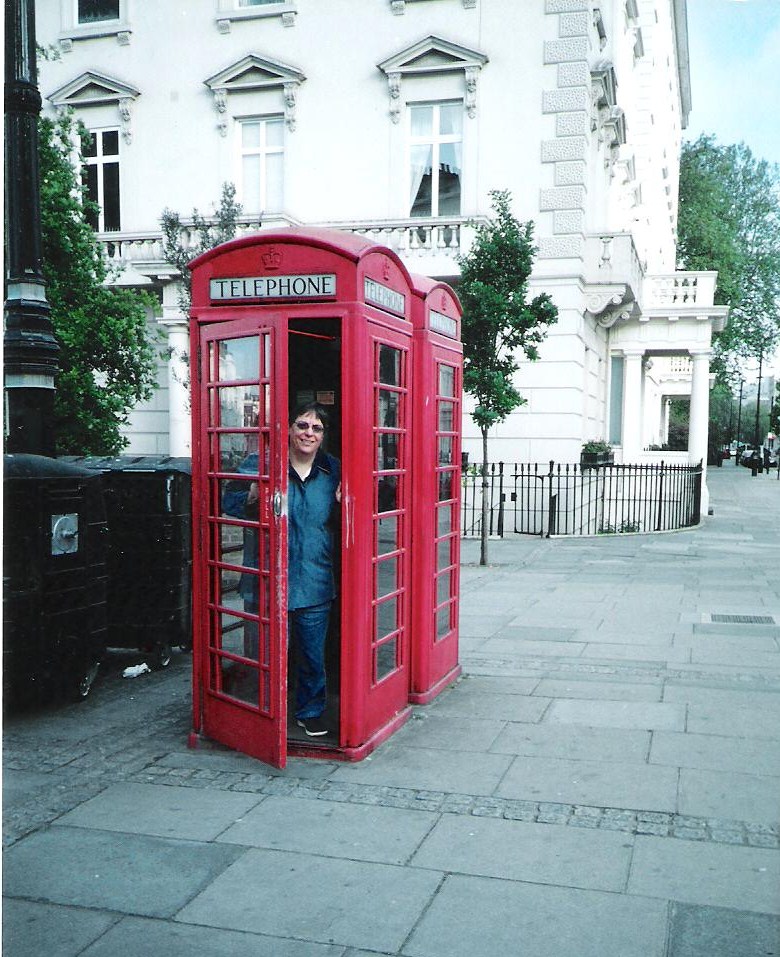
Outside I find the ticket office has closed. I knock at its door, standing in the rain. On the third knock there is a grunt, the kind made upon waking. The door opens and a man dressed inevitably in a sheet of tarpaulin nods in the direction of the sea, just visible in the mist which has come down. Yes – there is a boat out there, a very small one I see, and one which the tarpaulin tells me has anchored, the sea being too rough for it to come in at the moment. “We might get one last one of the day” he says, “or we might not”. Head down into the wind, I make for the public phone box on the quay-side to call Mr. P, my host on the island. I will ask him to keep my room for me in case I have to sleep in the car or have to swim from the ship. He sounds nonchalant and cheerful: an attitude which is infectious and improves my mood. He can see when the ferry comes, he says, from his front room, so will come down then to the harbor to collect me as it docks. There is nothing but waiting to be done and patience to be gained and, back in the waiting-room-of-life, a local man clad in tarpaulin has arrived and is leaning across the snack-counter towards the young woman in order to unleash his charm upon her as I look on from my seat in the stalls. For the next hour he focuses his whole being upon her while she, amused, easily contains him: teasing and drawing him on, in, deeper into the story he’s telling her of his day, his life, all his soul’s longings, with a confidence that I envy and resent. She sits there tranquil in her power on the chair while I eat my last hard-boiled egg.

There is a loud honking which comes from the ferry and I realize that I am not ready for the ordeal of the crossing to come. I dash out to the car to pull together my bags and am drenched within seconds. There will be too much to carry I see, for this ferry is for foot passengers only: no cars are allowed on the island unless they belong to the locals. I decide to abandon my shoes for my boots – ridiculous to imagine anything being worn out here except boots and tarpaulin – and pile everything up by the side of the car where it is instantly soaked through: my suitcase was never made for weather like this. How ill-equipped I am – for the Atlantic, for life. I’ve no tarpaulins and had no idea they could be worn as opposed to being stood on, and my coat won’t stand for the kind of rain being hurled from clouds which have absorbed half the Atlantic before they hit me. My woolen hat is ridiculous and is keeping my head wetter and my hands are so damp and cold that I cannot even get them dry and smooth enough to be able to pull on my gloves. I run head down into the wind towards the little ferry which has now parked and opened its jaws ready to receive me but it hasn’t docked far enough up the concrete ramp to cover the waves which are washing up around it and which I will have to splash through; there would be no way to get any wetter. I find myself running alongside one other dark hurtling figure who has burst from a nearby truck and whom I’m delighted to see as I haul my suitcase up onto the metal tongue of the boat – run through its mouth and into the stomach of the ship, leaving more of the known world behind me.

My companion as I run inside the ship turns out to be a local farmer who has plenty to say to no one in particular. He speaks to the gods, to the empty air, to whoever might be listening and it is all one long litany of complaint: the weather, the ferries, the tides, the rising price of sheep-feed and so on. I feel easy with him, with his great tousled head of hair now released from the tarpaulin and the earnest mad look in his mild blue eyes. It is as if we cross some kind of threshold in each other’s company as the boat bucks and heaves on each trough and crest, and although my stomach is lurching a kind of peace settles upon me. He seems to calm too and turns to muttering and relaxes into himself as we sit, dripping, together: two men moving wordlessly with the waves.

We manage to dock at last at the side of the island, the floor scrapes under our feet and the steel jaw opens to reveal a misty and windswept little harbor, a row of cottages and a small man in front of a van who holds up his hand in my direction. The ship’s few crew-members have gathered to watch our departure, which is kind, until I realize that they are there for the entertainment: to see how well I will time my leap from the ferry’s lip onto the concrete as the waves wash around us. I look around intending to follow the farmer but he has already abandoned me and so, assuming the mantle of a man whom I am not, I stride confidently off the ramp – into a huge wave which breaks up to my knees and all but blows the poor sodden suitcase out of my hand. The crew have been well entertained and are cheering and I am ashore: I am here, have crossed the country and now claim my space upon this storm-swept rock. It is a Tuesday; I am soaked through and feel ecstatic at the direction my life’s taking – into Mr. P’s van, filled with the rich perfume of wet sheep. Together we grind off around the island through the potholes and the weather, to a small white cottage on a headland at the edge of the inhabited world.

Mr P grunts at my attempt to engage him in conversation and will say nothing until he throws open the door to my new home and holds up a small plastic bag of coins which, he makes clear, I will be needing for the meter and must now buy from him. He drops a couple of coins for me in a metal box behind the door and is gone: offering nothing more than that he and his wife occupy the big house up the road should I ever need them. I am suddenly alone.

Being alone is a great boon, especially for the first half hour when there is plenty to do. I discover that my domain comprises a couple of barely furnished rooms, a kitchen corner, some cupboards of blankets and several large old-style and hungry-looking electric-bar radiators. Feeding the magic box behind the door with coins brings these radiators to life, soon has my wet clothes steaming, and produces an alarmingly loud and frequent thudding noise which is the sound of my hard-earned savings buying me heat, light and life, and there is a nagging suspicion that Mr and Mrs P are complicit with the electricity company because there is no way that merely staying alive – breathing and steaming – could consume this much money so often out of the plastic bag. What’s more, I discover that the thuds increase in frequency in direct proportion to how much I like to stay alive: if I wish to eat anything other than driftwood then I must turn on the stove which has the metal box thudding faster than my pulse-rate or, I calculate, my ability to earn that much per minute. And if I switch on a second antique-looking radiator then the box goes into such a frenzy of thudding that I decide I will live sleep eat and shit in front of only the one main heater; in fact I shall embrace, kneel down and make offerings to the holy warmth emanating from its bars. Once the little bed has been moved closer to my new god-of-heat I put on as much dry underwear as I can find and slip easily into sleep, accompanied by a steady and now slower rhythmical thud, and picture Mr and Mrs P nearby in their bed too, no doubt lulled by this lucrative sound coming from my cottage.

In the night I revisit a version of my recent life with my wife, based on memories of togetherness and sex. There is the little house in the mountains where we once stayed, the kitchen table – though much larger than I remembered it – and she is splayed on top of it as I pull her long legs towards me and then that moment of truth or strangeness which flashed between us when – wordlessly – we were somehow more uncaring and primeval in that foreign place, when we both knew this and held each other differently and I felt the beat and flutter in her chest. But in the dream we cannot find a way down off this table because it fills the whole room and she would climb out of the window except that it is covered with tarpaulin and I prevent her from tearing it down – I know that there is an army outside or something which mustn’t be confronted whereas here on the table we are safe. But she becomes ill and desperate, wants to leave and I cannot save her; the house begins to burn and the table starts to curl and blacken at the edges; there’s a great roaring and rhythmical beating and in the distance some murmuring or chanting sounds coming closer, and everything is burning as I tear at my clothes and then wake, sweating in the cool room, to the beat coming from the box in the corner and an absolute sudden stillness. I lie listening to the rain being driven against the windows and can still hear the echo of the same quiet insistent chant without making out the words.

………………………………..

In the morning and after I have twice rearranged my groceries on the little shelf, there seems to be alarmingly little to do. I decide to walk back towards the harbor, calling in at the little church on the way and which is apparently the reason why so many pilgrims are drawn here in the more reasonable summer months.

Outside, a mountain sits squat at the center of the island which slopes off to white beaches at the north. Apart from the squealing gulls I am alone as I walk; the skies have cleared, the sheep look up as I pass and there are worse ways I realize to spend a Wednesday. There is also the welcome opportunity for a little retail therapy: in the gift shop which hasn’t yet closed at the end of the season and which sits at the side of the church. Inside a kind elderly man introduces me to their range of table mats, pottery and souvenir spoons – all of which feature the name of the local saint: he whose church I’m about to visit and who has done so much generally for the economy of the island and for the local Tourist Authority in particular.

I wander outside, sit on a bench in the sun which has appeared and ponder the little church. It is built in friendly red sandstone and features a large ancient looking cross in its churchyard. I close my eyes and find my mind traveling back to a monastery once visited in France. I had been drawn to its cloisters and, as I sat there in their shade, saw that after one of the services some of the Brothers filed out of the church and came to sit along one side of its old walls, one monk in a white habit on each bench. People came out of the church: the young and the old, the feeble, the strong and the pretty, to sit next to the Brothers, apparently to talk. One youngish man in particular struck me: he’d chosen an older monk who listened to what he had to say attentively, seemed at the end to offer a few words of comfort or advice and then lifted and placed his hands up on the young man’s head. I see this now again in slow-motion as I sit here: the monk’s white sleeves and old hands lifting and falling gently down onto the top of the man’s head. Watching this and to my astonishment I began to shudder and to sob: great heaving sobs broke out of me in that place and they were all the more shocking because they felt so foreign and somehow familiar and a relief.

Inside this church it is cool, dark, surprisingly empty. Very few chairs, lots of space, simple stained-glass windows which cast a glow across the old stone floor, and the smell of something damp and polished. It is also very quiet. Walking around I find, at the far side behind one of the old columns, a dark space called ‘The Quiet Corner’ where visitors are invited to light a candle. Here the glass in the window is unstained, only pale light penetrates in across the floor and someone has placed a jam-jar of wild flowers on the stone windowsill, next to some round pebbles, probably from the beach. Next to it are two stripped old branches of a tree fixed together as a cross leaning against the wall. On these branches are pinned several shreds of white paper which I can just about read in the available light. They are written for Uncle John so that he may get better; for Charlotte in her grief; for Mary, Donald, Keith and Wendy, who were all killed and who are in Heaven; for Roger, may he find peace; for Smokey (in a child’s hand); and for Mummy who is with Jesus. Some of them are long letters, some are decorated, others are plain – just one word or two, which sometimes is: ‘Peace’, and ‘Love is the Answer’, and one barely legible – perhaps an elderly or an infant hand, which reads: ‘Help me please’. I see the little stack of papers and pins on the windowsill, take one of each, write my word: the name I shall leave here and which I suppose now is part of the reason I have come, and pin it to one of the branches.

Then I turn and leave the church and go out into the sun. I walk a long way it seems to me, without noticing or seeing very much, back to the cottage where I lie down and sleep. It is a name that nobody knows but me: a name I had whispered to myself privately without ever sharing it with my wife because she did not want to know whether we would need the name of a boy or of a girl, or perhaps because I didn’t trust her enough to imagine that we might be able to name someone together. The name lies, still-born, inside me, as I suppose does whatever name she had chosen, wherever she is now.

………………………………..

Three long days later I wake feeling wretched, useless and short of breath whenever I contemplate a return to the city. From outside comes the sound of rain again; above me the window is a dull shade of grey, inside me it is the same. In the corner the pile of dirty dishes has begun faintly to smell. I’ve almost no coins left to feed the thudding meter and there is nothing to do. I decide to go and see Mr P: I shall escape from my prison a day early in order to move again amongst people who lead their distracted lives in a fashion appropriate to the twenty-first century rather than so meanly as if in the medieval age. But Mr. P is unenthusiastic about this plan as we stand in the mud and driving rain in front of his farm. I ask him again if he will take me to the ferry. There is a long silence as he looks over at the mountain which rises up behind the farm, just discernible through the mist. He reminds me that tomorrow is my due date, turns his tarpaulined head in the direction of the mountain and suggests that I go climb it for the day. He looks directly at me as I am about to protest and tells me that the wind may be dropping soon, that it could be a fine day.

“How do I get up there then?” I hear myself saying, incredulous. He nods his head again in the direction of the southerly side. As he does so there is a slight clearing in the cloud-cover over there, so – the promise of some sun, and I see myself striding resolutely up the side of the rock, surveying the island from the top: it will not have defeated me; I will have met all the necessary challenges in coming here; nothing has been or will be too much to bear. Moreover I will be proud of my adventure and achievement in coming here.

The walk begins well and the cloud has cleared. I negotiate the fields behind the farm and discover a small sign posted beside a track which reads “To the Hermit’s Cell”. So I shall emulate the local saint and follow his tracks upwards, for in all likelihood he will have considered the tourists and chosen somewhere with a view. The going is not good though: the lower slopes become increasingly boggy and I lose sight of the path. Soon the reassuring tufts of grass which were my stepping-stones over the marshy ground give way and I’m sinking into the black goo underneath. It will be hard to clean off my boots but I persevere nevertheless, plopping and slurping my way ever upwards. Then one green tuft gives way completely – they have begun to fool me by floating on top of what is essentially black water – and my whole foot goes in, and under. I will have to turn back I decide, before the mud and the marsh claim me. On the other hand I see in front of me that the ground will soon rise more steeply and, anyway, once one’s footwear has been filled up with mud there’s little left to lose. Soon both boots are filled and I falter. The lower slopes seem no nearer and some of Mr. P’s sheep have wandered across the field in order to follow my progress more closely: they observe me cruelly from a distance with their little black eyes. I struggle on across the bog, sit down on comparatively dry land and contemplate my black hooves. There is really nothing in nature that is of any practical use, it seems to me, although the natural world does undeniably have a certain aesthetic value, especially when admired from the window of a very fast car.

Either I’m not equipped to deal with nature, I decide, as I get up and begin to make my way upwards, or I am not much equipped for anything at all. I picture a composite version of all the teachers whose classrooms I’ve sat and suffered in: ‘What actually are you equipped to do in life?’ they all seem to be saying, while knowing already the answer to this, and then my father joins in: ‘Stand up straighter, don’t look so nervous all the time. How old are you now? What are you going to do…?” and so on, and on.

‘What are you going to do’ becomes a mantra that accompanies me as I climb on upwards, and ‘How old are you?’ as I maneuver around the rocks and boulders that are becoming more frequent, ‘…going to do… What are you…?’ What, where, why, and who – who are you, why are you here on the side of a mountain at all? Who are you, as I slip on the rocks and the rubble, and have to stop for breath: I haven’t climbed very far. I look up: the clouds are gathering, thick and dark overhead but the bog is well behind me now and would be impassable in a storm. I clamber up a bit more, there’s no semblance of a path although there is a kind of cleared way through the boulders. But now the storm breaks: little patches of wetness grow larger on the green and yellow-brown lichen-covered rocks and then very soon everything is wet; the rain is dropping and plopping all around me; my thin coat is wetted again, and my hands – cold and gloveless – find it harder to hold on to the rocks on either side of me and to lever myself upwards. I’m slipping more on the steep rubble-ground but won’t stop now – what are you equipped for – what are you going to do – I go on hauling myself upwards: this is what I do, there is only this, as I slip and slide and grip onto rocks and pull and pant and go on climbing; how old are you now – I’m 42; who are you – I don’t know; where are you – I’m climbing this mountain; I’m climbing, and the storm is certainly worse: the wind has gotten up and I probably shouldn’t go much higher; it’s colder now – I go higher: I pull myself up, something in me hauls myself up over and around and through the slippery rocks, over the rubble, through the driving rain and the wind whipping my face: I’m all wet, everything’s wet and I’m part of it and there’s a kind of new strength which comes into my feet, for there’s nothing which is dry to defend anymore – only the climb, the next handhold to find and the feet to move again, ever on and upwards. Suddenly there’s a break – a clearing in the rocks and nothing to hold on to anymore: I’ve broken through and past the rocky slopes and seem to have reached a bit of clearer less-encumbered ground. It’s still steep though and so I stand there a minute, heaving and breathing, but the wind is even wilder here: it whips and shoves at me so that I sway, have to spread my legs and brace myself against the ground, and for the first time I wonder at the threat of the weather or of something much larger than me. I’m too exposed and so I stand up straight again, ready to head off for the rocks. But there’s a loud crack of thunder not far away as the storm gathers itself for more and something bright flashes nearby. I look around blinking: the slopes and the land below me are barely discernible now through the curtain of rain, and neither can I make out much of what lies ahead: a patch of rocks and beyond that a cluster of huge-looking boulders, perhaps the promise of some shelter. I prepare to move on out of the worst of the wind.

Suddenly I feel both feet lifting slightly from the ground: it is momentary but might as well have lasted hours and a terrifying exhilaration comes through me then. I turn – too quickly – to make off towards the boulders and I slip on the rubble floor; I fall heavily – hands splayed out and scraped heavy against the splintery ground; something in my leg twists as I fall, there’s a sudden dark streak of pain but it’s the shock of it which winds me more and I sit there too stunned to move. I have to get up: I can’t get up, I cannot stand; I have to move – I move: I scrape and pull myself along the ground, scrape and pull and have my leg follow me, there isn’t any sensation – just the howl of the storm and the wind and the rain all over and inside me and the pulling and the scraping: Where are you going – I’m going to those boulders; Who are you then – I’m here, crawling up the mountain; How old are you now – don’t know; Who are – don’t know. I don’t know, and I don’t know but I go on, I think, something happens, nothing happens, nothing changes, I don’t remember: I’m pulling and heaving and scraping along and there’s another lightening flash somewhere near me or another light or nothing at all; yes nothing at all – only blackness and an instant and near-absolute absence of sound: only that faint chanting again which fades towards black silence and into which I slip gladly, how welcome and wonderful because there is nothing more now that needs to be done.

………………………………..

When I open my eyes there are green and yellow-grey shapes in front of me. The air feels cool and the ground is hard underneath and everything is quiet except for some birdsong nearby. The colored shapes turn out to be lichen on the rocks, near my head. I turn slightly: there’s rock overhead too. I am lying at the entrance of a kind of small cave formed by boulders and outside there’s a clear blue sky from where the birdsong is coming. I lift myself up, look around: there’s nothing in the small cave, it’s really just some large rocks lodged together. I move my leg – it moves, aches a little. I get up and walk outside.

There is a light breeze; the sun beats overhead and everything is shining, just as it was when I drove off the ferry I remember: sunlight reflects off the ground and the rocks and the patches of so-green grass; it is all so light and intense that I have to shield my eyes. Down below I can see my small cottage on the headland, Mr. P’s farm, and way beyond that the church and gift shop and – beyond that – moving along like a slow animal in the water is the little ferry, flashing in the bright sun. I turn around: the western flank of the island stretches before me: an expanse of glowing green and grey rock which leads in the distance to the unimaginable expanse of the Atlantic, heaving gently under the wind. I must be standing near the highest point on the island. Can there be many better sensations than this? I notice a small plaque, incongruous, on a carved stone nearby. It tells me that these boulders are the remains of the Hermit’s Cell. Somebody once lived a life of unimaginable devotion and sacrifice here – and here am I, meanwhile – shot through suddenly with a kind of fire and lightness which seems to be coming up from the mountain itself under my boots. Over the aeons here people have offered something of themselves and lived in awe. Perhaps they’ve anchored something more-than-mortal here, and which didn’t die with them.

Clouds rush across the sky. I decide to climb on a little higher. My leg is stiff but quite bearable. Here the lichen is splashed across the rocks in an evermore dazzling combination of colour. I go on up and over the peak and see now – not so far away – the northern shore: its white beaches glittering in the sun. I walk, scramble, even – in places – scamper down the mountain towards the shore. Eventually I’m alone on the beaches, quite alone. No footprints, litter or noise other than the soft regular swish of the sea. This is all that the saint and his followers had for recreation and it hasn’t changed much since. The waves are full of white icing against the sheer blue cloudless sky; the clear white sand is studded with rocks reflecting the sun while others sit half-submerged in the swaying steely-blue sea. I find some quiet little rock coves with their own sheltered pools and peer, astonished, downwards – through the clear water. I see the pools are heaving with life. There are tiny round shells, small fine-frilled creatures crawling along the bottom and, when I lift up one of the stones in the water a beetle scuttles away and a crab stands its ground. As I look down I realize that the wind has almost entirely died away: it is so quiet that for the first time in years the persistent ringing in my ears has disappeared. Where – who – am I really? I’ve a sudden urge to go and kneel down somewhere in silence, to offer myself up to some great cause, to pour out all the words which have always escaped me. It would be a simple thing here to go prostrate myself before an altar, to live alone in a cell, to live each day and night punctuated by prayer, to forgo all the luxuries of life which seem, in this moment, superfluous. I kneel by the pool.

………………………………..

The next day when Mr. P comes to the cottage to collect me and drive me to the ferry we speak more easily – about the unpredictability of the tourist trade and the politics behind the government subsidies which finance the ferries and local services upon which all the farmers depend. I shake his hand and tell him that I shall be back then turn and walk onto the boat.

Back in my car I’m surprised to find so much that is familiar again. The act of driving, so strange: the curve of the car seat, the feel of the old shoes again on my feet: comfortable, reassuring and somehow illusory, I realize, as I move off: this measure of control that I seem to be exerting over my environment, over my life.


Stephen Busby is a traveler and writer based in the Findhorn Community, northern Scotland.  His prose and poetry have appeared in Cezanne’s Carrot, r.kv.r.y. (visiting hugh and love ends), Visionary Tongue, The Battered Suitcase, Santa Fe Writers Project, and Secret Attic.  Stephen also works in the corporate and not-for-profit sectors, running transformative learning events there. His website is here.
“Duckblind” by David Willis


I was doing my weekly duty with Dad by taking him the park on Saturday.  As usual, I picked him up at the assisted living place (I guess that’s what they call nursing homes now), and I bought us some sodas and sandwiches on the way.  It was the middle of May and we sat on a park bench near the small pond.  He was feeding the ducks and I was sucking on a soda can trying to get the last drops out from the bottom.  I had an amnesia of sorts, sucking on the can repeatedly expecting there to be something in the far reaches.  Definition of insanity, I guess.

It was a nice day at the park and I wasn’t sweating as much as I usually do this time of year.  There was a tiny breeze that occasionally worked its way through the dense oak trees near the lake.  Dad insisted on this bench near the water; the only one without much shade.  If someone was sitting on “his” bench, he would sit down next to them and stare at them until they left.  The small pond had a large, man-made rock formation in the middle where, I’m told, they originally wanted to put in a fountain but the city ran out of money.  Now it was so covered in duck and goose feces that it looked like a giant ice cream sundae floating in the middle of murky water.

“I poisoned a duck once,” my father said out of nowhere.  He paused from throwing the ducks puffs of stale white bread and relit his cigar.  Ashes tumbled off the tip and rolled down his thighs like rain over a windshield.  “I left a marble rye on the counter too long and I guess it went bad.”

“Okay,” I said.  What, exactly, does one say to that?  It’s not like Dad ever cooked and he’d had his share of nights hugging the toilet from misreading the expiration date.  For him, fine dining now was buying an extra biscuit at the fast food place where he got his coffee in the morning.  I crushed my soda can on the ground with the heel of my boot and waited for him to speak.   He concentrated on the ducks as if he was willing them to the bread, and the deep creases on his receding hairline cut deeper the harder he focused.  The scar on the middle of his pate where the melanoma was removed over the winter was still pink.

“Dad, you really should wear a hat,” I said.

“Did you know that they hanged a dog at the Salem witch trials?” He said and flipped a round piece of bread in the air, giving it backspin.

“Sorry?” I said.  A white duck with a streak of grey on its right wing leapt out of the water and jumped between three others near my father’s feet.  The three meek ducks scattered.

“Salem.  You know, that thing in Massachusetts during the colonial days?”  The bully duck was cleaning up what the other ducks had not gotten to yet.  Three white ducks quacked under their breath, if a duck can do such a thing, and started nudging back to where Dad mindlessly tossed the bread.  “They say those girls went crazy because they ate some moldy rye bread.  LSD or something-or-other.”

“I guess the history channel is showing something besides Hilter these days?”  I said, trying to joke.  Dad kept a piece of bread in his hand with an arm outstretched.  He turned his head at me and half-smiled.  The bullied ducks were getting more courageous.  The glutton was begging Dad loudly for the piece he kept in his hand.

“Pink elephants, right?  Isn’t that what they used to say about stuff like that?” Dad said.

“My friends in college said ‘freaking out’ usually,” I said.  I almost said I used to say freaking out.  Regardless of what Dad suspected, there was no use confirming that now.

“Hmph,” Dad said.

He held the piece of bread in front of his face and turned it from one side to the next.  With just slightly bigger glasses on his head he could have been looking at a diamond.  He threw the piece high in the air, and in a cloud of feathers and bills, all of the ducks converged on the bread at once.  The bully flapped his wings and retreated.  The might made right.

“Isn’t that something,” Dad said and broke off another chunk from his loaf and handed it to me.  “Did you see that?”

I don’t think I ever had.


David Willis is a graduate of the Center for Writers at the University of Southern Mississippi and received his Masters’ Degree from CSU, Chico. He lives in the Florida panhandle with his wife and two sons. Dr. Willis teaches English at Jefferson Davis Community College in Brewton, Alabama.


“To the Heart of the Matter” by Scott Kauffman

Image result for Buick fender

How will I know how you loved me?
I have left you, that is how you will know.
–Carolyn Creedon, Litany

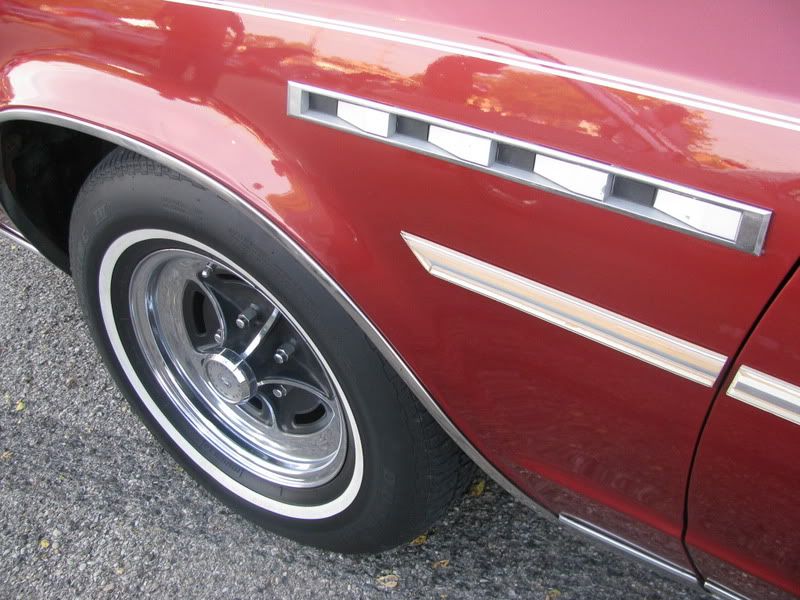
Jude pulled the fender-rusted Buick into his driveway and braked it to a sliding
stop, the tires skidding on the gravel and off into the ankle-high grass. He cut the
engine and just sat, wet under his suit. Wet under his socks. When he got out, he
reached behind the seat for the fifth of Seagram’s and broke the seal and chugged a
long, throat-burning swallow and started for the backdoor. Across the street, near-
sighted Mrs. Roberts throttled back her mower and waved. Jude raised his free hand
and walked all the faster.

“Better get your windows up, Mr. Hardy.”

He turned to where she pointed. Clouds black as singed dogs ran along the
horizon.

“Fixin’ to storm.”

Jude, his back to the old woman, raised the bottle.

“Fixin’ to be a bucketdropper.

He wiped his lips on his shirt cuff and nodded. “Looks like, doesn’t it?”

“We get those this time of year. Common with the change of seasons and all.”

Jude started again for the backdoor. “I better get our windows down. Christine
will be giving me hell from here to Sunday.”

His neighbor frowned. “You shouldn’t speak like that, Mr. Hardy. Your wife’s a
saint. So sweet, always asking after me since my mister passed. She works so hard.
I always hear her coming home at I don’t know what hour.”

Jude did not answer.

He went into the kitchen where he fished out a tumbler from beneath a stack of
dishes greening with pizza sauce and filled it to the rim. He sipped down the whiskey
and looked out into the living room. Through the picture window, shafts of blue-gray
light dancing with motes fell through the panes slant upon the raw cords in the worn
carpet.

He emptied his glass and filled it and walked out onto the front porch and
slumped into their one wicker chair. Across the street, a dozen ducks sheltered
under a tangle of willow branches bowing into the pond. He watched the ducks,
watched the sky darken, the ozone-charged air growing sharp as angel hair. From
the driveway, a rumble like distant thunder from the headers on her Camaro. The
back door screeched. “Jude!”

He started to rise and sat again. He sipped the whiskey.

She walked back to their bedroom calling him, past the towel-strewn bathroom
and through the living room to just inside the porch door, its screen breaking her
face into squares of light. Jude twisted his glass in half circles inside the palm of his
hand.

“Are your ears petering out too? Did you not hear me?”

Beyond the pond, thunderheads knifed into the sky. A downdraft caught a
stray duck as it swooped low, the dark liquid beating of its wings fluid against the
pewter water. Jude jutted his chin. “Too much wind.”

“Too much booze.”

Jude shrugged. He drank.

“So did you hear the news?”

“Did I hear what news?”

Blackness leached into the woman’s eyes. “Don’t start out by copping an
attitude with me, Mr. Lawyer. I’ve had a hard one today too.”

“No doubt.”

He reached with his free hand and loosened his tie and undid the collar button.
“Sorry. I’ve a lot on my mind.”

“So what else is new? You think the whole world revolves around you and your
all so important problems.”

“Did something happen?”

“Yes, it did. Thank you for expressing an interest in something I said.”

“Of course.”

“Betty’s husband called before I left the office.”

“And?”

Dr. Sullivan died.”

Jude nodded. A clammy breeze fingered his hair. “Yes, I heard.”

“Her husband hadn’t heard the juice. Only that Dr. Sullivan was found dead.”

Lightning veined the bruise colored sky, filling the air with a frail afterscent like
burnt iron.

“He killed himself.”

A roll of thunder swallowed Christine’s words. “Jude? I asked you how.”

Jude reached to his breast pocket for his Salems. “He . . .”

The telephone rang. Jude struck a match and flicked it out into the brown lawn.
The telephone rang again. Christine still stood behind the door.

“You know he’s not calling to ask me to meet him somewhere.”

Christine looked over her shoulder to where the telephone sat in their living
room, not on an end table because Jude had smashed the one they had, but on the
carpet beside a stained sofa that smelled of vomit where he had passed out. The
telephone rang again.

“You better pick it up,” Jude said. “If I do, he’ll only hang up, and you don’t
want to spend another evening with me. We can’t afford to lose the furniture.”

Christine pirouetted on one foot. “Be my guest. Prove to me that you have
some machismo and don’t worry. We have no furniture left worth losing.”

The bedroom door slammed, the squares of glass in the living room window
rattled in their panes.

Jude sat, watched the sway of poplars bordering the pond, their quicksilver
clash of leaves. He unfastened the cufflinks she had given him on his last birthday,
the hand-tooled ones she had her old man buy for her on his monthly run into
Tijuana where he traded meth for the chemicals he used to run his lab secreted in a
Mohave arroyo. Jude rolled his shirtsleeves halfway to his elbows and leaned back in
his chair and watched the blackness close in, listened to the murmur of Christine’s
voice drift from the bedroom window she had cracked open. He could not make out
her words, but he recognized the ache in their tenor from long ago, only now she
spoke her words for Tommy Grazioso.

He never saw the two of them together, but he no need to consult Madam Zola
to read him the signs. Like phone calls she took in another room. Late work nights
when she did not crawl into bed until near dawn, sweetly smiling in the moonlight,
smelling of Tequila and expensive perfume and hours-old lovemaking. Never any
purchases by her on their Visa statement, the full amount of her salary deposited
into their bank account, checks going where they always went, but Gucci blouses
and Armani dresses, their snipped tags in the bathroom wastebasket he puzzled
together late at night while he listened for her car.

Tommy worked for Nicolo Dominic, the boss of her firm’s biggest accounting
client. A narc who Jude once partnered with on a case had seen them a month
before at one of Tommy’s bars up on Youngstown’s north side, snuggling in a back
booth, she on his lap, a diamond bracelet dangling from her wrist. Three times in
four years The Vindicator had plastered Tommy’s face on its front page after the
grand jury indicted him, once for pushing numbers, once for running a call-girl ring,
the charges dismissed after Nicolo made his amends with the Democratic chairman
who ran the county. The third time it got serious when the State Police unsealed a
woman from a fifty-gallon drum some kids on a raft found floating down the
Mahoning River after the chain holding it to its concrete anchor snapped. The
woman, pregnant and Catholic, was seen on Tommy’s arm only a week before she
disappeared. Jude never heard what it cost, but he guessed fixing it cost Nicolo
plenty, fixed the election of Larry, Curly, and Moe to the Court of Appeals.

The bedroom window thudded shut. The skew of light thrown by the door
screen darkened across the floorboards. “So how did you hear about Dr. Sullivan?”

Jude stubbed his cigarette into the sole of his shoe. “When I came back from
court this afternoon, his widow was sitting in my waiting room.”

“You never told me they were clients of yours.”

“They’re not.”

“Then what was she doing hanging out in your office?”

“She dated George some in high school.”

“Oh?” Christine rasped a fingernail across the wire mesh. “That seems odd.”

“Does it?”

“Dr. Sullivan must be thirty years older than your brother.”

“I would say.”

“So.” She tilted her head. She smiled. “Younger wife. Older husband. Who’s a
doctor. My, my.”

A skein of lightning spiderwebbed the sky. Christine looked at her watch. “I’ve got to get ready.” She crossed half the living room and came back. “Wasn’t there a rumor making its rounds about his wife seeing someone?”

Jude tapped his wedding band on the rim of his glass.

“Judy, wasn’t there?”


Judy had been her term of endearment for him since college, and when she wanted something she still cooed it to him. They had met at Ohio State, he in law school, she an accounting major. When she teased him then, she sometimes called him Judy and sometimes Judas because Jude she had only heard in the Beatles’ song her mother sang along with when it played on her oldies station on those afternoons when she had not passed out.

Don’t tell me you can’t afford it, Judy Judas, she said if he pled student poverty, groping deep into both his pockets. I know you’ve got at least thirty pieces of silver, and I’ll find every last one of them after I get your dick out of the way.

He fell for her at 8:55 on a July morning, the elevator door opening, his shoes cemented to the marble foyer, the door closing, a giggle echoing down the elevator shaft. Fell for her Hispanic-Indian beauty, her obsidian eyes overflowing with pools of promise, deep and dark as midnight, fearless as she passed through life save for being overlooked, alone, forsaken by God.

Tina, as she was called then, had fled to the Midwest from Fontana, California, a
smoggy town of working-class houses, each painted a differing shade of greasy dogs’
teeth, birthplace of the Hell’s Angels, of which her father remained a redwing member.
Yet despite a childhood where more than one doper dropped dead in their kitchen after
sampling her old man’s product, Tina’s juvenile sheet consisted of a single shoplifting
offense where she had not even been the one performing the pinch, but had her back
to Sonia, picking out a wardrobe in Vogue, as the other girl palmed a pack of Winstons.

Because of her honor-roll grades, the judge gave the girl unsupervised probation, and Tina was thereafter scrupulous with whom she hung out. She had plans. Plans to be gone from a mother who downed a fifth of vodka before noon, gone from a meth mouthed father who snorted as much as he sold. A month after her probation ended, Tina’s guidance counselor called her into his office and handed her a fat envelope, postmarked Columbus, Ohio. Before she finished the first paragraph, tears were rolling down her cheeks, which she could recall happening only once without her having forced them after a customer squished a sleeping Felix in their driveway under his truck tires.

She never would have applied to Ohio State had her old man not been watching the Big-Ten playoffs on a Saturday too rainy to be out on his Harley, sitting on the sofa as he sealed a dime’s worth into Glad baggies, she puzzling her way through Monday’s trig problems, scratching on a tablet at the kitchen table. She took a stretch break at halftime and went in to watch the cheerleader routines when the announcer instead gave a photo tour of the campuses. She sat, a foot away from the screen. The green foliage and blue skies differed as much from the brown sand and browner air of Fontana as did Oz from Kansas. After the second half kickoff, she went up to her room and dug out the Rand-McNally. Columbus was 2500 miles away.

She applied for a scholarship too, but Student Aid regretfully turned her away. She had sent them no financial information. There was none to send. The three of them lived off whatever wad rode in her old man’s money clip. Her parents had never deposited a nickel into a bank account, nor had they ever filed a tax return. Her old man had no social security number, and her mother could never remember hers. The time her father needed one to post bond for a cousin, he rode up to Folsom and with two cartons of cigarettes bought it from a riding buddy pulling consecutive life stretches. He paid cash for their house and as a joke deeded it into the name of an old beau of her mother’s who disappeared at the end of their courtship, his identifiable parts dispersed over noncontiguous counties, no death certificate issued.

So Tina spent her graduation summer muling for her old man, dodging rip-off artists of limited talent and narcs with less, earning enough from the dopers she shorted to pay for her first year’s tuition and a Neiman Marcus wardrobe after she got to Columbus. She left their house on Garcia Street on a Sunday morning in September wearing a red frock that showed off her brown legs and carrying a backpack that held a change of underwear and her summer earnings and walked down to the corner Seven-Eleven. From a payphone she called a cab that carried her to the Ontario International Airport where with white-lined bills she purchased a one-way ticket.

“Christine,” she said, when the ticket seller asked her name.

She excelled in her classes. She paid for her sophomore year by interning at Arthur Andersen, one floor above the law firm where Jude clerked. They spoke for the first time a week after the elevator door shut in his face, eating their Wendy’s lunches as they sat on a shaded bench beside the fountain facing High Street. She could not look away from him. She adored his dark good looks, his wicked, unprofaned humor, his being almost an attorney, the respect he showed her, so unlike the pump-and-dump-undergraduates always putting their elbows to her chest when they bumped into her at bars. Each noon she watched out her window until she spotted him sitting on the bench, their bench. Once she saw him sitting there, rippling in the haze of summer heat, his eyes not then watery from drink, smiling up at her window though she had yet to point it out, and she took it as a contract with her world to come. How could she know it was possible to rush toward disaster the way dreamers rush toward desire?

They married the weekend after Jude passed the bar. The next day they packed all they owned into a four-foot U-Haul and drove the five hours up to Hanna, the town where Jude had grown up. He began his legal career as a prosecutor in juvenile court, and she found a job with an accounting firm whose major client was the Dominic Company, a construction company deep into developing strip malls funded by Teamster dollars.

Prosecuting mental defectives abused since infancy and often dragged crying from the courtroom left an acrid taste on Jude’s tongue that Seagram’s could not wash away. He acquired a few years experience and quit. When Jude opened an office above
the Hanna Bank & Trust, he told Christine it would take time to build a practice. The past April, he showed her their tax return before she had him sign her name to it and pointed out their progress. She saw the numbers but not the progress. Not the way her old man’s wad bulged in his hip pocket. She and Jude both worked, yet they could not buy a home. While they lived across the street from Hanna Park, it was a one-bedroom clapboard, painted white so long ago it had faded to the color of parking-lot snow. They could not start a family, not that she wanted one. She resented life in a do-nothing-but-go-to-church-on-Sunday-town. While she did not miss the destructive hedonism she had left behind, she did the excitement that came with it where a night’s action downstairs was juicier than a season of Dragnet. How many Hanna housewives, their hair rolled in curlers as they sauntered the aisles of Drotleff’s A & P, searching for pistachio ice cream, had, on the way to the refrigerator for her school lunch, skipped over a corpse spread eagle across the floor and head off to catch her bus, stopping only to turn out the stiff’s pockets and pinch his nose pin if its diamond stud complimented her earrings?

Jude’s working late, his attending Knights of Columbus meetings to cultivate clients, made Christine certain he had a woman stashed aside sucking up their money, notwithstanding the nights she had parked outside his office and saw him at his desk, his forefinger to his temple. She trusted few women and fewer men. It had been common when she came home from school to see strangers coming out of her parents’ bedroom. Once she found a man standing on his head in the middle of their kitchen,
naked save his mismatched socks.

“Hi there, sweetie,” he said.

“Hi there, yourself.”

“My name is Cosmo, and I’m a free spirit.”

“You don’t say?”

A dozen times her old man had thrown she and her mother out, and until he exhausted his supply, they passed from the house of one club crony to another.Don’t you be letting no sonofabitchinman pin your neck into the dirt, was her mother’s advice. You always keep a stick at hand, one with rusty-lockjaw-inflicting-spikes asticking out of it – one that’ll keep him on his knees, begging from you like the dog God made him to be.

It was advice her mother ignored. If within a week of throwing them out he failed to sober up, she would step out to Hendron’s or J&R’s or Fibber McGee’s. It took her no more than an evening in the back seat with a car full of the boys before her old man would be knocking on their door, clear eyed and holding two bags of groceries and a bottle of Smirnoff under his arms, smiling a toothless grin as sweet as candy a week after Easter. She always went back, tears glistening her eyes, no matter his strewing their clothes across the yard, no matter her cauliflowered nose. No matter. Until one of the two overdosed, he was all the security her mother would know.

Christine took to heart her mother’s advice, and at the office party last December,  she found her stick. While she waited for Jude to retrieve their coats, Tommy came up  behind and patted her bottom. For once she gave him the time of day. Maybe we should  discuss it over my lunch hour, she said, and smiled when he whispered that what he  had in mind would take more than an hour. Tommy nodded at Jude when he came back  into the room. I ain’t no jackrabbit, honey.

A week after New Year’s when he asked her if she wanted to meet him for drinks,  she asked him where.

“Do you think that’s why Dr. Sullivan killed himself?” Christine said. “Because she  was seeing someone?”

Jude looked out into the darkness. “I don’t know.

She studied him a moment, fixed him with her black eyes. “I supposed you want  me to believe she told you nothing?”

Jude shook his head.

“Like hell she didn’t.”

“You want me to get it?”

“You stopped answering, remember?”

She walked away and picked up the telephone in the living room, her back to  her husband, her voice low, cooing.

Before retiring to Florida, Tommy’s father worked as a bill collector for the  Dominics, looking so clean and bland when he appeared on a doorstep some debtors  mistook him for a Mormon missionary. His street name was “Thomas and his Singing Hammer,” but the homicide detectives called him Saint Thomas the Philosopher  because in his work he liked to quote the Montaigne the sisters had taught him at  convent school.

The utility of living consists not in the length of days, he recited when he swung his ham-thick arm behind his head as the sisters had their rulers, but in the use of time.

Jude was in the third grade when a hardware store that was part of a discount chain opened up across the street from the one owned by the father of his best friend. His friend’s father matched their prices and tried to keep his store open by sitting in on Thomas’ poker table. In a fortnight he ran up a ten-thousand-dollar chit. Jude’s friend began staying over so often at the Hardy house that he kept two pairs of pajamas in Jude’s room. On the afternoon of the last day of classes at the start of the Christmas holidays, his friend’s mother came home from her job as a biology teacher at the high school, opened the garage door, and found her husband sitting on the floor, his gelatinous eyes open, slivers of brain sliming down the wall, in his hand a .32 revolver with its serial numbers filed off she told the police could not be his.

He never even got drafted on account of he had flat feet. What would he be doing with a pistol?

The police labeled it a suicide, notwithstanding the revolver was clean of even the deceased’s fingerprints, notwithstanding every bone in his right hand had been pulverized to rice grain bits and pounded into the worktable. To the left of the bits of bone fingernailed grooves gouged the soft pinewood. Near the revolver lay a strip of masking tape with facial hair on its sticky side, the deceased looking like he had shaved a square around his mouth into which was stuffed a card hand of aces and
eights, all spades.

Christine hung up the telephone and came back to the door.

“So?” Jude said.

“So I think even if she was seeing someone, it was silly of the doctor to check himself out.”

A raindrop thudded on the porch roof, solitary as a church bell.

“Why?”

“He was a doctor, for Christ’s sake.”

“A doctor can’t have his heart filleted out?”

“What’s it matter?” Christine said. “He should’ve paid her some humongous alimony – that would take him maybe a week to earn if he didn’t pay the taxes on it like you would – and moved on to wife number two.”

“Wife number three.”

“What?”

“She was number two.”

Christine rolled her eyes. “Well, you certainly learned a lot about his married life in just one afternoon.”

Jude did not answer. Black clouds crossed the horizon, their dark tendrils following.

“Or was it only one?”

An hour before, Jude had walked the doctor’s widow to the parking lot in the alley behind his law office. She wore no makeup and none of her jewelry except a wedding ring she fidgeted off and on her finger. At the door to her pink Jaguar, she put her arms around Jude’s neck and kissed him on the cheek, and as she drove away she watched him in the rearview mirror until he had shrunk to a flyspeck.She and Dr. Sullivan had celebrated their anniversary ten days earlier with her going on vacation to Nassau without him. They had met the year before when Christine was working as the seating hostess out at the Oak Tree. Their marriage three months later gave excuse for some snickers in town, but most respected the girl for her moxie and said good for her that she could snare a doctor after all she had gone through.

Her parents had died in a car crash minutes after dropping off her and a sister with an elderly uncle and aunt, the account of their deaths retold on endless evenings as their aunt tucked the girls in after returning from her prayer meeting and tipping back the gin bottle a second time. She swore to them she had heard the scrunch of steel, the screams in the gasoline fire and had turned away from her front window where a mile away a pillar of black smoke snaked heavenward and looked at the girls as they sat in their flannel nighties, drinking hot chocolate and watching the Lennon sisters sing on The Lawrence Welk Show and knew they were now hers.

Taking the girls in proved no small hardship for an uncle and aunt who struggled to get by on the miniscule pension Youngstown Sheet & Tube paid for a forty-foot fall their uncle took where he missed by inches dropping into the bucket
that fed the blast furnace. Yet, while there was much the girls would have liked, prettier clothes, a fancier car to be seen in, they never suffered want. Though they were popular, the worst said about them at the time was that for Baptists they knew
how to have fun. Save for his brother who dated Denise when they were seniors. He told Jude he now found his memories sullied after he learned at a class reunion that on those nights when he had stayed home to study, Denise found her way into
more than one backseat.

The week before George left for college, he and Jude drove out to take Denise and her sister on a farewell picnic. Behind the tar-papered farmhouse, their uncle had already laid in a seven-foot pile of coal for a furnace he had not cleaned since his fall.
The next February the house burned down to its sandstone foundation. A son took in the uncle and aunt, but his wife sniffed something of herself about the girls. They were much too pretty she said for her to be worrying whether she had married a
man who could resist anything except temptation. If he did not bed one, he would with the other, no doubt seriatim, and after her hysterectomy she could not again go out and trap a new one into marriage. She doubted anyway if God made men beyond forty that randy and stupid.

The girls rented a one bedroom in town. Denise’s sister took a job clerking at the discount hardware store, and she found employment at the Oak Tree, first washing dishes, then waiting tables. Once outside the kitchen, Denise raised her hemline, catching the attention of the owner’s son who suggested to his father that she was a natural to seat the upscale dinner crowd they wanted to attract. His father, eyeing her from behind, voiced no demur. A week later when the son and Denise stepped into the alley to share a cigarette, he laid a hundred dollar bill atop a stack of liquor boxes and ran along it from a prescription bottle a needle line of cocaine. A line on Saturday nights became a line a day. Some afternoons she did a line so she could roll out of bed before her sister came home and began questioning her about when she was going to come up with her share of the rent for the last two months.

When his wife moved out with their children, Dr. Sullivan started coming into the Oak Tree. He had never learned to cook anything more exotic than an egg sandwich, and he hated going home to a house without children even if he saw them as seldom as he did his wife. He came in early, having quit surgery because he said his focus had deserted him with his family. Denise often sat at his table until customers began to come in, and the two would share a glass of wine from the bottle she had picked out. As they drank, she liked to kick off her heels and watch his face blush when she ran a silk-stockinged foot up his trouser leg past his knee.

The first weekend after his divorce, she pressed him into their taking a flight to Vegas where for a hundred dollars he hired an Elvis-look-alike off a Strip corner to act as his best man. He hung in his office a picture of the three of them on the steps of the Love-Me-Tender chapel, he and Denise shoulder to shoulder, Elvis’s arm behind her, angling down from her waist, he winking into the camera, her eyes darting to him, smiling. When a month later The Hanna Bank & Trust called to ask about the checks a dozen bars had cashed on his wife’s endorsement, Dr. Sullivan closed the account and moved it up to Youngstown.

He soon had to return to surgery, and as he worked late, Denise killed the hours trying to make friends with the other doctors’ wives. When one after another failed to return her calls, she caught up with her old ones. She sometimes telephoned George, who worked the police beat for the Columbus Dispatch, complaining that marrying skinny-legged-Old-Man-Sulkivan was like caring again for her invalid uncle and aunt. She questioned him once if he had ever blown coke. When she asked if he was still there, he told her that every corner hooker he had ever bought a cup of coffee for seemed always to have gotten there by blowing coke.

So Denise returned to the Oak Tree in the evenings. She put on her midnight blue gown cut in the back almost to her sacrum and sat at the bar, wearing her Las Vegas jewelry and drinking champagne cocktails, chatted with Sammie, who, besides tending bar, earned her extra tips as the go-between with Denise’s dealer. One night Jude wandered in after finishing a drunk driving trial that ran late when the jury hung and Judge Biltmore refused to send them home, a night whited out by a blizzard on which Jude dreaded going home to a cold house.

“Or,” Christine said, laughing, “he could have gotten a little chicky on the side. Saved on the alimony. What do you think, hon?”

Jude swiveled the whiskey at the bottom of his glass, considered the storm-darkened night. “So a man discovering his wife is seeing another isn’t sufficient reason to check himself out?”

Christine’s laugh stilled. She studied the silhouetted figure before her for a long minute, and when she answered she spoke in a whispery voice out of their past. “No, of course not.”

Jude shook his head. The storm had broken, and white sheets of rain harried down the street. Phantoms unloosed. “If on the night they first sat together, clinked their wine glasses and smiled into one another’s eyes, she had seen in them the corpse she would one afternoon give her breath, would any of it had differed?”

The wind rose and rippled the pond. Jude sat, his forefinger at his temple. Christine studied him. “What did she say to you?”

He raised his glass as if to drink, but lowered it again. A black Cadillac had turned at the corner. It cruised by and slowed for a moment in front then continued on. It pulled into the last driveway at the end of the street and dimmed its lights. No one got out.

“Jude?”

“Yes?”

“What did she say?”

Jude pulled at a loose thread hanging from his tie. Its seam slowly unraveled.

“An easy chair in their bedroom was turned to the window, looking out over
the corral where they kept the blooded Arabians he had bought for her last birthday.
On the nightstand stood a bottle of Jack Daniels. One, maybe two shots gone. Next
to it, a notepad with her flight number. Her arrival time. The coroner reckons he killed
himself a few minutes before she found him. Maybe as he watched her car coming
down the road.”

“Did he leave a note?”

“Oh, yes.”

“What did it say?”

He shook his head.

“Jude?”

“No.”

Christine let go a breath. “Well, as this conversation, like so many others, is
going nowhere, I might as well shower. Girls’ night out.”

“Wasn’t that last week.”

“No, you weren’t listening. Last week was some of us celebrating Kathy’s
divorce from her sonofabitchphilandering husband. Not that there is any other
species inhabiting the planet.”

“Oh.”

She disappeared into the darkness of the house. Jude rose and refilled his
glass and came back and watched the rain. Thirty minutes later she returned, doxy
eyed and smelling of the perfume she wore when she came to bed near dawn. She
had on a too-tight skirt and an orange and green sweater that showed off her
breasts. She again had left her wedding ring by his toothbrush. When she leaned
down to peck him on the cheek, she covered with her hand a diamond pendant
pinned above her heart he recognized from a catalog she had dog-eared and left on
the sofa last Christmas, and he had thrown out with the newspaper.

“I won’t be late,” she said. “But don’t wait up.”

She turned on her stiletto heals and went inside. At the door, she looked back,
holding the door open the thinnest of cracks, studied the man at blackness’s edge.

“You going to be ok tonight, Judy?”

“Oh, sure. I think there’s still some pizza in the frig.”

She tapped a plum-shaded fingernail on the screen. “Maybe I should pass on
going out tonight.”

The Cadillac had backed out of the driveway and was driving by their house
again, its headlights out.

“I can if you want me to,” she said softly.

The car stopped at the corner. A cigarette in the back seat reddened and faded.
“Judy?”

He shook his head. “No, that’s ok. You go.”

“You sure? I can, you know. Stay home with you.”

“You need time with your friends.”

“I can have time with them some other night.”

Jude shook his head. “Please leave.”

The nacre paring of a dying moon shown through the clouds. Thinly. Briefly.
“What is it, Judy?”

The air had cooled, and with his words Jude’s breath rose in a gray bouquet.

“He stabbed himself. Standing at the window, he watched her coming up the
road, and with his scalpel he stabbed himself. Dead center in the heart.”

They listened a long time to the hiss of rain.

“When I was a girl, I thought of the past as a thing I could repair. A thing that
existed and the wrongs within it awaited my righting. But what righting is there for a
thing no more? What righting carries a price we are willing to pay?”

Jude said nothing. The windowpanes behind him refracted the staccato
lightning.

“Why did you marry me?” Christine asked. “Why haven’t you left?”

Rainy light from the street lamp fell on Jude’s face. “Because you’re the woman
who loved me. With all your heart. No one will again. Like Doctor Sullivan, I have only
one answer.”

Christine pushed on the screen door as if to come out. The Cadillac headlights
came on, illuminating within their beams the pencil drizzle of rain. She let go the
door. Jude stood. He looked at the glass in his hand and cursed and threw it out
into the night, shattering beside the Cadillac. The driver and rear doors opened. He
went inside as Christine was going out. He waited to hear the deadbolt click home,
and when it did not, he walked back. As he reached for the bolt, the doorknob
turned, slowly, first one way, then the other. Once, twice. Three times.


Scott Kauffman tried dozens of criminal cases, first as an assistant state prosecutor and then as an assistant public defender in a rural Ohio community, which provides much of the background for his first novel, In Deepest Consequences. Scott now resides in Newport Beach, California. He maintains an active law practice, which includes the representation of those charged with white-collar crimes. He is currently at work on a second novel and a collection of short stories. When not working or writing, Scott gardens, reads, and listens to baroque music.

“Black Sabbath” by Les Cohen

KEEP OUT ON PENALTY OF DEATH!!!! was scrawled graffiti-like in black marker above a Reservoir Dogs movie poster on his door. Booming heavy metal base guitar riffs shook the entire second floor. Once a cheerful, bouncy kid, over the past few years he had morphed into a sullen, scowling 12-year-old who seemed to enjoy cleverly taunting, picking apart whatever I said, getting under my skin.

Lately argument, negotiation and further argument had constituted the fabric of our relationship. There seemed to be nothing we agreed on. He had developed an uncanny ability to laser-in on my many vulnerabilities. I grew to dread talking with him. Of my three sons he was closest to his mother, and had taken it the hardest after she suddenly left. Slouching his way through seventh grade, his grades bottomed. I was as sure as any parent can be that he wasn’t on drugs…but I didn’t really know

I took a deep breath and knocked. No answer. I opened the door a crack. He was lying face down in bed. Mounds of dirty clothes, notebooks, school papers and books were scattered over the dusty floor like a minefield, his desk covered with candy wrappers, empty Gatorade bottles, stacks of Alice in Chains, Led Zeppelin and Guns ’N Roses cassettes next to a blasting boom-box. Like a stamp album the walls were covered with rock posters, obscene bumper stickers and obscure graffiti.

“Matt, I need to talk with you, OK?”

He rolled over slowly. “What’d you say?”

The music was deafening, the room vibrating. It seemed that every angrily screamed fifth word was motherfucker. I turned down the volume.

“Why’d ya do that?” he moaned.

“I can’t hear myself think. Listen…let’s go outside for a few minutes. I need to talk with you about a few things.”

“Whatever. Do we really have to? What’s the use? I mean you always take so long, ‘n it ends up wasting my time, ‘n I’ve probably heard it all before anyway.”

He slowly got up, as if with one muscle at a time, edged into flip-flops, ran a hand through shoulder length hair, slipped on a grungy Nirvana tee shirt, and hitched up tattered jeans. I waited in the hallway as he went into the bathroom.

This could take a while.

I’d been sitting on the porch since dawn, drinking coffee and had taken up chain-smoking. The quiet of the warm Saturday morning seemed to soothe my jangled nerves. Trying to think clearly was difficult. I didn’t know what to do with myself this afternoon, when they’d be away. I felt too shaky to watch TV or go to the movies. The books on child-rearing through divorce sat in an untouched pile on my desk. I was reluctant to wear out my welcome, be a self-pitying burden on friends. Car-pooling to two schools, making it to the clinic and hospital every day and shouldering night-call wore me out. Sleep was fitful at best, and appetite was just a memory. It was getting harder every day. The all-important custody issue and the prospect of losing everything, frightened me. My lawyer said the mother won 90% of the time in this state – even in instances of abandoning their own children, but…I still had a chance of winning. I needed to pull myself together before appearing in Court next week.

I heard the musical opening for Pee Wee’s Playhouse, Jeff’s favorite, coming from my bedroom.  Jason’s door was open. He was probably packing his books.

Matt came smiling out of the bathroom. We silently walked downstairs, out the back door and pulled up chairs on the driveway under the basketball backboard.

He was setting his Casio watch. “I’ve got only five minutes so you better begin now.”

Typical shit, once again putting me off-balance.

“You know…I’ve already talked with your brothers about next Wednesday night. I’m going to drive you guys to Cambridge to meet with a Family Therapist. I’ll wait outside. I’ve already met her, and now she wants to meet with you guys. It’ll be just an hour and…”

“I don’t care. I don’t wanna go. I’m not going, period. I’m not crazy. You and mom are the ones that need help.” He looked up. His eyes were red. “Why did you let her go?” Mom says you forced her to leave.”

Me! Forced her? I wondered what other lies she had told them. It had been hard to keep my mouth shut. For their sake I kept it all inside. There had been no arguments or blow-ups for them to witness. We’d been conventionally happy for twenty years, or so I thought. Last week I’d taken down all the wedding and family group pictures from the walls, packed her remaining clothes, books and records and left them on the porch of her new love nest.

“You and your brothers are going to be there together. That’s that. I know it’s been a horribly confusing and painful time. You guys must’ve felt like ping-pong balls being hit back and forth. Take my word, it’ll help to talk about how you really feel with a sympathetic, a neutral person, someone who doesn’t take sides. Like I said, I’ll be out in the car. I’ll never know what goes on. It’ll be confidential, and only take an hour.”

“I said I’m not going. I’ve got better things to do,” he mumbled, looking down at the asphalt, picking up a pebble and tossing it.

“Look, I want to make things easier for you, and…in a month you’ll be going back to Camp Moosehead with Jason.

You’ll have a great month just like last year, ‘n you’ll be away from all this. Just having fun. I heard some of your buddies are also returning, and…”

“Whatever…I don’t want to go back to that lousy camp anyway.” He looked at his watch.

“Then what do you want to do this summer?”

“Just hang out. Watch TV. Maybe get a job. Go to arcades. Hang out in malls. I dunno.”

I let it pass.

“Matt, in about an hour your mother is going to pick you up for the afternoon. You’ll be back after dinner so you can do your homework.”

“What if I don’t wanna go this afternoon?”

“Why?”

“She’s gonna have a birthday party for Paul, ’n his three little whiny girls are gonna be there, if their mother lets ‘em.

We’re not a fuckin’ Brady Bunch!”

“This is the first I heard of it. It’s a very bad idea. Well…you’ve gotta explain that to her.”

Beep. Beep, beep his wristwatch chirped.

“Well, times up. That’s your five,” smiling as he got up.

But, Matt,” I sputtered.

He was already inside.

I needed a cigarette, a Valium, and maybe, after they left, a drink. It was going to be another long, hard day.


Dr. Les Cohen has taught and practiced Internal Medicine in Boston for many years. His short stories have been published in the Annals of Internal Medicine, Archives of Internal Medicine, Journal of the American Medical Association, Cleveland Clinic Journal of Medicine, Hospital Drive, and in 2000, 2001 and 2005 he won the Journal of General Internal Medicine’s Creative Award for Prose. His essay Two Doctors appeared in our Fall-Winter 2009 issue and his short story A River in Egypt in our Summer-Fall 2007 issue.

“Postcards from the Dead” by Bart Galle

Our grief group meets in a room where children draw turkeys by tracing around their hands and hang strips of purple ribbon as reminders of the homeless.

We are homeless, too, and trace outlines of our stories over and over, wishing we had a simple word for them, like hand.

At first we barely hear above the torrent of our individual loss. Slowly we become generous with our grief, and one death becomes many. Not the many of Treblinka or Cambodia or Darfur, where many is a particle of dust. Not even the many of Omaha Beach, where you can walk among the crosses and Stars of David or read names and see to the end of the white rows that fit beneath the trees—or, distant from the beach, huddle with the German dead, who lie face-to-face under squat black crosses. This is the many of Josh, Georgie, Alex, Sarah, Tank, DuJuan, David, Julie, Norman.

The stages of grief have left for the day.

Ha!

A man wanted to move on, so he sold his house. Now he lives in two houses.

Tried that!

Grief flows to the sea where everything is true at once, every story matters.

Coyote wanted people to die because they had fingers and he only had paws.

Tell me more stories.

Be specific!

Name names!

We bring our dead with us when we meet. They gather in the corner, all of them young: the one who fell from a cliff, the one who accidentally shot himself, the two who died of a drug overdose, the three who were hit by a car. They play with the child who fell from a window. When they hear their names, they look up. They listen to us talk about replaying a final message on an answering machine, smelling an unwashed shirt, seeing initials and a birth date on a license plate. They hear how we see them in a college student waiting for a bus or a toddler carried from a car to daycare—or a boy shooting baskets before supper. If only the living knew such love.

Then one day they are gone. They don’t need us anymore.

The woman in the picture looks at me, her grin so broad it verges on a grimace. She is reclining on the grass, arms back, legs drawn up. She wears jeans and a tank top. She is a public yard-worker on break, her bamboo rake off to the side. Latina, full-bodied, she looks as if she could carry me like a sack of groceries. She stares at me from a photograph I bought at an art fair and hung on the wall over my computer at work. I look to her for joy, but occasionally she mocks me, puts me in my place, as my son would sometimes do.

I imagine her laughing for him, waiting to meet him at the end of her shift—say, in the square in San Miguel on Cozumel—handing him her rake to carry, him refusing, as he would; them sparring on the way to a little restaurant, where perhaps the others who are dead sit at a table with their drinks, including two for them. They join them, talking and laughing.

If we don’t get postcards from the dead, we send them to ourselves.

The Father’s Day card I keep on my desk has a picture of a moon on it. My son wrote in it that it reminded him of days before depression and drugs, when I would read him bedtime stories from a book that also had a moon on its cover.

Good night moon,
Good night cow jumping over the moon.
Good night stars.
Good night air.
Good night noises everywhere.

It was a card he sent to himself from the dead. I open the card, look at the words, the letters, the lines, then imagine the pencil, then the hand, the arm, the head bent over, concentrating, moving the hand.


Bart Galle is a medical educator and visual artist living in St. Paul, Minnesota. He is a Loft Mentor Series Winner in Poetry and the winner of the 2008 Passager Poetry Contest for writers over 50. His poems have been nominated for a Pushcart Prize and Best New Poets 2009. His paintings and poems have appeared previously in Water-Stone Review, White Pelican Review, Minnetonka Review, The Comstock Review, Main Channel Voices, Passager, Coe Review, Eclipse, and elsewhere.

Literary Links


Photo most generously provided by the visionary Cole Rise.


The Review Review interviews editor Mary Akers.


Other journals we love:


Bellevue Literary Review


The Sun


Ars Medica


The Fiddlehead


Granta


Ninth letter


Shenandoah


Literary Mama


Brain, Child


Ploughshares


Boston Review


And organizations we admire:


Cave Canem


Poets & Writers


Split This Rock


Virginia Center for the Creative Arts (VCCA)


About

Six ?

SQF: What are the top three things you look for in a story and why?

Mary Akers:

  1. I look for a story to tell me something universal about the human condition. And by the way, just because we have our theme as “recovery” doesn’t mean all of our stories are about characters who are successfully recovering. Often it’s not the recovery story that says the most about the process of recovering. I like to read stories that show heart and depth of character. Writers should love their characters; even if they don’t give them happy lives, they need to respect them or the story won’t work for me.
  2. I look for interesting language. Word plays, lyricism, music, these are all very important to me. And bear in mind that when I say “music,” that doesn’t mean only classical. Rock and roll, punk, hip-hop–these are music, too. A story can be hard-hitting and gritty and still have music to the words.
  3. I look for strong sensory descriptions. Take me there. Let me see, smell, taste, hear the world, the experiences of your characters. Give me something I can relate to with my body.

SQF: . What are the top three reasons a story is rejected, other than not fitting into your answers to the above question and why?

MA:

  1. Because it is too long. We only accept stories and essays that are 3,000 words or fewer,
  2. Because it doesn’t fit our clearly stated theme of recovery, and
  3. Because although it may speak to our theme, it does so in a way that doesn’t take into account the larger world.

SQF: What other common mistakes do you encounter that turn you off to a story?

MA: Typos and grammatical errors bug me but aren’t deal breakers if the writing is otherwise sharp and exciting. Poor-pitiful-me stories are usually cathartic to write but not much fun to read and we do receive a lot of those, as you can imagine. I’m not big on navel gazing stories. I like for things to happen, for conventional ideas to be challenged, big concepts explored.

SQF: Do you provide comments when you reject a story?

MA: Yes. Sometimes generic ones, sometimes more detailed ones. The farther the story gets in the editorial process the more likely I am to comment personally.

SQF: Based on your experience as an editor, what have you learned about writing?

MA: I’ve learned how important it is to start strong, to grab the reader right away. In my writer’s heart, I wish there was more time for exposition and thoughtful asides, but in reality–at least in the world of on-line publishing–there isn’t. You’ve got to get into the meat of things right away.

SQF: What one question on this topic do you wish I’d asked that I didn’t? And how would you answer it?

MA: I wish you had asked what sort of stories I would like to see that I’m not seeing. I’d like to see more humor. The fastest road to recovery involves humor and if we can’t laugh at ourselves, or see our foibles in a fictional character and laugh at them, then we won’t get very far down Recovery Road. I’d like to see some stories that address the military aspect of recovery. Recovery from war, for example, either as the service member or the civilian affected by war. I’d really like to see more stories about environmental recovery or lack thereof. Mountaintop removal, ocean degradation, oil spills–these issues are vitally important to me and should be to anyone who, you know, drinks water or breathes air. And yet they are not often addressed in the world of fiction. We should never underestimate the power of stories to change thinking and thereby change the world.


An interview with r.kv.r.y.’s founding editor, Victoria Pynchon

by lisa gates at craving balance


Victoria, can you describe for readers the beginnings of r.kv.r.y?

I’ve been an attorney since 1980. Like so many attorneys, I was a literature
major with an inclination to earn a decent income. Hence, law school—the
default profession for liberal arts majors. The year I turned 40, in ’92, I began
to do some major re-thinking about the direction my life had been going. I felt
empty and sad, and frankly, my marriages hadn’t gone so well.

So I decided to start writing fiction again. I enrolled in extension classes at
UCLA, joined a writers group and began to feel good about my life. Then there
was that little social drinking habit I had, which I cut in ’94, making 2004 an
anniversary of sorts.

All of life’s tumblers clicked into place in ’04. I started r.kv.r.y. first as a way of
staking out my dream without knowing what that dream might turn out to be.  I
was casting about for something new.  I took a mediation course through a
local law school and said “this is it.” I went back to school to earn my LL.M in
dispute resolution and now I’m mediating full time.

Can you describe the focus of the Journal?

The focus of the r.kv.r.y. is pretty much what it says it is: recovery.  So the subject matter focus is pretty wide open—people’s recovery from limitations or oppression of any kind. Political, ecological (we did an issue on natural disasters), familial, physical. It’s a journal of hope and reconciliation with a focus on overcoming obstacles.

We’re looking for high quality writing. I don’t know how to say what that is very quickly. Whole libraries have been written on the subject. The journal has links

to other literary journals that we’d like to set our standards by and the submission guidelines urge people to read those journals that we link to. I’m always surprised when people who are, for instance, submitting poetry, say they don’t read it.  

Literature and poetry are a conversation and you have to be part of that conversation, I think, to have any hope of becoming a good writer. So I tell
people to read like their lives depend upon it, which I must say I believe to be the actual truth of the matter.

How do you market or carve out your niche in the literary journal
landscape?

You just start networking. I was innocent. I downloaded Yahoo’s free internet-
design program, taught myself to use it and am continuing to use it to this day.
I think the website costs me about $20/month and the ad in Poets & Writers
costs $60 every other month. I just do it.

That’s what I’ve learned since ’04 about everything in life. You just start the
thing. You take a single step in the direction of a dream and another the next
day, and the one after that. Things begin to grow. People start to hear about
you or tell their friends or post something on a blog like you’re doing. You
become a kind of attractor. I’m not new age so you’ll have to understand that
what I’m about to say is truly metaphoric and not a concrete belief.

I think the power of intention coupled with action creates a kind of force that
becomes bigger than you are, and everything you’ve ever done aligns with that
intention and becomes part of the engine of the dream.

What are some typical mistakes writers make that you see at r.kv.r.y.?

Oh, the poetry. The poetry. People think poetry is easier to write than prose because they think all they have to do is break prose up into lines. Prose is actually easier to write because I think we’re all genetically hard-wired to tell stories.

If I had to give advice to poets, I would quote Shakespeare: “A poet gives to airy nothings a local habitation and a name.” Readers need to be brought into
what John Gardner (The Art of Fiction) calls a continuous lucid sensory dream. Poetry cannot be filled with abstractions. It’s a hologram of the lived world.

What experience do you hope writers will have working with you?

Obviously, I hope they’ll feel that their work is well-respected; that editorial
suggestions are just that—suggestions for their consideration and not mandates from on high. I hope they’ll like the photography or other art that we
publish with their work. If they don’t we hope they’ll feel free to say, “I don’t like
it, please use something else.” I hope they’ll be proud to have appeared in r.kv.r.
y. with other writers of like quality and that someday something we’ve published
will appear in Best American Short Stories or be short listed for a prestigious
literary prize.

What is it to be completely fulfilled in this work and in life?

Wow. These questions are deep. The poet Donald Hall interviewed a sculptor for
the New Yorker once. The sculptor was in his 80s and Hall asked him what the
secret to a successful and happy life was and he replied, “Choose to do
something with your life about which you’re passionate but which you cannot
ever accomplish.” That’s what I’ve done. And for me, that’s what being
completely fulfilled feels like. To be on the edge, like a blade of grass pushing
itself up through the dirt for the first time. The grass has already laid down its
roots, which must be a hell of a lot of work. The moment you live for is the
moment you first break through the dirt. Then, you know, my “mow and blow”
guy comes and cuts it down. You have this really small moment and then you
have to move on to the next one.  It’s what the Tibetan Bhuddists call the
“indestructability of impermanence.”

It’s all about the moment of coming into being. So there’s no durability to
failure and no experience of failure because I say, “Okay, that didn’t work; let’s
see what I can make up tomorrow.

Archives

here they are – eight great years of the

r.kv.r.y. quarterly literary journal


(photo by cole rise)

April 2012

Summer 2011

Spring 2011

Winter 2011

Fall 2010

Spring 2010

Fall 2009 Issue

Spring 2009 Issue

Fall ’08 Winter ’09 Issue

Summer 2008 Issue

Spring 2008 Issue

Winter 2008 Issue

Summer-Fall 2007 Issue

Winter-Spring 2007 Issue

Fall 2006 Issue

Summer 2006 Issue

Spring 2006 Issue

Winter 2006 Poetry

Winter 2006 Non-Fiction

Fall 2005 Fiction

Fall 2005 Poetry

Fall 2005 Non-Fiction

Spring-Summer 2005 Fiction

Spring-Summer 2005 Poetry

Spring-Summer 2005 Non-Fiction

Winter 2005 Fiction

Winter 2005 Poetry

Winter 2005 Non-Fiction

Fall 2004 Fiction

Fall 2004 Poetry

Fall 2004 Non-Fiction


Masthead

Mary Lookout
Editor-in-Chief: Mary Akers‘ short story collection Women Up On Blocks won the 2010 IPPY gold medal for short fiction. The non-fiction book she co-authored (One Life to Give: A Path to Finding Yourself by Helping Others) has been published in seven countries. She earned her MFA from Queens University of Charlotte and although raised in the Blue Ridge Mountains of Virginia—-which she will always call home-—she currently lives in western New York. Contact: r.kv.r.y.editor@gmail.com (**Note: submissions sent to this email will not be considered. All work must be submitted through our online form here.)

Joan Hanna
Assistant Editor, Non-Fiction/Poetry: Joan Hanna was born and raised in Philadelphia and now lives in New Jersey with her husband Craig and rescued Beagle Odessa. Joan holds an MFA in Creative Writing from Ashland University and has published poetry, nonfiction, fiction and book reviews in various online and print journals. She also works as Assistant Managing Editor for River Teeth, A Journal of Nonfiction Narrative and Managing Editor for Poets’ Quarterly. Follow Joan’s personal blog at www.WritingThroughQuicksand.blogspot.com.

Maria Robinson
Fiction Editor:Maria Robinson earned her BA from the Writing Seminars at Johns Hopkins University and has done graduate work at the Iowa Writers’ Workshop. She was the fall 2008 writer-in-residence at the Robert M. MacNamara Foundation and has recently been awarded a fellowship from the Vermont Studio Center. Her fiction has appeared or is forthcoming in Bellevue Literary Review, the cream city review, Spork, and Pindeldyboz among others. She currently lives in Princeton, New Jersey.

Joan Albarella
Poetry Reader:Joan Albarella is author of the Niki Barnes Mystery Series: Close To You, Called to Kill, and Agenda for Murder; four books of poetry: Mirror Me, Poems For the Asking, Women, Flowers, Fantasy and Spirit and Joy; plus over two-hundred individual poetry, article, and short story publications. She has written three plays Mother Cabrini’s Mission to America, Katharine Hepburn’s Brownies and Killing Mr. Scott. She is a member of Mystery Writers of America, Sisters in Crime, The Dramatist’s Guild, and Poets and Writers.

Nicole Robinson
Poetry Reader:Nicole Robinson is the Program and Outreach Coordinator for the Wick Poetry Center at Kent State University. She is the author of the chapbook The Slop of Giving In, The Melt of Letting Go. She received her MFA in poetry from Ashland University, and currently lives in Kent, Ohio with her partner, Deb, and their greyhounds, Bill and Betty.

April Ford
Non-Fiction Reader: April Ford is a Montréal, Québec native. She holds an MFA from Queens University of Charlotte, and is happily employed as a French lecturer at State University of New York, Oneonta. Her short story “Layla” appeared in the spring 2010 issue of Short Story magazine, and “Isabelle’s Haunting” will appear in the upcoming issue of The Battered Suitcase.


All submissions should be sent through our submission manager.