“Augury” by Scott Owens


I watch you in the pool
clinging to your kick board
next to a girl who already
has the look of a woman,
long hair pulled into tight bun,
earrings, face made up, confident
smile given to every stranger.
Your little girl haircut, focused
inattention, playing at horses,
dolphins, ducks, games you make up,
embody what it means to be three.
Older girls run screaming
around the pool, wild
and unafraid, suits all lycra
and lace and getting smaller.
Older still, they gather in groups,
smack pink gum between their teeth,
mostly watch, talk, laugh,
seem always aware of their bodies.
I fear how much you’ll change,
how little I can control,
how much less I should.


Scott Owens is the author of The Fractured World (Main Street Rag, 2008),
Deceptively Like a Sound (Dead Mule, 2008), The Moon His Only Companion (CPR,
1994), The Persistence of Faith (Sandstone, 1993), and the upcoming Book of Days
(Dead Mule, 2009). He is co-editor of Wild Goose Poetry Review, coordinator of the Poetry
Hickory reading series, and 2008 Visiting Writer at Catawba Valley Community College. His poems have appeared in Georgia Review, North American Review, Poetry East, Hayden’s Ferry Review, Cimarron Review, Greensboro Review, Chattahoochee Review, Cream City Review, Beloit Poetry Journal, and Cottonwood, among others. Born in Greenwood, SC, he is a graduate of the UNCG MFA program and now lives in Hickory, NC.
“Pilot Glasses” by Patricia Fargnoli

When I put them on the sky turned bluer than it was,
and the hills, as if suffusedwith gold, glowed
like an Old Master’s oil.

*

We were driving back from Montpelier where we met our California e-mail friends.
It was the first time I’d seen them in their real bodies, instead of the bodies of words
lofted across a continent.  I knew them and didn’t know them.  What is added when
we see athing we have only touched with language?  Patrick handed his glasses to me.

I put them on,
and in those tinted lens,
the mountains turned to topaz, emerald, garnet.

*

Once, at my old job in an ugly city, the receptionist came back from the cellar where
she’d gone to store files.  Talking high and fast, she said she’d looked through the
basement window into the storm drain outside, which was covered at ground level
with an iron grill.  At the bottom of the drain, lying there, was an impossible animal:
two-headed, pink and beige.  We didn’t, of course, believe her.

One after another, we went down
into that place of moldy dampness,
into the dust.
But each returned
with the same strange story:
two heads, pink and beige.
I was last.

I went down into the
dust and dim, and found my way
to the window that was the one light,
and looked through it.

And looked again.
In truth, the creature was pink fur and beige fur.
It had two heads
and both were sleeping.

*

What is it when we see when we see?
Whatever held me to that perception
lifted, and I saw
not one, but two of them, one tan — one white,
their small tails curled around their small bodies —
tame creatures whose gone-wild mother
had gone off and left them,
lying one across the back of the other,
asleep and unaware.

What is it we want to see?
Patrick said I looked good in the glasses.
I kept them on for a long time
as the Green mountain autumn
flew, heightened and sharp-edged, by us,
and the sky with its brilliant and irregular
triangles of turquoise stayed steady
between the clouds.  That illusion — I held
on to it for a long time,
because there was nothing confusing then —
nothing that was not beautiful.


Patricia Fargnoli is a friend of r.kv.r.y. and the Poet Laureate of New Hampshire. She authored 3 books and 2 chapbooks of poetry. Her latest book, Duties of the Spirit (Tupelo Press 2005) is the winner of the prestigious 2005 Jane Kenyon Poetry Book Award for Outstanding Poetry. Her first book, Necessary Light (Utah State University Press), won the 1999 May Swenson Book Award. Fellow at the Macdowell Colony, and a frequent resident at The Dorset Colony in Dorset, Vermont, Fargnoli was on the faculty of The Frost Place Poetry Festival. She has published over 200 poems in such literary journals as Poetry, Ploughshares, and The Mid-American Review.

Pilot Glasses reprinted from  Necessary Light, Utah State University Press, 2000.

“Detainee” by Peter Desy


The night they picked me up
I said But wait…
A psychiatrist, a general and a statesman
and my fourth grade teacher gathered

in the dingy foyer at 3 a.m.
It was in a cold month,
when the house flies are so fat
you can pick them up by hand.

My brain, the captain, somewhat
still in charge, gave up its rank.
You’ll be happier with us.
Did they all say that?

* * *

I am much better now.
They let me break eggs in a cold
frying pan. When I get a glass of water
they give me two straws.
They say my bedsheets are blessed
by the pope and the president knows
they are helping me.
Mom, this is still the greatest country
in the world and they are trying
to get me to see things as they really are.
I am very peaceful
and do not worry for me.


Peter Desy is loving his early retirement from the English Dept. of Ohio University. He has poems in or forthcoming from The Iowa Review, Hubbub, The Literary Review, Southern Poetry Review, and other journals, as well as a poetry collection, Driving from Columnus, and two chapbooks.

“Getting There” by Scott Owens

When he gets there she is waiting
in the white room, the walls
as fragile as shells, floor
like sand, bed
a tumble of waves.

When he gets there she says,
Let’s make words like windows
rattling.  Let’s make words like cicadas
screaming at dusk.  Let’s make words
like sounds only our bodies remember.

When he gets there he feels
the lines swelling inside her.
He feels her leading him to them,
saying, Touch here, wet your lips,
place your mouth on this, loosen your tongue,
open slowly this patient cup of waiting.


Scott Owens second collection of poetry, “The Fractured World,” is due out from Main Street Rag in August. His first collection, “The Persistence of Faith,” was published in 1993 by Sandstone Press. He will be Visiting Writer at Catawba Valley Community College this fall and coordinates the Poetry Alive reading series in Hickory, NC.

“Transit” by Greg McBride

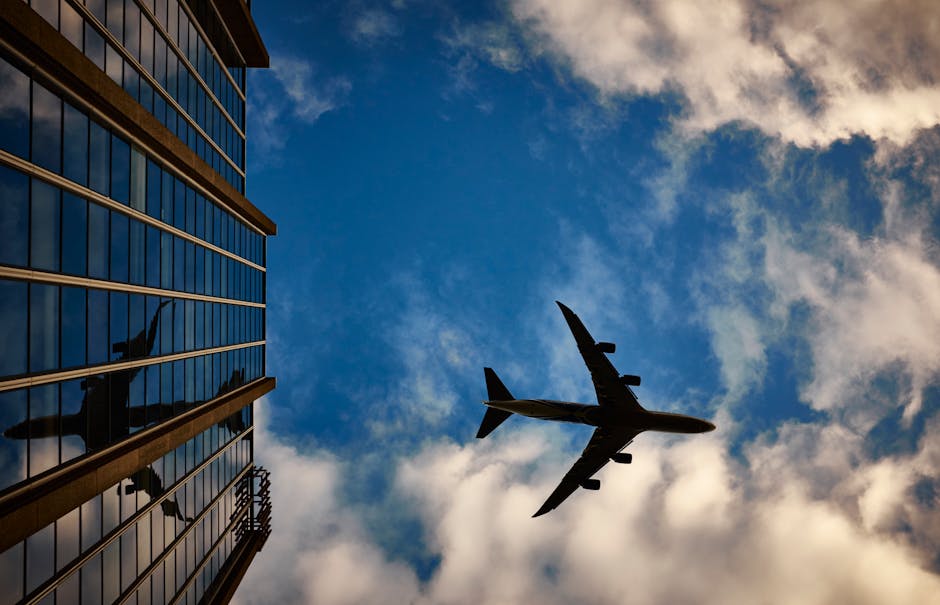
airplane, airport, flying

In LaGuardia, crowds drift and swirl.
My briefcase, trench coat, iPod idle
beside me in the next hard-molded chair.

My laptop says the news is bad,
damage everywhere, a waning peace.
I cross my legs, as though some change

of posture might improve things, and catch
a motion at the edge of sight: I turn
and see a grim marine pushing ranks

of orderly young men–thirty or more
in civvies–past my gate, three abreast.
Pulsing through waves of tourists,

lawyers, pilots, they shoulder olive duffels
so new and stuffed each surface seems to glow.
Their strident left right left so like

the Huey rotor’s chop and chop hammering
at our bones, unlike our trudging gait
into the Delta, taking fire, hauling gear

high on our backs. How heavy still,
the freight of memory.  And now
The airport TV flashes a teenaged

soldier’s final face–so like another boy
forty years ago, on a steel table
in a chilled room in Danang.  He stared

at the ceiling fan and might have said
hello but for the mortuary’s tool,
the two-foot metal rod that jutted out

above one jaw, wheedled back and through
and out above his other ear:
the bullet’s entry quick at the cheek,

its exit clotted red and ragged,
a volcanic spill that oozed along
and down the close-cut scruff of neck,

where it cooled and dwindled to a stop.
The boys have passed now, marching down
the hall beyond a throng of mini-skirted girls

with pastel cell phones, thrill-stuffed backpacks,
but I can just hear the lone marine in singsong
count the time, the beat, the boys, the boys.


Greg McBride has published his poems, essays, and reviews at Bellevue Literary Review, Chautauqua Literary Journal, Connecticut Review, Gettysburg Review, Hollins Critic, Poet Lore, Southeast Review, Southern Indiana Review, Southern Poetry Review, and elsewhere. Three times nominated for a Pushcart Prize, he edits The Innisfree Poetry Journal. He served as an Army photographer in the Vietnam War and began writing after a 30-year legal career. The father of three and grandfather of five, he lives in Silver Spring, Maryland, with his wife Lois, also a writer.

“Letting Go” by Paul Hostovsky

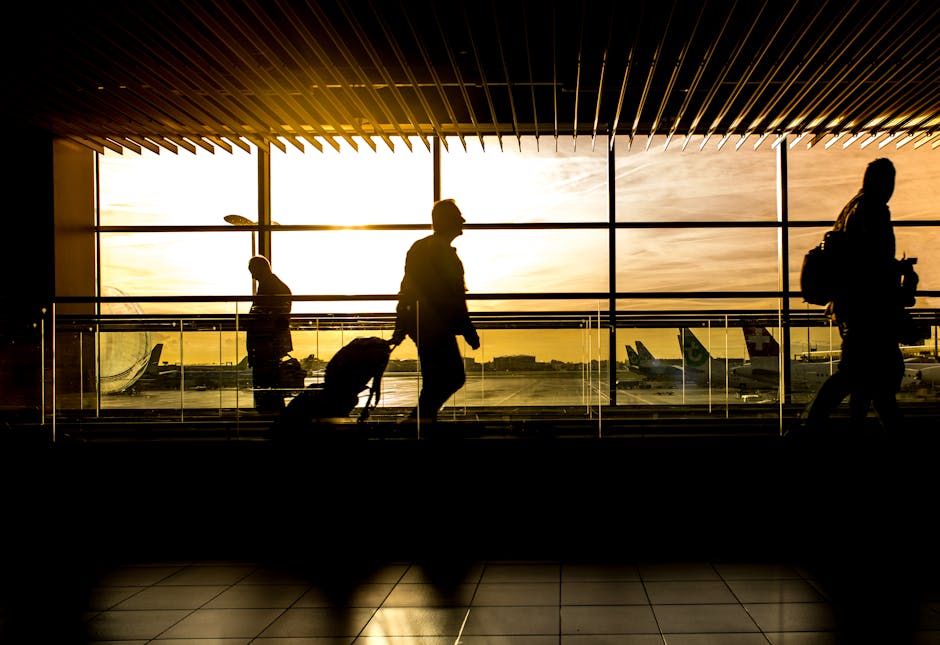
Silhouette of Person in Airport

This is a required poem.
You do not have to read it now.
You can wait until
you’re dying if you want.
You have to
let go of everything.
You can start by
letting go of this poem. Just let it
go. Let it fall to the desk, skim
the edge, spill to the floor. Let it
lie on the floor face-down
so you can’t read it.
How to read this poem
when it’s lying on the floor face-down
like a body—
that is the seeming difficulty.
On one side
words are everything. On the other
nothing. On the other side
there is the poem on the other side saying
let it go on without you,
saying on the other side there’s nothing
as difficult as it seems.


Paul Hostovsky‘s poems appear widely online and in print. He has been featured on Poetry Daily, Verse Daily, and The Writer’s Almanac. He has two poetry chapbooks, Bird in the Hand (Grayson Books) and Dusk Outside the Braille Press (Riverstone Press)To read more, visit Paul’s website: www.paulhostovsky.com.

“Closing the Cabin One Year Later” by Bart Galle

Brown Wooden Cabin in a Lake

It had snowed the night before.
The boards of the dock were white,
the morning water grey and starting to move
I wanted to stay inside, under the covers,
but we got up and went for a hike
on a new trail to a new lake.
We walked past marsh grass
brittle as spun glass
and crossed small brooks,
also looking for the lake.
Too much to do, we turned back.
That afternoon we closed the cabin,
drove toward home.
Clusters of snow buntings
rose unexpectedly along the road,
flashing white wings
in a purposeful way.
They flew before the car
like porpoises leading a ship.
Go here!  Look here!


Bart Galle spent most of his professional life in medical education, a field in which he now works part-time for the Heart Failure Society of America. He is a gallery owner and artist specializing in pastel painting, the book arts, and installation pieces combining the two. His interest in poetry grew out of the death of his youngest son in 2002, when it provided a means for expression and learning. He was a finalist for the 2007 Loft Literary Center’s Poetry Mentorship. His poems have been published recently in White Pelican Review, Main Channel Voices, and Coe Review.  He and his wife live in St. Paul, Minnesota.

“Walking by the Aikido Center Late at Night” by Bart Galle

bus, public transportation, seats

I stop to watch two students
vacuuming the mat.

From opposite ends
they go side to side,
working toward the center.

The vacuum cleaners
are chrome with red bags,
everything else is white.

I catch my bus before
they finish. As the stops go by
I think about the students
meeting in the middle.

I picture a kind of minuet
with cords held high,
cleaners tilted on their heels,
right-hand turns, left-hand turns,
palms together, eye-to-eye,
deep into the night.


Bart Galle spent most of his professional life in medical education, a field in which he now works part-time for the Heart Failure Society of America. He is a gallery owner and artist specializing in pastel painting, the book arts, and installation pieces combining the two. His interest in poetry grew out of the death of his youngest son in 2002, when it provided a means for expression and learning. He was a finalist for the 2007 Loft Literary Center’s Poetry Mentorship. His poems have been published recently in White Pelican Review, Main Channel Voices, and Coe Review.  He and his wife live in St. Paul, Minnesota.

“Final Approach” by Dan Masterson

Jasper Johns

~an oblique rendering of a Jasper Johns canvas
encaustic with plaster casts~

“Permit 66Q6391-1845 hereby issued to Nabilat
Productions for filming to be completed no later
than 09/12/01. Access limited to grid defined by
Vesey, Church, Liberty and West Streets, for
affixation of a 70′ by 70′ cloth bearing the
replication of Jasper Johns’ Target with Four
Faces.” – NYC Office of Film, Television, and
Broadcasting, August 03,2001.

Twin spotlights blast the night
Sky high from the bullet-proof
Windows, flicking shards of light
Into their stainless steel facade
That shimmers like giant tuning forks
Stuck in the veined sidewalk here on
Vesey Street. The dark will be held
At bay until the tapestry gets hung,
Its bloody bull’s-eye strung high &
Taut against the 95th-floor extrusions,
Giving their corporate suites the dust
& acrid odor of scorch-blackened tombs.

Two young guns, whose buildings have
All been mountains, are nearly ready
To hang the target, a thing limp as
A shroud, before rappelling back down,
Snapping the hem-grommets to the pitons
They intend to install on the way up,
As they slide handheld willigs along
The window-washer tracks that ascend
To the pinnacle, trusting they’ll hold
The canvas slings they’ll ride in.

They’re giving 10-to-1 odds they’ll be
Down, coiling their mile of rope around
Their stanchions, before the morning
Bells toll in Saint Joseph’s belfry at
The end of the block. But now it’s time
For them to lace on their spirit-gum
Shoes and begin to walk the sunny side
Up, 13 hours before all bells on Earth
Will toll, when the target is hit & torn
Asunder, turning the tower to rubble.


Dan Masterson was elected to membership in Pen International in 1986. He is the recipient of two Pushcart Prizes, the Bullis, Borestone, and Fels awards, and is an AWP Award Series honoree, as well as the founding editor of The Enskyment Poetry Anthology. His New and Selected, All Things, Seen and Unseen, was released by The University of Arkansas Press in 1997. His work has appeared in an eclectic array of publications including The New Yorker, Esquire, Poetry, Shenandoah, and The London Magazine, as well as The Ontario, Sewanee, Paris, Hudson, Gettysburg, Massachusetts, Yale, New Orleans, and Georgia Reviews. Final Approach first appeared in Hotel Amerika.

“Yellow Dog” by Wade H. Fox


Barn on Field Against Sky

Yellow Dog sprawls
by the side of the barn,
eyes half closed
against the dust.
Smart dog.
He’s found his spot out of the wind
where the sun can warm
his bony hide.
He’ll stay there all day
if he has to.
I hunker down
next to him,
give him a pat,
scratch his belly
and light a cigarette.
The wind whips
up the dust, whirls
it across the road
and into the pasture.
A cow
shakes its head.
I lean against the wall
doing nothing,
singing, “I’ll be your baby, tonight.”
I scratch the dog
behind his ears.
He yawns,
stretches.
Smart dog.
He knows
how to keep warm
and wait
for the wind to lift.


Wade H. Fox is a writer, editor and teacher. He lives with his wife and son in Lakewood, Colorado. A former editor for Ten Speed Press and Lonely Planet Publications, he currently teaches writing at Red Rocks and Arapahoe Community Colleges, outside Denver.