“Medusa Song” by Mary Akers

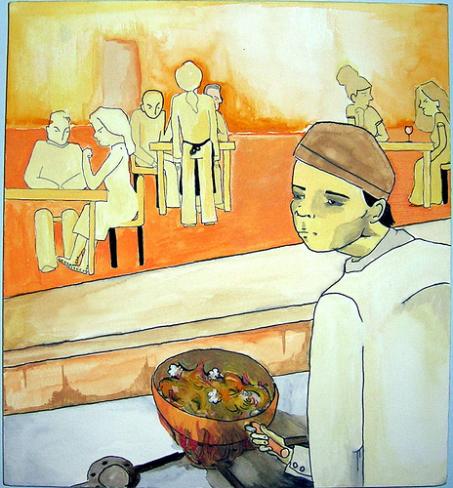
Image result for medusa

She scrambles the eggs while the baby howls at her knees. To drown out the racket, she hums as she jabs her fork into the yolks. She enjoys the way they spill their yellow color and swirl into the whites. She matches her tune to the schook, schook, schook of the fork against the bowl, then does a quick side-step when the baby lunges for her legs.

His little fat hands grasp the air, throwing him off balance. He totters on his heels for a moment then sits hard and rolls back sideways, bumping his head on the floor. He stops crying abruptly and flails his arms in the air like a big bug stuck on its back.

Cynthia knows she should pick him up, comfort him, but she’s too deep in her own need. She won’t look down, even, because if she looks at his face all twisted up and desperate for her, she’ll have to pick him up, and she just can’t do that motherhood stuff right now. She used to love the feeling, everyone needing her so badly. She would peel and seed John’s oranges when she packed his lunch. She cut the crusts off his sandwich out of pure love. And when the baby fell asleep, she’d sit and hold him just as long as he would let her.

But John Junior is walking now-into everything-and he’s gotten so clingy. Her friend Alice says that John Junior is feeling separation anxiety. Every time Cynthia leaves the room he thinks she’s gone forever, just disappeared. Secretly, Cynthia wishes it could work like that–two steps into the bedroom, and poof, she’s in another life, another world.

She used to love her life. She looked forward to every day. Cynthia can’t even say when things changed. Maybe it was back when she suspected John of sleeping with his secretary. Maybe it was after John Junior was born and she couldn’t seem to do anything right.

John and she had never fought before. Well, sometimes, but it was always more of a disagreement and once Cynthia apologized it would be over. It never spilled out into the rest of her life.

Now things seem to get all tangled up, till she can’t separate them, one from the other. She feels like that woman with snakes for hair, only all her problems are tangled up there too, squirming and writhing around, hissing on top of her head. She figures that must be why John isn’t home yet-imagine living with a woman who can’t comb her hair for the snakes. She tries calling his office, but that snooty Angela answers, so Cynthia puts on a different voice and pretends to be one of John’s clients.

“Mr. Albee promised to show us a home today, is he in?”

She smiles because she knows Angela is too dense to figure out it’s her. She’s careful to keep the smile out of her voice. Then Angela says, “Mr. Albee hasn’t been in all day, Ma’am, may I give him a message?”

She says it real sly-like, with extra emphasis on the ma’am, until Cynthia is really getting sick. The eggs look disgusting and she feels so nauseous. Then she’s throwing up again, retching in the toilet, and thinking, God, please don’t let me be pregnant, but she’s known it for a while.

When she’s wiping her face, John calls and she thinks he says he’s at work, but it’s hard to hear for sure over the baby. Liar. She just called there. Cynthia doesn’t want to yell at him, but she feels it rising up in her throat like bile, and she wants to stop it but the words are pouring out all over the place like vomit, sour and steaming.

She hangs up and tries to finish supper, even if it is just eggs and toast. After John sells a house they’ll have steak. She puts the baby in his crib, and over the monitor she can hear him banging his head against the bars. She goes to the door and watches, fascinated. His eyes roll back in pleasure. She tries banging her own head once on the door frame before she remembers the snakes. No sense getting them all riled up.

Then she hears the eggs frying too hard, and sure enough, they’re brown when she stirs them, and the toast needs scraping. Schook, schook, schook, the crumbs fly all over the sink, sticking to the sides. She thinks about that woman who drove her kids into the lake and cried about it on national TV. What a terrible person, a horrible mother. But the snakes hiss, “Yessss.”

She’s barely gotten the toast buttered when John Junior starts up again. He’s poopy, too. She can see it rimming the edges of his diaper. What with the snakes and the baby it’s really all just too much for her and she carries him out to the pickup and puts him squish onto the seat and she leaves supper unfinished and she’s really going to do it this time because she just can’t take it any more.

Halfway to the lake it starts raining. John Junior is sitting in the floorboard playing with his toes and the wipers are keeping time in the dark, schook, schook, schook, marking off the seconds till it’s done.

Cynthia pulls right up to where the lake meets the road, and there’s no one around, so she gets out and goes over to the water’s edge. The baby watches her; his face against the window, nose flattened, big eyes shining white through the dark.

The water smells dank and fishy and it’s way too cold when she sticks her head in. Cynthia is on all fours holding her breath and she thinks about how she must look-rear in the air, head in the lake. She doesn’t get up, though, and her chest starts to ache from needing to breathe. Her head is throbbing, and her throat spasms, her body trying to force her to breathe. But she won’t, she won’t, and she can hear the schook, schook, schook of blood in her head, looking for oxygen.

When her body starts to relax and she’s feeling like she could stay down there at the bottom of the lake forever, she jerks her head up hard, throwing back her shoulders, landing on her back at the muddy edge of the lake.

And possibly the baby is crying in the truck, but he’s safe enough, and she remembers that his diaper needs changing while she watches drops of rain fall silver through the night and feels them sting her cold lake-water face as she listens and waits and hopes the snakes have drowned.


Mary Akers’ fiction, poetry, and non-fiction have appeared or are forthcoming in various international journals such as Bellevue Literary Review, The Fiddlehead, and Primavera. She has an essay in the newly released anthology The Maternal Is Political and her co-authored book Radical Gratitude, first published in March of 2008, is in its second printing. Although raised in the Blue Ridge Mountains of Virginia-which she will always call home-she currently lives in Western New York with her husband and three children. This is Akers’ second appearance in r.kv.r.y. Her short story Multicolored Tunneled Life appeared in r.kv.r.y.’s summer 2006 issue. (Edited to add: in 2010 Akers took over editorship of r.kv.r.y. from Victoria Pynchon.)

“Life and Breath” by Corinne Loveland

In my yoga practice, I’ve been told, time and time again, that unexpressed emotions are stored in our bodies. My emotion is concentrated in my hips and jaw, which, I’ve also learned, are directly connected.

This makes sense. Most nights I clench my jaw so tightly it wakes me from
sleep. I open my eyes in a dark, still house with an aching jaw and sore teeth and I
know something is going on, swirling beneath the surface. During yoga, when I sit
cross-legged and stack my ankle over my knee in double-pigeon pose to stretch my
outer hips, I feel more than taut muscles stretching. I feel resistance, and I feel
fear. In my hips and in my jaw, I sense a past I struggle to make sense of.

∼∼∼

On the evening of November 3, 1992, Gail Shollar, my aunt, was raped and
murdered. She was loading bags into her minivan after grocery shopping with her
youngest daughter, Andrea, near their home in Piscataway, New Jersey. At that
point, Scott Johnson, a man she never before saw, forced her into the van at knife
point.

Andrea was found early the next morning on the lawn of a nearby daycare center,
cold and crying, but alive. Gail, who must have pleaded with her captor to release
her young daughter, did not have a fate as fortunate.

∼∼∼

I know exactly what I was doing while my aunt was being killed. I’ve never been
able to shake that. It was Election Day, the day Clinton was elected for his first
term. My sixth grade teacher had handed out U.S. maps and asked my class to
color in the states as the electoral votes were decided: red for George Bush, blue
for Bill Clinton, and yellow for Ross Perot. I remember staying up until almost
midnight, sprawled on the floor in front of the TV, coloring nonchalantly. When I
put my crayons away and fell asleep that evening, I had no idea that my aunt had
been raped and then stabbed to death. I didn’t know that my Uncle Bob would wake
up in the middle of the night to find his wife and daughter gone, that he would panic,
call my mother, and that chaos would officially erupt.

∼∼∼

We waited. For four endless days and four endless nights, we, a family united in
fear, fidgeted, waiting to find out what happened to Gail. We waited for her to be
found. My mother needed to be there, she explained, couldn’t be anywhere but at
her sister’s house, in the middle of the madness. My mother further explained that
she needed my brother, Prescott, and me to be there with her.

Those were the hardest four days of my life.

When we arrived, the van wasn’t in the driveway, like I knew it wouldn’t be. And
though the house looked the same, it wasn’t. I knew this as soon as I stepped
inside. The couches, of course, were in the same place and long white curtains
framed the windows as usual and the caged parakeet was chirping. The school
photos of my smiling cousins still hung on the walls. The house still looked like a
home. But I felt it in the air, and I felt it in my body, it wouldn’t be the home I knew,
not ever again.

∼∼∼

I stationed myself at the kitchen table, away from where everyone else sat,
stood, paced, and cried. I was incapable of feeling anything besides emptiness.

I approached my cousin Sherri, then eleven years old, Gail’s oldest child, and
tapped her on the shoulder. “May I borrow your crayons and some construction
paper,” I asked. I knew it was an unreasonable request to ask of someone whose
mother had been kidnapped. It seemed like nothing was appropriate to say, nothing
at all. That’s why I didn’t look at her when I asked. But Sherri didn’t hesitate. She
went straight to her bedroom. Maybe she was relieved by being able to handle a
simple task, a task less draining than surviving a missing mother.

I returned to my seat at the kitchen table and propped my chin in my hands.
Sherri returned with a handful of construction paper and a box of crayons. I hoped
she would stay in the kitchen with me, but she didn’t. I slid a piece of paper from
the pile, pink, because pink was Gail’s favorite color. I chose a green crayon because
green was my favorite color. Carefully, I drew two stick figures, both with long
squiggly lines indicating curly hair. My aunt and I shared, among other features, long
brown curls. In the drawing, we held hands. We were safe. I put smiles on our
faces and flowers at our feet. Then, in big sloppy script, I wrote “Hurry Home, Aunt
Gail, I Love You.”

∼∼∼

“I embrace all of life’s sorrows boldly, with my whole self,” my yoga teacher said,
weaving between myself and the other practitioners in the studio. Heat blasted from
the vents, sweat dripped from my hairline to my mat as I flowed through a vinyasa, a
set series of postures that lead into one another, linking movement to breath. I
moved with grace and determination, wanting, aching for what my teacher said to
resonate in my mind and body.

∼∼∼

If we ate, or slept, or did anything ordinary while we waited, I don’t remember.

I only remember the worry, the fear, and the pain.

They found the minivan first, parked near a patch of woods a few miles from
where Gail had been shopping. There was a bloody palm print on the inside of one
of the windows, and from this, or from a piece of hair, or from something I can’t
remember, police knew who did it. They just didn’t know yet what he had done.

They found the knife next, the following day. It was a kitchen knife, covered in
my aunt’s blood, found in the backyard of the killer’s girlfriend.

∼∼∼

At the house, the house my aunt would never see again, the doorbell, like the
phone, sounded constantly. Family members, friends, neighbors, news crews, police,
strangers, they called and stopped by continuously, wanting to know what it was
that we felt. Cameramen from NBC, ABC, FOX, CBS zoomed in on the front door of
my childhood, trying hard to expose the faces behind the horror.

Another day passed. My Uncle Bob agreed to a TV interview. Bright lights and
microphones and cameras were all in place. Bob was on the couch, surrounded by
his three children. “We want her back,” he said, his big brown eyes swollen with
sadness. “Please, who ever you are that has her, let her go safely,” he pleaded,
gasping between sobs. “Let her come back to her family. We need her.” He wiped
his tears with his fist.

I did need her. My mother left us at Gail’s house all the time. I knew with Aunt
Gail everything would be stable, safe. I knew nothing crazy would happen and now
that she was missing, craziness was here.

Four days of waiting, four days of rain. In the sturdy house of my childhood, I
sat, listening to the rain pound on the roof. Enough was enough. An army of
rescuers, nearly one hundred men and women from the community, formed on the
fourth day. They promised to find my aunt. From the house that had become a
prison, I saw them on the news, saying they were determined to find her, to get to
the bottom of this waiting game. They were going to find her body, they said. Not
her, her body. I think that’s when I began to understand that my aunt would never
see the construction paper card I made her.

∼∼∼

To look around the studio and survey the practice of others is considered
improper yogic behavior. It’s an ego thing, comparing yourself to someone else,
striving to hold a headstand for as long as the person on the mat next to you or
taking pride in your ability to outstretch another. Yoga isn’t about flexibility. Yoga is
about steady, controlled breath. Yoga is learning to understand the nuances of your
body, finding inner awareness, and acknowledging the sensations that emerge
through the physical postures and breathwork.

During hips stretches, I need to keep my eyes closed, clamped shut in fact, to
avoid being elsewhere. My urge is to scan the room, to watch my fellow yogis
effortlessly stretch their lithe hips. I don’t mean to, but I envy them, not for their
loose hips but for what they must not be storing there.

∼∼∼

My cousins, my brother and I were in the basement when the detective came.
We hadn’t thought anything of the doorbell. Sherri sat in a rocking chair, her face
worn from what was nearing a week of crying. Bobby, Gail’s middle child, and
Prescott, climbed on the pool table and smashed pool balls together. I sat on the
floor, my knees pressed into my chest.

It was my mother’s piercing scream that we heard. All motion stopped as I
slowly lifted my head and turned toward the staircase I did not want to climb.

I knew.

Gail’s dead body, naked and mutilated, had been found, submerged in a drainage
ditch, covered by a pile of fallen, soggy autumn leaves.

∼∼∼

Often, before beginning my practice, I bow in dedication to a person, a cause, or
a feeling. I vow to breathe through the upcoming physical challenges, to look inward
and send my breath to the areas of my body that ask for it. Sometimes I think of
my aunt and I dedicate my work on the mat to her struggle, her pain, and her love.
Sometimes, I can’t help but imagine her as she died: her face an expression of
terror, pleading not to be killed. Breathing deeply and with control, I remember her
voice and I hear it cry as she is led deep into the woods. I envision my aunt to the
backdrop of a cold dark autumn night, her final night, and I feel the silence that must
have followed the slaying. I see her killer walking away from a bloody body that
means nothing to him but everything to me, a body that is no longer her. With a
knife in his hand and a smirk on his face, he leaves. He leaves permanent damage.
Sometimes, while I move, I wonder what she thought as she was penetrated, as he
came toward her with that kitchen knife to slash her throat, as she was stabbed
again and again. And again. I wonder if she put up a fight or if she surrendered. I
wonder if she thought of her family, and selfishly, if she thought of me, if she had
any idea what she meant to me.

And I breathe.


Corinne Loveland writes nonfiction because she believes in the power of the everyday. Regardless of what happens to us—be it shocking or simple—life as it occurs is artistically worthwhile. As a writer and as a photographer, Corinne aims to capture the
nuances of life and portray them as art. Originally from the New Jersey Shore, Corinne now lives in Santa Cruz, California – a less crowded Jersey Shore with easy access to San Francisco, her favorite city.

“Snake” by Darren de Frain

Snak

In winter, the heat-rocks keep the dining room — the thermic core of my home I like to call it — several degrees warmer. Sometimes when I get blue, which happens more as the days go short, I cook up all the snake tank lights and lay down on the floor with my sunglasses on just to feel better; that’s why there’s no furniture in there anymore, because as everyone knows I am very, very tall.

So when Hot-cha, that’s what we call Jason White because that’s what he calls himself, comes by that Friday to get me, I’m laid out on the dining room floor trying to make my back feel better and trying to get a better feel for life.

“Yo, git-cho punk-ass up off dat floor, Stretch!” He jiggles the door handle as if he means to tear it off. “Don’t make me put some caps in this door, you long old piece of schnizzle.” I don’t think Hot-cha knows what he’s saying when he says a lot of the things he says, but I like the way he makes up words: poetry if not particularly poetic.

The bones in my back feel loose and good as I rise, the nubs of my slack spine giraffe-necking in graceful cooperation until the ax-chop through my left hip stumbles me. “C’mon then,” I say, opening the door with one hand and holding onto my left hip bone with the other. My hips, doctors say, flare out like an open baseball mitt and put too much pressure on my lower vertebrae. Hot-cha, meanwhile does his dance shuffle through the door, tugging at his parachute pants and his shirt and wobbling his head as if he’s making fun of
my limp, but that’s not true. That’s the way he’s taught himself to walk.

“Why doncha just get those hips removed so you’re not gimping around like my dead grandmamma? My sister, Janice, worked with this chick at Target that had her hips taken out, she couldn’t have no babies anymore, but so what, right? You ain’t looking to have no fifteen foot tall babies, is you?” He actually waits for me to answer. “Aw-rightden.”

On Fridays we go to Stiv and Lois’ Steakhouse on 41, and usually we meet Carlton there. Sometimes Carlton brings Alan, but only in the winters because Alan works the megafarm out near Dakin. Russell shows up sometimes too, when he doesn’t have a date, which almost never happens. I suppose a few others duck in enough to merit mention.

Hot-cha knows all the waitresses and both cooks and usually we can count on them holding the same table near the kitchen where I won’t draw so much attention. I don’t mind people staring after me, or asking me if I’m in the NBA, or even pointing, which is what the children mostly do. But what makes you think I don’t know what you all say when you lean into your table, head and eyes swiveled my way, and talk in whispers? I am taller than you are and my hearing is extra terrestrially acute. And I can smell things no other human being can smell – like fear. I might be tempted to tell you that I also obtained extra sensory peremptory powers, but know you’re inclined to be skeptical. Why, you’ve already glossed over the details about Hot-cha, thinking that you know the kind of person he is and the role he plays in this story. And if you’d seen me in person you’d have made similar assumptions about myself and what the kind of story I might tell, which is all right, that’s very a human thing to do, but you’d be dead wrong. Just like you were wrong in thinking I
misspoke when I said ‘peremptory’ instead of perceptive. The lesson here: Don’t ever equate tall with stupid.

Hot-cha’s car is a sedan, which is good for me because he also has independent seating that can go back and lay all the way down. Sometimes, because I lay so far back, I think it must look like a child with a very enormous head is riding in the back seat and I think again about what Hot-cha said about never having children and thank my lucky stars there’s still time, if the right woman comes along, though the idea of children seems more realistic — plausible, so to speak — than the ideal woman somehow and I remember a similar thought I had several hours ago which caused me to have a lie down in the thermic core.

Hot-cha’s car has license plates he paid $50 extra for to say “HOT CHA.” He buys lots of things that say Hot-cha. You could say that this is a hobby for Hot-cha, and one time, when I was at a truck stop outside of Omaha, I found a keychain that already said “Hot-cha!” on it and I bought it for him as a prize possession. I had never before considered that there might be more than one Hot-cha in the world, or that Hot-cha might be a name that he did not make up, or that it might have other meanings, but because I was in Omaha to get my back looked at by the very important doctor there I decided that this meant good luck for me and for Hot-cha.

One problem with riding in Hot-cha’s car is that he plays very loud rap music. And because my head lays down in the backseat it is very close to the big thumping speakers he put in himself. The first time he put these speakers in he didn’t read the directions and the back seat caught fire which ruined the speakers and the seat at which time Carlton said a very funny thing, “Ooh…Hot-cha!” When I think about Carlton saying that, with the perfect timing which is necessary for good jokes, I giggle. But Hot-cha can’t hear me over his fat beats which he spells p.h.a.t. and which stands for pimps, haters, and thugs, according to Hot-cha.

So when we pull into the parking lot there is a man leaning against the trunk
of his sports car in the spot next to the one Hot-cha chooses. In addition to
my abilities to hear, smell, and sense things I always know when someone is
trouble. I call this power Nuture-vision since I don’t think that it is genetic,
because when you grow to be as tall as I am at an early age there is always
someone looking to make trouble with you. And when Hot-cha gets out of the
car and starts arranging his pants and his necklaces the leaning man says,
“What up, Homes?” There are many ways you can say a statement like that,
and there are probably many ways you can say any word or phrase. Carlton
once told me the Inuit peoples of Canada have over 3,000 ways of saying the
word snow, for example, so that they know if they mean snow storm, or snow
cone, or snow that I just peed on. The way the leaning man said “Homes”
was clearly mean and sarcastic, which no question hurt Hot-cha’s feelings.

“Sup?” he says back, but he says it very quietly, as if he doesn’t want both
me and the leaning man to hear him.

“What’d you say, HOT-CHA?” the man says, you could tell he read that off
the license tag and used it to make more fun of Hot-cha. The man pushes
himself off the car he’s been leaning on with a snap of his spine. My back feels
so sore that I envy the ability to do something like that, but you should know
I’d never use body language to start a fight. There are times, though, when I
can to use my body language to stop a fight, so I get out of Hot-cha’s car very
slowly. I crawl, putting my right foot onto the ground and then pushing my
shoulders through the door opening so that I can reach around with my left
hand and slowly place it on the roof of the car. My hand spreads out like a
tarantula when I do that and I find that it is a good first maneuver. Then I
grab the top of the door with my right hand even more slowly pull myself
upright, which at this time shoots a terrible pain down my right leg that I
channel into a very displeased look that this man should be messing with my
very good friend Hot-cha, and I turn slightly to look down at him.

“Holy cripes,” the man says, and he jumps back around to the other side of
his car.

I slap the roof of Hot-cha’s car so that it makes a loud tingly splat that we
can all feel in the back of our necks and I say to Hot-cha: “Aren’t you ready to
eat yet? I don’t need to sit here all night with you yakking away while I feel
hungry enough to eat the bones off a bear!” Me and Hot-cha laugh a little
and then head toward the restaurant.

Hot-cha turns to the guy as we walk by him and says, “Have a good night,
Homes,” but here’s the difference: Hot-cha says it nice, like he really means for
the man to have a good night, not like he’s making fun or being mean.

I don’t like to play that card because it doesn’t always work. Sometimes a
mean guy will see how tall I am and he’ll get what Carlton calls David
Syndrome. Maybe I’m strong compared to some, but because I don’t ever
want to fight with anybody the mean guys can sometimes beat me, unless
they’re too drunk, which a lot of them are and which makes a lot of them mean
to begin with. That’s also why Hot-cha and I don’t drink, which I’m guessing
you didn’t imagine when I first told you about Hot-cha. Hot-cha’s dad died of
cirrhosis, and Hot-cha still misses him because before he got sick his dad did
things like take Hot-cha fishing for channel cats on the Platte River and throw
the ball around in the yard with him and bowling sometimes, too, when he had
the scratch.

My dad couldn’t throw the ball around with me on account of how tall we
both were and how that made it so I wasn’t very coordinated for a long time.
For a long time the doctors thought I might need to walk with crutches if I
didn’t stop growing and that I could be crippled, but that didn’t stop the
basketball coach from wanting me to play, even though I couldn’t run and
couldn’t catch the ball he said God wouldn’t have brought me to this town if it
hadn’t been to help him win a championship. So for one whole season I stood
in front of the basket and made sure no one put a ball in there. I set the
state record for blocks in a game, but there is a rule against guys my size that
says they can’t stand in the painted part under the basket for more than 3
seconds or the other team gets to take free throws, and so we lost enough
games that made our coach question God’s wisdom and he too started
drinking and giving me a hard time when I see him around town, which
thankfully isn’t very often.

Stiv and Lois’ is quiet for a Friday night and it’s no problemo for us to find the
big table by the kitchen door where Carlton is sipping on a tall beer. Stiv used
to be in a famous punk rock band and though they play muzak over the house
speakers now, the walls are all covered in pictures of Stiv mugging with other
famous punk rock stars and with people such as John Belushi, who liked punk
rock stars. We never see Stiv in the restaurant anymore, though he used to
come in and wander around the tables barking at the busboys and waitresses
and telling stories about how such-and-such punk rock star used to take
suitcases full of drugs or how such-and-such punk rock star used to pee all
over every hotel room he ever stayed in while people enjoyed their steaks. I
love the earthy smell of the steaks at Stiv and Lois’ which remind me of when
my dad worked at the Kroger and would bring home day-old steaks for the
grill which made him very happy on account of how we got to eat steaks so
cheaply.

Lois still comes to the restaurant to do some barking but she doesn’t tell
stories. She met Stiv at a show he did in Minneapolis and thought she’d really
hit the big time, but then Stiv said he couldn’t keep going with all the punk
rock. Who was he supposed to be anyway, Iggy Pop? So he took the money
from that song “I Love My Little Huffer” that everybody in the Mid-West knows
by heart and bought this steak place and a gas station on the other side of
town by the interstate. I don’t even know where they live but Hot-cha says
he does. He says he has a cousin who put a pool in their backyard and that
their house is really weird and full of stuffed monkeys.

Carlton wears fingerless gloves, no matter the weather, after something he
saw in a movie. “Though you might be tired and pushing hard, your sheer
presence and thoughts inspire others,” he says to Hot-cha as we sit down at
the table. “You might keep a lot inside,” he says, turning to me. “As a result,
sometimes you react more strongly than necessary.” Carlton also memorizes
the horoscope every morning and he knows that Hot-cha is Aquarius and I’m
Capricorn, though, he told me, I’m really a cusp and could be considered a
Sagittarius in some cultures.

Our waitress drops a couple of menus in front of us and sloshes some water
into the dimpled plastic cups before she leaves. What I like about waitresses
is that they tend not to be judgmental, probably from years of bum-looking
guys tipping big bills and the occasional guy in the top hat and spats sticking
out his empty pockets at the end of the night like the poor tax card in
Monopoly. “Yo. Did you check that out?” Hot-cha says.

“Did I check what out?” I say.

“Her arm, man. Somebody ain’t playing nice. Check it out when she comes
back.” And I do. Her arm has a dark purplish bruise on it in the outline of a
human hand. It wraps all the way around her forearm the way an expensive
piece of Egyptian jewelry might.

“What’s with your arm?” I ask, but when I look at her face I can see that
she had put a lot of makeup on to hide more bruises. Her face is pretty under
all that make-up and I can believe she turned a lot of heads in her day. Her lip
is split but healing over, which lips have to do very quickly because most
people use them so much. Some people speak over 40,000 words a day,
which would be ballpark for Hot-cha but more than twice my output. Carlton,
it depends. Some days I could see him speaking 40,000 words, like when
there’s going to be an eclipse or when he’s beat another Russian player in the
online game World of Warcraft. But mostly I’d guess he hovers around the
20,000 mark as well. Inwardly, though, I can fly through millions of words in a
day. My extra peremptory powers of perception tell me that our waitress is
inwardly verbose as well. Her eyes, for example, move around the room like
conductor’s hands while she waits for our order and I’ll bet each mental note
rings out a dozen or more words. And just so you know, in case you want to
start keeping track, you can’t count what I’m telling you here because these
are my words, not yours.

Our waitress explains, “My ex-boyfriend’s a falconer. I help train.” Carlton
leans back in his chair and throws one of his legs onto the corner of the table,
nearly spilling his beer and all our waters. He does this when he wants to
show off his knee-high deerskin boots with the fringe down the calves, though
why he wants to impress our waitress is a mystery.

“Last time I counted, falcons don’t have four fingers and a thumb,” I say,
though your guess is as good as mine why I would get involved. The older
you get the deeper your troubles, and, pretty or not, she’s much older than
me.

“Know what you want to eat?” She chews a rope of hair and then spits it
out, turning the wounded arm slowly away from our views.

“Falconry is the sport of kings,” says Carlton. “It dates back to the Assyrian
king Sargon II. He would train the falcons to snatch young goats and children
from the neighbor kings’ land.”

“Yo. My brother went to this boyscout thing at his scoutmaster’s house with
falcons and one lifted its tail and shot a load across the room like a bullet,”
Hot-cha says, slapping his hands together and then letting one hand dribble
down the other for effect.

“Little known fact: French barons used to hunt with buzzards,” Carlton adds,
pushing his glasses back onto the bridge of his nose. He’s worn the same pair
of glasses since eighth grade. We must be excellent friends to know each
other so long.

“You want me to just come back when you’re ready?” our waitress asks.
She slips her order book into her apron and covers the bruises on her arm
with her free hand.

“That will not be necessary,” Carlton says. “My comrades and I enjoy the
same victuals every Friday at this fine eatery…” And he goes on and on to
order our steaks until I’m sure she wishes her last question had been more
like a statement.

“Yo, what was up with that arm?”  Hot-cha says.  “Isn’t she a little o.l.d. to be getting bitch-slapped by some pigeon racer?”

“Little known fact: The Chinese are all born at age one, making them, in essence, a year older than they really are.”

“She ain’t no Chinese!” Hot-cha says. “Can you believe this guy?” heaving his thumb at Carlton.

I pull my shades on so that I can watch our waitress as Carlton tries to explain his segue rationale to Hot-cha. She is older than we are, by at least twenty years, making her roughly the age of our mothers, but she doesn’t in the least remind me of any of our mothers.  My mother, for example, would never at any age have worn her blouse unbuttoned so that her brassiere showed, nor would she cock her hip sexily toward a customer who made her laugh and then chew on a loose piece of her straw colored hair while she thought about a rogue falconer back home already drinking, though he promised he’d quit, or at least wait until she got home.  Anyone with the ability to see all this would describe the falconer as dangerous.  Wanting to invite your sister to come over, for example, can not be a good reason for him to get that upset, and it certainly makes no sense that this falconer, much, much bigger than she, would grab her arm so roughly, the pinch and the pain of which would literally buckle her knees until she hung from his grip, the tattoo of a dragon roiled on the shaking sea of his forearm.  Who can tell what someone like that would be capable of? Perhaps something no one could ever forgive; something unforgiveable.

As we eat our meals Hot-cha learns that her name is Mary-Anne, to which of course Carlton provides: “In her signature song, ‘Proud Mary,’ Tina Turner actually changed the word ‘pain’ in the lines ‘Cleaned a lot of plates in Memphis, pumped a lot of pain down in New Orleans’ from John Fogerty’s original lyrics to ‘tane’ and in octane, meaning fuel.”

“And?!?”  Hot-cha replied.  “Yo, Proud Mary, give my man here another beer and put it on my tab. Maybe then he can tell us how Anne used to be what Edith Wharton called her guitar or some hoo-hah.”  And so we called her Proud Mary, which she seemed to like.

For several Fridays in a row, though, Proud Mary would visit our table with new bruises on her arms, all of which owed to the work of her falconer and not, as she insisted, his falcons.  Seeing these bruises sometimes gave me such a deep and low, sad and tired feeling that I wanted to return to the thermic core.  Then she showed up with a mark around her neck.

“You letting his little birdies sit around your throat now, Proud Mary?”  Hot-cha asks, when the more obvious questions no one would ask.

“Well, I’m through with falcons, if that’s what you’re wondering,” she said. “They’re loud, they smell bad, and they don’t know how to treat a girl. So if any of you thinks of a good place where an old chick like me can park her behind for under $300 a month you’ll let me know. Now, does the steak crew feel like living on the wild side, or should I just turn in last week’s carbon to the cook?”

After our dinner Carlton finishes the last of his beer and a long story about how the FBI has secretly reopened Project Blue Book, their covert study of ufology that has archived and suppressed hundreds of witness accounts of ufos in all areas of the country including three in our own. “No butter-bunk, Homes,” Hot-cha said. “My uncle’s riding his tractor when he was just a kid on the farm and this big disc comes out of nowhere, hovers over him until the engine dies, and then blows out of there at a millions miles an hour. And when my uncle got off the tractor his dog came running up speaking fluent Portuguese for about twenty minutes, but then he couldn’t talk no more, in any language. Wouldn’t even bark, unless he saw a squirrel. Yo. You homies ready to clip?”

“You two go on,” I say. “I’m going to walk home.”

“Walk home? W.T.F., man? You can’t hardly walk across the room without your back sounding like Chinese New Year!”  Hot-cha says.

Carlton pushes his glasses up on his nose and then looks around at the emptying restaurant until he figures things out.  “Let’s go, Hot-cha. You can give me a ride home,” he says, shaking his head slowly at me as if he does not approve of what I am about to do.

“Later Homes,” Hot-cha says. “But don’t go calling me just cause you’re only down at the next block and can’t make it no farther.”

“Your little friends leaving you alone tonight?” Proud Mary says as she scoops up the remaining plates and glasses from the table.  The bruise on her neck troubles me deeply.  All bruises trouble me deeply.

“Proud Mary,” I say. “Can you give me a ride home this evening? I might have a place that can help you out.”

She looks plainly stunned, but really I know that she is frightened by me, which I wish wasn’t the case.  And perhaps you’re thinking what woman in her right mind would let a giant into her car and then drive him home, alone? But Proud Mary knows better than any of you.  She could see that though I am giant, I am a decent man with only the most decent of intentions.  To say nothing of my safety, which you’ve probably overlooked.  Some might say that she’s trouble, and that trouble brings trouble.  I sit at my table for another half an hour until the last of the customers heads out of the bar, sipping ice waters that Proud Mary keeps coming with which, I can tell, means she’s getting nervier.

She tries diffusing the awkward silences between us on the walk through the parking lot with too much chit about how I probably won’t fit into her tiny car, but little does Proud Mary know her car is much larger than Hot-cha’s voluble machine.  Her car also makes it seem as though a family of hobos live in it.  A great unpiling of piles takes place before we find the seat and before the seat will recline.  “I had to throw a lot of my stuff in the back here as I’ve flown the coop. Truth be told I’m not a neatnik, but I’m not this much of a slob. Usually. You’ll have to guess on the in-between.”  I direct her to my home, which is close enough that there is kindly no need for further conversing.

Getting out, though, never ceases to present a challenge, but Proud Mary runs around to the passenger side to assist me as best she can.  At this point I see the top of her head and the dark and white roots where her color recently grew out.  I also like the smell of her, like steaks.  So maybe this is not the smell of her that I’m liking, but the smell from the entrepreneurial imagination of Stiv and Lois, which would still fall into my extra sensory
peremptory purview to smell things like one person’s imagination drifted onto somebody else.

“This is your place? All this?” Proud Mary says as I fumble my keys.

“My father, he died a while back, and my mother moved to be near my sisters in Kansas City. So they left me the house.”

“I’m sorry about your father,” Proud Mary says, but she’s already inside by the coat rack.  Proud Mary carries the steak smell all over the house.  “How many rooms are there?”

“Several,” I say. “I don’t go upstairs, much. Those rooms up there don’t have such high ceilings. They were always the women’s rooms, and you’re welcome to either of the two on the south end, if you think you might want them.”

“These are beautiful ceilings,” she says, meaning the crown molding which is something I’ve always thought beautiful too, but didn’t realize until she pointed it out. “What’s in here?” she says, reaching to open the door to the dining room.

“Wait!” I say, and before I can control it my big hand swings down hard-like and snatches her wrist from the handle.  I raise her hand up until I’m also pulling her off her feet and then let go suddenly, back in my own mind again.

“Sorry. I’m sorry,” I say. “I should just show you myself.”

“You need to be careful,” she says, rubbing her wrist. “I bruise easily, you know.”

I push open the door and duck my way past her into the dining room.  I leave the overhead lights off, which I usually do anyway, so that she can take in the full effect. I even make a little flourish with my hand as she enters the room. “The thermic core.”

“What are these then? Snakes?” she says.  I’d expected more oohing and ahhing.

“You don’t like snakes?” I say.

“Not really,” she says. “I don’t mean I don’t not like them, I’m just wondering what it is about men and their pets. Men with dangerous pets usually want to make a pet out of you, I’d say. Wouldn’t you agree that statement to be a true fact?”

“But they’re beautiful things, these snakes. Look at this one, for instance,” I say, taking my favorite right off his hot rock and letting him slip between my fingers. “He’s an albino ribbon snake – sweet as you please. Or, over here,” I take out another little friend in my other hand. “I’ve got a long nosed snake. He’s equally sweet, but very difficult to get to eat…”

“You feed them mice and rats and the like?”

“Well, yes. That’s their natural diet in the world. Did you know that the symbol for alchemy is the snake, the science of turning-to-gold? Did you know that snakes also represent medicine and healing? And I’ll bet you were not at all aware that the snake was the symbol for Jesus the Redeemer at one time?”  This last fact usually floors any denomination.

“So do you breed your own rats and mice or do you have some enormous credit down at the Pet-Co?”

“I only have to feed them once a month or so, except for some of the smaller ones. I just go get their food then,” I say.

“That’s good, because I can’t tolerate cages of rats on death row.”  The various glows from the tanks all light up Proud Mary from twenty different angles, as if she’s suddenly a star caught in the frozen paparazzi bulb crush.  This glow does her well by brightening her skin and eyes and evening out the color of her hair.  “Hot in here, isn’t it though?”

“It helps my back,” I say. “To keep warm. Most times I fall asleep in here on the floor.”

“Don’t you have a bed?” she says with great incredulity.

“They don’t make beds for people my size. Not that I can afford, any how.”

“Let me go look upstairs,” she says suddenly. “And then maybe we can work something out. I’d planned to go to my sister’s tonight, but I’m thinking that would just bring more trouble down on her, and she’s got a new baby and a bunch of slobbery dogs that won’t let me get no rest anyway.”  When she leaves the thermic core I crumple onto the warm floor to let my spine unfurl, only the thin sound of little, rustling bodies and the distantly familiar
echo of footsteps upstairs keep me from falling under a deep sleep.

“This is great,” she says, sticking her head cautiously into the thermic core from the hall.  “Do you mind if I bring some stuff in and get situated up there? I don’t have much, and if this doesn’t work out I can take off in the morning. Hello? Are you okay?”

“I have a bad back and an enlarged heart,” I say. “This helps.”

“You just wait until I’ve had a shower,” she says, and I mourn the loss of the warming scent of steaks on her.  “I know a trick or two about backs.”

“Uh-huh,” I say, and its too late, too familiar, the sound of a woman’s voice scurrying around upstairs, the groan of the pipes over me as the shower commences, and before I know it I’m back these years, laid out on the floor, while my mother is loading the car to leave for Kansas City.  What I didn’t tell Proud Mary, and why should I, is that my mother left before my father died.  As his heart trouble grew worse so did his moods; he had this anger deep inside of him, from years of being the town freak, no doubt, from all those stares and all that stooping over to walk through the doors every other person in town walked through with ease.  I suspect now that some of his heart medications, which I’ve been prescribed but refuse to take, led to his dementia because what else could drive a man to lock himself in this very dining room for a week or spray paint ‘HARLOT’ and worse onto the upstairs doors?  It took several coats of very dark primer and a lot of embarrassing silence for Hot-cha and Carlton and me to cover the sprayed on words.

My father’s moods roiled over and could not be contained, even though he’d been loved by my mother, by my sisters, and by me.  “I can’t let him keep doing this to us,” my mother finally said, meaning the tearing down. She kneeled down in the thermic core (which was cold then and without snakes) beside me while I pretended to be asleep, immune to everything. “Please. Please don’t ignore me. I want you to come with me. He’ll turn on you too, and as big as you are I know you’re sweet inside, and you won’t be able to keep him off of you when he gets into a rage. He was a good man, Son, he was a good man and I’ll always love that. But that’s not in him any more. You can come with me, come be with your mother. Please.”  When the deep blue days come now I often try to imagine different ways my hand could’ve flown up accidentally, fantasies about still undiagnosed seizures maybe, or some way my mother might’ve slipped, leaning down to plead with me, so that, really, it was the hard floor that hit her face like that and not me.  At worst I comfort myself knowing that I have matured enough now to achieve complete self control, even if no one is around to appreciate my new improved self.  If I hadn’t achieved this mastery do you really think I’d have these extra sensory powers?

“Whew! It feels so great to be free from the day!” she says, standing next to me now.  Her feet are naked, her toes painted bright red, and she’s wearing a pink robe with pink  feathered fringe that keeps falling off like snow flakes behind her.  The smell of soap has eclipsed the warm smell of steak, which I don’t like as much.  “Roll over,” she says. “Onto your gut.”  Which I do. She climbs onto my back and I see the feathery robe come fluttering down to the ground a couple of feet from my face.  She kneeds my back with her painted toes and it feels both good and bad.  “Not too high,” I say. “I have an enlarged heart.”

“Well, it’ll take me a good fifteen paces to get to where your heart is from down here, but you let me know when I get too close.”

“I’m going to die young,” I say. “Giants die young. My father only got into his mid-forties before his heart quit.”

“Make the most of your time, then,” she says, squeezing the skin at the base of my spine and pulling it upwards with her toes.  When she hits a sweet spot I feel like I’m flying, the pain holding me to the ground dissipates until I’m soaring.

“I wasted the last ten of mine with that lout, so don’t think we’re not running neck and neck.”  I hear her breathing and the gwish, gwish, gwish, of her steps under the hum of the hundred lights and singing rocks and the snakes rolling back and forth across the glass like windshield wipers just after a rain stops.

“Do you think you’ll be bringing any, uh … bad choices along with you?”  No reply comes.  “I mean, you don’t think fouling up is like a permanent habit for a person, do you?”

There’s no reply, just the gwish, gwish, gwish of her feet on my back and the hum and sway.

“Lower,” I plead. “Lower. It feels like flying straight off the ground when you’re in just the right spot.”  And she steps into the perfect spot, further away from the danger with my heart. You only wish you had such relief near the end.


Darren de Frain gives sincere thanks to Editor Joel Deutsch for his enormous patience with his story. DeFrain received his degrees from Utah, Kansas State, Texas State and Western Michigan.  He is author of the cult novel, The Salt Palace, and numerous stories, essays, and poems.  He currently lives in Wichita, Kansas with his wife, author Melinda DeFrain, and their two daughters.  He directs the MFA Program at Wichita State University.

“Breaking Trees” by Eliza Kelley

forest, hawaii, nature

“Us sing and dance, make faces and give flower bouquets, trying to be loved.  You ever notice that trees do everything to git attention we do, except walk?”  ~Alice Walker, The Color Purple

Thick rim lenses magnify Mary’s eyes to alien size but crossed, each one stuck to its own stubborn tear duct. Mary tells the same stories she has told over and over again since I can remember, which always gave me plenty excuse to stare at her affliction.  I can’t figure out how it is that ugly-old-Mary could manage to drive the Blue and Gray Highway from Fredericksburg to our house in Virginia where the breakfast nook parquet floor pattern was all but invisible to her.  I know this to be fact because whenever Aunt Mary cackled near the end of her favorite retelling-that day barefooted Memaw and Willie Pearl, prim and pinafored like proper little southern girls, climb a split rail fence and hop on a spit-tempered sway-back plow horse that don’t move no matter how hard you kick him-I always looked down at the floor before Mary finished her good laugh and tried to get me to talk, asking that question, “What in the world are you looking at child?”

I see the pattern even now, but never understood exactly how parquet basket weave fits together.  And I never got too far counting the number of wood tiles in that room without landing on Mary’s black tie-up shoes slipped off, the knee-high stockings fallen around lumpy ankles, looped above gnarled black edge toenails wiggling through those nylon holes just outside her open shoes’ dry gag-that’s where I always ended up getting lost and having to start counting floor tiles over again.  So I never figured out the answer to Mary’s question and couldn’t have spoken it out loud in any case.

All the Lee women had in common a hatred of shoes and a craving for cigarette chat, which maybe explained why I never could abide showstopper myself, and definitely became the reason I stored a wad of bubble gum on the arch of my right foot when I went to bed each night or when I went down to the river to fish or sneaked away to wherever I might find time alone since chewing gum was hard to come by and I found it a safe guard against being expected to talk or smoke.  If I kept the gum anywhere else, there was always the chance someone might take it and throw it away.  Once I accumulated a huge glob from several weeks’ little league games.  The kids with parents only wanted the baseball cards and tossed the paper and gum to the trash barrel, the dugout dust, or the first base-line fence. That’s
where I stood to wait for gum and to watch my brother’s friend Jackie Nichols pitch.

Jackie was a beautiful starling-haired boy who collected baseball cards but chewed the tobacco Michael pocketed for him in the 7-11.  Whenever Jackie bent down to tighten his cleats, the blue stripes over his thigh muscles stretched into wide waves.  The last time I saw Jackie, he selected as always two heavy bats instead of one to warm up his swing. Jackie tossed aside his packet of unwanted gum and watched me reach through the fence. He always hit a homerun and always cracked the bat and Jackie had never struck out before that day, so I said afterwards it was just more bad luck, the wild pitch he threw that struck directly where I leaned my forehad against the fence. He was the first boy I ever loved, and I cried when I wasn’t allowed to go to the baseball field again. Two weeks later Jackie shot his mama point blank and a couple years after that I heard he got himself beat to death in Pawtuxent.  Everyone said it was a damn shame.  He was the best pitcher we ever had.  But nobody, not even Aunt Mary who knew everything about anybody, ever found out what happened to Michael.

But I can’t talk about that yet.  I was thinking about shoes when the storm began that flooded the basement with four feet of sewage, tipping over and soaking the contents of a very few boxes that stored what we found left for us two addresses ago at that house on the lake where John and his sister loaded up trucks filled with everything from beds to silverware and clothes, all of which they sold at the Avon flea market the day I took the kids to their yearly physical and called a friend from the Henrietta WalMart after the engine in our van blew up and we climbed the rock erosion wall from the highway up to the shopping center lot.

As the storm set in, I carried the oldest box upstairs for safekeeping.  Inside I found stray black and white photos I remembered snatching up from the basement floor of the lake house.  No one smiles for the camera.  Mary and Mama with new permanent waved hair, red painted nails on my mother’s hand swirled around a glass held up for a cheers at Bettie’s Christmas Eve party.  A girl dressed in a flannel nightgown, her hair wrapped into bobby pin-curls tight against her scalp. Two boys:  one crouched low, wearing a catcher’s mask, chest and knee pads, holding out a mitt, and the other standing next to him, double bats perched across the back of his neck with his arms dangled over the bat ends.  There’s a beagle puppy asleep in a blanket.  Michael named the puppy Happy.  I remember the day Michael stood next to me stiff-backed against a cinder block wall, watching our Master Sergeant father beat the puppy silent with the butt of his sniper rifle.  That day at the lake house, on the picture window sill, I sorted and set out the photos and pairs-sizes zero to six boy and girl swaddling, walking and t-ball shoes.  I guess no one thought the contents of this left behind box to be worth anything.

So I should have seen this last storm coming.   It was far too warm to be October.  One week before I brought up the box on the night that heaviest snow in a century would fall on trees still in leaf, I sat braked at a green light and watched through my windshield as a woman wearing a quilted winter jacket over a white slip stopped traffic, darted between cars, stumbled at the curb, and ran bloody-kneed back and forth across the Albright-Knox Art Museum lawn.  I pulled over and got out of the car.  When I reached her she had fallen hard on a walkway but her legs were still moving. “They won’t let me stop,” she said, trying to catch hold of either the mismatched yellow golash or the fake fur boot. The forearm she lifted bent awkward, broken at its center.  Wide uniform shoulders pushed in front of me, rolled the woman on her side and clipped her wrists together with what looked like a plastic trash bag tie.  The officer didn’t seem to notice the fractured arm.  Police lights colored the woman’s bleach-orange hair and black roots into dark and light shades of flashing blue and the woman started to wail in a pitch akin to the cry of an infant, so I walked quietly to my car and drove home to make dinner, either tuna fish or egg salad sandwiches.  I couldn’t decide.  She looked an awful lot like my mother.

Then there were those empty desert boots.  I had saved just enough money that
week to buy a decent pair of shoes.   The ones I wore were at least four years old and the
right shoe had holes not just on the sole but wearing through the toe, which didn’t bother me at all but embarrassed my son.  Store after store window inside the shopping mall I couldn’t spot any shoes I might like and my daughter wasn’t there to tie them even if I could find a pair.  I never was good at that, and usually settled for knots.  For a while I stood outside a boutique window filled with fancy high heels hooked into a net strung with starfish and glass prisms that hung sparkled and zirconia clear like the wedding shoes mama left in the back of her closet.  After an hour or so, I made my way back to the escalator that led to the entrance marked on the mall map pamphlet I tucked into my back pocket when I arrived.  The desert boots stood alone at the top of the escalator, well worn and unlaced but neatly placed together just to the left of where people step off.  I sat down on a concrete bench and tried to reason why no one else stopped or even gave the boots a second glance.  Michael wore his boots with such pride.  I wondered if on the night Michael gave up asking for help from the Tampa V.A. hospital, he had placed his own Desert Storm pair neatly aside the same way these boots rested at ease, before he pillowed his head on a cement curb on that street somewhere in Florida along the early morning postal route.  I don’t know where they buried the body.

I understand now that the snow sneaked up on us but the trees I’m sure were not
surprised.  When the power went off, we stepped outside bundled in our two blankets apiece.  Limbs cracked and fell, drumming asphalt block to block.  Some branches arrowed shrubs and windows.  The ones that began life as sibling saplings and had grown together through two world wars into gigantic oaks-split apart, their weight yanking telephone wire and cable loose or altogether torn from the poles.  The sky lit sudden neon gas and electric blue.  Two houses down, street transformers blew glass sparks into stars.  We stood unmoving.  They are old enough now, I thought, looking to each side and up at the beautiful profiles silhouetted on white-out wind, each one of my children grown to a height that measured at least a head taller than me.

Some time in the night the oldest tree on Garrison Road sent spears through the roof above where we slept by the fire, right through the sound.  In the morning we found our house starkly cold and our street a shipwreck.  I borrowed a neighbor’s phone.  Most of the people here are elderly so we dug them out first and cleared away what trees we could lift and carry to the boulevard.  It was a good thing I did not buy shoes but I knew we were in more trouble than that small amount of money could fix, and I suffered a terrible ache when I came inside to sit by the fireplace my son lit and I peeled away wet socks to find my feet lifeless pale.  I remembered the memorial for my mother when Aunt Mary told me that one story I had never heard before.

She confessed that Christmas was a bad day for her ever since before she and
mama were old enough to go to bible school, where there was always soup.  Memaw made their Sunday dresses from flour sacks stitched together in diamond patches Mary thought looked pretty until she got glasses from preacher.  One December, Memaw had set aside enough coins to buy a baby doll with wooden feet and hands and head, its hair eyes and lips painted on.  It was meant for the six sisters to share, maybe to help acquaint them with the idea of another new baby, since they were all a bit older by then and the last three in line were called to be angels just after they were born.  A month before Christmas, Willie Pearl sent a letter and newspaper clip of their mother in a silk lined coffin.  Memaw was never welcome home even for her own mother’s funeral ever since she had married one of them Cherokee Joneses.  Mary said Memaw showed her the old woman picture and told her you know when something is dead if it has that newspaper color skin. On Christmas Eve, Mary sneaked into the bed between Memaw and Papaw so she could touch the new baby.  He was cold.  Mary’s crying woke Memaw, who quietly stripped the new doll and put its white dress on the infant while Papaw went out to the shed to saw floorboards into a box he nailed together.  They wrote his name in script with a brush dipped in navy blue porch paint-Ezekial-Mary finally remembered, on the inside of the lid. That was the last story Aunt Mary ever told me.  She calls sometimes, but I never pick up the phone.  I can’t say why, exactly.  But mostly, I don’t think she has a right to call.  Aunt Mary wasn’t blind.  She could see far off things better than most.  Michael was rough and heavy.  Mary could have done something on one of her Sunday visits all those years ago.  She must have known.  There is always a choice within whatever befalls.

When my feet warmed up past numb, I knew we were trapped in our own house, and it was several days before help arrived.  The Red Cross finally answered my call from the borrowed phone, delivering emergency food and supplies door to door.  I was glad to hear they helped some people clear trees and tarp roofs.  They probably skipped my house because there was no way clear from the road to the door and the kids were not looking out but sleeping, exhausted from helping the day before.  I was dumping water from the last box dragged up the basement stairs when I saw the disaster relief truck move away from the end of our street.  I had never heard a siren like that.  I sat down on the box and the cardboard collapsed into water and muck atop three feet of snow.

All around me trees silently began planning either death or amputated persistence.
Few remained whole.  I suppose there are parts of ourselves we must give up in order to make room for the young, embracing loss with whatever is left of our reach, refusing to pass down what is already half pest and half fungi eaten.  Maybe that unwanted wisdom turned my own mama into a flat broken thing short-sheeted on a detox ward bed.  First cold and pale, then ashes inside an urn I never laid eyes on since I couldn’t go to her funeral.

Mama and Michael, wherever they are, would have made better angels.

They never have to count or wear shoes or break.  They don’t have to wade through basement sewage or pretend they are not hungry.

Angels don’t have to choose.


Eliza Kelley teaches Poetry, Fiction, Memoir, Nature Writing, American Indian Literatures, Human Rights Discourse and American Minority Literature at Buffalo State College in New York. Her work has appeared in literary magazines and anthologies such as Common Sense 2, Absinthe Literary Review, Facets, Literary Potpourri, Antietam Review, Square Lake, Pedestal Magazine, “The Kali Guide,” Icarus International, “The Anthology of New England Writers,” and “Red White and Blues: Poetic Vistas on the Promise of America.”

“Baseball Like Roses” by Mikkilynn Olmsted


flower-rose-nature-white

This afternoon the rose bush went black.  Two brown, crinkled leaves clung to one
stub branch. Stiff gray soil pulled from the edges of the pot.

“Coffee grounds,” Cristin frowned. She read in a woman’s magazine that used
hickory grounds made excellent fertilizer. Evidently not. She sat on the middle
porch step, which connected the house to the front yard, and placed the clay pot
an arm’s length away. Six stalks held a promise – neither would let love die, not in
this lifetime or the next. Every morning, Cristin shared half of her first cup of
water: encircled the soil, spritzed the pea-green leaves.

“You’re a year old now,” she whispered to the plant. Starlings flew to a “v”
overhead while leaves blew across the patio welcome mat. It was September 1.

Cristin stared across the yard, unable to hear the telephone ring or the message
on the machine. She noticed her blank staring last month, although she couldn’t
say for sure exactly when it started. A lot had changed in four months. Now Cristin
assumed responsibility for all expenses – house payment, credit cards, groceries –
and for their six-year-old son Jayson. Every pay period, Bradley’d bring home a new
packet of baseball cards for Jayson, a habit Cristin couldn’t break.

Thirty-five dollars for gas a week meant not many extras between pays. There was
no back-up plan or emergency fund; everything froze the day Bradley died.

She poured a little more bourbon in her sweet tea, failing to see her grandmother
sitting in the rocking chair, tucked into the corner porch railing. Up until her
husband got real sick, Cristin ate whole grains and triple-washed fruit, avoided
caffeine, never drank alcohol.

“Damn, lost another game,” Grana spit as she shuffled a deck of cards. A breeze
rustled the magnolias and large white petals cascaded to grass.

Cristin yawned, “I didn’t hear you get up.” She laid her head on folded arms and
closed her eyes. Grana watched the weekend mailman wave as he criss-crossed
the street.

After a moment, she said to Cristin, “When you fixin’ to move?”

“When I’m ready.” Cristin leaned back over the steps.

“Hired a realtor?”

She ignored the question.

“You’ve gotta git past this,” Grana began. “I mean, alls I had to do was send the
guv’ment a death certificate. Your grandpa took good care of me. I wasn’t in your
position, but from what I saw with the gals at the laundry, you just push it to the
back of your mind and ignore it.”

They sat silent. Crickets screeched from underneath the porch. The dogleg house
was quiet except for the murmur of highway traffic two blocks west. Cristin felt her
nostrils thicken from the mixture of stale sweat and Grana’s French parfume. With
ninety-two degrees Fahrenheit and 100 percent humidity, air hung, pushed against
lungs. Sweat layered skin. Before air conditioning, people only went outside in the
heat of the day for emergencies. Even now, appointments are limited to “before
lunch” or “after the rain.”

What’s nice about the 3 o’clock rain, Cristin thought, is it cuts the heat. Nothing
too severe, simply enough to calm nerves. Break the day. Kids swish in gutters.
Business-types take coffee breaks, and elderly folks sit back on their porches. It
certainly seemed better than a December ice storm, when everything begged for
sun.

“Cristin, the sooner you stop pourin’ whiskey in your tea,” Grana said, pausing to
flip over a new row of cards, “the sooner this will pass on.”

Cristin looked away, setting her glass behind her. There was no denying those
mornings she still believed Bradley, flushed from a sunrise run, newspaper in hand,
would come through the back door.

She needed a walk. The bus stop was a few blocks east, passed a row of duplexes
but before the Piggly Wiggly. She plopped onto the bus bench. Across the street,
an old man hunched over a bed of six roses, planted along the edge of the
sidewalk. His bent hips aligned with the tallest bush, summer’s pastels clashing with
his black shirt and khaki pants. As sweat pooled on her upper lip, she wondered
why, in this heat, was he wearing flannel. He hovered over the plants, snipping
burnt red branches, then stuffing them into the base of the bush – a common
gardener’s trick.

Cristin pulled a bottle from her oversized purse; whiskey burned down her throat.
Magnolia Street seemed bare – no voices, no action, no wind. Except for the
gardener. Mid-swig she noticed his touch; it was almost unmanly. He lifted the
underside of the larger leaves, stroked them to the tips, and blew. She watched as
he spread white powder over slate ground, kneading it deep into soil with a
homemade forked gadget. Knobby fingers stripped stuck soil from the metal, his
thumb spun bits loose, drafting them over the plants. He spread dirt like Grana
spread fresh parsley. Above his waist, the man wore an unpolished leather satchel
with at least eight pockets set round. Other handmade metals laid flat on his
thighs or stuck straight against his rounded back.

Straightening, the old man yanked a cooper spoon from one of the front pockets.
He pulled a tiny opaque bag from his chest pocket, broke the seal, and scooped a
spoonful of black dust. Once even to ground he flicked the spoon empty.

Cristin considered yanking the old man from his stance, he’d seemed poised for so
long, when he jolted upright and threw his hands to the sky. A cool burst of wind
stiffened the rose petals, their hues brighter. The gardener laughed, expanding his
torso and resting on the back of his heels. Maybe the wind made her cough, maybe
the liquor. Whatever started the fit, it produced the kind of cough that scrapes
the back of the throat and forces eyes shut.

“Beautiful, aren’t they?” said the old man as he approached. Cristin bunched up her
purse straps and turned away, inhaling a pungent mix of car exhaust and her own
sweat. She arched the neck of the bottle to empty its last drops.

He stood diagonal to the bench, slightly back from Cristin. With a yellowed
handkerchief, he wiped his forehead, circling his cheeks and swooping down the
bridge of his nose. “My wife made the tartest lemonade this side of the Mississippi.
Sure could use a tall glass about now.” Without asking, he sat. Although she didn’t
object, she scooted into the corner of the bench, pinning her leg to the iron
armrest. His voice echoed, boomed over the occasional roar of a passing car; she
assumed he was hard-of hearing.

“I show them roses – professionally. That yellow and white one I call Summer
Lemonade, after Louisa’s sweet lemonade. I first done the hybrid in nineteen and
ninety-seven for the Owens County Fair. Took me a long time to learn them roses.”

“I don’t like flowers,” she said.

“Louisa didn’t neither till she met me. Bet you’re one of those ladies who prefers
perfume or diamond earrings.”

Cristin shifted her weight. Not only did she abhor diamonds, her ears weren’t
pierced.

“You got kids?” the old man persisted. “Louisa and I had eight – three boys, the
rest girls. That turned into thirty-eight grandchildren and six great-grandchildren.
Did you say you got kids?”

She told him she did.

“Played ball with every one of my boys. My pops took me – when I was knee-high,
back in nineteen and thirty-three – to the first All Star game, where Frankie Frisch
hit a homer deep in the sixth.”

Cristin’s hands were sweaty, mouth dry. When she spotted Bus 56 two blocks
away, she figured her getaway, but it turned a corner too soon. Delivery trucks
lumbered down the street, spewing black clouds; a siren blared in the distance. But
the old man droned on. Her gaze glazed and memories of last summer at the
Carolina Chalet, where Bradley tried to teach Jayson to swim, weaved between the
old man’s stories of back alley pick-up games with neighbor kids. Exhaustion filled
her.

And then, through the afternoon haze she saw her Bradley; not an actual vision of
her husband, just the feeling he was sitting beside her. For their first date, Bradley
took Cristin to his nephew’s Little League game. If it was summertime, everyone
knew Bradley’d be at a ball game. On the night of the funeral, Cristin boxed up
Bradley’s baseball cards, along with the fly ball he caught at Wrigley Stadium on a
weekend trip in ’89. She sold their season tickets for the Louisville Bats to Bradley’s
cousin. When Jayson wadded up the Ken Griffey Jr. posters and tossed them into
the fireplace, she felt some relief.

After a moment, running his hand through his balding hair, the old man said, “You
awright, Miss? You’re blushin’.” She mumbled something about the heat, wiping
sweat from her upper lip. As he made his way back across the street, she called
out, “You think baseball’s like roses?”

”Well now, both take tending. Sweat and dirt and a whole lotta faith – but what
reward at the show.”

Tiny raindrops began to darken the sidewalk.


Mikkilynn Olmsted is a Denver writer and performer. Artistic pursuits change daily. Her writing has appeared in journals such as High Grade, Zephyrus, Watching the Wheels: A Blackbird, HazMat Review, among others. She currently teaches at Colorado School of Mines and Metropolitan State College of Denver.

“Getting There” by Scott Owens

When he gets there she is waiting
in the white room, the walls
as fragile as shells, floor
like sand, bed
a tumble of waves.

When he gets there she says,
Let’s make words like windows
rattling.  Let’s make words like cicadas
screaming at dusk.  Let’s make words
like sounds only our bodies remember.

When he gets there he feels
the lines swelling inside her.
He feels her leading him to them,
saying, Touch here, wet your lips,
place your mouth on this, loosen your tongue,
open slowly this patient cup of waiting.


Scott Owens second collection of poetry, “The Fractured World,” is due out from Main Street Rag in August. His first collection, “The Persistence of Faith,” was published in 1993 by Sandstone Press. He will be Visiting Writer at Catawba Valley Community College this fall and coordinates the Poetry Alive reading series in Hickory, NC.

“Transit” by Greg McBride

airplane, airport, flying

In LaGuardia, crowds drift and swirl.
My briefcase, trench coat, iPod idle
beside me in the next hard-molded chair.

My laptop says the news is bad,
damage everywhere, a waning peace.
I cross my legs, as though some change

of posture might improve things, and catch
a motion at the edge of sight: I turn
and see a grim marine pushing ranks

of orderly young men–thirty or more
in civvies–past my gate, three abreast.
Pulsing through waves of tourists,

lawyers, pilots, they shoulder olive duffels
so new and stuffed each surface seems to glow.
Their strident left right left so like

the Huey rotor’s chop and chop hammering
at our bones, unlike our trudging gait
into the Delta, taking fire, hauling gear

high on our backs. How heavy still,
the freight of memory.  And now
The airport TV flashes a teenaged

soldier’s final face–so like another boy
forty years ago, on a steel table
in a chilled room in Danang.  He stared

at the ceiling fan and might have said
hello but for the mortuary’s tool,
the two-foot metal rod that jutted out

above one jaw, wheedled back and through
and out above his other ear:
the bullet’s entry quick at the cheek,

its exit clotted red and ragged,
a volcanic spill that oozed along
and down the close-cut scruff of neck,

where it cooled and dwindled to a stop.
The boys have passed now, marching down
the hall beyond a throng of mini-skirted girls

with pastel cell phones, thrill-stuffed backpacks,
but I can just hear the lone marine in singsong
count the time, the beat, the boys, the boys.


Greg McBride has published his poems, essays, and reviews at Bellevue Literary Review, Chautauqua Literary Journal, Connecticut Review, Gettysburg Review, Hollins Critic, Poet Lore, Southeast Review, Southern Indiana Review, Southern Poetry Review, and elsewhere. Three times nominated for a Pushcart Prize, he edits The Innisfree Poetry Journal. He served as an Army photographer in the Vietnam War and began writing after a 30-year legal career. The father of three and grandfather of five, he lives in Silver Spring, Maryland, with his wife Lois, also a writer.

“Letting Go” by Paul Hostovsky

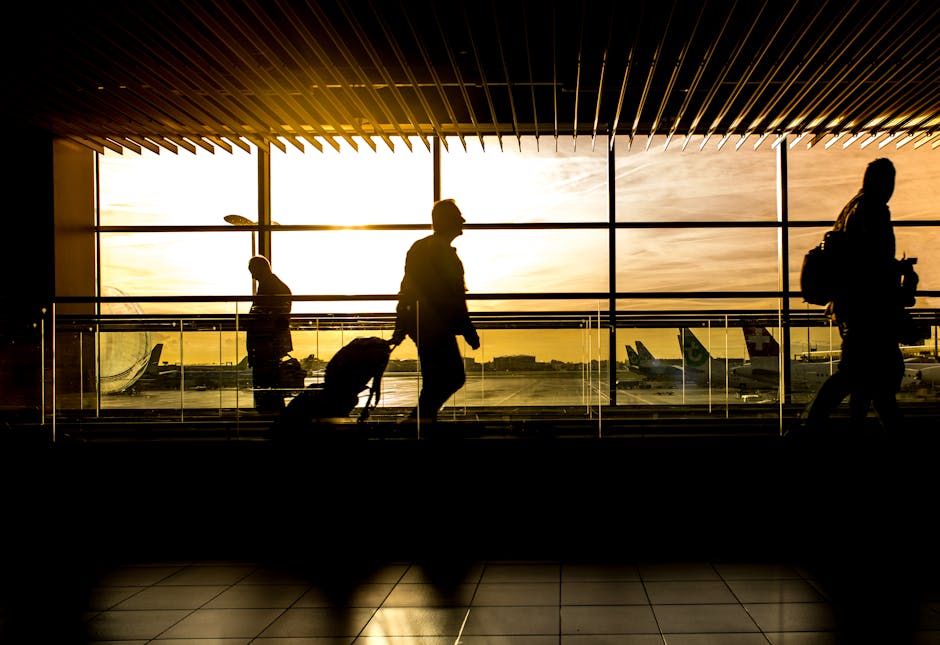
Silhouette of Person in Airport

This is a required poem.
You do not have to read it now.
You can wait until
you’re dying if you want.
You have to
let go of everything.
You can start by
letting go of this poem. Just let it
go. Let it fall to the desk, skim
the edge, spill to the floor. Let it
lie on the floor face-down
so you can’t read it.
How to read this poem
when it’s lying on the floor face-down
like a body—
that is the seeming difficulty.
On one side
words are everything. On the other
nothing. On the other side
there is the poem on the other side saying
let it go on without you,
saying on the other side there’s nothing
as difficult as it seems.


Paul Hostovsky‘s poems appear widely online and in print. He has been featured on Poetry Daily, Verse Daily, and The Writer’s Almanac. He has two poetry chapbooks, Bird in the Hand (Grayson Books) and Dusk Outside the Braille Press (Riverstone Press)To read more, visit Paul’s website: www.paulhostovsky.com.

“Cry Your Happy Tears” by Phillip Gardner


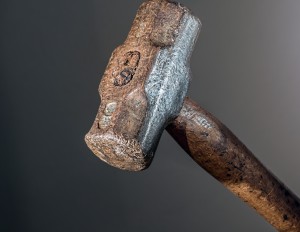
hammer-sledgehammer-mallet-tool

As a movie, you’d be seeing this from high above. Think God’s-eye view.

It is dawn. The knockout blonde down there in the red and white poke-a-dot dress is pounding the front bumper of a green pickup with a ten-pound sledge. Taking her time, but really whacking that bumper. Even from way up here you’re already hoping that she’ll appear naked in your movie. Her name is Chloe, and she’s everything you ever dreamed of having or being. But you’re wondering why she’s doing a number on the green truck parked in the middle of an isolated lot in what you will come to learn is an old part of Memphis.

You can’t take your eyes off her. You’re hoping you’ll get a close-up, because when the glamor girl in the red and white poke-a-dots takes the hammer back there’s poetic harmony in movement and form; and there’s something about that snapshot instant before the hammer moves forward as her perfect figure is frozen in your imagination. But exceeding your visceral, erotic response is the old intellect, which wants to know who the poke-a-dot avenger is and why she is attacking the truck’s bumper.

The male lead, Pete Hump, wakes. Pete sits hunkered over in the driver’s seat of the pickup, a green plumbing truck. His head and his hands are duct taped to the steering wheel. Waking is a painful thing, and Pete isn’t thinking clearly. Then he passes out again.

We enter Pete’s dream: Pete and Chloe in their sinful little love nest bed in Charleston, South Carolina. In the dream, he wakes at Chloe’s touch. Soon the two are entwined in a kind of horizontal slow dance, eyes closed, half asleep. She coos in a hot, bourbon-flavored voice: “Pete Hump’s Heat Pumps.” And they go at it. This in part satisfies our longing to see Chloe’s delicious flesh while giving us a context for the opening shots.

Then we’re back with duct-taped Pete at the wheel.

There is no voice at Pete’s ear, only the distant white noise of a 70’s rock song. And had there been a voice, Pete couldn’t have heard it. Because one ear is pressed against the airbag’s thin leather and the other ear is covered in duct tape. If his hands had been equipped with ears, they wouldn’t have heard anything either. In fact, he doesn’t so much hear Chloe’s heavy hammer probing the bumper of his truck for the sensor–the one that will release the airbag and splatter his brains–as he feels the hammer’s vibration, like a ball-peen on an anvil. Each stroke lands in perfect time to Lynard Skynard’s “Free Bird.”

Next, in a flashback we get a little more back story on Pete Hump.

Extreme close-up: Pete’s bloody face looks like somebody dunked his head into a blender. It takes us a second to realize that it is Pete Hump, that’s how bloody the man’s face is. The camera slowly pulls back to reveal:

Night in a wide, empty field. Pete teeters on his knees, his hands tied behind him. Hanging far away in the black sky is a lighted billboard for his plumbing company. Pete Humps’ Heat Pumps, the sign says.

A giant of a man looms over the kneeling Pete Hump. The man with the block head (meant to suggest through visual association Frankenstein and thus evoke fear and pity in us) is, we will soon learn, Chloe’s husband, Russ Watts.

“This is the last time I’m asking, Pete,” Russ says. “Where is she?” Russ has beaten Pete into a near-death experience. And now we know why.

Russ, the cuckold, attaches one end of the heavy jumper cables to the battery terminals of Pete Humps Truck #2. We wince and want to look away when he slowly and painfully clamps the first cable to Pete’s right ear. Pete squenches shut his eyes. When the copper jaws of the second cable shut down on his other ear, we all wait in perverse and collective wonder for the geyser effect from the top of Pete’s head.

Russ’s heavy brogan presses the accelerator to the floorboard. The green truck’s headlights quiver, which ends the flashback.

Chloe, Russ’ wife, is doing a Barry Bonds’ number on Pete’s bumper in search of the magic connection that will send poor Pete’s brains against the back glass of Pete Humps Truck #1. Pete, who looks a lot like Nicholas Cage in Raising Arizona, pleads, “Chloe!”

The banging stops. Pete takes a deep breath. The hammering resumes. We really want
another look at Chloe, but we don’t get it. This, we know, is a tease.

“Chloe!!”

Pete wiggles in his seat, attempting to free his duct-taped hands by squirming from side to side, reminiscent of someone dancing The Charleston. Again the hammering stops. Pete opens his eyes and slowly rolls them way, way up in that Nick Cage way.

Chloe stands at the driver’s-side window. She’s worked up a sweat, and her blonde hair falls in ringlets over one cheek. Her face is moist and flush. Male or female, you feel a stirring down there. And so even under the circumstances, Pete’s whanger does a summersault. She is the most beautiful woman Pete has ever seen. Her perfect lips move, but he can’t read them; he doesn’t want to read them. He just wants to look at them move. She tilts her head to the side, and though he can’t see the motion, we are grateful that we can: she crosses her arms over the most perfect breasts in the South. Then she steps out of the frame.

Pete waits for the pounding to resume, knowing, as we do, that with every blow the law of
averages turns a little more against him, that when Chloe finally strikes the sensor she is
searching for he will see the big light that Russ Watts saw when he was struck by lightening, only Pete won’t come back from that tunnel. We’ve seen enough Quentin Tarentino to expect the reverse-angle moment when his brains splatter against the glass. And we sort of can’t wait. Through the magic of surround-sound and a gazillion speakers, we hear his own breathing inside his head.

A bright light nearly blinds us.

In that suspended moment, subliminal edits remind us of the jumper cables attached to Pete’s ears, Russ’s heavy foot on the gas, and we experience the titillating anticipation of the geyser effect. We feel a thrill.

Pete’s eyes fly open.

The morning sun at her back, Chloe stands at the pickup’s open door in breathtaking, hourglass silhouette—holding up a dagger of a nail file. Tears fill her eyes. The ghastly look on Pete’s face in this shot becomes the focal point of the poster outside the theater entrance. Her dagger-loaded fist goes up and up, Hitchcock-like, and every hair at the base of our collective, exposed neck stands and looks around for cover.

Chloe’s fingers cover his eyes.

“Chloe, please,” he whispers in that Nick Cage voice.

You see this as a digitized, slow motion blur: The tip of the nail file explodes through the duct tape and enters the ear canal, David Lynch-like.

Chloe’s fingers ease away from Pete’s wide, wild eyes. No pain there. His hearing suddenly returns, as if he has surfaced from deep water. The white noise he’d heard is Lynard Skynard singing “Free Bird” on the two-way radio.

“This is your last chance, Pete,” Chloe says. “Say you’ll let me go.”

If he could say it, he would. She just looks at him.

“Bye,” she says.

Then she slams the door to Pete Humps #1 and walks out of his life.

All of this happens in three minutes. The hope is that you’ll remain completely under the story’s spell for ten minutes. If you’re not in the movie by then, it’s a good bet this one will lose money. Chloe doesn’t look back though she hears Pete’s pleading voice echoing inside the cab of his plumbing truck, the Van Zant boys wailing in the background. We track along beside her, the pain on her face telling us that her heart falls a notch each time he calls her name, like it did when her husband, Russ, pleaded for her to stay. The way it has when every man who ever called her his watched her walk away. Still, she takes a deep, determined breath, raises her beautiful suffering face toward the morning sun. She’s not turning back. Because now it is her heart that she is trying to save. Somewhere, somehow, there is something better waiting for her, a stronger, truer voice calling—a voice that has been speaking to her all her life. A voice she has resisted until now. A movie voice. And we are tracking along beside her, another comrade in arms. Before the show is over, we’ll learn how that voice summoned her to Dollywood and cried out to her at Graceland. But for now all we know is that there is no turning back.

We oooh and ahhh at the heavy symbolism of the screen-filled brilliant orange sun rising behind her. Chloe grips her purse, heaves her small suitcase, and at a snappy, snappy Dolly Parton pace, puts as much distance as she can between herself and Pete’s sad begging. There’s more in that walk than any acting school can teach. “Once you know a thing,” she says to us, “you can’t not know it. It’s better to be a one-hit wonder than to spend your whole life wondering.” And we all nod in agreement.

It’s not just the rush hour Memphis traffic that makes us nervous; it’s the cab driver’s eyes that won’t leave the rearview. Finally he says, “Ma’am, if I’m wrong, I hope you’ll forgive me, but are you a movie actress?”

“No, sir, I’m not,” Chloe says in a flat Dolly Parton voice, her eyes never leaving the landscape that once fell upon the eye of Elvis.

“Are you on the stories? On TV?”

Chloe gently turns her head from side to side.

After the cab driver drops her off at the Memphis car rental, his mouth opens involuntarily, and he whispers reverently: “Them’s the finest fashion accessories I ever laid eyes on.” The driver is a quiet man and a good Christian by Memphis standards, and he considers himself a professional taxi driver. He respects people’s privacy as he respects his own. But this woman makes him break his own rules.

“The very finest,” the driver says again as she walks away. He can’t stop himself from looking into his mirror one last time as she disappears into the rental office.

At this point, about the five minute mark, we know that what we have here is a quest story, that Chloe is in search of something essential to her being; that this is among other things a journey of self-discovery, a chick flick.

She drives slowly across the rental lot, breathing deeply the new car smell. When she stops at the street, she doesn’t know which way to turn. Literally. She turns right, then we see a look on her face. She jerks the wheel abruptly. Horns blow, rubber smokes. There must be sixty edits.

The spin makes us dizzy.

Chloe completes the U-turn. “I’ve spent my whole life going with the flow,” she says, stepping on the gas, burning more rubber. And because that’s exactly what we’ve spent our life doing and because she is everything we ever dreamed of having or being, we do a silent little hell yeah and reach for the popcorn.

She drives I-40 with her window down and the radio on. We hear the beginning of what will
become Chloe’s theme song. Although we don’t think about it at the time because of her
stunning beauty and the deep mystery of her face, the director works in several shots of her
crossing bridges before we see a road sign telling us that Chloe’s destination is Nashville.
When a Skynard song, “Searching,” comes on the radio, Chloe quickly shuts it off. Still, the song serves as soundtrack for a series of flashbacks: She and a bruised Pete standing at the gates of Graceland, Chloe with her forbidding hand against his chest: “I have to do this thing alone,” she says. The look on Pete’s face tells us he’s already lost her.

When she returns to those gates at closing time, hangdog Pete is still waiting, but we know that he is a broken, desperate man.

Later at The Blue Suede Shoes Bar, the camera slowly circles the two. We can’t hear what Chloe is saying, but we know that she’s pouring out her heart to Pete, that saying these things is painful for her, that she is in a struggle for her being. “Sometimes,” she says in a crying voice, “love and freedom go to war with one another.” Pete lifts his bourbon and looks away. “My insides,” she says reaching for his hand, “they’re filled with those scars.”

Pete orders yet another round of drinks and feeds a twenty into the jukebox. Chloe goes on
trying to explain, trying to spare Pete Hump’s heart, while “Free Bird” and “You’ve Lost That
Loving Feeling” play back to back until the bar owner unplugs the music. Finally, Pete pushes his glass away and says, “Whatever makes you happy, Chloe.” And she hopes against hope, as do we, that it has been settled.

But as soon as they are inside Pete Hump’s #1, Pete fingers the truck key, pauses, looks down at the steering wheel–that unknown to him holds the power to blow his brains out–and says, “I can’t let you go.” Then he starts the engine and pulls out of The Blue Suede Shoes lot. Chloe tries to hold back her anger and her tears, but the bourbon has thinned her skin and exposed her heart. When Pete parks outside the abandoned trucking company in the heart of old Memphis, it is all Chloe can do to hold her emotions in check.

Recognizing that the end of their love is near, Pete reaches back for all that he has left. He
switches off the engine and fishes the bourbon bottle from under his seat. “We’re sitting right here,” he says, unscrewing the cap, “until we get this worked out.”

We see and feel the bombs going off inside Chloe, for Pete’s love is true and his devotion written in the bruises on his face. Pete plays his last card: “After all I’ve been through for you,” he says. We know he has to say it, and we don’t blame him; we’d say it too. But we’re at the ten-minute mark, and we know that Pete might as well be holding Chloe’s head under water. And we can’t stand that. So when Pete says he can never let her go, dangles his truck key over his open mouth like a goldfish, and then washes it down with bourbon, we gasp for Chloe, who reaches for the bottle and then brings it down on Pete Hump’s drunken head. When she holds up the roll of duct tape, we applaud.

If this were a movie, we would be at the end of the opening hook. But this is not a movie; this is real. If this really were a chick flick, we might cut to an establishing shot or two of Nashville, then to Chloe standing outside the Grand Ole Opry. She would find her way inside, up on the dark stage, and there she would lay bare her soul in a rendition of the Dolly Parton composition, “I Will Always Love You,” which is her way of saying goodbye to her past, to Pete and Russ. We see her tears and choke back our own. And we’re not the only ones. The old custodian who has swept those sacred floors since the days of Hank Williams senior watches too with bubbly tears in his eyes.

The security guards who take Chloe away are more the hard-hearted type.

The thread that holds this plot together is Chloe’s attempt to break into country music. In the movie, she has the talent but can’t get the breaks, which is the way we all feel about ourselves. From now until the end of the third act, things will go from worse to worse for Chloe, and if the movie is a success, those things will be even worse than we can imagine they might be. She will find and lose the love of her life, a man very much like Clint Black; and if that isn’t enough, she’ll have a miscarriage after their love falls apart; and if that doesn’t do it, the young mentally challenged girl who makes Chloe her hero and upon whom Chloe turns her back because she simply can’t carry another ounce of emotional baggage will get run down by a bus owned by a country music star. At the end of act three, after it becomes known throughout Nashville that Chloe is responsible for the death of the mentally challenged girl who adores her and that the bus accident is likely to ruin the career of someone who holds a striking resemblance to Clint Black, we know that she’ll never get work in this town. Chloe feels low.

But deep down something tells us that we’re closing in on act four, and though we can’t figure out how the hell she’s gonna bring it off, we know that this is a chick flick and that it’s going to end well, that we’ll leave the theater crying happy tears and boohooing to folks waiting in line for the nine o’clock show that they’ll love it.

And of course we won’t be disappointed.

Because there is that old custodian who drank with Hank and had a thing for Minnie Pearl, and who happens to be like a father to—you guessed it—Dolly Parton.

Or if the producers don’t think the country music-NASCAR target will buy tickets, they might have the script re-worked. Before it’s over, the script may be rewritten until the Chloe character becomes a martial arts diva or a Dalmatian. As for now, Chloe, the knockout in the red and white poke-a-dots, still goes to Nashville. But when she gets to The Grand Ole Opry and stands outside waiting for a sign from God, she gets none. In the next scene, she finds herself inside the Nashville airport looking at the lighted destinations, feeling lost and alone. Maybe she spends the night there, or even a couple of days there, until someone whom we suspect is on a mission from God, some guy in a turtleneck, says to her: “You belong in Hollywood.”

Act three retains much of what was written in the original script, except Chloe is a gifted, struggling actress who repeats most of the mistakes she made as a struggling singer. Finally, at the point at which she’s devastated by guilt following the death of the mentally challenged girl who idolized her, Chloe is offered a spot in a television commercial in which she is obviously cast as her idol, Dolly Parton. The commercial is a smash hit. It’s everywhere. Chloe’s big break comes when she’s invited to appear on a late night show that we all know is David Letterman. But things go badly; Dave wants to pick fun at and mock Dolly, and Chloe loses her shit—not Dolly’s but her own. Brought to tears by the rich and arrogant host, she calls the Letterman impersonator a pencil dick, dumps coffee on his Armani suit, and storms off stage in a display that makes couples having bad
sex all over America stop and stare slack jawed at the screen.

Chloe goes lower, then even lower, then gutter low. When it appears that her only option is
returning to either Russ Watts or Pete Hump, both of whom still love her, she thinks seriously of putting out the Big Light when—you guessed it—Dolly appears.

And of course we are not disappointed.

But this is not a movie. This is real, and disappointment is for most of us our appointed destiny. And so Chloe drives to Nashville. She even makes her way to the Grand Ole Opry where she stands outside thinking about Dolly and Elvis, about need and desire, about love and emptiness. But standing there also reminds her of who she really is–a small-town Southern woman, like Ava Gardner, born to freak beauty, one who has spent most of her life feeling that she is living in a movie. But life, she knows, is not a movie. She is like us, with these exceptions: her ravishing beauty is a curse and her meager talent an unending thirst, enough only to fuel the need that drives every artist. And worst of all, she has the brains to know that the greatest stroke of luck—all that might be sucked up in her universe and brought to a single moment—would be required for one instant of legitimate, though third-rate, artistic validation. Her one hit. Unlike Willie Lowman, Chloe knows she’s a dime a dozen.

Still our need is to think of her as a sexy, liberated woman who exercises the full range of
contemporary feminine prerogatives—from innocent victim to atomic estrogen; we want that for ourselves; we’re not thinking of her, a breathing suffering human being who will suffer more for her beauty by watching it fade. Not as a woman who has been blessed with physical perfection and cursed with her single drop of talent when no drop at all could have meant a happier life—someone who knows that she will amount to nothing.

Chloe pumps her own gas and then heads east on I-40, but she is not running to; she is running from, like most of us; and like us, she doesn’t know when it’s time to hold on and when it’s time to move on; and what she really says aloud is, “If you can’t learn to live with who you are, how, dear God, can you learn to live with who you ain’t?” Which we really don’t want to think about.

When she sees the sign for the Great Smoky Mountains, she reflects upon Graceland, Dollywood, Pete Hump and Russ Watts, and what she feels is bottomless regret and immeasurable worthlessness.

As the horizon flattens, Chloe stares at the interstate ahead and enters a sort of exhausted trance, a period of mindless absence, when a few hours and several hundred miles fold into a place that is no place and a time that is no time. It is not peace that she feels, only the cold comfort of nothingness.

Since this is true of the human condition and therefore violates what we’ve come to expect from most movies, it might be convenient and academically satisfying to think of Chloe as a victim of advertising and commerce or in terms of a history that has been unkind to women. This might work as battleground for gender or culture wars. But I doubt it.

We’re talking about the human heart here. And for Chloe, no abstraction illuminates what she feels in her heart. All she knows is that she can’t go back and that the big green sign she just passed says she’s two hundred miles from Wilmington, North Carolina and the end of the road—the Atlantic Ocean. What occupies her mind is only whether or not at the end of the interstate she takes her foot off the gas.

When the weight of darkness visible becomes too much for us, our internal conversations take the form of metaphors, and the simplest thing can bring us to tears. We see a dead doe on the side of I-40 near Winston-Salem and that William Stafford doe becomes us, everybody we’ve ever lost, and the fate of human experience. The deeply embedded connotations of the word and the dead doe’s image reflect a topographical map of our shattered soul.

Chloe stands at a gas pump and sees a mentally challenged young girl reach for her mother’s hand as the unknowing mother turns her back. Chloe is overcome with self-loathing for having spent one minute of her life feeling sorry for herself. She just wants it to stop, for it to go away, to get outside of her own head. But she can’t.

Chloe has to reverse this falling effect. Her metaphors are anchors, and she can hardly hold open her eyes. She reaches for some small, manageable act, some first step in an effort to turn those metaphors into something smaller than what they represent.

She begins reading road signs aloud and discovers that the right combination of sound and image soothes her spirit. “Chapel Hill,” she says. She pictures the two, the church upon the hill. Then says it again, like music, allowing the connotations of “chapel” and the soft vowels and breathy consonants to do their work. “Cary,” she whispers, and thinks of her burdens, her obligation to carry on. And later, when she voices, “Fuquay-Varina, Fuquay-Varina, Fuquay-Varina,” she is reminded of “sugarplum fairy,” and a little smile appears on her lips.

Then she feels a panic like electricity.

She has come to the intersection of I-40, which runs from Barstow to Wilmington, and I-95, which runs from New Brunswick to Miami. She can’t go forward and she can’t turn back. I-95 south takes her to Darlington, South Carolina, where she started, where she’s lived her life, where she married a man she never loved and had an affair with his boss, his childhood friend.

The exit says North, Rocky Mount. In spite of the sign’s implications, she takes the exit.

Soon she sees a sign for Smithfield. And she thinks that’s where the Smiths of the world are produced, that Smithfield will inevitably have a Main Street, and that on that street live the most common of the common–that she is one of them.

Near exit 95 on Interstate 95, Chloe looks up. She has never seen the arrestingly beautiful woman on the billboard. The words under the picture say The Ava Gardner Museum, Smithfield. Chloe thinks the place is much too small to be called a museum. It is no Graceland. But its intimacy comforts her, and the progression of photographs, from sharecropper’s daughter to international movie star fill her eyes with real tears. The Lost Angel, My Forbidden Past, The Angel Wore Red, The Blue Bird, This Time For Keeps: She reads the titles of forgotten movies.

She studies Ava’s wedding photos, one to a short man with a goofy smile, one to a man who played clarinet, and one to a man Chloe recognizes but can’t name, Frank Sinatra. In another photograph Ava is in the arms of Rhet Butler, and the caption of another says that the man beside her is the richest man in the world. She stands in the company of bullfighters and a man named Hemingway.

The museum hostess touches her nametag. “I know it looks like ‘Deidre’,” she says with a pleasant smile, “but I pronounce it ‘Dead-ra’.” She invites Chloe into a small theater, as quiet and softly lit as a funeral home. When Chloe enters, a large painting, the poster model for the film The Barefoot Contessa, makes her want to flee: Ava stands at the edge of some great precipice, her arm extended, one slipper about to fall from her fingers. Behind her stands a man, his face buried in her shoulder, his arms around her, clinging, holding her in a kind of death grip as Ava looks down in sad resignation.

The actress’s life is reduced to twelve minutes of video that Chloe watches alone. The woman on the screen, the fetching sex queen on the billboard, was not the real Ava Gardner, the barefoot country girl from Grabtown whose freak beauty drove the world’s most famous, talented, and wealthy men to madness. In the video, Ava is so stunningly beautiful that Chloe hardly hears the narrator’s voice until he says, “She was always searching for the love that was always out of reach.”

When Chloe senses that the short video story is closing in on act four, she walks away because childless Ava is living in another country, alone, and Chloe senses that she is going to die there, alone.

The museum hostess looks up from her newspaper and smiles.

“Where is she now?” Chloe asks.

“What?” smiling Deidra says as she folds the paper.

Chloe looks up at the photo reproduced on the billboard.

As Deidra reaches for a small brochure, Chloe recognizes the woman’s look. It asks, Are you a movie actress? Are you in the stories?

“How long have you been an Ava fan?” she says in her lyrical eastern North Carolina accent, sounding a little like Ava, a little like Chloe.

“All my life,” Chloe says. “All my life.”

A summer storm is waiting when Chloe steps out of the museum; she can smell it. It reminds her of home.

She stops at a liquor store and buys two pints of bourbon.

Sunset Memorial Park is on Highway 70, Smithfield. There are strip malls close by, a damaged furniture warehouse outlet, and tobacco fields within view.

She parks near the cemetery gate, stuffs the bourbon into her purse. The clouds are the color of slate and as thick as cotton bolls. She takes off her shoes. A cool, cool breeze lifts the hem of Chloe’s thin red and white poke-a-dot dress, and the shade soothes her eyes as she searches the landscape of headstones.

Chloe believes that the living can communicate with the dead, and she feels in no hurry to rush out to whatever life awaits her. Together, they’ll remember what it was like to walk the soft furrows barefoot when they were little girls. She’ll have a drink and pour one for Ava and ask her about true love and maybe about how to go on living without it. Then she will wait and she will listen. And if the rain comes, she will wait and she will listen.

But she has to commence to begin, as the old people used to say. She must take a first step.

There are no identifying signs, no clear directions, no promises. Still, Ava is out there. It is the one thing Chloe knows, the one certainty, the one sure thing. She will look and listen. Await a sign.

Chloe stands at the gate, the heavy summer clouds behind her a dark bruised Technicolor, the cool breeze lifting her blond hair, sculpting the red and white poke-a-dots to her woman’s body. She imagines a path through the dead, a line that will form a giant A.

She takes the first step. If this course doesn’t lead to Ava, she will take another. She will walk the alphabet A to Z until the letters spell out the words that give her a reason to be, a direction, a destination.

“Ava?” she whispers. She stops. She listens. “It’s me.”


Phillip Gardner lives in Darlington, South Carolina where he writes stories and screenplays. His work has appeared in The North American Review, The Chattahoochee Review, Hayden’s Ferry Review, Potomac Review, and other fine journals. He is the author of Someone To Crawl Back To, a collection of short stories.

“In the Morning” by Ryan Crider

bed, bedding, bedroom

Maybe I expected to feel something the next morning. Better, worse – either one. But when I awoke beneath the thin sheets of the strange bed, it was the same as always. Even during those seconds when I couldn’t be sure of where I was or how I’d gotten there, there was no panic. My head was all right. And then I did remember the details of where/when/how, recalled a few things about the night before. I looked over at the woman next to me and then over at the door to the bathroom. And one thing I did feel when I saw her was that I wished the whole deal seemed a little stranger than it actually was.

I got up, found my jockey shorts and jeans lying in the floor and pulled them on, then went into the bathroom, splashed my face with water, rinsed out my mouth and pissed. I reached into my right jean pocket and checked to make sure the ring was there, and it was, right where I’d put it before leaving the house the night before. I looked into the mirror and felt of the ring for a minute, then walked back over to the bed and decided not to leave. I knew what it was like to wake up and not see the person I expected to be there next to me. So I lay back down and watched her sleep. When I got tired of that, I stared at the box fan blowing air at us from the corner of the room. Then I tried to see out the window, between the drapes that were tossing back and forth. I went back to looking at the woman, and after some time she started making little morning noises and shifting in her sleep.

I pulled myself up until I sat propped against the headboard. She sniffed, reached up and scratched her nose, and then slowly opened her eyes and squinted. She grinned when she saw me watching her.

“Morning,” she said.

I nodded and smiled back. She ran the palm of one hand across my bare chest.

“I think I’m going to have a shower,” she said. She was looking me straight in the eyes.

I pulled the covers off my legs and swung around over the side of the bed and started picking the rest of my clothes up off the floor. She placed her hand on my right shoulder, then let it slide down to the small of my back, then let it fall to the bed. She sighed and yawned.

“Well,” she said. She sighed again and rubbed at the nape of her neck. “Well, I’ll be quick about it. Wait around until I’m finished, and I’ll fix some breakfast.”

“You don’t have to do that,” I said. I’d pulled my shirt on over my head. I turned around and saw her staring at me again and changed my mind. “I’ll wait around until you’re out.” I didn’t have any reason to hurry.

She went into the bathroom and I heard the shower start up. I finished getting dressed and then headed toward the kitchen, going slowly and staying quiet. There were a couple of kids sleeping somewhere, and I didn’t know which room was theirs. It wasn’t a big house, but I passed by three closed doors in the hallway, and they had to lead somewhere. In the kitchen, I checked in the refrigerator, and all there was to drink was a bottle of cheap wine, just a touch of milk, and a plastic container of something red. I started opening up cabinets and found the cups and glasses to the right of the sink, pulled out a little blue plastic one, and used it to get some water from the faucet.

I thought I should do something, so I looked around the kitchen and spotted the coffeemaker on the other side of the fridge. I went over and found the big can of Folgers and some filters in the cabinet above. I lifted the carafe out and filled it at the sink, then poured the water into the back of the maker, replaced the carafe and loaded the maker up with a new filter and several spoonfuls of coffee. I turned the thing on, pulled two mugs out of the cabinet with all the glasses, and set them down next to it. Then I wandered into the living room.

The room was untidy. There was a couch positioned across from the television, and covering the couch were several stuffed animals and an old felt blanket. A ragged-looking recliner sat off a bit to one side. Toys were scattered all over the floor, dump trucks and airplanes and little people, other action figures that didn’t quite look like people. Behind the couch, on the stretch of carpet leading to the front door, I saw the red plastic toy convertible I vaguely remembered tripping over on my way in the night before. The fireplace looked dusty and neglected, and it was summer so it wouldn’t have been used for a good long while, but the mantel was full of small pictures propped up in oval and rectangular frames. I maneuvered around the stuff in the floor and walked over and looked at them.

There hadn’t been time for picture-looking the night before. Most of the photographs were  of two little boys, or one or the other of the boys, playing with a toy, or running around outside, or posing in a baseball uniform, things like that. There was one professional looking, posed shot of the woman with the two boys. At the end of the mantel was another studio shot of an elderly couple. I didn’t see any shots that looked like an ex-husband, but then, there wouldn’t be any of him.

There wasn’t any remote control anywhere, so I bent over and flipped on the TV. I turned the channel to an early morning newscast and lowered the volume, then walked back across the room and looked around some more. I saw the little plastic convertible again and picked it up off the floor, took it over to the recliner and sat down. The car was made of hard plastic, rather than the flimsy kind, and it seemed sturdy enough. It was as long as my arm from the elbow to the ends of my fingers. I spun the car’s tiny wheels in my hand and watched them pinwheel freely. On the lamp table next to me sat one of the little people I’d seen around the room. The little guy was five, six inches tall, but at the moment he was bent at the waist so that, the way he was sitting, he was staring right at me with this painted on half-smile. I stared back at him a minute, and then I blinked and reached over and grabbed him.

He was dressed in camouflage, and so I guessed he was some sort of soldier. His plastic was harder than the stuff the car was made from, but he was flexible at every joint. I bent his knees for him and then tried to squeeze him into the driver’s seat of the convertible. His legs just barely fit underneath the steering wheel, which wasn’t proportioned well to the rest of the car. But I managed to position the man’s hands on top of the wheel so that it looked more or less like he was driving, like he was in control of the thing, and I lowered the car to the floor and pushed it hard across the carpet.

It rolled quickly, bouncing a bit at certain rough spots in the carpeting, and then crashed into the TV. The man ended up falling to the side, still bent up in that same position but now turned over onto the seat. No toy police cars, ambulances, fire trucks were needed, since the car certainly hadn’t flipped end-over-end and come to rest in a pile of crushed and twisted fake metal. Nothing like that. There was no blood, no broken bones for the little man. He hadn’t even been thrown clear, landed on his empty little plastic head or anything. He still wore the half-smile.

I got up and turned off the TV. The coffee maker was making gurgling, brewing sounds and I knew it would be done soon. I took the car with the man in it and rolled it over into a corner of the room, off to the side of the TV. I started gathering up all the other toys, too, the other vehicles and figurines and animals strewn about, and congregating them all in that same corner.

“What are you doing?”

I turned around and saw the woman standing at the entrance to the kitchen. Her hair was wet and straight, and she had on a pair of sweat pants and a white tee shirt.

“Just trying to make myself useful,” I said. I got up off my knees. “Thought I’d get some of this stuff out of the way.”

She tilted her head to one side, then felt of her wet hair.

“I’m sorry it looks like this,” she said. “When my sister watches the boys, she lets them leave their shit wherever they like.”

She walked into the kitchen, and I followed her.

“I thought I’d go ahead and get your coffee started, too,” I said. I got to the kitchen and she
turned and smiled.

“You’re sweet,” she said. “That’s nice of you.” She took one of the mugs I’d set out and put it back in its cabinet and took out a tall glass instead. “I don’t usually drink coffee. Just have the machine for when somebody else is here and wants some. But that’s nice of you, anyway. You take anything with it?”

“No,” I said. I went over and filled the mug with coffee from the full carafe. The woman had the door of the fridge open now and was down on her haunches, rummaging around. I had to squeeze past her to get to the table, and I tried not to make any contact but ended up brushing against her rear, anyway, thinking all this time that the coffee can hadn’t even been close to full. Somebody had been here often enough to drink themselves a bunch of it.

“What do you feel like having?” she asked me without turning around.

“I’m fine, really.”

I took a seat at the table and blew on the hot liquid in the mug. I didn’t care much for coffee,
either, but I wasn’t going to let the whole pot just sit there. I’d made the damn thing, after all.

“You have to be hungry,” she said.

“No,” I said. I took a sip of the coffee.

I heard her pull something out of the fridge and then she whirled around and was holding a
package of bagels.

“Will you split one with me, at least?”

I tried to smile, then nodded. “I can do that,” I said.

She grabbed the container with the red drink in it, shut the fridge, and set the package of bagels and the container on the table. She poured some of the red drink into the glass and then started undoing the tie around the bagel package. She looked up at me and smiled when she saw me watching her. I took another sip from my mug and looked away. She pulled out one bagel and walked with it over to the counter, took a knife from out of a drawer by the sink and cut the bagel in half, then popped the two halves into the toaster. She came back to the table, and I felt her looking at me again, but I managed not to return the look until she’d gone back to replace the package and container in the fridge. Then she sat down across from me at the table and took a drink from her glass.

“I really like this juice,” she said. It came out awkward and then she sort of giggled, which made it worse. “I know that sounds childish,” she went on, “but it’s my version of morning coffee, I suppose. Simple pleasures.”

I tried to grin at her and nodded my head as best I could, then took another sip of coffee as she drank from the juice. There was more silence as we both waited for the bagel to finish browning, and all the while she kept on staring at me. She could really stare. I tried not to stare back, and finally she dropped her eyes from mine and stared at her drink instead.

The bagel popped up out of the toaster. She got up to retrieve it and brought the bagel over on a plate with two butter knives, then went back to the fridge for the cream cheese, and as she was sitting back down with it, she finally said, “I don’t feel bad. Really, I don’t. Honestly, I wasn’t expecting anything. Maybe I was hoping, but that’s another thing.”

“That’s good,” I said as I watched her spread the cream cheese all over her half of the bagel.

She glanced up at me. “You don’t believe that at all, do you?”

“I believe you,” I said. “I believe you. It doesn’t make me feel better, but I believe you.”

“Why should you feel bad?” she said as she chewed her first bite. “Eat your bagel.”

I reached over for my half. I started to dip my knife into the cream cheese but decided against it. I took a tiny bite of the bagel and then set the rest of it next to my coffee mug.

“It doesn’t have anything to do with you, to tell you the truth,” I said. “I mean, I feel bad no
matter what, anymore. I feel bad if I wake up alone, even.”

She stared again, then her eyes shot off over my shoulder, past me, and she blinked a few times. I guess she had no response to this because she said nothing for several minutes and just ate the bagel and drank the red juice. I hadn’t wanted to say it like that, exactly. I chewed on my part of the bagel, taking a few larger bites, and drank more of the coffee, which tasted okay with the bread. She got up and refilled my mug.

“You’re quiet,” she said, sitting back down.

“Sorry,” I said.

“Don’t apologize, goddamn it,” she said. “Just stop it.” She shook her head. “You talked about a lot of things, last night. You were just a rush of talk then.”

“You were a good listener,” I said, and I thought that might have been true. I tried to remember just what I’d told her the night before. “You were easy to talk to. I needed to talk.”

I was twisting the mug around in circles on the table and pushing it against my knife. I could still feel her eyes locked in on me.

“A year and a half,” she said. “Isn’t that what you told me?”

“Yeah,” I said. I nodded. So I’d told her that part. Or else she was good at guessing. I’d told her something had happened a year and a half ago, maybe.

“You still feel real fucked up, don’t you?” she asked me. It was matter-of-fact, but her voice was softer now. “It’s like things will never be normal again.”

“Normal,” I said, repeating her, shaking my head. Then I laughed. I looked up and saw her face had dropped into a sympathetic-looking half-frown. I was already tired of that look, no matter who was flashing it at me. “What do you know?” I said. “It takes time, right? Is that what you’re going to say now? I’ve got all the goddamn time in the world. That’s not a problem.”

I glanced down at my bare ring finger and then felt in my pocket for the band. I rubbed my index finger along its smooth metal.

The woman sighed across from me.

“Time is overrated, in that way,” she said. She bit into the bagel again, and a dab of cream
cheese hung on the edge of her lips. “The trick is not to allow yourself a mourning period at all,” she went on as she chewed, still looking kind of sad, though I was beginning to wonder. “When my husband left me, it took two years before I could even date again, and that was only because my sister got me drunk at the bar one night and pawned me off on some guy, ditched me so that I had to leave with him, and that sort of rekindled something, I suppose. So I do know a little something about this. You have to move ahead. Some things you can’t do anything about.”

I stared at her, and at that point I didn’t give a damn what I’d told her the night before. I forgot all about that stuff.

“Who the hell are you?” I said. “Who the hell are you, saying this?” I could feel my arms start to shudder as I sat there, my fingers gripped tightly around the coffee mug. I took a big gulp of the coffee and stuffed the last bite of bagel into my mouth. “How can you even think that compares?” I said, chomping the bread. “How can you sit there and say that.” My cheeks were burning.

“Go to Hell,” she said. “We’ve had our fun and fucked each other and taken care of the small talk, and now the two of us can go our separate ways, too. So now you can go to Hell.” She said this matter-of-factly, too, almost a whisper, really. Then she bunched up her face and for the first time looked less than sympathetic. She seemed disgusted now. Confused, too, maybe. She kept staring at me, still. “What’s your story?” she said. “You’re not making any sense.”

I stared back at her, knowing that I was growing red and that my fingernails could be heard barely tapping the mug as my hand started to shake. She looked me over real good then, glanced down at my tapping fingers, and her scowl slowly disappeared. Then she bit her lip and ran her hand through her hair. Her eyes widened and I could tell she was going to say something.

“Don’t,” I said. “Don’t say anything else. Just leave it at that.” I pulled both my hands up and
together and used them as a resting-place for my chin, then blinked and swallowed. “Here, I’ll tell you a story: It was a cold, dark, rainy night. It was slick out. That was the story. How was it? And my own story is I keep waking up in other people’s houses. That’s my story. When I get to where I can accept my own fucking empty bed again for what it is, I’ll be okay.”

The woman was shaking her head. She wrinkled up her brow, and her mouth sort of shifted to one side like she was grinding her teeth. She pinched off another piece of bagel and raised it to her lips.

“That’s not much of a story,” she said as she chewed. “And even if it is, it’s not the one you told me last night. Not that I care, but you didn’t tell anything like this, last night. Not that I can say I know what you’re talking about, anyway, but this doesn’t sound like your story from last night.”

“I must have gotten things mixed up,” I said. I lowered my hands again and ran them across the smooth surface of the table.

She blinked at me and shook her head once more. “This is just bizarre,” she said. “You’re strange or sick, or both.”

I nodded.

The woman chewed and chewed on that piece of bagel until it had to be down to nothing, then popped in the last little piece and ground into it at an even more deliberate pace. She lowered her eyes and seemed finished with me. She wasn’t looking at me anymore, at least, instead staring at her glass. I was thankful for that, I suppose. We sat there a while. I drank down the rest of my coffee. She kept chewing, grinding her teeth again, even after I knew she’d swallowed the last of the bagel. Maybe she wasn’t just absently staring but was thinking of things. It was like she’d forgotten there wasn’t anything left to chew on. Then in a quick motion she raised her glass and downed the last of her juice, pushed away from the table, got up and smiled again in my general direction.

“I should get the kids up soon,” she said. “They’re spending the day with Grandma.”

I nodded and stood up.

“Do you want to take the rest of this coffee with you?” she asked, motioning toward what was left in the carafe as she carried the plate and the glass to the sink and threw them in, causing a sort of minor crash. “I’ve got an old thermos I could just give you. It’s not like I can save the coffee.”

“That’s all right,” I said.

I lay my mug in next to the dishes in the sink and followed her to the front door. I reached past her and opened it, and then she turned into me and wrapped her arms around my waist.

“Thank you,” I said, though I can’t say why I said it.

“Okay,” she said, rubbing her hand up and down my back as she pulled away. “Thanks.”

She closed the door behind me and that was that, and as I walked off the front porch I felt past the ring to the car keys at the bottom of my pocket. It was quiet out, and still mild this early in the morning. It had rained a bit overnight, and when I reached my car at the end of the driveway there were still a few droplets lingering on the front windshield. I unlocked the driver’s side door and stepped in, slammed the door behind me, and put the key into the ignition. I turned it over and the car started up. I hit the wiper switch and watched the water droplets get smeared off the windshield. I adjusted in the seat and reached into my pocket and felt of the ring, let my finger stroke back and forth across the thin metal. I pulled it out and held onto it as loosely as I could between my thumb and forefinger.

Then I let the car idle in park and just thought for a while. I had the time. My house wasn’t far from where I was, but I wasn’t sure I should go straight home. There was also a cemetery close by, in the other direction, and even a flower shop on the way, if I was up for that, up for a scene. I had all the time in the world, but what do you do with all that time? I didn’t know where I wanted to go. But that wasn’t what I was thinking about, mostly. What I was thinking was, I was mixed up as to which roads would take me to my house, and which would lead to the cemetery. I was confused, still foggy from the night before. There was a gas station just down the street, with roadmaps, if one of those would help. There was a pawnshop somewhere close by. I had to get rid of that goddamn ring: This seemed the next logical step, the next first step. I slipped it onto my finger and drove off, my eyes fixed on the slick, waterlogged pavement up ahead, squinting for a familiar way home.


Ryan Crider has previously been published in Moon City Review. He is the past Section Editor for the literary journal Natural Bridge. As a graduate student, he has been nominated twice for the AWP Intro Journals Project in fiction. He is currently a Ph.D. candidate in English and creative writing at the University of Louisiana at Lafayette and the editor of The Southwestern Review.