An Interview with Claudine Guertin

Claudine Guertin


MA: Hi, Claudine. Thanks for agreeing to talk with me today. I’d like to talk a little bit about writing in general and your writing process in particular, if I might. I’ve had the pleasure of reading some of your fine work and I’m always struck by your use of strong detail and striking /images. Can you tell me a little bit about what moves you as a writer?

CG: Thanks for saying that because I often feel like I write so deeply from inside characters’ heads that the 3D world around them is underdeveloped. I always have to go back through and add concrete imagery and details to anchor scenes. What usually moves me the most are the emotional experiences of my characters, and that’s the journey I ride when I write. So the /images that emerge tend to be born out of those emotions.


MA: I can see how that would work, especially if your characters have vivid imaginations, which I know they do. And I do believe that the internal world can be at least as vivid as the external–sometimes more so. You know, I would also say that there are some fabulist elements to your work…that may not be quite the word I want. But by “fabulist” I mean something that is universal and striking and hits the subconscious as much as the conscious. Like a fairy tale or a fable would. Does what I’m saying make any sense to you when thinking of your work?

CG: Wow, I’ve never consciously thought of my work that way, but I think you’re right. I’m always thinking about the layers of meanings as I write. I often think about how these individual character experiences spin outward to something more universal. All of my stories feel somewhat mythic and fabulist as they’re percolating inside me. But translating that to the page is sort of an act of faith. You never know how much of that is really coming together in the final product.


MA: Well, as one reader/fan, I can say with authority that it’s working for me. This leads me to another question. As you know, my co-author for the non-fiction book was from Poland and his family believed very strongly in dreams and the power of mythic stories. I think Europeans tend to be more tuned in (than Americans) to such things. I know you have connections to eastern Europe. What are those and how do you feel they have influenced your writing?

CG: Yes, my boyfriend is from Bosnia. We met eleven years ago, and even before that, I was very drawn by Russia, which is part of my heritage. I studied Russian in college, and I now study Bosnian-Croatian-Serbian with a University of Chicago professor. We’re working on translating a short-story collection by a popular Bosnian Serb writer. So a lot of circumstances in my life seem to bear echoes from that area of the world.

MA: I think that influence is part of what makes your work so interesting and exciting to read. A novel can be such a vast landscape. How do you find your way in? Do you wait for a voice to emerge? A Character? A plot?

CG: I believe, if a story is coming from the deepest place, that the novel calls to the writer, and not the other way around. At first, there’s always something there haunting me, and I sit with that until the characters begin to speak to me. That can take months or even years. For instance, I recently completed my first novel and began writing what I’d planned for two years to be my second novel. In the back of my mind, I always thought I’d write a novel about Bosnia and the war, but I didn’t think I had the literary chops for it yet, so it was on the back burner until my writing could mature more. But then, this past summer after I was thirty pages into Novel Number Two, my boyfriend and I went to visit his family. What I saw in Bosnia, which, by the way, is one of the most gorgeous countries I’ve ever visited, was a lot of war devastation, ethnic separatism and tension, corruption and also, so it doesn’t all sound dire, some rebuilding and positivity. It was profound to hear people’s stories. Many of them are not “past” the war, and it’s easy to see why not. Everyone knows someone who died, whose house was bombed or burned, who was in a concentration camp, who lost their savings, etc. The entire fabric of life was destroyed for people on every side. How do you get past a war in a city that’s been ethnically cleansed and repopulated with different people, as my boyfriend’s city is? How do you move forward when your daily commute includes bombed-out buildings and bullet-riddled street signs, like in downtown Mostar? So on that trip, the main character of this Bosnian novel started speaking to me, and I could feel the weight of the story in my throat, if that makes any sense. Or maybe I should say I could feel all the emotions of the story in my throat. So I’ve shifted tracks and am now working on this new, intimidating project, for better or for worse. I still have a lot to research and discover, so I’ll be underwater here for quite some time.

MA: Sounds fascinating and very “deep.” I can’t wait to read it. What do you think gives a story depth?

CG: To me, a deep story works like a prism that the reader can turn over to find unexpected facets of meaning, either by leading to new territory or by turning old territory on its ear. That happens, I think, when the writer plumbs the emotional landscape of her characters and their situations to the very bottom. Then she can reassemble all those elements into something altogether different, honest and complete. Or maybe that’s a neat and tidy crap answer. I think we’re always learning, and I, for one, usually enter into a story never knowing much at all. What comes out on the other side is always a bit of a surprise.

MA: Yes, hurray for the surprises. Where would we be without them? Thanks for the great answers, Claudine, and the great conversation. You’ve given me a lot to think about.  Good luck taming the new novel. I know you will make something wonderful.
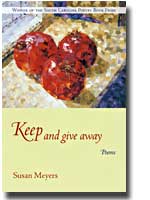
Showcasing the work of Susan Meyers

Susan Meyers


(Read Susan’s wonderful poem That Year in our archives.)


I have long admired the poetry of Susan Meyers. Its beauty, and grace and gentle honesty speak to me in a way that is calming, satisfying, and somehow “right.” Even her most intensely personal poems manage to seem more universal than confessional. Most of all, I love the simple elegance of Susan’s poetry. It sneaks up on the reader–at least this reader. I so often read her work and think, “of course.” Wise is the poet who can get out of the way and let the words give the reader the experience, thought, image, epiphany that the verse offers up. Susan does this in a way that is not only satisfying, but that seems natural and effortless. (I know just enough about poetry to know that it isn’t.)


I highly recommend her marvelous first book Keep and Give Away, which won the SC Poetry Book Prize, the Brockman-Campbell Book Award and the SIBA (Southern Independent Booksellers Alliance) Book Award for Poetry. A great review of Keep and Give Away can be read here. She has also had her fine poem Hat of Many Goldfinches featured on Verse Daily and you can visit her poetry blog here.


Here is the lovely title poem from that collection:


Keep and Give Away

What do I know of man’s destiny?
I could tell you more about radishes.

— Samuel Beckett

With a bushel basket in hand
he’s the tally of my ripest desires,

more than the sum of his summer
crops, perfect and plentiful as they are—

even counting Early Contenders
and Silver Queen. Burpless

cucumbers, Kentucky Wonders, too.
Throw in the fruit to sweeten

the numbers: blackberries and figs
piled in pyramids or weighed

in pecks. And don’t forget
the peppers (red, yellow, green),

divided into keep and give away.
Dinner plates—heaped with leafiness,

tubers, and pods—heavy
with the haul and roots of his labor.

Now he’s shelling peas in his lap
and I sit across the room, listening

to the ping, ping. He’s more
than the sum, I cannot count the ways,

and despite a constant reckoning
of work and luck, numbers fail me

in this long, hot growing season.


–Susan Meyers

Featuring Andrew Tibbetts


This week at r.kv.r.y., I’m pleased to showcase the work of Andrew Tibbetts! I met Andrew virtually at least five years ago, and have been a great admirer of his work ever since. Then late last year I had the excellent opportunity to meet Andrew in person in Toronto when we met at the launch of Margaret Atwood’s novel Year of the Flood. We are both slavering fans of the divine Ms. Atwood, so it was a special treat to share that experience with Andrew. And I’m happy to report that Andrew is just as delightful in person as he is on-line.


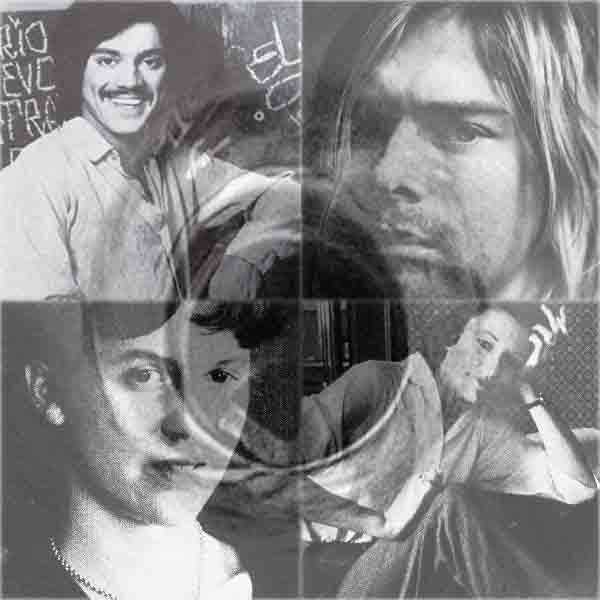
Then, earlier this year I had the opportunity to read his essay I, Suicide in a private on-line office for writers. He wasn’t looking to get the micro-essay published, just to share hsi work and discuss ways to improve it. But when I read it and recognized its power, I knew it would be perfect for r.kv.r.y. I promptly contacted him and plied him with all manner of flattery in an attempt to convince him to let me have this moving personal essay. Gentleman that he is, he gave it to me. And our illustrator did a fine job of illustrating it, connecting the /images of four creative lives sucked down the drain, lured by the seductive side of suicide.


Andrew writes with a brutal honesty and slicing self-reflection. He “goes there” when others shy away. He won the 2008 Malahat Review Novella Prize for his excellent story Dead Man’s Wedding. You can read an excerpt from that story here. I value his work and I value him and we’re pleased to have him in this issue of r.kv.r.y.


And, for your additional reading pleasure, here are a few links to more of Andrew’s fine work:


Gifted at PANK Magazine


201 Feet at Smokelong Quarterly


Introducing Kristin Beeler


I’m excited to announce that Kristin Beeler has graciously agreed to illustrate our upcoming 2011 winter/spring issue! Kristin earned a Bachelor of Fine Arts from Berea College in Berea, Kentucky and an MFA from the University of Arizona, Tuscon. She most recently had a solo exhibit titled Beauty and other Monsters at Velvet DaVinci Gallery in San Francisco.


Her artist’s statement:


“Beauty, as the perception of effortless perfection, is both protective and exclusionist. Its nature is unapproachable, our need for it unrealistic.We experience beauty as an internal sigh of relief when our senses connect sympathetically with the external. In those moments, beauty feels less like a discovery and more like a remembering. In the sublime, it makes us feel closer to god. In the extreme, it separates us from ourselves.

If I could, I would make pieces that were so beautiful, they made people uncomfortable, touching off an itch of vague desire. Beauty, it seems, is the heat generated by friction between that longing and relief.”


I have long admired Kristin’s keen eye for design and the mood and feeling that she coaxes out of otherwise lifeless objects. She is best known as a jewelry maker and metalsmith, but is also an avid collector of striking /images (digital and otherwise), antique/unusual spoons, and random castoff bolts and other metal bits and pieces. She is attracted to found objects with an unknown (and therefore mysterious) history.


These characterizations are my own, mind you, not part of her official bio, and based mostly on a morning walk we took together about a year-and-a-half ago. We were walking along the sidewalk of a one-stoplight town in the county that we both lived in and left during the 1980s. During the course of that walk, we stopped at a small antique shop to search for interesting spoons (found one, acquired it) then paused in the parking lot of of an old jewelry-store-turned-used-car-lot to admire and then also acquire a bit of rusted cast iron that caught her eye.


And I guess the point I’m making is this: Kristin’s eye is keen, eclectic, all-encompassing, and generous. I cannot wait to see the /images she offers up to accompany the fine work that will be forthcoming in our next issue. Thank you, Kristin!


Showcasing Jim Ruland’s work

This issue of r.kv.r.y. contains a number of pieces that I personally solicited. This being my first issue as editor-in-chief, I felt it would be appropriate to solicit particular work that I had found especially moving or thought provoking. It seemed like a good way to showcase my editorial bent and also to give some attention to authors whose work I admire and would like to see get more attention. Over the next few weeks, I plan to introduce you to the writers and their work in greater depth.

Jim Ruland (Shot Through the Heart) is first up.

I first experienced Jim Ruland’s awesome writing by hearing it. He had a piece on NPR about his father’s military service as a swiftboat veteran which I found extremely moving. You can still find it here if you’d like to listen. The honesty and love in that piece intrigued me enough to make me want to read his short story collection Big Lonesome, which I promptly ordered.


And then wrote a review of that book that can be read here.

I have since also enjoyed his essay on visiting Robert Smithson’s Spiral Jetty that appeared in Salt Flats Journal.

I finally met Jim in person (and saw/heard him read from his work) at Bread Loaf last year. Some online friendships or author-reader relationships don’t fare well in the real world, but this was not the case with Jim and his fine writing/creative work. I am proud and honored to have his work appear in this first issue of r.kv.r.y. with my name at the top of the masthead.

Showcasing the work of Jeffery Hess

Jeffery Hess


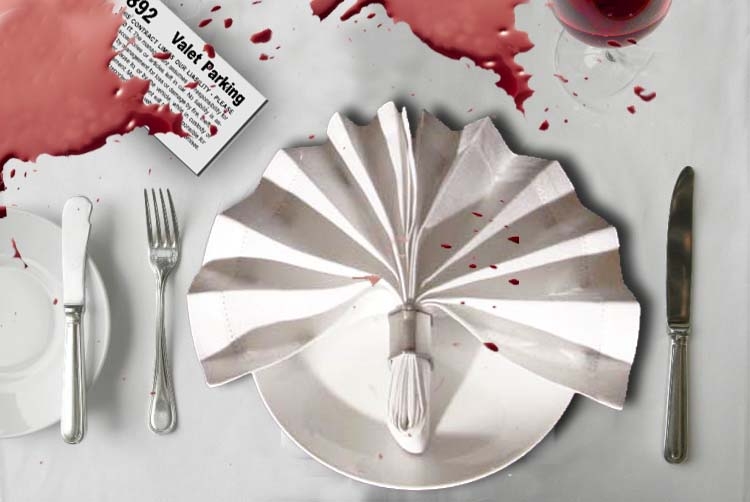
I first met Jeffery Hess (Weight of the Moment) in 2003, in Charlotte, North Carolina at Queens University. It was the year I was teaching my graduate craft class and he was in the audience as a first year MFA student. I noticed him right away, partly because the male-to-female ratio in our MFA program was pretty low, and mostly because he was listening intently, nodding, and taking notes. I don’t think we met formally then, but at some point we shared creative work outside of the program. The story he sent to me for a critique was Weight of the Moment. It was a fantastic story and I told him so.


weight of the moment(It was also the favorite story of our illustrator, Dawn Estrin, and she created a great image to accompany it.)

 

The idea of exploring weight issues and an eating disorder from a male point-of-view really struck a chord with me, and I have never forgotten that story. When I took over editorship of r.kv.r.y. I knew I wanted to bring it to print and share it with the rest of the world. Lucky me–lucky you!–he agreed to let us publish it and I’m proud to have it appear in my first issue as editor of r.kv.r.y. What better evidence of Jeff’s fine writing than to have an editor remember his story from reading it five years prior and then soliciting it? I think he wins the prize in this issue for the story coveted the longest.


Jeff is also an excellent editor in his own right. He assembled and edited the Press 53 anthology Home of the Brave, a fine collection of military-themed stories including work by Kurt Vonnegut, Tim O’Brien, Tobias Wolff, Chris Offutt, and Benjamin Percy, among others. As the foward says, it’s got “shipbuilders and sailors, pilots, wild dogs, battles–both physical and emotional, misunderstandings, fistfights, and the wounds of unrequited love. There are parades and hurricanes, people getting high and some merely getting by, as well as the human sacrifices made, the losses endured, the hardships faced because of or in spite of some connection to the military.”


Please take a few moments to visit the website of Home of the Brave, read a great review at Get Lit and then listen to Jeff talk about the book in an interview with Dennis Miller on The Dennis Miller Show.


I do hope you will read Jeff’s very fine story and enjoy some of the additional links. We’re proud to have him as a r.kv.r.y. author.

Showcasing Joan Hanna

Joan Hanna


Publication of Joan Hanna’s fine piece Breathing in our Shorts On Survival section almost didn’t happen. I’m sorry to say that in the messy process of transferring editorship, a number of pieces were misplaced in the shuffle. (If you submitted before this summer and have not heard back, please do submit again, this time using our handy-dandy submission page that can be fiound here. There will be no more getting lost with this system.) At any rate, during one of our email conversations, former editor Victoria Pynchon mentioned that she had received a piece from Joan (whom I was familiar with from a Facebook friendship, already) and I contacted Joan and asked her to resubmit her piece. I am so glad I did. Such solicitations don’t always result in a match, but I knew right away that Joan’s fine piece would be a perfect fit for r.kv.r.y.


Breathing


Her story is a second-person account of surviving spousal abuse and with a few edits–which she graciously agreed to make–Breathing became one of the very first pieces I accepted for this issue. She has been a consistent delight to work with and her talents as writer are equally matched by her talents as reader and reviewer. In fact, we are hoping to make her a permanent member of the r.kv.r.y. staff. Details to follow! 🙂


In the meantime, please visit Joan’s blog and get to know this fine writer.


Cheers,


Mary Akers

Editor, r.kv.r.y.

Showcasing Isobel Dixon

Isobel Dixon


I first read Isobel Dixon’s gorgeous book of poetry, A Fold in the Map, on a long trans-continental flight headed for a bunch of book signings and author appearances of my own. I was sick with the chesty remnants of a rotten head cold and flying with my co-author, with whom I would be doing the appearances. Given my physical state, the flight could have been tortuous, but Isobel’s book of extraordinary poetry helped to make the long flight…well…fly by. My co-author and I kept passing the book back and forth with tears in our eyes saying things like, “Oh, read this one” and “Oh, my, you’ll like this.” Reading poetry is so often a solitary pleasure, but it was an extraordinary treat to share the experience of reading Isobel’s work in this way.


When I learned that I would be taking over editorship of r.kv.r.y. I knew that Isobel’s gorgeous and lyrical yet clear-eyed and unflinching poetry would be one of the first I would solicit. I am so pleased she allowed us to share them with all of you.


A sampling of Isobel’s other marvelous poems can be read here.


And I am eagerly awaiting her next collection, also published by Salt, titled The Tempest Prognosticator which will come out next year.

Showcasing the Work of Tracy Crow


I first became aware of Tracy Crow’s work when I heard her read at an open mic night in downtown Charlotte, NC. The room was buzzing with the kind of noise that a bar on a Saturday night generates and I was preparing to be that person–the one who gives a loud “Shhhh!” to try to quiet down the room–but I didn’t get the chance. Tracy walked on stage and the first wave of noise quieted. She’s got a commanding presence thanks to an utterly appealing combination of runway model looks and Marine Corps officer panache. Half of the barflies immediately shut their mouths or dropped them open in awe. Then she started reading and the other half quickly followed suit. Her writing was riveting and her voice captivating. Readers were only allowed five minutes at the mic that night, but Tracy’s five minutes were enough to make a lasting impression on all of us.


So, when I took over editorship of r.kv.ry., I knew I wanted to talk her out of some of her fine non-fiction. I had read a wonderful piece of hers in The Missouri Review a few years back and asked for that. It was titled The Facelift, and you can read it here.


I reread The Facelift, loved it all over again, and immediately accepted it. Then Tracy casually mentioned that she had this other piece that had come really close at Esquire, but that had somehow been passed over. I was intrigued and asked her to send it along. It was What I Can Tell You Now and I promptly (and sheepishly) asked if I might publish it instead. I did this for several reasons–one, because it was unpublished, which appealed to me, and two, because it was set in Roanoke, Virginia, a place very near my hometown of Floyd. I knew the Star at the top of Mill Mountain that changed colors with news of auto accidents. I knew the mountains. I felt like I knew the narrator. So it was a combination personal-professional reason, as I suspect most acceptances are. Tracy graciously allowed me to un-accept the other essay, and accept this one instead. (I hope I have since become a more professional editor, but thankfully she let me cut my editorial teeth on her.)


Oh, and Tracy is also a former r.kv.r.y author, published four years ago under Victoria Pynchon’s editorship, so it’s made for a nice continuity having her work also in my first issue as editor. Her other r.kv.r.y. essay, Shooting Azimuths, can be read here.


And I’m thrilled to mention that her fabulous memoir EYES RIGHT will be forthcoming next year from the University of Nebraska Press. Look for it! I promise you it’s a must-read.


Showcasing Myra Sherman

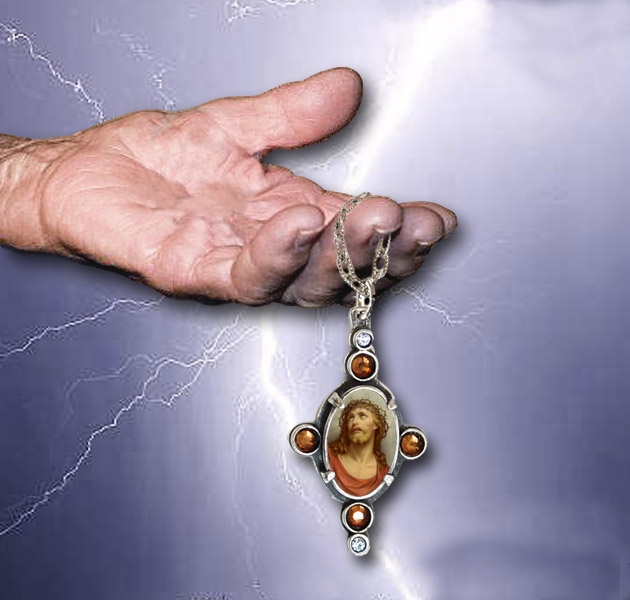
Myra Sherman’s fine short story “Tears of Christ” was one of the surprise “over the transom” pieces that I just couldn’t resist. I love it when this happens–it’s like a surprise present just sitting there waiting for me to notice it. The first-person point of view narrator in this story really spoke to me. I felt like I knew her. She’s older, but feisty and going through some tremendously difficult times, but it only made me love her even more.

Tears of Christ

Myra also has a wonderful piece titled The Hospital that first appeared in the June 2010 issue of Skive Magazine and was performed and recorded by Diane Havens. It’s a marvelous story and a fabulous dramatic reading. You can listen by clicking below.

We are proud and honored to have Myra’s fine work appear in this issue of r.kv.r.y.!